Murderpedia has thousands of hours of work behind it. To keep creating
new content, we kindly appreciate any donation you can give to help
the Murderpedia project stay alive. We have many
plans and enthusiasm
to keep expanding and making Murderpedia a better site, but we really
need your help for this. Thank you very much in advance.
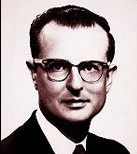
John Emil LIST
Classification: Mass murderer
Characteristics:
Parricide
- For save their souls and sending them
directly to Heaven
Number of victims: 5
Date of murders:
November 9,
1971
Date
of arrest:June 1,
1989 (17 years after)
Date of birth:
September 17,
1925
Victims profile: His wife, Helen, 45; his
children, Patricia, 16, John, Jr., 15, and Frederick, 13; and his 84-year-old
mother, Alma
Method of murder:
Shooting
Location: Westfield, New Jersey, USA
Status: Sentenced to life in prison on May 1, 1990. Died in
prison on March 21, 2008
The deeply religious John List must have had a
religious epiphany before killing his mom, wife and three teenage
children. In 1971 this fastidious accountant executed all members of his
family, left their bodies neatly laid in the ballroom of his mansion (except
for his mom who was too fat to drag down the stairs), arranged photos
and books he had borrowed from a neighbor on a table, and disappeared.
Seventeen years later, after his story was detailed on
the TV show, "America's Most Wanted", a caller sent
authorities to Richmond, Virginia, where they found him living as Robert
P. Clark. The Lutheran matricide was leading a normal life there very
much like the one he finished off in Westfield, New Jersey, seventeen
years before.
John Emil List
(born September 17, 1925 in Bay City, Michigan) is a mass murderer who,
on November 9, 1971, murdered his mother, three children and his wife in
their sparsely furnished 18-room mansion in Westfield, New Jersey, and
then disappeared.
He had planned everything so meticulously that nearly
a month had passed before anyone noticed that anything was amiss. A
fugitive from justice for eighteen years, he was ultimately apprehended
on June 1, 1989 while living under the pseudonym Robert Peter "Bob"
Clark, after the story of the murders was broadcast on the television
program America's Most Wanted.
List was found guilty and sentenced to five terms of
life imprisonment, dying in prison custody in 2008 at age 82.
Motive
Investigations
revealed that he had been suffering from financial problems due to
losing his job as an accountant, heavy expenses related to his fancy
house and family problems caused by his wife's mental illness brought on
by advanced syphilis.
After killing his
family, List wrote a letter to his pastor, Eugene Rehwinkel of Redeemer
Lutheran Church, explaining his motives: He felt that the 1970s were a
sinful time, and that his family was beginning to succumb to temptation,
especially his daughter, who expressed interest in an acting career, an
occupation that List viewed as being particularly corrupt and linked to
Satan.
He told his pastor that by killing his family before they had the
opportunity to renounce their religion, he was saving their souls and
sending them directly to Heaven. Most criminal profilers asked to
analyze List--including John E. Douglas-- have concluded that List came
up with this motive in order to put his own mind at ease and rationalize
murdering his own family to lessen his own stress.
Family history
List was described as
an aloof, cold man with few friends. He was the only child of strict
German parents. His mother in particular was very domineering and
overprotective. He was a devout member of the Lutheran church and taught
Sunday school. List served in the Army during World War II and later was
given an ROTC commission as an Army Lieutenant.
He attended University
of Michigan in Ann Arbor, where he earned a bachelors degree in business
administration and a masters degree in accounting. List's lack of social
skills, however, caused him many problems. He had a history of losing
jobs.
Murders
List killed his family: his wife, Helen, 45; his
children, Patricia, 16, John, Jr., 15, and Frederick, 13; and his 84-year-old
mother, Alma. He first shot his wife in the back of the head and his
mother once in the left eye, while his children were at school. When
Patricia and Frederick came home, they were shot in the back of the head.
John, Jr., the elder son, was playing in a soccer game that afternoon.
List made himself lunch and then drove to watch John play. He brought
his son home and then shot him once in the back of the head. List saw
John twitch as if he were having a seizure and shot him again. It was
later determined that List had shot his elder son at least ten times.
List then dragged his dead wife and children, on
sleeping bags, into the ballroom of his ramshackle 19-room Victorian
home. He left his mother's body in her apartment in the attic and stated
in a letter to his pastor that "Mother is in the attic. She was too
heavy to move." In the letter, List also claimed he had prayed over the
bodies before going on the run. The deaths were not discovered for a
month, due to the Lists' habit of keeping to themselves. Moreover, List
had also sent notes stating that the family would be in North Carolina
for several weeks to the children's schools and part-time jobs and had
stopped the family's milk, mail and newspaper deliveries.
The case quickly became the second most infamous
crime in New Jersey history, surpassed only by the kidnapping and murder
of the Lindbergh Baby. A nationwide manhunt for List was launched. His
car was found parked at Kennedy Airport, but there was no record of him
taking a flight. The police checked out hundreds of leads without
results.
America's Most Wanted
The authorities
approached the producers of the show because many fugitives had been
captured due to viewer's telephone calls. It was the oldest case they
had ever featured. The television program included an age-rendered clay
bust which looked very similar to List, even though he had been missing
for 18 years.
The man who created
the bust of the aging fugitive was forensic artist Frank Bender. Bender
had previously had great success in helping to capture aging fugitives
and identify decomposed bodies by creating these sculptures.
Bender's work was part
art and part forensic science. To imagine what an aging List would look
like, he consulted a forensic psychologist and created a psychological
profile of this man. He looked at photographs of List's parents and
predicted what he would look like as he aged. He gave him a receding
hairline and sagging jaws. Bender was particularly lauded for one final
touch he added to his completed artwork. It was a pair of glasses.
Bender professed that
List would not be vain enough to wear contact lenses. However, he said
List would have worn a pair of glasses different from those he wore
before the murders. He said they would be a pair with dark thick frames.
Bender and the psychologist theorized that List would do this to "hide"
in a sense. He would want to disguise the fact that he was a failure and
appear more important than he really was. When List was arrested, he was
wearing the exact type of glasses.
Arrest
On June 1, 1989, 11
days after his case was broadcast on AMW, List was arrested while living
under the pseudonym Robert "Bob" Peter Clark, a name he adopted based on
one of his college classmates, who later strangely stated that he never
knew of John List. He was identified by a friend who had seen the
television feature. In the 18 years since List committed his crimes he
had been living in Denver, Colorado and Richmond, Virginia, where he
remarried and started a new life and a career as an accountant. On April
12, 1990 he was convicted in a New Jersey court of five counts of
first-degree murder, and on May 1 was sentenced to five life terms in
prison. List has never expressed any remorse for his crimes, even during
an interview with Connie Chung in 2002, and has said he believes he will
go to heaven.
Death
List died from complications of pneumonia at age 82
on March 21, 2008, while in prison custody at a Trenton, New Jersey
hospital. In announcing his death the Newark, New Jersey, Star-Ledger
referred to him as the "boogeyman of Westfield". His body was not
immediately claimed, though he was later buried next to his mother in
Frankenmuth, Michigan.
Epilogue
John Walsh, the host
of America's Most Wanted, called Bender's work the most brilliant
example of detective work that he had ever seen. To this day, Walsh
keeps Bender's bust in a place of honor in his office.
Trivia
List is the basis for
the elusive character of Keyser Soze in the 1995 film The Usual
Suspects.
Jerry Blake, the title
character in The Stepfather, is also based on List.
Robert Blake played
List in the 1993 film Judgment Day: The John List Story.
The original scene of
the crime, the List home, burned to the ground under mysterious
circumstances shortly after the murders. Along with the fire went
perhaps the biggest irony of all: the glass ceiling in the empty
ballroom was a signed Tiffany & Co. original. That alone would likely
have paid off all of John List’s debts.
In 1971, List was
considered a suspect in the "DB Cooper" hijacking, which occurred just
after his family's murder. List' age, facial features, and build were
similar to the mysterious skyjacker's. "Cooper" parachuted from the
hijacked airliner with $200,000, the same amount as List's debts.
From prison, List has
strenously denied being "DB Cooper", and the FBI no longer considers him
a suspect.
Books
Righteous Carnage: The List Murders Timothy
B. Benford and James P. Johnson, iUniverse, 332 pp., ISBN
0-595-00720-1
Death Sentence: The Inside Story of the John
List Murders Joe Sharkey, Signet, 305 pp., ISBN 0-451-16947-6
Collateral Damage: The John List Story John
E. List, iUniverse, Inc., 130pp., ISBN 0-595-39536-8
Thou Shalt Not Kill Mary S. Ryzuk, Warner
Books, 509pp., ISBN 0-445-21043-5
Wikipedia.org
John List
John List lived in Westfield, New Jersey, with his
wife, Helen Morris Taylor List, three kids, Patricia Marie, 16, John
Fredrick, 15, and Fredrick Michael, 13. Also living in the house was
List's annoying old mother, Alma, 85.
John List was known through the
town as being a very religious man. He was also a respected accountant.
It just goes to show that you really never can tell what's really going
on in someones head at any given time.
So the story shall begin in December, 1971 in this
loving household of these devout churchgoers something odd occured.
Everyone ended up dead and John List went missing. But maybe were
getting ahead of ourselves here.
Okay, pretend you didn't know everyone was dead,
because the neighbours didn't.
They just knew that not one member of the List family
had been seen in weeks.
The lights had been on in the three story Victorian
mansion non stop, so something funny was going on but, as in all close
knit U.S. communities, no one bothered to do anything about it. Well not
until Patricia's drama teacher decided he'd had enough of not knowing
what the hell was going on, and decided to pay a visit to the family. it
was then that neighbors decided to act.
Thinking the house was being burgled by the snooping
drama teacher, a nosy neighbor rang police (probably more worried about
her own house than the List family). So when police got to the house and
discovered that the guy was actually trying to find out what was going
on in the house they decided to break in. And from the smell that hit
them as they forced a window opened it was probably a bit late for the
family.
The two officers that entered the house followed
walked toward some music being played in the room affectionaltly called
the 'Ballroom' by the List family.
On there way to this troom they
passed through the kitched where they had to step over piles of dirty
clothes in the middle of the floor. But when one of the officers noticed
what appeared like dried blood stains smeared all over the floor it
became apparent that the pile of clothes was a bit more than that. It
was in fact Mrs. List and her three children.
Each had been shot in the
back of the head, with John jr. also having a few other bullets wounds,
obviously picked up by struggling with his killer. Each had their faces
covered with a piece of cloth. Not sure what the hell else was in the
house police kept going toward the music.
In the upstairs kitchen the
encountered another piece of rotten flesh. It was Alma List. She had
been shot through the head, the bullet entering just above the left eye.
Her head was also covered with a piece of cloth. She was apparently too
fat to be dragged downstairs with the others, so the killer had left her
upstair to rot on her own.
The house had given up all of it's secrets. Almost.
The cops found the last of these upstairs also. It was a note addressed
- "To The Finder." It told of where certain documents could be
found that would explain the scene in the house.
These 'documents' were written by John List, the
missing husband. One was to his employer, telling them how they could
win new clients, and finishing up a few files that List had been working
on prior to his disapearance. Others were to members of List's family.
In these he told of why he had done this deed.
Basically it came down to money. he couldn't earn
enopugh to make his wife and children happy, so he decided that since
they could be happy, they had to be dead. He claimed that they wouldn't
be happy on welfare - even though it didn't seem he was in danger of
losing his job. This would probably point to a bit of paranoia on List's
part, a trait not too disimmilar to most mass murderers. well anyway he
also had written a letter to his local priest. In it he told of how,
even though it may have looked bloody, it really was quite peaceful. And
he was quite sure John jr. hadn't suffered too much. He had put him out
of his misery fairly quickly after the struggle. The note ended -
"I got down and prayed after each one."
Aparently the case caused a huge stir in the U.S.
List's face was shown all over the media, but it was all to no avail. he
had vanished, and no one at all knew where too. Eventually police
stopped looking, and the case file was put to one side.
But in 1989 America's Most Wanted was getting stale.
They needed something to spice things up. They needed an old, vicious,
unsloved murder to shock the nation. John List's name came up, and the
producers agreed - Let's do it.
The show got in Frank Bender, a sculpture. He made a
clay mould of John List's face, allowing for twenty years aging, and on
May 21, 1989, the show was aired.
The mould cause quite a stir amongst a group of
friends in Aurora, Colorado.
They all spoke about the face over the next few days,
remarking how much it looked like their friend Robert P. Clark, an
accountant who had just moved with his wife to Midlothian, Virginia. For
most it was just a bit of a laugh, but one decided to call police and
tell them to check out Clark.
Police checked Clark out extensively, and on June 1,
1989 decided that it was time to see if he really was who he said he was.
Robert Clark vehemouthly denied that he was List, even after his
fingerprints were found to be an exact match to John List's. Not
surprisongly police charged Clark with the five murders.
He kept up his denial until February the next year. He
told his lawyer that he was John List. He then went on to tell the court
that he had felt that there was no alternitive to the murders. His
lawyers attempted to get List off with an insanity verdict, but it
didn't work.
Interview With a Murderer
Thirty years ago, accountant John List methodically
murdered his whole family — his mother, his wife, and their three
children. He says he wanted to spare them the shame of losing their New
Jersey mansion and to make sure they got to heaven.
Now, in his first-ever public comments about the 1971
crime, the 76-year-old former Sunday school teacher says he is waiting
to be reunited with them in the hereafter.
"I feel when we get to heaven we won't worry about
these earthly things. They'll either have forgiven me or won't realize,
you know, what happened," List told Downtown's Connie Chung in an
interview at the New Jersey State Prison in Trenton, where he is serving
five life sentences. "I'm sure that if we recognize each other that
we'll like each other's company just as we did here, when times were
better."
List left a confession letter at the scene, so police
had little doubt as to who was responsible for the killings. But he fled
to Colorado, assumed a new name and remarried, managing to elude a
nationwide manhunt for 18 years. He was arrested in 1989 after a former
neighbor recognized him from a profile on the syndicated TV show
America's Most Wanted. He was sentenced to five consecutive life prison
terms.
List, who says he remains deeply religious today,
acknowledges that his crimes violated one of the Ten Commandments: "Thou
shalt not kill."
"I knew it was wrong. As I was doing it I knew it was
wrong," he said.
But, during a four-hour interview, he sought to
explain how worries that financial hardship would split his family and
turn them away from their faith forced him to make a tough decision. "I
finally decided the only way to save them from that was to kill them,"
he said.
Bank Vice President and Sunday School Teacher
In 1965, when List and his family moved to affluent
Westfield, N.J., he seemed to be a model of suburban success and
propriety. He was vice president and comptroller of a nearby bank, and
his family lived in an 18-room mansion with marble fireplaces and an
elegant ballroom. They attended church each week with List's mother, a
strict Lutheran who lived with them.
But then his life began to crumble. He lost the bank
job, and a succession of subsequent jobs. By 1971, he was still leaving
for work every morning, but — unknown to his family — he was unemployed
and unable to pay the bills. He spent his days at the train station
reading, napping, and wondering how to get his family out of their
financial mess.
He says today he felt he was letting the family down.
"I grew up with the idea that you should provide for your family and to
do that you had to be a success in the job that you had — or you're a
failure, and that was not a good thing to be," he said.
Finally, with the prospect of foreclosure threatening
to expose his financial failure, List made his terrible decision to kill
his family — but not himself.
"It was my belief that if you kill yourself, you
won't go to heaven," he said. "So eventually I got to the point where I
felt that I could kill them. Hopefully they would go to heaven, and then
maybe I would have a chance to later confess my sins to God and get
forgiveness."
No Turning Back
After making the decision, List says, there was no
turning back. "It's just like D-Day, you go in, there's no stopping
after you start," he said.
After finding an old 9 mm pistol he had bought as a
souvenir of World War II, and a .22-caliber target pistol, he purchased
new ammunition and went to a shooting range for target practice.
One night after dinner, he even asked his family what
should be done with their bodies after they died. "I remember talking
about funerals and cremation and burials. I thought I was being real
clever," he said.
On Nov. 9, 1971, after sending his children off to
school, List took his two handguns out to the car to load them, then
walked into the kitchen and shot his wife from behind as she was
drinking coffee. "I approached all of them from behind so they wouldn't
realize till the last minute what I was going to do to them," he said.
Next he went upstairs, to where his
84-year-old mother was having breakfast, kissed her ("like Judas," he
told Downtown), and shot her in the head.
Then he went downstairs, dragged his wife's body into
the ballroom and began scrubbing up the blood so the children would not
realize what was going on when they got back from school.
He went to the post office to stop the family's mail,
then to the bank, where he cashed his mother's savings bonds, checking
that he got the correct interest to the penny. Returning home, he made
several calls to explain that the family had gone to North Carolina to
visit his wife's ailing mother, and that he was planning to follow by
car.
Breaking for Lunch
Then he sat down and ate lunch at the same table
where he had shot his wife hours before. "I was hungry," he told
Downtown, adding with a chuckle, "that's just the way it was."
In the afternoon, he killed his children as they came
home — first his daughter Patty, a budding actress at 16; then his
youngest, 13-year-old Frederic; and finally 15-year-old John, his
namesake and his favorite.
Unlike the others, John didn't go quietly, his body
jerking as List emptied both the 9 millimeter and the .22 into his son.
"I don't know whether it was only because he was still jerking that I
wanted to make sure that he didn't suffer, or that it was sort of a way
of relieving tension, after having completed what I felt was my
assignment for the day," List said.
He lined up the four bodies in the ballroom (he said
his mother's body was too heavy to move), put music on the internal
intercom, and cleaned up meticulously.
Then he sat down and wrote a confession letter to his
pastor explaining his financial problems. "At least I'm certain that all
have gone to heaven now. If things had gone on who knows if that would
be the case," he wrote.
Dr. Steven Simring, a psychiatrist who examined List
after his arrest years later, told Downtown his "sense of neatness" was
the result of a compulsive personality. Simring said List showed "no
evidence of anything that approached genuine remorse," adding, "He's a
cold, cold man."
18 Years on the Lam
The day after the killings, List scoured the house
for family photographs, tearing his image out of them so police would
have nothing to use in Wanted posters. Then he drove to John F. Kennedy
International Airport in New York, where he left his car as a false lead
and took a bus into the city.
Westfield police did not discover the bodies until
nearly a month later. When they entered the house, music was still
playing on the intercom, but List was long gone.
From New York, he had traveled
overland to Denver, where he began a new life under the name Robert P.
Clark, working first as a hotel fry cook and later as an accountant for
H&R Block. He joined a local Lutheran church and, in 1985, married a
widow named Delores Clark, with whom he moved to Richmond, Va.
In 1989, America's Most Wanted featured List and a
forensic sculptor's impression of how he would look then, 18 years after
the murders. List caught the tail end of the show with his wife, who did
not know his past. "I was perspiring like anything," he remembers, but
said his wife did not seem to have recognized him.
But back in Denver, his former neighbors did
recognize him, and called police. He was arrested 11 days later, and,
after a jury rejected his diminished capacity defense, convicted and
sentenced. In a three-sentence statement to the court, he said he was
sorry for "the tragedy that happened in 1971." He did not mention his
wife, his mother, or his children.
On April 12, 1990 John E. List
was convicted in a New Jersey court of five counts of first-degree
murder, and on May 1 was sentenced to five life terms in prison.
The Pursuit, Capture and Trial of
John Emil List
By Timothy B. Benford -
AssociatedContent.com
September 11, 2007
Inmate #226472 in the state prison at Trenton, NJ,
doesn't exchange Happy Anniversary cards with his wife. He doesn't
receive Father's Day cards from his three children, nor does he send
Mother's Day cards to the woman who gave him life.
He celebrates none of these joyous occasions with his
family because on the warm Indian Summer day of November 9, 1971, he
murdered his three children, his mother, and his wife in an act of
righteous carnage to save their eternal souls.
Inmate #226472 is John Emil List, the quiet, always proper neighbor,
and former Sunday
school teacher, and he is spending the remainder of his
life in prison.
On April 13, 1990 he was convicted for all five
murders. Sentencing by, Judge William L'E. Wertheimer, was at Union
County Courthouse in Elizabeth on May 1, in what some say was the second
most celebrated and publicized mass murder in state history, 18 years,
five months, and 22 days after the fact. I researched the case and, from
beginning to end, covered the trial. I wrote a series of Page 1 daily
columns for the Union County daily newspaper of record, The Elizabeth
Daily Journal. And, teaming up with a co-author, Jim Johnson, wrote the
Scribner's hard cover best-seller Righteous Carnage. It is still in
print more than 16 years later as a less expensive, large format, soft
cover (ISBN 0-595-00720-1) on Amazon.com or Barnesandnoble.com.
The inmate's current accommodations are a far cry
from where he had lived between 1966-71 when he took the ultimate step
in 'keeping up with the Jones' by purchasing Breeze Knoll, the romantic
sounding name that millionaire John S.A. Wittke gave his mansion and
massive estate on Hillside Avenue in Westfield at the turn of the last
century. The seemingly timid accountant couldn't really afford such a
house, because he really couldn't hold a job. But it was an impressive
address and his wife wanted it. Also, he became convinced Westfield was
a good Christian town in which to raise his family.
The quintuple murders, his flight and escape for
nearly two decades, his capture, and subsequent trial, consumed reams of
newsprint and hours of TV footage not only in New Jersey but throughout
the world. Only the New Jersey kidnapping and murder of aviation hero
Charles Lindbergh's infant son and the conviction and execution of Bruno
Hauptmann in 1936 received more worldwide media coverage.
List's crime was so unthinkable, heinous, and
shocking that during the intervening years while he was living a second
life, with a second wife, parents in Westfield and surrounding Union
County towns would invoke his name to recalcitrant children: "You be
good now, understand? Or John List will come back and get you!" He was
indeed New Jersey's real life boogeyman. If Mr. List could kill his
children, some youngsters shuddered in thought, could my daddy do that
too?
His family crime spree began about 9 o'clock in the
morning. Shortly after sending her three children off to school, Helen
List sat in the kitchen of the Westfield mansion drinking a cup of
coffee. Her husband came up behind her and put a 9mm German made Steyr
automatic pistol to the side of her head and fired once. She died
instantly. The bullet smashed into the opposite wall. Warm blood
immediately formed a pool on the tabletop around her head and began
dripping onto her slippers.
Next he made his way up the squeaky stairs to the
third floor where his 85-year old mother, Alma, wearing a housedress,
was preparing breakfast in her efficiency kitchen. She was standing near
the storage room-pantry that adjoined the kitchen and asked "What was
that noise?" Her son didn't answer. Instead he raised the Steyr and
discharged a round that ripped through the side of her scull. Alma List
was dead before her body crumpled in a heap on the floor. He closed the
storage-pantry room door and left her there.
A neat man, to the point of being compulsive, in the
hours that followed, he attempted to clean up the crimson puddles of
blood in Alma's apartment and in the kitchen. He was unable to clean up
all traces of it.
At some point he went to the basement and returned to
the kitchen with sleeping bags the family used for camping. He put
Helen's limp body on one and dragged it like a sled through the hall,
through the parlor, then down the longer hall to the mansion's cavernous,
unfurnished ballroom in the back of the house.
It wasn't even 10 A.M., and he had murdered his wife
and mother in cold blood. But John List had time, a lot of time, to wait
until his three children would return home after school.
He went to his study, collected some old photos and
documents concerning the mansion's history and put them in a neat pile
on his desk and composed a thank you letter to John Wittke, a descendant
of the original owner. He also wrote four other letters to relatives.
The murderer then called Barbara Bader, the woman who
had car-pooled his sons John and Fred to Roosevelt Junior High School
for the last time that morning, and made an excuse that the whole family
was leaving for North Carolina the following morning because Helen's
mother was extremely ill. He promised to let her know when they returned.
Next he called his employer, State Mutual Life
Assurance Co. of America, and said he wouldn't be around for a while
because of family illness out of state. He made a few similar calls
offering excuses to people and places from which unexplained absences by
various family members would raise eyebrows. He remembered to cancel
delivery of the local newspaper and asked the Post Office to hold the
family's mail until further notice. Ditto the milkman (NOTE: many people
still had their milk house-delivered in the 1970s.)
It was nearing lunch time, and all this letter
writing and phone calling apparently made him hungry. After all, he
hadn't taken breakfast, what with dispatching his wife and mother early
on, he had been too busy. So John prepared something to eat and sat at
the same kitchen table where earlier he had wiped away his wife's blood.
Then fate stepped in and handed John List a pass card.
His daughter Patricia called from school and said she felt ill. She
asked if he could come and pick her up. He had been wondering how he
would handle things if two of his children, Patricia and John, arrived
home at or near the same time. His son Fred had an after school job and
not a sudden arrival problem.
He picked up his daughter. Once in the house he shot
her in the jaw with a .22 caliber pistol, a much smaller weapon than the
9mm Steyr he used on his wife and mother with. That afternoon he picked
up Fred from his job. Even as he was parking his 1963 Chevrolet Impala
sedan behind the house, List's other son, John, who usually walked home,
was turning the corner onto Hillside Avenue. These last two murders
would be the closest in time reference. As he had done with Patty, John
List shot Fred almost as soon as the child was in the house.
Johnny, the murderer's last victim, was the only
family member with multiple gunshot wounds. When the gunplay was finally
done, John List repeated the process of dragging the last corpse on a
sleeping bag into the ballroom that had now become a morgue.
After another episode of cleaning up, the overly neat
and very religious man returned to his desk in the study and wrote the
final letter he would ever write from 431 Hillside Avenue.
The five-page letter was to his church pastor. In it
he explained to the cleric the reason he had to wipe out his family, to
save their souls.
The text of the 1971 letter to his pastor was not
revealed to the public until the 1990 trial. And when it was it
confirmed what most people had believed those many years. It was a
detailed confession, and explanation of what possessed him to murder the
five people who loved him, and whom he loved the most: his mother; his
three children; and his wife.
This writer covered the trial for an area newspaper
and was in the courtroom the day the letter was read aloud to the jury.
I will never forget the audible sigh of shock from the jury, and
spectators, when the last line of List's letter was read: P.S.-Mother is
in the hallway in the attic-third floor. She was too heavy to move.
It is considered one of the most incredible
explanatory confession letters ever written in the annals of criminal
justice, and still often quoted when people talk about the murders.
The only place this writer is aware of in which the
verbatim text of List's incredible confession letter to his pastor can
now be seen is in the critically acclaimed true-crime book "Righteous
Carnage" (ISBN 0595007201) which meticulously details the whole
incredible story. The book, no longer on bookstore shelves, can
nonetheless be special ordered from Amazon.com or BarnesAndNoble.com.
What thoughts pass through a person's mind after
they've murdered five members of their family? What do they do? How do
they act, or even function, with the realization of what they have done?
Night comes early in November and it was already dark
when John List sat down to dinner about 6 p.m. But this evening his meal
would be different from any other he had ever had in the mansion.
Instead of sharing mealtime with the five members of his family, he
dined alone. When he was finished, he washed the dishes and placed them
in the drainer to dry.
Afterward he called Barbara Sheridan, one of the
adults who worked with Patricia at the Westfield Recreation Commission's
drama workshop. He explained that his daughter would be missing some
play rehearsals, and used the family illness trip ploy for the last
time. Mrs. Sheridan thanked him and advised she would inform the
workshop director, Edwin Illiano.
His duties and arrangements completed, List feed his
children's pet fish in the 20 gallon tank in the dining room. Then, the
man who had spent the day murdering five people in this house, climbed
the stairs, went into the bedroom and retired for the night.
Before he left Breeze Knoll and Westfield for good
the following morning, the Sunday school teacher turned down the
thermostat and turned on a recorder which would play the same classical
music on a loop over and over till it was physically turned off. He also
turned on all the lights. Each evening thereafter the house was lit up
like a Christmas tree. By early December neighbors noticed they had
begun going off, one by one.
The bodies wouldn't be discovered until December 7,
1971, 29 days after the murders, because the drama workshop director
Illiano thought the family's prolonged absence was strange, and he
couldn't shake the feeling that something was terribly wrong at 431
Hillside Avenue. Patty List confided in him as a surrogate uncle because
he encouraged her acting ambition, which she was smitten by, while her
own father didn't. Illiano recalled she once said her father was going
to kill the whole family. He had met John List and thought the man
strange. Illiano convinced his workshop associate, Barbara Sheridan, to
go with him to the house. Their presence in the driveway and walking
around the house in the dark caused neighbors William and Shirley
Cunnick to call the police. The List family was away, after all. Patrol
car Officers George Zhelesnik and Charles Haller were first to arrive.
What happened after the police arrived, and who or
how the bodies were discovered, is an American version of the ancient
Japanese classic Rashomon. The police, Illiano, Sheridan, and each of
the Cunnicks remembered events differently. Only Officer Zhelesnik, who
called in the mass-murder crime scene to Westfield Police Headquarters,
and Officer Haller told the same version [These amazingly contradictory
eye witness accounts, as well as other events, are dealt with fully in
the book Righteous Carnage].
For the next 18 years no viable trace of John List
could be found. He seemed to have vanished off the face of the earth.
But that didn't mean law enforcement people in Union County had given up
on finding him. Throughout the 1970s and early 1980s every possible
sighting, any new information, was checked out. As the decade was
nearing its end the torch had passed to two new cops, Detective Bernard
(Barney) Tracy of the Westfield Police Department, and Captain Frank
Marranca of the Union County Prosecutor's Office. Each of them often
returned to the cold case file on the still open List murders. From time
to time they discussed the case and exchanged information, but for the
most part they worked independently within their own departments.
By 1989 the television show America's Most Wanted was
already a sensation. With considerable effort by Marranca and the
Prosecutor's Office, and after initially being rejected, the show agreed
to feature the List murders. It would be the oldest cold case they ever
attempted to solve.
On Sunday evening, May 21, 1989, the show aired
broadcast #66 with a mere eight minute segment about John List. Film
crews had been to Westfield and visited relevant sites. As is the show's
style, the events were dramatized with actors portraying the principles.
Barney Tracy and another Westfield detective, Kevin Keller, were at
America's Most Wanted's TV studio in Washington manning the phones with
scores of volunteers waiting for the expected 'tip' phone calls. After
the show ended nearly 250 calls came in, including at least one that was
right on the money!
It was obvious that something had happened that
Thursday afternoon, June 1, even to a casual observer driving through
Colonial Westfield. It was 12 days since the America's Most Wanted
broadcast, and to many that was 'old news.' Yet small groups of
neighbors huddled on well-manicured lawns, congregated and clustered on
street corners and in front shops in the quaint business district.
"Hey, what happened?" an uninformed passing motorist
queried.
"They got HIM!" was the joyful reply.
No further identification or explanation was needed.
Everyone in Westfield, nay, in Union County, knew the HIM was Sunday
School Teacher John Emil List.
Westfield's 'bogeyman' would no longer give children
nightmares.