Murderpedia has thousands of hours of work behind it. To keep creating
new content, we kindly appreciate any donation you can give to help
the Murderpedia project stay alive. We have many
plans and enthusiasm
to keep expanding and making Murderpedia a better site, but we really
need your help for this. Thank you very much in advance.
Robert
Austin SULLIVAN
Classification: Murderer
Characteristics:
Revenge - Kidnapping - Robbery
Number of victims: 1
Date of murder:
April 8,
1973
Date of birth: 1947
Victim profile: Donald Schmidt(assistant
manager restaurant)
Method of murder:
Shooting (double barrel
shotgun)
Location: Miami-Dade County, Florida, USA
Status:
Executed by
electrocution in
Florida on November 30,
1983
On April 11, 1973,
the body of Donald Schmidt was found in a swamp near the Howard
Johnson restaurant where he was employed as the shift manager. He
was shot twice in the head with a shotgun. Robert
Sullivan was a former manager of
the restaurant, who was dismissed in June, 1972.
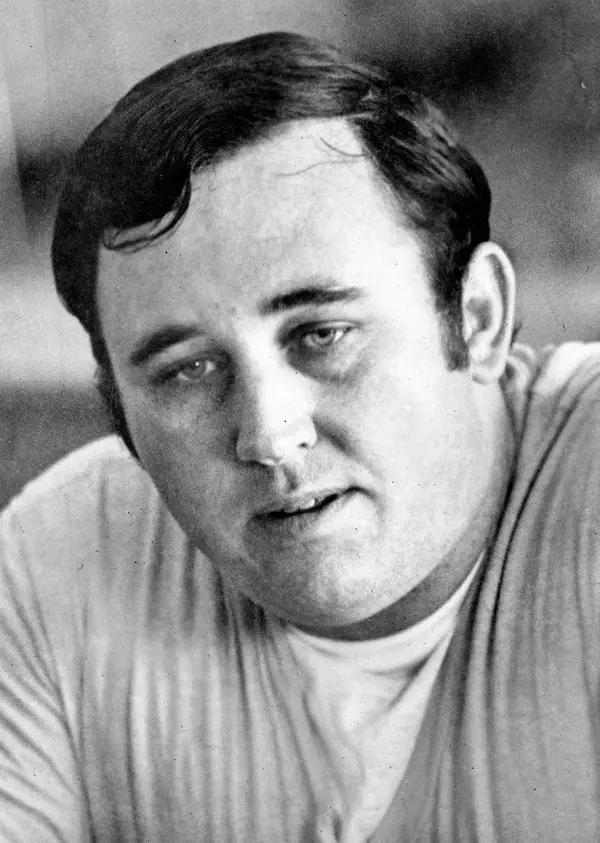
Robert Sullivan
At the time of his execution on Nov. 30,
1983, Robert Sullivan had been on death row longer than anyone in
the United States - more than 10 years.
Sullivan, 36, was executed for the April 8,
1973, slaying of Donald Schmidt, an assistant manager at a Howard
Johnson restaurant in Homestead, where Sullivan had worked.
Sullivan, the adopted son of a Harvard-educated
doctor, and his boyfriend, Reid McLaughlin, abducted Schmidt, taped
his wrists behind his back and drove him to a swampy area, where
they shot him twice in the head with a double barrel shotgun.
When arrested, Sullivan had a shotgun, a
handgun, white adhesive tape and Schmidt's credit cards. Sullivan
confessed to the murder and implicated McLaughlin. McLaughlin also
confessed, but entered into a plea bargain with the state and
received a life sentence for his testimony at Sullivan's trial,
Sullivan was convicted in November 1973 and
the jury recommended a life sentence. The trial judge imposed the
death penalty.
695 F.2d 1306
Robert Austin
SULLIVAN, Petitioner-Appellant, v.
Louie L. WAINWRIGHT, Secretary, Florida Department of
Corrections, et al., Respondents-Appellees.
No.
81-5843.
United States Court of Appeals, Eleventh Circuit.
May 17, 1983
Appeal from the United States
District Court for the Southern District of Florida.
Before RONEY, TJOFLAT and FAY,
Circuit Judges.
FAY, Circuit Judge:
Robert A. Sullivan appeals the
district court's denial of his habeas corpus
petition challenging his conviction for first degree
murder and sentence of death and raises five issues:
1) whether the death sentence was unconstitutionally
imposed on the basis of the state trial court's
findings or instructions to the jury; 2) whether
petitioner Sullivan received ineffective assistance
of counsel; 3) whether excusal of four prospective
jurors for cause violated his constitutional right
to a fair trial; 4) whether the testimony of a state
witness regarding a polygraph constituted
constitutional error; and, 5) whether the denial of
petitioner's leave to amend was improper. After
careful consideration of the issues raised on
appeal, we affirm the denial of the writ of habeas
corpus.
Facts
On the night of April 8, 1973,
Sullivan, along with Reid McLaughlin, robbed a
Howard Johnson's restaurant in Homestead, Florida,
where Sullivan had formerly been employed. Sullivan
and McLaughlin abducted the assistant manager,
Donald Schmidt, taped his wrists behind his back,
and drove him to a swampy area. Sullivan struck
Schmidt twice on the back of the head with a tire
iron and then shot him twice in the back of the head,
each time with both barrels of a double barrel
shotgun.
When Sullivan was arrested, the
police found Schmidt's credit cards and watch. The
police also found a shotgun, a handgun, white
adhesive tape and a tire iron in Sullivan's car.
Sullivan subsequently confessed to the murder of
Schmidt and implicated McLaughlin. McLaughlin also
confessed, but entered into a plea bargain with the
state. McLaughlin was promised a life sentence in
exchange for his testimony at Sullivan's trial.
Sullivan was convicted by a jury
in Dade County, Florida in November 1973. The jury
recommended a sentence of death and the state trial
judge imposed the death penalty pursuant to Fla.Stat.
Sec. 921.141 (1973).
Sullivan appealed to the Florida
Supreme Court, which affirmed. Sullivan v. State,
303 So.2d 632 (1974). The United States Supreme
Court denied certiorari. Sullivan v. Florida, 428
U.S. 911, 96 S.Ct. 3226, 49 L.Ed.2d 1220 (1976).
Sullivan, represented by new counsel, filed a motion
in the state court for post-conviction relief
pursuant to Rule 3.850, Florida Rules of Criminal
Procedure.
The state court held an
evidentiary hearing without Sullivan's presence on
the sole issue of ineffective assistance of counsel.
The court thereafter denied the motion. Sullivan
appealed to the Florida Supreme Court. While that
appeal was pending, the Governor of Florida signed a
death warrant for Sullivan. The Florida Supreme
Court denied Sullivan's motion for stay of execution
and affirmed the denial of Sullivan's motion for
post-conviction relief. Sullivan v. State, 372 So.2d
938 (Fla.1979).
Sullivan then filed a petition
for writ of habeas corpus and motion for stay of
execution pursuant to 28 U.S.C. Sec. 2254 in the
United States District Court for the Southern
District of Florida. The district court granted the
motion for stay of execution. The magistrate
conducted an evidentiary hearing on Sullivan's
habeas corpus petition. Sullivan testified and was
given every opportunity to present evidence.
After post-hearing submissions of
briefs by the parties, the magistrate entered a
lengthy report recommending that the petition for
writ of habeas corpus be denied on its merits. State
and Sullivan filed written objections to the
magistrate's report and recommendation. The district
court entered its Final Order of Dismissal on June
4, 1981, denying the petition for writ of habeas
corpus. This appeal followed.
Ineffective Assistance of
Counsel
On this appeal, Sullivan contends
he was denied his sixth amendment right to the
effective assistance of counsel at the penalty phase
and on direct appeal to the Florida Supreme Court.
The magistrate held an evidentiary hearing on the
ineffective assistance of counsel claims,1
and found that counsel was "reasonably likely to
render and did render reasonably effective
assistance of counsel," applying the standard
enunciated in MacKenna v. Ellis, 280 F.2d 592, 599
(5th Cir.1960), adhered to en banc, 289 F.2d 928
(5th Cir.) cert. denied, 368 U.S. 877, 82 S.Ct. 121,
7 L.Ed.2d 78 (1961).2
The district court concurred in
the magistrate's conclusions and found that "petitioner's
main claim that he was denied effective assistance
of counsel [was] totally without merit. The record
clearly demonstrate[d] that his counsel throughout
discharged their grave and solemn duty to petitioner
in a manner consistent with the highest technical
and ethical standards of their profession." (R.,
Vol. III, p. 589, Final Order of Dismissal).
Whether defense counsel has
rendered adequate assistance is a mixed question of
law and fact that requires the application of legal
principles to the historic facts of the case. Cuyler
v. Sullivan, 446 U.S. 335, 341-42, 100 S.Ct. 1708,
1714, 64 L.Ed.2d 333 (1980); Young v. Zant, 677 F.2d
792, 798 (11th Cir.1982). The district court's
conclusion on this issue is entitled to no special
deference and this court must review counsel's
performance and determine independently whether the
constitutional standard was met. Proffitt v.
Wainwright, 685 F.2d 1227 at 1247 (11th Cir.1982),
citing, Washington v. Watkins, 655 F.2d 1346, 1355
(5th Cir.1981).
Similarly, the state courts'
finding that Sullivan's ineffective assistance of
counsel claim was without merit, Sullivan v. State,
372 So.2d at 939, is not entitled to a presumption
of correctness under 28 U.S.C. Sec. 2254(d). Goodwin
v. Balkcom, 684 F.2d 794 at 803 (11th Cir.1982).
We must assess whether counsel's
performance constituted "reasonably effective
assistance." The standard is not errorless counsel
or counsel judged with the benefit of 20/20
hindsight. Proffitt v. Wainwright, at 1247; Mylar v.
State, 671 F.2d 1299, 1301 (11th Cir.1982). Rather,
the assistance rendered must be evaluated from the
perspective of counsel, taking into account all the
circumstances of the case, but only as those
circumstances were known to counsel at that time.
Proffitt v. Wainwright, at 1247.
Although on this appeal Sullivan
only raises counsel's effectiveness during the
penalty phase and on direct appeal to the Florida
Supreme Court, a consideration of the totality of
circumstances encompasses the quality of counsel's
assistance from the time of appointment through the
appeal. Goodwin v. Balkcom, 684 F.2d at 804 (11th
Cir.1982).
Sullivan's contention that
counsel rendered ineffective assistance at the
penalty phase is based on his assertion that "it
does not seem inappropriate to require counsel in a
capital case to give an extensive and perhaps
impassioned plea for his client's life." Brief of
Appellant at 41. Sullivan also asserts that counsel
did not make appropriate objections or sufficiently
rebut the prosecutor's argument requesting the death
penalty.
We decline to adopt a rigid rule
which would require counsel to argue to the jury in
a specific manner or to make particular objections
during the penalty phase of a capital case. Each
case turns on its own facts and the effectiveness of
counsel must also be judged on the facts and conduct
of those involved in each case. Goodwin v. Balkcom,
at 804. We have carefully reviewed counsel's
performance during the penalty phase, in light of
the totality of the circumstances as they were known
to counsel at that time, and find that counsel's
performance did not fall below the "reasonably
effective assistance" standard.
Sullivan also contends that
counsel was ineffective because he did not raise
certain issues on direct appeal to the Florida
Supreme Court. Counsel did file a brief on appeal
which argued and supported several substantive legal
claims, such as the admission of testimony relating
to a polygraph. This is not a situation similar to
Mylar v. Alabama, 671 F.2d 1299, 1302 (11th
Cir.1982), where we held that failure to file a
brief in a nonfrivolous appeal falls below the
standard of competency expected and required of
counsel in criminal cases and therefore constitutes
ineffective assistance of counsel.3
Sullivan's appellate counsel functioned as an active
advocate on behalf of his client. Anders v.
California, 386 U.S. 738, 744, 87 S.Ct. 1396, 1400,
18 L.Ed.2d 493 (1967).
The failure of counsel, in 1974,
to advance certain points on appeal which
subsequently gained judicial recognition does not
render counsel ineffective. Sullivan acknowledges
that he was one of the first defendants to be tried
under Florida's post-Furman death penalty statute.
At the time of trial and appeal in 1973-74, the law
concerning capital sentencing was in a state of
reformation. Sullivan does not direct us to any case
decided at that time and overlooked by counsel.
Counsel's failure to divine the judicial development
of Florida's capital sentencing does not constitute
ineffective assistance of counsel. Accord, Proffitt
v. Wainwright, supra.
Thus, we find that Sullivan
received reasonably effective assistance of counsel
during the penalty phase and on direct appeal.
Sullivan's Substantive
Constitutional Claims
Sullivan argues that his trial,
including the penalty phase, contained the following
errors which render the imposition of the death
penalty unconstitutional. Sullivan contends that
four prospective jurors who voiced reservations
about imposing the death penalty were excused by the
trial judge in violation of Witherspoon v. Illinois,
391 U.S. 510, 88 S.Ct. 1770, 20 L.Ed.2d 776 (1968).
Sullivan asserts that during the
penalty phase, the state prosecutor's remarks and
trial court's jury instructions allowed the jury's
consideration of non-statutory aggravating factors
contrary to Songer v. State, 365 So.2d 696 (Fla.1978)
and limited the jury's consideration on non-statutory
mitigating factors in violation of Lockett v. Ohio,
438 U.S. 586, 98 S.Ct. 2954, 57 L.Ed.2d 973 (1978).
Sullivan further contends that the trial judge's
findings rendered pursuant to Fla.Stat. Sec.
921.141(3) (1973) impermissibly relied upon a non-statutory
aggravating factor.
Throughout the federal habeas
corpus proceedings, the state has maintained that
consideration of the above claims is barred by
Wainwright v. Sykes, 433 U.S. 72, 97 S.Ct. 2497, 53
L.Ed.2d 594 (1977). In Sykes, the United States
Supreme Court held that a habeas corpus petitioner
must show "cause and prejudice" in order to advance
in federal court those claims barred from
consideration in the state courts by a valid state
procedural rule.
It is clear from the record that
there was no objection at trial to the judge's
excusal of any of the prospective jurors on
Witherspoon grounds, nor was this issue raised on
direct appeal. It is also clear that there was no
objection to the jury instructions given at trial
nor was this issue raised on direct appeal.
The correctness of the trial
judge's findings in imposing the death penalty was
also not raised on direct appeal. Florida's rules of
procedure provided that assignments of error not
argued in the brief would be deemed abandoned4
and specifically provided that jury instructions
must be objected to before the jury retired to
consider its verdict.5
In the subsequent motion for post
conviction relief pursuant to Florida Rules of
Criminal Procedure, Rule 3.850, Sullivan did raise
the Witherspoon issue as well as attacking both the
jury instructions and the trial judge's findings.
The Florida courts held that consideration of the
issues not raised on direct appeal was procedurally
barred.6
Because the state court declined
to consider the constitutional claims because of
valid state procedural rules, Sullivan must satisfy
the "cause and prejudice" test of Sykes. This
requirement was recently reaffirmed by the United
States Supreme Court in Engle v. Issac, 456 U.S.
107, 102 S.Ct. 1558, 71 L.Ed.2d 783 (1982), which
unequivocably stated that "any prisoner bringing a
constitutional claim to the federal courthouse after
state procedural default must demonstrate cause and
actual prejudice before obtaining relief." 456 U.S.
at 129, 102 S.Ct. at 1572.
We therefore agree with the state
that Sullivan must show cause and prejudice for the
state procedural default before his contentions are
considered on the merits. Sullivan, however, has not
addressed the Sykes issue nor has he advanced any
cause for the procedural default nor proffered any
prejudice resulting therefrom. Although the burden
is on the petitioner in a habeas corpus proceeding,
including the burden to satisfy Sykes, Nettles v.
Wainwright, 677 F.2d 410, 413 n. 2 (5th Cir.1982)7
we nevertheless will consider whether the
requirements of Sykes and Issac have been met.
The procedural default on the
Witherspoon issue is most easily resolved. On
appeal, Sullivan does not contend that his counsel
was ineffective during the jury selection process.
Further, the 1968 decision in Witherspoon was not
novel in 1973 nor would it have been futile to
present a Witherspoon issue to the state courts.
Thus, we find that Sullivan has not shown cause for
the procedural default on the Witherspoon issue and
its consideration on the merits is barred by Sykes
and Issac.8
The procedural default regarding
the state trial court's jury instructions and
sentencing findings presents a more complicated
situation under Sykes. The magistrate did not apply
Sykes' cause and prejudice test because Sullivan
raised the jury instruction and sentencing findings
issues in conjunction with allegations of
ineffective assistance of counsel.
However, in Washington v.
Estelle, 648 F.2d 276 (5th Cir.1981), the Fifth
Circuit9
reiterated that "an allegation of ineffective
assistance of counsel is not sufficient to satisfy
the 'cause' requirement." Id. at 278, citing,
Lumpkin v. Ricketts, 551 F.2d 680 (5th Cir.1977),
cert. denied, 434 U.S. 957, 98 S.Ct. 485, 54 L.Ed.2d
316 (1977). Allegations of ineffective assistance of
counsel are insufficient to constitute the requisite
cause. Similarly, the "futility of presenting an
objection to the state courts cannot alone
constitute cause for a failure to object at trial."
Engle v. Issac, 456 U.S. at 130, 102 S.Ct. at 1572.
However, Issac did not resolve whether
the novelty of a constitutional
claim ever establishes cause for a failure to object.
We might hesitate to adopt a rule that would require
trial counsel either to exercise extraordinary
vision or to object to every aspect of the
proceedings in the hope that some aspect might make
a latent constitutional claim. On the other hand,
later discovery of a constitutional defect unknown
at the time of trial does not invariably render the
trial fundamentally unfair.
456 U.S. 131, 102 S.Ct. at 1573.
The Court in Issac found that the basis of the
constitutional claim was available and that other
defense counsel had perceived and were litigating
the constitutional claim, and thus the cause prong
of Sykes was not satisfied. Although the burden is
on Sullivan to show that there is sufficient cause
under Sykes to excuse the procedural default, we
cannot be positive that the relative novelty of
Sullivan's claims in 1973 would not excuse the
default. We therefore consider whether Sullivan has
satisfied the prejudice prong of Sykes.
Regarding the trial court's jury
instructions, Sullivan must show that the ailing
instruction so infected the entire trial that the
conviction, or in Sullivan's case, the sentence,
violates due process. United States v. Frady, 456
U.S. 152, 167-68, 102 S.Ct. 1584, 1594, 71 L.Ed.2d
816 (1982), quoting, Henderson v. Kibbe, 431 U.S.
145, 154, 97 S.Ct. 1730, 1736, 52 L.Ed.2d 203
(1977).
Sullivan has not shown that the
jury was denied the use of any nonstatutory
mitigating factors or did use any nonstatutory
aggravating factors in deciding to recommend the
death penalty. Sullivan has not sustained his burden
and we cannot say that the jury instructions so
infected the sentencing phase of the trial that the
actual prejudice test is met. We therefore conclude
that the lack of showing of actual prejudice under
Sykes bars our consideration of the merits of
Sullivan's claims regarding the jury instructions.
Sullivan also contends that the
trial judge's finding of lack of remorse constitutes
impermissible reliance upon a nonstatutory
aggravating factor. In order for this court to
properly consider Sullivan's contention on its
merits, we must find the existence of cause and
prejudice for the procedural default.
We find that Sullivan has not
sustained his burden of showing actual prejudice
under Sykes. The trial judge did not denominate lack
of remorse as an aggravating factor, but noted it in
his findings. After discussing the fact that the
murder was committed in the course of an armed
robbery and for pecuniary gain the trial judge
stated that "these facts alone in the Court's
judgment could justify the imposition of the death
penalty.10
Thus, we find that we are barred
under Wainwright v. Sykes from considering the
merits of Sullivan's claims of constitutional error
because Sullivan has not shown cause and prejudice
for his procedural defaults in state court.
The Polygraph
Sullivan argues that the
prosecutor's intentional eliciting of testimony from
Reid McLaughlin, the state's only eyewitness, that
he had taken a polygraph, violated Sullivan's sixth
and fourteenth amendment rights. We do not agree.
The Supreme Court of Florida
considered the testimony with reference to the
polygraph and found that although results are not
admissible as a matter of state law, Kaminski v.
State, 63 So.2d 339 (Fla.1952), the comment in this
case was harmless error. Sullivan v. State, 303
So.2d at 634-5.
Yet because the polygraph
reference may have been inadmissible as a matter of
state law, does not mean the issue is reviewable by
this court on a federal habeas corpus petition.
Federal courts may grant relief to a state prisoner
"only on the ground that he is in custody in
violation of constitution or laws or treaties of the
United States." 28 U.S.C. Sec. 2254.
We find that Sullivan's claim
with regard to the polygraph does not raise an issue
of constitutional or federal law, and we do not have
jurisdiction to consider it.
Conclusion
The only other issue Sullivan
raises on appeal is the denial of his motion to
amend the habeas corpus petition. We find this
contention totally devoid of merit.
The district court's denial of
the petition for habeas corpus is AFFIRMED.
*****
TJOFLAT, Circuit Judge,
concurring:
I agree with the court's
disposition of this appeal, but I write separately
to express the following concern.1
I believe the majority has misapplied Sykes by
deciding on the merits the cause prong of the cause
and prejudice test. The majority recognizes that
Sullivan has failed to allege or prove any cause for
his procedural defaults in state court. The majority
also realizes that the petitioner has the burden of
proving cause. Nevertheless, the majority decides
the cause issue on the merits.
We should not address the merits
of the cause issue because resolution of that issue
requires a factual determination, i.e., why did
counsel fail to raise his claims timely in state
court. This court cannot engage in this factual
inquiry and has no business speculating on it. The
majority treats the question of cause as purely one
of law, and asks the abstract question whether
counsel should have been aware of his "relatively
novel" constitutional claims. I submit that it is
irrelevant what this court thinks about the novelty
of petitioner's claims. To reiterate, the question
is why petitioner's counsel did not raise these
issues in state court when he should have. We cannot
answer this question because we are not a trial
court, and we cannot ascertain facts not patent from
the record. The majority appears to realize that,
but nevertheless decides to speculate why there was
a procedural default. Such speculation is obviously
not part of our appellate function. Therefore, I
cannot join with the majority in engaging in it. I
would hold that Sullivan has failed to prove cause
and thus Sykes bars those claims on which there has
been a state procedural default.2
1 At this
three day hearing, evidence was presented concerning
Sullivan's pretrial representation by attorney
Raymond Windsor, as well as Sullivan's
representation through appeal by attorney Denis Dean
We interpret the right to counsel
as the right to effective counsel. We interpret
counsel to mean not errorless counsel, and not
counsel judged ineffective by hindsight, but counsel
reasonably likely to render and rendering reasonably
effective assistance.
280 F.2d at 599.
3 See also,
Passmore v. Estelle, 607 F.2d 662 (5th Cir.1979);
Passmore v. Estelle, 594 F.2d 115 (5th Cir.1979)
4 Florida
Rules of Appellate Procedure, Rule 3.7(i) (1973)
provided:
Such assignments of error as are
not argued in the briefs will be deemed abandoned
and may not be argued orally. However, the Court, in
the interest of justice, may notice jurisdictional
or fundamental error apparent in the record-on-appeal,
whether or not it has been argued in the briefs or
made the subject of an assignment of error or of an
objection or exception in the court below.
5 Florida
Rules of Criminal Procedure, Rule 3.390(d) (1973)
provided:
No party may assign as error
grounds of appeal the giving or the failure to give
an instruction unless he objects thereto before the
jury retires to consider its verdict, stating
distinctly the matter to which he objects, and the
grounds of his objection. Opportunity shall be given
to make the objection out of the presence of the
jury.
Sullivan seeks review of twelve
issues that were alleged in his [3.850] motion
before the trial court. Eleven of these issues were
raised or could have been raised in Sullivan's first
appeal to this Court. These matters will not support
a collateral attack.
The remaining issue alleges
ineffective assistance of counsel. [citations
omitted]
Sullivan v. State, 372 So.2d 938
(1979).
7 Nettles
was decided by a Unit B panel of the Former Fifth
Circuit and is binding precedent absent Eleventh
Circuit en banc consideration. Stein v. Reynolds
Securities, 667 F.2d 33 (11th Cir.1982)
8 Because we
find that Sullivan has not shown cause for the
procedural default, we need not consider whether
Sullivan suffered actual prejudice. As noted by the
Court in Issac, Sykes "stated these criteria in the
conjunctive," 456 U.S. at 134, n.43, 102 S.Ct. at
1575, n. 43, and a conclusion of lack of cause moots
the inquiry regarding prejudice
9 In Bonner
v. City of Prichard, 661 F.2d 1206 (11th Cir.1981)
(en banc), this court adopted as binding precedent
all of the decisions of the former Fifth Circuit
handed down prior to the close of business on
September 30, 1981. Washington v. Estelle was
decided June 16, 1981
10 The full
text of the trial judge's findings is as follows:
This Court independent of, but in
agreement with, the advisory sentence rendered by
the jury does hereby impose the death penalty upon
the defendant, ROBERT AUSTIN SULLIVAN, and in
support thereof as required by 921.141(3), submits
this, its written findings upon which the sentence
of death is based.
These findings are as follows:
1 That
sufficient aggravating circumstances exist in this
particular case that far outweigh any mitigating
circumstances in the Record. The death of this
decedent occurred while the defendant was engaged in
the commission of the crime of armed robbery. In
addition thereto, the capital felony was committed
for pecuniary gain, as the decedent had been robbed
of his personal possessions as well as the
possession of the company he represented. These
facts alone in this Court's judgment could justify
the imposition of the death penalty, but this
particular killing is far more useless and heinous
than these
2 The
Court finds that the capital felony committed in
this case was especially heinous, atrocious and
cruel. The Supreme Court of Florida in consideration
of the legalities of the recently enacted death
sentence in the State of Florida decreed that these
terms were to receive their common connotations and
decreed that "heinous" meant "extremely wicked or
shockingly evil," "atrocious" meant "outrageously
wicked and vile" and "cruel" meant "a design to
inflict a high degree of pain with utter
indifference to or even enjoyment of the suffering
of others." See State v. Dixon, 283 So.2d 1, pg. 9,
Florida Supreme Court, 1973. This Court cannot
conceive of the commission of a crime that is more
vividly described by these words as set forth by the
Supreme Court than the one at bar. The defendant in
this case saw fit to braggadociously state that he
wanted to commit a "crime" which in his mind was to
be "the perfect crime." The decedent was bound with
hands behind his body with adhesive tape, mentally
toyed with by the defendant as to operating and
management techniques of the establishment where he
worked, a place where the defendant himself had
previously been employed. After this mental exercise,
the decedent was led to a lonely spot in Dade County
with hands still behind him and as he stumbled in
the darkness, struck from behind with a tire iron,
and then again from behind, while on the ground in a
total helpless position, was mortally wounded with
four blasts from a .12 gauge shotgun to the back of
the head. This Court cannot conceive of a more
conscienceless crime
3 This Court has observed
the demeanor and the action of the defendant
throughout this entire trial and has not observed
one scintilla of remorseness displayed, indicating
fullwell to this Court that the death penalty is the
proper selection of the punishment to be imposed in
this particular case
This Court is not unmindful of
the fact that the defendant is but 26 years of age
and is further not unmindful of the fact that this
is the defendant's first conviction. However, the
aggravating circumstances in this case purely
outweigh beyond and to the exclusion of every
reasonable doubt in the Court's mind the mitigating
circumstances. This Court does impose the death
penalty upon the defendant ROBERT AUSTIN SULLIVAN.
(R. 1694-1697).
We refuse to elevate form over
substance and hold that because the discussion of
remorse is contained in a numbered paragraph it must
be an aggravating factor. This is especially true
because the burden is on Mr. Sullivan to show actual
prejudice under Sykes.
1 I also
note, consistent with the majority opinion, that in
arguing that the trial sentencer impermissibly
considered a nonstatutory aggravating circumstance,
Sullivan does not also attack the Florida Supreme
Court's affirmance of his allegedly invalid sentence.
Therefore, we need not address such an attack
2 I do
not mean to imply that the prejudice prong of the
Sykes test does not involve a factual determination.
The factual inquiry under this prong can be
determined, however, from the record of the state
court trial alone. Thus, an appellate court may
engage in this inquiry without the benefit of
additional evidence. In determining cause, however,
the record usually will not reflect the reasons for
a procedural default. When the record is unhelpful,
as in this case, appellate courts should not engage
in hypothetical discussions of cause
721 F.2d 316
Robert Austin
SULLIVAN, Petitioner-Appellant, v.
Louie L. WAINWRIGHT, Secretary, Florida Department of
Corrections, et al., Respondents-Appellees.
No.
83-5763.
United States Court of Appeals, Eleventh Circuit.
Nov. 28, 1983.
Opinion on Denial of Rehearing and Rehearing En Banc Nov. 29, 1983.
Appeal from the United States
District Court for the Southern District of Florida.
Before RONEY, TJOFLAT and
ANDERSON, Circuit Judges.
PER CURIAM:
Robert A. Sullivan, who is
scheduled to be electrocuted by the State of Florida at 7:00 A.M.
on November 29, 1983, seeks a certificate of probable cause to
appeal the denial of habeas corpus relief by the Southern
District of Florida and a stay of execution pending appeal.
The papers were received by
the members of this panel on Friday, November 25, 1983. Extended
oral argument was heard Monday morning, November 28. The entire
record was available to the court, including the record from the
trial, and the collateral proceedings in both state and federal
court. This is a successive petition. The panel was presented
with full argument as to the merits on all issues.
The certificate of probable
cause is denied, and a stay of execution is denied.
The constitutional claims
presented and considered by the court are as follows, with the
disposition of each issue noted.
First, the Florida Supreme
Court did not conduct a constitutionally adequate
proportionality review of the sentence. The court holds that the
record reflects that the Florida Supreme Court has satisfied its
responsibility in this regard, contrary to the claims in Harris
v. Pulley, 692 F.2d 1189, 1196 (9th Cir.1982), cert. granted,
--- U.S. ----, 103 S.Ct. 1425, 75 L.Ed.2d 787 (1983), and Autry
v. Estelle, --- U.S. ----, 104 S.Ct. 24, 76 L.Ed.2d ---- (1983).
Second, the Florida death
penalty system is racially discriminatory as applied. Although
divided on this point, the court concludes that this issue is
foreclosed by Spinkellink v. Wainwright, 578 F.2d 582, 612, et
seq. (5th Cir.1978), cert. denied, 440 U.S. 976, 99 S.Ct. 1548,
59 L.Ed.2d 796 (1979), and Adams v. Wainwright, 709 F.2d 1443,
1449-50 (11th Cir.1983). The petitioner presents nothing more
than the statistical impact type case as presented in those
cases. Although there are new studies, the thrust is the same as
ones previously held not sufficient to show the Florida system
to have intentionally discriminated against petitioner. We note,
without deciding the point, that the district court also found
there to be an abuse of the writ on this issue.
Third, the court is unanimous
in the determination that the district court properly held that
the other four claims were foreclosed by the prior federal
habeas corpus proceedings in this case. See Sullivan v.
Wainwright, 695 F.2d 1306 (11th Cir.1983). Those issues are:
denial of counsel following arrest and prior to making a full
confession, denial of fair trial because the jury was "death
qualified," denial of effective assistance of counsel (1) for
failure to investigate favorable evidence at both the guilt and
penalty stage of his trial, and (2) because his attorney labored
under a conflict of interest.
APPLICATION FOR CERTIFICATE OF
PROBABLE CAUSE AND STAY OF EXECUTION DENIED.
R. LANIER ANDERSON, III,
Circuit Judge, concurring in part and dissenting in part.
With respect to the issue of
racial discrimination in the Florida death penalty system, the
quality of the evidence proffered by Sullivan in the district
court in this case cannot be distinguished, in my judgment, from
that proffered in Spencer v. Zant, 715 F.2d 1562 (11th
Cir.1983), where this court held that petitioner was "entitled
to an evidentiary hearing on the merits of the claim as a matter
of law." In my opinion the cases relied upon by my brothers are
distinguishable for the reasons stated by the Spencer panel.
That being the case, Sullivan is entitled to a stay of
execution.
ON PETITION FOR REHEARING AND
SUGGESTION FOR REHEARING EN BANC
PER CURIAM:
The petition for rehearing has
previously been DENIED.
A member of the Court in
active service having requested a poll in the reconsideration of
this cause en banc, and a majority of the judges in active
service not having voted in favor of it, the suggestion for
rehearing en banc is DENIED.
The stay previously entered by
Chief Judge Godbold in this cause is VACATED.