Murderpedia has thousands of hours of work behind it. To keep creating
new content, we kindly appreciate any donation you can give to help
the Murderpedia project stay alive. We have many
plans and enthusiasm
to keep expanding and making Murderpedia a better site, but we really
need your help for this. Thank you very much in advance.
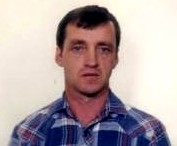
Eli E. STUTZMAN
Jr.
Classification:
Serial killer
Characteristics: Parricide
- Gay Amish man - HIV positive
- Robbery
Number of victims: 5
Date of murders: 1977 / 1985
Date of birth: 1950
Victims profile: His wife
(eight months pregnant)
/
Glen Albert
Pritchett, 24
/
David M. Tyler, 36 /
Dennis Slaeter, 24 / His
9-year-old son, Daniel
Method of murder:
Shooting
Location: Ohio/Texas/Nebraska, USA
Status: Sentenced to 40 years in prison in Texas in August
1989. Paroled in 2005. Committed suicide on January 31, 2007
Death of gay Amish man reopens investigation of
Durango murders
February 25, 2007
By Shane Benjamin | Herald Staff Writer
The year was 1985.
Durango had gone 3 1/2 years without a murder.
That all changed Nov. 10 when a passenger on the
Durango & Silverton Narrow Gauge Railroad spotted a decaying body in a
truck bed in the 1400 block of Main Avenue. The victim, according to
police, died from a severe head injury. Three weeks later another body
turned up - this one in a room at Junction Creek Liquors. The store
clerk was shot at close range in what appeared to be a robbery.
Police collected evidence and took interviews, but
after a few weeks, both cases went cold.
Now, 21 years later, both murder mysteries are
receiving new life.
Durango police have requested fingerprints and DNA
samples from
Eli Stutzman, a 56-year-old
killer who committed suicide last month in Fort Worth, Texas. The Amish-born
man spent 16 years in prison for killing his roommate, Glen Pritchett,
in May 1985. While on the run, Stutzman lived on
a ranch in La Plata County. It was during this time that two Durangoans
lost their lives.
"It's a person of interest that we've had for a while,"
said Durango police Sgt. Tony Archuleta. "If there is a match, we'll at
least be able to close it out - that he was the perpetrator. We'll have
to see where the evidence leads us."
No progress has been made on the Durango murders for
21 years, because police have not had enough evidence to arrest
Stutzman or force
him to give prints and DNA samples, Archuleta said. And prints obtained
from a Texas prison were inadequate, he said.
But with
Stutzman dead,
and no one willing to claim his body, investigators have obtained a new
set of prints and a DNA sample.
A serial killer?
If police do link
Stutzman to the
Durango murders, it could expose him as a serial killer. In 1977,
Stutzman's wife
died in a suspicious barn fire. She was eight months pregnant. And on
Christmas Eve 1985, the body of
Stutzman's 9-year-old
son, Danny, was found frozen in a ditch along U.S. 81 in Chester, Neb.,
wearing a blue sleeper. The town nicknamed the child Little Boy Blue.
The death of
Stutzman's wife
was chalked up as a tragedy; Danny's death was more suspicious.
Stutzman said
Danny died quietly and unexpectedly while they were driving from Wyoming
to Ohio. Scared and bewildered,
Stutzman said he
ditched the body along the roadside and covered it with snow.
"I had difficulty facing the fact that he had died,"
Stutzman told a
Nebraska courtroom. "I couldn't understand. I couldn't figure out why. I
decided to leave him and let God take care of him."
For leaving his son in a ditch,
Stutzman was
convicted of abandoning a body and concealing a death, a misdemeanor,
and sentenced to 18 months in prison. Authorities never could identify
how Danny died. For killing his roommate in May 1985,
Stutzman was
sentenced to 40 years in prison, but he was paroled in spring 2005 after
serving only 16 years. He was found dead Jan. 31 in his Fort Worth
apartment with a cut to his left wrist.
Two murders in a month
For 21 years, Durango police have tried to solve the
murders of David M. Tyler, 36, and Dennis Slaeter, 24.
Tyler was found dead Nov. 10, 1985, in a truck bed
outside Automatic Transmission Exchange, a business he co-owned in the
1400 block of Main Avenue.
Slaeter was found shot to death Dec. 5, 1985, in a
basement room at Junction Creek Liquors, where he worked as a clerk.
Evidence suggests
Stutzman and
Tyler knew each other, were both gay and used drugs, according to Gregg
Olsen, author of Abandoned Prayers, a true-crime novel about Danny
Stutzman's death
that hit No. 7 on The New York Times bestseller list in 2003. There is
even evidence to suggest that the two men attended the same party Nov.
8, 1985 - two days before Tyler's body was found in the trailer.
"Definitely David Tyler was a member of the gay
community, which
Stutzman was," Olsen said from his home in Seattle. "David Tyler was
also a drug person. Eli was."
It is unknown if
Stutzman and
Slaeter knew each other; although Tyler and Slaeter were acquaintances,
Olsen said.
David Tyler
According to Durango Herald archives, Tyler lived in
Durango for 3`BD years. He was one of three owners of the automotive
shop and worked as a manager and a mechanic. He lived on Fourth Avenue,
wasn't married and had no family in the area.
Friends described Tyler as friendly, mellow, an
occasional drug user and a good mechanic. People who didn't know Tyler
well said he seemed "dumb" or distracted. He liked to hang out at the
Diamond Belle Saloon, but most of the time he went home after work.
Tyler, who was gay, told friends he received death
threats by telephone from someone who hated homosexuals. It scared him
enough to carry a handgun.
The last time Tyler was seen alive was Saturday
night, Nov. 9, at the Holiday Inn, where police found his light brown
GMC Suburban.
Police identified "persons of interest" and collected
physical evidence, but there wasn't enough to make an arrest, said
former Durango police Chief Chris Wiggins, in an interview last week. "We
just never could quite put anything together," he said from his home in
Durango.Archuleta, who was a patrol officer at the time, said police
have preserved physical evidence from the crime scene, but he declined
to be more specific.
Dennis Slaeter
Slaeter was two weeks away from earning a degree in
industrial psychology from Fort Lewis College when he was shot to death,
according to Herald archives.
He had worked at Junction Creek Liquors for about six
months, usually two or three nights a week - a job "he didn't need,"
according to a sister.
He was tall, athletic and had curly blondish hair,
the sister told the Herald about a week after the shooting. She
described him as a "gentle giant `85 who, even as a child, wouldn't get
into a fight with his brother and six sisters."
He enjoyed the mountains, playing touch football and
was learning to telemark ski.
Police surmised that some transient blew through town,
committed the robbery and murder, and left, Wiggins said. Slaeter was
taken in the basement and shot, possibly to hide the sound of the
gunshot, he said.
"We felt at the time it was somebody moving through
the town, committed that particular crime, and just kept on going,"
Wiggins said.
But it was the second murder in three weeks, and
residents were becoming unnerved. "There was a lot of concern as to
where the town was headed," Wiggins said.
'I still think about them'
What was most disturbing about the slayings was how
senseless they seemed, how closely together they occurred and how they
went unsolved, said Mike Smedley, news editor at the Herald at the time.
Smedley now writes a column for the newspaper.
"It was a real jolt to the community - not only for
having murders, but for having unsolved murders," he said.
Slaeter's murder seemed especially senseless. "The
thinking at the time was it was somebody coming through town needing
money, stole the money, and then killed somebody to cover it up,"
Smedley said. "If that isn't the definition of a scumbag, I don't know
what is.
"I hope that there is at least closure from this."
Wiggins said he still thinks about the unsolved
murders.
"These two bother me," he said. "I still think about
them from time to time."
Stutzman a suspect since 1987
It is unknown if police considered
Stutzman a person
of interest in 1985. But he certainly became a person of interest in
1987 after authorities learned that Little Boy Blue was
Stutzman's son,
and that
Stutzman
had lived in La Plata County days before Danny's death, and that
Slaeter's murder was committed days before
Stutzman left
town.
While there wasn't enough evidence to order
fingerprints from
Stutzman, the Durango Police Department did receive a set from a
prison in Huntsville, Texas, where he was incarcerated for the death of
his roommate.
Unfortunately, the prints were illegible, Archuleta
said, and police could not order a new set of prints or DNA samples
without
Stutzman's
permission or a legal battle, and
Stutzman wasn't
willing to cooperate.
But when
Stutzman died
last month, Olsen, the author, contacted a Texas investigator to tell
him that fingerprints and DNA samples obtained from
Stutzman's body
might help Durango solve its two murders, Archuleta said. The
investigator obtained the samples from a coroner and planned to send
them to Durango.
"We have requested that information," Archuleta said.
"We haven't received it yet from Texas. `85 It's a cold case, but we've
been trying to work it through the years."
Once police receive the samples, perhaps as soon as
next week, investigators will compare them with evidence collected from
the 1985 crime scenes and then possibly ship the samples and evidence to
the Colorado Bureau of Investigation for further analysis.
Durango police hold the key
In an interview last week, Olsen expressed
disappointment that the Durango Police Department has not done more to
prove or disprove
Stutzman's involvement in the 1985 murders.
By 1987 police knew
Stutzman was a
potential suspect, he said. But they never formally requested
fingerprints while
Stutzman was in custody in Nebraska. "For some reason, they just
didn't work this case, either one of those cases," Olsen said. "And
maybe they have quietly and closed them, but I'm not hearing that."
The world will never know for sure whether
Stutzman killed
his wife and son, Olsen said. "But you guys have something there," he
said.
"I've always felt that Durango police hold the key to
showing whether or not this man is a serial killer."
Long trail of mystery and bodies
ends in Fort Worth
February 25, 2007
By Deanna Boyd - Star-Telegram
FORT WORTH -- Charles Turner just wanted to help send
his friend back home.
Eli Stutzman
had been found dead the day before inside his west Fort Worth apartment
from an apparent suicide.
But finding relatives of his 56-year-old friend
wouldn't be easy, Turner knew.
Stutzman had been
raised Amish in a small community in Ohio and had been somewhat
estranged from his family.
Flipping through an old Amish periodical that
Stutzman had
recently given him, Turner came across a notice on Page 91 for the "29th
Annual Buggy Makers Get Together." It included the names and telephone
numbers of three contacts. Turner made the calls.
That afternoon, Mahlon Miller returned the call to
Turner.
"I asked him did he know how I could contact the
family of
Eli Stutzman," Turner
said.
Which
Eli Stutzman? "Is
this Little Boy Blue's father?" Miller asked.
The unusual question stumped Turner, but the story
the man told him next stunned him.
Eli Stutzman
was a murderer, Miller said. He'd served time in prison for killing his
roommate. Several people, including members of his own family, believe
he is behind the 1977 death of his pregnant wife, as well as that of his
9-year-old son, Daniel, whose body was found in a small Nebraska town
eight years later.
Stutzman, it turns out, was also a suspect in two unsolved murders
in Durango, Colo.
Turner had known
Stutzman to be a
kind, soft-spoken friend who loved animals and made and sold leather
goods from his home. Was it possible his docile friend concealed a
history of violence? Had he really known his friend at all?
"I was trying to send him back to his people," Turner
said. "I didn't want him to be buried here in a pauper's grave, but then
all this began to unravel."
A grisly discovery
Christmas Eve 1985 was a slow day at work for Chuck
Kleveland, a wholesale petroleum dealer. Deciding it was time for a
haircut, Kleveland first stopped by his home in Chester, Neb., to pick
up his shotgun in case he spotted any pheasant on his drive to nearby
Hebron.
Traveling on a dirt road, his eyes scanning the
horizon for pheasants, Kleveland spotted a small ravine overgrown with
tall weeds.
"I drove by slow and noticed something very blue in
there," Kleveland said. "I thought, that's strange. I stopped and backed
up and I looked again and I could see something blue over there.
Something wasn't right."
Kleveland put his pickup in park, got out and walked
over to the edge of the ravine.
"I thought someone was playing a terrible joke," he
said. "It looked like a mannequin from a store or a big, baby doll
laying in the weeds. I looked a little closer. Then it hit me: This was
a child."
Kleveland ran back to his truck, called his office on
his radio and told employees to summon Thayer County Sheriff Gary Young.
Daniel Werner, Thayer County attorney, had stopped by
to chat with Young when the sheriff told him that a pajama-clad body had
been found in a ditch. It was cold; the low that day was 9 degrees.
At the scene, sheriff's deputies blocked off the road
a mile in each direction and state patrol investigators arrived to begin
videotaping the crime scene.
Young saw no obvious blunt trauma on the child's body
except post-death bite marks on his face from rodents.
"The body had marks on the neck. I suspected
strangulation, but it turned out that was from the freezing," Young said.
The doctor who performed the autopsy could provide no
cause of death, only speculation that the boy may have died from Reye's
syndrome, a rare but deadly disease that has been associated with
aspirin being given to children or young teens.
Law enforcement officials didn't buy it.
"I thought there was something more to it," Young
said.
Werner had the autopsy reviewed by forensic
pathologists, including a doctor well-known for his work in identifying
hypothermia. But the doctors also couldn't determine the boy's cause of
death.
Still convinced the case was a homicide, authorities
continued their investigation.
"It was a very suspicious death," Werner said. "Obviously
he didn't walk there."
After leaving the scene, Kleveland returned home. He
walked inside, past his wife, and without a word went directly to the
bedroom of their youngest son, David.
"I wanted to make sure my kids were there," Kleveland
said. "It scared this whole town. There wasn't a kid who would go out by
himself for a long time. It was a mystery. ... There are people who
slept with shotguns by their bed."
Little Boy Blue
As mysterious as the boy's cause of death was his
identity.
No one appeared to be missing the young boy.
Authorities distributed sketches and enhanced photographs of the boy
throughout the country and enlisted the help of the National Center for
Missing and Exploited Children.
Kleveland took to calling the boy "Little Boy Blue"
because of his blue pajamas.
"There was no name or nothing else to call him,"
Kleveland said.
The nickname stuck as the story became national news.
When it became clear no one was going to claim the
body, residents of Chester and surrounding areas decided to adopt the
boy as their own.
One woman donated a cemetery plot. Others provided a
suit for the boy to be buried in, the flowers, the coffin and headstone.
Pastor Jean Samuelson delivered a memorable sermon to
the crowd of more than 500 mourners who packed the United Methodist
Church in Chester.
"She talked about how we can't lose the children. ...
It was a beautiful sermon," said Kathy Kleveland, Chuck's wife.
In a cemetery, not far from the graves of Chuck
Kleveland's parents, Little Boy Blue was buried under the name Matthew
-- meaning Gift of God. His marker read:
Little Boy
Abandoned
Found Near
Chester, Neb.
Dec. 24, 1985.
At the bottom, space was left with the hopes that one
day the boy's real identity could be added.
It would be a two-year wait.
After an article about the case appeared in Reader's
Digest in December 1987, Young received a letter from a Wyoming couple
who feared the body might be that of Daniel
Stutzman, a
friend's son they had taken care of for several months in 1985.
"The letter that I got had a photograph. It was taken
the day that Eli
picked Danny up in Wyoming," Young recalled.
Palm prints taken from Daniel's report card envelope
confirmed it was true. Little Boy Blue finally had a name.
Strange past
As authorities delved into
Stutzman's past,
a disturbing picture surfaced. Family members told of how Ida, his
pregnant wife, had died in a suspicious barn fire in 1977 near Dalton,
Ohio. Before the fire,
Stutzman had
reportedly changed the couple's bank account to his name. That, coupled
with the various stories he told about why Ida had gone into the burning
barn, left many in the Amish community suspecting he was responsible for
her death.
But the Amish, who are private people, did not share
their suspicions with law enforcement.
"Eli
hid behind his clothes a lot," said Daniel
Stutzman,
Stutzman's cousin.
Werner reviewed Ida's death certificate.
"It simply said 'heart stopped,'" Werner said. "It
was apparent she died in a fire, so I thought that quite unusual."
Authorities heard stories about how
Stutzman later
abandoned his family and Amish upbringing, hitting the road with his
son. They learned
Stutzman was gay. They discovered that he and his son had
disappeared from Austin after
Stutzman was
questioned about the fatal shooting of Glen Pritchett, a roommate and
employee who was found dead in a ditch in May 1985 in southeast Travis
County.
"By this time we already know about Ida, his wife. We
know about Pritchett. We know about his sexual orientation," Young said.
"There are just so many things that led me to believe that he had to get
rid of that boy. ... Danny was a millstone around his neck. Danny didn't
fit into Eli's
lifestyle."
Adding to the suspicions were the various stories
Stutzman gave to
explain away his son's sudden disappearance.
When he arrived in Ohio in Christmas 1985 without
Daniel,
Stutzman
told his family that the boy was on a skiing trip.
He told the Wyoming couple that his son had been
enrolled in school in Ohio. And later he wrote the boy's maternal
grandparents that Daniel had died in a car wreck in Utah in July 1986.
Fascinated by the case, journalist Gregg Olsen
embarked on writing a true-crime book. Abandoned Prayers, released in
1990 and again in 2003, told of Olsen's belief of
Stutzman's
involvement in deaths of his pregnant wife and son.
"It's that kind of story that people just can't
believe and they want to know more," Olsen said. "They want to know more
about this gentle Amish person that went berserk."
In custody
In December 1987, the law caught up to
Stutzman. After
receiving a tip that he was living in a trailer in Azle, officers staked
out the area and arrested him on a felony child abuse warrant in
connection with his son's death. Law enforcement officials speculated
that
Stutzman may
have come to Azle because he had friends in the area.
Young flew to Tarrant County along with Jack Wyant, a
Nebraska state patrol investigator, and attempted to interview
Stutzman at the
Tarrant County Jail.
Stutzman refused to cooperate but did not fight extradition back to
Nebraska.
"A very meek mouse," Young recalled of his impression
of
Stutzman. "The
first thing he asked for when we got him in jail in Nebraska was Grecian
Formula. He wanted to keep his hair nice. ... He was a weird dude."
With no confession that he'd harmed Daniel and no
cause of death ever determined, the murder charge never materialized.
"I suspected it, but I simply did not have the facts
to back that up," Werner said.
Instead,
Stutzman pleaded
guilty on Jan. 11, 1988, to two misdemeanor charges of unlawful disposal
of a dead human body and concealing the death.
At his sentencing hearing,
Stutzman took the
stand and told in his own words what had happened to Daniel.
He said he tried to wake his sleeping son to give him
medication for an upper respiratory infection but found the boy lifeless.
Before putting Daniel's body in a ditch and covering
it with snow,
Stutzman said he prayed for several hours. He said he did not report
the death because he feared his family would blame him for not taking
proper care of the boy.
Under cross-examination, Werner asked
Stutzman why he
didn't seek help immediately upon finding Daniel unresponsive.
"That's what I keep ... still keep asking myself
today,"
Stutzman
answered. "I wish now I would have."
During the hearing, William Gallup,
Stutzman's
defense attorney, read aloud a letter from one of the reviewing
pathologists that said the doctor could find no evidence to support that
Daniel's death was due to an injury. The doctor wrote that he favored
the notion that the child had died a natural death.
Gallup said last week that he was surprised by the
theories and suspicions hurled at
Stutzman.
"I remember from Day One he was accused essentially
of murdering this child. That was the position the sheriff out there
took and the prosecutor," Gallup said. "I've never understood where that
came from. There wasn't any evidence to support that at all."
The presiding judge sentenced
Stutzman to 18
months in jail.
"I really wasn't happy with it, but there's not much
you can do," Young said.
But
Stutzman's legal
problems were far from over.
Convicted of murder
After serving his sentence in Nebraska, he was
transported to Austin, where he was put on trial for the death of
Pritchett, his former roommate.
Pritchett, who had worked for
Stutzman's
remodeling business, was found in a ditch in May 1985 in southeast
Travis County. He'd been shot once in the head.
Questioned by deputies,
Stutzman said he
had not seen Pritchett for two months and believed he had returned to
Montana to be with family. Soon after, he and his son moved from Austin.
"He was definitely a person of interest," recalled
Gary Cutler, a Travis County homicide detective who now works with the
Texas Alcoholic Beverage Commission. "Obviously when he fled, that even
threw more suspicion on him. We just didn't have enough at the time to
hold him."
But after learning from Nebraska authorities about
Stutzman's son,
investigators reopened the case and gathered enough evidence to obtain
an arrest warrant for
Stutzman.
A jury found
Stutzman guilty
of murder, and on July 31, 1989, an Austin judge sentenced
Stutzman to 40
years in prison, providing a sense of justice for authorities and
residents in Chester.
While in prison,
Stutzman
occasionally wrote letters to his family, printing Scripture on one side
and updates on his life on the other. Occasionally, family members
visited him.
"It was always the hope that he might confess," said
Daniel
Stutzman,
his cousin. "We didn't want to lose contact because writing him and
still letting him know you loved him and keeping in touch was the only
hope."
Stutzman would serve less than 13 years before being paroled under
mandatory supervision.
Released in March 2002, he decided to make Fort Worth
his new home.
A secret life
At the Courtyard on Calmont apartments in west Fort
Worth,
Stutzman
lived out his remaining years quietly.
From his small, one-bedroom apartment,
Stutzman made and
sold leather goods -- including purses and Bible covers -- a skill he'd
picked up in prison. He loved country music, his dog Sport, taming
horses and French vanilla ice cream.
He also abused crack cocaine, friends say.
"He didn't hide it from nobody," said 61-year-old
neighbor Bertha Ramon, who often had coffee with
Stutzman.
But what his friends and neighbors didn't learn about
until after his death was that
Stutzman was also
a masterful storyteller when it came to his past.
He told Turner he had served time in prison because
of drugs. To a handful of others, he admitted that it was for murder but
insisted he was innocent. He told several he had never been married and
had no children, yet confided in Turner that he was a widower who left
his infant son behind with his Amish family because he was gay.
"He said he had visited the son -- I believe last
year -- when he went to the community and that his son had forgiven him
for leaving and everything and the visit went well," Turner said. "He
was really happy that they had bonded, and I felt really good for him."
Several had noticed changes in
Stutzman in the
past few months. He rarely ventured out from his apartment. Those who
stopped by noticed that many of his possessions -- including his
computer -- were gone from the apartment. He had frequent visitors at
all hours.
"It got to the point that every prostitute and
druggie was at his apartment," said Gina Robinson, property manager of
the complex. "I was having to come out here all hours of the night. He
had more traffic than the freeway."
When his rent check bounced in January, Robinson gave
Stutzman a three-day
notice to vacate the premises.
Stutzman told
Robinson that someone had stolen his checks and drained his bank account
but promised he would get her the money.
In reality,
Stutzman was
already preparing to leave.
When asked about his increasingly sparse apartment,
Stutzman
explained that he was going to visit his dying father.
"He had told us because of vandalism, he wanted his
things taken out of his apartment," Turner said. "He put some things in
storage, some things he pawned and some of his things, like his most
precious belongings, he gave away to his good friends."
To Turner,
Stutzman
bequeathed the videotape of his favorite movie, The Black Stallion
Returns, and a ship he'd made while in prison out of scrap wood and
prison linens.
He also gave Turner a green, hardcover book about the
history of his family's Amish roots.
Turner accepted the gifts, never imagining that his
friend was preparing to take his own life.
"It's so obvious. I just sometimes want to kick
myself," Turner said.
Questionable death?
About 4 p.m. on Jan. 31, a friend, Michael
D'Archangel, discovered
Stutzman after
getting no reply at his apartment door and walking inside.
"I found him kind of peaceful on the couch,"
D'Archangel said. "He had his comforter all the way up to his neck. I
saw him arms over the comforter. It looked like he had dipped his hands
in iodine."
The medical examiner's office ruled
Stutzman's death
a suicide caused by a sharp force injury of his left arm that cut a vein.
Toxicology tests found
Stutzman had
cocaine in his system.
Several neighbors can't accept that
Stutzman would
take his own life.
"I don't believe it at all. There is no way that he
would commit suicide. The time I've known this man, he was not the type
of person to do that," Robinson said.
Ramon, Robinson's mother, agrees. She said in the
days before his death,
Stutzman told her
he had found a new apartment.
"He was planning to move. He got killed, that's what
I say," Ramon said. "He got murdered."
Ramon points to the blood found in
Stutzman's
bathroom and on the hallway wall as evidence he struggled with his
killer.
Fort Worth homicide Sgt. J.D. Thornton said the
autopsy and evidence at the scene all indicate that the wound was self-inflicted.
"According to what the doctor told us, the wound
itself would not have caused immediate unconsciousness, and it could
have been several minutes before he was incapacitated," Thornton said.
"He would have had time to move around the apartment. Evidence there
suggested that he did. It appears that he then lay down on the couch,
covered himself with a blanket and watched television until he died."
A secret past revealed
The secrets that
Stutzman had kept
bubbled to the surface after his death.
"It's way shocking," said Tim Garner, who took in
Stutzman's dog,
Sport, after his death. He describes the apartment complex as "a little
Peyton Place."
"How could something of this magnitude go like it
has, undetected?" Garner wondered.
Some, like Turner, felt betrayed.
"That Friday after I Googled his name and saw these
things, I felt like it was a person that was completely unknown to me --
that the Eli I
knew never truly existed. That he was a monster instead," Turner said. "Nobody
over here had any clue that there was a monster in their midst."
Others, like Robinson, felt frightened.
"If somebody can kill somebody one time, I don't
believe you can change like that. If you have it in you, you have it in
you," Robinson said. "We thought he was a nice guy here, but when was he
going to snap?"
In Nebraska, some wondered whether Eli's suicide was
the result of pent-up guilt over what they believe he has done.
"Maybe he finally got a conscience," Young said.
He left no suicide note.
"It's going to be a mystery for life," Kleveland said.
Meanwhile,
Stutzman's body
remains unclaimed at the Tarrant County morgue. He will, it appears, be
buried in a pauper's grave.
Daniel
Stutzman said the
family decided not to bring
Stutzman's body
back to Ohio because of the news media that would come with him.
"They said it would cause too many wounds," he said.
Still a suspect
Eli Stutzman,
who died on Jan. 31, is a suspect in the deaths of two men in Durango,
Colo. David Tyler, a 36-year-old man who was friends with
Stutzman, was
found dead Nov. 9, 1985, of a severe head injury in a trailer parked
behind a transmission shop he owned and operated. Tyler's friend, 24-year-old
Dennis Slaeter, was shot in the back during an apparent robbery Dec. 5,
1985, at a liquor store where he worked as a clerk. At the time of the
slayings,
Stutzman
was living at a nearby ranch in Aztec, N.M., said Durango Sgt. Tony
Archuleta. The Tarrant County medical examiner's office has sent Durango
police
Stutzman's
fingerprints and DNA.
Durango Sgt. Rita Warfield said investigators plan to
sift through the old case files to identify any evidence so the Colorado
Bureau of Investigations can make comparisons with
Stutzman's
fingerprints and DNA. "Since Mr.
Stutzman is
deceased, although it would be great if we could solve these two cases
for the families, there's not a lot we can do until we get the results
back," Warfield said.
Even if the evidence is tied to
Stutzman,
Warfield said it may not tell investigators definitively that he was
responsible. "If it's something we can tie him into being there, that
would be great. But the man's dead now. We may never know. Even if his
prints are found there, that doesn't mean there wasn't a second person.
He'll have to be accountable to a much higher authority than us," she
said.
Gregg Olsen, who wrote a true-crime book about
Stutzman, said he
is hopeful that
Stutzman prints will match a print found in connection with one of
the murders. "There's a lot of people who say he never really killed
anybody," Olsen said. "I just think his print at the scene of another
dead person is irrefutable proof that he isn't the most unluckiest
person in the world. He's a killer."
-- Deanna Boyd
Wayne native's DNA could solve old
deaths
Following his suicide, police try
to determine if man was serial killer
Feb. 19, 2007
By Rick Armon - Beacon Journal
Mystery followed Eli Stutzman.
In life and now even in death.
The charismatic Wayne County killer
from Dalton -- infamous for being the father of ``Little Boy Blue,'' a
child found frozen along a Nebraska road more than 20 years ago -- died
in his Fort Worth, Texas, apartment last month.
The 56-year-old sliced open his left
arm and bled to death, the Tarrant County medical examiner ruled.
There was no suicide note.
Now those who have followed his
ignominious life, chronicled in newspapers as early as 1977 with the
death of his Amish farm wife and in the 1990 true-crime book Abandoned
Prayers, are wondering if the truth about the many mysteries and
tragedies surrounding the homosexual Amish-born man will ever be fully
revealed.
The main question is whether Stutzman, who was
convicted of murdering his roommate in Texas, was a serial killer. Did
he also kill his wife, Ida, and son Danny, as some authorities have
suspected -- or were their deaths accidental and natural, as he claimed?
And did he kill two men in Durango, Colo., in 1985?
The answers about his wife and son may
die with him.
But Durango police have requested
fingerprints and DNA from his corpse to see if he's responsible for two
unsolved murders in their community.
"I'm very interested in the outcome of
the Colorado cases and I'm keeping my fingers crossed that the
authorities there do the right thing and wrap them up,'' said Gregg
Olsen, author of Abandoned Prayers. ``I've been pushing for this for 20
years and finally, some action. Closing the books on David Tyler and
Dennis Slaeter's murders would mean the world to me. The system totally
failed us on Danny and Ida's deaths.''
Ida's death
Ida A.
Stutzman died at
the age of 26 in an early morning barn fire at the Stutzmans' Moser Road
farm in Dalton.
Her husband found her overcome in the
milk house, rescued her and tried to revive her, according to a July 12,
1977, story in the Beacon Journal. But it was too late and she was dead
on arrival at Dunlap Memorial Hospital.
Ida was eight months pregnant at the
time.
Olsen contends that authorities --
particularly the coroner at the time -- botched the investigation,
choosing to believe everything Stutzman said
instead of conducting a thorough probe.
"The truth is that if she was not
Amish, there would have been a real investigation,'' Olsen said.
"Stutzman
was the consummate liar,'' he added. ``His gentle facade made it easy
for those to fall for him -- the tortured former Amishman, no one could
understand what he'd been through. He played on their sympathies and
lied right to their faces.''
Wayne County Sheriff's Capt. Douglas
Hunter, who started with the department four years after the fire, said
the case has been long forgotten.
Olsen said
Stutzman, who was
gay and having relationships with men, wanted his wife out of the way.
After she was dead, he began placing classified ads in the Advocate, a
gay magazine, to seek companionship.
"There was no way out of the Amish. No
divorce,'' Olsen said. ``The Amish kept trying to help him with his
mental problems (as they saw it) and he knew that he'd never be rid of
their good intentions as long as he was tied to Ida. Killing her was his
way out. No doubt about that.''
He sold his farm in 1982 and moved
with Danny to Ignacio, Colo., where, neighbors said at the time, he
planned to get involved in cattle ranching.
He told a friend from Akron that he
was leaving because of pressure from the Amish to return to his faith.
National news
Gas station owner Chuck Kleveland was
driving down U.S. 81 near Chester, Neb., on Christmas Eve in 1985 when
his eye caught a flash of blue in the snow.
He stopped and discovered the frozen
body of a little boy wearing only blue pajamas. No one knew who he was.
Horrified by the death, the town of
Chester adopted him, named him Matthew and built a shrine to -- as he
would be called -- Little Boy Blue. For two years, his identity remained
a mystery, until a woman reading a Reader's Digest story about the case
recognized the picture of the boy.
It was Danny
Stutzman,
Eli's son.
Authorities were convinced that
Stutzman killed
Danny. But there were no signs of foul play.
Stutzman
was
charged with felony child abuse.
He would speak publicly about the case
only once -- in a Nebraska courtroom.
Stutzman
said
that while driving from Wyoming, where Danny had been staying with
foster parents, to Ohio, he found the boy dead in the vehicle, his eyes
rolled back in his head and his complexion white. Danny wasn't breathing
and had no pulse, he said, adding that the boy had developed a
respiratory illness while in Wyoming.
"I had difficulty facing the fact that
he had died,''
Stutzman said.
"I couldn't understand. I couldn't figure out why.''
He said he tried to revive his son and
then he spent several hours with the boy's body along the roadside and
prayed for him. Then he put Danny's body in a ditch and covered it with
snow.
"I decided to leave him and let God
take care of him,''
Stutzman said.
When asked why he didn't seek help or
alert authorities, he responded: ``That's what I still keep asking
myself today. I could not figure out what happened. I wish now I would
have.''
Stutzman
was
convicted on misdemeanor charges of abandoning a body and concealing the
death of another person and sentenced to 18 months in prison in 1988.
The next year, he was convicted in the
1985 shooting death of his roommate Glen Albert Pritchett, 24, whose
body was found in a ditch in rural Travis County, Texas. Pritchett
worked for
Stutzman's
construction company and lived in the same house with Stutzman and his
son.
He was sentenced to 40 years in prison,
but was paroled in 2002.
Author Olsen, who also maintains the
Web site www.crimerant.com, believes
Stutzman killed
Danny because the boy knew too much.
"Danny was 9. He knew full well that
his father was on the run for the murder of Glen Pritchett in Austin,''
Olsen said. ``Police there theorized that Danny was, in fact, a witness
to the homicide. Furthermore, he'd been around his father's drug use and
promiscuity (and) there was no way Eli could return
him to the Amish. He had to get rid of him.''
Cold case
The same year that
Stutzman killed
Pritchett and dumped his son's body in Nebraska, David Tyler and Dennis
Slaeter were killed one month apart in Durango, Colo.
Tyler, 36, was the part owner of an
auto mechanic shop and his body was found in an open utility trailer
near the business. He died of a severe head injury.
Slaeter, 24, was shot in the back
during a robbery at a liquor store, where he was working as a clerk.
Stutzman knew
both of them, said Sgt. Anthony Archuleta of the Durango Police
Department. But he declined to elaborate or say why police believe Stutzman
could be
the killer.
"We hope this might be what we have
needed to have some closure for these families,'' he said, referring to
the request for fingerprints and DNA.
The end
The Tarrant County medical examiner
still has
Stutzman's
body.
His family in Ohio doesn't want to
claim it, Dr. Roger Metcalf said, so he will likely be cremated.
Stutzman spent
the last years of his life with HIV living in Fort Worth. He had both
money and drug problems, said Olsen, who questions whether Stutzman
would
commit suicide.
"I'm not so sure he did,'' he said.
"Stutzman
was a runner. I know he was in trouble with drugs again and he owed
money. But I see him as the kind of guy who would pack up and leave,
rather than kill himself. I guess we'll never know.''
Eli Stutzman found
dead in Texas apartment
February 6, 2007
By Christine L. Pratt - Staff Writer
WOOSTER -- Little Boy Blue's father is dead.
Eli Stutzman,
56, was found dead in his Ft. Worth, Texas, apartment on Wednesday
afternoon. The Tarrant County (Texas) Medical Examiner's Office ruled
Stutzman's death
a suicide, the cause of which was a sharp force injury to the left arm.
The former Wayne County man is not only suspected of
killing and abandoning his 9-year-old son in Nebraska and starting the
barn fire that claimed the life of his wife, but was convicted in the
1985 Texas murder of a former roommate.
Emergency personnel went to
Stutzman's
apartment on Wednesday afternoon after a neighbor reported
Stutzman had not
been seen in a while, said Lt. Dean Sullivan of the Ft. Worth Police
Department.
Sullivan, on Friday, said there were no signs of foul
play, and a dog found inside the apartment was released to animal
control.
Other than a 2005 report listing
Stutzman as the
victim of a suspected financial crime, he said, the department had no
record of incidents involving the convicted killer.
Stutzman's life was made public by a series of events, including the
1990 release of the book "Abandoned Prayers: The Shocking True Story of
Obsession, Murder and 'Little Boy Blue.'"
In the book, author Gregg Olsen recounted the July
1977 barn fire near Dalton that claimed the life of
Stutzman's
pregnant wife, Ida.
Former Wayne County Sheriff's Capt. James Gasser said,
"We all have our theories," but would not comment on whether he was
convinced
Stutzman
was responsible for Ida
Stutzman's death.
On hearing of
Stutzman's death,
Gasser said, "He didn't serve a purpose any more," noting with his death,
there was no more need to speculate, and "something like that, it's just
best to let it lay."
Olsen's book also details the Christmas Eve 1985
discovery of the frozen corpse of a boy, later identified as Danny
Stutzman. With no
evidence he was responsible for his son's death,
Eli Stutzman was
convicted of abandoning a body and concealing a death, for which he was
sentenced to one year in prison.
Stutzman was sentenced to 40 years in prison for killing Glen
Pritchett in Texas. He was released from prison in 2002, according to
Olsen.
Olsen's book delves into
Stutzman's
involvement with countless gay men, whom he reportedly met through
advertisements and at sex parties across the United States.
Olsen, contacted at his Washington home on Monday,
was not as quick to put the case -- with which he admits to being "obsessed"
-- behind him.
Olsen said he is convinced
Stutzman killed
his wife, his son, Pritchett and two men in Oklahoma.
He said he learned of
Stutzman's death
after getting e-mails
from some of
Stutzman's friends in Texas "who had just found out for the first
time he was Little Boy Blue's dad."
"They found me by Googling his name," said Olsen, who
has since had several insightful conversations with
Stutzman's
friends and his most recent lover, and "No one had a clue."
He said
Stutzman's death
"would close any opportunity to find out what happened to Ida, Danny and
those other men."
"I've been obsessed with (Stutzman)
since I wrote the book," said Olsen. "I feel bad he never confessed or
told the truth to anyone.
"Now nothing's going to happen. Now we have four
deaths that would never see resolution, unless, of course he left
anything behind," said Olsen, adding he is working with several people
in Texas, collecting information and photos detailing
Stutzman's last
days, which he intends to post online at crimerant.com.
"I haven't given up he might have left something
behind," he said, noting any evidence of a possible written confession
will be shared with The Daily Record and residents of Wayne County.
"There are so many people there who wanted me to
solve this crime (of Ida
Stutzman's death),
and I feel like we're really just let down again.
"I'm surprised he would kill himself. I always knew
we'd hear of him again, but thought it would be because he'd killed
someone. The idea of suicide doesn't fit ... maybe he couldn't live with
himself any more," Olsen said.
Olsen continues to harbor hostilities against Wayne
County investigators, who, he said, listened to
Stutzman and
initially ruled the fatal fire was an accident.
Then-coroner Dr. J.T. Questel "really let Ida down,"
Olsen said. "She deserved a full investigation. It makes me really angry."
Olsen maintains had
Stutzman been
convicted of killing his wife, he would not have had the opportunity to
kill others.
Questel declined Monday's call for comment.
'Little Boy Blue' remains in town's
heart
February 7, 2007
By Elizabeth Ahlin - World-Herald
More than 20 years after the body of "Little Boy
Blue" was found, frozen and alone, in a Nebraska farm field, the small
community of Chester still pays tribute to its adopted son.
It would be two years before anybody knew his
identity, but the town named him, buried him and mourned him as if he
were one of its own.
Now Danny's father,
Eli Stutzman, has
died, and the townspeople may never know exactly what happened to the
boy.
Stutzman, 56, was found dead Jan. 31 in his apartment in Fort Worth,
Texas. His death has been ruled a suicide.
Stutzman died from "sharp force injury" to his left arm, according
to the Tarrant County medical examiner in Texas.
Danny
Stutzman came
into the lives of people in Chester when a flash of blue caught the eye
of Chuck Kleveland as he drove down U.S. Highway 81.
What he found was the body of a lifeless 9-year-old
boy, wearing nothing but a blue sleeper.
For the next two years, Danny was Little Boy Blue
because his clothing was all that was known about him.
Despite strong local and national interest in the
case, it wasn't until November 1987 that he was identified, after a
woman recognized a sketch of the boy in Reader's Digest.
Eli Stutzman
claimed that the boy died in the back of his car during a trip from
Wyoming to Ohio.
When he realized that Danny was dead,
Stutzman said, he
tried to revive him. Eventually, he gave up, laying Danny down in a
Nebraska field and continuing on to Ohio.
Local law officers were suspicious of his story. Many
continue to believe
Stutzman was involved in his son's death, but an autopsy did not
show any signs of foul play.
Stutzman was arrested and charged with felony child abuse. He
pleaded guilty to misdemeanor charges of abandoning a body and
concealing a death. He was sentenced to 18 months in jail.
Danny's mother, Ida
Stutzman, died in
a barn fire in July 1977 at age 26.
In 1988,
Stutzman was
extradited to Texas, where he was convicted of the shooting death of his
roommate, Glen Albert Pritchett.
Stutzman was
sentenced to 40 years in prison, but he was paroled in 2002.
Many who knew
Stutzman in Fort
Worth were unaware of his past.
Gina Robinson, who described herself as a friend of
Stutzman's and
his apartment manager, said she was shocked when she heard about his son
Danny.
Robinson liked
Stutzman - she
found him friendly and kind. Even so, she was concerned about the people
who frequented his apartment.
After his most recent rent check was returned by the
bank, she told him to leave. A few days later, he was dead.
Those connected with Danny's case are curious about
the life that
Stutzman led, but they don't want to see the emphasis shift away
from Danny.
His gravesite and memorial are evidence of their
continued devotion to Little Boy Blue.
"There's still people stopping up there and leaving
toys and stuff," Kleveland said.
Just over a year ago, Thayer County Attorney Daniel
Werner, who prosecuted
Stutzman, said
Danny's case was still open, but now it's considered closed.
Both Werner and Gary Young, former Thayer County
sheriff, expressed frustration that they may never know the true story.
But the town of Chester will keep the memory of Danny
alive, Werner said.
"Legally, yes, the case is closed, but people
remember. As long as people remember, it won't be over."
Dad in 'Little Boy Blue' case dies
Saturday, February 03, 2007
Terry Oblander - Plain Dealer Reporter
Homicide detectives in Fort Worth, Texas, are
investigating the Wednesday afternoon death of a former Ohio man who
gained notoriety after his 9-year-old son was frozen to death in a
Nebraska highway ditch.
The Tarrant County medical examiner's office has
conducted an autopsy on
Eli Stutzman, 56,
whose body was found in his Fort Worth apartment. A friend found
Stutzman's body
on the floor of his home with a deep knife wound to one arm.
It was more than two decades ago that
Stutzman's son
was found in the Nebraska ditch.
The residents of Chester, Neb., called him "Little
Boy Blue" because of the blue footed pajamas he was wearing when his
frozen body was found Christmas Eve 1985.
It would be nearly two years until a Reader's Digest
story led to the revelation that the boy was Danny
Stutzman, the son
of a gay Amish man from the Apple Creek area of Wayne County.
Stutzman pleaded guilty in 1988 and was sentenced to 18 months in
jail on charges of abandoning a body and failing to report a death.
A year later,
Stutzman was
convicted in Austin, Texas, in the murder of his roommate, Glen Albert
Pritchett, who had lived with
Stutzman and
Danny.
Stutzman
murdered Pritchett in May 1985.
Stutzman, who suffered from AIDS, was released after serving 13
years of a 40-year prison sentence. Fort Worth Detective Matt Hardy said
Stutzman violated
his parole in 2003 and was returned to prison for a short time.
Boy's death mystified, defined
Chester's 'big heart'
Saturday, Dec 24, 2005
Twenty years after the town of Chester rallied behind
“Little Boy Blue,” residents reflect on the child’s death.
By Gwen TIETGEN / Lincoln Journal Star
CHESTER — The generation that would have been Danny
Stutzman’s has
grown up without him. Case still a mystery He didn’t graduate from high
school, go to college, marry or have a family. Danny’s 9-year-old body
was found in a ditch near Chester on Christmas Eve 1985.
No one knew him or his name until two years later.
But this community came to love him anyway, and in
turn, he defined them.
A community that wept at his funeral, that buried him
under the name Matthew, a name that means “gift of God,” and referred to
him as “Little Boy Blue,” because of the blue pajamas he was wearing
when found.
“The church was completely packed and nobody had any
idea who this child was,” said Thayer County Attorney Daniel Werner.
The town still cares for his gravesite in its
roadside cemetery. People still lay toys, cars and coins on his grave.
The community built a roadside memorial for him, then rebuilt it after a
tornado.
And it bears the logo, “A small town with a big heart.”
Twenty years later, author Gregg Olsen has written a
book, “Abandoned Prayers,” about the boy. National and local media have
printed the story time and again.
Although much of the media attention has fizzled and
talk has waned, the memories haven’t.
“We have people stop in all the time wanting to know
where he’s buried,” said Gail Wendover, a waitress at Foote Cafe in
Chester.
A roadside memorial is located just up the road, to
the left of Foote’s Cafe. The cemetery is on the right side of U.S. 81.
“I always recommend the book. It’s graphic, but it’s
the truth,” Wendover said.
Wendover moved to Chester in June 1985 and remembers
the community’s shock.
“It was sad. But everybody pulled together and named
him because they didn’t know who he was,” she said.
The case remains open. The autopsy revealed no
medical finding about his death, Werner said.
“Do I wonder? Ya, obviously. I’m the kind of guy
that’s suspicious that more happened than we will ever know,” he said.
“But being suspicious and being able to prove it in a criminal court
beyond a reasonable doubt are two different things.”
“I never really believed that Danny died naturally,
but I’ve never been able to prove he died otherwise.”
Charles Kleveland, the gas station owner who found
Danny’s body that night, said people haven’t forgotten. He repeats what
he has said for years, “The only person who knows what really happened
is Eli.”
Said Werner: “It’s the kind of thing that never goes
away. The child was found, abandoned in that kind of condition. It tugs
on your heartstrings.”
Former Thayer County Sheriff Gary Young said pleas
for information yielded tons of tips, from across the United States,
Alaska and overseas, but nothing solid. Young, who lives in Hot Springs
Village, Ark., retired in September 2001.
After a tip identified Stutzman, authorities
discovered Danny was raised Amish. A Reader’s Digest article two years
later lead authorities to the boy’s father,
Eli Stutzman.
Young said he remembered the panic the community felt,
wondering if some sick killer would hurt one of their children.
“The case never really got solved. I won’t put any
blame on anybody. It’s just one of those things. We didn’t get a good,
conclusive autopsy,” he said. “I really think there was more to it than
what we know.”
Said Young: “I just have it in my gut that there’s
something we didn’t get.”
In statements then,
Eli Stutzman said he
was scared after he found his son dead in the back of his vehicle. Danny
had reportedly developed a respiratory problem.
“Back then, I said, we didn’t get him, but maybe God
will,” Young said.
Eli Stutzman
was released from prison in March 2002 after serving time for killing a
roommate in 1985 in Travis County, Texas, months before Danny’s death.
He was convicted in 1989.
Reached at his Fort Worth, Texas, home,
Eli Stutzman said he
had no comment.
Case still a mystery
By Gwen TIETGEN / Lincoln Journal Star
Friday, Dec 23, 2005
Gregg Olsen spent two years retracing
Eli Stutzman’s
footsteps prior to and after Danny
Stutzman’s death
for the book, “Abandoned Prayers: An Incredible True Story of Murder,
Obsession and Amish Secrets.”
He made several trips to Nebraska, Colorado, Wyoming
and Ohio, all places
Stutzman set foot before and after he abandoned his son’s 9-year-old
body in a ditch near Chester.
Olsen, like Thayer County Attorney Dan Werner and
former sheriff Gary Young, believe there’s more to
Eli Stutzman’s
story. The book might leave that impression. It talks of how Danny’s
mother, Ida
Stutzman,
died in a suspicious barn fire while she was pregnant with a second
child.
The Amish don’t believe in talking to law enforcement
and didn’t question, but always suspected, foul play in Ida
Stutzman’s death,
Olsen said.
Afterward,
Stutzman left the
Amish community, his son in tow, and revealed he was gay.
He had gone to Texas and was later convicted of
killing a roommate in the spring of 1985. He left the boy with a foster
family in Wyoming for six months. He fetched him, saying they were going
to Ohio’s Amish community for Christmas. Danny never made it there.
After dumping his body in Chester,
Eli Stutzman
visited a boyfriend in Mound Ridge, Kan., authorities said.
Eli
Stutzman told Amish relatives Danny died in a car wreck in Utah.
Relatives later found out the truth.
Olsen said he has a pile of letters
Stutzman wrote to
relatives, lying about Danny’s whereabouts.
“I have one letter where he was pretending to be
Danny after he had been dead for four months,” Olsen said.
Stutzman said he found his son dead in his vehicle while the two
were driving to Ohio from Wyoming. He had reportedly developed a
respiratory condition and
Stutzman, at the time, said he had become scared and discarded
the body for God to take.
“It’s one story that doesn’t go away. He’ll always be
‘Little Boy Blue’ to everybody forever,” Olsen said.
The book, published in 1990 and re-released in 2003,
became a New York Times Bestseller.
“It’s one of the all-time mysteries. I wish there was
somebody in Thayer County that said we should take a look at this,”
Olsen said Thursday. “Forensic science has changed in 20 years. Maybe
they’d find something this time around.”
Reached at his Fort Worth, Texas home, Eli Stutzman,
now 55, would not comment. He was released on parole in March 2002 from
a 1989 murder conviction.
Suspected Killer Out Of Prison
Town remembers Little Boy Blue
Aug 18 2003
Longtime Nebraskans might remember the story of
Little Boy Blue. The entire community of Chester grieved when the
child's body, clad in blue pajamas, was found along the road. The person
who many think killed the boy is now a free man.
Danny Stutzman's body turned up on a windswept county
road, Christmas Eve of 1985.
Bev George of Chester has never forgotten that day.
"We took him as one of our own," she says.
The community gave little boy a funeral but it would
be another two years before he was finally identified as Danny, the son
of Eli Stutzman who was serving time in Texas for murdering a man.
Eli Stutzman had left an Amish community in Ohio
where his wife, Little Boy Blue's mother, had died in a suspicious barn
fire.
Eli was charged with abandoning his son's body in
Chester but a former state patrol investigator who worked on the case
believes Eli Stutzman is a multiple killer.
Jack Wyant, now with Wyant Investigations says, "You
had his wife suspiciously dead. Danny of course; the killing down in
Texas of his roommate."
Eighteen years after Little Boy Blue's lifeless body
appeared along that Chester roadway, the people still remember; still
leave toys at his gravesite.
That's why they're upset to learn from Channel 6 News
that Texas officials have released Eli Stutzman from prison, granting
him parole.
Leann Mumm of Chester says, "I think he should have
gone to the death chair."
Bev George says, "I did not know until today that he
was paroled. It's an interesting fact. I think a lot of people will be
concerned about that."
"I think it's terrible," says JoAnn Eggers. "I just
can't imagine why they'd let him loose after doing something like this."
Chester residents watch their own little ones growing
up and still care deeply for the little boy who never had that chance.
According to the Texas Corrections Department, Eli
Stutzman was paroled to the Fort Worth area last year but this is the
first time people in Chester are hearing the news.
Man Sentenced in '85 Killing
August 2, 1989
A man who left his son's body along a Nebraska road
four years ago has been sentenced to 40 years in prison for the 1985
murder of his roommate.
Eli Stutzman, 38 years old, was convicted of killing Glen Albert
Pritchett, 24, who lived with him and his 9-year-old son, Danny. After
Mr. Pritchett's body was found, Mr.
A man who left his son's body along a Nebraska road
four years ago has been sentenced to 40 years in prison for the 1985
murder of his roommate.
Eli Stutzman, 38 years old, was convicted of killing Glen Albert
Pritchett, 24, who lived with him and his 9-year-old son, Danny.
After Mr. Pritchett's body was found, Mr.
Stutzman left
Austin. His son's body, called ''Little Boy Blue'' because of blue
pajamas, was later found in a Nebraska ditch and not identified for two
years. Mr.
Stutzman
was arrested in 1987.
Plea in Concealing of Death
January 12, 1988
The father of a boy whose body was
found in a ditch two years ago pleaded guilty today to misdemeanor
charges of abandoning a body and concealing a death. The man, Eli Stutzman,
was sentenced to 18 months in prison after he entered the pleas in
Thayer County Court. Mr. Stutzman
testified that he and his 9-year-old son, Danny, were driving from
Wyoming to Ohio on Route 81 in December 1985 when the boy died.
The father of a boy whose body was found in a ditch
two years ago pleaded guilty today to misdemeanor charges of abandoning
a body and concealing a death. The man,
Eli Stutzman, was
sentenced to 18 months in prison after he entered the pleas in Thayer
County Court. Mr.
Stutzman
testified that he and his 9-year-old son, Danny, were driving from
Wyoming to Ohio on Route 81 in December 1985 when the boy died.
Mr.
Stutzman
said he was shocked and tried desperately to revive his
son but finally left the body in a ditch near Chester. Danny's body was
found on Dec. 24, 1985, but his identity was discovered only last month.
SEX: M RACE: W TYPE: N MOTIVE:
Sex.
MO: Gay drifter; killed his
wife, young son, and three men
DISPOSITION: 40 years on
guilty plea to one count, in Tex.; HIV positive.