Murderpedia has thousands of hours of work behind it. To keep creating
new content, we kindly appreciate any donation you can give to help
the Murderpedia project stay alive. We have many
plans and enthusiasm
to keep expanding and making Murderpedia a better site, but we really
need your help for this. Thank you very much in advance.
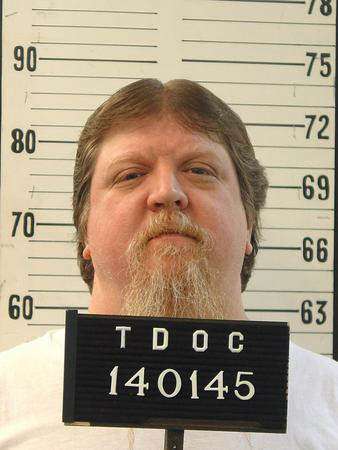
Jonathan Wesley STEPHENSON
Classification: Murderer
Characteristics:
Parricide
- Murder for hire
Number of victims: 1
Date of murder: December 4,
1989
Date of birth: June
22, 1963
Victim profile: Lisa Stephenson(his
wife)
Method of murder:
Shooting
(high-powered rifle)
Location: Cocke County, Tennessee, USA
Status: Sentenced to death on October 19, 1990. Resentenced to life in
prison without parole in 1994. Resentenced to death in 2006
Jonathan Wesley Stephenson was convicted of
hiring a hit man to kill his wife, Lisa, who was shot in the head with
a high-powered rifle in Cocke County in 1989. Stephenson and the hired
hit man, Ralph Thompson, disputed which one of them fired the fatal
shot, but both were convicted in separate trials.
On-and-off death row inmate to be
executed
Years of appeals gave man chance at life in 1989
murder-for-hire case
Knoxville News Sentinel
June 3, 2006
The state Supreme Court, which has twice taken a
Cocke County man off death row, on Friday set his execution date.
In a stunning reversal of judicial fortunes, Jonathan
Wesley Stephenson faces an October execution for the 1989 ambush slaying
of his wife after years of appeals that had netted him a chance at
avoiding death.
In an opinion released Friday, the state's highest
court opined that Stephenson deserved to die for luring his wife away
from their 8-month-old baby and 4-year-old son after offering to pay for
her death with cash, a boat, a truck and a motor.
Lisa Stephenson was shot in the head at close range
with a high-powered rifle in a remote section of Cocke County in
December 1989. It was a murder-for-hire case, although the hired hit man,
Ralph Thompson, insisted that Jonathan Stephenson was the one who wound
up pulling the trigger.
Stephenson countered that it was Thompson who fired
the fatal shot. Under the law, it didn't matter which of the 2 men
actually killed the Cocke County mother. Both were prosecuted with
separate jury trials. A Cocke County jury sentenced Stephenson to death.
A Sevier County jury imposed a sentence of life for Thompson, whose
trial was moved because of publicity surrounding Stephenson's trial.
Stephenson, testimony has shown, wanted his wife dead
because his stripper girlfriend did not know he was married. He also
feared losing "everything he'd ever worked for" in a divorce, according
to trial testimony.
In 1994, the state Supreme Court vacated Jonathan
Stephenson's death sentence because of a procedural error and sent the
case back to Cocke County for a new sentencing hearing.
District Attorney General Al Schmutzer then offered
Stephenson a deal to spare Lisa Stephenson's family further court grief.
Under the deal, Stephenson would be sentenced to life without parole for
murdering his wife and another 60 years for plotting with Thompson to
kill her.
Stephenson took the deal but then appealed. The state
Supreme Court again sided with Stephenson, ruling that the law allowing
a sentence of life without parole wasn't on the books when the slaying
occurred. The court again took Stephenson off death row.
This time, Schmutzer offered no deal and a jury again
sentenced Stephenson to death.
Stephenson appealed again, arguing, among other
things, that it was unfair for him to be put to death when Thompson was
allowed to live for the same crime.
In an opinion written by Justice Janice M. Holder and
released Friday, the state's high court disagreed.
"In the present case, the defendant's relationship to
the victim and his role as leader in instigating and planning the murder
distinguishes him from Thompson," Holder wrote. "Moreover, this court
has upheld death sentences in murder-for-hire cases where the actual
killer received a sentence of life imprisonment."
Retiring Justice Adolpho A. Birch Jr. issued a lone
dissent, calling the majority to task for one of its legal conclusions
and the panel's overall standard of reviewing death sentences for
fairness.
Although an execution date has been set for
Stephenson, it is unlikely that it will be carried out. He is entitled
under the law to another round of federal appeals.
Supreme Court Affirms Death
Sentence For Inmate Who Appealed Life Sentence
Associated Press
June 3, 2006
The Tennessee Supreme Court has
affirmed the death sentence Cocke County jurors imposed on a truck
driver for his role in the contract killing of his wife who was shot at
close range after being lured to a remote area.
Jonathan Wesley Stephenson was first sentenced to
death in 1990 for the 1st degree murder of Lisa Stephenson. He also
received a 25 year sentence for conspiracy to commit murder. A new
sentencing hearing was ordered due to a legal error nullifying the
jurors' verdict. By agreement with the prosecution and defense, the
death sentence was later changed to life without parole for the murder
and 60 years in prison for conspiracy.
Stephenson then challenged the reduced sentence and
the Tennessee Supreme Court ordered a new sentencing hearing. Jurors
again imposed a death sentence which was upheld by the Supreme Court.
"Having carefully reviewed the record and relevant
legal authority, we conclude that none of the errors alleged by the
defendant warrants relief," Justice Janice M. Holder wrote for the
majority. Chief Justice William M. Barker and Justices E. Riley Anderson
and Cornelia Clark concurred in the decision filed Friday.
In a separate concurring and dissenting opinion,
Justice Adolpho A. Birch, Jr., said he agrees with the majority that
Stephenson's convictions should be affirmed, but disagreed concerning
the majoritys conclusion regarding an issue raised by Stephenson in his
appeal.
"I respectfully dissent from that portion of the
majority's opinion concluding that the Sixth Amendment right to
confrontation of witnesses and the state constitutional right to
confront witnesses 'face-to-face' does not apply to capital sentencing
hearings," Justice Birch wrote.
As in previous dissents, Justice Birch also wrote
that the method used by the court to review and compare Tennessee
capital cases is "inadequate" in his view. State law requires the court
to conduct comparative proportionality review in each death penalty case
to determine whether the sentence is disproportionate to the penalties
in similar cases.
Justice Holder said the court recognizes that no two
cases involve identical circumstances. Quoting an earlier case, State v.
Bland, she wrote that the court's objective is not to "'prove that a
defendant's death sentence is perfectly symmetrical, but to identify and
to invalidate the aberrant death sentence."
"We conclude that the sentence of death has not been
imposed arbitrarily, that the evidence supports the jury's finding of
the statutory aggravating circumstance, that the evidence supports the
jury's finding that the aggravating circumstance outweighs the
mitigating circumstances beyond a reasonable doubt and that the sentence
is not excessive or disproportionate," Justice Holder wrote.
The court set an Oct. 11, 2006, execution date for
Stephenson, who has appeals remaining.
Stephenson and a co-defendant, Ralph Thompson, Jr.,
were found guilty of killing Lisa Stephenson, the mother of two young
children, with a rifle as she sat in her vehicle in an isolated area in
Cocke County.
Thompson received a life sentence for the murder and
an additional 25 years for conspiracy to commit murder. Each defendant
blamed the other for the actual shooting.
Stephenson had offered Thompson and others cash, a
boat, a motor and a truck if they would kill his wife. He complained
that he would "lose everything he had worked for" if they divorced.
The court considered and rejected all issues raised
by Stephenson in his appeal. The decision upholds a decision of the
Court of Criminal Appeals, which also found his claims to be without
merit.
The facts
At approximately 10:00
a.m. on December 4, 1989, police were called to investigate a shooting
death. They found the victim, Lisa Stephenson, sitting in the driver’s
seat of her car with a large hole in her forehead. She had been shot to
death through the windshield.
The investigation led
police later that night to the home of Ralph Thompson in Morristown,
Tennessee, where a high powered rifle was recovered. The rifle smelled
as if it had been recently cleaned. Although bullet fragments were later
recovered from the victim's body, it was not possible to establish
whether they were fired from that rifle.
An autopsy revealed
that Lisa had been shot in the forehead at close range and her hands
indicated that she was in a defensive position when she was killed.
At trial, a man who
worked as a truck driver with Lisa's husband, Jonathan Stephenson,
stated that a few weeks after he became acquainted with Stephenson, he
began talking about wanting to kill someone “practically every time we
got together."
The co-worker did not
know who the intended victim was, only that Stephenson wanted him to
kill the wife of a friend. Stephenson offered his co-worker various
forms of payment in exchange for the killing including cash, insurance
proceeds, and a boat and motor. Stephenson told the man that the victim
lived out in the country and offered various ways she could be shot and
killed.
One night, Stephenson
brought a handgun to work and told his co-worker he had the money with
him. The man refused to become involved in any such killing.
A few weeks after the
last discussion he had with Stephenson about killing the victim, the man
returned from a road trip and learned through a newspaper article about
Lisa Stephenson’s murder. Another man, named Michael, testified that he
met Stephenson through a friend named Ralph Thompson.
In the fall of 1989,
during a discussion among Michael, Thompson, and Stephenson, Stephenson
offered him $5,000 to kill his wife. Stephenson suggested that Michael
go to his mobile home and shoot his wife with a rifle as she sat on the
couch.
Stephenson stated that
his wife intended to divorce him and “take everything he’d ever worked
for” and said this was the reason he wanted her killed. Michael stated
they never discussed killing Stephenson’s wife again. He recalled next
seeing Stephenson on December 3, 1989, the day of the murder.
Michael and Thompson
went to Stephenson’s house to cut firewood and then to Thompson’s house
to watch movies. Stephenson arrived that evening and reminded Thompson
about a job interview. Thompson changed clothes and left with Stephenson.
Thompson later returned alone.
On cross-examination,
Michael testified that Thompson had a key to a fishing boat owned by
Stephenson and a key to Stephenson’s truck. He stated that he and
Thompson had permission to take the truck and boat and go fishing
whenever they liked. Michael acknowledged that Thompson owned a hunting
rifle.
A woman named Julie
testified that in 1989 she was single and living in La Follette,
Tennessee. She met Stephenson that year at a bar in Knoxville and the
two began dating. Stephenson told Julie that he had a son and had been
married, but that his wife, Lisa, had been killed in a car accident five
years earlier.
Stephenson also told
Julie that after his wife’s death, he developed a relationship with his
wife’s sister and the two had a child together. Julie testified that her
relationship with Stephenson was “serious” and they had discussed
marriage. On the weekend before Lisa Stephenson’s murder, Julie
accompanied Stephenson to a K-Mart where he bought rifle ammunition.
Julie stated that in the afternoon on the day of the murder, she and
Stephenson were supposed to meet.
Instead, they spoke on
the telephone and agreed to meet at 8:00 o’clock that evening. However,
they did not meet and Julie did not hear from Stephenson again until
10:30 that night when he called and instructed Julie to meet him in
Harrogate, Tennessee.
Julie met Stephenson at
a Hardee’s restaurant and Stephenson informed her that “Kathy” was dead.
Stephenson explained that he and Ralph Thompson had gone to a place
where Kathy was meeting with people to whom she owed money. Stephenson
said that when he and Thompson arrived, Kathy was already dead.
According to Stephenson,
he and Thompson fought the two men that had killed her and left them for
dead. Stephenson told Julie that the police “were in with the people”
that killed Kathy. Asked about his children, Stephenson told Julie that
they were with Kathy’s father. Julie testified that Stephenson commented
about Kathy, “I didn’t love her, but I’m going to miss the bitch.” The
next morning, Stephenson called Julie at her office and told her he had
been called in for questioning.
The following day,
Julie learned that the woman Stephenson had been referring to as “Kathy”
was actually his wife, Lisa. Julie read a letter Stephenson wrote to her
from jail in December 1989. In the letter, he stated that he had told
his wife about Julie and asked Julie not to “get involved with this.”
He denied killing Lisa,
hinting that Lisa was “involved with some powerful people.” He said that
“David and Ralph” are both involved and asked Julie not to say anything
about the time he and she had met at Hardee’s. Stephenson told Julie
that he loved her. Julie agreed that everything Stephenson had told her
was a lie.
On re-direct
examination, Julie testified that Stephenson gave her a ring in November
1989. She further recalled a time when she traveled with Stephenson to
his father’s home near St. Louis. Upon their arrival, Stephenson hitched
up a boat and told Julie that he did not want to go inside because
Stephenson’s children were staying with his father and would want to
return to Tennessee with Stephenson if they saw him.
Stephenson and Julie
returned to Tennessee, and the boat was stored at Julie’s house. Julie
later told authorities about the boat and it was seized. Julie testified
that Stephenson also owned another boat, different from the one they
picked up in St. Louis. David Davenport testified that in December 1989,
he was a special agent with the Tennessee Bureau of Investigation.
On December 4, 1989, he
interviewed Stephenson at the sheriff’s department about Stephenson’s
wife’s murder. Agent Davenport recalled Stephenson’s statement:
Stephenson had left home at around 7:00 p.m. on December 3, 1989, and
gone to Ralph Thompson’s home.
Stephenson told
Thompson about a job that Thompson might get with the help of
Stephenson’s friend. Stephenson stated that he and Thompson went to the
friend’s house and stayed there until 10:00 p.m. and then went to work.
Stephenson told Agent Davenport that he and his wife were getting along
great and did not have any serious disagreements, although Stephenson
also stated that he had a girlfriend.
Stephenson believed
that his wife also had a boyfriend, but he wasn’t sure who it was.
However, Stephenson told Agent Davenport that he would not dream of
giving up his wife and that divorce had not been discussed.
According to Stephenson,
after he had left Morristown that evening, he stopped at Harrogate and
visited with his girlfriend. Stephenson denied trying to hire anyone to
hurt his wife. He told Davenport that he did not know anyone that would
have killed her and offered to take a polygraph test. At 2:15 p.m. the
next day, Davenport again met with Stephenson.
At that time,
Stephenson noted that he and his wife had been to a movie and dinner on
the day before her death. He essentially repeated that on the day his
wife was killed, he had gone to Thompson’s house, then to Robertson’s
home, and then to work, leaving about 10:15 p.m. He denied being
involved in any criminal activity. Later that evening, Davenport again
questioned Stephenson.
At this meeting,
Davenport confronted Stephenson with Thompson, who informed Stephenson
that he had given a statement about his involvement in the murder to
police. In response, Stephenson told Davenport that the year before, his
supervisor had asked Stephenson if he knew anyone who could kill the
man’s ex-wife.
Stephenson stated that
he approached Thompson, who agreed to take the “job” for $15,000.
Stephenson stated that on the night of his wife’s murder, he and
Thompson went to Robertson’s house and Thompson brought his rifle.
Stephenson stated that he stayed at Robertson’s house for two hours.
Thompson left and returned, said “it” was done, and gave Stephenson two
rifle shells. Stephenson stated he had no idea his own wife had been
killed until he was notified later that night.
Stephenson further
stated that after the murder, he asked Thompson why Thompson had killed
his wife. Thompson replied that he didn’t know it was her. Stephenson
told Davenport that he did not believe that Thompson had killed his wife,
but that he had taken someone with him who had.
Davenport confronted
Stephenson, telling him that his supervisor had told a different story
and that he didn’t believe Stephenson. Stephenson then admitted that his
initial statement was not true. Stephenson admitted that he and Thompson
planned to kill Lisa, but he stated that he did not pull the trigger.
According to Stephenson,
he picked up Thompson, who was carrying a rifle. The two men went to
Robertson’s house for a few minutes at about 7:15 p.m. Stephenson told
Robertson to tell anyone who asked that they had remained there until
9:45 p.m. Thompson directed Stephenson to drive down a gravel road in
the country, then told Stephenson where to stop. Thompson exited the car
with the rifle.
Stephenson remained in
his car and heard a shot. Stephenson drove back down the road and saw
his wife’s car. He picked up Thompson, who gave him two empty rifle
cartridges. Stephenson went to work and threw away the cartridges on the
way. Stephenson stated that he told his girlfriend that his wife had
gotten into some trouble and he wasn’t able to stop it.
Stephenson concluded
his signed statement as follows: “Ralph asked me if he killed Lisa would
I give him my boat, motor and truck and I told him I would. I did not
pull the trigger. I did not arrange the set up. Ralph took care of
everything.” Stephenson’s father testified that he owned a boat that he
discovered missing one morning, and he had reported it stolen.
He stated that he had
not given Stephenson permission to take the boat. Near the end of
Stephenson’s trial, Davenport informed Stephenson that his boat had been
found chained to a tree at Julie’s house and could be picked up from
police storage. Stephenson did not know how the boat got to Julie’s
house and never knew his son had taken the boat.
On further examination,
Stephenson stated that Stephenson had permission to use the boat when he
wanted. The victim’s father testified he lived in a mobile home in a
wooded area of Hamblen County. His daughter had another mobile home she
shared with her family at the back of the same property.
On December 3, 1989, he
and his wife worked the “graveyard shift,” returning home at 7:00 a.m.
Around noon, he became concerned after not noticing any activity at his
daughter’s house. He explained that his daughter did not work outside
the home, but painted figurines for a local company which allowed her to
stay home and care for her children.
He knocked on her door
and found his 4-year old grandson eating from a box of cereal. The child
had prepared a bottle for his 8-month old brother. He took the children
to his home and began looking for his daughter. When he arrived home,
authorities were there and told him that she had been murdered.
He testified that he
and his wife adopted the children and had raised them since his
daughter’s death. He identified a ring as one he had brought back from a
tour of duty in Korea. He had given it to his grandson when he was born,
and his daughter had kept it in a locked jewelry box.
He testified he had not
given Stephenson permission to give the ring to his girlfriend, but had
noticed the ring on Julie’s finger during Stephenson’s trial. After the
sheriff spoke to Julie, she returned the ring. He testified that
Stephenson had not tried to contact his children and had never expressed
remorse or sorrow for his wife’s murder.