Murderpedia has thousands of hours of work behind it. To keep creating
new content, we kindly appreciate any donation you can give to help
the Murderpedia project stay alive. We have many
plans and enthusiasm
to keep expanding and making Murderpedia a better site, but we really
need your help for this. Thank you very much in advance.
Thomas
E. SILVERSTEIN
A.K.A.:
"Tommy" - "Terrible Tom"
Classification: Murderer
Characteristics: Former leader of the Aryan Brotherhood prison gang
Number of victims: 3
Date of murders: 1981
- 1983
Date of birth: 1952
Victims profile: Robert Chappelle (member of the DC Blacks prison gang)
/ Raymond “Cadillac” Smith (the
national leader of the D.C. Blacks prison gang) / Merle E. Clutts, 51
(Marion Corrections Officer)
Method of murder: Strangulation / Stabbing with a homemade
knife
Location: USP
Marion, Williamson County, Illinois, USA
Status:
Sentenced to three life terms in prison 1981
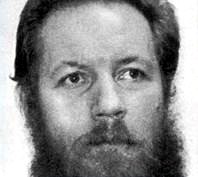
Thomas Silverstein
(1952-) is a convicted American murderer. Originally jailed for armed
robbery, he has been in solitary confinement since 1983, when he killed
prison guard Merle Clutts at the Marion "supermax" penitentiary.
Prison authorities describe him as a brutal killer
and a former leader of the Aryan Brotherhood prison gang. Silverstein
maintains that the dehumanizing conditions inside the prison system are
responsible for the three murders he committed.
He is held "in a specially designed cell" at
Leavenworth federal penitentiary and is currently the longest held
prisoner in total solitary confinement within the Bureau of Prisons.
Early life
Silverstein was born in Long Beach, California, to
Virginia Silverstein. She divorced her first husband in 1952 while
pregnant with Thomas Silverstein and immediately married Thomas Conway,
who Thomas said was his natural father.
Four years later, she divorced Conway and married Sid
Silverstein, who legally adopted her son. Thomas Silverstein remembered
the marriage as rocky and fights as common.
Silverstein was timid, awkward, shy, and frequently
bullied as a child in the middle-class neighborhood where the family
lived. Everyone assumed that he was Jewish, and that too made him an
outcast. Virginia Silverstein told her son that if he ever came home
again crying because he had been beaten up by a bully, she would be
waiting to give him a second licking.
Silverstein states, “That’s how my mom was. She stood
her mud. If someone came at you with a bat, you got your bat and you
both went at it.” At age 14 Silverstein was sentenced to a California
reformatory where, he said, his attitudes about violence were reinforced.
“Anyone not willing to fight was abused.”
In 1971, at age nineteen, Silverstein was sent to San
Quentin for armed robbery. Four years later, he was paroled, but he was
arrested soon after along with his father, Thomas Conway, and his uncle
for three armed robberies. Their take was less than $1,400. A probation
officer later blamed the older men for getting Silverstein, then age
twenty-three, involved in the crimes. Silverstein was sentenced to 15
years for armed robbery.
Murders at Marion Supermax
In 1980, Silverstein was moved to USP Marion, at that
time the only “level six” (now called “supermax”) facility in the BOP,
after being convicted of the murder of inmate Danny Atwell. This
conviction was later overturned as based on false testimony from
jailhouse informants.
At Marion, Silverstein was housed in the “Control
Unit,” a virtual solitary confinement regime reserved for extreme
'management problems' (prisoners prone to assaultive and disruptive
behavior) in the prison.
In 1981, Silverstein was accused of the murder of
Robert Chappelle, a member of the DC Blacks prison gang. Silverstein was
again convicted based on testimony from informants and sentenced to life
in prison. Silverstein maintains he is innocent.
While Silverstein and Fountain were on trial for
Chappelle’s murder the bureau transferred Raymond “Cadillac” Smith, the
national leader of the D.C. Blacks prison gang, from another prison into
the control unit in Marion and put him in a cell near Silverstein’s.
From the moment Smith arrived in the control unit, prison logs show that
he began trying to kill Silverstein.
“I tried to tell Cadillac that I didn’t kill
Chappelle, but he didn’t believe me and he bragged that he was going to
kill me.” Silverstein recalled. “Everyone knew what was going on and no
one did anything to keep us apart. The guards wanted one of us to kill
the other.” Silverstein and another prisoner killed Smith, and
Silverstein received another life sentence.
Ironically, his initial conviction for the murder of
Atwell (the reason why he was transferred to USP Marion in the first
place) was quashed, as the testimony that convicted him was adjudged
perjured.
Murder of Merle E. Clutts
On October 22, 1983, Silverstein
killed Marion Officer Merle E. Clutts by stabbing him
with a shank. After being let out of his cell for a
shower, Silverstein used a ruse to get Clutts to walk
ahead of him, placing Silverstein between Clutts and
other officers. He then stopped at another cell, where
an inmate passed him the shank and unlocked his
handcuffs using a homemade key. Silverstein attacked
Clutts, stabbing him several dozen times. Silverstein
claims that Clutts was deliberately harassing him.
Following the murder of Clutts, Silverstein was
transferred to a special ”no human contact” cell at
Atlanta Prison.
Later that same day, after
Silverstein was secured and the unit returned to normal
operations, another inmate member of the Aryan
Brotherhood killed another federal corrections officer
in the same manner, stopping at a cell to have an
accomplice unlock his cuffs and pass him a shank.
Following these two murders, Marion was placed on an
indefinite lockdown.
Riot in the Atlanta penitentiary and transfer to
Leavenworth
During the 1987 riot by Cuban detainees at the
Atlanta federal penitentiary, the Cubans released Silverstein from his
isolation cell. They handed Silverstein over to the Federal Hostage
Rescue Team one week later.
BOP officials were reputedly afraid that Silverstein
would begin killing correctional officers held hostage by the Cubans.
BOP negotiators were able to convince the Cuban riot leaders to hand
over Silverstein as a gesture of good faith, a relatively easy decision
for them, given that Silverstein's status was peripheral to the aims of
the Cuban leaders during the riot.
Silverstein was subsequently moved to Leavenworth
Penitentiary in Leavenworth, Kansas, with his security recorded as "no
human contact." Silverstein was placed in a cell located underground.
The lights burned 24 hours a day and he was watched by guards constantly.
In 2005, when USP Leavenworth was designated to
become a medium security facility, Silverstein was moved to ADX Florence,
a supermax facility in Colorado. His earliest theoretical date of
release is November 2, 2095.
Allegations of torture and injustice
Silverstein claims that "no human contact” status is
essentially a form of torture reserved for those who kill correctional
officers. "When an inmate kills a guard, he must be punished," a Bureau
of Prisoners official told author Pete Earley. "We can’t execute
Silverstein, so we have no choice but to make his life a living hell.
Otherwise other inmates will kill guards too. There has to be some
supreme punishment. Every convict knows what Silverstein is going
through. We want them to realize that if they cross the same line that
he did, they will pay a heavy price."
Ted Sellers, a black former convict who met
Silverstein during 25 years spent in jail, said he became a "legend" at
Leavenworth. Sellers told BBC News Online "He is not as bad as they
portray. Sure he is dangerous if they push him to the wall. But there
were some dirty rotten guards at Marion... They would purposely screw
you around. You are dealing with a person locked up 23 hours a day. Of
course he's got a short fuse."
Silverstein also maintains that, since he was in the
Marion supermax on a conviction that was later overturned, he should
have been released long before, and would never have killed anyone but
for this false conviction and the brutality of the prison system.
Wikipedia.org
Solitary
Soul: Tommy Silverstein
My name is
Tom Silverstein, A/K/A, Tommy.
I’ve been incarcerated since
1975 and am currently the
longest held prisoner in total
solitary confinement within the
BOP (Bureau of Prisons) and
perhaps in America and the world
Not even
the notorious “Birdman of
Alcatraz” was held in (total
solitary confinement) absolute
insolation, as I have been
subjected to the past 23 years!
He was able to see and speak
with his neighbors in adjacent
cells beside and across from his
cell at U.S.P. Leavenworth in
building 63 (where I had spent
over a year in 1979-80). Whereas
I am deprived of any and all
contact with fellow prisoners.
Prisoncrats
have sadly, but most definitely,
surpassed their previous
diabolical means of burying a
man alive in the twenty first
century since the Birdman’s era.
These
pathetically sadistic agents of
oppression eerily have excelled
at intensifying the environment
of sensory deprivation and
psychological torture, which is
what causes sane men to be
driven completely insane. This
has been scientifically proven;
I do not arbitrarily charge my
tormentors as “sadist.” They
know exactly the effects of long
term insolation and
intentionally, with malice and
forethought, continue it.
I’ll
include my recent appeal’s so
you can read it for yourself my
argument for getting out of this
damnation and their denials. We
have four levels of appeals. Two
at the prison, three to the
regional director and the last (fourth)
to the BOP director in
Washington, D.C.
We (prisoners)
seldom win an appeal. It’s
really just a sham they use to
assure the public that any
grievances we have are reviewed
by higher level administrators.
Which is comparable to the cops
policing themselves. Ha ha! It
is not worth the paper its
written on. I however went
through the process anyway in
order to obtain irrefutable
evidence, so no one would have
to just take my word regarding
my allegations. The BOP enjoys
giving the illusion that our
problems will be solved if we
(the prisoners) would only file
appeals. Although this process
is stress producing, it is a
legal requirement that I exhaust
all my administrative remedies (appeals)
before I can petition the courts
to hopefully make the BOP
officials do what they’re
determined not to do on their
own.
You’ll note
they don’t make it easy for me
in this regard either, because
as they often do when they don’t
want to address an issue,
they’ll dismiss it as “untimely”
or claim they didn’t receive it,
etc.
Prisoncrats,
like politicians, lack the
integrity to just spit it out as
they really see it, so they hide
behind the same procedures that
they’ve created and implemented;
so in the rare event someone
like me dares to expose this
nonsense, they can claim
everything was in accordance
with BOP policy.
This is one
reason we’ve started this site.
We hope to reveal, from a
prisoners personal perspective,
what truly goes on behind these
prison gates of hell, that are
seldom, if ever, presented by
the corporate, mainstream media,
much less seriously challenged.
On the contrary and sadly, when
they do bother to report on U.S.
penitentiaries, it’s miserably
inadequate and skewed in favor
of the prisoncrats. Their
premise being “them against us.”
“Us” being called the “worst of
the worst,” while guards use
that ploy to justify their
madness, abuse, and means of
confinement.
We welcome
one and all to our new site.
Regardless of sex, race,
religion, class, height, weight,
looks, education, citizenship,
etc. We honor your input and
interest in what all we share
together, so please don’t
hesitate to express yourself
whenever the urge strikes.
But I must
warn you, we believe in free
speech. A lot of folks say that,
until they hear what they don’t
like and suddenly want to ban it.
If anyone objects to adult
language, being expressed about
adult issues, I suggest you
stick with the mainstream
sources who spoonfeed the public
their sterilized sugar coated
version of events and commentary,
in fear of offending someone
who’ll stop buying their paper.
This site
also hopes to give the voiceless
an opportunity to finally be
heard loud and clear. We care
more about what’s said, than how
people say it!
If all goes
well, we hope to enlist some
profound columnist to share
their investigative insights
into the U.S. penal/injustice
system so you all can see what
is happening within the U.S.
penitentiaries since your hard
earned and over taxed dollars
are paying for it. You all
should have a say about how
these government asylums are run
and by whom. Especially when
George Bush and Attorney General
Alberto Gonzales continue to
assure the public that the U.S.
government doesn’t condone
torture.
When in
fact, both men support torture,
as evidenced by the 23 years I
have served in total solitary
confinement; torture intended to
make my life “a living hell.”
I’m an
American citizen, so if they can
get away doing it to me, they
can do it to anyone!
A former
law clerk to Clarence Thomas and
a member of the right wing
federalist society, John Woo,
was among a group of Bush
administration lawyers,
including Alberto Gonzales, now
Bush’s Attorney General, who
crafted legal justification
giving Bush a free hand to order
the torture of those he has
declared as “illegal combatants”
and held at Guantanamo Bay and
elsewhere. I am not an illegal
combatant and I am accused of
killing gang members (members of
a prison gang) and one prison
guard, not members of the armed
services fighting a war.
According
to the PBS documentary “The
Torture Question,” after 9/11, John
Yoo “wrote the first draft of a
sweeping war powers
authorization designed to give
president Bush unprecedented
power. The new statue would vest
virtually unlimited power in the
President to fight the war on
terror. Congress passed it
overwhelmingly.”
The
following quotes by John Yoo are
from New York magazine
(“Outsourcing Torture” by Jane
Mayer.):
“There is a
category of behavior not covered
by the legal system...if you
were an illegal combatant, you
didn’t deserve the protection of
the laws of war...they were
tried in a military court and
executed.”
Congress
has no power to “tie the
President’s hands in regard to
torture as an interrogation
technique.”
“It’s the
core of the commander in chief
function. They can’t prevent the
President from ordering
torture.”
Conservative my ass! These
people are Nazi’s!
This is not
surprising to U.S. prisoners
since we are regularly subjected
to this systems torturous
techniques. What Yoo has
professed publically isn’t
anything new to this governments
penal institutions and what they
do to its own confined
citizenry!
I’m not in
Abu Ghraib or one of this
governments secret prisons
abroad, where they send
suspected terrorist to be
tortured so they can later claim
the usual bureaucratic non-accountability
if and when their deceitful
maneuver is revealed. I am in
the U.S. of A.’s BOP’s most
Draconian and repressive
SuperMax penitentiary in this
country and perhaps the world.
It’s replaced the horrific U.S.P.
Marion in Illinois. The BOP
opened the Administrative
Maximum (ADX) in Florence,
Colorado, in1994. The BOP had
three decades to sharpen their
instruments of human destruction
and degradation, in order to
make “hell a living reality at
their new and improved monster
at the United States
Penitentiary (U.S.P.) in
Florence, Colorado.
Here is...
...where
real life is stranger than
fiction and in the absence of
light, darkness prevails
After 31
long hard years in some of
American’s most cruel and harsh
prisons; Solodad, San Quentin,
U.S.P. Leavenworth, Atlanta,
Marion and Florence, I now know
exactly why the Irish dramatist,
novelist, poet and wit, Oscar
Wilde, said after his
imprisonment for homosexual
offences (1895-97) that if you
ever want to see the scum of the
earth, go to your local prison
and observe the changing of the
guards.
In an
article entitled “US Prison
Torture and You” it states in
the early 1800 and 1900's
prisons warehoused prisoners in
dirty, stark, solitary
confinement cells (now they
leave a maddening bright light
on 24-7) and a large number of
them never left, or left with
serious mental disorders. A
delegation from Europe, came to
America and with the well known
author, Charles Dickens, toured
the U.S. prison system. Upon
completion of the tour, there
was a very negative report. But
something Charles Dickens wrote
played an integral part in
waking up society to the
inhumanity of solitary
confinement:
“I believe
that few men are capable of
estimating the immense amount of
torture and agony which this
dreadful punishment, prolonged
for years, inflicts. There is a
depth of terrible endurance in
it which none but the sufferers
can fathom. I hold this slow and
daily tampering with the
mysteries of the brain to be
immeasurably worse than any
torture of the body; and because
its ghastly signs and tokens are
not so palpable to the eye and
sense of touch as scars upon the
flesh; because its wounds are
not upon the surface, therefore
the more I denounce it as a
secret punishment which a
slumbering humanity is not
roused up to stay.”
This
commentary by Dickens, caused
the U.S. Supreme Court to review
the use of solitary confinement
and they concluded that it
indeed caused mental disorders
and was therefore a violation of
the 8th Amendment (the right to
be free from cruel and unusual
punishment). New guidelines were
established nationwide, banning
the use of solitary confinement
for more than 15 consecutive
days. This saved thousands of
prisoners and millions of tax
dollars. It also protected
society from the release of
damaged, often psychotic men and
women.
In 1952, an
administrator at the New Jersey
state prison figured a way
around the ban. At the time, he
truly believed in what he was
doing. He changed the name from
“solitary confinement” and
remained it “administrative
segregation” and classified it
as “treatment.”
Four years
later that administrator,
Richard R. Korn, realized he was
mistaken and that solitary, in
whatever disguise, could not be
treatment, that it did indeed
cause serious psychological
damage. He stood up and
protested it, but the system had
once again embraced it as a tool
of control. The consequences to
the prisoners and society be
damned.
An old
adage proclaims that the sure
sign of insanity, is repeating
the same mistakes over again,
expecting a different result.
Since
history clearly shows us that
solitary confinement does more
harm than good, proves the
idiocy and sadistic mentality of
prison administrators who
embrace this barbaric, medieval
practice that is a crime against
humanity.
More to
follow, but for now, I wish you
all and hope you all continue to
visit us!
Your new
pal, I hope!
Tommy
Silverstein
#14634-116, Z-13-040-L
TommySilverstein.com
About Tommy
Silverstein
America's
Most Dangerous Prisoner?
"...Thomas
Silverstein, a man considered so
dangerous he was been isolated
from the outside world...."
Although Mr.
Thomas Silverstein has been
convicted of killings at Marion
U.S. Penitentiary during the
early 1980s (1981-1983). It
should be remembered that he had
never killed anyone while on the
street or at Leavenworth (the
conviction for killing the
inmate in 1980 at Leavenworth;
the one he was sent to Marion
for allegedly killing was
overturned by the Appellate
Court.) Therefore he was
wrongfully sent to Marion’s
segregation unit in 1980, in
that the conviction for the
murder of Danny Atwell was
overturned by the Appellate
Court because the federal
prosecutors based their case
against Silverstein, on
testimony given by inmate
informants who had cut deals
with the prosecutors.
November
22nd of 1981 at 7:15 p. m., the
body of Robert M. Chappelle, a
convicted killer and member of
the D.C. Blacks prison gang, was
found dead sprawled under his
bed in his locked cell. FBI
agents theorized that he had
been murdered while lying on his
bunk, with his head on a pillow
propped up against the cell bars..
Again federal prosecutors based
their case against Silverstein
on testimony given by inmate
informants. Tommy plead not
guilty but was convicted of
killing Robert Chappelle based
on the testimony of inmates that
cut deals with the prosecutor,
and the judge gave Tommy
Silversteinan a sentence of life
in prison for killing a gang
member serving a sentence for
murder in segregation at the
United States Penitentiary in
Marion, Illinois.
Again he
plead not guilty to the killing
of Chappelle as he had to the
murder of Atwell; although he
was well aware they were both
members of the D.C. blacks
prison gang. Tommy was again
sentenced to life in prison and
retained in the segregation unit.
Then Raymond Cadillac Smith, a
leader among the D.C. blacks was
transferred into the same unit
where Tommy was held.
The two
killings that Tommy Silverstein
admits to are the killing of
Raymond Cadillac Smith and a
senior guard by the name of
Merle Eugene Clutts, both were
killed by Silverstein within a
13 month span of time
(9-27-1982 & 10-22-1983).
Tommy
Silverstein explains that he
tried to tell Cadillac that he
didn’t kill Chapppelle, “but he
didn’t believe me and he bragged
that he was going to kill me.” Tommy
Silverstein says, “everyone knew
what was going on and no one did
anything to keep us apart. Merle
Eugene Clutts as well as many of
the other guards, “wanted one of
us to kill the other.” After
two attempts on his life by
Raymond Cadillac Smith, Tommy
was convicted of stabbing
Raymond Cadillac Smith to death
on September 27, 1982.
No single
incident in the Bureau’s history,
as Pete Earley said in The Hot
House, is as controversial as
what happened next. On October
22, 1983, Tommy Silverstein
stabbed Merle Eugene Clutts to
death in the control unit at
Marion while handcuffed and
escorted by three officers (guards)
from the shower back to his cell.
Silverstein came out of his
hand cuffs and then stabbed
Clutts 38 times while the other
two officers ran for safety. Clutts
was pronounced dead almost
immediately.
Silverstein
at the age of 31, was perhaps
the most notorious inmate at
Marion, particularly after he
killed Cadillac Smith. Other
prisoners saw Silverstein as a
defiant leader, unafraid of
guards; on the other side was
Merle Eugene Clutts, one of
Marion’s tougher guards with a
large watermelon belly and the
weathered looks of a man used to
working outdoors. A prisoner by
the name of John Greschner
recalls Clutts telling Tommy,
“Hey, I’m running this shit. You
ain’t running it. You’re a
fucking prisoner! I’m the cop.
Who the fuck do you think you
are?”
Silverstein
explains that Clutts thought it
would be fun to harass him and
punish him further for his
transgressions. Clutts passed
him when it was his turn to be
the first to go into the
recreation cage. Clutts
searched his cell more often
than those of other prisoners
and left Silverstein’s cell in a
shambles every time he searched
it. Clutts would hang on to
Silverstein’s mail and deliver a
big bundle of it all at once
after several days or weeks. Clutts
would shine his flashlight in
Silverstein’s eyes during the
inmate counts. Clutts would
also intentionally smudge his
artwork, teasing him and saying,
“I did a bit of work on your
painting.”
Clutts was
a bully, picking on Silverstein.
Tommy has always hated bullies
and he hated Clutts. What isn’t
disputed is that Clutts and
Silverstein disliked each other,
and this dislike turned to a
personal hatred. (The BOP
denies that Merle Eugene Clutts
harassed Silverstein, of course,
while other inmates claim
Silverstein is telling the truth.)
Over the
years, guards have made Officer
Merle Eugene Clutts into a
martyr, the inmates have done
the same with Tommy Silverstein.
“I told Tommy, hey man, when
you kill a cop, you know it’s
over. Your life is gone.” Then
Ronnie Bruscino, a convicted
murderer, in a cell near
Silverstein’s in 1983, continued,
“Twenty years from now every
guard will still know you are
the one who killed a cop,
because that is something the
guards never, never forget.”
That was 23
years ago. After five more
years in isolation, Tommy
Silverstein stopped violating
prison rules and settled down at
Leavenworth in 1987. Thus, he
has not received a disciplinary
report in 19 years. An
accomplishment for which Mr.
Silverstein should be rewarded,
not punished.
The only
reason I can think of to
transfer Tommy Silverstein to a
more punitive prison after 19
years of good behavior would be
provocation and/or additional
punishment. Provocation as well
as additional punishment and
torture is inconsistent with
modern penal practices and with
the BOP mission statement and
vision statement.
The
provocation of inmates is beyond
comprehension. Other than the
innate pleasure derived from
sadism, what benefit is derived
from deliberate provocation or
increased (meaningless)
punishment? If effective, it
can only lead to the unjust
killing of a prisoner or perhaps
a BOP employee?
Federal
Bureau of Prisons’ employees
should not be harmed as a result
of provocation or increased
meaningless punishment at the
whim of administrators within
the BOP. These administrators
should be prosecuted for
provoking inmates in their
charge, and for authorizing
additional (meaningless)
punishment they should be dealt
with very harshly for their
calloused treatment of those in
their charge.
TommySilverstein.com
UNITED STATES
OF AMERICA, Plaintiff-Appellee, v. CLAYTON
FOUNTAIN, THOMAS E. SILVERSTEIN, and
RANDY K. GOMETZ, Defendants-Appellants
UNITED STATES
COURT OF APPEALS FOR THE SEVENTH
CIRCUIT
Nos. 84-1939,
84-1940, 84-1949
February 15, 1985,
Argued—July 8, 1985, Decided
POSNER,
Circuit Judge.
We have
consolidated the appeals in two
closely related cases of murder
of prison guards in the Control
Unit of the federal penitentiary
at Marion, Illinois -- the
maximum-security cell block in
the nation's maximum-security
federal prison -- by past
masters of prison murder,
Clayton Fountain and Thomas
Silverstein.
Shortly
before these crimes, Fountain
and Silverstein, both of whom
were already serving life
sentences for murder, had
together murdered an inmate in
the Control Unit of Marion, and
had again been sentenced to life
imprisonment. See United States
v. Silverstein, 732 F.2d 1338
(7th Cir. 1984). After that,
Silverstein killed another
inmate, pleaded guilty to that
murder, and received his third
life sentence.
At this point Fountain and
Silverstein had each killed
three people. (For one of these
killings, however, Fountain had
been convicted only of voluntary
manslaughter. And Silverstein's
first murder conviction was
reversed for trial error, and a
new trial ordered, after the
trial in this case.)
The prison authorities --
belatedly, and as it turned out
ineffectually -- decided to take
additional security measures.
Three guards would escort
Fountain and Silverstein (separately),
handcuffed, every time they left
their cells to go to or from the
recreation room, the law library,
or the shower. (Prisoners in
Marion's Control Unit are
confined, one to a cell, for all
but an hour or an hour and a
half a day, and are fed in their
cells.) But the guards would not
be armed; nowadays guards do not
carry weapons in the presence of
prisoners, who might seize the
weapons.
The two
murders involved in these
appeals took place on the same
October day in 1983. In the
morning, Silverstein, while
being escorted from the shower
to his cell, stopped next to
Randy Gometz's cell; and while
two of the escorting officers
were for some reason at a
distance from him, reached his
handcuffed hands into the cell.
The third officer, who was
closer to him, heard the click
of the handcuffs being released
and saw Gometz raise his shirt
to reveal a home-made knife ("shank")
-- which had been fashioned from
the iron leg of a bed --
protruding from his waistband.
Silverstein drew the knife and
attacked one of the guards,
Clutts, stabbing him 29 times
and killing him. While pacing
the corridor after the killing,
Silverstein explained that "this
is no cop thing. This is a
personal thing between me and
Clutts. The man disrespected me
and I had to get him for it."
Having gotten this off his chest
he returned to his cell.
Fountain
was less discriminating. While
being escorted that evening back
to his cell from the recreation
room, he stopped alongside the
cell of another inmate (who,
however, apparently was not
prosecuted for his part in the
events that followed) and
reached his handcuffed hands
into the cell, and when he
brought them out he was out of
the handcuffs and holding a
shank. He attacked all three
guards, killing one (Hoffman)
with multiple stab wounds (some
inflicted after the guard had
already fallen), injuring
another gravely (Ditterline, who
survived but is permanently
disabled), and inflicting lesser
though still serious injuries on
the third (Powles). After the
wounded guards had been dragged
to safety by other guards,
Fountain threw up his arms in
the boxer's gesture of victory,
and laughing walked back to his
cell.
A jury
convicted Fountain of first-degree
murder, 18 U.S.C. § 1111, and of
lesser offenses unnecessary to
go into here. The judge
sentenced him to not less than
50 nor more than 150 years in
prison, and also ordered him,
pursuant to the Victim and
Witness Protection Act of 1982,
Pub. L. 97-291, 96 Stat. 1248 (codified
in 18 U.S.C. §§ 3579-3580 and
elsewhere), to make restitution
of $92,000 to Hoffman's estate,
$98,000 to Ditterline, and
nearly $300,000 to the
Department of Labor. The money
for the Department was to
reimburse it for disability,
medical, and funeral payments
that it had made or would make
to Ditterline, Powles, and
Hoffman's estate. The money for
Ditterline was to compensate for
past and future lost earnings
not compensated
794
for by the Department of Labor
and for unreimbursed medical
expenses.
Silverstein
and Gometz were tried together (also
before a jury, and before the
same judge who presided at
Fountain's trial) for the murder
of Clutts, and both received the
same 50 to 150 year sentences as
Fountain and were ordered to pay
restitution to Clutts's estate
and to the Department of Labor
of $68,000 and $2,000
respectively. Fountain and
Silverstein are now confined in
different federal prisons, in
what were described at argument
as "personalized" cells.
The
appeals involve challenges to
rulings at trial; Gometz's
challenge to the sufficiency of
the evidence; and, of particular
interest, the defendants'
challenges to the sentences.
1. At both
trials the judge ordered the
defendants and their inmate
witnesses to be shackled at the
ankles while in court. Curtains
at the counsel tables shielded
the defendants' shackles from
the jury's view but apparently
the shackles were visible when
witnesses were en route to or
from the witness stand; and
Fountain and Silverstein each
testified in his own trial.
Although disfavored for obvious
reasons, the shackling of inmate
witnesses in a jury trial is
permissible in extremis See, e.g.,
Harrell v. Israel, 672 F.2d 632,
635-36 (7th Cir. 1982) (per
curiam), and cases cited there.
The prudence of requiring
shackles in this case was shown
by Fountain's and Silverstein's
extraordinary history of
violence in the face of maximum
security precautions, the fact
that most of the witnesses were
murderers, and above all the
fact that, as we shall explain
when we discuss the sentencing
issues, the defendants are
wholly beyond the deterrent
reach of the law. If they were
not shackled, there would be a
grave danger of their attacking
people in the courtroom or
trying to escape. Silverstein's
long disciplinary record
includes one escape, while
Gometz 's includes three
episodes of planning and
attempting escape. The prejudice
caused by shackling was
mitigated by the jury's
awareness that the entire
dramatis personae in the two
cases were prison inmates --
most of them murderers -- and
guards. The shackles could not
have come as much of a surprise.
The judge did not abuse his
discretion in requiring them.
On the day
of trial Silverstein's lawyer
requested the judge to appoint a
psychiatrist. The judge refused,
saying, "I don't think that is
within my prerogative to do that
and the court would not grant a
continuance at this late date
for that." Silverstein points
out that the judge was wrong to
think -- if that is what he did
think -- that he had no power to
appoint a psychiatrist (see 18
U.S.C. § 3006A(e)), even on the
eve of trial. It is true that
Rule 12.2 of the Federal Rules
of Criminal Procedure requires a
defendant who wants to make an
issue of his mental condition
and present expert testimony on
the issue to notify the
government within specified time
limits that were exceeded here,
but the court can allow late
notice "for cause shown." It is
also true that Silverstein's
defense was to be, not insanity,
but self-defense or compulsion,
and he wanted the psychiatrist
to testify about the effects on
his psyche of what he contends
was Clutts's harassment of him.
But this is not an improper
forensic use of psychiatry. Cf.
Rule 12.2(b). The court can
always, for cause, on the eve of
trial or for that matter during
trial, amend the witness list or
appoint an expert witness for an
indigent defendant, as
Silverstein was.
But we
would be reading the transcript
of the judge's oral ruling with
too jaundiced an eye if we held
that he failed to exercise his
discretion because he didn't
realize he had any. It is more
likely that the judge meant that
since Silverstein had given no
good reason why his request for
a psychiatrist came so very late
in the day, and since the
proposed use of the psychiatrist
was sufficiently unusual to
require a fuller explanation of
why it justified postponing the
trial, the judge was not
required to grant a continuance
in order to follow up this will
o' the wisp. The last-minute
grant of a continuance can cause
serious inconvenience to judge,
jury, opposing
795
counsel, witnesses, and other
litigants. The denial of a
request for one will rarely be
upset on appeal. See, e.g.,
United States v. Solina, 733
F.2d 1208, 1211 (7th Cir. 1984).
On direct
examination Silverstein's lawyer
asked him whether he had been
convicted of various crimes,
including two murders, and
Silverstein answered "yes." On
cross-examination the prosecutor
asked the same questions but in
more detail (e.g., "March 3rd,
1980, United States Penitentiary
at Leavenworth, you killed an
inmate, didn't you?"), ending
with, "You are a peaceable man?"
-- to which Silverstein answered,
"I like to think so."
Silverstein concedes that his
prior convictions were
admissible to challenge his
credibility as a witness, see
Fed. R. Evid. 609(a)(1), but
argues that the prosecutor's
harping on those convictions in
cross-examination and ending
with a sarcastic question about
peaceableness made the cross-examination
unnecessarily prejudicial.
We do not
think the prosecutor dwelt on
Silverstein's prior crimes in
too great detail. The questions
on direct examination about
prior crimes had been
perfunctory and the prosecutor
was entitled to amplify them
slightly, which is all he did.
In previous cases in which error
has been found in the
prosecutor's inquiring about the
details of an admitted crime,
see 3 Weinstein & Berger,
Weinstein's Evidence para.
609[05], at p. 609-86 n. 13
(1982), the prosecutor had
harped at greater length and in
fuller detail on the particulars
of the prior crimes.
But the
question whether Silverstein is
a "peaceable man" was not a
proper question with which to
challenge his credibility.
Violent men are not necessarily
liars, and indeed one class of
violent men consists of those
with an exaggerated sense of
honor. Now Silverstein had
testified on direct examination
that he had killed Clutts
because Clutts was planning to
let Cubans out of their cells to
kill him, and on cross-examination
had added that he hadn't been
"out to hurt anybody or anything."
If this statement could be
construed as putting the
peaceableness of his character
in issue, then he laid himself
open to cross-examination
designed to show the violence of
his character. See Fed. R. Evid.
404(a)(1); United States v.
Jordan, 722 F.2d 353, 358 (7th
Cir. 1983). It can be argued
that by testifying that he
hadn't intended to hurt anybody
Silverstein was claiming to have
a peaceable character, and if so
the prosecutor's question was
proper. But the argument is a
weak one. To deny that one
intended harm on a particular
occasion is not to claim a
generally peaceable character.
And it cannot be right that
merely by claiming self-defense
(which probably is all that
Silverstein meant to do in
saying that he had not intended
to hurt anybody or anything) a
defendant puts his whole
character in issue; that would
make mincemeat of the
limitations in Rule 404(a) on
the use of character evidence.
But a more
realistic view of the question
about Silverstein's peaceable
character is that it was said in
jest -- ill-timed but completely
harmless. It was obvious to the
jury both that Silverstein's
character is not peaceable and
that he did not have a good
defense of self-defense even if
he honestly and reasonably
thought (which is itself nearly
inconceivable) that Clutts was
about to loose a bunch of
murderous Cubans on him.
Silverstein's counsel
acknowledges that "the
explanation given by the
defendant for his conduct was
certainly inadequate in a
reasonable person's mind to
justify the slaying of a prison
guard." The menace was not
imminent enough to justify
killing Clutts, especially when
Silverstein had an alternative
remedy -- to complain to the
other guards. For he made clear
after killing Clutts that he had
had no grievance against them;
he must therefore not have
thought that they had been in
cahoots with Clutts to loose the
Cubans on him. These points are
related; the reason for limiting
the right of self-defense to
cases of imminent danger is that
if the danger is more remote the
potential victim can invoke the
aid of the authorities. See, e.g.,
LaFave & Scott, Handbook on
Criminal Law § 53, at
796
p. 394 (1972). Lethal self-help
is a last resort.
Fountain
at his trial testified that he
too had been acting in self-defense
when he attacked his guards; and
while he admitted that he had
had a knife, he testified that
it was for self-defense. This
testimony laid him open to the
cross-examination of which he
complains: an inquiry about his
prior activities with a knife,
which included killing an inmate
whom he stabbed 57 times, crying
"die, bitch, die." This evidence
does not have the infirmity of
the question about Silverstein's
character. Fountain made an
issue of his purpose in having a
knife; and evidence that his
previous use of a knife in
prison was for attack rather
than defense was relevant to
cast doubt on his stated purpose.
Prior wrongful acts can be put
in evidence to illuminate intent
and modus operandi. Fed. R. Evid.
404(b). If Silverstein had
previously attacked prison
staff, this might have been
admissible on the issue of his
intent in attacking Clutts; if
he had used a shank before, then
like Fountain he could have been
cross-examined about that prior
use. But just by claiming self-defense
one does not open up one's
entire character to attack on
cross-examination.
Fountain
complains about the court's
refusal to subpoena as witnesses
inmates Bruscino and Gometz. He
says they would have
contradicted a guard who
testified that Fountain, shortly
after the murder, had told
Bruscino, who was in the second
cell down the corridor from
Fountain (Gometz was in the cell
between them), that "it would
have been fun if he [Fountain]
could have killed Hoffman, Jr."
-- the son of the guard Fountain
had killed, and also a guard at
Marion. The judge said, "the
fact that somebody else such as
Gometz and Bruscino would say
that they didn't hear it, I
don't think is probative of the
fact that it was said or not
said. And Mr. Fountain knows
whether it was said or not said,
and he can deny it or not and
that will be up to him . . . .
The Court finds itself in this
position to some extent, that I
notice that these witnesses
repeatedly are called for almost
every case, when any one of them
are involved. The Court is
extremely skeptical about the
veracity of all of them and I am
somewhat prone to believe that
they testify and are willing to
testify favorable to their
friends on whatever occasion the
circumstances require."
Although
the judge could not properly
refuse to subpoena witnesses "necessary
to an adequate defense" -- the
test under Rule 17(b) of the
Federal Rules of Criminal
Procedure for whether the court
must subpoena a witness for an
indigent defendant (as Fountain
was) -- merely because he
thought they would lie, we do
not think this was the judge's
ground for refusing; it was an
observation made in passing. The
ground was lack of necessity.
The fact that Gometz may not
have overheard a conversation
between Fountain and Bruscino
was not strong evidence that no
such conversation had taken
place. All the inmates in the
Control Unit are in different
cells, and it cannot be that
Gometz hears all the chatter
that goes on between other cells.
Bruscino, however, was the other
party to the conversation with
Fountain about which the guard
testified. The fact that
Fountain (who the judge knew
intended to take the stand)
would deny the conversation
would carry little weight with a
jury; and the failure of the
other party to the alleged
conversation to testify for
Fountain would further enhance
the guard's credibility.
But we
think it was a permissible
judgment -- at least in
hindsight, which seems the
proper perspective when deciding
whether reversible error has
occurred -- that Bruscino's
presence was unnecessary to an
adequate defense. Necessary
implies at the most vital (cf.
United States v. Duggan, 743
F.2d 59, 82 n.8 (2d Cir. 1984);
United States v.
Valenzuela-Bernal, 458 U.S. 858,
867, (1982)), at the least
helpful (see United States v.
Barker, 553 F.2d 1013, 1020 (6th
Cir. 1977)); and testimony that
could not reasonably be expected
to make a difference to the
outcome of the trial is not
necessary in either sense.
797
Bruscino's long criminal record,
which includes an assault on a
guard, see United States v.
Solina, supra, as well as the
murder of an inmate, see United
States v. Bruscino, 687 F.2d 938
(7th Cir. 1982) (en banc) -- all
of which would have been brought
out on cross-examination --
makes it most unlikely that the
jury would have believed him.
Cf. United States v. Solina,
supra, 733 F.2d at 1212-13. And
if it had believed him, still
the case against Fountain, even
without the conversation, was
overwhelming. This is so even if
we indulge the further and
speculative assumption that had
the jury believed Bruscino and
hence disbelieved the guard it
would have paid less heed to the
other government witnesses.
The
important thing, in short, is
not that the judge thought that
Bruscino would lie (though he
did think this) but that the
jury would have thought so and
that even if it had believed
Bruscino it would not have
acquitted Fountain. The same is
true even more clearly with
regard to the judge's refusal to
subpoena Gometz. We recognize
the danger of using the
requirement that the subpoenaed
witness be "necessary to an
adequate defense" to prevent the
clearly guilty defendant who is
indigent from putting on any
defense at all. But we shall
worry about such a case when it
arises. The court subpoenaed
five inmate witnesses at
Fountain's request. Given the
security problems that such
witnesses pose -- the practice
of "writting" prisoners around
the country to testify as
witnesses in other prisoners'
cases figured in one of
Silverstein's previous murders,
see United States v. Silverstein,
supra, 732 F.2d at 1342 -- the
court was entitled to make
Fountain limit his request. If
Bruscino was so important to his
case, Fountain could have
dropped one of the other five.
He was not entitled to empty
Marion's Control Unit into the
courtroom.
Fountain
also objects to testimony by a
guard that two months after the
murder Fountain had said to him,
"what are you looking at, bitch?,"
and then asked him whether, when
it was his turn to die, he "would
scream like the other two
bitches screamed." Fountain
argues that the alleged
conversation was irrelevant and
that it wasn't even shown that
he knew that another guard had
been killed the day he murdered
Hoffman. Yet Fountain testified
that he knew of Clutts's murder
the same day it happened. The
government argues that it can be
inferred from the conversation
itself that Fountain had learned
of Clutts's death through the
always efficient prison
grapevine (or from Gometz, who
according to Fountain was in a
position to overhear his
conversations and therefore to
communicate with him). Thus the
reference to the "two bitches"
could be interpreted as an
admission that Fountain had
killed Hoffman. The problem with
this argument is that Fountain's
killing of Hoffman was never an
issue; the issue was whether he
had killed him in self-defense;
and the conversation was not an
admission that he had not been
acting in self-defense. It was
however evidence of hostility to
Marion guards, suggesting a
motive other than self-defense
for Fountain's killing of
Hoffman, and hence admissible
after all. At all events, any
error was a harmless one; the
circumstances of Fountain 's mad
dog attack on three guards
negated any inference of self-defense.
The
defendants did not get a perfect
trial, but they got a fair trial.
That was all they were entitled
to.
2. Gometz
argues that the evidence was
insufficient to convict him of
aiding and abetting Silverstein
in murdering Clutts. This
argument requires us to consider
the mental element in "aiding
and abetting," on which see the
useful discussions in LaFave &
Scott, supra, § 64, pp. 505-12,
and Perkins & Boyce, Criminal
Law 745-48 (3d ed. 1982). Under
the older cases, illustrated by
Backun v. United States, 112
F.2d 635, 636-37 (4th Cir.
1940), and Bacon v. United
States, 127 F.2d 985, 987 (10th
Cir. 1942), it was enough that
the aider and abettor knew the
principal's purpose. Although
this is still the test in some
states (see e.g., Sanders/Miller
v. Logan, 710 F.2d 645, 652
(10th Cir. 1983)), after the
798
Supreme Court in Nye & Nissen v.
United States, 336 U.S. 613,
619, (1949), adopted Judge
Learned Hand's test -- that the
aider and abettor "in some sort
associate himself with the
venture, that he participate in
it as in something that he
wishes to bring about, that he
seek by his action to make it
succeed," United States v. Peoni,
100 F.2d 401, 402 (2d Cir. 1938)
-- it came to be generally
accepted that the aider and
abettor must share the
principal's purpose in order to
be guilty of violating 18 U.S.C.
§ 2, the federal aider and
abettor statute. See, e.g.,
United States v. Paone, 758 F.2d
774, 775-76 (1st Cir. 1985). But
as both LaFave & Scott (at p.
509) and Perkins & Boyce (at p.
746) point out, there is support
for relaxing this requirement
when the crime is particularly
grave. The holding of Backun
itself may have been superseded,
but a dictum in Backun -- "One
who sells a gun to another
knowing that he is buying it to
commit a murder, would hardly
escape conviction as an
accessory to the murder by
showing that he received full
price for the gun," 112 F.2d at
637 -- makes so compelling an
appeal to common sense that
Gometz's opening brief in this
court, after quoting the dictum,
states, "Defendant Gometz has no
quarrel with this rule of law."
In People
v. Lauria, 251 Cal. App. 2d 471,
481, 59 Cal. Rptr. 628, 634
(1967) -- not a federal case,
but illustrative of the general
point -- the court, en route to
holding that knowledge of the
principal's purpose would not
suffice for aiding and abetting
of just any crime, said it would
suffice for "the seller of
gasoline who knew the buyer was
using his product to make
Molotov cocktails for
terroristic use." See also Nash
v. Israel, 707 F.2d 298, 303 n.8
(7th Cir. 1983). Compare the
following hypothetical cases. In
the first, a shopkeeper sells
dresses to a woman whom he knows
to be a prostitute. The
shopkeeper would not be guilty
of aiding and abetting
prostitution unless the
prosecution could establish the
elements of Judge Hand's test.
Little would be gained by
imposing criminal liability in
such a case. Prostitution,
anyway a minor crime, would be
but trivially deterred, since
the prostitute could easily get
her clothes from a shopkeeper
ignorant of her occupation. In
the second case, a man buys a
gun from a gun dealer after
telling the dealer that he wants
it in order to kill his mother-in-law,
and he does kill her. The dealer
would be guilty of aiding and
abetting the murder. This
liability would help to deter --
and perhaps not trivially given
public regulation of the sale of
guns -- a most serious crime. We
hold that aiding and abetting
murder is established by proof
beyond a reasonable doubt that
the supplier of the murder
weapon knew the purpose for
which it would be used. This
interpretation of the federal
aider and abettor statute is
consistent with though not
compelled by precedent; for
ambivalent discussions which
however provide some support for
our interpretation see United
States v. Wilson, 665 F.2d 825,
830 (8th Cir. 1981); United
States v. Clayborne, 166 U.S.
App. D.C. 140, 509 F.2d 473,
480-81 (D.C. Cir. 1974); United
States v. Eberhardt, 417 F.2d
1009, 1013 (4th Cir. 1969).
Gometz
argues that there is
insufficient evidence that he
knew why Silverstein wanted a
knife. We disagree. The
circumstances make clear that
the drawing of the knife from
Gometz's waistband was
prearranged. There must have
been discussions between
Silverstein and Gometz. Gometz
must have known through those
discussions or others that
Silverstein had already killed
three people in prison -- two in
Marion -- and while this fact
could not be used to convict
Silverstein of a fourth murder,
it could ground an inference
that Gometz knew that
Silverstein wanted the knife in
order to kill someone. If
Silverstein had wanted to
conceal it on his person in
order to take it back to his
cell and keep it there for
purposes of intimidation,
escape, or self-defense (or
carry it around concealed for
any or all of these purposes),
he would not have asked Gometz
to release him from his
handcuffs (as the jury could
have found he had done), for
that ensured that the guards
would search him. Since the
cuffs were off before
Silverstein drew the shank from
Gometz's waistband, a reasonable
799
jury could find beyond a
reasonable doubt that Gometz
knew that Silverstein, given his
history of prison murders, could
have only one motive in drawing
the shank and that was to make a
deadly assault.
3. The
federal murder statute does not
provide for a term of years for
first-degree murder. "Whoever is
guilty of murder in the first
degree, shall suffer death
unless the jury qualifies its
verdict by adding thereto
'without capital punishment,' in
which event he shall be
sentenced to imprisonment for
life." 18 U.S.C. § 1111(b).
Since the provision for capital
punishment was held
unconstitutional in the wake of
Furman v. Georgia, 408 U.S. 238,
(1972) (per curiam); see United
States v. Shepherd, 576 F.2d
719, 727-29 (7th Cir. 1978);
United States v. Kaiser, 545
F.2d 467, 470-75 (5th Cir.
1977), the punishment for
first-degree murder is life, see
id. at 474-75. The district
judge was troubled, however, by
the fact that someone sentenced
to life in prison can be paroled
after only 10 years. See 18
U.S.C. § 4205(a) ( "Whenever
confined and serving a definite
term or terms of more than one
year, a prisoner shall be
eligible for release on parole
after serving one-third of such
term or terms or after serving
ten years of a life sentence or
of a sentence of over thirty
years, except to the extent
otherwise provided by law"). It
does not matter how many federal
life sentences the prisoner
already is serving. The federal
prison and parole authorities,
in an interpretation of section
4205(a) that has not to our
knowledge been questioned,
refuse to "stack" beyond 30
years prison sentences of any
length -- even when imposed
consecutively -- for purposes of
determining the date of
eligibility for parole. See U.S.
Dept. of Justice, U.S. Parole
Comm'n, Rules and Procedures
Manual § 2.5 (Oct. 1, 1984);
U.S. Dept. of Justice, Federal
Prison System, Program Statement
No. 5050.9, at p. 2 (May 21,
1979). You could be sentenced to
ten consecutive life sentences
and you would still be eligible
for parole after 10 years,
though the likelihood of parole
then would be slight.
That is
why the judge imposed a term of
years (minimum 50, maximum 150)
instead of life. But we are not
clear how the judge thought this
form of sentence would affect
the defendants' parole
eligibility dates, when as we
have said section 4205(a)
requires that every sentence of
more than 30 years be treated,
for purposes of computing that
date, as if it were a sentence
of 30 years. If the defendant is
already serving time under a
sentence of 30 years or more, an
additional sentence will not
postpone the date. True, the
next subsection allows the judge
to "designate in the sentence of
imprisonment imposed a minimum
term at the expiration of which
the prisoner shall become
eligible for parole, which term
may be less than but shall not
be more than one-third of the
maximum sentence imposed by the
court." 18 U.S.C. § 4205 (b)(1).
But the apparent purpose is to
allow release on parole before
the earliest date allowed by
subsection (a); we have found no
case where it was used to
postpone the date of eligibility
for parole. Cf. 3 Wright,
Federal Practice and Procedure:
Criminal § 536, at pp. 183-84
(2d ed. 1982). There is
authority it cannot be so used.
See United States v. Smith, 227
U.S. App. D.C. 60, 703 F.2d 627,
628 (D.C. Cir. 1983) (per
curiam); United States v. Pry,
625 F.2d 689, 692 (5th Cir.
1980) (per curiam).
In any
event, the federal murder
statute makes no provision for
sentencing a first-degree
murderer to a term of years.
This is the reason for what the
judge regarded as the
intolerable anomaly that second-degree
murder, being punishable by
imprisonment "for any term of
years or for life," 18 U.S.C. §
1111 (b), could be punished more
severely than first-degree
murder, and is what led the
judge to impose a term of years
anyway. There is no anomaly if
as we have suggested section
4205(b)(1) does not allow the
sentencing judge to use a term
of years to postpone the parole
eligibility date beyond 10 years;
but the more important point is
that judges have no authority to
add to the criminal penalties
provided in federal statutes.
Section 1111(b) provides, in the
case of first-degree
800
murder, for death or for life in
prison; and with death in effect
struck out of the statute, life
is the only punishment possible.
There is no ambiguity in the
statute that would give the
district judge or us a purchase
for allowing a term of years to
be imposed instead. As the judge
had no discretion to sentence
the defendants to other than
life imprisonment, their prison
sentences must be vacated with
directions to sentence them to
life in prison.
The last
issue, and the hardest, is
restitution, on which see the
useful discussion in Note,
Victim Restitution in the
Criminal Process: A Procedural
Analysis, 97 Harv. L. Rev. 931
(1984). The relevant provisions
of the Victim and Witness
Protection Act of 1982 authorize
the sentencing judge, as part of
the sentence for a crime
resulting in bodily injury or
death, to order that the
defendants pay the victim's
funeral, medical, and related
expenses (including expenses for
therapy and rehabilitation) and
make reimbursement "for income
lost by such victim as a result
of such offense," with payment
to go to the estate if the
victim has died. 18 U.S.C. §§
3579(b)(2)-(4), (c). Restitution
may also be ordered "to any
person who has compensated the
victim" for a loss resulting
from the crime. § 3579(e)(1).
Restitution creates a set-off in
any subsequent tort action
brought by the victim, §
3579(e)(2); shall be determined
after conviction in a proceeding
where the court "shall consider
the amount of the loss sustained
by any victim as a result of the
offense, the financial resources
of the defendant, the financial
needs and earning ability of the
defendant and the defendant's
dependents, and such other
factors as the court deems
appropriate," § 3580(a); see
also §§ 3580(b)-(d); and shall
not be ordered if the order
would "unduly complicate or
prolong the sentencing process,"
§ 3579(d).
The
defendants argue that the
statute is unconstitutional,
because it allows a victim of
crime to obtain from the
sentencing judge what amounts to
a judgment for tort damages,
thus thwarting the defendant's
Seventh Amendment right to trial
by jury in any federal suit at
law in which the stakes exceed
$20. The argument is
unpersuasive when pushed to the
extreme of saying that any order
that a criminal defendant pay a
victim money for which the
victim could get a judgment in a
suit at law is a judgment at law
for purposes of the Seventh
Amendment. If by "restitution"
in criminal law (a distinct
concept from civil restitution)
we mean simply an order in a
criminal case that the criminal
restore to his victim what he
has taken from him, we are
speaking of a form of criminal
remedy that predates the Seventh
Amendment. Restitution indeed is
the earliest criminal remedy.
Before there is organized
government, criminal misconduct
is punished by forcing the
criminal to compensate the
victim or the victim's family.
See, e.g., Diamond, Primitive
Law Past and Present 58-59, 65,
66, 269-70 (1971); Rubin, The
Law of Criminal Correction, ch.
7, § 1 (2d ed. 1973). Even after
the rise of the state we find
restitution used as a criminal
remedy, as in an English statute
of 1529 that empowered the court,
upon finding someone guilty of
robbery, to issue a "writ of
restitution" ordering the robber
to restore the thing taken to
its owner. 21 Hen. 8, ch. 11
(1529), 19 Viner, A General
Abridgment of Law and Equity
153-56 (2d ed. 1793), quoted (with
incorrect date) in Note, The
Unconstitutionality of the
Victim and Witness Protection
Act Under the Seventh Amendment,
84 Colum. L. Rev. 1590, 1595
n.27 (1984).
The
question is, what does
restitution as a criminal remedy
comprehend? As the word implies
and history confirms, the
original conception is that of
forcing the criminal to yield up
to his victim the fruits of the
crime. The crime is thereby made
worthless to the criminal. This
form of criminal restitution is
sanctioned not only by history
but also by its close
relationship to the retributive
and deterrent purposes of
criminal punishment. The fact
that tort law may also have
deterrent purposes, see, e.g.,
Jones v. Reagan, 696 F.2d 551,
554 (7th Cir. 1983), does not
make every payment to the victim
of crime a tort sanction; it
just shows that tort and
criminal law overlap.
801
In fact their differentiation is
a relatively modern development.
See, e.g., I. de S. & Wife v. W.
de S., Y.B. Liber Assisarum, 22
Ed. 3, f. 99, pl. 60 (1348 or
1349).
An order
to make restitution of medical
and funeral expenses and lost
earnings has a weaker connection
with the traditional purposes of
criminal law. But since medical
expenses are restorative, making
the criminal reimburse them can
be analogized to forcing him to
return stolen goods; so can
making him restore any earnings
that the victim lost as a result
of the crime. The analogy is
particularly close where, as in
the present cases, the criminal
wanted to injure his victim, as
distinct from injuring him as
merely a by-product of an
acquisitive crime. And with
regard to all three types of
loss -- medical, funeral, and
earnings -- making the criminal
bear them serves a useful
purpose in the administration of
the criminal law. It brings home
to him the enormity of his
conduct, by forcing him to pay
expenses directly related to his
victim's suffering.
That forms
of criminal restitution other
than ordering stolen goods
restored to the owner do not
have so clear a historical
pedigree does not matter. What
matters is that criminal
restitution is not some
newfangled effort to get around
the Seventh Amendment but a
traditional criminal remedy; its
precise contours can change
through time without violating
the Seventh Amendment. If
Congress creates a new cause of
action and does not specify the
mode of trial, we must look to
the nearest historical analogy
to decide whether there is a
right of trial by jury. 9 Wright
& Miller, Federal Practice &
Procedure § 2302, at p. 16
(1971). Here Congress has made
clear that the judge rather than
the jury is to determine the
facts; and its judgment is
entitled to our consideration.
Moreover, there is a close
historical analogy to
restitution in a criminal
proceeding of the victim's
medical and funeral expenses and
lost earnings: restitution of
stolen goods, an established
criminal remedy when the Seventh
Amendment was adopted.
Restitution is frequently an
equitable remedy, meaning, of
course, that there is no right
of jury trial. See, e.g., In re
Evangelist, 760 F.2d 27, 30 (1st
Cir. 1985). The Supreme Court
has suggested that restitution
of back pay under Title VII of
the Civil Rights Act of 1964 is
an equitable remedy not
requiring a jury. See Curtis v.
Loether, 415 U.S. 189, 197,
(1974). The same, it seems to us,
is true of restitution under the
Victim and Witness Protection
Act of 1982. We therefore join
those courts that have upheld
under the Act orders for
restitution of medical bills,
lost wages, and the value of
personal property destroyed by
the criminal. See, e.g., United
States v. Keith, 754 F.2d 1388,
1392 (9th Cir. 1985), and cases
cited there; United States v.
Watchman, 749 F.2d 616, 617
(10th Cir. 1984); United States
v. Brown, 744 F.2d 905, 908-10
(2d Cir. 1984). This conclusion
was also reached in Judge
Coffey's dissent in United
States v. Gomer, 764 F.2d 1221,
slip op. at 14-16 (7th Cir.
1985); the majority opinion did
not reach the constitutional
issue.
Restitution
as a criminal remedy becomes
problematic only where it goes
beyond the fruits of the crime
or the out-of-pocket expenses of
the victim or his lost earnings
and includes compensation for
earnings (in this case, mainly
Ditterline's, who was
permanently disabled by
Fountain's attack on him) that
would have been received in the
future. Compensation for the
loss of future earnings is
quintessentially civil. The
reason is not merely historical,
or conceptual; there is, indeed,
no difference of principle
between past and future earnings,
so far as the purposes of
criminal punishment are
concerned. To disable a person
from working, temporarily or
permanently, is to deprive him
of his human capital; it is a
detail whether the consequence
is to deprive him of earnings he
would have had in the past or
earnings he would have had in
the future. The reason for
treating past and future
earnings differently is
practical: the calculation of
lost future earnings involves
the difficult problem of
translating an uncertain future
stream of earnings into a
present
802 value. (Compare the
limitations on the admiralty
remedy of maintenance and cure,
on which see Gilmore & Black,
The Law of Admiralty 297-310 (2d
ed. 1975).) It is not a problem
meet for solution in a summary
proceeding ancillary to
sentencing for a criminal
offense.
In the
case of guard Ditterline, for
example, a responsible
calculation of lost future
earnings would have required
estimating first what
Ditterline's salary would have
been in each year until his
retirement, then the probability
that he would actually be alive
and working in each of those
years, and finally the correct
discount rate by which to reduce
the estimated future earnings to
a present, lump-sum value. See,
e.g., O'Shea v. Riverway Towing
Co., 677 F.2d 1194, 1198-1201
(7th Cir. 1982). The cryptic
testimony in the record
indicates that some such
procedure was gone through by
the Department of Labor, which
will be guaranteeing Ditterline
75 percent of his salary while
he is disabled; but the
testimony was conclusional, and
its foundations left unexplained
and untested. It is not
surprising that the district
judge did not want to encumber
the sentencing process with an
elaborate damage calculation
requiring expert testimony, but
we infer from this not that an
arbitrary or unsubstantiated
calculation is proper but that
projecting lost future earnings
has no place in criminal
sentencing if the amount or
present value of those earnings
is in dispute.
This does
not make the statute
unconstitutional, however, or
entitle the defendants to a jury
trial on the issue of the
restitution of their victims'
lost future earnings. "Future"
is not in the statute. Obeying
the statutory directive that
"the imposition of such order .
. . not unduly complicate or
prolong the sentencing process,"
18 U.S.C. § 3579(d), we hold
that an order requiring a
calculation of lost future
earnings unduly complicates the
sentencing process and hence is
not authorized by the Victim and
Witness Protection Act --
unless, to repeat a vital
qualification, the amount is
uncontested, so that no
calculation is required.
For
reasons already stated, we have
no difficulty with the portion
of the restitution order that
relates solely to the medical
and funeral expenses of the
victims or the past wages of
which they were deprived by the
defendants' crimes. Nor do we
doubt that the Department of
Labor is a "person" within the
meaning of the third-party
payment provision of the statute.
Although the word is not defined
in the statute, and the
legislative history says that "third
parties might include friends,
family members, or other
individuals and organizations
who have assisted the victim or
the victim's family, as well as
insurance companies and state
victim compensation programs,"
S. Rep. No. 532, 97th Cong., 2d
Sess. 33 (1982) -- a list that
does not appear to include
federal agencies -- the list is
only illustrative; the reference
to "organizations" indicates
that the word "person" was not
intended to be limited to
natural persons; and we can
think of no reason why a federal
agency, alone among third-party
payors, natural and
institutional, should not be
reimbursed if it compensates a
victim of crime. See United
States v. Dudley, 739 F.2d 175,
178 (4th Cir. 1984). The Justice
Department's Guidelines for
Victim and Witness Assistance
state merely that federal
departments and agencies shall
not be considered "victims" for
purposes of Part II of the
guidelines, which relates to
personal services rendered to
victims, not money paid to them.
See 48 Fed. Reg. 33775-76 (July
25, 1983).
The
defendants complain, finally,
that the judge disregarded their
poverty in ordering them to pay
amounts which, even as reduced
to eliminate the substantial
payments for lost future
earnings, will far exceed the
realistic earning capacity of
indigent prisoners unlikely ever
to be released from prison. But
the statute does not say that
indigency is a defense, only
that it is a factor the judge is
required to take into account,
18 U.S.C. § 3580(a), and he did
that. The judge was worried that
803
such accomplished and audacious
murderers might have a story to
sell to a publisher or
broadcaster, and he wanted to
make sure they would never reap
any gain from their crimes. This
is a proper ground for ordering
restitution beyond the
defendants' present or
foreseeable ability to pay. The
prospect that these multiple
murderers might someday be
cashing royalty checks for the
stories of their crimes while
their victims remain
uncompensated for the losses
that the murderers inflicted is
an insult to the victims and an
affront to the society's moral
beliefs. It might be too late
then for the victims or their
survivors to bring wrongful-death
actions; the statute of
limitations might have run. They
could if they want sue now and
get a judgment that they could
renew till the day (if it ever
arrives) when the defendants
have money to pay it, but we do
not think they should be put to
this expense, so likely to be
futile.
It is true
that the statute, rather than
expressly regulating criminals'
future earnings from the sale of
their stories, directs the
Attorney General to study the
matter. 96 Stat. 1257. The
legislative history indicates
that Congress was unsure how to
proceed. See S. Rep. No. 532,
supra, at 42-44. But what
Congress deferred was a
legislative solution; we do not
interpret its irresolution as
forbidding district judges to
deal with the issue on a
case-by-case basis, as was done
here. United States v. Palma,
760 F.2d 475 (3d Cir. 1985),
which required the district
judge to make findings of fact
on the defendant's ability to
make restitution, is beside the
point. Everyone knows that
Fountain and Silverstein cannot
now make restitution. The point
of the order is to make sure
that should they ever be able to
do so out of earnings from the
press or the media, they shall
do so. This is a reasonable
measure which requires no
findings of fact.
We do not
think the orders of restitution
are invalid because of the
recent decision of another panel
of this court in United States
v. Gomer, supra . The district
judge had failed to consider the
financial needs and earning
ability of the defendant's
dependents, an explicit factor
in the statute along with the
defendant's own financial
situation. See 18 U.S.C. §
3580(a). There is no suggestion
in this case that the orders of
restitution would burden
Fountain 's and Silverstein's
dependents -- indeed, there is
no suggestion that they have any
dependents -- or that it would
burden them. They will spend the
rest of their lives in prison.
All their expenses are paid for.
Only if they obtain windfall
earnings from the publishing or
broadcasting of the story of
their criminal activities will
the orders of restitution kick
in, and they can have no
equitable claim to such
earnings. In any event, the
judge as we have said considered
though he rejected their
indigency in deciding to order
restitution, and in the
circumstances that was all the
statute required him to do.
The
statute limits the period within
which restitution is due; so far
as relevant to this case, the
outer limit is five years after
the defendant is released from
prison. See 18 U.S.C. § 3579
(f)(2)(B). Although this
limitation is of rather
theoretical interest in a case
where the defendants are likely
to be imprisoned for their
natural lives, it should be
incorporated in the orders of
restitution that the district
judge issues on remand after
recalculating the amounts in
accordance with this opinion.
The
defendants' other challenges to
their convictions are of no
possible merit and require no
discussion. To summarize, we
affirm the convictions but
vacate the sentences and remand
the cases for (1) entry of
sentences of life imprisonment,
(2) recalculation of the
restitution awards consistently
with the principles laid down in
this opinion, (3) inclusion in
the awards of a time limit
consistent with the statute. We
share the sense of frustration
that led the judge to impose
these unlawful sentences. (When
Gometz was sentenced he told the
judge: "if you give us a million
years, we are still eligible on
the ten.") The facts cry out for
a federal death penalty for
prison murders, or at the very
least for increasing the minimum
time to eligibility for parole
of defendants sentenced to life
imprisonment
804
-- though the forthcoming
abolition of federal parole
makes the second suggestion
largely academic. But these are
matters for Congress; our hands
are tied by the existing
statutes.
AFFIRMED
IN PART, REVERSED IN PART, AND
REMANDED.
*****
Dissent by SWYGERT (In Part)
SWYGERT,
Senior Circuit Judge, concurring
in part and dissenting in part.
I concur
with the following holdings: (1)
the district court did not err
in ordering shackles at trial;
(2) the district court did not
abuse its discretion in denying
as untimely Silverstein's
request for a psychiatric
examination; (3) the evidence
was sufficient to convict Gometz
of aiding and abetting
Silverstein in murdering Clutts;
(4) the district court erred in
sentencing all three defendants
to a term of years instead of
life imprisonment; and (5) the
district court erred in failing
to place a time limit on the
defendants' restitution
liability. Although I also agree
that the threats uttered by
Fountain two months after the
homicides were admissible, I do
not accept the majority's
rationale that the evidence was
admissible to establish
Fountain's "hostility to Marion
guards." Ante at 797. The
threats could not be used to
establish that Fountain acted in
accordance with a violent
temperament without violating
the Federal Rules' prohibition
against propensity evidence. See
Fed. R. Evid. 404(b) .
Nevertheless, the threats were
admissible to establish "intent,"
see id., in the sense that it is
more likely than not that if
Fountain had acted out of
innocent motives, he would have
shown some remorse about the
unfortunate necessity of his
actions, rather than manifested
a violent sense of glee.
I dissent
from the court's resolution of
three issues. First, I would
hold that the Government's
cross-examination of Fountain
and Silverstein concerning the
details of their prior
convictions -- where neither had
offered any character evidence
in his behalf and where both had
already conceded on direct
examination the existence of
their prior convictions -- was a
gross violation of the Federal
Rules' prohibition of propensity
evidence. See Fed. R. Evid. 404.
Second, the district court's
refusal to allow Fountain to
subpoena two inmate witnesses to
rebut the incriminating
testimony of a Government
witness violated Fountain's
statutory and constitutional
right to compulsory process.
Third, I would vacate the
restitution sentences in their
entirety. The district court
erred in failing to make a
meaningful inquiry into the
financial resources and earning
ability of the defendants, as
required by statute. See 18
U.S.C. § 3580(a) (1982).
I
After
Silverstein, on direct
examination, admitted his
various convictions, the
prosecutor cross-examined him
about the details of his
offenses. It was established
that Silverstein's two murder
convictions arose from the
killings of two fellow inmates,
a potentially devastating
revelation because it invited
the jury to infer that
Silverstein had a propensity for
prison violence.
Similarly,
after Fountain, on direct
examination, admitted his prior
convictions and testified that
he carried a knife to protect
himself, the Government,
asserting a need to probe about
Fountain's violent character and
to impeach his credibility,
cross-examined Fountain about
the details of his prior
convictions. Most prejudicial to
Fountain's claim of self-defense
was his admission that he had
stabbed a fellow inmate 57 times
while crying "die, bitch, die"
-- all in "self-defense."
It is
important to understand at the
outset what Federal Rules of
Evidence are not involved here.
First, Fed. R. Evid. 609 is not
at issue. It is uncontested that
the Government could impeach the
credibility of Silverstein and
Fountain by introducing evidence
of prior convictions. But Rule
609 does not allow the
prosecutor to "probe" into the
violent details of those prior
crimes. Only the name of the
crime, the time and place of
conviction, and the punishment
are admissible for the purposes
of Rule 609. See 3 J. Weinstein
& M. Berger, Weinstein's
Evidence § 609[05] at
805
609-86 (1982); C. McCormick,
Evidence § 43 at 98 (3d ed.
1984).
The
majority contends that because
Silverstein's testimony about
his prior crimes was "perfunctory,"
the prosecutor had the authority,
under Rule 609, to "amplify" a
bit. Yet, the admission of prior
convictions must be "perfunctory."
Only the existence of a prior
conviction of a serious crime is
relevant for assessing
credibility. Any embellishment
serves no proper purpose; rather
it invites the jury to infer
that the defendant has a
propensity to commit crimes, an
inference strictly prohibited by
Fed. R. Evid. 404(b). Here,
Silverstein had already admitted
his murder convictions. To
further inform the jury that
these murders took place in
prison added no further insight
to Silverstein's credibility,
but merely encouraged the jury
to infer that Silverstein had a
propensity for prison violence.
Second,
Fed. R. Evid. 608(b) is not at
issue here. That rule does not
allow the prosecution to expand
its inquiry beyond that
permitted by Rule 609. See
generally 3 J. Weinstein & M.
Berger, supra, at § 608[05]. Nor
can the Government's cross-examination
of Fountain and Silverstein be
considered impeachment by
contradiction within the meaning
of Fed. R. Evid. 607. See J.
Weinstein & M. Berger, supra, at
§ 607[05]. The cross-examination
of both defendants tended to
contradict assertions made on
direct examination only insofar
as a propensity to behave
violently could be inferred from
the prior crimes. Yet such an
inference is prohibited, with
some narrow exceptions, by Fed.
R. Evid. 404(b).
The
inquiry into the violent details
of both defendants' prior
convictions was only admissible
to the extent it was necessary
to fulfill the purposes of one
of the limited statutory
exceptions to the general rule
against propensity evidence. See
Fed. R. Evid. 404, 405. One of
the exceptions is the use of
character evidence to establish
that a person acted in
conformance with a character
trait. See Fed. R. Evid. 404(a),
405. However, the Government can
only introduce character
evidence to rebut character
evidence introduced by the
defendant in the first instance.
Fed. R. Evid. 404(a)(1). Even
the majority concedes that the
self-defense claims of
Silverstein and Fountain were
not assertions of character
traits that opened the door to
cross-examination about their
propensity for violence.
The
majority holds that another
statutory exception, Fed. R.
Evid. 404(b), permitted the
prosecutor to cross-examine
Fountain about the details of
his prior knifing of an inmate:
to establish Fountain's
"intent." The applicability of
this exception was neither
argued below nor raised in any
of the briefs on appeal. In any
event, it is difficult to see
how Fountain's prior use of a
knife to attack a prisoner
impugns his present claim of
self-defense. To be sure, one
can argue that this establishes
a predilection to use knives
offensively rather than
defensively, but such propensity
evidence is precisely what is
prohibited by Rule 404(b).
This court
has stressed that the "intent"
exception to Rule 404(b) is not
to be used to circumvent the
general prohibition of
propensity evidence. See, e.g.,
United States v. Chaimson, 760
F.2d 798, 804 (7th Cir. 1985).
Rather, prior crimes may be
admissible because the
repetition of the crime is
itself circumstantial proof of
intent, not direct proof of a
propensity to commit crime. As
Judge Cardozo pointed out in
People v. Gerks, 243 N.Y. 166,
171, 153 N.E. 36, 38 (1926),
repetition affords an "opportunity
for reflection and for foresight
of the consequences." Thus, a
defendant's claim that he did
not intend to pass bad checks
becomes less credible if it can
be shown that he had passed
several bad checks previously.
See generally 2 J. Weinstein &
M. Berger, supra, at § 404[12] &
n.5. This theory of
admissibility is valid only if "the
other act is similar enough and
close enough in time to be
relevant to the matter in issue."
Chaimson , 760 F.2d at 804 (quoting
United States v. Shackleford,
738 F.2d 776, 779 (7th Cir.
1984))Fountain's use of a knife
in the prior incident took place
under a
806 completely different
set of circumstances. There are
simply too many variables to
permit an inference that the
second time Fountain used his
knife he knew from prior
experience that he was exceeding
the bounds of his privilege of
self-defense, or that, given
this knowledge, it was more
likely than not that Fountain
never intended to defend himself
at all.
The
majority also holds that the
prior knifing was admissible to
show a modus operandi, which is
a "plan" within the meaning of
Fed. R. Evid. 404(b). See
generally 2 J. Weinstein & M.
Berger, supra, at § 404[16].
Again, this is an issue that is
raised sua sponte by the court,
and again, the argument is
meritless in any event because
the prior act is not
sufficiently similar to satisfy
the statute. If the method of
operation is "so unusual and
distinctive as to be like a
signature," then it is more
likely than not that repeated
uses of the method were the
handiwork of the defendant
acting with the requisite
specific intent. See id. at §
404[16] (3). That Fountain used
a knife in both incidents is not
a sufficiently distinctive
similarity to establish a modus
operandi.
In sum,
none of the statutory exceptions
to the general prohibition
against inquiry into the details
of a defendant's past crimes is
applicable in the case at bar. I
would therefore reverse the
convictions of Silverstein and
Fountain and remand for new
trials.
II
Fed. R.
Crim. P. 17(b) requires the
district court to subpoena
witnesses who are "necessary to
an adequate defense." Adopting a
narrow, and unprecedented,
interpretation of Rule 17(b),
the majority holds that the
witnesses sought by Fountain
were not "necessary" to his
defense because their testimony
"could not reasonably be
expected to make a difference to
the outcome of the trial." Such
an interpretation ignores Rule
17(b)'s literal requirement that
the witnesses need only be
necessary to an adequate defense,
not a winning or dispositive
defense. Moreover, the majority
conspicuously omits any
reference to the defendant's
sixth amendment right "to have
compulsory process for obtaining
witnesses in his favor." This
sixth amendment right is not
limited to "important," "necessary,"
or "vital" witnesses.
Rule 17(b)
is a codification of the
compulsory process clause, and
the federal courts have
uniformly interpreted the rule
broadly so as to effectuate
fully the broad dictates of the
sixth amendment. See, e.g.,
United States v. Barker, 553
F.2d 1013, 1019-20 (6th Cir.
1977). Accordingly, the courts
have held that so long as the
testimony of the proposed
witness would be relevant and
favorable to the defendant, Rule
17(b) requires the district
judge to issue the subpoena. See
generally Westen, Complusory
Process II, 74 Mich. L. Rev.
191, 198-234 (1975). Because the
defendant must make some
"plausible showing" that the
proposed testimony will meet
this test, see United States v.
Valenzuela-Bernal, 458 U.S. 858,
867, (1982), the federal courts
have upheld denials of a
subpoena where the proposed
testimony is either inherently
incredible or merely cumulative.
Id.; see, e.g., United States v.
Solina, 733 F.2d 1208, 1212-13
(7th Cir.), cert. denied, 469
U.S. 1039, (1984); Greenwell v.
United States, 115 U.S. App.
D.C. 44, 317 F.2d 108, 110 (D.C.
Cir. 1963).
Fountain's
proposed witnesses would have
testified that Fountain had not
made the incriminating remarks
allegedly overheard by the
Government's witness. The
majority concedes that this
proposed testimony was neither
cumulative nor inherently
incredible. Because the
testimony would have been both
relevant and favorable to
Fountain's defense, the district
judge was required to issue the
subpoena. No court has ever
required an additional showing
that the testimony be necessary
or outcome-determinative, for
such a requirement would
contradict the broad language of
the compulsory process clause.
The real
issue is not whether error was
committed, but whether the error
was harmless beyond a reasonable
doubt. I am
807
willing to concede that had
Fountain been able to present
his witnesses, he would have
almost certainly been convicted
nevertheless. Therefore, the
error was substantively harmless.
But the Constitution guarantees
something more than
substantively correct verdicts.
To focus only on the outcome of
a trial is to trivialize the
procedural rights guaranteed by
the Constitution. Accord Field,
Assessing the Harmlessness of
Federal Constitutional Error --
A Process in Need of a Rationale,
125 U. Penn. L. Rev. 15, 33
(1976) (broad use of harmless
error doctrine disparages the
notion that the guilty as well
as the innocent deserve
constitutional protections and
encourages circumvention of
constitutional rights).
The
Supreme Court has stated that
some constitutional errors can
never be harmless. Chapman v.
California, 386 U.S. 18, 23 &
n.8, (1967). For example, the
defendant cannot be denied his
right to counsel or his right to
an impartial judge simply
because the evidence against him
is so overwhelming that he will
be convicted in any event. Id. (citing
Gideon v. Wainwright, 372 U.S.
335, (1963); Tumey v. Ohio, 273
U.S. 510, (1927)). Nor has any
court ever held that denial of
the defendant's sixth amendment
right to jury trial can be
harmless error. Similarly, it
can be argued that the right to
compulsory process is a
fundamental procedural right
that can never be "harmlessly"
denied the defendant. In
Washington v. Texas, 388 U.S.
14, 19, (1967), the Supreme
Court indicated that the
compulsory process right is not
only a right in and of itself,
but also a necessary adjunct of
the right to jury trial: "The
right to offer the testimony of
witnesses . . . is in plain
terms . . . the right to present
the defendant's version of the
facts as well as the
prosecutor's to the jury so it
may decide where the truth lies."
If the denial of the defendant's
right to jury trial cannot be
harmless, then the denial of the
necessary adjunct to the right
to jury trial also cannot be
harmless.
Yet, even
this approach to the harmless
error question tends to
trivialize important procedural
rights. It is unwise to
distinguish rigidly between
rights that can never be subject
to harmless error analysis and
other rights, for the
implication of such a dichotomy
is that these "other," somehow
less important rights can always
be subject to harmless error
analysis. This dichotomy must be
false because the denial of a
fair trial can never be
harmless, and the defendant can
be denied a fair trial on any
number of grounds, including a
sufficiently grave violation of
one of these "other" rights.
I would
therefore hold that one member
of the set of constitutional
rights that the Court in Chapman
indicated could never be
harmless is the fifth amendment
right to due process of law.
Thus, even if a particular
constitutional right is not
itself automatically exempt from
harmless error scrutiny, it may
nevertheless be exempt from such
scrutiny if the deprivation of
the right is sufficiently grave
to deny the defendant due
process of law. And one is
deprived of due process if the
procedural violation is, viewed
in the context of the trial as a
whole, significant enough to
deprive the defendant of a fair
trial.
In short,
after finding error, the court
should always engage in a two-tier
inquiry. First, it should
determine whether the error is "harmless"
in the sense that the defendant
will be convicted even if the
error is corrected. Second, it
should determine whether, in any
event, the conviction should be
reversed because the error
denied the defendant a fair
trial.
In the
instant case, I would hold that
even though the denial of
Fountain's compulsory process
right was not outcome
determinative, it denied him a
fair trial. This was not a
trivial infraction: the
defendant was prevented from
rebutting the damaging testimony
of a Government witness. I would
also reverse and remand for a
new trial on this ground.
III
According
to my understanding, the
majority adopts a per se rule
precluding any
808
restitution award for lost
future earnings where the
underlying calculations of such
an award are in dispute. The
majority reasons that because
these calculations would "unduly
complicate or prolong the
sentencing process," 18 U.S.C. §
3579(d), this kind of
restitution award is precluded
by statute, see id. Such an
assumption contradicts both
common sense and the intent of
Congress. I fail to see why we
should conclusively presume that
every contested calculation
would unduly complicate the
sentencing process. Surely there
are some victims whose future
earnings are easily predictable,
and surely district judges have
sufficient competence and
experience to expeditiously
predict future earnings and
discount to present value,
despite the failure of the
parties to agree on the
necessary calculations.
Furthermore, district judges are
in the best position to
determine whether a particular
calculation in a particular case
will unduly complicate the
sentencing process. As for the
intent of Congress, the
majority's per se rule will
essentially repeal restitution
for lost income provided for in
18 U.S.C. § 3579 (b)(2)(C)
because all calculations of
future income can be "contested."
I would
neither reach nor discuss the
troubling question of whether
the restitution statute is
constitutional. Rather, I would
vacate the restitution sentences
in their entirety because the
district judge failed to make
the inquiry into the financial
resources and earning ability of
the defendants required by 18
U.S.C. § 3580(a).
The
district judge based the
restitution awards solely on his
finding that the defendants
might sometime in the future
sell their life stories to
publishers. First, this was mere
speculation. The statute
requires some principled
balancing between the needs of
the defendants and the needs of
the victims. See United States
v. Gomer, 764 F.2d 1221, slip op.
at 5-6 & n.6 (7th Cir. 1985).
The district judge did not
discharge this duty by awarding
over one-half million dollars in
restitution simply on the basis
of the speculative assertion
that the defendants might sell
their life stories.
Second,
Congress did not intend the
restitution statute to apply to
those individuals who might
conceivably sell their life
stories sometime in the
speculative future. Otherwise,
it would not have included a
directive requiring the Attorney
General to report on legislation
that would address this problem.
See Victim and Witness
Protection Act of 1982, Pub. L.
No. 97-291, § 7, 96 Stat. 1248,
1257 (reprinted in annotation to
18 U.S.C. § 3579 (1982)). And
indeed, the Comprehensive Crime
Control Act of 1984 includes
precisely such a law. See Pub.
L. No. 98-473, Title II, §
1406(a), 98 Stat. 1976, 2175-76
(enacting 18 U.S.C. § 3671). *
* To be
sure, the statute apparently
allows the United States
Attorney to seize the proceeds
of the life story and apply them
to satisfy a restitution
sentence, insofar as such a
sentence is enforceable as a
civil "money judgment" within
the meaning of 18 U.S.C.A. §
3671(c) (1)(A)(i) (West 1985).
But this assumes that the
restitution sentence was
properly imposed in the first
place -- i.e., that the
defendant was shown in the first
instance to have the present
ability to pay or that his
future income from a sale of his
life story was not merely
speculative, as it is in the
case at bar. In any event, the
instant victims will be able to
claim the proceeds if, in lieu
of a restitution sentence, they
secure a civil tort judgment
against the defendants in
federal or State court. See 18
U.S.C.A. §§ 3671 (c)(1)(A)(i),
(B)(i) (West 1985).
Therefore,
although I would affirm Gometz'
conviction, I would vacate his
restitution sentence and remand
for resentencing in light of the
statutory mandate to make a
meaningful inquiry into his
financial resources. Because I
would reverse the convictions of
Silverstein and Fountain and
remand for new trail, a similar
order with respect to their
restitution sentences would be
unnecessary.
UNITED
STATES OF AMERICA, Plaintiff-Appellee, v.
THOMAS E. SILVERSTEIN,
ADOLPH REYNOSA, CLAYTON A.
FOUNTAIN, and EDGAR HEVLE,
Defendants-Appellants
UNITED
STATES COURT OF APPEALS FOR
THE SEVENTH CIRCUIT
Nos.
82-2453, 82-2454, 82-2456,
82-2457
February
13, 1984, Argued—April 26,
1984, Decided
POSNER,
Circuit Judge.
These
appeals by Thomas
Silverstein,
Clayton
Fountain, Edgar
Hevle, and Adolph
Reynosa from their
convictions for
complicity in the murder
of an inmate at Marion
Penitentiary, the
nation's maximum-security
federal prison, Garza v.
Miller, 688 F.2d 480,
482 (7th Cir. 1982),
afford a horrifying
glimpse of the sordid
and lethal world of
modern prison gangs.
The story begins with a
chance encounter in 1981
of three prisoners --
Galez, Perumean, and
defendant Silverstein --
in a county jail where
they were being held en
route to various prisons.
Galez, who like
Silverstein had come
from Marion, told
Perumean, and
Silverstein confirmed,
that a black inmate at
Marion named Chappelle
had "disrespected"
Vargas, a member of the
prison gang known as the
Mexican Mafia. Galez
reported that Vargas had
planned to kill
Chappelle but had given
up the idea when guards
had discovered and
confiscated the knife he
had secreted in his cell
for this purpose.
Silverstein was a member
of another prison gang,
a gang of white men
known as the Aryan
Brotherhood, its symbol
being the three-leaf
shamrock. He was, indeed,
a member of the three-man
"commission" that
governs the Aryan
Brotherhood. To qualify
for membership in the
Aryan Brotherhood you
must "make bones." As
one prisoner explained,
"In effect what it means
is you will kill
somebody. They
distinguish the weed
[sic] from the shaft
[sic]. You must have a
killer instinct. This is
to be among an elite and
it's not for just any
particular white guy."
The Aryan Brotherhood
and the Mexican Mafia
are allied, among other
things in their
hostility to black
inmates, who have their
own gangs. (On the
contemporary problem of
prison gangs see Fox,
Organizational and
Racial Conflict in
Maximum-Security Prisons,
chs. 3 and 5 (1982),
especially at p. 136;
Jacobs, New Perspectives
on Prisons and
Imprisonment, ch. 3
(1983); Jacobs,
Stateville: The
Pentitentiary in Mass
Society, ch. 6 (1977);
Porter, California
Prison Gangs: The Price
of Control, Corrections
Magazine, Dec. 1982, at
6.)
Later
in 1981, two inmates at
Marion -- David Ownes, a
member of the Aryan
Brotherhood (and the
government's principal
witness at the trial),
and defendant Hevle, a
member of the Aryan
Brotherhood's commission
-- were talking, and
Owens expressed
dissatisfaction with the
fact that the
Brotherhood had done
nothing to avenge the
insult to Vargas, a
member of an allied gang.
Hevle told Owens that
the Mexican Mafia should
be given time to do
something on its own.
Soon afterward Perumean
and defendant Reynosa
(Reynosa a member,
Perumean an "associate,"
of the Mexican Mafia)
found themselves
confined in another part
of Marion -- the
"Control Unit" (also
known as "H-Unit"),
where the most
refractory inmates are
kept. Reynosa,, who
earlier had told
Perumean that he too was
upset that the Mexican
Mafia had done nothing
to avenge Vargas, now (August
1981) told Perumean that
he had heard that
Chappelle, the "disrespecter"
of Vargas, was being
moved to the Control
Unit. The said "they"
were planning to kill
Chappelle and that
although he did not know
what "range" (group of
cells) in the Control
Unit Chappelle would be
on, "they" had people on
every range. If
Chappelle went to D
Range, "we" would get
him (presumably, the
Mexican Mafia -- Reynosa
and Perumean were in D
range). If he went to C
range, Tommy Silverstein
(now back in Marion, and
confined in the C range
of the Control Unit)
would get him, since
Silverstein owed Reynosa
a favor.
The
Control Unit at Marion
has four ranges, A
through D, together
housing 36 inmates on
average. The ranges are
locked at each end and
each cell has only one
occupant, who is let out
of his cell once a day
for about an hour and
ten minutes either to
recreate in the range
corridor or in the
Control Unit's special
recreation yard, or to
take a shower in the
shower room at the end
of the range. The
inmates of the Control
Unit are served their
meals in their cells by
guards. Although inmates
from different ranges
are not allowed to
mingle, they can
occasionally talk or
shout to each other.
From the Control Unit's
recreation yard it is
possible to shout
through windows at the
end of the range
corridors and in the
Control Unit's law
library to inmates
recreating in the yard,
because the windows give
on the yard. Within a
range inmates can talk
to each other between
cells and also while
recreating -- especially
since they are sometimes
permitted to recreate in
pairs.
A
few weeks after their
conversation, Owens
again asked Hevle what
the Aryan Brotherhood
intended to do about
Chappelle. Hevle replied
that Bartosh, another
member of the
Brotherhood at Marion,
was going to be sent
with Silverstein to
Atlanta ("writted to
Atlanta," in prison
lingo) to testify in a
case and the two would
discuss the matter there.
During this trip,
Bartosh and Silverstein
were frequently together,
and when they returned,
Bartosh told Owens that
Silverstein had told him
that Chappelle was on
Silverstein's range in
the Control Unit and
that Silverstein would
take care of him.
Nine
days later, after their
evening meal,
Silverstein and another
inmate of C range,
defendant
Fountain, an "associate"
of the Aryan Brotherhood,
were let out of their
cells to recreate. They
were not kept under
continuous observation
by guards during the
hour in which they were
roaming the corridor of
C range. An hour and a
quarter after
Silverstein and
Fountain were
returned to their cells
Chappelle was found dead
on the floor of his cell.
Medical evidence showed
that he had been
strangled about an hour
after eating, by a cord
held by two people as he
lay on his bed with his
head leaning against the
bars of the cell. The
next day Reynosa told
Perumean, "we finally
got the son of a bitch,"
and later Silverstein
told Perumean that he
and
Fountain had "yoked
the nigger."
Fountain told
another inmate, "I am
glad we killed him," and
Silverstein told another,
"I am just sorry I had
to kill him through the
bars and couldn't get
next to him."
The
jury convicted
Silverstein and
Fountain of
murder, and they were
sentenced to life
imprisonment. The jury
convicted Silverstein,
Hevle, and Reynosa of
conspiracy to murder.
Silverstein was
sentenced to 20 years in
prison, and Hevle and
Reynosa to 40 years each,
for this crime. All of
the sentences were made
consecutive to the other
sentences that the
defendants are serving.
The
lapse in security that
allowed Chappelle to be
murdered in his cell
cannot be passed over in
silence. Because there
is no applicable federal
death sentence, because
the Control Unit at
Marion imposes the most
rigorous confinement in
the federal prison
system, and because many
of the inmates confined
there are serving long
prison terms without
prospect of early parole,
the deterrent effects of
criminal punishment
cannot be relied upon to
control the crime rate
in the Control Unit.
It is true that since
the regulations
governing confinement in
a control unit in
federal prison do not
contemplate that a
prisoner will spend his
whole term of
imprisonment there, see
28 C.F.R. §§ 541.48,
541.49 (the average
length of stay in
Marion's Control Unit is
15-18 months), and since
the commission of an act
of violence in prison is
a ground for extending a
prisoner's stay in the
unit, see 28 C.F.R. §
541.41, inmates have
some disincentive to
violent behavior. That
disincentive is
reinforced by the fact
that a prisoner under
federal sentence (except
for drug offenses under
21 U.S.C. § 848) is
eligible for parole
after he has been in
prison for a maximum of
ten years, no matter how
long his sentence is --
even if he is serving
multiple life sentences
-- and that any
additional convictions
will reduce his
prospects for parole.
See 18 U.S.C. § 4205(a);
28 C.F.R. § 2.36(a).
But since parole in the
federal system is not
mandatory, the effect of
an additional conviction
on a prisoner's
prospects for parole is
inherently speculative,
and may be slight when
the prisoner's prospects
for parole are dim
anyway because of the
gravity of his original
crime. Cf. 28 C.F.R. §§
2.18- 2.20. Moreover,
Marion takes in state
prisoners who may be
serving time under
sentences that do not
allow for parole; there
are more than 50 state
prisoners at Marion.
All
things considered, to
many inmates of Marion's
Control Unit the price
of murder must not be
high and to some it must
be close to zero. This
makes it essential that
the prison authorities
protect the inmates from
each other. They try to
do that, of course, and
largely succeed.
Violence in federal
prisons is less, in
aggregate terms, than
popularly supposed.
Seven inmates were
killed in federal
prisons in 1980 (the
latest date for which
statistics have been
published) out of a
total inmate population
of almost 25,000, see
U.S. Dept. of Justice,
Bureau of Judicial
Statistics, Sourcebook
of Criminal Justice
Statistics -- 1982, at
550 (tab. 6.39), 567
(tab. 6.54).
Yet, considering that
inmates are supposed to
be both disarmed and
closely supervised,
prison killings should
be extremely rare. And,
while granting as we do
that federal court
decisions expanding
prisoners' rights to
challenge both
disciplinary measures
and the conditions of
confinement have made it
more difficult than it
once was to maintain
order in prisons, we
nevertheless were
distressed to be told by
government counsel at
the oral argument of
these appeals that even
though security measures
were intensified after
the murder of Chappelle,
they were soon
circumvented and another
inmate was murdered in
the Control Unit.
Both Silverstein and
Fountain have
been implicated in
previous reported cases
of prison killings, one
under the auspices of
the Aryan Brotherhood.
See United States v.
Mills, 704 F.2d 1553,
1555 (11th Cir. 1983);
United States v.
Fountain, 642
F.2d 1083, 1085-86 (7th
Cir. 1981). Another
murder of a black inmate
by members of the Aryan
Brotherhood is recounted
in State v. Farmer, 126
Ariz. 569, 617 P.2d 521
(1980). What happened in
the present case could
not have come as much of
a surprise to the
authorities.
The
argument pressed most
strongly on this appeal
that the judge
improperly excluded the
evidence of a key
defense witness, Norman
Matthews. Matthews had
been an inmate in C
range on the day of
Chappelle's murder and
had been let out to
recreate right after
Silverstein and
Fountain were
returned to their cells.
When called to the stand
to testify he was asked
whether he could
remember November 22,
1981, and when he
answered yes, how he
could remember it, to
which he replied, "It
was the day I killed
Chappelle."
Though it should not
have been unexpected --
Matthews had given a
statement to the FBI
confessing to the murder
-- his confession in
open court caused a
commotion. Defense
counsel said, "All right,
now Mr. Matthews, you
understand this is a
court of law and that
you are called here as a
witness but you have
rights under the Fifth
Amendment of the
Constitution of the
United States not to
incriminate yourself. Do
you understand that?"
Matthews replied, "Yes."
At this point the
prosecutor objected to
the questioning of
Matthews. The judge sent
the jury out and himself
questioned Matthews to
make sure he understood
and intended to waive
his Fifth Amendment
right. When the judge
finished explaining
Matthews' Fifth
Amendment right to him,
the prosecutor said, "Your
Honor, I think Mr.
Matthews should also be
advised of any potential
charges of perjury if in
fact he perjures himself
on the witness stand."
The judge then said to
Matthews, "Well, do you
understand that Mr.
Matthews? You are under
oath and that there
would be a possibility
that if you would make a
misstatement that you
could be indicted and
tried for perjury?"
Matthews replied, "maybe
I should take the Fifth
. . . You convinced me I
should protect my rights,
sir." The judge then
ruled that Matthews had
a right to remain silent,
recalled the jury, and
instructed it to
disregard the questions
that had been put to
Matthews and the answers
he had given.
If
before Matthews had
answered defense
counsel's opening
questions the judge,
sensing that Matthews
might unwittingly
incriminate himself, had
reminded him of his
Fifth Amendment right,
there could be no
objection, in these
appeals anyway, to the
judge's action. For that
was the holding of
United States v. Colyer,
571 F.2d 941, 946 (5th
Cir. 1978), and the
defendants do not
challenge it. See also
United States v.
Morrison, 535 F.2d 223,
228 (3d Cir. 1976).
Their argument, rather,
is that by blurting out
his confession in open
court Matthews forfeited
his right not to be
forced to incriminate
himself, so the judge
should have required him
to continue testifying
rather than excuse him.
By excusing a defense
witness over the
defendants' objection
without any basis in the
Fifth Amendment or any
other source of law for
doing so, the judge --
the argument continues
-- interfered with the
defendants' right to
defend themselves. See
Webb v. Texas, 409 U.S.
95, (1972).
Evaluation
of this argument
requires us to consider
two rules pertaining to
the privilege against
compulsory self-incrimination.
The first is that
allowing an
incriminating statement
to stand as evidence
against the person who
made it does not violate
the privilege even if he
was not aware of the
privilege when he made
the statement -- even if,
in other words, he was
not knowingly waiving a
constitutional right.
E.g., Minnesota v.
Murphy, 465 U.S. 420,
1142, (1984); Garner v.
United States, 424 U.S.
648, 654 n.9, (1976).
The reason behind this
rule is that if the
witness blurted out his
confession without
prodding, there was no
compulsory self-incrimination
and hence no violation
of the Fifth Amendment.
See Garner v. United
States, supra, 424 U.S.
at 654-55. This rule
would be applicable if
the government were
prosecuting Matthews and
seeking to use his
confession as evidence
against him; but it is
not. The rule is not
addressed to the
question whether a judge,
sensing that a witness
who is not a party may
have blundered into
making a self-incriminating
statement without
appreciating the
significance of his
action, inflicts a wrong
on a party to that case
by reminding the witness
of his Fifth Amendment
right and permitting him
to withdraw the
statement.
The
second rule is that if a
witness confesses on the
stand to wrongdoing he
cannot refuse to give
the details. See, e.g.,
Klein v. Harris, 667
F.2d 274, 287 (2d Cir.
1981). "The privilege [against
compulsory self-incrimination]
is to suppress the truth,
but that does not mean
that it is a privilege
to garble it. . . ."
United States v. St.
Pierre, 132 F.2d 837,
840 (2d Cir. 1942) (L.
Hand, J.), cert.
dismissed, 319 U.S. 41,
(1943). But since
Matthews' initial
testimony was suppressed,
his failure to elaborate
could
1345 not garble
that testimony in any
sense relevant to the
trial.
No
court has decided
whether the district
judge has the power to
protect a witness who
has begun to incriminate
himself from inadvertent
abandonment of his Fifth
Amendment privilege in
circumstances where the
government is not
seeking either to use
the witness's initial
testimony against him or
to get the witness to
elaborate on that
testimony in order to
prevent distortion. But
since in these
circumstances the judge
can caution a witness
before the witness
speaks ( Colyer), and it
would be illogical to
hold that he may not
caution the witness
seconds later after the
witness has blurted out
a damaging admission, we
hold that he may.
The
manner in which defense
counsel questioned
Matthews provides an
independent reason for
refusing to set aside
the defendants'
convictions because of
the exclusion of
Matthews' testimony. By
asking him whether he
realized that he had a
constitutional right not
to be forced to
incriminate himself,
counsel invited Matthews
to retract his answer
and assert his right,
and will not be heard to
withdraw the invitation.
And since Matthews'
affirmative answer
implied, as defense
counsel intended that it
should imply, that he
was testifying with due
awareness of the
possible consequences to
him of testifying, and
therefore presumably
with greater reluctance
to incriminate himself
falsely, the prosecutor
was entitled to verify
that Matthews really was
knowingly waiving his
Fifth Amendment right --
really was aware that he
did not have to testify
against himself but that
if he did so he could be
prosecuted and his
testimony used to
convict him. If there
was any error, therefore,
it was invited by
defense counsel's manner
of questioning Matthews.
The
judge's questions
designed to elicit
Matthews' understanding
of the significance of
his testifying were not
excessive in number or
badgering in tone or
phrasing, and therefore
we cannot agree that by
the manner of putting
them the judge drove a
key defense witness off
the stand; nor did the
prosecutor intimidate
the witness, as in
United States v.
Morrison, supra, 535
F.2d at 227-28, or
United States v. Smith,
156 U.S. App. D.C. 66,
478 F.2d 976, 979 (D.C.
Cir. 1973). And
therefore the judge was
also justified (indeed
compelled) to direct the
jury to disregard
Matthews' testimony, as
the prosecution was
deprived by Matthews'
assertion of his Fifth
Amendment privilege of
an opportunity to
cross-examine him.
The
judge's reference to the
threat of prosecution
for perjury if Matthews
testified presents a
related issue. The judge
said that a misstatement
could open Matthews to a
perjury prosecution.
This was literally true
but was likely to create
a misleading impression
because a critical
proviso was omitted: if
the misstatement was
deliberate. The
defendants argue that by
exaggerating to Matthews
the danger that he might
be prosecuted for
perjury if he testified
on their behalf, the
judge improperly drove
him from the stand even
if the judge's handling
of Matthews' Fifth
Amendment right was
impeccable.
In
different circumstances
we can easily imagine
that a judge's telling a
defense witness that a
misstatement (as
distinct from a
deliberate misstatement)
could result in perjury
charges would indeed be
reversible error if the
witness then declined to
testify; it would be an
unjustifiable
interference with a
criminal defendant's
right to defend himself
by calling witnesses.
But it was not fear of
perjury charges that led
Matthews to step down.
When he decided not to
testify he gave as his
reason his Fifth
Amendment right rather
than any fear of a
perjury prosecution. And
it is difficult to
imagine that he could
really have feared the
consequences of such a
prosecution.
Matthews is serving
three consecutive life
sentences (at least one
a state sentence) for
either two or three
murders (the record is
unclear on this point).
The incremental
punishment that would
result from a conviction
for perjury would be, as
a practical matter, zero.
Thus we cannot believe
that the judge's
misstatement about
misstatements could have
been the
1346 decisive
factor in Matthews'
decision not to testify;
if it was error, it was
harmless beyond a
reasonable doubt.
This
point may seem to
undermine our earlier
conclusion that Matthews
voluntarily asserted his
Fifth Amendment
privilege in declining
to testify. If he had
testified about the
murder of Chappelle and
his testimony had been
believed, he could have
been prosecuted for
murder but at worst this
would have meant another
consecutive life
sentence -- and what
would a fourth
consecutive life
sentence add to the
three previous ones? But
this is tantamount to an
argument that Matthews
had no Fifth Amendment
right not to testify in
the defendants' case
because he could not
really incriminate
himself, an argument
that will not wash
despite its practical
appeal.
To incriminate oneself
is, as the language of
the Fifth Amendment
makes clear ("No person
. . . shall be compelled
in any criminal case to
be a witness against
himself"), to expose
oneself to criminal
prosecution, Hoffman v.
United States, 341 U.S.
479, 486-87, (1951); In
re Folding Carton
Antitrust Litigation,
609 F.2d 867, 872 (7th
Cir. 1979), even if a
successful prosecution
is unlikely to add to
the punishments that one
is already undergoing
for other crimes.
Matthews' Fifth
Amendment right may not
have been worth much,
which leads us to wonder
why he bothered to
assert it; but there is
no more plausible
explanation of why he
decided not to testify.
The hypothesis that he
did so because he feared
being prosecuted for
perjury if he made an
honest mistake is even
less believable.
But,
the defendants argue, if
Matthews was allowed not
to testify, then at
least his pretrial
statements, which
included a confession to
the murder of Chappelle,
should have been
admitted under the
exception to the hearsay
rule for statements
against interest. See
Fed. R. Evid. 804(b)(3).
One condition of the
exception clearly was
satisfied. The declarant
was unavailable;
Matthews could not be
questioned in court
about the confession
once he took the Fifth
Amendment. Fed. R. Evid.
804(a)(1); 4 Weinstein &
Berger, Weinstein's
Evidence para.
804(a)[01] at pp. 804-34
to 804-35 (1981). And we
shall assume that the
confession was a
statement against
interest (so satisfying
another condition),
though the contrary
position is arguable
since Matthews could not
be further punished in
view of his life
sentences.
But there is still
another condition in
Rule 804(b)(3) that is
pertinent to this case:
"A statement tending to
expose the declarant to
criminal liability and
offered to exculpate the
accused is not
admissible unless
corroborating
circumstances clearly
indicate the
trustworthiness of the
statement." (Emphasis
added.) As this language
and the legislative
history indicate (see
Notes of Advisory
Committee on Proposed
Rule 803, Subdivision
(b), Exception (3); H.R.
Rep. No. 650, 93d Cong.,
1st Sess. 16 (1973)),
such statements are
suspect because of along-standing
concern -- whether or
not well-founded, see 5
Wigmore, Evidence in
Trials at Common Law §
1477 (Chadbourn rev. ed.
1974) -- that a criminal
defendant might get a
pal to confess to the
crime the defendant was
accused of, the pal
figuring that the
probability of his
actually being
prosecuted either for
the crime or for perjury
was slight. See, e.g.,
United States v. Tovar,
687 F.2d 1210, 1213 (8th
Cir. 1982) (per curiam);
Lyon v. State, 22 Ga.
399, 401 (1857).
The present case
provides a good
illustration of this
concern. Although not
shown to be a member of
the Aryan Brotherhood or
even a sympathizer,
Matthews may well be the
latter; for he is white,
and there was testimony
that "almost any solid
white man you run into
is a sympathizer. I
would say the greater
majority of the
institution." And, as we
have said, even if the
government prosecuted
Matthews either for the
murder of Chappelle or
for perjury, and
succeeded in convicting
him, it could not impose
significant punishment.
Cf. Chambers v.
Mississippi, 410 U.S.
284, 300 n. 20, (1973).
Unfortunately,
the precise meaning of
the corroboration
requirement in Rule
804(b)(3) is uncertain,
and is not much
1347 clarified by
either legislative
history or the cases.
See Tague, Perils of the
Rulemaking Process: The
Development, Application,
and Unconstitutionality
of Rule 804(b)(3)'s
Penal Interest Exception,
69 Georgetown L.J. 851,
958-70, 973-74 (1981).
In particular, it is
unclear from the rule's
language whether the
judge may look beyond
the evidence offered in
corroboration of the
statement to evidence
either directly
contradicting the
statement or
contradicting the
evidence offered to
corroborate it. If he
may look beyond, the
rule is open to the
objection that it
withdraws the
credibility
determination from the
jury. But probably he
may, in light of the
Advisory Committee's
admonition that "The
requirement of
corroboration should be
construed in such a
manner as to effectuate
its purpose of
circumventing
fabrication." It is
noteworthy that this
caution was offered
before the House
Committee further
strengthened the rule by
inserting the word "clearly,"
which had not been in
the proposed rule.
Evidence
that the judge was not
required to ignore
created a strong
inference that Matthews'
statements were totally
fabricated -- which
would be no surprise in
view of his de facto
immunity from being
punished for either
murder or perjury. Cf.
United States v.
MacDonald, 688 F.2d 224,
233 (4th Cir. 1982).
Although the fact that
Matthews was let out of
his cell before the
discovery of Chappelle's
body provides slight
corroboration for his
statements, the medical
evidence that Chappelle
was killed by two men
and the estimate of the
time of death entitled
the judge to conclude
that the circumstances
did not clearly indicate
that Matthews'
confession was
trustworthy. Cf. United
States v. Tovar, supra,
687 F.2d at 1213-14;
United States v.
Satterfield, 572 F.2d
687, 693 (9th Cir.
1978); Lowery v. State,
401 F. Supp. 604, 607-08
(D. Md. 1975), aff'd
without opinion, 532
F.2d 750 (4th Cir.
1976).
But even if the judge
should not have
considered any evidence
beyond that offered to
corroborate Matthews'
statement, he would have
had to exclude the
statement. The mere fact
that Matthews was out of
his cell shortly before
Chappelle's corpse was
discovered was not
clearly corroborative of
his confession, but
merely consistent with
it. It is not as if the
statement had contained
facts that only the
murderer could have
known, or if, as in
Donnelly v. United
States, 228 U.S. 243,
272, (1913), which Rule
804(b)(3) overruled,
there was other evidence
linking Matthews to the
crime. In either case
the requirement of clear
corroboration ("circumstances
solidly indicating
trustworthiness," United
States v. Barrett, 539
F.2d 244, 253 (1st Cir.
1976)) would have been
satisfied, at least if
one assumes (as we do
not) that the judge
could not consider the
medical evidence that
cast grave doubt on the
truth of Matthews'
statement. But on the
facts presented, the
requirement was not
satisfied.
We
reject the argument that
Matthews' out-of-court
confession (whether or
not trustworthy) is
further and conclusive
evidence that Matthews
waived his Fifth
Amendment right not to
testify at the
defendants' trial. The
confession was not made
under oath; and the
Fifth Amendment does not
allow the government to
force a man to adopt his
unsworn out-of-court
confession. United
States v. Diecidue, 603
F.2d 535, 552 (5th Cir.
1979).
We
turn now to Reynosa's
contention that the
judge misled the jury by
his response to a
question that the jury
submitted to him while
it was deliberating. The
question was: "Is it
possible to get the
testimony of August '81
of Silverstein and
Reynosa making contact
about murdering Robert
Marvin Chappelle?" The
judge and counsel
conferred about the
question. All agreed
that there had been no
such testimony.
The indictment, which
had been given to the
jury with the usual
instruction that it was
not evidence, charged
that Silverstein and
Reynosa made contact in
August 1981. But no
substantiating evidence
had been offered,
although the
conversation between
Reynosa and Perumean in
which Reynosa said that
Silverstein owed him a
favor and would if need
be "get" Chappelle did
take place in August,
and it implied contact,
direct or indirect,
between the two. The
judge suggested telling
the jury, "Sorry, it is
not possible to furnish
the requested testimony."
The defendants' lead
counsel agreed, provided
the judge added, "Continue
with your deliberations."
Reynosa's counsel did
not demur. The
defendants were not
present during this
exchange and the judge
did not reconvene the
jury. Instead he sent
the following note to
the jury: "Sorry, it is
not possible to furnish
the requested
information. Please
continue with your
deliberations. Judge
Foreman."
Reynosa argues that
his right to be present
throughout the trial was
infringed because he was
not in the courtroom
when the judge replied
to the question that the
jury had raised, and in
addition that the
judge's reply prejudiced
Reynosa's case by
implying that there had
been testimony about a
conversation between him
and Silverstein in
August 1981 about
murdering Chappelle.
Reynosa's counsel did
not object either to his
client's absence from
the courtroom or to the
judge's reply to the
jury's question;
necessarily therefore
Reynosa is arguing that
these were plain errors.
See Fed. R. Crim. P.
52(b).
Rule
43 of the Federal Rules
of Criminal Procedure
requires that the
defendant be present (if
he desires) "at every
stage of the trial," and
this has been held to
include the giving of a
supplementary
instruction or other
communication with the
jury after it has begun
deliberating. Rogers v.
United States, 422 U.S.
35, 39, (1975). But the
requirement is subject
to the doctrine of
harmless error. Id. at
40; United States v.
Burns, 683 F.2d 1056,
1059 (7th Cir. 1982);
United States v. Clavey,
565 F.2d 111, 119
(1977), modified en banc
on other grounds, 578
F.2d 1219 (7th Cir.
1978) (per curiam); Ware
v. United States, 376
F.2d 717, 719 (7th Cir.
1967); 3A Wright,
Federal Practice and
Procedure: Crim. 2d §
724 at p. 31 (1982).
It is most unlikely that
a different reply to the
jury's question would
have been formulated if
the defendants had been
present. It was not the
sort of question on
which counsel would be
likely to consult their
clients, or on which the
clients, if consulted,
would be likely to have
an answer that would
sway the judge. In Ware,
a similar case, this
court described as "fancifully
remote" the prospect
that the defendant's
presence would have
changed the outcome of
the trial. 376 F.2d at
718.
A
more troublesome point
is that the reply was
potentially misleading.
It could be understood
to imply that the
testimony the jury
wanted to read had
indeed been given but
that the transcript had
not yet been prepared,
or had been mislaid, or
the jury for some reason
was entitled to see the
transcript. (Another
possible interpretation
of the note, however, is
that no part of the
trial transcript --
whatever it might
contain -- was available
for the jury to see.)
The implication the jury
might have drawn -- that
there had indeed been
direct testimony about a
contact between
Silverstein and Reynosa
in August 1981 about
killing Chappelle but
that the pertinent pages
of the transcript were
for some reason
unavailable -- was
incorrect. The jury
should have been told
that there had been no
direct testimony about
such a contact but that
it could consider, if it
thought it significant,
whether the testimony
supported an inference
that such a contact had
been made.
But
we do not think the
instruction actually
given was so likely to
have changed the result
that a retrial is
necessary to avoid a
miscarriage of justice,
the test for whether an
error is "plain" within
the meaning of Rule 52.
United States v. Frady,
456 U.S. 152, 163 n. 14,
(1982); United States v.
Blackwell, 224 U.S. App.
D.C. 350, 694 F.2d 1325,
1341 (D.C. Cir. 1982).
It is true that the only
evidence of Reynosa's
participation in the
conspiracy consisted of
testimony by other
inmates as to
incriminating statements
that Reynosa had made.
But there was a good
deal of mutually
corroborating testimony
along these lines and if
the jury believed it, as
it was entitled to do,
then it had to convict
Reynosa, while if it
disbelieved the inmates'
testimony it had to
acquit him.
A suspicion (quite
possibly correct) that
Reynosa and Silverstein
had "made contact" (maybe
indirectly) in August
1981 could not have
tipped the scales. Of
course the fact that the
jury asked for the
transcript shows that
the question of such a
contact concerned at
least one juror, and the
form in which the judge
replied might have
confirmed the erroneous
recollection of a juror
or jurors who thought
there had been such
testimony. But since the
judge refused to supply
the requested transcript,
the jury
1349 could not
have placed decisive
weight on the erroneous
recollection of the
testimony. Whoever
wanted the transcript
must in the end have
been convinced that
there was enough other
evidence, as indeed
there was, to link
Reynosa to the
conspiracy to murder
Chappelle.
To
be plain, an error must
be conspicuous, at least
in hindsight, and maybe
the error in the
supplementary
instruction was; but it
must also be an error
that probably changed
the outcome of the trial,
and the fact that this
error cannot be
dismissed as harmless
(as can the error in
responding to the jury's
question without the
defendants' being
present) is not enough
to show that it probably
changed the outcome. See
United States v.
Blackwell, supra, 694
F.2d at 1341; 3A Wright,
supra, § 856 at p. 344.
No doubt the difference
between the standards of
plain and of harmless
error is small, but
there is some, and there
is a reason for it.
Reversing a conviction
on the basis of an error
that the defendant's
lawyer failed to bring
to the judge's attention
is inconsistent with the
premises of an adversary
system and disruptive of
the efficient operation
of the criminal justice
system. It is
justifiable only when
the reviewing court is
convinced that it is
necessary in order to
avert an actual
miscarriage of justice,
which implies the
conviction of one who
but for the error
probably would have been
acquitted. We are not
convinced that there was
such a miscarriage here.
We
also reject the argument
that acquiescence in the
form of the reply
demonstrates that
Reynosa's trial counsel
was ineffective. He made
a mistake, but (as we
have just said) not a
critical one; the
representation of none
of the defendants at
trial fell below the
threshold of minimum
professional competence.
Although
several other issues are
raised in the defendants'
briefs, none of them has
any possible merit.
Hevle argues with great
vigor that David Owens'
testimony was
unbelievable, noting
that he gave
contradictory testimony
on some points and
pointing out the irony
of the government's
relying on the testimony
of the man who proposed
that the Aryan
Brotherhood assassinate
Chappelle. But Owens'
testimony was richly
corroborated by that of
other inmates. If all
inmate testimony were
deemed inherently
incredible, few crimes
within prison walls
could be prosecuted --
or for that matter
defended.