Murderpedia has thousands of hours of work behind it. To keep creating
new content, we kindly appreciate any donation you can give to help
the Murderpedia project stay alive. We have many
plans and enthusiasm
to keep expanding and making Murderpedia a better site, but we really
need your help for this. Thank you very much in advance.
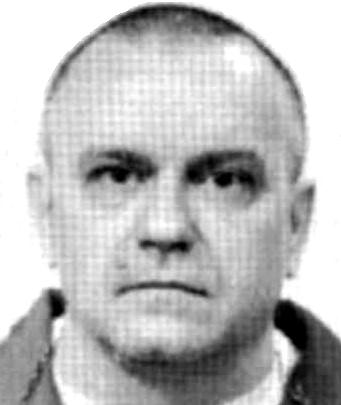
James LOWERY
Classification: Murderer
Characteristics: Robbery
Number of victims: 2
Date of murder:
September 30,
1979
Date
of arrest:
October 2,
1979
Date of birth:
March 16,
1947
Victims profile: Mark,
80, and Gertrude Thompson, 80
(his former employers)
Method of murder:
Shooting (.32 handgun)
Location: Tippecanoe County, Indiana, USA
Status: Executed
by lethal injection in Indiana on June 27,
2001
Summary:
Mark and Gertrude Thompson were 80 years of age, in declining health,
and needed assistance in caring for themselves and their property.
Both were found shot to death in their country home in West Point,
Indiana.
The Thompsons had earlier employed Lowery and his
wife as caretakers. The Thompsons, dissatisfied with the Lowerys,
asked them to leave. Lowery and his friend Jim Bennett discussed
committing robbery and Lowery told Bennett he knew where he could get
some money.
On September 30, 1979 Bennett picked Lowery up and
followed Lowery's directions. Lowery told Bennett they were going to
the Thompson's residence to force him to write a check for $9,000,
then to kill and bury both Thompsons.
Janet Brown, housekeeper and caretaker for the
Thompsons, was sitting in her trailer adjacent to the Thompson's
garage when Lowery, armed with a pistol and sawed-off shotgun, kicked
the door open and entered. After some conversation, Lowery forced her
to take him into the Thompson's residence. Lowery took Brown into the
kitchen where Mark Thompson was standing. He told Thompson he was
being held up and then shot him in the stomach. Lowery then went to
another room, forced Mrs. Thompson into the kitchen and shot her in
the head. He also shot Brown, but Brown had her hand over her head
when Lowery fired at her, causing injury to her hand and her head, but
not fatally wounding her. A burglar alarm began ringing and Lowery
became excited. He went back to and shot Mr. Thompson in the head
before fleeing the scene.
Lowery admitted the killings during penalty phase
testimony. Bennett pled guilty by agreement, received a 40 year
sentence, and testified against Lowery at his first trial. Following
reversal on direct appeal for failure to sequester the jury, a second
trial ended with the same result. At the second trial, Bennett refused
to testify and his previous testimony was admitted against Lowery, who
was sentenced to death a second time on January 7, 1983.
Citations:
James Lowery v. State, 434 N.E.2d 868 (Ind. May 5, 1982) (Direct
Appeal). Lowery v. State, 471 N.E.2d 258 (Ind. 1984) (Attorney fees). James Lowery v. State, 478 N.E.2d 1214 (Ind. 1985) (Direct
Appeal). Lowery v. Indiana, 106 S. Ct. 1500 (1986) (Cert. denied). Lowery v. State, 640 N.E.2d 1031 (Ind. 1994) (PCR). Lowery v. Anderson, 69 F.Supp.2d 1078 (S.D. Ind. July 6, 1999)
(Habeas). Lowery v. Anderson, 225 F.3d 833 (7th Cir. August 29, 2000)
(Habeas). Lowery v. Anderson, 121 S.Ct. 1488 (April 2, 2001) (Cert.
Denied). Lowery v. Anderson, ___ F.Supp.2d ___, (S.D. Ind. April 13,
2001) (Clemency).
ClarkProsecutor.org
LOWERY, JAMES # 5
& # 17
EXECUTED BY LETHAL INJECTION 06-27-01
12:29 A.M.
DOB: 03-16-1947
DOC#: 18667 White Male
Boone County Superior Court Judge Paul H. Johnson, Jr.
Venued from Tippecanoe County
Prosecutor: John H. Meyers, John
Barce
Defense: Lawrence D. Giddings,
Donald R. Peyton
Date of Murder: September 30,
1979
Victim(s): Mark Thompson W/M/80;
Gertrude Thompson W/F/80 (Former employers)
Method of Murder: shooting with
.32 handgun
Summary: Mark and Gertrude
Thompson were 80 years of age, in declining health, and needed
assistance in caring for themselves and their property. Both were
found shot to death in their country home in West Point, Indiana.
The Thompsons has earlier employed Lowery and his
wife as caretakers. The Thompsons, dissatisfied with the Lowerys,
asked them to leave.
Lowery and his friend Jim Bennett discussed
committing robbery and Lowery told Bennett he knew where he could
get some money.
On September 30, Bennett picked Lowery up and
followed Lowery's directions. Lowery told Bennett they were going to
the Thompson's residence to force him to write a check for $9,000,
then to kill and bury both Thompsons. Janet Brown, housekeeper and
caretaker for the Thompsons, was sitting in her trailer adjacent to
the Thompson's garage when Lowery, armed with a pistol and sawed-off
shotgun, kicked the door open and entered.
After some conversation, Lowery forced her to
take him into the Thompson's residence. Lowery took Brown into the
kitchen where Mark Thompson was standing. He told Thompson he was
being held up and then shot him in the stomach.
Lowery then went to another room, forced Mrs.
Thompson into the kitchen and shot her in the head. He also shot
Brown, but Brown had her hand over her head when Lowery fired at her,
causing injury to her hand and her head, but not fatally wounding
her. A burglar alarm began ringing and Lowery became excited. He
went back to and shot Mr. Thompson in the head before fleeing the
scene.
Lowery admitted killings during penalty phase
testimony. Bennett pled guilty by agreement, received a 40 year
sentence, and testified against Lowery at his first trial. When he
refused to testify at the second trial, his previous testimony was
admitted.
Conviction: Murder, Murder,
Attempted Murder (A Felony)
Sentencing: July 11, 1980 (Death
Sentence)
Aggravating Circumstances: b (1)
Burglary/Robbery; B(8) 2 murders
Mitigating Circumstances: no
parental love, mental commitment as a teenager
LOWERY WAS EXECUTED BY LETHAL INJECTION ON
06-27-01 12:29 AM EST. HE WAS THE 79TH CONVICTED MURDER EXECUTED
IN INDIANA SINCE 1900, AND THE 9TH SINCE THE DEATH PENALTY WAS
REINSTATED IN 1977.
ProDeathPenalty.com
James Lowery, then 32, was convicted of the
murders of an elderly couple during a burglary. Mark and Gertrude
Thompson were killed in their home in Tippecanoe County, shot in the
head on September 30, 1979.
Lowery and his wife had worked for the Lowerys as
caretakers due to their poor health but had been fired a few months
before. Lowery knew Mark Thompson was an attorney and thought it
would be "easy money."
Janet Brown, the Thompsons new caretaker, was
also shot in the head but survived her injuries. Lowery went to the
Thompson's home to rob them of $9,000 and gained entrance by holding
a gun to Janet's head.
Lowery immediately shot Mr. Thompson in the
stomach, herded Janet and Mrs. Thompson into the kitchen and shot
them both in the head. Janet managed to partially deflect the bullet
with her hand, and she survived. Lowery then shot Mr. Thompson again.
UPDATE - Jim Lowery, 54, formerly of
Crawfordsville, was pronounced dead at 12:29 a.m. Both the U.S.
Supreme Court and the 7th U.S. Circuit Court of Appeals declined to
intervene on Lowery's behalf Tuesday afternoon.
Gov. Frank O'Bannon already had refused to
commute his death sentence to one of life in prison. In his five-page
denial of Lowery's request for clemency, O'Bannon noted that Lowery
had benefited from the work of skilled attorneys and had been
convicted and sentenced to death in 2 separate trials.
The first verdict was overturned on procedural
grounds. "24 jurors and 23 judges have found the death penalty
appropriate in this case," O'Bannon wrote. "The process was fair,
and I defer to the findings of the courts." Lowery's own
stepdaughter, Heather Rice, said he used to press a gun to her head
and pull the trigger when she was a child. The goal: intimidation. "Let
this man finally be brought to justice," she said at the time. The
board unanimously recommended against clemency.
Lowery is Put to Death for 1979 Murders
Condemned Man Slept, Ate Usual Prison Food During Final Hours Before
State Execution
By John Masson - Indianapolis Star
June 27, 2001
MICHIGAN CITY, Ind. -- Convicted double-murderer
James Lowery was executed by injection early this morning at the
Indiana State Prison. Lowery was put to death at 12:29 a.m. for the
1979 slayings of an elderly Tippecanoe County couple.
Afterward, his attorneys, Monica Foster and Brent
Westerfeld, spoke to reporters outside the prison. Foster read a
lengthy handwritten statement from Lowery that ended with the words:
"I am so very sorry." Lowery had made no statement inside the prison
before his execution, Foster said.
In the final hours before the execution,
supporters and opponents of the death penalty gathered in the
parking lot outside the prison walls. The approximately 45 anti-death
penalty protesters far outnumbered the handful of people who showed
up to support the execution.
"I don't think it's ever right to kill somebody,"
said Nate Holdren, a recent graduate of Valparaiso University. "It
would be a better world if we'd stop doing it." Nearby stood three
pro-execution protesters; one held a sign that declared: "The
penalty for murder is death." Holdren and two other Valparaiso
graduates sat on a blanket, gazing at a candle. "I think it's simple
hatred and a desire for vengeance," said Mia Cabibbo. "I'm all for
protecting society. . . . I think we have systems in place to do
that, and they're called prisons." Lowery spent much of Tuesday
night sleeping, said Pam Pattison, a spokeswoman for the Indiana
Department of Correction. Earlier, he met with his attorneys and the
Rev. Paul LeBrun, who would administer the last rites, Pattison
added.
Tuesday afternoon, the U.S. Supreme Court and the
7th U.S. Circuit Court of Appeals declined to intervene on Lowery's
behalf. Gov. Frank O'Bannon already had refused to commute his death
sentence to one of life in prison. Still, Foster said, Lowery spent
his last few hours thinking of others, not of himself. "He's clearly
more concerned about the impact of his death on other people," said
Foster, who has represented Lowery for 16 years. Just after midnight,
a series of three drugs flowed into Lowery's veins.
He became the third person executed in Indiana in
16 days. Oklahoma City bomber Timothy McVeigh and drug kingpin Juan
Raul Garza were put to death by federal authorities near Terre Haute
earlier this month. "Indiana has become the killing field, hasn't it?"
Foster said.
John Krull, executive director of the Indiana
Civil Liberties Union, warned against allowing the Hoosier state to
become "the Texas of the North." "We're killing people as fast as
Burger King makes hamburgers," Krull said after a sparsely attended
noontime Statehouse gathering. Lowery was convicted of the murders
of Mark and Gertrude Thompson, both 82 years old.
He shot the couple
during a robbery. He had been fired from his job as their caregiver
a few months before. In denying clemency, O'Bannon noted that Lowery
had benefited from the work of skilled attorneys and had been
convicted and sentenced to death in two separate trials.
The first verdict was overturned on procedural
grounds. "Twenty-four jurors and 23 judges have found the death
penalty appropriate in this case," O'Bannon wrote. "The process was
fair, and I defer to the findings of the courts."
But death penalty
opponents decried that decision, especially in light of the horrific
abuse Lowery is said to have suffered during his youth. The 54-year-old
Lowery told Parole Board members earlier this month that he had been
raped repeatedly by employees at a state-run mental institution.
Supporters also cited his exemplary prison
record. Charlie Kafoure of the Indiana Coalition To Abolish Capital
Punishment noted Lowery's "heroic" role as a peacemaker on Death Row.
But others told the Parole Board about a different Lowery. His own
stepdaughter Heather Rice, said he used to press a gun to her head
and pull the trigger when she was a child. The goal: intimidation. "Let
this man finally be brought to justice," she said at the time. The
board unanimously recommended against clemency.
Lowery asked LeBrun, Foster and Westerfeld to
watch the execution. He declined a special last meal in favor of
standard inmate fare, a prison spokesman said. "I think he would
tell you that he views his death as a private thing," Foster said.
"He really doesn't like the whole circus atmosphere."
USA (Indiana): James (Jim) Lowery, white, age 54
Amnesty International
Jim Lowery is scheduled to be executed in Indiana
on 27 June 2001 after more than two decades on death row. Mark and
Gertrude Thompson were murdered in their home on the night of 30
September 1979.
Jim Lowery, who had briefly worked as the elderly
couple's caretaker before being fired, was convicted of the murders
and sentenced to death in 1980. He was retried in 1983 after winning
an appeal, but was again convicted and sentenced to death.
The jury heard some evidence of Jim Lowery's
background at the sentencing phase of the retrial, but the defence
did not present much of the detail now available about his deprived
and abused life before the crime. Specifically, it heard nothing
about his appalling treatment in state mental facilities as a
teenager.
Jim Lowery was born in 1947 to a 14-year-old
mother and an alcoholic father. His and his four siblings' childhood
was marked by poverty and parental neglect. Jim Lowery first got
into trouble as a young teenager, after taking his father's car for
joyriding in.
When he was 15 or 16, his parents took him to
court and a judge committed him to a state mental facility, even
though no evidence had been presented that he was mentally ill.
The
teenager ran away from the institution several times, telling his
brothers and sisters that he had witnessed inmates being given
electro-shock treatment and that he was afraid this would happen to
him.
He was transferred to the maximum security unit of another
institution, the Norman Beatty Hospital, which has since been closed.
There he was subjected to repeated gang rapes by staff. On occasion
he was held in isolation, and he witnessed further electro-shock
treatment. He was released at the age of 18. He took to drugs,
alcohol, and property crime, and was in and out of the prison system
until the crime for which he was sentenced to die.
Another former teenage inmate of Norman Beatty,
Frank Davis, was sentenced in 1996 to life imprisonment for two
murders. The sentencing judge rejected the prosecution's bid for a
death sentence, stating: "the Court finds of great significance the
fact that the State created the monster it now seeks to destroy.
The
mitigation provided by the horrors perpetrated upon Defendant while
at Norman Beatty Hospital and while the State was in loco parentis
with the Defendant, are so strong as to overcome the substantial
aggravating circumstances also found in this case." As a 14-year-old,
Davis was subjected to rape at the hands of other patients in the
hospital.
At a clemency hearing on 18 June, the Indiana
Parole Board heard testimony from a psychologist who recently
diagnosed Jim Lowery as still suffering from post-traumatic stress
disorder as a result of his treatment in the mental institutions.
The psychologist also testified that Lowery should never have been
placed in those facilities. The board also heard how Jim Lowery has
been a model prisoner who has not had a single disciplinary write-up
in his 22 years on death row and who has been entrusted with a job
as a prison porter, which allows him to be out of his cell for
extended periods of time.
The board was told that Lowery had helped
save another prisoner's life by calling attention to his suicide bid,
and that he has been an important mediator between prisoners and the
authorities at times when tensions on Indiana's death row have run
high.
On 19 June, the parole board voted against
clemency. Its chairman noted that there was "no question that [Lowery]
was a model prisoner" whose record in the prison was "exemplary".
Jim Lowery's fate is now in Governor O'Bannon's hands. Under Article
5, Section 17 of the Indiana Constitution, he has the power to
override the Board's recommendation and grant clemency.
Last year, Governor O'Bannon ordered a
legislative study into the fairness of the state's use of the death
penalty. That study is still in progress.
Fourteen professors at the
Notre Dame School of Law, Indiana, have signed a letter stating that
it is "both unwise and inconsistent with elemental notions of
fairness to conduct any execution" in Indiana while the system is
being studied, given that it is "possible that the State of Indiana
might execute a person who would have been entitled to the benefit
of the Commission's work". The letter noted that in this regard "Mr
Lowery's situation creates a risk of an erroneous execution".
Another five law professors from Indiana University of Law have
signed a similar statement.
State Parole Board Recommends Killer's Execution;
Governor Will Now Decide
By Kevin Corcoran.
Abolish Archives
June 19, 2001
Jim Lowery's effort to spend the
rest of his life in prison was dealt a setback Tuesday when the
Indiana Parole Board voted unanimously to recommend proceeding with
his execution by chemical injection.
Citing the brutality of a
double murder Lowery committed in 1979, the board's four members
said the best interests of society would be served by killing him
June 27 in the Indiana State Prison at Michigan City.
Lowery shot Mark and Gertrude Thompson, both 82,
to death in their Tippecanoe County home during a robbery just
months after the couple had fired Lowery and his wife as caregivers,
according to court records.
"There were several points at which Mr. Lowery
could have left the residence," said Valerie Parker, the board's
vice chairman. "It was almost as if he seemed to enjoy the power he
held over his victims."
Now, more than 20 years later, others are in
control. Lowery and his attorneys say his life should be spared
because of exemplary conduct in prison and repeated gang rapes they
allege happened while Lowery, now 54, was confined to a state mental
hospital as a teenager. "The state is now attempting to execute the
monster that it created," said Monica Foster, one of Lowery's
defense attorneys.
The Parole Board's recommendation will go to Gov.
Frank O'Bannon, who is the only person who can commute Lowery's
death sentence to life in prison without possibility of parole.
When Lowery was convicted, life in prison was not
a sentencing option. Since it became law in 1993, defendants in
capital murder cases have been nearly three times less likely to get
death sentences, according to the Indiana Public Defender Council.
This change in the tide of murder prosecutions
since Lowery's 1983 convictions has Foster and co-counsel Brent
Westerfield scrambling in Lowery 's final days to achieve the holy
grail of death penalty defense: a set of circumstances compelling
enough for O'Bannon to let a Death Row inmate spend the remainder of
his life behind bars. "We hope the governor's going to do the right
thing," Foster said after the hearing. "We believe this is an
extraordinary case."
James Lowery v. State,
434 N.E.2d 868 (Ind. May 5, 1982) (Direct Appeal).
Defendant was convicted before the Superior Court,
Boone County, Paul H. Johnson, Jr., J., of murder and attempted
murder, and he appealed. The Supreme Court, DeBruler, J., held that:
(1) upon his timely pretrial motion for jury sequestration during
trial for murder and attempted murder, defendant was entitled to
have jury sequestered; (2) witness' taped statement to police before
trial, offered and admitted after witness had testified she could
not recall all of what she had said in statement and had left
witness stand, was properly admitted over hearsay objection; (3)
photograph of defendant taken on day of his arrest some two days
following the charged crimes was properly admitted over objection;
(4) where jury never saw plea bargain agreement between State and
defendant's accomplice or knew that a polygraph examination had been
administered to accomplice pursuant to agreement, any issue
regarding propriety of admission of agreement because of reference
therein to polygraph examination was moot on appeal; and (5) where
defendant gave no waiver of appeal and no waiver of counsel,
defendant was entitled to fullest assistance of counsel at every
critical stage of appeal, including mandatory review of death
sentence. Reversed. Givan, C. J., dissented and filed an opinion in
which Pivarnik, J., concurred.
DeBRULER, Justice.
This is a direct appeal arising out of convictions on a three count
indictment, charging two counts of murder and one count of attempted
murder. The jury returned verdicts of guilty on each of the three
counts, for the murders of an elderly couple living in West Point,
Indiana, and the attempted murder of their housekeeper.
The court
found appellant guilty on each of the three counts and pursuant to
the provisions of Ind.Code s 35-50-2-9 (Burns 1979) sentenced him to
suffer the death penalty.
The following rulings are challenged on appeal
and considered in this opinion:
1. The denial of a defense motion to sequester the jury throughout
the trial.
2. The admission of a taped pre-trial statement.
3. The admission of a photograph of appellant.
4. The admission of an accomplice's plea agreement.
In addition to considering the above issues, the
Court on its own considers for the guidance of the bench and bar the
scope of the appellate lawyer's function in appeals from convictions
resulting in the sentence of death.
The record shows the following facts. Appellant
and an accomplice decided to rob Mark and Gertrude Thompson, an
elderly couple living in a rural area of Tippecanoe County.
Appellant armed himself with a .32 caliber revolver and set out with
his partner for the Thompson home on September 30, 1979.
At about
7:00 that evening, the pair entered the house trailer of the
Thompson's housekeeper, which was parked near the home, and forced
the housekeeper to enter the home with them. Upon confronting Mr.
Thompson and having a brief exchange of words with him, appellant
fired a non-fatal shot into Mr. Thompson's abdomen.
Appellant
directed his accomplice to guard Mr. Thompson while he sought out
Mrs. Thompson, whom he found in the den and brought into the kitchen.
Very shortly Mr. Thompson managed to trip a switch that set off a
siren he had attached to his barn as a means of letting his
neighbors know there was an emergency at his home. Appellant
panicked upon hearing the siren and fired a single shot at point-blank
range into Mrs. Thompson's head, killing her.
He then turned to the
housekeeper and fired a shot into her head. However, she had raised
her hand to shield herself and the bullet had struck her hand first,
thus reducing its velocity enough that it only barely penetrated her
skull. She fell to the floor feigning death and survived. Appellant
last went to Mr. Thompson and fired a single fatal shot into his
head.
At appellant's trial, his accomplice and the
housekeeper testified against him regarding the crime. His wife also
testified regarding admissions he made to her about the murders.
These admissions were made in front of the accomplice immediately
after the pair returned to appellant's home in Crawfordsville.
The trial court denied a pre-trial defense motion
for jury sequestration during the trial. The right asserted is based
upon Public Law 1905, ch. 169, s 263, Ind.Code s 35-1-37-2 , which
provides: "When the jurors are permitted to separate, after being
impaneled, and at each adjournment, they must be admonished by the
court that it is their duty not to converse among themselves, nor
suffer others to converse with them, on any subject connected with
the trial, or to form or express any opinion thereon, until the
cause is finally submitted to them."
Referring to this statute this
Court has said: "At common law it was not permissible for a jury to
separate even with the defendant's consent; but under our statute
above quoted, it has been held and is the general practice that a
jury be allowed to separate with the defendant's consent. McCorkle
v. State (1859), 14 Ind. 39." Faulkner v. State, (1923) 193 Ind.
663, 669, 141 N.E. 514.
Separation of the jury proscribed in this statute
occurs when jurors are permitted to return alone to the general
community or to go to their respective homes, during the trial,
after being duly admonished, and prior to the final charge by the
court and the commencement of deliberations. The defendant's consent
to separation will be presumed from a record of proceedings which is
silent. Faulkner v. State, supra.
The application of this statute in cases in which
the defendant faces the possibility of the imposition of the penalty
of death has remained static since its enactment in 1905 to the date
of this opinion.
A timely request by the defendant for the jury to
be kept together during the trial in a capital case places a
mandatory duty upon the trial judge to grant the request.
There is
in such cases no discretion reposed in the trial court to deny that
request, and no burden upon the defendant at trial or on appeal to
make a showing of cause or prejudice. Whitaker v. State, (1960) 240
Ind. 676, 168 N.E.2d 212. Indeed, no case has presented itself in
which a defendant has been ordered put to death by an American court
as punishment for crime upon the verdict of a jury which was
permitted to separate and return to commingle in the general
community during the trial, over the timely objection of the accused.
We therefore hold that it was reversible error for the court to deny
the motion on the basis asserted and that consequently appellant
must be granted a new trial.
James Lowery v. State,
478 N.E.2d 1214 (Ind. 1985) (Direct Appeal).
Defendant was convicted before the Superior Court,
Boone County, Paul H. Johnson, Jr., J., of murder and attempted
murder, and he appealed. The Supreme Court, 434 N.E.2d 868, reversed. In second trial, defendant was convicted before the
Circuit Court, Hendricks County, J.V. Boles, J., of two counts of
murder and one count of attempted murder, and he appealed. The
Supreme Court, Pivarnik, J., held that: (1) testimony of officers
regarding incriminating statements by defendant was properly
admitted; (2) court did not err in permitting State to read
transcript of accomplice's testimony at first trial since accomplice
was unavailable at second trial; (3) objections to admission of
portions of prior testimony of accomplice on hearsay grounds were
properly overruled; (4) tape recordings of statements of defendant's
former wife and attempted murder victim were properly admitted; (5)
trial court did not err in permitting expert witness to give opinion
about distance between victim's head and murder weapon; (6) evidence,
including testimony of accomplice and testimony of attempted murder
victim who gave eyewitness account of defendant's commission of the
crimes and unequivocally identified defendant as perpetrator, was
sufficient to sustain convictions; and (7) imposition of death
penalty was not arbitrarily or capriciously arrived at and was
reasonable and appropriate. Affirmed and remanded. DeBruler, J.,
concurred and dissented with opinion. Prentice, J., concurred in
result with opinion.
PIVARNIK, Justice.
Defendant was found guilty by a jury in the Hendricks Circuit Court
in a bifurcated trial of two counts of murder and one count of
attempted murder. The jury recommended the death penalty for each
murder conviction.
The trial court sentenced Defendant to death for
the two murder convictions and to a term of fifty (50) years for the
attempted murder conviction. Fifteen issues have been presented for
our determination in this direct appeal as follows: 1. whether the
Indiana death penalty statute constitutes vindictive justice; 2.
lack of specific rules governing the review of death sentences; 3.
denial of Defendant's request for funds to hire an expert to assist
counsel during jury selection; 4. refusal of the trial court to
permit individual voir dire of each prospective juror; 5. denial of
Defendant's Motion to Suppress; 6. error in admission of trial
testimony of witness James Bennett; 7. error in admission of certain
State exhibits; 8. error in admitting testimony of witness George
Ross; 9. error in admission of Defendant's Exhibit E on motion of
the prosecution; 10. admission of opinion testimony of Dr. Miller;
11. permission of Detective Payne to testify about a pretrial
identification display; 12. allowing leading questions by the
prosecution; 13. error in the giving of an accomplice instruction;
14. sufficiency of the evidence; and 15. error in finding that the
aggravating factors outweighed the mitigating factors.
On September 30, 1979, Mark and Gertrude Thompson
were in their country home in West Point, Tippecanoe County,
Indiana. Both Thompsons were past 80 years of age, in declining
health, and needed assistance in caring for themselves and their
property.
On that date, both were killed by gunshot in their home.
Before this date, the Thompsons had employed Defendant-Appellant
James Lowery and his wife as caretakers.
The Thompsons, dissatisfied
with the Lowerys, asked them to *1219 leave and ordered them out of
the provided trailer and off the property immediately. The Lowerys
refused to leave that quickly and after some discussion, Mark
Thompson gave the Lowerys a check for one-hundred ($100.00) dollars
in exchange for leaving immediately.
Weeks before September 30,
Lowery and Jim Bennett discussed committing a crime for pecuniary
gain. Lowery told Bennett he knew where he could get some money, but
he did not disclose the place at that time.
About three weeks prior
to September 30, Bennett gave Lowery a .32 caliber nickel or chrome
plated pistol and some ammunition.
The gun was supposedly for
Barbara Lowery's protection while Lowery was not home. On September
30, Bennett picked Lowery up and followed Lowery's directions.
Bennett knew, in general, that they were driving to West Point to
rob Lowery's former employers.
Later, Lowery told Bennett more
specifically that they were going to the Thompson's residence to
force Mr. Thompson to write a check for nine-thousand ($9,000.00)
dollars, then kill and bury both Thompsons.
He also planned to take
Thompson's gun collection. As they approached the Thompson residence
around dark, Lowery carried the pistol and Bennett a sawed-off
shotgun.
Janet Brown, housekeeper and caretaker for the
Thompsons, was sitting in the trailer where she lived, adjacent to
the Thompson's garage, reading a book when she heard the Thompson's
dog bark, and a man with a gun in his hand kicked the door open and
entered.
Brown recalled having once met the man at the West Point
Post Office. She and Lowery had struck up a conversation about their
motorcycles. When she told Lowery she worked for the Thompsons, he
had remarked that he too had worked for them at one time.
He said
Mark Thompson was all right but to watch out for Mrs. Thompson as
she was hateful. He recounted how they were ordered to leave the
Thompsons' and how he had first requested payment of one hundred
($100.00) dollars. Brown thought Lowery spoke hatefully of the
Thompsons. She identified Jim Lowery as the man who came into the
trailer with a gun the evening of September 30, 1979.
After Lowery broke into Brown's trailer, he held
the gun against Brown's neck and forced her to take him to the
Thompson's residence. Brown saw someone with Lowery but said she did
not get a good look at him.
Bennett testified similarly to Brown
about these events. Lowery took Brown into the kitchen where Mark
Thompson was standing. He told Thompson he was being held up and
then shot him in the stomach.
After shooting Mark Thompson, Lowery
forced Brown, with a gun to her head, through the kitchen and down
the hall to the den where Gertrude Thompson was watching television.
Lowery ordered Mrs. Thompson to get up and move and as she was
walking down the hall, he struck her in the head with the gun. Blood
spurted from her head and she began to stagger.
After Lowery forced Brown and Mrs. Thompson into
the kitchen, he shot Mrs. Thompson in the head and also shot Brown.
Brown had her hand over her head when Lowery fired at her, causing
injury to her hand and her head, but not fatally wounding her.
As she lay bleeding, not sure how seriously she was injured, the
burglar alarm began ringing. Mark Thompson apparently had activated
it. She testified that at that time Lowery and the person with him
became excited and Lowery went back to where Mark Thompson was and
she heard two more shots.
Lowery still wanted to find something to
take from the house, but because the siren was ringing and they
feared the police would come soon, Lowery and Bennett fled by way of
the back roads. They returned to Lowery's place where they told
Barbara Lowery about the shootings.
After Lowery was apprehended by
the police, he made several voluntary incriminating statements to
numerous police officers. Later, in the jail cell, he admitted the
perpetration of these crimes to his cellmate and detailed the manner
in which they were executed.
* * *
An examination of the entire record, pursuant to
our responsibility to review the imposition of the death penalty,
clearly supports the conclusion that imposition of the death penalty
was appropriate, considering the nature of the offense and the
character of the defendant.
As this opinion already amply
demonstrates, there was proof beyond a reasonable doubt that this
defendant intentionally killed the Thompsons. He expressed animosity
toward them because of his prior relationship with them and further
expressed a desire and intent to get money and property from them.
The trial judge told the defendant during sentencing, "I can find no
factor that mitigates in your favor in this case. You have nothing
going for you except a brutal cold blooded pre-planned killing of
old people." (Record at 207). At another point he stated, "There are
no, there is no justification and not even the wildest theorist can
provide the justification for what you did under any circumstances
of logic or reason." (Record at 205). The record patently shows the
egregious nature of these offenses and the character of this
offender.
The trial court carefully complied with the proper
procedures pursuant to statute and case law, and we find that the
imposition of death, recommended by the jury and imposed by the
trial court, was not arbitrarily or capriciously arrived at and is
reasonable and appropriate. We affirm the trial court in its
judgment, including its imposition of the death penalty. This cause
is accordingly remanded to the trial court for the purpose of
setting a date for the death sentence to be carried out. GIVAN, C.J.,
and HUNTER, J., concur. DeBRULER, J., concurs and dissents with
separate opinion. PRENTICE, J., concurs in result with separate
opinion.
Lowery v. Anderson, (7th Cir. August 29, 2000) (Habeas).
225 F.3d 833
In the United States Court of Appeals For the Seventh Circuit
No. 99-3227
JIM LOWERY, Petitioner-Appellant, v.
RONDLE ANDERSON, Superintendent, Indiana State Prison,
Respondent-Appellee.
Appeal from the United States District Court for
the Southern District of Indiana, Indianapolis Division. No. IP
96-0071-C-H/G--David F. Hamilton, Judge.
Argued June 28, 2000
Decided August 29, 2000
Before Flaum,
Chief Judge, Bauer and Manion, Circuit Judges.
Bauer, Circuit
Judge.
Jim Lowery is
under sentence of death for the 1979 murders of Mark
and Gertrude Thompson. A direct appeal to the
Supreme Court of Indiana won him a new trial, but
upon retrial he was again convicted and again
sentenced to death. His appeals thereafter were
fruitless. He petitioned for collateral relief, but
his challenges to the murder convictions and death
sentence were unsuccessful. His attempt to win a
writ of habeas corpus from the U.S. District Court
also failed. Now he is before us. We find that
neither his conviction nor his sentence were the
result of constitutional violations and affirm the
District Court's decision to deny the writ.
I. BACKGROUND
Mark and Gertrude
Thompson were murdered in their home on the night of
September 30, 1979 by a man they once trusted as
their caretaker. The Thompsons were an elderly
couple and their declining health necessitated that
they hire others to help care for them and their
property. During the summer of 1979, Lowery and his
wife Barbara filled that role.
Only a few months
before the murders, Mark Thompson fired Jim Lowery
and ordered him off the Thompson property. The loss
of that job included the loss of the rent-free
caretaker's trailer on the Thompson property, in
which Lowery and his family lived, and the loss of
the modest salary. At first, Lowery refused to
accept his demise, pleading with Mark Thompson that
he had no money and no place to go. Thompson,
however, was so dissatisfied with the Lowerys'
service that he offered Lowery $100.00 if he would
leave the property immediately. Lowery took the
money and moved his family to an old school bus in a
nearby campground.
On September 30,
1979, Lowery and his friend Jim Bennett drove to the
Thompson's home intending to rob and murder the
couple. Several weeks before, Lowery and Bennett had
discussed committing a crime for pecuniary gain, as
both were in need of money.
Lowery told
Bennett he knew where he could get some money, but
it was not until they were in the car on their way
to the Thompson's house that Lowery told Bennett
that they were going to rob the Thompsons. Lowery's
plan was to force Mark Thompson to write a check for
$9,000 and then to kill and bury the couple. Lowery
was armed with a pistol and Bennett a sawed-off
shotgun.
Lowery and Bennett
arrived at the Thompson's property around dark.
Janet Brown, the new caretaker, was in the trailer
reading a book when she heard the Thompson's dog
bark. Seconds later, the trailer door was kicked in
and an armed Lowery entered, leaving Bennett outside.
Ms. Brown later
told police that she immediately recognized the man
as the Thompson's former caretaker. The two had met
at the post office a week earlier and had struck up
a conversation. When she told Lowery that she worked
for the Thompsons, Lowery admitted that he had been
their previous caretaker and he spoke, she thought,
hatefully of them.
Lowery put the
pistol against Brown's neck and forced her to take
him into the Thompson's house. Bennett joined them
as they crossed the lawn to the house. Inside, they
found Mark Thompson standing in the kitchen.
Immediately upon seeing Lowery and being told that
this was a "hold up," Thompson said "You don't want
to do this now, Jim." Lowery responded by shooting
him in the stomach.
After shooting
Mark Thompson, Lowery forced Brown, with the gun to
her head, through the kitchen, down the hall, and
into the den where Gertrude Thompson was watching
television. Lowery ordered Mrs. Thompson to get up
and to go into the kitchen. She complied. As she was
walking down the hall, Lowery hit her in the head
with the gun. She began to bleed, but was able to
make it into the kitchen, where Lowery shot her once
in the head at close range. Gertrude Thompson died
before help could arrive.
Lowery also shot
Janet Brown, but because she put her hands in front
of her, the shot was deflected and she was grazed
but alive. She wisely lay on the floor pretending to
be dead. As she lay there, she heard the burglar
alarm sound. Somehow, despite his wound, Mark
Thompson had activated it, obviously greatly
distressing Lowery and Bennett. Lowery went back to
where Mark Thompson was, and Brown heard two more
shots. Lowery and Bennett then fled.
Later, when she
was certain the two men were gone, Brown called the
police. When they arrived, Gertrude Thompson was
dead and Mark Thompson was dying from a gunshot
wound to the head. Before his death, Mark Thompson
was able only to say that four "monkeys" assaulted
him. His son testified that Mr. Thompson used the
term "monkeys" when he could not remember someone's
name.
Using the back
roads, Lowery and Bennett returned to the old school
bus. They told Lowery's wife, Barbara, about the
shootings. Lowery was arrested two days later.
Bennett the day after that. After his arrest, Lowery
made several incriminating statements to police
officers. He also told his cellmate of his crimes,
describing them in a detailed manner. Before trial
he challenged the admissibility of these statements,
but was successful in excluding only some.
The prosecution
struck a deal with Bennett. In exchange for his
testimony against Lowery and a plea of guilty, the
State dropped the habitual offender charge against
Bennett and its request for the death penalty. It
also guaranteed Bennett a sentence of 40 years.
Bennett testified
that he and Lowery had planned to rob the Thompsons
and that Lowery shot the Thompsons and Ms. Brown
during the attempted burglary. Brown identified
Lowery in court and testified that he was the person
who shot her and the Thompsons. Barbara Lowery also
testified, recounting how her husband and Bennett
left the camp with a handgun and a shotgun, saying
they were "off on a caper." When they returned later
that night, she said, they were visibly upset and
shaking, with Bennett explaining that it "went bad,"
and, in Lowery's presence, saying "he" (meaning
Lowery) shot them in the head.
The jury convicted
Lowery of two counts of murder and one count of
attempted murder and recommended that he be put to
death. The judge sentenced him to death. The Supreme
Court of Indiana reversed Lowery's convictions on
direct appeal because the trial court failed to
sequester the jury. Lowery v. State, 434 N.E.2d 868
(Ind. 1982). Lowery was tried a second time.
Bennett refused to
testify at the second trial. He wanted a "better
deal" on his plea bargain. The State refused.
Bennett was brought before the court (out of the
jury's presence) and refused to be sworn in. The
court threatened to hold Bennett in contempt, but
Bennett still refused to testify. He was held in
contempt.
The next day, this
procedure was repeated and the same result obtained.
Frustrated, the trial judge told Bennett that if he
continued to refuse to testify, the court would
order the prosecutor to bring murder charges against
Bennett because he had violated his plea agreement.
Both the prosecutor and the defense counsel agreed
that such an order was beyond the scope of the
court's authority and the court recanted. Before
Bennett was aware that the threat of prosecution had
been removed, however, he changed his mind and
agreed to testify.
That change was
short lived. Once Bennett was advised that the only
penalty for refusing to testify was to be held in
contempt of court, he again refused to testify. The
court then declared Bennett to be unavailable and
allowed the prosecutor to read Bennett's testimony
from the first trial to the jury. The jury convicted
Lowery of the murders of Mark and Gertrude Thompson
and the attempted murder of Janet Brown.
At the sentencing
phase of the trial, the prosecution argued for the
death penalty, saying it was justified because the
murders were committed during an attempted burglary
(an aggravating factor) and because there were
multiple murders. Lowery's mother, father and
youngest sibling testified on Lowery's behalf, as
did a psychiatrist retained by the defense. Lowery
also took the stand, admitting to the crimes.
Nevertheless, the jury recommended the death
penalty. The trial judge sentenced Lowery
accordingly.
The Supreme Court
of Indiana affirmed the murder convictions and death
sentences. Lowery v. State, 478 N.E.2d 1214 (Ind.
1985). However, it later reversed the conviction of
attempted murder, saying the jury had been wrongly
instructed on that count. Lowery v. State, 640 N.E.2d
1031 (Ind. 1994). The State chose not to retry
Lowery for the attempted murder. The U.S. District
Court denied habeas relief. Lowery v. Anderson, 69
F.Supp.2d 1078 (S.D.Ind. 1999).
Lowery appeals,
claiming that the introduction of Bennett's prior
testimony violated his Sixth and Fourteenth
Amendment rights, that the State and trial court
violated Caldwell v. Mississippi, 472 U.S. 320
(1985), by leading the jury to believe that its
recommendation to the judge concerning the death
penalty carried less weight than in fact it does,
and that he was denied effective assistance of
counsel. We affirm.
II. DISCUSSION
Federal courts may
grant a writ of habeas corpus when a person is held
in custody under a state court judgment in violation
of the United States Constitution. 28 U.S.C.
sec.2254; Kavanagh v. Berge, 73 F.3d 733, 735 (7th
Cir. 1996). Because Lowery filed his petition before
the effective date of the Antiterrorism and
Effective Death Penalty Act of 1996, our review is
plenary. Lindh v. Murphy, 96 F.3d 856 (7th Cir.
1996) (en banc) rev'd on other grounds 521 U.S. 320
(1997). We must accept as true the reasonable
factual findings of the state courts, Abrams v.
Barnett, 121 F.3d 1036, 1038 (7th Cir. 1997), but
questions of law or mixed questions of law and fact
are considered de novo. Brewer v. Aiken, 935 F.2d
850, 855 (7th Cir. 1991). Furthermore, we may
consider our own jurisprudence, in addition to the
jurisprudence of the United States Supreme Court.
Abrams, 121 F.3d at 1037-38.
A. Admission Of
Bennett's Prior Testimony
At Lowery's first
trial, Jim Bennett testified for the prosecution. He
did so pursuant to a plea agreement that required
his testimony and guaranteed him a sentence of 40
years. Before the retrial, Bennett informed the
prosecutor that he would not testify again unless
the prosecutor reduced his sentence to 10 years. The
prosecutor refused. Bennett, then, true to his word,
refused to testify when called.
The trial judge
held Bennett in contempt, but Bennett still refused
to testify. As described below, this procedure was
repeated several times, outside the jury's presence.
Finally, Bennett was called with the jury present.
He refused again to testify and was again held in
contempt. At that point, the trial judge declared
Bennett to be an unavailable witness and allowed the
prosecutor, over Lowery's objection, to read to the
jury Bennett's testimony from the first trial.
Lowery claims this
was reversible error because it denied him his
constitutional right to confront and cross- examine
the witness against him. He also argues that Bennett
was not truly "unavailable" because the State failed
to exhaust other means which might have induced
Bennett to testify.
The Confrontation
Clause of the Sixth Amendment guarantees the right
of the accused to "be confronted with the witnesses
against him." U.S. Const. Amendment VI. See also
Delaware v. Van Arsdall, 475 U.S. 673, 678 (1986).
The main and essential purpose of confrontation is
to secure for the opponent the opportunity for
cross- examination. United States v. Sasson, 62 F.3d
874, 882 (7th Cir. 1995), cert. den'd, 516 U.S. 1131
(1996). Lowery contends that he was deprived of this
right when Bennett's prior testimony was read to the
jury.
The Sixth
Amendment confrontation clause, however, "permits,
where necessary, the admission of certain hearsay
statements against a defendant despite the
defendant's inability to confront the declarant at
trial." Maryland v. Craig, 497 U.S. 836, 847-48
(1990) (citations omitted). The confrontation clause
is satisfied, and no constitutional violation occurs,
when the defendant had a full and fair opportunity
to cross-examine the witness at the earlier
proceeding and the witness is "unavailable" for the
subsequent proceeding. Mancusi v. Stubbs, 408 U.S.
204, 216 (1972).
Lowery admits that
Bennett's testimony was subject to cross-
examination at the first trial and does not contend
that the cross-examination was less than full or
meaningful. He complains that Bennett's prior
testimony was improperly admitted because Bennett
was not truly "unavailable" the second time around.
It is well
established that a witness may be deemed "unavailable"
and use of his former testimony permitted if the
witness "persists in refusing to testify . . .
despite an order of the court to do so." Fed.R.Evid.
804(a)(2). See also California v. Green, 399 U.S.
149, 168-69 (1970). However, there is more to
consider. The prosecution must also demonstrate that
it made a good faith effort to obtain the witness'
testimony, in person, before the trier of fact. Ohio
v. Roberts, 448 U.S. 56, 74 (1980). The lengths to
which the prosecution must go to produce a witness
is a question of reasonableness. Id.
Here, in an effort
to secure Bennett's testimony for the second trial,
the prosecutor had Bennett transported from the
state prison in which he was incarcerated to a
county jail so that he could be available to testify.
He also attempted to talk with Bennett before
calling him as a witness, and kept calling him as a
witness during the trial, even though Bennett
refused to testify and had been held in contempt of
court. What the prosecution did not do was, as the
trial judge suggested, threaten to revoke Bennett's
plea agreement and try him for murder, or threaten
to try him for obstruction of justice.
The Supreme Court
of Indiana found that Bennett "was amenable" to
these tactics and Lowery suggests that because they
might have worked, the State did not act reasonably
or in good faith in attempting to obtain Bennett's
testimony for the retrial. The District Court
disagreed, saying:
[t]he fact that
other steps the prosecution did not take might also
have been reasonable does not show either that it
failed to make a reasonable, good faith effort to
secure Bennett's testimony, or that Lowery's Sixth
Amendment rights were violated by use of Bennett's
testimony from Lowery's first trial.
Lowery, 69 F.Supp.2d
at 1093. We agree. Although the record is silent as
to why the prosecution chose not to threaten Bennett
with further prosecution or charge him with a crime,
there is no requirement that it do so and such
decisions are well within the prosecution's
discretion. Johnson v. State, 675 N.E.2d 678, 683
(Ind. 1996); LaMotte v. State, 495 N.E.2d 729, 733
(Ind. 1986). We decline to impose a rule imposing
the court's will upon the prosecution and we fear
that to do so would violate the separation of powers.
The fact that
more, theoretically, could have been done to
persuade Bennett to testify does not persuade us to
reach a contrary result. If we adopt Lowery's
position and mandate that the prosecution threaten
recalcitrant witnesses, or possibly even charge them
with minor crimes, where do we stop? A bright line
test is not possible in cases such as this. We
believe the better rule is to consider the totality
of the circumstances and determine reasonableness
and good faith on a case by case basis. In this case
we find that the prosecution did make a good faith
effort to secure Bennett's testimony for the retrial.
We understand the
passion with which Lowery presents his argument,
especially in light of the inconsistent statements
Bennett made between the first and second trials.
During that interim, Bennett wrote letters to state
officials and to Lowery, saying in one that there
were three people involved in the crime and, in
another, that Lowery was not present when the crime
occurred. In each instance, he offered to exchange
information for a further reduction in his sentence.1
Lowery argues that
he was irrevocably prejudiced by the prosecution's
failure to procure Bennett as a live witness so that
he could cross-examine him with this new information.
He asks that we review this claim under the harmless
error standard of Chapman v. California, 386 U.S. 18
(1967), and says that once we do reversal is
mandated.
Under the Chapman
harmless error standard, the government has the
burden of demonstrating that the error was harmless
beyond a reasonable doubt. Id. at 22. We have
reviewed and rejected that argument and instead
adopted the standard set forth by the Supreme Court
in Brecht v. Abrahamson, 507 U.S. 619, 637 (1993),
which holds that an error is harmless unless the
defendant can show that it had a "substantial and
injurious effect or influence in determining the
jury's verdict." Tyson v. Trigg, 50 F.3d 436, 446-47
(7th Cir. 1995), cert. den'd, 516 U.S. 1041 (1996).
See also Fleenor v. Anderson, 171 F.3d 1096, 1101
(7th Cir. 1999), cert. den'd, 120 S.Ct. 215 (1999) (applying
the Brecht standard in a capital case).
The Brecht
standard recognizes that an earlier court has
already reviewed the claimed error under the
heightened Chapman standard and, therefore, permits
a lower level of scrutiny on appeal. Here, the "new
evidence" upon which Lowery relies developed before
the second trial. His claims thereafter could have
been reviewed by the Supreme Court of Indiana on
direct appeal and on petition for collateral relief
or by the U.S. District Court on the petition for
writ of habeas corpus. They were not, however,
because the letters and testimony regarding
Bennett's alleged recantation were not offered at
trial.
The Supreme Court
of Indiana, in refusing to review the alleged error
said "the court did not have an opportunity to rule
on the offer of the letter, and there is no error
presented for our review." Lowery, 478 N.E.2d at
1223-24 (Ind. 1985). Thus, contrary to Lowery's
assertion, we believe that the courts before us have
had an opportunity to address the claimed error and
have rejected it, finding that it was either waived
or did not present an issue of manifest injustice
requiring the reversal of his conviction. We
therefore believe the rationale behind Brecht has
been satisfied and apply its standard of review to
this case.
We find that
Lowery has not met that burden. The trial court
indicated that Lowery could inform the jury about
Bennett's letter and statements, but Lowery's
attorney never attempted to do so. Lowery, 478 N.E.2d
at 1223. Furthermore, the jury was informed that
Bennett was testifying pursuant to a plea agreement
which, as the State points out, could make the jury
skeptical of his testimony anyway.
But most
importantly, we believe that Lowery fails to meet
his burden of proving that the claimed error had a "substantial
and injurious effect or influence in determining the
jury's verdict" because of the wealth of
corroborative information presented by the
prosecution. Not only did Bennett testify that it
was Lowery who shot the Thompsons and Ms. Brown,
Lowery himself confessed those facts to various
police officers and his cellmate and those
statements were presented to the jury.
Ms. Brown also
testified and identified Lowery as her attacker and
as the murderer of the Thompsons. And, finally,
there was the testimony of Lowery's ex-wife, Barbara.
Our review of the entire record in this case
convinces us that any error (and we believe there
was none) in the admission of Bennett's prior
testimony was harmless.
B. Role Of The
Jury's Recommendation Of Death
A death sentence
may not be based on "a determination made by a
sentencer who has been led to believe that the
responsibility for determining the appropriateness
of the defendant's death rests elsewhere." Caldwell
v. Mississippi, 472 U.S. 320, 328-29 (1985). Lowery
complains that he was denied due process and a fair
sentencing determination because the court and
prosecutor "demeaned" the jury's sense of
responsibility in a "materially inaccurate and
misleading manner" that violated Caldwell. The court
told the jury during voir dire that "it's not the
function of the jury to sentence a defendant. It is
solely the responsibility of the Judge, me, and the
Judge must make the final decision. The jury's
decision is merely a recommendation." The prosecutor
spoke likewise.
In Caldwell, the
prosecutor, apparently hoping to sway timid jurors,
argued to the jury that if it decided to impose the
death penalty, its decision would not be the "final
decision," and that its decision was "automatically
reviewable" by the state's supreme court. The
Supreme Court held that these comments were
inappropriate and required reversal because the
suggestion that "the responsibility for any ultimate
determination of death will rest with others
presents an intolerable danger that the jury will in
fact choose to minimize the importance of its role."
Id. at 333.
Any decision based
upon a jury's inaccurate perception about its role
in the imposition of a death sentence is, under the
reasoning of Caldwell, unconstitutional. Lowery
argues to us that the court's and prosecutor's
statements were inaccurate and require reversal of
his sentence because they minimized the jury's role
and made the juror's believe their role in imposing
a death sentence was almost ceremonial. We do not
agree.
To violate
Caldwell, the remarks to the jury must inaccurately
describe the role of the jury under state law.
Romano v. Oklahoma, 512 U.S. 1, 9 (1994); Dugger v.
Adams, 489 U.S. 401, 401 (1989); Darden v.
Wainwright, 477 U.S. 168, 183- 84 n.15 (1986). Under
Indiana law, the jury recommends to the judge
whether the death penalty should be imposed. The
judge must consider the jury's recommendation, but,
the final decision is his. Ind. Code
sec.35-50-2-9(e). In this case, the jury was
informed that its role was to recommend to the trial
judge whether or not to impose the death penalty.
Contrary to Lowery's suggestion, the jury was
properly instructed as to its role and there was no
Caldwell violation.
We recently
addressed, in Fleenor v. Anderson, 171 F.3d 1096,
1099-101 (7th Cir. 1999), cert. den'd, 120 S.Ct. 215
(1999), the application of Caldwell to the jury
recommendation procedure in Indiana. There, the jury
was repeatedly informed that its role in sentencing
was to make a recommendation to the trial judge, who
would make the final sentencing decision. The judge
advised the jury during voir dire
In Indiana, after
the trial of a case, if a defendant is found guilty,
then another hearing is held before the jury, where
the parties have an opportunity to present . . .
evidence of aggravating and mitigating circumstances
in the case and then the jury again retires to make
a recommendation to the court from the jury whether
they recommend the death penalty. It's not the
function of a jury to sentence a defendant. It is
solely the responsibility of the Judge, me, and the
Judge must make the final decision. The jury's
opinion is merely a recommendation to me.
Lowery, 69 F.Supp.2d
at 1101, citing state court record, exhibit 28 at
page 48. These words mirror, almost exactly, the
words given to Lowery's jury. We found in Fleenor,
and we find here, that telling the jury that its
role is advisory and that the court makes the final
sentencing determination does not violate Caldwell.
As we said in Fleenor, "what the judge was telling
the jurors was true, and it was also something they
were entitled to know." Id. There being no
affirmative misstatement of law or fact that could
mislead the jury, we find that there was no
violation of Lowery's rights.
C. Ineffective
Assistance Of Counsel
The Sixth
Amendment protects a defendant's right to a fair
trial by providing him with a right to counsel.
Strickland v. Washington, 466 U.S. 668, 684 (1984).
This right is satisfied as long as counsel's conduct
at trial was competent. This right is violated when
counsel's conduct was so deficient as to render the
trial meaningless or its result unreliable. Id. at
686. Lowery claims his trial counsel was so
ineffective as to meet this standard.
To prevail on a
claim of ineffective assistance of counsel, Lowery
must prove
(1) counsel's
representation was deficient, and (2) the deficient
performance so prejudiced him as to deprive him of a
fair trial. Id. at 687-88. The absence of either
prong defeats his claim. Id. at 700. Our review is
highly deferential, id. at 689, and we will indulge
"a strong presumption that counsel's conduct falls
within the wide range of reasonable professional
assistance." Galowski v. Berge, 78 F.3d 1176, 1180
(7th Cir. 1996), cert. den'd, 519 U.S. 878 (1996) (citations
omitted). Indeed, we will reverse only when it has
been shown with a reasonable probability "that, but
for counsel's unprofessional errors, the result of
the proceeding would have been different." Id.
Lowery argues that
his trial counsel provided ineffective assistance by
(1) failing to introduce evidence of Ms. Brown's
prior misidentification of him at the first trial,
where she identified a picture of Bennett as a
picture of him, (2) failing to introduce additional
evidence impeaching Bennett; and (3) failing to
investigate and present additional mitigating
evidence during the sentencing phase of the trial.
Like the District Court, we quickly dismiss Lowery's
challenge to his attorney's failure to impeach Brown
with the mistaken identification.
In Lowery's first
trial, defense counsel showed Janet Brown a
photograph of Bennett and asked whether the person
in the photo was the person who shot her. Brown said
"[i]t's not a very good picture. It looks like James
Lowery's eyes, but it's not a very good picture of
him." Counsel did not repeat the exercise or raise
the prior misidentification in the second trial.
Claiming that this omission was a constitutional
violation, Lowery asks us to reverse his conviction.
We will not second
guess a trial counsel's strategic or tactical
decisions. United States v. Godwin, 202 F.3d 969,
973 (7th Cir. 2000), cert. den'd, 120 S.Ct. 2023
(2000). At a post- conviction hearing, counsel
testified that he did not introduce this evidence
because he considered it a "lucky fluke" and was
concerned that the jury might have regarded the use
of a poor quality photograph as an attempt to trick
Ms. Brown. It also, he said, would have gone against
his trial strategy of making no reference to
Lowery's prior trial and conviction. This is likely
because the court had granted a defense motion in
limine to exclude any reference to the previous
trial.
The District Court
found that this omission was a strategic decision
and did not rise to the level of ineffective
assistance of counsel. We agree. Counsel can fairly
have been said to have been exercising trial
strategy and tactics in deciding not to challenge
Brown's credibility in this manner.
Lowery also argues
that his attorney was ineffective because he failed
to offer Bennett's letters and other inconsistent
statements during the second trial. He believes this
evidence would have further impeached Bennett's
credibility. The State argues that counsel's failure
did not prejudice Lowery.
Our inquiry into
whether Lowery was prejudiced by his counsel's
omission, under Strickland, focuses on whether the
claimed deficiency rendered the proceeding
unreliable or unfair. Lockhart v. Fretwell, 506 U.S.
364, 369-70 (1993). As the District Court noted, the
jury was already skeptical of Bennett. They were
aware of the existence of the plea agreement whereby
he was trading his testimony in exchange for
leniency, and they saw him refuse to testify and saw
the judge hold him in contempt. It is hard to
imagine that the jury could have held Bennett in
high regard after all of that. Therefore, it can be
supposed that his credibility had already been
damaged in the eyes of the jury. The additional
evidence probably would have had little additional
impact on that front.
Furthermore, as
the District Court also discussed, "Bennett's
testimony on the critical points was corroborated."
Lowery's ex-wife Barbara testified to her
observations and to the statements made to her by
both Lowery and Bennett. There was also the
testimony of Janet Brown, an innocent victim who was
at the wrong place at the wrong time. Her testimony
was virtually unchallenged and powerful. It was also
consistent with and in addition to Bennett's
testimony.
Finally, there
were the admissions made by Lowery to various police
officers and to his cellmate. Viewed in the totality
of these circumstances, we believe that the
admission of this extra evidence to impeach Bennett
would not have changed the jury's verdict. The
omission did not, then, render the trial unfair or
unreliable.
Lowery challenges
the District Court's reliance on his penalty phase
testimony to conclude that trial counsel's failure
to offer Bennett's letters and statements did not
prejudice him. The District Court said that the
trial result could not be doubted as Lowery admitted
on cross- examination that he murdered the Thompsons.
He fears that the court's analysis renders the
Strickland prejudice prong outcome determinative and
puts defendants in a no-win situation if they choose
to confess at the penalty phase in hopes of
receiving a more lenient sentence. He correctly
argues that if that were the standard, no defendant
would ever confess because he could not later
challenge any errors on appeal.
Although this
argument contains some logic, it is inapplicable
here. The District Court did not base its finding of
no-prejudice on Lowery's penalty phase testimony
alone. As discussed above, it found a wealth of
other corroborative testimony that supported the
jury's verdict. For this reason, we reject Lowery's
argument and affirm the District Court's finding
that he was not prejudiced by his trial counsel's
failure to introduce Bennett's letters and
statements.
Finally, we turn
to Lowery's contention that his counsel was
ineffective because he failed to introduce
additional mitigating evidence at the sentencing
phase of the trial. He wishes that his lawyer had
presented more biographical and character evidence.
The Supreme Court of Indiana found that the desired
evidence would have mirrored evidence presented and
been cumulative. Lowery, 640 N.E.2d at 1048. This is
true. Lowery's mother, father, and brother testified
that he had a rough childhood. A psychiatrist
testified to his previous bouts of mental illness.
The additional
evidence that he wished to present was of the same
nature. It was testimony by his younger siblings
that he was kind to children and that he showed
kindness to them while growing up. This proffered
testimony, as the courts before us found, would not
have added much and would have been largely
repetitive. Although we understand Lowery's wish to
present as much evidence as possible to humanize him
to the jury and avoid the death penalty, we cannot
say that his trial counsel's failure to offer this
evidence was a violation of his constitutional
rights.
III. CONCLUSION
For the foregoing
reasons, the judgment of the District Court is
affirmed.
He also reportedly told
prison officials that he was high on drugs at
the time of the crime and that he was going to "fuck
up" the second trial by saying that Lowery
wasn't there.