Murderpedia has thousands of hours of work behind it. To keep creating
new content, we kindly appreciate any donation you can give to help
the Murderpedia project stay alive. We have many
plans and enthusiasm
to keep expanding and making Murderpedia a better site, but we really
need your help for this. Thank you very much in advance.
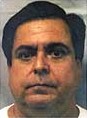
David R. LEISURE
Classification: Murderer
Characteristics: Dispute between two
"families" over control of
a St. Louis labor union
Number of victims: 1
Date of murder:
September 17,
1980
Date
of arrest:
May
1985
Date of birth: June
25,
1950
Victim profile: James
Michael Sr.,
75 (rival crime family
leader)
Method of murder:
Explosives (planting a
remote-controlled car bomb)
Location: St. Louis, Missouri, USA
Status: Executed
by lethal injection in Missouri on September 1,
1999
In early 1977, Ray Massud promised Anthony Leisure, cousin of
David Leisure, that he would succeed Massud as the business
manager of Local 110 of the Laborers Union in St. Louis.
While in the hospital with a terminal illness,
Massud changed his mind and asked Anthony Leisure to accept the
position of assistant business manager so that his son, John
Massud, could serve as business manager of the union. Leisure
agreed to the new arrangement.
The agreement took effect on June 30, 1977
following Ray Massud's death. Leisure would be in charge of
hiring and firing union officers and John Massud would be in
charge of the business office.
John Massud expanded his authority outside
the original agreement and hired union officers without
consulting Anthony Leisure. Massud hired Vince Giordano as a
union organizer and Mike Trupiano as President of the Union.
Both Giordano and Trupiano were related to Anthony Giordano, a
rival of the Leisures who headed the Italian faction of the
union.
Angered by Massud's actions, Anthony Leisure
met with his brothers Paul and David along with Ronald Broderick,
John Ramo and Charles Loewe to discuss whether they should kill
Massud. They decided not to because of Massud's political
influence.
Citing financial problems, Massud announced
that he planned to fire Ronald Broderick from his position as a
union officer. Broderick was the only union official that
Anthony Leisure had hired.
Leisure again convened a meeting with his
brothers, Broderick, Ramo and Fred Prator to discuss whether
someone should be killed. Because the group feared the political
connections of Massud and the war that would result if they
killed a member of the Giordano family, they decided that to
kill James Michaels Sr., the head of the Laborers' Union in St.
Louis.
The group surmised that by killing Mr.
Michaels they would strengthen their position in the union among
the Syrian faction, headed by Mr. Michaels. The group also
believed that Mr. Michaels had protected the murderer of David
Leisure's older brother Richard and that revenge was in order.
After an unsuccessful attempt to shoot Mr.
Michaels at a St. Louis restaurant, the Leisures and their co-conspirators
decided to bomb Mr. Michaels' car. David Leisure and John Ramo
stole a car similar to Michaels' and practiced planting a bomb.
David Leisure also followed Mr. Michaels to learn his habits.
On September 17, 1980 David Leisure spotted
Mr. Michaels' car in the parking lot of St. Raymond's Church in
St. Louis City. Anthony Leisure, Broderick and Ramo picked up a
van that belonged to Broderick's son. They drove the van to
another location where they retrieved a radio-controlled bomb.
They met David Leisure at the Church and parked the van next to
Mr. Michaels' car. David Leisure slid under the car and attached
a bomb to it.
Mr. Michaels exited the church and talked
with his grandson James for a short time. He then departed. The
group followed in the van. They followed Mr. Michaels for a
while and attempted to detonate the bomb with the radio control
to no avail.
Following Mr. Michaels on Interstate 55 the
switch was again thrown and this time the bomb was detonated,
demolishing Mr. Michaels’ automobile and throwing the upper
torso of Mr. Michaels out of his car and onto the windshield of
a vehicle following him.
The Leisures then took the van to Illinois
where they washed it and returned to Missouri where they made
further attempts to cleanse themselves and the van of traces
from the explosion.
About one week later Paul Leisure met with
the new leader of the Italian faction, John Vitale who had
replaced the deceased Anthony Giordano. Leisure and Vitale
agreed that the Syrians would control Local 110. Two relatives
of Mr. Michaels were subsequently fired from their jobs with the
union.
After an extensive investigation, which
included law enforcement from St. Louis City and County and the
federal government, David Leisure was arrested and charged with
murder.
Legal Chronology:
1980
9/17 - David Leisure planted a car bomb that was detonated
resulting in the death of James Michaels Sr.
1985
5/22 - David Leisure is indicted in St. Louis City Circuit Court
for capital murder
1987
4/2 - David Leisure's trial begins in the St. Louis City Circuit
Court.
4/9 - The jury returned a guilty verdict on the charge of
capital murder and recommended a death sentence.
5/22 - David Leisure is sentenced to death by the circuit court.
1988
4/19 - The Missouri Supreme Court affirmed Leisure's capital
murder conviction and death sentence.
5/18 - Leisure filed a motion for post-conviction relief.
1991
2/4 - The circuit court held a hearing on Leisure's motion for
post-conviction relief.
3/4 - The circuit court denied Leisure's motion for
post-conviction relief.
1992
3/24 - The Missouri Supreme Court affirmed the circuit court's
denial of post -conviction relief.
10/30 - Leisure filed a writ of habeas corpus petition in the
United States District Court for Eastern District of Missouri.
1998
1/13 - The United States District Court denied Leisure's federal
habeas corpus petition and denied him the required certificate
of appealability for an appeal.
1999
3/29 - The United States Supreme Court denied Leisure's petition
for writ of certiorari.
3/31 - The Missouri State Attorney General moved for an
execution date in the Missouri State Supreme Court.
8/3 - The Missouri Supreme Court sets September 1, 1999 as
Leisure's execution date.
Missouri Executes Leisure For Car-Bombing
Murder
The University News
September 2, 1999
POTOSI,
Mo.—David Leisure was executed
early Wednesday for planting a
remote-controlled car bomb,
killing a rival crime family
leader in 1980.
Leisure was
pronounced dead at 2:17 a.m.,
four minutes after being
injected with the first of three
lethal drugs at the state prison
in Potosi.
“I am an
innocent man,” Leisure said in
his final words to prison
officials. “The [trial] lawyer
who represented me was on drugs.
“Tell my
children, family and relatives I
love them,” he added.
His fate was
sealed around 1:45 a.m.
Wednesday when the U.S. Supreme
Court rejected three last-minute
appeals, and Gov. Mel Carnahan
denied his request for clemency.
No organized
crime figure had been executed
in recent American history, said
Clark Hall, former supervisor of
the organized crime section of
the FBI. Leisure, 49, was
condemned for crawling under a
car and planting the
remote-control bomb that killed
James Michael Sr. as he was
driving on a south St. Louis
interstate.
Investigators
found that the bombing was
prompted by a dispute between
the two families over control of
a St. Louis labor union.
David R. Leisure
David R. Leisure, whose
involvement in a series of car bombings and gangland violence
rocked St. Louis in the early 1980s, is scheduled to die by
injection Sept. 1.
Leisure would become the
1st organized-crime figure executed in modern times in the
United States.
Leisure was sentenced to
death in 1987 for his role in the car bombing murder of
underworld leader James Michaels Sr., 75, as Michaels was
driving along Interstate 55 in south St. Louis County in 1980.
Leisure, 49, was just
one of many players in an organized-crime feud that left 3 dead
in St. Louis, 1 maimed in a car bombing, and the grandson of
Michaels wounded in a shotgun ambush.
Yet while many involved
in St. Louis' organized-crime faction were convicted of state or
federal crimes and sent to prison, only Leisure will be executed.
None of the others received the death penalty.
Law enforcement sources
say that Leisure was simply a follower in the Leisure gang,
headed by his cousins, Paul Leisure and Anthony Leisure.
Michaels Sr. was a
longtime organized-crime figure and boss of the Syrian-Lebanese
crime faction in St. Louis. David Leisure, also of Syrian
descent, helped kill Michaels so the Leisure clan could gain
power over a local union, Laborers Local 110.
David Leisure's lawyer,
John William Simon of Jefferson City, is fighting to avert the
execution. "The courts aren't finished with David's case," Simon
said Tuesday.
Appeals are pending
before the 8th Circuit U.S. Court of Appeals. One of the main
arguments is that David Leisure's punishment is disproportionate
to those of others alleged to have been involved in the
underlying crime. There is no account in which David Leisure was
the leader.
The U.S. government, in
a pre-sentence investigation report, ranked Paul Leisure 1st and
Anthony Leisure 2nd in culpability. Both men are serving life in
prison without parole.
David Leisure's
execution would be a record 9th of the year for Missouri. It
would be carried out at Potosi Correctional Center.
On Sept. 17, 1980, David
Leisure crawled beneath Michaels' car and planted a remote-controlled
bomb as the car was parked outside St. Raymond's Maronite Church.
Michaels was inside eating lunch.
The state alleged that
Leisure had practiced the technique several times on an
identical car until he could do it flawlessly in under a minute.
After planting the
device, David Leisure was present when his cousin Anthony
Leisure detonated the bomb on I-55.
Pieces of Michaels' car
were scattered over a 200-foot radius by the force of the
explosion. Michaels' body was dismembered, and part of it was
hurled against a passing car. It took police years to unravel
the story behind the mysterious crime and the retaliations that
followed.
To avenge Michaels'
murder, friends and members of his family bombed Paul Leisure's
car as he was parked outside a home in south St. Louis. Paul
Leisure survived the attack, but it cost him part of his legs,
hands and face.
In October 1981, in
retaliation for the bombing of Paul Leisure, the Leisure gang
killed George M. "Sonny" Faheen by attaching a car bomb to his
Volkswagen Beetle. Faheen was a nephew of Michaels'. Faheen's
car was in the parking garage of the Mansion House Center.
David Leisure was
sentenced to life in prison for Faheen's murder. Leisure was
convicted of federal racketeering charges in 1985. His state
trial for his role in Michaels' murder was held in St. Louis
city circuit court in March 1987.
The state's case rested
primarily on the testimony of 2 accomplices, John Ramo and
Richard Joseph Broderick. The jury took a little more than 5
hours to find Leisure guilty of capital murder. Edward Rogers,
the assistant circuit attorney for St. Louis who prosecuted
Leisure at the state trial 12 years ago, declined to comment.
David R. Leisure, 49, 99-09-01, Missouri
David R. Leisure, condemned for the mob-related car bombings
that rocked St. Louis in the early 1980s, went to his death
quietly today in the execution chamber of the Potosi
Correctional Center.
Strapped to a gurney, Leisure looked haggard and unshaven. He
mouthed a few words of goodbye to his sister watching from a
viewing box as the first in a series of lethal drugs raced into
his veins. A priest hugged the sister, then said a prayer.
Leisure's final words, according to prison officials, were: "I
am innocent man. The lawyer who represented me was on drugs.
Tell my children, family and relatives I love them."
Leisure's chest heaved, he blinked his eyes and coughed hard.
Then, he fell silent. He was pronounced dead at 2:17 a.m., 4
minutes after the procedure began.
The execution had been delayed 2 hours while the U.S. Supreme
Court considered a last-ditch appeal, in which Leisure's court-appointed
appeals team argued he was retarded and not mentally fit for
execution. The high court turned down the request at 1:10 a.m.
Leisure, 49, became the 1st organized-crime figure in the United
States to be executed since 1944.
Security was tighter than ever outside the prison. Twice the
normal number of highway patrol troopers, sheriffs deputies and
a special squad of prison guards patrolled the grounds. Every
vehicle that drove onto the prison lot, including those driven
by state witnesses, was searched for explosives by specially
trained dogs.
In 1987, a St. Louis jury recommended that Leisure be put to
death for planting the car bomb in 1980 that killed underworld
leader James A. Michaels Sr., the reputed head of St. Louis'
Syrian crime faction. The Leisure family wanted control over
Laborers Local 110.
Leisure's attorneys painted him as a follower, someone who took
orders from his older cousins, Anthony and Paul Leisure. Anthony
Leisure detonated the bomb; Paul Leisure called the shots.
David Leisure, with a 7th-grade education, was far from
Hollywood's glitzy idea of an organized-crime figure. He worked
at a towing and salvage yard. He had an IQ of 74 and functioned
like a 10- or 12-year-old boy, 2 psychologists said. One of his
appeals lawyers, John William Simon, said: "David Leisure is to
organized crime what a mom-and-pop ice cream store is to
corporate America.''
But federal prosecutor Thomas Dittmeier, who brought down the
Leisure gang, said David was a hands-on participant who deserved
to die.
While Leisure was one of about 10 people tied to the car
bombings of the 1980s, only he was sentenced to death. Paul and
Anthony Leisure, whom the federal government said were more
culpable in the killings, received life in prison after separate
trials.
In David Leisure's final statements today, the lawyer he claimed
was on drugs was actually a law student who was part of his
defense team at trial. That law student, Gerald Bassett,
admitted recently in an affidavit that he was heavily involved
in heroin and cocain use in the 1970s and 1980s.
On Tuesday, Leisure had a short-lived victory when U.S. District
Judge Nanette Laughrey of Kansas City issued a stay of execution
until a hearing is held on Leisure's competency. Her ruling came
down about 6 p.m.
"That sounds good," Leisure told a reporter, in an interview
from his holding cell. "But they can take that away from me?"
3 hours later, the 8th U.S. Circuit Court of Appeals reversed
Laughrey, saying the execution should go forward. Leisure's
attorneys immediately appealed to the U.S. Supreme Court. As
that court considered the appeal, Leisure's scheduled 12:01 a.m.
was postponed. Shortly after the Supreme Court denied Leisure's
appeal at 1:10 a.m., Gov. Mel Carnahan announced that he would
not stand in the way of the execution either.
Leisure spent Tuesday visiting with relatives, including his 4-year-old
grandson. He took a sedative about 7:30 p.m.
On Sept. 17, 1980, David Leisure crawled beneath Michaels' car
and planted a remote-controlled bomb as the car was parked
outside St. Raymond's Maronite Church. Michaels was inside
eating lunch.
Leisure was present when his cousin, Anthony Leisure, detonated
the bomb on I-55. Michaels' car was scattered over a 200-foot
radius by the force of the explosion. Michaels' body was
dismembered, and part of it was hurled against a passing car.
Micheals' grandson, James A. Michaels III, recently asked Gov.
Mel Carnahan to spare Leisure's life.
G. Robert Blakey, author of the federal Racketeer Influenced and
Corrupt Organizations statute and a law professor at Notre Dame,
said the Leisure gang was brought down by techniques like
wiretapping.
"Without wiretapping, without investigative grand juries,
without a witness protection program, organized crime was above
the law in Missouri," Blakey said. "It wasn't until the federal
authorities, with those techniques, came into St. Louis and did
the investigations that the power of organized crime was broken."
Leisure becomes the 9th condemned inmate to be put to death this
year in Missouri, and the 41st overall since the state resumed
capital punishment in 1989. Only Texas, Virginia and Florida
have executed more condemned prisoners than Missouri.
(sources: St. Louis Post-Dispatch & Rick Halperin)
852 F.2d 1045
UNITED STATES of America, Appellee,
v.
Raymond H. FLYNN, Appellant.
United States Court of Appeals,
Eighth Circuit.
Submitted Jan. 14, 1988.
Decided July 27, 1988.
I. BACKGROUND
As required for appellate
review, we state the facts in the light most favorable to
the jury's verdict. United States v. Minor, 815 F.2d 472,
473 (8th Cir.1986).
A. Spica Bombing
On October 4, 1979,
appellant Flynn became the business manager of Local 42 of
the Laborers' International Union in St. Louis, Missouri.
Shortly thereafter, Anthony Giordano, considered by many to
head the Italian organized crime faction in St. Louis,
called a meeting with Flynn and others to discuss his plans
for including an Italian influence in Local 42. To include
the Italian influence in Local 42, Anthony Giordano placed
an associate, John Paul Spica, into that Local. The Italians
at that time did control a different laborers' local, Local
53.
Spica bragged to Paul
Leisure of his intent to kill Flynn and take over Local 42.
Paul Leisure and his brother, Anthony Leisure, were, at the
time, attempting to take control of the third laborers'
local in St. Louis, Local 110, and thus were concerned that
a successful takeover of control of Local 42 by the Italians
next would lead to an attempt by the Italians to control
Local 110. Paul Leisure, therefore, in an effort to forge an
alliance with Flynn and to more effectively thwart the
Italians' takeover attempts of Local 42, told Flynn of
Spica's intention to kill Flynn.
Paul Leisure thereupon
began a campaign to learn Spica's daily habits and to gain
his trust and confidence. His brother, Anthony Leisure,
obtained a car similar to that driven by Spica on which he
and Flynn could practice wiring a bomb to the car. Flynn and
Anthony Leisure made several attempts to place the bomb on
Spica's car. Finally, on the night of November 7-8, 1979,
they succeeded. On the morning of November 8, 1979, the bomb
exploded as Spica sat in his car, killing him.
B. Michaels, Sr. Bombing
In the meantime, beginning
in the late 1970s, Paul and Anthony Leisure encountered
difficulties in securing and maintaining control of Local
110. Prior to his death in June of 1977, Ray Massaud, Local
110's business manager, reached an agreement with Anthony
Leisure that upon Massaud's death, his son, John Massaud,
would become Local 110's business manager, but that John
would act only as a figurehead. Ray Massaud then created a
separate but equal position of assistant business manager
for Anthony Leisure with the understanding that Leisure
could hire and fire organizers and business agents for the
Local. Anthony Leisure hired Ronald Joseph Broderick, a
Leisure associate, to assist Anthony in securing control of
the union. Broderick served as a union organizer.
Over the next year, the
Leisures discovered that the agreement did not work as
planned. John Massaud hired relatives of both Giordano and
James Michaels, Sr., the reputed head of the Syrian
organized crime faction in St. Louis, without consulting
Anthony Leisure. At this time, the Leisures discussed the
possibility of murdering John Massaud, but decided against
it for fear of starting a war with the Italians.
When the Leisures learned
that Mike Trupiano, a nephew of Anthony Giordano and
president of Local 110, and John Massaud planned to fire
Broderick because Broderick was neither Italian nor Syrian,
the Leisures realized their failure in exercising complete
control over the Local. In an attempt to solidify their
power base in Local 110, the Leisure group decided that
someone had to be killed. The group considered killing
Trupiano but decided against it because they feared it would
anger some Italians. The group settled on murdering James
Michaels, Sr. Not only would his death avenge the murder of
Richard Leisure in the early 1960s,3
but it would also make possible the firing of Francis
Michaels, Michaels, Sr.'s brother, and James Michaels,
Michaels, Sr.'s grandson, from the Local, thus leaving two
vacancies for Anthony Leisure to fill. Thus, in their view,
Paul Leisure would become the head of the Syrian organized
crime faction in St. Louis.
Paul and Anthony Leisure
then planned the bombing of Michaels, Sr. Leisure associate
Fred Prater constructed a bomb using a remote control device
provided by an associate, Charles Loewe. Another associate,
John Ramo, installed safety devices on the bomb. Anthony
Leisure supplied the dynamite. They stored the bomb at L.N.
& P., a towing company in St. Louis owned by the Leisures
and Fred Prater.
Various members of the
Leisure group surveilled Michaels, Sr., learning his habits
and routine. Anthony and David Leisure and Broderick watched
Michaels, Sr. on a southern Illinois golf course and David
Leisure used the apartment of a friend to observe Michaels,
Sr.'s movements at a local church where Michaels, Sr. often
ate lunch. Anthony and David Leisure practiced placing the
bomb on the underside of a stolen vehicle identical to that
driven by Michaels, Sr.
On September 17, 1980,
Anthony and David Leisure, Ramo and Broderick drove in a van
to the place where Michaels, Sr. was having lunch and David
Leisure placed the bomb on the underside of Michaels, Sr.'s
car. Paul Leisure instructed Charles Loewe to act as a
spotter in the area and to radio in any problems. As
Michaels, Sr. drove down Interstate 55 in South St. Louis
County, the bomb exploded, killing Michaels, Sr. in the
blast. Eventually, Michaels, Sr.'s relatives were driven
from Local 110.
The Government presented
no evidence implicating Flynn in the Michaels, Sr. bombing.
C. The Fredericktown
Surveillance
On August 11, 1981, less
than one year after the death of Michaels, Sr., Paul Leisure
sustained serious injury, losing the bottom portion of both
legs, when a bomb exploded in his car in front of his
residence in St. Louis. After learning from John Vitale, who
succeeded Giordano as head of the Italian faction of
organized crime in St. Louis, that Paul Leisure's bombing
resulted from "a family thing," the Leisure group concluded
that the Michaels family caused Paul Leisure's injuries.
Learning that local law enforcement officials focused their
investigation on the Michaels family, the Leisure group was
reinforced in this conclusion.
On one occasion, in the
few weeks following the bombing, Flynn, Anthony Leisure and
Joe Broderick drove to the Michaels family farm in
Fredericktown, Missouri, intending to kill those present. No
one was at the house, but Flynn, Anthony Leisure and
Broderick discussed ways to kill persons who might use the
house. Flynn suggested dangling dynamite down the chimney
and blowing up everyone present.
D. The Edge Shooting
In another attempt to
avenge the bombing of Paul Leisure, Anthony and David
Leisure shot John Charles Michaels, grandson of Michaels,
Sr., at The Edge Restaurant in St. Louis. Prior to the
shooting, Anthony Leisure, Joe Broderick and Fred Prater
watched the restaurant and prepared an abandoned building
next to the restaurant to facilitate the shooting and
getaway. Charles Loewe drove Anthony and David Leisure to
the site, where the Leisures fired on Michaels and a friend,
one Dennis Day. The Leisures then fled in a van driven by
Joe Broderick.
The Government produced no
evidence implicating Flynn in the shooting.
E. Plans to Murder Bob
Peters
The Leisure group believed
that Bob Peters, who worked at Pepsi-Cola, was a member of
the Michaels group. They devised a plan whereby Anthony
Leisure would shoot Peters as he left work one afternoon.
They abandoned the plan when a workman appeared who may have
seen Anthony Leisure and Loewe.
F. The Faheen Bombing
The Leisures also
suspected that George "Sonny" Faheen, a nephew of Michaels,
Sr., had participated in Paul Leisure's bombing. David
Leisure, Charles Loewe and other Leisure associates,
including Michael Kornhardt, Frank Termine and Malcolm
"Mike" Flinn,4
appellant's brother, watched Faheen, learning his daily
habits, where he lived and where he worked. They obtained a
car similar to that driven by Faheen to use as a practice
vehicle for placing a car bomb.
On October 15, 1981, David
Leisure and John Ramo met Anthony Leisure, Broderick and
Flynn at a local fast food restaurant. Flynn opened the
trunk of his car revealing dynamite. Flynn commented that he
obtained it "from across the river from Ski," an apparent
reference to an associate, Stanley Kowalski, who lived in
Illinois. They placed the dynamite in David Leisure's car.
During the course of their discussions, Flynn said that he
did not think the Mansion House parking garage, where Faheen
parked his car, would serve as a good site to place a bomb
on Faheen's car because the area was too populated.
The following day, David
Leisure and Michael Kornhardt picked up a bomb from Charles
Loewe and attached the bomb to Faheen's car in the Mansion
House garage. The bomb exploded when Faheen started his car.
The explosion trapped Faheen in the car and he burned to
death. This murder underlays the interstate transportation
of explosives charge.
G. The Kornhardt Murder
Authorities arrested
Michael Kornhardt and charged him with Faheen's murder. Fred
Prater obtained Kornhardt's release on bail using Prater's
real properties as security for the bail bond. Because
various members of the Leisure group, however, believed that
Kornhardt might cooperate with the authorities, the group
planned to kill Kornhardt. Flynn expressed concern about
Kornhardt talking to law enforcement people and worried that
Kornhardt might implicate Malcolm Flinn in the Faheen
killing. David Leisure, at Paul Leisure's direction,
enlisted the aid of Robert Carbaugh and Steven Wougaman to
murder Kornhardt. On July 31, 1982, Carbaugh and Wougaman
lured Kornhardt into a rural area of St. Charles County,
Missouri, on the pretext of committing a burglary. Carbaugh
shot Kornhardt twice in the head. Carbaugh and Wougaman
thereupon became members of Local 42.
The Government presented
no evidence implicating Flynn in Kornhardt's murder.
H. Indictments and Trial
The following month, in
August of 1982, Fred Prater received a grant of immunity and
became a Government witness. On April 13, 1983, the grand
jury indicted Paul, Anthony and David Leisure, Broderick,
Ramo, Carbaugh, Loewe and Wougaman on RICO and other charges.
Ramo, Broderick and Carbaugh eventually pled guilty.5
In April of 1985, a jury convicted Paul and David Leisure
and Wougaman on all counts against them. The jury, however,
convicted Anthony Leisure and Loewe only of the substantive
RICO and RICO conspiracy counts against them. This court
affirmed the convictions on appeal except for two of the
counts against Wougaman. United States v. Leisure, 844 F.2d
1347 (8th Cir.1988).
In the early 1960s, Richard Leisure,
David Leisure's brother and Paul and Anthony Leisure's
cousin, was shot and killed by Norm Peters, an associate
of Michaels, Sr. Michaels, Sr. used his influence to
help Peters escape retribution for the murder. See the
relation of facts in United States v. Leisure, at 1351
The Government initially tried
Carbaugh with the Leisures, Wougaman and Loewe but the
jury could not reach a verdict on the charges against
him. On the eve of the date set for retrial, Carbaugh
entered a guilty plea
United States of America, Appellee,
v.
Anthony J. Leisure, Appellant;
United States of America, Appellee,
v.
Charles M. Loewe, Appellant;
United States of America, Appellee,
v. David R. Leisure, Appellant;
United States of America, Appellee,
v.
Paul John Leisure, a/k/a John Paul Leisure,
Appellant;
United States of America, Appellee,
v.
Steven T. Wougamon, Appellant
Nos. 85-1590, 85-1595, 85-1596, 85-1607, 85-1774
UNITED STATES COURT OF APPEALS FOR THE EIGHTH
CIRCUIT
844 F.2d 1347; 1988 U.S. App. LEXIS 5416
November 10, 1987, Submitted
April 25, 1988, Filed
As Amended May 9, 1988. Petition for Rehearing and
Petition for Rehearing En Banc Denied June 10, 1988.
Petition for Rehearing and Petition for Rehearing En
Banc Denied July 8, 1988.
Appeal from the United States
District Court for the Eastern District of Missouri.
Anthony J. Leisure (No. 85-1590),
Charles M. Loewe (No. 85-1595), David R. Leisure (No.
85-1596), Paul John Leisure (No. 85-1607), [**2] and
Steven T. Wougamon (No. 85-1774) appeal from a final
judgment entered in the District Court n1 for the
Eastern District of Missouri upon jury verdicts finding
them guilty of various racketeering, obstruction of
justice, and unauthorized creation of destructive
devices offenses. The superseding indictment in Count I
charged all five appellants with violating the Racketeer
Influenced and Corrupt Organizations Act (RICO), 18
U.S.C. § 1962(c). All five appellants were charged in
Count II with RICO conspiracy violations under 18 U.S.C.
§ 1962(d). Count III charged all of the appellants
except Loewe with obstructing justice in violation of 18
U.S.C. § 1510 (1982). n2 Wougamon was charged
individually in Count IV with a separate obstruction of
justice count under 18 U.S.C. § 1510. Count V charged
Paul and Anthony Leisure and one other person with
making a destructive device without authorization from
the Secretary of the Treasury in violation of 26 U.S.C.
§§ 5861(f), 5871. Anthony and David Leisure along with
two other persons were similarly charged in Count VI
with [**3] unlawfully making a destructive device in
violation of 26 U.S.C. §§ 5861(f), 5871.
Following thirty-four days of trial
and twelve days of jury deliberations, the jury found
Paul and David Leisure and Wougamon guilty on all four
counts in which each was charged. Anthony Leisure was
convicted on Counts I and II, but the jury was unable to
reach a verdict as to him on Counts III, V, and VI. The
jury found Loewe guilty on Counts I and II and not
guilty on Count III. n3 Appellants received aggregate
sentences ranging from thirty-six to fifty-five years.
n4
n3 The jury was unable to reach a
verdict as to a sixth defendant, Robert Carbaugh, on
Counts I, II, and III. Carbaugh subsequently pled guilty
to a RICO conspiracy charge which is not before this
court on appeal. [**4]
n4 Anthony, David, and Paul Leisure
have subsequently received additional sentences
following their state court convictions for the murder
of James A. Michaels, Sr., one of the predicate acts for
the RICO charges in this case. Anthony was sentenced to
life imprisonment without parole, Paul received a life
term without the possibility of parole for fifty years,
and David received a sentence of death. Charles Loewe
awaits trial in the state courts for the Michaels murder.
For reversal, appellants Anthony
Leisure, Charles Loewe, David Leisure, and Paul Leisure
collectively assert nine points of error: (1) the denial
of their motion to suppress tape-recorded conversations
obtained through electronic surveillance, (2)
prosecutorial misconduct, (3) the restricted cross-examination
of certain government witnesses, (4) the failure to take
corrective action as to alleged violations by the
[*1351] government of the Jencks Act, (5) the
admission of statements of co-conspirators under Fed. R.
Evid. 801(d) (2) (E), (6) the failure to grant a
mistrial due to mention by the government to the jury
that [**5] David Leisure had been indicted on state
murder charges, (7) the cross-examination of a defense
witness without proper foundation, (8) the failure of
proof as to the element of an "enterprise" in the RICO
counts, and (9) the sufficiency of the evidence to
support the obstruction of justice convictions under
Count III. Appellant Wougamon separately presses four
points for reversal: (1) the amendment by jury
instruction of Count IV of the indictment, (2) the
failure of the indictment as amended to allege a RICO
violation, (3) the sufficiency of the evidence to
support his RICO conspiracy conviction, and (4) the
denial of his motion for a new trial based upon a newly
discovered witness. For the reasons discussed below, we
affirm all convictions of Anthony Leisure, Charles Loewe,
David Leisure, and Paul Leisure. We affirm the
convictions of Steven Wougamon as to Counts II and III,
reverse the convictions of Wougamon as to Counts I and
IV, vacate his sentences on Counts II and III, and
remand to the district court for resentencing.
I.
Background
The facts of this case are vaguely
reminiscent of a Mario Puzo novel, and concern the
attempts of Paul Leisure and his associates [**6] to
dominate two labor unions and criminal underworld of St.
Louis, Missouri. The tale begins in 1964, when Paul
Leisure and his brother, Anthony Leisure, were
associated with James Michaels, Sr., the head of the
Syrian organized crime family in St. Louis. During this
time, Richard Leisure, the cousin of Paul and Anthony,
and older brother of David Leisure, was shot to death in
an East St. Louis, Illinois, tavern by Norman Peters,
who was accompanied by Jack Issa. Both men were
associates of James Michaels, Sr. The identity of the
killers was kept from Paul and Anthony Leisure, however,
because Michaels, Sr. was able to persuade the tavern
owner to recant his identification of Peters and Issa.
In 1968 the Leisures became aware of
the coverup, and aligned themselves with the Italian
organized crime family in St. Louis headed by Anthony
Giordano. In a loose alliance between the Syrians and
Italians, Giordano and Michaels, Sr. together formed the
hierarchy of Local 110 of the Laborers'
International Union of North America, which has
jurisdiction over the St. Louis metropolitan area. In
view of this relationship, the Leisures did not seek
retaliation against Michaels, Sr. due to fear [**7] of
disapproval by Giordano.
In the early 1970's, the Leisures
began to establish a power base of their own. Paul left
his association with Giordano and, together with his
brother Anthony, their cousin David Leisure, and Fred
Prater, founded LN & P Tire Service, a towing business.
Anthony Leisure became a business agent for Local 110.
The Leisures' fortunes continued to rise when in 1977
Raymond Massud, the longtime business manager of Local
110, passed away. Although Raymond's son, John Massud,
succeeded his father as the new business manager,
Anthony Leisure assumed the title of assistant business
manager, with the understanding that he would exercise
the power of business manager and control the union.
During this time, Charles "Obie" Loewe was employed at
LN & P, and Joe Broderick, a former truck driver and
noted street fighter, joined Local 110 as Anthony's
assistant.
From 1978 until the first part of
1980, a power struggle took place over the leadership of
Laborers' Local 110 and Local 42, a
second Laborers' Local in the St. Louis
area. Apart from Broderick's appointment to the union,
Anthony Leisure did not believe that he had been
accorded the powers over Local 110 that [**8] had been
promised him. Tension grew when Michaels, Sr. and
Giordano arranged for two of Giordano's nephews, Vince
Giordano and Matthew "Mike" Trupiano, Jr., to enter the
union as officers. Michaels, Sr.'s brother, Francis
Michaels, and his grandson, James Michaels, III, were
also added to the union's management in early 1980. The
threat to the Leisures' position in the union came to a
[*1352] head when Giordano and Michaels, Sr. insisted
that Broderick be fired because they felt that the
union's management positions should only be held by "family"
members.
During the same time, Giordano
attempted to increase his leverage in Laborers'
Local 42 through the sponsorship of an associate, John
Paul Spica, for membership in the union as a prelude to
obtaining a management position. Raymond Flynn, a future
associate of Paul Leisure, at that time controlled Local
42 and resisted the appointment of Spica. Flynn
apparently felt threatened by Spica's appointment, and
the two men engaged in a heated argument during the
first week of November 1979. On November 9, 1979, Spica
was murdered when a bomb destroyed his car.
The Leisures decided upon a similar
course of action to protect their [**9] position in
Local 110 following the death in June 1980, of Anthony
Giordano. When John Vitale, former assistant to
Giordano, succeeded to control of the Giordano family,
the Leisures apparently felt that they had less to fear
from the Italians. The death of Giordano altered the
balance of power, and left the Leisures free to use
force in their pursuit of dominating the unions. After
some debate as to who among the opposition at Local 110
should be killed, the Leisures decided that Michaels,
Sr. himself was the best target. Initially they decided
to shoot Michaels, Sr. with shotguns at his favorite
breakfast restaurant, but ultimately agreed that a car
bombing would be preferable.
On September 17, 1980, Michaels, Sr.
was killed when a bomb near the front end of his
Chrysler Cordoba was detonated by remote control as he
drove south on Interstate 55 in St. Louis County. Paul,
Anthony, and David Leisure, Fred Prater, Charles Loewe,
Joe Broderick, and a new addition to the Leisure group,
John Ramo, all played various roles in the murder.
After the death of Michaels, Sr., the
Leisures were able to remove Michaels, III from Local
110 in October 1980, and Raymond Flynn admitted Paul
Leisure [**10] to the management of Local 42 in order
to "call the shots" in April 1981. The Leisures were
fearful that the Michaels group might retaliate, however,
and Paul Leisure began to start his car from afar by
remote control. At one point Paul discussed preventing
retaliation by killing all of the Michaelses, but
Anthony Leisure persuaded Paul that it would not be
necessary.
On August 11, 1981, Paul Leisure was
seriously injured when a bomb exploded on the street
underneath the driver's seat area of his automobile that
had been parked in front of his house. Michaels, III and
his brother, John Charles Michaels, Jack Issa, Norman
Peters and his brother Robert Peters, Russell Schepp,
and George "Sonny" Faheen were all implicated in the
attempted murder.
While Paul was recovering, Anthony
Leisure directed David Leisure and the other members of
the Leisure group to attempt to locate members of the
Michaels group for the purpose of retaliation. David
located Robert Peters in St. Louis and learned that he
worked as a supervisor at Pepsi-Cola. Anthony and David
Leisure, Broderick, Loewe, and Ramo traveled to Peters'
worksite and prepared to shoot him with a shotgun from a
van as Peters left work, [**11] but the attempt was
called off because they feared that they appeared
suspicious to an onlooker. At about the same time,
Anthony Leisure, Broderick, and Flynn made a trip to the
Michaels family farmhouse near Fredericktown, Missouri,
armed with a shotgun and pistols, but no one was home.
Nonetheless, Flynn suggested that they lower dynamite
into the chimney so that "the whole cabin would blow up"
when the Michaelses started a fire, but this suggestion
was not carried out.
During the weeks following the Paul
Leisure car bombing, the Leisure group also located John
Charles Michaels, and learned that he routinely ate
lunch at the Edge Restaurant in St. Louis. Shortly after
lunchtime on September 11, 1981, Anthony Leisure shot
John Michaels and his associate, Dennis Day, with a
shotgun in the parking lot of the Edge Restaurant. One
of the men was shot in the arm and the other in the
abdomen, but both survived. Loewe, Broderick, and David
Leisure assisted [*1353] Anthony in the planning and
execution of the attempted murders.
Shortly after the restaurant shooting,
the Leisures located another of those who had
participated in the Paul Leisure car bombing, George "Sonny"
Faheen. [**12] David Leisure enlisted several of his
friends, including Michael Kornhardt, Robert Carbaugh,
and Frank Termine, to follow Faheen and determine the
best location in which to murder him.
Faheen was killed at about noon on
October 16, 1981, when a bomb exploded in his Volkswagen
as he was attempting to start it in the garage of the
Mansion House apartments in downtown St. Louis. Anthony
and David Leisure, Kornhardt, Prater, Ramo, Broderick,
and Flynn all played various roles in the planning,
execution, and coverup of the Faheen bombing.
Immediately following the Faheen
murder, the Leisures' fortunes began to fall. Federal
and state authorities had been investigating the group's
activities, and Kornhardt was arrested the following day
on state charges in connection with the Faheen murder.
Ramo, Loewe, and David Leisure temporarily left the St.
Louis area to avoid arrest. In March 1982 Termine was
arrested on state charges in Illinois and agreed to
testify against Kornhardt about Kornhardt's role in the
Faheen murder. The Leisures began to worry that
Kornhardt might also agree to cooperate with the federal
authorities and testify against them.
On July 31, 1982, at about 7:30 a.m.
[**13] , Michael Kornhardt was found murdered in a
roadside ditch in a rural area of St. Charles County,
Missouri. He had been shot twice in the head by Robert
Carbaugh, with the assistance of Steven Wougamon. Paul
Leisure had promised both men union positions for the
murder. Shortly before the shooting, Paul enrolled
Wougamon in Local 42, and Carbaugh was registered as a
new union member on August 3, 1982, three days after he
killed Kornhardt.
In spite of the silencing of
Kornhardt, law enforcement officers arrested David
Leisure on August 4, 1982, on state charges in
connection with the Faheen murder. On August 16, 1982,
Fred Prater contacted federal law enforcement officials
and advised them that he wished to cooperate with their
investigation of the Leisures. On August 19, 1982, he
gave extremely damaging testimony regarding the Leisure
group's activities before a federal grand jury.
On November 9, 1982, federal law
enforcement officials contacted Wougamon's brother-in-law,
Innes Anderson, who had from time to time been let in on
the details of the Leisure group's criminal activities.
Anderson agreed to cooperate with the investigation.
After Anderson returned home that evening, Wougamon
[**14] visited him. Anderson denied cooperating with
officials, and Wougamon told Anderson that if he had "snitched,"
he was "dead," and that there was no way that Wougamon
could protect him or his family from the Leisures, even
if they left town. Anderson and his family left St.
Louis under government protection the following day, and
did not return until the day of his testimony at trial.
Appellants were indicted in April
1983. n5 A superseding indictment, without substantial
change in the charges, was filed on December 1, 1983.
The jury reached its verdict on April 2, 1985, and all
of the appellants except Wougamon were sentenced on May
1, 1985. Due to the filing of a post-trial motion, the
denial of which he has raised as an issue in his appeal,
Wougamon was not sentenced until June 10, 1985. This
appeal ensued, and we turn first to the nine points
raised collectively by appellants Paul, Anthony, and
David Leisure, and Charles Loewe.
n5 Robert Carbaugh, John Ramo, and
Joe Broderick were also indicted. Ramo and Broderick
entered guilty pleas in exchange for testimony some
months after the indictment. The jury was unable to
reach a verdict as to Carbaugh, who pled guilty to a
RICO conspiracy charge on the eve of his retrial.
Appellants first challenge the
admission into evidence of tape recordings of
conversations [*1354] obtained by electronic
surveillance by federal law enforcement officers. These
recordings were an important part of the government's
evidence at trial. The surveillance began in February
1982 after the Faheen murder. Application was made on
February 8, 1982, to the Honorable John F. Nangle, now
Chief Judge of the United States District Court for the
Eastern District of Missouri, for an order authorizing
interception of oral communications in the LN & P office
and authorizing surreptitious entry for the purpose of
placing the necessary listening device. An order
granting the application was entered on the day of the
application. This authorization was subsequently renewed
by court order for a total of seven months. On April 23,
1982, two months after the start of surveillance at LN &
P, an additional application for surveillance at Paul
Leisure's home was granted. Federal law enforcement
officers also conducted electronic surveillance at two
other locations which are not challenged in this appeal.
Appellants argue the district court erred in [**16]
denying their pretrial motion to suppress evidence
obtained from the surveillance conducted at the LN & P
office and Paul Leisure's home. We begin by considering
their arguments regarding the LN & P surveillance.
A.
The LN & P Surveillance
Appellants raise four challenges to
the LN & P surveillance: (1) the sufficiency of the
affidavits in support of the application for
surveillance, (2) the necessity for the surveillance,
(3) the failure to restrict the intrusiveness of the
surveillance, and (4) the failure of the district court
to grant appellants a hearing under Franks v.
Delaware, 438 U.S. 154, 57 L. Ed. 2d 667, 98 S. Ct.
2674 (1978) (Franks).
1. The sufficiency of the LN & P
affidavit.
Appellants assert that the LN & P
affidavit is deficient in that it failed to establish
probable cause to believe (1) that Paul Leisure and
others had committed or were about to commit RICO
offenses, (2) that communication relating to the RICO
offenses would be intercepted, and (3) that the LN & P
offices were being used in connection with the RICO
offenses or were commonly used by those whose
communications were to be intercepted. We agree with
appellants that [**17] the affidavit must establish
probable cause as to these facts in order to properly
support an order of electronic surveillance under Title
III of the Omnibus Crime Control and Safe Streets Act of
1968 (Title III), 18 U.S.C. §§ 2510-2520.
We begin our analysis by noting that
affidavits in support of electronic surveillance orders
are to be judged by the same standards as conventional
search warrants; the statutory probable cause standards
set out in Title III are co-extensive with the
constitutional requirements embodied in the fourth
amendment. United States v. Talbert, 706 F.2d
464, 467 (4th Cir. 1983); United States v. Fury,
554 F.2d 522, 530 (2d Cir.), cert. denied, 433
U.S. 910, 97 S. Ct. 2978, 53 L. Ed. 2d 1095 (1977);
United States v. Falcone, 505 F.2d 478, 481 (3d
Cir. 1974), cert. denied, 420 U.S. 955, 95 S.
Ct. 1339, 43 L. Ed. 2d 432 (1975). We are also cognizant
that
the application for the wire
interception must be viewed in a "commonsense way"
to determine if there were ample facts to establish
probable cause to grant the wire interception
request. [**18] "In judging probable cause issuing
magistrates are not to be confined by niggardly
limitations or by restrictions on the use of their
common sense."
United States v. Kirk, 534
F.2d 1262, 1274 (8th Cir. 1976) (citation omitted).
Appellants engage in a "divide and
conquer" attack on the affidavit, and urge this court to
undertake a piecemeal dismemberment of the various
paragraphs of the affidavit without attention to its
force as a whole. We decline this invitation to review
the affidavit in an overly stringent and hypertechnical
fashion. "It is sufficient that the information in the
affidavit, when assessed in its totality, was sufficient
to support a reasonable belief" that evidence of
criminality by the subject of surveillance would be
obtained. Carter v. United States, 729 F.2d
935, 939 (8th Cir. 1984) (Carter); see also
United States v. [*1355] Townsley, 843 F.2d 1070,
slip op. at 10 (8th Cir. 1988) ("punctilious paragraph-by-paragraph
dissection of the supporting affidavit" "not our
standard of review"). As the Supreme Court has stated, "the
duty of a reviewing court is simply to ensure that the
magistrate [**19] had a 'substantial basis for . . .
concluding' that probable cause existed." Illinois
v. Gates, 462 U.S. 213, 238-39, 76 L. Ed. 2d 527,
103 S. Ct. 2317 (1983) (quoting Jones v. United
States, 362 U.S. 257, 271, 4 L. Ed. 2d 697, 80 S.
Ct. 725 (1960)); see also United States v. Mims,
812 F.2d 1068, 1072 (8th Cir. 1987) (Mims). We
are to afford deference to the magistrate's
determination of probable cause, Mims, 812 F.2d
at 266, and we will not reverse the district court's
determination of probable cause absent a conclusion that
the finding is clearly erroneous. United States v.
Briley, 726 F.2d 1301, 1306 (8th Cir. 1984). After
carefully reviewing the extensive affidavit submitted in
support of the LN & P surveillance order, we cannot say
the district court clearly erred.
First, we are persuaded that the
affidavit establishes probable cause to believe that the
Leisure group was engaged in racketeering activities. On
this point, we agree with the government that the
probable cause established by the affidavit consists of
a number of layers. At bottom is a series of murders and
attempted murders [**20] beginning with the fatal car
bombing of John Spica in November 1979, and continuing
through the fatal car bombing of Michaels, Sr. in
September 1980, the car bomb maiming of Paul Leisure in
August 1981, the shooting of Dennis Day and John Charles
Michaels in September 1981, and the fatal car bombing of
George "Sonny" Faheen in October 1981. The relationship
of the various targets, the affinity for car bombs, and
the sequence of the crimes raises the inference that
these events may be related and that retaliation may be
a motive for the assaults.
This inference is then fleshed out
with detailed information from nine confidential
informants with past histories of reliability. These
informants, who often corroborate each other, provide
extensive and precise information about the early
association of Paul Leisure with Michaels, Sr.; the
murder of Richard Leisure and the Leisures' attempts to
control Laborers' Locals 42 and 110;
the death of Anthony Giordano and the murder of Michaels,
Sr.; the attempted murders of Paul Leisure, John Charles
Michaels, and Dennis Day; and the murder of George "Sonny"
Faheen. The informants also detail the relationship of
various members of the Leisure [**21] group with Paul
Leisure, and the Leisure group's involvement in the
several murders and other acts of racketeering.
Finally, much of this information
from the nine informants is corroborated by independent
investigation by law enforcement officials. This
evidence includes telephone toll records and
surveillances that corroborate associations and certain
patterns of criminal activity, labor union affiliations
and how they shifted after the death of Michaels, Sr.,
physical evidence obtained from investigation of the
Paul Leisure car bombing, and information obtained in
the course of the investigation of David Leisure, Robert
Carbaugh, and Michael Kornhardt in connection with the
Faheen car bombing.
Appellants assert that the affidavit
was "but a carefully worded opus of prejudicial innuendo
artfully balanced upon the uncorroborated conclusions of
confidential informants." Only "the hyper-technical
examination of [each] informant's tip with excessive
attention focused on isolated issues," Carter,
729 F.2d at 939, could lead to such a conclusion. That
sort of review was condemned by the Supreme Court in
Illinois v. Gates, 462 U.S. 213, 76 L. Ed. 2d 527,
103 S. Ct. 2317 (1983). [**22]
While not every fact related by every
informant is fully supported by exhaustive statements as
to the informant's basis of knowledge, such concerns are
not per se grounds for disregarding the
information, but are merely relevant considerations in
assessing the totality of the circumstances. Id.
at 233. We conclude that the affidavit, when viewed as a
whole, provided the magistrate with probable cause to
believe that the Leisure group was engaged in RICO
[*1356] activities, and the district court's finding
to this effect is not clearly erroneous.
Appellants also challenge the
sufficiency of the affidavit to establish probable cause
to believe that communication concerning the RICO
offenses would occur at the LN & P office. As discussed
above, the affidavit provides probable cause to believe
that Paul Leisure and his associates, who are readily
identified with Paul's "business," LN & P Tire Service,
were engaged in racketeering activity. Physical
surveillance by law enforcement agents revealed that the
LN & P office was a common meeting place for various
members of the Leisure group.
Three confidential informants
revealed that the LN & P office was used by [**23] the
Leisure group to discuss and plan criminal acts related
to the group's racketeering enterprises. Such activities,
as a matter of common sense, would have to be discussed
somewhere, and we are unwilling to find that the
district court's determination that there was probable
cause to believe that these discussions would occur at
the LN & P office is clearly erroneous.
Appellants next point out that
Congress did not intend Title III to authorize the use
of electronic surveillance to investigate every type of
crime. Electronic surveillance is limited to the
investigation of those offenses enumerated in 18 U.S.C.
§ 2516. Appellants argue that the affidavit failed to
sufficiently allege the commission of an offense
enumerated in 18 U.S.C. § 2516.
RICO violations of the variety
alleged in the affidavit, however, are among the
offenses for which Congress specifically authorized
investigation by electronic surveillance. n6 Appellants
assert that the affidavit did not sufficiently allege a
RICO violation because it did not describe a distinct "enterprise"
beyond those allegations which established the "pattern"
of racketeering activity. [**24] The law is settled
that to establish probable cause of a RICO enterprise,
the affidavit must supply reason to believe that the
group had some continuity of structure and personality,
and the participants must maintain their common purpose.
United States v. Bledsoe, 674 F.2d 647, 665
(8th Cir.), cert. denied, 459 U.S. 1040, 103 S.
Ct. 456, 74 L. Ed. 2d 608 (1982). The affidavit is
permeated with evidence providing probable cause to
believe that the Leisure group constituted an "enterprise"
dedicated to the common goal of dominating the St. Louis
underworld and two local Laborers'
Unions through fear and violence.
n6 The affidavit also alleged
violations of 18 U.S.C. §§ 844(d), (i), and 372, which
prohibit the interstate transportation of explosives. In
view of our conclusion that the RICO allegations in the
affidavit are sufficient, we do not reach the
sufficiency of the alternative allegations.
Appellants [**25] further challenge
the affidavit on the ground that it failed to
sufficiently demonstrate the government's need for
electronic surveillance. Title III requires that
applications for electronic surveillance include "a full
and complete statement as to whether or not other
investigative procedures have been tried and failed or
why they reasonably appear to be unlikely to succeed if
tried or to be too dangerous." 18 U.S.C. § 2518(1)(c).
Although electronic surveillance must be necessary and
reasonable, "investigators need not exhaust specific or
all possible investigative techniques before a court can
issue a wiretap order." United States v. Jones,
801 F.2d 304, 314 (8th Cir. 1986); see also United
States v. Garcia, 785 F.2d 214, 223 (8th Cir.),
cert. denied, 475 U.S. 1143, 106 S. Ct. 1797, 90 L.
Ed. 2d 342 (1986). Here, the application describes the
failure of physical surveillance, pen registers, and
telephone records to develop a prosecutable case against
the Leisure group. The confidential informants
themselves were unwilling to testify due to fear of
bodily harm to themselves and their families. Reviewing
[**26] the application in its entirety, we are
satisfied that the government established that
traditional investigatory techniques had failed or were
too dangerous. See United States v. Jones, 801
F.2d at 314-15.
3. The intrusiveness of the surveillance.
Appellants also argue that the LN & P
surveillance order failed to adequately particularize
the conversations sought to [*1357] be intercepted.
All court orders of electronic surveillance under Title
III must include "a particular description of the type
of communication sought to be intercepted, and a
statement of the particular offense to which it
relates." 18 U.S.C. § 2518(4) (c). In assessing the
affidavit under this standard, we are wary of overly
broad or vague descriptions of the communications to be
intercepted, yet cognizant of the problem that "the
actual content [of the conversation] . . . cannot be
stated since the conversations have not yet taken place
at the time the application is made and it is virtually
impossible for an applicant to predict exactly what will
be said concerning a specific crime." United States
v. Tortorello, 480 F.2d 764, 780 (2d Cir. [**27]
), cert. denied, 414 U.S. 866, 38 L. Ed. 2d 86,
94 S. Ct. 63 (1973). This difficulty is particularly
exacerbated where, as here, the offense under
investigation is as broad as a RICO conspiracy. The
variety of criminal activities that could be undertaken
by those under surveillance for such an offense is so
large that to require the applicant to describe them in
advance with extreme particularity would render Title
III totally ineffective under these circumstances.
See W. Lafave & J. Israel, Criminal Procedure §
42(e), at 222 (1985).
The affidavit, insofar as it was
possible under the circumstances, specified the nature
of the communications to be intercepted:
In particular, these oral
communications will concern: The times and place of
future acts and threats involving planned murders,
attempted murders resulting in felonious assaults,
conspiratorial agreements to commit planned murder,
committed by or on behalf of employees or associates
of the enterprise. The oral communication will
further reveal the identity of the individuals who
will order and carry out these acts, evidence of the
association of the participants involved in the
enterprise, and [**28] details of the operation of
the enterprise and the participants therein.
We conclude that on the facts of this
case, given the broad nature of the offense under
investigation, the application and supporting affidavit
described the communications to be intercepted with
sufficient particularity to satisfy 18 U.S.C. § 2518(4)
(c).
4. The necessity of a Franks
hearing.
Appellants' final challenge to the LN
& P surveillance application is that the government
indulged in the reckless and deliberate use of false
information and the omission of material exculpatory
information in obtaining the surveillance order such
that appellants were entitled to a Franks
hearing. In Franks, the Supreme Court set forth
the circumstances in which a hearing should be held for
the purpose of inquiry into the veracity of an affidavit
in support of a search warrant. First, the defendant
must allege that the affiant made statements which were
deliberately false or in reckless disregard of the truth.
Id. 438 U.S. at 171. The defendant must support
this allegation with an offer of proof. Id. If
the district court is satisfied that the defendant
[**29] has made sufficient allegations and offers of
proof, it must grant the defendant an evidentiary
hearing on the issue if, disregarding the allegedly
false statements, the affidavit is insufficient to
support a finding of probable cause. Id. at
171-72; United States v. Bulgatz, 693 F.2d 728,
732 (8th Cir. 1982), cert. denied, 459 U.S.
1210, 75 L. Ed. 2d 444, 103 S. Ct. 1203 (1983).
The only allegations of deliberate or
reckless falsehood made by appellants concern (1) the
precise relationship between John Vitale, Tony Giordano,
and Paul Leisure, (2) the length of time that Anthony
Leisure had been a member of Local 110, and (3) minor
details about David Leisure's appointment to the
management of Local 42. These possible falsehoods are
largely peripheral to the activities alleged in the
affidavit giving rise to probable cause. We are unable
to view as clearly erroneous the district court's
determination that, even assuming the truth of
appellants' allegations, the affidavit sufficiently
established probable cause.
Appellants' allegation that the
applicant omitted material information by failing to
[*1358] disclose the identity [**30] of one of the
confidential informants similarly fails to warrant a
Franks hearing. This argument is based purely on
appellants' speculation about the identity of this
informant, and is completely unsupported by any offer of
proof by appellants. If speculation as to the identity
of a confidential source were sufficient to compel a
Franks hearing, the confidentiality of these
sources would evaporate.
In summary, we hold that the initial
order authorizing electronic surveillance of the LN & P
office was proper, and that the district court did not
err in denying appellants' motion to suppress evidence
resulting from the surveillance. In view of our holding
as to the validity of the initial LN & P order, we
similarly reject appellants' argument that evidence
resulting from subsequent extensions of the initial
surveillance order should have been suppressed as the "fruit
of the poisonous tree." See Wong Sun v. United
States, 371 U.S. 471, 9 L. Ed. 2d 441, 83 S. Ct.
407 (1962).
B.
The Surveillance of Paul Leisure's Home
Appellants raise three challenges to
the application and supporting affidavit for the
electronic surveillance at Paul Leisure's home. They
[**31] argue (1) the affidavit failed to establish
probable cause, (2) the affidavit failed to demonstrate
the necessity of electronic surveillance, and (3) the
alleged reckless and deliberate use of false information
and omission of exculpatory information in the affidavit
warranted a Franks hearing.
1. The sufficiency of the
affidavit.
We review appellants' assertion that
the affidavit failed to establish probable cause under
the same standard we applied to the LN & P application--
whether the magistrate had a "substantial basis for
concluding that probable cause existed." Illinois v.
Gates, 462 U.S. at 238-39. The surveillance order
was granted on April 23, 1982, with the full benefit of
conversations recorded at the LN & P office during the
previous two months. These conversations, as related in
the application, clearly established probable cause to
believe that the Leisure group was involved in RICO
activities. Appellants' probable cause challenge to the
affidavit, therefore, is limited to whether there was
probable cause to believe that evidence of criminality
would be obtained from surveillance at Paul Leisure's
home.
The affidavit contains extensive
information [**32] from several of the confidential
sources used in the LN & P application. The information
given by these informants regarding the LN & P
application had been in large part corroborated by the
subsequent conversations obtained by the LN & P
surveillance. This information was supplemented with
information from other sources who had proven reliable
in the past. Together, these sources related prior
meetings at Paul Leisure's home in which criminal
activities were discussed. Also, at least one source
gave specific information regarding a criminal meeting
expected to take place in the weeks following the
application for surveillance between Paul Leisure and
one Sorkis Webbe, Sr. n7 Physical surveillance related
in the affidavit also confirmed that David and Anthony
Leisure, Raymond Flynn, Fred Prater, and Joe Broderick
made repeated visits to Paul Leisure's home. We find
this information, viewed in the totality of the
overwhelming evidence of the ongoing Leisure criminal
enterprise, sufficient to establish probable cause to
believe that evidence of criminal activity would be
obtained by electronic surveillance of Paul Leisure's
home.
n7 The details of the relationship
between Paul Leisure and Sorkis Webbe, Sr., are more
fully set forth in United States v. Townsley,
843 F.2d 1070 (8th Cir. 1988). Although appellants argue
that the scheduled meeting between Webbe, Sr., and Paul
Leisure did not in fact take place until several months
after it was scheduled, this is not relevant to whether
there was probable cause at the time of the application
to believe that such a meeting would take place.
Appellants next assert that the
affidavit failed to establish the necessity for
electronic surveillance. Because the LN & P surveillance
uncovered substantial evidence of criminality,
appellants appear [*1359] to argue that this success
barred the government from attempting to continue the
investigation by further use of electronic surveillance.
We reject this argument, and decline to hold that as
soon as the government discovers evidence of crime it is
prevented from expanding the scope of its investigation.
See United States v. Armocida, 515 F.2d 29, 38
(3d Cir.) ("Although the government has actual knowledge
of a conspiracy and evidence sufficient to prosecute one
of the conspirators, it is unrealistic to require the
termination of an investigation before the entire scope
of the [criminal enterprise] is uncovered."), cert.
denied, 423 U.S. 858, 96 S. Ct. 111, 46 L. Ed. 2d
84 (1975).
3. The necessity for a Franks
hearing.
Appellants next argue that the
application was fatally flawed by the reckless or
deliberate use of false statements and omissions of
material fact, and that the district [**34] court
erred in denying appellants a Franks hearing.
Appellants cite as material omissions (1) the fact that
Webbe, Sr. had a legitimate relationship with Paul
Leisure in addition to their criminal relationship, and
(2) the fact that Paul Leisure was under the influence
of alcohol during one of the communications intercepted
at the LN & P office. Appellants failed to make any
offer to prove that the government knew of these facts.
Even if the government did know of these facts, they are
insignificant when the affidavit is viewed as a whole;
the affidavit established probable cause even if these
omissions are assumed to be true.
Appellants also argue that the
affidavit, in demonstrating the necessity of the
electronic surveillance, attempted to mislead the
magistrate into believing that the LN & P electronic
surveillance had not been successful. We are somewhat
perplexed by this argument because the government
extensively relied upon the results of the LN & P
electronic surveillance in order to establish probable
cause of criminal activity at Paul Leisure's home. We
find no error in the district court's denial of
appellants' motion to suppress evidence obtained from
electronic [**35] surveillance at Paul Leisure's home.
III.
Prosecutorial Misconduct
Appellants next assert that their
convictions should be reversed due to prosecutorial
misconduct. They challenge conduct engaged in by both
federal and state prosecuting attorneys. Most of the
complained-of conduct was challenged in a motion to
dismiss the federal indictment that was originally filed
by appellant David Leisure, who was a defendant in state
criminal proceedings involving these events at the time
of the indictment in this case. In the motion to dismiss,
David Leisure alleged that various actions of the
federal prosecutors had deprived him of procedural
rights in his state court proceedings. We reject this
argument, and hold that the district court properly
dismissed these allegations as insufficient bases for
relief in a federal court; any relief from the denial of
state procedural rights must be sought in state court
proceedings.
David Leisure also sought dismissal
of the indictment because federal law enforcement
officers had allegedly interviewed a prospective defense
witness in the absence of the witness's lawyer. We
similarly reject this claim, and uphold the district
court's conclusion [**36] that Leisure lacked standing
to assert the infringement of a third party's sixth
amendment rights. United States v. Peterson,
698 F.2d 921, 924 (8th Cir. 1983).
In a supplemental motion to dismiss,
David Leisure added an allegation that before and after
the federal indictment, federal agents had consulted
with various individuals, including at least one former
defendant, to act as informants for the government in
confidential defense strategy discussions. Appellants
were granted a hearing in which to develop an
evidentiary basis for this "spy in the enemy camp"
allegation, and propounded interrogatories to several
witnesses who did not appear at the hearing due to their
enrollment in the witness protection program. The
magistrate did not force the protected witnesses to
testify because, after reviewing [*1360] their answers
to appellants' interrogatories, the magistrate concluded
that none of the witnesses would have been helpful to
appellants in proving their allegations. n8
n8 Under the circumstances of this
case, and given the propensity of appellants to violence
directed at potential witnesses, as demonstrated by the
murder of Michael Kornhardt, we find that allowing
examination of protected witnesses by interrogatories
was proper. We express no opinion on the propriety of
this practice under differing circumstances.
In order to obtain relief on this
ground, appellants must not only show that the
government actually obtained confidential information
regarding defense strategy, but also some "demonstrable
prejudice, or substantial threat thereof." United
States v. Morrison, 449 U.S. 361, 365, 66 L. Ed. 2d
564, 101 S. Ct. 665 (1981). Reviewing appellants'
evidence and allegations under this test, the magistrate
found "no evidence on the record that any person
improperly communicated to federal prosecutors or agents
any material defense strategy information or
confidential communication between any defendant
remaining to be tried in this action and said
defendant's counsel." The magistrate's recommended
denial of appellants' motion to dismiss for
prosecutorial misconduct was adopted by the district
court. Appellants have raised serious questions about
the conduct of the government in this prosecution, but
on our review of the record, we are unable to find
clearly erroneous the district court's finding that
appellants were simply unable to prove that their
allegations were true.
IV.
Limitation of Cross-Examination
At trial, David Leisure was
represented by attorney [**38] Irl Baris. Baris had
previously represented Fred Prater, Joe Broderick, and
John Ramo, who each testified as a government witness
against appellants. Appellants assert that they were
denied their right of confrontation and effective cross-examination
when the district court prohibited Baris from cross-examining
his former clients regarding matters Baris may have
learned about through attorney-client relations with the
witnesses. Appellants assert that Prater, Broderick, and
Ramo waived their attorney-client privilege by
testifying at trial.
The district court determined in
advance of trial that Baris would not be permitted to
examine his former clients on matters of privileged
information, unless the witnesses specifically waived
their attorney-client privilege either expressly or by
disclosure to third parties. David Leisure was advised
by the district court of this restriction on Baris's
participation six months before trial, and Leisure
indicated that he desired to have Baris continue to
represent him. At trial, Baris renewed his request to
freely cross-examine his former clients.
The district court denied this
request before Baris began his cross-examination of
Prater, but told [**39] Baris: "If you think there is
anything after you finish questioning that was in any
way restrictive, you better put that on the record." In
spite of this request, Baris failed to make any offer of
proof as to the matters he was unable to inquire into,
and gave the district court no idea of the nature of the
evidence that Baris claimed was excluded. As we have
previously stated, "absent an offer of proof as required
by Rule 103(a) (2) of the Federal Rules of Evidence,
neither the trial court nor the appellate court on
review can truly ascertain what response was expected at
the time." United States v. Lavallie, 666 F.2d
1217, 1220 (8th Cir. 1981). Under these circumstances,
we are unable to conclude that the district court abused
its discretion in restricting the scope of Baris's
cross-examination. n9
n9 In view of our disposition of this
issue on the failure of Baris to make an offer of proof,
we do not reach appellants' assertion that Prater,
Broderick, and Ramo waived their attorney-client
privilege by their testimony. We also note that all
three witnesses were vigorously cross-examined without
restriction by counsel for appellants other than David
Leisure.
Appellants next argue that their
convictions must be reversed because the government
failed to produce handwritten notes prepared by law
enforcement officials during their initial interviews
with several government witnesses. These [*1361]
handwritten notes were organized and typed into
summaries several days after each interview. The
typewritten summaries were then used to prepare
"memoranda of testimony," which were produced pursuant
to the Jencks Act, 18 U.S.C. § 3500. The typewritten
summaries were submitted to the district court in
camera, which determined that the Jencks Act did
not require their production. The initial handwritten
notes were shredded after the typewritten notes were
prepared. Appellants argue that the failure to produce
the handwritten notes violated the Jencks Act. Where
handwritten notes have been incorporated into
typewritten notes, we review a Jencks Act challenge to
the destruction of the handwritten notes by considering
(1) the agent's good faith in destroying the notes, (2)
the likelihood that the typewritten notes materially
varied from the handwritten notes, and (3) the
likelihood that [**41] appellants were prejudiced by
the destruction of the notes. United States v. Hoppe,
645 F.2d 630, 634 (8th Cir.), cert. denied, 454
U.S. 849, 70 L. Ed. 2d 138, 102 S. Ct. 170 (1981);
see also United States v. Williams, 604 F.2d 1102,
1116-17 (8th Cir. 1979).
Appellants have adduced no evidence
that the handwritten notes were destroyed in bad faith,
or that the typewritten notes varied in any material way
from the handwritten notes. We are unwilling to infer
either of these conclusions from the sole circumstance
of destruction. n10 Because there is no evidence that
the typewritten summaries departed in substance from the
handwritten notes, we are unable to conclude that
appellants have been prejudiced by the failure to
produce the handwritten notes. Accordingly, we find no
violation of the Jencks Act in the government's
destruction of the handwritten notes.
n10 The author is, however, troubled
by the practice of shredding initial interview notes
after typewritten summaries have been prepared. Under
the three-factor analysis applied by this circuit, law
enforcement officials may be able to destroy with
impunity evidence that would be helpful to the defense.
Evidence of "bad faith" will seldom be available to a
defendant, and it is not at all clear how a defendant
could demonstrate that the typewritten notes are likely
to differ materially from handwritten notes which have
been destroyed. Accordingly, the better practice is to
retain handwritten notes after typewritten notes have
been prepared and produce the handwritten notes at trial
where called for. See United States v. Williams,
604 F.2d 1102, 1117 n.7 (8th Cir. 1979). While we are
not prepared to hold that shredding the handwritten
notes violated the Jencks Act in this case, a revised
standard of review may become appropriate if the
practice becomes commonplace.
Appellants also allege that the
government violated the Jencks Act by failing to turn
over to them a statement taken from Charles Loewe's
brother, Kenneth Robert Loewe, in which Kenneth Loewe
confessed responsibility for the car bombing of Michaels,
Sr., together with John Ramo. Loewe's statement was
silent, however, on whether any of the appellants also
participated in the car bombing, and we accordingly
conclude that the statement was not sufficiently
exculpatory to warrant a new trial.
VI.
The Admission of Co-conspirators' Statements
Appellants next challenge the
admission of several tape-recorded conversations between
Paul Leisure and his associates under the exception to
the hearsay rule created for statements of co-conspirators
in furtherance of a conspiracy. Fed. R. Evid. 801(d) (2)
(E). Appellants contend that the conversations were not
in furtherance of the conspiracy. The "in furtherance"
element under Fed. R. Evid. 801(d) (2) (E) is construed
broadly. United States v. Lewis, 759 F.2d 1316,
1340 (8th Cir.), cert. denied, 474 U.S. 994,
106 S. Ct. 406, 88 L. Ed. 2d 357 (1985); United
States v. Massa, 740 F.2d 629, 638 [**43] (8th
Cir.), cert. denied, 471 U.S. 1115, 86 L. Ed.
2d 258, 105 S. Ct. 2357 (1984).
Reviewing the tape-recorded
statements under this deferential standard, we are
unable to find any statements which did not to some
extent further the conspiracy. All of the conversations
occurred between the members of the Leisure group and
concerned various past events and future plans. While
not every past event discussed directly involved the
[*1362] Leisure group's activities, the overall effect
of the conversations, which were often dominated by Paul
Leisure, was to solidify and facilitate the conspiracy.
We therefore reject appellants' argument that the
conversations were not properly admitted as co-conspirators'
statements under Fed. R. Evid. 801(d) (2) (E).
VII.
The Mention to the Jury
of David Leisure's State Indictment
Appellants argue that the district
court erred in denying David Leisure's motion for
mistrial because Fred Prater, while on direct
examination by the government, referred to the fact that
David Leisure had been indicted in state court in
connection with the Faheen bombing.
The testimony regarding the
indictment was elicited for the purpose of setting
[**44] the stage for Prater's subsequent conversation
with Charles Loewe concerning whether Loewe would
cooperate with the authorities if he in turn were
indicted. Appellants allege that once the jury knew that
David Leisure had been indicted, a mistrial was required
due to the prejudice caused by revealing that a state
grand jury had found probable cause to believe that he
was guilty of the Faheen murder.
We need not reach appellants'
assertion that this evidence was erroneously admitted,
however, because we conclude that any error which might
have occurred was harmless. Prater testified directly as
to David Leisure's role in the Faheen murder, including
admissions made by him and other members of the Leisure
group regarding the murder. Several other witnesses and
tape-recorded conversations corroborated this testimony.
Viewing the record as a whole, the evidence of David
Leisure's participation in the Faheen murder was
overwhelming.
VIII.
Cross-examination of the
Loewe Witness
Appellants next contend that the
district court erred in denying Charles Loewe's motion
for a mistrial due to the government's cross-examination
of James Curtis, a witness for Loewe. The case against
Loewe [**45] was based, in part, upon testimony from
Fred Prater that Loewe had supplied the remote control
device used in the fatal bombing of James Michaels, Sr.
Prater testified that Loewe had obtained the device from
Loewe's friend, who had purchased it from a hobby store.
Prater was unaware of the identity of Loewe's friend.
Loewe later called an alibi witness, James Curtis, in
his defense. On cross-examination, the following
exchange occurred:
Q. (by the government) You said
that occasionally Charles Loewe may refer to you as
Pigface?
A. Yes, sir.
Q. Are you the same Pigface that he had go in the
Hobby Shop and buy some remote control devices for
him?
There was no testimony at trial that
anyone named "Pigface" had gone to a Hobby Shop or
purchased a remote control device. Defense counsel
immediately objected, and, following a bench conference,
the district court adjourned for the day. The following
morning the question, not having been answered, was
withdrawn. The district court instructed the jury to
disregard the question. Later that day the implication
planted by the prosecutor's question was directly
rebutted by Loewe's testimony that he had not sent
Curtis to buy [**46] a remote control device from a
hobby shop.
Under these circumstances, we find no
error in the district court's denial of Loewe's motion
for mistrial. We note initially that "the district court
has broad discretion in determining whether an allegedly
improper question has so tainted the trial as to require
a mistrial." United States v. Robinson, 774
F.2d 261, 277 (8th Cir. 1985). Under most circumstances,
an instruction to the jury to disregard the question
will suffice to cure any prejudice resulting from the
question. United States v. Muza, 788 F.2d 1309,
1312 (8th Cir. 1986) (Muza). Reviewing the
issue on appeal, we examine "the trial context of the
error, and the prejudice created thereby as juxtaposed
against the strength of the evidence of [appellant's]
guilt." Id. (quoting United States v. Reed,
700 F.2d 638, 646 [*1363] (11th Cir. 1983)).
Here, the question was withdrawn
before it was answered, n11 a curative instruction was
given, and the implication of the question was directly
rebutted by the direct testimony of Loewe. Turning to
the second consideration under Muza, we find
that the prejudicial impact [**47] of the question was
substantially outweighed by the evidence against Loewe.
While the question would have been prejudicial to
Curtis, had Curtis been on trial, the statement did
little to prejudice Loewe on the critical issue of
whether he supplied the remote control equipment for the
Michaels, Sr. bombing.
On this question, the evidence
against Loewe was considerable, including direct
testimony by Prater, corroborated by other witnesses'
testimony and tape-recorded statements. Reviewing the
record in its entirety, we are convinced that the jury
would have returned the same verdict absent the question
put to Curtis. Accordingly, the district court did not
abuse its discretion in denying appellants' motion for a
mistrial. See Muza, 788 F.2d at 1313.
n11 We reject, however, the
government's argument that the trial context of this
question was less prejudicial because the witness did
not answer it. There is no excuse for this type of
rhetorical question, posed without foundation.
Appellants next challenge the
sufficiency of the evidence to support their RICO
convictions. Under RICO, it is a crime "for any person
employed by or associated with any enterprise engaged
in, or the activities of which affect, interstate or
foreign commerce, to conduct or participate, directly or
indirectly, in the conduct of such enterprise's affairs
through a pattern of racketeering activity or collection
of unlawful debt." 18 U.S.C. § 1962(c). "The existence
of an enterprise at all times remains a separate element
which must be proved by the Government." United
States v. Turkette, 452 U.S. 576, 583, 69 L. Ed. 2d
246, 101 S. Ct. 2524 (1981) (footnote omitted).
Appellants maintain that the evidence at trial was
insufficient to support the jury's finding of an "enterprise."
We have previously held that a RICO
enterprise must exhibit three basic characteristics: (1)
a common or shared purpose, (2) some continuity of
structure and personnel, and (3) an ascertainable
structure distinct from that inherent in the conduct of
a pattern of racketeering. United States v. Lemm,
680 F.2d 1193, 1198 (8th Cir. 1982), [**49] cert.
denied, 459 U.S. 1110, 74 L. Ed. 2d 960, 103 S. Ct.
739 (1983); United States v. Bledsoe, 674 F.2d
at 665. The evidence clearly supports the jury's finding
of all three of these factors.
The Leisure group acted out of a
common purpose to dominate local labor unions, profit
economically from this domination, and murder opponents
of their efforts to the extent necessary. The structure
and personnel of the Leisure group was continuous and
consistent throughout the entire period of racketeering
activity. Paul Leisure directed and coordinated the
group, except during the period of recovery from his own
bombing injuries, when Anthony Leisure stood in his
place. Paul Leisure, Anthony Leisure, David Leisure,
John Ramo, Joe Broderick, Fred Prater, and Charles Loewe
were members of the Leisure group during the entire
period of the racketeering events. Each member
participated in nearly all of the criminal acts. Finally,
the Leisure group clearly had an ascertainable structure
distinct from that inherent in the conduct of this
pattern of racketeering activity, that is, the sequence
of murders and attempted murders. This structure is
found in the family [**50] and social relationships
between the members of the group, and their concerted
attempt to gain control of the local unions, which can
be viewed in complete isolation from the group's pattern
of racketeering activity.
Of course, the murders and attempted
murders in themselves also shed light on this structure.
As the Supreme Court has recognized, "the proof used to
establish these separate elements may in particular
cases coalesce." United States v. Turkette, 452
U.S. at 583. Indeed, the evidence in this case seems to
fall squarely within an example of [*1364] a RICO
enterprise previously given by this court: "Th[e]
distinct structure [of a RICO enterprise] might be
demonstrated by proof that . . . it has an
organizational pattern or system of authority beyond
what was necessary to perpetrate the predicate crimes.
The command system of a Mafia family is an example of
this type of structure." United States v. Bledsoe,
674 F.2d at 665.
In sum, this is not a case of "a
sporadic and temporary criminal alliance to commit one
of the enumerated RICO crimes." United States v.
Lemm, 680 F.2d at 1201. We conclude, therefore,
that [**51] the evidence adequately supported the jury
finding that the Leisure group was a RICO enterprise.
X.
Sufficiency of the Evidence of Obstruction of Justice
Paul Leisure, David Leisure, and
Steven Wougamon challenge the sufficiency of the
evidence to support their Count III obstruction of
justice convictions under 18 U.S.C. § 1510. These
appellants were charged, and found by the jury, to have
endeavored to prevent the communication of information
relating to the RICO violations to federal law
enforcement officials by murdering Michael Kornhardt on
or about July 31, 1982. Appellants assert that there was
no evidence to show that a federal investigation was
underway at the time of the Kornhardt murder, or that
appellants had any knowledge that Kornhardt had
communicated, or was about to communicate, information
to the agents.
This argument somewhat misses the
mark, however, because it is only necessary for a
defendant to have believed that a witness might give
information to federal officials, and to have prevented
this communication, to violate 18 U.S.C. § 1510. See
United States v. San Martin, 515 F.2d 317, 320-21
(5th Cir. 1975). [**52] Here, the evidence was more
than sufficient that appellants had Kornhardt murdered
because they feared that he would become a witness
against them. As Paul Leisure himself said, in relation
to this possibility, "he would take a lot of good people
with him." Wougamon, a friend of Kornhardt, warned John
Ramo that Kornhardt would "turn over and talk to the
FBI" following his arrest. The evidence was considerable
that appellants had just this possibility in mind when
Wougamon and Carbaugh took Kornhardt to a secluded part
of St. Charles County and shot him. The evidence was
more than sufficient to support appellants' obstruction
of justice convictions.
We affirm the convictions of Anthony
Leisure, Paul Leisure, Charles Loewe, and David Leisure
on all counts, and that of Stephen Wougamon on the Count
III obstruction of justice charge. We now turn to the
four errors asserted separately by Wougamon.
XI.
The Amendment of the Indictment
In addition to substantive and
conspiracy RICO charges in Counts I and II, and an
obstruction of justice charge in Count III in connection
with the Kornhardt murder, Wougamon was also
individually charged in Count IV with a separate
obstruction [**53] of justice count. Count IV alleged
that Wougamon had obstructed justice in violation of 18
U.S.C. § 1510 "by means of intimidation and threats of
force" in his dealings with Innes Anderson on the
evening of November 9, 1982. As of October 11, 1982, 18
U.S.C. § 1510 (a) provided:
Whoever willfully endeavors by
means of bribery, misrepresentation, intimidation,
or force or threats thereof to obstruct, delay, or
prevent the communication of information relating to
a violation of any criminal statute of the United
States by any person to a criminal investigator . .
. shall be fined not more than $ 5,000, or
imprisoned not more than five years, or both.
Effective October 12, 1982, however,
Congress amended the statute by, among other things,
striking out the terms "misrepresentation, intimidation,
or force or threats thereof." Victim and Witness
Protection Act, Pub. L. No. 97-291, §§ 4(e), 9(a), 1982
U.S. Code Cong. & Admin. News (96 Stat.) 1248. As a
result, Wougamon's alleged threat to Anderson on
November 9, 1982, did not constitute a violation of 18
U.S.C. § 1510, and Count IV of the indictment [**54]
[*1365] thus charged him with a crime that had been
repealed. Upon Wougamon's pretrial motion to dismiss
this count of the indictment, the government responded
that even though § 1510 had been amended, Wougamon's
threat to Anderson was proscribed by a different statute,
18 U.S.C. § 1512. This statute, as amended on October
12, 1982, provided:
(b) Whoever knowingly uses
intimidation or physical force, or threatens another
person, or attempts to do so, or engages in
misleading conduct toward another person, with
intent to . . .
(3) hinder, delay, or prevent the communication to a
law enforcement officer or a judge of the United
States of information relating to the commission or
possible commission of a Federal offense [shall be
punished].
18 U.S.C. § 1512(b). The district
court accepted the government's argument, struck the
reference to 18 U.S.C. § 1510 from Count IV of the
indictment and, over defense counsel's objection,
effectively amended the indictment by instructing the
jury on the elements of § 1512 at the close of trial.
n12 See United States v. Pazsint, 703 F.2d 420,
423 (9th Cir. 1983) [**55] (jury instructions may have
effect of amending indictment). Wougamon asserts that
his Count IV obstruction of justice conviction must be
reversed because he was effectively convicted of a crime
for which he was never indicted. We agree.
n12 The district court, apparently
confused by the amendment of the indictment, also
submitted to the jury an essential element of a § 1510
offense which was no longer an element of the § 1512
offense.
Since 1887, it has been "the settled
rule in the federal courts that an indictment may not be
amended except by resubmission to the grand jury, unless
the change is merely a matter of form." Russell v.
United States, 369 U.S. 749, 770, 8 L. Ed. 2d 240,
82 S. Ct. 1038 (1962); see also Stirone v. United
States, 361 U.S. 212, 215-16, 4 L. Ed. 2d 252, 80
S. Ct. 270 (1960); Ex parte Bain, 121 U.S. 1,
30 L. Ed. 849, 7 S. Ct. 781 (1887); United States v.
Neff, 525 F.2d 361, 363 (8th Cir. 1975) ("Any
amendment [**56] of the substance of an indictment
without resubmission to the grand jury denies a
defendant his right to indictment by grand jury for
infamous crimes."); United States v. Denmon,
483 F.2d 1093, 1096-97 (8th Cir. 1973). The underlying
principles of this rule were well stated by Justice
Miller in Ex parte Bain:
If it lies within the province of
a court to change the charging part of an indictment
to suit its own notions of what it ought to have
been, or what the grand jury would probably have
made it if their attention had been called to
suggested changes, the great importance which the
common law attaches to an indictment by a grand jury,
as a prerequisite to a prisoner's trial for a crime,
and without which the Constitution says "no person
shall be held to answer," may be frittered away
until its value is almost destroyed.
. . . .
. . . Any other doctrine would place the rights of
the citizen, which were intended to be protected by
the constitutional provision, at the mercy or
control of the court or prosecuting attorney; for,
if it be once held that changes can be made by the
consent or the order of the court in the body of the
indictment as presented [**57] by the grand jury,
and the prisoner can be called upon to answer to the
indictment thus changed, the restriction which the
Constitution places upon the power of the court, in
regard to the prerequisite of an indictment, in
reality no longer exists.
121 U.S. at 10, 13. These principles
have been repeatedly reaffirmed by the Court. See,
e.g., Russell v. United States, 369 U.S. at 770-71;
Stirone v. United States, 361 U.S. at 218 ("The
very purpose of the requirement that a man be indicted
by grand jury is to limit his jeopardy to offenses
charged by a group of his fellow citizens acting
independently of either prosecuting attorney or judge.").
Of course, amendments to an indictment which are purely
matters of form, with no substantive impact, may be
permitted. United [*1366] States v. Neff, 525
F.2d at 363 (typographical error in indictment corrected);
United States v. Fruchtman, 421 F.2d 1019 (6th
Cir.) (change in citation of statute), cert. denied,
400 U.S. 849, 27 L. Ed. 2d 86, 91 S. Ct. 39 (1970);
United States v. Denny, 165 F.2d 668 (7th Cir.
1947) [**58] (change in spelling of defendant's name),
cert. denied, 333 U.S. 844, 92 L. Ed. 1127, 68
S. Ct. 662 (1948). But see Carney v. United States,
163 F.2d 784, 788-90 (9th Cir.) (correction of
typographical error in indictment was reversible error),
cert. denied, 332 U.S. 824, 92 L. Ed. 400, 68
S. Ct. 165 (1947).
The amendment to the indictment in
this case clearly affected the substance of the
indictment. The indictment charged Wougamon with a
violation of 18 U.S.C. § 1510; he was convicted of
violating 18 U.S.C. § 1512. These crimes are not the
same. First, the former § 1510 required a mens rea
of "willfully," while § 1512, as the jury was instructed,
required a mens rea of "knowingly." While the
gap between the concepts of "knowingly" and "willingly"
is not a wide one, the cases do recognize such a
distinction. The fifth circuit has noted that "each
encompasses a different element of the requisite
mens rea, requiring different proof. 'Knowingly' .
. . requires proof that a defendant acted 'with
knowledge.' 'Willfully' . . . requires proof that a
defendant acted 'deliberately, [**59] ' or 'deliberately
with knowledge.'" United States v. Mekjian, 505
F.2d 1320, 1324 (5th Cir. 1975) (citations omitted).
See also United States v. Sirhan, 504 F.2d 818, 820
n.3 (9th Cir. 1974) ("It appears that a 'willful'
violation of the law requires more of a specific intent
[than a knowing one]."). Were this the only distinction
between the crime alleged and the crime Wougamon was
convicted of, we might not be inclined to reverse
because the effect of this distinction, if any, was to
place a more exacting standard of proof on the
government. See United States v. Precision Medical
Laboratories, Inc., 593 F.2d 434, 444 (2d Cir.
1978). We see no harm in an amendment to an indictment
that requires a lesser mens rea than the
original indictment, for it does not cast doubt on
whether the grand jury would have indicted the defendant
for the crime of which he was convicted.
In the present case, however, the
crime of indictment, former § 1510, proscribed only "endeavoring"
to obstruct communication, while the crime of conviction,
§ 1512, proscribed "attempting" to obstruct
communication. The operative question is whether the
[**60] term "endeavor" means the same thing as "attempt."
We have found no cases interpreting the term "endeavor"
as used in § 1510. Several cases, however, have focused
on this issue with respect to 18 U.S.C. § 1503, a
parallel provision with nearly identical wording which
proscribes obstructing justice through influencing or
injuring any officer, juror or witness. n13 These cases
conclude that an "endeavor" is something less than an "attempt."
In United States v. Russell, 255 U.S. 138, 143,
65 L. Ed. 553, 41 S. Ct. 260 (1921), the Court explained,
with reference to the predecessor statute to 18 U.S.C. §
1503, that "the word of the section is 'endeavor,' and
by using it the section got rid of the technicalities
which might be urged as besetting the word 'attempt,'
and it describes any effort or essay to accomplish the
evil purpose that the section was enacted to prevent."
Accord United States v. Buffalano, 727 F.2d 50,
53 (2d Cir. 1984) ("The conclusion is that an 'endeavor'
under § 1503 does not require proof that would support a
charge of attempt, i.e., an 'endeavor' is less than an
attempt."); United States v. Barton, 647 F.2d
224, 240 [**61] (2d Cir.) ("The use of the term 'endeavor[]'
in [ 18 U.S.C. § 1503] and its predecessor has been
interpreted as embodying a concept less technical than
that normally associated with an 'attempt.'"), cert.
denied, 454 U.S. 857, 70 L. Ed. 2d 152, 102 S. Ct.
307 (1981); United States v. Tedesco, 635 F.2d
902, 907 (1st Cir. 1980) ("'endeavor' connotes a
somewhat lower threshold of purposeful activity than 'attempt'"),
cert. denied, 452 U.S. 962, 101 S. Ct. 3112, 69
L. Ed. 2d 974 [*1367] (1981); United States v.
Lazzerini, 611 F.2d 940, 941 (1st Cir. 1979) (same);
United States v. Fasolino, 586 F.2d 939, 940
(2d Cir. 1978) (endeavor "does not require proof that
would support a charge of attempt").
n13 The parallel provision of 18
U.S.C. § 1503 provides: "whoever corruptly, or by
threats or force, or by any threatening letter or
communication, endeavors to influence, intimidate, or
impede."
We think the interpretation in these
cases of the term "endeavor" in § 1503 is applicable to
the meaning of that term in § 1510. As a result, the
grand jury needed to find less evidence to support its
indictment for the § 1510 "endeavor" crime than what the
petite jury was required to find in order to convict for
the § 1512 "attempt" crime. The amendment of the
indictment was therefore impermissible. Wougamon was
convicted of an offense for which it is impossible to
know that the grand jury would have indicted him.
Wougamon's conviction on Count IV must be reversed, and
this count of the indictment dismissed without prejudice
to the government to resubmit it to the grand jury as
the government should have done when the problem first
came to their attention.
XII. Wougamon's
RICO Convictions
Wougamon next challenges the validity
of his substantive and conspiracy RICO convictions in
light of the amendment of the indictment from an alleged
violation of 18 U.S.C. § 1510 to submission to the jury
under 18 U.S.C. § 1512. To convict Wougamon of the
substantive RICO offense, the government needed to
establish that he had engaged [**63] in a "pattern of
racketeering activity." 18 U.S.C. § 1962(c). This term
is defined as "at least two acts of racketeering
activity." 18 U.S.C. § 1961(5). "Racketeering activity"
is in turn defined, in pertinent part, by reference to
general categories of state crimes, including murder,
and a list of specific federal crimes. 18 U.S.C. §
1961(1). The substantive RICO count of the indictment
alleged the requisite two acts of racketeering activity
that were engaged in by Wougamon: the murder of Michael
Kornhardt in violation of state law, and the threat to
Innes Anderson in violation of 18 U.S.C. § 1510. At the
time of Wougamon's indictment and trial, violations of
18 U.S.C. § 1510 were specifically included in 18 U.S.C.
§ 1961(1) as "racketeering acts." As discussed above,
however, the indictment did not sufficiently state a
violation of 18 U.S.C. § 1510, as amended, and hence the
indictment was effectively amended by jury instruction
to allege instead a violation of 18 U.S.C. § 1512. At
the [**64] time of Wougamon's trial, however, a
violation of 18 U.S.C. § 1512 was not a "racketeering
act" as defined in 18 U.S.C. § 1961(1). n14 As a result,
the amended indictment failed to allege two acts of
racketeering activity, and hence did not allege a
substantive violation of RICO, 18 U.S.C. § 1962(c).
Accordingly, we reverse Wougamon's Count I substantive
RICO conviction.
n14 In 1986, Congress included 18
U.S.C. § 1512 within the definition of racketeering
activity in 18 U.S.C. § 1961(1). Criminal Law and
Procedure Technical Amendments Act of 1986, Pub. L. No.
99-646, § 50(a), 1986 U.S. Code Cong. & Admin. News (100
Stat.) 3592.
Wougamon's Count II RICO conspiracy
conviction must be upheld, however, for this court has
recently joined the majority of circuits n15 that hold
that a conviction for RICO conspiracy "requires only
that each defendant agree to join the conspiracy," not
that each agree [**65] to commit at least two acts of
racketeering activity. United States v. Kragness,
830 F.2d 842, 860 (8th Cir. 1987). There is ample
evidence that Wougamon agreed to join the Leisure RICO
enterprise with the knowledge that other members of the
enterprise were to commit at least two acts of
racketeering [*1368] activity. n16
n15 United States v. Rosenthal,
793 F.2d 1214 (11th Cir. 1986), cert. denied,
480 U.S. 919, 107 S. Ct. 1377, 94 L. Ed. 2d 692 (1987);
United States v. Neapolitan, 791 F.2d 489 (7th
Cir.), cert. denied, 479 U.S. 940, 107 S. Ct.
422, 93 L. Ed. 2d 372 (1986); United States v.
Joseph, 781 F.2d 549 (6th Cir. 1986); United
States v. Adams, 759 F.2d 1099, 1116 (3d Cir.),
cert. denied, 474 U.S. 971, 88 L. Ed. 2d 321, 106
S. Ct. 336 (1985); United States v. Tille, 729
F.2d 615, 619 (9th Cir.), cert. denied, 469
U.S. 845, 105 S. Ct. 156, 83 L. Ed. 2d 93 (1984). Only
two circuits have taken the opposite position on this
issue. United States v. Ruggiero, 726 F.2d 913,
921 (2d Cir.), cert. denied, 469 U.S. 831, 105
S. Ct. 118, 83 L. Ed. 2d 60 (1984); United States v.
Winter, 663 F.2d 1120, 1136 (1st Cir. 1981),
cert. denied, 460 U.S. 1011, 75 L. Ed. 2d 479, 103
S. Ct. 1250 (1983). [**66]
n16 In view of our reversal of
Wougamon's convictions on counts I and IV, we need not
pass on Wougamon's final argument that the district
court erred in denying his motion for new trial based on
newly discovered evidence. Even accepting all of the
testimony of the newly discovered witness as true, it
would not have "probably produced an acquittal" on
either Count II or III. See United States v. Lisko,
747 F.2d 1234, 1238 (8th Cir. 1984).
We affirm all convictions of Anthony
Leisure, Charles Loewe, David Leisure, and Paul Leisure.
We affirm the convictions of Steven Wougamon as to
Counts II and III, reverse the convictions of Wougamon
as to Counts I and IV, vacate his sentences on Counts II
and III, and remand to the district court for
resentencing as to Wougamon.