Murderpedia has thousands of hours of work behind it. To keep creating
new content, we kindly appreciate any donation you can give to help
the Murderpedia project stay alive. We have many
plans and enthusiasm
to keep expanding and making Murderpedia a better site, but we really
need your help for this. Thank you very much in advance.
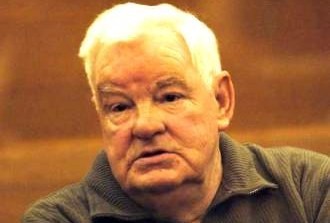
Émile Louis
(born January 21, 1934
in Pontigny, Bourgogne) is a retired French bus driver and prime suspect
in the disappearance of seven young women in the département of
Yonne, Burgundy, in the late 1970s. In 2000 Louis confessed to their
murders; he retracted this confession one month later.
Louis is currently (since March 2004) serving a 20-year
jail sentence for the rape and torture of his last wife and of her
daughter. He was also twice convicted of sexual attacks on minors: once
in 1983 for which he was sentenced to four years in prison, and again in
1989 with a five-year jail term.
Disappearances
Émile Louis is a prime suspect in the disappearances
in the Yonne Département of seven young women with mild mental
deficiencies between 1975 and 1980. The disappearances initially did not
attract much attention, as the girls had no close relatives and lived in
homes for the handicapped; it was assumed that they had simply run away.
Louis confessed to murdering the seven girls in 2000, before retracting
his statement. However, his statement led police to find the remains of
two of the victims. Louis allegedly kidnapped the girls while driving a
bus meant to transport them.
One recurring question is how the
justice system could have ignored this string of disappearances for so
long, even though suspicions had grown and some official reports
indicating probable foul play had been produced. In particular, gendarme
Christian Jambert submitted a report in 1984 designating Louis as a
prime suspect. On August 4, 1997,
Jambert was found dead and judicial authorities found the cause to be
suicide. However, an examination of his skull on
March 31, 2004,
indicated that two bullets had entered the brain, and both should have
instantly been fatal.
In 1992, Pierre Charrier, the head of the Yonne APAJH
association managing the home for handicapped young people where the
missing girls had been staying, was sentenced to six years in prison for
raping a 23-year-old handicapped woman. Nine years before, Nicole
Charrier, his spouse, had testified in favor of Louis. In 2001, Nicole
Charrier was removed from her management position at APAJH.
The lack of reaction on the part of
judicial authorities has led to suspicions that the blocking of
enquiries was not out of negligence or incompetency, but because of the
possible involvement of locally well-connected people in a network
providing sadistic prostitution services.
One issue in the legal treatment of Louis actions is
prescription (the statute of limitations). Even if Louis admitted to
crimes committed in the late 1970s, it might be impossible to prosecute
him. The Court of Cassation ruled that certain acts that before would
not have been considered to be interrupting prescription, but in fact
interrupted prescription.
Louis' trial by the Yonne assize court for the seven
murders started on November 3, 2004.
On November 10, the
court visited the location where the bodies of two victims, Madeleine
Dejust and Jacqueline Weis, were exhumed after Louis confessed their
location to the Gendarmerie. Louis has retracted his confession and
maintains his innocence.
List of alleged victims
Madeleine Dejust
Chantal Gras
Bernadette Lemoine
Christine Marlot
Martine Renault
Jacqueline Weiss
Françoise Lemoine
Sentencing
On March 26, 2004,
Louis was sentenced by the assize court of the Var for the rape and
torture of his second wife and his stepdaughter to 20 years in prison,
two-thirds of which are without parole. With this last disposition, the
jury went beyond the requests of the prosecution.
Wikipedia.org
Emile Louis
Born in Auxerre on January 26, 1934,
Emile Louis abandoned as of his birth and is placed by the DDASS (departmental
Direction of the medical and social service) in a family of Pontigny, a
small borough of Yonne.
He is raised by a feeder mother that
he describes as "authoritative", but maintains good relations with her
husband, a craftsman-mason, also grave-digger. Scapegoat of its comrades
of class, who call it the "bastard one", according to his statements,
Emile Louis carries out a poor schooling.
He leaves the school at 14 years after
having failed the certificate of primary studies.
Engaged at 19 years in the national
navy, it tells to be deeply marked by the scenes of torture of which it
is pilot in Indo-China.
On its return in Yonne, it marries
Simone Delagneau, who will give him four children. The couple also
accomodates children of the DDASS, from of which one of disappeared,
Jacqueline Weiss.
In 1978, he divorces and settles with
his concubine Gilberte Lemenorel, another nurse. At that time, Emile
Louis becomes driver of bus, in charge of school transport.
Then 35 years old, it leads young
women, among whom majority of the seven disappeared, between families of
reception and médico-educational centers where certain defective mental
are provided education for.
The teenagers describe it like "very
understanding" and see in him a "large-brother" or a "father" to whom "one
can all entrust", according to a former director of hearth, Nicole
Charrier, in a testimony of morality, addressed to the examining
magistrate at the beginning of the Eighties.
Emile Louis is then accused of the
murder of a pupil of the DDASS, Sylviane Lesage, for which it will
profit from a withdrawal of case in 1984.
During its police custody, it
acknowledges nevertheless contacts on teenagers, entrusted to her
concubine.
It will be condemned to four years of
firm prison. At its exit of prison, it leaves Burgundy for the VAr,
where it settles in a mobile-home, living allowances and various odd
jobs.
In 1989, it is again condemned for
indecent assault. But it is for rapes with acts of torture and cruelty
on his second wife, Chantal Paradis, and of the sexual aggressions on
his/her daughter-in-law, whom it most heavily will be condemned in March
2004 by the court of sat VAr: 20 years of criminal reclusion.
Psychiatric experts belonged to the "faults" in the personality of Emile
Louis, seemingly "normal" and well integrated socially and
professionally.
They evoke a profile of "narcissistic
sexual pervert", equipped with a "emotional coldness" and a "certain
contempt of others". "Emile Louis acknowledges himself attracted by the
people in difficulty, affectivement vulnerable or precarized auprès of
which it (shows) readily helpful", affirms a psychologist who concludes:
"Mister seems to be satisfied to easily sit his capacity on not very
capable dependent people to dispute it".
With the experts, Emile Louis
described the meeting with his second wife, of which he was the tutor: "it
was a zombie, a poor girl who needed somebody strong".
Serial killer suspect
convicted of rape
March 26, 2004
A French
man who has been charged with the murder of seven mentally handicapped
young women was sentenced in a separate trial today to 20 years in
prison for raping and torturing his ex-wife and stepdaughter.
Retired bus driver Emile LOUIS, 70, was found guilty by a court in
Draguignan in the south of France of repeatedly drugging and raping his
second wife, Chantal PARADIS, and stepdaughter Karine Magret during the
1990s.
LOUIS, who denied the charges, showed no emotion as the sentence was
read.
Described as a serial offender, LOUIS is due to go on trial later this
year for the murder of seven mentally handicapped women who went missing
in the same area of central France in the late 1970s, in a case that
shocked France.
Louis initially admitted to the killings and told detectives he had felt
"uncontrollable urges" to murder the women, but he later withdrew his
confession.
He told investigators at one stage that he buried the bodies in a field
at the edge of a river near the town of Auxerre.
Forensic experts in 2001 identified two skeletons as those of Jaqueline
WEISS, who disappeared aged 17 in April 1977, and Madeleine DEJUST, who
went missing aged 22 in July the same year. Remains of the five other
women have yet to be found. The seven victims all attended a day centre
for the mentally handicapped in Auxerre and disappeared between 1976 and
1979. LOUIS drove them between their homes and the centre.
Serial killer clue to
student’s murder
October 31, 2004
The
father of a British language student who was murdered in France 14 years
ago believes that the trial of an alleged serial killer this week may
yield vital clues about her death.
Roger
Parrish hopes that the man, who is accused of murdering seven mentally
handicapped women, may have information about a sex ring believed to be
linked to the death of Joanna, his 20-year-old daughter.
Her body
was found floating in the Yonne River at Moneteau near Auxerre,
Burgundy, in May 1990. She had been tied up and raped before she was
strangled. Her death came in the midst of a series of unsolved
disappearances and killings in the Auxerre region over the past three
decades.
Officials
are suspected of shielding well-connected sex offenders and the trial of
Emile Louis, 71, in Auxerre is expected to expose embarrassing lapses by
detectives.
Parrish,
from Newnham, Gloucestershire, plans to attend part of the trial. He has
become increasingly disheartened by the lack of progress in
investigating his daughter’s murder.
“It is
quite frustrating, to put it mildly,” he said last week. “The
authorities, for whatever reason, are not very good at solving these
cases.”
Louis, a
former coach driver, was jailed for 20 years earlier this year for
sexual assault. He has also confessed to murdering seven women and has
emerged as one of the country’s most hated criminals, his puffy features
and rheumy eyes illustrating many magazine articles.
There are
increasing suspicions, however, that he might not have acted alone.
Efforts by Christian Jambert, a former military investigator, to
implicate Louis in the murders were blocked repeatedly decades ago.
Jambert allegedly committed suicide in 1997.
Suspicions of a cover-up were fuelled earlier this year when an autopsy
revealed that Jambert had not taken his own life but had been killed by
two shots to the head.
Parrish
has since spoken to Jambert’s son Philippe, who told him the former
policeman had “strong suspicions” about the identity of Joanna’s killer.
Although
Louis could not have murdered Joanna since he was in prison when she
died, he may have information that could help to solve the case. His
trial, expected to last more than a month, will hear testimony from more
than 70 witnesses.
Louis’s
confession to seven murders in 2000 led police to the remains of
Madeleine Dejust and Jacqueline Weiss. But the following year Louis
retracted his confession and said that he had just been the lowly
employee of a sex network in Auxerre that included eminent local people.
The same defence was used to no avail by Marc Dutroux, the Belgian child
killer who was jailed for life earlier this year.
In the
Auxerre region, however, the existence of such a network was no secret.
In 1984 a young woman turned up in a hospital with a sickening story:
she had been held prisoner in a cellar where she had been raped and
tortured by visitors for three months before she managed to escape.
Police
freed another victim who had been abducted and imprisoned for a week in
the house and discovered a torture chamber and a price list — clients
could pay up to £60 to inflict a cigarette burn. Claude Dunand had
apparently been running the business for years with impunity.
Dunand
was jailed for life in 1991 but was freed after 10 years, prompting
speculation that this preferential treatment was part of a conspiracy to
protect the identity of former clients. Local journalists say that a
list of people implicated in the sadistic abduction ring was drawn up by
police but disappeared from the files. A link was suggested by the fact
that some of Dunand’s victims were also mentally handicapped girls who
attended daycare centres where Louis was a driver.
French
Serial Killer on trial
BBC News
November 3, 2004
Emile
Louis knew many of the girls who went missing.
A
70-year-old bus driver has gone on trial in France over the deaths of
seven young girls, in one of the country's biggest post-war scandals.
Emile
Louis is accused of murdering the girls - many of whom were mentally
disabled and in local council care in northern Burgundy - over 30 years.
He
confessed to some of the murders four years ago, although he has since
retracted the confession.
Only two
of the girls' bodies have so far been found. Over three decades, some
30 young women went missing while in the care of the social services in
the Yonne region.
Many
victims' families say they will be in court to see the severe failings
of the French authorities laid bare.
They
include the father of a British student, Joanna Parrish, from
Gloucestershire, whose murder near the city of Auxerre in 1990 was never
solved.
The BBC's
Caroline Wyatt in Paris says many of the victims had severe learning
difficulties, yet the local authorities simply recorded them as
runaways.
The
French police showed little interest, our correspondent says.
'Cover-up'
Only one
local gendarme pursued evidence against a bus driver, Emile Louis, who
knew many of the girls personally.
But the
enquiries were halted and a damning report was lost until 1996.
The
gendarme was then found shot dead - in what was recorded as suicide.
The
victims' families started to suspect a cover-up and a new investigation
showed that dozens of files relating to the cases had disappeared from a
court house.
Rumours
emerged of a high-level sex ring and four years ago Mr Louis confessed
to several of the murders, before retracting his confession.
French
serial killer given life
November 26, 2004
Emile
Louis knew the victims personally.
A
70-year-old French bus driver has been jailed for life for the murders
of seven young women in the 1970s.
Emile
Louis was found guilty of killing the women - many of whom were mentally
disabled and in local council care in northern Burgundy - over 30 years.
He
confessed to some of the murders four years ago, although he has since
retracted the confession.
Louis had
already been given 20 years in jail for raping his second wife and his
daughter-in-law.
He will
serve a minimum of 18 years.
Before
the judges retired to consider their verdict, Louis said: "I'm sorry for
the families, but I'm innocent".
May they
haunt your sleep, your days, your nights... the kingdom of emptiness -
it is you ..Didier Seban,.Lawyer for victims' families. His lawyers have
maintained that the crimes took place too long ago for the case to be
legally valid.
But
Didier Seban, a lawyer representing victims' families, told the
defendant: "You, Monsieur Louis, will one day have a grave around which
your children can gather. They (the victims) will have no grave.
"May they
haunt your sleep, your days, your nights... the kingdom of emptiness -
it is you."
Two
bodies were found in shallow graves after Louis, who knew many of the
young women personally, gave police instructions to their whereabouts in
2000. He later retracted his confession and the bodies of the others,
all aged between 15 and 25, have not been found.
Report lost
Over three decades, some 30 young women went missing while in the
care of the social services in the Yonne region.
The
father of murdered British student Joanna Parrish, from Gloucestershire,
whose body was found near the city of Auxerre in 1990, was following the
trial proceedings.
The
victims' families have kept up pressure on the authorities.
Her
murder was never solved, but Roger Parrish has now ruled out Louis'
involvement. After the trial, he said: "I don't think he had any direct
involvement or contact with Joanna.
"He
wasn't in the area at the time that she went missing. I believe he was
in prison in the south of the country for other sex offences."
The Louis
case has been marked by a series of judicial problems. In March 2002,
the government punished three magistrates for failing in their duties by
allowing Louis to avoid prosecution for more than 20 years.
The
thoroughness of the investigation was also questioned.
Many of
the victims had severe learning difficulties, yet the local authorities
simply recorded them as runaways. The French police appeared to show
little interest.
Only one
local gendarme pursued evidence against Louis, but the enquiries were
halted and a damning report was lost until 1996.
The
gendarme was then found shot dead - in what was recorded as suicide.
It was
only thanks to pressure from the victims' families that the issue was
kept alive.
The missing and murdered of
Burgundy, France
By Rachael Bell
Joanna
On the morning of May 17, 1990, Patrice Bardot, an unemployed dustman,
traveled from his home in the French village
of
Monéteau to the nearby
YonneRiver for a day of fishing. Not long after
he arrived he noticed something floating in the water. Initially, he
believed it was a bobbing barrel, but as he drew nearer he was shocked
to realize it was a nude human body.
Bardot immediately flagged down a woman jogging on a nearby path and
alerted her of the gruesome find. The jogger then ran toward a café,
where the police were called. The authorities soon arrived and conducted
what would later be considered a terribly bungled investigation.
The police cornered off a small section of land close to where the body
was found and began searching for clues. However, investigators ignored
a large portion of the surrounding area, most of which had been trampled
by police, emergency personnel, onlookers and vehicles. According to an
Expatica.com article by Graham Tearse, the secured area was "released to
the public just several hours later" and the following day it was
further trampled by children on a field trip. Had there been any
evidence, it was likely lost from the contamination of the crime scene.
The body was withdrawn from the river and taken to a nearby hospital for
identification and autopsy. The woman was identified as 20-year-old
Joanna Parrish, who was from Gloucestershire, England. Joanna was enrolled in a
modern languages work/study program at LeedsUniversity and took a position as an assistant English
teacher at a secondary school in the nearby town of
Auxerre. She was working
on a bachelor's degree in modern languages at LeedsUniversity. At the time of her death she
was only one week away from completing her posting.
An autopsy revealed that Joanna had been drugged, tied up, raped, beaten
and strangled before being dumped into the river. It was suspected that
her body had been in the water only several hours prior to it being
found. Even though the body was discarded in broad daylight, police were
unable to find any witnesses. They believed that whoever murdered Joanna
was probably familiar with the area and could have even resided in the
immediate vicinity. Yet, police were unable to produce any suspects.
According to Tearse, Joanna had a friend named Janet visiting from
Canada around the time of her death.
Janet claimed that Joanna placed an advertisement in a local newspaper
offering English lessons. She planned to use the money to fund a holiday
trip with her fiancée.
Investigators learned that a local man responded to Joanna's ad by phone
and was interested in hiring her to teach his teenage son. They made
arrangements to meet at 7 p.m. on May 16 at the town's square in Auxerre.
Tearse suggested that on that day, Janet joined Joanna on her trip into
town and they walked around for a while before they separated at about
6:30 pm.
Joanna went to meet the man at the town square. It was the last time
Janet ever saw her again. Tearse said that Joanna never told Janet the
name of the man she was planning to meet.
Several weeks after her body was discovered, Joanna was buried in
Gloucestershire. Her parents, Roger and Pauline, went to Auxerre and
hired a lawyer to assist them in their gaining access to information
concerning the case from the magistrate and the police detectives. They
wanted to closely follow the investigation, hoping that it would
eventually lead to the apprehension of their daughter's murderer. Their
expectations were quickly shattered when they realized how inadequately
the case was being handled.
At the time, Roger and Pauline didn't know that their daughter's murder
was not an isolated case. In fact, there were many unsolved murders and
disappearances in the Burgundy region,
most of which were grossly mismanaged, completely ignored and even
discarded. Many suspected that high-level officials were trying to cover-up
the fact that Burgundy had an unusually
high murder rate for such a tiny province. It was something that could
not be hidden for long.
Negligence
The investigation into Joanna's death was bungled from the beginning.
The crime scene was turned into a forensic disaster. Moreover, much of
the information gathered during the investigation was kept from Joanna's
family, who desperately tried to learn what advances were being made in
the case.
Tearse suggested that during a British inquest into Joanna's murder,
critical evidence was discovered that was ignored or overlooked by
French coroners. He claimed that a second autopsy, conducted by the
British, revealed several bite marks on Joanna's body. From a forensic
standpoint, bite marks are vital clues that can reveal information about
the killer because teeth, bite and jaw formations are individually
unique and can be easily matched. The revelation shocked Joanna's
parents who couldn't comprehend how something so obvious and important
could have gone unnoticed.
During the autopsy, medical examiners were able to obtain sperm samples.
It took two years for the samples to be analyzed, but the results led to
a genetic print. The DNA evidence was one of the biggest clues in the
investigation and Roger and Pauline hoped that it would lead
investigators to the killer. However, they were not so fortunate.
Tearse said, "investigators refused to call for voluntary DNA tests of
the local male population and continued to refuse to make a media appeal
for witnesses." It was another blow to the investigation and a major
disappointment for Roger and Pauline. Frustrated at the incompetence of
police, Joanna's family decided to take measures into their own hands.
They family offered a reward for information into Joanna's death and
handed out leaflets in and around Auxerre and Monéteau. They even
appealed to the British government for assistance. Even though they were
unsuccessful in getting help from the British government they did manage
to get some interesting responses to their leaflets.
Several people called offering some information directly concerning
Joanna's death. Roger and Pauline eagerly presented the new leads to the
French authorities. However, for some unknown reason the investigators
failed to pursue the tips.
The family members of other murdered victims in Burgundy responded to the leaflets. Roger and
Pauline learned that three other young women, Isabelle Laville, 17,
Danielle Bernard, 39, Sylvie Baton, 24, were murdered near or in Auxerre
between 1987 and 1990. Their families were angered because they also
felt as if the investigators were mishandling the cases of their
deceased loved ones.
Eventually, Roger and Pauline discovered that there were approximately
13 more unsolved murders and disappearances of women in the Auxerre area
over the last 30 years. Interestingly, investigators working on Joanna's
case never told them about the spate of murders, two of which occurred
within months of their daughter's death.
Roger and Pauline tried to obtain Joanna's case files so they could
bring in outside help to assist in the investigation. However,
investigators continued to deny them access to the documents. Even
though it seemed as if they were battling a lost cause, they refused to
give up in their search for evidence.
A Criminal Network
Among the 17 girls missing or found murdered were seven pupils from the
Medical-Educational Institute, a special needs school for handicapped
young women in Auxerre. The girls, 16 to 22 years old, were accounted
for in December 2000, when a former bus driver of the school made a
startling confession. Emile Louis, 68, admitted to police that he had
sex with the seven pupils and then murdered them sometime between 1977
and 1979.
When the girls first began to disappear, the police interviewed Louis
because he was known to have a history of sex offenses. However, they
did not pursue him for long and eventually he was disregarded as a
potential suspect. Eventually, the cases were dropped and the girls were
listed as runaways.
Louis continued to drive female pupils to and from school. It is also
believed that he continued to rape and kill them indiscriminately. He
would not be looked at as a suspect for almost another two decades.
Hugh Schofield's article Mystery of France's Missing Girls
suggested that there were similarities between many of the cases. He
quoted Corinne Herrmann, a French lawyer and author of the book The
Disappeared of the Yonne, stating that the girls were either
mentally handicapped, "or like Joanna far from home." Moreover,
according to Stuart Jeffries 2000 article for The Observer,
witnesses were able to place Louis near the spots where many of the
victims were last seen.
Louis was caught almost two decades later when his daughter found items
in his house belonging to several of the victims. During his confession,
Louis told authorities that he buried the girls near the
YonneRiver. Only the skeletal remains of two
girls were ever recovered.
Not long after his admission of guilt, Louis changed his story. He
claimed that he was pressured into giving false testimony and that he
actually didn't commit the murders. In a January 2002 article in The
Guardian by Jon Henley, Louis insisted that "the girls were
routinely abused and finally abducted and killed by a nebulous ring of
men 'of some standing, locally and in the region." Not surprisingly,
Louis' story was met with skepticism by local investigators.
Louis could not be charged with the murders anyway because under French
law it was considered unlawful to convict anyone of a murder 10 years
after a crime was committed. According to Jeffries, Louis was
instead "convicted for kidnapping, for which there is no statue of
limitations." The authorities believed Louis could have been involved in
some of the other murder cases, yet there was not enough evidence to
convict him.
One thing was for certain: Louis could not have been directly
responsible for Joanna's death. At the time of her murder, he was
serving a prison sentence for sexually assaulting a minor. Nevertheless,
Schofield suggested that a private investigation conducted for 13 years
by French police agent Christian Jambert, 56, "clearly established that
Louis was linked to all the women." It was believed that he was
affiliated with a sex ring operation that prostituted, abused and even
murdered many girls in the region, possibly including Joanna.
Initially the authorities ignored Jambert's theories, but an incident in
1984 led them to reconsider the idea that there was indeed a sex ring in
the area. That January, a 19-year-old girl was found wandering the
streets of Auxerre in a confused state. When the police picked her up
and questioned her she claimed that she was held captive in the basement
of a nearby house, where she was sexually abused and tortured.
The girl's testimony led the police to the home of Claude and Monique
Dunand, known friends of Emile Louis. Stuart said that when they
searched the house, they found another girl in the cellar, "naked and
suspended from a ladder by her wrists." He further claimed that for
approximately 15 years, local handicapped girls were lured to the house,
locked up, fed dog food and repeatedly raped and tortured by invited
guests. However, there was no indication that any of the girls were
murdered.
Claude Dunand was eventually convicted of kidnapping and given a life
sentence in 1991. His wife Monique received two years for accessory to
the crimes. According to Andrew Alderson and Kim Willsher's article 'I
Want Justice for Joanna,' Yonne crime reporter Ludovic Berger stated,
"Claude Dunand has always said that politicians, industrialists and
magistrates were involved but he has refused to name them." The article
further suggested that a list of at least 50 clients "rumored to include
several French 'notables' who paid to torture and abuse" captive girls
was discovered by police and handed over to the Auxerre Courthouse.
However, the list mysteriously disappeared from a courtroom and has
never been found.
It was not the only document that went missing. In fact, there were more
than 100 murder and missing person case files from between 1958 and 1982
that vanished from the courthouse. Moreover, the court ledger
documenting the investigations also vanished. It became increasingly
clear that someone was either trying to cover up the crimes or the
Auxerre Courthouse had a serious management problem.
Cover-up
Christian Jambert was almost certain he knew who was behind
Burgundy's rash of
murders and missing person cases, and he was convinced that Louis was
one of the primary culprits. However, he also believed that Louis was
only one of many involved in the crimes. Jambert kept meticulous notes
and diaries concerning the cases, along with the evidence he collected
over the years. In 1997, he made preparations to present his findings
during a new inquiry. Yet, he never got the chance to reveal what he
worked so hard to acquire.
In August of that year, just several days before the inquiries were
scheduled to begin, Jambert was found dead in the basement of his
Auxerre home. An autopsy revealed that he died from a single gunshot
wound to the head. Medical investigators claimed that Jambert had a
history of depression. It was believed that his poor mental state
prompted him to end his life. His death was listed as a suicide.
By the late 1990s, the mounting scandal in Auxerre gained international
attention. People were shocked by the negligence exhibited in the
investigations and the fact that more than 100 files, mostly of missing
women, had gone missing from Auxerre's Courthouse. According to Harry de
Quetteville's January 2002 article in The Telegraph, the scandal
was "taken so seriously in
Paris that
Marylise Lebranchu, the French justice minister, ordered a series of
internal investigations." Joanna's murder case was one of those selected
for re-examination and it was further linked with the inquiry into the
seven girls Louis once claimed to have murdered.
Not surprisingly, Joanna's parents welcomed the decision of a new
inquiry. They waited more than a decade for her investigation to be
reopened. BBC News Online stated that Roger, "was hopeful there would be
progress in the investigation and the potential capture of the killer."
Investigators working on the case quickly realized that there was a
possibility someone tampered with Joanna's murder file. Witness
statements, which were obtained at the time of her murder, were missing
from her dossier. Moreover, important DNA evidence taken during the
autopsy also disappeared from the file for more than a decade before it
was found again.
During the investigation, it was suggested that Joanne and many of the
other girls that were murdered or missing were likely the victims of an
organized sex gang operating around Auxerre. Yet, because so many of the
facts were missing, there was not enough evidence available to convict
anyone.
The only exception was the case of the seven missing girls Louis
initially claimed to have murdered before retracting his confession.
Investigators continued to believe he was involved in their
disappearances and murders. A re-examination of his case was ordered,
with the hope of uncovering more evidence linking Louis or anyone else
to the girls.
Many in the community believed that the murder cases were deliberately
ignored and the files stolen or destroyed because they implicated high-level
officials. Investigators re-examining the cases determined that it was
more likely that gross negligence on behalf of local magistrates was to
blame for the mishandling of the cases. In all likelihood, it was
probably a combination of both theories that prevented anyone from being
apprehended for the crimes.
In March 2002, four magistrates from Burgundy faced accusations of gross negligence
in the cases of missing and murdered women in their region. The judges
included former chief prosecutors Rene Meyer and Jacques Cazals and
former deputy prosecutors Daniel Stilinovic and Bertrand Daillie. The
men were ordered to appear before a panel of six senior judges, who
would review the cases over a three-day period.
According to a 2002 article by Susan Bell in The Scotsman,
accused magistrate Stilinovic admitted that "there were people who
allowed information to be stifled." He was further quoted saying "magistrates
tampered with procedures on behalf of people they wanted to protect. It
is a conspiracy at the very top." However, he maintained his innocence,
suggesting that he did not stifle any of the investigations. His peers
thought otherwise.
The panel returned a verdict in late March and found Stilinovic guilty
of negligence. He received the severest penalty and was dismissed from
his position. Cazals was also found guilty and transferred from his
prestigious post in Paris.
Meyer, who was retired at the time of the inquiry, was stripped of his
honorary title after he too was found guilty. Daillie received no
punishment.
New Evidence
In August 2002, investigators found new clues during their inquiry into
Joanna's murder. They revealed that recently recovered DNA evidence
pointed to two men being involved in the rape and murder of Joanna. The
BBC News further stated in their article "Fresh Clues in Joanna Murder
Hunt" that new documents were found which indicated that police arrested
a suspect in connection with Joanna's murder early in the investigation.
Yet, he was released because of lack of evidence.
Investigators are continuing to follow up on the new leads, hoping that
it might result in the arrest of her killers. However, a great deal of
time has passed since her death and the chances of solving the crime
have significantly decreased over the years. Regardless, Joanna's family
and law enforcement officials re-examining the case have not given up
hope.
In April 2004, more new evidence arose concerning the suicide of Jambert.
According to Alderson and Willsher's article, Corinne Herrmann received
access to Jambert's files while she was conducting research into the
case of the
Burgundy's
missing and murdered girls. She became suspicious of his death and
believed he might have been murdered. She just had to prove her theory.
Herrmann, author of Les Disparues D'Auxerre, convinced Jambert's
children to exhume their father's body so that another autopsy could be
conducted. After several days of examining the remains, the medical
investigators made a startling discovery. Alderson and Willsher claimed
that Jambert had been shot not once, but twice in the head making it
almost impossible for him to have committed suicide.
Herrmann's suspicions were proven correct and she persuaded area
magistrates to begin a murder inquiry. It was believed that his murder
was directly linked with the investigation on which he was working. Even
though investigators interviewed several possible suspects, no one has
yet been convicted for the crime.
Jambert's case, like Joanna's, is being pursued with more vigor than
ever before. Moreover, investigators continue to review the Louis case.
They are hoping to put an end to the disappearances and murders that
have plagued
Burgundy for
so many years. Moreover, they hope to restore the reputation of the
beautiful, medieval town that has attracted visitors from around the
world for centuries.
Emile Louis Trial
On November 2, 2004,
Emile Louis' murder trial finally began in Auxerre,
France despite repeated attempts to
throw out the case. According to a November 3, 2004 AP Worldstream
article, Louis' lawyers requested that the case be delayed until after
the European Court of Human Rights ruled "on their bid to dismiss the
case" because they believed "the crimes took place too long ago for the
case to be legally valid." However, the court rejected the defense
request and ordered the resumption of Louis' trial.
The 70-year-old retired bus driver, convicted of the murders of seven
mentally handicapped women, continued to deny he was responsible for the
murders even though he confessed to them years earlier. It is hoped that
the trial will finally reveal the truth as to how the girls died. The
trial is expected to last four weeks. If convicted, Louis could face
life imprisonment.
The case is considered one of France's most controversial scandals
because the investigation was bungled and many of the case files dealing
with the girls' disappearances, as well as other cases of murdered and
missing women went missing from the Auxerre Courthouse. It is believed
that the files were destroyed in order to cover up a high-level sex ring,
which allegedly involved some prominent French officials.
AP Worldstream reported that, "more than 90 witnesses including
magistrates, social workers, police officers and family members of the
victims are to testify at the trial." Many other family members of the
victims are expected to fill the courthouse, in the hopes of seeing
Louis brought to justice after escaping prosecution for the murders for
approximately twenty-five years. The father of British student Joanna
Parrish, who was murdered in Auxerre in 1990, is also expected to be in
attendance.
Since the onset of the trial there has been an upsurge of media and
public interest, which has led to security concerns. Moreover, there is
concern for Louis' personal safety and the authorities want to prevent
the possibility of someone taking justice into their own hands. In
response, safety measures were taken to secure the perimeter around the
courthouse, Mie Kohiyama reported for Agence France-Presse. There is no
doubt that Louis is considered by many to be one of
France's most reviled citizens.