Murderpedia has thousands of hours of work behind it. To keep creating
new content, we kindly appreciate any donation you can give to help
the Murderpedia project stay alive. We have many
plans and enthusiasm
to keep expanding and making Murderpedia a better site, but we really
need your help for this. Thank you very much in advance.
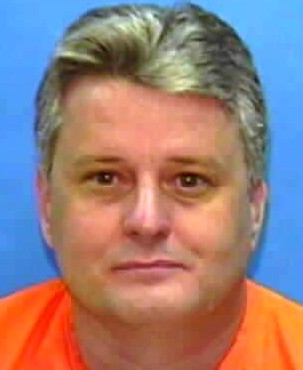
Bobby Joe LONG
A.K.A.: "Classified
Ad Rapist"
Classification:
Serial killer
Characteristics: Serial
rapist
Number of victims: 10
Date of murders: May-November 1984
Date
of arrest:November 16,
1984
Date of birth:
October 14,
1953
Victims profile: Ngeun Thi Long,
20 / Michelle Denise Simms, 22 /
Elizabeth B. Loudenback, 22 / Chanel Devon Williams, 18 / Karen
Beth Dinsfriend, 28 / Kimberly Kyle Hopps, 22 / Virginia Lee
Johnson, 18 / Kim Marie Swann, 21 / Vicki Elliott / An
unidentified woman
Method of murder: Most
victims were strangled and/or asphyxiated; however, one was shot and one
died of a cut throat
Bobby Joe Long (born October 14, 1953), also
known as Bobbie Joe Long, Robert Joe Long and Robert
Joseph Long, is an American serial killer, as of October 2007 on
death row in the state of Florida. Long abducted, sexually assaulted,
and murdered at least 10 women in the Tampa Bay Area during an eight
month period in 1984. He released his last victim, after sexually
assaulting her for a period of 26 hours. She provided information to the
police that enabled them to track him down.
Early life
Long was born October 14, 1953 in Kenova, West
Virginia. He was born with an extra x chromosome, because of which he
grew breasts during puberty, for which he was severely teased. He also
suffered multiple head injuries as a child. He had a dysfunctional
relationship with his mother; he slept in her bed until he was a
teenager, and resented her multiple short-term boyfriends. He married
his high school girlfriend in 1974, with whom he had two children before
she filed for divorce in 1980.
Prior to the Tampa Bay areas murders, Long had
committed at least 50 rapes as the "Classified Ad Rapist" in Fort
Lauderdale, Ocala, Miami and Dade County. Starting in 1981, Long
answered classified ads for small appliances, and if he found a woman
alone at home, he would rape her. He was tried and convicted for rape in
1981 but requested a new trial which was granted. The charges were later
dropped.
Before Bobby killed in Florida, he lived in Long
Beach, CA on the 2500 Block of Eucalyptus Avenue where he rented a room
from a female named Kathy. Bobby attended an underwater welding course
and dated a 17 year old girl across the street from his rented room.
Bobby began contacting women through the Penny Saver and other
classified ads and when he found a woman alone, he asked to use the
bathroom, took out his "rape kit" and brutally raped and robbed the
woman. These crimes were never prosecuted by the local California
authorities.
Murders
Long moved to the Tampa area in 1983. Hillsborough
County had been averaging about 30 to 35 homicides per year in the
eighties. Then, in 1984, the murder rate escalated. During one eight
month period, a killer with a unique method of binding, raping and
killing his victims, then dumping them in unusual positions and poses,
was averaging a murder every other week. The first victim was discovered
in May 1984, when the Hillsborough County Sheriff's Office (HCSO) was
called to a crime scene where the body of a nude woman had been found.
This began an intensive investigation into the
abduction, rape, and murder of at least 10 women in three counties in
the Tampa Bay area (Hillsborough, Pasco, Pinellas) involving the
personnel from the HCSO, the FBI, the Tampa Police Department (TPD), the
Pasco County Sheriff's Office (PCSO), and the Florida Department of Law
Enforcement (FDLE). The bodies were found usually long after the murder
in a state of decomposition, dumped near a rural roadside and dragged
into the woods.
Modus operandi
In 1984, Long, then on probation for assault, began
driving around areas known for prostitution and shoddy bars where women
were found alone, "trolling" for victims. He claimed his victims
approached him, after which he persuaded them to enter his car and took
them to an apartment. There he bound his victims with rope and ligature
collars he fashioned using a variety of rope knots, later confessing
that he derived sadistic pleasure from the abduction, rape and brutal
murder of his victims.
Some he strangled, others he cut the throats of or
bludgeoned to death. The bodies were placed in unique positions or "displayed"
for example with legs splayed five feet apart at odd angles. Of Long's
ten known victims, five were identified as prostitutes, two as exotic
dancers, one was a factory worker, one was a student, and one was of
unknown occupation.
Capture
At the time of his capture, Long was wanted by three
jurisdictions in the Tampa Bay Area who collected forensic evidence,
including clothing and carpet fibers, semen, ligature marks, and rope
knots.
Robert Long was arrested on November 16, 1984, and
charged with the sexual battery and kidnapping of Lisa McVey. Long
signed a formal Miranda waiver, and consented to questioning. After the
detectives procured a confession for the McVey case, their questioning
focused on a series of unsolved sexual battery homicides pending in the
area. As the detectives began to question Long about the murders, he
replied, "I'd rather not answer that." The detectives continued the
interrogation, and handed Long photographs of the various murder victims.
At this point, Long stated, "The complexion of things sure have changed
since you came back into the room. I think I might need an attorney." No
attorney was provided, and Long eventually confessed to eight murders in
Hillsborough County, and one murder in Pasco County.
Fiber evidence analysis by the FBI linked Long's
vehicle to most of his victims.
Trial
The Hillsborough County State Attorney's Office
confronted Long with the evidence. The State Attorney and the Public
Defender's Office of Hillsborough County reached a plea bargain for
eight of the homicides and the abduction and rape of Lisa McVey. Long
pleaded guilty on September 24, 1985, to all of these crimes, receiving
26 life sentences without the possibility of parole (24 concurrent and
two to run consecutively to the first 24) and seven life sentences with
the possibility of parole after 25 years.
In addition, the State retained the option to seek
the death penalty for the murder of Michelle Simms. In July 1986, the
penalty phase of the Michelle Simms trial was held in Tampa. It lasted
one week and again received extensive media attention. Long was found
guilty and was sentenced to die in Florida's electric chair.
Although Long confessed to raping and killing women,
his confession was thrown out. His trial proceeded straight to the
penalty phase, which was possible in the 1980s. In early 1985, he
received the death penalty.
Long was convicted and appealed of his first degree
murder conviction and death sentence for crimes committed in
Hillsborough County.
Long appealed his first degree murder conviction and
sentence of death in the death of Virginia Johnson.
On appeal from the Circuit Court in and for Pasco
County, in which Long's death sentence was vacated, his conviction
reversed, and his case remanded to the trial court with directions to
enter an order of acquittal for the murder of Virginia Johnson.
On February 24, 1999, Long accused the Capital
Collateral Regional Council (the state office defending death row
inmates in their appeals) of revealing his private letters to a book
author, thus violating attorney-client privilege. He also accused the
agency of running a "death pool", betting on the date inmates would be
executed on, and asked that the agency be removed from his case. An
investigation concluded that these allegations were unfounded. Long's
petition for a writ of mandamus to require Bob Dillinger, the public
defender for the Sixth Judicial Circuit, to relinquish possession and
control of his file in State v. Long, was denied.
According to the Florida Department of Corrections,
Long has one five-year sentence, four 99-year sentences, 28 life
sentences, and one death sentence.
Wikipedia.org
Bobby Joe Long
Born October 14, 1953, at Kenova, West
Virginia, Long may be the classic case of someone "destined"
to become a random killer. With other members of his family, he suffered
from a genetic disorder characterized by an extra "X"
chromosome, causing his glands to produce abnormal amounts of estrogen
in puberty, with the result that his breasts began to enlarge.
Surgery
removed six pounds of excess tissue from his chest, but the resultant
gender confusion remained, perhaps exacerbated by his mother, who shared
Long's bed until he reached the age of 13 years. (Long's mother, twice
divorced, denies his allegations that he watched her entertain numerous
male "visitors" in their one-bedroom apartment.)
Aside from genetic and family problems, Long also suffered a series of
grievous head injuries beginning at age five, when he was knocked
unconscious in a fall from a swing, one eyelid skewered by a stick. The
following year, he was thrown from his bicycle, crashing headfirst into
a parked car, with injuries including loss of several teeth and a severe
concussion. At age seven, he fell from a pony onto his head, remaining
dizzy and nauseous for several weeks after the accident.
At age 13, Long met the girl who would become his wife and
simultaneously gave up sleeping with his mother. Various accounts agree
that he was dominated by his girlfriend almost from the moment of their
meeting, but his mother kept her hand in, too, the females in his life
apparently cooperating rather than competing. Long enlisted in the army
prior to marriage, and he crashed a motorcycle six months later,
shattering his helmet with the impact of his skull on asphalt.
Convalescing in the hospital, he was alternately stricken by blinding
headaches and unpredictable violent rages, discovering a new obsession
with sex. While still in a cast, Long masturbated five times a day to
relieve himself, continuing the practice at home despite twice-daily
intercourse with his wife. Still, it was not enough, and soon he began
to search for other prey.
Between 1980 and 1983, Long terrorized the
Florida communities of Miami, Ocala and Fort Lauderdale as the "Classified
Ad Rapist," preying on housewives in mid-day attacks. Dropping by
while their husbands were working, Long typically produced a knife,
bound his victims, raped them violently, and robbed their homes before
he fled. Convicted of rape in November 1981, Long was cleared on appeal
through discovery of "witnesses" alleging the victim's consent,
and so the attacks continued, with murder shortly added to his list of
crimes.
Unlike the 50 women raped by Long, his murder victims were selected from
the ranks of prostitutes or other women whom he viewed as "tramps."
Between May and November 1984, he strangled, stabbed and shot at least
nine victims, with a tenth suspected by police but never charged against
him.
In early November, he snatched a 17-year-old girl off the street
and raped her, sparing her life when she described acts of incest
performed by her father. In releasing a victim capable of describing him
and his car, Long sealed his own fate, but police were too slow to save
victim Kim Swann, murdered two days later in a final frenzy.
Arrested on
November 17, 1984, Long was charged with nine counts of first-degree
murder, plus felony counts of abduction, rape, and sexual assault on his
surviving victim. Convicted at his trial in early 1985, he was sentenced
to die.
Michael Newton - An Encyclopedia
of Modern Serial Killers - Hunting Humans
The "Bobby Joe" Long Serial
Murder Case:
A Study in Cooperation
Capt. Gary Terry
Hillsborough County
Sheriff's Office
Tampa, FL SA Michael P. Malone, M.S.
Hairs and Fiber Unit
Laboratory Division
Federal Bureau of Investigation
Washington, DC
On May 13,1984, the Hillsborough County Sheriff's
Office (HCSO) responded to the scene of a homicide in southern
Hillsborough County, where the body of a nude female had been discovered.
This was the beginning of an intensive, 8-month investigation into the
abduction, rape, and murder of at least 10 women in 3 jurisdictions in
the Tampa Bay area. This investigation would ultimately involve
personnel from the HCSO, the Federal Bureau of Investigation (FBI), the
Tampa Police Department (TPD), the Pasco County Sheriff's Office (PCSO),
and the Florida Department of Law Enforcement (FDLE).
Never before had the HCSO been involved in a serial
murder case of this magnitude. During one period of time in the 8 months,
the killer was averaging a murder every other week. This series of
grisly killings would eventually end due to the efforts of the homicide
detectives who pored over each crime scene striving to find any and all
physical evidence, the expertise and skill of the examiners in the FBI
Laboratory who analyzed this evidence, the close cooperation and
continuous exchange of information between the law enforcement agencies
involved, and the fact that the killer released one of his victims alive,
yielding physical evidence that would ultimately tie all of the cases
together.
The first body, nude and bound, of a young Oriental
female was discovered by young boys late in the afternoon, in a remote
area of southern Hillsborough County. This victim was identified as
Ngeun Thi Long, a 20-year-old Laotian female. She was employed as an
exotic dancer at a lounge located on Nebraska Avenue in the City of
Tampa. She normally worked the evening shift and was known to use
alcohol and drugs. Long was last seen in the apartment complex where she
lived. This was in an area near the University of South Florida, where
many of the residents were transient. She had been missing for
approximately 3 days.
Long had been dead for approximately 48 to 72 hours.
She was lying face down with her hands tied behind her back with rope
and fabric. A rope was also observed around her neck which had a "leash-like"
extension approximately 14 inches in length. It was noted that the ropes
around the wrists and neck were different in nature.1 Under the victim's
face was a piece of fabric which may have been used as a gag. The
victim's feet were spread apart to a distance of over 5 feet, and it
appeared as if the body had been deliberately "displayed" in
this manner. The victim's clothing and personal belongings were never
found. During the autopsy a large open wound was discovered on the
victim's face. Decomposition was extensive in this area, but the cause
of death was determined to be strangulation. Tire impressions were found
on the roadway leading to the body. It appeared that three of the tires
were of different brands and all were worn.
Hillsborough County had been averaging about 30 to 35
homicides per year, and while some prior victims had been bound, none
had been bound in this manner. Prior to the death of Long, the HCSO had
completed a difficult homicide investigation in which the forensic work
had been done by the FBI Laboratory. The close cooperation between the
HCSO and the FBI Laboratory resulted in the successful conclusion of the
case and the conviction of the individual who had committed the murder.
Thus, the decision was made to fly the evidence in the Long murder to
the FBI Laboratory in Washington, DC, accompanied by a HCSO homicide
detective.
The hairs that were removed from the evidence were
examined and found to be either the victim's hairs or unsuitable for
comparison. The serology examinations were also negative due to the
decomposition of the body. The knots in the ropes were examined and were
identified; however, these knots were extremely common and not unique to
any particular profession or occupation. The tire casts of the tire
tread impressions were examined and photographs of these impressions
were kept for future reference.
The fibers which were removed from the items in this
case were also examined, and this evidence would provide the first
important lead in the case. Eventually, it would prove to be the most
critical evidence of the entire case. The equipment used for the fiber
examinations consisted of a stereoscopic microscope, a comparison
microscope, a polarized light microscope, a microspectrophotometer, a
melting point apparatus, and eventually, an infrared spectrophotometer.
A single lustrous red trilobal nylon fiber was found on a piece of
fabric found near the victim. Because of the size, type, and cross
sectional shape of this fiber (see fig. 1), it was determined that this
fiber was probably a carpet fiber. Because the body had been exposed to
the elements for a substantial period of time, and fibers which have
been transferred are very transient in nature,2 it was surmised that
most of the carpet fibers which had originally been transferred to the
victim's body had been lost. Since the victim's body was found in a
remote area; she had probably been transported in a vehicle, and the
carpeting of this vehicle is probably the last item she had been in
contact with.
Furthermore, since there is normally a transferrence of
trace materials (i.e.,fibers) when two objects come into close contact,3
it was also surmised that the killer was probably driving a vehicle with
a red carpet. Vehicular carpets readily shed their fibers, and these
types of fibers are commonly found on the bodies of victims at crime
scenes. These fibers could then provide a critical "link" in
determining whether a serial murderer was operating in the Tampa Bay
area.4
The above information was provided to the HCSO, with
the caution that the fiber information should be kept confidential.
Experience has shown that if the existence of fiber evidence is
publicized, serial killers might change their pattern and start
disposing of the bodies in such a manner that this fiber evidence is
either lost or destroyed. The most famous example of this is the Wayne
Williams case.5 The possibility also existed that if the killer knew of
the existence of the red carpet fibers, he would probably get rid of the
vehicle that was the source of this evidence.
Two weeks later, on May 27, 1984, at approximately
11:30 a.m., the body of a young white female was discovered in an
isolated area of eastern Hillsborough County. The victim was found nude,
with clothing near the body. The victim was on her back, with her hands
bound at the waist and a ligature around the neck. Her throat had been
cut, and she had sustained multiple blunt trauma injuries to the head.
The victim had been at the scene for approximately 8 to 10 hours.
The
victim's hands were bound to her sides with a clothesline type of rope.
The ligature at the neck was made of the same type of rope and was tied
in a type of hangman's noose. There was a 3- to 4-foot length of rope
extending from the noose. The victim also had what appeared to be a
green man's T-shirt binding her upper arms. Hair and fiber evidence were
collected from the victim's body.
Several tire tread impressions were located in a dirt
roadway that passed approximately 8 feet from the victim's body. These
impressions appeared to have been caused by a vehicle turning around in
the area next to the victim's location.
The responding homicide detectives believed this
homicide was related to the Long case. Since the victim was unidentified,
a composite drawing of the victim was made and released to the media. It
was through this effort that the victim was identified as Michelle
Denise Simms, 22 years old and a native of California. She was last seen
the previous night talking with two white males near Kennedy Boulevard
in an area that is popular for working prostitutes. Simms had previously
worked as a prostitute.
The evidence collected from where Simms was found was
immediately flown to the FBI Laboratory. Since this had been a "fresh"
site, the chances of recovering significant evidence would be
tremendously improved. The tire casts were examined and one of the
impressions from the right rear area was identified as being from a
Goodyear Viva tire, with the white wall facing inward. The tire
impression from the left rear area could not be immediately identified,
as it was not in the FBI Laboratory reference files. However, the HCSO
was provided with the name of an individual in Akron, OH, who was a tire
expert, and the tire casts were flown to Akron, where the tire
impression was identified as being made by a Vogue tire, an expensive
tire that comes only on Cadillacs. A Vogue tire was obtained and
photographed in detail.
The fibers removed from the evidence revealed red
lustrous trilobal nylon fibers, which matched the Lana Long fiber. In
addition, a second type of fiber, a red trilobal delustered fiber, was
found, indicating that the killer was driving a vehicle containing two
different types of carpet fibers.
Grouping tests conducted on semen stains identified on
the clothing of Michelle Simms disclosed the presence of the
"B" and "H" blood group substances.
The hairs from the body and clothing of Michelle Simms
were examined. Brown, medium-length Caucasian head hairs were found that
could have originated from the killer. Human bair is valuable evidence,
and in addition to providing information on race, body area, artificial
treatment, or other unusual characteristics,6 it can be strongly
associated with a particular individual when matched with a known hair
sample from the individual.7 With this information, the HCSO was able to
build a "physical evidence" profile of the killer, which was
distributed to other law enforcement agencies; however, the information
on the carpet fibers and cordage was kept confidential.
On June 24,1984, the body of another young white
female was found, the third victim in this series of homicides, although
this would not be known for a few months. The victim was found in an
orange grove in southeastern Hillsborough County. The victim was found
fully clothed, and the body was in an advanced stage of decomposition.
The total body weight of the victim, including her clothes, was only 25
pounds. There were no ligatures present, and the victim was not found
near an interstate as the first two victims had been. During the initial
stages of the investigation, the victim's boyfriend failed a polygraph
examination and appeared to be an excellent suspect. Evidence from the
case was sent to the FBI Laboratory; however, no request was made for
this evidence to be compared to the evidence from the previous two
homicide until much later.
The victim was identified as Elizabeth B. Loudenback,
22, of Tampa. Loudenback was employed as an assembly line worker and was
last seen at approximately 7:00 p.m. on June 8,1984. She was known to
frequent the area of Nebraska Avenue and Skipper Road in northern
Hillsborough County, but had no criminal history.
The hairs from the Loudenback case were examined with
negative results. Serology examinations were also negative due to the
extensive decomposition of the body. The fibers, examined later, were
determined to be both types of the red carpet fibers evidenced in the
two previous cases. If this examination had been done initially, it
would have been immediately known that Loudenback was, in fact, the
third victim. When the evidence arrived at the FBI Laboratory, it was
not assigned to the examiner who had worked the first two homicides. One
of the most important aspects of handling a serial murder investigation
is to have the same crime scene technician at all crime scenes and the
same forensic examiners at the laboratory, so that one individual can
become totally familiar with the forensic portion of the investigation,
in order to recognize patterns and associations which might be present.
On October 7, 1984, the nude body of a young black
female was discovered near the Pasco/Hilisborough County line, lying
next to the dirt entrance road of a cattle ranch. The victim's clothing,
except for her bra, was found next to the body. The bra had been tied in
a knot and was found hanging from the entrance gate. The head area was
in an advanced state of decomposition, much more so than the remainder
of the body. The autopsy revealed a puncture wound to the back of the
neck, but a gunshot wound to the neck was the cause of death.
The victim was identified as Chanel Devon Williams, an
18-year-old black female. The victim had been previously arrested for
prostitution. She was known to frequent a gay bar on Kennedy Boulevard
in Tampa. She had been last seen on the night of September 30,1984, by
another prostitute with whom she had been working. The pair were working
the area of Nebraska Avenue when Williams' companion was solicited by a
"john." They were approximately two-tenths of a mile from the
motel where they were conducting their "business." Williams'
companion rode back to the motel in the "john's" car, and
Williams was instructed to slowly walk back to the motel in order to
check on her companion. Williams never made it back to the motel.
The homicide detectives who responded to the place
Williams was found began looking for similarities to the previous
homicides. Other than the fact that the victim was found nude in a rural
area and that Williams was a prostitute, there were no other apparent
similarities.
At this point in the investigation, the HCSO requested
a criminal personality profile be done by the FBI8 on the Long, Simms,
and Williams cases, and one other homicide in which another female had
been shot. A profile was returned (see figure 2), indicating strong
similarities between the Long case and the Simms case. However, due to
various differences (race, lack of ligatures, and cause of death), it
was believed that the Williams case and the other above-mentioned case
were not related.
The evidence from the Williams case was sent to the
FBI Laboratory a second time, and both types of the red nylon carpet
fibers were found on various articles of her clothing. A brown Caucasian
pubic hair, which would ultimately be associated with Robert Long, was
also discovered on the victim's sweater. Grouping tests conducted on
semen stains identified on Williams' clothing disclosed the presence of
the "A" and "H" blood group substances. This was
inconsistent with the grouping results found in the Simms case; however,
this could be due to their working as prostitutes.
On the morning of October 14, 1984, the body of a
white female, nude from the waist down, was discovered in an unpopulated
area of northeastern Hillsborough County. The body was found in an
orange grove approximately 30 feet from a dirt road, apparently dragged
from the roadway. The body had been placed on a gold-colored bedspread,
and a blue jogging suit was tied outside the blanket. The bedspread had
been tied at both ends with common white string. The victim's hands were
bound in front with a red and white handkerchief. Her right wrist and
legs were bound with another white string. The victim's feet were bound
with a draw string, and there were ligature marks on the victim's throat.
She had been struck on the forehead and strangled.
The victim was identified as Karen Beth Dinsfriend, a
28-year-old cocaine user and prostitute. Dinsfriend had been working the
area of Nebraska and Hillsborough Avenues and was last seen during the
early morning hours of October 14,1984.
Upon arriving at the scene, the detectives strongly
suspected that Dinsfriend's death was related to the previous homicides.
The ligatures were almost a "signature" of the offender. Red
fibers were found when the body was examined at the medical examiner's
office.
By this time, all homicide detectives of the HCSO were
assigned to the case. Other assaults, suicides, and unrelated homicides
were assigned to property detectives. Six tactical deputies were
assigned to do night surveillance in the suspect's "hunting grounds,"
the area of Nebraska Avenue and West Kennedy Boulevard in North Tampa.
The patrol divisions were again given alerts and were continually
sending in field interrogation reports (FIR), which were checked. A
personal computer was purchased specifically for this investigation and
was used to record information on vehicles, vehicular tags, information
gathered from talking to prostitutes, and information derived from the
FIRs. At this point, the HCSO again went "public" to warn the
community about these related homicides. However, the fiber information
was kept confidential.
The evidence from the Dinsfriend disposal site was
sent directly to the FBI Laboratory, and it yielded valuable evidence.
The knots in the ligatures were similar to the knots from the previous
cases; a brown Caucasian pubic hair, eventually associated with Robert
Long, was found on the bedspread; and semen was found on the bedspread
and sweat shirt and tests again disclosed the "A" and
"H" blood group substances. The bedspread was tested and found
to be composed of gold delustered acrylic fibers. These fibers would
also provide a link to Long's vehicle.
Both types of red nylon carpet fibers were again found
on most of the items and were microscopically compared to the previous
carpet fibers. The color produced by the dyes from the red carpet fibers
was also compared using the microspectrophotometer. The
microspectrophotometer is one of the most discriminating techniques
which can be used in the comparison of fibers.9 Since these carpet
fibers both microscopically and optically matched the red carpet fibers
from the previous five cases, it was strongly believed that all of these
fibers were consistent with having originated from the same source, and
therefore, all of the cases were related.
On October 30,1984, the nude mummified remains of a
white female were discovered near Highway 301 in northern Hillsborough
County just south of the Pasco County line. No clothing, ligatures, or
any other type of physical evidence were found at the scene. Due to the
amount of time the body was exposed to the elements and the fact that
the victim was nude, no foreign hairs, fibers, semen, or any other type
of evidence were discovered. This victim would not be identified until
after the arrest of the suspect, Robert Long, who referred to the victim
by her street name, "Sugar." Using this information, the HCSO
was able to identify the victim as Kimberly Kyle Hopps, a 22-year-old
white female, last seen by her boyfriend getting into a 1977-78 maroon
Chrysler Cordoba. Hopps would eventually be associated with Long's
vehicle through a comparison of her head hairs with hairs found in his
vehicle.
On November 6,1984, the remains of a female were
discovered near Morris Bridge Road in Pasco County just north of the
Hillsborough County Line. The bones of the victim were scattered about a
large area; however, a ligature was found. Another ligature was
discovered on an arm bone. A shirt, a pair of panties, and some jewelry
were also found. Human head hairs, presumed to be from the victim, were
also recovered.
On learning of the discovery of this body, the
Hilisborough homicide detectives met with the Pasco County detectives,
and because of the ligatures, believed that this case was related to
their homicides. The two agencies worked together to identify the victim,
Virginia Lee Johnson, an 18-year-old white female originally from
Connecticut. It was learned that she split her time between Connecticut
and the North Tampa area, working as a prostitute in the North Nebraska
Avenue area in Hillsborough County.
The evidence from the Johnson site was sent by the
HCSO to the FBI Laboratory. Again, due to the extensive decomposition,
the body yielded very little physical evidence; however, in the victim's
head hair from the crime scene a single red lustrous carpet fiber was
found, relating this case to the others. Eventually, Virginia Johnson
would also be associated with Robert Long's vehicle through a transfer
of her head hairs.
On November 24,1984, the nude body of a young white
female was found on an incline off of North Orient Road in the City of
Tampa, involving yet a third jurisdiction in the homicides. The victim
had been at the scene less than 24 hours. A wadded pair of blue jeans
and a blue flowered top were near the body. The victim was wearing knee
high nylons; the body was face down with the head at the lower portion
of the incline. Faint tire impressions were observed in the grass next
to the roadway, and a piece of wood with possible tire impressions was
found. It appeared that the killer had pulled off the road and had
thrown the body over the edge and onto the incline. Examination of the
body revealed that fecal matter was present on the inside of the
victim's legs and on the exterior of the clothing. The body had a
pronounced ligature mark on the front portion of the neck. There were
also ligature marks on both wrists and on both arms; however, no
ligatures were found.
This victim was identified as Kim Marie Swann, a
21-year-old female narcotics user, who worked as a nude dancer. She was
last seen walking out of a convenience store near her parent's home at
approximately 3:00 p.m. on November 11,1984.
When the Tampa Police Department responded and noted
the ligature marks on the victim, they immediately called the HCSO and
requested that they also respond. This homicide was also believed to be
related to the previous seven homicides.
The evidence from the Swann disposal site was sent to
the FBI Laboratory. The tire tread impressions on the board bore limited
design similarities to the tire impressions from the Lana Long and
Michelle Simms homicides. Again, red nylon carpet fibers were found on
the victim's clothing. The head hair of the victim was examined and
would eventually be associated with the suspect's vehicle.
Even though the three jurisdictions now directly
involved in the eight homicides continued to work separately on their
own cases, there was continual exchange of information among these
agencies, which enabled the HCSO to learn that the Tampa Police
Department sex crimes detectives were working an abduction and rape of a
17-year-old white female. This exchange of information would ultimately
lead to the big "break" in the case, a case which had
completely captivated the attention of the Tampa Bay area and one which
was beginning to attract national attention as well.
On November 3,1984, a young girl, Lisa McVey, was
leaving a doughnut shop in northern Tampa when she was abducted. The
offender took her to an unknown apartment and sexually assaulted her for
26 hours before releasing her. The HCSO urged the Tampa Police
Department to send their rape evidence to the FBI Laboratory, and on
November 13,1984, the FBI Laboratory called with the biggest break yet
in the serial murder case; they found the same red fibers on McVey's
clothes as had been found on the homicide victims.
After the rape case had been linked to the murders, a
task force was formed the next day, consisting of the Hillsborough
County Sheriff's Office, the Tampa Police Department, the Florida
Department of Law Enforcement, the Pasco County Sheriff's Office, and
the Federal Bureau of Investigation. The rape victim, McVey, was
extensively interviewed and recalled that after leaving the apartment
where she was held, the suspect stopped at a "24-hour teller
machine" to withdraw some money at approximately 3:00 a.m. She
described the suspect's vehicle as being red with a red interior and red
carpet, with the word "Magnum" on the dash. Enroute to the
release site, the victim recalled peeking out from under the blindfold
and seeing a Howard Johnson's motel as they drove up on the interstate.
At this time, there were approximately 30 officers
assigned to the task force. They immediately flooded the North Tampa
area searching for the apartment and vehicle (only a 1978 Dodge Magnum
has the word "Magnum" on the dash). A task force member was
flown to the State capital and returned with a list of every Dodge
Magnum registered in Hillsborough County. An examination of the computer
printout of these registrations revealed Robert Joe Long's name as a
listed owner of a Dodge Magnum.
Each team of detectives was assigned certain areas to
search, and as one team drove to their area, they noticed a red Dodge
Magnum driving down Nebraska Avenue in North Tampa. The vehicle was
stopped, and the driver was told that they were looking for a robbery
suspect. The driver, identified as Robert Joe Long, was photographed and
a field interrogation report was written.
During the same time period, bank records for all bank
machines in North Tampa were being subpoenaed. These bank records
revealed that Robert Long had used the 24-hour teller machine close to
his apartment at approximately 3:00 a.m. on the morning the rape victim
was released. The rape victim identified Long as her assailant from a
photo selection. Based on McVey's statements, both an arrest warrant and
a search warrant were drawn up and approved by a circuit court judge.
Robert Long was located at his apartment approximately
2 hours after being stopped by the task force members. They began a
24-hour surveillance of Long, also using aircraft to minimize the
chances that Long would spot the surveillance teams.
The task force then consulted the Behavioral Science
Unit at the FBI Academy for guidelines to use when interviewing the
suspect. A Special Agent from the FBI Laboratory in Washington was flown
to Tampa for an immediate comparison of fibers from the suspect's
apartment and vehicle and to assist in the crime scene searches. An
aircraft was standing by so that after the arrest this Agent could be
flown immediately to the closest FDLE laboratory which had the special
microscope required for comparison of the fiber samples.
The following teams were organized from the task
force:
1) Arrest team selected to physically arrest Long. Two
of these officers were selected to interview Long at the office after
the arrest.
2) Search and seizure team for the vehicle,
3) Search team for the residence, and
4) Neighborhood survey team to interview Long's
neighbors in his apartment complex after the arrest and before any
information was released to the media.
After all task force teams were at their assigned
locations, the signal to effect the arrest was given. By this time, Long
was in a movie theater; as Long walked out of the theater, he was
arrested. This arrest occurred only 36 hours after the task force was
formed.
Long was returned to his apartment where approximately 10 to 15
detectives were waiting. In this jurisdiction (Hillsborough County), it
is preferred to serve a search warrant while the owner of the property
is there to witness the search. In this case, an embarrassed Long
refused to exit the police vehicle and witness the search. Long was then
taken to the HCSO operations center for interrogation. The interview was
begun after the interviewing officers had consulted with the FBI Agent
present who had prepared the criminal personality profile. The Agent
advised that this suspect would most likely cooperate if the officers
displayed both their authority and a thorough knowledge of the case.
The officers opened the interview by carefully talking
only about the McVey rape and abduction until the suspect confessed to
the McVey case. Then, the detectives began going into the other homicide
cases. Long denied any involvement in the homicides initially.
Meanwhile, the suspect's vehicle had been brought to
the Sheriff's office where it was being searched. The vehicle was found
to have the Vogue tire and the Goodyear Viva tire, all with the white
wall inverted and in the exact location on the vehicle as had been
suspected. A sample of the carpet was removed from the vehicle, and the
FBI fiber expert was immediately flown with this sample and previous
fiber samples to the FDLE lab in Sanford, FL, which had a comparison
microscope. A short time later, the Agent telephoned the HCSO confirming
that the fibers from Long's vehicle matched the red carpet fibers found
previously on the victims. Long continued to deny committing the murders
until the fibers were matched. The interviewing detectives then
explained the physical evidence to the suspect. They also explained the
significance of the matched fibers and what other comparisons would be
done i.e., hair, blood, etc. At this time, the suspect confessed.
The suspect gave a brief description of each homicide.
He admitted killing Loudenback (victim #3) and using her money card. In
each case, Long had talked the victims into his vehicle, immediately
gaining control of them with a knife and gun. He then bound them and
took them to various areas where he sexually assaulted and then murdered
them. The suspect also drew a map showing where he had placed victim
number nine. This victim had been abducted from the City of Tampa during
an earlier part of the investigation, and the Tampa Police Department
had informed the HCSO of this fact. They believed she fit the
"victim profile" but she remained missing until Long told them
where to find the body.10
Eventually, a total of 10 homicides which had occurred
in and around the Tampa Bay area over a period of approximately 8 months
were attributed to Long ( seefigure 3). The victims ranged from 18 to 28
years in age, and the majority of the victims were prostitutes. Most
victims were strangled and/or asphyxiated; however, one was shot and one
died of a cut throat.
Several weeks after the arrest of Long, a conference
was held at the HCSO, attended by law enforcement agencies from
throughout the State of Florida. The entire case was presented, and as a
result, numerous rapes were cleared in the Miami area. The Public
Defender's Office had attempted to obtain an injunction to prevent
dissemination of information about the Long cases, but this obstacle was
overcome by having this conference limited to law enforcement personnel
only.
This case is a classic example of the success that can
be achieved when law enforcement agencies cooperate. The following are
critical areas of the investigation and how they were handled.
News Media-In the past the HCSO bureau commander
handled the initial press release to the media regarding the homicides.
A sergeant from another bureau was selected as a public information
officer for the investigation, thus taking the burden off the bureau
commander and allowing for the proper supervision of the case. In the
majority of these cases, the victims were unidentified, so the HCSO
released a composite and physical description to the local media. Each
call from the public was logged in as a "lead," and these
leads were assigned to the detectives to resolve. It was through this
method that the majority of the victims were identified.
Evidence Collection and Control-The identification,
collection, and preservation of physical evidence was very crucial in
these cases. After the first homicide, two detectives were designated to
work each scene and collect the evidence, providing a tracking of the
physical evidence in each case.
Laboratory Services-The participation of the FBI
Laboratory was the key ingredient to the successful conclusion of this
case. Again, continuity was obtained because all the evidence went to
the same laboratory. In addition, the lab became closely involved in the
case; HCSO supervisors and detectives flew to Washington, DC to present
the evidence from each case to the forensic experts. There was a
continued dialogue and exchange of information between the HCSO and the
FBI Laboratory about the physical evidence.
Task Force-An immediate advantage enjoyed by the HCSO
was that the majority of the cases were in HCSO jurisdiction. When it
came time for the task force to be formed, there was no question that
the HCSO would be in charge. However, the task force commander had to
take into account the different agencies and had to be able to blend
their various responsibilities. It was decided to have one HCSO
detective and one TPD detective pair up and be responsible for certain
investigative tasks. The interview team consisted of one officer from
each agency, thus the other agencies couldn't complain that they weren't
involved. The personnel selected for the task force were all homicide
and/or sex crime detectives experienced in these types of
investigations. The one problem with this format was that "other
homicides" and "persons" crimes continued, so that
property detectives were handling the other "persons" crimes,
since all homicide detectives were devoted to the task force.
Agency Commitment-An investigation of this magnitude
cannot be successfully concluded without the total commitment of the
agency and support of the chief executive. This commitment was given by
the HCSO immediately after the first homicide, and with this commitment,
the Homicide Bureau, and later the task force, had the entire resources
of the HCSO and the TPD at their disposal. Examples of the commitment
were assignment of aircraft for surveillance, reassignment of property
detectives to other homicides, purchase of personal computers to
catalogue all leads and suspects, and use of undercover personnel to
observe the suspect after he was identified. In addition, detectives
were allowed to travel throughout the State of Florida and the United
States to trace leads; there was mobilization of auxiliary personnel,
realignment of patrol personnel to provide surveillance of the
interstate system, and reassignment of the Selective Enforcement Unit to
the Detective Division for the duration of the investigation.
As a result of laboratory examinations, numerous
associations were made between the various crime scenes, the suspect,
the victims, and the suspect's vehicle. ( seefigure 4) The probative
value of these associations was explained to the prosecutors from the
Hillsborough County State Attorney's Office and the Pasco County State
Attorney's Office. The importance of the fiber evidence was apparent
from the beginning, as 8 of the 10 victims were associated with Long's
vehicle through fiber comparisons. The importance of the hair evidence
also began to emerge as all of the forensic examinations were completed.
Six of the victims were associated to Long's vehicle through hair
transfers, even though Long had thoroughly vacuumed his Dodge Magnum the
day before he was arrested. Two of the 10 victims were associated
directly to Long by transfer of his hairs to these victims. The
signifigance of the ligatures and knots should not be overlooked as
these provided a valuable link between cases. The tire tread evidence
provided many leads and would associate Long's vehicle directly to the
crime scene in two of the cases. The importance of the criminal
personality profile should also be noted. ( seefigure 5) In addition to
providing valuable leads, it can also "guide" a case. It
cannot, however, take the place of a thorough and competent
investigation.
The first trial of Robert Long was held in Dade City,
FL (Pasco County) on April 22,1985. This was the trial for the murder of
Virginia Johnson. The strongest evidence presented at this trial was the
hair and fiber associations, as well as the confession of Long. The
trial lasted a week and received a great deal of media coverage. Long
was found guilty of the murder of Virginia Johnson and was sentenced to
die in the electric chair.
It was decided that the first case that would be tried
in Hillsborough County would be the Michelle Simms case. This case was
picked due to the brutal nature in which she had been killed and the
fact that it contained the strongest forensic evidence. The second case
to be tried would be the Karen Dinsfriend case. As a result of
discussions between the Hillsborough County State Attorney's Office and
the Public Defender's Office of Hillsborough County, a plea bargain was
agreed upon for eight of the homicides and the abduction and rape of
Lisa McVey. Long pled guilty on September 24, 1985, to all of these
crimes, receiving 26 life sentences (24 concurrent and 2 to run
consecutively to the first 24) and 7 life sentences (no parole for 25
years). In addition, the State retained the option to seek the death
penalty for the murder of Michelle Simms. In July of 1986, the penalty
phase of the Michelle Simms trial was held in Tampa. It lasted 1 week
and again received great media attention. Long was found guilty and was
again sentenced to die in Florida's electric chair.
Footnotes
1. Ropes and cordages were found in 7 of the 10
homicides cases. All of these were compared with another. Even though
cordages found in one case were sometimes found to be of the same type,
there were no instances in which cordages from two or more different
cases were found to be similar. However, these cordages and knots did
provide a "link" in the patterns which would associate these
cases together.
2. C.A. Pounds and K.W. Smalldon, "The Transfer
of fibers between clothing materials during simulated contacts and their
persistence during wear," Journal of the Forensic Science Society,
vol.15,1975, pp.29-37.
3. This is known as the "Exchange Principle of
Locard" and was first published in Edmond Locard in 1928.
4. One of the major problems in investigating a serial
murder case is determining whether the murders are related. In cases
where a vehicle is used, fiber evidence is probably the best type of
evidence to provide this "link." Therefore, these types of
cases should be examined by a laboratory with a well-equipped hair and
fiber facility.
5. Harold A. Deadman, "Fiber Evidence and the
Wayne Williams Trial," FBI Law Enforcement Bulletin, vol.53, Nos. 3
and 5, (Part I) March 1984, pp.12-20; (Conclusion) May 1984, pp. 10-19.
6. "Microscopy of Hairs," FBI Laboratory
Technical Supplement, Issue 2, January 1977.
7. B.D. Gaudette and E.S. Keeping, "An Attempt at
Determining Probabilities in Human Scalp Hair Comparison," Journal
of Forensic Science, July 1974. pp.599-606; D. Gaudette,
"Probabilities and Human Pubic Hair comparisons," Journal of
Forensic Science, July 1975, pp. 514-517; Preliminary Report, Committee
on Forensic Hair Comparison, Crime Laboratory Digest, July 1985, pp.
50-59.
8. A request for a criminal personality profile can be
made by any duly authorized law enforcement agency through any of the
FBI's 59 field offices. Each of these offices has an Agent who is
specifically trained by tne Behavioral Science Unit of the FBI Academy
to provide this service. A profile can be an extremely valuable tool;
however, it is intended to be a supplement and not a substitute for a
thorough and extensive criminal investigation.
9. Suchenwirth, "On the Value as Evidence of
Micro-Spectral Photometric Measurements of Traces of Textile
Fibers." Archive for Criminology, vol.142, Nos. 1 and 2, 1968; R.
Macrae, R.J. Dudley, and K.W. Smalldon, "The Characterization of
Dyestuffs on Wool Fibers with Special Reference to
Microspectrophotometry," Journal of Forensic Science, vol.24, No.
1, 1979, pp.117-129; K.K. Laing and M.D.1. Isaacs, "The Examination
of Paints and Fibers by Microspectrophotometry," Home Office
Central Research Establishment Report Number 359, British Crown
Copyright, 1980.
10. In view of the fact that the final two victims in
this case, Vicky Elliot and Artis Wick, were not found until after the
arrest of Robert Long, they will not be covered extensively in this
article.
This article is reprinted from the November and
December, 1987 issues of the FBI's Law Enforcement Bulletin.
LONG, Robert Jo (W/M)
DC# 494041
DOB: 10/14/53
Thirteenth Judicial Circuit,
Hillsborough County, Case# 84-13346-B
Sentencing Judge, Trial: The
Honorable John P. Griffin
Sentencing Judge, Resentencing:
The Honorable Richard A. Lazzara
Attorney, Trial: Charles
O’Connor – Assistant Public Defender
Attorney, Resentencing: Robert
Fraser – Assistant Public Defender
Attorney, First Direct Appeal:
Ellis Rubin and David Rappaport – Private
Attorney, Second Direct Appeal:
A. Anne Owens – Assistant Public Defender
Attorney, Collateral Appeals:
Byron P. Hileman – Registry
Date of Offense: 05/27/84
Date of Sentence: 07/25/86
Date of Resentence:07/21/89
Circumstances of the Offense:
On 05/27/84, Robert Long
sexually battered and murdered Michelle Simms.
On 11/16/84, Long was arrested
and charged for the kidnapping and sexual battery of Lisa McVey. In a
confession obtained on that date, Long gave the following account of the
events that preceded Michelle Simms’ death. Long bought some rope the
night before the murder and cut it into sections before it was put in
his vehicle’s glove box. Long then went looking for a prostitute along
Kennedy Boulevard in Tampa. Long then stopped next to the victim and
obtained her company for $50. After the victim entered the car, Long
drove approximately one mile before making the victim undress at knife
point and reclined the passenger’s seat until it was flat before he tied
her up. Long stated that he then drove approximately 15-20 miles before
he raped the victim. Long then talked to the victim and told her that
he was going to drop her off where he picked her up. Instead, Long
drove to Plant City where he attempted to strangle the victim. When
that failed, he hit her head with a club and pushed her from the
vehicle. Long left her on the side of the road after he slit her
throat. Long discarded the victim’s clothing at the scene of the
murder.
The nude body of Michelle Simms
was discovered on 05/27/84, in a wooded area near Plant City, Florida.
A rope was tied around the victim’s wrists and around her body to
restrict the movement of her hands and her clothing was scattered in the
surrounding area. The victim’s throat was cut, there was blood on her
face and head and the victim also suffered from rope burns on her neck
and chin. The medical examiner stated that the cause of death could
have been either strangulation, bleeding from two knife slashes in her
neck, or head injuries
Prior Incarceration History in
the State of Florida:
Long confessed to eight other murders and was convicted of sexual
battery in numerous other cases where the victim was not murdered.
09/23/85 Jury returned guilty verdicts on all counts of the
indictment
07/18/86 Jury recommended death by a vote of 11-1
07/25/86 Sentenced as follows:
Count I: Kidnapping – Life
Count II: Sexual Battery –
Life
Count III: First-Degree
Murder – Death
06/30/88
FSC remanded case for resentencing as to Count III
06/29/89 Jury recommended death by a vote of 12-0
07/21/89 Sentenced as follows:
Count III: First-Degree
Murder – Death
Case Information:
During the trial, testimony was presented stating that Long had suffered
from a series of the following head injuries: he had been knocked
unconscious for several minutes as a result from falling off of a swing;
he had been knocked unconscious for approximately 20 minutes as a result
of falling down a flight of stairs; he had been hospitalized for
approximately one week as a result of being hit by a car at age seven;
he had been knocked unconscious as a result of falling off of a horse;
he had been in a serious motorcycle accident at age 20 while enlisted in
the army in which he had suffered serious head injuries.
A
Direct Appeal was filed to the Florida Supreme Court on 09/02/86.
Issues that were raised on Direct Appeal included whether the trial
court erred by denying the defendant’s motion to vacate his plea
agreement and whether the use of prior convictions, which were later
vacated by the Court, unfairly prejudiced the sentencing proceedings.
The Court agreed that the use of the prior convictions as aggravating
factors was harmful error and remanded the case to the Circuit Court for
resentencing on 06/30/88.
A
second Direct Appeal was filed to the Florida Supreme Court on
08/03/89. Issues that were raised on appeal included whether the trial
court erred in denying Long’s motion to withdraw his guilty pleas and
whether the trial court erred in allowing the hearsay testimony of two
detectives regarding the details of the two other rapes as crimes of
violence in aggravation. The Court found all of the issues either
harmless or without error and affirmed the conviction and the death
sentence on 10/15/92. A Petition for Writ of Certiorari was filed to
the United States Supreme Court on 04/26/93 and denied on 10/04/93.
A
3.850 Motion was filed to the Circuit Court on 12/29/94, which was
denied on 08/01/95. A 3.850 Appeal was filed to the Florida Supreme
Court on 09/11/95 and was dismissed without prejudice at the request on
the defendant on 03/18/96 so that an amended 3.850 could be filed; that
3.850 was filed on 10/04/95 to the Florida Supreme Court and is
currently pending.
Bobby Joe Long
Bobby
Joe Long, a distant cousin of Henry Lee Lucas, viciously raped and
murdered at least nine women from May 1984 to November 1984 in Tampa,
Florida. He was sentenced to death for raping fifty women and killing
nine. Bobby Joe Long was born October 14, 1953, in Kenova, West
Virginia.
While
he was quite young his mother left his father and took Bobby Joe to
Tampa, Florida. They moved around Tampa frequently, staying with
relatives or in rented rooms. He and his mother slept in the same bed
until he was 13. His mother tended to be overly protective and dramatic,
but still Bobby Joe Long managed to suffer a series of severe head
injuries beginning at age five, when he was knocked unconscious in a
fall from a swing and had one eyelid skewered by a stick.
At 6
he was thrown from his bicycle, crashing headfirst into a parked car,
with injuries including loss of several teeth and a severe concussion.
At age 7, he fell from a pony onto his head and remained dizzy and
nauseous for several weeks. He also seemed to have gotten into countless
fist fights with relatives and classmates.
Bobby
Joe Long was born with a truly unusual condition known as Klinefelter's
syndrome which meant he had an extra X (female) chromosome causing
higher amounts of the female hormone estrogen in his system. His breasts
grew during puberty, which caused him great embarrassment.
At 13
Bobby Joe Long met Cindy and finally began sleeping in a separate bed
from his mother. They dated for 6 years before marrying in 1974. He was
in the army then, stationed at Homestead Air Force Base, Florida. Things
went well until a serious motorcycle accident in which he suffered
another serious head injury and came close to losing a leg. He claimed
that after this accident he became hypersexual.
His
growing and desperate sexual needs seemed to consume him. Shortly after
his release from hospital Long devised the idea of using the classified
ads in the newspaper to locate women, arrive at their houses and rape
them. He had lots of time now that he was unemployed and discharged from
the army. Cindy never even suspected what he was up to but they did end
up divorced.
Between 1980 and 1983, Long terrorized the Florida communities of Miami,
Ocala and Fort Lauderdale as the "Classified Ad Rapist," preying on
housewives in mid-day attacks. Dropping by while their husbands were
working, Bobby Joe Long typically produced a knife, bound his victims,
raped them violently, and robbed their homes before he fled.
In
October 1981, Sharon Richards, who shared a house with Bobby Joe Long,
accused him of rape, but the police did not have enough evidence to make
a charge. Just two weeks later, Bobby Joe hit Sharon during an argument.
He then took a leave of absence from Tampa and went to stay with his
parents in West Virginia, returning to Tampa in June 1983.
In
July 1983, Bobby Joe met Emma at the Humana Hospital where he worked as
an X-ray technologist and she as a nurse. They soon became a couple.
Emma encouraged him to attend church. He in turn gave her jewelry that,
unbeknownst to Emma, were stolen from his rape victims. She never
questioned him about how he was able to afford these expensive gifts.
Then
in September 1983, he was found guilty on the assault charges stemming
from the 1981 incident. This enraged Bobby Joe and he wrote numerous
letters to the judge, demanding a new trial. He claimed he had done
nothing criminal and that the whole incident had been Richards' fault.
In
November 1983, Bobby Joe Long was charged with sending an obscene letter
and photographs to a twelve year old girl in Tampa. Officials had traced
phone calls Long had made to the 12 year old and Long received a
sentence of two days in jail and six months' probation.
In
early 1984, Bobby Joe Long got his retrial in the Sharon Richards case
and was acquitted of the assault charges, despite the testimony of a
number of witnesses against him. As he left the courtroom he turned and
laughed at her.
n
March 27, 1984, Bobby Joe Long raped 20 year-old Artis Wick in Tampa.
Unsatisfied, with just rape, he strangled her to death. The serial
rapist escalated to serial killer.
Between May and November 1984, Bobby Joe Long strangled, stabbed and
shot at least nine victims, with a tenth suspected but never charged
against him. In early November, he abducted a 17-year-old girl off the
street and raped her, then her life when she described acts of incest
performed by her father. Two days later he raped and killed one last
victim, before being arrested and charged. The girl who had been spared
was able to describe him and his car to police.
The First Body
A
couple of teenage boys walking in the early evening across a field near
I-75, southeast of Tampa, Florida, noticed a bad smell in the air. They
went closer to investigate the construction area from which it emanated
and realized that the blackened thing in the weeds they were looking at
was not a deer or cow but the mangled remains of a nude woman. They ran
to find their parents. Anna Flowers offers the details of what happened
next in her book, Bound to Die.
It
was Mother's Day, May 13, 1984. The body, estimated to have lain in
that spot for three days, was infested with maggots, especially around
the face, which made identification difficult. She was found face down,
her wrists tied together loosely behind her back around eight inches
apart, and a noose draped three times around her neck. It appeared to
have been used as a leash, with a hangman's slipknot. The Florida sun
and insects had done their damage.
Capt.
Gary Terry and Detective Lee Baker from the Hillsborough County
Sheriff's Office (HCSO) came to the scene. They examined the remains and
saw from severe bruising that prior to her death the victim had been
severely beaten. Oddly, the rope tying her wrists was different from the
rope around her neck. A white silk cloth found under the victim's face
apparently was used as a gag. And there was more: The young woman's hips
had been rudely broken to allow both of her legs to be pulled out at
right angles to her body - a pose apparently meant for shock value. It
seemed likely that she had been raped, but that was for the autopsy to
determine, if possible.
At
the scene, investigators soon found a set of tire tracks that led into
and out of the field. They cast plaster tire impressions and noted that
the front and rear right tires had a standard tread design while the
left rear tire had an unusual tread design. That could be helpful in the
apprehension of the offender.
Medical examiner Charles Digg performed the autopsy and stated the cause
of death as best he could tell as strangulation. He confirmed that the
victim had been raped. It was difficult to tell her race or age, but he
thought she might have been Asian.
In a
move that was unusual for him, Capt. Terry contacted special agent
Michael P. Malone, a fiber analyst at the FBI lab, who agreed to examine
the evidence. Malone located a red trilobal nylon fiber on the scarf and
concluded that it was probably from a type of cheap carpeting used in an
automobile - perhaps the one that had transported the victim to the dump
site.
This
incident did not get much press. Bernie Ward says in his book, In the
Mind of a Monster , that it was buried on page 9B of the Tampa Tribune.
A
missing persons report on a young Asian female, filed by John Corcoran,
appeared to match the victim's physical features. As DNA was not yet in
use, her fingerprints were utilized to affirm her identity as Ngeun Thi
Long, also known as Lana Long (Ward also calls her Peggy). She was 20
years old and had worked as a dancer at the Sly Fox Lounge in Tampa .
Investigators discovered that she was a drug addict. She had also been
trying to raise money to return to her family in California. They
assumed that she may have been asking men who liked watching her to give
her money and had met the wrong person at the wrong time. In addition,
because she had no car, she often looked for rides. Long was last seen
leaving a bar called CC's.
Her
boyfriend was briefly a suspect, but his alibi checked out. At this
point, Lana Long was just one of a number of unfortunate girls getting
murdered in the Tampa area. No one thought much about it, but within two
weeks, her status had changed.
The psychology of a serial killer
A
construction worker came across another female body on May 27, 1984 , in
a lover's lane near Plant City north of I-4 in Hillsborough County.
Officials from HCSO arrived to examine the scene, and they soon realized
this one was oddly familiar.
The
mostly nude woman was on her back, clad in a green T-shirt which had
been ripped up the front and pulled back, leaving her arms in the
sleeves to bind them. Her wrists had been tied behind her back (also
loosely), and once again a rope had been wound three times around her
neck. Like the crime two weeks earlier, the ropes used to bind her and
to strangle her were different types. The leash-like rope around the
neck had been partially cut by a knife, possibly with the same weapon
used to cut her neck and cheeks. Among her most serious wounds was a
wide slicing cut to the neck almost a foot long that had severed a large
blood vessel, and she had a massive blunt trauma injury over her left
ear.
So
she was stabbed, strangled, and beaten to death. Whoever had done this
was shockingly brutal.
While
this victim wore next to nothing, a bloodstained white jumper and white
pantyhose were found hanging from a tree limb and were assumed to have
been hers. There were also trace items of note: on the victim's body was
a reddish fiber, lying near her left breast, as well as several strands
of hair on her stomach and under her right hand. These had to be
analyzed along with whatever was under her fingernails.
Prints were evident at the scene: tire tracks and even a barefoot print
found in mud. Plaster casts were made of all of these impressions, one
of which contained a clear "V" along with more indistinct letters.
This
time they had found the victim more quickly: She was estimated to have
been dead for about 12 hours. The autopsy revealed that her skull had
received five brutal blows and that she had been strangled at or near
the time of death. She also had been raped. The official cause of death
was determined to be asphyxiation and severe head injuries.
Ward
describes the news item that accompanied a composite drawing of this
Jane Doe, offering identifiers such as being in her late teens, 5-foot
5-inches tall, 119 pounds, with dark brown hair and eyes. The faster
they IDed her, the better it would be for their investigation.
She
turned out to be a prostitute. The victim was identified by another girl
working the streets as Michelle Denise Simms, a 22-year-old with a drug
habit. Having been in the city only two days, she was last seen talking
to two white men near Kennedy Boulevard . Her high-risk lifestyle had
made her easy pickings, as well as throwing up hurdles to solving her
murder. Random killings were always more difficult.
Special Agent Malone also examined the Simms case evidence and noted
clear similarities. There were good matches between the tire impressions
from both scenes, so the casts were sent to an expert in Ohio,
according to Ward. He said that the right rear tire was a Goodyear Viva
tire, while the left rear was a Vogue Tyre, an expensive tire exclusive
to Cadillacs. This kind of individualizing evidence would definitely
help if they ever identified a suspect.
There
was also a close match on the fiber evidence. The red trilobal fiber
found on both bodies indicated that these two women had a killer in
common. Malone also found a second type of red fiber in the Simms case,
a delustored red trilobal fiber, which indicated that the associated
vehicle probably contained two different types of carpet fibers.
One
more important clue emerged: Semen stains found on Simms' clothing
indicated that the killer had an AB blood type. The hairs found on Simms
were 8-inch-long, brown cranial hairs identified as Caucasian. They did
not belong to her.
Since
the FBI was already involved via the fiber analysis, it was but a short
step to get the Behavioral Science Unit interested in the possibility of
getting in on a serial killer case before it escalated.
No
one then had any idea that they'd already been looking for this man as a
notorious rapist. On June 2, the press ran a news report that indicated
how seriously they were taking this investigation.
The FBI Gets Involved
HCSO
sent a summary of the common factors from the crime scenes to the BSU,
and agents there worked up a profile of the killer's probable background
and personality traits. Flowers indicates that this occurred after the
second victim, while Ward shows it after the fourth. Ward offers a
retired agent's discussion of the various profile points, but Flowers
reproduces the entire profile:
The
agents thought the factors from both cases that were most important to
their analysis were:
the victims had to depend on others
for transportation
the victims were essentially nude
when found
the victims had been similarly bound,
while one was posed
they had been picked up in Tampa
they had been left near interstate
highways in rural areas
there were tire tread impressions at
both scenes
they were found at quite a distance
from where they were last seen
carpet fibers confirmed the
relationship of the crimes
From
these facts, it was clear that the killer was mobile and probably had or
borrowed a vehicle. The leash-like ropes around the necks and the brutal
beatings that exceeded what was necessary to kill them showed a certain
deviance. It seemed more likely that the victims had been randomly
selected because they were easy prey than that they were known to the
killer.
He
was deemed to be a white male, in his mid-20s, gregarious, extroverted,
and manipulative. In general, he seemed to be what they classify as
"organized." He would operate normally in society, but he would be
argumentative, self-centered, and exhibit little or no emotion - all
common to a psychopath. Being narcissistic, he would want to be the
center of attention. He would also be impulsive, albeit not sufficiently
so to risk being caught. It was likely that he lied easily and had a
macho self-image. He might even have tattoos to that effect, and carry a
weapon as a statement of his manhood.
At
best, he'd have a high school education. If he'd even tried college, it
was likely that he'd had trouble adjusting to the discipline and would
have dropped out. He would be intelligent but have issues with
authority. He may have been truant and disruptive. In keeping with his
self-image, he would probably take masculine jobs or a job where his
manipulative skills would be useful. He probably had difficulty holding
down a job and would have had multiple short-term employments.
As a
child, he probably was delinquent and difficult to control, and
exhibited resentment toward efforts to impose discipline. He may have a
history of bedwetting, arson, and animal cruelty.
If he
had served in the military, he would have joined a masculine unit, such
as the Marine Corps. Even here, his issues with authority would have
gotten him into confrontations.
On
the issue of relationships, and in the tradition of organized killers,
he probably would have a woman in his life. He would date regularly, but
not have long-term commitments. He would brag about his sexual exploits,
and probably date younger women. If married, he would be unfaithful, and
his chosen type of woman would be dependent and easily controlled.
His
car of choice would be flashy, like a sports car.
It
was also likely that he would have a prison record, or some record of
problems with the law. Prior to these murders, he may have committed
neighborhood crimes, such as voyeurism or burglary. Yet if he was ever
in jail, he would have been a model albeit manipulative prisoner.
In
these crimes, he was sadistic: he probably used some scheme to lure the
women into his car, and then proceeded to torture them mentally and
physically, keeping them alive for some period of time. He would leave
little or no evidence behind. In all likelihood, he would kill again.
He
could be a police buff. After the crime, he may return to the scene of
the crime and participate in the investigation - both to deflect the
investigators and to relive the experience. He would continue his
lifestyle without change after the crime. On the anniversaries, as a way
to relive his pleasure, he might contact the victims' family members,
the police, or the media to gloat.
In
addition to personality traits and probably background, the profilers
also offered recommendations for interrogating a suspect, should they
make an arrest. They suggested that whoever interrogates him know the
facts of the case well, and ask questions with confidence. He should
dress formally and appear to be a figure of authority, fully in control
and not easily manipulated. He can demonstrate this by dropping facts
from the crimes in a timed manner to give the killer the impression
"that his entire background is known."
The
BSU sent this profile to HCSO, but the killer had already struck again,
and this time there was a difference.
Serial Killer at Large
On
June 8, 1984, Elizabeth Loudenback, 22, a shy girl who worked on an
assembly line, had gone for a walk from the mobile park where she lived,
but never returned. He mother reported her missing.
It
took more than two weeks before her body was found on a Sunday morning
in an orange grove, severely decomposed. Ward says that she was nearly
liquefied. Unlike the earlier two victims, she was fully clothed, but
her hyoid bone was broken, indicating death by strangulation. Since
there were no ropes at this scene and no interstate nearby, she was not
immediately linked to the serial killer. She was also not a prostitute,
drug addict, hitch-hiker, nor dancer. Only later would her clothing be
checked and found to yield the same two types of red fibers that would
link her case to the others. At this time, she was considered merely the
victim of a random murder, possibly a copy-cat to the others.
There
was a hiatus of several months before more victims were linked to this
killer:
The fourth set of remains was found
on October 7, 1984, by a ranch hand on a cattle ranch north of
Hillsborough State Park. The body, dead for nearly a week, had been
shoved under a barbed wire fence and was lying facedown. Her head
was a mass of maggot activity. Her clothing had been scattered, her
panties on the fence, her bra on the gate. The girl had been raped
and strangled, and then killed with a shot to the back of her head -
a different method from the others. She was identified by her
fingerprints as Chanel Devon Williams, an 18-year-old black girl who
had just been released from jail after being arrested for
prostitution. The FBI lab found both types of red carpet fibers on
her clothing, a brown Caucasian pubic hair on her sweater, and semen
stains on her clothing that contained both A and H blood group
substances. The semen stains found in this case did not match the
Simms case, but both had been prostitutes, so the similarities among
the evidence outweighed this difference.
On October 14, 1984, a fifth body was
discovered in northeastern Hillsborough County. Her wrists were
bound with a red bandana, and her legs and neck had been tied with a
long thick shoelace. She had been beaten about the head and raped.
Her yellow sweatshirt was pulled up to her neck, exposing a bruised
and bloodied torso, with indicators that she had been dragged. She
was wearing only the sweatshirt, although the rest of what appeared
to be her clothing was scattered nearby. The cause of death was
strangulation. Because she was a known prostitute and drug addict,
the investigating team had recognized her, but she was officially
identified by her fingerprints as Karen Beth Dinsfriend, 28. To link
her with the other victims, both types of the red fibers had been
found on her clothes. There were also brown Caucasian pubic hairs
and semen that indicated A and H blood substances.
The next body was found two weeks
later, on Halloween by a 71-year-old man clearing a ditch next to US
301 on the northern edge of Hillsborough County. This one was
mummified, with hair still attached to her skull, so it was
difficult to tell when she had been killed and dumped here. They did
not rule her out of the investigation, but they did not have much
evidence to use. They tried to identify her, but it wasn't until
much later, when they had the killer in custody, that they learned
her identity. She was Kimberly Kyle Hoops, known as "Sugar," a
22-year-old prostitute. She had been strangled to death with the
black cloth choker that she wore around her neck.
Another woman's body was found on
November 6, 1984, in Pasco County , the next county over from
Hillsborough. A woman out horseback riding on her ranch had come
across this victim. Body parts had been severed and scattered
throughout the field. Dr. Joan Woods, chief medical examiner of
Pasco County , determined that the victim had been dead and dumped
there for about two weeks. Although the bones had been gnawed by
animals, Dr. Woods could still determine that the girl had died a
violent death. There was a 9-inch cord tied twice around the neck
over a piece of cloth and a thick shoelace bound the wrists
together. There were no bullets or bullet wounds, so the cause of
death was deemed strangulation. Despite the dismemberment, there
were many similarities to the other murders. The victim was a
Caucasian female, about 20 years old and 5-foot 5-inches tall. She
was later identified, after the killer was apprehended, as
18-year-old Virginia Lee Johnson, a prostitute on the Tampa Strip.
On November 12, 1984, a sign painter
in Tampa came across another woman's body. The Tampa Police called
in HCSO to take a look at the murder scene. This victim wore the
leash-like noose around her neck and bore rope burns on her body.
Her face was severely beaten, and her legs were forced open for a
shocking display. Her clothing had been thrown near her, and fecal
matter lay on the shirt. Dr. Miller estimated that she had been dead
for two to three days, and that the cause of death was
strangulation. Inside the jeans there was a driver's license for a
Kim Marie Swann. She was 21, and like a previous victim, she worked
as a dancer at the Sly Fox Lounge on the Tampa Strip. Also like most
of the previous victims linked in this series, on her jeans they
found small particles of reddish carpet and some brown hairs.
The
police worked this case hard, given all the bodies they had within a
short period of time, but no leads panned out. They were desperate to
find a suspect.
A Survivor of Bobby Joe Long
Investigators busily interviewed people and watched suspicious areas
along the Tampa Strip. They used their evidence and the FBI profile of
the killer to narrow their search, but to no avail. The killer's
identity eluded them.
Then
17-year-old Lisa McVey was abducted. While all of the published accounts
of this case cover this tale, the victim herself has helped to write,
Smoldering Embers, her own book about it. She had survived the serial
killer and was able to tell the police what she knew.
While
on her way home from work during the evening of November 3, 1984, Lisa
was grabbed off her bicycle and tied up by someone hiding in the bushes
along the road. He had a gun and said that he also had a knife. He
quickly blindfolded her and forced her into his car. She was certain he
meant to kill her.
She
begged him not to hurt her and said that she would do whatever he
wanted. He ordered her to remove her clothes in his car and to perform
oral sex on him. He drove her around for a while, says Joel Norris in
Serial Killers , and eventually brought her back to his apartment, where
he kept her hostage. Her entire ordeal lasted 26 hours, as he repeatedly
raped her, fondled her, forced her to perform sex acts on him, and even
made her shower with him. He told her repeatedly that he did not want to
hurt her.
But
despite her terror, Lisa managed to keep her head clear. She looked for
opportunities to find this man again if she ever got free. At one point,
her kidnapper stopped at an automatic teller machine to get some cash,
so she peered under the blindfold at the dashboard and memorized what
she could see of the car's interior. She continued to get quick glimpses
as they arrived at a white stucco building and went up some red steps.
Although the man insisted that she keep her eyes shut as he abused her,
she managed to get a look at her surroundings. She also dropped a
barrette next to the bed, unnoticed, to prove that she had been there.
After
a marathon rape session, her attacker dozed off. When he woke up, he
said he now trusted her. She sensed that when they talked, he relaxed
and was less brutal with her. He stopped referring to her as "bitch" and
started calling her "Babe." He even said he wished he could keep her.
She had no idea what he intended to do, but she found ways to keep him
from getting angry.
Then
he seemed to lose interest. He took her back into his car and now she
knew she would find out if she was to live or die. To her surprise, he
stopped the car and told her to get out. He let her go, telling her,
"Take care."
Lisa
wasted no time in getting home. She woke her father, told him what
happened, and he called the police. The investigators working the serial
killer case did not yet realize it, but this was their big break.
Lisa
described her kidnapper as a white male in his mid-30s. He had a deep
voice; his hair was brown, about an inch long in a "layered cut." He had
thin eyebrows and a short mustache, big nose, small ears, and good
teeth. He was compact but slightly overweight and had come across as
somewhat feminine.
She
noted the gun, and then went on to describe the car, a dark red or
maroon two-door Dodge Magnum with a red steering wheel and dashboard,
and white seats and interiors. She did not remember anything about the
carpet. She also recalled details about the apartment where she'd been
raped and tried to give the officers a hint about its location, as well
as the location of the bank where they had stopped, but the blindfold
had limited how much she was able to offer.
On a
hunch, HCSO sent the McVey rape evidence to Malone at the FBI lab to see
if there was a connection to the serial murders.
In
the meantime, a task force had been formed with members from HCSO, the
Pasco County Sheriff's Department, the Tampa Police Department, and the
Florida Department of Law Enforcement, to combine forces and investigate
the area's string of serial murders. Lt. Gary Terry was designated as
the team supervisor.
Their
first meeting took place on November 14, 1984. All the cooperating
homicide and sex crime detectives learned that the FBI lab had processed
the Lisa McVey evidence and found the same red fibers evident in the
other serial murder cases. They now had good information about the
killer, including a description of him, his car, his apartment, and his
bank. The profile had come fairly close on several points. More
important, the place where Lisa had been released had given them a good
sense of where to be on the lookout for the red car.
Yet
even as Lisa was telling her story, the killer was at work again on his
next victim, a woman who willingly got into his car. She fought him, so
he strangled her and then drove around with her corpse. He even stopped
for gas with her body still in the front seat, but no one noticed. He
then took her out to the countryside and dumped her.
The Takedown of Bobby Joe Long
On
November 15 ( Newton says November 17), Detectives Wolf and Helms were
on cruise patrol in Tampa when they saw a red Dodge Magnum in the slow
moving traffic. (Flowers says slow-moving, while Ward indicates that the
car "zipped" by, as if speeding.) They pulled the car over and they
checked his license. The man's name was Robert Joe Long, better known as
Bobby Joe, and his address matched the area that the police were
searching for the killer's apartment. The car's interior also matched
what Lisa McVey had described.
They
approached him and told him they were looking for a robbery suspect
(Ward says a hit-and-run suspect), so he cooperated and let them
photograph him. He was visibly relieved when they let him go.
Now
that they had information for leads, the task force checked the bank
transactions and found that Long had made a withdrawal at precisely the
time McVey said her abductor had made a withdrawal. That was
significant. They then examined Long's criminal record and found that he
was currently on probation for an aggravated assault in Hillsborough
earlier in 1984. The FBI profile had indicated that the killer they were
looking for could have a record.
They
put surveillance teams on him and tapped into his phone line. They then
got a vehicular search warrant and an arrest warrant on the charges of
kidnapping and sexual battery. In preparation to take him, they put
together four teams: an arrest and security transport team, a vehicular
seizure and search team, a residence search team, and a neighborhood
survey team to interview Long's neighbors.
A
swarm of cops grabbed Long as he came out of a movie theater and placed
him under arrest. Then the other teams went into action.
Once
they had Long's car, they removed a sample of the right floor carpet and
sent to the FBI lab for comparison. Special Agent Malone confirmed the
fiber match. They disassembled the car's interior for them to check for
fibers from the victims' clothing or from rope, victim fingerprints,
blood, and any other potential physical evidence.
In
Long's apartment, which looked as Lisa had described it, detectives
located her barrette. They found plenty of photos of nude women,
including photos that Long had taken of himself raping some victims.
They also located pieces of female clothing.
Long
signed a consent-to interview form and was interrogated by Detectives
Latimer and Price. During the course of the interrogation, they learned
that Long was an unemployed X-ray technician who lived in Tampa Florida
. Once married and with two children, he had been divorced for five
years. His former family lived with their mother in Hollywood , Florida
.
He
quickly admitted to kidnapping McVey and to having sex with her many
times. Yet he added that at one point McVey said that she did not want
to leave. He claimed that he had unloaded the gun and put the bullets in
the trash so he wouldn't be tempted to hurt her. About the blindfold
that Lisa wore, Long said he had fashioned it himself two days before
the abduction - just in case. Long said he did not use drugs, rarely
drank, and did not suffer from memory losses.
The
interrogators then brought up the subject of physical evidence. They
told Long the many kinds of evidence that can be gathered at a crime
scene and showed him photos of the five known murder victims, asking if
he knew them.
Long
replied, "No."
He
asked to use the bathroom. When he came back, they again started talking
about physical evidence, specifically the left rear Vogue Tyre on the
tire tread impressions. Long appeared to understand. He responded with,
"I think I might need an attorney." Rather than end the interrogation
there as required by law, Sgt. Latimer urged Long to be honest because
they already had a case against him through the physical evidence.
Long
smiled and said, "Well, I guess you got me good ... Yes, I killed them
... All the ones in the paper. I did them all." He was asked to describe
each case and he complied with the details. He realized that he'd set
himself up when he had not killed Lisa McVey as he had done with the
others.
"I
knew when I let her go," Norris quotes Long as saying, "that it would
only be a matter of time. I didn't even tell her not to talk to the
police or anything ... I just didn't care anymore, and I wanted to stop.
I was sick inside."
Newton indicates that if anyone was destined to become a serial killer,
it was Bobby Joe Long. A distant cousin of the notorious Henry Lee
Lucas, who had confessed and recanted and confessed to hundreds of
murders, Long had also survived numerous blows to the skull: a fall from
a swing, a fall from his bicycle, a fall from a pony, a motorcycle
crash. In addition, he proved to have an extra X chromosome that had
produced abnormal amounts of estrogen during puberty. To make matters
worse, he had slept in his mother's bed until he was 13, and when he
finally married, his wife dominated him. He suffered from blinding
headaches and driving obsessions with sex, as well as the ability to
have sex repeatedly.
As
Long confessed that day, he described how he had invited Lana Long into
his car because she needed a ride. With Michelle Simms, he had hit her
on the head after he couldn't strangle her because he didn't want her to
suffer when he stabbed her.
Next,
he described the killing of Elizabeth Loudenback, who he said he had
considered letting go until "she jerked me around." He had strangled her
with a rope, and then took her purse and used her bank card before
throwing it away. He described the killing of Chanel Williams, and
claimed that the gun he used to kill her was the same gun with which he
had kidnapped McVey, and also the gun used in his earlier conviction of
aggravated assault.
He
described the murder of Karen Dinsfriend, in which he had started to
strangle her in one orange grove, but had heard dogs barking, so he put
her in the trunk and moved her to another grove where he finished the
job. He spoke of the murder of "Sugar" (later identified as Kimberly
Hoops) who he had left in a ditch. Long described the murder of the girl
whose remains had been found scattered in a field. He didn't know her
name, but he did know Kim Swann, whom he had picked up when he saw her
driving drunk and weaving down a street. He said he hit her several
times in the head to "subdue" her.
When
the police asked him if he knew anything about the disappearance of
Vicky Elliot, a 21-year-old who went missing in September as she was
walking to work for her midnight shift at the Ramada Inn, he
acknowledged killing her. She had accepted a ride, and when he tried to
tie her up she fought him off with a pair of scissors. That angered him,
so he strangled her. He drew a map to direct the investigators to her
body.
His
confession, when transcribed, ran 45 pages long.
In
addition to the murders, Long also solved a series of rapes that had
occurred in the area over the past several years.
The Classified Ad Rapist
Long
had developed a successful MO: between 1980 and 1983, he scanned papers
for ads for items for sale. Long's former roommate, Ted Gensel, recalled
for police how Long used to make a lot of calls to people who had placed
ads. In particular, he was looking for bedroom furniture (which Long
later explained was because one would have to try it out before a
purchase). He also went up to houses that bore "For Sale" signs and
often forced his way in. A few times, he raped girls as young as 12 or
13.
After
he found an ad he liked, he would call and arrange to go look at the
item during the day, when husbands were unlikely to be home. If he was
mistaken, he could always decline to buy the item and walk away. More
often, a woman alone answered the door. They often let him in because he
came across as clean-cut, well-dressed, and respectable. As Ward puts
it, "He did not look like a rapist."
He
practiced this maneuver in neighborhoods in the counties surrounding
Ocala , Miami , and Fort Lauderdale . When a woman opened the door and
appeared to be alone and vulnerable, Long would pull his knife. Then he
would bind the victims and rape them, often robbing the home as well
before he left.
In a
letter that Ward reprinted, Long writes that "a few of them got into it"
and even asked him if he minded if they enjoyed it. He said that while
he raped them, he made them talk to him. Most did not resist, but those
who did received a punch in the stomach that showed them he meant
business. "Give a bitch a choice between getting dicked and getting
hurt," he said, "you know what she's gonna pick."
In
his opinion, he was doing them a favor because they had such miserable
sex lives with their husbands. He believed that had he not begun to
kill, he could have kept up with this criminal activity indefinitely. To
him, it seemed foolproof. He got a kick out of seeing himself described
in the newspapers as the Classified Ad Rapist or the Adman Rapist. Even
when they knew how he was doing it, they had been unable to catch him.
Although the police dated the first of these rapes to 1980, Long claimed
he had started using this method in 1975 or 1976. "Mostly I did it for
the thrill of it," he admitted. He especially liked the "intimidation
factor" of his "sharp, nasty blade."
The
FBI labeled him a "power assertive rapist," which meant that he was
doing these crimes to affirm for himself his own manhood. Roy Hazelwood,
in The Evil that Men Do , describes such men as those who "assault to
assert their masculinity, about which he has no doubts The most
important thing in the world for him is for others to see him as a man's
man." He will rip off clothing, terrorize, and show no concern for his
victim's suffering.
The
method was actually not as foolproof as he claimed. He was nearly caught
on several occasions as he fled the place. There were witnesses.
In
1981, he had actually been convicted of rape, but in an appeal he
claimed the discovery of witnesses who affirmed that the alleged victim
had actually given her consent to have sex. Long was let go and he
continued his attacks.
He
appears to have raped at least 50 women, with some estimates going as
high as 150. Norris says Long's rapes followed the cycles of the full
moon.
Gathering Evidence Against Bobby Joe Long
The
investigators followed the map that Long had provided and discovered the
ninth victim, Vicky Elliot. Her skeletal remains were found with a
broken hyoid bone, and the scissors were found in what would have been
the vaginal cavity. A positive identification was made from her dental
records. They also found tiny red fibers that definitively linked her to
Long.
A
missing person report of Virginia Johnson matched the description of the
unknown victim. A heart pendant found on the corpse was linked to her,
and she was positively identified by her dental records.
The
knife mostly likely used in the Michelle Simms murder was discovered in
Long's apartment and was catalogued as evidence.
After
a grand jury hearing, Bobby Joe Long was charged with eight counts of
murder and sexual battery and nine counts of kidnapping, with one count
of murder pending for Virginia Johnson, which was decided by Pasco
County 's grand jury. He was also charged with violating his probation
for aggravated assault. Because of the murder charges, he was refused
bail.
Then
other bodies were found.
On
November 19, 1984, a woman's corpse floated up in the Hillsborough River
. She had been strangled with some type of device. She was never
identified, but she fit Long's profile. On November 22, 1984, another
woman's skeletal remains were found. She was identified as Artis Wick,
and her remains were at least 6 to 8 months old. Her hands were bound,
and her death is attributed to Long by the FBI and HCSO, although he
never confessed to the crime and he was never charged. Police believed
that while she was the last victim found, she may have been the first to
die.
Long
was formally charged for the rape and robbery of a Palm Harbor woman,
and he was suspected in many more rape cases.
Holmes & Holmes discuss sex-related homicides in their book, Murder in
America . To them, a sexual homicide is "a murder that combines fatal
violence with a sexual element. The violence usually ends with the death
of the victim and is often preceded by various aberrant sexual acts."
Often
it's guided by a highly detailed fantasy and some degree of controlling
the victim. Sometimes they consume parts of the victims, bite them, or
cut them up, all of which is done for the purposes of erotic
self-stimulation. Sometimes they use fetish objects, such as shoes or
underwear, or rely on rituals. They have little control over this and it
can become addictive and compulsive. Long's crimes were definitely
compulsive.
Norris says that after each murder, Long would go home and sleep deeply.
He apparently claimed that when he awoke, the entire incident seemed
more like a dream than reality. He would then go purchase a newspaper to
read about it. Via the press, he learned more about each of his victims.
He came to hate these women, believing that as "sluts" they had deserved
to die, anyway. Yet he did not want to stop what he was doing.
Finally, Long's case came to trial. Several times.
The Slippery Con
In
1985, Long was tested and considered competent to stand trial. There was
evidence, according to Norris, of organic impairment from his earlier
head injuries, but doctors did not deem them problematic for the
courtroom. Norris suggests that the physical analysis was too
superficial to be useful. He and psychiatrist Dorothy Otnow Lewis
believed that Long's problems stemmed from brain injuries and
impairment, and that he should not have been considered responsible for
his behavior. Norris also points out how the hormonal imbalances
influenced Long's behavior (though others in Long's family suffered this
as well, but they did not become serial rapists or killers).
"Dorothy Lewis," Norris writes, "noted that Long's hypersexuality and
hair-trigger violence conformed to a pattern of behavior associated with
neurological damage associated with the limbic region of the brain."
He
claims that had Long understood that his problem was a medical one, he
would have had it treated. Yet there is no evidence to indicate that
this is true, aside from his word on it - and this from a man who
believed his rapes were good for his victims. Even organic impairment
would not make him that oblivious or arrogant. Nor would it make him
despise prostitutes or women in general, or make up different accounts
about what he had done to his victims (which can be seen when comparing
Norris's rendition with the letters that Ward publishes).
Long
says that by allowing a victim to go free, he basically turned himself
in. Yet any psychopath who wants to retain his illusion of control might
say as much.
Long
admitted that he was aware of what he was doing and that it was wrong.
He showed careful control of his crimes, taking care not to be
discovered, which is sufficient to be judged guilty rather than insane.
He says that he considered going to a doctor but decided not to take the
chance that he might be turned in to the police. Clearly, then, he knew
that what he was doing was wrong and against the law.
Long
faced a lengthy series of trials in Florida , all of which were deeply
flawed, and it was his intent to drag the process out as long as he
could. Many different attorneys came in and out of his case, including
celebrity defense attorney Ellis Rubin. Two of Long's death penalty
convictions were later overturned by the Florida Supreme Court, because
among other problems, that panel of justices deemed that the police had
gone over the line in their interrogations. The high court specifically
noted that only four hours of testimony had been presented on the murder
for which Long was charged, while three entire days had been spent
admitting highly prejudicial evidence of other murders with which he had
not been charged. That got Long new trials.
Long's guilt was never really an issue, but whether he should be
executed or granted life in prison was the primary consideration.
A parade of mental health experts was brought into the case to try to
prove that Long's genetic anomalies and head injuries accounted for his
behavior. They also blamed his parents and too much pornography,
according to Ward.
Dr.
Helen Morrison, who had interviewed Long for 23 hours, diagnosed him
with "atypical psychosis." He had a distorted perception of reality and
was unable to make moral decisions. His mind was fragmented and
non-cohesive, and had been so since he was a very young child. He
eventually lost his ability to maintain control. Thus, he could not
comprehend the criminality of his actions. Another psychiatrist said
that once he picked these women up, he was "like a stick of dynamite
with a short fuse."
Throughout the string of trials, beginning with the one in Pasco County
for the Virginia Johnson murder, prosecutors were looking for two death
sentences, just in case one might be overturned. Simultaneously, Long
was being tried on his home-invasion and rape cases. The defense just
kept raising the neurological issues in the hope that someone would see
that Long could not be responsible for becoming a serial rapist and
killer, and show mercy. In one trial, they actually said that he was
such a unique specimen that he should be preserved and studied.
Even
Dr. John Money, renowned for his work in confused gender identity, came
into the case. He spoke about the effects of the extra female
chromosome, exacerbated by the head injuries, on a fragile ego. This had
created in Long a Jekyll/Hyde syndrome. (Money was to be discredited in
years to come when his failed work on a re-gendered young man came to
light in the victim's book).
The
prosecution countered with psychiatrists who contended that Long had
antisocial personality disorder, not deemed a mental illness. He was a
liar and he had known what he was doing when he raped and murdered.
In
the end, no jury accepted the defense's psychiatric testimony. By the
time Florida was done with Bobby Joe Long, he had received two death
sentences and 34 life sentences (many of which were reached in plea
deals), plus an additional 693 years.
After
his first death sentence, Long left the court whistling a tune. He had
decided that since he was "no killer like other guys on death row," his
sentences had merely been political.
Then
something else happened.
During 1997, the FBI lab came under the scrutiny of the Department of
Justice, which issued a blistering 500-page report about testimony from
the crime lab technicians. Those cases that had been worked by renowned
fiber expert, Special Agent Michael Malone, became eligible for appeal.
Long's was one of them, since fiber evidence had been instrumental in
his conviction. In fact, a 1992 assault conviction based on Malone's
neglect to do the proper testing of the fiber evidence was overturned in
2003, and other cases were re-examined. Malone's once sterling
reputation came under fire and he was allowed to retire in 1999.
However, along with fiber evidence, Long had also confessed and there
was other evidence as well, including McVey's powerful testimony and
hair from a victim found in Long's car, so the appeal merely delayed the
process. As of this writing, Long is still on Florida 's death row.
All
text that appears in this section was provided by www.crimelibrary.com
(the very best source for serial killer information on the internet).
Serialkillercalendar.com thanks the crime library for their tireless
efforts in recording our dark past commends them on the amazing job they
have done thus far).