Murderpedia has thousands of hours of work behind it. To keep creating
new content, we kindly appreciate any donation you can give to help
the Murderpedia project stay alive. We have many
plans and enthusiasm
to keep expanding and making Murderpedia a better site, but we really
need your help for this. Thank you very much in advance.
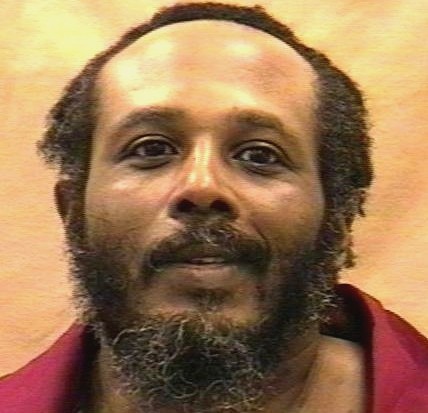
Guy Tobias
LeGRANDE
Classification: Murderer
Characteristics:
Murder for hire
Number of victims: 1
Date of murder:
July 27,
1983
Date of birth: 1949
Victim profile: Ellen
Munford
Method of murder:
Shooting
Location: Stanley
County, North Carolina, USA
Status: Sentenced to death on April 26, 1996. Declared mentally incompetent to be executed on
July 1, 2008
Chronology of Events
01/25/2007 - Superior
Court Judge Robert Bell extends the stay until March 5 for doctors to
complete mental competency evaluations.
11/27/2006 -
Superior Court Judge Robert Bell delayed LeGrande's execution for at
least two months, after which he will hold hearings to evaluate his
mental competency.
10/13/2006 - Execution
date is set for Guy Tobias LeGrande.
10/2/2006 - U.S.
Supreme Court denies defendant LeGrande's petition for Write of
Certiorari to review the decision of the U.S. Fourth Circuit Court of
appeals, dismissing his appeal following completion of initial state and
federal post-conviction proceedings.
07/24/1997 - The North
Carolina Supreme Court affirms defendant LeGrande's conviction and
sentence of death.
04/26/1996 – LeGrande,
47, was sentenced to death in Stanley County Superior Court for the
first-degree murder of Ellen Munford, with a consecutive sentence of
nine years for conspiracy to commit first-degree murder.
Guy Tobias LeGrande
On July 27, 1993,
Guy Tobias LeGrande entered the home of Ellen Munford and shot her
twice in the back, killing her.
LeGrande was 34 and
worked with the victim's husband, Tommy Munford, at Jay's Downtowner
Restaurant in Albermarle. Tommy Munford and LeGrande conspired to kill
Ellen Munford. Munford and Ellen had been estranged for two years.
At the time of the
murder, Ellen was living with another man. Munford had repeatedly
harassed Ellen and trespassed on the property where she was living with
her new boyfriend.
Munford told numerous
people that he wanted to "do in" the victim. Munford took out a life
insurance policy in the amount of $50,000 on Ellen's life, naming
himself as the sole beneficiary. He promised to pay LeGrande $6,500 if
LeGrande would kill Ellen Munford.
On the day of the
murder, Munford arranged to take his and Ellen Munford's two children to
the beach so that she would be alone in the house.
Prior to picking up the
children, Munford dropped LeGrande off in the woods next to Ellen's
house. LeGrande was carrying a shotgun. As Munford left Ellen's house,
he blew his horn to signal to LeGrande that Ellen was alone. LeGrande
watched Ellen Munford for hours from the woods before he entered her
home and killed her.
Following the murder,
LeGrande bragged to a friend about having "capped that ass." Tommy
Munford was sentenced to life plus twenty years in prison.
There are many claims
on the internet about LeGrande being mentally ill, however, an appellate
court found that he had attended college, was an aircraft mechanic,
worked for the post office for six years, and was described as a "very
intelligent young man."
LeGrande insisted on
representing himself and during his sentencing testimony, called the
jurors the "antichrists" and declared that they could "kiss his natural
black ass in the window of Heilig-Meyers," that they could "pull the
switch and let the good times roll," and that he would meet them in hell
where they would be required to worship him.
The competency
evaluation found that LeGrande did not appear to have a serious mental
disorder, such as schizophrenia or bipolar disorder. Although at times
he appeared hypomanic, he seemed to be able to control his behavior when
he so desired. LeGrande also demonstrated characteristics of a
personality disorder with antisocial and narcissistic features.
Death Row inmate Guy LeGrande
declared mentally incompetent to be executed
July 1, 2008
ALBEMARLE, NC – As North Carolina and the nation are
beginning to recognize the inhumanity and unconstitutionality of
executing the mentally ill, a superior court judge in Stanly County
today ruled that death row inmate Guy LeGrande is too mentally ill to
face the ultimate punishment.
Serving as his own lawyer, wearing a Superman t-shirt and communicating
with Oprah through the television, Guy LeGrande was sentenced to death
in 1996 in Stanly County for his role in the murder for hire plot
masterminded by the victim’s husband.
LeGrande, a Black man, was tried before an all-White jury by the
District Attorney’s office that handed out gold noose lapel pins when
the attorneys won a death verdict. The victim was white, as was her
husband, the mastermind.
“This
order addresses only one of the injustices in this case,” said
LeGrande’s attorney Jay Ferguson. “If the Legislature enacts the Racial
Justice Act, the courts can examine serious issues, such as why
prosecutors excluded every African-American citizen from Mr. LeGrande’s
jury, and why they chose to prosecute the less culpable, mentally ill
Black man for death, while giving a life saving deal to the White
mastermind.”
LeGrande rambled incoherently during his trial, cursed the jury and
called them “Antichrists.” In his testimony to the jury, he told them
that “[h]ell ain’t deep enough for you people. But you remember when
you arrive, say my name, Guy Tobias LeGrande. For I shall be waiting.
And each and every one of you will be mine for all eternity. And we
shall dance in my father’s house. And you will worship me and proclaim
me Lord and master. But for right now, all you so-called good folks can
kiss my natural black ass in the showroom of Helig Meyers. Pull the
damn switch and shake that groove thing.”
“Guy
LeGrande was delusional at the time of the crime, he was delusional
while representing himself in his own trial for his life, and he is
delusional today,” said Ferguson. “The court has finally stepped in and
halted a colossal miscarriage of justice, the execution of a seriously
mentally ill man.” LeGrande is also represented by attorney James
Monroe.
LeGrande was scheduled to be executed on December 1, 2006, until Judge
Robert Bell stayed the execution in order to evaluate LeGrande’s
competency. Judge Bell heard from three mental health experts during a
two-day hearing in June. One expert was hired by the State, one by the
defense, and one served as the Court’s expert. Both the Court’s and the
defense’s experts found LeGrande mentally ill and incompetent, while the
State’s expert found him mentally ill but competent.
The
Court’s expert, a Dorothea Dix psychiatrist who previously had never
found a death row inmate too mentally ill to proceed, could not conclude
that LeGrande was competent. The expert cited LeGrande’s belief,
written in a letter to his sister, that “my pardon is coming through and
I’m getting three billion dollars” as evidence of his delusional
disorder. In the Court’s expert’s opinion, LeGrande’s delusional
disorder “interfere[s] with his appreciation of the nature and object of
the proceedings against him.”
“Execution is to be reserved for the worst crimes and the most culpable
offenders,” said Triangle psychiatrist Holly Rogers. “Both the mental
health and legal communities are asserting that seriously mentally ill
offenders, like Mr. LeGrande, simply cannot understand the consequences
of their actions enough to make the death penalty a just punishment.”
Recently the American Psychological Association, the American
Psychiatric Association, The National Alliance for the Mentally Ill, and
the American Bar Association called for changes in the law, to ensure
people with serious mental illness are not executed. A bill was
introduced in the North Carolina General Assembly last year that would
exempt the seriously mentally ill from capital punishment. Other states
have also introduced bills and are considering the issue.
An
April 2007 poll found that a majority of North Carolinians believe that
mentally ill offenders should not be subject to execution.