Murderpedia has thousands of hours of work behind it. To keep creating
new content, we kindly appreciate any donation you can give to help
the Murderpedia project stay alive. We have many
plans and enthusiasm
to keep expanding and making Murderpedia a better site, but we really
need your help for this. Thank you very much in advance.
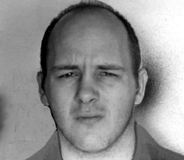
Myron
LANCE
Classification:
Spree killer
Characteristics: Robberies
- Rape
Number of victims: 6
Date of murder:
December 17-21, 1966
Date of arrest:
December 21, 1966
Date of birth:
1941
Victim profile:
Stephen Shea, 18 /
Michael Holtz /
Grant Strong /
James Sizemore, 47; Beverly Mace,
34, and Fred William Lillie, 20
Method of murder: Stabbing
with knife -Shooting
Location: Salt Lake County, Utah, USA
Status:
Sentenced to death. Commuted
to life imprisonment after the U.S. Supreme Court ruled the death
penalty unconstitutional on February 25, 1977. Died in prison on
August 29, 2010
Myron Lance — who was serving
a life prison sentence for his part in a 1966 crime spree that claimed
the lives of six people — died Monday morning of natural causes at
University Hospital.
Lance, of Salt Lake City, was
69.
He was 25 years old on Dec.
17, 1966, when he teamed up with fellow parolee Walter Kelbach, 28, of
Racine, Wis., to begin a five-day spate of killing that began with the
abduction of a Kearns service station attendant.
The nude body of Steven Shea,
18, was found the next day on a dirt road in Tooele County. He had
been stabbed five times.
On Dec. 18, Michael Holtz,
18, was abducted from a Salt Lake City service station. He was stabbed
five times and his nude body was dumped near a highway in Summit
County.
The killers took less than
$300 from the two service stations.
On Dec. 21, cab driver Grant
Creed Strong was found shot in the back of the head at the Salt Lake
City Municipal Airport.
About 30 minutes later, Lance
and Kelbach entered Lally’s Tavern in Salt Lake and began shooting.
Bar patrons Fred W. Lillie,
20, James Sizemore, 47, and Beverly Mace, 34, were shot dead. A third
patron, Verl Leon Medas, was wounded but recovered.
Lance and Kelbach were
apprehended about three hours later at a police roadblock in Parleys
Canyon.
Convicted by a jury of first-degree
murder for the deaths of Sizemore and Lillie, the two were sentenced
to die.
But their death sentences
were commuted to life terms in 1972 when the U.S. Supreme Court ruled
the death penalty unconstitutional.
In 1992, Lance and Kelbach
appeared before the Utah Board of Pardons and Parole.
When parole board member
Michael Sibbett asked what Lance would do in his shoes, he responded,
“I don’t see how you could ever let me out.”
The parole board did decide
that the pair should “spend their natural life in prison.”
The board said the “extremely
aggravating factors of intentional, premeditated criminal activity
that caused the death of multiple vulnerable victims during a five-day
period cannot be mitigated on the scale of justice to support parole
for either Mr. Lance or Mr. Kelbach."
Department of Corrections
spokesman Steve Gehrke said Lance was taken from the prison to the
hospital on Aug. 15.
Meanwhile, Kelbach, 72,
remains incarcerated at the state prison in Gunnison, Gehrke said.
Walter Kelbach and Myron Lance
Walter Kelbach, 28, and 25-year-old Myron Lance
had many things in common. Both were veterans of prison and aggressive
homosexuals, each given to abuse of drugs and alcohol. Above all else,
they shared a fondness for inflicting pain -- and, ultimately, death
-- on fellow human beings.
In December 1966, their twisted passion claimed five
lives in Salt Lake City, Utah, touching off a local reign of terror.
On December 17, hopped up on pills and wine, the duo stopped for gas
at a service station where 18-year-old Stephen Shea was working the
night shift alone. Impulsively, the "customers" drew weapons, robbing
Shea of $147, forcing him into the back of their station wagon and
driving him into the desert. There, Shea was ordered to strip, and was
raped by both Kelbach and Lance. Afterward, a coin was tossed to see
who would receive the "honor" of eliminating Shea.
The winner -- Kelbach -- plunged a knife into his
victim's chest five times and left the body Iying on a lonely desert
road. Repeating their performance on the eighteenth of December, Lance
and Kelbach kidnapped Michael Holtz, the night attendant at another
Salt Lake City filling station.
Raped by both of his abductors, Holtz was forced to
watch while coins were tossed to choose his executioner. Lance won,
this time, and stabbed his victim once in the heart with the same
stiletto used on Stephen Shea. December 21. The killers changed their
modus operandi flagging down a taxi driver named Grant Strong,
directing him to Salt Lake City's airport.
On the way, Strong stopped off at the taxi barn to tell
his supervisor that he didn't trust his latest fares. It was decided
Strong should click his microphone transmitter switch in case of any
trouble, and he flashed the signal moments later, after Kelbach drew a
gun and pressed it to his skull, demanding money. Strong surrendered
all his cash on hand -- nine dollars -- but his captors were not
seriously interested in robbery.
Police and fellow cabbies were converging on the scene
when Kelbach put a bullet through his victim's brain. "I just pulled
the trigger and blood flew everywhere," he later told an NBC reporter.
"Oh boy! I never seen so much blood!" Police found Strong a short time
later, Iying dead inside his cab. By that time, Lance and Kelbach had
arrived at Lolly's Tavern, near the airport, acting casual as they
perused the bar for further victims.
Kelbach tinkered with a pinball game while Lance walked
up behind a patron, 47-year-old James Sizemore, and coolly shot him in
the head, immediately ordering the manager to empty out his till.
Pocketing $300 from the cash register, Lance and Kelbach turned their
pistols on the bartender and his four surviving customers; Fred Lillie
and Beverly Mace were killed where they stood, three other human
targets feigning death until the manic marksmen took their leave.
As Lance and Kelbach left, the manager retrieved a
pistol from behind the bar and opened fire; he scored no hits, but
panicked his assailants, and they fled on foot.
Retrieving their car, both gunmen were captured at a
roadblock several hours later. Convicted on five counts of murder,
Kelbach and Lance were sentenced to death, their penalties commuted to
life imprisonment after the U.S. Supreme Court ruled the death penalty
unconstitutional .
As lifers, Lance and Kelbach are theoretically eligible
for parole. It is a prospect that concerns the residents of Utah, and
the common fear was spread from coast to coast in 1972, after Kelbach
was tapped for an interview by NBC News, on a televised program
entitled Thou Shalt Not Kill. "I haven't any feelings toward the
victims," Walter told his audience of millions, grinning for the
camera. "I don't mind people getting hurt because I just like to watch
it."
Michael Newton - An Encyclopedia of Modern Serial
Killers - Hunting Humans
Kelbach & Lance
Ex-convicts Walter Kelbach (aged twenty-eight) and
Myron Lance (aged twenty-five) were cousins and gay lovers. On the
night of December 17th, 1966, the two homosexuals got high on drugs
and drove to a gas station in Salt Lake City. They robbed its
attendant of $147.00 at gunpoint; forced him into the back seat of
their station wagon and drove into the desert. Their victim was forced
to perform sex acts and sodomised; after the perverts were sated, they
flipped a coin to decide which of them would kill him. Kelbach won; he
stabbed him repeatedly and threw the body into a roadside ditch.
Victim number two was Michael Holtz - another lone
filling station worker. He was abducted, violated and murdered in the
same way - this time both Kelbach and Lance did the killing. The
Police realised that the two crimes were connected and issued a city-wide
order that all gas stations should be closed at nightfall.
The anti-social duo changed their methods. On
December 21st, Kelbach and Lance got into the back seat of a taxi
belonging to Grant Creed Strong. The driver became wary because his
passengers exchanged sly glances and grinned wolfishly at each other.
Strong radioed the dispatcher and discreetly said that if he
encountered problems, he would press his microphone talk-button twice.
As the taxi arrived at the requested destination, Lance pulled a gun
and demanded all the driver’s money - but that amounted to just $9.00.
Lance was angry and he shot Strong through the head.
The killers moved on to Lolly's Tavern, near the
city’s airport. They intended to make up for the low profit gained
from robbing Grant Strong.
In the bar, they produced their weapons and shouted
to the amazed patrons that it was a stickup. To show that they were
serious, Lance shot James Sizemore (aged forty-seven) through the head
- apparently choosing him at random. The gunmen snatched $300.00 from
the cash register and fired a stream of bullets into the bar as they
left. Beverly Mace (aged thirty-four) and Fred William Lillie (aged
twenty) were both killed. Kelbach and Lance fled and managed to
acquire transport - but the police acted swiftly and they were
arrested at a roadblock
Charged with first-degree murder, a judge and jury
needed little time to arrive at a guilty verdict and sentence them to
death. However, the Supreme Court set aside capital punishment and the
pair were spared the supreme penalty of the Law. Neither Kelbach or
Lance have ever expressed any remorse. Lance coldly stated: "I haven't
any feelings towards the victims,"; Kelbach added: "I don't mind
people getting hurt because I just like to watch it."
Usersites.horrorfind.com
Supreme Court of Utah
April 12, 1994
WALTER B. KELBACH, PLAINTIFF AND APPELLANT,
v.
O. LANE MCCOTTER, DIRECTOR, UTAH DEPARTMENT OF CORRECTIONS, DEFENDANT
AND APPELLEE
Third District, Salt Lake County. The Honorable Kenneth Rigtrup
Walter B. Kelbach, Draper, pro se.
Jan Graham, Att'y Gen., J. Frederic Voros, Jr., Asst. Att'y Gen., Salt
Lake City, for defendant.
Zimmerman, Stewart, Howe, Durham, Russon
The opinion of the court was delivered by: Zimmerman
ZIMMERMAN, Chief Justice :
Walter B. Kelbach appeals from the district court's dismissal of his
petition for a writ of habeas corpus. Kelbach claims that he is
entitled to the writ on three grounds: (i) he was denied the right to
be tried before a representative jury; (ii) the trial court "lost
jurisdiction" over him because it did not immediately resentence him
to life imprisonment after the United States Supreme Court vacated his
death sentence; and (iii) he was improperly sentenced to life
imprisonment under a penalty provision not in effect at the time he
committed the murders. We affirm.
On December 21, 1966, Kelbach and his companion, Myron Lance, entered
a Salt Lake City tavern. A few minutes later, a patron heard a shot
and observed Kelbach holding a gun. At about the same time, Lance shot
James Sizemore in the head, turned to the bartender, and said, "This
is a stick-up." The bartender placed the cash drawer on the bar, and
Lance removed the money. Immediately thereafter, a fusillade of shots
resounded through the tavern. Patrons Fred Lillie and Beverly Mace
died of gunshot wounds; another patron was wounded. Kelbach and Lance
fled but were arrested at a roadblock a few hours later. After his
arrest, Kelbach was charged with the murders of Sizemore and Lillie.
He was convicted of murder in the first degree and sentenced to death.
Kelbach appealed his conviction and death sentence, and this court
affirmed. State v. Kelbach, 23 Utah 2d 231, 240, 461 P.2d 297, 303
(1969), vacated in part, 408 U.S. 935 (1972). While Kelbach's appeal
was pending before the United States Supreme Court, that Court
declared unconstitutional a death penalty provision similar to Utah's.
Furman v. Georgia, 408 U.S. 238, 33 L. Ed. 2d 346, 92 S. Ct. 2726
(1972). Thereafter, the United States Supreme Court vacated Kelbach's
death sentence and remanded his case to this court. Kelbach v. Utah,
408 U.S. 935, 33 L. Ed. 2d 751, 92 S. Ct. 2858 (1972). This court
remanded the case to the district court for further proceedings. State
v. Lance, 559 P.2d 543, 543 (Utah 1977). On February 25, 1977, the
district court sentenced Kelbach to two consecutive sentences of life
imprisonment. Kelbach did not appeal the reduction of his sentence
from death to life imprisonment.
Kelbach took no further action with regard to his sentence until
November 16, 1992, at which time he moved to modify his sentence.
After the district court denied his motion, Kelbach filed the instant
petition for a writ of habeas corpus.
*fn1 On May
10, 1993, the district court granted the State's motion to dismiss,
concluding that each of Kelbach's claims was procedurally barred or,
in the alternative, without merit.
"'In considering an appeal from a dismissal of a petition for a writ
of habeas corpus, no deference is accorded the lower court's
Conclusions of law that underlie the dismissal of the petition. We
review those for correctness.'" Gerrish v. Barnes, 844 P.2d 315,
318-19 (Utah 1992) (quoting Fernandez v. Cook, 783 P.2d 547, 549 (Utah
1989)).
Kelbach challenges his incarceration, claiming that the jury which
convicted him was chosen through a discriminatory and constitutionally
improper procedure. We conclude that Kelbach waived the right to
challenge his conviction on this basis when he failed to object to the
composition of the jury at trial.
At the time Kelbach was tried for murder, Salt Lake County utilized a
jury selection procedure that limited jury service to real property
holders. See Leggroan v. Smith, 498 F.2d 168, 170 (10th Cir. 1974). In
1974, the United States Court of Appeals for the Tenth Circuit struck
down this selection procedure as unconstitutional. Id. at 171. Kelbach
now asserts that based on Leggroan, he was denied a fair and impartial
jury.
Kelbach's reliance on Leggroan is misplaced. The Leggroan court made
the scope of its decision clear:
Our decision is so limited in scope . . . that its effects will be
minimal. It applies only to those persons convicted in Salt Lake
County during the period of time the improper jury selection system
was used, and is further limited to persons who timely objected to
their jury panel, because a defendant, by accepting a jury, waives his
right to object to the panel.
Id. (citations omitted). Kelbach failed to object to the composition
of his jury. Thus, as the district court properly concluded, Kelbach
is not entitled to any relief under Leggroan. Even if there were merit
to his Leggroan claim, Kelbach failed to assert that claim on direct
appeal, Kelbach, 461 P.2d at 297, and is barred from raising it here.
Kelbach also asserts that the district court lacked jurisdiction to
resentence him to life imprisonment after the Supreme Court vacated
his death penalty. In so asserting, he relies on section 77-35-1 of
the Code, which provides:
After a plea or verdict of guilty, or after a verdict against the
defendant on a plea of a former conviction or acquittal or once in
jeopardy, if the judgment is not arrested or a new trial granted, the
court must appoint a time for pronouncing judgment, which must be at
least two days and not more than ten days after the verdict.
Utah Code Ann. § 77-35-1 (1953). Kelbach alleges that his sentence is
void because the district court lost jurisdiction to resentence him
when it failed to act within the time limits set out in section
77-35-1.
Kelbach's jurisdictional claim is without merit. As our opinion in
State v. Fedder makes clear, the time fixed by section 77-35-1 is not
jurisdictional. 262 P.2d 753, 754-55 (Utah 1953). Instead, those time
limits are "merely directory." Fedder, 262 P.2d at 755; see also Rose
v. District Court, 67 Utah 526, 248 P. 486, 488 (Utah 1926) (failure
to object to delay in pronouncing judgment is a waiver of any
objection to delay). Accordingly, his jurisdictional claim is without
merit.
Finally, Kelbach asserts that he was improperly sentenced to life
imprisonment under a penalty provision not in effect at the time he
committed the murders. Because he failed to raise this issue on direct
appeal when he had the opportunity to do so, he is barred from raising
it through an extraordinary writ.
It is "well settled in this state that allegations of error that could
have been but were not raised on appeal from a criminal conviction
cannot be raised by habeas corpus or postconviction review, except in
unusual circumstances." Codianna v. Morris, 660 P.2d 1101, 1104 (Utah
1983). Furthermore, "an unjustified failure to raise an issue on
appeal presents a steep obstacle for the petitioner. In such a
situation, the petitioner must present some special reason why the
rule should not apply: he or she must demonstrate that it would be 'wholly
unconscionable not to reexamine the conviction.'" Gerrish, 844 P.2d at
319 (quoting Martinez v. Smith, 602 P.2d 700, 702 (Utah 1979)).
Kelbach did not challenge his life sentence through direct appeal in
1977 as he was entitled to do. Instead, he waited fifteen years to
bring a habeas petition. Furthermore, he has neither alleged nor
demonstrated any "unusual circumstance" or "special reason" that
justifies his failure to raise this issue on appeal. Codianna, 660
P.2d at 1104; Gerrish, 844 P.2d at 319. Nor has he presented this
court with any other argument relating to why this claim is not
subject to the waiver rule set out in Codianna and Gerrish. Therefore,
we hold that this claim is procedurally barred. See Bundy v. DeLand,
763 P.2d 803, 804 (Utah 1988).
The judgment of the district court dismissing Kelbach's petition for
an extraordinary writ seeking habeas corpus relief is affirmed.
WE CONCUR:
I. Daniel Stewart, Associate Chief Justice
Richard C. Howe, Justice
Christine M. Durham, Justice
Leonard H. Russon, Justic
Opinion Footnotes
*fn1
Although Kelbach filed a "Petition for a Writ of Habeas Corpus," the
trial court considered the petition a request for extraordinary relief
and treated it under rule 65B of the Utah Rules of Civil Procedure.