Murderpedia has thousands of hours of work behind it. To keep creating
new content, we kindly appreciate any donation you can give to help
the Murderpedia project stay alive. We have many
plans and enthusiasm
to keep expanding and making Murderpedia a better site, but we really
need your help for this. Thank you very much in advance.
Method of murder: Stabbing
with knives or ice picks
Location: Cook County, Illinois, USA
Status: Executed
by lethal injection in Illinois on March 17,
1999
Illinois executes mutilation
murderer
Man Was Accused in 18 Ritual Killings
March 17, 1999
TAMMS, Illinois (AP) -- A man accused of taking part
in the kidnappings, rapes and mutilation murders of 18 women was
executed by injection early today.
Andrew Kokoraleis, 35, sighed three times, licked his
lips and appeared to be speaking quietly to himself before he died.
He was sentenced to death for one of the killings --
the 1982 murder of Lorraine Ann Borowski, 21, who was abducted on her
way to work at a real estate office. Her mutilated body was found in a
cemetery.
Defense attorneys unsuccessfully argued that
Kokoraleis was coerced into confessing. They also argued that new
information cast doubt on the credibility of confessions by two co-defendants
who accused Kokoraleis.
The execution comes against a backdrop of renewed
debate over the death penalty in Illinois, prompted largely by the
exoneration of two condemned inmates last month alone.
In this case, the discussion was muted by the
horrifying details of what authorities say was his role in a cult blamed
for the killings of as many as 18 Chicago-area women in the early 1980s.
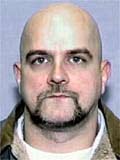
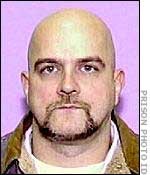
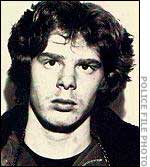
Andrew KOKORALEIS
Andrew Kokoraleis
was convicted of a ritualistic mutilation and murder in DuPage
County.
Kokoraleis, of
Villa Park, Illinois, was one of the "Ripper" killers who police
say kidnapped, raped, tortured, murdered and mutilated as many as 18
Chicago-area women in 1981 and 1982 and was convicted in 1987 for
the murder of Lorraine Borowski, 21, of Elmhurst.
He filed numerous
appeals of his death sentence, but all were rejected, including a
request to the U.S. Supreme Court to hear his case.
Kokoraleis, his
brother and 2 friends are believed responsible for up to 17 cult-like
mutilation deaths in DuPage and Cook Counties.
In some cases the
gang -- Kokoraleis, his brother Tommy, Edward Spreitzer and
ringleader Robin Gecht -- cannibalized their victims.
"I've done many
homicide cases and I'd never heard of anything so horrendous in my
life," said Elmhurst Police Chief John Millner, who was a detective
and polygraph expert who took the November 1982 confession of Tommy
Kokoraleis. "He talked about raping the women, stabbing the women,
having sex with the knife wounds, cutting their breasts off to leave
what he called 'Robin's mark.'"
Gecht, 46, is
serving 120 years for attempted murder, rape, kidnapping and deviate
sexual assault. Spreitzer, 38, was sentenced to death for murder.
Tommy Kokoraleis, 38, got 70 years for murder.
Lorraine was beaten,
mutilated and stabbed after she was abducted on May 15, 1982, as she
was entering the real estate office where she worked. Her body was
found 5 months later on the property of a cemetery near Darien.
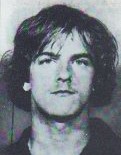
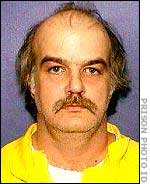
Andrew
Kokoraleis, Tommy Kokoraleis, Robin Gecht & Edward Spreitzer
It was a
case with all the grisly drama of a Hollywood production. A serial
slayer, predictably dubbed "Jack the Ripper" by newsmen, was stalking
young women in Chicago and environs, discarding their mutilated corpses
like so much cast-off rubbish. Homicide detectives had no inkling of the
killer's motive or identity; they couldn't even manage to agree upon a
body-count. The speculation published daily in Chicago's press was bad
enough; the truth, when finally exposed, was infinitely worse.
On May
23, 1981, 28-year-old Linda Sutton was abducted by persons unknown from
Elmhurst, a Chicago suburb. Ten days later, her mutilated body -- the
left breast missing -- was recovered from a field in Villa Park,
adjacent to the Rip Van Winkle Motel. The evidence suggested Sutton had
been kidnapped by a sadist, but police had nothing in the way of solid
clues.
A year
would pass before the next acknowledged victim in the series
disappeared. On May 15, 1982, 21-year-old Lorraine Borowski was
scheduled to open the Elmhurst realtor's office where she worked.
Employees turning up for work that morning found the office locked,
Borowski's shoes and scattered contents from her handbag strewn outside
the door.
Police were called at once, but five more months elapsed
before her corpse was found, on October 10, in a cemetery south of Villa
Park. Advanced decomposition left the cause of death a mystery.
Two weeks
later, on May 29, Shui Mak was reported missing from Hanover Park, in
Cook County, her mutilated body recovered at Barrington on September 30.
On June 13, prostitute Angel York was picked up by a "john" in a van,
handcuffed, her breast slashed open before she was dumped on the
roadside, alive. Descriptions of her attacker had taken police nowhere
by August 28, when teenage hooker Sandra Delaware was found stabbed and
strangled to death on the bank of the Chicago River, her left breast
neatly amputated.
Rose Davis, age 30, was in identical condition when
police found her corpse in a Chicago alley, on September 8. Three days
later, 42-year-old Carole Pappas, wife of the Chicago Cubs' pitcher,
vanished without a trace from a department store in nearby Wheaton,
Illinois.
Detectives got the break they had been waiting for October 6.
That morning, prostitute Beverly Washington, age 20, was found nude and
savaged beside a Chicago railroad track. Her left breast had been
severed, the right deeply slashed, but she was breathing, and emergency
treatment would save her life. Hours later, in a seemingly unrelated
incident, drug dealer Rafael Torado was killed, a male companion
wounded, when the occupants of a cruising van peppered their phone booth
with rifle fire.
Two weeks
later, on October 20, police arrested unemployed carpenter Robin Gecht,
age 28, and charged him with the cruel assault on Beverly Washington.
Also suspected of slashing prostitute Cynthia Smith before she escaped
from his van, Gecht was an odd character, once accused of molesting his
own younger sister. Authorities immediately linked him with the "Ripper"
slayings, but they had no proof, and he made bail October 26.
Meanwhile, detectives had learned that Gecht was one of four men who
rented adjoining rooms at Villa Park's Rip Van Winkle Motel, several
months before Linda Sutton was murdered nearby. The manager remembered
them as party animals, frequently bringing women to their rooms, and he
surprised investigators with one further bit of information.
The men had
been "some kind of cultists," perhaps devil-worshippers. Two of the Rip
Van Winkle tenants -- brothers Thomas and Andrew Kokoraleis -- had been
kind enough to leave a forwarding address, for any mail they might
receive. Police found 23-year-old Thomas at home when they called, and
his inconsistent answers earned him a trip downtown.
The suspect
promptly failed a polygraph examination, cracking under stiff
interrogation to describe the "Satanic chapel" in Gecht's upstairs
bedroom, where captive women were tortured with knives and ice picks,
gang-raped, and finally sacrificed to Satan by members of a tiny cult
including Gecht, the Kokoraleis brothers, and 23-year-old Edward
Spreitzer.
As described by the prisoner, cultic rituals included
severing one or both breasts with a thin wire garrote, each celebrant
"taking communion" by eating a piece before the relic was consigned to
Gecht's trophy box. At one point, Kokoraleis told detectives, he had
counted fifteen breasts inside the box. Some other victims had been
murdered at the Rip Van Winkle, out in Villa Park. He picked a snapshot
of Lorraine Borowski as a woman he had picked up, with his brother, for
a one-way ride to the motel.
Police
had heard enough. Armed with search and arrest warrants, they swept up
Robin Gecht, Ed Spreitzer, and 20-year-old Andrew Kokoraleis on November
5, lodging them in jail under $1 million bond.
A search of Gecht's
apartment revealed the Satanic chapel described by Tom Kokoraleis, and
lawmen came away with a rifle matched to the recent Torado shooting.
Satanic literature was also retrieved from the apartment occupied by
Andrew Kokoraleis.
With their suspects in custody, authorities
speculated that the gang might have murdered 18 women in as many months.
Tom Kokoraleis was charged with the slaying of Lorraine Borowski on
November 12, formally indicted by a grand jury four days later. Brother
Andrew and Edward Spreitzer were charged on November 14 with the rape
and murder of victim Rose Davis.
When the mangled body of 22-year-old
Susan Baker was found on November 16, at a site where previous victims
had been discarded, police were worried that other cult members might
still be at large. No charges were filed in that case, however, and
authorities now connect Baker's death with her background of drug and
prostitution arrests in several states.
Facing
multiple charges of attempted murder, rape, and aggravated battery,
Robin Gecht was found mentally competent for trial on March 2, 1983. His
trial opened on September 20, and Gecht took the witness stand next day,
confessing the attack on Beverly Washington. Convicted on all counts, he
received a sentence of 120 years in prison.
Tom Kokoraleis had suffered
a change of heart since confessing to murder, attorneys seeking to block
the reading of his statements in forthcoming trials, but on December 4,
1983, the confessions were admitted in evidence.
Meanwhile, on April 2,
1984, Ed Spreitzer pled guilty on four counts of murder -- including
victims Davis, Delaware, Mak and Torado. Sentenced to life on each
count, he received additional time on conviction for charges of rape,
deviant sexual assault, and attempted murder.
Tom
Kokoraleis was convicted of Lorraine Borowski's murder on May 18, 1984.
While awaiting sentencing, he led police to a field where Carole Pappas
was allegedly buried, but searchers could find no remains. On September
7, the killer's helpful attitude was rewarded with a sentence of life
imprisonment.
Eighteen days later, Kokoraleis, his brother, and Ed
Spreitzer were indicted for the murder of Linda Sutton. Andrew
Kokoraleis and Spreitzer were also named in a second indictment,
covering the murder of Lorraine Borowski.
On February 6, 1985, a
statement from Andrew Kokoraleis was read to the jury in his trial for
the Davis murder. In his confession, the defendant admitted he was
"cruising" with fellow cultists Gecht and Spreitzer when they kidnapped
Davis, with Andrew stabbing her several times in the process. Convicted
on February 11, he received his death sentence on March 18.
A year
later, on March 4, 1986, Edward Spreitzer was convicted of murdering
Linda Sutton, formally sentenced to death on March 20. Authorities
declared that Spreitzer had agreed to testify against Gecht in that
case, but at this writing no further charges have been filed in
Chicago's grim series of cannibal murders.
FrancesFarmerRevenge.com
The
Chicago Rippers
By
Katherine Ramsland
First Inkling of Horror
On June 1, 1981, it was raining when three detectives went to check on a
call about a corpse discovered at the Moonlit Hotel in Villa Park, an
outlying area of Chicago. It wasn't a surprise to receive such a call,
since this hotel, located among junky shops, bars, and fast-food places,
was known for its shady characters. It was rumored to be a place where
you could meet someone for quick sex or to find a drug fix.
A hotel
maid first brought the grisly discovery to someone's attention. Jaye
Slade Fletcher, a Chicago police officer and author of true crime
articles, collected the available information on the case in Deadly
Thrills. She describes how the maid reported a terrible odor from
somewhere near the hotel that grew worse by the day. The Moonlit's
manager walked out into a trash-strewn field behind the hotel to see
what he could do to get rid of it. There he found the source of the
smell, which was not, as he had expected, a dead animal. It was a young
woman, whose remains consisted largely of bones and some clinging flesh.
He turned around immediately and called the police.
Three detectives arrived and they could see that this victim had been
there a while. Quite a while. In fact, she was so decomposed that they
could see her skeletal structure, but the maggots were still there,
doing their work—an unusual combination of postmortem characteristics.
The woman clearly had been murdered, because she had been bound with
handcuffs before being left here—probably before she had died. She also
had cloth in her mouth used as a gag, and still wore a sweater and
panties, but they had been pulled down to her thighs. In her socks was a
small wad of dollar bills, so robbery had not been a motive.
The key issue at
the moment was to first establish the corpse's identity, and then figure
out the time interval from the moment of her discovery to the moment she
had died. In the condition this body was in, that would be difficult. In
those days, there was no Body Farm, an institution set up in Knoxville,
Tennessee to help establish time of death, for remains like this. In
fact, the best information they had at that point about such estimations
was mostly anecdotal. Only an expert could
offer an answer.
Investigators also
needed to establish whether this was the primary crime scene, where she
had been killed, or rather a secondary scene, where she had been dumped
after she was dead. The fact that no one had yet reported the body
indicated that it might not have been here long. However, that
possibility implied that whoever had killed her was able to tolerate
decomposing remains long enough to carry them and place them here. One
thing the detectives knew they could check was the soil beneath her
body, to determine whether body fluids had leached into it.
But there was no
use trying to analyze the situation at the moment. They had to deliver
the body to the deputy coroner, Pete Siekman, so that he could attempt
to determine the cause and manner of death, as well as take fingerprints
and teeth impressions to compare to records, if they existed. Then they
could stake out the scene and start searching for evidence.
A search of missing
persons reports turned up no leads, so detectives called the
Chicagodepartment, who told them that the practice of rolling money
inside socks probably indicated that the victim had been a hooker. That
made the process of identifying her much more difficult. But the
fingerprints and dental records helped, and in less than two weeks, they
had an ID: Linda Sutton, 21. As they had suspected, she proved to be a
prostitute with a string of arrests. She was also the mother of two
children, both of whom lived with Sutton's mother.
But a twist in the
case came from the coroner: Despite the advanced state of decomposition
of the body, he had determined that she had been dead for only three
days. The remains' advanced rate of decomposition was due to two rather
large wounds to her chest where her breasts had been removed, which had
allowed for an invasion of parasites that had devoured the body in
record time. This woman had been brutally assaulted and mutilated.
And she was not to
be the last one to be found.
A String of Murders
A
thirty-five-year-old cocktail waitress was abducted from her car on
February 12, 1982. The gauge showed that the tank was empty, implying
that she had run out of gas and possibly sought help when she was
abducted. Her purse was on the front seat and the keys were still in the
ignition. A search turned up her nude body on an embankment near the
road. She had been raped, tortured and mutilated. The press was asked
not to report that her breast had been amputated, according to Bill
Kelly in Homicidal Mania, so that the police could retain that
detail for interrogation purposes.
A few days later,
the body of a Hispanic woman wearing an engagement ring was discovered.
She had also been raped and strangled. While her breasts were not
removed, they had been badly bitten. Her killer had also masturbated
over her body. A psychiatric assessment of this crime pegged the
attacker as a local man who probably loved animals and had a family. He
also had a dark side that no one knew, turning into a cruel psychopathic
murderer at night.
In May, according
to Amanda Howard and Martin Smith in Rivers of Blood, another
young woman, Lorraine Borowski (Fletcher calls her Lorry Ann, as her
family had done) was abducted from where she worked as she crossed the
parking lot alone. She was repeatedly raped and then subjected to having
a wire wrapped around her breast to sever it from her body. Finally, one
of her attackers killed her with a hatchet. The woman's remains were
discovered at a dump site which was in the same general area where
Sutton had been dumped, although this time it was in a cemetery known as
Clarendon Hills.
The unknown
attacker did not wait as long for the next assault. Two weeks after
Borowski had been abducted and killed, Shui Mak was abducted on May 29
as she was returning home from her family's restaurant in Streamwood.
She had been riding in her brother's car, but after they argued, he
dropped her off to wait for a ride with other relatives whom he believed
were following behind. They never saw her again, because she was
abducted. Her body was discovered four months later at the end of
August, buried at a construction site, and it, too, had been similarly
mutilated.
The police now had
a number of similar killings to deal with and the link seemed obvious:
young women who all had lost a breast in a similar manner. They had a
difficult time finding any leads, however, until another victim turned
up. But this one, Angel York, had survived, according to Howard and
Smith. She was able to report that two men were using a red van to
abduct women and hold them inside with handcuffs for rape and torture.
They had even forced her to use a large knife to cut her own breast,
which drove one man into a frenzy. He cut her more and then masturbated
into the wound before closing it with duct-tape and dumping her into the
streets. That was in June 1982. She reported what she knew to the
police.
However, they were
unable to stop the men from killing another woman. In August, Sandra
Delaware was found dumped along the side of the Chicago River. Her
wrists were bound together behind her with a shoelace, says Fletcher,
and her left breast had been removed in the same fashion as the prior
victims. A bra was knotted around her throat. She was just a kid, but as
a prostitute, she had been vulnerable. They estimated her death at
approximately six hours earlier.
In less than two
weeks, Carol Pappas, 42, turned up missing, as did Rose Beck Davis, 30,
a marketing executive. She was found stabbed, raped, and strangled on
September 8, 1982 behind a stairway of a North Lake Shore apartment
building. A black sock was tied around her neck and her clothing was in
disarray. Her face was crushed and blood pooled beneath her. It turned
out later that she had been beaten with a hatchet. Deep cuts were
evident on her breasts and her abdomen was full of small punctures.
Robert
Ressler from the FBI's Behavioral Science Unit was asked for a profile.
He indicated that this woman's attacker was uncertain about his
sexuality and was probably bisexual. He expected the man to look
somewhat effeminate.
By October, another
prostitute, Beverly Washington, 20, was grabbed, mutilated, raped, and
dumped. Her abductors had left her for dead, but she survived and was
taken to the hospital. She was able to give the police a description of
the gang of men who were grabbing women off the streets and subjecting
them to an extreme form of sadistic sexual abuse.
Clues
Howard and Smith
state that despite her condition, Beverly Washington managed to provide
the officers with several significant characteristics about the man who
had attacked her. Fletcher provides more detail. The driver had been a
slender white man who looked to be around 25, wearing a flannel shirt
and square-toed boots. He had greasy brown hair and a mustache.
Washington said he had offered more money than she'd asked for and had
seemed unaccountably nervous. When he asked her to get into the back of
the van with him, he had a gun. He ordered her to remove her clothes and
she quickly obeyed. Then he placed handcuffs on her, forced her to
perform oral sex, and threatened her with violence if she did not
swallow the handful of pills he held out to her. As she passed out, she
saw him holding a cord over her, and she feared that she was going to
die.
The man dumped her
into the trash, one breast severed and the other nearly so, but someone
discovered her and called the police. Rushed to the hospital, she was
saved. Police officers who questioned her asked her about the van he was
driving, and she said that it had been red with tinted windows and a
wooden divider inside. She also told them that there were feathers and a
roach clip hanging from the rearview mirror.
Those details
proved to be helpful in making an arrest. Within three weeks, on October
20, 1982 (according to Howard and Smith, while Kelly says November 7 and
Fletcher says October 5), the police pulled over a red van and
questioned the driver. He had red hair and did not resemble the victim's
description, but the van fit it perfectly. The driver told them his name
was Eddie Spreitzer, and that the van belonged to his boss, Robin Gecht.
The officers directed Spreitzer to Gecht's house and had him beckon
Gecht outside. They hoped that he would be their guy, and when he came
out, he did indeed fit the description, down to his shirt and boots. Yet
he acted as if he had no worries at all and was quite willing to help.
Either he was innocent of these crimes or utterly arrogant, confident
that he was untouchable.
Later, the victim
picked Gecht out of a set of photos as the man who had assaulted her,
but when detectives went back to see him, Gecht had a lawyer. It was
clear that he was going to be quite careful in his dealings with the
police, and in fact they found him difficult to shake up. According to
some sources, he had an interesting association with a notorious
criminal from the area, arrested three years earlier in 1979. Chicago,
it seemed, had attracted its share of unusual offenders.
Paraphiliac
Within two weeks,
investigators had linked the other young woman who had survived an
attack similar to that of Beverly Washington with the red van. She had
been forced to cut her breasts with a knife and had been thrown out onto
the streets. The police believed that Gecht and Spreitzer were
responsible for at least three such incidents, but they would soon learn
about more.
At first, Spreitzer
and Gecht did not yield much useful information, but eventually
Spreitzer looked like he would break down. He seemed to be genuinely
afraid of Gecht. Authorities leaned on him and he succumbed, feeling
guilty about what he had done. Spreitzer's
interrogation produced a 78-page statement.
Spreitzer first
admitted to driving the van as Gecht committed a drive-by shooting in
which a man died and another was left paralyzed. Investigators quickly
identified the incident. Then Gecht directed him to slow down to pick up
a black prostitute. Gecht had sex with her and then took her into an
alley and used a knife to remove her left breast. He placed it into the
van on the floor. Spreitzer was quite upset as he spilled out these gory
details, claiming he did not like all the blood. He added that during
such incidents, Gecht sometimes had sex with the breast on the spot. He
also described how Gecht had shot a black woman in the head, chained her
up, and used bowling balls to weight her down in water. He believed that
she had never been found. According to what he told Jennifer Furio in
The Serial Killer Letters years later in prison, he had watched
Gecht batter a woman with a hammer; the sight made him vomit. But on
another woman, he removed the breast himself, cutting off both. He
thought she was dead when he did this, but did not try to find out for
certain. He said that Gecht had forced him to have sexual contact with
the woman's gaping wounds.
By the
time Spreitzer was finished, writes Fletcher, he had offered details for
seven outright murders and one aggravated battery. His interrogators
were shaken by the aberrant nature of the acts, yet they believed they
now had some leverage with Gecht, who was in another interrogation room.
They collected photographs of known victims and laid them before Gecht.
He looked at them without much interest and denied knowing any of the
women featured in them. The detectives then took him to an area where he
could plainly see Spreitzer showing something to other officers, but he
still did not waver. He acted as if he had nothing to hide. Because
Spreitzer had clearly implicated him, the detectives found his behavior
frustrating.
But Gecht's
nearness had an odd effect on Spreitzer. He suddenly changed his story,
as if afraid, and said that Gecht had not murdered anyone. His account
became so chaotic that his interrogators did not know what to believe.
Spreitzer now said that another man, his girlfriend's brother, Andrew
Kokoraleis, had been the killer, but he could not offer many details
about the man. Gecht confirmed that he knew Kokoraleis and even provided
police with an address, but once again, his demeanor was undisturbed. He
seemed not to know things about Kokoraleis that Spreitzer did.
Dismayed, the
police went to question this third member of the killing crew. They
wondered if three men could really kill together in such a horrendous
manner. They did not yet know the half of it.
It wasn't
long before Kokoraleis also confessed. Bill Kelly relates the details:
Kokoraleis talked about how they had kidnapped women off the streets,
raped them, and stabbed them with knives, razors, tin can lids, and can
openers. With piano wire, they then amputated one or both breasts and
masturbated onto them. He admitted to the murders of Rose Beck Davis and
Lorraine Borowski, and inadvertently confessed that he had been involved
in the deaths of eighteen women. As he described the assault on Sandra
Delaware, he said that he had shoved a rock into her mouth to keep her
from screaming, forced a wine bottle into her that made her bleed badly,
and stabbed her with a knife. Her autopsy report confirmed these
details.
Along with the
interrogations, detectives were also asking acquaintances of the
suspects about their characters and personal habits. It soon became
clear that Gecht had a breast fetish, asking girls he knew to let him
stab them with pins. He allegedly forced his wife to endure much more,
including infected wounds, although she never turned him in. But when
the detectives began questioning Kokoraleis's slow-witted brother,
Tommy, they were in for another rude surprise. His odd behavior
indicated that he, too, had been on this Ripper Crew. Shortly, he broke
down and confessed, adding even more gruesome details.
Satanic Rituals
Ostensibly, these young men had joined in a fad that was sweeping the
country during the 1980s, especially among teenagers, of satanic
worship. Yet the Rippers had taken their rituals much farther than most
who believed they could somehow contact the Dark One. Gecht's associates
took the flesh they had removed from their victims, according to Tommy's
confession, cut it up, and consumed it as a form of ancient devilish
communion. Gecht allegedly had an altar in the attic of his Northwest
Side home, where they gathered during the evening hours after his wife
was gone to work. Supposedly, he had painted six red-and-black crosses
on the walls and covered the altar with a red cloth.
Tommy told the
police that they would all kneel together around the altar and Gecht
would produce the freshly-removed breasts. He would read passages from
the Bible as each man masturbated into the fleshy portion of the body
part. When everyone was finished, Gecht would cut it up and hand around
the pieces for them to eat. Tommy said that he had witnessed two murders
himself and had participated in nearly a dozen such rituals. When the
detectives asked him why he had done such macabre and illegal
activities, he told them in all seriousness that Gecht had the power to
make them do whatever he wanted. "You just have to do it," he said with
conviction. Apparently he was convinced that Gecht had some supernatural
connection, and he was afraid of what Gecht might do to him if he did
not do as he was told.
After the
interrogations, the team killers were held in Pontiac Correctional
Center on $1 million bond on a variety of charges. Gecht adamantly
refused to admit to the charges, although he had worked as a
construction subcontractor for John Wayne Gacy during the 1970s, and it
had supposedly been said that Gacy's single mistake was not the killing
of 33 young men but keeping most of the bodies under his house. In other
words, Gecht showed no awareness of the wrongness of Gacy's brutality.
He just thought the man had gone about it the wrong way.
As the police
interviewed more people, they learned that Spreitzer and the Kokoraleis
brothers were not alone in their fear of Gecht or their belief in his
powers. Others also claimed that he had a real ability to draw people to
him and get them to do his bidding. One person warned detectives to
never look into Gecht's eyes. No matter how sick or disgusting an act
might be, he could inspire others to get involved. He got his start by
molesting his sister, according to some accounts, and was then sent to
live with his grandparents (though he denies this in letters to Jennifer
Furio). During adolescence, he developed his keen interest in Satanism
and its secret rituals.
The newspapers
grabbed the story, using headlines that linked the "Ripper Crew" or the
"Chicago Rippers" with the notorious Jack the Ripper. Each member of
this deadly crew faced his own separate trial.
First Trial
Gecht attempted to
avoid trial by offering an insanity excuse. He was evaluated for
competency and found to be competent to stand trial, as well as being
considered to have been sane at the time of the offenses. He did have a
mistrial, so his second trial began on September 20, 1983.
The prosecutor had
some rather compelling evidence. In a search, the police had found the
"chapel," Michael Newton writes, as well as a rifle used in a shooting.
They also found satanic literature and a "trophy" box owned by Gecht in
which Andrew had described seeing as many as fifteen pieces of female
breast. From victim reports, the MO was detailed for the jury: women had
been kidnapped, held against their will, and tortured with implements
such as needles and ice picks. They were also gang-raped and then forced
to endure having their breasts sliced off with a garroting wire so the
men could use them for a Satanic sacrifice. Often the victims died, but
they had likely felt the horrendous pain of this mutilation before they
finally expired. Yet two had survived it and now lived with the memories
of their ordeals.
Gecht took the
stand to speak in his own defense. Howard and Smith report that he had
admitted that he had attacked Beverly Washington, but in court, he
insisted that he had killed no one and was innocent of rape and
aggravated battery. He protested that during the time when most of the
murders had occurred, he was not even acquainted with the other
defendants. Despite compelling eyewitness testimony, as well as
testimony from women who claimed that Gecht had asked them to cut off
their nipples for him, the confessions of the others implicating Gecht
were not admissible against him. With no physical evidence linking him
to murder, he could not be prosecuted for any of the killings, and his
accomplices were not willing to testify against him.
Nevertheless, the
jury found Gecht guilty on all counts with which he was charged:
attempted murder, rape, deviate sexual assault, aggravated battery, and
armed violence. He was sentenced to 120 years in prison.
What Happened to the Crew?
Tommy Kokoraleis,
23, attempted to block his confession from being admitted into his
trial, but lost. He was convicted in 1984 and was sentenced to 70 years
in prison for his part in Lorraine Borowski's murder. Andrew Kokoraleis
was tried in two separate counties. The first trial was for the murder
of Rose Beck Davis. In his confession, he had admitted that he had
abducted Davis with the other men, forced her into the van, and had
beaten her with a hatchet until she was dead. The jury deliberated just
over three hours before finding him guilty of rape and murder. They
sentenced him to life in prison.
At his second
trial, Kokoraleis decided to recant everything he had confessed (four
different times) and to deny that he had killed or raped anyone. He
claimed that the police had coerced each of his confessions, had made
false promises, and had even beaten him into admitting what they wanted
him to say. Prosecutor Brian Telander went through the interrogations
performed by six separate detectives and two prosecutors, but ,
Kokoraleis insisted they had told him exactly what to say. He also
indicated that one police officer had told him the details of the crime
scene, giving him all that he needed to confess. Yet when Detective
Warren Wilcosz took the stand to describe his interrogation, he said
that when he had shown Kokoraleis a line of photos, Kokoraleis had
picked out Loraine Borowski and said, "That's the girl Eddie Spreitzer
and I killed in the cemetery."
It came
down to a matter of who was more believable. Kokoraleis was sullen and
angry, and his story that eight different officials had all treated him
in the same unethical manner seemed far-fetched, to say the least. The
jury deliberated only three hours, Kelly reports (some accounts indicate
that it was one hour), before returning their verdict. They found
Kokoraleis guilty of the murder of Lorraine Borowski and sentenced him
to death. At his sentencing hearing, he once again denied the charges,
and his attorneys argued later that despite the verdict, the act did not
merit the death penalty. In addition, a prison chaplain and a counselor
testified that Kokoraleis was non-threatening and could be
rehabilitated. In addition, Kokoraleis agued that he had received
ineffectual counsel at sentencing, and that in the case of the murder of
Rose Beck Davis (from the earlier trial), that offense had not warranted
the death penalty but life in prison. He insisted that the court had not
proven his intent to kill or any degree of premeditation. Nevertheless,
the court saw otherwise, as the panel of judges dismissed the appeals
and upheld the sentence in 1989.
So his attorneys
tried a different tack. They argued that Kokoraleis was a killer
suffering from schizophrenia, so that he had not known what he was doing
when he committed the murder. They claimed that the trial lawyers should
have entered an insanity defense, but had not. They had not even had him
psychiatrically evaluated, which was a significant oversight on their
part. The appeals attorneys also argued that when those lawyers had
failed to see the need for an evaluation, the trial judge should have
ordered one for the court. He had not, however. In fact, a prison
psychiatrist had diagnosed Kokoraleis with borderline personality
disorder and found him incompetent to stand trial. (However, psychiatric
diagnosis would not make him incompetent or insane, so it was a weak
argument at best.) They argued that Kokoraleis had been "vulnerable" to
a strong influence and was therefore not entirely responsible for what
he had done.
When the district
judge queried the trial attorneys about these issues, they claimed that
no pattern of aberrant behavior had made anyone who knew the defendant
suspect a psychiatric disorder. That satisfied the judge that the
pending affidavit was unpersuasive. Yet the appeals attorneys pointed to
Kokoraleis's bizarre behavior as proof of his aberrant condition. The
court considered this and decided that abnormal behavior does not imply
the type of mental impairment required for a finding of insanity. In a
41-page opinion, the court said that it found no reversible error and
affirmed the sentence again.
But that was not
the end of the story, for a movement was afoot to overturn all death
sentences in the state.
Last to Die
Andrew Kokoraleis
was scheduled to be executed on March 17, 1999. Last-ditch efforts were
made on his behalf with then-Illinois Governor George Ryan, and Supreme
Court Justice Moses Harrison was persuaded to order a stay of execution,
as well as calling for a moratorium on all executions in Illinois.
In fact, thanks to
a series of crusading articles in the Chicago Tribune about
injustices in the legal system, twelve people had recently been
exonerated and removed from Illinois's Death Row, which had shaken
Governor Ryan. Some were exonerated by DNA evidence, and a few more were
exonerated by revelations of poor handling by the legal system. One case
in particular, that of Anthony Porter, was especially disturbing.
Porter, a black man with an IQ of 51, according to The
American Spectator, had been in prison for sixteen years for a
double homicide. After exhausting his appeals, he was awaiting execution
on September 23, 1998. But a Northwestern University professor and a
death-penalty abolitionist had turned up exculpatory evidence in the
case, so two days before the execution, a stay was ordered. Then another
man confessed to the crime. That was clear proof that the State of
Illinois had prosecuted and imprisoned an innocent man, and was about to
put him to death. Ryan pondered the situation but was not yet moved to
make a change in the system, especially in light of the fact that the
Kokoraleis case, which seemed obviously to deserve the death penalty.
The Illinois State
Supreme Court reversed Harrison's stay by a vote of 4-3, says Kelly, and
hours before Kokoraleis was to exit the world, Governor Ryan issued a
three-page statement to the effect that a jury had decided his fate
according to the law of the land. His attempts to appeal it had been
rejected over a span of sixteen years, so Ryan was not about to stand in
the way. Thus, there were no further barriers between this member of the
Ripper Crew and his death.
On the
morning before his execution, Kokoraleis was convinced that it was not
going to happen. He was flown to a super-maximum security prison in
Tamms, IL, and he spent the rest of the day praying and fasting. He then
spoke to a few select friends on the phone, bidding them farewell. With
his brother (not Tommy), he prayed and cried. Yet Kokoraleis still
believed that there would be a last-minute pardon. Strapped onto the
gurney, he offered the Borowski family an apology, said that the Kingdom
of Heaven was at hand, and then received a lethal injection at 12:34
P.M.
By January of 2000,
Governor Ryan had placed a thirteenth man on the list of people who
should never have been on Death Row, so he announced a moratorium on all
executions in the state. Thus, Andrew Kokoraleis gained the distinction
of being the last man executed before the moratorium. Some commentators
believed that Ryan had bided his time in issuing the moratorium until
after Kokoraleis was dispatched. He certainly had his doubts about the
system prior to the March execution date, and yet he had waited. Even
so, only anti-capital punishment advocates complained. Many others
acknowledged that justice had been done. Still, Ryan's decision had the
opposite effect on the Spreitzer case.
One More Legal Fight
Spreitzer
pleaded guilty on April 2, 1984, to murdering Rose Davis, Sandra
Delaware, Shui Mak, and a drug dealer named Rafael Torado. He received
life sentences for each murder, as well as time for a multitude of
charges, from rape to deviant sexual assault. Yet he still had to go to
trial for the Linda Sutton murder. He appeared in a bench trial in front
of Judge Edward Kowal on February 25, 1986, but retained his right to
have a jury decide his sentence. He admitted that he and his comrades
had abducted Linda Sutton as she was walking near Wrigley Field and took
her to a wooded field near a hotel where he was staying. He then
handcuffed her, raped her, and removed her breasts. Then she was raped
again and left to die.
His public
defender, Carol Anfinson, presented him as immature, impulsive and
simplistic---a young man just following orders of a gang leader. She
asked the jury to spare his life. In support, his relatives and
associates testified that he was a docile young man with a history of
being bullied. But a friend of Spreitzer's, the Chicago Tribune
reported, testified that he had bragged about what he had done,
referring to the women as "broads" and laughing over the fact that he
had mutilated and killed several of them. The ADA insisted that
Spreitzer was "every woman's nightmare" and that he was one of a "pack
of weasels."
Spreitzer's bid for
mercy failed to work. He was convicted on March 4 of aggravated
kidnapping and murder. Two weeks later on March 20, a jury deliberated
for an hour before giving him the death penalty for this crime. He wound
up on Death Row in Pontiac State Correctional facility in Joliet,
Illinois.
He exhausted all of
his appeals, despite claims by his attorney Gary Prichard that he had
been denied due process and that an examination after the trial
indicated that he had brain damage. Prichard argued that the jury had
not been correctly instructed. Yet, despite the appearance that this
case was now at an end, there was one more unexpected development.
In
October 2002, when Spreitzer was 41, he was among 140 of Illinois's 159
Death Row inmates having their cases heard, influenced by the moratorium
on capital punishment. Prichard sought mercy on his behalf, saying that
his low IQ of 76 and his troubled history had been instrumental in
making him easy for a person like Robin Gecht to manipulate. However,
the victims' families gathered in force to oppose a change in
Spreitzer's sentence. As quoted in the Daily Herald, some viewed
him as the "personification of evil." Prosecutor Michael Wolfe agreed,
saying that his crimes were "the worst of the worst."
While clemency was
not granted to Spreitzer at that time, the Chicago Tribune noted
that as Governor Ryan was leaving office in January 2003, he pardoned
four of the 164 Death Row inmates and offered blanket clemency to the
rest, including Edward Spreitzer. The families were outraged and vowed
to fight for restoring justice. But Spreitzer had at last won his
hard-earned reprieve.
Análisis
Jennifer Furio
devised a project of writing letters to serial killers to see how they
would respond, and Robin Gecht and Eric Spreitzer both sent letters that
she printed in her book, The Serial Killer Letters.
Spreitzer came
first. Furio says that he had turned himself in when the case was
initially investigated (although he did not). He told her that he felt
badly about his involvement in the crimes, and had even passed out at
the sight of all the blood, but insisted that he'd done it because he'd
been afraid of Gecht and his shotgun. "I never did bad things alone," he
claimed. She excuses him as being weak, vulnerable, directionless,
illiterate, and an easy target, thanks to a bad home life and substance
abuse. Gecht had offered him a job when he was down on his luck and made
some empty promises. According to Spreitzer, Gecht then blackmailed him
with obscene photographs that he said he would send to the police.
Furio's assessment is that he was sweet and gentle, and failed to come
across as a murderer. What he hoped for, during the time he had left
before execution (these letters were published prior to the commutation
of his sentence), was the love of a good woman, preferably someone who
would marry him.
He insisted that
the murders were not planned; instead, they were random attacks. He had
driven the van and Robin would order him to stop whenever he saw a woman
who appealed to him—and he was always on the lookout for one with
sizable breasts. Spreitzer believed that the Kokoraleis brothers were
also forced to do these things, but he did not really know them well.
And like many offenders who have little thought for the victims and feel
sorrier for themselves, he believed he was too young to die.
Furio was
curious about Gecht's obsession with women's breasts. He told her it was
"a thing with my entire family." He said that from his great-grandfather
onward, each male member of his family had married a woman with large
breasts. He expressed great satisfaction with his former wife, whom he
said was a size 39D.
He insisted that he
was not a serial killer and had had no part in the crimes. He had never
murdered anyone. He also said that the things printed about him in
newspapers and books were the result of Kokoraleis's stupid joke, which
got repeated again and again until people believed it. He claimed that
the primary book on the subject had been based on police bias. He also
informed her that two of the charges had been dropped and that he would
be released from prison sooner than expected. However, his persistent
bid for DNA testing was stymied over and over again.
The Mansonesque
type of killer is rare—the person who can persuade others to kill or
harm others for him. According to three confessions, Gecht was exactly
that type of person. While Manson's brood was larger, the three men who
followed Gecht were just as deadly, and it's quite unusual to have four
people involved in such an extensive string of sexually sadistic murder.
Eric W. Hickey, a
criminologist who published a study involving over three hundred serial
killers, offered a line in Serial Murderers and Their Victims
that seems appropriate for this crew: "For some multiple killers, murder
must be simultaneously a participation and a spectator endeavor; power
can be experienced by observing a fellow conspirator destroy human life,
possibly as much as by performing the killing. The pathology of the
relationship operates symbiotically." The killers each add something to
the other's excitement. Perhaps what they could not do alone, they could
do within the chemistry of the dangerous association.
According to the
study, 74% of team killers are white; female killers participate with
males around one-third of the time; and the majority of cases involve
only two offenders working together. Of serial murder victims, some 15%
were murdered by team killers and, in the majority of cases, the victims
were strangers. Sometimes the team leader or dominant partner sends the
others out to do what he wants, and sometimes he participates. One person always maintains psychological control.
Bibliography
Colindres, Adriana,
et al. "Cult Killer's Execution Set for Sept. 18," Chicago Sun-Times.
March 29, 1991.
"Clemency Adds Fuel
to Death Penalty Debate," Chicago Tribune. January 12, 2003.
Crimmins, Jerry. "Kokoraleis
Found Guilty in Rape, Killing." Chicago Tribune. Feb. 12, 1985.
Fletcher, Jaye
Slade. Deadly Thrills: The True Story of Chicago's Most Shocking
Killers. New York: Onyx, 1995.
Frisbie, Thomas.
"Du Page Man Guilty in Slaying," Chicago Sun-Times. March 19,
1987.
--"Man Sentenced to
Death for '82 Murder of Elmhurst Woman," Chicago Sun-Times. March
21, 1987.
Furio, Jennifer. The Serial Killer Letters. Philadelphia: The Charles Press, 1998.
Gutowski, Christy.
"Families Assail Plea for Mercy. Even Review Board Shocked by Member of
Ripper Crew," Daily Herald. October 18, 2002.
Howard, Amanda and
Martin Smith. River of Blood: Serial Killers and Their Victims.
Boca Raton, FL: Universal Publishers, 2004.
Newton, Michael. The Encyclopedia of Serial Killers. NY: Checkmark Books, 2000.
Rodriquez, Alex and
Dave McKinney. "Execution Case under Review." Chicago Sun-Times,
Feb. 24, 1999.
Schechter, Harold.
The Serial Killer Files. New York: Ballantine, 2003.
York, Byron. "The
Death of Death." The American Spectator. April 1, 2000.
Zorn, Eric. "Defense
Attorney Admits Mutilation." Chicago Tribune. Feb 26, 1986.
--"Prosecutor to
Seek Death Penalty." Chicago Tribune. Feb. 25, 1986.
--"Spreitzer
Sentenced to Death." Chicago Tribune,
March 20, 1986.
TruTV.com
131 F.3d 692
Andrew KOKORALEIS,
Petitioner-Appellant,
v.
Jerry GILMORE, Warden, Pontiac Correctional Center,
Respondent-Appellee.
No. 97-2605.
United States Court of Appeals,
Seventh Circuit.
Argued Nov. 25, 1997.
Decided Dec. 16, 1997.
Rehearing and Suggestion for Rehearing En Banc Denied Jan. 12, 1998.
EASTERBROOK, Circuit Judge.
Andrew Kokoraleis has confessed to
killing as many as 18 women. His confessions narrate a ghastly
routine: kidnapping, rape, torture, stabbing victims to death with
knives or ice picks, mutilating the corpses, and hiding the remains.
Some victims had a breast amputated by piano wire. Kokoraleis and
his confederates (his brother Thomas Kokoraleis, Robin Gecht, and
Edward Spreitzer) would masturbate on and then eat the victim's
breast.
A jury convicted Kokoraleis of
killing Lorraine Borowski and sentenced him to death. The Supreme
Court of Illinois affirmed, 132 Ill.2d 235, 138 Ill.Dec. 233, 547
N.E.2d 202 (1989), and rejected a collateral attack, 159 Ill.2d 325,
202 Ill.Dec. 279, 637 N.E.2d 1015 (1994), as did the district court,
963 F.Supp. 1473 (N.D.Ill.1997).*
Kokoraleis presents three
arguments to us: that he received ineffective assistance of counsel
at sentencing; that another jury's decision not to impose the death
penalty for his murder of Rose Beck Davis precludes capital
punishment for his murder of Lori Borowski; and that the evidence
does not support the conclusion that he is eligible for the death
penalty. The latter two arguments seek to preclude any capital
resentencing, so we start with them. Because the petition was filed
before April 24, 1996, the Antiterrorism and Effective Death Penalty
Act is inapplicable. Lindh v. Murphy, --- U.S. ----, 117 S.Ct. 2059,
138 L.Ed.2d 481 (1997).
Illinois requires the
prosecutor to establish a defendant's eligibility for capital
punishment. One way to do so is to demonstrate that the
defendant killed at least two people and that "the deaths were
the result of either an intent to kill more than one person or
of separate premeditated acts". 720 ILCS 5/ 9-1(b)(3). (The
codification of Illinois law after the trial did not materially
change the language; for clarity we use the current citation.)
To meet this eligibility
requirement, the prosecution introduced into evidence a copy of
the judgment convicting Kokoraleis of murdering Davis, a crime
the state described as a "separate premeditated act". On direct
appeal the Supreme Court of Illinois remarked (138 Ill.Dec. at
249-50, 547 N.E.2d at 219-20):
The multiple-murder
aggravating circumstance ... requires that a defendant have been
convicted of murdering two or more persons. That was
unquestionably proved here. The sentencing jury had found the
defendant guilty of the murder of the victim in the present
case, Lori Borowski; whether the defendant was guilty of only
one other murder or of several other murders could not have
affected the jury's determination that he had been convicted of
at least two such offenses and that the multiple-murder
circumstance therefore was established. As we have seen, defense
counsel made no challenge to the evidence of the defendant's
prior conviction in Cook County for the murder of Mrs. Davis.
Notwithstanding this
observation, Kokoraleis argued in the district court that he is
ineligible for capital punishment because the judgment of
conviction does not show that "the deaths were the result of
either an intent to kill more than one person or of separate
premeditated acts".
The district judge sensibly
replied that this contention--not presented to the state courts
on direct appeal or collateral attack--has been forfeited. 963
F.Supp. at 1482. Kokoraleis maintains that, because the Supreme
Court of Illinois automatically reviews all death sentences, it
is impossible to forfeit a defense. An automatic-review
provision removes the possibility of forfeiture by failure to
appeal but does not preclude forfeiture by failure to advance a
particular argument.
Collateral review in federal
court is designed for persons who have presented their claims to
the state courts; unless they have done so, it is impossible to
say that the state failed to honor the accused's constitutional
rights. Litigants may decide for themselves which theories to
present and which to withhold. A non-decision on a withheld
theory does not justify collateral relief--particularly not when
the theory is grounded in state rather than federal law, and the
state's highest court has announced (albeit in dictum) that the
theory is unsound.
Kokoraleis was convicted of
first-degree murder for Davis's death, and first-degree murder
in Illinois requires proof of malice aforethought, which is to
say premeditation. Whether a judgment of conviction for another
first-degree murder satisfies 720 ILCS 5/9-1(b)(3) is a question
of Illinois law, and "[a] federal court may not issue the writ
on the basis of a perceived error of state law." Pulley v.
Harris, 465 U.S. 37, 41, 104 S.Ct. 871, 874, 79 L.Ed.2d 29
(1984). Like the district court, we think it unnecessary to
inquire whether the prosecution also established eligibility for
capital punishment under the felony-murder circumstance listed
in 720 ILCS 5/9-1(b)(6). In Illinois, one circumstance is enough.
Seeking to turn the Davis
conviction to his advantage, Kokoraleis contends that the jury's
decision in that case to sentence him to life imprisonment
precludes a death sentence for the Borowski murder. As he sees
it, Illinois is "collaterally estopped" to seek capital
punishment a second time for the same series of murders that was
before a prior jury. And because Ashe v. Swenson, 397 U.S. 436,
90 S.Ct. 1189, 25 L.Ed.2d 469 (1970), holds that the double
jeopardy clause incorporates some aspects of collateral estoppel
(issue preclusion), Kokoraleis believes that he is entitled to
relief under § 2254.
This argument was presented to
the state's highest court on collateral attack and held to be
forfeited because it should have been made on direct appeal. 202
Ill.Dec. at 284, 637 N.E.2d at 1020. The district judge
concurred. 963 F.Supp. at 1479-80. Kokoraleis insists that he
could not have employed this argument on direct appeal because
it depends on the record of the Davis prosecution in Cook County,
which was not before the DuPage County court in the prosecution
for the Borowski murder. Yet if (as Kokoraleis believes) the
record of the Cook County prosecution was not an appropriate
subject of judicial notice, then it was the litigant's
responsibility to place it before the court.
That is, after all, how
preclusion defenses are made in civil litigation. A party who
seeks the benefit of issue or claim preclusion puts the
necessary documents into the record. A litigant who allows the
case to reach a final decision cannot later obtain relief under
Fed.R.Civ.P. 60(b) by pointing to his own failure to supply the
tribunal with the materials needed to make out a defense of
preclusion. The Supreme Court of Illinois did no more than apply
this understanding to a preclusion defense in a criminal case.
Kokoraleis insists that the
state court's decision to enforce its rules of procedure was so
freakish that it is not an adequate state ground of decision,
even if it is an independent one. See Liegakos v. Cooke, 106
F.3d 1381 (7th Cir.1997). Given what we have said about the
normal course of civil litigation, a state court's decision to
require a litigant to make an estoppel defense at trial and on
direct appeal hardly deserves the appellation "freakish".
But because the argument
Kokoraleis makes may recur in capital cases, we now indulge the
assumption that an exception to the forfeiture doctrine is
available and hold, as an alternative ground of decision, that
the double jeopardy clause does not prevent a state from
selecting a penalty independently for each crime a person
commits. This is clear enough for a serial bank robber, whose
penalty for the first offense does not set a cap on total
punishment for extra robberies; it is no less true for a serial
killer. Each additional crime creates a fresh exposure to
punishment, which may be cumulative--indeed, must be cumulative
if there is to be deterrence for extra offenses.
Kokoraleis tells us that the
question decided by the jury in the Cook County prosecution was
"whether he should be put to death for torturing and being a
serial killer of sixteen to eighteen women." Phrasing the
question in this way makes it possible to say that the two
juries decided the same issue. But this is not the question
either jury decided.
The Cook County jury selected
the punishment for the murder of Rose Beck Davis; the DuPage
County jury chose the punishment for the murder of Lori Borowski.
Each jury was entitled to consider facts about Kokoraleis'
background, including his other criminal acts (which by the time
of the prosecution for the Borowski murder included a prior
murder conviction), but this does not mean that the punishment
in a given case is for these other crimes; it is for the crime
of which the defendant now stands convicted. Otherwise every
recidivist statute would violate the double jeopardy clause by
imposing additional punishment for a crime that has already been
punished.
Yet many cases, of which Witte
v. United States, 515 U.S. 389, 115 S.Ct. 2199, 132 L.Ed.2d 351
(1995), is the best recent example, hold that enhancing the
punishment for a person's latest offense on account of prior
criminal conduct does not impose a second punishment for that
conduct. If enhancement does not amount to cumulative punishment,
it follows that a reduced punishment for the prior crime or even
acquittal of the prior charge does not preclude a higher
punishment for the current offense if the person selecting the
sentence concludes that the prior acts show that the offender is
more dangerous or depraved than the facts of the current crime
suggest when considered in isolation. United States v. Watts,
--- U.S. ----, 117 S.Ct. 633, 136 L.Ed.2d 554 (1997), makes that
implication explicit by holding that a court may enhance the
sentence for the crime at hand on account of charges for which
the defendant was tried and acquitted.
Although Watts was sentenced
under the Sentencing Guidelines, the principle is general--as
the Court made clear by relying on Williams v. New York, 337 U.S.
241, 69 S.Ct. 1079, 93 L.Ed. 1337 (1949), a capital case.
Kokoraleis was convicted rather than acquitted of the Davis
murder; if even an outright acquittal would not have precluded
its consideration when selecting the appropriate punishment for
the Borowski murder, then conviction accompanied by a lenient
punishment cannot have that effect.
To put the point in the
language of the double jeopardy clause: "nor shall any person be
subject for the same offence to be twice put in jeopardy of life
or limb" (emphasis added). Kokoraleis has been in jeopardy only
once for the murder of Lori Borowski, and his murder of Rose
Beck Davis is not "the same offence" under any approach. Ashe
holds that facts about an element of the offense established
adversely to the prosecution may not be relitigated when the
standard of proof is the same in each case, but no fact
concerning the Borowski murder was established adversely to the
state in the prosecution for the Davis murder.
What remains is a line of
argument that has become the staple of capital litigation:
petitioner's current lawyers contend that their predecessors
were incompetent. In retrospect, we know that prior counsel did
not craft a winning strategy; Kokoraleis received "ineffective"
assistance of counsel in this ex post sense. But the right
perspective is ex ante (at the time of the prosecution) rather
than ex post.
The sixth amendment does not
guarantee success or entitle defendants to the best available
counsel or the most prudent strategies. Strickland v.
Washington, 466 U.S. 668, 104 S.Ct. 2052, 80 L.Ed.2d 674 (1984),
holds, and many later cases reiterate, that the Constitution is
satisfied when the lawyer chooses a professionally competent
strategy that secures for the accused the benefit of an
adversarial trial. Compare Holman v. Gilmore, 126 F.3d 876,
881-84 (7th Cir.1997), with Hall v. Washington, 106 F.3d 742
(7th Cir.1997). "[T]he purpose of the effective assistance
guarantee of the Sixth Amendment is not to improve the quality
of legal representation, although that is a goal of considerable
importance to the legal system. The purpose is simply to ensure
that criminal defendants receive a fair trial." Strickland, 466
U.S. at 689, 104 S.Ct. at 2065.
A trial may be adversarial and
fair even if the chosen strategy goes awry. Because counsel
cannot experiment with different strategies, it is difficult in
both principle and practice to know how best to proceed. Most
plans for the conduct of a trial entail risks, for jurors'
reactions are unpredictable. Circumstances of the crime and the
strategy at trial on the guilt issue also may constrain the
choices at a capital sentencing trial.
That is why "a court must
indulge a strong presumption that counsel's conduct falls within
the wide range of reasonable professional assistance; that is,
the defendant must overcome the presumption that, under the
circumstances, the challenged action 'might be considered sound
trial strategy.' There are countless ways to provide effective
assistance in any given case. Even the best criminal defense
attorneys would not defend a particular client in the same way."
Ibid. (citation omitted).
Counsel put the state's case
to the test at sentencing. But his options were limited (or so a
competent lawyer could have thought) by Kokoraleis' testimony
before the same jury at trial. Kokoraleis took the stand and
denied killing Borowski or anyone else. All of the charges
against him were false, Kokoraleis insisted, and all four of his
confessions had been coerced.
Much evidence in addition to
the confessions tied Kokoraleis to the crimes, and the jury did
not accept his testimony, but at sentencing he again took the
stand and denied participating. Trying to make the best of this
situation, his lawyer advanced what has come to be called a
"residual doubt defense." Conceding that the jury already had
found Kokoraleis guilty beyond a reasonable doubt, counsel
argued that this is not enough to put a man to death. Only if it
is certain that Kokoraleis committed the murder should the jury
consider execution as a penalty, counsel argued.
Two religious figures (a
chaplain at Cook County jail and a counselor at the DuPage
County jail) testified that they found Kokoraleis to be helpful,
unthreatening, and a candidate for rehabilitation, setting up an
argument that capital punishment was unnecessary to protect
society. A character witness also testified for Kokoraleis.
Hindsight reveals that these lines of defense did not persuade
the jury, but it is impossible to deny that counsel put on a
defense informed by a professional assessment of available
options.
The legal team now
representing Kokoraleis believes that his prior lawyers should
have taken a different line of defense. Instead of arguing
"residual doubt" and presenting the mitigating testimony,
counsel should have contended that Kokoraleis was emotionally
disturbed, a pawn under Gecht's control.
In support of this alternative
line of defense current counsel tendered an affidavit by a
psychiatrist, who wrote that Kokoraleis appears to have "borderline
personality disorder", making him vulnerable to the influence of
a criminal cult organizer like Charles Manson.
The district court doubted
that this affidavit satisfies the standards of Daubert v.
Merrell Dow Pharmaceuticals, Inc., 509 U.S. 579, 113 S.Ct. 2786,
125 L.Ed.2d 469 (1993), because it was based on Kokoraleis'
confessions rather than the interviews and tests a psychiatrist
normally uses to reach a diagnosis.
The district judge thought the
affidavit a poor basis on which to upset the judgment of a state
court. 963 F.Supp. at 1487-90. But the big question is not
whether Kokoraleis' current legal team has found a good witness;
it is whether his former lawyers should have suspected that he
was mentally impaired and conducted an appropriate investigation
in order to obtain evidence for use at sentencing. Burris v.
Parke, 116 F.3d 256, 259-60 (7th Cir.1997); Brewer v. Aiken, 935
F.2d 850 (7th Cir.1991).
The lawyer who represented
Kokoraleis at trial and sentencing testified that he had three
reasons not to pursue a diminished-mental-capacity or undue-influence
defense. One was that neither he nor any of Kokoraleis' family
and acquaintances suspected such a possibility; he appeared
normal to them all. Now obviously a serial killer who rapes,
tortures, and eats his victims after fetishistic, misogynous
ceremonies is not "normal"; but one can be abnormal without
being mentally impaired.
The jury well knew how deviant
the criminal conduct was. Kokoraleis and Spreitzer murdered
Borowski without Gecht's participation, which suggests that
Kokoraleis is abnormally wicked rather than abnormally deficient
in resistance to the control of others. Let us suppose that this
consideration is discounted--although Strickland suggests that
any considered tactical or strategic choice is entitled to the
strong presumption of competence.
Counsel's other two reasons
also represent a thoughtful (if not unimpeachable) exercise of
professional judgment. One is that counsel did not think it
would help to present a line of defense that would focus the
jury's attention on the repulsive details of the crimes Gecht,
Spreitzer, and the two Kokoraleis brothers (in various
combinations) committed. The other is that a defense along the
lines of "Gecht made me do it" could not be reconciled with the
defense on the merits: "I didn't do it."
Kokoraleis insisted that he
did not commit a crime. What competent lawyer labels his own
client a serial murderer and undertakes a defense at war with
the defendant's protestations of innocence? A lawyer is the
client's agent. Lawyers cannot condemn their own clients as
murderers who committed perjury to the jurors' faces. It does
not take a vivid imagination to see what argument would now be
before us had counsel denounced his client as a liar and argued
that the depravity of his crimes demonstrated a mental
shortcoming that made capital punishment inappropriate. Why
should the jurors accept the position of a man whose own lawyer
calls him a liar? How could anything the defense said thereafter
have been credible? Logical jurors could have concluded that the
defense was desperate, willing to say anything without regard to
the facts.
Current counsel contend that
the defense of innocence was irrelevant at sentencing; the jury
didn't buy it, so why cling to a losing strategy? Yet even after
a conviction things can get worse; a jury could think a multiple
murderer more blameworthy for being devious and manipulative.
Whether the jury would think this, however, is in the end
irrelevant. Counsel could believe that jurors would reason this
way. A reasoned decision to make the best of a bad situation by
pursuing a particular line of defense satisfies the
constitutional minimum.
Spreitzer likewise has been sentenced to
death, and earlier this year we held that this sentence
could not be upset on collateral attack. Spreitzer v. Peters,
118 F.3d 1211, amended, 127 F.3d 551 (7th Cir.1997). Thomas
Kokoraleis pleaded guilty in exchange for a sentence of 70
years' imprisonment. See People v. Kokoraleis, 193 Ill.App.3d
684, 140 Ill.Dec. 482, 549 N.E.2d 1354 (2d Dist.1990). The
state informs us that Gecht, who alone among the four did
not confess, has been convicted of attempted murder on the
testimony of a surviving victim and is serving a term of
natural-life imprisonment