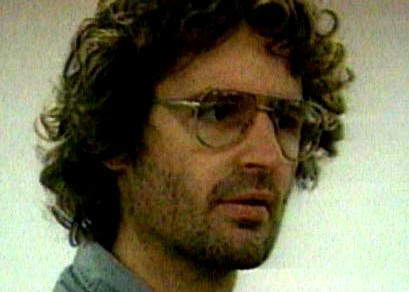
When David Koresh spoke these words the evening
of February 28, 1993, he understood the true meaning of the Bureau of
Alcohol, Tobacco and Firearms' attack on the Branch Davidians' home and
church, Mount Carmel Center. It is a truth that millions of Americans
have come to understand since April 19, 1993 when Koresh and 75 of his
family members and friends--19 men, 34 women and 23 children--died a
terrible death by fire.1/ It is a truth reflected in the oft repeated
remark, "Whatever they did, they did not deserve this."
David Koresh understood that the BATF attack on Mount Carmel
Center and its 120 inhabitants--mostly women, children and elderly
people--represented the breakdown of liberty and democracy in America.
He intended to use evidence of government crimes contained within the
walls and roof of the still standing Mount Carmel to expose that
breakdown to a jury--and very probably win freedom for himself and his
friends.
HELICOPTER ATTACK REMINISCENT OF VIETNAM
The day after the fire Larry Potts, then
Assistant Director of the FBI's Criminal Division, expressed what was
surely the FBI's prime reason public reason for going forward with the
April 19, 1993 gas and tank assault, "These people had thumbed their
noses at law enforcement"2/--and the authority of law enforcement, from
the FBI to Attorney General Janet Reno to President Bill Clinton--had to
be enforced. However, there is evidence there was another reason, one
the FBI refuses to admit.
Few Americans realize a simple truth about BATF's raid, one that
the government has tried to suppress and the press has discounted or
ignored: in the first minutes of the raid National Guard helicopters
zoomed in on Mount Carmel, guns blazing, like Americans raiding a
Vietnam village in that far off war. Davidians claim that four of their
group were killed by firing from these helicopters. David Koresh's
unarmed father-in-law, who stood behind him at the front door, was also
mortally wounded by gunfire from BATF agents on the ground.
Like Koresh, BATF agents knew that if Mount Carmel, whose roofs
and walls contained evidence of this helicopter attack, was left
standing, the Davidians stood an excellent chance of being acquitted of
murder of federal agents by a sympathetic jury. And, in fact, those who
survived were acquitted of murder.
Moreover, BATF agents could face prosecution and imprisonment for
negligent or even intentional homicide in the deaths of the unarmed
Davidians. FBI agents took over from BATF and befriended and
sympathized with BATF agents who had seen four comrades killed and 20
wounded. It is likely FBI agents, conspiring either silently or
explicitly with BATF agents, deliberately sabotaged negotiations with
the Davidians to prevent their exiting Mount Carmel. The ravages of
time, wind and rain alone would destroy some of that evidence of illegal
gunfire. Moreover, agents may have hoped to create an incident or
situation that would give them an excuse to destroy the building and its
incriminating evidence. If that meant the massacre of dozens of men,
women and children--all witnesses to the brutal attack--so be it. The
possibility that one or two Davidians, in a foolish act of self-defense,
lighted one of the fires that consumed the building is the least likely
scenario.
Unfortunately, the Davidians played into BATF and the FBI's hands
by not surrendering. Davidians sincerely believed the BATF attack was
God's way of helping them spread His word. They were righteously
angered by the unjust attack, especially given David Koresh's earlier
invitation to BATF to inspect his guns. They were fearful that federal
agents would destroy evidence of BATF crimes once they exited the
building. And they worried that over a hundred men, women and children
would be rendered homeless and lose their church if they were to exit
without legal reassurances they could keep the property. For all these
reasons Davidians stubbornly refused to leave their home--until the FBI
made it impossible for them to escape alive.
In the video "The Waco Incident: The True Story," controversial
investigator Gordon Novel asserts, "That's America's first Auschwitz
right there. They're gassing them prior to cremating them." The
massacre of the Branch Davidians was the greatest government massacre of
civilians on American soil since the massacre of 300 Native Americans at
Wounded Knee in 1890. There are hundreds of disturbing questions about
this massacre that must be answered.
IS AMERICA BECOMING A POLICE STATE?
Many Americans see BATF's paramilitary raid
upon the Branch Davidians, and the FBI's harsh 51 day siege and brutal
April 19th gas and tank attack, as evidence that the United States is
far down the road toward becoming a police state. Government critic
William Norman Grigg writes: "The government's approach to the Waco
confrontation--shoot in haste and invent a justification at leisure--is
that of the police state. Once the precipitate assault on the sect had
resulted in deaths, the government claimed that those deaths justified
the raid, in spite of the fact that the raid had caused those deaths."
Grigg notes that while in a free society "laws are relatively few and
easily understood," in a totalitarian police state "laws are plentiful
and frequently unintelligible, and the state can intervene at whim into
a person's private affairs."3/
As we shall see, the Davidians were accused of running afoul of
"unintelligible laws" and assaulted despite their attempts to cooperate
with authorities and make sure they were in compliance with those laws.
While the government alleges it discovered a number of illegal weapons
in the ruins of the Davidians' home, many Americans suspect these
weapons actually were manufactured "at leisure" by the government to
"justify" their raid.
The War on Drugs
The government's most successful excuse for violating Americans'
rights has been the "War On Drugs," a war which is largely responsible
for the government's stepped up "War on Guns." Much of today's violent
crime is prohibition-related, the prohibition of psychoactive drugs
instead of alcohol. The attraction of hefty illegal profits has led to
even greater struggles over territory and violence between armed gangs
than that during alcohol prohibition. Drug-related crime and the
profit-driven promotion of drug use has hit inner cities the hardest,
even as law enforcement has concentrated its efforts on arresting and
imprisoning African-American and Latino users and dealers.
The War on Drugs has led to serious abuses of Americans'
constitutional rights by law enforcement: use of unreliable informants,
inadequate investigation of alleged crimes, increasing use of
entrapment, judicial rubber-stamping of search warrants, growing use of
unjustified "no knock" warrants, improper use of deadly force,
increasing violations of due process of law, chipping away at the
exclusionary rule against using illegally obtained evidence, improper
use of forfeiture proceedings to augment law enforcement budgets, unjust
mandatory sentencing guidelines and growing use of the military in
domestic law enforcement.
The War on Guns
Drug-prohibition-related gun violence has resulted in more laws
and stricter enforcement of laws restricting gun ownership. Gun
ownership is being added to a growing list of "victimless" crimes. In
1994, after many years of effort, gun control advocates pushed the Brady
Bill handgun registration law through Congress. The 1993 crime bill
banned the further manufacture, transfer or possession of 19 types of
semi-automatic weapons (so-called "assault" weapons) and firearms
magazines that exceed ten rounds. However, though it permitted transfer
or possession of weapons or magazines produced before September 13,
1994, the day President Bill Clinton signed the bill into law. It also
outlawed the use of more than two attachments to a semi-automatic rifle
that has the ability to accept a detachable magazine. The one exception
to these prohibitions, of course, is continued manufacture of
semi-automatic weapons for the military and for civilian law
enforcement. Gun control advocates continue to propose more restrictive
laws and taxes on guns and ammunition, including registration of
semi-automatic guns and eventually all guns. They even hope to repeal
of the Second Amendment.
However, both a federal statute--Firearms Owners' Protection Act
of 1986, §21--and a judicial decision--United States vs. Anders, 885
F.2d 1248 [5th Cir. 1989]--hold that there is nothing per se wrong with
the ownership of large numbers of legal arms. Obviously, the decision
and the statute have not reined in BATF. During the April 28, 1993
House Judiciary Committee hearing on Waco, then-BATF Director Stephen
Higgins defended the tactics used at Waco by stating, "In the 18 months
prior to the Branch Davidian incident, ATF Special Response Teams had
carried out 341 actual activations to high risk situations," including
"diverse sects and survivalists."4/ What he did not mention, but what
is well known among Second Amendment activists, is that most of those
raided were not criminals using guns for illegal purposes, but honest
and peaceful citizens. Whether they break gun laws out of ignorance,
because they are "set up" by BATF agents or informants--and even if they
have broken no law at all--BATF too often treats American gun owners
like dangerous criminals.
Several cases of BATF abuses have gained wide notoriety. In
December, 1991 agents raided and trashed John Lawmaster's unoccupied
home, found nothing illegal and left without shutting the door, leaving
guns and ammunition strewn about the unsecured home.5/ In May, 1992
BATF raided the home of Louis Katona, a part-time police officer. They
confiscated his legal machineguns and abused his wife. Later a district
judge dismissed the charges because he could find no evidence a crime
had been committed.6/ In February, 1993 BATF agents raided and
ransacked Janice Hart's home and interrogated her for an hour without
reading her rights, only to discover they had the wrong name and
address.7/ In a 1994 fishing expedition, BATF agents raided the home of
Harry Lamplugh, the largest gun show promoter in the northeast, refused
to let him take his cancer medication, and caused the deaths of three
family cats.8/
Virginia attorney and weapons expert Stephen Halbrook asserts that
in over one hundred cases BATF actually has manufactured evidence that
semi-automatic AR-15s illegally have been converted to automatic.
Agents do so because they have quotas of convictions they must fill to
protect their jobs and gain promotions and sometimes can do so only by
fabricating evidence. By definition, a semi-automatic weapon shoots
only one bullet with one pull of the trigger; it "automatically" loads
the next bullet. An automatic weapon includes the automatic loading
feature and fires two or more bullets with one pull of the trigger.
BATF agents simply remove disconnectors, or safety switches, that
prevent automatic fire. Doing this does not make a very effective
weapon. But if the weapon fires only two shots with one pull of the
trigger and then permanently jams, BATF still can claim the weapon is
automatic and prosecute the gun owner.9/
Government's Dangerous Paranoia
In the weeks following the bombing of the Oklahoma City federal
building, President Clinton and the establishment media flayed the
"paranoia" of "right wing conspiracy theorists." However, it is the
United States government which is becoming increasingly paranoid of a
citizenry fed up with ever rising taxes and ever encroaching rules and
regulations enforced with increasing levels of government violence.
The Treasury Department report states: "The raid by ATF agents on
the Branch Davidian compound resulted from its enforcement of
contemporary federal firearms laws. In a larger sense, however, the
raid fit within an historic, well-established and well-defended
government interest in prohibiting and breaking up all organized groups
that sought to arm or fortify themselves."10/
Tony Cooper, a law enforcement consultant on anti-terrorism and
professor of negotiations and conflict resolution at the University of
Texas at Dallas, describes "the formation of a curious crusading
mentality among certain law enforcement agencies to stamp out what they
see as a threat to government generally. It's an exaggerated concern
that they are facing a nationwide conspiracy and that somehow this will
get out of control unless it is stamped out at a very early stage."11/
WEAVER WAS PRACTICE FOR WACO
Many consider the BATF entrapment of white
separatist Randy Weaver, the 1992 federal marshal attack that killed his
son, the FBI sniper attack that killed his wife, and the FBI's eleven
day siege to have been merely practice for the massive attack against
the Davidians. Since the same crew of FBI agents and officials are
responsible for the massacre of the Davidians, it is useful to look
closely at that case.
White separatist Randy Weaver had retreated to rural Idaho with
his wife, Vicki, four children and a family friend, Kevin Harris.12/ In
1990 a BATF undercover agent entrapped Weaver into selling him two
illegally sawed-off shotguns for $300. Weaver alleges BATF charged him
after he refused to inform on other white separatists. The government
then gave him the wrong date for a court hearing, March 20 instead of
February 20, 1991. Disgusted, Weaver decided to end all contact with
the judicial system.
The Eleven Day Standoff
Rather than take immediate action when Weaver failed to appear,
U.S. Marshals began almost 18 months of surveillance. On August 22,
1992 six marshals, one equipped with an assault rifle with a silencer,
approached Weaver's cabin in order to observe him and threw rocks at his
dog in an effort to lure Weaver closer so they could arrest him.
According to Weaver's attorney Gerry Spence, the marshals did not have a
warrant--though the U.S. attorney insisted they did--and they never
identified themselves.
When the agents shot the dog, Harris and Weaver's 14-year-old son
Samuel, not knowing who the attackers were, ran toward them shooting.
Their shots allegedly killed U.S. Marshal William Degan--though some
assert friendly fire from another marshal killed him. Samuel was shot
in the back and killed as he retreated.
The National Guard and the FBI Hostage Rescue Team--whose motto is
"To Save Lives"--were called in. According to court records, the U.S.
Marshals falsely told the FBI that Weaver himself had ambushed them and
that the Weavers and Harris would kill anyone who approached them. U.S.
Marshals never did tell the FBI that Samuel had been killed by a deputy
marshal. They did tell them Mrs. Weaver was a fanatic capable of
killing herself and her own children as an end to the siege.
Finally, U.S. Marshals never told the FBI that they knew that when
the adults went outside the cabin they always carried weapons. Larry
Potts, Assistant Director of the FBI's Criminal Division, authorized
"rules of engagement" which gave snipers the go-ahead to shoot any adult
carrying a weapon outside the cabin. (The standard FBI rules of
engagement are: "Agents are not to use deadly force against any person
except as necessary in self-defense or the defense of another, when they
have reason to believe they or another are in danger of death or
grievous bodily harm. Whenever feasible, verbal warnings should be
given before deadly force is applied."13/)
While Weaver may have suspected he was surrounded by law
enforcement after the initial shootout, the FBI never officially
informed him of it or gave him a chance to surrender. And they
certainly never warned his family they would be in jeopardy if any FBI
agent saw them armed on the property.
The day after the first shootings, Harris and Weaver, carrying
their guns, left the cabin to visit Samuel's body. FBI sniper Lon
Horiuchi first shot Weaver in the shoulder and then tried to shoot
Harris. However, he accidentally shot Vicki Weaver as she stood in the
doorway of the cabin holding her baby. She died instantly, dropping the
baby to the ground. Harris was wounded by shrapnel. Nevertheless,
Weaver and Harris refused to surrender to authorities.
During the standoff Richard Rogers' Hostage Rescue Team used
psychological warfare techniques against the Weavers. Court records
show that the FBI taunted the Weavers after Vicki Weaver's death,
calling out over their loudspeakers: "Good morning, Mrs. Weaver. We had
pancakes for breakfast. What did you have?"14/
Weaver and Harris surrendered nine days later, after the FBI
allowed Populist Party presidential candidate Bo Gritz to serve as a
third party negotiator. The two men were charged with conspiracy to
murder federal officers. Their trial before a federal jury and U.S.
District Judge Edward Lodge began just five days before the April 19th
fire that killed 76 Davidians.
Weaver Acquitted and Prosecutors/FBI Fined
Most of the above disturbing information came to light during the
trial. It also was revealed that prosecutors had withheld from the
defense for several months the information that FBI agents had
fabricated evidence by staging photos. They also withheld a government
agent's notes and a police captain's assertion that a U.S. Marshall had
shot first. Federal agents falsely claimed that Degan had been killed
by one of the first shots, but evidence later showed he had fired seven
shots before he was shot. Judge Lodge fined prosecutors $3,240 for
"inexcusable delay" in providing this information.15/
Weaver's defense attorney, Gerry Spence, did not call any
witnesses or present a defense, but simply told jurors the government
had failed to prove its case. In July, 1993 the jury acquitted Weaver
and Harris of Degan's murder, saying Harris had acted in self-defense.
The jury also rejected charges that the two men conspired to provoke a
confrontation with federal officers. Weaver was convicted of failing to
appear for the original weapons charge trial and sentenced to 18 months
in prison, with credit for time already served. He was freed in early
1994 and sued the federal government in the summer of 1994 for the
deaths of his son and wife.
After the victory attorney Gerry Spence told reporters, "A jury
today has said that you can't kill somebody just because you wear badges
and then cover up those homicides by prosecuting the innocent." Juror
Janet Schmierer of Boise, Idaho said, "I think they built their whole
scenario out of how they perceived someone else should be living their
lives, and if someone believed differently. . .they must be
abnormal."16/ As we shall see, the Justice Department and FBI merely
disciplined the responsible agents and officials.
HOW THE DAVIDIANS BECAME A TARGET
The Branch Davidians became a target of BATF
not because of any solid evidence they possessed illegal weapons, but
because former members alleged Davidian leader David Koresh had
expressed interest in owning illegal weapons. However, some see an even
larger dynamic at work. James R. Lewis writes: ". . .societies need
enemies. External threats provide motivations for people to overcome
internal divisiveness in order to work together as a unit. . .where
external enemies no longer threaten, a society will find groups of
individuals within itself that it can construe as threatening and
evil."17/
Davidians Made Howell Their Leader
The Branch Davidians, an offshoot of the Seventh Day Adventist
Church, believe in the "advent" or "Second Coming" of Jesus Christ,
complete with the end of the world in a fiery apocalypse, the death of
all sinners and the salvation of true believers.18/ Davidians believe
modern-day living prophets can lead church members toward salvation.
David Koresh said in one sermon, "People like dead religions. They want
to hear what the Lord said 2000 years ago--and then they want to cut him
off at that specific point in time."19/
Ben Roden's "Branch Davidian" church evolved out of Victor
Houteff's Shepherd's Rod Church in the early 1960s. In 1978 Ben Roden
died and his wife Lois Roden, a woman well-known in evangelical circles
because of her pronouncement that the Holy Spirit was female, became the
new Branch Davidian prophet.
David Koresh's birth name was Vernon Wayne Howell. He was born
August 17, 1959, was the illegitimate son of a fourteen-year-old girl
and, as many have noted, the grandson of a carpenter. As a boy, he
became a self-taught student of the Bible who could recite long passages
from memory. His other passion was country and gospel music and he
became an able guitar player. In 1981, seeking a prophet who could help
him grow spiritually, he discovered the Branch Davidians and moved to
Mount Carmel Center.
Howell's knowledge of Scripture and personable manner quickly
gained him the confidence of other Davidians. However, his popularity
earned him the enmity of Lois Roden's son George Roden, who considered
Howell to be his prime rival for the role of leader and prophet. Most
Davidians considered George Roden to be too poorly versed in Scripture
and too erratic to lead the group and sided with Howell. In 1984 a
gun-toting Roden drove Howell and his wife Rachel out of Mount Carmel.
Over the next two years most of the remaining Davidians left the Rodens
to follow Howell. They established a community in shacks, tents and
buses on property rented in Palestine, Texas and also had two homes in
LaVerne, California.
Howell visited Israel in 1985 and, as he explained in a February
28, 1993 KRLD radio interview, "an encounter" or, as he told FBI
negotiators, "a miraculous meeting with God," which instructed him to
study and teach the prophecies of the Seven Seals of the Book of
Revelation.20/ (Davidians have not revealed the whole meaning of Seven
Seals as taught by David Koresh, believing only Koresh could teach the
truth.)
During these years Howell also experienced revelations in which
God commanded that he create a "House of David" where his many wives
would bear him children who would become the rulers of a purer new
world. He began to take young, single Davidians as his unofficial
wives.
Half of those who chose to join Vernon Howell were of African,
Hispanic or Asian descent. Davidians deny that Howell preached and
practiced racial separatism, as some allege. He had two children by an
Asian woman and at least one wife of African descent. Livingstone
Fagan, a black minister from England, asserts that Davidians had risen
above racial concerns or prejudice.21/
Meanwhile, George Roden, was nearly alone at Mount Carmel's
ramshackle houses. He was renting out rooms, including to alleged drug
traffickers.22/ (This fact was used against David Koresh years later.)
After Lois Roden's death, George Roden challenged Vernon Howell for
leadership of the group. In late 1987 Roden dug up the coffin of a
long-dead Davidian and challenged Howell to raise her from the dead.
Howell complained to authorities about "corpse abuse," but they demanded
photographic proof of a crime.
When Howell and seven armed followers sneaked onto the property to
photograph the coffin, Roden caught them and a gunfight ensued. Howell
and his followers were charged with attempted murder. Meanwhile, after
Roden wrote letters threatening to afflict U.S. District Judge Walter A.
Smith with herpes and AIDS, Smith sentenced Roden to six months in jail
for contempt of court.
Howell took this opportunity to encourage the county to put a lien
on Mount Carmel for 16 years of unpaid taxes. Howell paid the taxes on
March 22, 1988 and he and his followers legally re-took Mount Carmel
Center. Under the agreement with the county, Howell and his Davidians
would gain final control of the property if they were to occupy it and
pay taxes on it for five years from the date of the agreement.
Significantly, that five year period would end during the 1993 siege.
In April, 1988 Howell and his followers were tried for attempted
murder of Roden; seven were acquitted and Howell's trial ended in a hung
jury. George Roden continued to verbally threaten the group with
violence. Then in 1989 Roden murdered a man with an ax and was
incarcerated in a mental institution. Nevertheless, Davidians feared he
would escape and attack them. They therefore remained armed and alert.
Roden did escape briefly in late 1993.
In February 28, 1993 KRLD radio interview, David Koresh made the
point, "If I say I'm Christ. . .the proof is if I can open the seals or
not." Those who believed he could, stayed. In a March, 1993 New York
Times interview, longtime follower Paul Fatta unabashedly declared: "I
believe David is the Messiah. He has shown me over and over that he
knows the book and presented Scriptures showing how the last days events
would happen."23/
Livingstone Fagan, a social worker and minister who lost his wife
and mother in the April 19th fire, holds that "David Koresh was the
prophesied instrument through whom God spake." Fagan writes that in his
first three hours of listening to Koresh, "I had perceived more
significant biblical truths than I had done, the entire eight years I
had been involved with organised religion." He contends that, like
David Koresh, those who lived at Mount Carmel were "remade" in the
"fashion of God."24/
Ruth Riddle described the appeal of Mount Carmel to an
interviewer, "We were trying to live together in community like the
early apostles did. Sharing all things, having things in common, that's
why we lived together, like a family."25/
At the November 22, 1993 American Academy of Religion panel
Jamaican Davidian Janet McBean, who lost her brother in the April 19th
fire, summarized David Koresh's appeal: "We are spiritual people. And
we feel that God is watching what happens to this world. That's the
reason why David protected his people and David felt the way he did. .
.He felt compelled to give us the revelation as he did."
Former Members Went to Authorities
Marc Breault, a Howell follower from 1986 to 1989, swore in a 1990
affidavit: "At first Vernon Howell appeared to be a conservative person
whose only wish was to reform the Seventh-Day Adventist Church. As time
progressed, however, Howell became power-hungry and abusive, bent on
obtaining and exercising absolute power and authority over the group. .
.by 1989, he had lost all restraint."26/ Breault was particularly
incensed when, in the fall of 1989, Howell declared that God had
commanded him take the married women in the group as his wives.
Soon after, Breault left the Davidians and became what he called a
"cult buster," devoted to the destruction of the Branch Davidians. He
charged that Howell manipulated members through fear of hellfire,
physically abused adults and children for minor infractions of
capricious rules, seduced and impregnated young girls, and demanded a
willingness to die for him and his prophecies. However, Davidians who
remained with Howell asserted that Breault's accusations were based on
words and actions taken out of context and/or blown out of proportion
and built into fantastic and untrue stories. (After conducting an
investigation of these accusations which is too extensive to detail in
this book, I largely agree.)
Davidian survivors charge that Breault had challenged Howell for
control of the group. Breault replied in November, 1993, "If I was
trying to take over the group I wouldn't have gone to the authorities.
I wouldn't have tried to have justice done and had the group
dismantled."27/
Bent on "dismantling" the group, during 1990 Breault managed to
convince over a dozen Davidians around the world to join his efforts.
They signed affidavits alleging that Howell was guilty of the statutory
rape of two teenage girls, tax fraud, immigration violations, harboring
weapons, child abuse, and exposing children to explicit talk about sex
and violence. They presented these affidavits to local police in
California and Texas, the Texas Department of Public Safety, the
Immigration and Naturalization Service, the Internal Revenue Service.
However, these agencies expressed little interest in the allegations.
Neither did U.S. Assistant Attorney Bill Johnston, who later became a
prime motivator of the 1993 BATF raid.28/ However, Breault did not give
up his vendetta, which continued even after the deaths of most Davidians.
In early 1990 Vernon Howell legally changed his name to David (for
King David who united Israel in the Old Testament) Koresh (Hebrew for
Cyrus, the Persian king who freed the Jews from Babylon). In October,
1990, Robyn Bunds, who was living in the California home, decided to
leave Koresh with her son. Koresh immediately sent the child back to
Waco, but returned him when Bunds reported the child missing to police
in California. Bunds also told police that Koresh was having sex with
the underage Aisha Gyarfas. When they returned to investigate, Gyarfas
and Koresh had returned to Texas.29/ In September, 1991 Jeannine Bunds,
who like her daughter Robyn was Koresh's lover, left the Davidians,
claiming that she was upset that Koresh had asked her if she was
"capable of killing her children."30/
In the fall of 1991 Breault brought his allegations to the
Australian television producers of "A Current Affair." Reporter Martin
King, who co-wrote Breault's book, visited Mount Carmel and interviewed
Koresh in January of 1992. The program that eventually aired portrayed
Koresh as a sex-crazed, gun-loving religious fanatic. It also provides
one of the few inside views of Mount Carmel Center and Koresh's
preaching style.
In fall 1991 Breault also informed young Kiri Jewell's father,
David Jewell, that Kiri was slated to become one of Koresh's wives.
Jewell sued for custody, and in January, 1992 Breault and other former
Davidians testified at the custody hearing in Michigan. Without
admitting any wrong doing, Kiri's mother Sherri voluntarily relinquished
primary custody and promised to keep Kiri away from Koresh during
visitations.
Spurred on by Davidian detractors, on February 27, 1992 Texas
Department of Human Services social worker Joyce Sparks visited Mount
Carmel with two other Human Services employees and two McLennan County
Sheriff's deputies. Koresh allowed the visit to be videotaped.31/ They
made two more visits and Koresh visited their offices. The case was
closed on April 30, 1992 for lack of evidence of abuse.32/
Davidian "defectors" eagerly cooperated with BATF and FBI
investigators in 1992 and 1993. That as many as twenty former members
made various allegations to the government and press certainly suggests
that some felt discontent with David Koresh's leadership of the Branch
Davidians. However, after federal agents' assaults resulted in the
deaths of so many of her friends, Robyn Bunds, who had cooperated with
the government, said she urged that responsible BATF officials should be
punished. "I know there were things going on there that weren't right.
But they're dead now. What's the point?. . .It's Okay to save them, try
to do something, but what you did was kill them."33/ Bunds later joined
in the civil law suit against the government with Koresh's mother,
another wife, Dana Okimoto, and other survivors and family members.34/
Koresh Predicted the End Was Near
Such continuing attacks might make the most innocent group
paranoid. It appears that the mounting pressures on David Koresh in
late 1991 and early 1992--the loss of Kiri Jewell, the television
exposé, the child abuse investigation, and the knowledge that Marc
Breault and others would continue reporting allegedly illegal activities
to authorities, convinced Koresh that government agents soon might
launch their long prophesied attack which would signal the beginning of
the apocalypse.
Like many today, Davidians believed these were the end times and
were preparing for inevitable tribulations. At trial Davidian Kathryn
Schroeder, who prosecutors bullied into testifying for the government,
revealed that Davidians began minimal practice with firearms, but had
little idea why they might need such expertise. Marjorie Thomas, also a
Davidian prosecution witness, asserted that Koresh taught arms would be
needed only for self-defense against an attack, not to attack the
government or force anyone to go along with their beliefs.35/
In 1991 Davidians began tearing down Mount Carmel's separate homes
and building one large building where they could be a more tight knit
community, living and studying together. After a neighbor's home was
destroyed by a tornado, they also began building the underground tornado
shelter--something which could also serve as a shelter should the
"beast" burn down Mount Carmel.36/ In early 1992 Davidians reinforced
the front wall of the building with a two foot high concrete wall to
protect them in case someone attacked. (Davidians on the first floor
actually were protected by this wall during BATF's February 28, 1993
attack.)37/
Graeme Craddock testified to a grand jury that a few Davidians
believed that when welfare workers visited Mount Carmel there were SWAT
teams stationed around the property.38/ The government insists that
Koresh believed a spring, 1992 police SWAT team training near the
Davidians' rented garage, the Mag Bag, was BATF training for an assault
on Mount Carmel.39/
Kathryn Schroeder alleged it was about this time Koresh began to
stress the prophecies of Daniel, chapters 11 and 12, regarding the
"final confrontation" with the "king of the north," the "beast." Koresh
taught that if Davidians were sufficiently faithful to God, they would
be "translated" into heaven and the kingdom. This translation did not
necessarily have to happen through their deaths at the hands of the
authorities; if they were obedient to God they could be translated
without dying. In fact, after the February 28, 1993 attack Koresh
chided Davidians that they had not been so translated during the BATF
attack because they were not obedient. (Suicide was not one of the
options Koresh taught.)40/
On July 30, 1992 BATF investigators visited David Koresh's gun
dealer Henry McMahon to inquire about Koresh's gun purchases. McMahon
called Koresh who invited agents to come out immediately and inspect the
weapons. They refused but continued their obvious surveillance,
something bound to make Davidians more suspicious.41/
Kathryn Schroeder testified that Koresh had called in Davidians
from all over the world to celebrate Passover of 1992. Predicting that
this would be the group's last Passover before the fulfillment of
prophecy in the apocalypse, Koresh decreed that they were "going to
enjoy this last summer" and bought go-carts, boats, and motorcycles.42/
(It was this gathering which prompted Marc Breault to claim falsely
Davidians were preparing for "mass suicide.")
Convinced that these were the "last days," Schroeder and her
husband lied about their income to obtain a number of credit cards which
they used to buy weapons. While they did make their monthly payments on
the debt, they were convinced they would never have to pay it all
because they would be "gone by 1995."43/ In late 1992, perhaps
beefing up security, Koresh moved the gun room and his bedroom from the
second story rooms--something BATF did not know when they ordered agents
to smash into the second floor rooms, leading to the deaths of two
agents. The guns were moved inside the first story concrete room (also
called the "walk-in" or the "vault") and Koresh moved into the fourth
floor room of the four story tower.44/
If not for BATF's unnecessary and unprovoked attack on the
Davidians--and in the event of no universal apocalypse--it is likely
that David Koresh would have had to change his message to adapt to the
fact that his prophesies were not fulfilled. Koresh surely would have
lost some followers and even might have experienced a challenge to his
leadership from other Davidians.
However, BATF's attack only confirmed to Davidians what David
Koresh had been preaching all along--the "beast" would attack the "Lamb"
and God's people and force them to defend themselves. And it confirmed
their belief that these were indeed the last days, and that they should
do what they could to help Koresh spread God's Word to the world to
repent before God made his final judgement upon humanity.
Some have said that Koresh's first prophesying the government
would come to attack him and then collecting a lot of weapons--including
allegedly illegal ones--just "invited" a government attack; it was a
"self-fulfilling prophecy." However, this is a smokescreen. The real
crime is that the United States government chose to deal with perceived
violations of its laws with unnecessary and excessive force at the cost
of the lives of 82 Davidians and four federal agents.
Russian engineer Ilias Abdonlline told a San Antonio Express-News
reporter why he had come to Waco to see the ruins of Mount Carmel:
"Everyone in the world was amazed when this thing happened, but
especially when it happened in America. We have a terrible history with
Stalin in Russia, and I have a memory with that. When I saw this on
television, I was shocked. How could it happen in the U.S.? The U.S.
is a democracy."45/ What is so tragic is that in our modern society the
Davidians' biblical fear of attack by "The Beast" turned out to be a
realistic fear and not some fantastic interpretation of the Bible!
SEPARATING FACT FROM FICTION
The massacre of the Branch Davidians has
spawned a mass of sometimes conflicting "facts," rumors and "conspiracy"
theories. The most infamous of these are those promoted by Indianapolis
attorney Linda Thompson in her videos "Waco, the Big Lie" and "Waco, the
Big Lie Continues." These allegations include: that the government used
a flame-throwing tank to set the fires, that the government set fire to
the "underground bunker" and people died there, that a Davidian who
escaped from the front roof and another who jumped from a second-story
room really are government agents, that the government did not collapse
the gymnasium, and that a tank pulled a body away from the building.
Flaunting such untruths detracts attention from the more subtle, but
more insidious, real truths.
After the Oklahoma City bombing, the national media used
Thompson's most flagrant and inaccurate accusations to try to discredit
all assertions that federal agents committed crimes against Davidians.
Despite these faults, the videos do contain enough shocking footage and
real truths to have mobilized hundreds of thousands of citizens to seek
more information about federal crimes against the Davidians.
This book is a systematic listing and analysis of government
crimes against the Branch Davidians, culminating in mass murder, and
government coverup of those crimes. I have attempted to present what,
given the evidence available, seem to be the most accurate facts, the
most substantive rumors, and the most believable theories. Given my
limited resources, some errors inevitably have crept into the book.
This is a story which will be corrected and updated for years.
I have drawn on a variety of sources: wire service, newspaper and
magazine reports, books, published reports, electronic mail articles and
announcements, government documents, over 50 hours of video tapes, over
20 hours of radio and conference audio tapes, news and government
photographs, and personal discussions and interviews with participants
in the events and with other investigators and interested parties.
The Treasury Department's September 30, 1993 report and the
Justice Department's October 8, 1993 report are little more than
internal reviews conducted for public relations purposes--for neither
report were any agents or officials even interviewed under oath. Both
reports "redacted," i.e., withheld, information which officials claimed
might have affected the prosecution of the Davidian defendants accused
of conspiracy to murder, and murder of, federal agents. Much of this
redacted information was never disclosed at trial and remains hidden
from the American people. These reports are sometimes the only sources
of some important information and when there seems to be no apparent
reason for the government to falsify or distort information I have
relayed it as if it were true. However, very often the government
"facts" so blatantly conflict with other, more reliable facts, or with
common sense, that the reports provide excellent evidence of coverup of
federal agents and officials' crimes.
The transcripts of United States Senate and House of
Representatives hearings provided other useful evidence of the extent to
which devious BATF and FBI agents and officials withheld, falsified and
twisted information to deceive and hoodwink relatively uncritical
members of Congress. The two House subcommittees which conducted the
1995 Waco hearings had access to a great deal more information than that
available in 1993. The hearings were held while this book was in the
galleys stage. Chapter Thirteen summarizes new information revealed,
information that only supports the interpretation of events described in
this book.
Kirk Lyon's Cause Foundation, former attorney general Ramsey
Clark, and Houston's Caddell & Conwell are handling most of the family
and survivor civil suits federal agents and officials. These lawsuits
provide excellent indications of what attorneys consider to be evidence
of criminal action. With their powers of discovery, these attorneys may
be able to elicit significant evidence from the government, its agents
and officials.
Unfortunately, as the 1994 trial of eleven Davidians illustrated,
the government is eager to withhold from Davidian attorneys information
damaging to BATF, the FBI and the Treasury and Justice Departments.
Important evidence like a bullet-ridden metal door, lethal bullets,
video and audio tapes and autopsy reports, were "missing," damaged or
dubious. While the trial brought out a great deal of information
damaging to the government, and much exonerating Davidians, many
questions could not be answered because the judge would "not allow the
government to be put on trial." He therefore barred admission of
important defense evidence and witnesses that might have proved
government misconduct.
Of course, because the trial judge promised to throw up procedural
barriers to defense attorneys calling important witnesses, the unpaid,
overburdened attorneys largely ceased their efforts to bring such
important witnesses to the stand.46/ And it is likely some agents lied
on the stand to protect themselves and other agents. Referring to BATF
supervisors' coverup of the loss of surprise, one defense attorney said,
"While leaders of the ATF, the supervisors, were telling lies to our
nation, what was going on?. . .They knew their supervisors were lying,
and so their statements, their comments, what they told the Rangers, at
that particular time, was cemented, at the time, and it was cemented in
an atmosphere, an atmosphere of lies and misrepresentations that they
knew were going on, and they went right along with it."47/
Given the mass of facts, incidents, and personalities
involved--and that so much information is being covered up by federal
agents and officials protecting themselves and their comrades--it is
clear that only the appointment of an independent counsel with a full
staff of attorneys and investigators, and full power to subpoena
witnesses and grant immunity, will get close to the real truth about
government crimes against the Branch Davidians. We must work to assure
that the government agents and officials responsible for the massacre
and its coverup are brought to justice--and that the nine living
victims, the Davidian prisoners, are freed from their prison cells.
FOOTNOTES
1. According to several Branch Davidians, in the
last few years many in the group had come to call themselves "Students
of the Seven Seals." Surviving Davidians have been identifying
themselves as "Mount Carmel Survivors." However, most continue to
accept the use of the term Branch Davidian. Davidian survivors hold
that 82 in total died, including two unborn children.
2. Stephen Labaton, "Officials Contradict One Another on Rationale
for Assault on Cult," New York Times, April 21, 1993, A1.
3. William Norman Grigg, "Redefining `Law and Order'," The New
American, April 4, 1994, pgs. 69, 71.
4. From BATF Director Stephen Higgins written statement to the
April 28, 1993 House Judiciary Committee hearings. The transcript of
this hearing was released just before publication. Because descriptions
of comments and quotations come variously from news reports, video
footage and the draft transcript of the hearings, I have not footnoted
most references to this hearing.
5. National Rifle Association April 19, 1993 press release, "NRA Calls
for Congressional Inquiry into Waco Raid"; James L. Pate, "No Longer
Untouchable," American Spectator, August, 1993, p. 35.
6. James L. Pate, "Katona Gets His Guns," Soldier of Fortune,
April, 1995, pg. 58.
7. National Rife Association May 10, 1995 press release.
8. Michael Hedges, "Family recounts terror at hands of ATF agents,"
Washington Times, April 13, 1995;
9. Stephen Halbrook, private communication, September, 1994.
10. From the Report of the Department of the Treasury on the Bureau
of Alcohol, Tobacco, and Firearms Investigation of Vernon Wayne Howell
also known as David Koresh, September, 1993, Appendix D, p. 7.
11. Louis Sahagun and Doug Conner, "Pair Acquitted of Murder in
Idaho Mountain Shootout," Washington Post, July 9, 1993.
12. Account in Weaver standoff section drawn from: Associated Press
wire story, "U.S. plods on in case against 2 white separatists in
Idaho," May 10, 1993; Jerry Seper, "White separatist acquitted in
marshal's murder," Washington Times, July 9, 1993; Jerry Seper, "FBI's
Idaho firefight linked to misinformation from marshals," Washington
Times, December 1, 1993; Gerry Spence, "First They Came for the
Fascists," Liberty, January, 1994.
13. FBI Legal Handbook for Special Agents, Section 3-6.4.
14. Jerry Seper, "FBI Agents waged war on minds," Washington Times,
September 22, 1993.
15. Associated press wire story, "Doctored evidence slows trial,"
Washington Times, May 27, 1993; James Bovard, "No Accountability at the
FBI," Wall Street Journal, January 10, 1995.
16. Washington Times, May 27, 1993.
17. Introduction to James R. Lewis, Editor, From the Ashes: Making
Sense of Waco, (Lanham, MD: Rowman & Littlefield Publishers, Inc.,
1994), p. xiii.
18. Except where noted, most information for this section is taken
from Clifford L. Linedecker, Massacre at Waco, Texas, (New York: St.
Martin's Press, 1993); Brad Bailey and Bob Darden, Mad Man in Waco,
(Waco, Texas: WRS Publishing, 1993); Kenneth Samples, Erwin de Castro,
Richard Abanes, Robert Lyle, Prophets of the Apocalypse: David Koresh
and Other American Messiahs, (Grand Rapids, MI: Baker Books, 1994).
19. "Voices of Fire" audio tape, produced by Junior's Motel
Records, Otho, Iowa, 1993.
20. Justice Department report, p. 43.
21. Trial transcript, p. 4127; Livingstone Fagan paper, "Mount
Carmel: The Unseen Reality," Appendix A, August, 1994; Dana Okimoto
interview, Kenneth Samples, et al, pgs. 182-189; Livingstone Fagan,
private communication, April, 1995.
22. June 9, 1993, House Appropriations Subcommittee hearing on the
Treasury, Postal Service, and General Government Appropriations, p. 189.
23. Michael deCourcy Hinds, "A believer says cult in Texas is
peaceful," New York Times, March 6, 1993, A1.
24. Livingstone Fagan paper, August, 1994, p. 7; Livingstone Fagan
paper, "Christ," 1994.
25. "Day 51: The True Story of Waco" video, produced by UTV,
Houston, TX.
26. Brad Bailey and Bob Darden, p. 134. Unless otherwise noted,
most material on or attributed to Marc Breault is from his book, Inside
the Cult, co-authored by Martin King, (New York: Signet Books, 1993).
27. "The Maury Povich Show," November 9, 1993. Povich presented
two interview shows about the Branch Davidians on November 8 and 9,
1993.
28. Kenneth Samples, et al, p. 72.
29. Clifford L. Linedecker, pgs. 144-147.
30. Newsweek, May 3, 1993, p. 27.
31. Trial transcript, p. 5600.
32. Gustav Nieguhr and Pierre Thomas, "Abuse Allegations Unproven:
Koresh was Investigated in Texas, California," Washington Post, April
25, 1993, A20.
33. Darlene McCormick, "Agents didn't take cult arrest advice, ex-Davidians
say," Waco Tribune-Herald, October 1, 1993.
34. Ramsey Clark civil suit, (February 25, 1995.)
35. Trial transcript, pgs. 4524-26, 4559-69; Marjorie Thomas
testimony, November 17-18, 1993, pgs. 96-96, 102, 130, 153.
36. Trial transcript, pgs. 4518-20.
37. Ibid. pgs. 4520, 6392.
38. Ibid. p. 6368.
39. Treasury Department report, Appendix D, p. 3; David Aguilera
April 18, 1993 affidavit in support of search warrant.
40. Trial transcript, pgs. 4479, 4558, 6381.
41. James L. Pate, "Waco: Behind the Cover-Up," Soldier of Fortune,
November, 1993, pgs. 36-41, 71-72.
42. Trial transcript, p. 4531.
43. Ibid. pgs. 4532-34.
44. Ibid. pgs. 4472, 4492, 4599.
45. Egon Richard Tausch, court observer article, "The Branch
Davidian Trial," 1994.
46. January 6, 1994 trial transcript, pgs. 63-67; trial transcript,
p. 5652-53.
47. Trial transcript, pgs. 7093-95.