Murderpedia has thousands of hours of work behind it. To keep creating
new content, we kindly appreciate any donation you can give to help
the Murderpedia project stay alive. We have many
plans and enthusiasm
to keep expanding and making Murderpedia a better site, but we really
need your help for this. Thank you very much in advance.
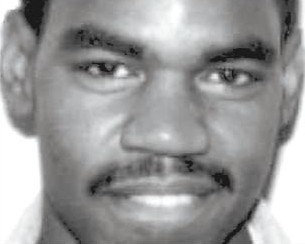
Jason Joseph was
convicted of the October 26, 1992 robbery and murder of Jeffrey
Anderson, 22, who worked at a Subway sandwich shop in Portsmouth,
Virginia.
According to a
Virginia Supreme Court summary of evidence, an accomplice gave
Joseph his .45-caliber pistol.
Joseph and his
accomplice Kaisi Powell entered the sub shop and Joseph ordered a
sandwich. After the sandwich was made, Joseph took the gun out of
his pocket and ordered Anderson to open the cash register and give
him the money.
Anderson complied
and Joseph ordered him to get down on the floor behind the counter.
Joseph reached over the counter and shot Anderson in the back.
Prosecutors told
jurors at a sentencing hearing that Joseph had committed other
crimes, including the armed robbery and abduction of 2 convenience
store clerks. The cold-blooded murder was caught on the store's
video camera system.
In addition to the
death sentence, Joseph also received a life sentence and an
additional 100 year sentence.
Jason Joseph
In May of 1994, Jason Joseph was sentenced to
death for the October 26, 1992 murder of Jeffrey Anderson as he
was working at a subway Sandwich restaurant. Joseph was 20
years old when the crime was committed.
Joseph was raised by his mother because his
father abandoned the family when he was only three years old.
He did not graduate from high school and was unemployed at the
time the crime was committed. While incarcerated for this act,
Joseph participated in a substance abuse program, successfully
finishing it.
The defense psychological expert stated that
`the absence of a father figure in Joseph's life and the lack of
"emotional nurturance" with other people left Joseph with "a
sense of emptiness," which caused him to be `at risk for making
unfortunate choices in an effort to fill that emptiness."
The expert also noted that Joseph's mental
condition could be improved if he was allowed to participate in
the prison's psychotherapy program. The Commonwealth's
psychologist disagreed, and found nothing wrong with Joseph.
Joseph was convicted and given the death penalty.
In the early evening on the night of the
murder, Joseph, his partner in the robbery, Kaisi Powell,
Joseph's brother, and his sister ingested marijuana and
cocaine.
The
Commonwealth claims that when they ran out of drugs Joseph and
Powell decided to rob a convenient store in order to get money
to buy more narcotics.
The
Commonwealth also alleges that Joseph and Powell entered the
Subway store, forced Anderson to lie down behind the counter
while they took the money, and, right before they were going to
exit, Joseph leaned over the counter and shot Anderson. Joseph
contests these statements.
He
believes that the prosecution's primary witness, Powell, was
unbelievable. Joseph attempted to illustrate that Powell was
not credible by stating his, ôprior felony record, his
involvement in these crimes, his motive for blaming Joseph, his
inconsistent statements about the crimes, and the fact of his
`extremely generous "plea agreement."
However,
the Appellate court ruled that Powell's credibility remained in
the hands of the jury and that they were correct in finding him
believable. Joseph also contends that the shooter could not be
determined from watching the videotapes or listening to the
audio soundtrack of the tape. However, once again the Appellate
court ruled that if the evidence was strong enough for the jury
to convict than the decision should stand.
Joseph
also believes that there was no premeditation for the crime.
The intent was not to kill anybody, but instead to rob the
store. The Appellate court ruled against Joseph, stating that
the killer had taken "extra effort" to lean over the counter to
shoot Anderson and that constituted premeditation.
Jason Joseph
entered death row on May 25, 1994 and was executed on October
19, 1999.
Jason Matthew Joseph, 27, 99-10-19, Virginia
A man who robbed and then shot a sandwich shop clerk in the back
after the clerk had given him the money apologized to the victim's
family and was executed Tuesday night, hours after losing a U.S.
Supreme Court appeal and a plea for clemency.
Jason Matthew Joseph, 27, was put to death by injection at the
Greensville Correctional Center. He was pronounced dead at 9:05 p.m.
Asked for a final statement, Joseph said, "No more pain."
In a signed statement released after the execution, Joseph said he
hoped the victim's family and friends "can finally find some closure
and peace.
I am truly sorry for the pain I've caused your family and mine. I've
brought so much pain to so many people. All that I can say to both
families is I wish you all NO MORE PAIN."
4 death penalty opponents waited outside the rural prison about 50
miles south of Richmond as the execution hour approached.
The U.S. Supreme Court voted 7-2 on Tuesday morning to reject
Joseph's request for a stay of execution. Late Tuesday afternoon,
Gov. Jim Gilmore turned down Joseph's clemency request.
Joseph was convicted of the 1992 robbery and murder of Jeffrey
Anderson, 22, who worked at a Subway restaurant in Portsmouth.
According to a Virginia Supreme Court summary of evidence, an
accomplice gave Joseph his .45-caliber pistol. The two men then
entered the sub shop and Joseph ordered a sandwich.
After the sandwich was made, Joseph took the gun out of his pocket
and ordered Anderson to open the cash register and give him the
money.
Anderson complied and Joseph ordered him to get down on the floor
behind the counter. Joseph reached over the counter and shot
Anderson in the back.
Prosecutors told jurors at a sentencing hearing that Joseph had
committed other crimes, including the armed robbery and abduction of
2 convenience store clerks.
Joseph's lawyers argued in the clemency petition to Gilmore that
their client should not be executed because jurors were influenced
"by false and highly inflammatory media reports."
The lawyers said newspapers incorrectly reported that after the
verdict Joseph made a profane, disparaging remark to the victim's
family. Two jurors later admitted that they read the article.
The clemency petition also said jurors were not told that Joseph
went on a crime spree in part because he was on crack cocaine and
had a brain injury "triggering immature judgment and violent
reaction to stress."
Gilmore, in denying clemency, said Joseph robbed Anderson to get
drug money. He noted that the case had been upheld on multiple
appeals.
Joseph becomes the 12th condemned inmate to be put to death in
Virginia this year, and the 71st overall since the state resumed
capital punishment in 1982.