Murderpedia has thousands of hours of work behind it. To keep creating
new content, we kindly appreciate any donation you can give to help
the Murderpedia project stay alive. We have many
plans and enthusiasm
to keep expanding and making Murderpedia a better site, but we really
need your help for this. Thank you very much in advance.
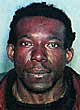
Vincent JOHNSON
A.K.A.: "The
Brooklyn Strangler" - "The Williamsburg Strangler"
Classification:
Serial killer
Characteristics: Homeless crack addict
Number of victims: 5 - 6
Date of murders: 1999 - 2000
Date
of arrest:August 5,
2000
Date of birth: January 6, 1969
Victims profile: Patricia Sullivan, Rhonda Tucker, Joanne Feliciano, Elizabeth Tuppeny,
Vivian Caraballo and Laura Nusser(prostitutes)
Method of murder: Ligature strangulation
Location: New York City, New York, USA
Status:
Sentenced to life in prison without parole on March 10, 2001
Vincent Johnson
(born January 6, 1969),
is an American serial killer popularly known as the Brooklyn
Strangler
History
Between the summers of 1999 and 2000, a series of
murders of prostitutes in the Williamsburg and Bedford-Stuyvesant
neighborhoods of Brooklyn led police to arrest a Brooklyn homeless man,
one of roughly 30 known associates of prostitutes in the area detained
for questioning, on suspicion of the murders. However, DNA testing
definitively excluded the man as the killer.
After he was cleared as a suspect, the man befriended
the officers of the Brooklyn North Homicide Task Force who were working
the Brooklyn Strangler case. He told them of another homeless man in the
area, with whom he frequently used crack cocaine, who seemed fixated on
sadomasochistic sex. The man was subsequently able to identify this
suspect, Vincent Johnson, 5'3" and 130 pounds, a homeless crack addict.
Johnson initially refused to provide a DNA sample to
police, and denied knowing any of the women. However, one of the
detectives had observed him spitting on the street, and Johnson's saliva
was retrieved and given to the medical examiner for testing. Johnson's
DNA matched that which was found on four of the victims.
Johnson later confessed to the murders of six women:
Patricia Sullivan, Rhonda Tucker, Joanne Feliciano, Elizabeth Tuppeny,
Vivian Caraballo and Laura Nusser, all of whom had arrest records for
prostitution and drug offenses, and were themselves addicts.
He remained a suspect in the murder of Katrina Niles,
although, as of 2006, he continues to deny involvement in her death.
Police consider it likely he had sex with at least three of his victims.
Johnson reportedly claimed he was acting out a hatred
of his mother. Three of the victims — Caraballo, Feliciano and Sullivan
— were killed on Thursdays, and Rhonda Tucker probably was as well,
although her body was discovered on a Saturday. According to Johnson,
this deliberate fixation came about due to his loathing of his mother's
one day off from work, always a Thursday.
Johnson admitted little, if any, feelings of guilt.
Of Elizabeth Tuppeny, he said, "I didn't see strangling her as doing
something wrong at the time"; although after killing his first victim,
Laura Nusser, he said he reported feeling "sorry" and wanting to
apologize to her family.
Each of the victims was strangled, apparently with
whatever ligature was at hand: two with their own shoelaces, one with a
drawstring from a pair of sweatpants, two with electrical wire and one
with what was probably a discarded piece of cloth. Johnson bound their
bodies with the ligatures, but did not attempt to hide them. The women
were left where they were killed, two on rooftops and one in a vacant
lot in roughly the same vicinity in Williamsburg, two in apartments in
Bedford-Stuyvesant, and one in a utility room under the Williamsburg
Bridge, where Johnson was known to have slept occasionally on a cot.
Johnson is currently serving a life sentence without
parole in Clinton Correctional Facility, in Dannemora, New York.
Wikipedia.org
Vincent Johnson
On 5 August 2000, a 31-year-old
homeless crack addict admitted to strangling five Brooklyn women, adding
that images of his mother clouded his mind as he committed his final
murder.
"The thoughts of my childhood and foster care and mom came
into my mind" just before he crushed the life out of Patricia
Sullivan last month, Brooklyn Strangler Vincent Johnson told
investigators. "I didn't see strangling her as doing something
wrong at the time."
Johnson admitted to killing Sullivan,
Rhonda Tucker, Joanne Feliciano, Vivian Caraballo y Laura Nusser.
Johnson still hasn't admitting killing Katrina Niles, the sixth woman
whom cops believe was part of Johnson's alleged year-long strangulation
spree. To date he has been charged with five murders and could face the
death penalty.
All six victims had arrest records for
prostitution or drug-related offenses and all were found nude or partly
clothed. In all of the cases, the women were strangled, apparently with
whatever the killer found at hand: two with their own sneaker laces, one
with the drawstring from a pair of sweatpants, two with electrical chord
and one with a piece of cloth.
The first three victims may have had sex
with the same man shortly before their deaths. Two where found on
rooftops. Three of the victims -- Caballero, Feliciano and Sullivan --
were killed on a Thursday, and a fourth -- Rhonda Tucker -- was found in
dead her apartment on a Saturday, but was last seen on a Thursday.
The 5-foot, 3-inch, 130-pound suspect
told investigators that Nusser was his first victim, killing her after
they had sex in Williamsburg last August. He then wrote out a short
apology to Nusser's husband and daughter and pleaded for help. "I'm
sorry I did it," he wrote. "I hope this brings closure. I need
help."
Cops had initially thought Caraballo,
killed August 26, 1999, was the strangler's first victim. DNA from her
corpse, as well as DNA from Tucker and Feliciano, matched a DNA sample
obtained from Johnson's spit. Police obtained a DNA sample from Johnson
after he left the police station and was seen from a window by an
interrogating officer spitting in a cup. The officer ran out of the
police station and recovered the cup for genetic testing.
Johnson was originally fingered by
another homeless man who was suspected of being the killer. The man was
cleared because his DNA did not match, but he identified Johnson as a
possible suspect and called officers when he saw him crossing the
Williamsburg bridge.
Vincent Johnson
Vincent Johnson was a 31-year-old homeless man with a
chip on his shoulder. And that chip grew so large that over a 10 month
period that began in August, 1999, he killed 5 women.
Johnson was described by police as a homeless
panhandler and crack addict that was suspected of six murders. Once
caught he admitted to five killings, that of Vivian Caraballo, 26;
Joanne Feliciano, 35; Rhonda Tucker, 21, Laura Nusser, 44; and Patricia
Sullivan, 49. He strongly denied the sixth murder.
All the victims were killed by the same method -
strangulation. Interestingly each was strangled with a different type of
object, ranging from an electrical cord, the drawstring from a pair of
sweat pants, a piece of cloth, and in one case the victim's shoelace.
According to Johnson he used whatever he could find to
get the job done.
All the victims had been arrested before for
prostitution or drug-related offences, and they all were found nude or
partially clothed. So I guess that would suggest rape was a part of the
M.O.
Faced with the death penalty Johnson chose to plead
guilty and accept a sentence of life in prison rather than the
state-funded murder that many Americans prefer for being poor.
Vincent
Johnson
March 10, 2001
Known as the Williamsburg
Strangler, Vincent Johnson, pleaded guilty to strangling five women and
will serve life in prison without parole. Johnson's 10-month killing
spree began in August, 1999. The 31-year-old homeless crack addict
admitted to the murders a week before prosecutors were to decide on
whether or not to seek the death penalty.
Man Cleared by DNA Tests Led Police
to Murder Suspect
By William K. Rashbaum - The New York Times
Saturday, August 5, 2000
An investigator credited DNA science
yesterday with helping the police make an arrest in the strangulation
murders of six women in Brooklyn. Not only did it ultimately link a
homeless man to the crimes, he said, but it also cleared another
homeless man in the case -- a man who then began cooperating with a
detective and helped find the murder suspect.
More than a week ago, the homeless man who was
cleared by DNA tests led detectives from the Brooklyn North homicide
task force to focus on a 5-foot-3-inch, 130-pound panhandler, Vincent
Johnson, 31, the investigator said. And after tests on a sample of Mr.
Johnson's DNA came back with a match Thursday night, the other man also
helped the police track down the suspect, spotting him Friday on a
Brooklyn street wearing a bright orange shirt and heading for the
Williamsburg Bridge.
The man called the police and followed Mr. Johnson
until officers arrived and arrested Mr. Johnson on the Manhattan side of
the bridge about 6:45 p.m., officials said.
Yesterday afternoon, the police charged Mr. Johnson
with four counts of first-degree murder in four of the killings in
Williamsburg and Bedford-Stuyvesant. The police said Mr. Johnson, a drug
abuser who sometimes spent time at the Glenwood hotel on Broadway in
Williamsburg, stalked and strangled the six women, leaving their bound
bodies where he had killed them.
Mr. Johnson was charged under the so-called serial
killer statute, a section of state law that provides for a maximum of
the death penalty or life in prison without the possibility of parole if
a defendant is convicted of killing two or more people in separate
crimes over 24 months. He was charged in the four cases to which he was
linked through DNA evidence. Officials said detectives would continue to
develop evidence in an effort to bring charges in the other two cases,
and would also try to determine whether Mr. Johnson had been involved in
any other killings.
''At present, Brooklyn North homicide detectives are
consulting with other homicide squads to determine if Mr. Johnson is
responsible for any other homicides,'' Deputy Chief Joseph Cuneen said
at a news conference to announce the charges.
News of Mr. Johnson's arrest brought a wave of relief
yesterday to the section of northern Brooklyn where the killings
occurred -- a section that had has seen considerable improvement in
recent years but whose residents had grown more fearful since October,
when a possible connection between the first four killings was first
raised.
''It was not like he was going to kill 20 people
without being caught,'' said Marrin Rodriguez of El Puente, a civic
group in Williamsburg, who added that neighborhood leaders tried to calm
fears after the slayings. ''But they were scared. After all, he was
beating women, choking them.''
Two of the victims were found on rooftops in
Williamsburg and one in a vacant lot there. Two others were found in
apartments in Bedford-Stuyvesant and one in a utility room under the
Brooklyn approach ramp of the Williamsburg Bridge, where Mr. Johnson had
once lived on a cot. Most of the women had been arrested in the past on
prostitution or drug charges, police officials said.
Mr. Johnson initially denied that he had had sex with
any of the women, despite DNA evidence proving that he did with some, an
investigator said. He later made statements implicating himself in the
four killings he has been charged with, but then refused to make a
videotaped statement and asked for a lawyer, a senior law enforcement
official said.
The police came across the homeless man who helped
them when detectives took DNA samples from him and about 30 other
suspects, officials said. The samples failed to match the DNA that the
killer had left behind, said one investigator familiar with the tests.
Among those cleared was a man who the police had been told socialized
with prostitutes in the area and had argued with one of them, an
investigator said.
But after the test showed that he was not the killer,
he ended up ''taking a liking'' to a detective working on the case,
Steven Feely, and told him about another homeless man with whom he had
smoked crack, a man who talked frequently about tying up women and
having sex with them, the investigator said. ''He said, 'Why are you
looking at me -- you should be looking at him,' '' another investigator
said.
That homeless man said in an interview yesterday that
he had known Mr. Johnson for about three months and frequently smoked
crack with him. ''He'd point out girls all the time and say, 'I want
that girl,' '' said the homeless man, who is 42 and asked that his name
not be used. ''He'd gesture with his hands, and say how we could take
them up the hill, tie the girls' arms behind their backs'' and have sex
with them. ''He told me, 'You could leave if you don't want to do that.'
''
The man, who is from Brooklyn and recently served a
prison term for a drug offense, said he once talked with Mr. Johnson
about the large number of police officers near the area where one of the
bodies was found in a vacant lot. He said Mr. Johnson told him that he
had had sex with the woman who was later found dead there.
The police said that when they brought Mr. Johnson in
for questioning last week, he refused to provide a DNA sample and said
he had not known any of the slain women, the investigator said. But one
of the detectives remembered that he had spat on the street outside. The
detective had warned him, as they went into the station house, that he
should not spit inside, and Mr. Johnson explained that he had
tuberculosis.
The detectives were able to take a saliva sample from
the place where Mr. Johnson had spat, and by Thursday night, the results
showed that his DNA matched DNA found on four of the victims, officials
said.
The police said Mr. Johnson used to hang around a
methadone clinic on the Lower East Side where two of the dead women had
sought treatment and at a single-room-occupancy hotel on West 92nd
Street in Manhattan.
Of the six killings police believe were committed by
Mr. Johnson, he was charged with the most recent case and the first
three, which occurred last summer and fall. In the most recent killing,
Patricia Sullivan, 48, was found June 22 strangled with her sneaker
laces on a dirty mattress in a vacant lot on Marcy Avenue in
Williamsburg.
The first three were Vivian Caraballo, 26, whose body
was found on Aug. 26, 1999, in the elevator room on the roof of 237
South Second Street in Williamsburg, strangled with a piece of cloth;
Joann Feliciano, 35, who was found strangled with sneaker laces and
speaker wire on Sept. 16, 1999, on the roof of 171 South Fourth Street;
and Rhonda Tucker, 21, whose body was discovered inside her apartment on
Park Avenue in Bedford-Stuyvesant on Sept. 25, 1999, strangled with the
drawstring from her pants.
A little more than a week after Ms. Tucker's slaying,
the body of Katrina Niles, 34, was found in a Marcy Avenue apartment in
Bedford-Stuyvesant, strangled with electrical cord and her throat
slashed.
Four months later, firefighters responding to a
rubbish fire in a large utility storage room underneath the Williamsburg
Bridge approach ramp found the decomposed body of a woman whom police
have tentatively identified as Laura G. Nusser, 43. They later learned
that Mr. Johnson had once lived in the room on a cot and that she was
last seen with him in the area. She had been strangled with an
electrical cord.
Charges have yet to be brought in her case and in the
killing of Ms. Niles.
Man Arrested In Killings Of Six
Women
By William K. Rashbaum - The New York Times
Saturday, August 5, 2000
The police arrested a homeless panhandler
yesterday in the killings of six women in Brooklyn whose deaths
stirred fear among residents of Williamsburg and nearby areas that
a serial killer was in their midst.
An investigator familiar with the case said DNA
evidence had linked the panhandler, Vincent Johnson, 31, to the slayings,
which began last summer and occurred on rooftops, in vacant lots and in
apartments.
Detectives from the Brooklyn North homicide task
force arrested Mr. Johnson about 6:45 p.m. as he was heading across the
Williamsburg Bridge from Manhattan to Brooklyn, police officials said.
The arrest came less than an hour after the police held a news
conference to release Mr. Johnson's picture, warn the public about him
and ask for help in capturing him.
In all of the killings, the women were strangled,
apparently with whatever the killer had found at hand: two with their
own sneaker laces, one with the drawstring from a pair of sweat pants,
two with electrical cord and one with a piece of cloth, the police said.
Most had arrest records for prostitution or drug-related offenses and
all were found nude or partly clothed, a senior law enforcement official
said.
The detectives spotted Mr. Johnson while they were
canvassing the Lower East Side of Manhattan and Williamsburg, Brooklyn,
areas where the police said Mr. Johnson had frequented. A police
official said Mr. Johnson had recently been questioned by detectives
investigating the killing.
A senior law enforcement official said the detectives
in recent weeks had been obtaining DNA samples from possible suspects,
and an investigator said DNA had conclusively linked Mr. Johnson to the
crimes.
By late last night, detectives were still questioning
Mr. Johnson and he had not been formally charged. But the police
official said the suspect ''won't be going home.''
At the news conference at Police Headquarters before
Mr. Johnson was arrested, Deputy Chief Joseph Cuneen said, ''A
connection was made through forensic evidence, witness accounts and the
modus operandi of the victims that were killed.''
He called Mr. Johnson, who weighs 130 pounds and is 5
foot 3 inches tall, ''extremely dangerous,'' but could not say how the
man had overpowered the victims, most of whose bodies showed no signs of
a struggle.
The first killing occurred on Aug. 26, 1999, and the
most recent on June 22, the police said. The victims ranged in age from
21 to 48.
In two cases, the bodies were found on rooftops in
Williamsburg, and in two others, they were found inside apartments in
Bedford-Stuyvesant. One woman was found slain in a utility room beneath
the Brooklyn approach to the Williamsburg Bridge, and in the most recent
case, the victim was found on a mattress in a vacant lot in Williamsburg.
At the news conference yesterday afternoon, Chief
Cuneen said Mr. Johnson, who also uses the name Vinceny, had frequented
homeless shelters on the Lower East Side and had also spent time in the
two Brooklyn neighborhoods where the killings had occurred.
''He seems to panhandle a lot, he is homeless, he
moves around, he uses the trains,'' Chief Cuneen said. He said Mr.
Johnson had seven previous arrests on minor charges including low-level
drug offenses, criminal trespassing and subway fare beating. Most
recently, he was arrested twice in March on drug charges, spending five
days in jail in the first case and eight in the second, according to
city Correction Department officials.
Last October, the police confirmed that they were
investigating a string of murders in northern Brooklyn. But Williamsburg
residents had concluded weeks before that the first two murders in their
neighborhood had been committed by the same man. Alerted by word of
mouth and frightened, neighbors adjusted their lives to avoid a killer
they believed was stalking their streets.
Many women stopped leaving their apartments at night.
Some began to walk only in pairs or groups, even by day. Others kept
their children cooped up.
The first of the six women to be slain was Vivian
Caraballo, 26, whose body was found on Aug. 26 lying face down in the
elevator room on the roof of 237 South Second Street in Williamsburg.
She had been strangled with a piece of cloth. Less than a month later,
on Sept. 16, the body of Joanna Feliciano was found on the roof of 171
South Fourth Street in Williamsburg. Ms. Feliciano, 35, was lying face
up on the roof and had been strangled with speaker wire and sneaker
laces.
The next victim, Rhonda Tucker, 21,
was found dead inside her apartment on Park Avenue in Bedford-Stuyvesant
just nine days later. She had been strangled with the drawstring from
her pants.
The fourth victim, Katrina Niles, 34, was found after
another nine-day interval. Ms. Niles was discovered in her apartment on
Marcy Avenue in Bedford-Stuyvesant. She had been strangled with an
electrical cord and her throat had been slashed.
The fifth victim, who has not been identified, was
found in a large storage room underneath the Williamsburg Bridge
approach ramp by firefighters responding to a small rubbish fire that
had apparently been set by homeless people. The victim had been
strangled with an electrical cord. The police are unsure when she was
killed.
The last victim, Patricia Sullivan, 48, was found
strangled with her sneaker laces June 22 in a vacant lot on Marcy Avenue
in Williamsburg.