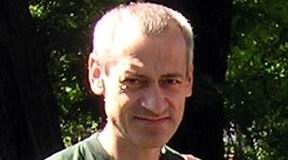
After murdering a family of 5 inside a neighbour's
flat in a local apartment building, he killed another man from the
same family outside the building, proceeding to shoot in a busy street
and also targeting people standing on their balconies, killing another
woman.
Ľubomír Harman attended a forestry high school in
Liptovský Hrádok. According to his former schoolmate Pavol Časnocha
who took karate lessons with him at the time, Harman was "a little
quiet, I don't want to say withdrawn, maybe a loner". Another former
classmate, Peter Žihľavník, remembered him as being an average student
without any notable abilities. According to him "(Harman) was not
withdrawn and didn't have any kind of phobia, he was a normal boy".
They also sometimes played football together.
Harman went through the compulsory military service
in the early 1980s, but he was never a professional soldier and he had
no criminal record.
Ľubomír Harman spent a lot of his time in nature.
After finishing high school and military service, he was employed in
Wood Industry Bratislava as an "energetician in the technical division".
He stayed there for four years. According to an unnamed long-time
friend, people liked him there at the time as he would sometimes go
drink some beers with his colleagues.
Harman used to be a hunter, this is - according to
some - how his relationship with firearms began. On January 10, 1998
Harman became the member of "Club of Reserve Soldiers 008 Fox" in
Bratislava, where he often practiced shooting and participated in
shooting competitions. He was often seen practicing at a shooting
range in Stupava near Bratislava.
During the 1990s Harman worked for four different
companies in which he was remembered as always fulfilling his duties
the way it was expected. In a company, where he was employed as a
boilerman, a female colleague remembers that people used to call him "silent
face". "He worked and worked and worked, he listened, but did not talk",
she recalls. He is remembered as always frowning but never slacking,
helping everyone anytime, described even as an "ideal employee". He
worked mainly in maintenance in different heater rooms around
Bratislava. He quit his last job suddenly two years ago, being
unemployed since August 1, 2008, despite being persuaded by his
employer to stay. Since 2008 he was unemployed, he was receiving €118
welfare a month. This would later affect his presence at competitions
and in practice because of lack of money. In 2010 before the murders
he entered only one shooting competition.
The Slovak police corps president said that Harman
was in no relationship with his victims.
Harman never got married and lived a solitary life.
According to an unnamed long-time friend, Harman was lately more
withdrawn than ever in his life before. He was keen on his parents,
brother and sister and he had a good relationships with them. All of
them were still alive at the time of the murders.
According to his friend from the shooting club,
Daniel Líška, Harman neither showed any aggressive nor hostile
behaviour. He has never mentioned any conflicts with his neighbours.
He did not communicate with any of his neighbours and they couldn't
recall having any conflicts with him either. According to his
neighbours he was hard to notice and he never greeted anyone.
According to Harman's ex-colleague who appeared
anonymously on camera in TV Markíza on September 2, 2010, Harman was a
"good soul" and he got exploited easily.
On August 30, 2010 Ľubomír Harman became the first
Slovak gun-wielding spree killer when he opened fire in Devínska Nová
Ves district in a suburb of the Slovak capital, Bratislava killing 7
people and injuring 17 before committing suicide. After the massacre,
over 9000 bullets were found in his apartment.
The 2010 Bratislava shooting, or Devínska
Nová Ves shooting, occurred on 30 August 2010 when eight people (including
the perpetrator) died and at least 17 were injured after a lone gunman
opened fire in Devínska Nová Ves district in a suburb of the Slovak
capital, Bratislava. The shooting spree took place both inside a local
panel building and later in the street outside.
This was the second-deadliest attack in the modern
history of Slovakia. This is the first time in Slovak history that a
mass murderer went on a shooting spree. According to police chief
Jaroslav Spišiak, Slovak police has to consult with other countries
and find the best precedures for these cases, something that has not
yet been done, as of February 2011. The shooting remains controversial
not only because the killer's motive remains unknown, but also because
of purposefully withholding information from the public by the
authorities and what is generally perceived as a failed police action.
Background
Devínska Nová Ves is a rather isolated district on
the outskirts of Bratislava, with some 23.000 inhabitants and another
10.000 people commuting to work here (mainly because of the Volkswagen
factory, usually bypassing the district proper). At the time of the
attack, there were mostly elderly people at home in the apartment
building. On the streets, it wasn't as busy as during the morning rush,
but there were still quite some people waiting for a bus, or parents
taking a walk with small children. The attack started in a panel
building, that houses a kindergarten on the ground floor, but since it
was the summer holiday, it was empty. There are over 20 policemen
serving in the district.
There have been efforts to explain the attack by
the tension created after the mass construction of apartment houses
and a huge inflow of inhabitants during communism. While it is true
that social cohesion is lower in similar environments (see for example
Petržalka), no proof has ever been produced in this case.
Attack
-
9:40 a.m. Ľubomír Harman started shooting
on the third floor at Pavla Horova Street No. 1 inside apartment No.
8 in Devínska Nová Ves, Bratislava, wearing a pair of blue earmuffs.
He was equipped with a Vz. 58 assault rifle, a CZ 85 combat pistol,
and a CZ 52 pistol, and many rounds of amunition inside a leather-colored
bag hung over his shoulder. The attack started probably around 9:40
a.m.
-
9:45 a.m. The first emergency phone call
was made at 9:45 a.m. The perpetrator first entered a flat on the
same floor as his (technically it was his neighbors). After killing
all five people in the flat the shooter headed towards the exit from
the building where he killed another man from the same family -
Jozef Pútik (49). Just outside the building there was also the
retired Vincent Fratrič (79), waiting by the entrance for workers
who change windows. There he was approached by Pútik, they talked
for a while, while Pútik was unable to get buzzed into the apartment
where the slaughter just happened. He managed to get inside, however,
and some 5–7 minutes later he came running back and collapsed
outside of the building. Wounded Pútik grabbed Fratrič by the waist
and screamed for help, while the shooter leaned his gun against
Fratrič's shoulder as he continued to shoot Pútik once into the head
from point blank range. Then "we were looking into each other's eyes",
recalls Fratrič. The shooter then changed the ammunition in his
assault rifle and opened fire on other people on the street. He also
hit several cars driving nearby. He then began walking and firing
into windows and in the direction of the kindergarten and local
shopping centre. He seemed to be shooting randomly as he also
injured several people in a considerable distance. Gabriela Košťálová
(52) was shot on a balcony and died in a matter of minutes. At one
time, he was shooting from the vicinity of a newsstand. According to
eyewitness Dominik Kapišinský (19) the lady inside the stand even
came out at one point to throw out the garbage while the shooting
was in progress and returned to sit inside again. According to an
unnamed female eyewitness cited by magazine Plus 7 Dní, "one man
stepped outside of his car and walked towards the shooter asking him
why he was shooting".
-
9:47 a.m. The first police car arrived two
minutes after receiving information about the shooting, second
police car arrived after another two minutes. Almost immediately,
one of the policemen, captain Karol Vrchovský (35), suffered a
non-fatal head wound. He approached the shooter at the distance of
60 meters, then took cover behind a panel space at the base of a
panel building, where he was hit probably by a deflected bullet that
entered though his upper lip and exited near his right ear. The
policemen then decided to encircle the shooter and wait for a
tactical unit to arrive. With the arrival of the police, the shooter
shifted his focus on mainly targeting police officers.
-
Czech media routinely report that at this time
some local inhabitants hand out their bulletproof vests to the
engaging police officers.
-
10:10 a.m. This awaited specialized unit (called
"kukláči" in Slovak) arrived at the site from Malacky 25 minutes
since the incident was reported.
-
10:16 a.m. In six minutes they
successfully cornered and fatally wounded the attacker, who
committed suicide by a single gunshot in the head at 10:16 a.m.
Fifteen people were taken to five different hospitals in Bratislava,
and two persons were being treated on the spot.
During the attack, the shooter is seen repeatedly
touching the barrel of his assault rifle, checking if it is not
overheated. This is verifiable from amateur footage made by
eyewitnesses.
Many former policemen, soldiers and border-guards
live in the Devínska Nová Ves District. During the shooting the
perpetrator noticed a man in a window and shot in his direction,
hitting his hand. The wounded man, a former professional sniper,
subsequently aimed at the perpetrator, but later decided not to
intervene and was only watching the police action with binoculars.
During the shooting the local authority instructed
people through local radio to avoid standing near windows and to leave
the Ján Smrek, Pavol Horov and Štefan Králik streets. "We have
verified the information from the police, so we are warning people,"
said Mayor of Devínska Nová Ves Vladimír Mráz.
Soon after the attack, the police sealed shut the
whole district of Devínska Nová Ves, not letting anyone inside and
checking every car leaving the district. According to eyewitnesses,
after arriving at the exits, the police were just talking for a few
minutes, letting people out of the district before starting the
searches. Public transport was redirected around the district for an
unspecified amount of time.
Perpetrator
The shooter was a 48 years old Ľubomír Harman who
lived on the same (third) floor of the same building at Pavla Horova
street as most of his victims. For over 20 years he was living in this
one-room flat, seldom or never visited by anyone. He legally owned six
guns including a sport version of the Vz. 58 assault rifle. The
assault rifle could only have been held legally for sport purposes,
adjusted to be a semi-automatic, rather than fully automatic.
The Slovak police corps president said that Harman
was in no relationship with his victims.
Together 16 bullets were fired at Harman by the
police, with the sixteenth bullet wounding him fatally. The final shot
came from a special ops member, while three other policemen tried to
shoot Harman unsuccessfully before. According to autopsy results,
Ľubomír Harman was fatally hit into the left side of the chest and
afterwards he shot himself with his assault rifle.
The first reports from the place informed that the
shooter was an intoxicated boy, approximately 15 years old. Later that
day, a single picture taken from one of the balconies above the street
by witness Matej became available to the media. In this iconic picture
Harman is standing on the street holding his assault rilfe and looking
up at the balconies.
Victims
The police found five dead in the flat. They were
all members of the Putík family. Although initial reports claimed that
the family was of Roma ethnicity, it was not; some of the partners of
the female victims were Roma (one of them also being the victim),
while the family itself was white. The last victim (Ms. Košťálová) was
later found by her relatives on the balcony of a different apartment.
It was a 52-year-old woman who was not related to the other victims.
She was shot when looking down from her balcony.
Five years prior to the shooting Slovak television
station Markíza made a reportage about the family of the victims. The
reportage was instigated by the neighbors of the family. According to
it all other inhabitants of the block of flats signed a letter
inviting the reporters. At the time the reportage was made, only two
of the victims were living in the flat, while the others moved in
later. The reporter starts by saying that "in a block of flats, where
tens of families live near each other, one bad neighbour may be a real
catastrophy". He continues by claiming that the inhabitants had even
faced death threats from said family, and therefore nobody was willing
to talk directly to the camera. Later it is revealed, that the family
had not paid rent and therefore is facing eviction, however due to the
laws in Slovakia, which favour tenants, the process may take very
long. The family denied all allegations. According to the report the
police were called a number of times to solve the situation, however
no progress was made.
Of the 15 people taken to the hospitals, 8 required
longer hospitalization, with 3 people being in serious condition.
According to the spokeswoman for Bratislava's University Hospital, Rút
Geržová, "two, including a 33-year-old Czech man, (are) in very
serious condition." The Czech patient had to be put into a coma, also
in a critical condition is Andrej (19), who was shot into the chest
and collar bone. He had to be resuscitated twice and the doctors had
to take part of his lung. Police officer Karol Vrchovský (35) suffered
a non-lethal minor face injury. Nadežda (70) was shot into her leg on
the street when returning home from buying groceries. She waited for
paramedics in the local pharmacy. Veronika (age unknown) was shot into
her right shoulder and forearm. A 3-year-old child suffered a minor
ear injury when hit inside a car passing by the crime scene (after the
attack its father was unsure if it was a hit or just a cut from broken
glass). Vincent Fratrič (79) had to be hospitalised because of
temporarily going deaf from having a rifle fired by his ear.
Among the injured is also the son of a known Slovak
scientist, Igor Kapišinský. Dominik Kapišinský (19) was hit by four
bullets into the stomach area while standing on his balcony on 11th
floor of a nearby building.
Targeted killings
1. Jozefa Slezáková (born 1934), killed at the apartment,
retired, owner of the one-room flat.
2. Mária Slezáková (born 1966), killed at the apartment,
daughter of Jozefa Slezáková.
3. Ružena Halászová (born 1959), killed at the apartment but
did not live there, daughter of Jozefa Slezáková, described by
neighbors as problematic. She returned from The United Kingdom several
months before the attack and started visiting her mother.
4. Jozef Slezák (born 1998), killed at the apartment, son of
Mária Slezáková, because of his very long hair at first misidentified
as a girl.
5. Stanislav Slezák (born 1983), killed at the apartment,
grandson of Jozefa Slezáková, his mother did not take part in the
massacre.
6. Jozef Pútik a.k.a. Vinco (born 1961), killed right in
front of the building, partner of Mária Slezáková and father of Jozef
Slezák. He was of Roma ethnicity. According to an interview with his
brother a few hours after the massacre, he often visited the apartment
to look after his son Jozef.
Random killings
7. Gabriela Košťálová (born 1958), shot when looking down from
her balcony, died inside her apartment at Jána Smreka street, found in
the late afternoon by her partner.
Controversy
Information
withholding
No information about the attack was made public by
the authorities until a press briefing by Interior Minister Daniel Lipšic
at 14:39 p.m., despite numerous demands by journalists. This, coupled
with the fact that the shooting occurred in a densely populated area
with dozens of eyewitnesses with mobile phones, digital cameras and
internet connections, created a situation were news media based their
reports on accounts from Facebook and word-of-mouth. Many of these
information later turned out to be false, yet nevertheless added to
the panic.
When minister Lipšic - as the first official to do
so - addressed the public over four hours after Harman's death, he
started talking about a need for buying new guns for the Slovak police
before even telling the public what actually happened and whether it
was safe to come outside their homes. In fact, before telling the
public what happened, he attacked his predecessor, the previous
Interior Minister, talked about the unsuitability of current crime
statistics without knowing that the attack was random and managed to
praise the police action without any analysis of the police response.
Besides a brief message instructing people to stay inside their flats
played over a few small loudspeakers on the streets (which are common
in Slovakia), citizens were given no information about the shooting
until over 4 hours after the attack ended. Actually, after the
shooting, no one ever gave the public the information that it
is safe again to resume their lives. While Slovak police chief
Jaroslav Spišiak and minister Lipšic maintain that the response was
well executed and that two minutes after receiving first call the
police were already engaging Harman, most of the witnesses agree that
the police actions were slow, chaotic and poorly organised.
According to an article published on September 2,
2010 in major Slovak weekly Plus 7 Dní, there was chaos and
uncertainty among the citizens at the crime scene. According to
journalists Lenka Ďurajková and Lukáš Milan, even in the afternoon,
the policmen were outwardly lying to people asking about the safety
situation. "Didn't you hear the message over the public radio?!" one
policeman is quoted as answering to a question if it safe to go
outside. Another policemen is quoted as saying "Do you want to risk it?"
when asked by a woman if it is safe to go out with her dog, even when
the attacker was several hours dead and the attack long ended.
Discrepancies in the official version of events
Contrary to official version of the events,
according to witness Vincent Fratrič (79) it took approximately 10
minutes since Jozef Pútik's (49) death until the first police car
showed up.
According to an interview with victim Dominik Kapišinský
(19), the police action against Harman was poorly executed and the
police did not have the situation under control. At the time he was
shot there were already two policemen at the scene, but instead of
shooting at the attacker and distracting him away before he shot Kapišinský
four times, they were only shouting at Harman.
Investigation
Investigation of the shootings concluded on July
13, 2011. Six month after the incident, Slovak police were still not
able to determine the number of bullets fired by Ľubomír Harman and
the number fired by the police. Because of widespread spectulation
that some of the victims of the massacre could have been caused by
police officers during the chaos of the weakly organised encounter,
partial results of the investigation by Expert forensic office of the
Slovak Police force (Slovak:
Kriminalistický a expertízny ústav Policajného zboru Slovenskej
republiky) were made public in February 2011, claiming that
the only person ever to be hit by the police was the shooter.
The final results of the investigation were
initially released to the TV station Markíza. Its reporters claim that
Ľubomír Harman fired 140 bullets (24 inside the apartment and 116 in
the street). The police fired altogether 15 bullets, one of them hit
the attacker. They also claim that the investigator heard dozens of
testimonies and the prosecution was stopped because the accused is
dead.
Aftermath
Immediate reaction
Interior Minister Daniel Lipšic and the national
police chief Jaroslav Spišiak arrived at the site. President Ivan Gašparovič,
Mayor of Bratislava Andrej Ďurkovský and Prime minister Iveta Radičová
all expressed their condolences. The Slovak government, at a special
session on 31 August, declared a national day of mourning on September
2, 2010, to commemorate the victims of the shooting rampage.
Relatives of the perpetrator faced death-threats
from the relatives of the victims after the act. After consulting
police, perpetrator's mother, father, brother and sister together with
their families probably fled to Hungary to take refuge by their
relatives living there. Slovak police is unwilling to comment on this
issue. According to police spokeswoman Petra Hrášková, "information
that Harman's family is hiding abroad at the advice of the police
cannot be confirmed or denied".
On September 2, 2010 the authorities had the
apartment disinfected and all of the belongings inside hauled to be
burned. This caused strong disagreement on the part of the relatives
of some of the victims who claimed the apartment contained some
valuables. According to footage made by TV Markíza, more police had to
be summoned to the crime scene to handle the situation. Authorities
claim that one of the attacker's bullets punctured a water pipe in the
apartment. This caused flooding and destroyed much of the stuff inside.
They claim the situation had to be dealt with because the crime scene
posed a public health hazard.
Long-term response
The following day, Interior Minister Daniel Lipšic
announced that the Slovak police are ready to implement changes which
should prevent similar attacks in the future, mainly the arming of
police officers with Škorpion vz. 61 submachine guns. The plan was
immediatedly criticized by police and military experts and journalists
alike, because this gun has only limited effectiveness at larger
distances and would have not changed anything in the case of this
massacre. Later, without much publicity, the Slovak police was issued
Vz. 58 assault rifles, the same model as used by the shooter.
Following instances of losing their Vz. 58 rifles by policemen, the
measure came under criticism in February 2011, when a policman in
Bratislava forgot his assault rifle on the roof of his vehicle and
drove off (it later slipped off at a public transport stop) and a
policewoman in Žilina forgot her Vz. 58 at a gas station after a
Sunday coffee. Moreover, the parliamentary opposition attacked the
arming of police, saying that arming even the traffic police with
submachine guns invokes "feeling of civil war" and "scares
the tourists".
The ownership of automatic weapons by civilians is
supposed to be prohibited under any circumstances (including
competitive shooting). The ownership of firearms should be possible
only with adequate psychological examinations and that these will have
to be retaken every five years. This was actually proposed also in the
past but it was never passed into law because of the powerful hunting
lobby in Slovakia.
On October 12, 2010 a memorial medal was awarded to
Peter Novosedlík by the Ministry of Interior. Novosedlík, an ex-police
officer, risked his own life when he helped get the wounded policeman
into an ambulance. He happened to be working about 100 meters away
from the place of the massacre.
In fiction
On February 17, 2011 the movie "Devínsky masaker" (English:
Devín massacre) about the
2010 Bratislava shootings was premiered in Slovakia. This 60-minute
movie is a combination of documentary and drama, combining documentary-style
opinions of witnesses and surviving family members with quick-paced
action. Notably, however, the family of the shooter refused any
cooperation with the filmmakers. Devínsky masaker has received
generally negative critical responses, for example a week after the
premiere, the Czech and Slovak Film Database reported an aggregate
score of 28%. Major Slovak weekly Plus 7 Dní concludes its
review by writing: "Trailers for this movie, where producers let
Harman's friend strongly attack the dead victims and about the
murdered half-Roma boy Jožko, they manage only to inform us that at
the age of 12 he did not yet smoke, do not necessarily attract people
into cinemas. But they are guaranteed to stir the passions." The movie
title is technically incorrect, since the massacre took place in the
district of Devínska Nová Ves not the district of Devín. Correctly, it
would be "Devínsko Novoveský masaker".