Murderpedia has thousands of hours of work behind it. To keep creating
new content, we kindly appreciate any donation you can give to help
the Murderpedia project stay alive. We have many
plans and enthusiasm
to keep expanding and making Murderpedia a better site, but we really
need your help for this. Thank you very much in advance.
The body of 8 year old Shane Coffman was found in an abandoned freezer
outside the mobile home of his mother, Bertha Jean Coffman, and her
boyfriend, Donald L. Gilson. An autopsy showed two fractures to the
boy's skull, a tooth missing from his right jaw, and fractures to his
collarbone, shoulder blades, ribs, legs and spine.
Four other children, aged 12, 11 10, and 7, lived with Coffman and
Gilson in the trailer and showed various signs of abuse. Two of the
children were emaciated and had trouble walking. The children told
police that six months earlier Gilson beat the boy with a board and
then placed him in a bathtub as punishment for going to the bathroom
on the living room rug. They heard Shane screaming while in the
bathroom with Gilson and Bertha Coffman, who later told the children
that Shane had run away.
The couple gave various accounts of the killing to police. They first
he had ran away, then they said they found him dead and thought some
other guy killed him. Eventually they said the death was an accident.
Coffman entered an Alford Plea and was sentenced to life in prison
without the possibility of parole.
A cheeseburger, chili-cheese french fries and a chocolate shake from
Chili's restaurant.
Final Words:
"I'm an innocent man, but I get to go to heaven, and I'll see Shane
tonight. It's God's will that this take place."
ClarkProsecutor.org
Oklahoma Department of
Corrections
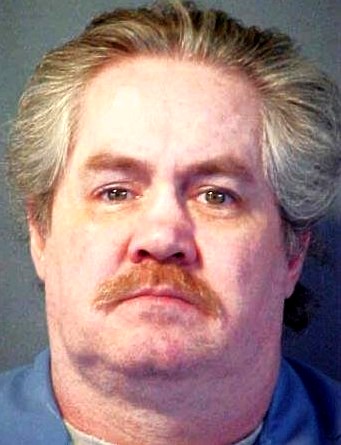
Inmate: DONALD L GILSON
ODOC# 264339
Birth Date: 11/10/1960
Race: White
Sex: Male
Height: 5 ft. 09 in.
Weight: 199 pounds
Hair: Gray
Eyes: Hazel
County of Conviction: Cleveland
Case#: 96-245, 247, 256
Date of Conviction: 05/20/98
Convictions: First Degree Murder, Unlawful Removal Of A Dead Body,
Conspiracy To Unlawfully Remove A Dead Body, Injury Of A Minor Child,
Injury Of A Minor Child
Location: Oklahoma State Penitentiary, Mcalester
Reception Date: 5/28/1998
Oklahoma Attorney General
News Release - 02/27/2009
W.A. Drew Edmondson, Attorney General
Execution Date Set for Shane Coffman's Killer
The Oklahoma Court of Criminal Appeals today set
May 5, 2009, as the execution date for Cleveland County death row
inmate Donald Gilson. Attorney General Drew Edmondson asked the court
to set the execution date after the U.S. Supreme Court denied Gilson’s
final appeal on Feb. 23.
Gilson was convicted and sentenced to be executed
for the 1995 beating death of his girlfriend’s son, eight-year-old
Shane Coffman. Coffman’s body was found in a freezer behind Gilson’s
trailer in Newalla on Feb. 9, 1996. Investigators believe Coffman died
sometime around Aug. 17, 1995. A medical examiner’s report revealed
Coffman suffered acute fractures to his left jaw and right cheek in
addition to a cracked upper incisor and fractures of the left
collarbone, several ribs, a shoulder, a leg and his spine.
Gilson would be the second inmate executed in
Oklahoma this year.
Proclaiming innocence, killer is put to death
Fatally beat his girlfriend's 8-year-old son in
1995
By Sean Murphy - TulsaWorld.com
May 15, 2009
McALESTER — Proclaiming his innocence and saying he
would see his victim in heaven, a man who was convicted of battering
his girlfriend's 8-year-old son and stuffing the boy's body in an
abandoned freezer was executed Thursday at the Oklahoma State
Penitentiary.
Donald Lee Gilson, 48, lifted his head and smiled
at his family before the lethal combination of drugs began to flow
through his veins at 6:14 p.m. He was pronounced dead five minutes
later, Oklahoma Department of Corrections spokesman Jerry Massie said.
"I'm an innocent man, but I get to go to heaven, and I'll see Shane
tonight," Gilson, who was convicted in the 1995 killing of Shane
Coffman, said in his final statement. "It's God's will that this take
place."
Gilson's parents, sister, a friend and a minister
witnessed the execution. About a dozen members of the victim's family
also watched Gilson die from behind a one-way glass looking into the
death chamber. Several others watched on closed-circuit television.
Gilson is the second person to be executed this
year in Oklahoma.
He was convicted of first-degree murder in 1998.
Shane's remains were found in an abandoned freezer outside a mobile
home in rural Cleveland County. An autopsy showed two fractures to the
boy's skull, a tooth missing from his right jaw, and fractures to his
collarbone, shoulder blades, ribs, legs and spine.
Oklahoma Attorney General Drew Edmondson said in a
statement Thursday: "Shane Coffman was only 8 years old when he died
at the hands of Donald Gilson. My thoughts today are with the
survivors of this crime, Shane's siblings."
Four other children who lived with their mother,
Bertha Jean Coffman, and Gilson in a mobile home in Cleveland County
showed various signs of abuse, and two of the children were emaciated
and had trouble walking, court records show. On the day Shane died,
one of the children told investigators, Gilson beat the boy with a
board and then placed him in a bathtub as punishment for going to the
bathroom on the living room rug, court records show. The children told
authorities that they heard Shane screaming while in the bathroom with
Gilson and Bertha Coffman.
Gilson's attorneys argued that there is some doubt
as to whether Gilson or Coffman actually killed the boy. Coffman was
sentenced to life in prison without the possibility of parole.
But Cliff Winkler, a former Cleveland County
Sheriff's Office investigator who worked the case, said he remains
confident that Gilson was responsible for Shane's death. "I have no
doubt in my mind about that," Winkler said. "The other children told
me that he was the main abuser. They said, 'Mama spanks us sometimes,
but he beats us.' "And the way that child's bones were broken, I'm not
sure a woman could hit a child hard enough to do that kind of damage."
On Thursday, Gilson received his last meal at the
prison — a cheeseburger, chili-cheese french fries and a chocolate
shake from Chili's restaurant.
Oklahoma convicted child killer Donald Gilson
executed; Injection brings closure
By Sean Murphy - NewsOK.com
May 15, 2009
McALESTER — Proclaiming his innocence and saying he
would see his victim in heaven, a man convicted of battering his
girlfriend’s 8-year-old son and stuffing the body in an abandoned
freezer was executed Thursday at the Oklahoma State Penitentiary.
Donald Lee Gilson, 48, lifted his head and smiled
at his family before a lethal mix of drugs began to flow through his
veins at 6:14 p.m. He was pronounced dead five minutes later, state
Corrections Department spokesman Jerry Massie said. "I’m an innocent
man but … I get to go to heaven, and I’ll see Shane tonight,” said
Gilson, who was convicted in the 1995 killing of Shane Coffman, in his
final statement.
Gilson’s parents, sister, a friend and a pastor
witnessed the execution. About a dozen members of the victim’s family
watched through a one-way glass. Several others watched on closed-circuit
television.
Gilson’s last meal was a cheeseburger, chili-cheese
French fries and a chocolate shake from Chili’s. He was convicted in
1998 of first-degree murder.
"Shane Coffman was only 8 years old when he died at
the hands of Donald Gilson,” Attorney General Drew Edmondson said in a
statement. "My thoughts today are with the survivors of this crime,
Shane’s siblings.”
Four other children who lived with Gilson and his
girlfriend, Bertha Jean Coffman, showed various signs of abuse, and
two of the children were emaciated and had trouble walking, court
records show.
Gilson’s attorneys argued that there is some doubt
as to whether Gilson or Bertha Coffman actually killed the boy. Bertha
Coffman entered an Alford plea in the case and was sentenced to life
in prison without the possibility of parole. But Cliff Winkler, a
former Cleveland County sheriff’s office investigator who worked the
case, said he remains confident that Gilson was responsible for
Shane’s death. "I have no doubt in my mind about that,” Winkler said.
"The other children told me that he was the main abuser. They said,
‘Mama spanks us sometimes, but he beats us.’ "And the way that child’s
bones were broken, I’m not sure a woman could hit a child hard enough
to do that kind of damage.”
13-years-later: Investigator recalls murder
crime scene
By Meghan McCormick - NormanTranscript.com
May 14, 2009
Retired Cleveland County Sheriff's Department
investigator Cliff Winkler can't ever forget the images of finding 8-year-old
Shane Coffman's badly decomposed body packed inside a deep freezer
behind a Newalla trailer home on Feb. 9, 1996. "It's a case that has
really haunted me over the years and I feel like at least tomorrow,
there will be some closure to it," Winkler said in a phone interview
Wednesday morning.
He said 13 years have passed, but he remembers the
events that unfolded that winter day as if it were yesterday. "It was
almost 5 o'clock when I got a call from headquarters that some people
found what they thought might have been human remains in a deep
freezer," he said. "I went out to the residence and looked in the deep
freezer. I could see that it was what appeared to be a child, the
bones of his little fingers were showing and just the top portion of
his skull. It was very obvious it was a human and most likely a child."
Donald Gilson, the man convicted of killing Coffman,
is scheduled to die by lethal injection 6 p.m. today at the Oklahoma
State Penitentiary in McAlester, the same place where he has served
prison time.
Last month, an effort was made to spare Gilson's
life. The Oklahoma Pardon and Parole board met April 14 and
recommended clemency for Gilson by a 3-2 vote. Gov. Brad Henry granted
Gilson a short execution stay in order to review the recommendation
and other information related to the case. Henry decided Monday to
deny Gilson clemency.
Winkler said he has no plans to travel to McAlester
and witness Gilson's execution. However, he believes Gilson's death
might bring closure to the case. After Winkler found the remains in
1996, he said he immediately called his office for assistance,
notified the Oklahoma State Medical Examiner's office and cordoned off
the scene.
Winkler said the freezer was unplugged and filled
with dirt. Shane's body had been stuffed inside the freezer almost six
months before Winkler discovered him. Investigators believe Shane died
around Aug. 17, 1995. "Once the medical examiner came out and made his
determination, I called the OSBI so we could use their laboratory
people to process the freezer and any other evidence," he said.
Investigators found a pair of jeans and a shirt
inside the freezer, but it was difficult to determine if Shane was
clothed at the time of his death, Winkler said. "When the medical
examiner and OSBI started to move things, they couldn't tell," he said.
A medical examiner's report revealed Shane suffered
acute fractures to his left jaw and right cheek in addition to a
cracked upper incisor and fractures of the left collarbone, several
ribs, a shoulder, a leg and his spine. Winkler said detectives
received consent from the trailer's owner to search the residence.
That's when Winkler found a photo of Gilson, whom he recognized.
Winkler said he learned that Gilson's girlfriend,
Bertha Jean Coffman had lived at the trailer with her children. He
said nobody was living at the trailer when Shane's body was discovered.
Because the trailer needed numerous repairs, Coffman and her children
moved to Gilson's trailer house on Harrah-Newalla Road sometime after
the boy's death. "One thing that stands out in my mind was when we did
the search of the mobile home where the Coffman children were living
at, I found a journal that Shane had written," Winkler said. "He had
mentioned in that journal the best day of his life. He had broken
either his arm or leg, he went to the hospital and got ice cream."
Winkler also recalled abuse the other children
suffered from the hands of Gilson and Coffman. "One little girl almost
lost a foot to gangrene because Donald Gilson stomped on her foot with
combat boots," Winkler said.
The former investigator said within a few hours of
finding Shane, he located Gilson and Coffman at Gilson's residence in
Newalla. The couple continuously changed details surrounding Shane's
death. "They had several stories," Winkler said. "First he had ran
away, then they said they found him dead and thought some other guy
killed him."
Winkler said after Gilson and Coffman told three
different accounts of events, he spoke one-on-one with Gilson. "I
asked him if he had spanked or beat Shane that day and he said, yeah,
he had," Winkler said. "I said how many times? He said several times
because Shane just wouldn't mind, he was out of hand and he said at
one point that Shane passed out and he tried to revive him. "Bertha
came and got him, put him in the bathtub, put some cold water on him
and he came around," Winkler said Gilson told him.
Winkler said he learned more about what happened to
Shane. "But what it finally came down to is that they beat him several
times that day because he had wet on the floor the night before,"
Winkler said.
He said Gilson and Coffman told him that Shane's
death was an accident. "You can tell from the broken bones on the
little child what really happened to him," Winkler said. "You could
tell those wounds were inflicted." Winkler said more evidence showed
Shane's siblings suffered abuse over a period of time. "We did a
search of the residence where Donald, Bertha and the children were
living," he said.
Winkler said Luminol, a chemical substance used to
detect the presence of blood, indicated there were blood spatters on
the walls at one time. Luminol gives off a blue glow in a dark room. "It
looked like the Milky Way inside that residence where they had the
children stand up and they would beat them periodically," he said.
Winkler said the children were malnourished and
physically abused. "They looked like Holocaust victims," Winkler
recalled.
He said after Gilson and Coffman were questioned
about Shane, the other children were taken into protective custody.
Some have questioned Gilson's mental capacity
because it's been reported that Gilson suffered a brain injury from a
vehicle accident about 16 years ago. Winkler said he was aware that
Gilson was injured in a motorcycle accident, but nobody including
Gilson's attorneys mentioned that information at his trial in 1998.
"He knew it was wrong to beat those children," Winkler said.
After spending 20 years with the Cleveland County
Sheriff's Department, Winkler retired in 2004. He said of all the
cases he investigated during his career, Shane's killing sticks out
the most in his mind. "It was a case that I don't think anyone could
ever forget," Winkler said.
Shane's mother, Bertha Jean Coffman also was
convicted for her role in Shane's death. She was sentenced to life in
prison without the possibility of parole. A phone message left for
Gilson's attorney Robert Jackson wasn't returned.
Donald Lee Gilson
ProDeathPenalty.com
Donald Lee Gilson
was sentenced to death for the first degree child abuse murder of 8-year-old
Shane Coffman.
On February 9, 1996,
the skeletal remains of 8-year-old Shane Coffman were found in an
abandoned freezer located next to a mobile home formerly rented by his
mother, Bertha Jean Coffman. A subsequent search of the mobile home
revealed a photograph of Gilson.
On February 11, 1996,
authorities from the Cleveland County Sheriff’s Office met with Gilson
at his mobile home. Living in the mobile home with Gilson was Bertha
Jean Coffman and her four children, 12-year-old Isaac, 10-year-old Tia,
11-year-old Tranny and 7-year-old Crystal. The children were
immediately removed from the trailer and taken to Children’s Hospital
in Oklahoma City. Gilson and Bertha Jean Coffman were detained by the
deputies.
Examinations of the
children conducted in the emergency room revealed Tranny and Crystal
were healthy with a few small scars on each. However, Isaac and Tia
were malnourished and emaciated. Tia’s feet were swollen and she had
difficulty walking. She had gangrenous tissue on her right foot. On
her right buttocks was a large open ulcer. Isaac was in the worst
condition, emaciated and needing assistance to walk. He was
malnourished and had several injuries, in various stages of healing,
and scars throughout his body.
In their initial
interview with police, Gilson and Coffman both denied any knowledge as
to the manner in which Shane died. They stated he had run away from
home during the early part of November and they had found him dead in
the weeds near Coffman’s trailer. They decided that putting him in the
freezer would be the best thing to do.
However, in
subsequent interviews both Gilson and Coffman recanted this story and
admitted to knowing more about the circumstances surrounding Shane’s
death. From interviews with Gilson, Coffman, the Coffman children and
other 3 witnesses, the following picture emerged.
The four Coffman
children mentioned above, along with the murder victim in this case,
and another brother, 13-year-old Jeremy, lived with their mother
Bertha Jean Coffman, in a mobile home. During the fall of 1994, the
Cleveland County Sheriff’s Department received complaints of sexual
abuse committed upon one of the Coffman children by Coffman’s then
boyfriend (not Gilson). The investigating detective visited Coffman’s
mobile home and found the conditions deplorable and unsanitary. The
children were removed from Coffman’s home until conditions improved.
It was about this
time that Bertha Jean Coffman met Gilson. They were both working as
janitors at Little Axe Schools. Gilson fixed up Coffman’s trailer so
she could get her children back. The children were subsequently
returned to their mother. Thereafter, Gilson began spending more and
more time with Coffman and was given the authority to discipline the
children.
In June of 1995, the
oldest child, Jeremy, ran away [as a result of his mistreatment by
Gilson]. The next month, Coffman and her children walked to Gilson’s
trailer for a visit and never returned to their home. Whatever
possessions they had were left at Coffman’s trailer. Gilson’s trailer
had only 2 bedrooms; Gilson and Coffman slept in one room and the
other room contained Gilson’s leather working material.
As a result, all five
children were forced to sleep on blankets in the living room. They
were not permitted to go outside, but had to remain inside the trailer
at all times. The children were taken out of school and claimed to be
homeschooled by Coffman, although no evidence of homeschooling was
ever found. The children were also not permitted to go to church.
Gilson and Coffman
both disciplined the children. This discipline took several forms,
including standing at the wall, sometimes for hours at a time, and
beatings with a bamboo stick, a belt, boards, wooden rulers, metal
ruler, and a bullwhip. The children were also made to sit in the
bathtub, often for hours at a time. Food was withheld, particularly
from Isaac and Tia, as punishment. The abuse inflicted upon Shane
Coffman resulted in his death on August 17, 1995.
At trial, Tranny
testified that he last saw his brother Shane sitting in the bathtub.
Tranny said Shane had gotten in trouble for going to the bathroom on
the living room carpet. He said that before Shane was put into the
bathtub, Gilson beat him with a board. Tranny said Shane received
several beatings with the board, all over his body. After the beating,
Gilson put Shane into the bathtub.
After a couple of
hours, Shane was let out of the bathtub. He then got into trouble
again. Tranny said Gilson and Coffman then took Shane outside the
trailer. Tranny did not know what happened to Shane while he was
outside, but he said he could hear Shane screaming. Gilson and Coffman
carried Shane back inside the trailer. Tranny said Shane’s arms were
swollen, he was breathing “weird”, and he had a soft spot on his head.
Pursuant to Gilson’s “house rules”, the other children were not
permitted to talk to Shane. Gilson then carried Shane to the bathroom
and placed him in the bathtub.
Tranny said he and
the other children heard a few more screams and banging noises. He
said both Gilson and Coffman were with Shane when they heard the
screams. The children then decided to try and go to sleep. He said
they were awakened some time later by Gilson and Coffman and told that
Shane had run away, and that Gilson and Coffman were going to look for
him.
Isaac testified
Gilson first sent Shane to stand at the wall for wetting the bed.
While he was standing at the wall, Gilson hit him with a board. Gilson
and Coffman eventually took Shane to the bathroom and put him in the
bathtub. Isaac said Gilson made all the other children go to the
bathroom and tell Shane what a bad boy he was. He said that both
Gilson and Coffman remained in the bathroom with Shane while the
children watched television. He said they could hear Shane crying.
Isaac further stated
that later that night, Gilson and Coffman told them Shane had run away.
In a statement made to police shortly after his arrest, Gilson stated
that on August 17, 1995, he had put Shane in the bathtub as punishment.
Gilson said he was
trying to teach Shane a lesson, so he spanked him and put him in the
bathtub where he was to remain until he stopped the disruptive
behavior. He said the water in the bathtub was initially warm to help
the pain from the spanking, but then he changed it to a cold bath.
Gilson said Shane was
crying as Coffman talked to him about his behavior. He said he then
laid down on the couch to watch television with the rest of the kids
where he eventually fell asleep. Coffman was in and out of the
bathroom talking to Shane before she went to the bedroom to lay down.
A while later,
Coffman came into the living room in tears and told Gilson to come to
the bathroom. He said Coffman had taken Shane out of the bathtub and
laid him on the floor. Shane’s lips were blue and he was not breathing.
Gilson said he performed CPR for approximately an hour to an hour and
half.
When his efforts were
unsuccessful, Gilson took the comforter off of his bed, wrapped Shane
up and placed him back in the bathtub. Gilson said he and Coffman
discussed what to do next. He said Coffman was worried that the
Department of Human Services (DHS) would take her kids away if the
authorities found out Shane had died. So they left Shane in the
bathtub, waiting until the other children had gone to sleep to remove
him from the house. Gilson said they carried Shane outside and placed
him in the back of a truck. He said they discussed “just dumping him
somewhere” or “bury him out in the middle of the boonies.” But they
decided neither of those options were right and “even though he wasn’t
alive he would still be part of the family being on her property, . .
. thought about putting him in the freezer, it wouldn’t hurt him and
then concreting it over. And making a flower bed out of it.”
So Gilson and Coffman
took Shane’s body to the freezer located next to Coffman’s trailer and
put him inside. Gilson said he and Coffman told the other children
Shane had run away. Bertha Jean Coffman testified at trial to
disciplining her children by making them stand at the time-out wall,
and spanking them, only on their bottoms, with a cloth belt or a
wooden paddle. She also testified that Gilson disciplined her children
by spanking them with the wooden paddle, but at various places on
their bodies. Coffman stated Gilson had a quick temper and did not
want the children tearing up his trailer.
In her statement to
police on August 17, 1995, Coffman said she and Gilson found Shane
sexually assaulting his younger brother. As punishment, they made him
stand at the time-out wall, then Coffman paddled him. When Shane
refused to stand at the wall, Coffman spanked him again. When Shane
still would not do as Coffman directed, she screamed at him. Shane
then fainted. When Coffman could not get a response from Shane, she
put a piece of ice on his chest. When he still did not respond,
Coffman picked him up and took him to the bathroom where she placed
him in a tub of cool water. She said Shane eventually came to and
wanted to get out of the tub. She said he slipped and hit his head on
the faucet.
Coffman stated she
pushed on Shane’s shoulders to keep him in the bathtub. They struggled,
and the shower doors were knocked off their railing. Coffman called
for Gilson to come and fix the doors. Gilson left the living room
where he had been watching television with the other children and put
the doors back on their railings. Gilson left the bathroom. Coffman
and Shane struggled again.
Gilson returned to
the bathroom to see what the noise was about. He saw the doors had
fallen off again so he took them and set them on the floor. Coffman
said she remained in the bathroom with Shane while Gilson went back to
the living room. After a while, Gilson stepped into the bathroom and
told Coffman to leave Shane alone for a while. So Coffman left the
bathroom to get Shane dry clothes and prepare lunch. When she saw that
Gilson had already prepared lunch, Coffman laid down on her bed. She
was awakened by a noise in the bathroom and saw Gilson coming out of
the bathroom.
When asked how Shane
was, Gilson responded he was fine and that he was blowing bubbles.
Coffman sat down to have a cup of coffee, then decided to check on
Shane. She found him quiet but not breathing. She called for Gilson
and they pulled Shane out of the bathtub and gave him CPR. She said
they waited until the other children were asleep before taking the
body to the freezer. Coffman also stated that once Shane died, Isaac
and Tia began receiving the brunt of the discipline from Gilson.
Shane’s skeletal
remains were not found until approximately 6 months after his death.
Therefore, the medical examiner, Dr. Balding, was not able to make a
determination as to the cause of death. The medical examiner did
testify to injuries to certain bones which were evident upon his
examination of the remains. The injuries included a fracture to the
right jawbone. The injury was determined to be “acute” as it showed no
signs of healing, and therefore was probably less than a week old at
the time of death. Another fracture was also found on the left side of
the skull.
Dr. Balding testified
the two fractures were the result of two different blunt force blows.
A tooth was missing from the right jaw. Fractures were also found in
the collarbone, shoulder blades, numerous ribs, both legs, and several
vertebrae in the spine. All the fractures were ruled acute, and not
the result of normal childhood play. Gilson and Bertha Jean Coffman
were jointly charged with first degree murder by child abuse in the
death of Shane Coffman, and one count of injury to a minor child for
the abuse suffered by each of the remaining children. They were also
jointly charged with conspiracy to unlawfully remove a dead body and
unlawful removal of a dead body.
On August 20, 1997,
approximately 8 months prior to Gilson’s trial, Coffman entered Alford
pleas to all counts. Gilson was subsequently tried and convicted on
all charges except he was found not guilty of committing injury to a
minor child as to Jeremy, Tranny and Crystal. The jury, in connection
with the two injury to a minor child convictions, concluded Gilson’s
sentence should be life imprisonment. At the conclusion of the second-stage
proceedings, which were conducted as a result of Gilson’s murder
conviction, the jury found the existence of both aggravating factors
alleged by the State and recommended a death sentence. Gilson was
formally sentenced by the state trial court at a later hearing.
Donald Lee Gilson
Amnesty.org
Donald Gilson is dueto be executed in Oklahoma on May 5, 2009.
He was sentenced to death in 1998 for murder in connection to the
death of his girlfriend’s eight-year-old son in 1995. He was convicted
under Oklahoma’s unique first degree murder statute that allows the
death penalty for permitting child abuse resulting in death without
requiring any specific intent on the part of the ‘permitter’. The
Oklahoma Pardon and Parole Board has voted to recommend clemency. Its
recommendation is not binding on Governor Brad Henry.
On 9February 1996, the skeletal remains of
eight-year-old Shane Coffman were found in an abandoned inoperable
freezer next to the mobile home formerly rented by his mother, Bertha
Jean Coffman. At the time the body was discovered, Bertha Coffman was
living with Donald Gilson in his mobile home with her four other young
children. The children, two of whom were malnourished and emaciated,
were taken into care and the two adults were arrested. It was
determined that Shane Coffman died on 17 August 1995, but it was not
possible to establish the cause of death. There was evidence of
fractures to various bones in his body.
Bertha
Coffman and Donald Gilson were charged jointly with first degree
murder by child abuse. In August 1997, however, Bertha Coffman entered
a guilty plea, and in so doing avoided the death penalty. Her
sentencing by the judge was deferred until after she had testified at
Donald Gilson’s trial. She was later sentenced to life imprisonment
without the possibility of parole. Donald Gilson was tried in 1998.
Under
Oklahoma law, a person can befound guilty
of first degree murder when a child dies from “willful or malicious
injuring, torturing, maiming or using of unreasonable force” by the
defendant or he or she “willfully cause[s], procure[s] or permit[s]”
any of these acts to be inflicted upon a child. “Willfully” was
defined for Gilson’s jury to mean “a willingness to commit the act or
omission referred to, but does not require any intent to violate the
law, or to acquire any advantage”. “Permitting” was defined to mean
“to allow for the care of a child where one knows or reasonably should
know” the child is being placed at risk of abuse.
The jurors
were instructed that they had to be unanimous on a verdict of first
degree murder, but that their unanimity was not required as to the
theory under which they arrived at this verdict. The jury form gave
them the option of recording that they were unanimous that Gilson
directly abused the child causing death; that they were unanimous that
he “permitted” child abuse murder; or that they were “divided as to
the underlying theory”. The jurors ticked the latter finding. One of
the jurors has since said in an affidavit that most of the jurors
considered that Donald Gilson had been the “permitter” rather than the
“committer”, and that they had considered that “permitting” merely
meant a failure to intervene rather than any active participation.
According
to Donald Gilson’s current lawyer, a number of the jurors have
expressed concern at the death sentence in light of the fact that
Bertha Coffman received a life prison term: five have said that they
consider his death sentence unfair; three that they would be
“relieved” if his death sentence was commuted.
In its
ruling on Donald Gilson’s case in April 2008, the US Court of Appeals
for the 10thCircuit noted that “we have not found another first-degree
murder statute similar to Oklahoma’s”. In an appeal to the US Supreme
Court in November 2008, Gilson’s lawyers asserted that he is “believed
to be the only person in the United States on death row for an offense
premised on ‘permitting’ another to commit murder. Research indicates
that no one in the 232-year history of this nation has been executed
on such an offense”. In February 2009, the Supreme Court announced
that it would not take the case.
When the
Oklahoma Court of Criminal Appeals upheld Donald Gilson’s conviction
and death sentence in 2000, one of the judges dissented. Judge Charles
Chapel wrote: “The crime of
permittingrequires only that the defendant allows another to commit
child abuse murder. No action is required – all that is necessary is
that the defendant knows that child abuse is occurring but does not
stop someone else from committing the crime”. He argued that he could
not uphold the death sentence because “a defendant must have some
personal culpability, beyond knowing about and failing to stop another
from committing a crime, before the State may impose the ultimate
punishment”. Judge Chapel argued that the trial judge had erred in
failing to instruct the jury that it could find Donald Gilson guilty
of an offence less than first-degree murder.
A
three-judge panel of the10thCircuit upheld
Donald Gilson’s conviction and death sentence in April 2008. Chief
Judge Robert Henry dissented, noting that “evidence was presented at
trial that Mr Gilson played no part in abusing Shane the day he died
and that he was asleep on the couch during the abuse that led to
Shane’s death.” He also noted that Bertha Coffman had consistently
claimed that Gilson had not abused Shane on the day of or the few days
before his death. “A rational jury”, wrote the Chief Judge, “could
have believed this evidence and found Mr Gilson guilty of culpable
negligence, but not of actively permitting child abuse, as the
Oklahoma statute requires for a first-degree murder conviction”. He
argued that the jury should have been told that it could return a
verdict of second-degree manslaughter.
Gilson’s
lawyers petitioned for a rehearing in front of the full 10thCircuit
Court. This was denied by a vote of eight to four on the question of
whether the punishment was proportionate, and by a vote of six to six
on the jury instruction question. One more vote on the latter would
have resulted in a rehearing and possible relief.
On 14 April
2009, the Oklahoma Pardon and Parole Board voted three to two that
Governor Henry should commute Donald Gilson’s death sentence.Among the witnesses against execution was the trial
judge who said that the evidence did not justify the death penalty.
According to media reports, he said: “It wasn’t fair for Mr Gilson to
get a death penalty when she got life without parole. From the
evidence I heard, I thought probably she was at least as much
responsible, if not more, than he was.” The Board also heard expert
evidence of the organic brain damage Donald Gilson suffered as a
result of a near fatal car accident in 1993, which resulted in a 30 to
40 per cent loss of the volume of his right frontal and temporal lobes.
More importantly, Donald Gilson suffered 25 to 30 per cent loss of
brain in the area of executive functioning. This is the area of the
brain needed for decision-making. This evidence was not presented to
his trial jury.
Donald Lee Gilson
Little Axe, Oklahoma
Feb. 14, 1996
Shane Alan Coffman's bones were
found in a freezer behind a mobile home where he and his family used
to live by the owner of the mobile home who was cleaning up the area.
He was unable to move the freezer, so broke the lock and it was filled
with dirt.
As he started removing the dirt he
discovered Shane's partially decomposed body. Officials estimated he
had been in the freezer for approximately six months following his
death.
Charged with first-degree murder,
child abuse, a misdemeanor charge of concealing a death, conspiracy to
unlawfully remove a dead body and unlawful removal of a dead body was
Shane's mother, Bertha Jean Coffman, 39, and her boyfriend, Donald Lee
Gilson, 34, who Shane and his family had been living with.
Two of the five remaining children
of Coffman had to be hospitalized because of malnourishment. The
county district attorney said "there was severe malnourishment, open
sores and one of the brother's feet was deformed from lack of
nourishment."
The kids told stories about going
for days without food as punishment. One told about stealing dog food
and putting it in their pocket for food." Shane's oldest brother had
run away from the home and was living with his grandmother because he
was tired of the abuse.
The medical examiner who performed
an autopsy on Shane's remains reported that there were numerous broken
bones from head to foot, leading him to attribute the death to child
battering/maltreatment. However, the extreme decomposition of the body
precluded any "definitive diagnosis as to the cause of death," he
reported.
According to the examiner's report,
Shane's remains were wrapped in a multicolored blanket under dirt that
filled about one-third of the freezer. The boy was not clothed, but a
pair of black athletic shoes were found outside the blanket, the
report says.
The broken bones were not obvious
upon external examination, but were determined through microscopic
evaluation that followed extensive cleaning and drying of the remains,
he reported.
A facial bone, a jaw bone, a
collarbone, three ribs, six vertebrae, a shoulder blade and a leg were
among the fractures identified.
June 7, 1996
During their preliminary hearing, Bertha Jean Coffman and Donald Lee Gilson sat together,
holding hands, as they listened to testimony describing events leading
to Shane's death.
Gilson's stepfather, Floyd Wilson,
told the court he talked to Gilson about the Coffman death after
Gilson was arrested and booked into the county jail. Wilson said his
stepson claimed he was asleep one day when Coffman woke him and told
him Shane needed cardiopulmonary resuscitation in the bathtub.
Wilson said Gilson claimed he could
not revive the boy so the couple decided to hide the boy's body
because Coffman feared the state would take away her other four
children.
Prosecutors also called Gilson's
mother, Sharon Wilson, and Bertha Coffman's mother, Pauline Sperry, to
the stand.
He showed Sharon Wilson photographs
of Coffman's 10-year-old daughter. They showed an open flesh wound and
the child's foot with gangrene. Wilson said she had never seen the
wound but that the girl had told her Gilson accidentally stepped on
her foot.
Shane Coffman had been placed in
state custody for one month a year before he died but was returned to
Coffman by a county judge.
Prosecutors also called two of
Shane's four siblings, Jeremy Coffman, 13, and Isaac Coffman, 12, as
witnesses.
The boys said Gilson beat them with
canes, garden hoses, boards and belts as punishment. Both also said
they had lied to officials in the past about abuse by a former
boyfriend of their mother.
Isaac said his mother and Gilson
forced him to spend most of his time between October and January
sitting in a bathtub as punishment. He said he was fed peanut butter
and jelly sandwiches and drank water from the sink.
He said Gilson at times tied him up
in the back of a pickup and drove him around in the cold without
clothing.
When asked if he wanted his mother
to go to jail, Isaac answered, "yes. " His mother, seated across the
courtroom, rested her head in her hands and began crying.
Also heard were accounts of Shane's
last day alive, as told by his mother and her boyfriend to
investigators.
An 87-page report that included
Coffman's version of how Shane died was highlighted by the defense and
prosecutors.
A bureau of investigation special
agent recalled an interview with Coffman that he included in the
report.
Coffman claimed she found Shane
misbehaving in bed with one of his brothers when she decided to spank
him as punishment, the report revealed.
She told the agent she used a board
to spank Shane on the legs and buttocks and then ordered him to face a
wall in Gilson's trailer. The boy refused to obey, she said, and she
forced him into the bathroom.
She said that during a struggle, she
slipped on a wet floor and knocked a shower door out of place and the
door struck Shane in the head. She claimed in the report he passed out
and she placed the boy in the bathtub to revive him.
Parts of the report quoted Coffman
as saying, "I did not mean to do it. I really didn't do anything. I
did not mean for it to fall on him. "
"I just know I did not push my baby
under water," she said in the report.
A state crime investigator testified
in the preliminary hearing that Gilson told her two different stories
about the death of Shane. A homicide investigator said she interviewed
Gilson shortly after Shane's body was found.
She said Gilson first told her that
the boy had run away from the trailer where Coffman and her five
children had lived.
Johnson said Gilson claimed he and
Coffman found Shane's body when they went to her former trailer. But
after a 15-minute break, Gilson recanted this story, the investigator
said.
Gilson then told her Shane had been
urinating on his siblings and items in the trailer. Gilson claimed he
spanked the boy with a paddle and told him to get in the bathtub until
he stopped urinating, she said.
Gilson told her that after he fell
asleep watching television, Coffman woke him up to tell him Shane was
not breathing and his lips had turned blue in the bathtub. She
testified that Gilson told her he tried unsuccessfully to revive the
boy for more than an hour.
TRIAL
April 3, 1998
Shane Coffman bore the brunt of
abuse from his mother and her boyfriend, and eventually died from that
treatment, the prosecutor told jurors in his opening statement in
Gilson's trial.
Shane's mother pleaded guilty days
before her trial was to begin. During her plea, she said she was
guilty of allowing Gilson to abuse her son to the point of his death.
Sitzman described how Shane, on the
day he died, had been beaten. He had been forced to stand in front of
a wall for hours and was punished if he moved. At one point, he
urinated on himself and the floor. He then was forced to sit in a
bathtub with first hot and then cold water, Sitzman said.
Shane fought with his mother in an
attempt to get out of the tub, but she would not let him leave, he
said.
"Finally, he just quit," Sitzman
said. "Finally, Shane Coffman's little heart just gave out."
Jurors in the murder trial heard
from Gilson when tape recordings of an interview with police were
played in court. On the tape, Gilson first tells that he and Coffman,
found the boy's dead body outside her trailer in November. Instead of
notifying authorities, the couple hid the boy's body inside a freezer
outside the trailer. Gilson said they did not want the other children
taken away from them by the state.
In the interview, Gilson said one of
Coffman's earlier boyfriends had sexually abused Shane and some of his
siblings. He said he could possibly have been responsible for Shane's
death. After a break in the interview, the investigator testified that
she told Gilson that Coffman was giving up that version of their story.
In the second part of the taped
interview, Gilson then said the boy had died in his trailer the
previous August.
Shane had been placed in the bathtub
that day because he had been urinating on the floor and his siblings,
Gilson said in the interview. Both he and Coffman had spanked the boy,
he said.
Gilson said he fell asleep on the
couch and was summoned to the bathroom by his girlfriend.
"She had taken Shane out of the tub
and he was laying on the floor," Gilson said in the interview. "His
lips were blue and he wasn't breathing. I performed CPR (cardiopulmonary
resuscitation). I tried several times, but to no avail."
Gilson said he had no idea what
caused the boy's death. He said they took the body out of the trailer
that night to bury it in the freezer. The other children were told
their brother ran away.
Prosecutors allege Gilson and
Coffman both abused the boy to the point of his death.
They also say both adults abused
Coffman's other children.
Gilson's attorneys argue that only
the children's mother was abusive, and that Gilson was trying to help
the family.
Coffman testified at Gilson's trial
that she sometimes fought with her boyfriend because he was too rough
when he disciplined her children.
She told the jury that although she
spanked and paddled her children, she never struck them anywhere
except on the buttocks. She said she saw Gilson strike her children
with his fist and kick them as they lay on the floor.
"I discussed it with him and told
him I thought it was wrong the way he was disciplining them," Coffman
told the jury. "We had several fights about it."
On the day Shane died, his mother
said, all the children were sleeping in the living room of Gilson's
trailer. She said Gilson came out of the bedroom he and Coffman were
sharing and saw Shane was trying to sexually molest his older brother,
Tranny. She said Gilson called her into the room and told Shane to
tell her what he had been doing.
Coffman said she told Shane to stand
at "time-out" wall for 15 minutes. She said he would not stand there,
and kept sitting on the floor to watch television.
In the next hour, she gave him three
sets of five swats on his buttocks with a small wooden board. Coffman
said her son still would not stand at the wall. She said Gilson was
not involved with disciplining Shane that day.
"I was screaming at him, 'Why can't
you just do what I tell you?'" Coffman said. "The next thing I knew,
he just fainted."
Coffman said she tried to get him to
move, then took him to the bathroom to run cool water on him to revive
the boy. When he did come to, Coffman said Shane tried to get out of
the tub while she tried to hold him in it.
During the struggle, he slipped and
hit his head on the faucet. After a little more of a struggle, Coffman
said she was able to begin talking to her son about his behavior.
Coffman said a former boyfriend had
molested her children, and Shane believed that was the way to express
love for his siblings.
At Gilson's urging, Coffman said she
then left her son alone in the bathroom to take a bath. She told the
jury she left Shane in the tub while she went to lay down.
She was awakened by a noise in the
bathroom, and went to check on her son. Gilson was coming out of the
bathroom. He told her Shane was fine and urged her to go to the living
room with him to have a cup of coffee.
Coffman said she soon made an excuse
to check on the boy. As she entered the bathroom, he appeared to be
sleeping in the tub. However, she said he wasn't breathing. She pulled
him from the tub and tried to resuscitate him.
"I panicked; I cried; I did
everything any normal person would do," Coffman said.
Gilson came back to the bathroom and
helped her perform cardiopulmonary resuscitation for the next one and
one-half hours. When he couldn't be revived, Coffman said they
discussed what to do with the boy's body. They decided to put him in
an old, broken freezer outside Coffman's trailer about four miles away.
They decided to wait until the other
children fell asleep before they moved his body. Coffman said they
told the children Shane was sleeping in the tub.
"I pretty much had a tough time the
rest of the day. I just pretended like it was any other day," Coffman
said.
The next day, the children were told
their brother ran away from home, Coffman said.
April 8, 1998
Their mother's boyfriend bound them,
beat them with a hose and a board, and kicked them until they bled,
Shane's siblings testified.
Jeremy, 15, said Donald Lee Gilson
punched him in the face, whipped him with a cane and a water hose, and
kicked him in the groin. Jeremy said he had blood running down his leg
as a result of the kick.
The boy later left home to live with
his grandmother. He said he left because he was "tired of being beaten"
by Gilson. Jeremy Coffman said he didn't like his mother's boyfriends,
including Gilson, because they were abusive to him and his siblings.
Under cross examination by the
defense attorney Jeremy Coffman admitted to lying frequently,
sometimes to get people into trouble if he didn't like them.
A vivacious Crystal Coffman, 9,
clutched a white toy bear as she talked. Before her testimony, the
judge reminded her to answer "yes" or "no" to questions. Each time she
caught herself saying "yeah" or using other slang words, she would
correct herself.
Crystal said she is in second grade.
She acted much younger than her 9 years of age.
She said Gilson sometimes put her in
the corner and spanked her with a belt or a board. She was punished
for urinating on the floor while she was sleeping at night, she said.
She also was made to stay in the bathtub, sometimes overnight.
Crystal said Shane also was placed
in the bathtub for urinating on the floor. Gilson also whipped Shane,
she said.
Once she saw Shane in the tub
playing. "He was making up something. He was playing with his fingers,
acting like they was people," Crystal Coffman said.
She said Gilson sometimes stomped on
the feet of her other siblings, Isaac and Tia Coffman.
Tia, 12, testified for more than an
hour. She spoke with a slight lisp. The girl said Gilson whipped her
with a board, tied her hands together with rope, put her on the
bathroom floor and stomped on her foot. She also said she was not
allowed to eat unless she asked Gilson for food.
When he tied her hands with rope,
Tia Coffman said, she started to black out, then she vomited. Gilson
made her clean the mess, then stand at the "time-out" wall for the
rest of the day.
She said she had sores on her bottom
from the whippings she received from Gilson. She has a scar there and
on her foot, she said.
"Don stepped on my foot with hiking
boots on," she said. "He was saying I was lying to him, and he stepped
on my foot."
Under cross examination, she said
she had been molested by one of her mother's former boyfriends.
April 9, 1998
On the day he died, Shane sounded
like he was gargling water when he breathed, the boy's brother said.
Tranny Coffman, 13, also said he heard Shane screaming in the bathroom
while his mother was in that room along with her boyfriend.
Tranny testified for three hours. He
said his brother was in trouble for urinating on the floor. He was
told to stand still next to a pantry door in the kitchen, then was put
in the bathtub when he didn't stand still.
Despite what Coffman testified to
earlier, Tranny said Shane was not trying to sexually molest him that
morning. Tranny also said Gilson hit all of the children with a board,
forced them to stand at the pantry door for hours and made brother
Isaac sit in the bathtub for days at a time.
Tranny said he got into trouble once
for sneaking a bit of food to Isaac when he was in the tub for several
days.
Under cross-examination by the
defense attorney Tranny said he liked Gilson when he first met him,
but later grew to dislike the man's behavior. "I don't like what he
did," Tranny said when asked if he still liked Gilson. "He's OK but
his actions weren't OK."
Tranny said he once got into trouble
for playing with matches. Gilson struck him with a bullwhip, and his
eyes were swollen shut.
After nearly three hours of
testimony, Tranny began crying softly when Jones repeatedly asked him
if his brother Jeremy was lying about something the two boys
remembered differently.
Isaac Coffman also testified. He
said before Shane died, the boy had been in the bathtub about two days.
Isaac said he saw his brother a few times on the second day when he
went to use the rest room. Some of Shane's hair was missing and he had
bruises on his arms and legs. He wasn't talking but was making "funny
noises."
Late that night, he said he and the
other children were awakened by their mother and Gilson, who told them
that Shane had run away.
Isaac also said he had been beaten
with a board, tied and handcuffed to the wall and placed in the
bathtub for long periods of time. He said for three or four months, he
spent his nights in the bathtub and his days standing at the wall.
While standing at the wall, he said Gilson sometimes hit the back of
his legs with a board or a stick. He also was struck on the top of his
head.
Jeremy, Tia, and Crystal, 9,
testified about similar treatment. Jeremy had run away and was living
with his grandmother before the Coffman family moved into Gilson's
trailer. He said Gilson had struck him when he was living at a trailer
rented by his mother.
During the testimony of the
pediatrician who had examined the other children the day Shane was
found she said Tia and Isaac seemed to have the worst symptoms. Both
were undernourished and had open sores on their buttocks. Isaac also
had open wounds on his legs, she said.
Crystal and Tranny did not show the
same overt signs of maltreatment, she said. Tia and Isaac were
admitted to the hospital and stayed three or four days. She said it is
common for some children in a family to show signs of abuse while
other children are unharmed.
The medical examiner also testified.
He said he examined Shane's remains after they were found in the
freezer outside Coffman's abandoned trailer house.
He noted fractures to the boy's jaw,
cheekbone, top incisor, collar bone, ribs, vertebrae and ankle socket.
He said all of the fractures seemed to have occurred less than a week
before the boy died.
The fractures were consistent with
blunt force trauma, similar to what would happen during a car wreck,
he said.
VERDICT
April 16, 1998
A jury found Donald
Lee Gilson guilty Wednesday of first-degree murder in the 1995 beating
death of his former girlfriend's 8-year-old son, Shane Coffman.
The Cleveland County jury also found
Gilson guilty of abusing two of Shane's five siblings, and sentenced
him to life in prison on each count. He was found innocent in the
other three child abuse charges.
Jurors also convicted Gilson on a
conspiracy count, sentencing him to 10 years and a $5,000 fine, and a
charge of unlawful removal of a body. For that he received a five-year
sentence and another $5,000 fine.
The penalty phase will begin
Thursday on the murder conviction.
Shane's battered body was discovered
in an abandoned freezer in February 1996. He was killed in mid-August,
1995.
His mother, Bertha Jean Coffman, had
previously pleaded guilty of first-degree murder. She testified
against Gilson.
Earlier Wednesday, Cleveland
County prosecutor Rick Sitzman had told the jury that Gilson and
Bertha Coffman acted in concert in the abuse-related death and
claimed that she took sole responsibility for her son's death to
help her former boyfriend escape a possible death sentence.
"There is a bond between those two -
Bertha Jean and Donald Lee - and I submit to you that that bond is
still there," Sitzman said. "She thinks she's got the death penalty
beat and by God she is going to do her damnedest to get the same for
him out of you. I say hogwash."
Defense attorney Rand Eddy had
argued that Bertha Coffman "was singly and solely responsible for the
abuse and murder of her son."
"Bertha Coffman is a callous, cold,
cruel, ruthless snake who will do anything to save her skin," Eddy
said. "Not only will she do that to Don Gilson, she will do it to her
own children. How low can a person sink? I think we have seen it in
this case."
Eddy spent much of his closing
arguments attacking the credibility of Bertha Coffman, who awaits
sentencing on the murder charge.
SENTENCE
May 21, 1998
Prosecutors say Bertha Jean Coffman
has another thing coming if she believes she has escaped the death
penalty given to her former boyfriend in the murder of her 8-year-old
son.
"I can only speculate on their
strategy in allowing her to plead guilty and then allowing her testify.
If her strategy was to put it all off on Don Gilson, she is wrong,"
Prosecutor Rick Sitzman said Wednesday.
"I don't think there is any
assurance that she won't be receiving the death penalty."
Gilson, who was convicted of killing
8-year-old Shane Coffman and leaving his body in a dirt-filled
abandoned freezer, was formally sentenced to death Wednesday.
Ms. Coffman has pleaded guilty to
first-degree murder for allowing Gilson, her former boyfriend, to
abuse her son. She faces the death penalty when her sentencing hearing
begins Tuesday.
Gilson, handcuffed and wearing an
orange jail jumpsuit during his court appearance, shook his head "no"
several times as District Judge Bill Hetherington imposed the sentence.
"This case, in my view, has stricken
at the heart of our community," the judge said. "It does so, of course,
because it involves children of a young age, who without question have
been subjected to abuse and neglect of unspeakable proportions."
Gilson had a terse "no comment,
sir," as he passed reporters on his way back to the Cleveland County
Jail.
Shane's battered body was discovered
in February 1996. He was killed in mid-August 1995.
Hetherington sentenced Gilson to two
life terms on two counts of child abuse for injuries to Shane's sister
Tia and brother Isaac. Gilson was acquitted on three other abuse
charges.
Hetherington also sentenced Gilson
to an additional 10 years for conspiring to and unlawfully removing
Shane's body and burying it in the freezer.
"It is very difficult for this court,
indeed our community, to even begin to understand how an individual
parent or caregiver entrusted with protecting and raising children --
the most important responsibility there is -- could possibly do the
kinds of things or allow the kinds of things to be done to children
that the evidence in this case demonstrated was done to the Coffman
children," the judge said.
Sitzman said the verdict "sends the
signal that the system works."
"It may not work perfectly, and it
had a worst-case scenario for Shane, but the system does work,"
Sitzman said.
Floyd Wilson, Gilson's stepfather,
disagreed. He said his stepson was railroaded and would have fared
better if he could have paid for his attorney.
"I don't think he had a fair trial.
I don't think he had fair representation at all," Wilson said. "He did
help Coffman bury the body and that's all he's guilty of. My son
wasn't even there the day Shane was killed."
Sitzman said he didn't believe money
had anything to do with the case.
"Even if he had gotten Racehorse
Haynes or one of those other high-priced attorneys, they had the same
facts to work with and those facts were pretty clear to the jury,"
Sitzman said.
Sitzman, who told jurors at Gilson's
trial that Ms. Coffman "thinks she's got the death penalty beat," said
prosecutors would push hard next week for the death penalty.
Two or three days of testimony is
planned by the prosecution, including testimony from Shane's siblings.
May 28, 1998
During Coffman's sentencing hearing
which was postponed until the outcome of Gilson's trial, Coffman
painted a picture of herself as a victim of life. She was removed from
her own home at age 5 because she was neglected. At her first foster
home, she was molested by a foster brother, but her foster mother did
not believe her.
She stayed in a second foster home
for only a few months before moving to a third home. There, she said,
her foster father began molesting her.
"I was molested every day of my life
from the time I was 7 1/2 years old," Coffman said. "Whatever he
wanted me to do, he made me do it."
At 16, she said, she told the man to
stop or she would report him.
After leaving that home when she
turned 18, Coffman said she entered a series of relationships with men.
Her first marriage ended after she
caught her husband with another man. Her second husband, she said,
forced her to choose between him and her birth family, with whom she
had recently reunited. She chose her family, she said.
Next was the father of four of her
children. Danny Coffman was shot by his father during an argument on
Christmas Eve. Coffman was pregnant with Tia at the time.
Less than a year later, she was
living with Alan Thomas, who fathered Shane and Crystal, she said.
They separated when he began staying out all night and she suspected
he was doing drugs.
Almost immediately, she began living
with Russell Whitley. Although Whitley cooked, cleaned and massaged
her feet, he locked the children in their rooms, she said. He also
sexually molested Tia, and possibly some of the other children.
After forcing Whitley out of their
home, Gilson became Coffman's next beau. She said Gilson offered to
help her learn to discipline the children.
"Don and I discussed this. I told
him I was not a good disciplinarian because I could not stand to see a
child spanked," Coffman said.
"He told me, You've let them go for
so long, it's going to take some mighty hard punishment to get them
back.' "
That punishment caused her oldest
child, Jeremy, to run away from home. It also led to Shane's death and
to the mistreatment of Isaac, Tranny, Tia and Crystal.
She said she couldn't leave Gilson
or even seek medical attention for her children because she had no
transportation, no friends and no trust in local authorities. She was
afraid to call human services employees because she said she didn't
want to lose her children.
But the prosecutor said Coffman
decided not to leave Gilson. "She alone chose not to leave Gilson
because she and he had a vested interest in protecting each other,"
Clift said. "The one person in their (the children's) lives who was
supposed to nurture and protect them was a part of the horrible things
that happened."
The prosecutor's partner said
although Coffman pleaded guilty to the charges, she has not accepted
responsibility for her actions.
"She tries to find solace in blaming
others for what she has done," he said. "There were six victims in
this case, and they were all named Coffman. She is not one of them."
May 29, 1998
Saying death is too good for Bertha
Jean Coffman, the judge sentenced Shane Coffman's mother to life
without parole for her role in Shane's death.
In addition, he imposed five life
sentences against Coffman for abusing her five other children; 10
years for conspiracy to remove a dead body; and five years for
unlawful removal of a dead body. He fined her a total of $70,000. Each
sentence will run consecutively.
"At some level, I think that killing
might be too good for you," he told Coffman. "You should go to bed
every night and get up every morning and think about what you did."
"It would be easy to kill you for
what you've done," he told Coffman. "If that would bring Shane back,
or save one of those children one sore, I could do that easily without
any remorse. But it won't."
Although the judge agreed that three
of the children were not as severely abused as the other two, he said
the life sentences were appropriate in all five cases because the
conditions the children were subjected to "deserve severe punishment."
The judge said he disregarded most
of Coffman's testimony on her own behalf. "You've told so many stories
that it is difficult to believe anything you say. I think you would
say anything you needed to say to save your life," he said.
Coffman had no immediate visible
reaction to the judge's sentence, but began crying while sitting in
the courtroom after court was adjourned.
The judge praised the prosecutors in
the case. He said before the sentencing hearing, that he believed
Coffman permitted Gilson to abuse her children. However, he said the
prosecution's compelling arguments convinced him that Coffman likely
was involved in inflicting some of the abuse.
The prosecutor asked for the maximum
sentences for the charges against Coffman.
"We ask that you sentence her to
death for the cruel, slow, prolonged, agonizing death of Shane," he
said.
"Just because she pleaded guilty to
being not the perpetrator but the permitter does not mean that it's
true."
Coffman's attorney, asked for
leniency. He asked the judge to consider Coffman's troubled
background.
"She was incapable of doing anything
other than what she did," he said. "Legally, she's guilty, but she
does not deserve the death penalty, your honor, because she is a
victim herself."
Shane's siblings remain together in
a foster home.
Defendant was convicted in the District Court of
Cleveland County, William C. Hetherington, J., of first-degree murder,
two counts of injury to a minor child, conspiracy to unlawfully remove
a dead body, and unlawful removal of a dead body, and was sentenced to
death for murder and to various terms of imprisonment and fines on
non-capital counts. Defendant appealed. The Supreme Court, Lumpkin,
V.P.J., held that: (1) commission of child abuse and permitting of
child abuse were alternative means of committing crime of first degree
murder by child abuse; (2) evidence was sufficient to establish all
elements of prima facie case of child abuse murder by committing or
permitting abuse; (3) joinder of murder and abuse charges was proper;
(4) surviving victims were competent to testify; (5) evidence was
sufficient to support all convictions on either theory presented; (6)
evidence warranted no instructions on lesser included offenses; (7) as
matter of first impression, finding of death eligibility could be
based on conviction of first-degree murder by permitting child abuse;
and (8) death penalty was appropriate. Affirmed. Strubhar, P.J.,
concurred by reason of stare decisis, with opinion. Johnson, J.,
concurred in result. Chapel, J., dissented with opinion.
LUMPKIN, Vice Presiding Judge:
¶ 1 Appellant Donald Lee Gilson was tried by jury
for First Degree Murder (21 O.S.1991, § 701.7(C)), Case No. CF-96-245;
five counts of Injury to a Minor Child (10 O.S.Supp.1995, § 7115),
Case No. CF-96-256; Conspiracy to Unlawfully Remove a Dead Body (21
O.S.1991, § 421(A)(5)), (Count I) and Unlawful Removal of a Dead Body
(21 O.S.1991, § 1161), (Count II), Case No. CF-96-247; in the District
Court of Cleveland County. The jury returned guilty verdicts in all
counts except for three counts of Injury to a Minor Child (Counts III,
IV and V. in Case No. CF-96-256). As punishment for the non-capital
offenses, the jury recommended life imprisonment and a fine of five
thousand dollars ($5,000.00) for two counts of Injury to a Minor Child;
ten (10) years imprisonment and a fine of five thousand dollars
($5,000.00) for Conspiracy to Remove a Dead Body; and five (5) years
imprisonment and a fine of five thousand dollars ($5,000.00) for
Unlawful Removal of a Dead Body. The trial court sentenced accordingly.
During the second stage of trial, the jury found the existence of two
(2) aggravating circumstances and recommended the punishment of death.
The trial court sentenced accordingly. From these judgment and
sentences Appellant has perfected this appeal.FN1
FN1. Appellant's Petition in Error was filed in
this Court on November 4, 1998. Appellant's brief was filed July 14,
1999. The State's brief was filed November 12, 1999. Appellant's reply
brief was filed December 2, 1999. The case was submitted to the Court
December 10, 1999. Oral argument was held March 28, 2000.
¶ 2 On February 9, 1996, the skeletal remains of
eight (8) year old Shane Coffman were found in an abandoned freezer
located next to a mobile home formerly rented by his mother, Bertha
Jean Coffman. A subsequent search of the mobile home revealed a
photograph of Appellant. On February 11, 1996, authorities from the
Cleveland County Sheriff's Office met with Appellant at his mobile
home. Living in the mobile home with Appellant was Bertha Jean Coffman
and her four children, twelve (12) year old Isaac, ten (10) year old
Tia, eleven (11) year old Tranny and seven (7) year old Crystal. The
children were immediately removed from the trailer and taken to
Children's Hospital in Oklahoma City. Appellant and Bertha Jean
Coffman were detained by the deputies.
¶ 3 Examinations of the children conducted in the
emergency room revealed Tranny and Crystal were healthy with a few
small scars on each. However, Isaac and Tia were malnourished and
emaciated. Tia's feet were swollen and she had difficulty walking. She
had gangrenous tissue on her right foot. On her right buttocks was a
large open ulcer. Isaac was in the worst condition, emaciated and
needing assistance to walk. He was malnourished and had several
injuries, in various stages of healing, and scars throughout his body.
¶ 4 In their initial interview with police,
Appellant and Coffman both denied any knowledge as to the manner in
which Shane died. They stated he had run away from home during the
early part of November and they had found him dead in the weeds near
Coffman's trailer. They decided that putting him in the freezer would
be the best thing to do. However, in subsequent interviews both
Appellant and Coffman recanted this story and admitted to knowing more
about the circumstances surrounding Shane's death. From interviews
with Appellant, Coffman, the Coffman children and other witnesses, the
following picture emerged.
¶ 5 The four Coffman children mentioned above,
along with the murder victim in this case, and another brother,
thirteen (13) year old Jeremy, lived with their mother Bertha Jean
Coffman, in a mobile home. During the fall of 1994, the Cleveland
County Sheriff's Department received complaints of sexual abuse
committed upon one of the Coffman children by Coffman's then boyfriend
(not Appellant). The investigating detective visited Coffman's mobile
home and found the conditions deplorable and unsanitary. The children
were removed from Coffman's home until conditions improved. It was
about this time that Bertha Jean Coffman met Appellant. They were both
working as janitors at Little Axe Schools. Appellant fixed up
Coffman's trailer so she could get her children back. The children
were subsequently returned to their mother.
¶ 6 Thereafter, Appellant began spending more and
more time with Coffman and was given the authority to discipline the
children. In June of 1995, the oldest child, Jeremy, ran away. The
next month, Coffman and her children walked to Appellant's trailer for
a visit and never returned to their home. Whatever possessions they
had were left at Coffman's trailer. Appellant's trailer had only 2
bedrooms; Appellant and Coffman slept in one room and the other room
contained Appellant's leather working material. As a result, all five
children were forced to sleep on blankets in the living room. They
were not permitted to go outside, but had to remain inside the trailer
at all times. The children were taken out of school and claimed to be
homeschooled by Coffman, although no evidence of homeschooling was
ever found. The children were also not permitted to go to church.
¶ 7 Appellant and Coffman both disciplined the
children. This discipline took several forms, including standing at
the wall, sometimes for hours at a time, and beatings with a bamboo
stick, a belt, boards, wooden rulers, metal ruler, and a bullwhip. The
children were also made to sit in the bathtub, often for hours at a
time. Food was withheld, particularly from Isaac and Tia, as
punishment. The abuse inflicted upon Shane Coffman resulted in his
death on August 17, 1995.
¶ 8 At trial, Tranny testified that he last saw his
brother Shane sitting in the bathtub. Tranny said Shane had gotten in
trouble for going to the bathroom on the living room carpet. He said
that before Shane was put into the bathtub, Appellant beat him with a
board. Tranny said Shane received several beatings with the board, all
over his body. After the beating, Appellant put Shane into the bathtub.
After a couple of hours, Shane was let out of the bathtub. He then got
into trouble again. Tranny said Appellant and Coffman then took Shane
outside the trailer. Tranny did not know what happened to Shane while
he was outside, but he said he could hear Shane screaming. Appellant
and Coffman carried Shane back inside the trailer. Tranny said Shane's
arms were swollen, he was breathing “weird”, and he had a soft spot on
his head. Pursuant to Appellant's “house rules”, the other children
were not permitted to talk to Shane. Appellant then carried Shane to
the bathroom and placed him in the bathtub. Tranny said he and the
other children heard a few more screams and banging noises. He said
both Appellant and Coffman were with Shane when they heard the screams.
The children then decided to try and go to sleep. He said they were
awakened some time later by Appellant and Coffman and told that Shane
had run away, and that Appellant and Coffman were going to look for
him.
¶ 9 Isaac testified Appellant first sent Shane to
stand at the wall for wetting the bed. While he was standing at the
wall, Appellant hit him with a board. Appellant and Coffman eventually
took Shane to the bathroom and put him in the bathtub. Isaac said
Appellant made all the other children go to the bathroom and tell
Shane what a bad boy he was. He said that both Appellant and Coffman
remained in the bathroom with Shane while the children watched
television. He said they could hear Shane crying. Isaac further stated
that later that night, Appellant and Coffman told them Shane had run
away.
¶ 10 In a statement made to police shortly after
his arrest, and admitted at trial as State's Exhibit 2, Appellant
stated that on August 17, 1995, he had put Shane in the bathtub as
punishment. Appellant said he was trying to teach Shane a lesson, so
he spanked him and put him in the bathtub where he was to remain until
he stopped the disruptive behavior. He said the water in the bathtub
was initially warm to help the pain from the spanking, but then he
changed it to a cold bath. Appellant said Shane was crying as Coffman
talked to him about his behavior. He said he then laid down on the
couch to watch television with the rest of the kids where he
eventually fell asleep. Coffman was in and out of the bathroom talking
to Shane before she went to the bedroom to lay down. A while later,
Coffman came into the living room in tears and told Appellant to come
to the bathroom. He said Coffman had taken Shane out of the bathtub
and laid him on the floor. Shane's lips were blue and he was not
breathing. Appellant said he performed CPR for approximately an hour
to an hour and half. When his efforts were unsuccessful, Appellant
took the comforter off of his bed, wrapped Shane up and placed him
back in the bathtub.
¶ 11 Appellant said he and Coffman discussed what
to do next. He said Coffman was worried that the Department of Human
Services (hereinafter DHS) would take her kids away if the authorities
found out Shane had died. So they left Shane in the bathtub, waiting
until the other children had gone to sleep to remove him from the
house. Appellant said they carried Shane outside and placed him in the
back of a truck. He said they discussed “just dumping him somewhere”
or “bury[ing] him out in the middle of the boonies.” But they decided
neither of those options were right and “even though he wasn't alive
he would still be part of the family bein (sic) on her property, ...
thought about putting him in the freezer, it wouldn't hurt him and
then concreting it over. And making a flower bed out of it.” So
Appellant and Coffman took Shane's body to the freezer located next to
Coffman's trailer and put him inside. Appellant said he and Coffman
told the other children Shane had run away.
¶ 12 Bertha Jean Coffman testified at trial to
disciplining her children by making them stand at the time-out wall,
and spanking them, only on their bottoms, with a cloth belt or a
wooden paddle. She also testified that Appellant disciplined her
children by spanking them with the wooden paddle, but at various
places on their bodies. Coffman stated Appellant had a quick temper
and did not want the children tearing up his trailer.
¶ 13 In her statement to police on August 17, 1995,
Coffman said she and Appellant found Shane sexually assaulting his
younger brother. As punishment, they made him stand at the time-out
wall, then Coffman paddled him. When Shane refused to stand at the
wall, Coffman spanked him again. When Shane still would not do as
Coffman directed, she screamed at him. Shane then fainted. When
Coffman could not get a response from Shane, she put a piece of ice on
his chest. When he still did not respond, Coffman picked him up and
took him to the bathroom where she placed him in a tub of cool water.
She said Shane eventually came to and wanted to get out of the tub.
She said he slipped and hit his head on the faucet. Coffman stated she
pushed on Shane's shoulders to keep him in the bathtub. They struggled,
and the shower doors were knocked off their railing. Coffman called
for Appellant to come and fix the doors. Appellant left the living
room where he had been watching television with the other children and
put the doors back on their railings. Appellant left the bathroom.
Coffman and Shane struggled again. Appellant returned to the bathroom
to see what the noise was about. He saw the doors had fallen off again
so he took them and set them on the floor. Coffman said she remained
in the bathroom with Shane while Appellant went back to the living
room.
¶ 14 After a while, Appellant stepped into the
bathroom and told Coffman to leave Shane alone for a while. So Coffman
left the bathroom to get Shane dry clothes and prepare lunch. When she
saw that Appellant had already prepared lunch, Coffman laid down on
her bed. She was awakened by a noise in the bathroom and saw Appellant
coming out of the bathroom. When asked how Shane was, Appellant
responded he was fine and that he was blowing bubbles. Coffman sat
down to have a cup of coffee, then decided to check on Shane. She
found him quiet and not breathing. She called for Appellant and they
pulled Shane out of the bathtub and gave him CPR. She said they waited
until the other children were asleep before taking the body to the
freezer. Coffman also stated that once Shane died, Isaac and Tia began
receiving the brunt of the discipline from Appellant.
¶ 15 Shane's skeletal remains were not found until
approximately six (6) months after his death. Therefore, the medical
examiner, Dr. Balding, was not able to make a determination as to the
cause of death. The medical examiner did testify to injuries to
certain bones which were evident upon his examination of the remains.
The injuries included a fracture to the right jawbone. The injury was
determined to be “acute” as it showed no signs of healing, and
therefore was probably less than a week old at the time of death.
Another fracture was also found on the left side of the skull. Dr.
Balding testified the two fractures were the result of two different
blunt force blows. A tooth was missing from the right jaw. Fractures
were also found in the collarbone, shoulder blades, numerous ribs,
both legs, and several vertebrae in the spine. All the fractures were
ruled acute, and not the result of normal childhood play.
¶ 16 Appellant and Bertha Jean Coffman were jointly
charged with first degree murder by child abuse in the death of Shane
Coffman, and one count of injury to a minor child for the abuse
suffered by each of the remaining children. They were also jointly
charged with conspiracy to unlawfully remove a dead body and unlawful
removal of a dead body. On August 20, 1997, approximately eight (8)
months prior to Appellant's trial, Coffman entered Alford FN2 pleas to
all counts. Appellant was subsequently tried and convicted on all
charges except he was found not guilty of committing injury to a minor
child as to Jeremy, Tranny and Crystal. Any assignments of error
raised by Appellant addressing those charges are rendered moot by
Appellant's acquittal. Assignments of error are addressed in this
opinion in the order in which they arose at trial.
FN2. North Carolina v. Alford, 400 U.S. 25, 91 S.Ct.
160, 27 L.Ed.2d 162 (1970) (provides for the entry of a plea of guilty
while maintaining innocence).
*****
SECOND STAGE ISSUES
¶ 124 Appellant contends in his second assignment
of error that his death sentence violates the Eighth and Fourteenth
Amendments, as well as Article II, § 9, of the Oklahoma Constitution
because his conviction under 21 O.S.1991, § 701.7(C), failed to
establish eligibility for the death sentence. In the first of several
subpropositions, Appellant argues the State failed to prove he in fact
killed, attempted to kill or was a major participant in a felony
showing reckless indifference to human life. He contends that his
death sentence can stand only if each of the theories underlying his
murder conviction constitutionally justifies the imposition of a
capital sentence. The State argues in response that the facts in this
case are sufficient to support a finding that Appellant was eligible
for the death sentence.
¶ 125 Initially we note the record shows that after
the verdicts were rendered, defense counsel moved to strike the Bill
of Particulars arguing that Appellant was no longer constitutionally
eligible for the death penalty because the jury failed to find
unanimously that he committed any intentional act which led to the
death of the victim. This objection has properly preserved the issue
for appellate review.
¶ 126 As addressed in Proposition I, the verdict in
this case was a general verdict of guilt for first degree murder with
the jury disagreeing as to the underlying factual basis. Therefore, we
will review that factual basis in light of the applicable law to
determine death eligibility.
¶ 127 In Wisdom v. State, 918 P.2d 384 (Okl.Cr.1996),
we held that a defendant convicted of First Degree Murder by Child
Abuse who actually killed the victim by his/her own hand was eligible
for the death sentence. Appellant acknowledges this ruling but urges
reconsideration. We decline the offer. See Fairchild, 998 P.2d at 631.
Here, the evidence supports a finding that Appellant actually killed
the victim. Appellant participated in beating the victim prior to the
time he was taken to the bathroom. Appellant was in the bathroom with
the victim and Coffman, and after Coffman left the room, was seen
exiting the bathroom immediately before Shane was found dead. This
evidence certainly renders Appellant eligible for the death sentence.
¶ 128 This Court has not previously ruled on
whether a defendant convicted of First Degree Child Abuse Murder by
permitting child abuse is death eligible. Both Appellant and the State
direct us to Tison v. Arizona, 481 U.S. 137, 107 S.Ct. 1676, 95 L.Ed.2d
127 (1987) for the application of the death penalty to a defendant who
does not kill by his/her own hand. In Tison, a felony-murder case in
which the defendant himself did not kill, the Supreme Court held that
a defendant who did not actually commit the act which caused death,
but who was a major participant in the felony and who had displayed
reckless indifference to human life, may be sufficiently culpable to
receive the death penalty. 481 U.S. at 158, 107 S.Ct. at 1688. The
Supreme Court stated:
Similarly, we hold that the reckless disregard for
human life implicit in knowingly engaging in criminal activities known
to carry a grave risk of death represents a highly culpable mental
state, a mental state that may be taken into account in making a
capital sentencing judgment when that conduct causes its natural,
though also not inevitable, lethal result. Id. at 481 U.S. at 157-58,
107 S.Ct. at 1688.
¶ 129 Tison modified the Supreme Court's holding in
Enmund v. Florida, 458 U.S. 782, 102 S.Ct. 3368, 73 L.Ed.2d 1140
(1982), that the Eighth Amendment forbids the imposition of the death
penalty on “one ... who aids and abets a felony in the course of which
a murder is committed by others but who does not himself kill, attempt
to kill, or intend that a killing take place or that lethal force will
be employed.” Id., 458 U.S. at 797, 102 S.Ct. at 3376.
¶ 130 Although this Court has held that an Enmund/Tison
analysis does not apply in the case of the actual killer, see Wisdom,
918 P.2d at 395, we find it does apply in a case where the defendant
was not the actual killer. See Hatch v. State, 701 P.2d 1039, 1040 (Okl.Cr.1985),
cert. denied 474 U.S. 1073, 106 S.Ct. 834, 88 L.Ed.2d 805 (1986). In
as much as one of the underlying theories of this case is murder by
the permitting of child abuse, we apply the analysis used in Enmund
and Tison.
¶ 131 Here, the evidence shows Appellant was a
major participant in the felony. Acting jointly with Coffman, he took
Shane outside the trailer and was party to conduct which elicited
screams from the child. He and Coffman took Shane back inside the
trailer, they both took him back to the bathroom and they both
remained with him in the bathroom for periods of time. This evidence
clearly supports the conclusion that his participation was major and
substantial.
¶ 132 Appellant argues that, at worst, his conduct
was that of an omission-of failing to protect the victim from a
potentially dangerous situation-and not that of knowingly permitting
the abuse to occur. To the contrary, Appellant's conduct was not
merely the nonperformance of what ought to be done, as in cases of
criminal omissions. See Wilkerson v. State, 364 P.2d 709 (Okl.Cr.1961)
(setting forth elements of failure to provide for a child under § 852
of Title 21). His active participation in the abuse occurring inside
his small trailer is very different from a passive act of failing to
provide what is required by law.
¶ 133 We next determine whether Appellant displayed
reckless indifference to human life. In discussing this term in Tison,
the Supreme Court stated “[a] critical facet of the individualized
determination of culpability required in capital cases is the mental
state with which the defendant commits the crime.” 481 U.S. at 157,
107 S.Ct. at 1687. The Court further stated:
A narrow focus on the question of whether or not a
given defendant “intended to kill,” however, is a highly
unsatisfactory means of definitively distinguishing the most culpable
and dangerous of murderers. Many who intend to, and do, kill are not
criminally liable at all-those who act in self-defense or with other
justification or excuse ... On the other hand, some nonintentional
murderers may be among the most dangerous and inhumane of all-the
person who tortures another not caring whether the victim lives or
dies, or the robber who shoots someone in the course of the robbery,
utterly indifferent to the fact that the desire to rob may have the
unintended consequence of killing the victim as well as taking the
victim's property. This reckless indifference to the value of human
life may be every bit as shocking to the moral sense as an “intent to
kill.” ... “[I]n the common law, intentional killing is not the only
basis for establishing the most egregious form of criminal homicide....
For example, the Model Penal Code treats reckless killing,
‘manifesting extreme indifference to the value of human life,’ as
equivalent to purposeful and knowing killing”). Enmund held that when
“intent to kill” results in its logical though not inevitable
consequence-the taking of human life-the Eighth Amendment permits the
State to exact the death penalty after a careful weighing of the
aggravating and mitigating circumstances. Similarly, we hold that the
reckless disregard for human life implicit in knowingly engaging in
criminal activities known to carry a grave risk of death represents a
highly culpable mental state, a mental state that may be taken into
account in making a capital sentencing judgment when that conduct
causes its natural, though also not inevitable, lethal result. Id., at
481 U.S. at 157-58, 107 S.Ct. at 1687-88.
¶ 134 In making the above determination, the
Supreme Court also looked to the laws of several states and found that
in the states which authorize capital punishment for felony-murder the
greater the defendant's participation in the felony murder, the more
likely that he acted with reckless indifference to human life. Id.,
481 U.S. at 153-54, 107 S.Ct. at 1685-86.
¶ 135 This Court has addressed reckless
indifference to human life only as it pertains to those who actually
killed. In doing so, we found a reckless indifference to human life
turns largely on the facts of the case, but was evidenced in part by
the defendant's creation of a desperate situation inherently dangerous
to human life. Hain v. State, 919 P.2d 1130, 1146 (Okl.Cr.), cert.
denied, 519 U.S. 1031, 117 S.Ct. 588, 136 L.Ed.2d 517 (1996), and the
defendant's causing the serious conscious physical suffering and death
of the victim. Brown v. State, 989 P.2d 913, 931 (Okl.Cr.1998).
¶ 136 The facts in the present case support a
finding that Appellant acted with reckless indifference to human life.
Acts in which Appellant participated outside the trailer caused injury
to the child which elicited screams of pain. The child was brought
back inside the trailer with swollen arms, a soft spot on his head,
and irregular breathing. The victim had to be carried to the bathroom,
an act in which Appellant again participated. Further acts in which
Appellant participated inside the bathroom caused the victim to again
scream and cry. Appellant was aware of the struggle between Coffman
and the victim in which the victim was injured and property in the
bathroom was damaged.
¶ 137 Appellant's argument focuses on the elements
of the offense of permitting child abuse and asserts that terms
“willfully” and “knowingly” contained in the statute and jury
instruction on first degree murder by permitting child abuse are not
the equivalent of reckless indifference for human life. The elements
of the offense of first degree murder by permitting child abuse have
previously been addressed in this opinion. We found the evidence in
this case supported a finding of the existence of those elements
beyond a reasonable doubt. Here, we look beyond those elements and
find Appellant's conduct illustrated a reckless indifference to human
life. The evidence supports a finding that Appellant subjectively
appreciated that his conduct would likely result in the taking of
innocent life. This is sufficient to make him eligible for the death
penalty.
¶ 138 In this opinion, we have previously compared
the crime of child abuse murder to the crime of felony-murder for
purposes of determining sufficiency of the evidence to sustain a
conviction. Such a comparison of the two offenses is again warranted
during this discussion of the applicability of the death penalty. The
eligibility of a defendant convicted of child abuse murder by the
permitting of child abuse is similar to that of a non-triggerman
convicted of felony-murder. In Hatch, 701 P.2d at 1040, a non-triggerman
was sentenced to death for his participation in the underlying
felonies. Hatch and co-defendant Ake forced their way into the
victim's home, ransacked the home at gunpoint and repeatedly
threatened to kill the family of four who occupied the house. Ake
instructed Hatch to go outside, turn the car around, and “listen for
the sound.” Hatch did as he was told. Ake then shot each family member
and fled the scene with Hatch. The two adult victims died while the
two children survived. Ake v. State, 663 P.2d 1, 4 (Okl.Cr.1983).
¶ 139 In reviewing Hatch's death sentence, this
Court stated: In Enmund, the Supreme Court held that the death penalty
cannot be constitutionally imposed against one who is convicted of
felony murder for a killing occurring during the course of a robbery
who neither kills, does not intend that life be taken, nor
contemplates that lethal force will be employed by others. The
evidence against appellant was that he entered his victims' home with
a shotgun in hand. His confederate entered too with a loaded handgun.
Appellant held the victims at gunpoint while Ake looted the home and
attempted to rape his victims' twelve year old daughter. Appellant
also took a turn attempting to rape her. Appellant frequently
threatened the lives of his victims as they lay hog-tied on the floor.
After a discussion as to their plan of action, appellant went outside
and turned his automobile around while he waited “for the sound”, as
Ake had instructed him to do.
We agree with the trial court's finding that “the
Defendant Hatch contemplated that a killing was not only possible, but
probable and further that lethal force probably be employed.”
Therefore, we find that appellant's sentences of death are justified
and are in compliance with Enmund and we AFFIRM each. Hatch, 701 P.2d
at 1040.
¶ 140 The death sentence for a non-triggerman has
also been upheld in other jurisdictions. In Florida v. White, 470
So.2d 1377 (Fla.1985), the defendant and two companions gained
entrance to a home under a subterfuge. All three men were armed and
wore masks. They tied up the people in the house and ransacked it.
When one of the assailants' mask fell from his face, the three
assailants discussed killing the victims. The defendant verbally
opposed any killing. The two other assailants shot the victims,
killing six of the eight. The three assailants then gathered up their
loot and returned to the defendant's motel room where the loot was
divided. The Supreme Court of Florida found that Enmund did not bar
the imposition of the death penalty due to the defendant's presence
both before, during and after the murders; his full and active role in
capturing, intimidating and guarding the victims; his failure to
disassociate himself from either the robbery or the murder while
verbally opposing any killing; and the lack of any evidence he acted
under coercion.
¶ 141 In Fairchild v. Norris, 21 F.3d 799 (8th
Cir.1994) the Eighth Circuit Court of Appeals held the evidence
supported a finding that the defendant non-triggerman was eligible for
the death penalty. In that case, the defendant and an accomplice
kidnapped, raped and killed a woman. The Court found the defendant
fully participated in the kidnapping of the victim-followed her to her
car, forced her inside at gunpoint, and took money from her purse.
Upon arriving at a deserted house, he subsequently raped her. The
defendant was outside of the house when the victim was shot by the
accomplice. However, the defendant had been present when the gun was
initially shown to the victim and death threats were made. The Eighth
Circuit found the defendant's participation in the armed robbery,
kidnapping and rape; his leaving the victim alone with the armed
accomplice, and his failure to be deterred in his conduct by the
victim's pleas for mercy were sufficient for a reasonable juror to
find that he was a major participant in the felonies and that he acted
with reckless indifference to human life.
¶ 142 Accordingly, evidence in the present case of
Appellant's full, active and knowing participation in the underlying
acts of child abuse inflicted upon Shane, his failure to disassociate
himself from those acts of abuse perpetrated by Bertha Coffman, and
his failure to either be deterred in his conduct or respond in any
positive manner to what surely must have been pleas for mercy from the
victim, were sufficient for a reasonable juror to find beyond a
reasonable doubt that he was a major participant in the child abuse
and that he acted with reckless indifference to human life.
¶ 143 Appellant next argues his death sentence
should be modified as an Enmund/Tison analysis was not done by the
trial court and it would be improper for this Court to conduct such a
review on appeal. In Cabana v. Bullock, 474 U.S. 376, 106 S.Ct. 689,
88 L.Ed.2d 704 (1986), the Supreme Court stated that the Eighth
Amendment does not require that a jury make the findings required by
Enmund; an appellate court, a trial judge, or a jury may make the
requisite findings. Id. at 474 U.S. at 392, 106 S.Ct. at 700. This
Court can review the record and make the findings required by Enmund
and Tison. Reviewing the evidence in this case, we find the facts
support a finding that Appellant's major participation in the felony
of child abuse, combined with reckless indifference to human life, is
sufficient to satisfy the Enmund culpability requirement.
¶ 144 Finally, Appellant argues the death penalty
is constitutionally disproportionate to the crime of permitting child
abuse murder. He contends the death penalty is excessive as: (1) it
does not contribute to the goals of punishment and results in needless
imposition of pain and suffering, and (2) the punishment is grossly
disproportionate to the severity of the crime. See Coker v. Georgia,
433 U.S. 584, 592, 97 S.Ct. 2861, 2866, 53 L.Ed.2d 982 (1977). In
discussing the constitutionality of the death sentence for a defendant
who did not kill, the Supreme Court in Enmund stated:
In Gregg v. Georgia the opinion announcing the
judgment observed that “[t]he death penalty is said to serve two
principal social purposes: retribution and deterrence of capital
crimes by prospective offenders.” (citation omitted). Unless the death
penalty when applied to those in Enmund's position measurably
contributes to one or both of these goals, it “is nothing more than
the purposeless and needless imposition of pain and suffering,” and
hence an unconstitutional punishment. Coker v. Georgia, 433 U.S. at
592, 97 S.Ct. at 2866. Enmund, 458 U.S. at 798, 102 S.Ct. at 3377.
¶ 145 The Supreme Court stated that neither the
deterrent nor the retributive purposes of the death penalty were
advanced by imposing the death penalty upon Enmund as the Court was
unconvinced “that the threat that the death penalty will be imposed
for murder will measurably deter one who does not kill and has no
intention or purpose that life will be taken.” Id., at 458 U.S. at
798-799, 102 S.Ct. at 3377. In reaching this conclusion, the Court
relied upon the fact that killing only rarely occurred during the
course of robberies, and such killing as did occur even more rarely
resulted in death sentences if the evidence did not support an
inference that the defendant intended to kill. Id., at 458 U.S. at
799, 102 S.Ct. at 3377-78.
¶ 146 As for the principle of retribution, the
Court stated the heart of the retribution rationale is that a criminal
sentence must be directly related to the personal culpability of the
criminal offender.
As for retribution as a justification for executing
Enmund, we think this very much depends on the degree of Enmund's
culpability-what Enmund's intentions, expectations, and actions were.
American criminal law has long considered a defendant's intention-and
therefore his moral guilt-to be critical to “the degree of [his]
criminal culpability,” (citation omitted), and the Court has found
criminal penalties to be unconstitutionally excessive in the absence
of intentional wrongdoing. Id., at 458 U.S. at 800, 102 S.Ct. at 3378,
¶ 147 Enmund was the driver of the “getaway” car in
an armed robbery of a dwelling. The occupants of the house, an elderly
couple, resisted and Enmund's accomplices killed them. The result in
Enmund did not turn on the mere fact that Enmund was convicted of
felony murder. It is important to note how attenuated was Enmund's
responsibility for the deaths of the victims in that case.
¶ 148 In the present case, Appellant was convicted
of first degree murder by child abuse by the commission of the child
abuse or in the alternative first degree murder by child abuse through
the willful permitting of child abuse. 21 O.S.1991, § 701.7(C). We
have determined the evidence is sufficient to support either of the
alternative ways to commit first degree murder under the statute. The
offense of willfully permitting child abuse murder requires a knowing
and willful permitting of child abuse to occur by a person authorized
to care for the child. Child abuse does not always result in death,
but death is the result often enough that the death penalty should be
considered as a justifiable deterrent to the felony itself. Children
are the most vulnerable citizens in our communities. They are
dependent on parents, and others charged in their care, for sustenance,
protection, care and guidance. Depending on age and physical
development they tend to be more susceptible to physical harm, and
even death, if unreasonable force is inflicted upon them. Within this
context, legislative action to address the specific crime of child
abuse murder is legally justified.
¶ 149 Applying the death penalty to this situation
wherein Appellant, willfully, purposefully and knowingly allowed the
victim to be abused to the extent that death resulted, when he was in
a position to have prevented that abuse, certainly serves both the
deterrent and retributive purposes of the death penalty. The threat
that the death penalty will be imposed for permitting child abuse
which results in the death of the child accentuates the responsibility
a parent or person charged with the care and protection of a child has
to that child and will deter one who permits that abuse.
¶ 150 As for retribution, Appellant's personal
culpability in this situation is high. The situation is quite
different from that where the child abuse occurs and the individual is
not aware of the abuse. Appellant's responsibility for the death of
the victim was not so attenuated as was that of Enmund who merely
waited in the car while the victims were shot and had no knowledge of
or immediate control over the actions of his co-defendants.
Appellant's personal participation in permitting Coffman to abuse the
victim to the extent that death resulted was major and substantial,
and there was proof that such participation was wilful and knowing.
Therefore the death penalty is not excessive retribution for his crime.
¶ 151 Accordingly, we find the requirements of
Enmund and Tison have been met, and the death penalty is an
appropriate punishment for the crime of first degree murder by
permitting child abuse in these circumstances. This assignment of
error is denied.
¶ 152 In his seventh assignment of error, Appellant
challenges the sufficiency of the evidence supporting the two
aggravating circumstances found in this case, i.e., that the murder
was especially heinous, atrocious or cruel and that Appellant was a
continuing threat to society. Upon the State's motion, all first stage
evidence was adopted and incorporated into the sentencing stage and no
additional evidence was introduced. “When the sufficiency of the
evidence of an aggravating circumstance is challenged on appeal, the
proper test is whether there was any competent evidence to support the
State's charge that the aggravating circumstance existed.” Romano, 847
P.2d at 387. “In making this determination, this Court should view the
evidence in the light most favorable to the State.” Id.
¶ 153 The jury found the evidence sufficient to
support the aggravator that the murder was especially heinous,
atrocious, or cruel. This aggravator requires proof that the death was
preceded by torture or serious physical abuse. Revilla, 877 P.2d at
1155. This includes evidence which shows the infliction of either
great physical anguish or extreme mental cruelty. Hain, 919 P.2d at
1146. After making the above determination, the attitude of the killer
and the pitiless nature of the crime can also be considered. Robinson
v. State, 900 P.2d 389, 402 (Okl.Cr.1995); Revilla, 877 P.2d at 1155.
¶ 154 Appellant relies on Barnett v. State, 853
P.2d 226 (Okl.Cr.1993), and Hawkins v. State, 891 P.2d 586 (Okl.Cr.1994)
to support his argument the aggravator is not supported here. In
Barnett, this Court invalidated the aggravator due to the defendant's
minimal participation. This Court stated that while the facts of the
case supported a finding that the murder was especially heinous,
atrocious or cruel, the facts also indicated that the vast majority of
the acts upon which the aggravator was based, were perpetrated against
the victim by a co-defendant, with many acts occurring in the absence
of the defendant. The Court held “[b]ecause the evidence shows that
the appellant's actual, physical participation in the most brutal acts
was minimal, we find that the mitigating evidence outweighs this
remaining aggravating circumstance.” Id. 853 P.2d at 234.
¶ 155 In Hawkins, Appellant directs us to footnote
3 wherein the Court stated that in analyzing the evidence supporting
the “especially heinous, atrocious or cruel” aggravator it “did not
consider the multiple rapes of the victim while she was held captive
in the barn, for the appellant did not commit them, and the record
contains no evidence to connect him to them in any way.” 891 P.2d at
600, fn. 3.
¶ 156 Both Barnett and Hawkins are distinguishable
from the present case. Whether Appellant actually delivered the fatal
blows or whether he permitted Coffman to inflict the fatal blows, his
actual participation in the abuse preceding the victim's death was
substantial. The vicious beatings and abuse Shane suffered either from
or because of Appellant support a finding that his death was preceded
by serious physical abuse. This is sufficient to support the
especially heinous, atrocious or cruel aggravator.
¶ 157 “To support the aggravator of continuing
threat, the State must present evidence showing the defendant's
behavior demonstrated a threat to society and a probability that
threat would continue to exist in the future.” Hain, 919 P.2d at 1147.
In evaluating whether there is a probability that the defendant will
commit acts of violence which will constitute a continuing threat to
society, we have held that evidence of the callousness of the murder
for which the defendant was convicted can be considered as supporting
evidence, as well as prior criminal history and the facts of the
murder for which the defendant was convicted. Revilla, 877 P.2d at
1155-56.
¶ 158 The record reflects that it was undisputed
that Appellant had no criminal history. In overruling the defense's
demurrer or request to dismiss the aggravator the trial court stated
the aggravator could be supported by evidence of the callousness with
which the crime was committed. Appellant now repeats the argument
raised at trial-the jury's verdict failed to determine who actually
inflicted the abuse upon Shane therefore it is impossible to determine
“who made the murder [callous]”.
¶ 159 The jury's verdict of guilt for first degree
murder by child abuse found Appellant criminally responsible for the
death of Shane. The callous nature in which that offense was committed,
either by Appellant's own hand or through his authorization of
Coffman's acts, can be determined by looking at the facts of the case.
¶ 160 The evidence shows the abuse was inflicted
without any regard for the screams and cries of the victim. The victim
was repeatedly abused while in the bathroom. This was after he had
been carried to the bathroom as a result of the beatings inflicted
outside which resulted in a soft spot on his head and swollen arms. To
continue to abuse the child in the face of the obvious physical
injuries and suffering illustrates the callous nature in which this
crime was committed. Appellant's conduct of either continuing to
inflict abuse or allowing further abuse to be inflicted shows his
attitude, a critical determination in finding this aggravator, of
complete disregard for the victim's life. See Hain, 919 P.2d at 1147.
¶ 161 However, it is the evidence of future
dangerousness, not the crime itself, that is relevant for the jury's
consideration. Roberts v. State, 868 P.2d 712, 719-20 (Okl.Cr.), cert.
denied, 513 U.S. 855, 115 S.Ct. 158, 130 L.Ed.2d 96 (1994).
Appellant's abuse of Shane, together with the escalating level of
abuse inflicted upon Isaac and Tia, clearly shows a pattern of
criminal conduct which supports a finding that Appellant posed a
continuing threat to society. Finding both aggravating circumstances
supported by sufficient evidence, this assignment of error is denied.
¶ 162 In his eleventh assignment of error,
Appellant challenges the constitutionality of the two aggravating
circumstances found by the jury. The uniform jury instruction on the
aggravator of continuing threat to society was given to the jury in
Instruction in Supplemental Instruction No. 6. (O.R.1003). See OUJI-CR
(2d) 4-74. Appellant contends this instruction not only fails to limit
the aggravator but broadens its application by not requiring the State
to prove beyond a reasonable doubt the probability the defendant will
commit future acts of violence. This same argument was raised and
rejected by this Court in Short v. State, 980 P.2d 1081, 1103-04 (Okl.Cr.1999).
In rejecting this challenge to OUJI-CR (2d) 4-74, we found that when
the instruction is read in its entirety, it is clear the State has the
burden of proving the defendant had a history of criminal conduct that
would likely continue in the future and that such conduct would
constitute a continuing threat to society. Id. 980 P.2d at 1104. We
will not revisit the issue.
¶ 163 Further, Appellant complains the aggravator
of especially, heinous, atrocious or cruel is unconstitutional as the
term serious physical abuse is vague and subject to varying meanings.
¶ 164 The jury was given the uniform instruction on
this aggravator. See OUJI-CR (2d ) 4-73. The proper application of
this aggravator was set forth in Cheney v. State, 909 P.2d 74, 80 (Okl.Cr.1995).
The constitutionally of this aggravator has been repeatedly upheld.
Short, 980 P.2d at 1103; Ledbetter v. State, 933 P.2d 880, 898 (Okl.Cr.1997);
Nuckols v. State, 805 P.2d 672, 674 (Okl.Cr.), cert. denied, 500 U.S.
960, 111 S.Ct. 2276, 114 L.Ed.2d 727 (1991). Appellant's argument has
not persuaded us to change our mind. This proposition is denied.
INEFFECTIVE ASSISTANCE OF COUNSEL CLAIM
¶ 165 Appellant contends in his thirteenth
assignment of error that he was denied a fair trial and reliable
sentencing proceeding by the ineffective assistance of counsel. An
analysis of an ineffective assistance of counsel claim begins with the
presumption that trial counsel was competent to provide the guiding
hand that the accused needed, and therefore the burden is on the
accused to demonstrate both a deficient performance and resulting
prejudice. Strickland v. Washington, at 466 U.S. at 687, 104 S.Ct. at
2064. See also Williams v. Taylor, 529 U.S. 362, 120 S.Ct. 1495, 146
L.Ed.2d 389 (2000). Strickland sets forth the two-part test which must
be applied to determine whether a defendant has been denied effective
assistance of counsel. First, the defendant must show that counsel's
performance was deficient, and second, he must show the deficient
performance prejudiced the defense.FN9 Unless the defendant makes both
showings, “it cannot be said that the conviction ... resulted from a
breakdown in the adversary process that renders the result unreliable.”
Id., 466 U.S. at 687, 104 S.Ct. at 2064. Appellant must demonstrate
that counsel's representation was unreasonable under prevailing
professional norms and that the challenged action could not be
considered sound trial strategy. Id., 466 U.S. at 688-89, 104 S.Ct. at
2065. The burden rests with Appellant to show that there is a
reasonable probability that, but for any unprofessional errors by
counsel, the result of the proceeding would have been different. A
reasonable probability is a probability sufficient to undermine
confidence in the outcome. Id., 466 U.S. at 698, 104 S.Ct. at 2070.
This Court has stated the issue is whether counsel exercised the skill,
judgment and diligence of a reasonably competent defense attorney in
light of his overall performance. Bryson v. State, 876 P.2d 240, 264 (Okl.Cr.1994),
cert. denied 513 U.S. 1090, 115 S.Ct. 752, 130 L.Ed.2d 651 (1995).
FN9. In explaining the prejudice prong of
Strickland, this Court has previously relied on Lockhart v. Fretwell,
506 U.S. 364, 369-70, 113 S.Ct. 838, 842-43, 122 L.Ed.2d 180, 189
(1993) to the extent that an analysis focusing solely on mere outcome
determination, without attention to whether the result of the
proceeding was fundamentally unfair or unreliable, is defective. Our
reliance upon Lockhart's analysis into the fundamental fairness of the
trial to explain one prong of the Strickland test was based upon
language from Strickland that “[t]he benchmark for judging any claim
of ineffectiveness must be whether counsel's conduct so undermined the
proper functioning of the adversarial process that the trial cannot be
relied on as having produced a just result,” 466 U.S. at 686, 104 S.Ct.
at 2064, and “[s]econd, the defendant must show that the deficient
performance prejudiced the defense. This requires showing that
counsel's errors were so serious as to deprive the defendant of a fair
trial, a trial whose result is reliable.” 466 U.S. at 694, 104 S.Ct.
at 2064. However, recently in Williams v. Taylor, 529 U.S. 362, 120
S.Ct. 1495, 146 L.Ed.2d 389 (2000) the Supreme Court backed away from
its emphasis on the fundamental fairness of the trial analysis of the
prejudice determination. The Court stated that an analysis of the
prejudice prong was to focus solely on whether there was a reasonable
probability that but for counsel's unprofessional errors, the result
of the proceeding would have been different. Id. Therefore, pursuant
to Williams, our analysis of an ineffective assistance of counsel
claim is based solely upon the two prong test set forth in Strickland,
and our prejudice determination is based upon whether the outcome of
the trial would have been different but for counsel's unprofessional
errors.
¶ 166 Appellant raises one claim of ineffectiveness,
i.e, counsel was ineffective for failing to object to jury
instructions which addressed law which was not applicable to his case.
The appropriateness of the instructions given to the jury concerning
the law of first degree child abuse murder and child abuse were
addressed by this Court in Proposition III. There we found any error
in the instructions was harmless as it did not prejudice Appellant.
When a claim of ineffectiveness of counsel can be disposed of on the
ground of lack of prejudice, that course should be followed.
Strickland, 466 U.S. at 697, 104 S.Ct. at 2069. Defense counsel's
failure to object to the instructions, did not, therefore, constitute
ineffective assistance. Valdez v. State, 900 P.2d 363, 388 (Okl.Cr.1995),
cert. denied, 516 U.S. 967, 116 S.Ct. 425, 133 L.Ed.2d 341 (1995).
This assignment of error is denied.
¶ 167 Filed with the direct appeal is an
Application for Evidentiary Hearing on Sixth Amendment Claim and
Motion to Supplement, pursuant to Rule 3.11(B)(3)(b), Rules of the
Oklahoma Court of Criminal Appeals, Title 22, Ch. 18, App. (1998).
Appellant asserts in the Application that counsel was ineffective in
failing to investigate and utilize available mitigating evidence.
Attached to the Application are twelve (12) affidavits. The first two
(2) affidavits are from Appellant's trial counsel wherein they state
they received boxes of medical records from Saint Anthony's Hospital
pertaining to injuries Appellant suffered in a 1993 automobile
accident. Both counsel state they did not see any reference to a C.A.T.
(Computer Axial Tomograph) scan in the records, therefore they made no
attempt to locate such. Both counsel also state that during their
investigation of the case, they spoke to several people who mentioned
drastic personality changes in Appellant since the 1993 accident.
Counsel also stated that at the time of trial, they did not know the
true extent of the physical and/or psychological damage suffered by
Appellant as a result of the accident. (Exhibits A and B).
¶ 168 The third affidavit is from Michael L. Johns,
an investigator in the Capital Direct Appeal Division of the Oklahoma
Indigent Defense System. Mr. Johns stated he reviewed the files
provided by Appellant's trial counsel and discovered “two Radiological
Reports which indicated that two series of C.A.T. scans were taken of
[Appellant's] brain and skull. The first series was done on March 15,
1993, and the second series was done on March 22, 1993.” Mr. Johns
also stated that on May 6, 1999, he personally picked up from Saint
Anthony's Hospital copies of all of the C.A.T. scans conducted on
Appellant. (Exhibit C).
¶ 169 The next three (3) affidavits are from C.
Alan Hopewell, Ph.D., Albert V. Messina, M.D., and Jay A. Rosenblum,
M.D. Dr. Hopewell stated he conducted a neuropsychological evaluation
of Appellant on May 24, 1999, at the Oklahoma State Penitentiary.
Based upon that testing, Dr. Hopewell concluded Appellant suffers from
“irreversible organic brain syndrome which is chronic in nature and
which [ ] classic for this type of damage and which is a direct result
of traumatic head injury.” (Exhibit D, pg. 18). Dr. Messina stated he
evaluated the C.A.T. scans and medical records concerning Appellant.
He concluded the records indicated extensive brain damage to
Appellant's right frontal lobe and right temporal lobe which remains
and results from the prior motor vehicle accident on March 12, 1993. (Exhibit
E). Dr. Rosenblum stated he evaluated the reports of Drs. Hopewell and
Messina, as well as Appellant's medical records. He verified the
findings of Drs. Hopewell and Messina and concluded that Appellant's
“severe brain damage in the area most affected is compatible with Dr.
Hopewell's neuropsychological evaluation. As a result, [Appellant's]
prognosis for improvement is very poor and permanent.” (Exhibit F).
¶ 170 The remaining six (6) affidavits are from
family, friends and co-workers who state that Appellant exhibited
drastic personality changes after the 1993 automobile accident.
Appellant's mother and step-father state that prior to the accident
Appellant did not act out of the ordinary, and showed attention to his
appearance and household. However, after the accident he withdrew,
became careless with his appearance, and took on bizarre habits such
as eating only certain foods and having an unnatural fear of other
food items. (Exhibits G and H.) Friends and co-workers stated
Appellant often seemed distant and unaware of his surroundings after
the accident (Exhibits I, J, K, and L).
¶ 171 Appellant's Application contends the
information contained in the affidavits constitute the “clear and
convincing evidence” necessary under Rule 3.11(B)(3)(b)(i) to
demonstrate a strong possibility trial counsel was ineffective.
Accordingly, Appellant urges this Court to so find and to order an
evidentiary hearing to fully address the ineffectiveness issue.
¶ 172 Rule 3.11(B)(3)(6) allows an appellant to
request an evidentiary hearing when it is alleged on appeal that trial
counsel was ineffective for failing to “utilize available evidence
which could have been made available during the course of trial....”
Once an application has been properly submitted along with supporting
affidavits, this Court reviews the application to see if it contains
“sufficient evidence to show this Court by clear and convincing
evidence there is a strong possibility trial counsel was ineffective
for failing to utilize or identify the complained-of evidence.” Rule
3.11(B)(3)(b)(i).
¶ 173 Upon review of the affidavits, we find trial
counsel was aware of the automobile accident and any personality
changes in Appellant since the accident. However, the record reflects
that with that knowledge, counsel chose a defense of actual innocence,
not one of diminished capacity. That strategic choice is not
indicative of deficient performance as a defense of actual innocence
was reasonable based upon information provided to counsel by
Appellant's family and friends. “[A]n attorney who makes a strategic
choice to channel his investigation into fewer than all plausible
lines of defense upon which he bases his strategy are reasonable and
his choices on the basis of those assumptions are reasonable ...,” An
attorney's decision not to interview witnesses and to rely on other
sources of information, if made in the exercise of professional
judgment, is not ineffective counsel. Boltz v. State, 806 P.2d 1117,
1126 (Okl.Cr.1991), cert. denied, 502 U.S. 846, 112 S.Ct. 143, 116
L.Ed.2d 109 (1991), quoting United States v. Glick, 710 F.2d 639, 644
(10th.Cir.1983).
¶ 174 Here, Appellant told police he never abused
Shane, but merely assisted in the decision concerning what to do with
the body and the removal of the body. Further, he said he never abused
any of the other children, that it was Bertha Coffman who abused the
children. Appellant's mother and step-father testified they never saw
Appellant abuse the children and that the children appeared to be fond
of Appellant. Based upon this evidence, it was a reasonable decision
based upon their professional judgment for defense counsel to focus on
Bertha Coffman as the actual perpetrator and pursue a defense of
actual innocence on Appellant's part. That the strategy proved
unsuccessful is not grounds for branding counsel ineffective. Absent a
showing of incompetence, the appellant is bound by the decisions of
his counsel and mistakes in tactic and trial strategy do not provide
grounds for subsequent attack. Davis v. State, 759 P.2d 1033, 1036 (Okl.Cr.1988).
To have also raised any type of mental disorder defense would have
been inconsistent with a defense of actual innocence and would have
considerably weakened both defenses. Counsel's decision in this case
was reasonable trial strategy, which we will not second guess on
appeal. Bernay v. State, 989 P.2d 998, 1015 (Okl.Cr.1999).
¶ 175 Further, counsel was not ineffective for
failing to present evidence of the injury during second stage. The
record shows the second stage defense focused on Appellant being a
productive and contributing member of society therefore, he deserved a
punishment less than death. This included evidence of his lack of any
prior violent conduct and his skills and ability to maintain
employment. While evidence of Appellant's mental condition and his
inability to control his “explosive behavior” may have had some
mitigating effect, this evidence could be a two-edged sword. Evidence
that Appellant had poor control over his behavior had the potential of
proving Appellant was a threat to society, including prison society,
and could indicate a propensity for future violence. Such evidence
would have been contradictory to mitigating evidence of Appellant's
lack of culpability and lack of violent conduct. Counsel's strategic
decision to pursue a second stage defense that Appellant was less
culpable than Coffman, and highlight the positive traits of his
character instead of focusing on any mental problems he might have was
well within the range of professional reasonable judgment.
¶ 176 While Appellant has provided a great deal of
information in his affidavits, we find he has failed to set forth
sufficient evidence to warrant an evidentiary hearing. He has failed
to show by clear and convincing evidence a strong possibility that
defense counsel was ineffective for failing to utilize the complained-of
evidence. Short, 980 P.2d at 1109. Accordingly, we decline to grant
Appellant's application for an evidentiary hearing.
ACCUMULATION OF ERROR CLAIM
¶ 177 In his fourteenth and final assignment of
error, Appellant contends the aggregate impact of the errors in this
case warrants reversal of his convictions and at the very least
modification of his death sentence. This Court has repeatedly held
that a cumulative error argument has no merit when this Court fails to
sustain any of the other errors raised by Appellant. Ashinsky v. State,
780 P.2d 201, 209 (Okl.Cr.1989); Weeks v. State, 745 P.2d 1194, 1196 (Okl.Cr.1987).
However, when there have been numerous irregularities during the
course of a trial that tend to prejudice the rights of the defendant,
reversal will be required if the cumulative effect of all the errors
is to deny the defendant a fair trial. Bechtel v. State, 738 P.2d 559,
561 (Okl.Cr.1987). While certain errors did occur in this case, even
considered together, they were not so egregious or numerous as to have
denied Appellant a fair trial. Therefore, no new trial or modification
of sentence is warranted and this assignment of error is denied.
MANDATORY SENTENCE REVIEW
¶ 178 Pursuant to 21 O.S.1991, § 701.13(C), we must
determine (1) whether the sentence of death was imposed under the
influence of passion, prejudice or any other arbitrary factor, and (2)
whether the evidence supports the jury's finding of the aggravating
circumstances as enumerated in 21 O.S.1991, § 701.12. Turning to the
second portion of this mandate, the jury found the existence of two
(2) aggravating circumstances: 1) the murder was especially heinous,
atrocious, or cruel; and 2) there was an existence of a probability
that the defendant would commit criminal acts of violence that would
constitute a continuing threat to society. 21 O.S.1991, §
701.12(4)(7). As discussed previously in this opinion, each of these
aggravators was supported by sufficient evidence.
¶ 179 We now turn to the mitigating evidence.
Appellant presented two (2) witnesses in second stage, his mother and
Hart Brown, the Cleveland County Jail Administrator. Mr. Hart
testified that while incarcerated in the Cleveland County Jail,
Appellant had received no disciplinary reports, he complied with any
instructions given him and he was not a threat to other inmates.
Sharon Wilson, Appellant's mother, testified Appellant had been
honorably discharged from the United States Air Force, that he had
been employed throughout his life and he did not have a criminal
record. She stated Appellant was a handy-man who had worked in
landscaping, fencing, remodeling, plumbing, etc. She also stated he
did not have a history of violent conduct, and if his life was spared,
he would have the continuing love and support of his family. This
evidence was summarized into twelve (12) factors and submitted to the
jury for their consideration as mitigating evidence, as well as any
other circumstances the jury might find existing or mitigating.
¶ 180 Upon our review of the record and careful
weighing of the aggravating circumstances and the mitigating evidence,
we find the sentence of death to be factually substantiated and
appropriate. Under the record before this Court, we cannot say the
jury was influenced by passion, prejudice, or any other arbitrary
factor contrary to 21 O.S.1991, § 701.13(C), in finding that the
aggravating circumstances outweighed the mitigating evidence.
Accordingly, finding no error warranting reversal or modification, the
JUDGMENTS and SENTENCES are AFFIRMED. LILE, J.: concur. STRUBHAR, P.J.,
and JOHNSON, J.: concur in result. CHAPEL, J.: dissent.
*****
STRUBHAR, Presiding Judge, concurs in result:
¶ 1 Based on the doctrine of stare decisis, I
concur in the results reached by the Court in this case. I continue to
believe that First Degree Murder By Child Abuse is and should be a
specific intent crime as I expressed in Fairchild v. State, 1998 OK CR
47, 965 P.2d 391, 403 (Lane, J. dissenting joined by Strubhar, V.P.J.),
opinion withdrawn and rehearing granted, 1999 OK CR 30, 992 P.2d 349,
followed by opinion on rehearing, 1999 OK CR 49, 998 P.2d 611 (Strubhar,
P.J. dissenting). I further maintain that a culpability assessment,
i.e. a finding of intentional harm, must be made at some point in the
process for the death penalty to be constitutionally sound in capital
child abuse murder cases even if the defendant is the actual killer.
See Tison v. Arizona, 481 U.S. 137, 107 S.Ct. 1676, 95 L.Ed.2d 127
(1987); Enmund v. Florida, 458 U.S. 782, 102 S.Ct. 3368, 73 L.Ed.2d
1140 (1982). However, I yield to the majority here and agree that
Gilson's death sentence is valid based on the culpability assessment
performed by the Court regardless of whether he committed or permitted
the child abuse that led to Coffman's death.
¶ 2 As the majority concludes, I, too, agree the
modified verdict forms in this case were harmless. Again this Court
must stress the importance of using the uniform instructions and
verdict forms.
*****
CHAPEL, J., dissenting:
¶ 1 I dissent. This was a horrible crime. The
opinion devotes the first ten pages to the terrible facts of this
case, and repeats the facts often throughout the subsequent pages. I
believe the opinion dwells on these facts unnecessarily. I agree they
are appalling, but this Court's job is to review the trial record for
claimed legal errors. Rather than analyze the legal issues the
majority puts forth the horrible facts and then tries to mold the law
to satisfy its decision to affirm the case. Were it otherwise, the
excruciating factual detail would not be necessary and the absurd
length of the opinion could be reduced from 93 pages to something less.
I find errors in the first and second stages of trial which deprived
Gilson of a fair trial and reliable sentencing procedures.
¶ 2 Gilson was convicted in the alternative of
child abuse murder by committing or permitting child abuse. The
opinion concludes that a conviction for child abuse murder by
permitting renders a defendant death-eligible, because “death is the
result often enough that the death penalty should be considered as a
justifiable deterrent to the felony itself.” FN1 I disagree. I do not
believe it is appropriate to apply Enmund/Tison FN2 reasoning under
these circumstances. The opinion uses Enmund/ Tison to conclude that
Gilson's actions showed his participation in Shane Coffman's death was
“major” and “substantial”, and that Gilson acted with reckless
indifference to human life. The majority states that Gilson's “active
participation in the abuse” distinguishes his case from the passive
circumstances of failure to provide or other criminal omissions.
However, this analysis focuses on Gilson's actions which contributed
to Shane Coffman's death-that is, whether his actions assisted the co-defendant
significantly enough to support a finding that he was responsible for
the murder. In other words, this analysis focuses on whether Gilson
assisted in committing the crime of murder. This error in analysis
renders irrelevant the majority's comparison of permitting child abuse
murder to felony murder by a non-triggerman. The majority cites cases
in which participants in felony murder were eligible for the death
penalty, even though they did not kill, where each defendant
participated in crimes which resulted in murders, and each defendant
contemplated the use of killing or lethal force. Again, the focus is
on a defendant's actions in assisting co-defendants who subsequently
killed.
FN1. At 923-924. FN2. Enmund v. Florida, 458 U.S.
782, 102 S.Ct. 3368, 73 L.Ed.2d 1140 (1982), held the death penalty
may be imposed only where the defendant intended life be taken or
contemplated that lethal force would be used. Tison v. Arizona, 481
U.S. 137, 107 S.Ct. 1676, 95 L.Ed.2d 127 (1987), required a finding
that the defendant had substantial personal involvement in the
underlying felony and exhibited reckless disregard or indifference to
the value of human life.
¶ 3 The crime of permitting requires only that the
defendant allows another to commit child abuse murder. No action is
required- all that is necessary is that the defendant knows that child
abuse is occurring but does not stop someone else from committing the
crime. There can be no Enmund/ Tison analysis for a defendant who
permits child abuse murder, because that person need neither intend
that life be taken, contemplate lethal force would be used, have a
substantial personal involvement in the crime, or exhibit reckless
indifference to human life. Enmund/Tison focuses specifically on a
defendant's personal culpability for murder. Looked at in the light
most favorable to the State, the evidence that Gilson permitted child
abuse murder is that he knew his co-defendant was abusing Shane
Coffman on August 17, 1995, and he did not stop her. This evidence is
wholly insufficient to conduct an Enmund/Tison review, and evidence of
permitting can never support the questions raised in such a review.
¶ 4 Child abuse in any form is a heinous crime. I
agree with the majority that the legislature may address the specific
crime of child abuse murder. However, I do not believe the legislature
can constitutionally make a defendant convicted of child abuse murder
by permitting abuse death-eligible. A defendant must have some
personal culpability, beyond knowing about and failing to stop another
from committing a crime, before the State may impose the ultimate
punishment. Whatever the merits of the majority's conclusion that
Gilson was personally culpable for committing the murder, its
conclusion that Gilson was culpable for permitting the murder cannot
be legally justified. I cannot affirm the death penalty in this
case.FN3
FN3. In addition, I would not uphold the continuing
threat aggravating circumstance. Gilson had no previous criminal
record, and the majority finds sufficient evidence for this
circumstance based on the callous nature of the crime and the pattern
of criminal conduct evident in Gilson's abuse of three children. I
disagree with the use of circumstances of the crime to support this
aggravating circumstance. Hooper v. State, 1997 OK CR 64, 947 P.2d
1090, 1108, n. 58, cert. denied, 118 S.Ct. 2353, 118 S.Ct. 2353, 141
L.Ed.2d 722 (1998).
¶ 5 It is also clear that Gilson was not convicted
of child abuse murder beyond a reasonable doubt. The jury was
instructed that the verdict as to guilt for murder must be unanimous,
but jurors did not need to agree unanimously as to the theory
supporting guilt (referring to committing rather than permitting child
abuse murder).FN4 The verdict form indicates jurors found Gilson
guilty of first degree murder but were divided as to the underlying
theory.FN5 The majority finds no error by comparing this to cases
where a jury returns a general verdict when a defendant is charged in
the alternative with malice and felony murder. In those cases, as long
as evidence supports both theories and the question goes merely to the
factual basis of the crime, the Court upholds a general verdict. In
fact, the majority here goes out of its way to find that child abuse
murder will be interpreted as felony murder, apparently to strengthen
its analogy to these cases. However, where a defendant is charged in
the alternative we treat the conviction as felony murder rather than
malice murder (e.g., reversing any conviction for an underlying felony).FN6
That is, we make a choice between the two alternatives, choosing the
one where we are confident the jury was unanimous regarding the
underlying theory.
¶ 6 The opinion also determines that Schad v.
Arizona FN7, discussing general verdicts in felony-murder cases,
supports a conclusion that disagreement as to the factual theory does
not invalidate a conviction for murder charged in the alternative.
Even assuming the majority correctly treats “committing” and
“permitting” as mere factual bases for a single charge of murder, the
majority opinion misses the point. We do not have a general verdict
here. We know the theories under which jurors determined Gilson's
guilt, and we know the jury was not unanimous. At least some jurors
had reasonable doubt as to each underlying theory. To interpret “child
abuse murder” as “felony murder” does not change this fact; jurors
were divided as to the basis for guilt-the underlying felonies. Under
these circumstances, the jury's verdict violated Gilson's right to a
unanimous verdict “wholly determinative of the guilt or innocence of a
defendant.” FN8 I would remand for a new trial in which a jury,
correctly instructed and with the appropriate verdict forms, has the
opportunity to return a general verdict of guilt.
FN7. 501 U.S. 624, 111 S.Ct. 2491, 115 L.Ed.2d 555
(1991). FN8. Romano v. State, 1995 OK CR 74, 909 P.2d 92, 125, cert.
denied, 519 U.S. 855, 117 S.Ct. 151, 136 L.Ed.2d 96 (1996); Okla.
Const. art. 7, § 15. I disagree with the majority's conclusion that
the error in form in the verdict forms was harmless. I further
disagree with the majority's disingenuous suggestion in footnote 3
that the jury did not wonder whether it should vote for a single
option. The verdict form for murder clearly shows the jury was divided
as to the underlying theory. The majority notes that jurors sent out a
note asking about the verdict form for Count I, charging abuse of Tia
Coffman. In answering the jury's question about Count I, the trial
court directed jurors to the Instruction dealing with the underlying
theory for murder, not child abuse. I interpret this to mean the jury
asked about the child abuse verdict form for Count I, were directed to
the murder instruction, and took that as an answer to what must have
been identical questions about the remaining two counts. Why should
they ask the question three times when one response was enough?
¶ 7 I also believe the trial court erred in failing
to give lesser included instructions. The majority correctly cites the
Shrum FN9 test, that all lesser forms of homicide are included and
instructions should be given if supported by the evidence. However,
the opinion completely fails to apply this test, holding instead that
Gilson “has not shown that the greater offense of first degree murder
was not committed.” FN10 As this Court has frequently said, this is
not the law. The question is not whether evidence supported the
greater offense, but whether evidence also supported any lesser
offenses.FN11 Finally, the opinion suggests that Gilson is not
entitled to lesser included instructions because he claimed he was
innocent of the crimes.FN12 Any case law supporting this position
predated Shrum, which includes no such provision. Shrum is clear,
concise, and easy to apply: the jury should be instructed on lesser
included offenses supported by the evidence. Evidence here supported
those instructions, and the trial court should have given them.FN13
FN9. Shrum v. State, 1999 OK CR 41, 991 P.2d 1032.
The opinion incorrectly attempts to modify Shrum by citing Tenth
Circuit law to suggest we must look at whether evidence would permit a
jury to acquit a defendant of the charged offense. This may be the law
in the Tenth Circuit, but it is not the law in Oklahoma. FN10. At 918.
FN11. Le v. State, 1997 OK CR 55, 947 P.2d 535, 546, cert. denied, 524
U.S. 930, 118 S.Ct. 2329, 141 L.Ed.2d 702 (1998). The majority cites
Fairchild v. State, 1999 OK CR 49, 998 P.2d 611, 627. The analysis of
lesser included offenses in Fairchild is an isolated and erroneous
statement of law. The majority also again relies on federal law,
citing Tenth Circuit cases for this argument. FN12. At 917. FN13. It
is difficult to reconcile (a) the opinion's conclusion that evidence
did not support a finding of culpable negligence sufficient for second
degree manslaughter, with (b) the opinion's conclusion that Gilson's
actions supported a finding of reckless indifference to life
sufficient to render him death-eligible. Regarding the sufficiency of
evidence to support the child abuse murder case, I once again disagree
with the majority's reliance on the mistaken conclusion that child
abuse murder is a general intent crime. See Fairchild, 998 P.2d at 636
(Chapel, J., dissenting).
¶ 8 Finally, I believe the trial court abused its
discretion in joining the two child abuse charges with the child abuse
murder case. Admission of evidence that Gilson abused Isaac and Tia
was tremendously prejudicial and could not have helped but affect the
jury's decision on the murder charge. The opinion concludes joinder
was proper as the child abuse cases were in part alleged to have
occurred “during the same time period” as the abuse leading to Shane
Coffman's death.FN14 However, the opinion also notes that “once Shane
died, Isaac and Tia began receiving the brunt of the discipline from
Appellant.” FN15 The child abuse counts were based on actions
occurring primarily after Shane died. Under these circumstances I
believe any remote connection the child abuse cases may have had with
the murder case is substantially outweighed by the very real prejudice
Gilson faced when the child abuse evidence was admitted. The only
logical reason to join these cases was for reasons of judicial economy.
While that is an important consideration, judicial economy can never
be more important than a defendant's right to receive a fair trial.
FN14. At 904. The abuse was alleged to have
occurred from July 1995, through February 1996. FN15. At. 897.
Gilson v. Sirmons, 520 F.3d 1196 (10th
Cir. 2008) (Habeas).
Background: Petitioner, an Oklahoma state prisoner
convicted of first degree child abuse murder and sentenced to death,
appealed from an order of the United States District Court for the
Western District of Oklahoma, Robin J. Cauthron, Chief Judge, 2006 WL
2320682, which denied his habeas corpus petition.
Holdings: The Court of Appeals, Briscoe, Circuit
Judge, held that: (1) conviction for capital murder, based on a
divided jury verdict as to whether defendant was guilty of committing
the child abuse that led to victim's death, or of permitting such
abuse, did not violate petitioner's right to due process; (2)
application of Oklahoma's newer injury to child statute to
petitioner's case did not result in an ex post facto violation; (3)
petitioner was not entitled to an instruction on second degree murder;
and (4) court's refusal to allow testimony from defense expert witness
concerning credibility of child witnesses was neither unreasonable nor
rendered petitioner's trial fundamentally unfair. Affirmed. Henry,
Chief Judge, filed opinion dissenting in part.
BRISCOE, Circuit Judge.
Petitioner Donald Lee Gilson, an Oklahoma state
prisoner convicted of first degree child abuse murder and sentenced to
death, appeals the district court's denial of his 28 U.S.C. § 2254
habeas corpus petition. We exercise jurisdiction pursuant to 28 U.S.C.
§ 1291 and affirm.
I. BACKGROUND
The pertinent facts of this case were well
summarized by the Oklahoma Court of Criminal Appeals (OCCA) in
resolving Gilson's direct appeal:
On February 9, 1996, the skeletal remains of eight
(8) year old Shane Coffman were found in an abandoned freezer located
next to a mobile home formerly rented by his mother, Bertha Jean
Coffman. A subsequent search of the mobile home revealed a photograph
of [Gilson]. On February 11, 1996, authorities from the Cleveland
County Sheriff's Office met with [Gilson] at his mobile home. Living
in the mobile home with [Gilson] was Bertha Jean Coffman and her four
children, twelve (12) year old Isaac, ten (10) year old Tia, eleven
(11) year old Tranny and seven (7) year old Crystal. The children were
immediately removed from the trailer and taken to Children's Hospital
in Oklahoma City. [Gilson] and Bertha Jean Coffman were detained by
the deputies.
Examinations of the children conducted in the
emergency room revealed Tranny and Crystal were healthy with a few
small scars on each. However, Isaac and Tia were malnourished and
emaciated. Tia's feet were swollen and she had difficulty walking. She
had gangrenous tissue on her right foot. On her right buttocks was a
large open ulcer. Isaac was in the worst condition, emaciated and
needing assistance to walk. He was malnourished and had several
injuries, in various stages of healing, and scars throughout his body.
In their initial interview with police, [Gilson]
and Coffman both denied any knowledge as to the manner in which Shane
died. They stated he had run away from home during the early part of
November and they had found him dead in the weeds near Coffman's
trailer. They decided that putting him in the freezer would be the
best thing to do. However, in subsequent interviews both [Gilson] and
Coffman recanted this story and admitted to knowing more about the
circumstances surrounding Shane's death. From interviews with [Gilson],
Coffman, the Coffman children and other witnesses, the following
picture emerged.
The four Coffman children mentioned above, along
with the murder victim in this case, and another brother, thirteen
(13) year old Jeremy, lived with their mother Bertha Jean Coffman, in
a mobile home. During the fall of 1994, the Cleveland County Sheriff's
Department received complaints of sexual abuse committed upon one of
the Coffman children by Coffman's then boyfriend (not [Gilson] ). The
investigating detective visited Coffman's mobile home and found the
conditions deplorable and unsanitary. The children were removed from
Coffman's home until conditions improved. It was about this time that
Bertha Jean Coffman met [Gilson]. They were both working as janitors
at Little Axe Schools. [Gilson] fixed up Coffman's trailer so she
could get her children back. The children were subsequently returned
to their mother.
Thereafter, [Gilson] began spending more and more
time with Coffman and was given the authority to discipline the
children. In June of 1995, the oldest child, Jeremy, ran away [as a
result of his mistreatment by Gilson]. The next month, Coffman and her
children walked to [Gilson]'s trailer for a visit and never returned
to their home. Whatever possessions they had were left at Coffman's
trailer. [Gilson]'s trailer had only 2 bedrooms; [Gilson] and Coffman
slept in one room and the other room contained [Gilson]'s leather
working material. As a result, all five children were forced to sleep
on blankets in the living room. They were not permitted to go outside,
but had to remain inside the trailer at all times. The children were
taken out of school and claimed to be homeschooled by Coffman,
although no evidence of homeschooling was ever found. The children
were also not permitted to go to church.
[Gilson] and Coffman both disciplined the children.
This discipline took several forms, including standing at the wall,
sometimes for hours at a time, and beatings with a bamboo stick, a
belt, boards, wooden rulers, metal ruler, and a bullwhip. The children
were also made to sit in the bathtub, often for hours at a time. Food
was withheld, particularly from Isaac and Tia, as punishment. The
abuse inflicted upon Shane Coffman resulted in his death on August 17,
1995.
At trial, Tranny testified that he last saw his
brother Shane sitting in the bathtub. Tranny said Shane had gotten in
trouble for going to the bathroom on the living room carpet. He said
that before Shane was put into the bathtub, [Gilson] beat him with a
board. Tranny said Shane received several beatings with the board, all
over his body. After the beating, [Gilson] put Shane into the bathtub.
After a couple of hours, Shane was let out of the bathtub. He then got
into trouble again. Tranny said [Gilson] and Coffman then took Shane
outside the trailer. Tranny did not know what happened to Shane while
he was outside, but he said he could hear Shane screaming. [Gilson]
and Coffman carried Shane back inside the trailer. Tranny said Shane's
arms were swollen, he was breathing “weird”, and he had a soft spot on
his head. Pursuant to [Gilson]'s “house rules”, the other children
were not permitted to talk to Shane. [Gilson] then carried Shane to
the bathroom and placed him in the bathtub. Tranny said he and the
other children heard a few more screams and banging noises. He said
both [Gilson] and Coffman were with Shane when they heard the screams.
The children then decided to try and go to sleep. He said they were
awakened some time later by [Gilson] and Coffman and told that Shane
had run away, and that [Gilson] and Coffman were going to look for him.
Isaac testified [Gilson] first sent Shane to stand
at the wall for wetting the bed. While he was standing at the wall, [Gilson]
hit him with a board. [Gilson] and Coffman eventually took Shane to
the bathroom and put him in the bathtub. Isaac said [Gilson] made all
the other children go to the bathroom and tell Shane what a bad boy he
was. He said that both [Gilson] and Coffman remained in the bathroom
with Shane while the children watched television. He said they could
hear Shane crying. Isaac further stated that later that night, [Gilson]
and Coffman told them Shane had run away.
In a statement made to police shortly after his
arrest, and admitted at trial as State's Exhibit 2, [Gilson] stated
that on August 17, 1995, he had put Shane in the bathtub as punishment.
[Gilson] said he was trying to teach Shane a lesson, so he spanked him
and put him in the bathtub where he was to remain until he stopped the
disruptive behavior. He said the water in the bathtub was initially
warm to help the pain from the spanking, but then he changed it to a
cold bath. [Gilson] said Shane was crying as Coffman talked to him
about his behavior. He said he then laid down on the couch to watch
television with the rest of the kids where he eventually fell asleep.
Coffman was in and out of the bathroom talking to Shane before she
went to the bedroom to lay down. A while later, Coffman came into the
living room in tears and told [Gilson] to come to the bathroom. He
said Coffman had taken Shane out of the bathtub and laid him on the
floor. Shane's lips were blue and he was not breathing. [Gilson] said
he performed CPR for approximately an hour to an hour and half. When
his efforts were unsuccessful, [Gilson] took the comforter off of his
bed, wrapped Shane up and placed him back in the bathtub.
[Gilson] said he and Coffman discussed what to do
next. He said Coffman was worried that the Department of Human
Services (hereinafter DHS) would take her kids away if the authorities
found out Shane had died. So they left Shane in the bathtub, waiting
until the other children had gone to sleep to remove him from the
house. [Gilson] said they carried Shane outside and placed him in the
back of a truck. He said they discussed “just dumping him somewhere”
or “bury[ing] him out in the middle of the boonies.” But they decided
neither of those options were right and “even though he wasn't alive
he would still be part of the family bein (sic) on her property, ...
thought about putting him in the freezer, it wouldn't hurt him and
then concreting it over. And making a flower bed out of it.” So [Gilson]
and Coffman took Shane's body to the freezer located next to Coffman's
trailer and put him inside. [Gilson] said he and Coffman told the
other children Shane had run away.
Bertha Jean Coffman testified at trial to
disciplining her children by making them stand at the time-out wall,
and spanking them, only on their bottoms, with a cloth belt or a
wooden paddle. She also testified that [Gilson] disciplined her
children by spanking them with the wooden paddle, but at various
places on their bodies. Coffman stated [Gilson] had a quick temper and
did not want the children tearing up his trailer.
In her statement to police on August 17, 1995,
Coffman said she and [Gilson] found Shane sexually assaulting his
younger brother. As punishment, they made him stand at the time-out
wall, then Coffman paddled him. When Shane refused to stand at the
wall, Coffman spanked him again. When Shane still would not do as
Coffman directed, she screamed at him. Shane then fainted. When
Coffman could not get a response from Shane, she put a piece of ice on
his chest. When he still did not respond, Coffman picked him up and
took him to the bathroom where she placed him in a tub of cool water.
She said Shane eventually came to and wanted to get out of the tub.
She said he slipped and hit his head on the faucet. Coffman stated she
pushed on Shane's shoulders to keep him in the bathtub. They struggled,
and the shower doors were knocked off their railing. Coffman called
for [Gilson] to come and fix the doors. [Gilson] left the living room
where he had been watching television with the other children and put
the doors back on their railings. [Gilson] left the bathroom. Coffman
and Shane struggled again. [Gilson] returned to the bathroom to see
what the noise was about. He saw the doors had fallen off again so he
took them and set them on the floor. Coffman said she remained in the
bathroom with Shane while [Gilson] went back to the living room.
After a while, [Gilson] stepped into the bathroom
and told Coffman to leave Shane alone for a while. So Coffman left the
bathroom to get Shane dry clothes and prepare lunch. When she saw that
[Gilson] had already prepared lunch, Coffman laid down on her bed. She
was awakened by a noise in the bathroom and saw [Gilson] coming out of
the bathroom. When asked how Shane was, [Gilson] responded he was fine
and that he was blowing bubbles. Coffman sat down to have a cup of
coffee, then decided to check on Shane. She found him quiet but not
breathing. She called for [Gilson] and they pulled Shane out of the
bathtub and gave him CPR. She said they waited until the other
children were asleep before taking the body to the freezer. Coffman
also stated that once Shane died, Isaac and Tia began receiving the
brunt of the discipline from [Gilson].
Shane's skeletal remains were not found until
approximately six (6) months after his death. Therefore, the medical
examiner, Dr. Balding, was not able to make a determination as to the
cause of death. The medical examiner did testify to injuries to
certain bones which were evident upon his examination of the remains.
The injuries included a fracture to the right jawbone. The injury was
determined to be “acute” as it showed no signs of healing, and
therefore was probably less than a week old at the time of death.
Another fracture was also found on the left side of the skull. Dr.
Balding testified the two fractures were the result of two different
blunt force blows. A tooth was missing from the right jaw. Fractures
were also found in the collarbone, shoulder blades, numerous ribs,
both legs, and several vertebrae in the spine. All the fractures were
ruled acute, and not the result of normal childhood play.
[Gilson] and Bertha Jean Coffman were jointly
charged with first degree murder by child abuse in the death of Shane
Coffman, and one count of injury to a minor child for the abuse
suffered by each of the remaining children. They were also jointly
charged with conspiracy to unlawfully remove a dead body and unlawful
removal of a dead body. [The State filed a bill of particulars
asserting that Gilson and Coffman should be sentenced to death in
connection with the first degree murder charge on the basis of two
aggravating factors: (1) that the murder was especially heinous,
atrocious and cruel; and (2) the existence of a probability that they
would commit criminal acts of violence that would pose a continuing
threat to society.] On August 20, 1997, approximately eight (8) months
prior to [Gilson]'s trial, Coffman entered Alford [footnote omitted]
pleas to all counts. [Gilson] was subsequently tried and convicted on
all charges except he was found not guilty of committing injury to a
minor child as to Jeremy, Tranny and Crystal. Gilson v. State, 8 P.3d
883, 895-98 (Okla.Crim.App.2000) ( Gilson I ) (internal paragraph
numbers omitted). The jury, in connection with the two injury to a
minor child convictions, concluded Gilson's sentence should be life
imprisonment. At the conclusion of the second-stage proceedings, which
were conducted as a result of Gilson's murder conviction, the jury
found the existence of both aggravating factors alleged by the State
and recommended a death sentence. Gilson was formally sentenced by the
state trial court at a later hearing.
Gilson filed a direct appeal challenging his
convictions and sentences. On July 26, 2000, the OCCA, with one judge
dissenting, affirmed Gilson's convictions and sentences. Gilson I, 8
P.3d at 929. The OCCA subsequently denied Gilson's request for
rehearing. Gilson filed a petition for writ of certiorari with the
United States Supreme Court. That petition was denied by the Supreme
Court on April 2, 2001. Gilson v. Oklahoma, 532 U.S. 962, 121 S.Ct.
1496, 149 L.Ed.2d 381 (2001).
While his direct appeal was still pending before
the OCCA, Gilson, in accordance with Oklahoma procedural rules, filed
an application for post-conviction relief with the OCCA. The OCCA
denied the application for post-conviction relief on September 1,
2000, in an unpublished opinion.
On August 20, 2001, Gilson initiated this federal
habeas corpus action by filing a pro se motion to proceed in forma
pauperis and a motion for appointment of counsel. Gilson's motion for
appointment of counsel was granted and, on March 29, 2002, Gilson
filed his federal habeas corpus petition asserting eleven grounds for
relief. ROA, Doc. 13. On August 9, 2006, the district court issued an
opinion and order denying Gilson's petition. Id., Doc. 29. The
district court granted Gilson a certificate of appealability on six
issues, and we subsequently granted Gilson a certificate of
appealability on one additional issue.
*****
Enmund/Tison violation
Gilson next argues, citing the Supreme Court's
decisions in Enmund v. Florida, 458 U.S. 782, 102 S.Ct. 3368, 73 L.Ed.2d
1140, (1982), and Tison v. Arizona, 481 U.S. 137, 107 S.Ct. 1676, 95
L.Ed.2d 127 (1987), that the imposition of the death penalty violates
his Eighth Amendment rights because the jury in his case did not
unanimously find either that he personally participated in the killing
of Shane Coffman or that he possessed the requisite intent to make him
eligible for the death penalty.
a) The decisions in Enmund and Tison
In Enmund and Tison, the Supreme Court explored the
degree of culpability necessary for the imposition of capital
punishment in cases involving felony-murder convictions. In doing so,
both cases looked to the Cruel and Unusual Punishments Clause of the
Eighth Amendment, which prohibits “punishments which by their
excessive length or severity are greatly disproportioned to the
offenses charged.” Enmund, 458 U.S. at 788, 102 S.Ct. 3368 (internal
quotation marks omitted).
In Enmund, the Court “explicitly dealt with two
distinct subsets of all felony murders....” Tison, 481 U.S. at 149,
107 S.Ct. 1676. “At one pole was [defendant] Enmund himself; the minor
actor in an armed robbery, not on the scene, who neither intended to
kill nor was found to have had any culpable mental state.” Id. “The
Court held that capital punishment was disproportional in these
cases,” and thus violative of the Eighth Amendment. Id. at 150, 107
S.Ct. 1676. At the other pole was “the felony murderer who actually
killed, attempted to kill, or intended to kill.” Id. The Court held
that the Eighth Amendment posed no hurdle to the imposition of capital
punishment in such cases.
In Tison, the Court expanded on the principle of
proportionality by addressing two related cases that fell between the
categories of felony-murder expressly addressed in Enmund. The
petitioners in Tison, two brothers, had assisted their inmate father
and another convict in escaping from prison. During the course of the
escape, the group's car broke down and one of the brothers flagged
down a passing car which contained a family of four. The group
proceeded to kidnap and rob the family. While the brothers were nearby,
the father and the other convict shot and killed all four members of
the kidnapped family. Neither brother attempted to assist the victims
before, during, or after the shooting. Moreover, both brothers
continued on with the two escapees and the group was not apprehended
until several days later. Id. at 151-52, 107 S.Ct. 1676.
The Supreme Court concluded that although neither
petitioner actually killed or specifically intended to kill any of the
victims, the Eighth Amendment did not prohibit them from being
subjected to the death penalty. In reaching this conclusion, the Court
noted that “[a] critical facet of the individualized determination of
culpability required in capital cases is the mental state with which
the defendant commits the crime.” Id. at 156, 107 S.Ct. 1676. “Deeply
ingrained in our legal tradition,” the Court noted, “is the idea that
the more purposeful is the criminal conduct, the more serious is the
offense, and, therefore, the more severely it ought to be punished.”
Id. In turn, the Court noted that “the reckless disregard for human
life implicit in knowingly engaging in criminal activities known to
carry a grave risk of death represents a highly culpable mental state,
a mental state that may be taken into account in making a capital
sentencing judgment when that conduct causes its natural, though also
not inevitable, lethal result.” Id. at 157-58, 107 S.Ct. 1676.
Ultimately, the Court held that “major participation in the felony
committed, combined with reckless indifference to human life, is
sufficient to satisfy the Enmund culpability requirement.” Id. at 158,
107 S.Ct. 1676.
Although not cited by Gilson, the Supreme Court's
decision in Cabana v. Bullock, 474 U.S. 376, 106 S.Ct. 689, 88 L.Ed.2d
704 (1986), is also relevant to our Enmund/Tison analysis. Cabana was
a procedural case in which the Court “determine[d] in whose hands the
[ Enmund/Tison-mandated] decision that a defendant possesses the
requisite degree of culpability properly lies.” 474 U.S. at 378, 106
S.Ct. 689. In addressing that issue, the Court emphasized that its
“ruling in Enmund d[id] not concern the guilt or innocence of the
defendant” and “establishe[d] no new elements of the crime of murder
that must be found by the jury.” Id. at 385, 106 S.Ct. 689. Continuing,
the Court noted that “[t]he decision whether a particular punishment-even
the death penalty-is appropriate in any given case is not one that [it]
ha[d] ever required to be made by a jury.” Id. To the contrary, the
Court noted, “the decision whether a sentence is so disproportionate
as to violate the Eighth Amendment in any particular case, like other
questions bearing on whether a criminal defendant's constitutional
rights have been violated, has long been viewed as one that a trial
judge or an appellate court is fully competent to make.” Id. at 386,
106 S.Ct. 689. Thus, the Court stated, “ Enmund does not impose any
particular form of procedure upon the States.” Id. If a criminal
defendant's conduct satisfies the Enmund or Tison requirements for
imposition of the death penalty, the Court held, “the Eighth Amendment
itself is not violated by his or her execution regardless of who makes
the determination of the requisite culpability....” Id. In other words,
“[a]t what precise point in its criminal process a State chooses to
make the Enmund determination is of little concern from the standpoint
of the Constitution.” Id. Thus, the Court held, “when a federal habeas
court reviews a claim that the death penalty has been imposed on one
who” does not meet the Enmund or Tison requirements for imposition of
the death penalty, “the court's inquiry cannot be limited to an
examination of jury instructions. Rather, the court must examine the
entire course of the state-court proceedings against the defendant in
order to determine whether, at some point in the process, the
requisite factual finding as to the defendant's culpability has been
made.” Id. at 387, 106 S.Ct. 689. “If it has,” the Court held, “the
finding must be presumed correct by virtue of 28 U.S.C. § 2254(d), ...
and unless the habeas petitioner can bear the heavy burden of
overcoming the presumption, the court is obliged to hold that the
Eighth Amendment as interpreted in Enmund [and Tison ] is not offended
by the death sentence.” Id. at 387-88, 106 S.Ct. 689.
b) The OCCA's rejection of Gilson's Enmund/Tison
claim
Gilson first raised his Enmund/Tison claim on
direct appeal. The OCCA rejected the claim on the merits, stating as
follows: [Gilson] contends in his second assignment of error that his
death sentence violates the Eighth and Fourteenth Amendments, as well
as Article II, § 9, of the Oklahoma Constitution because his
conviction under 21 O.S.1991, § 701.7(C), failed to establish
eligibility for the death sentence. In the first of several
subpropositions, [Gilson] argues the State failed to prove he in fact
killed, attempted to kill or was a major participant in a felony
showing reckless indifference to human life. He contends that his
death sentence can stand only if each of the theories underlying his
murder conviction constitutionally justifies the imposition of a
capital sentence. The State argues in response that the facts in this
case are sufficient to support a finding that [Gilson] was eligible
for the death sentence.
Initially we note the record shows that after the
verdicts were rendered, defense counsel moved to strike the Bill of
Particulars arguing that [Gilson] was no longer constitutionally
eligible for the death penalty because the jury failed to find
unanimously that he committed any intentional act which led to the
death of the victim. This objection has properly preserved the issue
for appellate review.
As addressed in Proposition I, the verdict in this
case was a general verdict of guilt for first degree murder with the
jury disagreeing as to the underlying factual basis. Therefore, we
will review that factual basis in light of the applicable law to
determine death eligibility.
In Wisdom v. State, 918 P.2d 384 (Okl.Cr.1996), we
held that a defendant convicted of First Degree Murder by Child Abuse
who actually killed the victim by his/her own hand was eligible for
the death sentence. [Gilson] acknowledges this ruling but urges
reconsideration. We decline the offer. (citation omitted). Here, the
evidence supports a finding that [Gilson] actually killed the victim.
[Gilson] participated in beating the victim prior to the time he was
taken to the bathroom. [Gilson] was in the bathroom with the victim
and Coffman, and after Coffman left the room, was seen exiting the
bathroom immediately before Shane was found dead. This evidence
certainly renders [Gilson] eligible for the death sentence.
This Court has not previously ruled on whether a
defendant convicted of First Degree Child Abuse Murder by permitting
child abuse is death eligible. Both [Gilson] and the State direct us
to Tison v. Arizona, 481 U.S. 137, 107 S.Ct. 1676, 95 L.Ed.2d 127
(1987) for the application of the death penalty to a defendant who
does not kill by his/her own hand. In Tison, a felony-murder case in
which the defendant himself did not kill, the Supreme Court held that
a defendant who did not actually commit the act which caused death,
but who was a major participant in the felony and who had displayed
reckless indifference to human life, may be sufficiently culpable to
receive the death penalty. 481 U.S. at 158, 107 S.Ct. at 1688. The
Supreme Court stated:
Similarly, we hold that the reckless disregard for
human life implicit in knowingly engaging in criminal activities known
to carry a grave risk of death represents a highly culpable mental
state, a mental state that may be taken into account in making a
capital sentencing judgment when that conduct causes its natural,
though also not inevitable, lethal result. Id. at 481 U.S. at 157-58,
107 S.Ct. at 1688.
Tison modified the Supreme Court's holding in
Enmund v. Florida, 458 U.S. 782, 102 S.Ct. 3368, 73 L.Ed.2d 1140
(1982), that the Eighth Amendment forbids the imposition of the death
penalty on “one ... who aids and abets a felony in the course of which
a murder is committed by others but who does not himself kill, attempt
to kill, or intend that a killing take place or that lethal force will
be employed.” Id., 458 U.S. at 797, 102 S.Ct. at 3376.
Although this Court has held that an Enmund/Tison
analysis does not apply in the case of the actual killer, (citation
omitted), we find it does apply in a case where the defendant was not
the actual killer. (citation omitted). In as much as one of the
underlying theories of this case is murder by the permitting of child
abuse, we apply the analysis used in Enmund and Tison.
Here, the evidence shows [Gilson] was a major
participant in the felony. Acting jointly with Coffman, he took Shane
outside the trailer and was party to conduct which elicited screams
from the child. He and Coffman took Shane back inside the trailer,
they both took him back to the bathroom and they both remained with
him in the bathroom for periods of time. This evidence clearly
supports the conclusion that his participation was major and
substantial.
[Gilson] argues that, at worst, his conduct was
that of an omission-of failing to protect the victim from a
potentially dangerous situation-and not that of knowingly permitting
the abuse to occur. To the contrary, [Gilson]'s conduct was not merely
the nonperformance of what ought to be done, as in cases of criminal
omissions. (citation omitted). His active participation in the abuse
occurring inside his small trailer is very different from a passive
act of failing to provide what is required by law.
We next determine whether [Gilson] displayed
reckless indifference to human life. In discussing this term in Tison,
the Supreme Court stated “[a] critical facet of the individualized
determination of culpability required in capital cases is the mental
state with which the defendant commits the crime.” 481 U.S. at 157,
107 S.Ct. at 1687. The Court further stated:
A narrow focus on the question of whether or not a
given defendant “intended to kill,” however, is a highly
unsatisfactory means of definitively distinguishing the most culpable
and dangerous of murderers. Many who intend to, and do, kill are not
criminally liable at all-those who act in self-defense or with other
justification or excuse ... On the other hand, some nonintentional
murderers may be among the most dangerous and inhumane of all-the
person who tortures another not caring whether the victim lives or
dies, or the robber who shoots someone in the course of the robbery,
utterly indifferent to the fact that the desire to rob may have the
unintended consequence of killing the victim as well as taking the
victim's property. This reckless indifference to the value of human
life may be every bit as shocking to the moral sense as an “intent to
kill.” ... (“[I]n the common law, intentional killing is not the only
basis for establishing the most egregious form of criminal homicide....
For example, the Model Penal Code treats reckless killing,
‘manifesting extreme indifference to the value of human life,’ as
equivalent to purposeful and knowing killing”). Enmund held that when
“intent to kill” results in its logical though not inevitable
consequence-the taking of human life-the Eighth Amendment permits the
State to exact the death penalty after a careful weighing of the
aggravating and mitigating circumstances. Similarly, we hold that the
reckless disregard for human life implicit in knowingly engaging in
criminal activities known to carry a grave risk of death represents a
highly culpable mental state, a mental state that may be taken into
account in making a capital sentencing judgment when that conduct
causes its natural, though also not inevitable, lethal result. Id., at
481 U.S. at 157-58, 107 S.Ct. at 1687-88.
In making the above determination, the Supreme
Court also looked to the laws of several states and found that in the
states which authorize capital punishment for felony-murder the
greater the defendant's participation in the felony murder, the more
likely that he acted with reckless indifference to human life. Id.,
481 U.S. at 153-54, 107 S.Ct. at 1685-86.
This Court has addressed reckless indifference to
human life only as it pertains to those who actually killed. In doing
so, we found a reckless indifference to human life turns largely on
the facts of the case, but was evidenced in part by the defendant's
creation of a desperate situation inherently dangerous to human life.
Hain v. State, 919 P.2d 1130, 1146 (Okl.Cr.), cert. denied, 519 U.S.
1031, 117 S.Ct. 588, 136 L.Ed.2d 517 (1996), and the defendant's
causing the serious conscious physical suffering and death of the
victim. Brown v. State, 989 P.2d 913, 931 (Okl.Cr.1998).
The facts in the present case support a finding
that [Gilson] acted with reckless indifference to human life. Acts in
which [Gilson] participated outside the trailer caused injury to the
child which elicited screams of pain. The child was brought back
inside the trailer with swollen arms, a soft spot on his head, and
irregular breathing. The victim had to be carried to the bathroom, an
act in which [Gilson] again participated. Further acts in which [Gilson]
participated inside the bathroom caused the victim to again scream and
cry. [Gilson] was aware of the struggle between Coffman and the victim
in which the victim was injured and property in the bathroom was
damaged.
[Gilson]'s argument focuses on the elements of the
offense of permitting child abuse and asserts that terms “willfully”
and “knowingly” contained in the statute and jury instruction on first
degree murder by permitting child abuse are not the equivalent of
reckless indifference for human life. The elements of the offense of
first degree murder by permitting child abuse have previously been
addressed in this opinion. We found the evidence in this case
supported a finding of the existence of those elements beyond a
reasonable doubt. Here, we look beyond those elements and find [Gilson]'s
conduct illustrated a reckless indifference to human life. The
evidence supports a finding that [Gilson] subjectively appreciated
that his conduct would likely result in the taking of innocent life.
This is sufficient to make him eligible for the death penalty.
In this opinion, we have previously compared the
crime of child abuse murder to the crime of felony-murder for purposes
of determining sufficiency of the evidence to sustain a conviction.
Such a comparison of the two offenses is again warranted during this
discussion of the applicability of the death penalty. The eligibility
of a defendant convicted of child abuse murder by the permitting of
child abuse is similar to that of a non-triggerman convicted of felony-murder.
In Hatch, 701 P.2d at 1040, a non-triggerman was sentenced to death
for his participation in the underlying felonies. Hatch and co-defendant
Ake forced their way into the victim's home, ransacked the home at
gunpoint and repeatedly threatened to kill the family of four who
occupied the house. Ake instructed Hatch to go outside, turn the car
around, and “listen for the sound.” Hatch did as he was told. Ake then
shot each family member and fled the scene with Hatch. The two adult
victims died while the two children survived. Ake v. State, 663 P.2d
1, 4 (Okl.Cr.1983).
In reviewing Hatch's death sentence, this Court
stated: In Enmund, the Supreme Court held that the death penalty
cannot be constitutionally imposed against one who is convicted of
felony murder for a killing occurring during the course of a robbery
who neither kills, does not intend that life be taken, nor
contemplates that lethal force will be employed by others. The
evidence against appellant was that he entered his victims' home with
a shotgun in hand. His confederate entered too with a loaded handgun.
Appellant held the victims at gunpoint while Ake looted the home and
attempted to rape his victims' twelve year old daughter. Appellant
also took a turn attempting to rape her. Appellant frequently
threatened the lives of his victims as they lay hog-tied on the floor.
After a discussion as to their plan of action, appellant went outside
and turned his automobile around while he waited “for the sound”, as
Ake had instructed him to do.
We agree with the trial court's finding that “the
Defendant Hatch contemplated that a killing was not only possible, but
probable and further that lethal force probably be employed.”
Therefore, we find that appellant's sentences of death are justified
and are in compliance with Enmund and we AFFIRM each. Hatch, 701 P.2d
at 1040.
The death sentence for a non-triggerman has also
been upheld in other jurisdictions. In Florida v. White, 470 So.2d
1377 (Fla.1985), the defendant and two companions gained entrance to a
home under a subterfuge. All three men were armed and wore masks. They
tied up the people in the house and ransacked it. When one of the
assailants' mask fell from his face, the three assailants discussed
killing the victims. The defendant verbally opposed any killing. The
two other assailants shot the victims, killing six of the eight. The
three assailants then gathered up their loot and returned to the
defendant's motel room where the loot was divided. The Supreme Court
of Florida found that Enmund did not bar the imposition of the death
penalty due to the defendant's presence both before, during and after
the murders; his full and active role in capturing, intimidating and
guarding the victims; his failure to disassociate himself from either
the robbery or the murder while verbally opposing any killing; and the
lack of any evidence he acted under coercion.
In Fairchild v. Norris, 21 F.3d 799 (8th Cir.1994),
the Eighth Circuit Court of Appeals held the evidence supported a
finding that the defendant non-triggerman was eligible for the death
penalty. In that case, the defendant and an accomplice kidnapped,
raped and killed a woman. The Court found the defendant fully
participated in the kidnapping of the victim-followed her to her car,
forced her inside at gunpoint, and took money from her purse. Upon
arriving at a deserted house, he subsequently raped her. The defendant
was outside of the house when the victim was shot by the accomplice.
However, the defendant had been present when the gun was initially
shown to the victim and death threats were made. The Eighth Circuit
found the defendant's participation in the armed robbery, kidnapping
and rape; his leaving the victim alone with the armed accomplice, and
his failure to be deterred in his conduct by the victim's pleas for
mercy were sufficient for a reasonable juror to find that he was a
major participant in the felonies and that he acted with reckless
indifference to human life.
Accordingly, evidence in the present case of [Gilson]'s
full, active and knowing participation in the underlying acts of child
abuse inflicted upon Shane, his failure to disassociate himself from
those acts of abuse perpetrated by Bertha Coffman, and his failure to
either be deterred in his conduct or respond in any positive manner to
what surely must have been pleas for mercy from the victim, were
sufficient for a reasonable juror to find beyond a reasonable doubt
that he was a major participant in the child abuse and that he acted
with reckless indifference to human life.
[Gilson] next argues his death sentence should be
modified as an Enmund/ Tison analysis was not done by the trial court
and it would be improper for this Court to conduct such a review on
appeal. In Cabana v. Bullock, 474 U.S. 376, 106 S.Ct. 689, 88 L.Ed.2d
704 (1986), the Supreme Court stated that the Eighth Amendment does
not require that a jury make the findings required by Enmund; an
appellate court, a trial judge, or a jury may make the requisite
findings. Id. at 474 U.S. at 392, 106 S.Ct. at 700. This Court can
review the record and make the findings required by Enmund and Tison.
Reviewing the evidence in this case, we find the facts support a
finding that [Gilson]'s major participation in the felony of child
abuse, combined with reckless indifference to human life, is
sufficient to satisfy the Enmund culpability requirement. Gilson I, 8
P.3d at 919-22 (internal paragraph numbers omitted).
Following the issuance of the OCCA's decision,
Gilson filed a petition for rehearing with the OCCA arguing that the
Supreme Court had just issued its decision in Apprendi v. New Jersey,
530 U.S. 466, 120 S.Ct. 2348, 147 L.Ed.2d 435 (2000) FN5, and that, in
light of Apprendi, only a jury could make the requisite Enmund/Tison
findings. On August 29, 2000, the OCCA issued an order denying
Gilson's petition for rehearing and stating, in pertinent part, as
follows: FN5. Apprendi was decided approximately a month before the
OCCA issued its decision resolving Gilson's direct appeal.
We have reviewed Apprendi and find it is not
applicable. In Apprendi, the Supreme Court struck down as
unconstitutional the New Jersey “hate crime” statute. The New Jersey
statute provided for an extended term of imprisonment if the trial
judge found, by a preponderance of the evidence, that the defendant in
committing the underlying criminal offense acted with a purpose to
intimidate an individual or group of individuals because of race,
color, gender, handicap, religion, sexual orientation or ethnicity.
The Supreme Court said it was “unconstitutional for a legislature to
remove from the jury the assessment of facts that increase the
prescribed range of penalties to which a criminal defendant is exposed.”
102 [120] S.Ct. [at] 2362-63. The Court further said “[i]t is equally
clear that such facts must be established by proof beyond a reasonable
doubt.” Id., 102 [120] S.Ct. at 2363. The Supreme Court continued by
finding the principles involved in its decision in Apprendi did not
render invalid prior case law holding that it is not necessary for a
jury in a capital case to make every finding of fact underlying the
sentencing decision.
Finally, this Court has previously considered and
rejected the argument that the principles guiding our decision today
render invalid state capital sentencing schemes requiring judges,
after a jury verdict holding a defendant guilty of a capital crime, to
find specific aggravating factors before imposing a sentence of death.
Walton v. Arizona, 497 U.S. 639, 647-649 [110 S.Ct. 3047, 111 L.Ed.2d
511] (1990); id., at 709-714 [110 S.Ct. 3047] (Stevens, J., dissenting).
For reasons we have explained the capital cases are not controlling:
“Neither the cases cited, nor any other case, permits a judge to
determine the existence of a factor which makes a crime a capital
offense. What the cited cases hold is that, once a jury has found the
defendant guilty of all the elements of an offense which carries as
its maximum penalty the sentence of death, it may be left to the judge
to decide whether that maximum penalty, rather than a lesser one,
ought to be imposed.... The person who is charged with actions that
expose him to the death penalty has an absolute entitlement to jury
trial on all the elements of the charge.” Almendarez-Torres, 523 U.S.,
at 257, n. 2 [118 S.Ct. 1219] (Scalia, J., dissenting) (emphasis
deleted). 102 [120] S.Ct. at 2366.
Accordingly, we find Apprendi does not render
invalid the rule of Cabana, i.e., that the Eighth Amendment does not
require that a jury make the findings required by Enmund; an appellate
court, a trial judge, or a jury may make the requisite findings.
Cabana, 474 U.S. at 392, 106 S.Ct. at 700. This Court was legally
entitled to make the Enmund/Tison findings in [Gilson]'s direct
appeal.
Further, under Oklahoma law, in order to return a
verdict of guilty, the jury is required to find, beyond a reasonable
doubt, each element of the offense charged. In the sentencing phase of
a capital case, the jury is required to find, beyond a reasonable
doubt, the existence of the aggravating circumstances alleged and
whether the aggravating circumstances outweigh the mitigating evidence.
This is the basis upon which the death sentence is imposed, not any
findings as to culpability which might be required by Enmund/ Tison.
In Apprendi, the defendant entered guilty pleas and waived his right
to a jury determination of the issues.
For the foregoing reasons, we find Apprendi is not
controlling, and rehearing on the issue is denied. Gilson v. State,
No. F-98-606 (Okla.Crim.App. Aug. 29, 2000) (Order Denying Rehearing
and Directing Issuance of Mandate).
*****
Trial counsel's failure to present evidence of
Gilson's brain damage
In his final issue, Gilson argues that his trial
counsel “were ineffective for failing to investigate and present
powerful evidence establishing [his] extensive and permanent brain
damage.” Aplt. Br. at 110. “This information,” Gilson argues, “could
have been used to challenge [his] mental capacity to commit the crime”
and, “[m]ore importantly, ... should have been used as mitigation and
could very well have resulted in a sentence less than death.” Id.
In support of these arguments, Gilson asserts that
he “was temporarily paralyzed ... and suffered prolonged
unconsciousness” as a result of “an auto accident on March 12, 1993.”
Id. at 111. According to Gilson, “[t]he impact caused severe head
injuries, including multiple, extensive facial and cranial fractures,”
and resulted “in permanent organic brain damage.” Id. In turn, Gilson
asserts, citing various expert witnesses, that the “brain damage had
repercussions on his personality and behavior.” Id. at 112. In
particular, Gilson asserts that the brain damage resulted in “severe
executive and personality dysfunction,” and a “decreased ability to
self-regulate behavior or inhibit impulses....” Id. (internal
quotation marks omitted). These post-accident changes in behavior,
Gilson contends, could have been affirmed by testimony from
“[n]umerous family members and acquaintances....” Id. at 113.
a) Clearly established Supreme Court precedent
Not surprisingly, Gilson identifies Strickland v.
Washington, 466 U.S. 668, 104 S.Ct. 2052, 80 L.Ed.2d 674 (1984), as
providing the “clearly established federal law” applicable to his
claim of ineffective assistance of trial counsel. In Strickland, the
Supreme Court held that “[a] convicted defendant's claim that
counsel's assistance was so defective as to require reversal of a
conviction or death sentence has two components.” 466 U.S. at 687, 104
S.Ct. 2052. “First,” the Court noted, “the defendant must show that
counsel's performance was deficient.” Id. “This requires showing that
counsel made errors so serious that counsel was not functioning as the
‘counsel’ guaranteed the defendant by the Sixth Amendment.” Id. “Second,”
the Court noted, “the defendant must show that the deficient
performance prejudiced the defense.” Id. “This requires showing that
counsel's errors were so serious as to deprive the defendant of a fair
trial, a trial whose result is reliable.” Id. “Unless a defendant
makes both showings,” the Court held, “it cannot be said that the
conviction or death sentence resulted from a breakdown in the
adversary process that renders the result unreliable.” Id.
b) OCCA's rejection of Gilson's claim
Gilson first raised the issue of ineffective
assistance of trial counsel on direct appeal. The OCCA rejected
Gilson's arguments on the merits: [Gilson] contends in his thirteenth
assignment of error that he was denied a fair trial and reliable
sentencing proceeding by the ineffective assistance of counsel. An
analysis of an ineffective assistance of counsel claim begins with the
presumption that trial counsel was competent to provide the guiding
hand that the accused needed, and therefore the burden is on the
accused to demonstrate both a deficient performance and resulting
prejudice. Strickland v. Washington, at 466 U.S. at 687, 104 S.Ct. at
2064. See also Williams v. Taylor, 529 U.S. 362, 120 S.Ct. 1495, 146
L.Ed.2d 389 (2000). Strickland sets forth the two-part test which must
be applied to determine whether a defendant has been denied effective
assistance of counsel. First, the defendant must show that counsel's
performance was deficient, and second, he must show the deficient
performance prejudiced the defense. [footnote omitted]. Unless the
defendant makes both showings, “it cannot be said that the conviction
... resulted from a breakdown in the adversary process that renders
the result unreliable.” Id., 466 U.S. at 687, 104 S.Ct. at 2064. [Gilson]
must demonstrate that counsel's representation was unreasonable under
prevailing professional norms and that the challenged action could not
be considered sound trial strategy. Id., 466 U.S. at 688-89, 104 S.Ct.
at 2065. The burden rests with [Gilson] to show that there is a
reasonable probability that, but for any unprofessional errors by
counsel, the result of the proceeding would have been different. A
reasonable probability is a probability sufficient to undermine
confidence in the outcome. Id., 466 U.S. at 698, 104 S.Ct. at 2070.
This Court has stated the issue is whether counsel exercised the skill,
judgment and diligence of a reasonably competent defense attorney in
light of his overall performance. Bryson v. State, 876 P.2d 240, 264 (Okl.Cr.1994),
cert. denied, 513 U.S. 1090, 115 S.Ct. 752, 130 L.Ed.2d 651 (1995).
*****
Filed with the direct appeal is an Application for
Evidentiary Hearing on Sixth Amendment Claim and Motion to Supplement,
pursuant to Rule 3.11(B)(3)(b), Rules of the Oklahoma Court of
Criminal Appeals, Title 22, Ch. 18, App. (1998). [Gilson] asserts in
the Application that counsel was ineffective in failing to investigate
and utilize available mitigating evidence. Attached to the Application
are twelve (12) affidavits. The first two (2) affidavits are from [Gilson]'s
trial counsel wherein they state they received boxes of medical
records from Saint Anthony's Hospital pertaining to injuries [Gilson]
suffered in a 1993 automobile accident. Both counsel state they did
not see any reference to a C.A.T. (Computer Axial Tomograph) scan in
the records, therefore they made no attempt to locate such. Both
counsel also state that during their investigation of the case, they
spoke to several people who mentioned drastic personality changes in [Gilson]
since the 1993 accident. Counsel also stated that at the time of trial,
they did not know the true extent of the physical and/or psychological
damage suffered by [Gilson] as a result of the accident. (Exhibits A
and B).
The third affidavit is from Michael L. Johns, an
investigator in the Capital Direct Appeal Division of the Oklahoma
Indigent Defense System. Mr. Johns stated he reviewed the files
provided by [Gilson]'s trial counsel and discovered “two Radiological
Reports which indicated that two series of C.A.T. scans were taken of
[Gilson's] brain and skull. The first series was done on March 15,
1993, and the second series was done on March 22, 1993.” Mr. Johns
also stated that on May 6, 1999, he personally picked up from Saint
Anthony's Hospital copies of all of the C.A.T. scans conducted on [Gilson].
(Exhibit C).
The next three (3) affidavits are from C. Alan
Hopewell, Ph.D., Albert V. Messina, M.D., and Jay A. Rosenblum, M.D.
Dr. Hopewell stated he conducted a neuropsychological evaluation of [Gilson]
on May 24, 1999, at the Oklahoma State Penitentiary. Based upon that
testing, Dr. Hopewell concluded [Gilson] suffers from “irreversible
organic brain syndrome which is chronic in nature and which [is]
classic for this type of damage and which is a direct result of
traumatic head injury.” (Exhibit D, pg. 18). Dr. Messina stated he
evaluated the C.A.T. scans and medical records concerning [Gilson]. He
concluded the records indicated extensive brain damage to [Gilson]'s
right frontal lobe and right temporal lobe which remains and results
from the prior motor vehicle accident on March 12, 1993. (Exhibit E).
Dr. Rosenblum stated he evaluated the reports of Drs. Hopewell and
Messina, as well as [Gilson]'s medical records. He verified the
findings of Drs. Hopewell and Messina and concluded that [Gilson]'s
“severe brain damage in the area most affected is compatible with Dr.
Hopewell's neuropsychological evaluation. As a result, [Gilson's]
prognosis for improvement is very poor and permanent.” (Exhibit F).
The remaining six (6) affidavits are from family,
friends and co-workers who state that [Gilson] exhibited drastic
personality changes after the 1993 automobile accident. [Gilson]'s
mother and step-father state that prior to the accident [Gilson] did
not act out of the ordinary, and showed attention to his appearance
and household. However, after the accident he withdrew, became
careless with his appearance, and took on bizarre habits such as
eating only certain foods and having an unnatural fear of other food
items. (Exhibits G and H.) Friends and co-workers stated [Gilson]
often seemed distant and unaware of his surroundings after the
accident (Exhibits I, J, K, and L).
[Gilson]'s Application contends the information
contained in the affidavits constitute [sic] the “clear and convincing
evidence” necessary under Rule 3. 11(B)(3)(b)(i) to demonstrate a
strong possibility trial counsel was ineffective. Accordingly, [Gilson]
urges this Court to so find and to order an evidentiary hearing to
fully address the ineffectiveness issue.
Rule 3.11(B)(3)(6) allows an appellant to request
an evidentiary hearing when it is alleged on appeal that trial counsel
was ineffective for failing to “utilize available evidence which could
have been made available during the course of trial....” Once an
application has been properly submitted along with supporting
affidavits, this Court reviews the application to see if it contains
“sufficient evidence to show this Court by clear and convincing
evidence there is a strong possibility trial counsel was ineffective
for failing to utilize or identify the complained-of evidence.” Rule
3.11(B)(3)(b)(i).
Upon review of the affidavits, we find trial
counsel was aware of the automobile accident and any personality
changes in [Gilson] since the accident. However, the record reflects
that with that knowledge, counsel chose a defense of actual innocence,
not one of diminished capacity. That strategic choice is not
indicative of deficient performance as a defense of actual innocence
was reasonable based upon information provided to counsel by [Gilson]'s
family and friends.
“[A]n attorney who makes a strategic choice to
channel his investigation into fewer than all plausible lines of
defense upon which he bases his strategy are reasonable and his
choices on the basis of those assumptions are reasonable ...,” An
attorney's decision not to interview witnesses and to rely on other
sources of information, if made in the exercise of professional
judgment, is not ineffective counsel. Boltz v. State, 806 P.2d 1117,
1126 (Okl.Cr.1991), cert. denied, 502 U.S. 846, 112 S.Ct. 143, 116
L.Ed.2d 109 (1991), quoting United States v. Glick, 710 F.2d 639, 644
(10th. Cir.1983).
Here, [Gilson] told police he never abused Shane,
but merely assisted in the decision concerning what to do with the
body and the removal of the body. Further, he said he never abused any
of the other children, that it was Bertha Coffman who abused the
children. [Gilson]'s mother and step-father testified they never saw [Gilson]
abuse the children and that the children appeared to be fond of [Gilson].
Based upon this evidence, it was a reasonable decision based upon
their professional judgment for defense counsel to focus on Bertha
Coffman as the actual perpetrator and pursue a defense of actual
innocence on [Gilson]' s part. That the strategy proved unsuccessful
is not grounds for branding counsel ineffective. Absent a showing of
incompetence, [Gilson] is bound by the decisions of his counsel and
mistakes in tactic and trial strategy do not provide grounds for
subsequent attack. Davis v. State, 759 P.2d 1033, 1036 (Okl.Cr.1988).
To have also raised any type of mental disorder defense would have
been inconsistent with a defense of actual innocence and would have
considerably weakened both defenses. Counsel's decision in this case
was reasonable trial strategy, which we will not second guess on
appeal. Bernay v. State, 989 P.2d 998, 1015 (Okl.Cr.1999).
Further, counsel was not ineffective for failing to
present evidence of the injury during second stage. The record shows
the second stage defense focused on [Gilson] being a productive and
contributing member of society therefore, he deserved a punishment
less than death. This included evidence of his lack of any prior
violent conduct and his skills and ability to maintain employment.
While evidence of [Gilson]'s mental condition and his inability to
control his “explosive behavior” may have had some mitigating effect,
this evidence could be a two-edged sword. Evidence that [Gilson] had
poor control over his behavior had the potential of proving [Gilson]
was a threat to society, including prison society, and could indicate
a propensity for future violence. Such evidence would have been
contradictory to mitigating evidence of [Gilson]'s lack of culpability
and lack of violent conduct. Counsel's strategic decision to pursue a
second stage defense that [Gilson] was less culpable than Coffman, and
highlight the positive traits of his character instead of focusing on
any mental problems he might have was well within the range of
professional reasonable judgment.
While [Gilson] has provided a great deal of
information in his affidavits, we find he has failed to set forth
sufficient evidence to warrant an evidentiary hearing. He has failed
to show by clear and convincing evidence a strong possibility that
defense counsel was ineffective for failing to utilize the complained-of
evidence. [citation omitted]. Accordingly, we decline to grant [Gilson]'s
application for an evidentiary hearing. Gilson I, 8 P.3d at 926-29 (internal
paragraph numbers omitted).
c) Gilson's challenge to the OCCA's analysis
Gilson argues that the OCCA's decision was “flawed”
in two related respects. Aplt. Br. at 116. First, Gilson argues that
the OCCA's decision “overlook[ed] the requirement that counsel conduct
a ‘thorough’ mitigation investigation.” Id. (citing Wiggins v. Smith,
539 U.S. 510, 524, 123 S.Ct. 2527, 156 L.Ed.2d 471 (2003)). Second,
Gilson complains that the OCCA's “determination [ ] as to counsel
making a strategic decision [was] based on sheer speculation, which is
not enough.” Id. In this regard, Gilson argues that the affidavits he
submitted to the OCCA from his trial counsel “say nothing of a
strategic decision to intentionally omit the evidence,” and in fact
“suggest there was no strategic decision, as they admit they
overlooked the reference to CAT scans and were not aware of the true
nature and extent of [his] head injuries.” Id. at 117.
We find it unnecessary to address Gilson's
arguments, both of which focus on the first Strickland prong, because
we conclude, applying a de novo standard of review, that Gilson cannot
satisfy the second Strickland prong. Turning first to Gilson's
complaint that his trial attorneys failed to present evidence of his
auto accident and its effects during the first-stage proceedings, we
conclude that Gilson was not prejudiced by this purported failure.FN18
Although the OCCA recognized a defense of complete insanity at the
time of Gilson's trial, it had never recognized, and appears to this
date to have never recognized, a defense to first degree murder
positing that the defendant was incapable of forming the specific
intent due to a mental illness short of complete insanity. See Grant
v. State, 58 P.3d 783, 795 (Okla.Crim.App.2002) (“We need not reach
the issue of a ‘diminished capacity’ defense in this [first degree
murder] case, as Grant's evidence regarding his mental illness did not
show that he suffered mental infirmities that would have rendered him
incapable of forming the specific intent necessary.”). Moreover, none
of the evidence submitted by Gilson to the OCCA in connection with his
ineffective assistance claim establishes that he lacked the ability to
form the specific intent necessary to be found guilty of first degree
murder. To the contrary, the clinical neuropsychologist who examined
Gilson (Dr. C. Alan Hopewell) concluded that Gilson had “an overall IQ
score of 92,” Hopewell Report at 8, and “technically ‘kn[e]w right
from wrong’ ” but was “often unable to ‘conform his behavior to the
right’ due to impulsivity, poor judgment, and the failure to see or
understand the consequences of his actions.” Id. at 10. Thus, the
purported failure of Gilson's trial attorneys to pursue a diminished
capacity defense to the first degree murder charge, based on Gilson's
alleged post-accident changes in behavior, simply did not prejudice
Gilson.
FN18. We also question whether Gilson adequately
presented this argument to the OCCA. Although the “Application for
Evidentiary Hearing on Sixth Amendment Claims” that Gilson filed with
the OCCA asserted generally that Gilson was denied effective
assistance of counsel in both stages of trial, it failed to offer any
specific arguments regarding counsel's first-stage performance, and
instead focused exclusively on counsel's failure to present evidence
of Gilson's auto accident and resulting effects during the second-stage
proceedings.
We reach a similar conclusion with respect to
Gilson's claim that his trial attorneys erred in failing to present
accident-related evidence during the second-stage proceedings. With
respect to this claim, it is not entirely clear whether the OCCA
intended to address the second prong of the Strickland test, but its
opinion does contain the following language that is relevant to our
second prong analysis:
While evidence of [Gilson]'s mental condition and
his inability to control his “explosive behavior” may have had some
mitigating effect, this evidence could be a two-edged sword. Evidence
that [Gilson] had poor control over his behavior had the potential of
proving [Gilson] was a threat to society, including prison society,
and could indicate a propensity for future violence. Such evidence
would have been contradictory to mitigating evidence of [Gilson]' s
lack of culpability and lack of violent conduct. Counsel's strategic
decision to pursue a second stage defense that [Gilson] was less
culpable than Coffman, and highlight the positive traits of his
character instead of focusing on any mental problems he might have was
well within the range of professional reasonable judgment. Gilson I, 8
P.3d at 928.
Whether or not we owe any deference to these
conclusions, we believe they are entirely accurate. To be sure, the
evidence presented by Gilson to the OCCA in connection with his
ineffective assistance claim persuasively established that he was
involved in a 1993 automobile accident, sustained a serious brain
injury as a result of the accident, and has experienced negative
physical and mental effects since the accident (e.g., a constant
“global” headache; photophobia; increased sensitivity to auditory
stimuli). Dr. Hopewell's neuropsychological consulting report, however,
paints a bleak and ominous picture of Gilson's personality, behavior,
and likely future conduct. For example, Hopewell noted that Gilson had
a “tendency to become agitated and belligerent easily when frustrated.”
Hopewell Report at 12. Indeed, Hopewell reported that this tendency
actually played out during their interview, with Gilson becoming
frustrated at Hopewell and at times throwing his pencil across the
room, yelling, answering in gibberish, and refusing to continue with
requested testing. Hopewell opined that Gilson “w[ould] have extreme
difficulties in terms of frustration tolerance as well as restrictions
in abilities to deal with complicated, stressful, complex, and
ambiguous situations.” Id. at 8. Relatedly, Hopewell concluded that
Gilson would have difficulty conforming his behavior to societal norms
“due to impulsivity, poor judgment, and the failure to see or
understand the consequences of his actions.” Id. at 10. Hopewell also
concluded that Gilson had an “inability to regulate behavior or
inhibit impulses” and thus “w[ould] often act before thinking.” Id. at
18. Given these extremely negative descriptions of Gilson's likely
behavior, we conclude that the presentation of this evidence to the
jury during the second-stage proceedings would not have resulted in a
different outcome. In particular, we conclude that the presentation of
this evidence would likely have weighed against Gilson by erasing any
lingering doubts that may have existed as to his role in Shane's
murder, and by confirming the jury's conclusion that he represented a
continuing threat, even if confined in prison for life. Thus, we
conclude Gilson was not prejudiced by the failure of his trial
attorneys to gather and present this evidence to the jury during the
second-stage proceedings.
The judgment of the district court is AFFIRMED.
*****
HENRY, Chief Judge, dissenting in part.
“This was a horrible crime.” Gilson v. State, 8
P.3d 883, 930 (Okla.Crim.App.2000) (Chapel, J., dissenting). It is
difficult to imagine a more heart-rending set of facts than those that
befell a helpless and innocent Shane Coffman. There is no question
that Donald Gilson had a history of abusing at least some of the
Coffman children, who lived in fear of him, and I rest assured that he
will be punished for that abuse, as he was convicted of two out of
five counts of injury to a minor. Further, should the court see fit to
adopt the reasoning of this partial dissent, Mr. Gilson would again
face trial for murder or manslaughter with a properly instructed jury.
I am aware that we owe state courts great deference
under AEDPA. We may only reverse their determinations in the most
limited circumstances. Nevertheless, when a death sentence is imposed
we must be certain that it was with the full protections of the
Constitution.
It was with this in mind that Congress enacted 28
U.S.C. § 2254, providing habeas relief in order “to interpose the
federal courts between the States and the people, as guardians of the
people's federal rights-to protect the people from unconstitutional
action.” Reed v. Ross, 468 U.S. 1, 10, 104 S.Ct. 2901, 82 L.Ed.2d 1
(1984) (internal quotation marks omitted). This protection is most
crucial when the defendant's life hangs in the balance. “[D]eath is a
different kind of punishment from any other which may be imposed in
this country.... It is of vital importance to the defendant and to the
community that any decision to impose the death sentence be, and
appear to be, based on reason rather than caprice or emotion.” Gardner
v. Florida, 430 U.S. 349, 357-58, 97 S.Ct. 1197, 51 L.Ed.2d 393
(1977).
The majority opinion is well-written and carefully
resolves a number of issues in this prosecution under a relatively new
and unique statute. While I agree with much of its resolution of the
issues before us, I must part company on one vital issue protected by
our legal heritage. In a case with such disturbing facts, filed
against a defendant who had at least some history of abuse, the risk
of an unwarranted conviction is especially high. “The absence of a
lesser included offense instruction increases the risk that the jury
will convict ... simply to avoid setting the defendant free.” Spaziano
v. Florida, 468 U.S. 447, 455, 104 S.Ct. 3154, 82 L.Ed.2d 340 (1984).
This “risk cannot be tolerated in a case in which the defendant's life
is at stake.” Beck v. Alabama, 447 U.S. 625, 637, 100 S.Ct. 2382, 65
L.Ed.2d 392 (1980).
Ms. Coffman, whose guilty plea was accepted by the
state court, was convicted of first-degree murder and received a
sentence of life in prison. The dispositive portion of Mr. Gilson's
appeal is only about what role Mr. Gilson played in Shane's murder.
When determining the narrow question whether Mr. Gilson was entitled
to a jury instruction on second-degree manslaughter, we have only one
question before us-what could a reasonable jury have found regarding
Mr. Gilson's culpability in Shane's death? Evidence was presented at
trial that Mr. Gilson played no part in abusing Shane the day he died
and that he was asleep on the couch during the abuse that led to
Shane's death. A rational jury could have believed this evidence and
found Mr. Gilson guilty of culpable negligence, but not of actively
permitting child abuse, as the Oklahoma statute requires for a first-degree
murder conviction. Because, even under our deferential standard of
review, the evidence supported giving an instruction on second-degree
manslaughter-a right protected under Beck and Spaziano-I must
respectfully dissent.
A. Standard of Review
First, I must address the appropriate standard of
review. We have never definitively determined whether sufficiency of
the evidence to support a lesser included offense instruction is a
factual or a legal question. See, e.g., Boltz v. Mullin, 415 F.3d
1215, 1233 (10th Cir.2005) (noting that the Tenth Circuit has not yet
decided the appropriate standard); Turrentine v. Mullin, 390 F.3d
1181, 1197 (10th Cir.2004) (same); Hogan v. Gibson, 197 F.3d 1297,
1306 (10th Cir.1999) (same). If it is a legal question, we must ask
whether it was contrary to or an unreasonable application of clearly
established federal law. 28 U.S.C. § 2254(d)(1). If it is a factual
determination, we must ask whether the OCCA's conclusion was “an
unreasonable determination of the facts in light of the evidence
presented.” 28 U.S.C. § 2254(d)(2). Further, if factual, we must
presume the state court's determinations to be correct unless Mr.
Gilson has presented clear and convincing evidence to the contrary. 28
U.S.C. § 2254(e)(1).
The Oklahoma Court of Criminal Appeals
characterizes the sufficiency of the evidence to support a lesser
included offense instruction as a legal issue. See e.g., Young v.
State, 12 P.3d 20, 39 (Okla.Crim.App.2000). Moreover, in direct
criminal appeals, we treat denials of lesser included offense
instructions as legal determinations. See, e.g., United States v.
Castillo, 140 F.3d 874, 886 (10th Cir.1998).
Consistent with this approach, the sufficiency of
the evidence to support a lesser included offense instruction seems to
me not to be a purely factual determination. See Hogan, 197 F.3d at
1306 n. 6 (stating that although the panel cannot resolve the
inconsistency itself, it unanimously agrees that we should treat the
determination as a conclusion of law). While such a determination
involves some application of the facts, this is not the end of the
inquiry, as “[t]his appellate function does not involve fact finding
in the first instance, but rather a review of the record to determine
whether the factfinder had an evidentiary basis for its rulings which
would satisfy the legal standard in question.” Bryson v. Ward, 187
F.3d 1193, 1211 (Briscoe, J., concurring) (emphasis added). In this
case, the OCCA did not find any facts in determining that Mr. Gilson
was not entitled to lesser included offense instructions. Instead, the
OCCA applied the clearly established federal legal standard set forth
in Beck, to the facts in the record.
“No presumption of correctness attaches to legal
conclusions or determinations on mixed questions of law and fact.”
Case v. Mondragon, 887 F.2d 1388, 1393 (10th Cir.1989). Therefore, we
must review such legal determinations under § 2254(d)(1), reversing
the OCCA only if its determination was an unreasonable application of
Beck. I maintain that it was.
B. The second-degree manslaughter instruction
Under Beck, “a sentence of death [may not]
constitutionally be imposed after a jury verdict of guilt on a capital
offense, when the jury was not permitted to consider a verdict of
guilt of a lesser included non-capital offense, and when the evidence
would have supported such a verdict.” 447 U.S. at 627, 100 S.Ct. 2382
(internal quotation marks omitted). It is the jury's duty to weigh the
evidence-not ours, and not the OCCA's. But in order to allow a jury to
most freely perform its duties, we must be sure that state courts
follow Beck's mandate, which was designed “to eliminate the distortion
of the factfinding process that is created when the jury is forced
into an all-or-nothing choice between capital murder and innocence.”
See Spaziano, 468 U.S. at 455, 104 S.Ct. 3154. Beck's mandate applies
even when the convicting jury retained the discretion not to sentence
the defendant to death. Hooks v. Ward, 184 F.3d 1206, 1227 (10th
Cir.1999). Here, the evidence supported instructions for culpable
negligence second-degree manslaughter under Okla. Stat. Ann. tit. 21,
§ 716.
1. Second-degree manslaughter defined
“Every killing of one human being by the act,
procurement, or culpable negligence of another ... is manslaughter in
the second degree.” Okla. Stat. Ann. tit. 21, § 716. Oklahoma defines
culpable negligence as “the omission to do something which a
reasonably careful person would do, or the lack of the usual ordinary
care and caution in the performance of an act usually and ordinarily
exercised by a person under similar circumstances and conditions.”
Oklahoma Uniform Jury Instructions-Criminal 4-104 (2007). Mr. Gilson
argues that he fell asleep on the couch while Shane was alone with Ms.
Coffman, but did not actively permit Shane's abuse, as the first-degree
murder statute requires. “To permit” as used in Oklahoma's child-abuse
murder statute means “to authorize or allow for the care of a child by
an individual when the person authorizing or allowing such care knows
or reasonably should know that the child will be placed at risk of
abuse....” Okla. Stat. Ann. tit. 10, § 7115. As the State argued in
its brief before us, “[t]h[e] definition [of ‘to permit’] does not
encompass a mere failure to act ... but instead anticipates one's
affirmative action ....” Aple's Br. at 42 (emphasis added).
“Permitting” under the first-degree child abuse
murder statute requires active authorization. A “mere failure to act,”
that does not involve the affirmative action necessary to support a
first-degree murder child abuse conviction may constitute culpable
negligence. Oklahoma courts have found a defendant guilty of such a
culpably negligent failure to act, when, for instance, he failed to
seek medical care for a sick child. Funkhouser v. State, 763 P.2d 695
(Okla.Crim.App.1988).FN1 The “kaleidoscopic nature of the varying
degrees of mental culpability,” People v. Green, 56 N.Y.2d 427, 452
N.Y.S.2d 389, 437 N.E.2d 1146, 1149 (1982), makes the line between
active permission necessary for first-degree murder and a culpably
negligent failure to act hard to draw. Determining a given defendant's
degree of culpability, however hard to define, is “to be inferred from
the facts and circumstances proved and involve[s] fine gradations
along but a single spectrum of culpability.” Id. (internal quotation
marks omitted). The question for us is whether a rational jury could
have found that Mr. Gilson engaged in some failure to act that falls
short of the necessary active authorization required to meet
Oklahoma's definition of “permit” but is still actionable as culpable
negligence.
FN1. Notably, in a subsequent case, the OCCA did
comply with Beck and held that where the defendant spilled boiling
water on his son to the point that he died as a result of his burns (and
this tragedy took place in the bedroom, not the kitchen), the
defendant was entitled to culpable negligence second-degree
manslaughter instructions. Ball v. State, 173 P.3d 81 (Okla.Crim.App.2007).
2. The evidence
“[I]t has long been beyond dispute that the
defendant is entitled to an instruction on a lesser included offense
if the evidence would permit a jury rationally to find him guilty of
the lesser offense and acquit him of the greater.” Beck, 447 U.S. at
635, 100 S.Ct. 2382 (internal quotation marks omitted). After
considering all of the State's evidence, I believe there remains a set
of facts that a rational jury could have relied on to convict Mr.
Gilson of second-degree manslaughter and acquit him of first-degree
murder. Although, as the majority notes, Ms. Coffman's testimony and
police interviews contained some inconsistencies as to exactly what
happened that night, Ms. Coffman consistently claimed that Mr. Gilson
had not abused Shane on the day of or the few days preceding Shane's
death.FN2 Whatever inconsistencies plagued Ms. Coffman's testimony as
to her own actions, and whatever she stated about Mr. Gilson's temper
in general, she was consistent as to this one, critical point.
FN2. See, e.g., Trial Transcript, vol. VI, at
1403-04, 1375 (Ms. Coffman stating that, as she said in the February 9
interview with police, Don Gilson did not touch Shane on the day he
died and that Mr. Gilson hadn't done anything else to discipline Shane
that day). See also Add. Aplt's Br., at 145, 154, 180 (Oklahoma State
Bureau of Investigation Interview Transcript) (stating “[I]t was about
two days before [Shane died] that he had spanked Shane,” “Nobody
touched that boy [Shane] but me that day. Nobody,” and, “I have gone
over this, and over this, and over this and for six, for almost six
months. But believe me, I lived this day every day of my life since
then. And I don't remember him ever spanking Shane that day.”). A
rational jury, believing Ms. Coffman's testimony along with, for
instance, Mr. Gilson's claims that he was asleep on the couch during
the abuse leading to Shane's death, could have found that Mr. Gilson
was culpably negligent and therefore guilty of second-degree
manslaughter. The culpably negligent action in this scenario would
have been falling asleep on the couch while Ms. Coffman, to his
knowledge, disciplined Shane. In the closing arguments during the
guilt phase of the trial, Mr. Gilson's counsel said, “He thought that
Bertha was just spanking [Shane]; that she had Shane in timeout; that
he was in the bathtub; that he was not being cooperative. Nowhere in [Mr.
Gilson]'s statement is there anything about him being aware of [Ms.
Coffman] beating on Shane, hitting him with a board, hitting him in
the legs, hitting him in the arms, hitting him in the head, nowhere.”
Trial Transcript, vol. X, at 2202-03. Mr. Gilson's counsel further
pointed to the report of the state's investigator, Cliff Winkler,
which noted that Mr. Gilson's testimony was consistent with Ms.
Coffman's as to the fact that he was asleep when she came in and
reported that Shane was not breathing and that he then performed CPR
for an hour and a half. Id. “[Mr. Gilson] said he was in shock. He
said he had no conceivable idea what had happened.” Id.
A rational jury could believe this set of facts and
find that Mr. Gilson did not actively permit Ms. Coffman's abuse that
killed Shane, but instead negligently failed to intervene, falling
asleep while she was alone with him. A rational jury could have found
that this failure to act, while tragic, did not rise to the level of
affirmatively, actively, wilfully permitting Ms. Coffman to abuse
Shane-that is, that along the spectrum of culpability, Mr. Gilson's
failure to act was culpably negligent.
The majority states that Ms. Coffman's testimony's
“internal inconsistencies” and “the overwhelming weight of the State's
evidence” establish that no rational juror could convict Mr. Gilson of
manslaughter while acquitting him of first-degree murder. Maj. Op. at
1237-38. The majority is certainly right that the State presented
abundant evidence to support Mr. Gilson's first-degree murder
conviction-but, respectfully, this is not the question:
A Beck claim is not the functional equivalent of a
challenge to the sufficiency of the evidence for conviction; rather,
Beck focuses on the constitutionality of the procedures employed in
the conviction of a defendant in a capital trial and is specifically
concerned with the enhanced risk of an unwarranted capital conviction
where the defendant's life is at stake and a reasonable jury could
have convicted on a lesser included offense. Hogan, 197 F.3d at 1305 (emphasis
added).
As the State itself noted in its closing argument
during the guilt phase of the trial, Ms. Coffman has consistently
claimed that she and she alone is responsible for Shane's death. Trial
Transcript, vol. X, at 2161. The State further argued that the jury
should not believe Ms. Coffman's version of events because “[t]here is
a bond between those two, Bertha Jean and Donald Lee,” id. at 2162,
and that “[Ms. Coffman] thinks she's got the death penalty beat and
she is going to try her damnedest to give him the same gift out of you....
From her jail cell Bertha Jean is still trying to run things, and she
will if you let her.” Id. at 2163. While it is certainly possible Ms.
Coffman may have been covering up for Mr. Gilson, the State's mere
intimations regarding Ms. Coffman's motivation is not enough to render
Ms. Coffman's testimony unbelievable by any rational jury.
3. Application of Beck
It is neither our job, nor the OCCA's to weigh the
evidence and decide which side's is stronger. “Our question is not
whether the evidence pointing to the lesser offense ... was weak.”
United States v. Humphrey, 208 F.3d 1190, 1207 (10th Cir.2000).
Instead, we must ask whether “there is any evidence fairly tending to
bear upon the lesser included offense, however weak that evidence may
be.” Id. A trial court may properly deny a defendant's request for a
lesser included offense instruction only when there is no evidence to
reasonably support that conviction. See, e.g., Young v. Sirmons, 486
F.3d 655, 672 (10th Cir.2007) (defendant not entitled to a lesser
included second-degree murder instruction when “forensic evidence
revealed that there were at least three weapons used during the
gunfight, and there was no evidence of shots fired by anyone but [the
defendant and two others] ” ) (emphasis added), cert denied, --- U.S.
----, 128 S.Ct. 1269, 170 L.Ed.2d 100, (2008); Darks v. Mullin, 327
F.3d 1001, 1010 (10th Cir.2003) (defendant not entitled to a lesser
included first-degree manslaughter instruction when “[his] attorney
was forced to concede at oral argument, that no evidence support[ed]
the adequate provocation element”) (emphasis added).
Here, the State did present ample evidence that Mr.
Gilson's treatment of the Coffman children was, at times, nothing
short of atrocious. Nevertheless, in conducting our lesser included
offense inquiry, we must only concern ourselves with the events that
caused Shane's death. The evidence of prior abuse on which the State
relied to support the capital murder charge is not evidence that Mr.
Gilson necessarily caused or wilfully permitted Shane's death.
Although the State's case was strong, the State's presentation of the
facts was not the only reasonable interpretation of the evidence, and
the jury did not have to believe it (and in fact did not believe the
evidence in three of the five counts of injury to a minor). We already
know that the jury was split as to whether Mr. Gilson actively
permitted the abuse or committed it himself. Especially in light of Ms.
Coffman's unequivocal testimony that Mr. Gilson played no part in
abusing Shane the day he died, and the testimony of both that Mr.
Gilson was asleep on the couch, it is not the case that there was no
evidence to support an instruction on second-degree manslaughter.
Beck and its progeny are meant to ensure that no
jury in a capital case is faced with an all-or-nothing decision when
the evidence supports a third option. In this case, the evidence did
just that. Because “permitting” child abuse requires affirmative
action, a rational juror could have found that Mr. Gilson guilty of
the culpable negligence of second-degree manslaughter, without finding
that his failure to act rose to the level of affirmative action
required to prove first-degree murder beyond a reasonable doubt.
However, the jury was still faced with an all-or-nothing decision.
Because, in my view, the OCCA's determination was an unreasonable
application of Beck and Mr. Gilson was entitled to a second-degree
manslaughter instruction, I must dissent.