Murderpedia has thousands of hours of work behind it. To keep creating
new content, we kindly appreciate any donation you can give to help
the Murderpedia project stay alive. We have many
plans and enthusiasm
to keep expanding and making Murderpedia a better site, but we really
need your help for this. Thank you very much in advance.
Ronnie
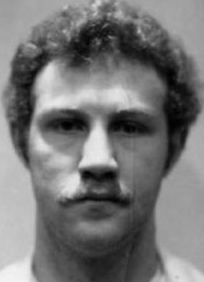
Lee GARDNER
Classification: Murderer
Characteristics: Robbery
- Escape attempt
Number of victims: 2
Date of murders: October
9, 1984 / April 2, 1985
Date of birth: January 16,
1961
Victims profile: Melvyn John
Otterstrom
/
Michael Burdell,
36
Method of murder:
Shooting
Location: Salt Lake County, Utah, USA
Status: Executed
by shooting in Utah on June 18,
2010
In 1980 Gardner was sent to prison for robbery and escaped in 1981.
Two weeks later, Gardner confronted a man who was sleeping with his
girlfriend. He was wounded by gunfire and was eventually arrested and
returned to prison. In 1984 he was taken to the hospital for a
check-up where he overpowered a guard, stole his pistol and escaped
again. Three months later, Gardner shot and killed Melvyn John
Otterstrom as he tended bar at the Cheers Tavern in Salt Lake City.
On April 2, 1985 Gardner was under a $1.5 million
bail and was transported from the Utah State Prison to the
Metropolitan Hall of Justice in Salt Lake City for a pretrial hearing
on a second degree murder charge for killing Melvyn Otterstrom.
As Gardner and his guards entered the courthouse basement, Carma Jolley
Hainsworth, walked up and handed Gardner a gun. It was later
discovered that she had also hidden a bag containing men's clothing,
duct tape and a knife in a tote bag under a sink in the women's
bathroom in the basement of the courthouse. The guards exchanged
gunfire with Gardner, shot him through the lung, and then retreated
from the area.
In attempting to escape, Gardner entered the archives
room, where he shot and killed attorney Michael Burdell, hiding behind
the door. Gardner then forced prison officer Richard Thomas, who was
also in the basement, to conduct him out of the archives room to a
stairwell leading to the second floor. As Gardner crossed the lobby,
he shot and seriously wounded Nicholas G. Kirk, then 58, a uniformed
bailiff who was unarmed and had just stepped off an elevator. Gardner
climbed the stairs to the next floor, where he took hostage Wilburn
Miller, a vending machine serviceman. As Gardner exited the building,
Miller broke free and escaped. Outside, Gardner was surrounded by half
a dozen waiting policemen with drawn weapons. Ordered to drop his
weapon, he threw down his gun and lay down, surrendering to the
officers.
Citations:
State v. Gardner, 789 P.2d 273 (Utah 1989). (Direct Appeal) Gardner v. Holden, 888 P.2d 608 (Utah 1994). (Postconviction
Relief) State v. Gardner, 947 P.2d 630 (Utah 1997). (Interlocutory
Appeal - Prison Assault) Gardner v. Galetka, 568 F.3d 862 (10th Cir. 2009). (Habeas)
Final/Special Meal:
Gardner fasted from food in the 36 hours leading up to his death,
drinking only liquids. He ate his last meal Tuesday evening — a feast
of steak, lobster tail, apple pie, vanilla ice cream and 7UP.
Last Words:
None.
ClarkProsecutor.org
Gardner executed
By Christopher Smart - Salt Lake Tribune
June 18, 2010
Ronnie Lee Gardner's quarter-century on death row
ended at 12:20 today when a firing squad executed one of Utah's most
notorious killers. His death signaled the end of a gut-wrenching saga
for the families of the Utah men Gardner murdered or wounded and those
who had hoped to spare the killer's life.
Barb Webb, daughter of Gardner victim Nick Kirk,
sobbed when news of the execution came. "I'm so relieved it's all over,"
she said, hugging her daughter, Mandi Hull. "I just hope my sister,
who just passed away, and my father, and all of the other victims are
waiting for his sorry ass. I hope they get to go down after him."
Just after midnight, Gardner's family members
leaned against each other in a tight cluster and sobbed. They played
Lynyrd's Skynyrd's "Free Bird," singing along. "I'm just glad it's
over. I'm glad he's free," said Randy Gardner after his brother's
death. Other Gardner relatives whooped and cheered as they released 24
balloons decorated with messages. "I love you, Ron!" some of them
screamed, falling into each other's arms. Gardner's daughter, Brandie
Gardner, put her hands to her face and sobbed.
For the nation, the 49-year-old Salt Laker's death
by four bullets marked what could be the last execution of its kind in
the country. Utah is the only state still using a firing squad, and
only four men on death row could still choose it -- the state switched
to lethal injection in 2004. Gardner's story went global when he told
a judge how he preferred to become one of the 50-odd people executed
in the United States each year: "I would like the firing squad, please."
Some hope the attention will highlight problems meting out capital
punishment in Utah. Both death penalty opponents and believers decry
the nearly 25 years Gardner spent between his conviction and execution
for the April 1985 murder of Michael Burdell.
Earlier this month, attorneys for the son of a
Provo woman killed in her home during a 1985 robbery by death row
inmate Douglas Stewart Carter asked a federal judge to speed up
appeals in that 25-year-old case. "My dad passed away last year. He
didn't have any closure," said Gary Olesen, son of victim Eva Olesen.
"I'm hoping Gardner's execution will help. But I'm not sure it will."
Jani S. Tillery, from the Maryland Crimes Victims' Resource Center,
said her client is only asking the court to "move forward."
Utah Attorney General Mark Shurtleff, who has
pushed to streamline death row appeals, said the run-up to today's
execution may have generated legislative momentum to remake state law.
"I'm hearing from a lot of people, 25 years is just too long," said
Shurtleff. "It's ridiculous."
Ralph Dellapiana, an attorney affiliated with
Utahns for Alternatives to the Death Penalty, said he hopes Gardner's
death will spark discussion "that this arbitrary process be changed to
something else." The last two executions in Utah have been of killers
who halted their own death-row appeals. John Albert Taylor was
executed in 1996 after eight years on death row, while Joseph Mitchell
Parsons spent 11 years on death row before his 1999 execution. Unlike
them, Gardner has fought to the bitter end.
Gardner's appellate attorneys have argued
unsuccessfully over the years that if his jurors had known about the
mitigating facts surrounding his troubled childhood -- poverty, drugs,
violence and sex abuse -- they would have sentenced him to life in
prison. As part of Gardner's bid for commutation before the Utah Board
of Pardons and Parole, three of those jurors signed affidavits saying
they would have sentenced Gardner to life without parole if that
possibility had been available. A fourth said he would have seriously
considered it. Life without parole was not possible until 1992 in Utah.
Gardner himself told the parole board last week he was a changed man
from the person who shot and killed Melvyn Otterstrom at The Cheers
Tavern on Oct. 24, 1984.
Just before an April 2, 1985, court hearing in the
Otterstrom case, Gardner killed attorney Michael Burdell and seriously
wounded bailiff Nick Kirk in a failed courthouse escape. Gardner said
over the past decade he had become cognizant of the pain he had caused
his victims and their families. He told the parole board he had
developed a new awareness of why he had been so violent and impulsive.
"I can't even apologize to the victims, and it makes me sad," said a
crying Gardner. "People at that courthouse that didn't even get hurt,
I'm sure it traumatized them."
He told the parole board he wanted to spend the
rest of his life counseling young inmates and helping abused children
with an organic farm program. Gardner also argued his execution would
bring the families of his victims little comfort. "I know killing me
is going to hurt them just as bad," he said. "I've been on the other
side of that gun."
Yet Gardner was unable to shed his reputation. Over
the past 25 years Gardner has captured headlines numerous times for
attacks on other inmates and misbehavior including a standoff at a
prison visiting room where he broke down a glass partition, barricaded
the door and had sex with his half-brother's wife as officers looked
on helplessly.
Members of the victims' families argued both for
and against Gardner's death. All said they wanted to end a long
nightmare. "This story must be allowed to slip into history," said
Jason Otterstrom during the commutation hearing. "Our families need
peace." The parole board unanimously voted against Gardner. A flurry
of last-minute appeals to the governor, U.S. Supreme Court, and 10th
U.S. Circuit Court of Appeals also failed.
A bishop with The Church of Jesus Christ of Latter-day
Saints served as Gardner's spiritual adviser at the end of his life,
his attorneys said. Gardner became the 1,213th person nationally and
the seventh in Utah to be executed since the U.S. Supreme Court
reinstated the death penalty in 1976. The justices halted executions
four years earlier, finding the ultimate punishment was not being
applied equally.
Gardner's life and death exemplifies a troubling
pattern often seen by psychologists, said Craig Haney, a University of
California psychologist who has studied people who commit violent
crimes for 30 years. "We know that abused and neglected children grow
up to be impulsive and violent," Haney told the parole board." Ronnie
Lee Gardner is a perfect model for someone who grows up to commit
horrendous crimes."
Ronnie Lee Gardner executed by firing squad
By Aaron Falk and Emiley Morgan - DeseretNews.com
Friday, June 18, 2010
UTAH STATE PRISON — Ronnie Lee Gardner, who a
quarter century ago put bullets into the heads of two good men, died
in the earliest minutes of this morning with wounds from four .30-caliber
rifle rounds in his chest. He became the third inmate in Utah — and
the United States — to be executed by firing squad since a nationwide
moratorium on the death penalty was lifted in 1976 and the first since
John Albert Taylor's execution in 1996.
Just after midnight, five anonymous executioners
raised their rifles and fired from behind curtains and a ported brick
wall. One rifle held a blank round, leaving room for doubt in the
minds of the marksmen. Gardner was pronounced dead at 12:17 a.m. He
died strapped in a chair, a hood over his head and a white target on
his heart.
Gardner's path to execution began in 1985, when he
was sentenced to death for shooting and killing attorney Michael
Burdell during an attempted escape from a Salt Lake City courthouse in
April of that year. An accomplice smuggled a gun to Gardner while he
was in the courthouse on charges of killing Melvyn John Otterstrom
during a 1984 robbery at Cheers Tavern. In the escape attempt, Gardner
also shot and wounded George "Nick" Kirk, a bailiff, whose family said
he died 11 years later as a result of his injuries.
Though Gardner wavered at times in his efforts to
fight his execution, he and his attorneys launched numerous appeals in
state, federal and appellate courts. During his final hours of life,
both the U.S Supreme Court and Gov. Gary Herbert denied requests to
stay Gardner's execution. Herbert twice denied last minute attempts by
Gardner's attorney to spare his client's life. "No court has given us
a full and fair adjudication," attorney Andrew Parnes told reporters
Thursday evening as he arrived at the prison to inform his client of
the decision from the nation's high court. "It's a shame, because if
they had, Ronnie Gardner would have a life sentence."
As he had numerous times in a courtroom, Parnes
pointed to Gardner's troubled upbringing — a sordid history of
physical and sexual abuse, neglect and a drug addiction that started
when he was just 5 years old — as the reasons to spare his life. "We
as a society didn't give him the benefit we give a lot of people,"
Parnes said. "He really is a changed person. … He understands now what
created him."
In a parking lot overlooking the prison where
Gardner spent more than half his 49 years, friends and family hugged
and wiped tears from their eyes as the execution approached. "It's
hard to say goodbye to somebody you love," said Brandie Gardner, who
grew up with her father behind bars. Gardner's brother, Randy Gardner,
said his brother had changed over the last decade and had hoped to
help start an organic farm to benefit troubled youths.
Gardner had been on Utah's death row since October
1985. He lived in a 6-by-12 cell in Uinta 1, a maximum-security
facility in the prison. He slept on a thin mattress atop a hard bunk.
His cell's only other amenities were a stainless steel toilet, a sink,
a mirror and a small window that overlooked part of the prison yard.
Wednesday night, for the first time in about 25 years, Gardner was
permitted to reach through the bars of his cell and touch his family.
"He's never touched no one but his lawyer's hand" since coming to
prison, Randy Gardner said.
In the midst of those who loved Gardner, there were
some who never knew him at all, but wanted to offer support — even if
he had killed someone they had loved. Donna Taylor, Burdell's niece,
and her husband, Lynn, sought out Gardner's family early on, to let
them know that there are people who care about them. "We put it behind
us 25 years ago when it happened," she said. "We didn't like that they
kept saying he's being killed because he killed Mike. … This is the
last thing (Burdell) would have wanted. I just hate that his family
has to go through this now."
She said many members of her family have felt angry
"like they were shut out" when they constantly tried to point out that
Burdell wouldn't have wanted to see Gardner die on his behalf. But she
is certain that the two men will meet, and there will be no qualms
between them. "I think Mike will be right there to welcome him home,"
she said. "You just forgive, you just do, and if you don't forgive, it
just hurts you. Michael is at peace. He's fine." Gardner's family said
they would not witness the execution. "He don't want that to be our
last image," Randy Gardner said. "He don't want us to have nightmares
and bad dreams."
Gardner fasted from food in the 36 hours leading up
to his death, drinking only vitamin water, Sprite, Coke, 7UP and
Mountain Dew, prison officials said. Gardner ate his last meal Tuesday
evening — a feast of steak, lobster tail, apple pie, vanilla ice cream
and 7UP. Department of Corrections spokesman Steve Gehrke said Gardner
was moved to a smaller observation cell after meeting with family
Wednesday night.
In the hours leading up to his execution, prison
officials described Gardner's mood as "reflective" and "calm." Gardner
slept, read mail and David Baldacci's "Divine Justice," a novel about
a former CIA assassin. Gardner intermittently slept and watched "The
Lord of the Rings" trilogy. By 8:45 p.m., Gehrke said Gardner had met
with an LDS bishop, a person he had known for several years and whom
he trusted. Gardner sat on a bunk in the observation cell and spoke to
the bishop through a small port used for handcuffing inmates. Gardner
finished meeting with his clergy and attorneys by 9:30 p.m., Gehrke
said. As the execution neared, family and friends of the condemned
killer held a candlelight vigil outside the prison. They sang along to
Lynyrd Skynyrd's "Free Bird," held each other and wept.
Gardner, meanwhile, slept and waited alone until he
was escorted 90 feet down a hallway and around a corner to the
prison's execution chamber just before midnight. At 12 a.m., Utah
Attorney General Mark Shurtleff spoke with prison officials by
telephone and told them there was no legal reason not to go through
with the execution.
Families of Gardner's victims and others waited at
the Utah State Capitol. The nervous sounds of tapping feet or
whispered conversations were all that remained as a small crowd waited
for the attorney general to re-emerge. "Ronnie Lee Gardner will never
kill again. He will never assault anyone again," Shurtleff said to a
silenced audience. Gardner was pronounced dead at 12:20 and 25 seconds.
"Now Ronnie Lee Gardner will be held accountable to a higher power,
and I pray he will find more mercy than he showed his victims,"
Shurtleff said.
Ronnie Lee Gardner Executed By Firing Squad In
Utah
By Jennifer Dobner - HuffingtonPost.com
June 18, 2010
DRAPER, Utah — A death row inmate who had used a
gun to fatally shoot two men suffered the same fate Friday morning as
he was executed by a team of marksmen – the first time Utah used the
firing squad to carry out a death sentence in 14 years. A barrage of
bullets tore into Ronnie Lee Gardner's chest where a target was pinned
over his heart. Two minutes later an ashen Gardner, blood pooling in
his dark blue jumpsuit, was pronounced dead at 12:17 a.m.
He was the third man to die by firing squad since
the U.S. Supreme Court reinstated capital punishment in 1976. Unlike
Gary Gilmore, who famously uttered the last words "Let's do it" on Jan.
17, 1977, Gardner could muster few words before a black hood was
fastened over his head. Asked if he had anything to say during the two
minutes afforded him, Gardner said simply, "I do not, no."
The five executioners, certified police officers
who volunteered for the task and remain anonymous, stood about 25 feet
away, behind a wall cut with a gunport, and were armed with matching
.30-caliber Winchester rifles. One was loaded with a blank so no one
knows who fired the fatal shot. Sandbags stacked behind Gardner's
chair kept the bullets from ricocheting around the cinderblock room.
Utah Department of Corrections Director Thomas Patterson said the
countdown cadence went "5-4-3..." with the shooters starting to fire
at the count of 2. Gardner's arm tensed and jerked back when he was
hit. As the medical examiner checked for vital signs the hood was
pulled back, revealing that Gardner's head was tilted back and to the
right, his mouth slightly open.
"I don't agree with what he done or what they done
but I'm relieved he's free," said Gardner's brother, Randy Gardner,
after the execution. "He's had a rough life. He's been incarcerated
and in chains his whole damn life, now he's free. I'm happy he's free,
just sad the way he went." The execution was witnessed by media
representatives who are separated from witnesses for the victims or
the condemned in rooms on opposite ends of the execution chamber
behind reflective glass so they can't be seen. Gardner walked
willingly to his execution, a stark contrast to the fatal escape
attempt he undertook 25 years ago that resulted in his death sentence.
Gardner was sentenced to death after being
convicted of murder in 1985 for the fatal courthouse shooting of
attorney Michael Burdell during a failed escape attempt. Gardner was
at the Salt Lake City court facing a murder charge in the shooting
death of a bartender, Melvyn Otterstrom when he took a gun smuggled
into him and he shot Burdell in the face as the attorney hid behind a
door in the chaotic courthouse.
The execution process was set in motion in March
when the U.S. Supreme Court rejected a request from Gardner's attorney
to review the case. On April 23, state court Judge Robin Reese signed
a warrant ordering the state to carry out the death sentence. At that
hearing, Gardner politely declared, "I would like the firing squad,
please." He told his lawyer he did it because he preferred to die that
way. Gardner was allowed to choose between the firing squad and lethal
injection because he was sentenced to death before Utah eliminated the
firing squad as an option in 2004. State officials did not like the
negative publicity fire squad executions generated.
Gardner, 49, chose his manner of death and then
worked furiously with his lawyers to prevent it. They filed petitions
with state and federal courts, asked a Utah parole board to commute
his sentence to life in prison without parole, and finally
unsuccessfully appealed to Utah Gov. Gary Herbert and the U.S. Supreme
Court. Gardner's attorneys argued the jury that sentenced him to death
in 1985 heard no mitigating evidence that might have led them to
instead impose a life sentence. Gardner's life was marked by early
drug addiction, physical and sexual abuse and possible brain damage,
court records show. They also argued he could not get a "fair and
impartial hearing" before Utah's Board of Pardons and Parole because
lawyers that represent the board work for the Utah attorney general's
office, which sought his death warrant and argued against the board
commuting Gardner's death sentence
The firing squad has been Utah's most-used form of
capital punishment. Of the 49 executions held in the state since the
1850s, 40 were by firing squad. John Albert Taylor, who raped and
strangled an 11-year-old girl, was the last person executed by firing
squad on Jan. 26, 1996.
Historians say the method stems from 19th Century
doctrine of the state's predominant religion. Early members of The
Church of Jesus Christ of Latter-day Saints believed in the concept of
"blood atonement" – that only through spilling one's own blood could a
condemned person adequately atone for their crimes and be redeemed in
the next life. The church no longer preaches such teachings and offers
no opinion on the use of the firing squad.
Gardner, who once described himself as a "nasty
little bugger" with a mean streak, spent his last day sleeping,
reading the novel "Divine Justice," watching the "Lord of the Rings"
film trilogy and meeting with his attorneys and a bishop with the
Mormon church. A prison spokesman said officers described his mood as
relaxed. He had eaten his last requested meal – steak, lobster tail,
apple pie, vanilla ice cream and 7UP – two days earlier. Members of
his family gathered outside the prison, some wearing T-shirts
displaying his prisoner number, 14873. None witnessed the execution,
at Gardner's request. "He didn't want nobody to see him get shot,"
Randy Gardner said. "I would have liked to be there for him. I love
him to death. He's my little brother."
The American Civil Liberties Union decried
Gardner's execution as an example of what it called the United States'
"barbaric, arbitrary and bankrupting practice of capital punishment."
And religious leaders called for an end to the death penalty at an
interfaith vigil in Salt Lake City on Thursday evening. "Murdering the
murderer doesn't create justice or settle any score," said Rev. Tom
Goldsmith of the First Unitarian Church.
Burdell's family opposes the death penalty and
asked for Gardner's life to be spared. But Otterstrom's family lobbied
the parole board against Gardner's request for clemency and a reduced
sentence. George "Nick" Kirk, was a bailiff at the courthouse the day
of Gardner's botched escape. Shot and wounded in the lower abdomen,
Kirk suffered chronic health problems the rest of his life. Kirk's
daughter, Tami Stewart, said before the execution she believed
Gardner's death would bring her family some closure. "I think at that
moment, he will feel that fear that his victims felt," she said.
Associated Press Writers Paul Foy and Rich Matthews
contributed to this report.
Utah firing squad executes convicted killer
By James Nelson - Reuter News
June 18, 2010
SALT LAKE CITY (Reuters) - A Utah firing squad shot
to death a convicted killer early on Friday in the third U.S.
execution by that means since 1976. Ronnie Lee Gardner, 49, was
pronounced dead at 12:20 a.m. Mountain Time (0620 GMT) after being
shot in the chest by a five-man firing squad at the Utah State Prison
in Draper, a suburb of Salt Lake City, Steve Gehrke, a spokesman for
the Utah Department of Corrections, told reporters.
Gardner was condemned to die for the murder of an
attorney during a bloody 1985 escape attempt and chose the firing
squad as his means of execution before it was banned by the state and
replaced by lethal injection. His last hope for a reprieve was dashed
when the U.S. Supreme Court denied his 11th-hour appeal.
As the execution neared, Gardner was strapped to a
black metal chair and hooded and a target was placed over his chest.
Five executioners fired .30 caliber rifles, although one of the
firearms carried a blank, allowing members of the firing squad to
retain some doubt over whether or not they fired a fatal round into
Gardner's chest. Gardner ate his last meal of steak, lobster tail,
apple pie, vanilla ice cream and 7UP soda on Thursday, having chosen
to fast for the remaining time until his execution.
On Thursday, Utah Governor Gary Herbert, who does
not have the power to commute a death sentence or pardon a condemned
prisoner, denied Gardner's request for a temporary stay of execution.
"Upon careful review, there is nothing in the materials provided this
morning that has not already been considered and decided by the Board
of Pardons and Parole or numerous courts," Herbert said in a written
statement released through his office. "Mr. Gardner has had a full and
fair opportunity to have his case considered by numerous tribunals,"
the governor said,
'BARBARIC'
Like all other U.S. states where the death penalty
is in use, Utah now uses lethal injection as its primary means of
putting a condemned man to death. Only Oklahoma still offers the
firing squad as an alternative. Utah's firing squad made international
headlines in 1977, when double murderer Gary Gilmore was executed.
Gilmore, who demanded that the state carry out his death sentence, was
the first person executed after the U.S. Supreme Court reinstated the
death penalty a year earlier.
"I find it barbaric," Bishop John C. Wester of The
Roman Catholic Diocese of Salt Lake City said in an interview. "If
you're going to do the death penalty, lethal injection would be the
more humane way," Wester said, adding in reference to the firing squad,
"It emblazons in our consciousness the violence that guns wreck on our
lives.".
Gardner was sentenced to death for the murder of
attorney Michael Burdell, whom he shot to death while trying to escape
from a courthouse. Gardner had been in court to face a murder charge
for the shooting death of bartender Melvyn Otterstrom and was
ultimately convicted in that case as well. Otterstrom's son, Jason,
was among those who attended the execution. Some of Gardner's
relatives held a candlelight prayer vigil near the prison in the hours
leading up to the execution.
Utah Department of Corrections
FOR IMMEDIATE RELEASE
Corrected Time of Death
June 18, 2010 2:43 a.m.
SALT LAKE CITY – Corrected time of death for Mr.
Gardner is 12:17 a.m. on June 18, 2010.
Execution Warrant Served
June 18, 2010 by 12:21 a.m.
SALT LAKE CITY – The execution warrant for Mr.
Gardner has been served. He was pronounced dead at 12:20 a.m. on June
18, 2010. A formal press conference will be held in the media center
at the Fred House Academy in approximately one hour.
Information from 9:45 p.m. Briefing
June 17, 2010 10:02 p.m.
SALT LAKE CITY – The following information was
presented in the fifth hourly briefing from the media center at the
Fred House Academy: Mr. Gardner continued his meeting with a bishop
from the Church of Jesus Christ of Latter Day Saints in the last hour.
He also met with attorney and resumed watching a “The Lord of the
Rings” trilogy. He drank a Coke and a Mountain Dew. Further briefings
will occur hourly throughout the night.
Gardner, 49, is scheduled to be executed by firing
squad shortly past midnight tonight for a 1985 courthouse escape
attempt, during which attorney Michael Burdell was killed and bailiff
George “Nick” Kirk wounded. Gardner was appearing in court for the
earlier murder of Melvyn Otterstrom at a Salt Lake City bar.
Information from 8:35 p.m. Briefing SALT LAKE CITY – The following
information was presented in the fourth hourly briefing from the media
center at the Fred House Academy: Within the past hour Mr. Gardner met
with a bishop from the Church of Jesus Christ of Latter Day Saints.
Utah Governor Gary Herbert also received, and denied, a second request
from Mr. Gardner’s attorneys for a stay of execution. Further
briefings will occur hourly throughout the night.
Information from 7:30 p.m. Briefing
June 17, 2010 7:50 p.m.
SALT LAKE CITY – The following information was
presented in the third hourly briefing from the media center at the
Fred House Academy: Mr. Gardner continues to watch “The Lord of the
Rings” trilogy on DVD from his observation cell. He has also slept in
the past hour. Further briefings will occur hourly throughout the
night.
Pool Video Information
June 17, 2010 7:00 p.m.
SALT LAKE CITY – Following tonight’s scheduled
execution, the Utah Department of Corrections will allow for pool
video to be taped in the execution chamber. Salt Lake City television
station KUTV has been designated to provide the footage. We anticipate
being able to feed the pool video at 1:15 a.m. MST, or as soon as
possible after that time. Please have your dishes tuned and be rolling,
we will loop the footage three times once we start feeding material.
The feed can be found at/after 1:15 a.m. MST on Galaxy 16-10C(Ku-band),
located at 99 degrees west. Downlink Freq: 11894.625 data rate:
5.500000 symbol rate: 3.978723 FEC: 3/4 For any further questions
please call Mehul Asher, assignment editor at 801-839-1333.
Information from 6:35 p.m. briefing
June 17, 2010 6:50 p.m.
SALT LAKE CITY – The following information was
presented in the second hourly briefing from the media center at the
Fred House Academy: Mr. Gardner continues to watch “The Lord of the
Rings” trilogy on DVD from his observation cell. He has also had a
Vitamin Water and a Sprite to drink. Mr. Gardner received and read a
piece of personal mail, he also visited with a second attorney and
slept. Further briefings will occur hourly throughout the night.
Information from 5:20 briefing
June 17, 2010 6:15 p.m.
SALT LAKE CITY – The following information was
presented in the first hourly briefing from the media center at the
Fred House Academy: Since being moved to an observation cell last
night Mr. Gardner has spent his time sleeping, reading the book
“Divine Justice,” watching the “Lord of The Rings” trilogy, and
meeting with his attorneys. Corrections officers have described Mr.
Gardner’s mood as being “relaxed.” Further briefings will occur hourly
throughout the night.
Governor Herbert Denies Request to Stay Execution
June 17, 2010 3:43 p.m.
Utah Governor Gary R. Herbert has declined a
request to temporarily stay the anticipated execution of inmate Ronnie
Lee Gardner. “Upon careful review, there is nothing in the materials
provided this morning that has not already been considered and decided
by the Board of Pardons and Parole or numerous courts,” Governor
Herbert wrote in a letter to Mr. Gardner’s attorneys. “Mr. Gardner has
had a full and fair opportunity to have his case considered by
numerous tribunals.”
The Governor’s decision is in response to a letter
delivered to the Office of the Governor shortly after 10 a.m. by Mr.
Gardner’s legal counsel. In it, the attorneys ask Governor Herbert to
“issue a respite or reprieve pursuant to your executive power under
the Utah Constitution, Article VII, Section 12.3(a), to temporarily
stay his execution currently scheduled for June 18, 2010, at 12:01
a.m.” The Utah Constitution does not grant the Governor the authority
to issue a pardon or to commute Mr. Gardner’s sentence.
Gardner on verge of claiming his spot in infamy
Firing squad method has garnered international
attention
By Pamela Manson - Salt Lake Tribune
June 16, 2010
If all goes as expected, Ronnie Lee Gardner will
take his place in history Friday as the third person in the nation to
die by firing squad since the U.S. Supreme Court reinstated the death
penalty in 1976. He could also be the last -- or one of the last -- in
the nation to be executed that way in the United States.
Utah is the only state still using shooters, and
only the four men on death row who initially selected the firing squad
before the state eliminated it in 2004 could still choose bullets over
lethal injection. Forty of the 50 men legally executed in Utah since
1852 have been killed by firing squad, according to Weber State
University criminologist L. Kay Gillespie. Six were executed by
hanging -- an option along with beheading under Utah's first capital-punishment
law -- and four by lethal injection.
When lawmakers were debating the use of firing
squads in 2004, then-Sen. David Thomas, R-South Weber, said the firing
squad had been an effective method since statehood and supported
keeping it. But he was outvoted, with some legislators citing the
publicity that surrounds firing squad executions. The last Utah inmate
to die by firing squad was John Albert Taylor in 1996, who said he
selected the method to embarrass the state. His death made
international headlines. Before Taylor, Gary Gilmore ultimately chose
to die by bullets rather than lethal injection. Gilmore's crimes and
execution spawned the book The Executioner's Song and a television
movie of the same name.
The state Attorney General's Office has said it
could have argued Gardner, 49, did not have the right to switch back
to firing squad but decided not to dispute his choice. The other death-row
inmates who initially picked firing squad are Ron Lafferty, Ralph
Leroy Menzies, Troy Michael Kell and Taberon Dave Honie.
How will the execution take place?
A firing squad is scheduled to execute Ronnie Lee
Gardner at 12:05 a.m. Friday at the Utah State Prison in Draper.
Gardner will be strapped to a chair with a target over his heart, and
can give his last words before a hood is placed over his head. Five
anonymous shooters, all certified peace officers, will then open fire.
Four will have live rounds in their rifles; one will have a wax bullet.
Why was Gardner sentenced to die?
Twelve jurors sentenced Gardner to death for the
slaying of lawyer Michael Burdell during an April 2, 1985, escape
attempt from a Salt Lake City courthouse. Gardner had been appearing
in court for the 1984 murder and robbery of Melvyn Otterstrom when he
was slipped a gun. He wounded bailiff Nick Kirk before fatally
shooting Burdell.
Who will witness the execution?
Gardner can invite five witnesses, and up to five
relatives of his victims can also witness his death. Other allowed
witnesses include Attorney General Mark Shurtleff or a designee; a
prosecutor and two law-enforcement officers from Salt Lake County; and
nine news reporters. Witnesses can comment at a news conference to be
held at the prison after the execution.
Will there be protests? The Utah Department of
Corrections has set up a demonstration area at the Department of Motor
Vehicles, 14555 S. Minuteman Drive (50 East) in Draper. Utahns for
Alternatives to the Death Penalty is sponsoring two events today. An
interdenominational prayer service will be held from 5:30 p.m. to 6:30
p.m. at St. Mark's Cathedral, 231 E. 100 South, Salt Lake City. At 9
p.m., the group will rally on the south steps of the Utah State
Capitol Building.
How will television stations cover the execution?
All four local television newscasts will update
their newscasts with live coverage of events Thursday. KTVX Channel 4
and KUTV Channel 2 will have live news updates at the beginning of
their 5, 6 and 10 p.m. newscasts. KSL Channel 5 will have live
coverage during all of their nighttime news casts from 4 p.m. to 6:30
p.m. and at 10 p.m. KSTU Channel 13 will have updates on their 5, 5:30
and 9 p.m. newscasts as well as another update at 10 p.m. All four
channels will carry the news conference announcing Gardner's death
early Friday live.
Is there any chance defense attorneys could stop
the execution?
As of late Wednesday, Gardner had appeals pending
at the U.S. Supreme Court and the 10th U.S. Circuit Court of Appeals.
Word of any last-minute stays of execution Thursday night will come
over a direct phone line set up between the prison and the Utah
Attorney General's Office.
Gardner timeline: Lifetime of violent crime led to death row
Salt
Lake Tribune
June 7, 2010
Jan. 16, 1961 » Gardner is born in Salt Lake City.
March 31, 1965 » Gardner is admitted to a hospital after contracting
meningitis.
Feb. 16, 1972 » A child worker reports Gardner needs to be evaluated
at the state hospital in Provo to determine why he is so difficult
May 23, 1977 » Gardner's daughter is born
Feb. 9, 1980 » Gardner's son is born
Feb. 25, 1980 » After being convicted of robbery, Gardner arrives at
the Utah State Prison for the first time.
April 19, 1981 » Gardner and another inmate escape from the minimum
security unit at the Utah State Prison.
April 30, 1981 » Gardner, on the loose, confronts a man sleeping with
his girlfriend; Gardner shot in the neck; police arrest Gardner.
Aug. 6, 1984 » During an exam, Gardner overpowers a guard at
University Hospital, steals his pistol, kidnaps an employee and
escapes.
Oct. 9, 1984 » Gardner, still on the loose, murders Melvyn Otterstrom
during a robbery.
April 2, 1985 » On way to court, a woman slips Gardner a gun. He kills
attorney Michael Burdell and wounds bailiff Nick Kirk.
Oct. 22, 1985 » A jury convicts Gardner of capital murder, and other
felonies for the courthouse shooting.
Oct. 25, 1985 » The same jury decides Gardner should be executed.
Aug. 24, 1990 » Gardner is to die by lethal injection but the
execution is averted pending appeal.
July 26, 1991 » State judge rules Gardner had ineffective counsel
during sentencing phase.
Sept. 25, 1994 » Gardner stabs another inmate, who survives.
Nov. 10, 1994 » Utah Supreme Court reverses the state judge.
March 8, 1996 » Gardner's execution is stayed again, pending appeals.
Aug. 3, 2003 » A federal magistrate recommends dismissing Gardner's
numerous appeals; a federal judge later agrees.
April 30, 2004 » The Utah Supreme Court denies Gardner a new trial.
March 8, 2010 » U.S. Supreme Court declines to hear Gardner's appeals.
April 23, 2010 » A state judge schedules Gardner's execution for June
18.
Ronnie Lee Gardner
ProDeathPenalty.com
In February of 1980, Ronnie Lee Gardner was sent to prison for the
first time, on a robbery conviction. On April 19, 1981, Gardner
escaped from prison with another inmate. Two weeks later, Gardner
finds and confronts a man who was sleeping with Gardner's girlfriend.
Gardner is wounded by gunfire and is eventually arrested and returned
to prison.
Serving sentences in the Utah State Prison for convictions of
robbery, burglary and escape, Gardner is already a career criminal. On
August 6, 1984, he was taken to the University of Utah Medical Center
for a check-up where he overpowered a guard, stole his pistol and
escaped again.
On October 9, 1984, Melvyn John Otterstrom was shot and killed by
Gardner as he tended bar at the Cheers Tavern in Salt Lake City. Mel
Otterstrom was a husband and father who worked at the Utah Paper Box
Company as a controller and moonlighted as a bartender part-time in
the evenings. The medical examiner testified in a pre-trial hearing
that Otterstrom was probably lying on his back on the floor when he
was shot in the face. The bullet went through his skull. Darcy Perry
McCoy testified under a grant of immunity in the Otterstrom case that
she helped Gardner plan a robbery and waited for him in a car outside
Cheers the night of the killing. Gardner was captured in November
1984.
On April 2, 1985, Ronnie Lee Gardner was under a $1.5 million bail
and was transported from the Utah State Prison to the Metropolitan
Hall of Justice in Salt Lake City for a pretrial hearing on a second
degree murder charge for killing Melvyn Otterstrom. As Gardner and his
guards entered the courthouse basement, Darcy Perry McCoy's sister,
Carma Jolley Hainsworth, walked up and handed Gardner a gun. It was
later discovered that she had also hidden a bag containing men's
clothing, duct tape and a knife in a tote bag under a sink in the
women's bathroom in the basement of the courthouse. The guards
exchanged gunfire with Gardner, shot him through the lung, and then
retreated from the area. In attempting to escape, Gardner entered the
archives room, where he saw two attorneys, Robert Macri and Michael
Burdell, hiding behind the door. Gardner pointed the gun at Macri and
cocked the hammer of the gun. Burdell exclaimed, "Oh, my God!" Turning,
Gardner shot Burdell, who died in surgery 45 minutes after the
shooting. Gardner then forced prison officer Richard Thomas, who was
also in the basement, to conduct him out of the archives room to a
stairwell leading to the second floor. As Gardner crossed the lobby,
he shot and seriously wounded Nicholas G. Kirk, then 58, a uniformed
bailiff who was unarmed and had just stepped off an elevator. Gardner
climbed the stairs to the next floor, where he took hostage Wilburn
Miller, a vending machine serviceman. As Gardner exited the building,
Miller broke free and escaped. Outside, Gardner was surrounded by half
a dozen waiting policemen with drawn weapons. Ordered to drop his
weapon, he threw down his gun and lay down, surrendering to the
officers.
Gardner's attorneys, brothers Andrew and James Valdez of Salt Lake
Legal Defenders Association, were to meet Gardner that day at 9:00
a.m. for the pretrial hearing. Andrew Valdez was walking toward the
courthouse when he saw Gardner go down to the ground. As Andrew ran
across the street, he could see that Gardner was bleeding from the
chest. Andrew spoke with Gardner and then left. James Valdez arrived
at the courthouse soon after. He immediately approached Gardner and
asked him if he was all right; Gardner responded that he was in pain.
Gardner was later transported to the University Hospital. Wayne
Jorgensen, a prison officer assigned to guard Gardner at the hospital,
testified at trial that Gardner told him he shot Burdell because he
thought Burdell looked as if he would jump on him. According to
Jorgensen, Gardner also declared that he would have killed anyone who
tried to stop him from escaping.
Both Andrew and James Valdez represented Gardner at trial. The
thrust of the defense was that Gardner was in such pain and physical
distress after he was wounded that his shooting Burdell was only a
reaction and therefore the killing was unintentional. In preparation
for trial, defense counsel spoke with the emergency room doctors who
treated Gardner. The doctors told counsel that Gardner was not in
shock when he came into the emergency room, did not have excessive
bleeding, was lucid and demanding, and was aware of the situation.
Robert Macri testified at trial that after Gardner shot Burdell,
Macri ran around the door and closed it behind him as a shield.
However, at the preliminary hearing, Macri testified that he could not
remember how the door shut. After the preliminary hearing but before
trial, unknown to either the prosecution or defense counsel, Macri
underwent hypnosis to help him remember how the door shut. Macri could
not recall that detail while under hypnosis but asserted that while
driving to California some months later, he suddenly recalled that he
had shut the door. In all other respects, Macri's testimony at the
preliminary hearing and at trial were the same. It was at the post-conviction
proceeding while Gardner's appeal was pending that defense counsel
first became aware that Macri had been hypnotized prior to trial.
At trial, Gardner took the stand and testified on direct
examination that he had been convicted of various crimes, including
crimes of violence. Defense counsel elicited this information,
according to the testimony at the habeas hearing, because he believed
that the prosecution would use those convictions to impeach Gardner
and he wanted to "steal the prosecution's thunder." Carma Jolley
Hainsworth pleaded guilty to aiding in an escape and was sentenced to
one to 15 years in prison. In September 1994, Gardner attacked and
stabbed another inmate with a homemade knife several times.
Ronnie Lee Gardner execution: Some experts say firing squads are
more humane than injection
By Jennifer Dobner - Christian Science Monitor
AP / June 16, 2010
Salt Lake City - A condemned Utah inmate's decision to die in a
barrage of bullets fired by five unnamed marksmen has been vilified by
many as an archaic form of Old West-style justice. But some experts
argue it is more humane than all other execution methods, without the
court challenges of cruelty that have plagued lethal injection. "Lethal
injection, which has the veneer of medical acceptability, has far
greater risks of cruelty to a condemned person," said Fordham
University Law School professor Deborah Denno, who has written
extensively on the constitutional questions that surround execution
methods.
Ronnie Lee Gardner picked death by firing squad because he believes
it is a more humane way to die — not because it evokes drama or
controversy, his attorney told The Associated Press. "It's not about
the publicity. He just prefers it," attorney Andrew Parnes said.
Late Tuesday, Parnes appealed Gardner's case to both the 10th
Circuit Court of Appeals in Denver and the U.S. Supreme Court, hoping
to block the execution. Gardner, 49, was sentenced to death for a 1985
capital murder conviction stemming from the fatal courthouse shooting
of attorney Michael Burdell during an escape attempt. Gardner was at
the court because he faced a murder charge in the shooting death of
bartender Melvyn Otterstrom.
Barring any last minute stays, when Gardner is killed on Friday he
will be the first person to die by firing squad in the United States
in 14 years. He will be the third man killed by that same method in
Utah since a U.S. Supreme Court ruling reinstated capital punishment
in 1976: Gary Gilmore on Jan. 17, 1977 — after famously uttering the
last words, "Let's do it" — and John Albert Taylor on Jan. 26, 1996.
Of the 49 executions held in Utah since the 1850s, 40 were by firing
squad. The method has also been widely used around the globe and was
long the primary method of execution employed by the military, even in
the U.S.
But lethal injection has become the primary method used by most of
the 35 states that still have capital punishment, according to the
Death Penalty Information Center website. Yet it isn't without
controversy. University of Colorado law professor Michael Radlet has
been tracking botched executions in the U.S. and found some 42 cases
that went wrong between 1982 and September of 2009. Of those
executions, 30 were lethal injection, 10 were electrocution and two
were from asphyxiation after exposure to lethal gas.
A court challenge of lethal injection in Kentucky essentially
halted executions nationwide in 2007 as the U.S. Supreme Court
grappled with whether a three-drug cocktail was more painful than just
a single barbiturate. At the time, Kentucky had only had one execution
by lethal injection — with no complications — but executions in Ohio
and Florida had taken longer than usual and produced strong evidence
that inmates had suffered severe pain in the process. The court upheld
Kentucky's use of the three drugs in 2008, clearing the way for
capital punishment to resume, Denno said.
The firing squad has not been similarly challenged, and by all
accounts, Utah's executions by firing squad were carried out without
problems, Denno said. "Even Gary Gilmore's father said it was a
dignified execution," she said.
Utah's territorial government sought permission from the U.S.
Supreme Court to use the firing squad back in the 1870s, according to
Gillespie. The court said that "execution by shooting was not
prohibited by the Eighth Amendment's cruel and unusual punishment
clause, in that the method did not entail torture or unnecessary
cruelty," Gillespie wrote in his book "The Unforgiven," which
chronicles the history of capital punishment in Utah. Historians say
the method stems from 19th Century doctrine of the state's predominant
religion. Early members of The Church of Jesus Christ of Latter-day
Saints believed in the concept of "blood atonement" — that only
through spilling one's own blood could a condemned person adequately
atone for their crimes and be redeemed in the next life. The church no
longer preaches such teachings and offers no opinion on the use of the
firing squad.
Death penalty advocate Kent Scheidegger agrees that capital
punishment should not amount to torture, but says the average person "is
not really all that concerned with a murderer experiencing painless
death." Public debate is focused more on the larger issue of the death
penalty and whether or not the punishment deters crime. "Arguing over
the method of execution is kind of a distraction," said Scheidegger,
legal director of the Sacramento, Calif., Criminal Justice Legal
Foundation.
The barrage of publicity that follows the firing squad is largely
what prompted Utah lawmakers to alter it's capital punishment law in
2004 to disallow the choice for inmates and make lethal injection the
default method. Inmates sentenced before then — like Gardner — retain
the choice. In repealing the option, Utah lawmakers said they disliked
the negative media attention that firing squads focused on the state,
said Republican Rep. Sheryl Allen, who twice carried legislation to
change the law.
In 1996, more than 150 media outlets descended on Utah to cover
Taylor's execution, painting the firing squad as an Old West-style of
justice that allows killers to go out in a blaze of glory that
embarrasses the state. Gardner is one of at least four of 10 men on
Utah's death row who have said they want to die by firing squad.
Utah has interesting history of executions
Gardner will be only
the third inmate to die by firing squad since 1976
DeseretNews.com
June 16, 2010
SALT LAKE CITY — Ronnie Lee Gardner is scheduled to be put to death
by firing squad just after midnight. He will become only the seventh
person executed in Utah since the death penalty was reinstated in 1976
and the third in the state, and the country, to die by firing squad.
While the method of execution is garnering as much publicity as the
death row inmate himself, there was a time in Utah when a firing squad
execution wasn't uncommon at all. In fact, there have been occasions
where two people were executed at the same time by firing squads,
sitting side by side. Utah's history is filled with stories of
execution folklore, many of which sound appropriately reminiscent of
the Old West from which they came.
Not including Gardner, there have been 50 people executed in Utah
since 1847 — 41 by firing squad, six by hanging and four by lethal
injection. Utah has never executed a woman, nor has it ever had a
woman on death row. If prosecutors in Davis County convict Stephanie
Sloop and seek the death penalty, she could become the first. Sloop is
charged with capital murder in the death of her 6-year-old son, Ethan
Stacy.
Twice, Utah has had double executions with two men dying at the
same time, and twice the state has had two executions on the same day
with the inmates dying separately. On May 11, 1956, Melvin Braasch and
LeRoy Sullivan were executed while sitting side-by-side. Two sets of
five-member firing squads were used. The inmates were allowed to have
wine during their final meals. It was also in 1956 that Utah had its
last hanging. No one under the age of 18 has been executed in Utah,
although three people under the age of 20 have been put to death.
Weber State University criminal justice professor L. Kay Gillespie
is the foremost leading authority on death row in Utah and the history
of executions in the state. He has conducted countless hours of
interviews with death row inmates and done extensive research into the
history of the death penalty in Utah. His book, "The Unforgiven,
Utah's Executed Men" looks into details about the history of
executions in Utah.
Gardner has been on death row for nearly 25 years. By comparison,
Robert Sutton of Tooele was executed just eight days after killing a
man in 1866. In 1912, the Salt Lake Telegram wrote a story complaining
about the amount of time it was taking between a homicide and the
execution of the suspect — which at that point was two years. "No
wonder the public forgot what he is being shot for and cared less,"
the newspaper wrote.
The first two men to be officially executed in Utah were killed in
1854. Two Native Americans were hanged at the Jordan River Bridge for
killing two young boys. The location of the execution was not released
publicly so as not to attract a big crowd.
In 1868, one of Utah's youngest inmates was executed. Chauncey W.
Millard, 18, was put to death by firing squad. Legend has it that just
before dying, he sold his body to a surgeon for a bag of candy, which
he was still eating from when he was placed in the execution chair and
shot.
One of the more infamous executions was of John D. Lee on March 23,
1877. Lee was brought back to the site of his alleged crime, the
Mountain Meadow Massacre, and was shot to death while sitting on top
of his coffin which he fell back into after being shot. His final
words, according to Gillespie, were: "Center on my heart boys. Don't
mangle my body."
That same year, executioners were left with an interesting
predicament when the firing squad didn't kill the death row inmate
right away. Wallace Wilkerson had a paper target pinned to his chest.
He was not blindfolded or tied down to a chair. After he was shot, he
immediately stood up, walked two feet and fell to his side saying, "They've
missed it." Apparently when the executioners were giving the commands
"Ready, aim …," Wilkerson tensed up, thus raising the target on his
shirt. The bullets hit the target, but the paper was now an inch above
his heart. Three shots hit his chest and a fourth his arm. Gillespie
said Wilkerson lay on the ground 15 minutes before dying, and at one
point officials feared they would have to shoot him again. The
spectacle prompted a newspaper editorial calling for use of the
guillotine as a form of execution in Utah. The guillotine was actually
approved by lawmakers, but never used.
In yet another spectacle, a newspaper wrote of Enoch Davis' firing
squad execution in 1894: "He died like a dog: in fact, the most
despicable mangy canine whelp that ever met an ignominious fate could
not have whined itself out of existence in a more deplorable, deceny-sickening
state than was Enoch Davis' last hour."
It was because of accounts like that, that in 1912, the first
newspaper reporter was officially allowed to view an execution and act
as a pool reporter for other newspapers. The Board of Corrections
reportedly hoped to stop what it considered "lurid accounts" of
executions. Previously, only law enforcers were allowed to witness
executions, so reporters and others had been appointed as special "sheriff's
deputies" so they could view the event.
Executions in Utah weren't always private. In 1903, tickets were
handed out to the public to witness a firing squad execution at the
old Sugar House Prison. In 1915, death row inmate Joe Hill gave the
final command to "fire" himself.
In 1951, Eliseo Mares was executed by firing squad, becoming the
first person executed at the Utah State Prison's current location at
the Point of the Mountain. The execution didn't go completely as
planned, however. According to a Salt Lake Tribune article, the five
gunmen — positioned about 15 feet away — missed twice, hitting Mares
in the stomach and hip. Mares did not die for several minutes.
Gary Mark Gilmore became the first person executed in the United
States since the death penalty was reinstated in 1976 when he was
killed by firing squad on Jan. 17, 1977. It was also the first indoor
execution in Utah since 1951. Gilmore was seated in an office chair
when he was shot. Nineteen years later, a custom-made firing squad
execution chair was built and used for John Albert Taylor's execution.
While Utah has almost always had a five-man firing squad, the
distance between the gunmen and the inmate has varied anywhere from 15
to 180 feet. When Gardner is executed, the distance between the gunmen
and him will be 23 feet. In a five-man firing squad, one person is
given a gun loaded with a blank. The thought is that each gunman can
walk away not really knowing if they fatally shot the inmate.
In the same sense, a hanging execution in 1912 in Utah was
conducted by three ropes being pulled, with only two of them releasing
the trap door. Hanging was outlawed in Utah in 1980. Utah executioners
are also always paid in cash so there's no paper trail from a check or
credit card. The idea is to preserve their identity.
While the Taylor firing squad execution on Jan. 27, 1996, drew
worldwide media attention to Utah, the execution of Bill Bailey by
hanging in Delaware just two days earlier was barely a blip on some
news channels. Bailey was the last person to be executed by hanging in
the U.S. Utah has never used the electric chair for executions, though
at one time it was approved by lawmakers. In Virginia, Paul Warner
Powell was put to death by use of the electric chair on March 18 of
this year. Ogden Hi-Fi killer Pierre Dale Selby was the first person
in Utah to die by lethal injection, in 1987.
In 1923 the total cost of an execution was $200, according to
Gillespie. By 1944, it was $653. A 2004 memo issued by the Department
of Corrections showed the approximate cost of an execution then when
supplies, manpower and overtime pay were considered, was more than
$45,500.
According to Utah law, executions cannot be held on a Sunday,
Monday or a legal holiday. Pregnant women are not allowed to be
executed in Utah, although that law has never been put to the test.
Although a physician typically declares the inmate dead after an
execution, doctors will not administer the drugs used for lethal
injection. According to Utah law, corrections officials must find
people "trained in accordance with accepted medical practices."
Melvyn Otterstrom was 'glue' to family
Relatives say his killer,
Ronnie Gardner, is like a deadly disease
By Emiley Morgan - DeseretNews.com
June 12, 2010
SALT LAKE CITY — Over the years, Melvyn Otterstrom has become an
almost mythic figure to those in his family who have had to carry on
without him. "He was the glue in our family," said niece Jenny
Sedgwick. "Melvyn was security and safety to us, and when he was gone,
it was, 'Now what?' He was safety; he would be there to help us if we
needed him. Many times I've thought: 'If Melvyn was here, maybe that
would be different.'?" "He made everything all right," added his
sister and only sibling, Carolyn Crawford. "If Melvyn were around,
everything would be fine."
But Otterstrom could never right all the wrongs. He could never
pull out his trumpet and "play 'Moon River' to make you cry," as his
life was stolen 25 years ago on an October night in 1984. Otterstrom,
a comptroller working for Utah Paper Box, was also working one night a
week as a bartender at Cheers Tavern in Salt Lake City. In a robbery
gone wrong, Ronnie Lee Gardner shot the man once in the face, leaving
him to be discovered later by his wife, Kathy.
Otterstrom was the first murder attributed to Gardner. Gardner was
in court facing charges for Otterstrom's death when he grabbed a gun
that had been smuggled into the building. As he tried to escape,
Gardner shot and killed defense attorney Michael Burdell and wounded
court bailiff George "Nick" Kirk. He was sentenced to die and then
went to work appealing the death sentence. And, in the interim, Melvyn
Otterstrom became "a bartender," "another man," a mere footnote. "That
is something that has hurt us all these years," Sedgwick said. "It's
just kind of an injustice to portray him as just a bartender. He loved
adventures, he loved mountain climbing, he was a businessman, and he
took his job seriously."
Otterstrom was 37 years old when he died, a married father of one
with a large, tight-knit extended family. An avid outdoorsman, he was
a lover of life who enjoyed learning, hunting, cars and spending time
with his family. He was "very outgoing, very friendly and funny, but
could turn and be very serious," Crawford said. An Eagle Scout,
Otterstrom went on to join a Green Beret unit with the Utah National
Guard before graduating with a degree in business administration and
accounting at the University of Utah. His family describes Kathy as
the "love of his life" with whom he had a son of whom he was extremely
proud.
Jason Otterstrom, who was just 3 when his father was killed, is now
engaged to be married and is pursuing a doctorate degree. To
Otterstrom's cousin, Craig Watson, Jason Otterstrom is an example of
not letting challenges define your life — a marked contrast to what
Gardner is arguing in his attempts to have his life spared. "They keep
talking about how Gardner struggled in his childhood, but we make our
own bed and then we have to lie in it," Watson said. "You look at
Jason, and you don't think he's struggled without a dad? He's getting
a Ph.D, for hell's sake. There are a whole bunch of people who have
had tough lives, and they didn't turn into murderers."
Gardner has become a plague on the family, an illness that won't
abate. In a statement written to the Utah Board of Pardons, the family
wrote: "Mr. Gardner is injected into our family like a deadly disease."
"Every time this comes up, it consumes our family," Sedgwick said.
The way the family sees it, Gardner is responsible for five deaths.
Melvyn Otterstrom and Michael Burdell, yes, but also Kirk, who died
eight years after he was shot from issues stemming from the stomach
wound, and Melvyn Otterstrom's parents, John and Florence, who never
recovered from their son's death. As the years pass and Gardner
resurfaces in the headlines, they have to remind the younger
generations of who Melvyn was. They question how it can take so long
to bring someone to justice. It becomes painfully frustrating for the
family members, who want to put Gardner out of their minds. "It
bothers me it took so long," Crawford said. "It needs to be over and
done. It just needs to end."
Sedgwick points out that Gardner killed Otterstrom after he had
escaped from prison, and Burdell was killed during another escape. She
feels society is not safe until Gardner is dead. Even then, his death
will never return her beloved uncle, who "was kind of a big brother,
kind of a father figure" to her. "He was always there for us," she
said. "Every time we get together as a family, I feel like we're
painfully reminded that he's gone. It's like, the family is not
complete. We just miss him all the time."
Ronnie Lee Gardner identifies 2nd accomplice in courthouse escape
attempt
By Aaron Falk - DeseretNews.com
Tuesday, June 15, 2010
UTAH STATE PRISON — He never called her by name, but as Ronnie Lee
Gardner pleaded last week for his life to be spared, he finally gave
up an accomplice in his deadly courthouse escape attempt a quarter
century ago. Before the Board of Pardons and Parole, Gardner
identified the woman who handed him the .22-caliber revolver he used
in 1985 to shoot a bailiff and kill a defense attorney as "the woman
who testified against me in the Cheers murder" and was his getaway
driver in that 1984 killing of a Salt Lake bartender.
Darcy Perry McCoy drove Gardner during the robbery and killing of
Melvyn Otterstrom at the Cheers Tavern in 1984, and later testified
against him in court. But it was McCoy's sister who would spend eight
years in prison for aiding his attempted escape from the Metropolitan
Hall of Justice on April 2, 1985. Gardner shot bailiff Nick Kirk and
attorney Michael Burdell as he tried to get away. Burdell died.
Though she was often accused of handing Gardner the gun in the
courthouse, Carma Hainsworth always maintained her role that day was
limited to transporting letters from Gardner to her sister and
gathering the clothes for Gardner to wear after he escaped. "I did not
know what was going to happen that morning," Hainsworth told the Board
of Pardons during a 1987 hearing. "I did not know nothing about that."
Hainsworth repeatedly told officials her lookalike sister, McCoy,
gave Gardner the gun, a claim corroborated by Luther Hensley, the
officer who shot and injured Gardner during the escape attempt. Other
witnesses, however, identified Hainsworth as the woman in the
courthouse. "We can live with that conflict," a hearing officer told
Hainsworth in 1987, "because we have to do it a lot."
Summit County Undersheriff L. Dean Carr, a lieutenant with the Salt
Lake County Sheriff's Office in the late '80s, said he also believed
McCoy was involved in the escape attempt but could never put together
a case against her.
Bob Stott, a veteran prosecutor with the Salt Lake District
Attorney's Office, also had trouble building a case against McCoy. "Some
witnesses had seen two women upstairs and around the courthouse, but
they could only identify Carma," he said. "It could have easily been
the two women. But we didn't have any evidence then and I don't think
we give much credibility to anything Mr. Gardner says."
During a parole hearing in 1987, Hainsworth said she hoped to work
in youth corrections once she was released from prison. Since then,
Hainsworth has remarried and changed her last name. Hainsworth has
also been arrested and convicted on a number of felony crimes,
including burglary, theft, possession of meth and identity fraud, the
latest coming in 2007.
In a Spanish Fork courtroom just last week, Hainsworth pleaded no
contest to driving on a suspended license and agreed to do community
service to work off her $100 fine. When approached by the Deseret News,
her husband said, "If this is about the Ronnie Lee Gardner, please
back away right now."
Fiancee, father of victim Michael Burdell don't want death
sentence for Ronnie Lee Gardner
They say execution of killer would be
another victory for violence
By Josh Smith - DeseretNews.com
Saturday,
June 12, 2010
SALT LAKE CITY — His was a life of peace, shattered by senseless
violence. But family and friends of slain attorney Michael Burdell say
executing his killer would mean another victory for the violence that
Burdell sought to curb.
Peace, laughter and service are the words used over and over to
describe Burdell, who was gunned down by convicted killer Ronnie Lee
Gardner during a bloody escape attempt at the old Salt Lake County
courthouse in 1985. "His laugh was so infectious," said Donna Nu, who
was his fiancée. So infectious, in fact, she can't help laughing as
she recalls the person she considers her soulmate, nearly three
decades after his death. "When he laughed, there was no way I couldn't
laugh," she said. "He was so willing to lighten my day. He always
wanted to give more than he received, if that's possible." Now it's
the memory of Burdell's generous nature that inspires Nu to plead for
clemency for Gardner.
As time runs out on what may be Gardner's last days, Nu and other
members of Burdell's family say he would have never wanted Gardner to
die. Burdell's father, Joseph Burdell Jr., pleads for Gardner's life
and remembers his son as someone "easy to get along with" — someone he
says would have forgiven Gardner. "He was always laughing and joking,"
Joseph Burdell recalled. "Just a great person to be around." Growing
up the second of 10 children, Michael Burdell got an early start
helping people as he looked out for his siblings, his father said.
After serving in Vietnam, where he refused to use a weapon, Michael
Burdell put himself through law school while he worked for Motorola.
He met Nu, formerly Donna Gray, in Mesa, Ariz., in the mid-1970s at a
local philosophical discussion group. Both had been married previously,
but Nu said she has never found anyone else like Michael Burdell. "He
was very inquisitive and he always tried to live his personal
philosophies," she said. That inquisitive nature led both of them to
the Utah-based Summum religious group, where they sought to help
others as a way to personal peace.
In 1981, the couple moved to Utah to be closer to the Summum
pyramid in Salt Lake City, and Michael Burdell took the name Summum
Bonum Menthu Sesh. Through this group, Burdell and Nu helped grow
vegetables for less-fortunate people, an act for which they received a
commendation from the state Legislature. At the time, Summum founder
Summum Bonum Amon Ra said Burdell had achieved the pinnacle of love in
all faiths. "Michael was a Christ. He was a Krishna. He was a Buddha.
He lived it," Ra said.
In Utah, Burdell worked as a defense attorney, often representing
people no one else wanted to help, and usually on a pro bono basis,
Joseph Burdell said. "Money never did mean much to him," Joseph
Burdell said. "His goal in life was just to help people out." On the
day he died, April 2, 1985, Burdell was representing an incapacitated
Vietnam veteran pro bono. After his death, family and friends found
that Burdell had only $5.97 in his checking account.
At his memorial service, his sister prayed for Gardner. "We ask
that you would touch his life and send into his life that light which
is the light of the world," she prayed. Now Nu and Joseph Burdell are
asking the state not to execute Gardner, saying Michael Burdell would
have personally fought against the sentence if he were alive today.
After the hearing where Gardner's execution warrant was signed, an
emotional Nu said Burdell would have represented Gardner himself, had
he lived to do so. "If Ronnie Lee had just wounded (Burdell), he would
have defended Ronnie Lee," she said.
For Nick Kirk, deputy shot in Ronnie Lee Gardner's escape attempt,
attack took his life away
By Linda Thomson - DeseretNews.com
June 12, 2010
KEARNS — April 2, 1985, was a typical day for VelDean Kirk, who was
busy with secretarial duties on the ninth floor of the Salt Lake
County Sheriff's Office. People were talking. Phones were ringing.
Business as usual. All that changed when commotion broke out in the
courtyard below, which faced the Metropolitan Hall of Justice, and a
chorus of sirens began screeching.
She and a co-worker peered out the window, struggling to obey a
lock-down command for their building. "There were a jillion ambulances
and police cars," Kirk said. "We couldn't stand it anymore, so we
walked down."
In the courtyard, Kirk heard someone had been shot. Salt Lake
County Sheriff N.D. "Pete" Hayward and his chief deputy spotted her
standing there. Both men froze, spoke hastily to each other, turned to
detective Dick Judd and Judd began walking. "He came toward me, and
then I knew it was Nick," Kirk said. George "Nick" Kirk, her husband
of 36 years and father of their five children, had been shot by
prisoner Ronnie Lee Gardner during an escape attempt.
Gardner's girlfriend had smuggled a gun to him in the courthouse.
He shot and killed defense attorney Michael Burdell, then bolted out
despite being shackled. Gardner ran into Kirk, who was hurrying down
the stairs ready to help and especially fearful for Judge James Sawaya,
who was just arriving at work. Gardner's bullet ripped through Kirk's
stomach, intestines, bowels, hip and leg.
Nick Kirk survived the shooting and lived for nearly 11 more years.
By not dying, however, in many ways, he became the forgotten victim.
But to hear his wife tell it, nothing was the same after that day.
"He was in constant pain," VelDean Kirk said. "He just never felt good.
We didn't go fishing anymore because he couldn't get the boat in and
out. He didn't bowl — he tried to, but he couldn't do it as well as he
could before." Kirk tried golfing, but could not walk the course and
had trouble playing even with a golf cart. Over time, that faded.
Coaching his grandchildren's sports wore him out, so he stopped. He
also walked with a limp, which became an enormous embarrassment. "It
just took his life away," VelDean Kirk said.
Her husband soldiered on and tried to go back to work, despite
repeated operations, chronic physical problems and emotional
difficulties caused by the shooting. There also were financial and
legal struggles as Kirk tried unsuccessfully to collect more than
$40,000 for the mental trauma he suffered. In the end, he got only
$6,000 from the County Commission. Nick Kirk died of a heart attack in
1995 at age 69, but his wife says he would be alive today if Gardner
hadn't shot him.
This was not the life they had planned. The former VelDean
McAllister vividly remembers the young man she met while visiting a
friend's house when she was 15. He made quite an impression. "It was
his looks, mainly, at first," she admits, smiling at the memory. She
was in high school and he was a "body and fender man" doing auto
repairs for a family-owned business as the relationship grew. She was
17 when they married in Salt Lake City. "My parents had a fit at first,
but he won them over. They really started liking him," VelDean Kirk
said.
Later, he joined what was termed the sheriff's office reserves, a
volunteer group, and eventually became a court bailiff. He was
particularly fond of Judge Sawaya, and the two socialized outside of
work. Through the years, the Kirks had five children: Barbara,
Michael, Mary (who died last year), Debra (who died as a baby) and
Tamara.
Nick Kirk made friends easily, doted on his wife and family and
relished holidays — especially Halloween. In court, he was strict and
expected everyone to act respectfully. Outside of court, he chatted
with everyone and had coffee with reporters. He was always active and
loved the outdoors. Free time was spent fishing, hunting, boating,
bowling — you name it. "When we were done with work, we would jump in
the camper and go on vacation," VelDean Kirk recalls.
There was a time when VelDean would rage when Gardner's name came
up. "I used to really hate him. Every time I would see his picture, I
felt I could kill him with my bare hands," Kirk said. One thing that
especially galled her were reports that Gardner bragged to other
inmates, saying, "I shot a cop!"
Kirk believes the death penalty is appropriate for Gardner, but she
said she is now free of the anger she once felt. "Maybe I've changed,"
said the white-haired woman while looking over family scrapbooks in
the kitchen of a daughter's home. "Now I just kind of feel sorry for
him. It was his choice. I think he should pay for the crimes he has
committed and, since he was given the death penalty, he should go
through that. It's the right punishment for him. He's taken so many
lives and screwed up so many lives." Kirk has been invited to witness
Gardner's execution by firing squad. She'll be there, but said she is
not seeking revenge. "I want closure on it," she said. "I think that's
the only way I'll get it."
When her husband was alive, he supported Gardner being executed.
"He had been in the courts long enough to know they need to pay for
their crimes." To this day, there is one thing about Gardner that
perplexes VelDean. "I would like to know why he shot Nick because he
knew Nick," she said. "He'd been in court several times, and he knew
Nick didn't have a gun." In those days, public buildings were far less
secure: Bailiffs did not have guns or even radios for communication.
Today, VelDean Kirk enjoys her family and focuses mainly on the
good memories of her late husband, although regrets sometimes creep
in. "He loved life, even though he had health problems from the
shooting. He loved the kids and grandkids," she said. "There are 13
great-grandchildren, and he's missed out on 10. … If he were alive
today, he probably would still be bowling with the judge. And me, too,
naturally."
State v. Gardner, 789 P.2d 273 (Utah 1989). (Direct
Appeal)
Defendant was convicted of first-degree murder, attempted first-degree
murder, aggravated kidnapping, escape, and possession of dangerous
weapon by incarcerated person, in the Third District Court, Salt Lake
County, Jay E. Banks, J., and defendant appealed. The Supreme Court,
Howe, Associate C.J., held that: (1) failure to grant change of venue
did not deprive defendant of fair trial; (2) admission of prior
convictions as element of crime of first-degree murder did not deprive
defendant of fair trial; (3) trial court's cutting off defendant's
recross-examination of witness did not violate his right to
confrontation; (4) evidence was sufficient to convict defendant of
first-degree murder; and (5) prosecutor did not engage in misconduct.
Affirmed. Stewart, J., filed concurring opinion. Zimmerman, J., filed
concurring opinion in which Durham, J., concurred.
HOWE, Associate Chief Justice:
Defendant appeals his convictions of first degree murder, Utah Code
Ann.FN1 § 76-5-202(1)(c), (e), & (h); attempted first degree murder, §
76-5-202(1)(e), (h), & (k); aggravated kidnapping, § 76-5-302(1)(a),
(b); escape, § 76-8-309; and possession of a dangerous weapon by an
incarcerated person, § 76-10-503(2). FN1. All statutes cited are to
Utah Code Annotated (1953).
The charges stem from an incident that occurred on April 2, 1985.
Defendant was being transported from the maximum security unit of the
Utah State Prison to the Metropolitan Hall of Justice in Salt Lake
City to appear at a hearing on a second degree murder charge. As he
entered the basement lobby of the Hall, he was handed a gun by a
female accomplice. He fumbled with the unfamiliar weapon; his guards
retreated to the parking lot. Gunfire was exchanged, and defendant was
shot in the shoulder. He entered an archives room, looking for a way
out of the building. There he encountered a court clerk, a prison
officer, and three attorneys. Two of the attorneys sought refuge
behind the office door. Defendant turned on them, pointed the gun at
one and then the other, and fired, killing attorney Michael Burdell.
The prison officer, Richard Thomas, was forced to lead defendant
out of the archives room to a stairwell leading to the second floor.
As defendant crossed the lobby, Nick Kirk, a uniformed bailiff, came
down the stairway to investigate the disturbance. Defendant shot and
seriously wounded Kirk and then proceeded up the stairs. On the next
floor, defendant encountered Wilburn Miller, a vending machine
serviceman, and forced him to accompany defendant outside of the
building. As defendant stepped outside, Miller broke free and dived
through a teller's window inside the building. Once outside, defendant,
wounded, shackled, and surrounded by police, threw down his gun and
surrendered.
Defense counsel filed pretrial motions seeking a change of venue,
recusal of the trial judge, and a prohibition on evidence of other
crimes committed by defendant. The first two motions were denied. The
third was granted with the understanding that some evidence of prior
crimes was necessary to prove elements of the offenses charged and
other evidence of defendant's past record would be admissible as
impeachment if defendant took the stand.
At trial, the defense moved for a mistrial based on the amount of
security in the courtroom. The motion was denied, and the four
plainclothes guards and defendant were directed to remain seated until
the jury left the courtroom. The prison officer who had led defendant
to the stairwell had made a pretrial statement that defendant was “glassy-eyed.”
However, on direct testimony, he characterized defendant as “being all
there.” After the defense had brought out the previous statement on
cross, the trial court stopped both counsel from going back over that
aspect of the testimony on recross, stating, “I think it has been
developed by both of you as to what was said.”
On cross-examination, defendant denied having a conversation with
Wayne Jorgensen, a prison officer assigned to guard him while he
recovered at the hospital. On rebuttal, the prosecution called
Jorgensen, who recounted the content of his conversation with
defendant. While no objection was raised at trial, defendant now
contends that the statements were taken without benefit of a Miranda
warning and violated his fifth and sixth amendment rights.
During the penalty phase of the trial, defendant, in an attempt to
give the jury a basis on which to assess the proportionality of the
penalty which should be imposed, sought the admission of affidavits of
attorneys who had been involved in other capital homicide cases. The
court refused to admit the affidavits. It also declined to accept
testimony by associates of the victim regarding their opposition to
the death penalty.
At the close of the penalty phase, defendant moved for a mistrial
on the basis of prosecutorial misconduct. The motion was denied. The
jury, which had previously returned a verdict of guilty on all counts,
sentenced defendant to death. He appeals.
I. Change of Venue
Defendant contends that the trial court abused its discretion in
denying him a change of venue. He maintains that due to extensive
pretrial publicity and the fact that his trial was held in the county
courthouse across the street from the Hall, it was impossible for him
to receive a fair trial in Salt Lake County.
Due process requires that the accused receive a trial before a fair
and impartial jury, free from outside influences. State v. Pierre, 572
P.2d 1338, 1348 (Utah 1977), reh'g denied, 576 P.2d 857 (Utah 1978),
cert. denied, 439 U.S. 882, 99 S.Ct. 219, 58 L.Ed.2d 194 (1978); Irvin
v. Dowd, 366 U.S. 717, 722, 81 S.Ct. 1639, 1642, 6 L.Ed.2d 751, 755
(1961). The fact that a case is prominently reported in the news
media, standing alone, does not presumptively deprive a defendant of
due process. State v. Pierre, 572 P.2d at 1349. Defendant points to
the fact that nearly all of the prospective jurors had been exposed to
at least the fundamental facts of the incident. However, neither does
that exposure presumptively deprive a defendant of due process. Murphy
v. Florida, 421 U.S. 794, 799, 95 S.Ct. 2031, 2036, 44 L.Ed.2d 589,
594 (1975). In examining the news reports in evidence and more than
700 pages of transcript of the voir dire, it is apparent that the news
reports did not infect the minds of jurors with any prejudice or bias
against defendant. The following comment was made by a juror at voir
dire: “I don't recall them [the media] giving any details involving
the case that we haven't already discussed, that the judge didn't talk
about on the initial day we came in.” This is indicative of the
impression the media reports made on the prospective jurors. They were
aware of the basic circumstances, that is, someone had handed
defendant a gun, one person was killed, and defendant and another
person were injured. Such knowledge was not prejudicial in any way to
defendant, however, because these basic facts were not disputed or
placed at issue by defendant and were established through his own
direct testimony.
Defendant carries the argument one step further and argues that not
only was knowledge of the incident widespread in the community, but
there was a common belief that he was guilty, which precluded any
possibility of his obtaining a fair trial in the jurisdiction. In
support, defendant took a telephone poll of 400 registered voters in
Salt Lake County. (Jury lists are drawn from registered voters.) He
asserts that the poll showed that 78 percent thought that defendant
was guilty and 12 percent thought that he was probably guilty. The
results of the survey are misleading in several aspects. First, only
23 percent of those surveyed could identify defendant as the person
involved in the incident. Second, when asked if he was “guilty,” no
explanation was given of the charges. Therefore, any lay opinion as to
guilt was merely an affirmation that he was the person involved in the
incident, a fact conceded by the defense. This is typified by the
following comment from a potential juror on voir dire: “From the news
accounts you just, you know, it kind of shows that he was there and he
did it, but, you know, I don't know that I sat and thought ‘He is
guilty.’ ”
We subscribe to the following: To hold that the mere existence of
any preconceived notion as to the guilt or innocence of an accused,
without more, is sufficient to rebut the presumption of a prospective
juror's impartiality would be to establish an impossible standard. It
is sufficient if the juror can lay aside his impression or opinion and
render a verdict based on the evidence presented in court. Irvin v.
Dowd, 366 U.S. at 723, 81 S.Ct. at 1642. Each one in the pool of
prospective qualified jurors stated under oath and rather candidly
that he or she could meet this standard.
Defendant contends that the proximity of the trial to the scene of
the crime also required a change of venue. However, he does not
contend that there were any unauthorized jury views of the scene, nor
does he identify any specific prejudice. The trial was moved from the
Hall to a separate building and courtroom. The danger that any
prejudice would result because the trial was held at that location was
not so great that a change of venue was required. Having carefully
reviewed the record, we cannot say that a change of venue was
necessary to insure defendant a fair and impartial jury. Denial of a
change of venue was not an abuse of discretion. See State v. Bishop,
753 P.2d 439, 459 (Utah 1988).
II. Recusal
Defendant filed an affidavit of bias and prejudice against the
trial judge because he worked in the Hall. On appeal, defendant does
not allege any actual bias but argues that a trial judge should recuse
himself where there is an appearance of bias. We agree. The canons of
judicial ethics state that a judge should disqualify himself where his
impartiality might reasonably be questioned. Code of Judicial Conduct
Canon 3(C)(1) (1972). If the allegations in the affidavit are true and
they would give a reasonable person cause to doubt whether the judge
could be impartial under the circumstances, he should recuse himself.
Nothing is more damaging to the public confidence in the legal system
than the appearance of bias or prejudice on the part of the judge.
However, though we share defendant's statement of the controlling rule,
we do not agree that the failure of the trial judge to recuse himself
in the instant case requires reversal. The Code of Judicial Conduct
establishes standards that, if violated, may subject a judge to
discipline. However, it does not establish the parameters of a
defendant's constitutional right to a fair trial. State v. Neeley, 748
P.2d 1091, 1094 (Utah 1988); Harvell v. State, 742 P.2d 1138, 1140 (Okla.Crim.App.1987);
State v. Wixon, 30 Wash.App. 63, 69, 631 P.2d 1033, 1038 (1981).
Failure of a trial judge to recuse even where he should have, based
on the appearance of possible bias or prejudice, does not require
reversal unless the “substantial rights of the party are affected.”
Utah R.Crim.P. 30. The test for harmless error under the just-quoted
language from rule 30 is whether “there was a reasonable likelihood of
a more favorable result for the defendant.” State v. Hutchison, 655
P.2d 635, 637 (Utah 1982); State v. Knight, 734 P.2d 913, 918-20 (Utah
1987). No allegation of actual prejudice was made, nor does our
careful review of the record reveal any basis for such an allegation.
In the absence of any showing of actual prejudice to defendant, any
error of the trial judge in failing to recuse was harmless.
III. Constitutionality of the Death Penalty
Defendant raises several challenges to the constitutionality of
Utah's capital sentencing scheme, § 76-3-207 (1978, 1988 Supp.).
Briefly, his contentions are (1) the sentencing scheme does not narrow
the class of offenders to which the death penalty applies, as required
by Furman v. Georgia, 408 U.S. 238, 92 S.Ct. 2726, 33 L.Ed.2d 346,
reh'g denied, 409 U.S. 902, 93 S.Ct. 89, 34 L.Ed.2d 163 (1972); (2)
the death penalty violates state and federal due process and equal
protection provisions; (3) section 76-3-207 is overbroad and vague;
and (4) the death penalty violates article I, section 9 of the Utah
Constitution and the ban on cruel and unusual punishment contained in
the eighth amendment of the United States Constitution.
These challenges to Utah's death penalty and sentencing scheme were
thoughtfully and carefully considered in State v. Wood, 648 P.2d 71 (Utah
(per curiam), cert. denied, 459 U.S. 988, 103 S.Ct. 341, 74 L.Ed.2d
383 (1982); Andrews v. Morris, 607 P.2d 816, 823-24 (Utah), cert.
denied, 449 U.S. 891, 101 S.Ct. 254, 66 L.Ed.2d 120 (1980); Pierre v.
Morris, 607 P.2d 812, 814-15 (Utah), cert. denied, 449 U.S. 891, 101
S.Ct. 254, 66 L.Ed.2d 120 (1980); State v. Andrews, 574 P.2d 709, 710
(Utah 1977), reh'g denied, 576 P.2d 857 (Utah), cert. denied, 439 U.S.
882, 99 S.Ct. 219, 58 L.Ed.2d 194 (1978); State v. Codianna, 573 P.2d
343, 348 (Utah 1977), cert. denied, 439 U.S. 882, 99 S.Ct. 219, 58
L.Ed.2d 194 (1978); State v. Pierre, 572 P.2d 1338, 1345-46, 1356 (Utah
1977), reh'g denied, 576 P.2d 857 (Utah 1978); see Andrews v. Morris,
677 P.2d 81, 83-84 (Utah 1983). Most of these claims have also been
treated by the U.S. District Court for the District of Utah and the
Tenth Circuit Court of Appeals. Andrews v. Shulsen, 600 F.Supp. 408 (D.Utah
1984), aff'd, 802 F.2d 1256 (10th Cir.1986), cert. denied, 485 U.S.
919, 108 S.Ct. 1091, 99 L.Ed.2d 253, reh'g denied, 485 U.S. 1015, 108
S.Ct. 1491, 99 L.Ed.2d 718 (1988); Selby v. Shulsen, 600 F.Supp. 432 (D.Utah
1984), aff'd sub nom. Pierre v. Shulsen, 802 F.2d 1282 (10th
Cir.1986), cert. denied, 481 U.S. 1033, 107 S.Ct. 1964, 95 L.Ed.2d 536
(1987), reh'g denied, 483 U.S. 1012, 107 S.Ct. 3246, 97 L.Ed.2d 750
(1987). Since the reasoning of the above-cited cases is sound and
persuasive on the issues defendant now urges upon this Court, we find
it unnecessary to repeat that analysis in this opinion. We hold that
the death penalty as applied under our statutory scheme is in
accordance with the requirements of the Constitution of the United
States and the Constitution of the State of Utah. State v. Bishop, 753
P.2d 439, 460 (Utah 1988); State v. Tillman, 750 P.2d 546, 572 (Utah
1987).
IV. Use of Prior Violent Felony as an Aggravating Circumstance
Defendant asserts that section 76-5-202(1)(h) denies his right to
due process as guaranteed by the fifth and fourteenth amendments to
the United States Constitution and by article I, section 7 of the Utah
Constitution. That section provides:
(1) Criminal homicide constitutes murder in the first degree if the
actor intentionally or knowingly causes the death of another under any
of the following circumstances: .... (h) The actor was previously
convicted of first or second degree murder or of a felony involving
the use or threat of violence to a person.
He contends that allowing the admission of two of his prior
convictions in the guilt phase of the trial was unfairly prejudicial
because the jury, upon learning of his other convictions, was prone to
convict him because of his “bad character.” We do not agree that
evidence of his two prior convictions had any prejudicial effect.
The facts surrounding the incident out of which the instant case
arises are intertwined around the basic fact that defendant was
attempting to escape from lawful prison custody; thus, it was not
possible to present to the jury any picture of the factual setting
without revealing at least one of defendant's prior convictions. The
aggravating circumstance required by section 76-5-202(1)(h) was proven
by entering into evidence copies of defendant's commitments to the
Utah State Prison on robbery charges. However, no attempt was made
thereafter to try defendant on the basis of his “bad character.”
Throughout the remainder of the trial, the prosecution only referred
to the prior convictions as they related to the elements of the crimes
charged. Defendant took the stand and disclosed his extensive criminal
record in his direct testimony. He revealed other convictions that
were potentially more prejudicial, including aggravated assault and
aggravated assault on a prison guard. He stipulated to the
introduction of the evidence challenged here.
Because defendant's guilt was manifest by overwhelming direct
evidence, we cannot say that the inclusion of his prior convictions as
an element of the crime of first degree murder had any unfair
prejudicial effect on the conduct or outcome of his trial. Since we
find that application of section 76-5-202(1)(h) did not violate his
right to due process in the instant case, we reserve ruling on the
constitutionality of that section. We also briefly note that
application of that section is not essential to defendant's conviction
of first degree murder since the jury also unanimously found two
additional aggravating circumstances upon which the conviction of
first degree murder rests, namely, creating a great risk of death to a
person other than the victim and committing a homicide for the purpose
of effecting defendant's escape from lawful custody. § 76-5-202(1)(c),
(e).
We find no merit in defendant's contention that the same
aggravating circumstance cannot be relied upon in the guilt phase and
in the penalty phase. Lowenfield v. Phelps, 484 U.S. 231, 241, 108
S.Ct. 546, 553, 98 L.Ed.2d 568, 579 reh'g denied, 485 U.S. 944, 108
S.Ct. 1126, 99 L.Ed.2d 286 (1988).
V. Challenge for Cause
Defendant contends that he was improperly denied a challenge for
cause. We have held it to be prejudicial error where a peremptory
challenge is used to remove a prospective juror who should have been
excused for cause. State v. Brooks, 631 P.2d 878, 884 (Utah 1981).
Defendant asserts that Mr. Copinga, a prospective juror, should have
been excused for cause because he expressed a personal preference for
the death penalty. In State v. Norton, 675 P.2d 577, 589 (Utah 1983),
cert. denied, 466 U.S. 942, 104 S.Ct. 1923, 80 L.Ed.2d 470 (1984),
overruled on other grounds, State v. Hansen, 734 P.2d 421 (Utah 1986),
we stated:
Persons who cannot vote for the imposition of capital punishment in
any circumstances and persons who feel compelled to vote for the
imposition of capital punishment in all circumstances of murder are
properly excluded for cause. The proper test of legal partiality is
whether a juror's views about capital punishment would prevent or
substantially impair him or her from conscientiously taking the
juror's oath and performing his or her duties as a juror by following
the court's instructions on the law of capital punishment and applying
them to the facts of the particular case. Cf. Adams v. Texas, 448 U.S.
38, 45, 100 S.Ct. 2521, 2526, 65 L.Ed.2d 581, 589 (1980).
Mr. Copinga stated that he did not have any strong commitment one
way or the other on the death penalty. He only stated his personal
preference that he would rather die than spend the rest of his life in
confinement. He said that he would apply the law strictly according to
the evidence and that when it came to imposing the penalty, he was not
leaning more toward either life in prison or death. He considered life
in prison a very severe punishment. When properly informed of the
bifurcated nature of the proceeding and that the aggravating
circumstances must outweigh the mitigating circumstances, he was asked,
“In the penalty phase, if you found that those requirements were not
met, could you vote for life?” He answered, “If it was that clear-cut,
I don't think there would be any problem.”
The defense withdrew his challenge, and the judge made no ruling.
Defendant nevertheless now contends that the judge should have excused
Copinga on the court's own motion and that the failure to do so was an
abuse of discretion constituting “manifest and prejudicial error.”
State v. Tillman, 750 P.2d at 553. A review of the entire voir dire
reveals that Copinga's views on capital punishment would not impair
his ability to decide the case according to the law as instructed.
Therefore, under the standard enunciated in Norton, dismissing him for
cause was not required.
VI. Court Security
Defendant contends that excessive security was used in the
courtroom, which adversely affected his right to a fair trial. We find
no merit to this contention. Four unarmed plainclothes guards were
present at trial: two sat behind defendant, and two were stationed
elsewhere in the courtroom. At the noon recess on the second day of
trial, defendant moved for a mistrial, claiming that excessive
security in the courtroom gave the jury the impression that he was a
dangerous man. The trial judge denied the motion but instructed
defendant and the security guards to remain seated until the jury had
left the courtroom. Previously, one or two guards had stationed
themselves between the jury and defendant when court recessed.
Throughout the remainder of the trial, the guards remained seated
until the jury left the courtroom.
This case is unlike cases cited by the defense where the defendant
was tried in prison garb and shackles. See People v. Duran, 16 Cal.3d
282, 127 Cal.Rptr. 618, 625, 545 P.2d 1322, 1329 (1976). The security
was even less intrusive than that in Holbrook v. Flynn, 475 U.S. 560,
572, 106 S.Ct. 1340, 1348, 89 L.Ed.2d 525, 537 (1986), where the Court
held that it was not prejudicial for four armed, uniformed state
troopers to occupy the seats immediately behind the defendant. The
trial court, in allowing the extra security, was protecting a
legitimate state interest in maintaining custody of the defendant
since he was still under sentence from prior convictions and was being
held without bail. Id. at 572, 106 S.Ct. at 1347, 89 L.Ed.2d at 536.
The additional security measures in the instant case were prudent
since defendant was on trial for events that occurred in an aborted
escape during a court appearance, and they were accomplished through
the least obtrusive methods available. When defendant complained of
the action of the guards, measures were immediately taken to obviate
any potential prejudicial effect. We find that no undue prejudice was
occasioned by the security employed at trial.
VII. Cross-Examination of Richard Thomas
Defendant contends that his sixth amendment right to confrontation
was abridged when the trial court cut off his recross-examination of
Richard Thomas. The right to cross-examine is an invaluable right
embodied in article I, section 12 of the Utah Constitution and the
sixth amendment of the United States Constitution. State v. Maestas,
564 P.2d 1386, 1387 (Utah 1977). However, “the extent of cross-examination
with respect to an appropriate subject of inquiry is within the sound
discretion of the trial court. It may exercise a reasonable judgment
in determining when the subject is exhausted.” Smith v. Illinois, 390
U.S. 129, 132, 88 S.Ct. 748, 750, 19 L.Ed.2d 956, 959 (1968) (citing
Alford v. United States, 282 U.S. 687, 694, 51 S.Ct. 218, 220, 75 L.Ed.
624, 629 (1931)). In reviewing defendant's claim, we look to see if
the trial court abused its discretion in limiting cross-examination
and, if so, if the result was prejudicial to him. State v. Maestas,
564 P.2d at 1388.
Some six months prior to trial, Thomas gave a recorded statement
concerning the shooting. At trial, he testified on cross-examination
that he did not recall certain questions that were asked him when he
gave the statement or his answers. He was then given a transcript of
the statement, after which he recalled stating that he had
characterized defendant as being glassy-eyed at the time of the
shooting. He again repeated the earlier statement on redirect. After
he was asked again on recross about his previous statement, the trial
court stated, “I am going to cut it off on both sides. It has been
developed by both of you as to what was said.”
Both counsel had the opportunity to question the witness about the
previous statement; the contents of the statement were repeated
several times; and the transcript was placed into evidence. Defendant
was on recross-examination and had covered the points brought out by
the prosecution on redirect. At the time the court cut off that line
of questioning, defendant was repeating points asked and answered on
cross-examination. While we agree that broad latitude should be
afforded a defendant on cross-examination, the trial court did not
abuse its discretion by cutting off the repetitive questioning at this
point.
VIII. Testimony of Officer Jorgensen
Defendant testified at trial that after he was shot, he was in a
daze, his eyes were out of focus, objects before him were blurred, and
his ears were ringing. Consequently, he claimed to be unable to recall
much of what happened after he was shot. On rebuttal, the State, in an
attempt to impeach defendant through his prior inconsistent statements,
called as a witness Officer Jorgensen, a prison officer assigned to
guard defendant while he was recuperating in the hospital. Jorgensen
related statements and admissions made by defendant to him in a
conversation which they allegedly had in the hospital which indicated
that defendant was fully aware of what he was doing as he attempted to
find his way out of the Hall and escape. Defendant denied that the
conversation ever took place and contends that the testimony of
Officer Jorgensen contained statements allegedly made by defendant in
a custodial interrogation without the benefit of Miranda, Miranda v.
Arizona, 384 U.S. 436, 86 S.Ct. 1602, 16 L.Ed.2d 694 (1966) (requiring
that defendants be informed of their right to counsel and right to
remain silent prior to custodial interrogation), and without the
benefit of counsel in violation of Massiah v. United States, 377 U.S.
201, 84 S.Ct. 1199, 12 L.Ed.2d 246 (1964).
While we will address issues when reviewing a death penalty which
were briefed on appeal but were not properly objected to below, State
v. Tillman, 750 P.2d at 552, we need not reach the merits of
defendant's alleged Miranda violation. Even assuming the statements
were taken in violation of Miranda and Massiah, they were offered on
rebuttal only for purposes of impeachment and as such are admissible.
United States v. McManaman, 606 F.2d 919, 924-25 (10th Cir.1979);
State v. Walker, 138 Ariz. 491, 675 P.2d 1310, 1314 (1984); Lemasters
v. People, 678 P.2d 538, 542-43 (Colo.1984); State v. Cartwright, 200
Mont. 91, 650 P.2d 758, 763 (1982); State v. Holland, 98 Wash.2d 507,
520, 656 P.2d 1056, 1063 (1983); State v. Mills, 76 Or.App. 301, 710
P.2d 148, 149-50 (1985).
Defendant asserts that the failure to instruct the jurors as to the
limited use they could make of the statements was “manifest error,”
requiring reversal of his conviction. We disagree. No objection was
made to the introduction of Jorgensen's testimony. The issue of
whether the statements were taken in violation of Miranda and were
admissible only for impeachment was not raised at trial; even so, the
evidence was offered on rebuttal only for that limited purpose. Thus,
when the evidence was received, the jury was faced only with deciding
whether Jorgensen or defendant was telling the truth. After the
testimony was offered and received for this purpose and counsel had
the opportunity to assess its potential impact on the jury, no
limiting instruction was requested. No exception was taken to note the
absence of any limiting instruction. Given the nature of the testimony,
the State's objective in offering it, and the manner in which it was
received into evidence, we cannot say that there was manifest error in
the failure of the trial court to give a limiting instruction sua
sponte.
IX. Manslaughter Instruction
Defendant contends that the court erred in instructing the jury
regarding the lesser offense of manslaughter. His theory of the case
on which he relied to support the giving of the manslaughter
instruction was that from the time his accomplice handed him a loaded
gun, or at least from the time he was shot in the shoulder, he was
acting under an “extreme emotional disturbance.”
Section 76-5-205 provides: (1) Criminal homicide constitutes
manslaughter if the actor: .... (b) causes the death of another under
the influence of extreme emotional disturbance for which there is a
reasonable explanation or excuse.
Although our statute differs in some respects from the model penal
code version on which it was based, the official comments to the model
code are applicable in determining when an emotional disturbance is
excusable. On the subject, the drafters of the model code offered the
following insight: [A]n emotional disturbance is excusable “if it is
occasioned by any provocation, event or situation for which the
offender was not culpably responsible.” Under this formulation,
extreme emotional disturbance will not reduce murder to manslaughter
if the actor has intentionally, knowingly, recklessly, or negligently
brought about his own mental disturbance, such as by involving himself
in a crime. Model Penal Code § 210.3 (official draft & revised
comments, 1980, Part II, at 64 (emphasis added; citation omitted) (quoting
the National Commission on Reform of Federal Criminal Law, Brown
Commission Final Report 1602(b))).
This comment coincides with instruction No. 34 given by the trial
court, which read:
INSTRUCTION NO. 34 For Manslaughter to apply, the “extreme mental
or emotional disturbance” must be triggered by something external from
the accused, and his reaction to such external stimulus must be
reasonable, and the terms must be given the meaning you would give
them in common everyday use. Such disturbance therefore cannot have
been brought about by the defendant's own peculiar mental processes or
by his intentional knowing or reckless acts. Extreme” means excessive,
or far advanced, or grievous. Mental” means relating to or existing in
the mind. Disturbance” refers to a state of being disturbed, agitated,
disordered, or distressed. Emotional” pertains to emotions and has to
do with feelings or passions.
In determining whether or not the defendant acted under the
influence of extreme mental or emotional disturbance, you should
consider all of the circumstances surrounding the death of the victim.
If you find that the defendant, Ronnie Lee Gardner, caused the death
of Michael Joseph Burdell, while under the influence of extreme mental
or emotional disturbance, you must next determine whether or not there
was a reasonable explanation or excuse for such disturbance. The
reasonableness of the explanation or excuse for the extreme mental or
emotional disturbance is to be determined from the viewpoint of a
reasonable person under the then existing circumstances. (Emphasis
added.)
Although a majority of this Court rejected portions of a similar
instruction given in State v. Bishop, 753 P.2d at 472, any error here
was harmless. The triggering event according to defendant's theory of
the case was his escape attempt in which he was wounded. Thus,
defendant's “emotional disturbance” was a product of “his knowingly or
intentionally involving himself in the commission of a crime” and
could not be “excusable.” Therefore, any error in the instruction FN2
given was harmless. FN2. We also note, as we stated in State v.
Gallegos, 16 Utah 2d 102, 104-05, 396 P.2d 414, 415-16 (1964), and
State v. Valdez, 30 Utah 2d 54, 58, 513 P.2d 422, 424 (1973), that
generally an error in a manslaughter instruction where the jury finds
an intentional killing is not prejudicial. State v. Bishop, 753 P.2d
at 472 (Durham, J., concurring).
X. Oral Instruction
Defendant contends that the trial court erred in giving an oral
instruction sua sponte. He argues that the instruction had the effect
of precluding the jurors from considering any of the lesser included
offenses until they were unanimous in acquitting him of first degree
murder.
The trial judge, in giving instruction 27 on first degree murder,
added the following oral clarification to the written instruction:
With reference to count I, you determine his guilt or innocence of
capital homicide, murder in the first degree. If that is your verdict,
then you don't have to further consider the included offenses within
count I. As you can see, if you start from the bottom and work up,
them [sic] being included offenses, you will find any more or all of
those to exist, so you start at the top under count I, and work down
as I have instructed you in the last sentence. If you find him not
guilty of murder in the first degree, you shall then consider the
guilt or innocence of the defendant of the lesser included offense of
capital homicide, murder in the second degree.
In State v. Clayton, 658 P.2d 624, 627 (Utah 1983), we held that it
was not error for the trial court to direct the jury to begin by
determining whether the defendant was guilty of the charged offense.
However, we believe that it would be well to do this by means of
suggestion rather than an absolute direction. So held the Supreme
Court of Michigan in People v. Mays, 407 Mich. 619, 623, 288 N.W.2d
207, 208 (1980) (per curiam). There, the court stated:
It is not error to suggest an order of consideration of offenses.
The judge may suggest to the jury that it consider the charged offense
first and it would be helpful to suggest that consideration be given
to offenses with a “greater” number of elements before considering
those with a “lesser” number. In that case, the court set out the
following suggested instruction which may be given, making it clear
that such an instruction is not mandatory:
You may give consideration to all the possible verdicts, but you
should begin your deliberations by considering (the charged offense).
Unless all of you agree to find the defendant guilty of (the charged
offense), you may consider the other offenses upon which I have
instructed you in the order in which the instructions were given. You
may consider any of those offenses without having reached agreement
concerning the defendant's guilt or innocence on any other of them.
The purpose of this instruction is to aid and not to control your
deliberation. People v. Mays, 288 N.W.2d at 208, n. 1.
Although the oral instruction given in the instant case is not a
model of clarity, we do not find that it demands or even implies the
need for a unanimous vote of acquittal before the jury may consider
lesser included offenses. However, in order to avoid any possible
misunderstanding by the jurors, it would be well in the future to
avoid instructing them that they must find the defendant not guilty of
the charged offense before they may consider lesser included offenses.
Instead, they may be instructed that they should consider the lesser
included offenses if they do not find the defendant guilty of the
charged offense. While the difference in wording is subtle, it avoids
any possible misunderstanding that the jury must, by a unanimous vote,
acquit the defendant on the charged offense before it may consider the
lesser included offenses. The oral instruction given in the instant
case, when read in connection with other written instructions given
the jury, could not have reasonably created any confusion. Instruction
No. 48 required a unanimous vote to convict. Instruction No. 15 stated:
“If you find that the defendant in this case has committed a criminal
homicide but you have a reasonable doubt as to which of two or more
degrees of that crime he is guilty, you must convict him of the lowest
degree only.” These instructions, when read as a whole as we must,
gave defendant the full benefit of the reasonable doubt standard and
allowed the jury to give proper consideration to the lesser included
offenses.
XI. Directed Verdict/Sufficiency of the Evidence
At the close of the prosecution's case in chief, defendant moved
the court to direct a verdict of either depraved indifference second
degree murder or manslaughter. His motion was denied.
At the close of the prosecution's evidence, the court may dismiss a
charge if the evidence presented is not legally sufficient to
establish the elements of the offense. Utah R.Crim.P. 17( o). Here,
the prosecution presented evidence that defendant shot and killed
Michael Burdell under circumstances from which the jury could infer
that his act was either knowing or intentional. Evidence was also
presented on the aggravating factors which elevate the crime to first
degree murder. Having established a prima facie case by presenting
evidence on each element of the offense, the prosecution was entitled
to have the charge submitted to the jury. There was no error in
denying defendant's motion for a directed verdict.
In reviewing a jury verdict to determine if it was based on
sufficient evidence, we view the evidence presented and all inferences
that can be drawn therefrom in the light most favorable to the verdict.
Jackson v. Virginia, 443 U.S. 307, 319, 99 S.Ct. 2781, 2789, 61 L.Ed.2d
560, 573 (1979); State v. McClain, 706 P.2d 603, 605 (Utah 1985).
Where there is any evidence, including reasonable inferences that can
be drawn from it, from which findings of all the elements of the crime
can be made beyond a reasonable doubt, our inquiry is complete and we
will sustain the verdict. McClain, 706 P.2d at 605; see also Jackson,
443 U.S. at 326, 99 S.Ct. at 2792-93, 61 L.Ed.2d at 578.
Viewed in the light most favorable to the verdict, the observations
of the witnesses to the shooting, as well as defendant's actions prior
to, during, and following the shooting, comprised sufficient,
competent evidence that defendant acted knowingly or intentionally in
causing the death of Michael Burdell. We find therefore that there was
sufficient evidence to sustain the verdict.
XII. Presentation of Aggravating/Mitigating Factors in the Penalty
Phase
Defendant contends that the trial court erred in admitting, in
aggravation of the penalty, evidence of a previous homicide he had
committed. Section 76-3-207(2) provides in relevant part: (2) In these
sentencing proceedings, evidence may be presented as to any matter the
court deems relevant to sentence, including but not limited to the
nature and circumstances of the crime, the defendant's character,
background, history, mental and physical condition, and any other
facts in aggravation or mitigation of the penalty. Any evidence the
court deems to have probative force may be received regardless of its
admissibility under the exclusionary rules of evidence.... Aggravating
circumstances shall include those as outlined in 76-5-202.
Defendant argues that since the language of the first degree murder
statute, section 76-5-202(1)(h), refers to “previous convictions” FN3
of first or second degree murder, the State was precluded from putting
on evidence of the prior homicide in the penalty phase of his trial
since he did not plead guilty to the prior crime until after the
commission of the offense in the instant case but prior to trial. In
support, defendant cites People v. Balderas, 41 Cal.3d 144, 222
Cal.Rptr. 184, 216-18, 711 P.2d 480, 513-14 (1985), for the
proposition that convictions prior to the commission of the offense
indicate that the defendant was undeterred by the prior conviction,
but that convictions postdating the incident were not relevant for
that purpose.
FN3. In State v. Lafferty, 749 P.2d 1239, 1260 (Utah 1988), we held
that evidence of other violent crimes which have not resulted in
convictions is admissible as aggravation of the penalty, subject to a
finding by the fact finder beyond a reasonable doubt as to the
defendant's guilt of those other crimes. Defendant's reasoning is not
sound. Balderas deals with admission of convictions of prior
nonviolent felonies. Even under the California sentencing scheme,
there is no such limitation placed on the use of violent crimes. Id.,
222 Cal.Rptr. at 217, 711 P.2d at 514. The violent nature of the
crimes makes them relevant to the defendant's character, which is a
key focus of the sentencing proceeding.
Aggravating circumstances under section 76-3-207 include, but are
not limited to, those listed in section 76-5-202. Evidence of other
aggravating factors is not prohibited “as long as that information is
relevant to the character of the defendant or the circumstances of the
crime.” Barclay v. Florida, 463 U.S. 939, 967, 103 S.Ct. 3418, 3433,
77 L.Ed.2d 1134, 1154 (1983) (citing Zant v. Stephens, 462 U.S. 862,
878-79, 103 S.Ct. 2733, 2743-44, 77 L.Ed.2d 235, 250-51 (1983)). The
prior homicide was relevant to defendant's character, background, and
history and was admissible under the plain language of section
76-3-207, even though it had not yet resulted in a conviction at the
time of the shooting in the instant case.
Defendant also contends that the trial court erred in not admitting
certain evidence in mitigation of the penalty. He offered affidavits
of attorneys who had appeared as counsel in other capital homicide
cases. The affidavits briefly summarized the facts and sentences given
in those cases. They were offered to provide the jury with a basis on
which to determine the “nature” of defendant's crime. Defendant also
offered testimony of associates of the victim regarding their
opposition to the death penalty.
The nature of defendant's crime was fully explored and presented to
the jury, as were the attendant circumstances. Comparison with other
homicide cases presented in capsulized form would shed no further
light on defendant's crime, but would instead encourage the jury to
consider information extraneous to defendant's character and the
circumstances of his offense. In Williams v. State, 445 So.2d 798, 815
(Miss.1984), cert. denied, 469 U.S. 1117, 105 S.Ct. 803, 83 L.Ed.2d
795 (1985), the Mississippi Supreme Court upheld the exclusion of
psychological testimony comparing the defendant with the typical
killer. It held that while the defendant was entitled to testimony
regarding his character, the trial court was not required to allow
evidence concerning the characters of other capital murder defendants.
Likewise, in the instant case, the court was not required to admit the
affidavits capsulizing the facts and sentences given in other homicide
cases. As stated by the United States Supreme Court in Lockett v.
Ohio, 438 U.S. 586, 604 n. 12, 98 S.Ct. 2954, 2965 n. 12, 57 L.Ed.2d
973, 990 n. 12 (1978), “Nothing in this opinion limits the traditional
authority of the court to exclude, as irrelevant, evidence not bearing
on the defendant's character, prior record, or the circumstances of
his offense.” Our statutory scheme gives the trial judge discretion to
admit “any matter the court deems relevant to sentence.” §
76-3-207(2). The court's decision to exclude the affidavits is not
contrary to our statutory requirements or the guidelines set down by
the United States Supreme Court, nor was it an abuse of discretion.
The testimony offered regarding the opposition of the victim's
associates to the death penalty was likewise properly excluded as
irrelevant to the character of the accused or the nature of the crime.
In State v. Norton, 675 P.2d 577, 588 (Utah 1983), we stated that
allowing the defendant to present any evidence in mitigation of his
crime was “not intended to turn a sentencing proceeding into a forum
to consider the appropriateness of capital punishment in general.” The
United States Supreme Court, in Booth v. Maryland, 482 U.S. 496,
503-504, 107 S.Ct. 2529, 2533, 96 L.Ed.2d 440, 448 (1987), held that
victim impact statements were not relevant to the sentencing
proceeding and tended to shift the focus away from the character of
the defendant and the circumstances of the crime. The reasoning of
that case suggests that the opinions which the victim, his family, and
his associates had regarding capital punishment could properly be
excluded as irrelevant to the imposition of sentence. We find no abuse
of discretion in the trial court's refusal to admit the proferred
testimony.
XIII. Proportionality Review
Defendant contends that the sentence given in his case is not
proportionate when compared to the sentences given in all other
capital cases in this state. In State v. Tillman, 750 P.2d at 562, we
held that comparative proportionality review was not required by
either the federal or the state constitution. In seeking comparative
proportionality review, defendant misreads our case law and statutes.
In State v. Wood, 648 P.2d 71, 77 (Utah) (per curiam), cert. denied,
459 U.S. 988, 103 S.Ct. 341, 74 L.Ed.2d 383 (1982), we stated that
automatic review of a death sentence is conducted in order to
“determine whether the sentence of death resulted from error,
prejudice or arbitrariness, or was disproportionate.” Section 76-1-104
provides in relevant part: (2) The provisions of this [criminal] code
shall be construed in accordance with these general purposes.... (3)
Prescribe penalties which are proportionate to the seriousness of the
offense and which permit recognition or differences in rehabilitation
possibilities among individual offenders.
Neither this section nor the above-quoted language from Wood calls
for the type of comparative review defendant would have this Court
undertake. Determining whether the penalty is proportionate to the
crime requires a careful and thoughtful consideration of the
individual defendant and the circumstances surrounding his crime.
Focus on the individual defendant and his acts is called for in
section 76-1-104, not comparison with other criminals and their crimes.
Each defendant is an individual, and each case is unique in its facts.
Any attempt to draw broad comparisons between defendants or crimes
calls for speculation as to why a particular defendant or crime was
dealt with by that jury in that particular fashion. The many factors
which may influence a jury's decision cannot be easily identified, let
alone quantified.
We are therefore convinced that allowing the jury to conduct
comparative proportionality review would confuse the issues and shift
the focus away from the particular defendant and those aggravating and
mitigating factors in his case and onto the application of the death
penalty in the abstract. We are unpersuaded by the evidence presented
of the necessity for this Court to undertake comparative
proportionality review in all death penalty cases, nor do we feel
compelled to accept defendant's invitation to conduct such a review
voluntarily in the instant case.
XIV. Prosecutorial Misconduct
Defendant cites four instances of behavior he characterizes as
prosecutorial misconduct: (1) referring to defendant as “defendant
Bishop”; (2) laughing during a presentation by defense counsel in the
penalty phase; (3) stating in the penalty phase that Gardner had
escaped from maximum security; and (4) reading from a report that was
not received into evidence. The test by which we measure alleged
misconduct was articulated in State v. Tillman, 750 P.2d 546, 555 (Utah
1987). We look to see if the actions or remarks of counsel call to the
attention of the jury a matter it would not be justified in
considering in determining its verdict and, if so, under the
circumstances of the particular case, whether “the error is
substantial and prejudicial such that there is a reasonable likelihood
that in its absence, there would have been a more favorable result for
the defendant.”
In the first instance alleged, the prosecution called defendant by
the wrong name. Even though the name was that of another defendant of
some notoriety,FN4 it was not prejudicial. The reference, taken in
context, was inadvertent, was immediately corrected, and did not
interrupt the flow of the proceedings or focus the jury's attention on
an improper basis for the verdict. FN4. Preceding this trial, Arthur
Gary Bishop was tried for the murders of several young boys. His trial
and conviction received prominent coverage in the local media. See
State v. Bishop, 753 P.2d 439 (Utah 1988).
Defendant's second allegation is that the prosecuting attorney
laughed during presentation of a portion of defense counsel's argument
in the penalty phase. While we cannot condone such actions, we accept
the State's explanation that the prosecutor was merely reacting to
defendant's counsel, who had removed exhibits the State had placed
before the jury. The trial judge promptly admonished the prosecutor
and determined that his action was neither significant nor
prejudicial. Where there is no abuse of discretion, such a decision by
the trial judge will not be reversed on appeal. See State v. Valdez,
30 Utah 2d at 60, 513 P.2d at 426. Our review of the record reveals
nothing that would indicate that the trial court abused its discretion
in denying a mistrial on this point.
Neither of the last claimed instances was improper. The reference
to Gardner's escape from maximum security was a matter of
interpretation. He was being held in “maximum security” at the time of
his escapes, both in 1984 and in 1985, even though he was outside the
confines of the maximum security unit of the prison when the escapes
occurred. This fact was made clear to the jury; therefore, the remark
did not misrepresent the facts or focus the jury's attention on an
improper basis for its decision. Likewise, the portion of the medical
report referred to by the prosecution had been read into the record;
therefore, even though the written report had not been received in
evidence, the prosecution was arguing from evidence in the record. We
find no basis on which to reverse the judgment or sentence based on
prosecutorial misconduct. Defendant makes other claims, but because
there is no record of the facts from which they arise, we cannot reach
them.
XV. Ineffective Assistance of Counsel
Defendant, in supplemental briefing, raises the issue of
ineffective assistance of counsel. Specifically, he points out
counsel's failure to object to the testimony of Officer Jorgensen, Dr.
Heinbecker, and Mr. Fuchs. In Strickland v. Washington, 466 U.S. 668,
694, 104 S.Ct. 2052, 2068, 80 L.Ed.2d 674, 698 reh'g denied, 467 U.S.
1267, 104 S.Ct. 3562, 82 L.Ed.2d 864 (1984), the United States Supreme
Court set forth a two-part test to be used in examining claims based
upon ineffective assistance of counsel. The defendant must show, first,
specific acts or omissions which fall outside the wide range of
professionally competent assistance and, second, that a reasonable
probability exists that but for counsel's error, the result would have
been different. State v. Pursifell, 746 P.2d 270, 275 (Utah Ct.App.1987);
State v. Frame, 723 P.2d 401, 405 (Utah 1986) (citing Strickland, 466
U.S. at 697, 104 S.Ct. at 2069, 80 L.Ed.2d at 699). In State v. Speer,
750 P.2d 186, 192 (Utah 1988), we adopted the approach suggested in
Strickland that “[i]f it is easier to dispose of an ineffectiveness
claim on the ground of lack of sufficient prejudice, ... that course
should be followed.” See also Pursifell, 746 P.2d at 275.
Here, we need not determine whether counsel's claimed shortfalls
meet the first prong of the test. The failure to object to the
testimony of Officer Jorgensen, as discussed in section VIII, supra,
did not prejudice defendant. Even if his counsel had raised the
objection and had been successful in showing a violation of Miranda,
the evidence was still admissible for the purpose for which it was
offered; therefore, no prejudice resulted from the lack of an
objection to this point. Dr. Heinbecker, a forensic psychiatrist,
testified on defendant's behalf as to possible sources of defendant's
behavior, such as genetics, environment, and possible brain damage. Mr.
Fuchs was a member of the Board of Pardons and was called by the
defense to testify generally as to the Board's role in reviewing
sentences and determining parole dates. Defendant does not identify
any instance where his counsel failed to object to any questions asked
during cross-examination of either witness. Our review of the record
does not show conduct of counsel during the testimony of either
witness which was lacking in any aspect of effective assistance.
Having carefully reviewed the transcript and proceedings below and the
briefs on appeal, we are convinced that there was no prejudice to
defendant in these regards. Defendant makes other allegations of
ineffective assistance of counsel. However, no record was made on
which we can review them.
XVI. Cumulative Error
Having fully reviewed the extensive record in this case, we are
convinced that defendant's constitutional rights were cautiously
guarded at all phases of the proceeding and that, overall, the trial
was conducted in the fair and dignified fashion a capital case
deserves. We reject defendant's assertions that the cumulative effect
of the alleged irregularities discussed above denied him a fair trial.
Defendant's convictions and sentences, including the sentence of
death for the first degree murder conviction, are affirmed. HALL, C.J.,
concurs.
STEWART, Justice (concurring):
I concur in the majority opinion. However, because today's opinion
might otherwise be taken as casting doubt on the position of a
majority of the Court on one important point, I append these comments.
The majority holds that it is not necessary to reach the issue of the
admissibility of prior crime evidence used to prove a capital homicide
aggravating factor under Utah Code Ann. § 76-5-202(1)(h) because the
admission of that evidence was at most harmless error. That ruling is
a sufficient disposition of the issue here.
Nevertheless, it is especially important in a capital case to make
the law as clear as possible so as to avoid unnecessary error in the
future. For that reason, I think it appropriate to state my
concurrence with Justice Zimmerman's opinion in this case which holds
that evidence of other crimes used to prove an aggravating
circumstance under § 76-5-202(1)(h) must be proved after a jury has
first found a defendant guilty of the underlying intentional homicide.
In State v. Bishop, 753 P.2d 439, 489 (Utah 1988), I joined Justice
Zimmerman's concurring opinion that expressed a similar view in a
somewhat different legal context. Nevertheless, I expressly refrained
from joining that opinion insofar as it was based on constitutional
grounds. Again, I decline to adopt a constitutional basis for the rule.
The courts historically have had inherent supervisory power over
the order of adducing evidence in a case. Reliance on that power in
this case is preferable since it is ordinarily better to avoid a
constitutional ruling when there is another basis for decision.
Constitutionalization of the rule requiring bifurcation could lead to
a degree of rigidity in evidentiary matters that could have untoward
consequences. Evidence of prior crimes may be appropriate or necessary
in the guilt phase of the trial for a variety of reasons. Such
evidence may be admissible pursuant to Rule 404(b) to prove motive,
intent, identity, and other material issues under certain
circumstances. See, e.g., State v. Forsyth, 641 P.2d 1172 (Utah 1982).
There may even be instances when a defendant chooses to adduce prior
crime evidence, for example, to establish an alibi by showing that he
was incarcerated at the time of an alleged crime. In addition, the
Legislature has in a number of instances made prior crimes elements of
other substantive crimes. Constitutionalization of the rule might
affect the use of prior crimes in unanticipated ways. The net effect
of all this is that exclusion of evidence of prior crimes as
aggravating circumstances on due process grounds could have far-reaching
ramifications that I am not prepared to confront. ZIMMERMAN, Justice (concurring):
I join in the majority opinion. However, I write separately to
point out that the trial court erred in admitting evidence of
Gardner's prior convictions before the jury had determined whether
Gardner was guilty of a knowing or intentional homicide.FN1 See State
v. James, 767 P.2d 549, 556-557 (1989); State v. Bishop, 753 P.2d 439,
494-99 (Utah 1988) (Zimmerman, J., concurring, joined by Stewart and
Durham, J.J.). The bifurcated guilt phase procedure that a majority of
the Court said was required in Bishop and that we unanimously imposed
in James should have been followed in the present case. See James, 767
P.2d at 556-557; cf. State v. Payton, 361 So.2d 866, 870-74 (La.1978)
(holding that prior convictions may not be introduced in the guilt
phase of a murder trial and that they may therefore not serve as
elements of the crime of first degree murder but must be limited to
introduction in the penalty phase as aggravating circumstances
justifying imposition of the death penalty).
FN1. If there is any doubt that evidence of prior convictions and
other bad acts has tremendous potential to sway the finder of fact
unfairly, those doubts should be dispelled by several recent empirical
studies. See, e.g., Greene & Loftus, When Crimes are Joined at Trial,
9 Law & Hum. Behav. 193, 193-94, 196-98, 201, 204-06 (1985);
Teitelbaum, Sutton-Barbere & Johnson, Evaluating the Prejudicial
Effect of Evidence: Can Judges Identify the Impact of Improper
Evidence on Juries?, 1983 Wis.L.Rev. 1147, 1173-74 & Table E nos. 3 &
4; Wissler & Saks, On the Inefficacy of Limiting Instructions, 9 Law &
Hum. Behav. 37, 37-39, 41-47 (1985); Note, The Appearance of Justice:
Judges' Verbal and Nonverbal Behavior in Criminal Jury Trials, 38
Stan.L.Rev. 89, 105, 113, 120-24 & n. 99 & Table 1, 129-30, 133
(1985). The studies uniformly show that in cases involving the same or
similar facts, the admission of evidence of prior convictions or the
joinder of separate charges significantly increases the likelihood
that the accused will be convicted.
A situation virtually identical to that in both the present case
and James was presented in Bishop. During the guilt phase of Bishop's
trial for sexual abuse and murder, the State offered evidence of many
unrelated prior sexual crimes. The Chief Justice, joined by Associate
Chief Justice Howe, concluded that the admission of this evidence
during the guilt phase did not deny Bishop his constitutional rights
because it was authorized by section 76-5-404.1(3)(g) of the Code,
which makes one convicted of sexual abuse of a child eligible for an
enhanced penalty if the convicted person has committed more than five
other acts of sexual abuse. See Bishop, 753 P.2d at 483-88; Utah Code
Ann. § 76-5-404.1(3)(g) (Supp.1988). However, in a separate opinion a
majority of the Court, consisting of Justice Stewart, Justice Durham,
and me, held that the introduction of the prior crimes evidence during
the guilt phase was not permitted by section 76-5-404.1(3)(g). See
Bishop, 753 P.2d at 494-97 (Zimmerman, J., concurring). Alternatively,
we held that even if section 76-5-404.1(3)(g) did authorize
introduction of this evidence during the guilt phase, we would
exercise our inherent supervisory power over the trial courts to
require the trier of fact to determine guilt on the underlying charge
before evidence of unrelated prior conduct could be admitted to
enhance the penalty. See Bishop, 753 P.2d at 498-99 (Zimmerman, J.,
concurring). This procedure preserves both the accused's interest in a
fair trial and the State's interest in punishing repeat offenders more
severely. We found no legitimate state interest to be served by
requiring the introduction of the unrelated prior crimes evidence
during the guilt phase. FN2
FN2. In Bishop, Justice Durham and I would have gone further and
held that the Chief Justice's reading of section 76-5-404.1(3)(g)
violates the due process clause of article I, section 7 of the Utah
Constitution. 753 P.2d at 497-98. Justice Stewart found no occasion to
reach that question. In the present case, there is no need to revisit
the constitutional question since the Court has already unanimously
expressed itself as being of the view that admission of the evidence
of prior crimes was improper on nonconstitutional grounds. See State
v. James, 767 P.2d 549, 556-559 (1989); In re Clatterbuck, 700 P.2d
1076, 1080-81 (Utah 1985). In James, issued several weeks ago, we
unanimously held that evidence of prior convictions may not be
introduced in the guilt phase of a first degree murder trial until
after the finder of fact has determined whether the defendant is
guilty of a knowing or intentional killing. 767 P.2d at 556-557. That
holding followed the separate majority in Bishop, but extended it to
section 76-5-202(1)(h).FN3 See James, 767 P.2d at 556-557.
FN3. Section 76-5-202(1)(h), the provision challenged both in the
present case and in James, is indistinguishable from section
76-5-404.1(3)(g), the section at issue in Bishop. In fact, the
separate majority opinion in Bishop cites section 76-5-202(1)(h) as a
statute which produces the same evil that led to the conclusion that
the order of proof followed by the trial judge in Bishop was improper.
See Bishop, 753 P.2d at 499 n. 8 (Zimmerman, J., concurring). The next
question is whether the trial court's erroneous mode of proceeding
resulted in prejudicial error. As Associate Chief Justice Howe notes,
the only evidence of prior crimes introduced to satisfy the
requirements of section 76-5-202(1)(h) of the Code related to two
robberies. See Utah Code Ann. § 76-5-202(1)(h) (Supp.1988). After the
evidence of the previous crimes was admitted, the prosecutor referred
to the prior convictions only as necessary to demonstrate that the
State had proven the aggravating element of first degree murder
contained in subpart (h). Gardner took the stand and disclosed his
extensive criminal record, which included other convictions that were
more prejudicial than the two robberies. Finally, Gardner did not
contest that he had, in fact, committed the murder of which he was
convicted; his only defense was that he did not have the requisite
intent for first degree murder.
Under these circumstances, I conclude that the error committed by
the trial court was harmless under the standard contained in rule 30
of the Utah Rules of Criminal Procedure and rule 103 of the Utah Rules
of Evidence. See State v. Bishop, 753 P.2d at 499-500 (Zimmerman, J.,
concurring); State v. Hackford, 737 P.2d 200, 204-05 & n. 1 (Utah
1987); Utah R.Crim.P. 30; Utah R.Evid. 103. I also conclude that the
error was harmless under the federal constitutional harmless error
standard, if it is applicable here. See Bishop, 753 P.2d at 500-01 (Zimmerman,
J., concurring); Hackford, 737 P.2d at 205-06 & n. 3.
For the foregoing reasons, I join the majority in holding that
Gardner's conviction should be affirmed. DURHAM, J., concurs in the
concurring opinion of ZIMMERMAN, J.
Gardner v. Holden, 888 P.2d 608 (Utah 1994). (Postconviction
Relief)
After conviction for first-degree murder, attempted first-degree
murder, aggravated kidnapping, escape, possession of dangerous weapon
by inmate and death sentence were affirmed on direct appeal, 789 P.2d
273 petition was filed for extraordinary relief. The District Court,
Salt Lake County, Raymond S. Uno, J., granted petitioner a new penalty
hearing and a new appeal. The state appealed and petitioner cross-appealed.
The Supreme Court, Stewart, Associate C.J., held that: (1) petitioner
was not prejudiced by defense counsel's failure to give psychiatrist
more than 24 hours to prepare evaluation of petitioner's mental
condition; (2) attorney appointed to represent petitioner on appeal
did not have conflict of interest arising from earlier representation
of woman who handed petitioner the gun used in courthouse shootings;
and (3) no prejudice resulted from appointed appellate counsel's
confining his arguments to petitioner's claims of ineffectiveness of
trial counsel and otherwise relying on briefs prepared by discharged
trial counsel. Vacated and remanded. Zimmerman, C.J., and Durham, J.,
concurred in result.
STEWART, Associate Chief Justice:
A jury convicted Ronnie Lee Gardner of first degree murder,
attempted first degree murder, aggravated kidnapping, escape, and
possession of a dangerous weapon by an inmate. He was then sentenced
to death. His conviction and sentence were affirmed on direct appeal
in State v. Gardner, 789 P.2d 273 (Utah 1989), cert. denied, 494 U.S.
1090, 110 S.Ct. 1837, 108 L.Ed.2d 965 (1990).
Gardner filed this petition for post-conviction relief in district
court, challenging both his conviction and his sentence. The district
court ruled that Gardner had been denied effective assistance of
counsel in the penalty hearing and on appeal because trial counsel did
not give a defense psychiatrist adequate time to test and evaluate
Gardner and because appointed appellate counsel did not adequately
research and brief issues on appeal. The court held that these
deficiencies entitled Gardner to a new penalty hearing and a new
appeal.
On appeal, the State argues that counsel's performance was not
deficient and, alternatively, that any alleged deficiencies were not
prejudicial. Gardner cross-appeals, arguing that his conviction should
have been set aside and that the district court erred in rejecting his
other claims of error.
I. FACTS
The facts developed at the trial and at the hearing on the petition
for post-conviction relief are as follows: On April 2, 1985, Ronnie
Lee Gardner was transported from the Utah State Prison to the
Metropolitan Hall of Justice in Salt Lake City for a pretrial hearing
on a second degree murder charge. As Gardner and his guards entered
the courthouse basement, a woman handed Gardner a gun. The guards
exchanged gunfire with Gardner, shot him through the lung, and then
retreated from the area. In attempting to escape, Gardner entered the
archives room, where he saw two attorneys, Robert Macri and Michael
Burdell, hiding behind the door. Gardner pointed the gun at Macri and
cocked the hammer of the gun. Burdell exclaimed, “Oh, my God!” Turning,
Gardner shot and killed Burdell.
Gardner then forced prison officer Richard Thomas, who was also in
the basement, to conduct him out of the archives room to a stairwell
leading to the second floor. As Gardner crossed the lobby, he shot and
seriously wounded Nick Kirk, a uniformed bailiff. Gardner climbed the
stairs to the next floor, where he took hostage Wilburn Miller, a
vending machine serviceman. As Gardner exited the building, Miller
broke free and escaped. Outside, Gardner threw down his gun and
surrendered to waiting police officers.
Gardner's attorneys, brothers Andrew and James Valdez of Salt Lake
Legal Defenders Association, were to meet Gardner that day at 9:00
a.m. for the pretrial hearing. Andrew Valdez was walking toward the
courthouse when he saw Gardner go down to the ground. As Andrew ran
across the street, he could see that Gardner was bleeding from the
chest. Andrew spoke with Gardner and then left. James Valdez arrived
at the courthouse soon after. He immediately approached Gardner and
asked him if he was all right; Gardner responded that he was in pain.
Gardner was later transported to the University Hospital. Wayne
Jorgensen, a prison officer assigned to guard Gardner at the hospital,
testified at trial that Gardner told him he shot Burdell because he
thought Burdell looked as if he would jump on him. According to
Jorgensen, Gardner also declared that he would have killed anyone who
tried to stop him from escaping.
Both Andrew and James Valdez represented Gardner at trial. The
thrust of the defense was that Gardner was in such pain and physical
distress after he was wounded that his shooting Burdell was only a
reaction and therefore the killing was unintentional. In preparation
for trial, defense counsel spoke with the emergency room doctors who
treated Gardner. The doctors told counsel that Gardner was not in
shock when he came into the emergency room, did not have excessive
bleeding, was lucid and demanding, and was aware of the situation.
Robert Macri testified at trial that after Gardner shot Burdell,
Macri ran around the door and closed it behind him as a shield.
However, at the preliminary hearing, Macri testified that he could not
remember how the door shut. After the preliminary hearing but before
trial, unknown to either the prosecution or defense counsel, Macri
underwent hypnosis to help him remember how the door shut. Macri could
not recall that detail while under hypnosis but asserted that while
driving to California some months later, he suddenly recalled that he
had shut the door. In all other respects, Macri's testimony at the
preliminary hearing and at trial were the same. It was at the post-conviction
proceeding while Gardner's appeal was pending that defense counsel
first became aware that Macri had been hypnotized prior to trial.
At trial, Gardner took the stand and testified on direct
examination that he had been convicted of various crimes, including
crimes of violence. Defense counsel elicited this information,
according to the testimony at the habeas hearing, because he believed
that the prosecution would use those convictions to impeach Gardner
and he wanted to “steal the prosecution's thunder.”
At the penalty hearing, defense counsel called Dr. Heinbecker, a
psychiatrist, to testify regarding Gardner's mental status. On the
basis of Gardner's medical history and previously administered
psychological and I.Q. tests, Dr. Heinbecker testified that it was
likely that Gardner suffered from organic brain damage. The
prosecution challenged that diagnosis with other prior psychological
evaluations performed on Gardner. However, Dr. Heinbecker had only
twenty-four hours to prepare for testifying. His preparation consisted
of interviewing Gardner, Gardner's mother, and Gardner's brother and
reviewing Gardner's previous medical and psychological records. Dr.
Heinbecker did not administer any psychological tests to Gardner but
relied on tests administered by prison psychologists and others.
On direct appeal from the conviction and sentence, the Salt Lake
Legal Defenders' Association (LDA) continued to represent Gardner.
However, after LDA's brief was filed, Gardner filed a pro se
supplemental brief alleging ineffective assistance of counsel at trial.
A few days before oral argument, Gardner asked LDA to withdraw as his
attorneys. As a result, LDA moved to withdraw three days before oral
argument. The Court denied the motion to withdraw but appointed
attorney Ed Brass to file a supplemental brief for Gardner on his
ineffectiveness-of-counsel claim and permitted Gardner to supplement
his brief and the oral argument of LDA. The supplemental brief
asserted that trial counsel were ineffective in failing to object to
the admission of certain testimony but stated that other claims of
ineffectiveness of counsel were premature because there was no record
upon which to base a review.
II. HABEAS REVIEW
Gardner raised numerous issues in his petition for post-conviction
relief, and the district court addressed the merits of all of them.
The issues a petitioner may properly raise in a petition for post-conviction
relief, however, are limited. Rule 65B(b) of the Utah Rules of Civil
Procedure provides for post-conviction relief for those who have been
wrongfully imprisoned due to “a substantial denial of rights.”
Nevertheless, the rules that govern a Rule 65B proceeding limit the
kinds of issues that can properly be raised and considered.
A petition for post-conviction relief, or habeas corpus,
collaterally attacks a conviction and/or a sentence. It is not a
substitute for direct appellate review. Codianna v. Morris, 660 P.2d
1101, 1104 (Utah 1983). Issues raised and disposed of on direct appeal
of a conviction or a sentence cannot properly be raised again in a
Rule 65B proceeding, Hurst v. Cook, 777 P.2d 1029, 1036 (Utah 1989),
and should be dismissed as an abuse of the writ without a ruling on
the merits. Issues that could and should have been raised on direct
appeal, but were not, may not properly be raised in a habeas corpus
proceeding absent unusual circumstances. Fernandez v. Cook, 783 P.2d
547, 549 (Utah 1989); Codianna, 660 P.2d at 1104. The unusual
circumstances test requires a showing of “an obvious injustice or a
substantial and prejudicial denial of a constitutional right.” Hurst,
777 P.2d at 1035; Fernandez, 783 P.2d at 549; Codianna, 660 P.2d at
1005; Dunn v. Cook, 791 P.2d 873, 876 (Utah 1990). “ ‘[T]he unusual
circumstances test was intended to assure fundamental fairness and to
require reexamination of a conviction on habeas corpus when the nature
of the alleged error was such that it would be “unconscionable not to
reexamine” ... and thereby to assure that “substantial justice [was]
done”....’ ” Hurst, 777 P.2d at 1035 (quoting Codianna, 660 P.2d at
1115 (Stewart, J., concurring)). In all events, it is not the function
of a Rule 65B proceeding to allow a defendant to scour the record of
the original proceeding for a technical error upon which to
collaterally attack a conviction or a sentence. Ordinarily, assertions
of error based on evidentiary, procedural, and instructional rulings
are deemed waived under the law unless an erroneous ruling made the
trial fundamentally unfair. Id. at 1035 n. 5. In all Rule 65B
proceedings, it is the burden of the petitioner, i.e., the defendant
in the initial proceeding, to plead and prove the existence of such
fundamental unfairness.
On the basis of the foregoing principles, we will not review the
merits of six issues that Gardner has raised in his petition for post-conviction
relief; indeed, the trial court's rulings on the merits of those
issues were improper. Two of the issues Gardner raises will be
addressed on the merits: (1) Ineffective assistance of counsel at
trial and on direct appeal; and (2) error in the habeas proceeding in
not appointing an investigator and an expert witness at state expense
to assist Gardner in prosecuting his petition.
III. ISSUES NOT ADDRESSED ON THE MERITS
Six of the issues Gardner raises could have been raised on direct
appeal and were not. Those issues are (1) error by the trial court in
admitting hypnotically enhanced testimony; (2) error by the trial
court in not advising Gardner of his right to remain silent and not
testify; (3) violation of Gardner's right to be present at all the
hearings in his case; (4) consideration by the jury of impermissible
information about the victim; (5) failure to instruct the jury on all
the statutory mitigating circumstances in the penalty phase; and (6)
failure to instruct the jury in the penalty phase that the existence
of aggravating factors had to be found beyond a reasonable doubt
before they could be considered in deciding to impose the death
penalty.
None of the rulings, even if erroneous, was of such a fundamental
nature as to have made the trial fundamentally unfair. Issue (1), that
the trial court should not have allowed hypnotically enhanced
testimony, relates only to Robert Macri's unimportant testimony that
he closed the archives room door behind him when he ran out of the
room. That testimony went only to a collateral issue that was, at most,
marginally related to Gardner's defense. Issue (2), that the trial
court should have advised Gardner of his right to remain silent and
not testify, is frivolous and does not raise a claim that resulted in
a substantial denial of a right. Gardner had been advised of his right
not to testify by his counsel, and his decision to testify was made on
advice of counsel. Issue (3), that his due process right was violated
because he was not present during a hearing on a motion by co-defendant
Hainsworth, is also frivolous. Gardner asserts nothing that even
remotely supports the suggestion that critical proceedings were held
in his absence. In fact, Gardner and his attorney attended the hearing
on Hainsworth's motion to disqualify the judge but left before the
matter was concluded because Gardner felt ill and the trial judge had
continued the hearing to a new date. Gardner attended the second
hearing.
Issue (4) is that the jury was allowed to hear impermissible victim
impact evidence. The evidence Gardner attacks was (1) Macri's
testimony that he knew Burdell well and that Burdell did public
service work, and (2) prosecutorial comments during closing argument
that Burdell “was a human being with life's pleasures, with life's
challenges and with life's opportunities before him.” Gardner also
attacks the prosecutor's comment that Burdell was a lawyer who did pro
bono work and that Burdell had a right to live. Those statements were
not “victim impact evidence” and could not have produced any
unfairness, fundamental or otherwise, in the trial.
Issue (5) is that the trial court did not instruct the jury on all
the statutory mitigating circumstances contained in Utah Code Ann. §
76-3-207(2).FN1 The trial court instructed the jury on all but three
of the statutory mitigating circumstances: (1) there was no
significant history of prior criminal activity; (2) the defendant
acted under extreme duress or under the substantial domination of
another; and (3) the defendant was an accomplice in a murder committed
by another person and his participation was relatively minor. There
was no factual basis for any of these mitigating circumstances; there
was no fundamental unfairness on this issue. FN1. Section 76-3-207 has
been amended. The statutory mitigation circumstances are now set forth
in section 76-3-207(3).
Finally, issue (6) is that the trial court refused to instruct the
jury in the penalty phase that the existence of aggravating factors
had to be proven beyond a reasonable doubt before the jury could
consider any of them in deciding to impose the death penalty. However,
Gardner does not now challenge any of the evidence of aggravating
factors, and that evidence was essentially unchallenged at the penalty
hearing. The evidence consisted largely of eyewitness accounts of
Gardner's past violent acts, such as his escapes from prison and his
criminal record. Even now, Gardner does not assert that the evidence
was unreliable, inaccurate, or otherwise subject to question. The
trial court's failure to give the instruction did not cause
fundamental unfairness. In short, these assertions of error fall far
short of meeting the “unusual circumstances” test.
IV. INEFFECTIVE ASSISTANCE CLAIMS
Gardner alleges as a ground for post-conviction relief that he was
denied his right under the Sixth Amendment to the United States
Constitution to the effective assistance of counsel at trial and on
appeal in the following respects: (1) trial counsels' failure to give
Gardner's psychiatric expert adequate time to prepare mitigating
testimony in the penalty phase; (2) failure of assigned appellate
counsel, Ed Brass, to disqualify himself because of a conflict of
interest arising from his representation of the woman accused of
handing Gardner the gun at the courthouse and his failure to research
adequately and raise issues on direct appeal; (3) trial counsels'
failure to resign as counsel because they were witnesses to Gardner's
condition at the time of his arrest and because of animosity between
them and Gardner; (4) trial counsels' “coercion” of Gardner to testify
that he had been convicted of violent crimes; (5) their failure to
request a bifurcated trial to deal with an aggravated circumstance
based on prior convictions; and (6) counsels' failure to introduce
important evidence.FN2
FN2. The omitted “important” evidence included ballistics evidence
and the clarifying fact that Gardner was shot in the chest through the
lung, not in the shoulder, as some witnesses testified.
Because an attorney does not usually assert a claim of
ineffectiveness on appeal on his or her part with respect to an error
made at trial, Fernandez v. Cook, 783 P.2d 547, 549-50 (Utah 1989);
Jensen v. DeLand, 795 P.2d 619, 621 (Utah 1989), the unusual
circumstances test may be satisfied when there is a claim of
ineffectiveness of trial counsel and the same attorney handled both
the trial and the direct appeal. Fernandez, 783 P.2d at 549-50; Dunn
v. Cook, 791 P.2d 873, 878 (Utah 1990) (plurality opinion); see also
Bundy v. Deland, 763 P.2d 803, 805 (Utah 1988). To constitute
ineffectiveness of counsel within the meaning of the Sixth Amendment,
counsel's deficiencies must be “sufficiently grievous to deprive
petitioner of the effective assistance of counsel.” Codianna v. Morris,
660 P.2d 1101, 1105 (Utah 1983). In Codianna, the Court stated:
To permit the inevitable instances of attorney oversight or
ignorance to qualify for the “unusual circumstances” exception would
allow that exception to swallow up the rule, thereby transforming
habeas corpus from an extraordinary remedy into an alternative appeal
mechanism in contravention of the finality of criminal judgments that
is the settled policy of this state. Id. at 1105. A claim of
ineffective assistance of counsel may not, therefore, be used simply
to relitigate “under a different guise” an issue already disposed of
on direct appeal. Hurst v. Cook, 777 P.2d 1029, 1037-38 (Utah 1989).
A. Ineffectiveness Claims Decided Directly or in Substance on First
Appeal
We turn first to Gardner's fourth, fifth, and sixth claims of
ineffective assistance of counsel, which we dispose of summarily and
not on the merits. Thereafter, we address, on the merits, the first
three claims of ineffectiveness for reasons that will be explained.
Gardner's fourth claim of ineffective assistance was counsels'
“coercion” of Gardner to testify at trial. In essence, that claim was
raised and disposed of on Gardner's direct appeal when the Court
rejected Gardner's assertion that the admission of his prior
inconsistent statements violated his rights under Miranda v. Arizona,
384 U.S. 436, 86 S.Ct. 1602, 16 L.Ed.2d 694 (1966). Gardner, 789 P.2d
at 281-82. Gardner's claim now is that his attorneys coerced him to
testify and that his coerced testimony led to that impeachment
testimony. As an aside, we note that there is no evidence on record in
this proceeding that supports any such coercion.
Gardner's claim that his counsel was ineffective because they
elicited testimony from Gardner on the stand that he had been
convicted of other violent crimes was also essentially disposed of on
the direct appeal and has also been addressed, at least in part, above.
His argument is that the evidence of his prior felony conviction made
the jury “prone to convict him because of his ‘bad character.’ ” Id.
at 279. This Court held on direct appeal that it was error to admit
that evidence but that it was not prejudicial. Id. at 290-91 (Zimmerman,
J., concurring, joined by Stewart & Durham, JJ.). Gardner now asserts
essentially the same argument under the guise of an ineffective
assistance claim. Because that evidence was not prejudicial, as we
have previously held, it cannot be the basis for an ineffectiveness
claim.
Gardner's claim that trial counsel should have requested a
bifurcated proceeding to deal with the aggravating circumstance based
on a prior felony conviction was also essentially disposed of on
direct appeal. The Court held that although it was error not to hold a
bifurcated hearing, the failure to bifurcate did not prejudice Gardner.
Id. at 290-91 (Zimmerman, J., concurring, joined by Stewart & Durham,
JJ.). The failure to request the hearing, the specific issue raised
now, is essentially the same issue as that disposed of on the first
appeal. The attempt to avoid a prior ruling by a hair-splitting
distinction in the statement of the issue does not invoke Rule 65B or
habeas jurisdiction.
B. Frivolous Claims
Gardner claims that trial counsel were ineffective because they
failed to clarify for the jury that Gardner was shot in the chest and
lung instead of in the shoulder, as some witnesses testified. That
issue is frivolous as a basis for post-conviction relief. Whatever
difference there may have been with respect to the shock and trauma
Gardner suffered from being shot in the chest and lung rather than in
the shoulder is wholly insufficient to show fundamental unfairness.
The state of Gardner's consciousness and awareness was before the jury
through several witnesses. The additional assertion that counsel
failed to introduce ballistics evidence that might have related to the
degree of shock Gardner suffered is also frivolous. Again, the jury
had evidence on which it could make that judgment. In all events, the
argument, even if it had merit, would fall far short of showing a
denial of fundamental fairness in the trial.
C. Ineffectiveness Claims Addressed on the Merits
We address the first three claims of ineffectiveness on the merits.
They allege errors that were not addressed either directly or in
substance on the first appeal and that, if factually correct, might
have denied Gardner the fundamental fairness to which he was entitled
in his trial, in the penalty hearing, or on his appeal from those
proceedings.
In addition, the record that was developed at trial and was before
this Court on the first appeal did not provide a basis for deciding
those issues. Where an issue going to the fundamental fairness of a
trial involves nonrecord events, Rule 65B may be the only means
whereby a defendant can obtain a fair adjudication of the issue.
The issue of Brass's asserted ineffectiveness on the appeal could
only be raised in a petition for post-conviction relief. In addition,
the public defenders did not raise any issue as to their
ineffectiveness on the direct appeal, and Brass argued that except for
trial counsels' failure to object to certain testimony at the penalty
phase, any ineffectiveness claim as to the public defenders was
premature because there was not an adequate record. In the habeas
hearing below, habeas counsel were allowed to present evidence with
respect to Gardner's first three claims of ineffective assistance of
counsel at trial.
We turn now to the merits of the following three ineffective
assistance claims: (1) trial counsels' not allowing Gardner's
psychiatric expert adequate time to prepare for the penalty phase; (2)
Ed Brass's alleged “conflict of interest” with Gardner arising from
his representation of the woman accused of handing Gardner the gun at
the courthouse, giving rise to Brass's not adequately representing
Gardner on appeal; and (3) the “conflict of interest” trial counsel
allegedly had because they were witnesses to Gardner's condition at
the time of his arrest and because of the animosity that existed
between Gardner and his attorneys.
1. Expert Preparation Theory for Penalty Phase
The district court vacated Gardner's death sentence and granted him
a new penalty hearing because defense counsel failed to provide
Gardner's expert psychiatric witness sufficient time to examine
Gardner prior to testifying at the penalty hearing. The court stated
in its memorandum decision:
“Effective representation of the accused in a capital case remains
that counsel challenged the State's aggravating evidence and present a
cohesive and understandable theory of mitigation.” Petitioner contends
this was not done. Primarily, there was inadequate investigation
relating to petitioner's mental health prior to trial. Whatever
evidence was presented was inadequate-too little and too late. There
is dispute regarding Dr. Peter Heinbecker's testimony. Was there
sufficient time and sufficient medical or psychological evaluations
for Dr. Heinbecker to adequately and completely testify on behalf of
petitioner? The Court is of the opinion there was not. Dr. Heinbecker
was contacted a mere 24 hours before he testified. During that time,
he “was only able to examine some of the record, interview Mr. Gardner
for about one hour, and talk to his mother and brother for a total of
2.5 hours.” Further, Dr. Heinbecker testified that, in a case of this
significance, he would have expected more time to prepare his
evaluation.
The district court also observed that although defense counsel had
arranged for psychiatrist Dr. Mark Rindflesh to evaluate Gardner in
May 1985, counsel did not ask him to testify for Gardner. Gardner's
attorneys also asked Dr. Agnes Plenk to evaluate Gardner and to
testify for him, but she also declined. The court stated: No further
effort was made to seek professional assistance for petitioner, nor
seek state assistance in doing so. In addition, present counsel's
efforts to secure expert testimony for petitioner's evaluation was
opposed by the State and sustained by this Court. As a result, no
satisfactory mental health evaluation of petitioner has ever been
available to petitioner to present at any hearing.
Petitioner contends the deprivation of adequate evaluations has
prevented petitioner from presenting any evidence of possible organic
brain damage or other mitigating information which further prevented
presentation of “a cohesive and understandable theory of mitigation.”
The Court agrees. The district court did not comment either on the
testimony of Dr. Heinbecker at the penalty hearing or suggest any
additional evidence that might have been presented had he had more
time to prepare. The Court stated only that Dr. Heinbecker's
preparation time was severely limited and that in the habeas
proceeding, Dr. Heinbecker testified that “in a case of this
significance, he would have expected more time to prepare his
evaluation.” In fact, Dr. Heinbecker did not indicate that he might
have produced any new evidence.
To prevail on a claim of ineffective assistance of counsel, a
defendant must demonstrate first that counsel committed specific acts
or omissions that “fall outside the wide range of professionally
competent counsel and, second, that a reasonable probability exists
that but for counsel's error, the result would have been different.”
Gardner, 789 P.2d at 288; Strickland v. Washington, 466 U.S. 668, 687,
104 S.Ct. 2052, 2064, 80 L.Ed.2d 674 (1984); State v. Templin, 805
P.2d 182, 186 (Utah 1990). This requires a showing that counsel's
errors were so serious as to deprive the defendant of a fair trial, “a
trial whose result is reliable.” Strickland, 466 U.S. at 687, 104 S.Ct.
at 2064; see also Templin, 805 P.2d at 186. In a death penalty case,
when an ineffectiveness claim is made on a petition for post-conviction
relief with respect to the penalty hearing, the petitioner must be
able to show some possibility that but for the error, the sentencer
would have imposed a life sentence rather than death. This standard is
necessitated by the extremely sensitive nature of the issue before the
sentencer and the inexact and somewhat subjective nature of the
considerations that must guide the sentencer. See State v. Wood, 648
P.2d 71, 77-82 (Utah 1981); see also State v. Holland, 876 P.2d 357,
359-61 (Utah 1994); State v. Holland, 777 P.2d 1019 (Utah 1989).
Nevertheless, it was Gardner's burden, in the habeas proceeding, to
adduce what favorable evidence could have been presented in his behalf
if Dr. Heinbecker had been given more time to prepare. At the penalty
hearing, Dr. Heinbecker presented evidence that Gardner suffered from
organic brain damage and that, coupled with other mitigating
circumstances, explained Gardner's antisocial behavior. Prior to the
penalty hearing, Dr. Heinbecker interviewed Gardner for one hour,
Gardner's mother for one hour, and Gardner's brother for one and a
half hours. Dr. Heinbecker did not administer any psychological tests
to Gardner, but he reviewed a number of psychological and medical
records relating to Gardner's mental status from the Utah State
Hospital and other institutions, beginning when Gardner was about two
years old through 1980. A psychiatric report completed after the
courthouse shooting in 1985 was also available to Dr. Heinbecker.
Based on his own interviews and the psychological records he
reviewed, Dr. Heinbecker testified that Gardner suffered from organic
brain damage. Gardner had contracted meningitis at the age of four and
had sniffed glue and gasoline from age nine until after age thirteen.
Both meningitis and glue sniffing can cause brain damage.
Psychological tests performed on Gardner at the Utah State Hospital in
1972, according to Dr. Heinbecker, suggested the possibility of some
brain damage. Although Gardner's overall I.Q. was 88, which falls in
the dull-normal range, he had comparatively high scores on parts of
the test and low scores on other parts, which suggested a degree of
organic brain damage. The test was administered by an evaluator from
the Utah State Hospital, who concluded that “his practical reasoning
ability is in the average or above average range; whereas, his
impaired ability to deal with and reproduce written symbols seriously
hinders his chance to profit from the usual academic learning
situation.”
In addition, Dr. Heinbecker explained Gardner's behavior in terms
of three other facts. Dr. Heinbecker testified that Gardner grew up in
an unstable and impoverished environment. Indeed, Gardner had been
institutionalized for most of his life, beginning at age eight and
continuing into adulthood, with the result that Gardner absorbed the
moral values of others involved in antisocial criminal conduct. Dr.
Heinbecker also testified that Gardner suffered from an antisocial
personality disorder that might be explained genetically. Gardner's
grandfather, brother, sister, nephew, three cousins, and two half-siblings
had all been involved in juvenile court proceedings and/or spent time
in prison. Finally, Dr. Heinbecker suggested that Gardner's problems
stemmed from parental neglect and inadequate parenting.
On cross-examination in the penalty hearing, the prosecutor did not
challenge Dr. Heinbecker's opinions with respect to Gardner's
institutional and family background or the personality disorder but
confined his questions to the statements that Gardner suffered from
organic brain damage. On redirect examination, defense counsel
elicited the following information: Q. You indicated that the only way
that you can find organic brain damage is to test. What test was that?
A. Well, the Bender-Gestalt is one of the tests. There are a number of
tests that could be used to learn about organic damage, and the
Bender-Gestalt is certainly not the best one, but it is the only one
that I could find that was used in these tests.
The prosecution presented a psychological evaluation made by Dr.
John Gill, a clinical psychologist, who stated, based at least in part
on the results of a Bender-Gestalt test, that his “findings are not
indicative of blatant organic impairment.” Dr. Heinbecker had not
previously seen a copy of the report but testified, “What this
suggests to me is that he may have had some questions about it.”
Defense counsel then asked Dr. Heinbecker what Dr. Gill's statement
meant, to which he replied, “Well, you know, when he says it is not
indicative of blatant organic impairment, it sounds to me like he is
hedging his bets on whether there is organic impairment or not. In
other words, he is saying, to me, more sophisticated testing ought to
be done.”
In the evidentiary hearing in the Rule 65B proceeding, Gardner was
given an opportunity to demonstrate exactly how the short preparation
time given Dr. Heinbecker impaired his ability to present evidence
favorable to Gardner. Dr. Heinbecker was asked if the four hours he
spent interviewing Gardner and his family were enough for him to make
a complete diagnosis. Dr. Heinbecker stated only that he would have
expected to have more time in a case of this magnitude. He did not
indicate that any more information could have been developed that
would have favored Gardner if he had had more time to prepare. He did
not testify that had he administered tests such as the Bender-Gestalt,
the Halstead-Rectar, or the Lowery Nebraska, how such additional
information would have affected any aspect of Dr. Heinbecker's
assessment of Gardner's relevant judgment, reasoning, or behavior,
even if they specified more precisely the degree of brain damage. Dr.
Heinbecker stated only that it would have been helpful in formulating
his diagnosis if Gardner had performed a psychological pen and paper
test. Gardner's attorney then, by a leading question, suggested that
“if there had been more time, there are many things that you would
have done that would have helped you in diagnosis.” Dr. Heinbecker
merely responded that he “would have liked to have planned the
evaluation more carefully.” He proved no prospect of any other
information of mitigating evidence.
In light of Dr. Heinbecker's testimony, both at the penalty hearing
and at the evidentiary hearing below, we do not believe that Gardner
was prejudiced by the initial trial court's failure to give Dr.
Heinbecker more time or by defense counsels' failure to provide more
time to Dr. Heinbecker to prepare. In short, the district court erred
in determining that Gardner was denied the effective assistance of
counsel in the penalty phase.
2. Ineffective Assistance of Counsel on Appeal
Gardner argues that he did not have the effective assistance of
counsel on the appeal from his conviction and sentence because
attorney Ed Brass had a conflict of interest arising from his
representation of Gardner and his earlier representation of Carma
Hainsworth, the woman who handed Gardner the gun in the courthouse. In
addition, Gardner asserts that Brass was ineffective because he did
not independently review the trial record to ensure that all
appealable issues were adequately addressed in the supplemental brief
he filed in the first appeal and because LDA failed to completely
withdraw as counsel when ordered to do so by this Court.
The district court ruled (1) that Brass's representation of Carma
Hainsworth did not create a conflict of interest with Brass's
representation of Gardner on appeal, and (2) that Brass did not
provide effective representation because he did not act as an
independent counsel. When Gardner asserted his claim of
ineffectiveness of trial counsel to this Court on the first appeal
just prior to oral argument, this Court appointed Brass to replace LDA
as Gardner's appellate attorney.
The trial court on the habeas petition found that although this
Court directed Brass to brief all issues not previously addressed by
LDA, he addressed only the single issue of ineffective assistance of
counsel because Chief Justice Hall had informed him in a telephone
conversation that the scope of his appointment was so limited. The
district court also found that the LDA trial attorneys, after being
discharged as counsel, prepared and filed supplemental petitions for
rehearing that were signed by Brass. The trial court concluded that
there was a question as to whether the issues raised on appeal were
properly addressed by Brass. The trial court ordered a new appeal to
this Court so that Gardner would have the opportunity to appeal all
issues based on habeas counsel's own investigation and research.
On this appeal, Gardner challenges the district court's ruling that
Brass did not have a conflict of interest because of his
representation of Hainsworth. Gardner also argues that the district
court correctly ruled that Brass did not provide independent appellate
representation for him and that a new appeal is therefore required.
Gardner asserts that an actual conflict of interest existed and that
he is not required to show prejudice under Strickland v. Washington,
466 U.S. 668, 691, 104 S.Ct. 2052, 2066, 80 L.Ed.2d 674 (1984).
Strickland imposed a presumption of prejudice when defense counsel
labors under an actual conflict of interest, because an attorney's
duty of loyalty is “the most basic of counsel's duties.” Id. at 692,
104 S.Ct. at 2067; State v. Holland, 876 P.2d 357, 359 (Utah 1994);
State v. Brown, 853 P.2d 851, 857-58 (Utah 1992). Prejudice is
presumed in the case of a conflict of interest “if the defendant
demonstrates that counsel ‘actively represented conflicting interests'
and that ‘an actual conflict of interest adversely affected his
lawyer's performance.’ ” Strickland, 466 U.S. at 692, 104 S.Ct. at
2067 (quoting Cuyler v. Sullivan, 446 U.S. 335, 348-50, 100 S.Ct.
1708, 1718-19, 64 L.Ed.2d 333 (1980)).
Brass's prior representation of Hainsworth did not give rise to a
conflict of interest. The charges against Hainsworth were resolved
separately from the charges against Gardner, and by the time Brass was
appointed to represent Gardner, the charges against Hainsworth were
concluded, and a conflict, potential or otherwise, no longer existed
between the two defendants. The district court correctly rejected
Gardner's claim.
With respect to Brass's effectiveness on appeal, the district court
misapprehended the law and the facts. The evidence is that Gardner
requested that LDA withdraw as appellate counsel only a few days
before oral argument but after all briefing in the case had been
completed. This Court's file confirms that LDA filed a motion to
withdraw, accompanied by a motion to stay proceedings, three days
before oral argument. That motion was argued immediately prior to the
oral argument on the merits of the appeal, and the motion was denied.
The Court did, however, allow Gardner to supplement the arguments of
LDA with arguments of other counsel and to supplement within thirty
days the LDA brief with matters not already addressed. Approximately
one month after oral argument, Gardner filed a pro se motion to remove
LDA as his counsel of record. That motion was granted, and this Court
appointed Brass “counsel for the purpose of assisting defendant in the
filing of a supplemental brief which shall address only matters not
previously addressed.”
Although the order appointing Brass allowed him to present any
issue not already addressed, Brass confined his arguments to Gardner's
ineffective assistance of counsel claims on the ground that Chief
Justice Hall told him that was all he was required to do. The district
court apparently believed that this resulted in the failure to raise
some appealable issues. However, neither the district court nor
Gardner on this appeal has pointed out any meritorious issues that
could have been, but were not, raised on direct appeal by either LDA
or Brass.
The district court also relied on the fact that LDA prepared
appellate papers subsequent to LDA's discharge. After this Court's
opinion was handed down, an LDA attorney prepared a supplemental
petition for rehearing and a supplemental reply to the State's
response to the petition for rehearing that were signed and filed by
Brass after he reviewed, approved, and signed the documents. Neither
Gardner nor the district court suggests any deficiencies in those
documents or refers to any issues that should have been raised.
In short, habeas counsel has apprised us of no issues that should
have been raised on the first appeal, and we are aware of none.
Although we certainly do not condone either LDA's preparation of
documents in connection with the petition for rehearing after LDA was
discharged or Brass's signing them, no prejudice flowed therefrom.
V. CONFLICT OF INTERESTS WITH TRIAL COUNSEL
Gardner asserts that Andrew and James Valdez should have
disqualified themselves from representing Gardner because they were
witnesses to Gardner's condition after the courthouse shooting. The
district court ruled that the Utah Rules of Professional Conduct and
the Code of Professional Conduct previously in effect prohibited the
Valdez brothers from representing Gardner but that Gardner had waived
any “conflict of interest.” Gardner challenges the court's finding
that he waived the conflict of interest.
At the time of the events in question here, the Revised Rules of
Professional Conduct of the Utah State Bar governed the conduct of
Utah attorneys.FN3 Disciplinary Rule 5-102(A) provided: FN3. The Utah
Rules of Professional Conduct became effective on January 1, 1988, and
currently govern attorney conduct in Utah.
If, after undertaking employment in contemplated or pending
litigation, a lawyer learns or it is obvious that he or a lawyer in
his firm ought to be called as a witness on behalf of his client, he
shall withdraw from the conduct of the trial and his firm, if any,
shall not continue representation in the trial, except that he may
continue the representation and he or a lawyer in his firm may testify
in the circumstances enumerated in DR 5-101(B)(1) through (4). FN4.
None of the exceptions in DR 5-101(B)(1) through (4) applies here.
Rule 3.7 of the Rules of Professional Conduct currently proscribes
a lawyer's responsibility when he or she may be called as a witness.
That rule states: (a) A lawyer shall not act as advocate at a trial in
which the lawyer is likely to be a necessary witness except where: (1)
The testimony relates to an uncontested issue; (2) The testimony
relates to the nature and value of legal services rendered in the
case; or (3) Disqualification of the lawyer would work substantial
hardship on the client. “ ‘[A]pplication of this rule does not depend
on whether an attorney will be called but rather, as the Code provides,
on whether he “ought to be called as a witness” in the underlying
action.’ ” State v. Leonard, 707 P.2d 650, 653 (Utah 1985) (quoting
Groper v. Taff, 717 F.2d 1415, 1418 (D.C.Cir.1983) (per curiam)).
The thrust of Gardner's defense was that he was confused at the
time of the shootings and did not intend to kill Burdell and that his
demeanor after the shooting was therefore relevant to his defense. The
Valdez brothers testified in the habeas proceeding that their
testimony would have added nothing to Gardner's defense. Andrew Valdez
testified that Gardner responded coherently to his questions on the
courthouse lawn and that this might have cut against the defense
theory that Gardner was confused at the time of the shooting. James
Valdez testified that he had nothing to add concerning Gardner's state
of mind at the time of the shooting. Gardner argues that this
assertion by James Valdez is belied by the fact that he attempted to
introduce facts about Gardner's conduct at the scene, well after both
shootings, during the cross-examination of a prosecution witness. The
only fact that James Valdez tried to bring out was that Gardner
grimaced with pain while sitting on the courthouse lawn. That fact,
while marginally relevant, adds nothing to establishing that Gardner
was confused or incoherent when he shot Burdell. Although the Valdez
brothers were “potential” witnesses, they were not material witnesses,
and nothing in the record indicates that they ought to have been
called as witnesses. It is true that to the extent their observations
were contrary to Gardner's theory of his defense, they might have been
called by the State, but they were not. Whatever the ethical propriety
of the conduct of defense counsel, no harm accrued to Gardner.
Gardner also asserts that defense counsel had a conflict of
interest because they knew Nick Kirk, whom Gardner had shot during his
escape attempt, and other witnesses, and because Gardner and his
attorneys had an acrimonious relationship. That is not the basis for a
conflict of interest.
Although there was animosity between Gardner and Andrew Valdez,
Gardner does not explain how this adversely affected counsels'
performance. He asserts that he was extremely unhappy about his
confinement conditions and upset with Mr. Valdez because he did
nothing to help the situation and that in an effort to change those
conditions, Gardner attempted to plead guilty at a pretrial hearing,
but his attorneys convinced him not to. These facts do not reflect
adversely on counsels' performance. The fact that a defendant does not
get along with his attorney does not, standing alone, establish a
denial of the effective assistance of counsel. Gardner must also
establish that the animosity resulted in such a deterioration of the
attorney-client relationship that the right to the effective
assistance of counsel was imperiled. He has not done so.
VI. RIGHT TO STATE-APPOINTED INVESTIGATORS AND EXPERT WITNESSES IN
A COLLATERAL ATTACK ON A DEATH PENALTY
A month after filing his petition for post-conviction relief,
Gardner requested that expert witnesses and an investigator be
appointed at state expense to assist him in prosecuting his petition.
Gardner challenges the denial of that request on the ground that it
denied him the right to the effective assistance of counsel, due
process, meaningful access to the courts, and equal protection under
the law. Gardner asserts that the requested assistance was essential
to demonstrate that trial counsel provided ineffective assistance by
not giving Dr. Heinbecker time to evaluate Gardner more fully and to
prepare his testimony.
Utah Code Ann. § 77-32-3 provides for the assignment of counsel at
state expense only during the trial proceedings and the first appeal
of right or other remedies before or after conviction that the
attorney considers to be in the interest of justice. Subsection (2) of
§ 77-32-3 excludes from the duties of assigned counsel the taking of
subsequent discretionary appeals or discretionary writ proceedings: An
assigned counsel shall not have the duty or power under this section
to represent an indigent defendant in any discretionary appeal or
action for a discretionary writ, other than in a meaningful first
appeal of right to assure the indigent defendant an adequate
opportunity to present his claims fairly in the context of the
appellate process of this state. Clearly, if a defendant is not
entitled to appointed, state-compensated counsel under that statute in
a habeas proceeding, he is not entitled to state-compensated experts
and investigators absent a specific statutory provision granting that
right. No Utah statute grants a defendant such a right.
Furthermore, Pennsylvania v. Finley, 481 U.S. 551, 555-56, 107 S.Ct.
1990, 1993-94, 95 L.Ed.2d 539 (1987), held that a state is not
required by due process or equal protection guarantees of access to
the courts to provide counsel for indigent prisoners seeking state
post-conviction relief. The Court reiterated that position in Murray
v. Giarratano, 492 U.S. 1, 10, 109 S.Ct. 2765, 2770-71, 106 L.Ed.2d 1
(1989), with respect to death row inmates. It follows that the denial
of state-compensated expert witnesses and investigators in a
collateral attack on a conviction does not violate a defendant's
federal right to due process, access to the courts, or equal
protection.
[26] Nevertheless, there may be extraordinary cases in which a
petitioner for habeas corpus might be entitled under the Utah
Constitution to state-compensated counsel, expert witnesses, or
investigators.FN5 Utah Code Ann. § 77-32-3(3) provides a statutory
right, in certain circumstances, for compensation for assigned counsel
in a habeas proceeding: An assigned counsel for an indigent defendant
shall be entitled to compensation upon the approval of the district
court where the original trial was held, upon a showing that the
defendant has been denied a constitutional right or that there was
newly discovered evidence that would show the defendant's innocence
and that the legal services rendered by counsel were other than that
required under this act or under a separate fee arrangement and were
necessary for the indigent defendant and not for the purpose of
delaying the judgment of the original trier of fact.
Thus, if a conviction rests on the denial of a constitutional right
or newly discovered evidence that would show the defendant's innocence,
an attorney for an indigent defendant is entitled to compensation,
even in a post-conviction proceeding. Gardner has not shown that he
could not adequately pursue his habeas claims without appointed
investigators and expert witnesses. Although he could not afford to
have an evaluation that would establish with greater certitude the
exact nature of his organic brain syndrome, Dr. Heinbecker's testimony
failed to show any possibility that further testing would have shown
any mitigating facts. As noted, Dr. Heinbecker's testimony indicated
nothing of significance that he would have done differently if he had
been given more time to prepare.
We have reviewed the rest of Gardner's claims and find them to be
without merit. Gardner is not entitled to a new penalty hearing or
appeal. We vacate the trial court's judgment and remand for entry of a
judgment consistent with this opinion.
HOWE, J., concurs. ZIMMERMAN, C.J., and DURHAM, J., concur in the
result. HALL, J., heard oral arguments but retired before he could
vote on the case.
State v. Gardner, 947 P.2d 630 (Utah 1997). (Interlocutory
Appeal - Prison Assault)
Prisoners charged in separate incidents with capital felonies for
committing aggravated assaults while in prison appealed from rulings
of the Third District Court, Salt Lake Division, Michael R. Murphy,
J., and the Fifth District Court, Cedar City Department, J. Philip
Eves, J., that statute permitting imposition of death penalty was
facially constitutional. Cases were consolidated. The Supreme Court,
Durham, J., held that imposition of death penalty upon prisoner who
commits aggravated assault violates Eighth Amendment in that death
penalty is per se a cruel and unusual punishment for crime of
aggravated assault that does not result in death. Reversed. Zimmerman,
C.J., filed opinion concurring in part and concurring in result.
Russon, J., filed dissenting opinion, in which Howe, J., concurred.
DURHAM, Justice:
This is a challenge to the constitutionality of section
76-5-103.5(2)(b) of the Utah Code, which permits the death penalty for
aggravated assault by a prisoner. Two defendants charged with capital
offenses under the statute have appealed from trial court rulings that
the statute is constitutional, and we have consolidated their cases
for review.
For purposes of clarity, it should be noted that only a portion of
this opinion (part III.B.2) reflects the holding of a majority of the
court (Justices Durham, Stewart, and Zimmerman). The remainder of the
opinion represents my views and those of Justice Stewart. Justices
Russon and Howe dissent from the entire opinion and the result.
I. BACKGROUND
Defendant Ronnie Lee Gardner was convicted of a capital felony, for
which he was sentenced to die, and two first degree felonies, for
which he was serving sentences of five years to life at the state
prison when he allegedly stabbed a fellow inmate multiple times in the
face, neck, abdomen, and chest, causing serious bodily injury.
Defendant Gary Simmons was serving a sentence of ten years to life for
a first degree felony at the Central Utah Correctional Facility in
Gunnison, Utah, when he allegedly attacked a prison guard with his
fists, causing the guard serious bodily injury.FN1 Gardner and Simmons
were both charged with capital felonies under section 76-5-103.5(2)(b)
of the Utah Code. That section provides: FN1. Simmons died in prison
while this appeal was pending.
(2) Any prisoner serving a sentence for a felony of the first
degree who commits aggravated assault is guilty of: ...; (b) a capital
felony if serious bodily injury was intentionally caused. Utah Code
Ann. § 76-5-103.5(2)(b) (1995).
The two prisoners each filed preliminary motions seeking to have
the capital felony provision of the statute declared unconstitutional.
The prisoners argued that the death penalty for aggravated assault by
a prisoner constitutes cruel and unusual punishment in violation of
the Eighth Amendment to the United States Constitution. They also
argued that the penalty violates the cruel and unusual punishments
clause and the unnecessary rigor clause of article I, section 9 of the
Utah Constitution.
*****
Thus as the State notes, the Court in Coker did observe that “rape
by definition does not include the death or even the serious bodily
injury to another person.” Ultimately, however, the language referring
to seriously bodily injury upon which the State relies was obviated by
the Court's rejection of the totality of Georgia's sentencing scheme,
which did include aggravated battery to the victim as one of the
aggravating circumstances permitting the death penalty. Id. at 598-99,
97 S.Ct. at 2869-70.
The Coker holding leaves no room for the conclusion that any rape,
even an “inhuman” one involving torture and aggravated battery but not
resulting in death, would constitutionally sustain imposition of the
death penalty. We may or may not think the Supreme Court reached the
right result in so concluding, but we do not see the persuasiveness of
an argument that any aggravated assault, no matter how vicious, could
be legally more reprehensible than any rape, no matter how brutal. And
under Coker, no rape, “ with or without aggravating circumstances,”
can constitutionally qualify for the death penalty when death has not
resulted. Id. at 600, 97 S.Ct. at 2870.
We therefore hold that section 76-5-103.5(2)(b) violates the Eighth
Amendment to the United States Constitution, and we reverse the
district courts on that basis.
Gardner v. Galetka, 568 F.3d 862 (10th Cir. 2009).
(Habeas)
Background: Petitioner sought writ of habeas corpus, challenging
his state first degree capital murder conviction and death sentence.
The United States District Court for the District of Utah, Tena
Campbell, J., 2007 WL 1071400, denied relief, and petitioner appealed.
Holdings: The Court of Appeals, McConnell, Circuit Judge, held that:
(1) counsel was not constitutionally ineffective during the guilt
phase of murder trial by failing to object to rebuttal testimony by
officer regarding incriminating statements petitioner made to him
while in the hospital; (2) counsel did not act unreasonably in
encouraging petitioner to take the stand; (3) petitioner was not
prejudiced by his counsel's failure to provide mental health expert
with more time to prepare for penalty phase testimony; and (4)
although jury instruction was erroneous, state court was not
unreasonable in finding error was harmless. Affirmed.
McCONNELL, Circuit Judge.
While Petitioner-Appellant Ronnie Lee Gardner was being escorted
from prison to the state district court in Salt Lake City in 1985 for
a hearing on a charge of second degree murder, an accomplice handed
him a gun. At point-blank range, Mr. Gardner shot Michael Burdell, an
attorney standing inside the court's archives room. Mr. Burdell died,
and Mr. Gardner was convicted of first degree capital murder and
sentenced to death.
I. BACKGROUND
Our recitation of the facts and lengthy case history is based
largely on United State Magistrate Judge Samuel Alba's thorough Report
and Recommendation, which was adopted with only slight modifications
by the Utah District Court in Gardner v. Galetka, No. 2:95-CV-846-TC,
2007 WL 1071398, 2007 U.S. Dist. LEXIS 25643 (D.Utah Apr. 5, 2007);
see also State v. Gardner, 789 P.2d 273 (Utah 1989) ( Gardner I ) (summarizing
the facts of this case).
A. The Crime
On April 2, 1985, guards transported Mr. Gardner from the maximum
security unit of the Utah State Prison to the Metropolitan Hall of
Justice in Salt Lake City to appear at a hearing on a second degree
murder charge. As he entered the basement lobby of the courthouse, a
female accomplice handed him a gun. Mr. Gardner pointed the gun at his
guards, who quickly retreated to the parking lot. During this
encounter, he exchanged gunfire with one of the guards and was shot,
apparently in the chest.
Looking for a way out of the building, a wounded Mr. Gardner
entered the archives room. A court clerk, a prison officer, and three
attorneys were inside. Mr. Gardner said he had been shot, then walked
back out of the archives room. When Mr. Gardner went back into the
lobby, two of the attorneys, Michael Burdell and Robert Macri,
attempted to hide behind the open door to the archives room. Mr.
Gardner reentered the archives room with his gun held in front of him.
He saw the two attorneys hiding behind the door and stopped in front
of them. Standing about one-and-a-half to two feet in front of Mr.
Macri, Mr. Gardner tightened his grip on the gun and pointed it at him.
Mr. Burdell said, “Oh, my God.” Mr. Gardner said, “Oh Fu-” and then
moved the gun away from Mr. Macri to Mr. Burdell. Mr. Macri fled out
into the lobby and Mr. Gardner fatally shot Mr. Burdell in the head
after what one witness described as a “definite pause.” Vol. XLVII,
State Ct. Tr. 942. Mr. Gardner then fired at Mr. Burdell a second
time.
Mr. Gardner forced the prison officer in the archives room to
accompany him out to a stairwell leading to the second floor. While Mr.
Gardner crossed the lobby, a uniformed bailiff, Nick Kirk, came down
the stairs to investigate the commotion. Mr. Gardner shot and
seriously wounded Mr. Kirk and then proceeded up the stairs. On the
next floor, Mr. Gardner forced a vending machine serviceman to
accompany him outside of the building. As soon as Mr. Gardner was
outside, the serviceman broke free and dived through a teller's window
inside the building. In the parking lot and surrounded by police, Mr.
Gardner threw down his gun and surrendered.
B. Trial Proceedings and Direct Appeal
In 1985, Mr. Gardner was tried before a jury in the Third Judicial
District Court in Salt Lake County, Utah. The jury convicted Mr.
Gardner of first degree murder, attempted first degree murder,
aggravated kidnaping, escape, and possession of a dangerous weapon by
an incarcerated person. Only the first of these convictions is now at
issue. The sole theory of the defense as to this charge was that he
lacked the intent to kill Mr. Burdell-that the killing was either an
accident, or at most, done with reckless disregard to human life.
On direct appeal, Mr. Gardner made the following claims of error:
(1) the district court judge abused his discretion in denying him a
change of venue, (2) the judge should have recused himself, (3) the
death penalty laws in Utah are unconstitutional, (4) the use of his
prior felony as an aggravating circumstance violated his due process
rights, (5) he was improperly denied a challenge for cause, (6)
excessive security in the courtroom denied his right to a fair trial,
(7) the judge violated his Sixth Amendment right to confrontation when
he cut off his recross-examination of a witness, (8) corrections
officer Wayne Jorgensen testified about statements taken in violation
of Miranda and Massiah, (9) the district court gave an erroneous jury
instruction on manslaughter, (10) the district court gave an erroneous
oral instruction to the jury regarding the order it should consider
the various offenses, (11) the district court improperly denied his
motion for directed verdict, (12) the district court erred in
admitting evidence of a previous homicide he had committed as an
aggravating factor, (13) his sentence was disproportionate compared to
those given in similar cases, (14) the government engaged in
prosecutorial misconduct, and (15) his counsel was ineffective in
failing to object to the testimony of Officer Jorgensen, Dr.
Heinbecker, and Mr. Fuchs. The Utah Supreme Court denied relief on all
claims, Gardner I, 789 P.2d at 276, and the United States Supreme
Court denied Mr. Gardner's petition for a writ of certiorari. 494 U.S.
1090, 110 S.Ct. 1837, 108 L.Ed.2d 965 (1990).
C. State Post-Conviction Proceedings
Mr. Gardner then sought post-conviction relief in state court. The
Utah district court addressed all of his claims on the merits, and
ruled that Mr. Gardner had been denied effective assistance of counsel
both during the penalty phase and on appeal. Gardner v. Holden, 888
P.2d 608, 617, 619 (Utah 1994) ( Gardner II ). According to the court,
trial counsel did not give a defense psychiatrist enough time to test
and evaluate Mr. Gardner, and appellate counsel did not act as
independent counsel and failed to adequately research and brief issues
on appeal. Id. at 619, 620. The court held that these deficiencies
required a new penalty hearing and a new appeal. It rejected Mr.
Gardner's other claims. Both parties appealed.
The Utah Supreme Court reversed the district court's holding that
Mr. Gardner received ineffective assistance of counsel, and affirmed
its rejection of Mr. Gardner's other claims. Gardner II, 888 P.2d 608.
First, the court rejected six claims that could have been raised on
direct appeal but were not: (1) error by the trial court in admitting
hypnotically enhanced testimony; (2) error by the trial court in not
advising Gardner of his right to remain silent and not testify; (3)
violation of Gardner's right to be present at all the hearings in his
case; (4) consideration by the jury of impermissible information about
the victim; (5) failure to instruct the jury on all the statutory
mitigating circumstances in the penalty phase; and (6) failure to
instruct the jury in the penalty phase that the existence of
aggravating factors had to be found beyond a reasonable doubt before
they could be considered in deciding to impose the death penalty. Id.
at 614.
The court summarily rejected four of Mr. Gardner's claims of
ineffective assistance during the guilt phase. First, the court held
that Mr. Gardner's claim that counsel were ineffective because he was
coerced to testify was addressed, in essence, on direct appeal when
the court rejected Mr. Gardner's assertion that admitting his prior
inconsistent statements violated his rights under Miranda v. Arizona,
384 U.S. 436, 86 S.Ct. 1602, 16 L.Ed.2d 694 (1966). Id. at 615. Second,
Mr. Gardner's claim that his counsel were ineffective because they
elicited testimony from him about his past convictions of violent
crimes was disposed of when the court held on direct appeal that it
was error to admit the evidence of his other violent crimes but not
prejudicial. Id. at 616. Third, Mr. Gardner's claim that counsel were
ineffective in failing to request a bifurcated trial was essentially
the same as the claim raised and addressed on direct appeal: whether
it was error not to hold a bifurcated hearing. Id. Finally, the court
held that Mr. Gardner's claim that trial counsel were ineffective
because they failed to clarify for the jury that Mr. Gardner was shot
in the chest and lung rather than in the shoulder was frivolous. Id.
The Utah Supreme Court addressed Mr. Gardner's remaining claims on
the merits. The court reversed the district court's holding as to
ineffective assistance of trial counsel at the penalty phase, holding
that Mr. Gardner was not prejudiced by counsel's failure to give Dr.
Heinbecker, a defense psychologist, enough time to prepare before the
penalty phase. Id. at 619. While the district court ruled that trial
counsel had a conflict of interest but that Mr. Gardner waived his
right to raise any such conflict, the Utah Supreme Court held that he
was not denied effective assistance on account of any conflicts of
interest with his trial attorneys. Id. at 620-621. The Utah Supreme
Court also reversed the district court's holding that appellate
counsel had failed to research and investigate the trial record for
appealable issues, concluding that “habeas counsel ... apprised [the
court] of no issues that should have been raised on the first appeal.”
Id. at 620. The court held that it did not condone appellate counsel's
preparation techniques, but no prejudice resulted therefrom. Id. The
court affirmed the district court's holding that Mr. Gardner's
appellate counsel lacked any conflicts of interest in representing him.
The court also rejected Mr. Gardner's claim that the trial court's
failure to appoint expert witnesses and an investigator at the state's
expense violated his right to effective assistance of counsel, due
process, meaningful access to the courts, and equal protection. Id. at
622-23.
Again, the United States Supreme Court denied review. 516 U.S. 828,
116 S.Ct. 97, 133 L.Ed.2d 52 (1995). Ten years had passed since Mr.
Gardner's crime and conviction.
D. Federal Habeas Proceedings
In 1997, Mr. Gardner filed a petition for writ of habeas corpus in
the United States District Court for the District of Utah. Two years
after filing his habeas petition, Mr. Gardner sought to amend his
petition to raise a new ineffective assistance claim based on
appellate counsel's failure to object to the jury instruction that
defined the meaning of the term “knowingly.” As discussed below, this
instruction was incorrect because it addressed elements of the
definition in the disjunctive rather than the conjunctive. This claim
had not been raised in state court on direct appeal or during the
state post-conviction proceedings. The district court allowed Mr.
Gardner to amend his petition, but held the added claim in abeyance
until he had exhausted state avenues for relief on the claim.
Accordingly, Mr. Gardner filed a second petition for post-conviction
relief in state court.
While the jury instruction claim proceeded in state court, in 2003
the magistrate judge issued a report and recommendation addressing and
rejecting Mr. Gardner's other habeas claims. The district court
adopted the recommendation with slight modifications. The court
rejected all of Mr. Gardner's ineffective assistance claims on various
grounds. The court did not address the deficiency prong of Mr.
Gardner's ineffective assistance claims based on his counsel's failure
to object to Officer Jorgensen's testimony and failure to fully
prepare and present mental health evidence at the guilt phase, instead
holding there was no prejudice. The court held that Mr. Gardner failed
to establish that his trial counsel had a conflict of interest.
Moreover, it was not unreasonable for counsel to have Mr. Gardner
testify at the guilt phase, nor was it unreasonable for counsel to
rely on Mr. Barton's examination of the gun. Finally, the court
rejected as unsupported Mr. Gardner's claims of ineffective assistance
for stipulating to his prior convictions and failing to request a
bifurcated proceeding.
As to his counsel's performance at the penalty phase, the court
held that they acted deficiently in failing to prepare and present
mental health evidence, but that no prejudice resulted. The court also
rejected Mr. Gardner's ineffective appellate counsel claim, finding
that there was no conflict of interest and that none of the issues
they failed to raise were meritorious.
The court then addressed Mr. Gardner's remaining claims. The court
held that Mr. Gardner failed to establish prejudice resulting from the
judge's denial of his motion to change venue, the admission of Mr.
Macri's post-hypnosis testimony, or the decision not to bifurcate the
trial. The court also rejected Mr. Gardner's claims concerning
judicial recusal, excessive security, prosecutorial misconduct,
limitation of cross-examination, notification of the right not to
testify, a lesser included offense instruction, exclusion of
mitigating evidence during the penalty phase, a jury instruction about
mitigating circumstances and aggravation proof, the alleged
presumption of death, and the alleged failure to narrow the class of
people eligible for the death penalty.
Back in state court, the Utah district court held that Mr.
Gardner's belated claim of appellate ineffectiveness based on the
faulty jury instruction was procedurally barred. The Utah Supreme
Court affirmed. Gardner v. Galetka, 94 P.3d 263 (Utah 2004) ( Gardner
III ). On return to federal court, the district court disagreed,
holding that the claim was not procedurally barred; however, the court
denied this claim for lack of prejudice. Gardner, 2007 WL 1071398, at
10, 2007 U.S. Dist. LEXIS 25651, at *30-31. Mr. Gardner timely
appealed both the order rejecting his claim of appellate
ineffectiveness based on the faulty jury instruction and the order
rejecting all other claims. At this point, twenty-two years had passed
since his 1985 crime and conviction.
II. DISCUSSION
Since Congress's 1996 revision of the standards applicable to
federal habeas review of state court convictions, the Anti-terrorism
and Effective Death Penalty Act (“AEDPA”), the role of the federal
courts has become that of a back-stop or safety net to ensure that
state courts applied the constitutional standards in effect at the
time (as enunciated by the Supreme Court) and did so reasonably.
Habeas review is no longer an occasion for refinement or modification
of constitutional principles or for federal court second-guessing of
state court application of constitutional law, so long as the state
court addressed the merits of any properly presented federal
constitutional claim, applied correct standards, and reached a
decision that is within the zone of reasonableness. Under this
statutory framework, a state prisoner seeking federal habeas review is
entitled to relief only if he can demonstrate that the state
adjudication on the merits “(1) resulted in a decision that was
contrary to, or involved an unreasonable application of, clearly
established Federal law as determined by the Supreme Court of the
United States; or (2) resulted in a decision that was based on an
unreasonable determination of the facts in light of the evidence
presented in the State court proceeding.” 28 U.S.C. § 2254(d)(1) and
(2). Unless otherwise stated below, we review Mr. Gardner's claims
under this standard of review. Our review of decisions by the federal
district court on questions of law is de novo; our review of factual
findings, if any, is for clear error. United States v. Sims, 428 F.3d
945, 960 (10th Cir.2005).
A. Ineffective Assistance at Guilt Phase
Mr. Gardner's sole defense at the guilt phase was that he lacked
the intent to kill Mr. Burdell. He argued that the killing was either
an accident, or at most, done with reckless disregard to human life.
He now contends that his counsel was unconstitutionally deficient in
four areas in making this argument at trial.
1. Failure to Adequately Investigate Mr. Gardner's Mental Health
Prior to the guilt phase of the trial, defense counsel engaged a
psychologist, Dr. Rindflesh, to examine Mr. Gardner. The examination
took an hour and a half. See Mag. Rep. 63. Dr. Rindflesh's subsequent
report indicated that there were no signs of a major psychological
disorder now or in the past, suggesting further investigation would be
fruitless. Id. at 73. But see id. at 74 (noting that Dr. Rindflesh
wrote in his report, “Perhaps an interview in a more open setting will
be possible in the future,” suggesting that another examination might
have been preferable). Mr. Gardner argues that trial counsel failed to
undertake a sufficient investigation of his mental health issues to
support his lack of intent defense.
In his state post-conviction petition, Mr. Gardner argued that his
counsel failed to adequately investigate and present evidence that he
had been shot in the chest rather than in the shoulder, and to present
evidence of the wound's potential effect on his mental state. Gardner
II, 888 P.2d at 616. The court rejected this claim as frivolous. Id.
In his federal habeas petition, Mr. Gardner argued that his counsel
was ineffective for inadequately investigating both ballistics and
mental health evidence in preparation for the guilt phase. The
magistrate judge rejected his argument, finding that defense counsel's
reliance on Mr. Barton's examination of the gun was not deficient, and
even if counsel's failure to investigate Mr. Gardner's mental health
more fully was deficient, it was not prejudicial. Mr. Gardner objected
to the magistrate judge's finding that his counsel at the guilt phase
adequately investigated the defense that Mr. Gardner did not intend to
kill Mr. Burdell. This objection to the magistrate judge's report,
however, focused solely on his counsel's failure to adequately
investigate the murder weapon. Thus, Mr. Gardner did not object to his
counsel's failure to investigate his mental health in preparation for
the guilt phase. Because Mr. Gardner failed to make this objection to
the magistrate judge's report, this claim has been waived and will not
be considered. See Duffield v. Jackson, 545 F.3d 1234, 1237 (10th
Cir.2008) (applying the firm waiver rule).
Even if Mr. Gardner had properly raised this issue in district
court, we would conclude that his counsel was not constitutionally
deficient. After all, a psychologist did evaluate Mr. Gardner, albeit
for a short time, and his report indicated that he suffered from no
major psychiatric disorder. Mag. Rep. 73; see Bell v. Thompson, 545
U.S. 794, 809-10, 125 S.Ct. 2825, 162 L.Ed.2d 693 (2005) (stating it
would be an “uphill battle” for a defendant to show the need for
further mental health investigation when two experts had concluded he
was not mentally ill); Wilson v. Sirmons, 536 F.3d 1064, 1089 (10th
Cir.2008) (“[I]n many situations, the expert will know better than
counsel what evidence is pertinent to mental health diagnoses and will
be more equipped to determine what avenues of investigation are likely
to result in fruitful information”). Nothing in Dr. Rindflesh's report
indicated that further evaluation would result in evidence supporting
Mr. Gardner's insanity defense. While Dr. Rindflesh suggested the
possibility of “an interview in a more open setting” sometime in the
future, he indicated that any additional interviews would help him
better understand only Mr. Gardner's impulsiveness and ability to feel
remorse, neither of which would shed light on whether Mr. Gardner
understood what he was doing when he shot Mr. Burdell. Under these
circumstances, we cannot regard counsel's failure to pursue this
course as so “completely unreasonable,” Wilson, 536 F.3d at 1083, as
to be constitutionally deficient. After all, there were substantial
strategic reasons not to pursue this line of defense before the jury:
it would have opened the door to damaging evidence regarding the
violent acts he engaged in during prior offenses while uncontestedly
in control of his faculties. This suggests that defense counsel made
an objectively reasonable strategic decision in not investigating
further or presenting psychological evidence at trial.
Moreover, even if defense counsel were deficient in not having a
more elaborate evaluation conducted, no prejudice resulted from his
failure to investigate further. A psychologist who later examined Mr.
Gardner, Dr. Heinbecker, testified that Mr. Gardner's psychological
state might lead him to act on “automatic pilot” during stressful
situations. Mag. Rep. 69. Such testimony might support an irresistible
impulse defense, but Utah does not recognize such a defense. See State
v. Herrera, 993 P.2d 854, 861-62 (Utah 1999) (noting that a mental
disorder serves as a defense to a murder only if it prevents a person
from understanding that he is killing a human being). Thus, under
these circumstances, defense counsel likely was not deficient, and
even if he was, no prejudice resulted.
2. Failure to Present Ballistics Evidence
Mr. Gardner claimed in the state court post-conviction proceedings
that his counsel was ineffective for failing to offer evidence that
would have cast doubt on whether he had intended to kill Mr. Burdell.
His theory was that at the time he pulled the trigger on Mr. Burdell,
he was in shock as a result of having been shot by one of the
courthouse guards. Trial counsel was ineffective, he argued, because
counsel implied to the jury that Mr. Gardner had been shot in the
shoulder, when in fact he suffered much more serious wounds to his
chest and lungs. Mr. Gardener contended that an accurate account of
his injuries would have better shown the jury the shock that he was
experiencing, and that this would have a bearing on his mens rea. The
Utah Supreme Court rejected this claim as frivolous. Gardner II, 888
P.2d at 616.
In his federal habeas petition and on appeal, Mr. Gardner similarly
argued that trial counsel was ineffective for failing to offer
evidence that would have cast doubt on whether he had intended to kill
Mr. Burdell, but the basis for that argument has shifted from
misdescription of his wound to counsel's failure to undertake a
thorough investigation of the murder weapon. He claims that counsel
failed to engage a forensic laboratory to investigate the inner
workings of the gun. A subsequent investigation, in 1999, found that
the gun had a faulty safety device. Mr. Gardner contends that if
counsel had properly investigated the weapon at the time, he could
have used this evidence to support an inference that the gun went off
accidentally, or upon such slight finger pressure that the firing was
not intentional.
Contrary to Mr. Gardner's argument, this claim is not substantially
the same as the one he raised in state court, but is based on an
entirely different factual predicate. The failure to investigate the
murder weapon is not the same as the failure to present evidence to
the jury regarding the nature of his wounds. Because this claim could
have been raised in state court and was not, Mr. Gardner is now
procedurally barred from raising it at this late stage. See Magar v.
Parker, 490 F.3d 816, 818 (10th Cir.2007) (noting that habeas
petitioners seeking relief in federal court must first exhaust all
available state court remedies); Cf. Duffield, 545 F.3d at 1238 (discussing
importance of raising issues in a timely manner to avoid waiver).
Even if we were to hold that this claim was not procedurally
barred, Mr. Gardner would still not be entitled to relief. First,
defense counsel did not act deficiently. In addition to reviewing the
examination of the weapon conducted by the Utah State Crime Laboratory,
Mr. Gardner's lawyers had the gun examined by Edward Barton, a defense
investigator with ballistics expertise. He concluded that it took two
pounds of pressure to pull the trigger, and reported that this was
average for a single action handgun. The gun would “not be classified
as having a hair trigger.” He also stated that the hammer had three
stop positions, all in good working order. Mr. Gardner does not
explain why his counsel acted deficiently in relying on Mr. Barton's
investigation. Nothing in Mr. Barton's report suggested that counsel
should have had the gun analyzed further.
Moreover, no prejudice resulted from any alleged deficiencies. At
trial, the state's expert testified that the gun had to be cocked
before it could be fired. The post-trial examination of the gun did
not indicate it was faulty in any material way. A ballistics expert
testifying in the 1999 federal hearing confirmed that the gun did not
have a hair trigger. He indicated that he could not get the gun to
fire accidentally through “drop tests.” Collectively, this evidence
strongly suggests that the gun did not go off accidentally, but rather
was intentionally cocked and fired twice at Mr. Burdell. While the
1999 expert testified that the gun had a malfunctioning safety device
that could have caused the gun to fire if Mr. Gardner had pulled the
trigger and released it before the hammer actually fell, Mr. Gardner
has put forth no evidence to show that he tried to release the trigger
after pulling it. In other words, even if defense counsel had
consulted another investigator before trial, the elicited information
would not have materially assisted Mr. Gardner's defense.
3. Failure to Object to Officer Jorgensen's Testimony
Mr. Gardner also contends that trial counsel was ineffective during
the guilt phase by failing to object to testimony by Officer Wayne
Jorgensen, presented on rebuttal, regarding incriminating statements
Mr. Gardner made to him while in the hospital. According to Officer
Jorgensen, he guarded Mr. Gardner while he was in the hospital on two
occasions. On the first night, Mr. Gardner initiated a conversation
with him and volunteered information about Mr. Burdell's murder. He
kept talking until Officer Jorgensen cut him off. On the second
occasion, Mr. Gardner again initiated conversation with Officer
Jorgensen and they “got talking” about Mr. Burdell's murder. Officer
Jorgensen asked if Mr. Gardner would have shot him [i.e., Officer
Jorgensen], to which Mr. Gardner responded, “Hell, man, I had to get
away, I didn't care who it was,” and “Hey, I had to do what I had to
do.” When Officer Jorgensen asked Mr. Gardner why he shot Mr. Burdell,
Mr. Gardner said it was because he thought Mr. Burdell was going to
“jump on [him] and stop [him].” Officer Jorgensen filed no incident
reports about these statements, and Mr. Gardner later denied ever
making them.
Mr. Gardner claims that his counsel should have moved to suppress
Mr. Jorgensen's testimony about Mr. Gardner's alleged statements
because they were involuntary under Mincey v. Arizona, 437 U.S. 385,
398, 98 S.Ct. 2408, 57 L.Ed.2d 290 (1978), unreliable, and elicited in
violation of Miranda and his Sixth Amendment right to counsel. On
direct appeal, the Utah Supreme Court did not address whether trial
counsel was deficient for failing to challenge the testimony, but held
that no prejudice resulted because there was overwhelming evidence of
Mr. Gardner's intent to shoot Mr. Burdell. Gardner I, 789 P.2d at 288.
We do not regard this conclusion as unreasonable, and therefore hold,
under AEDPA's deferential standard, that this claim does not warrant
federal habeas relief.
The Utah Supreme Court correctly found that there was ample
evidence, wholly apart from Officer Jorgensen's testimony, that Mr.
Gardner's killing of Mr. Burdell was intentional. Mr. Gardner himself
admitted asking for a loaded gun because an unloaded gun was useless;
a witness testified that he saw him pause before shooting Mr. Burdell;
another witness testified that Mr. Gardner had pointed the gun at him
but then turned the gun and shot Mr. Burdell instead; and Mr. Gardner
fired at Mr. Burdell twice, which required him to both cock the gun
and pull the trigger twice. This overwhelming evidence of guilt would
have come in and would have necessitated a finding of intent, even if
Officer Jorgensen's statements had been suppressed. Thus, no prejudice
resulted.
Even if we were to find that the court acted unreasonably in
finding that no prejudice resulted for the alleged deficiencies,
defense counsel did not act deficiently in any of the four ways Mr.
Gardner suggests. As we discuss below, the statements did not violate
Miranda or Massiah, counsel could not prove the statements were given
involuntarily, the statements were reliable, and counsel acted
reasonably in calling Mr. Gardner to the stand. In reaching those
conclusions, we bear in mind that a reviewing court must be “highly
deferential” to counsel's decisions. Strickland v. Washington, 466 U.S.
668, 689, 104 S.Ct. 2052, 80 L.Ed.2d 674 (1984). “To prove deficient
performance, petitioner must overcome the presumption that counsel's
conduct was not constitutionally defective.” Wallace v. Ward, 191 F.3d
1235, 1247 (10th Cir.1999). “Counsel's performance must be ‘completely
unreasonable’ to be constitutionally ineffective, not ‘merely wrong.’
” Wilson, 536 F.3d at 1083 (quoting Hoxsie v. Kerby, 108 F.3d 1239,
1246 (10th Cir.1997)).
a. Miranda and Massiah Violations
Mr. Gardner claims his counsel acted deficiently in failing to
object to Officer Jorgensen's statements on Miranda or Massiah grounds.
Those cases stand for the proposition that the Fifth and Sixth
Amendments afford individuals the right to counsel before and after
indictment while being questioned by government officials. It is
evident that admission of Officer Jorgensen's testimony, on rebuttal,
did not violate those principles.
First, it is not clear that Officer Jorgensen initiated the
conversations with Mr. Gardner. The officer testified that the two men
“got talking,” and Mr. Gardner, who is the only other person present
at the time, does not testify that Officer Jorgensen initiated the
conversation. Instead, Mr. Gardner claims that the conversations did
not take place at all. If Mr. Gardner volunteered the information to
Officer Jorgensen without any action on the part of the state, there
would be no constitutional violation in introducing it into evidence.
See Miranda v. Arizona, 384 U.S. 436, 444, 86 S.Ct. 1602, 16 L.Ed.2d
694 (1966) (explaining that Miranda applies only where questioning is
initiated by law enforcement); see also Pickens v. Gibson, 206 F.3d
988, 994-95 (10th Cir.2000) (statements obtained in violation of
Miranda are admissible where defendant re-initiated communication). We
are reluctant to rely entirely on this ground, however, because no
lower court has reached any factual finding regarding Officer
Jorgensen's credibility; Mr. Gardner does not confirm or admit that
the officer did not initiate the conversation; and there is evidence
in the record that casts doubt on Officer Jorgensen's testimony,
including the fact that he filed no incident report at the time.
Quite apart from whether the state initiated the conversations,
however, introduction of the testimony could not have violated Miranda
and Massiah because these decisions apply only to the introduction of
evidence as part of the prosecution's case in chief and do not prevent
statements that are otherwise inadmissible from being admitted to
contradict a witness' testimony on rebuttal. Harris v. New York, 401
U.S. 222, 225-26, 91 S.Ct. 643, 28 L.Ed.2d 1 (1971). As the Supreme
Court held in Harris, Miranda and Massiah prevent the affirmative use
of uncounseled statements but do not license a defendant to perjure
himself without threat of refutation using his prior statements. Id.
at 226, 91 S.Ct. 643; see also Kansas v. Ventris, --- U.S. ----, 129
S.Ct. 1841, 1846, 173 L.Ed.2d 801 (2009) (holding that testimony
elicited in violation of Sixth Amendment is admissible to impeach).
Here, where Mr. Gardner testified that he did not know what was
happening when he killed Mr. Burdell, the jury was entitled to learn
of his statements to Officer Jorgensen that he “had to get away,” that
he did “what I had to do,” and that he shot Mr. Burdell because he
thought Mr. Burdell was going to “jump on [him] and stop [him].” To be
sure, the jury might have disbelieved Officer Jorgensen's account, but
that does not make the testimony inadmissible under Miranda and
Massiah.
Even assuming the statements were admissible on rebuttal, Mr.
Gardner argues that his counsel had a duty to request an instruction
limiting the use of the testimony to the issue of credibility. On
direct appeal, the Utah Supreme Court rejected this argument, stating
that the failure to request the instruction was not “manifest error.”
Gardner I, 789 P.2d at 282. Not requesting a limiting instruction
could have been a reasonable tactical decision to keep the damaging
statement from being reiterated to the jury, and thus not objectively
unreasonable.
Accordingly, Mr. Gardner's counsel did not act deficiently in
failing to object to Officer Jorgensen's testimony on Fifth and Sixth
Amendment grounds.
b. Voluntariness
Mr. Gardner next claims his statements were inadmissible because he
was under medication at the time and the statements were therefore not
given voluntarily. The Utah Supreme Court did not address this claim,
but after conducting an evidentiary hearing the federal district court
concluded that it was reasonable for trial counsel not to have raised
this objection. At the 1999 federal hearing, a psychiatrist testified
that Mr. Gardner was on Halcion, a short term treatment for insomnia,
on the night he supposedly made the statements. Mag. Rep. 44. The
psychiatrist testified that the drug could cause amnesia, but that
there was only a remote chance it caused Mr. Gardner to forget making
the statement. If the statement had been made while under the
influence of Halcion, he would not have been fully awake or conscious
of what he was doing, and the combination of Halcion and anti-anxiety
medication could have loosened up Mr. Gardner's inhibitions. Another
psychiatrist testified that the dose of Halcion administered to Mr.
Gardner was very unlikely to have caused amnesia.
We conclude that counsel acted reasonably in concluding the
statements to Officer Jorgensen were voluntary. A statement is
inadmissible if it is not “the product of a rational intellect and
free will.” Mincey, 437 U.S. at 398, 98 S.Ct. 2408. Mr. Gardner's own
testimony suggests his mental capacity was not significantly affected
by Halcion. He claims to remember the night clearly. He remembers
being in the hospital, that Officer Jorgensen was guarding him in the
room, and that he did not make the statement. Moreover, Officer
Jorgensen testified that Mr. Gardner did not appear to be medicated
when he gave the statements. Taken together, the district court
concluded that this evidence could have led counsel reasonably to
believe that the statement could not be suppressed as involuntary.
There is a significant factual component to that conclusion, which
is not plainly erroneous and must therefore guide this court's
analysis of the issue. In light of the facts as found by the district
court, and bearing in mind the presumption that counsel's performance
was not constitutionally defective, we agree with that court that
counsel acted reasonably in not raising the voluntariness objection to
Officer Jorgensen's testimony.
c. Unreliability
Mr. Gardner argues that, at the very least, Officer Jorgensen's
testimony about his alleged statements was so unreliable that his
counsel should have objected under Utah Rule of Evidence 403. Under
Rule 403, evidence can be excluded if “its probative value is
substantially outweighed by the danger of unfair prejudice, confusion
of the issues, or misleading the jury.” This particular objection was
not raised in state court, but was raised in his federal habeas
petition. There is no apparent reason why Mr. Gardner could not have
raised his Rule 403 argument in state court, so Mr. Gardner is
procedurally barred from raising the issue now. Magar, 490 F.3d at
818.
Even if we were to address this issue, however, we would agree with
the decision of the magistrate judge and the district court to reject
the argument. As the magistrate judge noted, “Rule 403 is not to be
used to exclude testimony that a trial judge does not find credible
because credibility questions are the prerogative of a jury.” Mag. Rep.
50. We defer to the factfinder's credibility determinations, as it is
in the best position to evaluate such matters. United States v. Barron-Cabrera,
119 F.3d 1454, 1457 (10th Cir.1997). Thus, defense counsel did not act
unreasonably in failing to object on Rule 403 grounds.
4. Counsel's Decision to Encourage Mr. Gardner to Testify
Finally, Mr. Gardner contends that trial counsel was ineffective
because he encouraged Mr. Gardner to take the stand, which proved
injurious to his defense. In the state post-conviction proceedings, Mr.
Gardner argued that his counsel was ineffective for coercing him to
testify. The court dismissed the claim, holding that the issue had
been addressed, in essence, on direct appeal when the court rejected
Mr. Gardner's assertion that admitting his prior inconsistent
statements violated his rights under Miranda v. Arizona, 384 U.S. 436,
86 S.Ct. 1602, 16 L.Ed.2d 694 (1966). Gardner II, 888 P.2d at 615. Mr.
Gardner argued in his federal habeas petition that his counsel was
ineffective in calling him to testify. The district court disagreed,
finding counsel's performance was not deficient. We affirm and hold
that counsel's decision on this point was within the reasonable range
of effective trial strategy.
The theory of the defense was that Mr. Gardner had planned only to
escape, not to kill anyone; once he was shot, he did not know what was
going on, and while in a dazed state, saw movement in the archives
room and his gun discharged unintentionally. Mr. Gardner argues that
his counsel acted unreasonably in calling him to testify because his
testimony did not support this theory and that calling him opened the
door for Officer Jorgensen's testimony on rebuttal. He also claims
that his counsel knew he would say that he could not remember the
immediate circumstances surrounding Mr. Burdell's death and that he
would refuse to name his accomplice.
After full examination of the record, we agree with the district
court that defense counsel did not act unreasonably in calling Mr.
Gardner to the stand. Apart from Mr. Gardner's own testimony, the
defense had little evidence to support its theory. As already
discussed, there was little evidence to support a major psychological
disorder that could have prevented Mr. Gardner from having the
requisite intent, and there was also little evidence suggesting that
the gun went off accidentally. Thus, even if Mr. Gardner's own
testimony contained a few damaging statements, a reasonable attorney
could easily conclude that it was, on balance, the best hope of
providing evidence that could support a verdict of acquittal.
5. Cumulative Effect
Though none of these alleged errors itself warrants reversal, we
are required to look at the cumulative effect of counsel's errors.
Duckett v. Mullin, 306 F.3d 982, 992 (10th Cir.2002). “A cumulative-error
analysis merely aggregates all the errors that individually have been
found to be harmless, and therefore not reversible, and it analyzes
whether their cumulative effect on the outcome of the trial is such
that collectively they can no longer be determined to be harmless.”
United States v. Rivera, 900 F.2d 1462, 1469 (10th Cir.1990) (citation
omitted). The harmlessness inquiry for cumulative error is the same as
the inquiry for individual error: were the defendant's substantial
rights affected? Id. at 1470. We hold that even if any of the claims
of ineffective assistance during the guilt phase have merit, the
strong evidence of Mr. Gardner's intent to shoot Mr. Burdell would
have still convinced the jury of his guilt. Mr. Gardner had an
extensive history of violence and had previously attempted to escape
from an industrial school and state prison facilities. No expert
testimony supported the argument that Mr. Gardner's mental condition
prevented him from understanding his actions and their intended result.
No evidence was presented that established the gun was faulty in any
material way. In addition, Mr. Gardner shot Mr. Burdell twice and
later admitted that he asked for a loaded gun because an unloaded gun
would have been useless. All of these facts strongly suggest he had
the intent to kill Mr. Burdell. Thus, reversal is not warranted on the
cumulative effect of counsel's errors.
B. Ineffective Assistance at Penalty Phase
Mr. Gardner argues that his counsel acted deficiently in failing to
adequately investigate and present evidence of Mr. Gardner's social
and mental history during the penalty phase. The state district court
during post-conviction proceedings addressed a version of this
argument, holding that Mr. Gardner was denied effective assistance
when his counsel failed to give the defense psychiatrist, Dr.
Heinbecker, more time to prepare for the penalty phase. The Utah
Supreme Court reversed, holding that Mr. Gardner was not prejudiced by
his counsel's failure to give the psychiatrist more time to prepare.
Gardner II, 888 P.2d at 619. The court noted that Dr. Heinbecker had
not indicated that more preparation time would have led to more
information favoring Mr. Gardner. Id. In federal court, the magistrate
judge similarly concluded that counsel was deficient at the penalty
phase but that no prejudice resulted. Unlike the magistrate judge, the
district court did not address the deficiency issue, concluding that
there was no prejudice.
1. Standard of Review
Typically we would address the prejudice issue under deferential
AEDPA standards because the issue was addressed on the merits by the
Utah Supreme Court. Oddly, however, in oral argument the state
asserted, against its interest, that the issue should be reviewed de
novo. Aple. Br. 3. The state reached this conclusion by applying Utah
Code Annotated §§ 78B-9-109 and -202(2), as well as our decision in
Wilson v. Sirmons, 536 F.3d 1064 (10th Cir.2008). Section 78B-9-109(1)
provides that “the court may, upon the request of an indigent
petitioner, appoint counsel on a pro bono basis to represent the
petitioner in the post-conviction court or on post-conviction appeal.”
In determining whether to appoint counsel, the court is to consider
“whether the petition or the appeal contains factual allegations that
will require an evidentiary hearing,” and “whether the petition
involves complicated issues of law or fact that require the assistance
of counsel for proper adjudication.” Utah Code Ann. § 78B-9-109(2).
Utah Rule of Criminal Procedure 8(e) sets forth the requirements of
counsel appointed in these circumstances.
The state relies on our reasoning in Wilson and the rule laid out
above in conceding that AEDPA deference does not apply. We stated in
Wilson that “when a state court's disposition of a mixed question of
law and fact, including a claim of ineffective assistance, is based on
an incomplete factual record, through no fault of the defendant, and
the complete factual record has since been developed and is before
this Court, we apply de novo review to our evaluation of the
underlying claim.” 536 F.3d at 1079. Here, the state assumed that
where the defendant did not have the resources to develop a full
factual record on this issue, it was “no fault of the defendant” that
an incomplete factual record existed at the state court level. As a
result, the state argues that we should apply de novo review.
There is a key difference, however, between Wilson and this case.
In Wilson, the prisoner had a federal right to an evidentiary hearing,
which was denied by the state court despite his diligence in pursuing
the right. FN1 Here, however, any right Mr. Gardner may have had to
funding to develop a factual record is a product of state law, not
federal law. Federal habeas review is confined to denials of federal
rights, see 28 U.S.C. § 2254(a), and it is therefore irrelevant at
this stage whether or not Mr. Gardner was denied the rights to which
he may have been entitled under state law. Our decision in Wilson
therefore does not have the implications for our standard of review in
this case that the state seems to think.
FN1. Specifically, the prisoner had a right to an evidentiary
hearing if he could show that his “allegations, if true and not
contravened by the existing factual record, would entitle him to
habeas relief.” Wilson, 536 F.3d at 1081. Under Oklahoma procedure
rules, however, a defendant raising an ineffective assistance claim
based on non-record evidence has a right to an evidentiary hearing
only if he can show by “clear and convincing evidence there is a
strong possibility trial counsel was ineffective.” Id. at 1080.
Because the state court denied the prisoner an evidentiary hearing on
the latter standard, the Wilson court held that he was denied a
federal right. That holding is presently under review by the en banc
court. See Wilson v. Sirmons, 2008 WL 5170707, 2008 U.S.App. LEXIS
27448 (10th Cir. Dec. 2, 2008). The result of that rehearing
proceeding cannot affect this case, however, because whether or not
Wilson was denied a federal right, there is no argument that Mr.
Gardner was.
The state's candid (if unwarranted) concession raises a related
issue: can the congressionally mandated deferential standard of review
be waived by counsel? In other words, should this court apply a
standard of review more searching than that dictated by AEDPA on
account of the fact that the state's appellate lawyers mistakenly
believed that the more searching standard applies?
It is well established that states may waive some of AEDPA's
provisions. See, e.g., Boston v. Weber, 525 F.3d 622, 626 (8th
Cir.2008) (holding that if a state intelligently chooses to waive a
statute of limitations defense in a habeas case, a district court is
not at liberty to disregard that choice); Torres v. Senkowski, 316
F.3d 147 (2d Cir.2003) (holding that a state cannot waive AEDPA's
requirement that circuit courts rather than district courts must
authorize successive habeas motions or applications because the
requirement is jurisdictional); see also Note, Rewriting the Great
Writ: Standards of Review for Habeas Corpus Under the New 28 U.S.C. §
2254, 110 Harv. L.Rev. 1868, 1871 n. 26 (1997) (explaining that AEDPA
requires “federal courts to find an express waiver of exhaustion [by
the state] before taking jurisdiction over an incompletely exhausted
state appeal”). This court has apparently never addressed whether the
state can waive the standard of review under AEDPA. Other courts of
appeal have, however, done so, and all have concluded that the
standard of review under AEDPA cannot be waived by the parties. Brown
v. Smith, 551 F.3d 424, 428 n. 2 (6th Cir.2008); Eze v. Senkowski, 321
F.3d 110, 121 (2d Cir.2003); Worth v. Tyer, 276 F.3d 249, 262 n. 4
(7th Cir.2001).
We agree with our sibling circuits that the correct standard of
review under AEDPA is not waivable. It is, unlike exhaustion, an
unavoidable legal question we must ask, and answer, in every case. See
Eze, 321 F.3d at 121 (“AEDPA's standard of review ... is not a
procedural defense, but a standard of general applicability for all
petitions filed by state prisoners after the statute's effective date
presenting claims that have been adjudicated on the merits by a state
court.”). Congress set forth the standard in “unequivocally mandatory
language.” Id. See 28 U.S.C. § 2254(d) (instructing that a state
prisoner's petition for a writ of habeas corpus “ shall not be granted
with respect to any claim that was adjudicated on the merits in State
court proceedings unless the adjudication of the claim (1) resulted in
a decision that was contrary to, or involved an unreasonable
application of, clearly established Federal law, as determined by the
Supreme Court of the United States; or (2) resulted in a decision that
was based on an unreasonable determination of the facts in light of
the evidence presented in the State court proceeding”) (emphasis added).
It is one thing to allow parties to forfeit claims, defenses, or lines
of argument; it would be quite another to allow parties to stipulate
or bind us to application of an incorrect legal standard, contrary to
the congressional purpose. We therefore will review this claim under
AEDPA's deferential standard.
2. Ineffectiveness at Penalty Phase
To determine the appropriateness of the death penalty, “evidence
about the defendant's background and character is relevant because of
the belief, long held by this society, that defendants who commit
criminal acts that are attributable to disadvantaged background, or to
emotional and mental problems, may be less culpable than defendants
who have no such excuse.” California v. Brown, 479 U.S. 538, 545, 107
S.Ct. 837, 93 L.Ed.2d 934 (1987). Thus, in a capital case, defense
counsel's duty to investigate “includes investigating petitioner's
background” for such mitigating circumstances. Smith v. Gibson, 197
F.3d 454, 463 (10th Cir.1999). In Utah, a jury must find unanimously
that the aggravation outweighs the mitigation beyond a reasonable
doubt in order to impose the death penalty. Utah Code Ann. § 76-3-207.
Reversing the death penalty is appropriate where there is a reasonable
likelihood that the sentencing jury would not have sentenced the
defendant to death if it had considered the mitigating evidence
counsel failed to present. Williams v. Taylor, 529 U.S. at 391, 120
S.Ct. 1495 (2000); see, e.g., Wilson v. Sirmons, 536 F.3d 1064 (10th
Cir.2008); Smith v. Mullin, 379 F.3d 919, 942 (10th Cir.2004).
Prior to trial, defense counsel arranged for a psychiatrist, Dr.
Rindflesh, to meet with Mr. Gardner and prepare a report of his mental
health. During trial, counsel contacted several other psychologists,
none of whom were willing to meet with Mr. Gardner. Before the penalty
phase, defense counsel enlisted the help of Dr. Heinbecker, who was
contacted only after the guilty verdict was rendered, just two days
before the penalty phase began. Dr. Heinbecker did not review Mr.
Gardner's juvenile and institutional records until the day before he
testified at the penalty phase. Defense counsel said that Dr.
Heinbecker spent most of the day reviewing documents and then met with
counsel in the evening. Dr. Heinbecker, who had testified in three
other capital cases, stated, I “had never been in a case like this
where I wasn't given adequate records ... or adequate time to review
the records.” Aplt. Br. 27.
It is undisputed that Mr. Gardner's childhood was troubled in many
respects. According to his submission on appeal, if the full, accurate
picture of Mr. Gardner's background had been presented at the penalty
phase, the jury would not have sentenced him to death. He argues that
this evidence would have shown, inter alia, the following: he grew up
in a dysfunctional family, the product of a broken home; he lived in a
condemned house for some time, then lived with various foster families
and was in and out of detention facilities; his step-father exposed
him to criminal activity; the children in his family were sexually and
emotionally abused; he was hospitalized for meningitis as a child,
which could have caused organic brain damage; he had been sniffing
gasoline since he was six years old, which could have caused brain
damage; he was introduced to LSD by age ten; also by age ten he had
been charged with public intoxication, shoplifting, petty larceny,
grand larceny, gas sniffing, and violence against fellow students and
his sister; at age eleven he spent one year in a locked facility at
Utah State Hospital where he was introduced to pot and acid;
psychological tests at the State Hospital revealed evidence of
possible brain impairment; he scored a forty-seven on the Halstead
Reitan Battery of tests, indicating moderate brain damage with
possible implications on judgment; he was placed in a state industrial
school at age fourteen; he has a tic, which could suggest brain
illness; and, he has a history of “being immature, acting on impulse
without any internal controls.” Aplt. Br. 30.
The Utah Supreme Court, overturning the conclusion of the state
district court, held that counsel's failure to give Dr. Heinbecker
more time to prepare for trial was insufficiently prejudicial to
warrant habeas relief. Petitioner has not suggested that the Utah
court failed to apply the proper constitutional standard. Applying
AEDPA deference, we hold that the Utah Supreme Court's conclusion was
not an “unreasonable application of ... clearly established Federal
law as determined by the Supreme Court of the United States.” 28 U.S.C.
§ 2254(d)(1).
Notwithstanding the abbreviated period he was given to prepare, Dr.
Heinbecker did testify to most of the above-summarized background
information. He testified that Mr. Gardner had an unstable upbringing,
the product of a broken home. His mother had difficulty disciplining
her nine kids, his step-father was incarcerated, his family had
lengthy criminal and substance abuse histories, and his mother was
charged with parental neglect when Mr. Gardner was two and five. Dr.
Heinbecker further testified that Mr. Gardner was in and out of state
institutions for most of his life, and tests revealed some evidence of
organic brain damage.
The information Dr. Heinbecker could have discovered and presented
if given more time would likely only have added color to what Dr.
Heinbecker actually did testify to at the penalty phase. Knowing of
his difficult upbringing and possible brain damage did not convince a
jury to forego the death penalty. It is not likely that further detail
about Mr. Gardner's youthful drug use, criminal history, and scores on
various mental tests would have changed the outcome. Additional
evidence along these lines could even have a double-edged effect, to
the extent that it could increase the jury's perception of Mr.
Gardner's dangerousness. The greater the dysfunction in his family,
the less likely it is that Mr. Gardner's violence would subside if
ever released.
Moreover, specific evidence designed to show that Mr. Gardner was
not fully in control of his actions could have opened the door to
extensive and damaging rebuttal evidence. The jury had not been
informed of a number of violent acts Mr. Gardner committed in the past,
which appeared to be calculated and controlled. Had the defense
presented evidence to show that Mr. Burdell's killing was a product of
Mr. Gardner's upbringing, the prosecution probably could have
introduced this damaging evidence in rebuttal. The prosecution also
could have introduced expert testimony that Mr. Gardner's anti-social
personality disorder would not impair his volition. Indeed, Mr.
Gardner's own 1999 experts testified that he performs well under
stress and always manages to stop when his life is threatened. In
addition, the prosecution could have introduced Mr. Gardner's own
statement that one of the motivating factors behind his attempted
escape was his desire to return to drug use. Finally, the prosecution
could have admitted evidence that his anti-social personality disorder
was brought on in large part by his own actions, including extensive
drug use.
Reasonable minds may differ on the likely impact on the jury of
more thoroughly researched mental health testimony, as the differing
assessments of the state judges demonstrates. The question before us,
however, is not whether the Utah Supreme Court was correct but whether
its judgment was unreasonable. Based on our review of the arguments
and record evidence, it was not.
Mr. Gardner tries to compare this case to Wiggins v. Smith, 539 U.S.
510, 123 S.Ct. 2527, 156 L.Ed.2d 471 (2003). In Wiggins, a 77-year old
woman was murdered by being drowned in her bathtub and sprayed with
insect killer. The Supreme Court held that defense counsel acted
deficiently in not adequately investigating and presenting evidence of
the defendant's troubled family and social history at sentencing.
Though defense counsel had one psychologist run tests on the defendant
and examined his social services records, Mr. Wiggins' attorneys
claimed to have made a strategic decision not to investigate further
or to present this evidence to the jury. Id. at 553, 123 S.Ct. 2527 (Scalia,
J., dissenting). The Court held this was an insufficient investigation
into possible mitigating circumstances. Wiggins, 539 U.S. at 534-35,
123 S.Ct. 2527. What defense counsel had found in its limited
investigation showed a long history of foster care and abuse, and “any
reasonably competent attorney would have realized that pursuing these
leads was necessary to making an informed choice among possible
defenses.” Id. at 525, 123 S.Ct. 2527.
This case, however, differs from Wiggins in two key respects. First,
in Wiggins there was no apparent risk of opening the door to damaging
evidence by introducing the potential mitigating circumstances of Mr.
Wiggins' difficult childhood. Here, as outlined above, the prosecution
could have presented extensive damaging evidence in rebuttal. Thus, it
is much more likely in this case than in Wiggins that defense counsel
made a reasonable, strategic decision in not introducing more specific
evidence about Mr. Gardner's past.
Second, during the sentencing phase of Wiggins, defense counsel
“introduced no evidence of Wiggins' life history.” Id. at 515, 123
S.Ct. 2527 (emphasis added). Here, Dr. Heinbecker testified about Mr.
Gardner's difficult upbringing at the sentencing phase and his
possible brain impairment. While there is a reasonable probability
that one juror would have avoided the death penalty upon hearing of Mr.
Wiggins' difficult background for the first time, Mr. Gardner's jury
heard about his unfortunate life history and decided to sentence him
to death anyway. The specifics of his past would not likely have made
a significant difference, so no prejudice resulted.
In his Reply Brief, Mr. Gardner also relies on the lead opinion in
Wilson v. Sirmons, 536 F.3d 1064 (10th Cir.2008), in support of his
view that counsel's insufficient preparation and presentation of
mental health evidence was prejudicial.FN2 This case is similar to
Wilson in that trial counsel was ineffective in conducting only a
limited investigation into the defendant's mental health and not
offering available diagnoses at the penalty phase of trial. 536 F.3d
at 1085-86. But there are significant differences in degree and
context, which render that decision distinguishable. Indeed, even in
Wilson, the court did not hold that counsel's inadequate preparation
and presentation of mental health evidence was necessarily
prejudicial, but instead remanded to the district court for an
evidentiary hearing on prejudice. Id. at 1096. FN2. Wilson is
currently under en banc review, but not with regard to the issue of
prejudice. See Wilson v. Sirmons, 2008 WL 5170707, 2008 U.S.App. LEXIS
27448 (10th Cir. Dec. 2, 2008).
First, according to the expert in Wilson, the difference between
his testimony at trial and what he could have said if he had more time
for preparation was “enormous[ ].” Id. at 1077. Prior to his testimony,
the expert administered tests that suggested a diagnosis of
schizophrenia, but the tests were not valid and had to be
readministered. The expert therefore could testify only to diagnoses
of bipolar disorder, anxiety disorder, and post-traumatic stress
disorder. Id. at 1075. After trial, on retesting and examination of
additional information from other sources, the expert concluded that
the defendant suffered from schizophrenia, paranoid type, and that it
was possible that he was delusional at the time of the crime. Id. at
1077. The difference between Dr. Heinbecker's trial testimony and what
he could have given after further investigation, by contrast, was
purely a matter of degree. To be sure, Dr. Heinbecker could have
provided more detailed testimony, but it would not have supported a
different diagnosis.
Second, according to the lead opinion in Wilson, the evidence that
could have been presented was far more likely to influence the jury
than that in this case. According to the lead opinion, schizophrenia
is likely to be regarded as more mitigating than generalized
personality disorders because the latter are inseparable from personal
identity and often untreatable. Id. at 1094 (“Diagnoses of specific
mental illnesses such as schizophrenia or bipolar, which are
associated with abnormalities of the brain and can be treated with
appropriate medication, are likely to be regarded by a jury as more
mitigating than generalized personality disorders, which are diagnosed
on the basis of reported behavior, are generally inseparable from
personal identity, and are often untreatable through medical or
neurological means.”). Here, by contrast, even after full
investigation the defense expert uncovered no diagnoses that were this
potent a form of mitigation. Mr. Gardner did not suffer from
hallucinations or delusions. There was only evidence of moderate brain
damage, most of which was caused by his own drug use, and Dr.
Heinbecker testified with regard to these impairments.
Third, in Wilson counsel did not even provide his expert witness an
opportunity to testify regarding the diagnoses he had reached, or to
explain the significance of those diagnoses to the jury, leading to a
disastrous cross-examination in which the defendant was successfully
portrayed as a “psychopath,” without effective response from the
defense. Id. at 1076. Nothing of that sort occurred here. Despite the
limitations under which he was operating, Dr. Heinbecker did an
effective job of conveying mitigating evidence regarding Mr. Gardner's
family history, possible organic brain damage, and social
circumstances.
Finally, in Wilson our standard of review was de novo, and the
state provided only a skeletal argument regarding the issue of
prejudice. Id. at 1079, 1093-95. Here, the Utah Supreme Court decided
the prejudice issue on the merits, and the state has fully briefed the
prejudice issue. Thus, in contrast to the result in Wilson, we
conclude that the Utah Supreme Court's decision that Mr. Gardner was
not prejudiced by his counsel's failure to provide Dr. Heinbecker with
more time to prepare was not unreasonable.
C. Ineffective Assistance on Appeal
We turn now to Mr. Gardner's claim of ineffective assistance by
appellate counsel, which is based on counsel's failure to challenge on
appeal a faulty jury instruction defining the mens rea element for
first degree murder. The court gave the following instruction: A
person engages in conduct: (1) “Intentionally” when it is his
conscious objective or desire to engage in the conduct or to cause the
result; or (2) “Knowingly” when he is aware of the nature of his
conduct, or the existing circumstances, or is aware that his conduct
is reasonably certain to cause the result.
Aplt. Br. 37 (emphasis added). Defense counsel did not object to
the proposed instruction, but offered their own alternative
instruction that was rejected. Gardner v. Galetka, 2007 WL 1071398, at
*1, 2007 U.S. Dist. LEXIS 25651, at *7-8. The government has conceded
that, read in isolation, the “knowingly” definition was erroneous in
that it did not require the jury to find that Mr. Gardner acted
knowingly with respect to his conduct and the result. See State v.
Standiford 769 P.2d 254, 260 n. 3 (Utah 1998) (describing the mental
state for first degree murder as the “purpose to kill”). The
government argues, however, that no prejudice resulted. Mr. Gardner
claims his appellate counsel provided ineffective assistance by not
raising this issue on appeal.
Because this issue was not raised in state court on direct appeal
or on application for post-conviction relief, the district court held
the claim in abeyance while Mr. Gardner exhausted the claim in state
courts. The Utah Supreme Court held that the claim was procedurally
barred because it was not raised on direct appeal. Gardner v. Galetka,
94 P.3d 263 (Utah 2004) [ Gardner III ]. In reaching this conclusion,
the state court applied Utah's 1996 Post-Conviction Remedies Act (PCRA).
Id. at 268. Mr. Gardner, however, filed his initial state post-conviction
petition in 1990, before the 1996 Post-Conviction Remedies Act was
enacted. Accordingly, the federal district court certified the
following question to the Utah Supreme Court: “If Mr. Gardner had
raised the ineffective assistance of counsel claim at issue in Gardner
v. Galetka, 94 P.3d 263 [ Gardner III ], in state court in a
successive petition in 1990, would the petition have been procedurally
barred?” The Utah Supreme Court responded affirmatively. Gardner v.
Galetka, 151 P.3d 968 (Utah 2007) ( Gardner IV ). According to the
Gardner IV court, the court would have dismissed the claim in 1990
based on the determination that Mr. Gardner's claim “could have been
raised in a prior post-conviction proceeding” and that it did not fall
within the common law “good cause” exception because it was “facially
implausible” or “frivolous.” Id. at 973-74. “There is no ‘good cause’
that justifies bringing before a court a frivolous post-conviction
claim. Indeed, there is no ‘fundamental unfairness' in dismissing a
frivolous claim.” Id. at 974. The Utah Supreme Court characterized
this rule as “procedural” because the bar was based on the successive
nature of the petition.
The federal district court disagreed. The court reasoned that a
threshold finding of frivolousness is “interwoven with federal law.”
Gardner, 2007 WL 1071398, at 6*, 2007 U.S. Dist. LEXIS 25651, at *17.
Thus, the court concluded that such a threshold finding required an
examination of the merits, which precludes finding that the claim is
procedurally barred under federal law. However, without addressing the
deficiency prong, the court dismissed his claim because Mr. Gardner
had failed to establish prejudice. Id.
We do not agree with the district court that the Utah Supreme
Court's dismissal of the appellate ineffectiveness claim cannot be
regarded as a procedural bar to federal habeas review. To be sure, the
Utah court's frivolousness determination itself involves the merits of
his jury instruction claim. See Backstrom Family Ltd. P'ship v. Hall,
751 P.2d 1157, 1160 (Utah Ct.App.1988) (the frivolousness inquiry
requires a court to determine if a claim is “without reasonable legal
or factual basis”). But the frivolousness inquiry is not the bar; it
is an element of the exception to the bar. The reason the Utah court
would not entertain Mr. Gardner's claim based on the jury instruction
is that he failed to raise it as part of his first post-conviction
petition, even though he could have done so. This is undoubtedly
procedural. We do not think that a state's decision to allow
exceptions to its procedural bar in the interest of preventing
“fundamental unfairness,” which requires an examination of the merits,
makes the underlying bar any less procedural. If this were so, any
procedural bar with an exception based on avoiding a fundamental
miscarriage of justice would lose its character as an independent
procedural ground under Michigan v. Long, 463 U.S. 1032, 103 S.Ct.
3469, 77 L.Ed.2d 1201 (1983). But we need not resolve this question,
because we agree with the district court that Mr. Gardner's claim that
the faulty jury instruction was harmful error fails on the merits.
“A misstatement of an element in jury instructions is subject to
harmless error analysis on habeas review.” Scoggin v. Kaiser, 186 F.3d
1203, 1207 (10th Cir.1999). Error is harmless if it “appears beyond a
reasonable doubt that the error complained of did not contribute to
the verdict obtained.” Neder v. United States, 527 U.S. 1, 15, 119
S.Ct. 1827, 144 L.Ed.2d 35 (1999) (internal quotations and citation
omitted). The Utah Supreme Court concluded that it was “absurd” to
suggest that any reasonable juror could reach a different verdict
based on a proper jury instruction. 151 P.3d at 974. Because, as we
have said, the Utah Supreme Court's frivolousness determination was a
decision on the merits of the jury instruction claim, it warrants
AEDPA deference. Under the circumstances here, we agree with the Utah
Supreme Court that the faulty instruction could have had no effect on
the outcome.
When returning the verdict, the jury foreman stated that the jury
unanimously found Mr. Gardner had killed Mr. Burdell “for the purpose
of effecting [his] escape ... from lawful custody.” Vol. XLIX, 2598.
Thus, the jury must have concluded that Mr. Gardner intentionally shot
Mr. Burdell, knowing that it would allow him to escape. Mr. Gardner
does not dispute this conclusion. He argues, however, that in light of
the instruction, it is not clear whether the jury found that he was
“aware that his conduct [was] reasonably certain to cause the result,”
that is, Mr. Burdell's death. In other words, given the disjunctive
formulation of the instruction, the jury could have found that Mr.
Gardner fired the bullet at Mr. Burdell for the purpose of
effectuating an escape, but without intending or even knowing that the
result would be Mr. Burdell's death.
Even if there was such an ambiguity, we agree with the district
court that no reasonable juror “would find, given the totality of the
evidence, that Mr. Gardner was aware of his conduct but was not
reasonably certain that firing a loaded .22 caliber handgun directly
into Mr. Burdell's head at point-blank range would result in Mr.
Burdell's death.” Gardner, 2007 WL 1071398, at *9, 2007 U.S. Dist.
LEXIS 25651, at *29. The jury unquestionably found that Mr. Gardner
intended to pull the trigger. Under the circumstances, death was
reasonably certain to result. Thus, the state court was not
unreasonable in finding that the erroneous jury instruction resulted
in harmless error.
D. Conflict of Interest Claim
Mr. Gardner next alleges that his representation suffered from a
conflict of interest that deprived him of a fair trial. At trial, Mr.
Gardner was represented by two brothers, Andrew and James Valdez. On
the day of the courthouse shooting, each brother arrived separately at
the scene. Having heard that Mr. Gardner had killed an unnamed
attorney, each was fearful that the other might have been the victim.
When each of them encountered Mr. Gardner, he inquired after the
whereabouts of his brother.
Before the district court, Mr. Gardner asserted the existence of a
conflict of interest on the basis of a variety of factual allegations,
see Mag. Rep. 21. On appeal, however, he argues only that the conflict
of interest stemmed from “the victimization of the Valdez brothers.”
Aplt. Br. 78. Mr. Gardner alleges that this “victimization” occurred
because of the Valdez brothers' fear for each other's safety after the
courthouse shooting, as well as the fact that the Valdezes were
familiar with some witnesses to and victims of the event. FN3 See id.
The Utah Supreme Court rejected these arguments on the merits, in
large part because Mr. Gardner could not demonstrate the existence of
any deleterious impact on his representation. See Gardner II, 888 P.2d
at 621-22. The district court concluded that the Utah Supreme Court's
conclusion was a reasonable application of federal constitutional
standards. Mag. Rep. 26-31. We agree.
FN3. The government argues that this claim was not raised before
the district court and therefore is waived. There is some evidence,
however, that the substance of this claim was raised before the
district court. See, e.g., Vol. XIV, Doc. 607 at 5 (elaborating on
idea that “the Valdez brothers themselves were victims of the crime”).
Because we conclude that this claim fails on the merits, we need not
resolve whether it was waived.
The right to counsel guaranteed by the Sixth Amendment includes the
right to representation that is free from conflicts of interest.
United States v. Bowie, 892 F.2d 1494, 1500 (10th Cir.1990). “In the
context of a conflict of interest claim where there was no objection
at trial ... the client must demonstrate an actual conflict of
interest which adversely affected his lawyer's performance.” United
States v. Alvarez, 137 F.3d 1249, 1251 (10th Cir.1998) (citation
omitted). If the client can establish the conflict actually affected
the adequacy of his representation, prejudice is presumed. Id. The
client has the burden of showing specific instances to support his
contentions of an actual conflict adverse to his interests. Id.
Mr. Gardner primarily points to Andrew Valdez's closing statement
at his trial as evidence of the alleged conflict of interest. During
his closing statement, Mr. Valdez described his personal fear on the
day of the shooting, when he was anxious for his brother's whereabouts
and safety. See Vol. L 2880 (Trial Tr. 1661) (“I got this fear because
I hadn't seen my brother ... and I was so fearful at that point. And I
went looking for [James] in the crowd. I didn't know it, but he had
done the same thing. He had gotten there and had asked, ‘Where is Andy?’
He thought I had been killed. We found each other and rejoiced in each
other's safety, and the fear subsided.”) Mr. Gardner argues that this
suggests that trial counsel was unable to zealously advocate for him.
But this ignores the thrust of Mr. Valdez's argument, by which he was
attempting to convince the jury to set aside its fear when sentencing
Mr. Gardner, just as he had set aside his fear and determined to
continue representing Mr. Gardner because he “believe[d] in saving his
life.” Id. at 2881 (Trial Tr. 1662). In other words, Mr. Valdez was
arguing to the jury that just as he himself had been able to put aside
his fear, the jury should and must do so in order to make a rational
sentencing judgment. See id. at 2880-81 (Trial Tr. 1661-62) (“[I]f, in
fact, you fall for the fear tactic, I would submit to you that that is
not a rational basis to kill this man.”).
In context, Mr. Valdez's argument does not support the claim that
his ability to represent Mr. Gardner was adversely affected by the
impact of the courthouse shooting. If anything, it indicates that Mr.
Valdez was attempting to use his experience to convince the jury to
sentence Mr. Gardner to life imprisonment, rather than death. Because
Mr. Gardner has failed to demonstrate any adverse effect from his
attorneys' representation, he cannot prevail on his conflict of
interest claim.
Mr. Gardner separately argues that the trial court erred by failing
to hold an evidentiary hearing on this potential conflict of interest
when the issue arose. Even assuming the trial court knew or reasonably
should have known about the existence of a conflict, however, Mr.
Gardner still would have to show that the conflict of interest
“adversely affected his counsel's performance” in order to obtain
habeas relief. Mickens v. Taylor, 535 U.S. 162, 174, 122 S.Ct. 1237,
152 L.Ed.2d 291 (2002). As he has failed to make this showing, this
claim also fails.FN4 Because we conclude that Mr. Gardner is unable to
demonstrate the existence of a conflict of interest sufficient to
warrant habeas relief, we need not evaluate whether the district court
was correct to conclude that he waived any conflict that might have
existed. Nevertheless, we note that a client may generally waive his
right to conflict-free representation, when done voluntarily,
knowingly, and intelligently. See Estelle v. Smith, 451 U.S. 454, 471
n. 16, 101 S.Ct. 1866, 68 L.Ed.2d 359 (1981). The original trial
record implies that such a waiver occurred in this case. See Vol. L.
2881 (Trial.Tr.1661) (“[The defendant] still, in spite of the possible
conflicts, wanted us to defend him because we believe in saving his
life.”).
E. Change of Venue
Before trial, Mr. Gardner moved for a change of venue, arguing that
the pretrial publicity about his attempted escape and the shooting
made it impossible for him to receive a fair trial in Salt Lake City.
In support of his motion, Mr. Gardner submitted several dozen
newspaper articles and videotapes of local broadcasts typifying the
publicity. Mr. Gardner also relied on a survey, commissioned by his
counsel, of approximately four hundred registered voters in Salt Lake
City, concerning their knowledge of and reaction to the crime. See
Aple. Br. 87-88. The survey purported to show that ninety percent of
respondents thought that the defendant was either “guilty” or
“probably guilty.” Gardner I, 789 P.2d at 277. Mr. Gardner finally
took issue with the fact that his trial was held in the county
courthouse, across the street from the building where the shooting had
taken place.
The trial court denied Mr. Gardner's initial motion for a change of
venue based on pretrial publicity, but left open the opportunity to
renew the motion. Aple. Br. 89. The trial judge then conducted five
days of voir dire, during which he asked the prospective jurors about
their ability to remain impartial, asked them to explain any outside
information that they had learned about the case, and allowed both
prosecution and defense to conduct further examination. Id. After the
jury was selected, Mr. Gardner renewed his motion for a change of
venue and it was again denied.
Mr. Gardner raised the venue issue on direct appeal to the Utah
Supreme Court, which affirmed the trial court. Gardner I, 789 P.2d at
277-78. Although the court acknowledged that many prospective jurors
had been exposed to the basic facts of the courthouse shooting, it
determined that this exposure did not warrant a presumption of
prejudice. It noted first that a venire's exposure to the fundamental
facts of an incident does not presumptively deprive a defendant of due
process. See id. at 277 (citing Murphy v. Florida, 421 U.S. 794, 799,
95 S.Ct. 2031, 44 L.Ed.2d 589 (1975)). Second, it pointed out
deficiencies in the survey conducted by Mr. Gardner, which diminished
the inferences that might be taken from its results. See id. In
particular, the court noted-and Mr. Gardner acknowledged-that when
asked whether the defendant was “guilty,” the survey taker gave no
explanation of what crime the defendant was charged with or what
burden of proof the state was required to meet. Id. As a result, the
Utah Supreme Court found that “any lay opinion as to guilt [indicated
by the survey] was merely an affirmation that [Mr. Gardner] was the
person involved in the incident, a fact conceded by the defense.” Id.
Finally, the court explained that Mr. Gardner had not alleged any
specific prejudice from the proximity of his trial to the courthouse
where the shooting had taken place. For all these reasons, it
concluded that the trial court had not abused its discretion in
concluding that prejudice could not be presumed, and therefore denying
the request for change of venue. Id. at 278. The federal district
court found that the Utah Supreme Court's decision did not represent
an unreasonable application of clearly established Supreme Court law.
See Mag. Rep. 151; Gardner, 2007 WL 1071400, at *1, 2007 U.S. Dist.
LEXIS 25643, at *13. We agree.
This court's precedents are not entirely consistent with regard to
the standard of review to apply to a state court's decision regarding
jury impartiality. Compare Goss v. Nelson, 439 F.3d 621, 627 (10th
Cir.2006) (stating that only when a manifest error occurs can a
federal habeas court overturn a state court's finding regarding jury
impartiality as a whole), with Hale v. Gibson, 227 F.3d 1298, 1331
(10th Cir.2000) (asking whether state supreme court's finding that
trial court did not abuse its discretion in rejecting change of venue
was an unreasonable application of Supreme Court precedent); see also
Patton v. Yount, 467 U.S. 1025, 1031 n. 7, 104 S.Ct. 2885, 81 L.Ed.2d
847 (1984) (declining to decide whether it is appropriate for a
reviewing court to apply a “manifest error” standard or to follow the
ordinary level of deference afforded state supreme court decisions on
habeas relief). In this case, because we find that the same result
would follow from either standard, we need not resolve which standard
is appropriate.
[20] [21] The Sixth Amendment, applied to the states by the
Fourteenth Amendment, ensures that “[i]n all criminal prosecutions,
the accused shall enjoy the right to a ... trial[ ] by an impartial
jury of the State and district wherein the crime shall have been
committed.” U.S. Const. amend. VI. Due process may require a change of
venue stemming from the “presumed prejudice” following from pretrial
publicity in two related contexts. First, where pretrial publicity is
so pervasive and prejudicial that a court could not expect to find an
unbiased jury pool in the community, it should “presume prejudice,”
necessitating a venue change. Goss, 439 F.3d at 628. Second, change of
venue may be required where the effect of pretrial publicity
manifested at jury selection is substantial enough to indicate the
existence of prejudice within the jury pool. Id.
We consider first Mr. Gardner's claim that the pretrial publicity
alone raised a presumption of prejudice. This is rarely the case. See
United States v. Abello-Silva, 948 F.2d 1168, 1177 (10th Cir.1991)
(“Presumed prejudice is rarely invoked and only in extreme situations.”),
abrogated on other grounds by United States v. Bagley, 473 U.S. 667,
105 S.Ct. 3375, 87 L.Ed.2d 481 (1985). “[P]rejudice will only be
presumed where publicity ‘created either a circus atmosphere in the
court room or a lynch mob mentality such that it would be impossible
to receive a fair trial.’ ” Goss, 439 F.3d at 628 (quoting Hale, 227
F.3d at 1332). “Simply showing that all the jurors knew about the case
and that there was extensive pretrial publicity will not suffice....”
Hale, 227 F.3d at 1332 (quoting Stafford v. Saffle, 34 F.3d 1557, 1567
(10th Cir.1994)).
The Supreme Court has presumed prejudice from pretrial publicity
alone only in exceptional settings-where the trial became “a hollow
formality” or when the courthouse proceedings were overrun by the
press “to accommodate the public appetite for carnival.” Murphy, 421
U.S. at 799, 95 S.Ct. 2031. See, e.g., Sheppard v. Maxwell, 384 U.S.
333, 86 S.Ct. 1507, 16 L.Ed.2d 600 (1966) (massive publicity insisted
that defendant was guilty; veniremen's names were published and
prospective jurors were inundated by calls and letters); Estes v.
Texas, 381 U.S. 532, 85 S.Ct. 1628, 14 L.Ed.2d 543 (1965) (circus
atmosphere created when pretrial hearings were broadcast live to
community and at least twelve cameramen took motion or still pictures
throughout the proceedings); Rideau v. Louisiana, 373 U.S. 723, 83
S.Ct. 1417, 10 L.Ed.2d 663 (1963) (sheriff videotaped defendant's
detailed jailhouse confession-taken during “kangaroo court”
proceedings without lawyer present-and assisted in broadcasting it
numerous times to relatively small community).
Although the courthouse shooting generated significant pretrial
publicity, Mr. Gardner points to nothing that suggests his trial
devolved into a “circus.” Both the pretrial publicity and the survey
conducted by the defense illustrated only that it was widely known
that Mr. Gardner was involved in the courthouse shooting-a fact
already conceded by the defense. See Gardner I, 789 P.2d at 277. It
did not indicate that members of the venire had developed a fixed
opinion as to whether Mr. Gardner's actions satisfied the legal
standard for first degree murder. Nor was there any harassment of
veniremen or indication that the media had so pervaded the proceedings
as to create a carnival-like atmosphere.
As we have previously explained, “[P]re-trial publicity in topical
criminal cases is inevitable.” Abello-Silva, 948 F.2d at 1176. If we
were to require the relocation of every trial following a crime about
which multiple stories were broadcast or published, the local trial of
newsworthy cases would become the exception rather than the rule. Here,
Mr. Gardner points to no circumstances so exceptional as to suggest
that Mr. Gardner was unable to obtain a fair trial in Salt Lake City.
Therefore, we cannot say that the Utah Supreme Court unreasonably
concluded that a change of venue on the basis of pretrial publicity
alone was unnecessary.
Mr. Gardner also fails to demonstrate that jury selection
manifested such prejudice as to deprive him of a fair trial. A change
of venue is warranted when “the jurors demonstrated actual partiality
or hostility that [could] not be laid aside.” Jeffries v. Blodgett, 5
F.3d 1180, 1189 (9th Cir.1993). “We review [for prejudice based on
jury selection] by examining the totality of the circumstances,”
Stafford, 34 F.3d at 1567, bearing in mind that “[t]he trial court has
broad discretion in gauging the effects of allegedly prejudicial
publicity and in taking measures to insure a fair trial.” Abello-Silva,
948 F.2d at 1177. We may consider both the jury's responses to voir
dire, as well as the nature and extent of the questions asked by the
judge to ensure an impartial jury. See id. at 1177-78.
Evidence of community sentiment at jury selection has been used to
invalidate a conviction in the rare situation when voir dire indicates
that the pretrial publicity had such a pervasive effect that a fair
jury could not be seated. In Irvin v. Dowd, 366 U.S. 717, 81 S.Ct.
1639, 6 L.Ed.2d 751 (1961), for instance, the Supreme Court
invalidated a conviction where (1) the trial court had excused over
half of the venire for cause due to fixed opinions as to the
defendant's guilt, (2) ninety percent of jurors entertained some
opinion as to guilt, and (3) eight of twelve jurors actually seated
“thought defendant was guilty.” See Goss, 439 F.3d at 629 (describing
Irvin ).
In recent years, the Supreme Court has made clear, however, that
community prejudice should be inferred from voir dire only in
exceptional cases. Thus, in Patton v. Yount, 467 U.S. 1025, 104 S.Ct.
2885, 81 L.Ed.2d 847 (1984), the court found there was no manifest
error in refusing to change venue even though (1) pretrial publicity
revealed inadmissible information such as defendant's prior conviction
for murder and confession; (2) seventy-seven percent of jurors
admitted they had an opinion about defendant's guilt; and (3) eight of
the fourteen jurors and alternates actually sat had an opinion as to
guilt. See Goss, 439 F.3d at 629 (describing Patton ).
In this case, although roughly fifty-five percent of jurors
professed that they had formed an opinion about Mr. Gardner's guilt,
Aplt. Br. 83, only four of twelve actually seated jurors indicated
that they had formed an opinion to guilt-even fewer than in Patton. Of
equal importance is the conscientiousness with which the trial judge
worked to seat an impartial jury. “Voir dire examination serves the
dual purposes of enabling the court to select an impartial jury and
assisting counsel in exercising peremptory challenges.” Mu'Min v.
Virginia, 500 U.S. 415, 431, 111 S.Ct. 1899, 114 L.Ed.2d 493 (1991).
The trial judge ably advanced both these goals through his conduct of
voir dire in this case. Over five days, the trial court examined each
of the prospective jurors personally about their knowledge of the
facts of the case, as well as their ability to set aside pre-formed
opinions and try the case solely on the evidence introduced at trial.
The judge also inquired into the source and content of media
information to which the venire had been exposed. Finally, he allowed
counsel for both the prosecution and the defense to further question
prospective jurors about their exposure to pretrial publicity. As a
result, every member of the venire ultimately placed on the jury had
assured the trial court that he or she could decide the case on the
presented evidence alone.
The inference of actual prejudice here is no stronger than in other
cases where we have rejected such claims. See, e.g., Hale, 227 F.3d at
1333 (affirming finding of no actual prejudice where trial occurred
five to six months after crime, half of seated jury had opinions as to
guilt or innocence, and trial judge asked only twice whether there
were any jurors who felt they could not be impartial). Given the
extent of the trial court's inquiry, as well as the nature of jurors'
responses to those questions, we cannot say that the “high hurdle”
necessary to establish the presence of prejudice has been met in this
case. Goss, 439 F.3d at 630. Consequently, the facts do not establish
either manifest error or that the Utah Supreme Court unreasonably
applied Supreme Court precedent by rejecting claims of actual
prejudice on the basis of jury selection.
F. Security Measures and Shackling
Mr. Gardner also argues that the security measures taken during his
trial-including the presence of four security officers wearing
bulletproof vests, electronic screening devices at the courtroom
entrance, escorts for the jurors to get to their cars after dark, and,
most importantly, visible shackles-violated his Sixth Amendment right
to a fair trial by labeling him in the jurors' eyes as particularly
dangerous. To determine whether the presence of security measures in
the courtroom violates the Sixth Amendment, we normally ask “whether
what [the jurors] saw was so inherently prejudicial as to pose an
unacceptable threat to defendant's right to a fair trial; if the
challenged practice is not found inherently prejudicial and if the
defendant fails to show actual prejudice, the inquiry is over.”
Holbrook v. Flynn, 475 U.S. 560, 572, 106 S.Ct. 1340, 89 L.Ed.2d 525
(1986). Shackling, however, is deemed inherently prejudicial, Illinois
v. Allen, 397 U.S. 337, 90 S.Ct. 1057, 25 L.Ed.2d 353 (1970), and
should be allowed only if “there are compelling reasons which would
justify the use of physical restraints” such that the Sixth Amendment
rights “yield to the competing interests of the courtroom participants
for the safe conduct and orderly progress of the trial.” United States
v. Hack, 782 F.2d 862, 867 (10th Cir.1986).
In Hack, we held that the trial court had not abused its discretion
when it shackled two defendants who were on trial for attempting to
forcibly hijack a prison transport plane and effect their escape. Id.
at 867-68. Mr. Gardner posed a nearly identical situation. He not only
had a history of violence, but was on trial for a murder committed
while attempting to escape from a courthouse. The judge was justified
in taking precautions to prevent another attempt. Mr. Gardner
nonetheless attempts to distinguish Hack by noting that the judge in
that case had “weighed all relevant factors based on the
uncontroverted information available to him in considering the most
appropriate precautionary measures” and his reasons were “sufficiently
documented.” Id. at 868. Here, in contrast, the only record of the
trial court considering what security measures would be appropriate
arose when, mid-trial, Mr. Gardner objected to the presence of
security guards within the courtroom and the court took steps to limit
their visibility. We do not take the lack of detailed findings to mean
that the court had abdicated its duty to weigh the need for
precautions against the costs to Mr. Gardner, though, or to mean that
the court was unjustified in allowing these extreme security measures.
More likely it is the result of Mr. Gardner's not objecting to the
security until the trial was well underway, and even then to object to
only one particular measure, which the court immediately addressed. As
Mr. Gardner had a history of violent escape attempts, the court had
compelling reasons that justified these security precautions, and Mr.
Gardner's Sixth Amendment rights had to yield to the competing
interest of ensuring the safety of the trial participants.
G. Hypnotically Refreshed Testimony
Unbeknownst to both Mr. Gardner and the prosecution, Mr. Macri, one
of the witnesses to the shooting in the archive room, underwent
hypnosis between testifying at the preliminary hearing and testifying
at trial. Mr. Gardner argues that Mr. Macri's post-hypnotic testimony
violated his rights under both the Due Process and Confrontation
Clauses. We have rejected the per se constitutional invalidity of
hypnotically-refreshed testimony, Robison v. Maynard, 829 F.2d 1501,
1508 (10th Cir.1987), overruled on other grounds by Romano v. Gibson,
239 F.3d 1156 (10th Cir.2001), but we have also said that “[a]
reviewing court must determine whether safeguards have been employed
to insure reliability of the testimony to make it admissible.” Id.;
see also id. at 1508, n. 8 (identifying some of the safeguards that
had been present, such as making a record of the hypnotic session and
performing the hypnosis in a manner designed to “minimize the danger
of contamination”). This case, however, is quite different from the
usual instances of hypnotically-refreshed testimony, as the hypnosis
was not undertaken at the behest of the state but at the witness's own
initiative, without the state's knowledge and without its ability to
ensure safeguards.
The Utah Supreme Court did not address whether the hypnosis
amounted to a constitutional error, but instead found that Mr. Gardner
was not prejudiced by any error that might have occurred, as Mr.
Macri's testimony “went only to a collateral issue that was, at most,
marginally related to Gardner's defense.” Gardner II, 888 P.2d at 614.
We agree. At the preliminary hearing, before undergoing hypnosis, Mr.
Macri testified that he was standing behind a door when Mr. Gardner
entered the archives room, and that he fled by going around the door.
He testified, somewhat uncertainly, that as the door closed behind him,
the gun went off, and that the events occurred simultaneously. At
trial, after undergoing hypnosis, Mr. Macri testified with much more
certainty that “simultaneous doesn't quite describe the motion.” Mr.
Gardner contends that this change in testimony was prejudicial because
the pre-hypnosis testimony supported the theory that the door slammed
shut before the gun went off, suggesting that he fired because he was
startled by Mr. Macri rushing out the door. Pre-hypnosis, Mr. Macri
was a bit uncertain about the order of events but testified that his
running out the door and hearing the gunshot all happened at about the
same time, whereas after hypnosis he was more certain that the gun
went off before the door closed behind him. In both versions, though,
the door had already started to close before Mr. Gardner fired the gun,
and both supported Mr. Gardner's startle theory and his own testimony
that he had seen “a blur in front of [his] eyes” (i.e., Mr. Macri) and
heard “another explosion.” Whether or not the use of post-hypnotic
testimony was a constitutional violation, the slight difference in
testimony the hypnosis may have produced was not enough to prejudice
Mr. Gardner.
H. Witness Tampering
Mr. Gardner claims that the other eyewitness to the shooting,
Kenneth Seamons, was “manipulated” by the prosecutor into altering his
testimony during trial. An examination of what actually happened,
however, belies any inference of prosecutorial indiscretion. At trial,
Mr. Seamons testified that Mr. Gardner had pointed the gun at Mr.
Burdell, and that “[t]he gun went off.” The trial then recessed for
lunch. At lunch, the prosecutor told Mr. Seamons that he was “being
too polite” in saying that the gun went off, and that “either [Gardner]
did or he didn't” pull the trigger. He did not instruct Mr. Seamons to
lie or even to change his testimony, but only instructed him to tell
how it happened. After lunch, Mr. Seamons then clarified that “Gardner
shot Burdell”-testimony that was not inconsistent with his earlier
testimony. Showing a witness how his phrasing could be misinterpreted
and then instructing that witness to “tell how it happened” is not
witness tampering, but being a good lawyer.
I. Bifurcation
Utah law provides that aggravated murder can be a capital felony.
One way in which a murder can be aggravated is if “the actor was
previously convicted of” certain crimes. Utah Code Ann. §
76-5-202(1)(j). Mr. Gardner argues that the failure to have a
bifurcated trial for his aggravating circumstances-two prior robbery
convictions-prejudiced him. He cites State v. James, 767 P.2d 549, 557
(Utah 1989), which held that “[w]hen the underlying crime is charged,
and enhancing circumstances involving other crimes ... are also
charged for the purpose of increasing the severity of the punishment
for the underlying crime, the trial court must divide the trial into
separate segments.” (emphasis added) (citing State v. Bishop, 753 P.2d
439, 498 (Utah 1988)). Admitting prior crimes is “presumed
prejudicial” to the defendant. Id. at 557.
Mr. Gardner says that the failure to bifurcate violated his
“fundamental rights and constitutional guarantee of not having his
death sentence imposed in an arbitrary and capricious manner.” Aplt.
Br. 104. Mr. Gardner cites no direct authority tying the right
established in James (decided after Mr. Gardner's trial) to a federal
right.
In the state supreme court, concurrences by Justices Stewart and
Zimmerman asserted that, in allowing the evidence of Mr. Gardner's two
prior robberies, the trial court erred. Gardner I, 789 P.2d at 289.
Justice Zimmerman, however, reasoned that the error was harmless.
First, Justice Zimmerman stated that the prosecutor referred to the
two robberies “only as necessary to demonstrate that the State had
proven the aggravating element of first degree murder.” Id. at 290 (Zimmerman,
J., concurring). Second, Justice Zimmerman noted that Mr. Gardner
referred to his past crimes when he was on the stand. Id. Mr. Gardner
“took the stand and disclosed his extensive criminal record, which
included other convictions that were more prejudicial than the two
robberies.” Id. Evidence of Mr. Gardner's prior crimes were thus
admissible in order to impeach Mr. Gardner, as his counsel concedes.
Aplt. Br. 105. The defendant shrugs this off as the product of
ineffective assistance of counsel, but we have rejected that claim
above. See supra at 876-77.
Both of these reasons echoed ones given by the majority. Gardner I,
789 P.2d at 279-80. In addition, the majority claimed that “because
defendant's guilt was manifest by overwhelming direct evidence” there
was no risk that the inclusion of his prior convictions would have had
any prejudicial effect on the conduct or outcome of the trial. Id. at
279.
We find these three reasons persuasive and conclude that the
failure to bifurcate the trial did not unfairly prejudice Mr. Gardner.
J. Failure to Instruct on All Statutory Mitigating Factors
Mr. Gardner makes the strained argument that the jury should have
been instructed that he may have “acted under extreme duress.” Utah
Code Ann. § 76-3-208(2)(c) (1990). Mr. Gardner says the jurors could
have concluded that Mr. Gardner “was in a state of physical duress,”
Aplt. Br. 107, as a result of his gunshot wound and his general panic.
This is not a convincing argument.
First, the statutory factor would seem to apply only to cases where
a person is acting under the duress placed on him or her by another,
not when any abstract “force” (such as pain or disorientation) is
working on the person. Mr. Gardner cites the unpublished case, Horton
v. Massie, 203 F.3d 835 (Table), 2000 WL 107386 (10th Cir.2000), in
which a person was threatened with death or physical injury by another.
This, however, seems the classic instance of duress contemplated by
the statute. See Utah Code Ann. § 76-3-207(2)(c) (mitigating
circumstance if “[t]he defendant acted under extreme duress or under
the substantial domination of another person.” (emphasis added)).
Physical duress by gunshot wound, in contrast, is a stretch. No one
forced or coerced Mr. Gardner into firing a shot.
Second, the instruction to the jurors allowed them to consider “any
other fact in mitigation of the penalty.” Utah Code Ann. §
76-3-207(2)(g). They certainly could have considered Mr. Gardner's
extreme physical duress, especially if this was a central theme of his
defense, as he alleges. Aplt. Br. 107. The court also instructed the
jury that the mitigating factors it listed were merely examples and
not exclusive. Aple. Br. at 119 (quoting R. 613-17). This is all that
was required of it. See Bryson v. Ward, 187 F.3d 1193, 1209-10 (10th
Cir.1999). We see no error.
K. Presumption of Death
The judge instructed the jury in this case that: “When in the
course of your deliberations you either reach a unanimous verdict of
death, or you become reasonably satisfied that such a unanimous
verdict will not be rendered, you will notify the bailiff that you are
ready to report to the Court.” Vol. LIX, Additional Instructions, 6.
The instruction also said: Your verdicts must be either: We the jury
impaneled in the above case having heretofore found the defendant
guilty of Criminal Homicide, Murder in the First Degree, Count I of
the Information, unanimously render a verdict of death; or We the jury
impaneled in the above case, Count I of the Information find that our
deliberations have been concluded and we are reasonably satisfied that
we will not reach a unanimous verdict of death. The foreman will sign
the appropriate verdict, and not the other, and bring both verdict
forms back into the Court. Id. at 7. Mr. Gardner claims that the jury
instructions could reasonably have been read as requiring unanimity
for the jury to decide not to impose the death penalty, and that this
amounts to a constitutional violation. Aplt. Br. 110 (citing McKoy v.
North Carolina, 494 U.S. 433, 442-43, 110 S.Ct. 1227, 108 L.Ed.2d 369
(1990)). Mr. Gardner contends that the jurors should have been told
that an individual juror could exercise his own judgement and give
full effect to a mitigating circumstance, even though other jurors did
not.
The magistrate judge found that there was nothing in the jury
instructions indicating that “the jury must unanimously find
mitigating circumstances to exist.” Mag. Rep. 227. Moreover, the jury
instructions above are clear that unanimity is only required for the
death penalty to be imposed; if the jury is not unanimous on that
point, then they will reach the alternative verdict (a life sentence).
Indeed, as the magistrate judge explained, “[t]he only time the
instructions provide that the jury must be unanimous is in their
explanation of how the jury could impose a sentence of death.” Mag.
Rep. 227-28. The district court adopted the reasoning of the
magistrate judge, and we agree that no reasonable juror could have
construed the instructions to require the jury to be unanimous in
order not to impose a sentence of death.
III. CONCLUSION
For the foregoing reasons, we AFFIRM the decision of the district
court.