Murderpedia has thousands of hours of work behind it. To keep creating
new content, we kindly appreciate any donation you can give to help
the Murderpedia project stay alive. We have many
plans and enthusiasm
to keep expanding and making Murderpedia a better site, but we really
need your help for this. Thank you very much in advance.
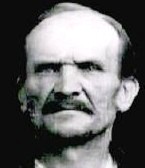
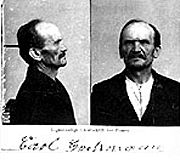
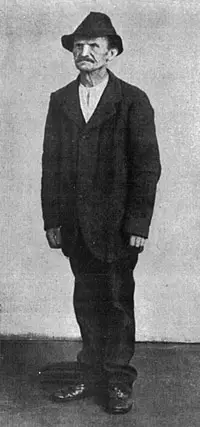
Georg Karl GROSSMANN
A.K.A.: "The Berlin Butcher"
Classification:
Serial killer
Characteristics: Child molester - Murdered
prostitutes after sex and sold their flesh on the black market, and even had a hot dog stand at the nearby train station
Number of victims: 26 - 50 +
Date of murders: 1913 - 1921
Date
of arrest:August 21,
1921
Date of birth:
December 13,
1863
Victims profile: Young women (mostly prostitutes)
Method of murder: ???
Location: Berlin, Germany
Status: Sentenced to death. Committed suicide by hanging
himself in his cell on July 5,
1922
Georg Karl Grossman
(who commonly called himself just Karl Grossman)
(1863~1921) was a German serial killer. He committed
suicide while awaiting execution without giving a full
confession leaving the extent of his crimes and motives
largely unknown.
Biography
Grossman was born in Neuruppin near
Berlin in 1863. Not a great deal is known about his
early life, except that he has sadistic sexual tastes
who soon picked up a number of convictions for child
molestation.
In August 1921, Grossman was arrested
at his apartment in Berlin after neighbours heard
screams and banging noises, followed by silence. The
police burst in and searched the place, finding a young
woman's freshly murdered body on the bed.
Grossman was taken into custody and
charged with murder. Neighbours reported that Karl
seemed to have had a steady supply of female companions,
mostly destitute-looking young women, over the last few
years. Many went into the apartment but few emerged from
it.
During World War I, Grossman sold a
lot of meat on the black market, and even had a hot-dog
stand at the nearby train station. It is believed the
meat was the remains of his victims, their bones and
other inedible parts being thrown into the river.
How many victims Grossman claimed is
not known. Only the body of his final victim was found,
along with bloodstains in the apartment that indicated
at least three other persons had been butchered in the
recent weeks. Some have suggested as many as 50 young
women entered Grossman's apartment and ended up being
murdered, dismembered and eaten by unwitting customers
of Grossman's meat business.
Convicted of murder, Grossman was
sentenced to death. Before his sentence could be carried
out, he hanged himself in his cell.
Carl Friedrich Wilhelm Großmann, who commonly
called himself just Carl Großmann (13 December 1863 – 5 July
1921) was a German serial killer. He committed suicide while awaiting
execution without giving a full confession leaving the extent of his
crimes and motives largely unknown.
Not a great deal is known about his early life,
except that he had sadistic sexual tastes and soon picked up a number of
convictions for child molestation. On 21st August in 1921, Großmann was
arrested at his apartment in Berlin after neighbors heard screams and
banging noises, followed by silence. The police burst in and searched
the place, finding a young woman's freshly murdered body on the bed.
Großmann was taken into custody by the police and charged with 1st
degree murder.
Neighbors reported that he seemed to have had a
steady supply of female companions, mostly destitute-looking young women,
over the last few years. Many went into the apartment but few emerged
from it. During World War I, Großmann sold a lot of meat on the black
market, and even had a hot dog stand at the nearby train station. It is
believed the meat was the remains of his victims, their bones and other
inedible parts being thrown into the river.
How many victims Großmann claimed is not known. Only
the body of his final victim was found, along with bloodstains in the
apartment that indicated at least three other persons had been butchered
in the recent weeks. Some have suggested as many as 50 young women
entered Großmann's apartment and ended up being murdered, dismembered
and eaten by unwitting customers of Großmann's meat business.
Convicted of murder, Großmann was sentenced to death.
Before his sentence could be carried out, he hanged himself in his cell.
Wikipedia.org
Grossmann, Georg Karl
Large and ugly, with a surly disposition, Grossmann was a sexual degenerate and sadist who included bestiality among his various perversions. Twenty-five arrests throughout his criminal career included three convictions for molesting children -- one of whom was killed.
Once employed as a butcher, Grossmann preferred to live by begging in the streets, invariably spending his receipts on sleazy prostitutes who nightly shared his bed.
Protected by his rap sheet from the military draft in World War I, he soon devised a way to turn a profit on his appetites. Before the outbreak of hostilities, Grossmann rented a squalid upstairs flat in the slums of Berlin, near the terminus of the Silesian railway. Sour and secretive, he was loathed by his neighbors but paid his rent on time, and the landlord left him alone.
Grossmann's flat had been constructed with a separate entrance, and the other tenants seldom thought of him before the early morning hours, when he stumbled home from all-night drinking bouts with giggling prostitutes in tow. He could afford the booze and women now, because he had devised another source of income. While the war and subsequent depression nearly ruined Germany, with famine a result of failure on the battlefield, Georg Grossmann peddled fresh meat in the streets. His neighbors might be starving, but the man upstairs was never phased by rationing or shortages.
In August 1921, the landlord was disturbed by sounds of violent struggle, emanating from the butcher's flat. Police were summoned, and they found a freshly murdered woman in the kitchen, trussed up like a hog for slaughter. Evidence recovered from the flat suggested Grossmann had dispatched at least three women in as many weeks; his diary and his statements to police revealed that he had used the women sexually, then sold their flesh as beef or pork, disposing of the "useless" remnants in a nearby river.
Grossmann's case inevitably called up recent memories of Karl Denke in Silesia, and newspapers dubbed it the case of the "bread and butter brides." (A "bride," in Germany, may either be a newly-married woman or a one-night stand.) Georg laughed when he was sentenced by the court to die and cheated justice, as had Denke, by hanging himself in his cell. An interesting sidelight of the Grossmann case involves the search for Anastasia, the Russian grand duchess believed, by some, to have escaped the Marxist firing squad that killed her family.
At one point, it was claimed that "Anastasia" was in fact a Polish peasant girl, Franziska Schamzkovski, but supporters of the would-be duchess countered that Schamzkovski had been killed by Grossmann during August 1920.
Their authority -- an entry in the killer's diary for "Sasnovski" -- failed to silence critics of the would-be Anastasia.
Michael Newton - An Encyclopedia
of Modern Serial Killers
Grossmann, Georg Karl
(1863-1921)
SEX: M
RACE: W TYPE: S MOTIVE: Sex./CE
MO:
Paroled pedop and child killer; murdered prostitutes after sex and sold
their flesh in his butcher shop.