Murderpedia has thousands of hours of work behind it. To keep creating
new content, we kindly appreciate any donation you can give to help
the Murderpedia project stay alive. We have many
plans and enthusiasm
to keep expanding and making Murderpedia a better site, but we really
need your help for this. Thank you very much in advance.
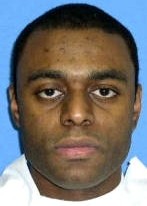
Justin Chaz
FULLER
Classification: Murderer
Characteristics: Robbery
Number of victims: 1
Date of murder:
April 21,
1997
Date of arrest:
5 days after
Date of birth:
August 29,
1978
Victim profile: Donald
Whittington (male, 22)
Method of murder:
Shooting
(.22 handgun)
Location: Smith County, Texas, USA
Status: Executed
by lethal injection in Texas on August 24,
2006
Summary:
Fuller and three friends went to college student Donald
Whittington’s apartment to rob him.
Fuller and his accomplices sprayed tear gas, then
bound and blindfolded Whittington and searched his apartment
valuables. While one of the men removed property from the apartment,
Fuller and the two other men then forced Whittington into his
vehicle and drove to an automatic teller machine where Fuller
withdrew money from his account. The money was distributed between
the three captors - eighty dollars apiece.
Fuller and his two accomplices then drove
Whittington to Sandy Beach, a local park, forced him to his knees,
and Fuller shot him three times with a .22 handgun while he was
praying.
The next day, Fuller took two friends from school
to view the body and told them about the robbery and murder. Smith
County deputies found Whittington’s body four days after the murder.
Once in custody, Fuller gave a videotaped
statement, confessing to the details of the offense, but denied
being the triggerman. Accomplices Samhermundre Wideman of Tyler and
Elaine Hays of Red Springs receiced life sentences. Brent Bates
Chandler accepted a 25-year sentence and testified against Fuller.
Citations:
Fuller v. Dretke, 161 Fed.Appx. 413 (5th Cir. 2006) (Habeas).
Final/Special Meal:
Declined.
Final Words:
"I would like to tell my family thank you for your support and my
friends. Let everyone know that you must stay strong for each other.
Take care of yourselves." He then told the warden standing next to
him, "That's it." As the lethal drugs began to take effect, he
looked at his parents watching through a window a few feet away and
said, "I love you." He did not acknowledge the victim's family.
ClarkProsecutor.org
Texas Department of Criminal
Justice
Inmate: Fuller, Justin
Date of Birth: 8/29/78
TDCJ#: 999266
Date Received: 4/29/98
Education: 12 years
Occupation: Laborer
Date of Offense: 4/21/97
County of Offense: Smith
Native County: Dallas, Texas
Race: Hispanic
Gender: Male
Hair Color: Black
Eye Color: Brown
Height: 6 ft 00 in
Weight: 165
Texas Attorney General
Media Advisory
Thursday, August 17, 2006
Justin Fuller Scheduled For Execution
AUSTIN – Texas Attorney General Greg Abbott
offers the following information about Justin Fuller, who is
scheduled to be executed after 6 p.m. Thursday, August 24, 2006, for
the 1997 kidnaping, robbery and murder of a Tyler man.
FACTS OF THE CRIME
On April 20, 1997, Justin Fuller and three
friends went to college student Donald Whittington’s apartment to
rob him. Fuller and his accomplices tied Whittington up and searched
his apartment for items of value. While one of the men removed
property from Whittington’s apartment, Fuller and the two other men
then forced the 21-year-old Whittington into his vehicle and drove
to an automatic teller machine where Fuller withdrew money from
Whittington’s account. The money was distributed between the three
captors - eighty dollars apiece.
Fuller and his two accomplices then drove
Whittington to Sandy Beach, a local park, forced him to his knees,
and Fuller shot him while he was praying. The next day, Fuller took
two friends from school to view the body and told them about the
robbery and murder. Smith County deputies found Whittington’s body
four days after the murder.
A criminal investigation led to Fuller’s arrest.
Once in custody, Fuller gave a videotaped statement, confessing to
the details of the offense. Fuller was eighteen years old on the day
he killed Whittington.
PROCEDURAL HISTORY
March 1998 -- Fuller was convicted of capital
murder and sentenced to death in Smith County.
December 2000 -- Fuller’s conviction and sentence
were upheld on direct appeal.
May 2001 -- The Texas Court of Criminal Appeals
denied Fuller’s application for writ of habeas corpus.
December 2001 -- A federal district court
dismissed Fuller’s habeas petition to return to state court to
exhaust newly raised claims.
March 2002 -- The Texas Court of Criminal Appeals
denied Fuller’s successive application.
November 2003 -- The Texas Court of Criminal
Appeals denied Fuller’s second successive application.
January 2005 -- A federal district court denied
Fuller’s federal habeas corpus petition.
January 2006 -- The 5th Circuit Court of Appeals
affirmed the federal district court’s denial of federal habeas
corpus relief.
June 2006 -- Fuller petitioned the U.S. Supreme
Court for review. The petition is pending.
CRIMINAL HISTORY
Evidence presented at the punishment phase of
Fuller’s trial indicated that Fuller was associated with a violent
gang. The State also presented testimony from Fuller’s former
employer at a fast-food establishment, who in 1996 caught Fuller on
videotape stealing cash. Fuller was fired and theft charges were
filed against him.
Convicted killer executed for Tyler man's '97
death
Case inspired a state law making it a crime to know about a
body and stay silent about it
By Michael Graczyk -
Houston Chronicle
Associated Press Aug. 24, 2006
HUNTSVILLE — Condemned prisoner Justin Fuller
quietly went to his death Thursday evening for the abduction,
robbery and fatal shooting of a Tyler man nine years ago. In a brief
statement, Fuller thanked his family and friends for their support.
"Let everyone know that you must stay strong for each other," he
said. "Take care of yourselves." He told the warden standing next to
him, "That's it."
As the lethal drugs began to take effect, he
looked at his parents watching through a window a few feet away and
said, "I love you." The parents and a sister of his victim watched
through an adjacent window, but he didn't acknowledge them. Eight
minutes later, at 6:18 p.m., he was pronounced dead.
Fuller acknowledged being in the vicinity when
21-year-old Donald Whittington III was killed at Lake Tyler in the
early morning hours of April 21, 1997. But he said he didn't fire
the fatal shots with a .22-caliber pistol and didn't show off the
body later to friends. Whittington's remains were not discovered by
police until four days after he went missing.
Authorities said by then numerous people had gone
to see the body, which became the subject of conversation at Chapel
Hill High School near Tyler. A student at the school, which
Whittington, Fuller and two other people convicted in the slaying
had attended, overheard some of the talk and called police. The case
inspired the passage of a state law making it a crime to know about
a body and remain silent about it.
The U.S. Supreme Court rejected Fuller's appeals
hours before the execution. Three others convicted in the case are
serving long prison terms.
Tyler man's killer is 19th executed this year
By Michael Graczyk -
Fort Worth Star Telegram
Associated Press Fri, Aug. 25, 2006
HUNTSVILLE -- Condemned prisoner Justin Fuller
quietly went to his death Thursday evening for the abduction,
robbery and fatal shooting of a Tyler man nine years ago. In a brief
statement, Fuller thanked his family and friends for their support.
"Let everyone know that you must stay strong for each other," he
said. "Take care of yourselves." He told the warden standing next to
him, "That's it."
As the drugs began to take effect, he looked at
his parents watching through a window a few feet away and said, "I
love you."
He did not acknowledge the parents and a sister
of his victim, Donald Whittington III. He was pronounced dead at
6:18 p.m. "It was too easy. Compared to what my son went through, it
was really too easy," Donald Whittington Jr. said. "He showed no
remorse in court, and he showed no remorse being injected."
The younger Whittington was killed at Lake Tyler
early April 21, 1997. Fuller denied firing the fatal shots with a
.22-caliber pistol and said he didn't show off the body later to
friends. Whittington's body wasn't found by police until four days
after he was reported missing.
By then, authorities said, a number of people had
gone to see the body, which became the subject of conversation at
Chapel Hill High School near Tyler. A student at the school, which
Whittington, Fuller and two other people convicted in the slaying
had attended, overheard some of the talk and called police. The case
inspired passage of a state law making it a crime to know about a
dead body and keep silent about it.
Fuller said in a recent interview with The
Associated Press that he couldn't express regrets about the killing.
"If I have regrets, it means I done it," he said.
The U.S. Supreme Court rejected Fuller's appeals
hours before the execution. Fuller's lawyers contended that his
trial attorneys were ineffective and failed to tell him about a
proposed plea bargain that would have spared him from a death
sentence.
Fuller's accomplices, Samhermundre Wideman of
Tyler and Elaine Hays of Red Springs, are serving life sentences.
Brent Bates Chandler accepted a 25-year sentence and testified
against Fuller.
Fuller and Wideman lived in the same apartment
complex as Whittington. Prosecutors said the robbery plot was
hatched by Hays, Wideman's girlfriend, who believed that Whittington
had received $15,000 from a trust fund when he turned 21. Hays'
lawyers at her trial blamed the scheme on the three men. Whittington
was sprayed with a tear gas, blindfolded, had his hands and feet
tied and was threatened with death if he didn't surrender his ATM
card and password.
Chandler took clothing and items from
Whittington's apartment, and the other assailants threw Whittington
in the back seat of his own car, drove to a bank and withdrew about
$300 and then went to the lake area where Whittington was killed.
Fuller told police that he was urinating in the lake at the time of
the shooting. His companions disputed his story. "They said I was
the triggerman," said Fuller, who blamed Wideman for the shooting.
Whittington's ATM card was found in Fuller's wallet.
Fuller, whose 28th birthday would have been next
week, was the 19th inmate executed this year in Texas, matching the
total executions in the state for all of 2005. At least seven
condemned prisoners have death dates through the end of the year.
Texas executes man for 1997
robbery-murder
Reuters News
Thu Aug 24, 2006
HUNTSVILLE, Texas (Reuters) - A Texas man was
executed on Thursday for the 1997 kidnapping, robbery and murder of
a 21-year-old college student near the northeast Texas town of Tyler.
Justin Fuller was condemned for shooting Donald
Whittington III, in a park near Tyler after kidnapping Whittington
from his apartment and forcing him to withdraw money from an
automatic teller machine on April 20, 1997. Fuller, then 18, and
three accomplices divided the $300 taken from Whittington's bank
account. Prosecutors said Fuller took friends to see Whittington's
body in the days after the shooting and confessed to police after
his arrest.
Defense attorneys unsuccessfully appealed
Fuller's conviction, saying he was poorly represented by a lawyer
who filed an appeal petition using portions of a brief from another
case, so that at one point it described a different crime.
On Thursday, while strapped to a gurney in the
death chamber shortly before his lethal injection, Fuller spoke to
his family and friends. "I would like to tell my family thank you
for your support and my friends," he said. "And let everyone know
that you must stay strong for each other. Take care of yourselves."
Fuller was the 19th person executed in Texas this
year and the 374th put to death in the state since it resumed
capital punishment in 1982, six years after the U.S. Supreme Court
lifted a national death penalty ban. Both totals lead the nation.
Fuller did not request a last meal.
Texas has eight more executions scheduled this
year.
State puts convicted killer to death
Fuller
executed for role in robbery, murder of East Texas man
By Tori
Brock - The Huntsville Item
August 25, 2006
Never acknowledging the family of his victim,
Justin Fuller, 27, said only a few words to friends and family
before his execution Thursday night inside the Huntsville “Walls”
Unit. “I would like to tell my family thank you for your support,
and my friends,” he said from a gurney in the execution chamber.
“And let everyone know that you must stay strong for each other.
“Take care of yourselves,” he finished. “That’s it, warden.” With
that, he steadied himself for his final breath. Glancing over at his
family and friends, he said, “I love you,” before drawing a final
ragged breath and sputtering.
Fuller was pronounced dead at 6:18 p.m., eight
minutes after the lethal dose began. Fuller was executed for the
April 1997 abduction, robbery and murder of Donald Harrison
Whittington III near Tyler.
According to the Texas Department of Criminal
Justice, Whittington, 22, was bound and blindfolded inside his
apartment and driven to his bank where $300 was withdrawn from his
account using his bank card. He was then driven to a local lake
where he was shot three times with a .22 caliber weapon. Fuller
allegedly robbed Whittington for his failure to return some rings to
a friend and killed Whittington so he couldn’t identify him.
After witnessing his execution, Donald
Whittington Jr., said he had no sense of closure. “I saw it, but it
was too easy. My son went through much more than that,” Whittington
said. “He showed no remorse during court, and he showed no remorse
being injected. I still never got the answer to my question — why?
“The way they executed him, it was nothing,” he continued. “It was
like he fell asleep. My son was my friend. We had a beautiful
relationship. We never suspected nothing like this.”
Fuller’s family also witnessed the execution
Thursday night, but showed little or no emotion, remaining composed
throughout. Fuller’s mother Eddie whispered, “I love you,” to her
son and held onto her husband Ellis until her son was pronounced
dead.
Fuller was the 19th person executed by the state
of Texas this year, a number total to the executions carried out in
2005. If all scheduled executions are carried out, the state will
execute 27 people by the end of the year.
Fuller execution thursday
By Casey Knaupp -
Tyler Morning Telegraph
August 21, 2006
Justin Chaz Fuller is scheduled to be executed
Thursday - five days before his 28th birthday - for the 1997 capital
murder of a 21-year-old Tyler man. Fuller, of Tyler, was sentenced
to death for killing Donald Whittington III, who was shot three
times and left on Lake Tyler's Sandy Beach on April 21, 1997. The
murder case inspired a new state law, making it a crime to view a
body without reporting it.
Fuller, along with Elaine Hays, Brent Chandler
and Samhermundre Wideman, were convicted in March 1998 of kidnapping,
torturing and fatally shooting Whittington during a robbery plot
that began at the victim's Tyler apartment. The group robbed
Whittington of trust-fund money and was angered when his ATM card
yielded only $300 from a machine.
They bound, blindfolded, gagged and maced him and
took him to Lake Tyler, where he was shot execution-style with a
.22-caliber firearm. Investigators found Whittington's body four
days after he was reported missing and after at least a dozen people
viewed the decomposing remains without reporting it to police.
Fuller, a Dallas native, was the only defendant
sentenced to death. Two of his co-defendants received life sentences
while another received a 25-year sentence. Fuller, who was 18 at the
time of the murder, claimed he was not the gunman as authorities
contended.
The Texas Court of Criminal Appeals has denied
all of Fuller's appeals and affirmed the death sentence. The
execution date was set by 114th District Judge Cynthia Stevens Kent.
Texas Execution Information
Center by David Carson
Txexecutions.org
Justin Chaz Fuller, 27, was executed by lethal
injection on 24 August 2006 in Huntsville, Texas for the abduction,
robbery and murder of a 21-year-old man.
On 21 April 1997, Fuller, then 18, Elaine Hays,
25, Samhermundre Wideman, 20, and Brent Chandler, 19 went to the
Tyler apartment of Donald Whittington. They tied Whittington up and
searched his apartment for property to steal. While Chandler removed
property from the apartment, the other three forced Whittington into
his vehicle and drove to an automatic teller machine.
Fuller withdrew $240 from Whittington's account
and divided the money evenly with Hays and Wideman. They then drove
to a local park. Whittington was forced to his knees, then was shot
twice in the head and once in the arm with a .22-caliber weapon.
That evening, Fuller told two friends from Chapel
Hill High School about the robbery and murder and took them to see
the body. The next day, one of those students took five friends to
see the body. Two days later, one of those youths, Kevin Ballard,
contacted the police and led them to the body.
In a search of Fuller's home, police found
Whittington's ATM card in Fuller's wallet, and the victim's watch in
the living room. After his arrest, Fuller confessed to being
involved in the crime, but he denied being the trigger man. He also
denied taking anyone to see the body.
While awaiting trial, Fuller was found guilty of
misdemeanor theft for stealing money from his employer's cash
register in 1996.
At Fuller's capital murder trial, prosecutors
alleged that Fuller robbed Whittington, who had also attended Chapel
Hill High School, because he failed to return some borrowed rings to
a friend. The defense attempted to depict Wideman as the leader of
the group and the organizer of the crime.
A jury convicted Fuller of capital murder in
March 1998 and sentenced him to death. The Texas Court of Criminal
Appeals affirmed the conviction and sentence in December 2000. All
of his subsequent appeals in state and federal court were denied.
Elaine Kay Hays and Samhermundre Raemune Wideman
were convicted of capital murder and sentenced to life in prison.
Brent Bates Chandler was convicted of aggravated robbery, aggravated
kidnapping, and arson and sentenced to 25 years in prison.
In a brief last statement, Fuller thanked his
family and friends for their support. He did not acknowledge the
relatives of his victim. As the lethal drugs began to take effect,
Fuller looked at his parents and said, "I love you." He was
pronounced dead at 6:18 p.m.
ProDeathPenalty.com
Donald Whittington III, a hardware store employee,
was tortured at his Tyler apartment by people he considered friends,
bound, blind-folded, gagged and maced and robbed for trust-fund
money.
Justin Fuller, Elaine Hays, Brent Chandler and
Samhermundre Wideman tied Donald up and searched his apartment for
items of value. While one of the group removed property from
Donald's apartment, Fuller and the other two then forced Donald into
his vehicle and drove to an ATM - they were angered when his ATM
card yielded less than $300 from a machine. So the three split the
money, netting about $80 each, and then took Donald to Sandy Beach,
a local park at Lake Tyler, forced him to his knees where he was
shot execution-style in the head as he prayed.
The gunman, Justin Fuller, took two friends from
school to view the body the next day and told them about the robbery
and murder. The case inspired a new state law, making it a crime to
view a body without reporting it. Testimony at trial showed that at
least a dozen people viewed Donald's decomposing body without
reporting it to police. Smith County deputies found Donald's body
four days after the murder.
Once in custody, Fuller gave a videotaped
statement, confessing to the details of the offense. Fuller was
eighteen years old at the time he killed Whittington. Widerman and
Hays received life sentences and will not be eligible for parole
until 2037. Chandler is serving a 25-year sentence for aggravated
kidnapping and aggravated robbery after testifying agains Fuller. He
is eligible for parole in 2009.
After finding Fuller guilty, the jury needed only
13 hours of deliberation over a two-day period to recommend the
death penalty. Donald's parents plan to attend Fuller's execution. "I'd
do it myself if I could," said Raquella Whittington, who balks at
written requests from Fuller to talk to her and her husband, Donald
Whittington II. Echoing his wife's sentiments, Whittington said, "The
only way I would talk to him is if he could bring my son back and he
can't."
The Whittingtons said they live their lives
heavily sedated. Sleeping pills are the only way they get through
the nights without hearing the words of their sons' killers. "It's
hard," Mrs. Whittington said, recalling the grueling trials where
she heard the words her son heard as he took his last breaths. "You
have to sit there and listen to everything they did to him, what
they took, tying him up," she recalled, in addition to testimony
about her son's last words: "Leave me alone, take anything you want.
"People say time will heal," Mrs. Whittington said. "He's my only
son. Time has not healed this."
Democracyinaction.org
Justin Fuller - Texas - August 24
Do Not Execute James Fuller
Justin Fuller was convicted of robbery and
capital murder for being the triggerman in the murder of Donald
Harrison. Harrison was killed on April 21, 1997 in Tyler County.
Fuller and three friends abducted Harrison, drove him to an ATM,
made him withdraw 300 dollars and took him to an abandoned field
where they shot him three times.
The next day Fuller bragged to friends about the
crime; later that day the murder was shown on the news and Fuller
was turned in. The police found Harrison’s wallet inside Fuller’s
home and subsequently placed Fuller under arrest. He was 19 at the
time of conviction and 18 at the time of his crime.
Fuller did not receive adequate representation
from the state of Texas. His two lawyers, James Volberding and
Donald Killingsowrth, proved to be ineffective. Volberding, who was
sitting as second chair, had minimal criminal court experience and
was not qualified to try a capital case. Several months prior to the
trial, Killingsworth was supended form practicing law because he had
not paid his state bar dues. During this time, Volberding was lead
counsel.
Killingsworth failed to mention to Fuller that
the prosecution had discussed a possible plea bargain. This plea
bargain would have offered Fuller life in prison rather than the
death sentence he received. Killingsworth did not mention this to
Fuller because he believed it might not have been a serious offer.
Volberding had several memos that stated that he believed that
Killingsworth was not providing adequate counsel to Fuller and that
he was picking up the slack. The above claims were brought forth in
appeals, all of which were denied.
To this day Fuller denies being the triggerman
that shot and killed Harrison. He claims Samhermundre Wideman,
another man arrested for his involvement, was the shooter. The jury
in Fuller’s trial disagreed and sentenced him to death. Elaine Hays,
another participant in the crime, has come forward and stated that
she believes Wideman was the shooter. She explains that after Fuller
and Wideman returned to the vehicle, where she had been waiting for
the two men, Wideman said, “it felt good to shoot someone.” This
fact was brought up in a later appeal but was subsequently denied.
The state of Texas denied the appeal based on the
ground that the state can still execute “non-triggermen.” Wideman
was sentenced to life for his involvement in the crime. Like Wideman,
Fuller might have received a life sentence if he had been tried as a
“non-triggerman" or even if his counsel had done their job properly.
It is time that the state of Texas begins to
provide adequate counsel for all defendants, especially when they
are not even old enough to legally drink and nonetheless face the
possibility of death.
Please write to Gov. Rick Perry on behalf of
Justin Fuller.
Texas man executed for 1997 robbery and shooting
death of hardware store employee
CourtTV.com
Aug. 25, 2006
(Court TV) — Justin Chaz Fuller was executed
Thursday night for the robbery and shooting death of a 21-year-old
East Texas man in 1997. With his parents and those of his victim
watching through a window, Fuller, 27, thanked his family for their
support before given a lethal injection. He was pronounced dead at
6:18 p.m. CT. "I would like to tell my family 'Thank you for your
support' and my friends," Fuller said. "And let everyone know that
you must stay strong for each other. Take care of yourselves."
Fuller was 19 years old when a Smith County jury
convicted him and sentenced him to death in 1998 for the robbery,
kidnapping and murder of Donald Whittington III, a hardware store
employee. Fuller admitted to authorities that he and three friends
abducted Whittington from his Tyler apartment and used his car to
drive him to a nearby ATM, where they forced him to withdraw $300.
He told authorities that the group then drove
Whittington, bound and blindfolded, to a picnic area near Lake Tyler,
where he was shot twice in the head. They then torched Whittington's
car. "The initial plan was to just drop him off, and you know, let's
go back home," Fuller told CourtTVnews.com in an Aug. 2 interview. "But
things escalated from that point on, and that's when it got out of
hand." Whittington's body remained there for four days, until a high
school student reported the body to authorities. The teen told
police that 18-year-old Fuller, a recent graduate of Chapel Hill
High School, had led them to the body and bragged about shooting
Whittington.
"It was too easy. Compared to what my son went
through, it was really too easy," Donald Whittington Jr., the father
of the victim, told the Associated Press Thursday after the
execution. "He showed no remorse in court, and he showed no remorse
being injected."
In an interview with CourtTVnews.com, Fuller said
he was sorry for Whittington's death, but denied he pulled the
trigger or that he told others that he killed him. Instead, he
implicated co-defendant Samhermundre Wideman as the triggerman.
Wideman is serving a life sentence for his role in the murder.
On Thursday, the U.S. Supreme Court declined to
hear Fuller's appeals based on new information from co-defendant
Elaine Hays, who recently told Fuller's appellate attorney that
Wideman had claimed responsibility for the shooting and remarked
that "it felt good" to shoot someone. In his petitions, Fuller
claimed that his trial lawyers never told him that prosecutors had
offered him a plea deal. He also complained that his first post-conviction
attorney filed pleadings on his behalf intended for someone else,
but with his name replaced in the paperwork.
Ellis Fuller, who last spoke with his son earlier
Thursday, told CourtTVnews.com that his son was at peace with his
fate. "He was in good spirits. I think he's come to terms with what
he did or did not do," Ellis Fuller said earlier Thursday. "It's
between him and the Lord."
An interview with Justin Fuller.
'I blame myself' - Justin Fuller was sentenced to
death at the age of 19. With a group of friends, he kidnapped,
robbed and murdered an acquaintance for $300. Although he denied it,
prosecutors fingered Fuller as the triggerman. In the days before
his execution, CourtTVnews.com spoke with him about his last days,
his family Christmases and the differences between being a leader
and follower.
"After I die? I always tell my pen pals that I'll
just be floating in the wind. Where I go I don't know, but I'll be
floating somewhere." — Justin Fuller
CourtTVnews.com reporters Emanuella Grinberg
and Andrew Brooks interviewed death row inmate Justin Chaz Fuller on
Aug. 2 at the Polunsky Prison Unit in Livingston, Texas. He was
executed on Thursday, Aug. 24. The transcript below has been edited
for length and clarity.
COURTTVNEWS.COM: What's it like living on death
row?
JUSTIN FULLER: It's kind of difficult, right. You
go through a lot of emotional changes. Dealing with the guards,
dealing with ups and downs, you know, missing family, missing kids,
missing nieces and nephews. Also, I see things — the rejection of
cases, dealing with inconsistent courts, seeing different rulings
and things. You deal with a lot of emotions.
CTV: What's the highlight of your day?
FULLER: I guess I would say going to recreation.
Even though it's isolated, it gives you a little free time outside
of your cage to be in another cage.
CTV: What's the low point?
FULLER: I think my low point is probably no mail,
no mail. Getting no letters or no mail.
CTV: Do you have a favorite movie or book?
FULLER: I think my favorite movie would probably
be "Boyz n the Hood," or something like that ... It kind of like
relates to different types of lifestyles. Even though some people
say it's violent, but it's not really violent. It just shows how
life is for a certain individual class, right. Maybe some black
people. It just shows different sides of life — how people overcome
struggles. My favorite book is by Paulo Coelho. He writes about
spiritual things. He has a new book out. It's called "The Zahir."
CTV: Are you close friends with any inmates?
FULLER: Yeah, well, I think you interviewed one
of them. He was executed a couple of weeks ago. Mauriceo Brown.
Yeah, he was one of my close friends.
CTV: Do you get letters from strangers?
FULLER: Oh yeah, you get all sorts of letters,
all sorts of mail. Different, different situations, you get
different mail. You get some hate mail — "You deserve to die,"
something like that, right. But that doesn't really affect you. I
guess it gives me more motivation to strive to overcome the
situation.
CTV: How has life in prison changed you?
FULLER: Life in prison has changed me a lot
because I was a follower in the world, which I think most
18-year-olds are sometimes. I used to be a follower. I used to do
crazy things just to be cool. But being in prison shows you that
everybody ain't your friend. But you have to make your own decisions
in your life. But that comes more with maturity, you know. And I
spent most of my life or my 20s here, right. I'm 27 now, so when I
got here I was 19. So, that's eight years of sitting in a cell by
yourself contemplating, thinking about life, how you overcome
things, how you would want to live, how would you want to touch a
piece of grass at this time, right. But that's how I've overcome, by
not being a follower.
CTV: What do you miss most about life on the
outside?
FULLER: To me, it's about the simple things now.
I used to miss the materialistic things, but that really doesn't
matter to me no more. It's just the simple things. Just taking a
walk in the park now, right. Seeing the wind breeze or, you know,
just something simple now, at this point in life.
CTV: How is your relationship with your daughter?
FULLER: She's a character. And we have a pretty
good relationship. She still knows me as Dad, and we pretty much
have a good relationship.
CTV: How old is she now?
FULLER: She's 11 now.
CTV: And how old was she when you were taken into
custody?
FULLER: Two.
CTV: Growing up, how was your relationship with
your parents and your older brother?
FULLER: Me and my parents. You know, I was like a
rebel. I mean, I guess you could say I was different than my
brother. My brother was more: Obey. I was more like: Do what I want
to do. That was just me.
CTV: How did you spend your time?
FULLER: Probably staying out late. Doing whatever
my friends wanted me to do. Like I said, I was a follower. So, if it
was cool to them, then it was cool for me.
CTV: What's your happiest memory from childhood?
FULLER: Oh, my happiest memory. Had to be
Christmas. Christmastime, where the family gets together, and you
deal with all sorts of things and you get presents. Your family is
happy, you have all your family with you. The happy moments of
Christmas.
CTV: Can you recall one particular memory?
FULLER: Oh, one? I think when I got my Sega
Genesis. I was pretty young then, I can't recall the age. But I got
a Sega Genesis. I had wanted it all Christmas. But everybody else
had a Nintendo. And I had wanted a Sega. And I got my Sega and I
think we played it all night, all day. All day the next day until we
just fell asleep, like the little hymn. Just playing.
CTV: What did you want to be when you grew up?
FULLER: Play sports. I wanted to play basketball,
baseball. It didn't matter, just the sport, you know. I was pretty
good at soccer, baseball, basketball. That's what I wanted to grow
up to be.
CTV: What are you good at? Any skills?
FULLER: I developed a little skill of writing. I
mean, I guess after so many years you develop a skill of writing,
but I like to write. I like to read.
CTV: What kind of writing? Fiction, nonfiction,
poetry?
FULLER: Oh no. I write a little poetry, but it's
not ... I just like to write my thoughts down in poetry form.
Sometimes it doesn't even read like poetry, just my thoughts for the
day. Just the life that I live in here and the things we go through.
CTV: Was there anything that you or someone could
have done in your younger life that might have prevented you being
here?
FULLER: No. I blame myself.
CTV: In what way?
FULLER: Like I said, I was rebellious. It was my
way. If my way didn't work, then I suffer the repercussions. But I
would still do it my way. And my parents tried. They tried to raise
me right. They tried to do all they could to raise me right and to
show me the right way of life and everything. So I would blame
myself.
CTV: Now that we've talked a little bit about
you, let's talk a little more about the crime. Did you know Donald
Whittington?
FULLER: Not really. I'd seen him a couple times,
but I really didn't know him.
CTV: Did you kill him?
FULLER: No. No.
CTV: You claim your intention was just to carry
out the robbery?
FULLER: Right, it was just to go retrieve these
rings, from the rings that he loaned to Elaine Hays. That was the
initial thing.
CTV: And when did things escalate?
FULLER: When we got to the lake. The initial plan
was to just drop him off, and you know, let's go back home. But
things escalated from that point on, and that's when it got out of
hand.
CTV: And how did the shooting happen?
FULLER: Oh, really, it was a conscious decision
on someone else's part.
CTV: What was your biggest regret that day?
FULLER: I want to say participating in the crime.
Not because I got caught, but because someone's life was taken. And
that's not the individual that I've even been associated with. I've
never been a violent person in my life, right. So, to say that to be
a part of something that happened in a murder is quite different for
me.
CTV: Do you have any other regrets in your
personal life?
FULLER: Not really, not really.
CTV: Do you think life in prison without parole
would be easier or harder than execution?
FULLER: To me, life without parole is just
another form of the death sentence. Because you're slowly
deteriorating. When there is no rehabilitation in prisons, you're
slowly rotting. You slowly lose the mind frame that you have. And
being in prison is not an easy feat. If you have no rehabilitation
and you have no hope to get out, then nine times out of 10, you're
just going to continue on your self-destruction path. So, I don't
believe in life without parole.
CTV: Do you expect any friends or family to be at
your execution, if it goes through?
FULLER: Yeah. My mother, my father. Probably my
brother. And probably two friends, one from overseas and one from
Austin.
CTV: Are you religious?
FULLER: No, not really ... Well, I'm saying like
Christian, Muslim, Buddhist, not in that sense. I would say that I'm
just, I believe in God. But as far as saying I'm a Christian, or a
Muslim, no.
CTV: How would you describe it then?
FULLER: I would describe it as having faith in
God. There is only one God. And that He guides us all, He lives
within each of us. And He controls everything. And when I pray, I
pray to God. And I allow Him to live in me spiritually and to dwell
and just confide in and lead me on my path in this life.
CTV: What do you think will happen to you after
you die?
FULLER: After I die? Oh, I always tell my pen
pals that I'll just be floating in the wind. Where I go I don't
know, but I will be floating somewhere.
CTV: Are you prepared for death?
FULLER: Yeah ... I don't agree, I don't want to
die. But at the same time, we're all going to die one day. If it
comes, it comes. Life goes on, right. If it comes, it comes.
CTV: Is there anything you want people to know
about you that they may not know already?
FULLER: Most people think that people on death
row are violent individuals, or most are killers, or just bad people.
But we're not. I mean, we're just like any other human beings in
this world. We don't deserve to die for anything. I don't believe in
the death penalty at all. But most people need second chances in
life. I mean, some people here regret everything, but if we as a
society don't ever give second chances for a mistake, for something
we might have done or have not done, then we'll continue the
killings. Killing for killing doesn't solve anything, because it
doesn't stop anything, it doesn't change anything ... People don't
think about the death penalty when they go commit crime.
CTV: Is there anything you'd like to say to the
Whittington family, if you had a chance?
FULLER: I would just like to say then that what
happened to their son was wrong. Some would say that I should have
stopped it. Some would say it could have been different. Yes, it
could have been different. But I'd just say I'm sorry. Sorry they
had to lose their loved one for something senseless, right. I'd just
try to say that I don't believe that my death would bring no
comfort. It might, but I doubt it, right. Because I just don't
believe that killing me would bring a whole peace to this thing.
That's what I would say.
CTV: What is your greatest fear?
FULLER: My greatest fear. I would say dying and
not being able to tell my family that I love them. That's my
greatest fear.
CTV: What do you want to be remembered for?
FULLER: A person who is compassionate about life.
That life meant more to me than what it used to mean to me. Because
life changes for a lot of people once they become more conscious of
life. So, I'd like to be remembered as someone who changed his life,
who went from being a follower to someone who taught kids to change,
taught kids to understand that life is bigger than how we see it at
15, 16, 17, or 18. Life is much greater than that.
His life: An 'everyday-type kid' who was eager
to please his friends
"Everybody was his friend, and he loved to make
people laugh," Eddie Fuller told CourtTVnews.com. "When he went out,
he didn't let his clothes slouch. He was conscious of his looks and
kept himself well-groomed." By high school, however, Justin says he
began rebelling against his parents by staying out late and
associating with a tough crowd. "I used to do crazy things just to
be cool," he told CourtTVnews.com. "I was a follower. So, if it was
cool to my friends, then it was cool for me."
A few months after he graduated from Chapel Hill
High School in 1996, Justin went to Louisiana and stayed with his
older brother, Jason, according to Eddie Fuller. He considered
enrolling at Louisiana Tech for the fall 1997 semester, but instead
returned to Tyler. He moved in with his girlfriend, Tamicka Hill,
who lived in the same apartment complex as 21-year-old Donald
Whittington.
Fuller admits that on April 21, 1997, he joined a
plot with Hill's friends — Sam Wideman, Elaine Hays and Brent
Chandler — to rob Whittington. But he says he unwittingly became an
accessory to Whittington's murder. "He would let anyone befriend
him. He was just too nice. But he wasn't a street child," Eddie
Fuller said. "If he had been a street child, he would have probably
known better than to get involved with those people."
"His crime: A man kidnapped and
shot for $300," by Emanuella Grinberg.
On April 21, 1997, a group of teens from Chapel
Hill High School in Tyler, Texas, came upon the dead body of 21-year-old
Donald Whittington, bound and blindfolded, in a picnic area near the
banks of Lake Tyler. Three days later, a parent of one of the
students called police, and the teens led authorities to the body.
The teens told police that 18-year-old Justin Chaz Fuller, a recent
graduate of Chapel Hill, had led them to Whittington's body and
bragged about shooting him.
When police went to Fuller's home on Aug. 25,
they found Whittington's ATM card in his wallet and Whittington's
watch in the living room. Fuller was arrested and brought into
custody for questioning.
In a videotaped interview with the FBI, Fuller
stated that he went to Whittington's home the evening of April 21,
1997, with his friends, Elaine Hays, Sam Wideman and Brent Chandler,
to retrieve jewelry that Hays had left with Whittington as
collateral for a loan.
Fuller told authorities that Wideman used Mace on
Whittington before tying him up and ransacking the home. The group
later brought Whittington to a bank, where he withdrew $300 from his
ATM. From there, Hays, Wideman and Fuller drove Whittington's car to
Sandy Beach Park. Hays waited in the car while Wideman and Fuller
brought Whittington into the woods and shot him twice in the head
and once in the arm. Then they returned to the car and torched it.
Chandler pleaded guilty to arson charges and
received a 25-year sentence. In his guilty plea, Chandler testified
that the four teens went to Whittington's home with the intent to
rob the victim, but not to kill him. Hays pleaded guilty to murder
and was sentenced to 40 years to life. Both Wideman and Fuller were
charged with capital murder in the course of a robbery and
kidnapping, although prosecutors argued that Fuller was the shooter,
based on statements from friends claiming that he had bragged about
pulling the trigger. Fuller was 19 when his trial opened in Smith
County in February 1998.
In Fuller's FBI statement played for the jury, he
admitted his involvement in the robbery but implicated Wideman as
the shooter. "He did not come across as being terribly compassionate,"
Fuller's trial attorney, James Volberding said. "He did not express
a great deal of concern for the victim."
Fuller's lawyers focused on sparing him the death
penalty by minimizing his culpability. They portrayed Elaine Hays as
the instigator who planned the robbery and encouraged the others to
carry it out. The defense also called one witness who testified that
Wideman admitted being the shooter. The panel convicted him after
three hours of deliberations, but took an additional 11 hours to
sentence him to death. In a separate trial, Wideman was convicted
and sentenced to life.
In petitions since his conviction, Fuller claims
his trial attorneys never informed him of a plea bargain that would
have netted him a life sentence in exchange for his guilty plea on
charges of capital murder and arson. The petitions also question the
impartiality of a juror who was on pain medication during the trial.
Also, the entire panel contracted food poisoning during the penalty
phase, but were given medication and instructed to continue
deliberations.
Elaine Hays has submitted an affidavit stating
that, when the pair returned after shooting Whittington, Wideman
said that "it felt good to shoot somebody." Fuller's claims are
pending before the U.S. Supreme Court.
Fuller vs. Dretke
No. 05-70004
Federal
Circuits, 5th Cir.
August 23,
2006
Fuller v. Dretke,
161 Fed.Appx. 413 (5th Cir. 2006) (Habeas).
Background: Petitioner convicted in state court
of capital murder and sentenced to death filed petition for a writ
of habeas corpus. The United States District Court for the Southern
District of Texas dismissed petition. Petitioner appealed.
Holdings: The Court of Appeals, Dennis, Circuit
Judge, held that:
(1) codefendant's character and background was not relevant, as a
mitigating factor for purpose of the punishment phase;
(2) testimony of state Department of Criminal Justice official was
not relevant;
(3) prosecutor's reasons for using peremptory challenges to strike
African-American jurors from the panel were not pretextual in
violation of Batson;
(4) petitioner was not deprived of effective assistance of counsel;
(5) claim asserted against county or prosecutor's office for alleged
pattern of discrimination against African-American jurors was not
cognizable in habeas proceeding; and
(6) petitioner failed to establish actual innocence, as would excuse
his procedurally defaulted claims. Affirmed.
DENNIS, Circuit Judge:
Pursuant to 5th Cir. R. 47.5, the court has
determined that this opinion should not be published and is not
precedent except under the limited circumstances set forth in 5th
Cir. R. 47.5.4.
Fuller was convicted of capital murder on March
4, 1998 and subsequently sentenced to death in the 241st District
Court of Smith County, Texas. Fuller's direct appeal was denied by
the Texas Court of Criminal Appeals, as was his first state
application for post-conviction relief. Fuller filed an application
for a writ of habeas corpus in the U.S. District Court for the
Eastern District of Texas, but dismissed the application in order to
return to state court. His second state application was denied and
Fuller once again filed a habeas application in district court.
Again, he dismissed the federal application and returned to state
court a third time. Fuller's third state application for post-conviction
relief was dismissed and Fuller subsequently filed a third
application in district court, raising twenty six claims.
The district court denied Fuller's habeas
petition, but later granted Certificate of Appealability (“COA”) on
four issues: (1) whether the trial court erred in not allowing
Fuller to present evidence of the relative culpability of a co-perpetrator
during the punishment determination phase of his trial; (2) whether
the trial court erred in refusing to allow a witness to discuss
future dangerousness in the context of life in prison; (3) whether
the prosecution improperly excluded venirepersons on the basis of
their race; and (4) whether the district court's refusal to consider
the merits of Fuller's fourteenth through twenty-sixth claims
because they are procedurally defaulted resulted in a miscarriage of
justice. We AFFIRM the district court's denial of Fuller's petition
for habeas corpus relief.
BACKGROUND
On April 21, 1997, Petitioner Justin Fuller and
three friends kidnaped Donald Whittington from his apartment, made
him withdraw money from an ATM, then drove him to a wooded area and
shot him once in the arm and twice in the head, killing him. That
evening, Fuller took two high school students to see Whittington's
body and told them what had happened. Those two students invited
Kevin Ballard, Kevin's brother, and three other youths to view the
body the next day. Later, Kevin saw on a television broadcast that
Whittington's body had been discovered, and he contacted the police
and led them to the body.
The police interviewed the youths and were told
what Fuller had said about killing Whittington. After searching
Fuller's dwelling, the police found Whittington's ATM card in
Fuller's wallet and his watch in Fuller's living room. After being
arrested, Fuller confessed to being involved in the crime, but
denied being the trigger man. Fuller was subsequently convicted of
capital murder and sentenced to death. He brings this habeas
petition to challenge several happenings during the pre-trial, trial,
and punishment phases of his case.
STANDARD OF REVIEW
This Court applies the same
standard of review to the state court's decision
as does the district court. In reviewing
Fuller's constitutional claims that have been
adjudicated on the merits by state court, habeas
relief may not be granted unless the state court
decision was "contrary to, or involved an
unreasonable application of, clearly established
federal law as determined by the United States
Supreme Court, or resulted in a decision based
on an unreasonable determination of the facts in
light of the evidence presented in the state
court proceeding." 28U.S.C. § 2254(d)(1)(2). A
state court decision is contrary to Supreme
Court precedent "if the state court applies a
rule that contradicts the governing law set
forth" in Supreme Court cases or if it "confronts
a set of facts that are materially
indistinguishable from a decision of [the
Supreme Court] and nevertheless arrives at a
result different from [Supreme Court] precedent."
Williams v. Taylor, 529 U.S. 362, 40506 (2000).
"[A]n unreasonable application of federal law is
different from an incorrect or erroneous
application of federal law." Id. at 412.
DISCUSSION
I. Evidence of Co-Perpetrator's
Moral Culpability
During the trial and the
punishment phase, Fuller's defense counsel
repeatedly attempted to introduce evidence of
the moral culpability of separately tried co-perpetrator
Samhermendre Wideman. Fuller wanted to
demonstrate Wideman's propensity to violence and
that Wideman was the organizer of the crime,
thus diminishing Fuller's role in the offense.
The trial court excluded the evidence because it
had no probative value. Fuller argues that he
was denied the opportunity to present a co-defendant's
relative culpability as a mitigating factor in
the punishment phase of trial, in violation of
Penry v. Lynaugh.1 We disagree.
Penry held that the "Constitution
limits a State's ability to narrow a sentencer's
discretion to consider relevant evidence that
might cause it to decline to impose the death
sentence." 492 U.S. at 327. As the district
court correctly noted, the trial court did not
prohibit Fuller from introducing evidence of
Wideman's culpability for the crime at issue.
Rather, the trial court refused to admit
evidence of Wideman's character and background
during Fuller's punishment phase. Certainly,
Penry holds that a "jury must be able to
consider and give effect to any mitigating
evidence relevant to a defendant's background
and character or the circumstances of the crime."
Id. at 328. However, Penry's holding is based on
a general evidentiary standard of relevance, and,
under such a standard, information about
Wideman's character and background have little,
if any, relevance to Fuller's character and
background. See Tennard v. Dretke, 542 U.S. 274,
284 (2004).
Therefore, the state court's
rejection of this claim was not contrary to, or
an unreasonable application of, the Supreme
Court's precedent concerning mitigating evidence
and the death penalty.
II. Future Dangerousness
and Life in Prison
During the punishment phase,
Fuller sought to introduce the testimony of
Larry Fitzgerald, the Director of Information
for the Texas Department of Criminal Justice,
Institutional Division, to speak to the future
dangerousness special issue. In prohibiting
Fitzgerald from testifying, the trial court
determined that Fitzgerald would only have
testified to the details and procedures of an
actual execution, which the trail court deemed
irrelevant to the Texas special issues. Fuller
maintains that to exclude Fitzgerald's testimony
in this way denied his right to due process and
a fair trial.
The record demonstrates that
the trial court's determination about the
substance of Fitzgerald's testimony was correct.
The trial court allowed the defense to summarize
the content of Fitzgerald's testimony in order
to determine whether that testimony was relevant.
The defense explained that Fitzgerald would
describe the days leading up to the execution
date, the execution itself, and what happens
afterwards. Defense counsel also said that
Fitzgerald would offer into evidence a standard
press release that goes along with executions.
In light of the evidence before it, the trial
court made a reasonable determination of the
facts.
Given the court's factual
determination (that Fitzgerald would be
testifying about how an execution is carried
out), the state court did not apply the law
unreasonably when it ruled that such testimony
was not relevant to the special issues. The
method used in executing prisoners, though it
may turn some jurors against the death penalty,
does not have any relevance as to whether Fuller
would be dangerous in the future, whether he
acted deliberately, or to any mitigating
circumstance of the crime or Fuller's character.2
The defendant hasn't shown any unreasonableness
on the part of the trial court regarding this
issue that would warrant habeas relief.
III. The Merits of
Fuller's Batson Challenge
Fuller claims that the
prosecutor impermissibly exercised his
peremptory challenges on the basis of race, in
violation of Batson v. Kentucky.3 In United
States v. Seals4, this Court reiterated the
three-step process for Batson challenges: First,
the defendant [or any litigant] must make a
prima facie showing that the prosecution [or
other party] exercised peremptory challenges on
the basis of a juror's cognizable racial
background. Second, the burden shifts to the
prosecution [or challenged party] to articulate
a race-neutral explanation for removing the
juror in question. Finally, the trial court must
determine whether the defendant has met his
burden of proving purposeful discrimination.
Here, The trial court held
that the defense established a prima facie case
of racial discrimination by objecting to the
prosecutor's striking of six of the seven black
potential jurors.
The prosecution then
articulated race-neutral reasons for challenging
the black venirepersons. Defense counsel
crossexamined the prosecutor about his
questioning of minority jurors, and the trial
court ultimately denied the Batson motion. The
Texas Court of Criminal Appeals affirmed the
decision.
The state court was not
unreasonable in its determination that the
prosecution's race neutral reasons were not
pretextual and used to mask discriminatory
intent. The state court found that: The
prosecution struck Juror Pace because she
opposed the death penalty, Juror Nichols because
of his opposition to the death penalty and for
his relationship to a known drug dealer, Juror
Campbell because of her opposition to the death
penalty, Juror Dixon because he thought the
death penalty should never be invoked and
because [Fuller] mentioned Dixon's brother in a
letter, Juror Busby because he stated that he
believed youthful offenders could not grasp the
effect of their conduct, and Juror Gossett
because of opposition to the death penalty and
his friendship with a convicted murderer...The
State articulated plausible race related neutral
explanations for its peremptory elimination of
the six black venire members: none seemed
patently contrived or disingenuous.5 Fuller
claims that the State's reasons were not honest
given the history of Smith County prosecutors
questioning minority potential jurors
differently from white ones. However, the record
supports the state court's factual determination
regarding the State's raceneutral reasons for
striking the jurors at issue. The prosecutors'
reasons are supported by the verbal and written
answers given by the potential jurors during
voir dire. Therefore, the state court's factual
determination that the prosecutors' reasons were
not pretext for racial discrimination was
reasonable given the evidence before the court.
Fuller also argues that the
Texas Court of Criminal Appeals made a decision
contrary to federal law because the court used
the phrase "patently contrived or disingenuous"
in denying the Batson challenge. Fuller contends
that this is a higher standard than the "dishonest"
standard required by federal law. However, as
the district court noted, it is not convincing
that "`disingenuous' has a significantly
different meaning from `dishonest'". The state
court applied the correct legal standard, and
there is no reason to warrant habeas relief on
this issue.
IV. Procedurally Defaulted
Claims
Fuller brought a 26-claim
habeas petition before the district court in
which claims fourteen through 26 were raised for
the first time in a successive state court
habeas petition. Because the claims were not
raised in Fuller's first state court
postconviction petition, the state court held
that claims fourteen through twenty-six were
procedurally barred and dismissed them as an
abuse of the writ. The district court granted
COA on the procedurally defaulted claims for
this court to determine whether the district
court's refusal to consider the merits of those
claims resulted in a miscarriage of justice.
However, Fuller only addresses five of those
procedurally defaulted claims in his petition
before this court, therefore, his other claims
are deemed abandoned.6 Those remaining claims
are: (1) his trial counsel rendered ineffective
assistance by serving under a conflict of
interest; (2) his attorney rendered ineffective
assistance by failing to communicate a plea
offer to him; (3) the trial court's error in
finding that Fuller had a right to competent
habeas counsel now entitles Fuller to bring an
ineffective assistance claim against his habeas
counsel ; (4) the prosecutors presented false
and misleading testimony in explaining their use
of peremptory strikes during the Batson hearing,
following a pattern of discrimination against
Black jurors in Smith County that goes beyond
the issues raised on direct appeal; and (5)
Fuller's actual innocence.
Claims that are defaulted at
the state level are barred from review on the
federal level unless the defendant shows "cause
for the default and actual prejudice as a result
of the alleged violation of federal law, or
demonstrate[s] that failure to consider the
claims will result in a fundamental miscarriage
of justice."7 "Cause is defined as `something
external to the petitioner, something that
cannot be fairly attributed to him' that impedes
his efforts to comply with the [state]
procedural rule." To establish a "miscarriage of
justice" exception, Fuller must demonstrate
actual innocence.9 The district court only
granted COA on whether its refusal to consider
the merits of Fuller's defaulted claims resulted
in a miscarriage of justice. It did not grant
COA on whether Fuller demonstrated cause for
default and actual prejudice resulting the
violations. However, in his appellate brief,
Fuller does address the cause and prejudice
standard. Though Fuller has not specifically
asked this Court for a COA on the issue of cause
and prejudice on his procedurally defaulted
claims, we construe his appeal raising these
issues as such a request.10 A COA may issue "only
if the applicant has made a substantial showing
of the denial of a constitutional right."11 In
death penalty cases, "any doubts as to whether
COA should be issued must be resolved in the
petitioner's favor."12 Fuller's case, being a
death penalty case in which he raises
constitutional issues that were procedurally
barred, satisfies the requirements for a COA
regarding whether Fuller has fulfilled the cause
and prejudice standard of the procedurally
defaulted claims that he has not abandoned.
Therefore, we grant COA to
determine whether cause for the procedural
defaults exist and whether Fuller was prejudiced
by the alleged violations.
(1) Ineffective Assistance of
Counsel: Conflict of Interest The district court
did not address whether Fuller met the cause and
prejudice standard for the procedurally
defaulted claims because it held that Fuller's
"cause" for the default was the ineffective
assistance of habeas counsel. The district court
was correct in holding that ineffective
assistance of habeas counsel cannot constitute
cause to overcome procedural default.13 However,
Fuller also raises claims of ineffective
assistance of trial counsel. Therefore, we will
apply the usual ineffective assistance of
counsel analysis to this first procedurally
defaulted claim.
"[A]bsent unusual
circumstances, ineffective assistance of counsel,
if shown, is sufficient to establish the cause
and prejudice necessary to overcome a procedural
default."14 However, to show ineffective
assistance of counsel, Fuller must prove: (1)
that his counsel's performance was deficient
(cause); and (2) that the deficient performance
prejudiced his defense (prejudice).15 "An
attorney's performance, which employs a strong
presumption of unreasonable."16 adequacy, is
deficient if it is objectively Further,
counsel's deficient performance prejudiced the
petitioner's defense if "counsel's errors were
so serious as to deprive the defendant of a fair
trial, a trial whose result is reliable."17
Fuller explains that Donald Killingsworth was
appointed to represent him in his state criminal
trial. Killingsworth enlisted the assistance of
James Volberding, an attorney who had little to
no significant criminal law experience and was
not on the approved list of second chair counsel
for capital cases. On October 1, 1997, prior to
jury selection, Killingsworth was suspended from
the practice of law for failure to pay dues to
the State Bar of Texas.
Volberding took over as lead
counsel on Fuller's case until Killingsworth was
re-instated on October 21, 1997. Volberding
drafted a letter to Fuller explaining that
Killingsworth had a potential conflict of
interest because he would be defending Fuller
against David Dobbs, a prosecutor who was also
enlisted against Killingsworth regarding his
practice without a license. The letter advises
that, because the situation regarding
Killingsworth's practice without a license was
likely to be resolved without prosecution,
Fuller did not need to seek appointment of new
counsel and should waive the conflict. Fuller
claims that the letter was never sent to him.
The record also contains
various motions and memoranda in which
Volberding sought advice from the court as well
as from other attorneys as to what his role was
in the defense of Fuller and what he should do
about Killingsworth's perceived conflict. The
record contains memos written by Volberding in
which Volberding indicates that he was being
overwhelmed by picking up the slack for
Killingsworth and that he believed that
Killingsworth was not providing effective
assistance. However, in a memo written to
himself on December 18, 1997, Volberding stated
that Killingsworth's performance had improved
and that the problem was eliminated. On December
29, 1997, a few weeks before jury selection,
Killingsworth notified the court of the conflict
and the court received assurance from the
prosecution that Killingsworth was not facing
indictment.
Fuller argues that his
counsel rendered ineffective assistance, thus
violating his Sixth Amendment right, by not
disclosing to him the potential conflict and by
leaving Volberding, inexperienced in criminal
trials, to act as both first and second chair.
While the record appears to show that
Killingsworth's performance was deficient during
a portion of the pre-trial phase of Fuller's
case, Fuller has not demonstrated that the
deficient performance prejudiced his defense.
Volberding's own notes show that Killingsworth's
performance improved after a short lapse.
Further, the potential
conflict of interest was disclosed to the trial
court and was promptly resolved. Therefore, on
this claim of ineffective assistance of counsel,
Fuller cannot prove that Killingswoth's
deficiency and his conflict of interest were so
serious as to have deprived Fuller of a fair
trial.
(2) Ineffective Assistance of
Counsel: Failure to Disclose Plea Agreement
Fuller claims that his trial counsel failed to
relay a plea agreement offer, thus violating his
Sixth Amendment right to effective counsel. The
record contains a memorandum in which Volberding
states that, around January 29, 1998, the
prosecutor approached Killingsworth and
Volberding and suggested that they talk to
Fuller about pleading to a life sentence. Both
Volberding and Killingsworth doubted the
sincerity of the prosecutor's offer, nonetheless,
Volberding advised Killingsworth to communicate
the plea offer to Fuller in writing. Volberding
also advised that the written communication to
Fuller should make clear that the prosecutor was
not planning to make a real offer. The memo
states, "To my knowledge, as of this date, [Killingsworth]
has not letter."18 discussed the matter with [Fuller],
nor sent a Volberding concludes his notes by
indicating that there had been no further
indication from the prosecutor that a plea was
possible.
In Teague v. Scott, 60 F.3d
1167, 1171 (5th Cir. 1995), the Court "agree[d]
that failing to inform the defendant of a plea
offer could amount to ineffective assistance of
counsel." In Fuller's case, the evidence
suggests that Killingsworth's performance may
have been deficient in not discussion the plea
possibility with Fuller. However, it is less
clear that Fuller suffered any actual prejudice
as a result of this failure. The evidence
suggests that the prosecutor never sincerely
intended to enter into any sort of plea bargain
with Fuller for a life sentence. The State
provided the district court with affidavits of
Don Killingsworth (Fuller's trial attorney) and
David Dobbs (the trial prosecutor), in which
both assert that a plea for life was never
seriously offered. Therefore, there is
sufficient evidence to conclude that Fuller was
not deprived of a fair trial by not being told
of a disingenuous mentioning of a plea for a
life sentence by a prosecutor who had no
intention of agreeing to such a plea.
Consequently, Fuller is not entitled to habeas
relief on this issue
(3) Ineffective assistance of
habeas counsel Fuller contends that he was
deprived the effective assistance of habeas
counsel to which the state court concluded he
was entitled. According to Fuller, under the law
of the case doctrine, state law guaranteed him
the right to assistance of constitutionally
effective post-conviction counsel. However, even
if the state court did conclude that state law
entitled Fuller to effective habeas counsel,
ineffective assistance of counsel during post-conviction
proceedings cannot constitute cause to excuse a
procedural default.19 Therefore, Fuller cannot
overcome the cause and prejudice requirements to
revive this procedurally defaulted claim.
(4) Smith County's pattern of
discrimination against Black jurors Fuller
alleges that there is a history of purposeful
racial discrimination in the selection of juries
in Smith County.
According to Fuller, the
prosecutors in his case presented false and
misleading testimony in explaining their use of
peremptory strikes during the Batson hearing,
following the pattern of discrimination against
Black jurors that has been used repeatedly in
Smith County. It is unclear from Fuller's brief
whether he is bringing a claim against Smith
County as a whole; or if he is referring to the
history of Smith County's voir dire practices as
a way to bolster his previously-made claim that
the prosecutors' race neutral reasons for
striking Black jurors were pretext.
However, in either scenario,
Fuller has not addressed the cause and prejudice
standard for this procedurally defaulted claim.
Even if this Court were to reach the merits of
this claim, a habeas petition is not the proper
forum in which to bring a claim of
discrimination against the county. If Fuller
merely meant to reiterate his Batson challenge
against the prosecutors' use of peremptory
challenges, then his claim fails for the reasons
given above in section III. However this issue
is construed, it does not warrant habeas relief.
(5) Actual Innocence Because
Fuller cannot show the requisite cause and
prejudice for his procedurally defaulted claims,
he can only succeed on those claims if he can
show that failure to consider the claims will
result in a fundamental miscarriage of justice.20
To establish a "miscarriage of justice", Fuller
must demonstrate actual innocence.21 Fuller is
entitled to relief only if he can show that "it
is more likely than not that no reasonable juror
would have found him guilty beyond a reasonable
doubt."22 Further, in the context of a death
penalty sentence, Fuller is only entitled to
relief if he can demonstrate by clear and
convincing evidence that, but for the error
complained of, no reasonable juror would have
sentenced him to death.23
Fuller argues that he is
actually innocent and would not have been
sentenced to death had the jurors known that he
was not the triggerman. Fuller's argument hinges
on a newly obtained statement made by Elaine
Hays, a co-defendant, in which she asserts that,
after co-defendant Wideman and Fuller returned
to the car following the shooting, Wideman said
that it felt good to shoot somebody.
Fuller's claims that this
statement proves his actual innocence.
His argument fails for two
reasons.
First, under Texas law, the
jurors could have convicted Fuller of capital
murder under the law of parties based upon his
participation in the criminal activity.
Therefore, even if the jury believed the
statement of Hays - a statement given a
codefendant serving prison time and based on the
hearsay testimony of another convicted co-defendant
- they could have still convicted Fuller of
capital murder, making him eligible for the
death penalty. Second, as the district court
pointed out, "Fuller has produced no evidence
whatsoever, much less clear and convincing
evidence, that reasonable jurors in Texas never
sentence nontriggerman to death..." Therefore,
even if the jury believed that Fuller was not
the triggerman, they could have still sentenced
him to death as guilty of capital murder.
Consequently, Fuller's evidence of innocence is
not sufficient to result in a miscarriage of
justice for failing to consider the merits of
his procedurally defaulted claims.
CONCLUSION
For the foregoing reasons,
Fuller has not demonstrated that he is entitled
to relief on any of the claims for which the
district court and this Court granted
Certificate of Appealability.
Accordingly, the district
court's denial of Fuller's petition for habeas
corpus relief is AFFIRMED.
*****
Notes:
1 492, U.S. 302 (1989).
2 See Fed. R. Evid. 401 ("`Relevant
evidence' means evidence having a tendency to
make the existence of any fact that is of
consequence to the determination of the action
more probable or less probable than it would be
without the evidence.").
3 476 U.S. 79, 89 (1986).
4 987 F.2d 1102, 1108 - 09
(5th Cir. 1993).
5 Fuller v. State, No. 73, 106 (Tex.
Crim. App. Dec. 20, 2002) Slip op. p. 13.
6 See Hughes v. Johnson, 191 F.3d 607,
613 (5th Cir. 1999); see also Fed.R.App. P.
28(a)(9); see also Brinkmann v. Dallas County
Deputy Sheriff Abner, 813 F.2d 744, 748 (5th
Cir. 1987).
7 Coleman v. Thompson,
501 U.S. 722 , 750 (1991).
8 Matchett v. Dretke, 380
F.3d 844, 848 (5th Cir. 2004), citing, Moore v.
Roberts, 83 F.3d 699, 704 (5th Cir. 1996).
9 Coleman, 501 U.S. at 748,
citing, Murray v. Carrier, 477 U.S. 478, 496
(1986) ("[W]here a constitutional violation has
probably resulted in the conviction of one who
is actually innocent, a federal habeas court may
grant the writ even in the absence of a showing
of cause for the procedural default.").
10 See Allen v. Musgrove, 96
Fed.Appx. 957 (5th Cir. 2004) ("Although [defendant]
has not requested COA to appeal the dismissal of
his habeas corpus claims, this court may
construe his notice of appeal as such a request.);
see also Mosley v. Johnson, 192 F.3d 126
(5th Cir. 1999) ("We construe [defendant's]
notice of appeal as a motion for COA.").
11 28U.S.C. § 2253(c)(2).
12 Matchett, 380 F.3d at 848,
citing, Bigby v. Cockrell, 340 F.3d 259, 265-66
(5th Cir. 2003).
13 See Matchett, 380 F.3d at
849; Beazley v. Johnson, 242 F.3d 248, 271 (5th
Cir. 2001).
14 United States v. Walker,
68 F.3d 931, 934 (5th Cir. 1995), citing, United
States v. Aklen, 47 F.3d 739, 742 (5th Cir.
1995).
15 See Strickland v.
Washington, 466 U.S. 668 (1984).
16 Aklen, 47 F.3d at 742.
17 Strickland, 466 U.S. at 687.
18 Federal Court Record at 93.
19 See Matchett, 380 F.3d at 849,
citing Henderson v. Cockrell, 333 F.3d 592, 606
(5th Cir. 2003) and Martinez c. Johnson, 255
F.3d 229, 239-41 (5th Cir. 2001).
20 See Coleman, 501 U.S. at
750.
21 Id. at 748, citing Murray
v. Carrier, 477 U.S. 478, 496 (1986) ("[W]here a
constitutional violation has probably resulted
in the conviction of one who is actually
innocent, a federal habeas court may grant the
writ even in the absence of a showing of cause
for the procedural default.").
22 Schlup v. Delo, 513 U.S.
298 (1995).
23 See Sawyer v. Whitley, 505
U.S. 333, 336 (1992).