Murderpedia has thousands of hours of work behind it. To keep creating
new content, we kindly appreciate any donation you can give to help
the Murderpedia project stay alive. We have many
plans and enthusiasm
to keep expanding and making Murderpedia a better site, but we really
need your help for this. Thank you very much in advance.
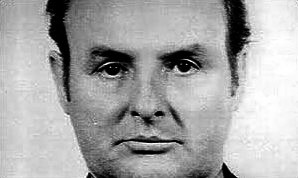
Roy FONTAINE
Real name: Archibald Thompson Hall
A.K.A.:"Monster
Butler"
Classification:
Serial killer
Characteristics:
Jewel thief
Number of victims: 5
Date of murders: 1977 - 1978
Date
of arrest: January 16,
1978
Date of birth: July
17,
1924
Victims profile: David Wright
/
Walter Scott-Elliot and his wife Dorothy /
Mary Coggle /
His half-brother Donald
Method of murder:
Shooting / Suffocation / Beating
with a spade / Beating with a poker
Location: United Kingdom
Status: Sentenced to life imprisonment, 1978. Died
in Kingston Prison in Portsmouth aged 78
on September 16, 2002
Archibald
Thompson Hall was a scot born in Glasgow on 17th June 1924. While still
in his teens he ventured into a career of petty crime scam involving two
Red Cross collection tins, the tin containing the small change was for
the Red Cross while the other one was for paper money and this was for
him.
In 1941 he received his first of many prison sentences for theft.
Moving on to better things he graduated to confidence tricks and became
a consummate actor, often posing as a member of the aristocracy or a
wealthy American.
He was
also a jewel thief and received ten years' in 1964 for his activities.
Shortly after his incarceration he escaped from Blundeston Prison, in
Suffolk, only to be recaptured in 1966 and for this he received another
five years' on top of the ten he was already supposed to be serving. In
1972 he was paroled and it was during this time while in Preston that he
met Mary Coggle, an Irishwoman, who became his mistress.
In
between his periodic spells inside he worked as a butler to the rich and
famous. By the end of 1973 he was back in prison and stayed there until
1977. This time when he was released he obtained a position in the
household of Lady Hudson, the widow of an MP, near Waterbeck in
Dumfriesshire.
While he lived there he was visited by one of his prison
acquaintances, David Wright, who started to do various odd-jobs around
the house. While Wright was staying with Hall, some of Lady Butler's
silver and a ring vanished. This anoyed Archie as he liked his job and
had decided that he wanted to 'go straight.' When he found out that
Wright's girlfriend had the ring he persuaded her to return it. This
time it was Wrights turn to be upset and when Archie was in bed asleep
he was suddenly woken up by a loud bang.
Archie
saw Wright standing next to his bed and pointing a rifle at him. The
bullet had hit the headboard above his head. It was obvious that Wright
had taken advantage of the fact that Lady Hudson was away and had
consumed a number of bottles of her champagne. Wright jabbed the gun at
Archie catching him in the face with the barrel. After quite some time
Archie eventually managed to calm him down and get him to go to bed.
The very
next day Archie and Wright went out hunting rabbits. After they had
fired at several rabbits and Archie was sure that Wright's gun was empty
he shot him n the head killing him instantly. He dug a rough grave in
the bed of a stream and buried the body A little while later Lady butler
was informed by the police about Archies criminal history and she
dismissed him.
Moving
down to London in November 1977 he once more got a position as butler,
this time to 82-year-old Walter Travers Scott-Elliott and his wife
Dorothy. It didn't take Archie long to notice that his new home was full
of priceless antiques and he decided that this was going to be the big
one, after this he would be able to retire. The Scott-Elliotts were very
wealthy with many bank accounts around the world and were the owners of
several houses in Britain. Not long after moving to London Archie was
more met up with Mary Coggle, he saw her in a pub, she was chatting to a
man named Michael Kitto.
Archie
found that they had quite a lot in common as Kitto also had a history of
petty crime. The three of them chatted and decided to burgle the house
of the Scott-Elliots.
Mrs
Scott-Elliott had to go into a nursing home for a few days and, on the
evening of 8th December, Archie took the opportunity to show Kitto
around the Scott-Elliott's house. Unbeknown to him Mrs Scott-Elliott had
returned home earlier in the day. When he opened the door to the
Scott-Elliott's bedroom he expected to see the old man fast asleep but
was confronted by Mrs Scott-Elliott,who wanted to know what he was doing
there, with a stranger. Panicking they both grabbed her and using a
pillow managed to suffocate her.They decided to try and make it look
like an accident so were putting her into bed when he husband woke up.
Archie explained to him that his wife had had a nightmare and that he
should go back to sleep.
The next
day Mr Scott-Elliott went to his club for lunch and Hall, Kitto and
Coggle tried to decide what to do next. They thought that if they kept
the old man sedated with his normal quota of pills, then Mary would be
able to impersonate his wife as least for a while The next problem they
had to decide was what to do with the body. They put the body into the
boot of the car and, that evening took Mr Scott-Elliott to a cottage in
Cumberland that Archie had rented. Mary sat in the back with Mr Scott
Elliott with wig and Dorothy's fur coat, and they all drove north.
The
next day they buried Mrs Scott-Elliott's body by a lonely roadside near
Loch Earn. Having got rid of the body they then drove back to the
cottage and left Mr Scott-Elliott there with Mary Coggle still posing as
his wife while they both returned to London and ransacked the house.
They went back and picked up Mr Scott-Elliott and Mary Coggle and
continued their drive north.
On the
afternoon of 14th December, near Glen Affric, Hall and Kitto decided it
was time to get rid of the old man so they attempted to strangle him.
Perhaps fear gave him added strength but he fought back with unexpected
strength. They used a spade to beat him to death and then using the same
spade they buried his body in a shallow grave.
During
the next day things were tense between Archie and Mary. She wanted to
keep Dorothy's mink coat but Archie wanted to get rid of the evidence.
When they got back to the cottage the row erupted into violence.
Hall
struck Mary knocking her to the ground with a poker and put a plastic
bag over her head suffocating her. Later that night Archie and Kitto
drove the Carlisle to Glasgow road and dumped her body in a stream under
a bridge.
The pair
spent a quiet Christmas with Archies family. After the end of the
festive season Hall and Kitto returned to their Cumberland hide-out this
time with Hall's brother, Donald. Just like Archie he also had a
criminal record for burglary but also for child molesting. Archie hated
him for this and thought of him as pervert. When Donald started to ask
too many questions about their new found wealth Archie decided he would
have to go. He was rendered unconcious with chloroformed and drowned in
the bath.
The next
day, 15th January 1978, they once again drove north again looking for
somewhere suitable to dispose of the body. It had been snowing and the
ground was frozen so they decided to spend the night at the Blenheim
House Hotel, North Berwick. The hotel proprietor was suspicious about
his two new guests and telephoned the local police and asked them check
out their car registration. Hall had fitted false plates to the Granada
and this was to be his downfall.
When the licence number was checked it
was found that it should belong to a Ford Escort and, consequently, two
policemen appeared at the hotel to ask them to explain this discrepancy.
They were taken back to the police station. Here, Hall asked to go to
the toilet and escaped out of the window. His freedom was short lived
and he was picked up later in a taxi on his way to Dunbar.
The
police had searched the car and found Donalds body in the boot. Mary
Coggles body had also been found and the disapearance of Mr and Mrs
Scott-Elliott was also being investigated. Hall broke down in quetioning
and made a full confession, even mentioning the earlier murder of David
Wright.
Hall and
Kitto were tried in Edinburgh in November 1978. Kitto received fifteen
years' and Hall received life imprisonment without parole.
Roy Fontaine
Would Sir like his usual bullet in the head? The less than subservient
butler of Kensington killed his lover, his boss, an accomplice and a
brother in the 70s.
Roy Fontaine was born Archibald Hall in Glasgow in 1924. He started
stealing when he was just 15 and received his first prison sentence at
17. At the same time a much older, divorced neighbour initiated him into
sex and introduced him to a more sophisticated world and a taste for the
high life.
Using the profits of his burglaries Hall moved to London. Hollywood and
its stars fascinated him and, inspired by Joan Fontaine in Alfred
Hitchcock’s film 'Rebecca', Hall changed his name to Roy Fontaine.
He had a short-lived marriage, but was openly bisexual and embarked on a
string of affairs with men. London’s celebrity gay scene welcomed the
handsome and charming Glaswegian with open arms and Fontaine claimed to
have had sexual relationships with both Lord Boothby and playwright
Terence Rattigan. In his memoirs he said that the great love of his life
was a fellow con from Hull Prison named David Barnard who died in a car
crash in 1974.
In between socialising with London’s elite his con tricks or burglaries
would catch up with him and he’d spend more time in prison. During one
lengthy sentence for theft he set about refining everything about his
character so that he could pass without suspicion amongst the English
aristocracy. He eradicated all trace of his Glaswegian accent, studied
social etiquette and became a self-taught authority on antiques.
When he was released from prison in 1977 he found employment as a butler
to Lady Margaret Hudson at Kirtleton House in Dumfriesshire and had an
on-off relationship with a prostitute called Mary Coggle, also known as
“Belfast Mary”.
The Crimes
Claiming he wanted to go straight Fontaine was in for a shock when an
ex-cellmate from Hull Prison and former lover, David Wright, showed up.
Lady Hudson employed 30 year-old Wright as a gamekeeper and gardener
around the stately home, but he stole some of her silver and threatened
to tell her about Fontaine’s past.
On a rabbit hunting expedition in July, Fontaine shot Wright in the back
of the head and buried the body under boulders in a stream on the
estate. With a new found taste for blood Fontaine gave up the idea of
living an honest life and in November 1977 moved back to London. He
acquired the position of butler to a wealthy antique collector and ex-Labour
MP Walter Scott-Elliot and his wife Dorothy. Planning to extort them he
asked small time crook Michael Kitto to help.
While showing Kitto round the couple’s home Mrs. Scott-Elliot returned
unexpectedly with her husband. The two men put their hand over her mouth
and suffocated her with a pillow before she could raise the alarm. They
then drugged her 82-year-old husband with whisky and sleeping pills.
Mary Coggle put on a wig and wore Mrs. Scott-Elliot’s clothes. They put
the dead woman’s body in the boot of a car and set off for the 400-mile
journey to Scotland.
They buried Mrs. Scott-Elliot by the side of a quiet road in Braco,
Perthshire. Still sedated they beat her husband to death with a spade
and buried him in a remote spot near Glen Affric, Inverness.
The following day an argument broke out between the three of them.
Coggle wanted to keep the Mrs. Scott-Elliot’s mink coat, but the men
wanted the evidence destroyed. So Fontaine hit Coggle over the head with
a poker and suffocated her with a plastic bag before dumping her in a
stream in Dumfriesshire.
The two men headed for Fontaine’s family home in Cumbria only to find
Fontaine’s brother Donald released from prison three days earlier.
Donald was too interested in Fontaine’s recent adventures and with
murder now second nature to him, Fontaine held a chloroformed rag over
Donald’s face and drowned him in a bath. A few days later the two
murderers found themselves driving north to dispose of yet another body.
The arrest
An antiques dealer in Newcastle became suspicious after two men offered
him china and silverware well below its worth. He jotted down the number
plate of the car the men were driving and alerted the police. The police
found the car had been rented out to a Scott-Elliot and when they
visited the Chelsea flat they found the walls spattered with blood and
over £3,500 worth of valuables missing.
Mary Coggle’s body had been found a month earlier on Christmas Day by a
shepherd and knowing that Coggle had once worked for Dorothy Scott-Elliot
as a housekeeper and cook detectives began to wonder if the two murders
were connected. Was she the same woman wearing a mink coat that they
knew had stayed at the Tilt Hotel in Blair Atholl, Scotland with three
other men, one of them very elderly? Two days later the two younger men
had returned to the hotel alone.
In January 1978, Fontaine and Kitto stopped at a hotel in North Berwick.
The owner, Norman Wight, became suspicious of the two guests and called
the police. During a routine check the police found Donald Hall’s body.
Fontaine escaped out of a toilet window and got as far as Haddington
before he was stopped at a police roadblock.
Following a failed suicide attempt on 18th January 1978 Fontaine helped
the police search for Mr. Scott-Elliot’s body on the Highlands. They
found him, chewed by foxes amongst a rhododendron bush. Days later they
dug up David Wright, and soon after that Mrs. Scott-Elliot was found
face down in a roadside ditch 100 miles from where her husband’s corpse
had been uncovered.
The trial
During the trial in Edinburgh in May 1978 Fontaine was described as a
psychopath. Fontaine made a full confession to the five murders and
British and Scottish courts sentenced him to life imprisonment. He was
charged with four life sentences for four of the murders – the fifth
case remains open.
The aftermath
Fontaine attempted suicide several times whilst he was in custody and in
1999 wrote his autobiography A Perfect Gentlemen and said that there was
“a side of me, when aroused, that is cold and completely heartless”. He
died in 2002 in Kingston Prison in Portsmouth aged 78.
Rachel Scott - The Crime and INvestigation Network
Archibald Hall (a.k.a.
Roy Fontaine, born Glasgow, Scotland, 17 June
1924; died Portsmouth, England, 16 September 2002)
was a notorious British murderer and thief who
became known as the Killer Butler or the
Monster Butler after committing his most
infamous crimes while working in service to members
of the British aristocracy. Until his death, he was
the oldest person serving a whole life tariff in
prison.
Crime from the start
Hall began stealing at the age of
15, and soon progressed to burglary. After realising
he was bisexual, he infiltrated the gay scene in
London where he moved on the strength of his
criminal profits. He served his first jail sentence
after trying in London to sell on jewellery he had
stolen in Scotland. During his stretch, he learnt
more about etiquette and the aristocracy while also
dulling his Scottish accent with elocution lessons
and swotting up on antiques.
Upon his release he began using
the name Roy Fontaine - as a homage to actress Joan
Fontaine, of whom he was a fan - and working as a
butler, occasionally returning to prison for
sentences incurred after more pilfering of jewels.
He got married and divorced during this time.
From
thief to killer
In 1975, Hall was released from
prison and went back to Scotland. He began working
as butler to Margaret Hudson, a dowager who lived at
Kirtleton House, Dumfriesshire. Hall initially had
ideas to steal her valuables but he never carried
them out when he realised that he liked both his job
and employer too much.
When David Wright, an
acquaintance from his last prison term and a former
lover, was also given a job on the estate as a
gamekeeper in 1977, the two had an altercation after
Wright stole some of Lady Hudson's jewellery and
threatened to tell her about Hall's own criminal
past if he reported him.
Hall took Wright on a rabbit hunt
in a trick attempt at coming to an amicable solution.
Once out in the fields, he shot Wright dead and
buried him next to the stream in the Kirtleton House
grounds.
Hall quit his job immediately -
much to Lady Hudson's apparent disappointment - and
moved back to London where he combined more thieving
and racketeering with working as a butler to the 82-year-old
Walter Scott-Elliot, and his 60-year-old wife
Dorothy. Scott-Elliot, who had been Labour Member of
Parliament for Accrington from 1945 to 1950, was
rich and from an aristocratic Scottish background.
Hall's plan was to rob them of their money and
retire, but in the end he killed them both after Mrs
Scott-Elliot walked in on Hall and an accomplice,
Michael Kitto, as they were discussing their plans.
Kitto immediately put his hand over her mouth and
suffocated her.
They then drugged her husband and
drove them both up to Scotland, helped by a local
prostitute and acquaintance, Mary Coggles. Mrs Scott-Elliot
was buried in Braco, Perthshire, then they strangled
and beat her sedated husband and buried him in woods
near Tomich, Invernesshire.
Their next victim was Coggles,
who had taken to wearing Mrs Scott-Elliot's
expensive clothes and jewellery and was drawing too
much attention to herself. After she refused to
dispose of the fur coat, which was potentially
incriminating evidence, Hall and Kitto killed her
and left her body in a barn in Middlebie,
Dumfriesshire, where she was discovered on Christmas
Day 1977 by a shepherd.
The final victim of the pair was
Hall's half-brother Donald, a pædophile just out of
prison whom Hall hated. Hall and Kitto found him at
Hall's holiday home in Cumbria, and Hall
chloroformed him before drowning him in the bath.
The abortive effort to dispose of this body led to
Hall and Kitto's downfall.
Arrest
Hall and Kitto put the body in
the boot of the car and again drove to Scotland to
carry out another burial. However, the wintry
weather made driving hazardous, and so on reaching
North Berwick in East Lothian, they decided to check
into a hotel overnight in order to lessen their
chances of being in an accident.
However, the shifty movements of
Hall and Kitto made the hotelier suspicious and,
worried about whether he would be paid for their
stay, he called the police as a precaution. When
they arrived, they searched Hall's car and found the
corpse.
Kitto was arrested but Hall
escaped through a lavatory window. He was captured
at a police roadblock in nearby Haddington.
The police then made a connection
between Hall's car and the registration number of a
vehicle noted by a suspicious antiques dealer in
Newcastle upon Tyne, to whom two men had offered
silver and china at a price well below its true
value. The police traced the car to the Scott-Elliots'
address in London and found the apartment robbed of
many valuables and spattered with blood. This also
linked with the murder of Coggles, whose body had
already been found and who had been previously
registered as a housekeeper for the Scott-Elliots.
The police had evidence that three men (including a
drugged Mr Scott-Elliot) and a woman had stayed at a
Scottish hotel for one night, but the following
night only two men - Hall and Kitto - returned.
Hall tried and failed to commit
suicide while in custody, before revealing the
whereabouts of the three buried victims. In deep
snow and bitter temperatures, and with the media
watching, police teams dug up the bodies of David
Wright and Walter and Dorothy Scott-Elliot. They
charged Hall and Kitto with five murders.
Imprisonment and death
Hall was convicted at courts in
London and Edinburgh of four murders - the murder of
Mrs Scott-Elliot was ordered to lie on file - and
sentenced to life imprisonment. In Scotland, it was
recommended that he served a minimum of 15 years and
in England the judge handed down a recommendation
that he never be released.
Kitto was given life imprisonment
for three murders, with no recommended minimum in
Scotland and a 15-year minimum in England. Police
said in evidence that Kitto was, in a perverted way,
fortunate to be able to go on trial, as Hall was
planning to kill him too.
Successive Home Secretaries put
Hall on the list of dangerous prisoners who should
serve a whole life tariff, which unlike some
criminals on the list, did not alter Hall's prison
status at all, as it reciprocated the tariff set by
one of his judges. When politically-set tariffs were
declared illegal by the law lords and the European
Court of Human Rights, Hall's status as a prisoner
unlikely to be released never changed, despite being
the oldest prisoner on the publicised list. In 1995,
the Observer newspaper published a letter
from Hall in which he requested the right to die. He
made numerous suicide attempts which were all
unsuccessful.
Hall published his autobiography,
A Perfect Gentleman, in 1999. He died of a
stroke in Kingston Prison, Portsmouth, in 2002 at
the age of 78. By this date, he was one of the
oldest of more than 70,000 prisoners in British
prisons, and the oldest to be serving a whole life
tariff.
In 2005, British actor Malcolm
McDowell and Hollywood screenwriter Peter Bellwood
announced that they were seeking a director and
funding for a film based on Hall's life.
The monster butler who
served up murder
Iain Lundy
FOR HOLLYWOOD star Joan
Fontaine, it was her most famous role in a glittering showbiz career -
that of the second Mrs de Winter opposite Laurence Olivier in the
classic movie Rebecca. Little did she know that her
performance so beguiled a young petty criminal from Scotland that he
changed his name to hers - and that 65 years later the film industry
which propelled Miss Fontaine to stardom would be preparing a silver
screen version of his own bizarre life story.
Archibald Hall may have been
captivated by one of Alfred Hitchcock's greatest romances, and while
there was a certain Hitchcockian element to the way Hall's life
unfolded, it was far from romantic. Archibald Hall - also known as Roy
Fontaine - graduated from small-time crook to bloodthirsty killer. The
Monster Butler, as he became known, was more Psycho than
Rebecca.
Hall's fascination with the
stars of the cinema was entirely understandable. After all he was a
consummate actor himself, a perplexing character who played a variety
of roles throughout his life. A lengthy spell languishing in prison
would be followed by work in a country mansion as a butler to the
wealthy. Lessons in elocution and etiquette had eradicated all trace
of his Glasgow accent and he became a self-taught authority on
antiques.
Confidently posing as an
aristocrat or a wealthy American, Hall became the perfect confidence
trickster and jewel thief. He was a very good butler, he had access to
some of the grandest houses in the country and he knew what was worth
stealing. He also had few scruples and his rich and famous employers
became victims of his thieving. There were aspects of the double life
led by Hall/Fontaine which were farcical, even bordering on comic -
but the eruption of murderous violence which seemed to overcome him in
1977 transformed his last act into a tragedy.
Born in Glasgow in 1924, Hall was involved in theft from an early age
and received his first prison sentence when he was 17. Between the
1940s and the 1970s he was either serving time in jail or leading his
"other" life as a butler and would-be aristocrat. Openly bisexual, he
had a short-lived marriage and a string of relationships with men.
Released from prison in 1977, he headed for the arms of his
"mistress", Irishwoman Mary Coggle, and a new job as butler to Lady
Margaret Hudson at Kirtleton House, near Waterbeck in Dumfriesshire.
When David Wright, a lover he had shared a cell with at Hull Prison,
visited at the house, Hall's life changed forever.
Wright started doing odd jobs
around the house, but his presence was a constant threat. He knew too
much about Hall's background and threatened to expose him to his new
employer. He also stole items of Lady Hudson's silver which infuriated
Hall, who, by now in his early 50s, claimed he was trying to "go
straight". One day the two men were out shooting rabbits. Hall made
sure Wright's gun was empty, then stopped, pointed his own gun at
Wright and blasted him in the head before burying his body in a rough
grave. It was his first kill.
But
once he had the scent of blood, a darker side of Hall emerged. It was
as though, having killed once, he couldn't stop. In November 1977 he
moved to London and became butler to the wealthy ex-Labour MP Walter
Scott-Elliot and his wife Dorothy. Having given up the idea of keeping
clean, he was showing a criminal accomplice, Michael Kitto, round the
couple's London home when they were disturbed by Mrs Scott-Elliot. The
two men grabbed her and suffocated her with a pillow. They then
drugged her 82-year-old husband, put the dead woman's body in the boot
of a car, dressed up Mary Coggle in Mrs Scott-Elliot's clothes and wig
and set off for Scotland.
When they reached Braco in
Perthshire, a journey of 400 miles, the dead woman was buried by the
side of a quiet road. Mr Scott-Elliot, still sedated, was taken to a
lonely spot near Glen Affric in Inverness-shire and beaten to death
with a spade. The following day an argument broke out between Mary
Coggle, who wanted to keep the dead woman's mink coat, and Hall and
Kitto who wanted the evidence destroyed. Hall hit her over the head
with a poker and suffocated her with a plastic bag before dumping her
in a stream between Glasgow and Carlisle.
The
two men spent a quiet Christmas with Hall's family, including his
half-brother Donald, a child molester despised by Hall.
In January 1978 the three men
were in Cumbria, Donald started asking too many questions for Hall's
liking, so a chloroformed rag was held over his face and he was
drowned in a bath. Hall and Kitto again put the body in the boot and
drove north, but were forced to stop at a hotel in North Berwick
because of a snowstorm. The suspicious proprietor called the police,
Donald's body was found in the boot of the car and the killing spree
was over.
Under questioning Hall confessed
to the five murders and led police to the bodies. He was jailed for
life and died in 2002 in Kingston Prison, Portsmouth. (Kitto received
four life sentences.) But what made the likeable rogue and well-spoken
butler to the gentry turn killer? The answer will be explored in a new
film The Monster Butler, being produced by actor Malcolm
McDowell, star of A Clockwork Orange.
There are few clues save a few
lines in Hall's 1999 biography, A Perfect Gentleman, in which
he states: "There is a side of me, when aroused, that is cold and
completely heartless".
'Mad Butler' dies in prison
31 October, 2002
A former butler who was at the centre of a notorious killing spree
has died in prison.
Archibald Hall, who was jailed in the 1970s for
life for the murder of four people, died at Kingston Prison,
Portsmouth, on 16 September.
A spokesman for the coroner's office said that
Hall, dubbed The Mad Butler by the press, died of natural causes
aged 78.
Hall, who also went by the name of Roy Fontaine,
was born in Glasgow in 1924, and his adolescence and early adult
years were filled with petty crimes.
He then became a con artist, often posing as an
aristocrat, for which he served several prison terms.
But in 1975, Hall's crimes became more serious as
he served as butler to Lady Margaret Hudson.
Hall, who was bisexual, had intended to burgle
her Dumfriesshire estate, which was packed with valuable antiques
but his plans were disrupted when a former homosexual lover turned
up.
After inviting David Wright to stay at the
mansion, Hall found that he had stolen a diamond ring from Lady
Hudson.
After an argument in which Mr Wright shot at
Hall, the butler invited him on a shooting trip in nearby woods
during which he shot him in the back of the head.
Panicked
Hall soon left the employment of Lady Hudson and
moved to London where in 1977 he was employed by former Labour MP
and minister Walter Scott-Elliott and his wife Dorothy.
Then in December 1977 Hall went drinking with a
former girlfriend, Irish barmaid and prostitute Mary Coggle, who
introduced him to small-time crook Michael Kitto.
Hall said he was going to burgle the Kensington
flat of his 82-year-old employer, but as he gave his friends a tour
of the apartment, showing off the goods he was going to steal, they
were disturbed by Mrs Scott-Elliott.
The two men are believed to have panicked and
killed Mrs Scott-Elliott by smothering her, although Hall has
claimed it was Kitto who did this alone.
Covering his tracks, Hall plied Mr Scott-Elliott
with drugged whisky and put the body of his wife in the boot of his
car.
Poker
Coggle was dressed up in a wig and mink coat to
look like Mrs Scott-Elliott as they visited banks to access the
couple's money.
The group, with Mr Scott-Elliott still drugged
and Coggle dressed as his wife, then drove to Scotland to dispose of
the body.
After reaching a desolate spot in Perthshire, the
wife's body was buried and Mr Scott-Elliott was killed a couple of
days later by strangulation and buried in a shallow grave in the
Highlands.
The killing spree continued as Coggle began to
brag to friends about her new-found wealth gained from the murders.
Angered at her indiscretion, Hall killed her by
hitting her over the head with a poker while Kitto held her arms.
Chloroform
Hall's final victim was his half-brother Donald
Hall, who the butler hated because he suspected he was a sex
offender.
Again with the help of Kitto, he subdued Donald
with chloroform before drowning him in a bath.
The murderous duo were finally caught as they
stopped at a hotel in North Berwick on their way to dispose of the
body.
In the summer of 1978, Hall was given two life
sentences for the murders of Mr Wright and Walter Scott-Elliott.
He denied murdering Mrs Scott-Elliott and the
file was left open.
He was later given two more life sentences for
the murders of Coggle and Donald Hall. Kitto also received four life
sentences.