Murderpedia has thousands of hours of work behind it. To keep creating
new content, we kindly appreciate any donation you can give to help
the Murderpedia project stay alive. We have many
plans and enthusiasm
to keep expanding and making Murderpedia a better site, but we really
need your help for this. Thank you very much in advance.
Larry
FISHER
Classification: Murderer
Characteristics: Serial
rapist
Number of victims: 1
Date of murder:
January 31,
1969
Date
of arrest:July 25,
1997 (28 years later)
Date of birth:
August 21,
1949
Victim profile: Gail
Miller, 20
Method of murder: Stabbing
with knife
Location: Saskatoon,
Saskatchewan,
Canada
Status:
Sentenced to life in prison,
eligible for parole in 10 years, on January 4,
2000
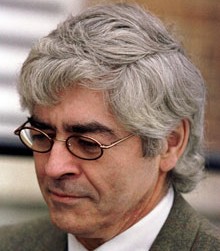
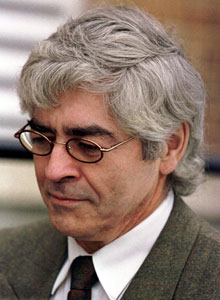
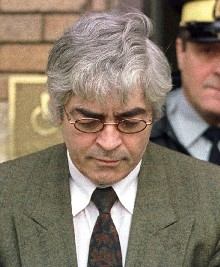
Larry Fisher
(born August 21, 1949) is a Canadian man who was convicted in 1999
of a murder he committed in 1969.
On January 31, 1969, Gail Miller was raped and murdered in
Saskatoon, Saskatchewan. David Milgaard was first wrongfully
convicted of the crime and served 23 years in prison before being
released in 1992, and exonerated by DNA evidence in 1997.
Fisher was arrested, July 25, 1997 in Calgary. He was convicted
November 22, 1999, and sentenced on January 4, 2000,
Fisher was given a life sentence, however, due to applicable laws
at the time of the crime, he will be eligible for parole in 10
years, rather than the current 25, after the sentence.
On September 23, 2003, the Court of Appeal for Saskatchewan
unanimously denied Fisher's appeal of his conviction. Fisher had
also served 23 years for numerous rapes in the cities of Winnipeg,
Manitoba, Saskatoon, and North Battleford, Saskatchewan.
Larry Fisher found guilty in Gail Miller killing
CBC News
Tuesday, January 4, 2000
Larry Fisher has been convicted of first degree murder for a crime
he committed almost 31 years ago -- a crime David Milgaard spent
23 years in prison for.
After 13 hours of deliberations, jurors found Fisher guilty of the
rape and stabbing death of 20-year-old nursing aide Gail Miller in
Saskatoon in January 1969.
Fisher showed no emotion as the decision was announced. He was
whisked away in an RCMP cruiser without commenting.
Fisher faces an automatic life sentence. But it's not clear when
he will be eligible for parole. Under the current law, there is no
parole for 25 years. But in 1969, there was no minimum parole.
Sentencing arguments will be held Jan. 4. His lawyer, Brian
Beresh, says he's obviously disappointed woth Monday's verdict and
say they plan to appeal immediately after sentencing.
Fisher has already spent more than 23 of his 50 years for seven
other sexual assault convictions.
Gail Miller's sister, Doreen Dahlem, was in the courtroom every
day of the trial. She smiled and bowed her head when the verdict
was announced.
Crown prosecutor Al Johnston says he's relieved with the outcome.
"It's been a long haul," he said outside the court house.
Johnston described the Millers as an astonishing family and he
hoped the verdict would bring them some peace. He also hoped it
would bring some peace to Milgaard's life.
Milgaard was convicted of the crime in 1970. The Supreme Court of
Canada set aside his conviction in 1992 and he was cleared by DNA
evidence five years later.
The Saskatchewan government awarded Milgaard $10 million earlier
this year for his wrongful conviction.
Timeline
CBC News Online
Updated September 26,
2008
In 1970, 16-year-old
David Milgaard was sentenced to life imprisonment for the 1969
murder of 20-year-old Saskatoon nursing aide Gail Miller. After 23
years in prison, the Supreme Court of Canada set aside his
conviction. Five years later he was cleared by DNA evidence and
awarded $10 million. In the same year, Larry Fisher was found
guilty of the rape and stabbing death of Gail Miller.
Jan. 31, 1969
Body of nursing aide Gail Miller, 20, found in a Saskatoon
snowbank. Milgaard is travelling through Saskatoon the morning the
body is found.
May 30, 1969
Milgaard, 16, is arrested and charged with murder.
Jan. 31, 1970
Saskatchewan Court convicts Milgaard of murdering Miller; He is
sentenced to life in prison.
Jan. 31, 1971
Saskatchewan Court of Appeal rejects Milgaard's appeal.
Nov. 15, 1971
Supreme Court of Canada refuses to hear Milgaard's appeal.
Dec. 28, 1988
Milgaard's lawyers apply to have the case reopened.
May 14, 1990
Federal Justice Minister Kim Campbell brushes past Milgaard's
mother Joyce, who tries to hand her a report from a Vancouver
forensic pathologist that could clear Milgaard. Campbell says it
could jeopardize any future review if she sees the report.
Feb. 27, 1991
Campbell turns down Milgaard's request to review his case.
Aug. 14, 1991
Milgaard's lawyers file second application to Minister of Justice
to have the case reopened.
Nov. 29, 1991
Campbell directs the Supreme Court to review Milgaard's
conviction.
April 14, 1992
Top court says Milgaard should have new trial. He is freed after
Saskatchewan decides not to prosecute him again. He is not
formally acquitted.
July 18, 1997
Milgaard's team announces that more sophisticated DNA tests in
Britain prove Milgaard did not commit Miller's murder. That same
day, Milgaard receives apology from the Saskatchewan government
for his wrongful conviction.
July 25, 1997
Larry Fisher arrested in Calgary for the rape and murder of Gail
Miller.
May 17, 1999
Milgaard and his family receive $10 million compensation package
from federal government.
Oct. 12, 1999
Fisher's trial opens in Yorkton, Sask. His lawyer successfully
argued to have the trial moved from Saskatoon to avoid potential
juror bias.
Nov. 22, 1999
Larry Fisher convicted of rape and murder of Gail Miller.
Jan. 4, 2000
Fisher sentenced to life in prison; parole eligibility to be
decided by National Parole Board.
April 15, 2003
Saskatchewan Court of Appeal hears Fisher's case for a new trial.
Sept. 29, 2003
Saskatchewan Court of Appeal dismisses Fisher's appeal of his
first-degree murder conviction.
Sept. 30, 2003
The Saskatchewan government announces inquiry into how Milgaard
was wrongly convicted for the murder of Gail Miller.
Aug. 26, 2004
The Supreme Court of Canada refuses to hear Fisher's appeal. The
decision clears the way for the inquiry to proceed sometime in
2005.
Jan. 17, 2005
The public inquiry into the wrongful conviction of David Milgaard
opens in Saskatoon. Mr. Justice Edward MacCallum is expected to
hear from more than 100 witnesses – including David Milgaard and
Larry Fisher – over the course of a year . A list of high profile
potential witnesses includes former prime ministers Brian Mulroney
and Kim Campbell and former Saskatchewan premier Roy Romanow.
April 20, 2005:
The first phase of the Milgaard inquiry ends. During 41 days of
testimony the inquiry hears from nearly 50 witnesses, all of whom
were involved in the 1969 investigation of Gail Miller's murder.
The commission also heard from a number of women who were sexually
assaulted by Larry Fisher in the months before and after Miller's
murder.
Nov. 21, 2005:
David Milgaard agrees to testify at his wrongful conviction
inquiry if the judge finds he is medically fit. Commission counsel
appeared before Justice Edward MacCallum to inform him of talks
with Milgaard's lawyer, Hersh Wolch. Wolch initially wanted
Milgaard excused from testifying for medical reasons. They decide
Milgaard's testimony will be necessary to some parts of the
inquiry.
Jan. 16, 2006
David Milgaard's lawyer, Hersh Wolch, asks the court if his client
can testify in writing. Milgaard said last year the thought of
testifying made him physically ill and he wouldn't do it, which
infuriated inquiry judge Edward McCallum.
Jan. 27, 2006
A private investigator says there's circumstantial evidence that
Milgaard was the victim of a police coverup. Paul Henderson, who
investigates wrongful convictions for a U.S.-based organization,
says he got a retraction from a key Crown witness. Henderson said
the witness admitted that police threatened to charge him with the
murder if he didn't implicate Milgaard.
Feb. 7, 2006
The original defence lawyer at Milgaard's trial, Calvin Tallis,
tells the Saskatoon-based inquiry that his client would not have
been a good witness because he had a drug history and had been in
trouble with the law.
Feb. 8, 2006
The judge rules that Milgaard must testify but may do so on
videotape and all lawyers have agreed. The judge's decision was
made to reduce the stress of the event for Milgaard.
Feb. 11, 2006
Milgaard's defence lawyer criticizes a judge's decision regarding
the questioning of a star witness for the prosecution at his
client's murder trial. Nichol John's testimony was a crucial
element at Milgaard's original trial.
Feb. 20, 2006
David Asper, the lawyer who represented Milgaard for years while
Milgaard fought to be released from prison, says he wants funding
and official standing at the Saskatoon inquiry into Milgaard's
wrongful conviction. Asper is scheduled to testify at the inquiry.
Standing would allow him to participate in the proceedings and
cross-examine witnesses.
Feb. 22, 2006
David Asper, who helped Milgaard get out of prison will have
limited standing at the inquiry and be allowed to have his own
lawyer present. This means his lawyer can cross-examine witnesses
during a portion of the inquiry - but he won't receive public
money to cover his costs.
March 2, 2006
Media baron David Asper is granted funding for some of the legal
expenses he incurred while appearing at the inquiry looking into
Milgaard's wrongful conviction. The public hearing is adjourned
until April 17.
April 24, 2006
Milgaard's videotaped testimony is played at the inquiry into his
wrongful conviction. The tape shows Milgaard trying to recall the
events that led to his conviction. He says his memory is cloudy,
though, from years spent in prison. He says he began to doubt his
own innocence after being misdiagnosed with so many different
psychological problems while in prison.
May 2, 2006
Joyce Milgaard abruptly leaves the inquiry after her son's lawyer,
Hersh Wolch, is denied the right to be the final questioner of
Paul Henderson. The various lawyers involved in the inquiry argued
about who should be allowed to question Henderson last. Justice
Edward MacCallum eventually ruled against David Milgaard's lawyer
and gave the right to a lawyer for the Saskatoon Police Service.
Joyce Milgaard complains to reporters outside the courtroom,
saying the ruling was unfair to her son.
May 3, 2006
Joyce Milgaard's lawyer apologizes to the judge for her client's
comments to the press about the unfairness of the inquiry. Justice
MacCullum says, "She has been warned before that if she wishes to
be a part of the inquiry as a party with standing, she is not to
subvert it by going out in the hall and casting broadsides against
the work of the commission. That is her right to do so as a
private citizen, and if she wishes to persist in that, she will do
so as a private citizen, and not as a party with standing."
The Milgaard inquiry is set to reconvene on May 8, 2006, when
Joyce Milgaard is scheduled to take the stand.
May 8, 2006
Joyce Milgaard tells the inquiry she began her fight to free her
son with the assumption that the police "twisted the facts into
what they were not to put him behind bars." She says she regrets
not starting sooner to prove David Milgaard's innocence.
Aug. 28, 2006
The Milgaard inquiry resumes public sessions, and expects to hear
from key government and RCMP witnesses before wrapping up in
September 2006. The commission of the inquiry is to find out why
David Milgaard was wrongfully convicted of a 1969 rape and murder,
and spent 23 years in prison before being exonerated.
Dec. 11, 2006
Final oral submissions are to be heard in the inquiry in Saskatoon
into the wrongful conviction of David Milgaard.
Sept. 26, 2008The inquiry report is released. It found that police received a
tip in 1980 that could have lead to the real killer, 12 years
before Milgaard was released from prison. "The criminal justice
system failed David Milgaard," concludes Justice Edward MacCallum,
the Alberta judge who headed the inquiry.