Murderpedia has thousands of hours of work behind it. To keep creating
new content, we kindly appreciate any donation you can give to help
the Murderpedia project stay alive. We have many
plans and enthusiasm
to keep expanding and making Murderpedia a better site, but we really
need your help for this. Thank you very much in advance.
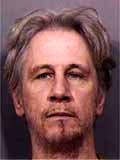
Russell ELLWOOD
Classification: Murderer
Characteristics:
Rape
- Taxi driver
Number of victims: 1 -20 +
Date of murders: 1991 - 1997
Date
of arrest:
March 4,
1998
Date of birth: 1951
Victims profile: Women (prostitutes)
Method of murder: Strangulation
Location: New Orleans, Louisiana, USA
Status: Sentenced to life in prison August 17, 1999
Once Accused Serial Killer Sentenced
for Murder
August 18, 1999
HAHNVILLE, La. (AP) -- A former taxi driver once
suspected of killing as many as 15 women was sentenced to life in prison
Tuesday for the only murder authorities could pin on him.
Russell Ellwood was convicted of murdering Cheryl
Lewis, 30, who was one of 26 women, most of them prostitutes, found dead
in swampy areas around New Orleans from 1991 through 1996.
At the time of Ellwood's arrest in 1997, authorities
said they suspected him in as many as 15 killings, and Jefferson Parish
Sheriff Harry Lee claimed authorities were searching for at least four
other suspects.
But no other arrests or charges ever were made,
despite four years of efforts by a task force made up of the FBI, New
Orleans police and four sheriff's departments. A second murder charge
against Ellwood was dismissed when prosecutors learned he had an alibi
that put him in Ohio at the time of a woman's death.
Told prostitute he kills women
At one point, the FBI cut its ties to
the task force and then began investigating its former leader, Lt. Sue
Rushing of the Jefferson Parish Sheriff's Department, who was accused of
hiding or destroying evidence that helped convict Ellwood. The FBI said
the probe was over but would not disclose details.
The task force is dissolved, and the
sheriff's departments involved said they will re-examine the case only
if new information is presented.
Most of the 26 victims were women with
histories of drug abuse and prostitution. Some were transsexuals. Some
were strangled, and others apparently died of drug overdoses.
An inmate who had served time with
Ellwood, 48, told deputies that Ellwood had bragged about killing people
and that he "enjoyed the fun of having sex with people who were not
in control of their bodies."
And a prostitute testified that she sold
drugs to Ellwood and got in his car. She said Ellwood suddenly became
very angry and said to her: "You know what I do to bitches like you?
I kill them."
Russell
Ellwood
February 24, 1999
Authorities in New Orleans say they'll drop one of two murder
charges against Russell Ellwood. Investigators now say he could not have
committed the crime. Though originally accused of killing seventeen
women, Jefferson Parish Sheriff Harry Lee said a continuing
investigation
revealed that Ellwood was in Ohio when Dolores Mack, 40, of Metairie,
was murdered.
Ellwood will
only be charged in the case of a 1993 murder where a woman's body was
dumped in a canal in Hahnville.
Prosecutors
have admitted they have no physical evidence to place Ellwood, now 48,
at the crime scenes. Ellwood, in a telephone interview from jail,
predicted that the second murder charge would also be dismissed. "It's
obvious that these charges are fraudulent," Ellwood said. "This is the
biggest railroad case ever in the state of Louisiana."
Russell Ellwood (1-18)
On March 2, 1998, Russell Ellwood was
arrested in connection with to two of the 24+ killings. Ellwood, a
former cab driver, is suspected in fifteen more murders. However,
authorities still believe more than one suspect is responsible for the
string of slayings. "We never thought, from the beginning, that
this was the work of one person."
On November, 1998, sheriff's Lt. Sue
Rushing, the leader of the serial killer task force targeting Ellwood,
failed a lie detector test asking if she destroyed or lost receipts that
could place Ellwood in Ohio with relatives when the two 1993 murders
happened. The test also indicated Rushing was "not telling the
truth" when she denied coaching a witness who claimed Ellwood
showed her the two bodies in a canal 20 miles west of New Orleans.
The allegations were made by other
task force members, prompting the FBI to investigate Rushing and the
task force. Ellwood has filed a federal civil rights lawsuit against
task force investigators, asserting that police lied when they said he
confessed under relentless interrogation. "It's clear they have
deprived him of his right to a fair trial," said Maria Chaisson,
one of Ellwood's lawyers. Prosecutors admit they have no physical
evidence to put Ellwood where the bodies of Cheryl Lewis and Delores
Mack were found Feb. 21 and Feb. 22, 1993. But they say Ellwood's own
statements and other evidence they won't describe points to him as the
killer.
Lewis drowned in the canal while under
the influence of cocaine and amphetamines. Mack was found strangled and
suffocated one-fifth of a mile away. Cocaine was also found in her blood.
A year later, Ellwood was at the
remote crime scene in the middle of the night, hanging out in his taxi
cab alongside the deserted state highway next to the canal. Questioned
by two off-duty sheriff's deputies, Ellwood said he wanted to change the
oil in his cab in a place where he wouldn't be caught dumping the dirty
oil outside.
Because serial killers often return to
the sites of their crimes, Ellwood became a suspect in 1997, two years
after the task force was formed and a year after the last known victim
was killed. When detectives first approached Ellwood in Florida last
year, he was cooperative and told them he had "dreamed" the
serial killer task force wanted to interview him.
Then an inmate in a Florida jail where
Ellwood spent time on a cocaine conviction told investigators Ellwood
had told him he enjoyed sex with people on drugs who were not in control
of their bodies. Months later, after Ellwood went to Ohio to stay with
relatives, he was questioned for days by police. It was then that
Ellwood allegedly told Rushing and a former Cincinnati homicide
detective that he dumped the body of a woman in water off a rural road.
Ellwood, in a telephone interview from
the St. Charles Parish jail, at first denied his admission, then said
anything he may have told police came only after he was badgered and
promised a flight to New Orleans so he could meet with his longtime
lawyer, Ross Scaccia. "My only thought was that if I can get to Mr.
Scaccia, everything would be all right," Ellwood said. "I told
the task force anything, almost anything, to get to Scaccia."
Scaccia first represented Ellwood in a marijuana possession case three
decades ago.
Ellwood, a serial loser, grew up in
Massillon, Ohio, and moved to New Orleans 30 years after high school. He
worked as a free-lance photographer then turned to driving a cab,
Scaccia said. Ellwood had few friends, never had a girlfriend and
constantly thought of get-rich-quick schemes that didn't work. He
inherited $15,000 from his mother but lost it all investing in penny
stocks. He slept in his cab when he couldn't afford a boarding house,
Scaccia said.
Ellwood helped police at first because
he craved the attention of detectives who told him he could help them
solve the case, Scaccia said. "He's just an unswift, lonely man
who's always trying to be a success and has never succeeded at anything,"
Scaccia said.
Scaccia claims in the lawsuit that
Rushing persuaded a key witness, Sharon Jones, to make up the story that
Ellwood took her to the canal to smoke crack and see a "surprise."
According to a police affidavit, Ellwood showed Jones one body in the
canal with an arm and hand showing and another body that was almost
submerged.
Ellwood and his lawyers maintain he
was in Ohio at the time but say that receipts which could prove it were
destroyed or concealed by Rushing. Ellwood was a meticulous record
keeper; authorities tracked his activities for years through receipts.
But 1993 receipts seized by police have a mysterious two-week gap in
February, Chaisson said.
She theorizes police were desperate to
prove they'd captured the serial killer. "They wanted to get a
conviction," Chaisson said. "But whoever did this is certainly
still out there."
Chaisson contends that a key
prosecution witness, Ellwood's former girlfriend Sharon Jones, cannot be
put on the stand now that the Mack charge has been dropped. Earlier,
Jones testified that Ellwood took her to the swamps and showed her both
bodies. "It would be illegal to put perjurious testimony on the
stand," Chaisson said. "Our allegation for months has said she
was coached and given gifts in order to give that testimony. The bottom
line is that their entire case is based on the testimony of jailhouse
snitches," she said, talking about two of Ellwood's fellow inmates
who have testified that he confessed to them about killing some of the
26 people whose bodies were found across south Louisiana between 1991
and 1996.
On February 24, 1999, authorities
announced they dropped one of two murder charges against Ellwood.
Investigators now say he could not have committed the crime. Jefferson
Parish Sheriff Harry Lee said a continuing investigation revealed that
Ellwood was in Ohio when Dolores Mack was murdered. Ellwood, in a
telephone interview from jail, predicted that the second murder charge
would also be dismissed. "It's obvious that these charges are
fraudulent," he said. "This is the biggest railroad case ever
in the state of Louisiana."
Chaisson thinks the remaining second-degree
murder charge against Ellwood will be dropped. "But they need to
face the fact that the evidence they have is insufficient to get a
conviction," Chaisson said. At least one other well-known defense
attorney agrees. "Any honest prosecutor would face the facts and
drop this thing now unless he has some positive evidence," said Sam
Dalton, former head of the Jefferson Parish Indigent Defender Board.
"Unless the attorney general has the definitive DNA that would
connect him definitively to the murder, the state cannot go forward.
They cannot do it by testimony."
At the time of Ellwood's arrest in
1997, authorities said they suspected him in as many as 15 killings, and
Jefferson Parish Sheriff Henry Lee claimed authorities were searching
for at least four other suspects. But no other arrests or charges ever
were made, despite four years of efforts by a task force made up of the
FBI, New Orleans police and four sheriff's departments. A second murder
charge against Ellwood was dismissed when prosecutors learned he had an
alibi that put him in Ohio at the time of a woman's death.
At one point, the FBI cut its ties to
the task force and then began investigating its former leader, Lt. Sue
Rushing of the Jefferson Parish sheriff's department, who was accused of
hiding or destroying evidence that helped convict Ellwood.
The task force is dissolved, and the
sheriff's departments involved said they will re-examine the case only
if new information is presented. Most of the 26 victims were women with
histories of drug abuse and prostitution. Some were transsexuals. Some
were strangled, and others apparently died of drug overdoses.
An inmate who had served time with
Ellwood, 48, told deputies that Ellwood had bragged about killing people
and that he "enjoyed the fun of having sex with people who were not
in control of their bodies."
And a prostitute testified that she
sold drugs to Ellwood and got in his car. She said Ellwood suddenly
became very angry and said to her: "You know what I do to bitches
like you? I kill them."