Murderpedia has thousands of hours of work behind it. To keep creating
new content, we kindly appreciate any donation you can give to help
the Murderpedia project stay alive. We have many
plans and enthusiasm
to keep expanding and making Murderpedia a better site, but we really
need your help for this. Thank you very much in advance.
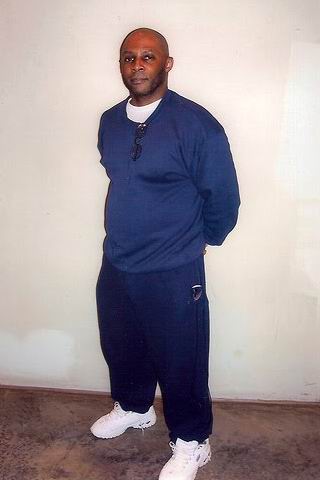
Darryl M. DURR
Classification: Murderer
Characteristics: Kidnapping - Rape
Number of victims: 1
Date of murder: February 1,
1988
Date of birth: June
26, 1963
Victim profile: Angel Vincent
(female, 16)
Method of murder: Strangulation with a dog chain
Location: Cuyahoga County, Ohio, USA
Status: Executed
by lethal injection in Ohio on April 20,
2010
United States Court of
Appeals For the Sixth Circuit
Durr kidnapped 16-year-old Angel Vincent from her home while her
parents were away. He raped and strangled her with a dog chain and hid
her body inside two orange traffic barrels placed end-to-end in a
Cleveland park.
Durr fathered a child with a teenage girlfriend who
lived down the street from the victim and was obsessed with her. He
named his newborn daughter Angel, and even made his girlfriend model
the jeans he had removed from his victim the night she was abducted.
The victim's decomposed body was discovered by
neighborhood kids three months later. The case remained unsolved until
Durr was arrested on two unrelated rapes in September 1988. His
girlfriend, Deborah Mullins, came forward and told authorities that
Durr had picked her up the night Vincent disappeared.
Vincent was tied up in the back of the vehicle,
Mullins said, and Durr said he was going to "waste" her. Durr dropped
her off at an apartment, then returned about four hours later and
placed Vincent's ring and bracelet on a coffee table. Durr boasted
that he had strangled Vincent.
Durr was convicted largely on the testimony of
Mullins, who said she waited months to tell police about the murder
out of fear that Durr would harm her. Prosecutors said Mullins knew
facts about the case that she could not have known without Durr
telling her, including the location of the body.
Citations:
State v. Durr, 58 Ohio St.3d 86, 568 N.E.2d 674 (Ohio 1991). (Direct
Appeal) Durr v. Mitchell, 487 F.3d 423 (6th Cir. 2007). (Habeas)
Final/Special Meal:
Declined.
Final Words:
"To the Vincent family who I believe are here and who believe I have
caused so much pain and believe I have murdered their daughter, I am
truly sorry you believe that way, having been through that pain myself.
I had hoped DNA testing would allow me to prove my innocence, but
unfortunately, that's not going to happen. To my momma minister, we
are born in this life in struggle and I planned to go out in a
struggle, but I want to make you proud. I'll go out in peace. To my
cousin, please take care of my children. Tell my children and my wife
I love them. To my wife, I love her. It's been 20 years in this life
and I will see her in the next life."
ClarkProsecutor.org
Ohio Department of Rehabilitation and Correction
Inmate#: OSP #A207-889
Inmate: Darryl Durr
DOB: June 26, 1963
County of Conviction: Cayahoga County
Date of Offense: Between 1/31/88 and 4/3/88
Case Number: CR231670
Date of Sentencing: December 16, 1988
Presiding Judge: Ralph A. McAllister
Prosecuting Attorney: Carmen Marino
Institution: Ohio State Penetentiary
Convictions: Count 1: Aggravated Murder (Death), Count 2 Kidnapping
(15-25 years), Count 3 Aggravated Robbery (15-25 years), Count 4 Rape
(15-25 years).
Killer provides no comfort at execution
Teenage victim’s mother didn't get a confession or
apology
By Alan Johnson - Dispatch.com
April 21, 2010
LUCASVILLE, Ohio - The tense silence in the Death
House was broken by the sounds of a mother grieving for a daughter
lost 22 years ago. Although Norma Godsey suffers from acute bronchitis
and needs oxygen to breathe, she felt strongly that she had to be at
the Southern Ohio Correctional Facility yesterday to watch the
execution of Darryl Durr, the man who murdered her only child, Angel
Vincent, 16, of Elyria. Godsey wheezed, coughed and sobbed almost
continuously yesterday as she watched Durr injected with a lethal dose
of thiopental sodium, a powerful anesthetic. When it was over, and
Durr had drawn his last breath at 10:36 a.m., Godsey sighed deeply and
said, "Oh, I'm so glad."
Her brother-in-law, Wesley Brewer, also a witness,
had a more blunt reaction. "That son of a bitch is dead," Brewer said.
"It was too humane. I'd rather have seen him die in the electric chair
for what he did to your daughter."
Godsey told reporters later that she was unhappy
that Durr had neither acknowledged that he killed her daughter nor
apologized for it. "I just wanted him to ask me for forgiveness,"
Godsey said. "I just wanted him to tell me he was sorry ... "He was a
monster," she added. "He took everything from me."
After her daughter's death, Godsey said, she began
drinking heavily, smoked three packs of cigarettes a day and had a
nervous breakdown. Part of Durr's rambling, two-minute final statement
was directed at the victim's family, who, he said, "believe I have
murdered their daughter. I am truly sorry you believe that way." He
said he had hoped that DNA testing would prove he is innocent, "but
unfortunately that's not going to happen."
The condemned man's dramatic reaction to the lethal
drug might fuel the controversy about whether he had an allergic
reaction or was simply fighting death to the last minute. About two
minutes after the thiopental sodium began flowing, Durr raised his
head and shoulders off the table - even though he was strapped down -
and grimaced for about 10 seconds. His head then fell back and his
mouth opened wide as the anesthetic took effect. Durr's eyes closed,
but his chest heaved several times, and his throat convulsed
spasmodically as if he was swallowing or gasping for air. From the
time the drug began flowing, it took 11 minutes for Durr to die.
His attorneys had filed several last-minute appeals,
including one saying he might have a strong allergic reaction to the
killing drug. Julie Walburn, spokeswoman for the Department of
Rehabilitation and Correction, said, "We have no reason to believe he
was in any pain."
As Durr was dying, a howling sob went up from one
of his witnesses, the Rev. Georgina Thornton, his spiritual adviser. "Oh,
God! Oh, Jesus!" she exclaimed, continuing to sob for several minutes.
Court records show that Vincent disappeared from
her home on Jan. 31, 1988. Earlier that evening, the girl had spoken
with her mother by telephone, saying that her friend Deborah Mullins
was with her and that Mullins' boyfriend, Durr, was coming to the
house. Vincent was never seen alive again.
About three months later, three boys playing in a
park found the girl's body wrapped in a blanket inside two orange
barrels placed open end to open end. The body was so badly decomposed
that the coroner could not accurately determine the cause of death.
Durr was charged with Vincent's death in September 1988 after being
arrested in the rapes of two other young women. He was the fourth
Ohioan executed this year and the 37th since capital punishment
resumed in 1999.
Ohio rapist who claimed drug allergy executed
By Matt Leingang - Associated Press
April 21, 2010
LUCASVILLE, Ohio — A serial rapist who strangled a
16-year-old girl in 1988 and who had argued he might be violently
allergic to the state's execution drug was put to death Tuesday with
no apparent complications.
As the lethal injection began, Darryl Durr clenched
his fists, grimaced and held his head up for about 10 seconds before
gently putting it down. It wasn't clear if he was in pain or
emotionally reacting to the moment. Durr, 46, was pronounced dead at
10:36 a.m. at the Southern Ohio Correctional Facility in Lucasville.
"He was a monster," the victim's mother, Norma Jean Godsey, said after
witnessing the execution.
Durr kidnapped 16-year-old Angel Vincent from her
home in Elyria on Jan. 31, 1988, while her mother and stepfather were
away at a Super Bowl party, prosecutors said. He raped and strangled
her with a dog chain and hid her body inside two orange traffic
barrels placed end-to-end in a Cleveland park.
In what appeared to be an unusual legal maneuver,
Durr's lawyers said last week they uncovered evidence of Durr's
anesthesia allergy in his 800-page prison medical record. Ohio uses a
large dose of anesthesia to execute condemned inmates, and Durr argued
that no one knew how his body would react to the drug. The state
countered that there was no proof that an allergic reaction would
occur before Durr was already deeply unconscious and that the worst
reaction would be death from low blood pressure and impaired breathing,
effects that would be irrelevant in the context of an execution.
The U.S. Supreme Court declined to intervene Monday,
upholding a judge's ruling that Durr waited too long to raise the
allergy issue, then relied mainly on speculation to ask for time to
investigate. Dennis Sipe, one of two attorneys who witnessed Tuesday's
execution on behalf of Durr, said Durr's reaction more likely stemmed
from physical pain rather than his feelings about being executed. "I
think he had come to terms with the fact that the state was going to
end his life," Sipe said.
In a final statement Tuesday, Durr addressed a
minister, saying: "I planned to go out in a struggle, but I want to
make you proud. I'll go out in peace." He also told Vincent's family
he was sorry for their pain but maintained his innocence. He said he
hoped the courts would have allowed further DNA testing on a necklace
found on the victim. "Unfortunately, that's not going to happen," he
said. Experts testified there would be no DNA on the necklace, and
authorities couldn't guarantee the necklace had been preserved
properly as evidence.
Prosecutors said Durr was obsessed with Vincent.
Durr, then 24, had fathered a child with a teenage girlfriend who
lived down the street from her. Durr named his newborn daughter Angel
and made his girlfriend model the jeans he had removed from his victim
the night she was abducted, prosecutors said. Three months later,
several boys playing in the park noticed a foul odor and found Angel
Vincent's decomposed body inside the traffic barrels.
The case remained unsolved until Durr was arrested
on two unrelated rapes in September 1988. His girlfriend, Deborah
Mullins, came forward and told authorities that Durr had picked her up
the night Vincent disappeared. Vincent was tied up in the back of the
vehicle, Mullins said, and Durr said he was going to "waste" her.
Durr dropped her off at an apartment, Mullins said,
then returned about four hours later and placed Vincent's ring and
bracelet on a coffee table. Durr boasted that he had strangled Vincent,
Mullins said. He was convicted largely on the testimony of Mullins,
who said she waited months to tell police about the murder out of fear
that Durr would harm her. Prosecutors said Mullins knew facts about
the case that she could not have known without Durr telling her,
including the location of the body.
Godsey, who now lives in Monticello, Ky., said
Vincent was her only child. She drank and smoked heavily for four
years after the murder, leading to chronic bronchitis and other health
problems that require her to carry an oxygen tank. "He took everything
from me," she said.
Godsey said she was disappointed that Durr didn't
admit his guilt and ask God for forgiveness. Wesley Brewer, Vincent's
uncle, said he was glad Ohio has the death penalty but wished the
state used the electric chair instead. Lethal injection, he said, is
too humane for a killer like Durr.
Durr was the fourth inmate executed this year in
Ohio, which is on pace to execute a state record 11 inmates in 2010.
State executes Darryl Durr of Elyria for 1988
murder of teenage girl
By Joe Guillen - Blog.Cleveland.com
April 20, 2010
The execution -- the 37th in Ohio since 1999 -- provided some closure
to the family of the victim, Angel Vincent, a 16-year-old from Elyria
whom Durr raped and killed in 1988. But family members did not get an
apology, or even an admission of guilt from Durr. During an unusually
long final speech, Durr said he regretted his innocence could not be
proven by DNA testing of a necklace belonging to Angel. Multiple
courts had rejected Durr's appeals to halt the execution.
Angel's mother expressed sorrow for Durr's family
but was upset he didn't admit his guilt. "I just wanted him to say he
was sorry," Norma Godsey said though tears after the execution. "I
didn't know what I was going to think to watch that man die. But I'm
not sorry I watched it." "He took everything from me," she said.
Angel was Godsey's only child. Godsey left Angel
alone at their Elyria home the night of Jan. 31 to go to a Super Bowl
party. Durr, who was 24 at the time, dated and lived with Angel's
neighbor and classmate, Deborah Mullins. Mullins and Durr had a baby
together weeks before the murder. Godsey said Durr named the baby
Angel because he was obsessed with her daughter. The night Angel was
home alone, Durr kidnapped her, strangled her with a dog chain and hid
her body inside two construction cones, placed end to end, in a ravine
near Denison Avenue and Fulton Road in Cleveland. Boys playing in the
area discovered Angel's body three months later.
Godsey said she began to drink and smoke heavily
after her daughter's death. Once a big sports fan, she hasn't watched
a baseball or football game since, she said Tuesday. She said she even
tried to commit suicide to be with her daughter. Godsey, who uses
portable oxygen, wheezed and sniffled as she walked into the Death
House at the Southern Ohio Correctional Facility. She sat down and
asked for a bucket in case she became nauseous. She never had to use
it.
TV screens inside the side-by-side witness rooms
showed medical personnel preparing Durr for execution in a holding
cell. He lay motionless as an IV site was established in each arm, a
process that took about 13 minutes. Durr was then escorted into the
execution chamber. Prison warden Donald Morgan stood over Durr as the
execution team strapped him in at the ankles, knees, chest and wrists.
At 10:22, Morgan reached for the microphone in the
room and offered Durr a chance to speak his last words: "To the
Vincent family who I believe are here and who believe I have caused so
much pain and believe I have murdered their daughter, I am truly sorry
you believe that way, having been through that pain myself. I had
hoped DNA testing would allow me to prove my innocence, but
unfortunately, that's not going to happen. "To my momma minister, we
are born in this life in struggle and I planned to go out in a
struggle, but I want to make you proud. I'll go out in peace. To my
cousin, please take care of my children. Tell my children and my wife
I love them. To my wife, I love her. It's been 20 years in this life
and I will see her in the next life."
A 5-gram dose of thiopental sodium, a type of
anesthesia, was then sent through the tubes hooked up to Durr's left
arm. A few minutes after he spoke, Durr picked his head up and looked
at the witnesses. He put his head back down, then he sat up again as
best he could and grimaced before opening his mouth to exhale.
One of the four witnesses at the execution on
Durr's behalf then began to wail. "Oh, God," said Durr's spiritual
adviser, the Rev. Georgina Thornton. "Oh, Jesus." As Durr's head eased
back onto the bed, his eyes were closed and his mouth kept moving, as
if he was mumbling. His left fist remained clenched. Durr lay
motionless for a few minutes before a member of the execution team
checked his breathing. A curtain was then pulled across the glass
between the witness rooms and the execution chamber while a coroner
examined Durr.
"That son of a bitch is dead," said Wesley Brewer,
Angel's uncle and one of three witnesses from the victim's family.
Godsey tried to quiet Brewer, but he continued. "It was too humane.
I'd rather have seen him in an electric chair." The curtain was pulled
back and Durr's body remained on the bed as the warden announced his
time of death.
In one of his three appeals to halt the execution,
Durr claimed an allergy to anesthesia. The appeal, along with two
others, was denied by multiple courts, including the U.S. Supreme
Court on Monday night. Ohio Department of Rehabilitation and
Correction spokeswoman Julie Walburn said the execution went smoothly.
"We have no reason to believe he was in any pain whatsoever," she said.
Darryl Durr Dead: Ohio Rapist Who Claimed Drug
Allergy Executed
By Matt Leingang - HuffingtonPost.com
April 20, 2010
LUCASVILLE, Ohio — A serial rapist who strangled a
16-year-old girl in 1988 and who had argued he might be violently
allergic to the state's execution drug was put to death Tuesday with
no apparent complications.
As the lethal injection began, Darryl Durr clenched
his fists, grimaced and held his head up for about 10 seconds before
gently putting it down. It wasn't clear if he was in pain or
emotionally reacting to the moment. Durr, 46, was pronounced dead at
10:36 a.m. at the Southern Ohio Correctional Facility in Lucasville.
"He was a monster," the victim's mother, Norma Jean
Godsey, said after witnessing the execution. Durr kidnapped 16-year-old
Angel Vincent from her home in Elyria on Jan. 31, 1988, while her
mother and stepfather were away at a Super Bowl party, prosecutors
said. He raped and strangled her with a dog chain and hid her body
inside two orange traffic barrels placed end-to-end in a Cleveland
park.
In what appeared to be an unusual legal maneuver,
Durr's lawyers said last week they uncovered evidence of Durr's
anesthesia allergy in his 800-page prison medical record. Ohio uses a
large dose of anesthesia to execute condemned inmates, and Durr argued
that no one knew how his body would react to the drug. The state
countered that there was no proof that an allergic reaction would
occur before Durr was already deeply unconscious and that the worst
reaction would be death from low blood pressure and impaired breathing,
effects that would be irrelevant in the context of an execution.
The U.S. Supreme Court declined to intervene Monday,
upholding a judge's ruling that Durr waited too long to raise the
allergy issue, then relied mainly on speculation to ask for time to
investigate. Dennis Sipe, one of two attorneys who witnessed Tuesday's
execution on behalf of Durr, said Durr's reaction more likely stemmed
from physical pain rather than his feelings about being executed. "I
think he had come to terms with the fact that the state was going to
end his life," Sipe said.
In a final statement Tuesday, Durr addressed a
minister, saying: "I planned to go out in a struggle, but I want to
make you proud. I'll go out in peace." He also told Vincent's family
he was sorry for their pain but maintained his innocence. He said he
hoped the courts would have allowed further DNA testing on a necklace
found on the victim. "Unfortunately, that's not going to happen," he
said. Experts testified there would be no DNA on the necklace, and
authorities couldn't guarantee the necklace had been preserved
properly as evidence.
Prosecutors said Durr was obsessed with Vincent.
Durr, then 24, had fathered a child with a teenage girlfriend who
lived down the street from her. Durr named his newborn daughter Angel
and made his girlfriend model the jeans he had removed from his victim
the night she was abducted, prosecutors said. Three months later,
several boys playing in the park noticed a foul odor and found Angel
Vincent's decomposed body inside the traffic barrels.
The case remained unsolved until Durr was arrested
on two unrelated rapes in September 1988. His girlfriend, Deborah
Mullins, came forward and told authorities that Durr had picked her up
the night Vincent disappeared. Vincent was tied up in the back of the
vehicle, Mullins said, and Durr said he was going to "waste" her. Durr
dropped her off at an apartment, Mullins said, then returned about
four hours later and placed Vincent's ring and bracelet on a coffee
table. Durr boasted that he had strangled Vincent, Mullins said. He
was convicted largely on the testimony of Mullins, who said she waited
months to tell police about the murder out of fear that Durr would
harm her. Prosecutors said Mullins knew facts about the case that she
could not have known without Durr telling her, including the location
of the body.
Godsey, who now lives in Monticello, Ky., said
Vincent was her only child. She drank and smoked heavily for four
years after the murder, leading to chronic bronchitis and other health
problems that require her to carry an oxygen tank. "He took everything
from me," she said. Godsey said she was disappointed that Durr didn't
admit his guilt and ask God for forgiveness. Wesley Brewer, Vincent's
uncle, said he was glad Ohio has the death penalty but wished the
state used the electric chair instead. Lethal injection, he said, is
too humane for a killer like Durr.
Durr was the fourth inmate executed this year in
Ohio, which is on pace to execute a state record 11 inmates in 2010.
Death Row Allergy Claim Fails to Delay Darryl
Durr's Execution
Execution Comes Four Days After Durr's Appeal on
Grounds He's Allergic to Anesthesia Denied
By Eamon McNiff - ABCNews.go.com
April 20, 2010
A death row inmate who tried to delay his execution
by claiming he was allergic to the anesthesia used in the lethal
injection was put to death today, right on schedule. Darryl Durr, 46,
was declared dead at 10:36 a.m. ET. Julie Walburn from the Southern
Ohio Correctional Facility, where the execution took place, said there
were no complications and that the execution went smoothly.
A prison official who was present told ABC News
that as the process began Durr clenched his fists and grimaced while
holding his head up for about 10 seconds, before putting his head down.
The official, who declined to be identified, said it wasn't clear
whether Durr was in pain or reacting to the moment.
Durr had been convicted of the rape and murder of
16-year-old Angel Vincent in 1988. He is the 37th inmate executed in
Lucasville, Ohio's so-called "death house" at the Southern Ohio
Correctional Facility since 1999 and the fourth person to be executed
in Ohio this year. "Serial rapist Darryl Durr kidnapped, raped, and
murdered 16-year-old Angel Vincent. Durr's punishment finally gives
justice to the family of the victim for Durr's brutal and unforgivable
crimes," Ryan Miday, a spokesman for Cuyahoga County Prosecutor Bill
Mason, told ABC News last night. Mason prosecuted Durr in his 1988
trial and has remained engaged in Durr's subsequent appeals.
Durr attempted last week what was called in reports
a "unique" appeal, reportedly the first of its kind, when his defense
lawyer Kathleen McGarry told the Ohio District Court Judge Gregory
Frost that she found evidence that Durr was allergic to anesthesia
after reviewing his 800-page medical history report, court records say.
McGarry said in court documents she wasn't aware of
the exact allergy Durr had, but wanted to make sure it didn't include
thiopental sodium, the anesthetic Ohio uses in its lethal injection. "One
of the things the Ohio Constitution guarantees is that he has a quick
and painless execution," McGarry said to the Associated Press last
week. "If he's going to react to the anesthetic drugs in such a manner
that he's going to have a violent reaction, either vomiting or
seizures or whatever the spectrum is that could happen, then obviously
the execution has problems," she said.
Ohio became the first state last year to switch to
a single dose of anesthetic to put inmates to death, rather than the
three-drug cocktail used by other states. A Columbia University
Medical Center anesthesiologist filed an e-mail as part of Durr's
appeal saying if he did have an allergy to thiopental sodium, it may
pose a problem. "An allergic or other adverse reaction to some
component of a general anesthetic might present a serious problem for
an execution by lethal injection," the email from Mark Heath said.
McGarry cited other cases involving adverse
reactions to execution methods in her appeal. In 1989, Texas death row
inmate Stephen McCoy began choking and seizing after receiving lethal
injection chemicals causing a witness to faint, according to reports.
In 1992 death row prisoner Robyn Lee Parks' muscles in his jaw, neck,
and abdomen began to spasm about two minutes after the drugs started
to flow during his execution in Oklahoma. However, according to
reports, the exact cause for those reactions was undetermined in each
case.
Frost allowed the records to be reviewed, but on
Friday he ruled there wasn't enough evidence given that the allergy
could in fact impact the execution. Frost also said in his ruling that
Durr's legal team waited too long to file this appeal, and relied too
heavily on speculation for the appeal. "Durr presents this court with
an unproven allergy that might have an unknown effect on his execution
and asks for time to fill in details that may or may not rise to the
level of demonstrating a likelihood of success," Frost wrote. "Speculation
is not evidence, however."
The state hired their own expert to review the
appeal, who found there was no evidence to say that Durr wouldn't
already be unconscious from the anesthesia before any allergy would
set in. Mark Dershwitz, a University of Massachusetts professor and
physician, told the state in an e-mail submitted as part of the
state's filing on the appeal that the worst type of allergic reaction
to anesthesia would result in death from low blood pressure and
impaired breathing. "Such effects are irrelevant in the context of an
execution because they would occur after the inmate loses
consciousness and because the intent is to bring about a rapid death,"
Dershwitz wrote.
According to Frost's ruling, Durr had dental
surgery in 2004, and surgery for a hernia in 2007 and Frost wrote he
could have known about his allergy as early as 2004. Durr was
allegedly given hydromorphone in 2004 and 2007 following surgery with
no ill effects. Hydromorphone is used in Ohio's backup execution
method.
The appeal on the grounds of an allergy has been
cited in reports as the first of its kind. The only appeal similar was
convicted killer Richard Cooey's unsuccessful argument in 2008 that
his obesity caused poor vein access. "It's a desperate twist on the
'cruel and unusual punishment' argument inmates have concocted to
contest lethal injection," Miday said. "Too allergic to die won't work
any better than Richard Cooey's 'too fat to die.'"
Witnessing Durr's execution this morning was
McGarry, Durr's spiritual advisor Rev. Georgina Thornton, and Matthew
Princehorn, a friend of Durr's according to Walburn. Also there to
witness the exection was Norma Godsey, Angel Vincent's mother, Wesley
Brewer, her uncle, and Corennia Hatfield, her aunt, Walburn said.
According to Walburn, Durr did not request a
special last meal and had spent the day yesterday not eating or
drinking, observing what he called a religious fast. "He didn't
request a special meal at all," Walburn said. "The staff said he was
very quiet, very easy to work with." McGarry could not be reached for
comment.
Darryl Durr
ProDeathPenalty.com
On January 31, 1988, at approximately 10:50 p.m.,
Norma Jean O’Nan and her husband returned to their home in Elyria and
discovered the front door unlocked, the lights and television on, and
their sixteen-year-old daughter, Angel Vincent, missing. Only twenty
minutes earlier, Mrs. O’Nan had spoken with her daughter by telephone
to learn that Angel’s girlfriend, Deborah Mullins, was at her home and
that Deborah’s boyfriend, Darryl Durr, was expected to arrive later in
the evening. That was the last chance Mrs. O’Nan would have to speak
to her daughter alive.
Mrs. O’Nan testified that Angel was wearing a hot
pink sweater, a light pink and white checkered blouse, hot pink pants,
and white tennis shoes when she and her husband left Angel home alone
on the evening of January 31, 1988. After notifying the Elyria Police
of Angel’s disappearance, Mrs. O’Nan searched her home to determine if
any of Angel’s belongings were missing. Although Angel’s pink pants
were found, Mrs. O’Nan’s search revealed the following items missing:
an old lavender blanket with a hole in the center, a pair of black
acid-washed denim jeans, Angel’s pink and white checkered blouse,
light blue eyeglasses that Angel wore only in her home, a jean jacket
that Angel had borrowed from a friend, an Avon necklace with an “A”
charm attached, a small chain bracelet, an Avon slip-on bracelet, an
inexpensive rhinestone ring and a dog chain that hung from her mirror.
Mrs. O’Nan also discovered Angel’s handbag stuffed under her bed.
Three or four days later, Mrs. O’Nan confronted
Deborah Mullins and Durr regarding the disappearance of her daughter,
and was told by Durr that “you know how kids are, she probably ran
away.” On April 30, 1988, three boys noticed a foul odor coming from
two orange traffic barrels while playing in Brookside Park. The
barrels and been placed open end to open end, and were underneath a
railroad tie. Upon separating the barrels, the boys discovered a
severely decomposed female body that had been wrapped in a dirty old
blanket. A portion of a leg was visible through a large hole in the
blanket. A deputy coroner testified that the only clothing found on
the victim was a pink sweater and a pair of white tennis shoes. The
pink sweater had been pushed up well above the victim’s breast area.
An initial external examination determined the body
to be that of a young white female, who was in an advanced state of
decomposition. The body was heavily infested with maggots and the body’s
eyes and ears had been lost. There was also prominent evidence of
animal activity about the inguinal and vulval regions of the body, and
in and about the thighs. According to the deputy coroner, the
decomposition was consistent with three months exposure. After
examining the body, the deputy coroner concluded that the cause of
death was homicidal violence. Since the body was so badly decomposed,
the deputy coroner could not determine whether ligature marks, scrapes
or tears indicating strangulation were present. There was no damage
noted to the internal cartilaginous structures of the neck. The deputy
coroner declined, however, to rule out strangulation as a cause of
death since damage to these structures is not always present in young
strangulation victims due to the flexibility of these structures. In
addition, because the body was so severely infested with bacteria,
testing for the presence of acid phosphates and spermatozoa was
inconclusive.
In September, 1988, after Durr was arrested for two
unrelated rapes, Deborah Mullins revealed her knowledge of Angel’s
disappearance to the Cleveland Police Department. As the result of her
information, an ankle X-ray obtained from Elyria Memorial Hospital,
and dental records, the body discovered in Brookside Park was
determined to be that of Angel Vincent. At trial, Deborah Mullins
testified that on the evening Angel disappeared Deborah had asked Durr
to drive to the house of one of Angel’s friends to retrieve a package
of cigarettes for Angel. Durr agreed and left. Shortly thereafter,
Durr returned to Deborah’s house and, instead of entering through the
front door, began throwing stones at her upstairs bedroom window and
blew his car horn for her to come out. Deborah and her baby, who had
been fathered by Durr, left the house and entered Durr’s car where
Durr brandished a knife toward both of them. As Durr was driving,
Deborah heard noises from the back seat and after turning around
discovered Angel bound on the rear floorboard. According to Deborah’s
testimony, Angel was wearing black acid-washed denim jeans, a jean
jacket, and tennis shoes when she was last seen in the back of Durr’s
car. When Deborah asked Durr why Angel was bound in his car, Durr
responded that he intended to “waste” her because “she would tell.” He
never revealed just what Angel was going to tell.
After threatening the life of both Deborah and his
baby, Durr let Deborah out of his car. He returned to her home three
or four hours later. Upon returning, Durr told Deborah that he had
“wasted” Angel and that she should pack her things because they were
leaving. Durr drove Deborah and their baby to his wife’s, Janice Durr’s,
Cleveland apartment. After dropping Deborah and the baby off, Durr
left with a duffle bag containing two shovels. When Durr returned, he
was wet and covered with snow. Upon entering the room, Durr placed a
ring and bracelet that belonged to Angel on a coffee table. As he was
falling asleep, Durr told Deborah that he had strangled Angel with a
dog chain until she “pissed, pooped and shit and made a few gurgling
sounds,” took her body to a park, wrapped it in a blanket, placed it
between two construction cones, and left her by some railroad tracks.
Later that day or the next day, Durr burned a bag
of clothing in the basement of Janice Durr’s apartment building and
asked Deborah to model the black acid-washed jeans that Angel had worn
on the evening of her abduction. Durr then drove Deborah, Janice Durr
and his children to the west side of Cleveland where he burned another
bag of items, and while driving from Cleveland toward Elyria, Durr
threw Angel’s jean jacket out the car window. After arriving at
Deborah’s home in Elyria, Deborah’s mother informed her that Mrs.
O’Nan had come over and inquired about Deborah’s knowledge of Angels’s
disappearance. Deborah testified that Durr threatened her and their
baby’s life and instructed her to tell Mrs. O’Nan that Angel had been
talking about running away. Deborah also testified that Durr took her
and their baby to Edgewater Park where Durr threw Angel’s glasses over
a cliff into the lake. A month or so later, while driving past the
Cleveland Zoo, Durr pointed to a location and said, “Over there.” When
Deborah questioned his statement, Durr replied, “You know what I am
talking about.” Following a jury trial, Durr was convicted of
aggravated murder; kidnapping; aggravated robbery and rape. The trial
court followed the jury’s recommendation and sentenced Durr to death.
State v. Durr, 58 Ohio St.3d 86, 568 N.E.2d
674 (Ohio 1991). (Direct Appeal)
Defendant was convicted by jury in the Common Pleas
Court of one count of aggravated murder with specifications of
kidnapping, aggravated robbery, and rape, all with violence
specifications, and was sentenced to death. On appeal, the Court of
Appeals for Cuyahoga County, Nahra, J., affirmed. On appeal, the
Supreme Court, Holmes, J., held that: (1) trial court did not
unreasonably or excessively restrict defense counsel's questioning
during voir dire; (2) photographs of victim's body, although shocking,
were more probative than prejudicial and were neither cumulative nor
repetitive; (3) rape and aggravated robbery convictions, and
corresponding capital murder specification, were supported by
circumstantial evidence; and (4) death penalty was neither excessive
nor disproportionate. Affirmed. Brown, J., concurred and filed opinion
in which Moyer, C.J., joined. Wright, J., dissented and filed opinion.
On January 31, 1988, at approximately 10:50 p.m.,
Norma Jean O'Nan and her husband returned to their home in Elyria and
discovered the front door unlocked, the lights and television on, and
their sixteen-year-old daughter, Angel Vincent, missing. Only twenty
minutes earlier, Mrs. O'Nan had spoken with her daughter by telephone
to learn that Angel's girlfriend, Deborah Mullins, was at her home and
that Deborah's boyfriend, appellant Darryl Durr, was expected to
arrive later in the evening. That was the last chance Mrs. O'Nan would
have to speak to her daughter alive.
Mrs. O'Nan testified that Angel was wearing a hot
pink sweater, a light pink and white checkered blouse, hot pink pants,
and white tennis shoes when she and her husband left Angel home alone
on the evening of January 31, 1988. After notifying the Elyria Police
of Angel's disappearance, Mrs. O'Nan searched her home to determine if
any of Angel's belongings were missing. Although Angel's pink pants
were found, Mrs. O'Nan's search revealed the following items missing:
an old lavender blanket with a hole in the center, a pair of black
acid-washed denim jeans, Angel's pink and white checkered blouse,
light blue eyeglasses that Angel wore only in her home, a jean jacket
that Angel had borrowed from a friend, an Avon necklace with an “A”
charm attached, a small chain bracelet, an Avon slip-on bracelet, an
inexpensive rhinestone ring and a dog chain that hung from her mirror.
Mrs. O'Nan also discovered Angel's handbag stuffed under her bed.
Three or four days later, Mrs. O'Nan confronted
Deborah Mullins and the appellant regarding the disappearance of her
daughter, and was told by the appellant that “you know how kids are,
she probably ran away.” On April 30, 1988, three boys noticed a foul
odor coming from two orange traffic barrels while playing in Brookside
Park. The barrels had been placed open end to open end, and were
underneath a railroad tie. Upon separating the barrels, the boys
discovered a severely decomposed female body that had been wrapped in
a dirty old blanket. A portion of a leg was visible through a large
hole in the blanket.
A deputy coroner testified that the only clothing
found on the victim was a pink sweater and a pair of white tennis
shoes. The pink sweater had been pushed up well above the victim's
breast area. An initial external examination determined the body to be
that of a young white female, who was in an advanced state of
decomposition. The body was heavily infested with maggots and the
body's eyes and ears had been lost. There was also prominent evidence
of animal activity about the inguinal and vulval regions of the body,
and in and about the thighs. According to the deputy coroner, the
decomposition was consistent with three months' exposure.
After examining the body, the deputy coroner
concluded that the cause of death was homicidal violence. Since the
body was so badly decomposed, the deputy coroner could not determine
whether ligature marks, scrapes or tears indicating strangulation were
present. There was no damage noted to the internal cartilaginous
structures of the neck. The deputy coroner declined, however, to rule
out strangulation as a cause of death since damage to these structures
is not always present in young strangulation victims due to the
flexibility of these structures. In addition, because the body was so
severely infested with bacteria, testing for the presence of acid
phosphates and spermatozoa was inconclusive.
In September 1988, after appellant was arrested for
two unrelated rapes, Deborah Mullins revealed her knowledge of Angel's
disappearance to the Cleveland Police Department. As the result of her
information, an ankle X-ray obtained from Elyria Memorial Hospital,
and dental records, the body discovered in Brookside Park was
determined to be that of Angel Vincent.
At trial, Deborah Mullins testified that on the
evening Angel disappeared Deborah had asked the appellant to drive to
the house of one of Angel's friends to retrieve a package of
cigarettes for Angel. Appellant agreed and left. Shortly thereafter,
appellant returned to Deborah's house and, instead of entering through
the front door, began throwing stones at her upstairs bedroom window
and blew his car horn for her to come out. Deborah and her baby, who
had been fathered by the appellant, left the house and entered the
appellant's car where the appellant brandished a knife toward both of
them.
As the appellant was driving, Deborah heard noises
from the back seat and after turning around discovered Angel bound on
the rear floorboard.
According to Deborah's testimony, Angel was wearing
black acid-washed denim jeans, a jean jacket, and tennis shoes when
she was last seen in the back of appellant's car.
When Deborah asked the appellant why Angel was
bound in his car, the appellant responded that he intended to “waste”
her because “she would tell.” He never revealed just what Angel was
going to tell.
After threatening the life of both Deborah and his
baby, the appellant let Deborah out of his car. He returned to her
home three or four hours later. Upon returning, appellant told Deborah
that he had “wasted” Angel and that she should pack her things because
they were leaving.
Appellant drove Deborah and their baby to his
wife's, Janice Durr's, Cleveland apartment. After dropping Deborah and
the baby off, the appellant left with a duffle bag containing two
shovels.
When appellant returned, he was wet and covered
with snow. Upon entering the room, appellant placed a ring and
bracelet that belonged to Angel on a coffee table. As he was falling
asleep, appellant told Deborah that he had strangled Angel with a dog
chain until she “pissed, pooped and shit and made a few gurgling
sounds,” took her body to a park, wrapped it in a blanket, placed it
between two construction cones, and left her by some railroad tracks.
Later that day or the next day, appellant burned a
bag of clothing in the basement of Janice Durr's apartment building
and asked Deborah to model the black acid-washed jeans that Angel had
worn on the evening of her abduction.
The appellant then drove Deborah, Janice Durr and
his children to the west side of Cleveland where he burned another bag
of items, and while driving from Cleveland toward Elyria, the
appellant threw Angel's jean jacket out the car window.
After arriving at Deborah's home in Elyria,
Deborah's mother informed her that Mrs. O'Nan had come over and
inquired about Deborah's knowledge of Angel's disappearance. Deborah
testified that appellant threatened her and their baby's life and
instructed her to tell Mrs. O'Nan that Angel had been talking about
running away. Deborah also testified that the appellant took her and
their baby to Edgewater Park where the appellant threw Angel's glasses
over a cliff into the lake. A month or so later, while driving past
the Cleveland Zoo, appellant pointed to a location near a bridge and
said, “Over there.” When Deborah questioned his statement, the
appellant replied, “You know what I am talking about.”
Following a jury trial appellant was convicted of
one count of aggravated murder, R.C. 2903.01, with specifications,
pursuant to R.C. 2929.04(A)(7), that the murder was committed while
the appellant was committing, attempting to commit, or fleeing after
committing aggravated robbery, rape, and kidnapping, (2) kidnapping,
R.C. 2905.01, with a violence specification, (3) aggravated robbery,
R.C. 2911.01, with a violence specification, and (4) rape, R.C.
2907.02, with a violence specification.
The cause is now before this court upon an appeal
as of right.
HOLMES, Justice.
In his fourteen propositions of law, the defendant-appellant
asserts various errors by the trial and appellate courts. This court
has previously decided many of these legal questions, and they will
therefore be disposed of accordingly. State v. Poindexter (1988), 36
Ohio St.3d 1, 520 N.E.2d 568, syllabus.
After thoroughly reviewing each of appellant's
propositions of law, we find none that has merit, and for the reasons
stated below we uphold the appellant's convictions and sentence of
death.
A
As his first proposition of law, the appellant
argues that the trial court unreasonably and excessively restricted
his questioning during the voir dire.
This court has long held that absent a clear abuse
of discretion, no prejudicial error can be assigned to the examination
of veniremen. State v. Ellis (1918), 98 Ohio St. 21, 120 N.E. 218,
paragraph one of the syllabus; State v. Beuke (1988), 38 Ohio St.3d
29, 39, 526 N.E.2d 274, 285, certiorari denied (1989), 489 U.S. 1071,
109 S.Ct. 1356, 103 L.Ed.2d 823.
Although R.C. 2945.27 affords the prosecution and
defense the opportunity to conduct a reasonable examination of
prospective jurors, State v. Anderson (1972), 30 Ohio St.2d 66, 59 O.O.2d
85, 282 N.E.2d 568, the trial court reserves the right and
responsibility to control the proceedings of a criminal trial pursuant
to R.C. 2945.03, and must limit the trial to relevant and material
matters with a view toward the expeditious and effective ascertainment
of truth. State v. Bridgeman (1977), 51 Ohio App.2d 105, 109-110, 5
O.O.3d 275, 277, 366 N.E.2d 1378, 1383.
After reviewing the entire voir dire in this case,
we find that by limiting defense counsel's statements, the trial court
was attempting to prohibit counsel from lecturing or making legal
arguments to the venire panel. The statements so restricted concerned
the nature of circumstantial evidence, a juror's perception of the
legal system, the function of the coroner's office, the nature of
cross-examination, and the standard for judging witness credibility.
Since such statements were overly broad and outside the scope of voir
dire, we conclude that the trial court by prohibiting them did not
abuse its discretion.
The appellant further argues that the prejudice he
suffered from the trial court's restrictions during voir dire is
evidenced by the impaneling of the jury after only four hours. We know
of no law in this state, nor do we wish to create new law today, that
establishes a minimum duration for a voir dire. Since we conclude that
the trial court in the instant case allowed a reasonable examination
of prospective jurors by defense counsel, we decline to accept
appellant's argument. Accordingly, we overrule appellant's first
proposition of law.
B
In his second proposition of law, the appellant
argues he was prejudiced since the trial court denied defense counsel
access to the record to proffer objections, reasons for the objections,
and matters that occurred off the record.
App.R. 9(A) requires that “[i]n all capital cases
the trial proceedings shall include a written transcript of the record
made during the trial by stenographic means,” and Crim.R. 22 requires
the recording of proceedings in all serious offense cases. However,
“[e]rror may not be predicated upon a ruling which admits or excludes
evidence unless a substantial right of the party is affected * * *.”
Ohio Rule of Evidence 103(A).
After reviewing appellant's claims in the context
of the record, we conclude that the trial court, by restricting the
record, neither affected matters vital to appellate review nor
affected appellant's substantial rights. Moreover, except for
appellant's allegations regarding voir dire, no substantive proffer
was made by appellant pursuant to App.R. 9(C) or 9(E) or otherwise to
reconstruct what was said or to establish its importance. As a result,
appellant waives any such error. State v. Brewer (1990), 48 Ohio St.3d
50, 61, 549 N.E.2d 491, 502; State v. Tyler (1990), 50 Ohio St.3d 24,
41-42, 553 N.E.2d 576, 596; United States v. Gallo (C.A.6, 1985), 763
F.2d 1504, 1529-1532, certiorari denied (1986), 475 U.S. 1017, 106
S.Ct. 1200, 89 L.Ed.2d 314.
Since appellant in the instant case has not
complied with the above procedures, and has failed to show his
substantial rights were affected, we cannot conclude that appellant
was denied a fair trial. Accordingly, appellant's second proposition
of law is not well-taken.
C
In his third proposition of law, appellant alleges
that the trial court erred by instructing the jury that a sentencing
phase would follow the guilt-determining phase of the trial. According
to the appellant, such instruction presupposed guilt, undercut the
presumption of innocence, and deprived him of a fair trial.
After a thorough and searching review of the
record, we decline to accept appellant's claim. Throughout the entire
trial, the court admonished and explained to the jurors that guilt is
not to be presupposed merely because they were participating in a
bifurcated, capital murder case. Moreover, there is no indication from
any prospective juror questioned during voir dire that he or she
presupposed guilt. Accordingly, appellant's third proposition of law
is not well-taken.
D
In his fourth proposition of law the appellant
claims the trial court erred by dismissing for cause a prospective
juror who claimed that the trial experience would upset her.
In Wainwright v. Witt (1985), 469 U.S. 412, 105
S.Ct. 844, 83 L.Ed.2d 841, the United States Supreme Court established
the standard for the removal of prospective jurors as “ * * * whether
the juror's views would ‘prevent or substantially impair the
performance of his duties as a juror in accordance with his
instructions and his oath.’ ” Id. at 424, 105 S.Ct. at 852, quoting
Adams v. Texas (1980), 448 U.S. 38, 45, 100 S.Ct. 2521, 65 L.Ed.2d
581. This court adopted and applied the Witt standard in State v.
Rogers (1985), 17 Ohio St.3d 174, 17 OBR 414, 478 N.E.2d 984, at
paragraph three of the syllabus, vacated on other grounds (1985), 474
U.S. 1002, 106 S.Ct. 518, 88 L.Ed.2d 452.
The venireman in question stated that she could not
sit in judgment of others in a criminal case and that she would have
difficulty being fair to both sides in the trial.
After seeing and hearing the prospective juror, the
trial judge concluded that she would be unable to faithfully and
impartially apply the law. We must therefore defer to this decision
and reject appellant's fourth proposition of law. State v. Beuke,
supra.
E
As his fifth proposition of law, the appellant
claims the trial court erred by denying defense counsel's request to
voir dire the jurors after newspapers were found in the jury room. The
newspapers, which were immediately confiscated by the bailiff,
contained an article which mentioned the appellant's prior convictions.
The voir dire conducted by the court revealed that
none of the jurors had read the article. In addition, all of the
jurors acknowledged that nothing except the evidence adduced at trial
should influence their decision. Of the alternate jurors voir dired,
only one had read the article. Since that alternate juror never served
on the jury or deliberated, the effect of the article on that juror is
moot.
Unless an appellant demonstrates otherwise, we
should assume that the members of the jury followed their oaths and
deliberated only upon the evidence adduced at trial. See State v.
Zuern (1987), 32 Ohio St.3d 56, 60, 512 N.E.2d 585, 590, certiorari
denied (1988), 484 U.S. 1047, 108 S.Ct. 786, 98 L.Ed.2d 872.
In this case, the jurors, in response to specific
queries, affirmed their willingness and ability to decide the case
fairly and impartially. Since appellant has failed to show otherwise,
we reject appellant's fifth proposition of law.
F
As proposition of law number six, the appellant
claims that the trial court improperly admitted hearsay testimony.
According to the appellant, he was prejudiced by the hearsay as it
enhanced the credibility of the state's key witness, Deborah Mullins.
During the state's direct examination of Margaret Hale, Deborah
Mullins's mother, the following testimony was recorded:
“Q. At the time that you talked with your daughter,
what was the subject matter of that?
“MR. MILANO: Same objection.
“THE COURT: Overruled.
“A. That Darryl Durr trashed Angel.”
Evid.R. 801(C) defines “hearsay” as“ * * * a
statement, other than one made by the declarant while testifying at
the trial or hearing, offered in evidence to prove the truth of the
matter asserted.” Not only must the statement have been made by
someone other than the testifying witness, and be repeated by the
witness on the stand, but the statement repeated must derive its
primary value by showing the truth of the matter asserted. Potter v.
Baker (1955), 162 Ohio St. 488, 55 O.O. 389, 124 N.E.2d 140; Digital &
Analog Design Corp. v. North Supply Co. (1989), 44 Ohio St.3d 36, 42,
540 N.E.2d 1358, 1364.
When viewed in the context of the record, Mrs.
Mullins's statement was not offered to prove that Darryl Durr murdered
Angel, but only to prove her recollection of the events surrounding
Angel's disappearance. As such we conclude that this was an entirely
proper use of relevant testimony and reject appellant's sixth
proposition of law.
G
In proposition number seven, the appellant claims
he was prejudiced in both the guilt-determination and penalty phases
of the trial by the cumulative and repetitive admission of gruesome
photographs. The two pictures in issue depict the body as it was found
three months after the murder occurred. The first is a closeup
photograph of the victim at Brookside Park. The body is covered with a
blanket and the victim's head is exposed as well as a portion of her
sweater. The second photograph shows the victim's mostly unclothed
decomposed body on a cart at the coroner's office. The victim's
sweater is pushed up over her breasts and the blanket is down around
her feet.
In State v. Maurer (1984), 15 Ohio St.3d 239, 15
OBR 379, 473 N.E.2d 768, paragraph seven of the syllabus, we held:
“Properly authenticated photographs, even if
gruesome, are admissible in a capital prosecution if relevant and of
probative value in assisting the trier of fact to determine the issues
or are illustrative of testimony and other evidence, as long as the
danger of material prejudice to a defendant is outweighed by their
probative value and the photographs are not repetitive or cumulative
in number.”
As we stated in State v. Morales (1987), 32 Ohio St.3d
252, 258, 513 N.E.2d 267, 274, certiorari denied (1988), 484 U.S.
1047, 108 S.Ct. 785, 98 L.Ed.2d 871, “the emphasis that a trial judge
must apply in meeting an Evid.R. 403 objection has changed in capital
cases. To be admissible in a capital case, the probative value of each
photograph must outweigh the danger of prejudice to the defendant and,
additionally, not be repetitive or cumulative in nature. Contrary to
the Evid.R. 403 standard, where the probative value must be minimal
and the prejudice great before the evidence may be excluded, pursuant
to Maurer, supra, if the probative value does not, in a simple
balancing of the relative values, outweigh the danger of prejudice to
the defendant, the evidence must be excluded.”
In reviewing the two photographs in the instant
case, we conclude that although they are shocking, their probative
value is not outweighed by the danger of unfair prejudice. The
photographs corroborate the deputy coroner's testimony regarding the
body's advanced state of decomposition, the location of the body, and
the identifying articles found on the body. Moreover, the photographs
are neither cumulative nor repetitive. Each photograph illustrates
testimony of state witnesses concerning the crime scene or elements of
the crime charged. See State v. DePew (1988), 38 Ohio St.3d 275,
280-282, 528 N.E.2d 542, 550, certiorari denied (1989), 489 U.S. 1042,
109 S.Ct. 1099, 103 L.Ed.2d 241.
Since the probative value of the photographs
outweighed the danger of unfair prejudice to the appellant, and since
the photographs are neither cumulative nor repetitive, we conclude
that their admission into evidence was not an abuse of discretion and
reject appellant's seventh proposition of law.
H
In his eighth and ninth propositions of law, the
appellant contends that since the state failed to adduce legally
sufficient evidence to sustain his rape and aggravated robbery charges,
his convictions on these counts are unconstitutional. We disagree.
First, appellant claims that the state failed to
present proof beyond a reasonable doubt that the appellant at any time
raped Angel Vincent. He argues that the circumstantial evidence of
Angel's partially naked body is insufficient to sustain the charge of
rape and the capital specification that the offense occurred in the
commission of a rape.
It is true that the trial court convicted appellant
on circumstantial evidence. “But direct evidence of a fact is not
required. Circumstantial evidence * * * may also be more certain,
satisfying and persuasive than direct evidence.” Michalic v. Cleveland
Tankers, Inc. (1960), 364 U.S. 325, 330, 81 S.Ct. 6, 11, 5 L.Ed.2d 20,
citing Rogers v. Missouri Pacific RR. Co. (1957), 352 U.S. 500, 508,
fn. 17, 77 S.Ct. 443, 449, fn. 17, 1 L.Ed.2d 493. Murder convictions
and death sentences can rest solely on circumstantial evidence. State
v. Apanovitch (1987), 33 Ohio St.3d 19, 514 N.E.2d 394; State v.
Nicely (1988), 39 Ohio St.3d 147, 151, 529 N.E.2d 1236, 1239.
However, “ * * * once the jury has reached its
decision, an appellate court, in a case where circumstantial evidence
is relied upon, will reverse only where the evidence is insufficient
as a matter of law to enable the jury to exclude a reasonable
hypothesis of innocence.” State v. Graven (1978), 54 Ohio St.2d 114,
119, 8 O.O.3d 113, 116, 374 N.E.2d 1370, 1374.
In this case, the prosecution presented highly
probative circumstantial evidence. Except for a pair of tennis shoes,
the victim's body was found nude from the waist down. In addition,
Deborah Mullins testified that when she saw Angel tied up in the back
of appellant's car, appellant informed Deborah that he was going to
kill Angel because she would tell. Based upon these facts, we believe
that there was sufficient probative evidence from which a rational
trier of fact could have found the appellant guilty of rape beyond a
reasonable doubt.
Appellant also alleges that his conviction for
aggravated robbery and the corresponding capital murder specification
pursuant to R.C. 2929.04(A)(7) is constitutionally insufficient.
Specifically, appellant argues that the state failed to present
evidence that the murder occurred while the appellant was attempting
to commit, committing, or fleeing immediately after a theft offense.
R.C. 2911.01.
At the time Angel Vincent disappeared she was
wearing a jeans jacket, black acid-washed jeans, jewelry and glasses.
After she was murdered, appellant possessed her jacket, jeans, jewelry
and glasses. This circumstantial evidence and the inferences to be
drawn from the removal of these items was sufficient for the jury to
exclude any reasonable theory of innocence and to convict the
appellant of aggravated robbery and the corresponding capital murder
specification. As a result, we conclude that appellant stands
convicted on constitutionally adequate grounds.
Accordingly, we reject appellant's eighth and ninth
propositions of law.
I
As proposition of law number ten, the appellant
alleges that both the trial court and the state improperly instructed
the jury that its decision in the penalty phase was merely a
recommendation. According to the appellant, these instructions led the
jury “to believe that the responsibility for determining the
appropriateness of the defendant's death rests elsewhere.” Caldwell v.
Mississippi (1985), 472 U.S. 320, 328-329, 105 S.Ct. 2633, 2639, 86
L.Ed.2d 231.
We have addressed this issue previously and have
held that:
“Caldwell * * * is inapplicable where the
statements made to the jury during the mitigation phase of a capital
trial were accurate statements of the law and were not made to induce
reliance on the appellate process.” State v. Rogers (1986), 28 Ohio St.3d
427, 28 OBR 480, 504 N.E.2d 52, paragraph one of the syllabus,
reversed and remanded on other grounds (1987), 32 Ohio St.3d 70, 512
N.E.2d 581. See, also, State v. Johnson (1989), 46 Ohio St.3d 96, 545
N.E.2d 636, certiorari denied (1990), 494 U.S. 1039, 110 S.Ct. 1504,
108 L.Ed.2d 639, and State v. Williams (1988), 38 Ohio St.3d 346, 528
N.E.2d 910, certiorari denied (1989), 489 U.S. 1040, 109 S.Ct. 1176,
103 L.Ed.2d 238.
After reviewing the alleged improper statements in
this case, we conclude that, although it is preferable that “no
reference be made to the jury regarding the finality of their decision,”
State v. Jenkins (1984), 15 Ohio St.3d 164, 202, 15 OBR 311, 344, 473
N.E.2d 264, 299; State v. Rogers, supra, 28 Ohio St.3d at 433, 28 OBR
at 485, 504 N.E.2d at 57; State v. Williams, supra, 23 Ohio St.3d at
22, 23 OBR at 19, 490 N.E.2d at 912; State v. Buell (1986), 22 Ohio St.3d
124, 144, 22 OBR 203, 220, 489 N.E.2d 795, 813, certiorari denied
(1986), 479 U.S. 871, 107 S.Ct. 240, 93 L.Ed.2d 165; the state's and
court's comments in this case remained within the constitutional
boundaries set by Caldwell v. Mississippi, supra; State v. Rogers,
supra, at 434, 28 OBR at 486, 504 N.E.2d at 58; State v. Jenkins,
supra, at 202, 15 OBR at 344, 473 N.E.2d at 298-299. Therefore, we
reject appellant's tenth proposition of law.
J
Appellant next alleges that he was deprived of a
fair and impartial trial due to the prosecutor's misconduct. He claims
that the prosecutor commented on the unsworn nature of appellant's
statement, spoke of societal interest in the outcome, referred to
nonstatutory aggravating factors, and undercut defense counsel's
credibility with the jury.
At the outset we observe that “the effect of
counsel's misconduct ‘must be considered in the light of the whole
case.’ ” State v. Maurer (1984), 15 Ohio St.3d 239, 266, 15 OBR 379,
402, 473 N.E.2d 768, 792-793, certiorari denied (1985), 472 U.S. 1012,
105 S.Ct. 2714, 86 L.Ed.2d 728, quoting Mikula v. Balogh (1965), 9
Ohio App.2d 250, 258, 38 O.O.2d 311, 315, 224 N.E.2d 148, 155, and
“the conduct of a prosecuting attorney during trial cannot be made a
ground of error unless that conduct deprives the defendant of a fair
trial.” Maurer, supra; accord State v. Papp (1978), 64 Ohio App.2d
203, 211, 18 O.O.3d 157, 162, 412 N.E.2d 401, 407; State v. DeNicola
(1955), 163 Ohio St. 140, 148, 56 O.O. 185, 189, 126 N.E.2d 62, 66;
Scott v. State (1923), 107 Ohio St. 475, 141 N.E. 19.
In reference to appellant's unsworn statement, the
prosecutor made the following statements:
“[MR. MARINO:] This man has taken the stand and
talked to you in an unsworn statement never dening [ sic] that he
killed that girl, never apologizing that he killed that girl, never
explaining to you why he did these things.
“This is his time. He could have said anything from
that witness stand and a man, I think with a little more courage than
an aunt [ sic], would have done more than send women to the stand on
his behalf and then take the stand and try to create reasonable doubt
in your mind to intimidate you.
“ * * *
“The defendant's lack of prior criminal convictions.
Will he take the stand with a aworn [ sic] statement? Unfortunately, I
don't know how that applies to this case.
“MR. MILANO [defense counsel]: Judge, we have an
objection to that.
“THE COURT: Sustained.
“MR. MILANO: May we request that you instruct the
jury to disregard this line, please?
“THE COURT: The jury is being instructed to
disregard this line.
“MR. MARINO: Well, I'm looking to return to this
line. The defense counsel did talk to you about it. He did mention it.
“If he didn't want me to mention it to you then he
shouldn't have talked about it.
“MR. MILANO: Objection.
“THE COURT: Sustained.
“MR. MILANO: And ask the jury to disregard it. It's
improper.
“THE COURT: The jury will disregard that and
counsel will proceed.”
In the penalty phase of a capital trial, the
prosecution may comment that the defendant's statement has not been
made under oath or affirmation. However, in so commenting, the
prosecution must carefully tailor its remarks so as only to remind the
jury that the defendant's statement, in contrast to the testimony of
all other witnesses, was not made under oath. State v. DePew (1988),
38 Ohio St.3d 275, 528 N.E.2d 542, paragraph two of the syllabus,
certiorari denied (1989), 489 U.S. 1042, 109 S.Ct. 1099, 103 L.Ed.2d
241.
In this case, the prosecutor's comments were
adequately tailored to inform the jury that the appellant's statements
were made absent oath or affirmation. As such they did not exceed the
legal standard established by State v. DePew, supra.
However, the prosecutor's second statement does
violate the DePew standard as it improperly comments on both the
appellant's unsworn statement and the appellant's prior convictions.
In the third paragraph of the syllabus of State v. DePew, this court
held:
“The prosecutor, in the penalty stage of a capital
trial, may rebut false or incomplete statements regarding the
defendant's criminal record. This right is limited, however, to those
instances where the defense offers a specific assertion, by a
mitigation witness or by the defendant, that misrepresents the
defendant's prior criminal history.”
The record in this case is devoid of any reference
by appellant or any mitigation witness that the appellant was free of
criminal convictions. Viewing these comments in light of the whole
case, however, we do not find that the appellant was denied a fair
trial, especially since the trial court promptly admonished the jury
to disregard the state's improper remarks. See id. at 284, 528 N.E.2d
at 553.
Appellant further contends that the prosecutor
improperly argued that the jury was socially obligated to sentence
appellant to death. After reviewing the statements in issue, we
disagree.
Even if we were to interpret the prosecutor's
remarks as appellant argues, we “should not lightly infer that a
prosecutor intends an ambiguous remark to have its most damaging
meaning or that a jury, sitting through a lengthy exhortation, will
draw that meaning from the plethora of less damaging interpretations.”
Donnelly v. DeChristoforo (1974), 416 U.S. 637, 647, 94 S.Ct. 1868,
1873, 40 L.Ed.2d 431.
[18] Next, appellant argues that the prosecutor
improperly referred to appellant's lack of remorse, his failure to
deny or explain the offense and the impact of the victim's death upon
her mother. Assuming the prosecutor committed misconduct, these
statements were not objected to, and after reviewing the record, we
believe that these remarks are too insignificant to rise to the level
of plain error.
Appellant also alleges the prosecutor improperly
mentioned each factor in R.C. 2929.04(B). “R.C. 2929.04(B) and (C)
deal with mitigation and were designed to enable the defendant to
raise issues in mitigation and to facilitate his presentation thereof.
If the defendant chooses to refrain from raising some or all of the
factors available to him, those factors not raised may not be referred
to or commented upon by the trial court or the prosecution.” (Emphasis
sic.) State v. DePew, supra, at 289, 528 N.E.2d at 557. Comments are
appropriate “only with regard to those factors actually offered in
mitigation by the defendant.” Id. Although the prosecutor's comments
in this case did violate DePew, we find that appellant was not
prejudiced thereby.
As his final argument concerning misconduct by the
prosecutor, appellant contends that the prosecutor improperly
communicated his personal belief in the appellant's guilt to the jury
and made unfavorable remarks about defense counsel. According to the
appellant, these comments concerned matters outside the record and
therefore led the jury to convict him for reasons not related to the
evidence adduced at trial.
“ * * * Since the penalty phase of a capital trial
‘is a moral inquiry into the culpability of the defendant * * *,’
California v. Brown (1987), 479 U.S. 538, 545 [107 S.Ct. 837, 841, 93
L.Ed.2d 934] (O'Connor, J., concurring), it is difficult for
prosecutors to argue vigorously for the death penalty without making
what might arguably be statements of personal opinion. In any case, we
have held that a prosecutor may state his opinion if it is based on
the evidence presented at trial. State v. Stephens (1970), 24 Ohio St.2d
76, 83, 53 O.O.2d 182, 186, 263 N.E.2d 773, 777.” State v. Tyler
(1990), 50 Ohio St.3d 24, 41, 553 N.E.2d 576, 595.
In this case, the prosecutor stated his opinion
after summarizing the evidence that described the circumstances
surrounding Angel Vincent's death. Viewed in the proper perspective,
the prosecutor's comments do not constitute error. Therefore,
appellant's eleventh proposition of law is overruled.
K
As proposition of law twelve, appellant claims that
his defense counsel failed in several respects to render effective
assistance. Specifically, appellant claims he was prejudiced by his
counsel's failure to object to improper questioning or instructions
placed to the jury; counsel's elicitation of testimony of other bad
acts by the appellant on cross-examination of Deborah Mullins;
counsel's failure to preserve a tape-recorded telephone conversation
for appellate review; and counsel's enumeration of all the mitigating
circumstances to the jury as evidence of counsel's ineffectiveness.
Allegations of ineffective assistance of counsel
are subject to a two-prong test. The defendant must show that, in
light of all the circumstances, counsel's representation was
professionally unreasonable. Strickland v. Washington (1984), 466 U.S.
668, 690-691, 104 S.Ct. 2052, 2066, 80 L.Ed.2d 674. In addition, the
defendant must demonstrate “a reasonable probability that, but for
counsel's unprofessional errors, the result of the proceeding would
have been different.” Id. at 694, 104 S.Ct. at 2068.
After reviewing all the errors as alleged by the
appellant, we find no merit in any of the claims of ineffectiveness,
and conclude that the defendant was afforded a fair trial in which his
counsel protected all of his constitutional rights.
Although appellant's trial counsel failed for the
most part to object to the prosecution's and the court's use of the
term “recommendation,” we have determined that based upon the facts in
this case the use of the term “recommendation” was not error.
Therefore, counsel could not have been ineffective in failing to
object.
Moreover, after reviewing the cross-examination
testimony of Deborah Mullins, we conclude that her comments regarding
appellant's violent behavior were elicited to demonstrate her bias and
prejudice. As such, counsel was not ineffective in eliciting such
testimony.
Next, appellant argues that his attorneys were
ineffective by failing to preserve an alleged tape-recorded
conversation between Deborah Mullins and the appellant. The trial
court determined that the tape was irrelevant to the issues raised at
trial. We agree, based on the attorney's descriptions of the tape
during argument on the motion to admit it, and hence find no basis for
a claim of ineffective assistance.
Appellant also claims he was prejudiced after his
counsel referred to a mitigating factor that had not been addressed by
the prosecution. However, after reviewing the record, we conclude that
in reciting the mitigating factors to the jury, defense counsel was
attempting to emphasize and explain the weighing process that the jury
must engage in during the sentencing phase of the trial. Such an
argument does not render counsel ineffective.
In sum, we believe that appellant's counsel's
argument was a reasonable exercise of professional judgment. Therefore,
we find no merit in any of appellant's claims of ineffective
assistance of counsel. Appellant's twelfth proposition of law is
denied.
L
In his thirteenth proposition of law, appellant
attacks the constitutionality of the requirement that the defendant
prove the existence of mitigating factors by a preponderance of
evidence. However, this case does not present this issue, as the jury
was told that “the defendant has no burden of proof,” and that it
should weigh the proven aggravating circumstances against the
mitigating factors “offered” or “presented.” In any event, we have
previously addressed this issue and have upheld its constitutionality
in State v. Stumpf (1987), 32 Ohio St.3d 95, 512 N.E.2d 598,
certiorari denied (1988), 484 U.S. 1079, 108 S.Ct. 1060, 98 L.Ed.2d
1022.
M
As proposition of law number fourteen, the
appellant makes several arguments that Ohio's death penalty statute is
unconstitutional. This court has previously addressed all but one of
these arguments and has found them to be not well-taken. See State v.
Wickline (1990), 50 Ohio St.3d 114, 124, 552 N.E.2d 913, 923-924;
State v. Buell, supra; State v. Maurer, supra; State v. Zuern, supra;
State v. Jenkins, supra.
Appellant argues that a reviewing court must make a
separate finding that a lower court's decision was not influenced by
passion, prejudice or any other arbitrary factor. Because such inquiry
is inherent in every death penalty review, we decline to accept
appellant's argument. Since appellant has failed to present a
compelling reason why we should now find the statute unconstitutional,
we reject appellant's fourteenth proposition of law.
N
Finally, we must independently review the death
sentence for appropriateness and proportionality. Appellant murdered
Angel Vincent after first kidnapping, robbing and raping her. We find
that the aggravating circumstances were proved beyond a reasonable
doubt.
As mitigation, appellant presented two witnesses
during the penalty phase and addressed the jury in an unsworn
statement. Neither witness was cross-examined and the prosecution
presented no witnesses in the mitigation hearing.
One of the defense witnesses was the appellant's
mother, Aziel Johnson. Ms. Johnson testified that appellant never knew
his father, had graduated from high school, and was the father of two
children. The second witness, Janice Durr, testified that she was the
appellant's common-law wife, the mother of his son, and that she was
pregnant.
Weighing the various mitigating factors against the
aggravating circumstances, we conclude that the mitigating factors are
outweighed by the aggravating circumstances beyond a reasonable doubt.
In comparing the sentence of death in this case to those cases where
we have previously imposed the death sentence, we find the sentence
here is neither excessive nor disproportionate to sentences for other
convictions for murder with rape, kidnapping or robbery specifications
upheld by this court. See, e.g., State v. Cooey (1989), 46 Ohio St.3d
20, 544 N.E.2d 895; State v. Benner (1988), 40 Ohio St.3d 301, 533 N.E.2d
701, certiorari denied (1990), 494 U.S. 1090, 110 S.Ct. 1834, 108 L.Ed.2d
962.
Therefore, in accordance with R.C. 2929.05(A), we
affirm the conviction and sentence of death in this case.
Accordingly, the judgment of the court of appeals
is hereby affirmed.
SWEENEY, DOUGLAS and RESNICK, JJ., concur. MOYER,
C.J., and HERBERT R. BROWN, J., concur separately. WRIGHT, J.,
dissents.
Durr v. Mitchell, 487 F.3d 423 (6th Cir.
2007). (Habeas)
OPINION SUHRHEINRICH, Circuit Judge.
Petitioner-Appellant Darryl Durr, an Ohio death row
inmate, appeals from the order of the United States District Court for
the Northern District of Ohio, Eastern Division, denying his petition
for a writ of habeas corpus filed under 28 U.S.C. § 2254. On appeal,
Durr challenges the district court's: (1) procedural default rulings;
(2) denial of his Sixth Amendment claim that the trial court failed to
appoint an independent psychologist; (3) denial of his ineffective
assistance of counsel claim; and (4) denial of the sufficiency of
evidence claim. For the reasons that follow, we AFFIRM the opinion of
the district court denying Durr's petition for a writ of habeas
corpus.
I. Background
A. Facts
On direct appeal, the Ohio Supreme Court made the
following findings of fact: On January 31, 1988, at approximately
10:50 p.m., Norma Jean O'Nan and her husband returned to their home in
Elyria and discovered the front door unlocked, the lights and
television on, and their sixteen-year-old daughter, Angel Vincent,
missing. Only twenty minutes earlier, Mrs. O'Nan had spoken with her
daughter by telephone to learn that Angel's girlfriend, Deborah
Mullins, was at her home and that Deborah's boyfriend, appellant
Darryl Durr, was expected to arrive later in the evening. That was the
last chance Mrs. O'Nan would have to speak to her daughter alive.
Mrs. O'Nan testified that Angel was wearing a hot
pink sweater, a light pink and white checkered blouse, hot pink pants,
and white tennis shoes when she and her husband left Angel home alone
on the evening of January 31, 1988. After notifying the Elyria Police
of Angel's disappearance, Mrs. O'Nan searched her home to determine if
any of Angel's belongings were missing. Although Angel's pink pants
were found, Mrs. O'Nan's search revealed the following items missing:
an old lavender blanket with a hole in the center, a pair of black
acid-washed denim jeans, Angel's pink and white checkered blouse,
light blue eyeglasses that Angel wore only in her home, a jean jacket
that Angel had borrowed from a friend, an Avon necklace with an “A”
charm attached, a small chain bracelet, an Avon slip-on bracelet, an
inexpensive rhinestone ring and a dog chain that hung from her mirror.
Mrs. O'Nan also discovered Angel's handbag stuffed under her bed.
Three or four days later, Mrs. O'Nan confronted
Deborah Mullins and the appellant regarding the disappearance of her
daughter, and was told by the appellant that “you know how kids are,
she probably ran away.”
On April 30, 1988, three boys noticed a foul odor
coming from two orange traffic barrels while playing in Brookside Park.
The barrels and been placed open end to open end, and were underneath
a railroad tie. Upon separating the barrels, the boys discovered a
severely decomposed female body that had been wrapped in a dirty old
blanket. A portion of a leg was visible through a large hole in the
blanket.
A deputy coroner testified that the only clothing
found on the victim was a pink sweater and a pair of white tennis
shoes. The pink sweater had been pushed up well above the victim's
breast area. An initial external examination determined the body to be
that of a young white female, who was in an advanced state of
decomposition. The body was heavily infested with maggots and the
body's eyes and ears had been lost. There was also prominent evidence
of animal activity about the inguinal and vulval regions of the body,
and in and about the thighs. According to the deputy coroner, the
decomposition was consistent with three months exposure.
After examining the body, the deputy coroner
concluded that the cause of death was homicidal violence. Since the
body was so badly decomposed, the deputy coroner could not determine
whether ligature marks, scrapes or tears indicating strangulation were
present. There was no damage noted to the internal cartilaginous
structures of the neck. The deputy coroner declined, however, to rule
out strangulation as a cause of death since damage to these structures
is not always present in young strangulation victims due to the
flexibility of these structures. In addition, because the body was so
severely infested with bacteria, testing for the presence of acid
phosphates and spermatozoa was inconclusive.
In September, 1988, after appellant was arrested
for two unrelated rapes, Deborah Mullins revealed her knowledge of
Angel's disappearance to the Cleveland Police Department. As the
result of her information, an ankle X-ray obtained from Elyria
Memorial Hospital, and dental records, the body discovered in
Brookside Park was determined to be that of Angel Vincent.
At trial, Deborah Mullins testified that on the
evening Angel disappeared Deborah had asked the appellant to drive to
the house of one of Angel's friends to retrieve a package of
cigarettes for Angel. Appellant agreed and left. Shortly thereafter,
appellant returned to Deborah's house and, instead of entering through
the front door, began throwing stones at her upstairs bedroom window
and blew his car horn for her to come out. Deborah and her baby, who
had been fathered by the appellant, left the house and entered the
appellant's car where the appellant brandished a knife toward both of
them.
As the appellant was driving, Deborah heard noises
from the back seat and after turning around discovered Angel bound on
the rear floorboard. According to Deborah's testimony, Angel was
wearing black acid-washed denim jeans, a jean jacket, and tennis shoes
when she was last seen in the back of appellant's car. When Deborah
asked the appellant why Angel was bound in his car, the appellant
responded that he intended to “waste” her because “she would tell.” He
never revealed just what Angel was going to tell.
After threatening the life of both Deborah and his
baby, the appellant let Deborah out of his car. He returned to her
home three or four hours later. Upon returning, appellant told Deborah
that he had “wasted” Angel and that she should pack her things because
they were leaving.
Appellant drove Deborah and their baby to his
wife's, Janice Durr's, Cleveland apartment. After dropping Deborah and
the baby off, the appellant left with a duffle bag containing two
shovels.
When appellant returned, he was wet and covered
with snow. Upon entering the room, appellant placed a ring and
bracelet that belonged to Angel on a coffee table. As he was falling
asleep, appellant told Deborah that he had strangled Angel with a dog
chain until she “pissed, pooped and shit and made a few gurgling
sounds,” took her body to a park, wrapped it in a blanket, placed it
between two construction cones, and left her by some railroad tracks.
Later that day or the next day, appellant burned a
bag of clothing in the basement of Janice Durr's apartment building
and asked Deborah to model the black acid-washed jeans that Angel had
worn on the evening of her abduction.
The appellant then drove Deborah, Janice Durr and
his children to the west side of Cleveland where he burned another bag
of items, and while driving from Cleveland toward Elyria, the
appellant threw Angel's jean jacket out the car window.
After arriving at Deborah's home in Elyria,
Deborah's mother informed her that Mrs. O'Nan had come over and
inquired about Deborah's knowledge of Angels's disappearance. Deborah
testified that appellant threatened her and their baby's life and
instructed her to tell Mrs. O'Nan that Angel had been talking about
running away. Deborah also testified that the appellant took her and
their baby to Edgewater Park where the appellant threw Angel's glasses
over a cliff into the lake. A month or so later, while driving past
the Cleveland Zoo, appellant pointed to a location and said, “Over
there.” When Deborah questioned his statement, the appellant replied,
“You know what I am talking about.” State v. Durr, 58 Ohio St.3d 86,
568 N.E.2d 674, 676-78 (1991).
Following a jury trial, Durr was convicted of
aggravated murder, in violation of Ohio Rev.Code § 2903.01; kidnaping,
in violation of § 2905.01; aggravated robbery, in violation of §
2911.01; and rape, in violation of § 2907.02. The trial court followed
the jury's recommendation and sentenced Durr to death. On direct
appeal, the Ohio Court of Appeals affirmed Durr's conviction and
sentence, see State v. Durr, No. CR-231670, 1989 WL 147626 (Ohio
Ct.App. Dec. 7, 1989) (unpublished opinion), as did the Ohio Supreme
Court, see Durr, 58 Ohio St.3d 86, 568 N.E.2d 674, cert. denied, 502
U.S. 912, 112 S.Ct. 310, 116 L.Ed.2d 252 (1991). Durr next sought
post-conviction relief in state court, raising fifty claims. After the
trial court denied his request, State v. Durr, No. CR-231670 (Ohio Ct.
Com. Pl. July 6, 1993) (unpublished opinion), Durr appealed to the
Ohio Court of Appeals, which affirmed the trial court, State v. Durr,
No. 65958, 1994 WL 463813 (Ohio Ct. App. Aug. 25, 1994) (unpublished
opinion). The Ohio Supreme Court denied Durr's request for further
appeal. See State v. Durr, 71 Ohio St.3d 1455, 644 N.E.2d 1028 (1995).
The Ohio Court of Appeals also denied his motion for delayed
reconsideration, State v. Durr, No. 57140 (Ohio Ct. App. July 6, 1994)
(unpublished opinion), and the Ohio Supreme Court subsequently
affirmed that decision, State v. Durr, 71 Ohio St.3d 395, 643 N.E.2d
1147 (1994). Durr also filed two additional motions for
reconsideration in the Ohio Supreme Court, both of which were denied.
See State v. Durr, 72 Ohio St.3d 1404, 647 N.E.2d 493 (1995).
In June 1996, Durr filed a petition for a writ of
habeas corpus in the United States District Court for the Northern
District of Ohio, Eastern Division, asserting fifty-one claims for
relief. The district court denied habeas relief as to all fifty-one
claims, and further found no basis upon which to issue a certificate
of appealability. This Court granted a certificate of appealability as
to three issues: First, whether the district court correctly held that
habeas claims forty-two (trial court's failure to appoint an
independent psychologist), and fifty (ineffective assistance of
counsel), were procedurally defaulted. Second, if not procedurally
defaulted, whether these claims were properly denied on the merits.
Third, whether the evidence of rape was insufficient to support Durr's
rape conviction.
II. Standards of Review
Durr filed his habeas petition after April 24,
1996, and it is therefore governed by the requirements of the
Antiterrorism and Effective Death Penalty Act (“AEDPA”), Pub.L. No.
104-132, 110 Stat. 1214 (1996).
Under the AEDPA, a federal court may not grant a
writ of habeas corpus unless it concludes that the state court's
adjudication of the claim resulted in a decision that was contrary to,
or involved an unreasonable application of, clearly established
Federal law, as determined by the Supreme Court of the United States;
or resulted in a decision that was based on an unreasonable
determination of the facts in light of the evidence presented in the
State court proceeding. 28 U.S.C. § 2254(d). Deferential review under
AEDPA applies only where the state court has adjudicated a claim on
the merits. Maples v. Stegall, 340 F.3d 433, 436 (6th Cir.2003) (citing
Williams v. Coyle, 260 F.3d 684, 706 (6th Cir.2001)). When the state
court has not assessed the merits of a claim properly raised in a
habeas petition, the deference due under AEDPA does not apply. Id. In
that case, this Court reviews questions of law and mixed questions of
law and fact de novo. Id.
In an appeal from a denial of habeas relief under
the AEDPA, this Court reviews a district court's legal conclusions de
novo and its factual findings for clear error. Hill v. Hofbauer, 337
F.3d 706, 710 (6th Cir.2003).
III. Analysis
A. Trial Court's Failure to Appoint an Independent
Psychologist
Durr contends in habeas claim forty-two that the
trial court's failure to appoint an independent psychologist to assist
trial counsel with preparation for the mitigation phase denied him a
fundamentally fair trial. Initially we must determine whether the
district court erred in ruling that habeas claim forty-two was
procedurally defaulted. The district court reasoned that claim forty-two
was procedurally defaulted because Durr knew the claim existed during
direct appeal, but failed to raise it at that time.
This Court has held that Ohio's use of the doctrine
of res judicata to preclude a merits determination of a claim raised
in post-conviction proceedings that had been, or should have been,
raised on direct appeal is an adequate and independent state ground
barring federal habeas review. Coleman v. Mitchell, 268 F.3d 417, 429
(6th Cir.2001); Seymour v. Walker, 224 F.3d 542, 555 (6th Cir.2000)
(“Ohio has a rule that claims must be raised on direct appeal if
possible; otherwise, res judicata bars their litigation in subsequent
state proceedings.”). A claim is procedurally defaulted if there is a
state procedural rule that the petitioner failed to follow, that the
state courts actually enforced, and that constitutes an adequate and
independent state ground to foreclose review of the federal
constitutional claim. Maupin v. Smith, 785 F.2d 135, 138 (6th
Cir.1986). However, the petitioner may excuse the default if he can
show cause for failure to follow the rule and prejudice resulting
therefrom. Id.; Poindexter v. Mitchell, 454 F.3d 564, 583 (6th
Cir.2006).
As the Warden concedes, the district court
incorrectly determined that habeas claim forty-two was procedurally
defaulted, because the state courts adjudicated this claim on the
merits on post-conviction review.FN1 Although Durr could have
presented the claim on direct appeal, because the state courts did not
“actually enforce” the procedural rule requiring presentation of
claims on direct appeal, the procedural default doctrine is not
applicable. See Caldwell v. Mississippi, 472 U.S. 320, 327, 105 S.Ct.
2633, 86 L.Ed.2d 231 (1985) (stating that “[t]he mere existence of a
basis for a state procedural bar does not deprive ... [federal courts]
of jurisdiction; the state court must actually have relied on the
procedural bar as an independent basis for its disposition of the
case”); Bowling v. Parker, 344 F.3d 487, 499 (6th Cir.2003) (stating
that “there must be unambiguous state-court reliance on a procedural
default for it to block” this Court's review). Therefore, we review
the merits of habeas claim forty-two.
FN1. In denying this claim on post-conviction, the
Ohio Court of Common Pleas, County of Cuyahoga held that “[s]ince no
expert psychologist was requested, the Court had no duty to appoint
one and thereby interfere with defense trial strategy, and accordingly,
this claim is denied.” State v. Durr, No. CR-231670, at *10 (Ohio Ct.
Com. Pl. July 6, 1993) (unpublished opinion).
On Durr's motion for delayed reconsideration, the
Ohio Court of Appeals held that no duty existed on the part of the
trial court to unilaterally appoint an expert on behalf of a defendant
who is charged with a capital offense. Durr, No. 57140, at * 13. The
district court also found no merit in this claim, explaining that
because trial counsel did not request the appointment of a
psychologist, “the trial court had no basis to determine whether such
an expert was ‘reasonably necessary.’ ” FN2 Durr was represented at
his criminal trial by Jay Milano, Thomas M. Shaughnessy, and Michael
Pincus. Future references to “trial counsel” will therefore reference
these attorneys.
Durr is not entitled to relief on this claim. As
Durr concedes, trial counsel did not request the appointment of a
psychologist from the trial court. Trial counsel Jerry Milano said,
“the most the Court would pay for any expert is $500.00, [so] we did
not attempt to get any other experts, such as a pathologist,
criminalist, psychologist, or mitigation specialist. In my experience,
you cannot even get a qualified expert to talk to you for $500.00.”
Durr nonetheless argues that the appointment of a
psychologist would have provided the jury with mitigation evidence. In
Ake v. Oklahoma, 470 U.S. 68, 105 S.Ct. 1087, 84 L.Ed.2d 53 (1985),
the Supreme Court held that an indigent defendant is entitled to
expert assistance in two scenarios: (1) where the defendant's sanity
at the time of the offense is likely to be a significant factor at
trial; or (2) where the prosecution submits evidence of a capital
defendant's future dangerousness through the state's own psychiatrists.
Ake, 470 U.S. at 82-84, 105 S.Ct. 1087 (“The risk of error from denial
of [expert] assistance, as well as its probable value, is most
predictably at its height when the defendant's mental condition is
seriously in question.... [This] discussion compels a similar
conclusion in the context of a capital sentencing proceeding, when the
State presents psychiatric evidence of the defendant's future
dangerousness.”); see also Skaggs v. Parker, 235 F.3d 261, 272 (6th
Cir.2000) (interpreting Ake to recognize that an indigent defendant is
entitled to psychiatric assistance during sentencing if sanity was a
significant issue at trial or state first presents evidence of future
dangerousness).
Neither Ake scenario applies here. Durr did not
allege that there was a significant issue as to his sanity at the time
of trial nor did the prosecutor present evidence concerning his future
dangerousness. In fact, during mitigation, when Durr's counsel
referred to mental disease as a possible mitigation factor, he
expressly stated that “there's been no evidence of that, so that
doesn't apply.” Similarly, at no point during the prosecution's
arguments at mitigation was evidence presented establishing Durr's
future dangerousness. For this reason, the cases Durr cites are
inapposite. Cf. Glenn v. Tate, 71 F.3d 1204, 1211 (6th Cir.1995) (pre-AEDPA
case vacating defendant's death sentence where the jury did not hear
evidence during mitigation that the crime was the product of
defendant's mental retardation or organic brain disease); Powell v.
Collins, 332 F.3d 376, 392 (6th Cir.2003) (pre-AEDPA case holding that
the defendant was entitled to an independent psychiatrist after
presenting sufficient facts that his diminished mental capacity would
be his main defense at trial).
Thus, the state courts' decision cannot be contrary
to, or an unreasonable application of Ake. Furthermore, to extend Ake
to the facts of this case would force every trial court to appoint
experts for indigent defendants even if not requested, or risk a
subsequent challenge to the fairness of the trial. Such a result is
not only an unnecessary expansion of Ake, but actually undermines the
Court's subsequent discussion of Ake in Caldwell, 472 U.S. at 323 n.
1, 105 S.Ct. 2633 (“Given that Petitioner offered little more than
undeveloped assertions that the requested assistance would be
beneficial, we find no deprivation of due process in the trial judge's
decision.”); see also Carter v. Mitchell, 443 F.3d 517, 527 (6th
Cir.2006) (holding that to establish ineffective assistance of counsel
at mitigation for failure to obtain a mental health expert, there must
be some evidence that the petitioner's mental health was at issue),
cert. denied, --- U.S. ----, 127 S.Ct. 955, 166 L.Ed.2d 730 (2007).
In short, the state court's decision was not
contrary to nor an unreasonable application of clearly established
federal law. The district court did not err in denying the merits of
this claim.
B. Ineffective Assistance of Trial Counsel at
Mitigation Phase
In habeas claim fifty, Durr contends that trial
counsel were constitutionally ineffective for failing to: (1)
interview members of his family; (2) obtain experts for mitigation;
(3) object to portions of the State's closing argument; and (4) object
to allegedly improper jury instructions. The district court held that
habeas claim fifty was procedurally defaulted because Durr could have
raised, but failed to raise claim fifty on direct appeal.
There are two variants of res judicata under Ohio
law for collateral attacks on convictions. Lundgren v. Mitchell, 440
F.3d 754, 765 n. 2 (6th Cir.2006). The first variant is when a
petitioner could have, but failed, to bring a claim on direct review.
Id. The second variant occurs in state court when a claim was actually
brought and litigated on direct appeal. Id. This second variant of res
judicata cannot form the basis of federal procedural default, however,
because the petitioner did not fail to comply with a state procedural
rule-namely that claims must be raised on direct appeal if possible.
See id.
As the Warden again concedes, habeas claim fifty is
not procedurally defaulted because the state courts either incorrectly
ruled that certain claims were barred by res judicata, or did not
correctly enforce the procedural bar. Claim fifty is comprised of
fifteen sub-claims. Although sub-claims 1, 2, 3(d)-(h), and 4(a) were
not raised until post-conviction and delayed reconsideration, and
could have been presented on direct appeal, the Ohio post-conviction
courts thought they had been raised and actually litigated on direct
appeal and ruled that these eight sub-claims were barred by res
judicata. This was incorrect because these sub-claims were being
raised for the first time in post-conviction and delayed
reconsideration, and had never been ruled on during direct appeal. The
Ohio post-conviction courts' res judicata ruling was factually
incorrect. Thus, it cannot be said that Durr failed to comply with a
state procedural rule that was an “adequate and independent” state
ground under Maupin. See Maupin, 785 F.2d at 138. We may therefore
review these sub-claims on the merits. See Caldwell, 472 U.S. at 327,
105 S.Ct. 2633; Baze, 371 F.3d at 320.
The Ohio state courts correctly held on collateral
review that claims: 3(a)-(c), (i), and 4(b)(d) were barred by res
judicata because they were raised and decided on the merits on direct
appeal. The error arose in the district court, which incorrectly held
that these claims were procedurally defaulted because the Ohio state
court held they were barred by res judicata. However, because the
state court relied on the second type of res judicata, the district
court erred because this type of res judicata is not available as a
basis for procedural default in federal court. See Lundgren, 440 F.3d
at 765 n. 2. We also review these sub-claims on the merits.
To prove ineffective assistance of counsel, a
petitioner must show deficient performance and resulting prejudice.
Strickland v. Washington, 466 U.S. 668, 687, 104 S.Ct. 2052, 80 L.Ed.2d
674 (1984). Counsel renders ineffective assistance when his
performance “[falls] below an objective standard of reasonableness,”
but there is a “strong presumption” that counsel's performance was
professionally reasonable. Id. at 688-89, 104 S.Ct. 2052. Prejudice
requires a showing “that there is a reasonable probability that, but
for counsel's unprofessional errors, the result of the proceeding
would have been different. A reasonable probability is a probability
sufficient to undermine confidence in the outcome.” Id. at 694, 104
S.Ct. 2052. Although this is a high burden for a petitioner to satisfy,
it is even higher for a petitioner proceeding under the AEDPA. That is,
a petitioner must do more than show that he would have satisfied
Strickland's test if his claim were being analyzed in the first
instance. He must show that the state court of appeals applied
Strickland to the facts of his case in an “objectively unreasonable
manner.” Bell v. Cone, 535 U.S. 685, 698-99, 122 S.Ct. 1843, 152 L.Ed.2d
914 (2002).
1. Failure to Investigate Mitigation Evidence
Durr argues that trial counsel failed to interview
certain family members prior to mitigation and neglected to obtain his
social history. The district court found that Durr failed to show
prejudice because “[s]imply listing the claimed omissions of trial
counsel is not enough.” The Ohio courts never addressed this portion
of claim fifty on the merits, and never held it to be procedurally
defaulted. Therefore, this Court applies the less deferential standard
of review set forth in Maples. Maples, 340 F.3d at 436.
During mitigation, Durr's trial counsel presented
two witnesses: Azriel Johnson, Durr's mother, and Janice Durr, Durr's
common law wife. Azriel Johnson gave the jury a historical perspective
of Durr's early childhood years, academics, work experience,
relationships, and marital history. Durr's mother testified about his
seemingly normal childhood. She described his years at Catholic school,
where he earned average grades and “got along very well,” showing no
behavior problems. She also described her relationship with Durr as
“very good,” noting that if Durr had a problem, he could always come
and talk to her about it, no matter how late at night. Azriel further
recounted Durr working two jobs, and how he always kept her grass cut
and made sure to shovel the snow in her driveway. Azriel testified
that although Durr never knew his real father, he maintained a “very
good relationship” with his step-father during his early years. She
concluded by stating she loved and believed in Darryl.
Janice Durr testified about her marriage with Durr,
how she initiated the sexual part of their relationship, the various
jobs that Durr maintained during the relationship, and described Durr
as “really sweet” and a “real gentlem [a]n.” She recounted the birth
of their son, how Durr stayed with her and provided whatever she might
need, and even recalled how Debbie Mullins became a part of the Durr
family.
Durr alleges that his trial counsel were
ineffective for failing to interview and present additional testimony
from Tammy Jackson, Charles Johnson, Michael Durr, and Denise Durr. In
her affidavit, Tammy Jackson, a former girlfriend, stated that she
dated Durr for two years starting in 1979, and that he “was never
disrespectful to [her] in any way.” Charles Johnson, Durr's stepfather,
described in his affidavit Durr's early childhood years, stating that
Durr called him “Dad,” followed him everywhere, and as he was growing
up “always talked about becoming a manager.” Like Azriel, Charles also
stated that he trusted and believed in Durr, that Azriel made sure
that Durr got good grades in school, and that Durr was a good kid who
did things for everybody. The jury heard similar comments during his
mother's testimony.
In his affidavit, Michael, Durr's older brother,
discussed how all the Durr children adhered to strict rules about
house chores, telephone use, and playing outside. Michael also
recalled how Durr would run away from home as a child, but never for
more than twelve hours. Denise, Durr's oldest sister, stated in her
affidavit that her father, Willie Durr, used to beat Azriel prior to
their separation, and that Azriel refused to let the children contact
Willie or his family. Denise described that Durr never witnessed any
abuse because Willie left the home before Durr's birth, but that
Azriel became “bitter” for years afterwards. Denise also discussed
Durr's early childhood years, providing a similar background as
Michael's affidavit and Azriel's testimony about growing up in the
Durr house. She also added that the family's needs were met by their
mother's income and that their mother emphasized the importance of a
good education.
The foregoing testimony is cumulative of that given
by Durr's mother and his common law wife that Durr grew up in a
relatively stable home where rules were enforced, and basic needs were
met. This Court has held the failure to present additional mitigating
evidence that is “merely cumulative” of that already presented does
not establish prejudice. Clark v. Mitchell, 425 F.3d 270, 286 (6th
Cir.2005); see also Hill v. Mitchell, 400 F.3d 308, 319 (6th Cir.2005)
(“[I]n order to establish prejudice, the new evidence that a habeas
petitioner presents must differ in a substantial way-in strength and
subject matter-from the evidence actually presented at sentencing.”).
Cf. Carter, 443 F.3d at 531 (holding that trial counsel was not
ineffective where the additional testimony of the petitioner's family
members was cumulative, and affidavits themselves described a
relatively stable, although imperfect, family environment). The
omitted testimony does not reflect an upbringing that would give rise
to an ineffective assistance of counsel claim.
Moreover, had Tammy testified, the prosecution
could have introduced rebuttal evidence concerning Durr's treatment of
other women, including his rape convictions. See State v. Raglin, 83
Ohio St.3d 253, 699 N.E.2d 482, 490 (1998) (holding that the appellant
was not unfairly prejudiced by state's presentation of rebuttal
witness, because the “prosecution was entitled to introduce relevant
evidence rebutting the existence of any statutorily defined or other
mitigating factor first asserted by the defense”). This included the
fact that only a few weeks before the start of his capital trial, Durr
pled guilty to rape charges involving two separate incidents involving
teenage girls. One of these rapes took place just one quarter of a
mile from where the body of Angel Vincent was found.
Trial counsel conducted a reasonable investigation
by interviewing and presenting the two people who appear to know more
about Durr than anyone else: Azriel, his mother, and Janice, his ex-wife,
and presenting Durr as basically a good person. Taken together, the
additional affidavits present nothing new that “would have stood out
to the jury in such a way as to change the calculation the jury
previously made when weighing the aggravating and mitigating
circumstances of the murder.” Hill, 400 F.3d at 319. Durr fails to
show error under either prong of Strickland. The district court
correctly rejected this claim. This claim is denied.
2. Failure to Obtain Necessary Experts
Durr claims that trial counsel rendered ineffective
assistance by failing to obtain all necessary competent experts;
specifically a social worker, an independent psychologist, and an
expert on cross-cultural issues. The district court rejected the
merits of this claim, explaining that trial counsel knew enough about
Durr's background to make a tactical decision that the risk of having
the experts testify outweighed the potential benefit. This claim was
never addressed by the Ohio courts on the merits, so we apply the less
deferential standard of review set forth in Maples.
Durr contends that the failure to retain a social
worker resulted in the absence of a comprehensive and thorough
psychosocial history, making it impossible for counsel to understand,
develop, and present evidence in mitigation to the jury, or to make
reasonable and informed decisions about Durr. In support, Durr
submitted the affidavit of Jane Core, the director of the mitigation
section of the Ohio Public Defender Commission. Core's affidavit,
however, contains no analysis of Durr and fails to mention any facts
of his case. Rather, Core only describes the role of a mitigation
specialist and how defense counsel use these experts in the typical
death penalty case. The affidavit does not even discuss the potential
effect such an expert would have had on the jury's decision to return
a death sentence or not. Durr fails to show how the absence of this
expert resulted in prejudice under Strickland.
Durr also submitted the affidavit of Dr. James
Eisenberg, a psychologist. Dr. Eisenberg claimed that an independent
psychologist's testimony during mitigation FN3 would have provided the
jury with a mitigating factor under Ohio Rev.Code § 2929.04(B)(7) due
to “Durr's lack of appropriate role models, [the] absence of a
biological father, [and having] an emotionally isolated family....”
Dr. Eisenberg claimed that Durr grew up in a home with inconsistent
discipline and little supervision. He also claimed that the jury had
no understanding of Durr's underlying psychological issues.
FN3. “Any other factors that are relevant to the
issue of whether the offender should be sentenced to death.” Ohio
Rev.Code § 2929.04(B)(7).
Dr. Eisenberg's conclusions are contradicted by the
affidavits of Durr's family members. Contrary to Dr. Eisenberg's
assertion that the Durr children received inadequate discipline,
Denise Durr stated in her affidavit that “house rules were strictly
enforced. Punishment was meted out by spanking, or pinching when [Azriel]
was too pregnant to spank.... Overnight stays were prohibited, even
with relatives.” Further, although Dr. Eisenberg claimed that the Durr
children had little supervision, Denise stated that Azriel “spent her
days off taking us [children] to ice shows and the movies.”
Michael's affidavit undermines Dr. Eisenberg's
assertions that the Durr family was “emotionally isolated,” stating
that “[m]y mother worked a floating schedule, but always seemed to
have time for her children.” Also, Charles Johnson stated in his
affidavit that Durr “followed me everywhere” and “called me Dad,”
contrary to Dr. Eisenberg's conclusion that Durr lacked an appropriate
father figure. Durr himself admitted to having a father figure,
stating that “[t]he ‘father figure’ in my life was Mr. Paul,”
referring to the biological father of Durr's younger brother, Milton.
More importantly, Dr. Eisenberg did not find Durr
to have any psychological problems. In fact, Dr. Eisenberg stated in
his report that “[t]he clinical interview and the psychological
testing do not indicate the presence of an underlying mental disorder.”
Counsel then cannot be faulted for failing to present evidence that
apparently does not exist. See Lorraine v. Coyle, 291 F.3d 416, 439
(6th Cir.2002) (holding that counsel's failure to discover evidence of
mental disease after pursuing false leads was not ineffective under
Strickland). Thus, Durr cannot demonstrate that counsel was deficient
for failing to present Dr. Eisenberg's testimony.
Finally, Durr argues that counsel should have
retained an expert on cross-cultural issues, submitting the affidavit
of Dr. Judith Skillings in support. Durr claims that Dr. Skillings
would have given the jurors a better explanation into the
cross-cultural issues Durr faced-such as explaining to the jury some
of the reasons that Durr was drawn to white women. However, Dr.
Skillings' affidavit merely speculates on the impact racism had on the
jury:
In my opinion, the jury should have received an
explanation of who Darryl Durr was, and been forced to turn the color
of the case around. If Darryl had been white, and Janice and Debby
African-American, it is doubtful that Debby's uncorroborated
accusations would have been given much weight.
Phrases such as “in my opinion” or “it is doubtful”
do not establish prejudice under Strickland. See Strickland, 466 U.S.
at 693, 104 S.Ct. 2052 (“It is not enough for the defendant to show
that the errors had some conceivable effect on the outcome of the
proceeding.”). Again, Durr fails to show prejudice.
In sum, we agree with the district court that the
background information provided by the experts' affidavits would have
“open[ed] an indeniable Pandora's box allowing the jury to hear about
[Durr's] prior record and anything and everything about [his] life.”
Given the lack of mitigating evidence available in this case, and the
likelihood that the testimony of Durr's experts would have done more
harm than good, the decision not to retain experts was a sound one.
Not only is there no prejudice, but trial counsels' decision appears
to be very prudent given the circumstances. This claim is denied.
3. Failure to Object to Portions of the State's
Closing Argument
Durr contends that trial counsel should have
objected to the following instances of prosecutorial misconduct during
the prosecutor's closing argument for the penalty phase: (a) listing
of all statutory mitigating factors on a blackboard; (b) commenting
about Durr's statement being unsworn; (c) discussing all of the
potential mitigating factors; (d) comparing civil and criminal law;
(e) referring to Durr's prior convictions; (f) stating that society
demanded the death penalty for Durr; (g) asserting his personal
knowledge and belief that Durr deserved the death penalty; (h) stating
that there were younger people on death row; and (i) arguing non-statutory
aggravating circumstances, including the facts of the crime, the lack
of remorse, and the photographs admitted into evidence. The district
court found no merit to this sub-claim. The Ohio courts addressed some,
but not all, of these sub-claims on the merits. We address each sub-claim
in turn, except for sub-claim (b), which we will address last.
The relevant question in analyzing a claim for
prosecutorial misconduct on habeas review is “whether the prosecutors'
comments ‘so infected the trial with unfairness as to make the
resulting conviction a denial of due process.’ ” Darden, 477 U.S. at
181, 106 S.Ct. 2464 (quoting Donnelly v. DeChristoforo, 416 U.S. 637,
643, 94 S.Ct. 1868, 40 L.Ed.2d 431 (1974)). To satisfy this standard,
the conduct must be both improper and flagrant. Broom v. Mitchell, 441
F.3d 392, 412 (6th Cir.2006) (citing Bates v. Bell, 402 F.3d 635, 641
(6th Cir.), cert. denied, 546 U.S. 865, 126 S.Ct. 163, 163 L.Ed.2d 150
(2005)), cert. denied, --- U.S. ----, 127 S.Ct. 1376, 167 L.Ed.2d 165
(2007). Conduct is improper if made “to incite the passions and
prejudices of the jurors....” United States v. Solivan, 937 F.2d 1146,
1151 (6th Cir.1991). If conduct is found to be improper, four factors
are then considered to determine flagrancy: “(1) the likelihood that
the remarks of the prosecutor tended to mislead the jury or prejudice
the defendant; (2) whether the remarks were isolated or extensive; (3)
whether the remarks were deliberately or accidentally made; and (4)
the total strength of the evidence against the defendant.” Bates, 402
F.3d. at 641.
In a trial of any size, numerous potentially
objectionable events occur. “[T]he Constitution does not insure that
defense counsel will recognize and raise every conceivable
constitutional claim.” Lundgren, 440 F.3d at 774 (quoting Engle v.
Isaac, 456 U.S. 107, 134, 102 S.Ct. 1558, 71 L.Ed.2d 783 (1982)).
[A]ny single failure to object usually cannot be
said to have been error unless the evidence sought is so prejudicial
to a client that failure to object essentially defaults the case to
the state. Otherwise, defense counsel must so consistently fail to use
objections, despite numerous and clear reasons for doing so, that
counsel's failure cannot reasonably have been said to have been part
of a trial strategy or tactical choice. See Hodge v. Hurley, 426 F.3d
368, 376 (6th Cir.2005) (“[C]ounsel's failure to object to any of the
numerous improper statements in the prosecution's closing argument is
well outside [professional norms].”). Id. at 774-75. With these
standards in mind, we now turn to the individual claims.
As an initial matter, we note that an examination
of the trial court transcript shows that Durr's counsel successfully
objected to sub-claims (b), (e), (g), and (h). Thus, Durr cannot show
deficient performance on trial counsels' part. However, even if
counsel had not objected, Durr has not shown how this failure denied
him due process.
Taking sub-claims (a) and (c) together, Durr
charges that trial counsel should have objected to the prosecution's
argument discussing all statutory mitigating factors. In ruling on
these sub-claims, the Ohio Supreme Court held that Durr was not
prejudiced by prosecutorial misconduct. Durr, 568 N.E.2d at 684. The
district court also found no merit in this claim. Because these claims
were addressed on the merits by the Ohio courts, we review them under
the AEDPA standard.
The prosecutor's discussion of all statutory
mitigating factors was improper. Hicks v. Collins, 384 F.3d 204, 223
(6th Cir.2004). Nevertheless, Durr is not entitled to relief because
“the prosecution simply laid out all the mitigating factors and argued
why they did not apply.” Hicks, 384 F.3d at 224 (quoting Turner v.
Calderon, 281 F.3d 851, 870 (9th Cir.2002)). “The prosecution did not
‘mischaracterize [ ] a potentially mitigating factor as an aggravating
factor....’ ” Id. (quoting Turner, 281 F.3d at 870). The prosecution
in Durr's case made a similar argument. Durr does not allege that the
State mischaracterized a potentially mitigating factor as an
aggravating factor. As in Hicks, we do not find the decision of the
Ohio Supreme Court to be an unreasonable application of Strickland.
Finding no merit, claims (a) and (c) are denied.
Durr's sub-claim (d) alleges that trial counsel
should have objected to what he characterizes as “the prosecution's
allegedly improper comparison between civil and criminal law.” The
Ohio state courts did not decide this sub-claim on the merits.
Therefore, we review this claim under the Maples standard.
In closing, the prosecutor stated: “[n]ow, the
first matter you can consider, whether the victim, whether the victim
infused or facilitated the offense. That may be like a bar room brawl
or fight where the victim may have picked a fight with the defendant,
the defendant gains the upper hand and slays her.” In the first place,
it is far from clear how this testimony can be characterized as a
comparison of civil with criminal law, and no other comments by the
prosecutor fit that description either. In any event, when read in
context, it is clear that the prosecutor was simply attempting to
explain one of the statutory mitigating factors; the remark was
isolated and was not likely to confuse the jury or create prejudice
for Durr. In other words, the prosecutor's statement did not so infect
the trial with unfairness so as to deny Durr due process. See Darden,
477 U.S. at 181, 106 S.Ct. 2464; Donnelly, 416 U.S. at 637, 94 S.Ct.
1868; Bowling, 344 F.3d at 512-13. Again, Durr fails to show resulting
prejudice for counsel's failure to object. Considering the abundance
of evidence against Durr, this remark did not affect the outcome of
the proceedings. The district court found this claim meritless. We
agree. Sub-claim (d) fails.
Sub-claim (e) alleges that Durr's trial counsel
were ineffective for failing to object to the State's improper
reference to Durr's prior convictions. The trial record shows that
Durr's counsel did in fact object to this statement. Therefore, this
sub-claim is denied.
In sub-claim (f) Durr asserts that trial counsel
should have objected to the prosecutor's statement that society
demanded the death penalty in this case. The prosecutor rhetorically
inquired as to how the jury should determine the existence of
mitigating factors: “What tells you as a human being, then a juror?
Who speaks on behalf of society? Who will tell society what society's
additude [sic] is toward this crime? You decide what mitigating
factors have been shown you by defense counsel in this case.” The
prosecutor later added: “We are down to something more than just the
law right now. We are down to what society views as an appropriate
punishment for this type of conduct and this type of act. It's a heavy
issue.”
On direct appeal, the Ohio Supreme Court held that
the prosecutor did not improperly argue that the jury was socially
obligated to sentence Durr to death. In rejecting this claim, the
court stated that: “[e]ven if we were to interpret the prosecutor's
remarks as [Durr] argues, we ‘should not lightly infer that a
prosecutor intends an ambiguous remark to have its most damaging
meaning or that a jury, sitting through a lengthy exhortation, will
draw that meaning from the plethora of less damaging interpretations.’
” Durr, 568 N.E.2d at 684 (quoting Donnelly, 416 U.S. at 647, 94 S.Ct.
1868). Because the state court reviewed this claim on the merits, we
review this claim under the AEDPA standard.
This Court has held that “ ‘unless calculated to
incite the passions and prejudices of the jurors, appeals to the jury
to act as the community conscience are not per se impermissible.’ ”
Byrd v. Collins, 209 F.3d 486, 538-39 (6th Cir.2000) (holding on
habeas review that prosecutor's argument to jurors that they should
impose the death sentence to fulfill their societal duty was not
clearly improper, and did not result in a fundamentally unfair trial)
(quoting Solivan, 937 F.2d at 1151). Cf. Solivan, 937 F.2d at 1148
(holding that egregious prosecutorial misconduct constituted error
when in closing the prosecutor asked the jury to “tell [defendant] and
all of the other drug dealers like her ... that we don't want that
stuff in Northern Kentucky....”).
The prosecutor in Durr's case urged the jury to
weigh all the aggravating circumstances against the mitigating factors
in making its sentencing determination. Like in Byrd, it is not clear
that the comment in Durr's case was even improper “and it certainly
does not render Petitioner's entire trial fundamentally unfair” for
purposes of the “more stringent standards applicable on habeas review....”
Byrd, 209 F.3d at 539. The Ohio court's decision was not an
unreasonable application of federal law. We agree with the district
court's determination that this claim is meritless. Sub-claim (f) is
denied.
In sub-claim (g), Durr alleges that trial counsel
failed to object to the prosecutor's allegedly improper statement
about his personal knowledge and belief that Durr deserved the death
penalty. The prosecutor stated:
I have tried cases for about 17 years. I have also
felt that the most important phase of any trial is the guilt or
innocence phase and that's why I and the people in my division argue
in favor of conviction when we are certain of it. That's why I argue
to you so strongly because I believe in the facts and I believe that
you would see them. This stage is considerably different though. You
will, when I explain it to you, readily recognize that the words of
counsel are spoken from a standpoint of irresponsibility.
Durr's trial counsel objected, but was overruled by
the court. On direct appeal, the Ohio Supreme Court held that no error
occurred because “[i]n this case, the prosecutor stated his opinion
after summarizing the evidence that described the circumstances
surrounding Angel Vincent's death. Viewed in the proper perspective,
the prosecutor's comments do not constitute error.” Durr, 568 N.E.2d
at 684. The district court found no merit in this claim. Because the
state courts ruled on this claim on the merits, we review sub-claim
(g) under the AEDPA standard.
In Bates v. Bell, 402 F.3d 635, 644 (6th Cir.2005),
this Court recognized that “prosecutors are prohibited from expressing
their personal opinion as to the existence of aggravating or
mitigating circumstances and the appropriateness of the death penalty.”
In Bates, the prosecutors repeatedly expressed their personal opinion
as to both the “credibility of the witnesses and the ultimate issue in
the hearing.” Bates, 402 F.3d at 644. Again and again, the prosecutors
denigrated the mitigating evidence presented by Bates's two witnesses.
Id. at 646. “The prosecutors repeatedly referred to the near-certain
murders that would occur if Bates were permitted to live,”
“suggest[ed] that the jury would be an accomplice to future murders if
they failed to sentence Bates to death,” and “compared him to a rabid
dog.” Id. at 643. This Court held that “[t]he prosecutor's unnecessary
and intolerable conduct injected such vitriol into the proceedings, as
to question the fairness of the entire sentencing hearing.” Id. at
649. This Court went on to say that “if a habeas court is in “grave
doubt” as to the harmlessness of an error, the habeas petitioner must
prevail.” Id. at 649.
While the prosecutor's comments in Durr's case were
improper, they were not so flagrant as those in Bates. And the
prosecutor later offered words tending to offset his comments
concerning his personal beliefs about the case, when he stated: “You
should make your decision uninfluenced by any attorney who has talked
to you ... I feel society's interest is best served if you look at a
case objectively and reach a decision without somebody telling you
what you have to do, urge you to do....” The prosecutor's subsequent
statement was consistent with state law and therefore did not
prejudice Durr. In any event, Durr's counsel did object, and the trial
court instructed the jury that closing arguments by counsel were not
evidence. Additionally, while the prosecutor's statement appears
deliberate, it was isolated. Thus, on balance, the prosecutor's
comments do not give this Court the same “grave doubt” about their
harmlessness as we felt in Bates. The Ohio Supreme Court's decision
was not an unreasonable application of federal law, and the district
court did not err in denying habeas relief as to this claim.
In sub-claim (h) Durr alleges that trial counsel
were ineffective for failing to object to the prosecution's statement
that there were younger people on death row. The trial record shows
that Durr's counsel did object to this statement. Therefore, sub-claim
(h) is denied.
Sub-claim (i) alleges that trial counsel were
ineffective for failing to object to the State's argument concerning
non-statutory aggravating circumstances. The Ohio Supreme Court denied
sub-claim (i) on direct appeal, holding that the remarks were too
insignificant to rise to the level of plain error, and that Durr did
not suffer prejudice because of it. Durr, 568 N.E.2d at 684. The
district court also found no merit in this claim. Because the state
court ruled on sub-claim (i) on the merits, we review this claim under
the AEDPA standard.
[29] This Court has previously held that the
“consideration of a non-statutory aggravating circumstance, even if
contrary to state law, does not violate the Constitution.” Smith v.
Mitchell, 348 F.3d 177, 210 (6th Cir.2003) (citing Barclay v. Florida,
463 U.S. 939, 103 S.Ct. 3418, 77 L.Ed.2d 1134 (1983)). The decision of
the Ohio Supreme Court was not an unreasonable application of federal
law. We find no prejudice from trial counsels' failure to object to
the prosecution's statements concerning non-statutory aggravating
circumstances. We agree with the merits determination of the district
court. Therefore, sub-claim (i) is denied.
The most meritorious of Durr's claims, and the most
troublesome allegations of prosecutorial misconduct, are raised in sub-claim
(b). Durr claims that trial counsel were ineffective for failing to
object to the prosecution's repeated references at mitigation to
Durr's decision not to testify under oath. Durr points to three
occasions when the prosecutor made such statements. The first example
occurred during mitigation when the prosecutor said:
This man has taken the stand and talked to you in
an unsworn statement, never den[y]ing that he killed that girl, never
apologizing that he killed that girl, never explaining to you why he
did these things. This is his time. He could have said anything from
that witness stand and a man, I think with a little more courage than
an aunt(sic), would have done more than send women to the stand on his
behalf and then take the stand and try to create a reasonable doubt in
your mind to intimidate you.
The second objectionable statement occurred when
discussing the application of the mitigating factor concerning duress,
coercion, or strong provocation, the prosecutor said:
You saw him on the stand, calm and cool in his
statements, prepared to face you. Of course he doesn't want to face
cross-examination.
A third time, when addressing the mitigating factor
concerning whether Durr had prior convictions, the prosecutor said:
The defendant's lack of prior criminal convictions.
Will he take the stand with a[s]worn statement? Unfortunately, I don't
know how that applies to this case.
Durr's counsel objected to this third statement,
which the trial court sustained. Defense counsel then asked the court
to instruct the jury to disregard that line, which the court then did.
On direct appeal in the context of a prosecutorial
misconduct claim, the Ohio Supreme Court determined that the
prosecutor's first statement was “adequately tailored to inform the
jury that the appellant's statements were made absent oath or
affirmation.” Durr, 568 N.E.2d at 683. As for the prosecutor's third
statement, the state court held that it violated State v. DePew, 38
Ohio St.3d 275, 528 N.E.2d 542 (1988) (syllabus), but found no denial
of a fair trial as the trial court admonished the jury to disregard
the remark. Id. at 684, 528 N.E.2d 542. The district court found no
merit in this claim on habeas review when it was raised as an
ineffective assistance of trial counsel claim. Because the Ohio
Supreme Court denied this claim on the merits, we review under the
AEDPA standard.
As a general proposition, a prosecutor's comment
regarding a defendant's failure to testify violates the Fifth
Amendment. DePew v. Anderson, 311 F.3d 742, 750 (6th Cir.2002) (citing
Griffin v. California, 380 U.S. 609, 85 S.Ct. 1229, 14 L.Ed.2d 106
(1965)). In Ohio, a defendant may present an unsworn statement during
the mitigation phase without being subjected to cross-examination.
Ohio Rev.Code § 2929.03(D)(1). Accordingly, “the prosecution may
comment that the defendant's statement has not been made under oath or
affirmation, but such comment must be limited to reminding the jury
that the defendant's statement was not made under oath, in contrast to
the testimony of all other witnesses.” DePew, 311 F.3d 742, 745 (6th
Cir.2002) (quoting DePew, 38 Ohio St.3d 275, 528 N.E.2d 542, 553-54
(1998)).
DePew involved several inflammatory statements made
by the prosecutor during the penalty phase, each designed to
completely undercut the defendant's sole mitigation theory that he was
basically a law-abiding and peaceful person. DePew, 311 F.3d at
748-49. The prosecutor made several inflammatory statements. First,
the prosecutor commented on the defendant's failure to testify in the
following manner:
[T]he gentleman for the defendant, he told you five
different times about the oath you took, and about the oath we all
take, and the oath I take, and the oath you take-everybody takes the
oath except the defendant; he isn't man enough to get up here and take
the oath. Everybody in this case took the oath. Everybody in this case
raised his right hand to this man, and he says I solemnly swear to
tell the truth, the whole truth and nothing but the truth so help me
God. Everybody except DePew. DePew, 528 N.E.2d at 554.
The prosecution then made several more improper
statements regarding the defendant's past. The prosecutor asked a
defense witness on cross-examination whether he was aware of the
defendant's involvement in a knife fight at a convenience store. DePew,
528 N.E.2d at 553. This question “was particularly inflammatory
because it involved the same violent act of which the defendant had
been convicted....” DePew, 311 F.3d at 749. Next, the prosecutor
presented without authentication or foundation, an irrelevant
photograph of the defendant standing next to a marijuana plant. DePew,
528 N.E.2d at 555. “The admission of this photograph raised
unsubstantiated questions about the defendant's criminal history,
threatening his assertions of having a law-abiding past.” DePew, 311
F.3d at 749. “Finally, the prosecutor stated in his closing argument
that the defendant failed to take the stand in order to prevent the
prosecutor from asking him whether he had a subsequent conviction.” Id.
“This improper statement also undermined defendant's theory that he
was a law-abiding citizen, implying that the defendant was instead a
recidivist continually engaged in criminal conduct.” Id.
The Ohio Supreme Court affirmed DePew's convictions
and sentence, finding the remarks “harmless error in light of the
overwhelming weight of the aggravating circumstances in this case
relative to the factors offered in mitigation....” DePew, 528 N.E.2d
at 554. On habeas review, however, this Court reversed, holding that
the improper statements, particularly when taken together:
[W]ere designed to keep the jury from properly
considering and weighing the mitigating evidence offered by the
defendant. While improper comments of a prosecutor do not generally
warrant automatic reversal, the statements in [DePew] require it
because they go to the heart of the defendant's sole mitigating theory
... [a]llowing the prosecutor to make inadmissible, inflammatory-and
in the words of the Ohio Supreme Court, ‘misleading’-statements ...
undermines the defendant's right under the Eighth Amendment to receive
the ‘constitutionally indispensable’ consideration of his proffered
mitigating evidence. DePew, 311 F.3d at 749.
We also held that the prosecutor's statement
concerning the defendant's refusal to testify at sentencing violated
the defendant's Fifth Amendment rights as set forth in Griffin. DePew,
311 F.3d at 750 (citing Griffin, 380 U.S. 609, 85 S.Ct. 1229, 14 L.Ed.2d
106).
We concluded that the state courts improperly
applied the harmless error standard. DePew, 311 F.3d at 751. The Ohio
Supreme Court had found the error harmless on the grounds that “the
crime was ‘brutal’ and that reversal of the death penalty on these
grounds violated the ‘interest of the public, which has every right to
expect its criminal justice system to work effectively.’ ” Id. (quoting
DePew, 528 N.E.2d at 557). This Court held that this was not the
proper constitutional definition of harmless error, and that “[t]he
public's, or the voter's feelings in favor of capital punishment for
brutal crimes are a well-known part of our political tradition, but
these feelings cannot rise above or displace constitutional provisions
ensuring a fair trial.” DePew, 311 F.3d at 751. Thus, cumulatively, it
was clear that the errors were not harmless, because “we [had] ‘grave
doubt’ that the statements by the prosecutor did not have an effect on
the sentencing of the defendant.” DePew, 311 F.3d at 749.
Although close, we find that DePew is
distinguishable. In DePew, defense counsel did not object to the
prosecutor's comment on defendant's unsworn statement, and did not
request, nor did the trial court give, any curative instruction. See
Joseph v. Coyle, 469 F.3d 441, 473-74 (6th Cir.2006) (holding it was
not contrary to nor an unreasonable application of federal law to deny
claim of prosecutorial misconduct in spite of prosecutor's comment
pointing out defendant's failure to take the stand, when the comment
was not flagrant and the court instructed the jury about defendant's
right not to testify), cert. denied, --- U.S. ----, 127 S.Ct. 1827,
167 L.Ed.2d 321 (2007). In Durr's case, defense counsel did object to
the prosecutor's third reference to Durr's failure to testify under
oath. Durr's counsel also requested, and received, an instruction to
the jury to disregard the statement. The prosecutor made no subsequent
references to Durr's failure to testify under oath after the objection
was granted and the curative jury instruction was given. At the close
of mitigation, defense counsel went so far as to move for a mistrial
based on the objections to the prosecution's statements during final
argument.
Furthermore, unlike DePew, the prosecutor in Durr's
case did not question any of Durr's witnesses in an attempt to bring
up Durr's inflammatory criminal past: his two previous rape
convictions. Also, the prosecutor in this case did not introduce any
irrelevant prejudicial evidence that tended to “raise unsubstantiated
questions about [Durr's] criminal history, threatening his assertions
of having a law-abiding past.” DePew, 311 F.3d at 749. Also, here, the
prosecutor made no impermissible statements in his closing argument.
Durr's claim is also distinguishable because DePew was a pre-AEDPA
case subject to de novo review. DePew, 311 F.3d at 748.
Clearly, the prosecution's statements regarding
Durr's failure to testify under oath were improper, and utterly
gratuitous given the strength of the evidence against Durr. The rule
in Griffin is simple, and there is no reason why any prosecutor should
flirt with violating it. However, we are not on direct appeal here,
but applying the deferential standard of the AEDPA. Cf. DePew, 311
F.3d at 748 (applying pre-AEDPA standard by reviewing the district
court's grant of habeas corpus de novo). And the prosecutor's behavior
in this case was much more limited than that in DePew, and attempts
were made to correct it. On balance, then, we are not convinced that
the prosecutor's conduct “ ‘so infected the trial with unfairness as
to make the resulting conviction a denial of due process.’ ” Darden,
477 U.S. at 181, 106 S.Ct. 2464 (quoting Donnelly, 416 U.S. at 643, 94
S.Ct. 1868). Nonetheless, we would like to remind prosecutors to avoid
such dramatic, needless errors. Nevertheless, for the reasons just
discussed, this case is distinguishable from DePew, and therefore, is
neither contrary to nor an unreasonable application of clearly
established federal law.FN4
FN4. Durr raises a fifth issue in his brief before
this Court. Even though not granted in the COA, Durr contends that the
district court erred in denying him an evidentiary hearing under 28
U.S.C. § 2254(e)(2). Even if properly brought before this Court, this
claim would fail because Durr's “bald assertions and conclusory
allegations do not provide sufficient ground to warrant ... an
evidentiary hearing.” Stanford v. Parker, 266 F.3d 442, 460 (6th
Cir.2001).
4. Failure to Object to Jury Instructions
Durr claims that trial counsel rendered ineffective
assistance by failing to object to the following jury instructions
upon completion of the mitigation phase: (a) informing the jury that
it could consider additional evidence and argument on the aggravating
circumstances as submitted during the mitigation phase; (b)
instructing the jury on all statutory mitigating factors, including
those not raised by the defense; (c) instructing the jury that it was
making a recommendation only; and, (d) instructing the jury that it
was not permitted to consider sympathy or mercy.
“ ‘On habeas review, errors on instructions are not
reviewable unless they deprive a defendant of constitutional due
process.’ ” Mason v. Mitchell, 320 F.3d 604, 638 (6th Cir.2003) (quoting
Gall v. Parker, 231 F.3d 265, 321 (6th Cir.2000)). This Court must
determine “ ‘whether the ailing instruction by itself so infected the
entire trial that the resulting conviction violate[d] due process.’ ”
Byrd, 209 F.3d at 527 (quoting Estelle v. McGuire, 502 U.S. 62, 72,
112 S.Ct. 475, 116 L.Ed.2d 385 (1991)).
In sub-claim (a), Durr argues that trial counsel
should have objected to the trial court's instruction that the jury
could consider additional evidence and argument on the aggravating
circumstances presented during the mitigation phase of his trial. The
district court found this claim without merit. The Ohio Courts never
ruled on the merits of this claim, so we review under the Maples
standard.
During mitigation, the State did not cross-examine
any witness for the defense and offered no additional evidence. The
State chose instead to rely upon the jury's verdicts of guilty for
kidnaping, robbery, and rape to support the death sentence for the
aggravated murder conviction. Durr does not explain how this
instruction resulted in prejudice, and we can find none.
In sub-claim (b), Durr argues that trial counsel
were ineffective at mitigation for failing to object to the trial
court's instructions to the jury on all statutory mitigating factors,
including those not raised by the defense. On direct appeal, the Ohio
Supreme Court denied this claim, finding that Durr was afforded a fair
trial in which counsel protected all of his constitutional rights.
Durr, 568 N.E.2d at 685. The district court found no merit in this
claim. Because it was ruled on the merits in state court, we review
sub-claim (b) under the AEDPA standard.
This Court has recently held that, “[t]he right to
have certain statutory mitigating factors considered (or aggravating
ones ignored) is a creature of state statute, not the federal
Constitution.” Hill, 400 F.3d at 333 (citing Zant v. Stephens, 462 U.S.
862, 878-79, 103 S.Ct. 2733, 77 L.Ed.2d 235 (1983)). The fact that an
“ ‘instruction was allegedly incorrect under state law is not a basis
for habeas relief’ by itself.” Hill, 400 F.3d at 333 (quoting Estelle,
502 U.S. at 71-72, 112 S.Ct. 475). “It is only when the error of state
law ‘so infected the entire trial that the resulting conviction
violates due process.’ ” Id. Durr does not show how the allegedly
incorrect instruction “so infected the entire trial” that his
conviction violated due process. The district court correctly
determined that this instruction did not violate Durr's federal rights.
The Ohio Supreme Court's decision was not contrary to or an
unreasonable application of federal law. The district court did not
err in denying this claim.
Next, Durr argues that trial counsel were
ineffective for failing to object to the trial court's use of the term
“recommendation” to describe the jury's sentencing role at mitigation.
On direct appeal, the Supreme Court of Ohio denied this claim under
Strickland, holding that based upon the facts in the case, the use of
the term “recommendation” was not error, and remained within the
constitutional boundaries set by Caldwell, so counsel's performance
could not have been deficient. Durr, 568 N.E.2d at 683, 685. The
district court also found no merit in this claim. Because the state
courts ruled on sub-claim (c) on the merits, we review this claim
under the AEDPA standard.
This Court has denied habeas relief arising from
jury instructions that inform the jury that it is making a sentencing
recommendation when such an instruction is an accurate recitation of
state law. See Buell v. Mitchell, 274 F.3d 337, 352-53 (6th Cir.2001)
(citing Ohio Rev.Code § 2929.03(D)(2)). In Mapes v. Coyle, 171 F.3d
408, 415 (6th Cir.1999), the Court held that, “while it is somewhat
inaccurate to state that a sentencing jury ‘recommends' a life
sentence when such a recommendation would be binding ... even if the
trial judge's instruction was erroneous it could not have diminished
the jury's sense of responsibility in Caldwell terms ... this is an
accurate statement of Ohio Law ... [t]here [is] no constitutional
error.” Durr does not show resulting prejudice from this instruction.
It follows that the Ohio Supreme Court's decision was not contrary to
or an unreasonable application of federal law. We agree with the
district court's determination that this instruction did not violate
Durr's constitutional rights. Sub-claim (c) is denied.
Finally, Durr argues in sub-claim (d) that his
constitutional rights were violated by the trial court's instructing
the jury at mitigation that they were not permitted to consider
sympathy or mercy. On direct appeal, the Supreme Court of Ohio denied
this claim on the merits. Durr, 568 N.E.2d at 685. The district court
found no merit in this claim, explaining that nothing in the
instruction violated Durr's federal rights. Because the state court
ruled on this claim on the merits, we review sub-claim (d) under the
AEDPA standard.
[39] This Court held in Mapes that “an instruction
that the jury should not be swayed by ‘mere sentiment, conjecture,
sympathy, passion, prejudice, public opinion or public feeling’ was
not only unobjectionable ... it ‘served the useful purpose of
confining the jury's imposition of the death sentence by cautioning it
against reliance on [irrelevant,] extraneous emotional factors.’ ”
Mapes, 171 F.3d at 416 (quoting California v. Brown, 479 U.S. 538,
542-43, 107 S.Ct. 837, 93 L.Ed.2d 934 (1987)). Based on this Court's
previous holdings, the instructions given at Durr's trial were not
improper. Thus, Durr cannot show any resulting prejudice from trial
counsel's failure to object. The Ohio Supreme Court's decision was not
contrary to or an unreasonable application of federal law, as the
district court found. Sub-claim (d) is denied.
C. Insufficiency of Evidence for Rape Conviction
Finally, Durr argues that the prosecution presented
insufficient evidence to support his rape conviction. Specifically,
Durr claims that the state failed to present proof beyond a reasonable
doubt that Durr at any time raped Angel Vincent. He argues that there
was no medical or eyewitness testimony to establish a rape occurred,
and that circumstantial evidence of Angel's partially naked body is
insufficient to sustain the charge of rape and the capital
specification that the offense occurred in the commission of rape.
Durr initially raised this claim on direct appeal. Because the state
court reviewed this claim on the merits, we review this claim under
the stricter AEDPA standard.
Ohio's statute concerning rape at the time of
Durr's trial stated that no person shall engage in sexual conduct with
another when the offender purposely compels the other person to submit
by force or threat of force. Ohio Rev.Code § 2907.02(A)(2) (repealed
1995). Sexual conduct was defined as “vaginal intercourse between a
male and female, and anal intercourse, fellatio, and cunnilingus
between persons regardless of sex. Penetration, however slight, is
sufficient to complete vaginal or anal intercourse.” Ohio Rev.Code §
2907.01(A) (repealed 1995). Sexual contact was defined at the time of
Durr's trial as “any touching of an erogenous zone of another,
including without limitation the thigh, genitals, buttock, pubic
region, or, if the person is female, a breast for the purpose of
sexually arousing or gratifying either person.” Ohio Rev.Code 2907.01
(repealed 1995).
Acknowledging that Vincent's “body was so severely
infested with bacteria, testing for the presence of acid phosphates
and spermatozoa was inconclusive,” Durr, 568 N.E.2d at 677, the Ohio
Supreme Court nevertheless rejected the claim, stating:
In this case, the prosecution presented highly
probative circumstantial evidence. Except for a pair of tennis shoes,
the victim's body was found nude from the waist down. In addition,
Deborah Mullins testified that when she saw Angel tied up in the back
of [Durr's] car, [Durr] informed Deborah that he was going to kill
Angel because she would tell. Based on these facts, we believe that
there was sufficient probative evidence from which a rational trier of
fact could have found [Durr] guilty of rape beyond a reasonable doubt.
Durr, 568 N.E.2d at 682.
Two state supreme court justices disagreed with the
majority's determination that there was sufficient evidence to support
a conviction of rape. Id. at 686. (Moyer, C.J. and Brown, J.,
concurring). The district court held that “the evidence cited by ...
the Supreme Court of Ohio support[s] a finding that sufficient
evidence existed for any rational trier of fact to find the essential
elements of the crime beyond a reasonable doubt.” We review this claim
under the AEDPA standard.
This issue presents a very close question, since
there is absolutely no physical evidence of any penetration to
affirmatively establish sexual conduct under Ohio Rev.Code §
2907.01(A) (repealed 1995), rather then a less severe charge of sexual
contact under Ohio Rev.Code § 2907.01(B) (repealed 1995). Were this
case before us on de novo review, we might be hard-pressed to conclude
“after reviewing the evidence in the light most favorable to the
prosecution, [that] any trier of fact could have found the essential
elements of the crime beyond a reasonable doubt.” Jackson v. Virginia,
443 U.S. 307, 319, 99 S.Ct. 2781, 61 L.Ed.2d 560 (1979). However, our
review on habeas is very deferential to the state courts, and we
simply cannot say that the insufficiency of evidence claim resulted in
a decision that was contrary to, or involved an unreasonable
application of Jackson.
As the Ohio Supreme Court held, although
circumstantial, the evidence in this case was “highly probative.”
Deborah Mullins testified that she saw the victim tied up in Durr's
car, and that Durr told her that he was going to “waste” Angel because
“she would tell.” The body was nude from the waist down, except for
tennis shoes. Medical evidence was inconclusive because the amount of
bacteria in the body. Based on this evidence, a jury could have
reasonably inferred that Angel had been raped. As circumstantial
evidence is entitled to equal weight as direct evidence, United States
v. Farley, 2 F.3d 645, 650 (6th Cir.1993), we cannot conclude on
habeas review that the Ohio Supreme Court erred. As the state of Ohio
has considerable expertise in matters of Ohio state criminal law, it
is appropriate for this Court to exercise substantial deference to the
Ohio Supreme Court in this area. See Medina v. California, 505 U.S.
437, 445-46, 112 S.Ct. 2572, 120 L.Ed.2d 353 (1992) (stating that
Court “should not lightly construe the Constitution so as to intrude
upon the administration of justice by the individual States.”).
Therefore, claim thirty-six is denied.
IV. Conclusion
For the foregoing reasons, we AFFIRM the district
court's denial of Durr's petition for a writ of habeas corpus.