Murderpedia has thousands of hours of work behind it. To keep creating
new content, we kindly appreciate any donation you can give to help
the Murderpedia project stay alive. We have many
plans and enthusiasm
to keep expanding and making Murderpedia a better site, but we really
need your help for this. Thank you very much in advance.
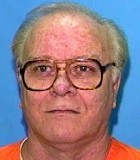
Oba CHANDLER
Classification: Murderer
Characteristics:
Rape
Number of victims: 3
Date of murders:
June 1, 1989
Date of arrest:
September 24, 1992
Date of birth:
October 11, 1946
Victims profile: Joan
Rogers, 32, and her two daughters, Michelle, 17, and Christe, 14
Method of murder: Asphyxiation
from the ropes around their necks, or from drowning
Location: Pinellas County, Florida, USA
Status: Sentenced to death on November 4,
1994. Executed by lethal injection in Florida on November 15, 2011
Chandler was convicted in 1994 of killing 36-year-old Joan Rogers and
her daughters, Christe and Michelle, who were 14 and 17, and dumping
their bound bodies in Tampa bay.
The three were on their first vacation and making
their way home to their small farming community of Willshire, Ohio,
after their Florida trip. Authorities concluded that the women met
Chandler on June 1, 1989, when they stopped and asked him for
directions to their Tampa area motel.
Chandler, who had ties to Ohio, apparently sweet-talked
the women into going on his boat, police said. Once aboard, Chandler
bound the victims' arms and legs, tied concrete blocks to ropes around
their necks and then threw them overboard, according to detectives.
Despite the concrete blocks, the bodies surfaced and were found days
later, naked from the waist down.
Detectives didn't crack the case for three years.
Two things helped make the arrest: a tourist brochure with Chandler's
handwriting was found in Rogers' car, and Chandler looked similar to a
composite sketch of a suspect wanted in an earlier unsolved assault
against a Canadian woman who was raped aboard a boat in Tampa Bay.
Authorities took the unusual step of publicizing
the handwriting on the tourist brochure, putting it on a billboard to
see if anyone recognized it, under the words: "WHO KILLED THE ROGERS
FAMILY?"
One of Chandler's former neighbors recognized the
writing and called authorities. At Chandler's trial, prosecutors used
details of the unrelated rape for which he was never tried. That
Canadian woman testified Chandler took her by boat to see the sunset
out on the bay and raped her. She said she believed the reason she
wasn't killed was because a friend was waiting for her at the dock.
Based on the similarities of the cases, prosecutors hypothesized that
Rogers and her daughters were lured onto his boat with the promise of
seeing the sunset and were then sexually assaulted before being
murdered.
In the 17 years he was in the prison system, he
never got a visit from a friend or family member
Citations:
Chandler v. State, 702 So.2d 186 (Fla. 1997) (Direct Appeal). Chandler v. State, 848 So.2d 1031 (Fla. 2003) (PCR). Chandler v. McDonough, 471 F.3d 1360 (11th Cir. 2006) (Habeas).
Final / Special Meal:
Two salami sandwiches on white bread with mustard. He also asked for a
peanut butter and grape jelly sandwich on white bread but ate only
half of it. He ordered an iced tea, but drank coffee instead.
Final Words:
None.
ClarkProsecutor.org
Florida Department of
Corrections
Name: Chandler, Oba
Race: WHITE
Sex: MALE
Birth Date: 10/11/1946
Offense Date: 06/01/1989
Sentencing Date: 11/04/1994
Initial Receipt Date: 11/04/1994
Current Facility: FLORIDA STATE PRISON
Current Custody: MAXIMUM
Current Release Date: DEATH SENTENCE
County of Conviction: Pinellas
Oba Chandler
DC #056979 DOB: 10/11/46
Sixth Judicial Circuit, Pinellas
County, Case #92-17438
Sentencing Judge: The Honorable
Susan F. Schaeffer
Trial Attorney: Frederic S.
Zinober, Esq. & Robert A. Santa Lucia, Esq. Attorney, Direct Appeal: Paul
Helm – Assistant Public Defender
Attorney, Collateral Appeals:
Gary Printy – Registry
Date of Offense: 06/01/89
Date of Sentence: 11/04/94
Circumstances of Offense:
Oba Chandler was convicted and
sentenced to death for the murders of Joan Rogers and her two daughters,
Michelle and Christe, on 06/01/89.
Joan Rogers and her daughters
were vacationing in Tampa from Ohio and checked into their hotel on
06/01/89.
Housekeeping staff noticed that their room remained
uninhabited for over week, at which point, they contacted the manager,
who then contacted police.
Upon investigation, the Rogers’ car was
found abandoned beside a boat ramp off the Courtney Campbell Causeway.
Inside the car they found a brochure with directions on it, parts of
which were written in Oba Chandler’s handwriting. Chandler’s
fingerprints were also lifted from the brochure.
The bodies of all three women
were found tied and weighted in Tampa Bay on 06/04/89. Each woman was
naked from the waist down, arms and legs bound, and a cinder block was
tied by a rope around their necks. Medical examiners determined the
cause of death of all three women to be asphyxiation from the ropes
around their necks, or from drowning.
Investigation revealed
similarities between the Rogers’ murders and the rape of a woman in a
nearby area. From information given by Judy Blair, the victim of the
rape, a composite drawing was made of the suspect and printed in the
local paper, along with the stories of the two crimes.
After seeing the
article, Chandler fled the area and stayed with relatives. He admitted
to them that the police were searching for him in connection with the
rape/murder investigation.
At trial, Judy Blair testified
that when she first met Chandler he offered to take her on a sunset
cruise on his boat. Not fearing for her safety in the least, Blair
accompanied Chandler on a ride through Tampa Bay and the Gulf of
Mexico. While at sea, Chandler raped Blair. Blair testified that she
believed he would have killed her had it not been for the fact that a
friend was waiting for her back at the dock.
The State used this
incident to hypothesize how Chandler lured the Rogers family with the
offer of a cruise on his boat before he killed them. Chandler was not
arrested or charged with the murders until September 1992.
Trial Summary:
11/10/92 Defendant
indicted on:
Count I: First-Degree
Murder (Joan Rogers)
Count II: First-Degree
Murder (Michelle Rogers)
Count III: First-Degree
Murder (Christe Rogers)
11/16/92 Defendant
entered a plea of “not guilty”.
09/29/94 The jury found
the defendant guilty on all counts.
09/30/94 Upon advisory sentencing, the jury,
by a 12 to 0 majority, voted for the death penalty on all three
convictions.
11/04/94 The defendant was sentenced as
followed:
Count I: First-Degree
Murder (Joan Rogers) - Death
Count II: First-Degree
Murder (Michelle Rogers) - Death
Count III:
First-Degree Murder (Christe Rogers) - Death
Case Information:
Chandler filed a Direct Appeal
in the Florida Supreme Court on 12/05/94. In that appeal, he argued
that admitting evidence regarding the sexual battery of Judy Blair
unfairly prejudiced his case. Chandler also claimed that the trial
court erred in repeatedly requiring him to invoke his Fifth Amendment
right to remain silent, and in admitting statements made by his daughter
Kristal Mays. Regarding the penalty phase, Chandler contended that the
court erred in accepting his waiver of the presentation of mitigating
evidence, and in the application of aggravating and mitigating
circumstances.
The Florida Supreme Court affirmed the convictions and
sentences of death on 10/16/97.
Chandler then filed a Petition
for Writ of Certiorari in the U.S. Supreme Court, which was denied on
04/20/98.
Next, Chandler filed a 3.850
Motion in the State Circuit Court, which was denied on 06/27/01. He
promptly filed an appeal of that decision in the Florida Supreme Court
on 07/05/01, which was affirmed on 04/17/03. Chandler’s Motion for
Rehearing was denied on 6/24/03.
On 06/27/03, Chandler filed a
Petition for Writ of Habeas Corpus in the U.S. District Court that was
denied on 02/08/06.
Chandler filed a Petition for Writ of Habeas Corpus in
the U.S. Court of Appeals on 02/13/06 that is pending.
Floridacapitalcases.state.fl.us
Oba Chandler (October 11, 1946 – November
15, 2011) was an American convicted rapist and murderer who was put to
death via lethal injection for the June 1989 triple murders of a woman
and her two daughters whose bodies were found in Tampa Bay, Florida.
All three were discovered floating with their hands and feet bound,
concrete blocks tied to their necks and duct tape over their mouths.
Autopsies indicated the women had been thrown into the water one by
one while still alive.
The case became high-profile in 1992 when police
posted billboards with blowups of an unknown suspect's handwriting
samples found on a pamphlet in the victims' car, leading to the
identification of the killer when Chandler's neighbor recognized the
writing. Billboards had not been used by police before, and became
useful tools in later searches for missing people.
Prior to his arrest, Chandler worked as an aluminum
building contractor. He testified in his own defense against the
advice of his attorneys and admitted that he had met the Ohio women,
giving them directions, but claimed he never saw them again aside from
newspaper coverage and the billboards set up by investigators. Police
originally theorized that there were two men involved in the murders
of the Rogers women; however, this was discounted once Chandler was
arrested. Following his conviction, Chandler was incarcerated at
Florida State Prison.
On October 10, 2011, Florida Governor Rick Scott
signed a death warrant for Chandler. His execution was set for
November 15, 2011, at 4:00 pm. Chandler was executed with a lethal
injection and pronounced dead just after 4:25 pm.
Background
Chandler was born to Oba Chandler Sr. and Margaret
Johnson and raised in Cincinnati, Ohio, approximately 100 miles from
where the Rogers family was living. Chandler was the fourth of five
children. When Chandler was only 10 years old, his father hanged
himself in the basement of the family's apartment. His father's death
in June 1957 affected Chandler so much that he reportedly jumped into
the open grave at the funeral as the gravediggers were covering the
coffin with dirt. Chandler fathered eight children, the youngest born
in February 1989. Between May and September 1991, at the same time
that Tampa police investigated the Rogers family triple murder,
Chandler was an informant for the U.S. Customs Tampa office.
Earlier crimes and incidents
Chandler was stealing cars by age 14 and was
arrested 20 times while he was a juvenile. As an adult he was charged
with a long list of crimes, including possession of counterfeit money,
loitering and prowling, burglary, kidnapping and armed robbery. He was
also accused of masturbating while peering inside a woman's window,
and on another occasion of receiving 21 wigs stolen from a beauty
parlor. In one incident, Chandler and an accomplice broke into the
home of a Florida couple and held them at gunpoint while robbing them.
Chandler told his accomplice to tie up the man with speaker wire and
then took the woman into the bedroom, where he made her strip to her
underwear, tied her up and rubbed the barrel of his revolver across
her stomach.
Rogers' murders
On May 26, 1989, Joan "Jo" Rogers, 36, and her
daughters – Michelle, 17, and Christe, 14 – left their family dairy
farm in Willshire, Ohio for a vacation in Florida. They had never
before left their home state. On June 1, authorities believe, the
women became lost while looking for their hotel. They encountered
Chandler, who gave them directions and offered to meet them again
later to take them on a sunset cruise of Tampa Bay. It is known that
the Rogers women left Orlando that morning around 9 a.m. and checked
into the Days Inn on Route 60 at 12:30 p.m. Snapshots recovered from a
camera left in their car showed the last picture of Michelle while she
was alive, and even the sun setting on the same bay where their lives
later ended. They were last seen alive at the hotel restaurant around
7:30 p.m. It is believed they boarded Chandler's boat at the dock on
the Courtney Campbell Causeway (part of Route 60) between 8:30 and
9:00 p.m., and that they were dead by 3 a.m. Chandler could also have
used the fact that he was born in Ohio to lure them into feeling more
connected with him. It is also believed that he knew that the women
were not from Florida, as he recognized the Ohio car plates since he
himself was originally from Cincinnati.
Sunshine Skyway over Tampa Bay where the first body
was found on June 4, 1989: The women's bodies were found floating in
Tampa Bay on June 4, 1989, with bound hands and feet, concrete blocks
tied to their necks and duct tape over their mouths. The first body
was found floating when a sailboat, on its way home to Tampa after a
trip to Key West, had just crossed under the Sunshine Skyway when
several people on board saw an object in the water. This was
identified as a dead female.
The second body was floating to the north of where
the first had been sighted. It was 2 miles off The Pier in St.
Petersburg. While the Coast Guard went to recover the second body, a
call came in of yet a third female, seen floating only a couple of
hundred yards to the east. Like the first two victims found, this body
was face down, bound, with a rope around the neck and naked below the
waist.
Autopsies indicated the three women had been thrown
into the water while still alive. This was bolstered by water found in
their lungs and the fact that Michelle had freed one arm from her
bonds before succumbing. Michelle was thereby identified as the second
victim found in Tampa Bay and recovered. The partially-dressed bodies
of all three women indicated that the underlying crime was sexual
assault. The blocks were tied around each of their necks to make sure
they died from either suffocation or drowning, and to make sure the
bodies were never found. However, the bodies ended up being found when
they bloated due to decomposition and floated to the surface.
Investigation
The women were not positively identified until a
week after their bodies' discovery, by which time they had been
reported missing back home in Ohio by the husband and father, Hal
Rogers. A housekeeper at the Days Inn noted on June 8 that nothing in
the room had been disturbed, and that beds had not been slept in. She
contacted the general manager, who then contacted the police.
Fingerprint matches to the bodies were made from those found in the
room. Final confirmation of their identification came from dental
records sent from the Rogers' dentist in Ohio. Marine researchers at
Florida International University studied the currents and patterns,
and confirmed that the women were tossed from a boat and not from a
bridge or dry land, and that it had happened anywhere from two to five
days before they were found. This was confirmed when the Rogers car, a
1984 Oldsmobile Calais with Ohio license plates, was found at the boat
dock on the Courtney Campbell Causeway.
Facts pointing to Chandler and arrest
The case remained unsolved and cold for over three
years, partly due to the volume of tips pouring in to the police who
investigated the crime. Chandler was not arrested for the murders
until September 24, 1992. His handwritten directions on a brochure
found in the Rogers vehicle, along with a description of his boat
written by Jo Rogers on the brochure, were the primary clues that led
to his being named a suspect. Also, authorities had posted the
handwriting from the brochure on billboards, which was historic as it
was used for the first time in an attempt to find an unknown killer.
This led to a tip from a former neighbor who was able to provide a
copy of a work order that Chandler had written. A handwriting analysis
conclusively matched the two.
Another neighbor, as well as one of the secretaries
on the investigative task force, also thought that Chandler resembled
the composite sketch of the suspect in a seemingly related rape case (see
next paragraph). A palmprint from the brochure was also matched to
Chandler. Moreover, Chandler had sold his boat and left town with his
family soon after the billboards appeared all over the Tampa Bay area.
In 1990, when the TV show Unsolved Mysteries was
about to report on the deaths of the Rogers family, Chandler and his
then-wife moved from their home on Dalton Avenue in Tampa to Port
Orange near Daytona Beach. This is believed to be because Chandler
felt more worried about being caught because of the upcoming
television show about his crime.
Second suspect
Investigators originally theorized that two men
were involved in the murders of the Rogers women. This theory was
reflected in a 1990 episode of the American crime television show
Unsolved Mysteries, in which a reenactment of the crime depicted two
men leaving the dock with the three women on board a boat. This theory,
however, was dismissed when Chandler was arrested. Other than a claim
by a former prison cellmate that Chandler has said there was another
man involved – whom the cellmate claimed to know the identity of but
would not name – no evidence has ever surfaced regarding the
involvement of anyone other than Chandler. The second-suspect theory
is belied by Chandler's approach of two Canadian women – that he had
the willingness to approach more than one potential target by himself.
John Rogers, Hal Rogers's brother, was also
seriously considered a suspect even though he was in state prison at
the time. John Rogers was in fact serving a prison term for the rape
of Hal's daughter Michelle. Soon investigators established that John
did not have the connections in prison to have done the murders via a
hitman or friend. John Rogers was released from prison in 2004 and has
had no further contact with his brother Hal since.
While living in a trailer in Willshire, John had
allegedly lured two teenage girls there and sexually abused them.
Subsequent police investigation turned up evidence indicating that he
had also done the same to Michelle. This caused a major rift in the
family and may have played an indirect part in the eventual murders.
The idea that he may have planned the crime was bolstered by the fact
that his and Hal's parents had property near Tampa, and that he had
visited the area a month before the murders. However, he was a general
loner with little close ties to even his own family, let alone friends,
so such a plan, if there were one, would have been beyond character
for him. For this, and the simple reason that he did not know when his
sister-in-law and nieces would be there, he was dismissed as a suspect.
Hal Rogers was also considered a suspect because he
had posted bail for his brother after he knew of his abuse of
Michelle. Hal Rogers said later that he had promised the family to
make bail and would not go back on his promise. Investigators from
Florida and Ohio also found out that Hal Rogers had withdrawn $7,000
from his bank at the time of the disappearance. When questioned about
it, he showed investigators a satchel with most of the money in it. He
planned on using it to go and search for his wife and daughters
himself before he was notified of their deaths. Also, subsequent
investigation conclusively proved he had never left Ohio during that
time period. The rape and the hype around Michelle Rogers by people in
the neighborhood and media was one of the reasons why the Florida trip
was taken, so Michelle, her sister and her mother could get some
distance from the incident.
Trial
Chandler's testimony
At his trial in a Clearwater, Florida courtroom,
Chandler admitted meeting the Rogers women and giving them directions,
but claimed he never saw them again except in the newspaper and on
billboards. Yet he never came forward to tell authorities that he had
seen the women. He acknowledged he was on Tampa Bay that night – a
fact he could not deny since the police had evidence of three ship-to-shore
phone calls made from his boat to his home during the time frame of
the murders – but claimed he was fishing alone. He explained that he
returned home late because his engine would not start, which he
attributed to a gas line leak he claimed to have found near dawn. He
claimed he had called the Coast Guard and Florida Marine Patrol, but
they were busy elsewhere.
Finally, he claimed he flagged down a Coast Guard
patrol boat, but they were busy and promised to send help. Then he
claimed to have fixed the line with duct tape, which allowed him to
make it back safely to shore. His testimony was quickly refuted by the
Pinellas County Prosecutor, Douglas Crow, who verbally sparred with
Chandler to demonstrate that he had lied about everything. All
Chandler could muster in response to the prosecutor's repeated
questions was, "I don't remember."
This defense won him few sympathizers on a jury
that quickly saw through his façade and the inconsistencies in his
statements. Moreover, there were no records of distress calls from
Chandler that night to either the Coast Guard or the Marine Patrol,
nor were there any Coast Guard boats on the bay the following morning
to help him. A boat mechanic testified for the prosecution that
Chandler's explanation for repairing the boat's alleged gas leak could
not have happened as he had portrayed it. Chandler's boat, a Bayliner,
had a distinctive engine in which the fuel lines were directed upward.
A leak would have sprayed fuel into the air, not into the boat, and
the corrosive gasoline would have eaten away the adhesive properties
of the duct tape Chandler claimed to use to repair the purported leak.
Witnesses
Another lead was that on May 15, 1989—two weeks
prior to the Rogers murders—Chandler lured Canadian tourist Judy Blair
onto his boat in nearby Madeira Beach, raped her, then dropped her off
back on land. Blair made her way back to her hotel room where her
friend Barbara Mottram was waiting. He was not charged or tried for
this crime. It is thought he did not murder her because Barbara
refused his offer to join them on the boat, a decision which more than
likely saved both their lives. As a result, Judy Blair testified
during his trial for the murders to establish his pattern of attack
and the similarities between the two crimes. Blair testified that on
May 14, Chandler gave his name as Dave Posner or Posno when the three
first met at a convenience store in Tampa. Presumably he gave the same
alias to the Rogerses. He told Blair and Mottram he was in the
aluminum contracting business, which helped lead investigators to him,
as well as the naming of the investigation to capture him: Operation
Tin Man. The description that Judy gave was also posted on the
billboards along with the handwriting samples.
Additionally, a former employee of Chandler's
testified that Chandler bragged of dating three women that night on
the bay, and that the next morning he arrived and delivered materials
for a job by boat and immediately set out again – presumably to make
sure his victims were dead. In an attempt to establish Chandler's
whereabouts on the night of the murders, investigators found phone
records of several radio marine telephone calls made from his boat to
his home between 1 a.m. and 5 a.m. These likely were an attempt to
explain to his wife his absence as well as to provide himself with an
alibi for his whereabouts at the time of the murders.
Also, Chandler's own daughter Kristal May Sue
testified against her father, saying that he talked about killing the
three women and that he was afraid of going back to Tampa. A maid who
worked at the motel where the Rogers women stayed testified that she
walked past Oba Chandler as she was going to the Rogerses' room for
room service on June 1, implying that it seemed as if Chandler had
just left the women's hotel room at around 12:30 that afternoon. The
maid said she didn't realize the importance of this sighting until
Chandler's arrest in 1992, although the sighting has never been
confirmed.
Hal Rogers and Michelle's boyfriend also took the
stand during trial. Hal identified the women and talked about his
emotions on June 1. The boyfriend told about a phone conversation with
Michelle.
Sentence and aftermath
Jo, Michelle and Christe Rogers were buried in
their hometown on June 13, 1989, after a funeral service at the Zion
Lutheran Church. About 300 people among them family and friends of the
victims attended the service. Because of the huge media interest for
the case at the time, numerous police officers were present to keep
all news media and crews out of the church during the funeral service.
Chandler was tried and found guilty of the murders, and was sentenced
to death on November 4, 1994.
After sentencing, the juror forewoman commented
regarding the death sentence that, "They need to do this swiftly. The
man is a mutation of a human being and he needs to be destroyed."
Chandler remained on Florida's Death Row,
maintained his innocence, and continued to pursue legal appeals. He
admitted the Madeira Beach incident but claims the sex was consensual,
and that the victim had changed her mind during the act – which, in
his words, was not possible for him to do. Chandler was never
prosecuted in the rape of Judy Blair, since he had already been
sentenced to death for the Rogers family murders, and prosecutors did
not want to subject Blair to the emotional trauma of a rape trial. He
continued to claim that he never met the Rogers women after that
morning when he gave them directions.
Chandler served his sentence at Union Correctional
Institution. Shortly after the trial and conviction, his wife Debra
Chandler filed for divorce, and the marriage was formally dissolved a
year later. Chandler was no longer allowed to see his daughter Whitney,
and in accordance with his ex-wife's wishes, he was not allowed to see
current photos of Whitney.
In July 2008, it was revealed that Chandler was on
Florida's shortlist of executions. Profiling experts believe that
Chandler may have killed previously, based on the speculation that a
first-time killer would not be experienced or bold enough to abduct
and kill three women at once. Chandler remains a suspect in a 1982
murder of a woman found floating off Anna Maria Island. However,
Chandler was never charged with other murders. Chandler received an
Institutional Adjustment disciplinary report on December 15, 2001, for
disobeying orders in prison. All of Chandler's appeals since his 1994
conviction were denied, the last one in May 2007. After his conviction,
Chandler was named by media as one of Florida's most notorious
criminals. Chandler said that his last words before his execution
would be "Kiss my rosy red ass".
In May 2011, comparison was drawn between the
murder case and upcoming trial of Casey Anthony and Chandler's case
and trial in 1994, as in both cases the heightened media attention
forced the jurors to be selected from outside the county of the
committed crime. One of the jurors in Chandler's 1994 trial identified
as Roseann Welton also commented in an interview that, "The people
that he murdered did not have a choice of when they were going to die.
He (Chandler) should have had the death penalty by now. He scared some
of the jurors when he would sit there and stare at you and have that
stupid grin on his face. He would make your skin crawl."
Execution
On October 10, 2011, Florida Governor Rick Scott
signed a death warrant for Chandler. His execution was set for
November 15, 2011, at 4:00 pm. The death warrant was signed the day
before Chandler's 65th birthday. Chandler's lawyer, Baya Harrison,
said that Chandler asked him not to file any frivolous appeals to keep
him alive. "He is not putting a lot of pressure on me to go running
around at the end to find some magic way out," said Harrison. "He is
not going to make a scene. He's not going to bemoan the legal system.
What he has told me is this: if there is some legal way that I can
find to try to prevent him from being executed, he would like me to do
what I reasonably can." Harrison also said that Chandler suffered from
high-blood pressure and coronary artery disease and had problems with
his kidneys and with arthritis.
On October 12, 2011, Harrison said that although he
was preparing to file a motion regarding the violation of his client's
Fifth and 14th Amendment rights in the case, he was unsure that
Chandler was willing to make the trip to Clearwater for the court
hearing or would even agree to the filing of the motion. "He hates
coming down to Clearwater. He doesn't like the ride and he's not well,"
Harrison said. "He doesn't like to come out of his cell," added the
attorney. "He doesn't like to be disturbed."
On October 18, 2011, Harrison filed a motion
against the execution on the grounds that that the way Florida imposes
the death penalty is unconstitutional. According to the filed motion,
a jury makes a recommendation on life or death, but Florida law gives
the judge the final say. A hearing on Chandler's motion was set for
October 21 at 1:00 PM; Chandler did not attend the hearing in
Clearwater, Florida. On October 24 Chandler's appeal was rejected
because he had already filed an appeal to the Florida Supreme Court
prior to the decision. This appeal was heard in a court in Tallahassee
at 9:00 AM on November 9, 2011. The Florida Supreme Court has already
upheld Oba Chandler's death sentence twice, once in 1997 and again in
2003.
On November 15, Chandler had chosen a last meal
consisting of two salami sandwiches on white bread, one peanut butter
sandwich on white bread and iced tea.
The execution process started at 4:08 p.m and at
approximately 4:25 pm Chandler was pronounced dead after receiving a
lethal injection at the Florida State Prison in Raiford, Florida.
Chandler declined to make a last statement before being executed. Hal
Rogers, the husband and father of the victims, attended the execution.
Former St. Petersburg homicide detective Cindra Leedy who investigated
the case said in a press conference that "I'm glad there's finally an
end to this. He doesn't deserve to live, he needs to die".
Governor Rick Scott commented on his decision to
sign the death warrant. "He (Chandler) killed three women, so I looked
through different cases, and it made sense to do that one. There's
never one thing. It was the right case."
Media concerning the case
The Discovery Channel devoted a one-hour episode
concerning the murder of the Rogers family, "The Tin Man", on their
series Scene of the Crime. The case was also one of three in an
episode of the Discovery series Forensic Detectives. The former
focused on the underlying events of the crimes, while the latter
focused on forensic evidence. In 1997, a series of articles entitled "Angels
& Demons" written by Thomas French was published in the St. Petersburg
Times newspaper. The series told the story of the murders, the capture
and conviction of Chandler and the impact of the crimes on the Rogers'
family and community in Ohio, most notably their husband and father,
Hal Rogers.
The articles won a 1998 Pulitzer Prize for Feature
Writing. Death Cruise, by author Don Davis, also covered the case. The
Rogers murders were featured in an episode of Unsolved Mysteries in
1990, where it was speculated that there were two attackers.
The book Bodies in the Bay, by Mason Ramsey, is a
fictionalized adaptation (copyrighted in 1997, published in 2000). The
case was also featured in a 1999 episode of Cold Case Files on A&E
entitled Bodies in the Bay, which also focused on the evidence, but
did not delve too deeply into the background of the murders.
In 1995 Oba Chandler, some part of his family and
also Hal Rogers appeared in a special episode of the Maury Povich Show
featuring on the case. Chandler commented on the case via satellite
link. Chandler's case was also brought up in a full-hour episode of "Crime
Stories". The case was also shown on an episode of Forensic Files
entitled "Water Logged" in December 2010.
Wikipedia.org
Oba Chandler dies for 1989 rapes, murders of
mother, teen daughters
By Jamal Thalji - TampaBay.com
November 16, 2011
STARKE — The man who raped and killed a mother and
her two daughters in one unfathomable night of horror 22 years ago
closed his eyes and died in his sleep on Tuesday. Oba Chandler was
executed by lethal injection at 4:25 p.m. for the 1989 murder of Joan
Rogers and daughters Michelle and Christe. The Ohio family was
visiting Florida when they were found floating in the bay, bound, tied
to concrete blocks and stripped below the waist.
When the bodies of the three women were found,
their mouths were taped shut but not their eyes. Their killer wanted
them to watch, according to the FBI profile, so he could enjoy their
terror.
Hal Rogers, the father and husband they left behind, sat
directly across from their killer in the witness room, separated by
glass. Chandler's eyes were closed when the brown curtain to the death
chamber rose. He was strapped onto a gurney, intravenous tubes leading
into his arms. His eyes opened when he was asked if he had anything to
say. "No," Chandler said. Then, at the age of 65, he closed his eyes
for good.
An hour after his death, state officials revealed
Chandler wasn't telling the truth. He had left behind a final
statement. "You are killing a innocent man today," Chandler had
written on lined paper by 9 a.m. "Bull - - - -," said Pinellas-Pasco
Chief Assistant State Attorney Bruce Bartlett, who helped prosecute
Chandler and witnessed his death. "A jury of 12 didn't seem to think
so."
Joan "Jo" Rogers, 36, and teenagers Michelle, 17,
and Christe, 14, were last seen alive on June 1, 1989. They were found
in Tampa Bay three days later. It took three years to crack the case.
First their murders were linked to the rape of a 24-year-old Canadian
woman two weeks before. A friendly local invited her onto his boat,
then raped her. The Rogers family must have been similarly charmed,
police believe.
Tampa resident Jo Ann Steffey realized that the
sketch of the rape suspect matched her neighbor, Chandler. Later, his
neighbors realized that handwritten directions given to the Rogers
family also matched Chandler's handwriting. But the task force
investigating the murders was flooded with tips. It took more than a
year before they focused on Chandler.
At his 1994 trial, the jury heard that five ship-to-shore
calls were made from his boat, Gypsy 1, in the bay hours after the
Rogers family was last seen. Jurors also heard that Chandler bragged
of his crimes. The Canadian victim explained how Chandler charmed,
then attacked her. Chandler testified that he was innocent, that his
boat had broken down that night. But a boat mechanic punctured his
story.
Defense attorney Baya Harrison III said that 17 years in prison had
already killed his client. The lawyer, who witnessed the execution,
said Chandler had advanced coronary artery disease, high blood
pressure and failing kidneys. "He told me he was simply tired of
living in that small cell under those conditions for all those years,"
Harrison said. "He just didn't want to live anymore."
Chandler executed for 1989 triple murders
By Chad Smith - Gainesville.com
November 15, 2011
RAIFORD — Oba Chandler was executed by lethal
injection Tuesday, his fate seemingly in stark contrast with how he
ended the lives of an Ohio woman and her two teenage daughters more
than 22 years ago. Chandler, 65, was pronounced dead at 4:25 p.m. in
the death chamber at Florida State Prison after a lethal dose of drugs
was sent through his veins.
In the summer of 1989, Joan “Jo” Rogers, 36, and
her daughters, Michelle, 17, and Christe, 14, were visiting Florida
for their first family vacation. On June 1, prosecutors said, they met
Chandler, who invited them onto his boat for a cruise around Tampa
Bay. Three days later, their half-nude bodies were found in the water.
They had been tied with rope and weighted down with concrete blocks.
They had apparently been sexually assaulted before they were thrown
overboard still alive.
On Tuesday, at 4:08 p.m. at Florida State Prison, a prison
official asked, “Inmate Chandler, do you have any last statement that
you would like to make?” “No,” Chandler said, uttering his last word.
Later, reporters were given copies of a handwritten note he had
apparently drafted earlier in the day. “You are killing a innocent man
today,” read the note, which was signed.
Years earlier, it was Chandler's handwriting that
helped lead to his arrest — more than three years after the murders.
Investigators made the decision to put up billboards in Tampa with a
sampling of the suspect's handwriting, which was taken from directions
to the boat they found in the Rogers' car. A woman noticed the writing
matched that of Oba Chandler, her former neighbor and an aluminum
contractor she was already suspicious of, and called police. Chandler
was arrested on Sept. 24, 1992, and convicted on Nov. 4, 1994.
In the 17 years he was in the prison system, he
never got a visit from a friend or family member, said Gretl
Plessinger, a spokeswoman for the Department of Corrections. Still,
the family did claim his body and will receive it later this week
following a routine autopsy. A woman who said she was Chandler's
biological daughter showed up at the media staging area across from
the prison on Tuesday. The 40-year-old woman, Suzette, who said she
was born Suzette Chandler in Ohio but declined to give her current
last name or where she lived, said from what she had read of the case
and told about her father, she considered him a “very sick, evil human
being.”
She said he tried to contact her shortly after the
murders in 1989, a few years after she had reached out to him after
learning that he was her father. Chandler's only supporter in the
witness room was his attorney through the appeals process, Baya
Harrison III.
For his last meal, served around 11 a.m., Chandler
ate two salami and mustard sandwiches on white bread and half of a
peanut butter and grape jelly sandwich, Plessinger said. He asked for
unsweetened iced tea but did not drink it. Instead he had coffee.
The execution was scheduled to begin at 4 p.m. but
it was delayed about seven minutes as officials struggled to find
veins suitable for the intravenous needles, Plessinger said. Chandler
took diazepam to reduce anxiety before his final moments. Chandler
closed his eyes at 4:09 as the first of three drugs — to render him
unconscious — was administered and his mouth opened slightly at 4:10,
his face remaining that way until he was pronounced dead 15 minutes
later.
Hal Rogers, Jo Rogers' husband and the girls'
father, ran a dairy farm with his wife in Wilshire, Ohio, and needed
to stay home to tend to the cows when the women of the house set out
south on Interstate 75 for the Sunshine State in May 1989. The St.
Petersburg Times reported last month that he has since remarried to a
widow named Jolene and now raises hogs and grows corn. At that time,
he wasn't sure whether he would attend Chandler's execution. “I miss
them all,” he told the newspaper. “That makes it rough on Jolene. How
do you fight a dead person? But her first husband died too. She
understands.”
On Tuesday, Rogers was there wearing a coat and tie,
sitting in the middle of the front row in the witness room. He did not
speak with reporters afterward. Amanda “Mandi” Scarlett, Joan Rogers'
niece, sat next to him during the execution and later read a statement
at a news conference. “The family of Jo, Michelle and Chris are very
appreciative of everyone that has brought us to this day,” Scarlett
said. “The journey has been difficult for all of us involved. We have
always been grateful to those who brought us to this place, and we
were grateful that they were brought back home to us. Now is the time
for peace.”
Killer of 3 faces scheduled execution in
Florida
By Tamara Lush - MiamiHerald.com
November 15, 2011
STARKE, Fla. -- A man who was convicted of the 1989
killings of an Ohio woman and her two teenage daughters in Florida as
they returned from a dream vacation to Disney World was executed
Tuesday. Oba Chandler, 65, was given a lethal injection and pronounced
dead at 4:25 p.m. Tuesday at the Florida State Prison, Gov. Rick
Scott's office said. The execution began at 4:08 p.m. and concluded
without any problems.
Prison officials later released what they said was
a final statement from Chandler, who had only said "No" when asked if
he had any last words to speak as he awaited execution. "Today you are
killing a innocent man," the note read.
There were 21 witnesses, plus 11 members of the
media in attendance. Hal Rogers, the husband and father of the victims,
watched calmly from the front row. Neither Rogers nor any of the other
witnesses spoke during the execution. Mandi Scarlett, a niece of
victim Joan Rogers, spoke briefly after the execution. "Now is the
time for peace," she said.
Chandler was convicted in 1994 of killing 36-year-old
Joan Rogers and her daughters, Christe and Michelle, who were 14 and
17, and dumping their bound bodies in Tampa bay. The three were on
their first vacation and making their way home to their small farming
community of Willshire, Ohio, after their Florida trip.
Authorities concluded that the women met Chandler
on June 1, 1989, when they stopped and asked him for directions to
their Tampa area motel. Chandler, who had ties to Ohio, apparently
sweet-talked the women into going on his boat, police said. Once
aboard, Chandler bound the victims' arms and legs, tied concrete
blocks to ropes around their necks and then threw them overboard,
according to detectives. Despite the concrete blocks, the bodies
surfaced and were found days later, naked from the waist down.
Detectives didn't crack the case for three years.
Two things helped make the arrest: a tourist brochure with Chandler's
handwriting was found in Rogers' car, and Chandler looked similar to a
composite sketch of a suspect wanted in an earlier unsolved assault
against a Canadian woman who was raped aboard a boat in Tampa Bay.
Authorities took the unusual step of publicizing the handwriting on
the tourist brochure, putting it on a billboard to see if anyone
recognized it, under the words: "WHO KILLED THE ROGERS FAMILY?" One of
Chandler's former neighbors recognized the writing and called
authorities.
At Chandler's trial, prosecutors used details of
the unrelated rape for which he was never tried. That Canadian woman
testified Chandler took her by boat to see the sunset out on the bay
and raped her. She said she believed the reason she wasn't killed was
because a friend was waiting for her at the dock. Based on the
similarities of the cases, prosecutors hypothesized that Rogers and
her daughters were lured onto his boat with the promise of seeing the
sunset and were then sexually assaulted before being murdered.
Chandler took the stand at trial and acknowledged
to giving Rogers directions, but denied that he had anything to do
with the killings. Scott signed Chandler's death warrant on Oct. 11,
the second he has signed since taking office as governor. The Florida
Supreme Court affirmed a lower court decision to proceed with the
lethal injection. Since his conviction in 1994, Chandler had not
received any friends or visitors.
For his last meal Tuesday, Chandler ate two salami
sandwiches on white bread, half of a peanut butter sandwich and had
coffee. "He's cooperative and doing what the officers tell him,"
Florida State Prison spokeswoman Gretl Plessinger said.
Chandler's lawyer, Baya Harrison, said that some
members of Chandler's family had wanted to see him. But years ago,
Chandler became angry with his family and took all of them off his
visitation list, the lawyer said. According to state prison rules,
once the death warrant was signed, Chandler couldn't add family back
to his visitation list - the lawyer said. "He's had problems with his
family over the years," said Harrison, adding Chandler would have
liked to have seen some of his relatives.
About three dozen protesters - bused in from Our
Lady of Lourdes Catholic Church in Daytona - protested less than a
half mile from the prison gates against the death penalty. They held
up signs with such phrases as "Thou Shalt Not Kill" and "We Remember
the Victims But Not With More Killing." About 50 yards away, four
protesters in favor of the death penalty stood by. Florida Highway
Patrol officers stood watch between the two groups.
Chandler's daughter wanted to say goodbye
By Rob Shaw - 2.tbo.com
November 27, 2011
TAMPA - Valerie Troxell has no idea what happened
to her father's body after he was executed by the state of Florida. "I'd
at least like to know where he's buried," she said of Oba Chandler,
the triple murderer who was put to death by lethal injection on Nov.
15 at Florida State Prison outside Starke. "Just to be able to say a
final goodbye."
After an autopsy, Chandler's body was claimed by
his son, Jeff Chandler, who lives in Pasco County, according to the
Department of Corrections. Prison officials also gave Jeff Chandler
family photographs that Oba Chandler had in his cell on death row.
Chandler was executed for the June 1989 murders of
Joan Rogers and her two teenage daughters, whose bodies were found in
Tampa Bay while they were on their first family vacation from their
Ohio farm. The three were found naked from the waist down, their hands
and ankles tied and a concrete block tied around their necks. The
former Tampa man maintained his innocence until the day he died, even
writing a note to prison officials that they were killing an innocent
man.
Troxell, who never had a relationship with her
father and has only vague memories of spending time with him at an
amusement park once, still believes in him. "I believe they did
execute an innocent man. I don't think one person could have pulled
off such a heinous crime," she said by telephone from her home outside
Cincinnati. "It would have to have been more than one person. I
believe the killers are still out there. "The forensic evidence was
not there. The palm print would prove he did meet them and gave them
directions, but it didn't mean he killed them," Troxell added. "I
think the prosecution had a very weak case."
Chandler's palm print on a Clearwater Beach
brochure and his handwritten directions on that item were integral in
the state's case to convict Chandler. Prosecutors told the jury that
Chandler came across the Rogers' trio when they were trying to find
their hotel on the Courtney Campbell Causeway, then lured them onto a
sunset cruise where he killed them.
Troxell said she fought to keep Chandler alive as
the end neared for her father. "I did everything I could to stay his
execution and I got no response," she said. "I called the governor's
office and he declined to take my phone call. That angered me. He was
making such a big decision and wouldn't even give me the courtesy of
answering my phone call."
Since the execution, the daughter said, life for
her has not been easy. "It's been horrible," she said. "I haven't been
able to sleep well, I've been anxious. Everything is finalized."
Chandler never had a single visitor, other than his
attorney, in all his years on death row. The only person to witness
the execution on his behalf was Baya Harrison, the lawyer who fought
for his life in various death appeals over the years. "The poor guy
had nobody there for him," Harrison said. "I was not about to leave
him there alone." While Harrison had said before that Chandler was
resigned to his fate and was tired of living in a cramped cell,
Troxell was not so sure. "I don't think anyone wants to die. I don't
think it was his wish to be put to death," she said. "I'm sure he was
tired of living that existence.
"He probably felt alienated from everyone," Troxell
added. "That in itself is inhumane, to keep someone in a cell 23 hours
a day and not allow them to socialize. I think I would go crazy." The
daughter said while she feels pain for the loss of her father, she
also worries about the suffering of Hal Rogers, who attended her
father's execution. "I can't imagine what life is like without his
wife and two daughters," she said. "I pray for him every day. I can't
imagine what kind of pain that must cause him. "But I believe that
Obie's innocent. He did a lot of things in his life that I am not
proud of as his daughter," Troxell added. "He has a lengthy criminal
record. But murder? No, I don't believe it."
The daughter said she was surprised that Chandler
didn't have anything to say when afforded the opportunity for a final
statement before the flow of lethal chemicals began invading his body.
"I'm really surprised he didn't tell them to kiss his behind," she
said. "I probably would have."
Oba Chandler
ProDeathPenalty.com
On Sunday, June 4, 1989 at approximately 9:30 a.m.
boaters discovered three decomposed female bodies floating in South
Tampa Bay. The bodies were later identified as Mrs. Joan Rogers and
her daughters, Michelle and Christe. At the time of their deaths in
1989, Joan was 36, Michelle 17 and Christe was 14.
Dr. Edward Corcoran, an Associate Medical Examiner,
performed autopsies on all three women on June 4 and determined that
the cause of death to each was asphyxiation caused either by
strangulation from the ropes tied around their necks or by drowning.
Dr. Corcoran estimated that the women had died sometime between the
evening of June 1 and the morning of June 2, 1989. He described the
bodies as being bloated and decomposed. Each was nude from the waist
down. There was duct tape on the face or the head of Christe and
Michelle. Christe and Joan's hands were each tied behind their backs
with clothesline-type rope. Michelle's right hand had clothesline-type
rope around the wrist but the left hand was free with only a loop of
rope. Michelle's ankles were bound with clothesline-type rope. Joan
and Michelle each had a yellow nylon rope around their neck which was
attached to a concrete block. The concrete block around 1 Joan's neck
had three holes in it. The object tied to the yellow nylon rope around
Christe's neck had been cut. Christe and Joan's ankles were each tied
together with yellow nylon rope. There were no fractures of the hyoid
bones. Besides ligature marks and discoloration behind the upper
esophagus and darkening and hemorrhaging in the neck tissues of each
woman, no other injuries were determined. Dr. Corcoran looked for and
did not find any genital injuries. He did not look for semen nor did
he expect to find any as semen would have decomposed or been washed
away by the action of the water. From the contents of Joan Rogers'
stomach, Dr. Corcoran was able to estimate that she last ate four to
eight hours prior to her death.
Dr. Bernard Ross, an expert regarding the
characteristics of water movement in Tampa Bay, testified that all
three of the bodies were dumped in Tampa Bay at the same location.
Based on his study, Dr. Ross opined that none of the bodies could have
been thrown from a land mass such as Gandy Bridge or Howard Frankland
Bridge.
At the time of their deaths, the Rogers were
vacationing in Florida. The evidence showed that on Thursday, June 1
at 9:34 a.m. the Rogers checked out of the Gateway Inn in Orlando and
went to Tampa, They checked into the Days Inn in Tampa shortly after
the noon hour on June 1, 1989. Phone records from the hotel show that
two calls made from the Rogers' room on June 1. One was placed at
12:37 pm for nine minutes and another call was placed locally in Tampa
at 12:57 pm for less than a minute. Harold Malloy, a guest at the Days
Inn, saw the Rogers in the hotel's restaurant on June 1, between 7:00
and 7:30 p.m. The Rogers left the restaurant at about 7:30 or 7:35
p.m. The general manager of the Days Inn, Rocky Point on the Courtney
Campbell Causeway was alerted by housekeeping on June 8 that the
Rogers' room did not appear to have been inhabited for a few days.
After an inspection of the premises, he contacted law enforcement who
came out, secured the scene and obtained records from the hotel
regarding the occupants.
Officers identified numerous personal articles,
clothing, suitcases and papers belonging to the occupants. There were
canisters of film which had been exposed. These were developed and the
last three pictures on the last roll of film showed the Days Inn
Hotel, Room 251 and one of Michelle standing on the balcony of the
hotel. Dr. Kendal Carder, a professor of oceanography at the
University of South Florida opined at trial that the photograph of
Michelle was taken sometime between 6:20 p.m. and 8:20 p.m. on June 1,
1989. Neither the camera nor the clothing depicted in the picture of
Michelle was found in the victims' vehicle or among the evidence
seized from Room 251 of the Days Inn. The police found the Rogers'
locked car parked at a boat ramp on the causeway. There was sand
wedged around the tires of the vehicle indicating it had been there
for some time. Detectives later found a set of car keys belonging to
the victims' car in a purse known to belong to Michelle Rogers in the
motel room. A search of the vehicle revealed several exhibits,
including a piece of Days Inn, Rocky Point stationery; an index card
with directions to Gateway Inn, Orlando; notebook paper with personal
notes; a key to Days Inn Room 251; a Clearwater Beach brochure; a
Hampton Inn coupon; a Jacksonville Zoo receipt and a road atlas.
FBI Agent James Henry Mathis determined that a note
handwritten on Days Inn stationery found in the victims' car was
written by Joan Rogers. The note read, "Turn right. West W on 60, two
and one-half miles before the bridge on the right side at light, blue
w/wht." Theresa Stubbs, an examiner of questioned documents for the
FDLE at the Tampa Regional Crime Laboratory, examined the handwriting
on the Clearwater Beach brochure and identified Oba Chandler as the
writer. From her analysis, Ms. Stubbs determined that the "Boy Scout,
Columbus" portion of the writing on the brochure may have been written
by Joan Rogers.
Rollins Cooper worked as a subcontractor for Oba
Chandler in the spring of 1989 for 3-6 months. He testified that on
June, 1,1989, between eleven and twelve a.m. Chandler brought him some
screen. Cooper asked Chandler why he was in such a big hurry and
Chandler told him he had a date with three women. Cooper met Chandler
the next morning at 7:05 a.m. Cooper thought Chandler was kind of
grubby. When Cooper asked him why he looked like that he said that he
had been out on his boat all night.
Oba had a place next to his house where the scrap
aluminum from the different jobs would be left. There were also some
eight-by-sixteen building blocks laying there and a boat trailer. The
state also presented the testimony of Judy Blair and her companion
Barbara Mottram concerning Chandler's sexual battery of Judy Blair in
Madeira Beach. Judy Blair testified that she and Barbara were in
Florida on vacation from Ontario, Canada, when they met Chandler at a
convenience store. Chandler told them that he knew the area and that
he worked in the area; that it was a highcrime area and that two young
girls should be very careful. He said his name was "Dave" and he
worked in the aluminum-siding business. He said that he had a boat and
because he knew the area so well, he would take them out on the boat
and show them the area from the water. After they told him they were
from Canada, he told them he was from upstate New York. His demeanor
was very friendly, very warm. They made plans for the next day and
what time he would pick them up. Chandler invited both Judy and
Barbara out on the boat. The next morning Barbara insisted that she
did not want to go and Judy told her that the plans were made and that
she had no way to get hold of the person. Chandler had told Judy that
he would be coming from approximately two hours away. She decided to
go even though Barbara would not be going. Wearing a white T-shirt, a
pair of cotton shorts, sneakers and a bathing suit underneath, Judy
met Chandler at 10:30 a.m. He was in an older blue and white boat. The
interior bottom was white or off-white. There was a space under the
bow; a storage area with equipment. She saw white ropes in the
compartment down below. Judy did not remember seeing any concrete
blocks on the boat. When Judy explained that Barbara wasn't coming,
Chandler seemed disappointed. He pulled some duct tape from the
storage area and taped the steering wheel. He told Judy that he kept
his boat lifted up out of the water on davits.
At approximately 4:30 he returned Judy to the docks.
He said that he had some difficulty with his boat and he had to attend
to it. He told her to go home and get dinner, her camera so she could
take pictures of the sunset and get Barbara. He specifically asked
Judy to get Barbara. They were to meet back later at the same dock
after dinner. Judy could not convince Barbara to go and Judy went back
to the dock by herself. She took her camera with her. The man was
already at the dock. He seemed "ticked off" that Barbara did not come.
It was still daylight when they got on the boat and went under the
bridge into the gulf. They drove through the gulf and stopped to take
pictures of the sunset. Dave was in some of the pictures and Judy was
in some of the pictures. They started to fish and Judy expressed
concern that it was getting dark and she needed to get back; that
people were waiting for her back on land. He started complimenting her
and asked for her to give him a hug, She thanked him for the
compliments and declined to give him a hug. He pulled Judy towards him
and started touching her arms and around her body. He told her he was
going to have sex with her. She told him "no" and asked him to take
her back home. She started screaming and he said, "You think somebody
is going to hear you? " Judy was panicky and was pleading with him to
take her back.
At one point he started the boat; she thought to
return to the shore. He took her further out in the water instead.
Chandler stopped the boat and told her, "You're going to have sex with
me. There's no way around it. What are you going to do, jump over the
side of the boat?" Judy continually screamed and tried to get away
from him. He sat on the passenger seat and pulled his pants down and
took the back of Judy's head and made her perform fellatio on him. He
put a towel down on the bottom of the boat and forcibly put her down.
Judy was screaming and crying and he told her to "Shut up. Shut up. If
you don't shut the fuck up, I'm going to tape your mouth. Do you want
me to tape your mouth?" He pulled down the bottom half of what she was
wearing and said, "You're going to have sex with me." Judy was kicking
and screaming and crying and he was saying, "I'll tape your mouth.
I'll tape your mouth." At that point she became fairly quiet. He also
made reference to the fact that, "Is sex really something to lose your
life over?" He started fondling her vaginal area. She was menstruating
and he found the tampon and he pulled it out. At some point Chandler
rolled Judy over onto her knees and attempted to penetrate her anally.
She pleaded with him not to do that; that she had rectal cancer. He
turned her over and penetrated her vaginally. He ejaculated,
immediately pulled out, pulled his pants back up. He threw her a
thermos bottle filled with water and told her to wash herself out. He
took the camera, ripped the film out and threw it overboard. Then he
wiped down the camera. He told Judy, "I know you're going to report
this, but please give me a chance to go home to tell my little old
mother." He took her back to shore. He dropped her off on the other
shore of the channel from Don's Dock. Judy walked home.
She did not say anything to her mother or aunt or
uncle when she got back. She just wanted to have a bath and go to bed.
After her mother and aunt and uncle left the condominium, Judy told
Barbara what happened. She ultimately reported it to the police later
that evening of the 16th. Judy gave a description of the clothing "Dave"
was wearing the evening he assaulted her and identified it at trial.
Barbara confirmed Judy's testimony concerning how they met Chandler,
that he was driving a black or very dark vehicle which resembled a
Jeep Cherokee, that he was from upstate New York but resided in
Florida and that he had to travel a little bit of a ways to get to
Madeira Beach. Barbara confirmed that Judy came back to retrieve
Barbara to go out on the boat. Judy said that both she and "Dave" (Chandler)
wanted her to go on the sunset cruise. Barbara declined this second
invitation. Judy took a camera with her. The next morning Judy related
to Barbara what had happened to her the night before on the boat.
Barbara testified that Judy was devastated. She was in shock. She was
in tears and sobbing all day long. Barbara picked Oba Chandler's
photograph out of a photo pack, identified him in a lineup of people
and in the courtroom. Barbara also identified a photograph of
Chandler's car and a photograph of Chandler as being more consistent
with the what he looked like in 1989 than in the courtroom.
Detective James Kappell, of the St. Petersburg
Police Department testified that in September, 1989 he became aware
that a rape had occurred in Madeira Beach involving two Canadian
tourists. Kappell traveled to Canada to interview Judy Blair and
Barbara Mottram. Kappell obtained a composite drawing of "Dave" . The
description of the suspect's vehicle, boat and his composite was
released to the press and seen by Chandler's neighbor Joann Steffey.
Ms. Steffey thought of Chandler when she saw the composite. She was
aware that Chandler had a boat. It was blue and white with a blue top
cover. Chandler had a black four-wheel drive vehicle.
In May, 1992 Ms. Steffey observed another newspaper
article talking about the rape and the Rogers' homicides. The article
contained a picture of the handwriting involved on a brochure. Upon
seeing this second newspaper article, Ms. Steffey obtained a sample of
Chandler's handwriting and concluded that it was the same. Ms. Steffey
called the Task Force in St. Petersburg to notify them of her belief.
Her neighbor FAX'd the handwriting sample to the police for their
comparison.
Derek Galpin testified that he sold Chandler his
boat. When he sold the boat to Chandler he told him that the English
translation for the German name on the back of the boat meant GYPSY *
The steering wheel was in pretty bad shape and had a black, very tacky
sort of covering. Galpin also sold the residence to Chandler. There
were six, seven, or eight rough gray concrete blocks with two square
holes in them on the side of the house. Robert Carlton bought the blue
and white boat from Chandler in July/August, 1989. The boat trailer
was parked on the side of Chandler's house and was sold with the boat.
The boat had a V-6 engine in it and a VHF radio in it. When Carlton
got the boat from Chandler the interior was real clean. "It was
spotless". Carlton recalled seeing concrete blocks at the Chandler
house and that some of the concrete blocks had three holes and some
had two.
Oba Chandler's daughter, Kristal Mays testified
that she lived in Ohio. Chandler left when she was 7 and she did not
see him again until the mid-eighties when she hired a detective to
find her him. When the detective found Chandler he was incarcerated in
Florida. Kristal and her sister, Valerie Lynn Troxell, visited him in
the Spring of 1986. Lynn was also Chandler's daughter. Kristal was
closer to Chandler than her sister. After Chandler was released from
prison, Kristal and her family visited with the Chandler's in Florida.
In November of 1989 Chandler called her in Cincinnati and left a
number at a Cincinnati motel where he could be reached. Kristal did
not know he was coming to visit. Chandler told her that he wanted her
and her husband to come to the motel; it was very important.
Chandler's Jeep was backed in front of another building, not the
building he was staying in. The license plate was up against the
building. Kristal remembered that Chandler had a dark colored Jeep
vehicle in 1989. Upon entering the motel room, she observed numerous
coffee cups, the ashtrays were overflowing with cigarette butts and
her father was very anxious and nervous. She had not seen him act like
that in the past.
Chandler told them he couldn't go back to Florida
because they were looking for him for a rape of a woman. Kristal
remembered that Chandler's words were "I can't go back to Florida
because the police are looking for me for the rape of a woman."
Chandler later called and apologized for the way he had been acting.
Chandler did not have luggage or appropriate clothing for that time of
year. They had to buy him some clothes. He later told Kristal, she
couldn't remember whether he said "dock or pier, but he said that he
picked a woman up, and she got away." Chandler did not give Kristal
any further explanation of that statement. He told Kristal, "I can't
go back to Florida because the police are looking for me because I
killed some women." During none of these conversations did Chandler
indicate that he was innocent of the things he was talking about. He
never once indicated that the police had the wrong man. Chandler never
said, "I am innocent of the crime and never said I am the one who
murdered the women." Kristal said that Chandler "did not directly to
me say, I murdered the women. He did not say that directly to me."
After that night, Kristal did not talk about this any more with her
father. Chandler directed Kristal not to tell anyone where he was,
including his wife, Debbie. Chandler wanted to trade the Jeep he had
for the car Kristal had. Chandler did not indicate why he wanted to
get rid of his vehicle. While he was there, Chandler sold Kristal some
jewelry. At a later point in time, Chandler contacted Kristal and
asked her to set up a phone call between he and his wife Debbie.
According to the telephone tolls for Kristal's number in 1989, there
were a series of phone tolls to Tampa on November 10. Oba had called
Kristal and wanted her to call Debbie and tell her to go to a phone
booth. He said he couldn't call her at home; he was afraid his lines
were tapped.
After Kristal called her, Debbie went to the phone
booth, called Kristal and told her she was at the phone booth.
Chandler called Kristal back, told her to tell Debbie to go to another
phone booth because he thought someone might be following her. Kristal
saw Chandler again in October, 1990. Chandler had Kristal's husband
set up a drug deal. Chandler wound up taking some money from the drug
dealers and leaving her husband literally holding the bag. Kristal's
husband was badly beaten up and almost killed. Their house was
attacked by the drug dealers at some point. She was in nursing school
at the time and she had to drop out and move her family out of the
house. Prior to Chandler's going back up to Cincinnati in 1990 and the
incident with her husband, Kristal talked with Debra Chandler and Lula
Harris about what her father had told her. Kristal asked them if there
was any such crime in the state of Florida. They said there was
nothing like that going on. Debbie thought he was having a nervous
breakdown and told Kristal to tell him to go home. As a result of what
they told her, Kristal told her sister Valerie Troxell, but did not
call the police. Kristal said that she was upset with her father for
what he had done but that she did not hate her father. Kristal wanted
Rick to call the police on Chandler; to report to the police that he
had put a gun on him. She said that she still did not understand why
he did it, but that she was not angry with him anymore.
Chandler was arrested on September 24, 1992 and
this incident occurred in October, 1990. After Chandler was arrested
Kristal cooperated with law enforcement to try to tape conversations
that she had with him. Kristal admitted lying to her father by denying
to him that she had cooperated with law enforcement. The purpose of
taping the conversations was to try to get some sort of an admission
out of Chandler that he had done "this". Kristal had previously been
convicted of a crime involving dishonesty. She went on national
television, Hard Copy, on January 26, 1994. They paid her $1,000 for
her story. Kristal declined an offer to appear on the Maury Povich
show. She was aware there was a $25,000 reward for Chandler's
conviction but she did not consider herself "in the running for that".
Two years before, on October 6, 1992, she gave a sworn statement to
the State Attorney's Office concerning the case.
Valerie Lynn Troxell was Kristal Mays' sister and
lived in Ohio. She was also Oba Chandler's daughter. Valerie recalled
a time in the fall of 1989 when Chandler appeared unexpectedly in
Ohio. She remembered him being very anxious. He was extremely upset.
He was chain-smoking cigarettes and was different than he was on other
occasions when she contacted him. Valerie asked him several times why
he was acting that way and Chandler avoided the conversation. Then, he
finally said that he had to get rid of a woman in Florida. That she
was trying to say that he raped her. He never gave her any more
details and he did not indicate that he was innocent or that he hadn't
done it. Chandler had not brought any luggage or clothing with him to
Ohio that was appropriate for that time of year. He was trying to
trade or sell his vehicle. Valerie recalled that it was one of the all-terrain,
Jeep-type vehicles. He gave instructions for them to say that they had
not seen him if anyone was trying to find him or look for him. Valerie
said that Kristal related to her what her father had said to her
during his visit to Ohio in 1989. Valerie went on national television,
Hard Copy, and received $1,000. She went on the show for the money.
The only reason Valerie was upset with Chandler at the time of the
trial was because he wrote a letter to her employer telling her the
things she had disclosed to the FBI and put Kristal's job in jeopardy.
James Rick Mays lived in Cincinnati and was Kristal
Mays's husband. He vacationed at Chandler's house in late July and
early August, 1989. While Rick was visiting, Chandler took him on a
couple of aluminum jobs during the day. Chandler took Rick to John's
Pass on Madeira Beach. During their travels, Chandler at some point
began to talk about sex. As they were crossing the bridge, Chandler
pointed off to the right, which was John's Pass and said that he
picked up a lot of women at that point. He said that he had forcible
sex with a lady that he had picked up from that area. Chandler told
Rick that he raped somebody and one of them got away. Rick recalled a
time in the fall of 1989, approximately November 7 or 9th, when
Chandler showed up unexpected in Cincinnati, Ohio. Over the next day
or two Rick had contact with Chandler. They rode together on an errand
to Dayton. Kristal was not in the car. On the way to Dayton, Rick
remembered Chandler saying that he told him they were looking for him
for the murder of three women in Florida. The way Chandler talked,
Rick thought that he actually did it. In none of the conversations did
Chandler indicate to Rick that he was innocent or that the police were
looking for the wrong man. Another time during this period Chandler
came to their house one evening and Kristal was there. Chandler said
he could not go home because of the murders of the women in Florida.
When they got back to the house, Chandler was talking a little bit
about either the rape or murders although Rick did not recall exactly
what he said at that time. Chandler told them to tell anyone who
called looking for him that they hadn't seen him. Rick was aware that
his wife arranged a phone call between Mr. Chandler and his wife.
Subsequently, in 1990, Chandler went back to the
Ohio area. He showed up at the door and said he ripped off the Coast
Guard for some marijuana and that he had it tucked away and he wanted
to know if Rick knew anybody that he could sell it to. Chandler said
he'd pay Rick $6,000 to help him. Rick put Chandler in touch with a
guy and they worked out a deal. Rick's role in the transaction was to
pick up the money ($29,000) and bring it back to his house. When Rick
arrived with the money, Chandler was sitting in the front yard in his
pickup and he had his gun out. Rick said, "You know, this isn't the
way it's supposed to go." The guy walked around the other side and
dropped the money into the other side of the truck and Rick was trying
to get the keys away from Chandler so he couldn't start the truck and
take off. Chandler brought the gun up to Rick's forehead and said, "Family
don't mean shit to me." Chandler hit Rick with the gun and he had to
let go. Chandler got the truck started and left with the money. The
guys took Rick back to their place. They thought Rick and Chandler
were partners. They put a shotgun in Rick's mouth and threatened him.
During this time, Chandler called and said, "Guess you know by now,
you have been ripped off" and again, "Family don't mean shit to me."
Chandler wanted to trade the money back for cocaine. The guys who were
the purchasers let Rick go.
When Chandler visited Mays in November, 1989, Rick
said that Chandler may have said "accused" or "looking" for the raping
of three women, Mr. Kebel testified as to the phone bill of March 31,
1989 for the telephone number 813-854-2823. There was a collect call
from Gypsy One in Clearwater billing area on May 15, 1989. The call
was placed by the marine operator. There were four calls made on
November 10, 1989 from Kristal Mays to the 813-854- 2823 number
subscribed to Debra Chandler. Ms. White discussed a toll ticket dated
July 5, 1989. A marine call was placed from the boat Cigeuner to
813-854-2823 in Tampa, Florida. The ticket was filled out by the
operator at the time the vessel was providing the information to make
the call. The name given was Obey, O-b-e-y. The call started at 12:38
a.m. and was a two-minute-and-thirty-one second call. Ms. White
testified as to a toll ticket for May 15, 1989 showing a toll call of
two minutes eight seconds. This particular call connected at 5:49 p.m.
Ms. White testified as to a toll ticket for June 2, 1989 showing a
toll call made at 1:12 a.m. Ms. White testified as to a toll ticket
for June 2, 1989 showing a connect time of 1:30 a.m. The call was a
one-minute call. The length of the call made at one-twelve was five
minutes. There was another call made on June 2, 1989 at 8:11 a.m. and
the duration was for four minutes. Another call on that same date was
made at 9:52 a.m. That call was for one minute. According to the phone
bill for 813-854-2823, subscriber Debra Chandler, several marine calls
were indicated. The first one was for May 15, 1989. There were others
for March 17, 1989 and five calls on June 2, 1989. There was one
marine call on July 5, 1989. MS White actually went through and found
the toll tickets on the microfiche in 1994. Soraya Butler was a marine
operator for GTE in 1989. Ms. Butler received a call on May 15, 1989
at about 5:49 p.m. The caller identified himself as Oba and his boat
at Gypsy One. She placed a call for him to Tampa.
Elizabeth Beiro was a marine operator for GTE for
31 years. Ms. Beiro received a call on June 2, 1989 at about 1:12 a.m.
The caller identified himself as being boat Gypsy One. The caller did
not give a first name. The call was placed to 854- 2823. Toll ticket
for 1:30 a.m. on June 2, 1989 was placed by Gypsy One. The caller did
not identify himself with a personal name. The collect call was sent
to the same number as before. The boat that placed the call on July 5,
1989 at 12:38 a.m was the Zigeuner. The caller gave a personal name of
Obey. The call went to 854-2823. Carol Voeller was a marine operator
for GTE in 1989. She testified as to toll ticket dated June 2, 1989 at
8:11 a.m. The name of the boat calling was the Gypsy and the person
calling did not give a personal name. The collect call was to Tampa
number 854-2823. Frances Watkins was a marine operator for GTE in
1989. She testified that a collect call was made on June 2, 1989 at
9:52 a.m. from the boat Gypsy One. The caller identified himself as
Obie.
In September, 1992 Detective Halliday interviewed
the victim, Judy Blair in the rape case that occurred in Madeira Beach.
She described the shirt, shoes and hat that Chandler wore on that
occasion. Subsequent to that interview in September, 1992, Detective
Hall day participated in a search pursuant to warrant of Chandler's
residence in Port Orange. During the search law enforcement located a
shirt matching the description given by Judy Blair. Detective Halliday
also removed a hat and shoes that matched the general description
given by Ms. Blair. The search warrant was issued in the Madeira Beach
rape case. It was the next morning that he returned to Mr. Chandler's
house and searched. Law enforcement performed a meticulous search of
the house. They did not find any ladies' purses, material coming from
the purses, or clothing relating to the Rogers' case. The green mesh
shirt, hat and shoes were seized in the Madeira Beach case based on
Judy Blair's description.
Arthur Wayne Stephenson, an inmate in the Florida
State Prison System was in the same cell as Chandler on October 23,
1992 and November 3, 1992. At a point in time something was mentioned
on the TV concerning the three women they found in the bay and the
fact that a note had been found in their car by whoever had given them
directions. There was a period of about 3-4 days when the TV would
show pictures of recovering the bodies and the note and the
handwriting. Chandler would say that he had met these three women
somewhere in the area of the stadium on Dale Mabry and sometimes
talked about the note. Chandler openly told Stephenson that he had met
the three women. Chandler said he gave the women directions to a boat
ramp on the Courtney Campbell Causeway. Chandler said he lived in the
area of the causeway. Chandler talked about having a boat. Chandler
was questioned by detectives about duct tape and the rape case that
was mentioned on TV. Chandler told Stephenson that when he met the
three women they were from the same state or the same area as he was.
Chandler said one of the girls was very attractive. Stephenson
identified Oba Chandler in the courtroom. All of the statements made
by Chandler to Stephenson were made in a period of about a month.
William Katzer, an inmate in the Florida State
Prison system shared a jail cell pod with Chandler from January 16,
1993 to February 25, 1993. It was a four-man pod. Katzer shared a room
with Daniel Toby and Chandler and David Rittenhouse shared the other
room. At some point in time the program A Current Affair came on the
TV. All four inmates were present. After the program aired, Chandler
said that "if the bitch didn't resist" he "wouldn't' be here".
Chandler said that he had an alibi to cover himself. He said that he
had a duped videotape that his wife had where they were going to
falsify the date so he would have an alibi for the case that was
pertaining to the murders. Katzer became a witness after detectives
approached him at the facility where he as at. Katzer identified
Chandler in the courtroom.
Blake Leslie, an inmate at the Pinellas County Jail
with Chandler in the fall of 1992, testified that Chandler told him
that 22 he took a young lady from another country for a ride in this
boat. Her friend didn't want her to go. Once he got out 20-30 miles,
he told her, "f*ck or swim." He said the only reason she is still
around is because somebody was waiting at the boat dock for her.
Leslie was approached by law enforcement officers to see if he knew
something about been convicted heard Chandler Chandler and he
initially lied to them. Leslie had of 9 felonies. Leslie never say
anything about any murder, just about rapes.
Oba Chandler took the stand and testified that at
the end of May, beginning of June, 1992 he was living with his wife,
Debra, and daughter, Whitney, at 10709 Dalton Avenue, Tampa, Florida.
At the time, he was an aluminum contractor and the name of the
business was Custom Screens. The boat that he owned at the end of May
and June, 1989, was a 21-foot Bayliner. It had a blue hull, white
interior, blue canvas top. His only hobby was fishing. He said that he
did not drink. He bought this 1976 Bayliner from Mr. Derek Galpin for
$2,100 and sold it to Mr. Carlton for $5,000. Bob Foley went over to
Chandler's house on Memorial Day, 1989. They went out in the boat. It
had a marine radio and Chandler knew how to use it. That weekend
Chandler sold Mr. Foley a couch and when he returned home, Chandler,
his wife and his daughter followed him back to about Sanford because
the lights weren't working on his trailer. They turned right around
and drove home. Chandler testified that he worked the week after
Memorial Day, but he could not remember exactly what he did on May 31
or on June 1, 1989. Chandler did recall meeting Michelle Rogers on
June 1. According to him Christe was hanging out of the car and he
never met Joan. He only spoke with Michelle; he never spoke with
anyone else. Chandler was returning from an estimate and he stopped at
a gas station on 50th and I4. When he came back out, Michelle asked
him if he knew where the Days Inn on Sixty was. There was a Days Inn
right there where they were talking.
He pointed it out to her and Christe stuck her head
out of the car hollering, "Rocky Point. Rocky Point." Chandler told
them they did not want this one. They wanted the one on Courtney
Campbell Causeway. He said that he was very familiar with it. He gave
them directions. He said to take the expressway and go around. He did
not pay any attention to where they went. He said the conversation
took a total of two minutes. Chandler indicated on a map introduced by
defense counsel the directions he gave to the women. According to the
map and his directions, in order to get on the interstate, one would
have to go onto Columbus Drive; which was less than a mile away.
Chandler said that he did not write the directions. That they had a
pamphlet and he just wrote it on top of the pamphlet. He simply
printed on the top of the brochure, "Route Sixty, Courtney Campbell
Causeway, Days Inn." That's all he said he did. He did not draw any
directions. Chandler testified that he never saw those people again in
his life.
He did not kill those people. He did not take them
out on his boat. Chandler testified that he probably gave screens to
Rollins Cooper on June 1 but he could not say so for sure because his
memory was not like that, Chandler never told Rollins Cooper that he
had a date with three women. Nor did he have a date with three women.
Chandler did not recall whether he paid Rollins Cooper that day for
the Betancur job but that based on the records, he obviously did.
Chandler was surprised to see the records which indicated that he was
out on his boat that night. He thought it was the weekend before the
Fourth of July. He recalled the night the calls were made and he was
out fishing at the Gandy Bridge. He did not kill anybody that night.
He went out about 9:30 or 10:00 that night. He doesn't remember
exactly what time it was when he got ready to go home, but when he
started his engine up and was pulling his anchor in, the engine died.
He started it again, it ran for a second and stopped.
He got out his spotlight and started looking to see
if he had an electrical problem. He started smelling gas. He pulled
his big hatch away from my engine section and could smell a lot of gas
in the bilge. It was obvious the bilge pump was pumping, he had busted
a hose and was totallIy out of gas. The boat had an inboard/outboard;
with the inboard tank bu ilt into it. It had a forty-gallon tank below
the deck. The top on the boat was fiberglass. He had a cover over the
top of the engine which was hinged. The hinges would have to be
loosened and the whole section would slide. He slid it forward and at
that time he smelled a lot of gas. He called home about three times.
His purpose was to get assistance and none came. He did not have
anyone he could contact to go and get him and tow him. He was stuck on
the boat and he just sacked out on the boat. It got daylight and he
called home. The Coast Guard came by and he flagged them down. They
told him they would come back to give him assistance if they could.
They couldn't. Another boat went by and he asked them for a tow to the
marina. With daylight, Chandler could see what his problem was and he
proceeded to tape the hose where it was leaking. It didn't hold too
well, but it did okay. Two guys gave him a tow to the Gandy Bridge
Marina, he got five bucks of gas and went back home. He called home
again.
Chandler testified that he kept tape and spare
parts on his boat. The next day was June 2 and Chandler picked up two
orders for jobs. Eventually Chandler sold his boat to Mr. Carlton and
bought a 26-footer with a cabin cruiser. Before he sold the boat he
replaced the steering wheel because it was broken. Chandler said there
were no concrete blocks at his house. When he bought the house it was
immaculate. During the next week, Chandler testified that he and his
wife went to a Fourth of July party, birthday parties, Memorial Day
parties, out to dinner once or twice. Normal, everyday living. In the
beginning of June, 1989 the only child around Chandler was his
daughter, Whitney. His wife's son, Jay, came down later in the summer
from school in Rhode Island. To Mr. Zinober's final direct question, "Did
you kill these ladies?" Chandler answered, "I have never killed no one
in my whole life. I have never--it's ludicrous. It's ridiculous."
On cross examination, Chandler admitted that he had
been convicted of a felony six times. He had been in custody since
September, 1992. He said that he was not on the stand to talk about
the rape trial; that he was not answering "no questions of the rape
trial". He said he would talk about the Rogers homicide but that the
rape case was still pending. Assistant State Attorney Doug Crow asked
Chandler if he was taking the Fifth Amendment and he replied, "Yes, I
am." To which Mr. Crow replied, "You are afraid your answers may
incriminate you, is that why you refuse to answer?" Chandler
responded, "I have invoked my Fifth Amendment from the rape case from
Madeira Beach. I will answer no questions, sir, that relates to that
case." Mr. Crow continued, "You are afraid your answers may
incriminate you?" Chandler, "NO." "Then you can't take the Fifth
Amendment." At this point during the exchange between the prosecutor
and Chandler, the court injected, "That is correct." Chandler was
directed, "Answer the question, or else you will have to invoke the
Fifth Amendment privilege against self-incrimination." To which
Chandler replied, "I invoke the Fifth Amendment."
Chandler testified that he left his fingerprints
and handwriting on the pamphlet that the Rogers women had. He recalled
the driver was Michelle as she had been standing on the driver's side
of the car. Chandler remembered reading in the paper about three
bodies floating up in Tampa Bay. Four days later he recalled seeing
the two girls' pictures, along with the mother's, in the paper. He did
not realize that they were two of the same women he had met on June 1.
He thought the pictures looked entirely different from the people he
met.
In November, 1989 Chandler saw a composite in the
paper and it was only then that he realized that the women were the
ones he had given directions to. The composite related to the Madeira
Beach rape. Until May, 1994 when Chandler saw the marine toll bills
for the evening of June 1, 1989 and the morning of June 2, he did not
have any idea where he was. Chandler testified that his boat has
broken down before and he a has stayed out all night in Tampa Bay
numerous times. He would go out fishing all night probably two nights
a week. Chandler believed that it was about fifteen minutes from the
time the boat died and he could not restart it that he made the first
phone call. He did not think that he knew the line was broken until
the morning when it got daylight, He kept his tanks topped off and a
forty-gallon tank was empty. He knew he had not used forty gallons of
gas. He knew he had a leak. After Chandler called home, there was
another six or seven hours and that he slept during that time. He said
he called the Coast Guard and they told him to call a towing service.
That it would cost $100 an hour to tow him. He declined. Chandler did
not call any commercial services nor any of his friends who had boats.
Chandler admitted that he had known since November, 1989 that he was a
suspect in the murders. He admitted that he fled the state because he
was afraid of the Madeira Beach case. It's connection to the homicide
did not worry him that much.
Chandler testified that after the composite came
out in the paper and on TV he went to Deltona for three days to visit
Leslie Hicks, a prior live-in girlfriend. He did not tell her that he
was a suspect in a rape and murder. He said that he went up to Ohio to
make money to obtain an attorney. He was afraid the police were
looking for him and had his phone tapped. While in Ohio he got with
Rick and Kristal and obtained about a thousand dollars and two ounces
of cocaine. He did not give it to a lawyer. He returned to Deltona. He
had Kristal arrange to have a phone call made to his wife, Debbie,
through a pay phone. He wanted to see if the cops had been to his
house on the Madeira Beach case. He was concerned about the Rogers'
case, but he was more concerned about the Madeira Beach case. Chandler
did not recall whether it was he who asked his wife to go to a second
pay phone or if it was Kristal's idea. Chandler admitted to Kristal
that he was a suspect in a rape case. He said that he also mentioned
to her that they were trying to link the Rogers homicide to the rape
case. He told her that because he was nervous about it. He was scared.
He did not want to go to jail. He needed money. He was not afraid of
going to jail on the Rogers homicide. Chandler said that he told
Kristal that he was innocent of both crimes. He denied that Kristal
ever went to the bathroom. He said that she never left the room.
Chandler testified that neither Kristal nor Rick were shocked or upset
with what he was telling them. He thought they were concerned about
helping him obtain a lawyer. He was chain-smoking cigarettes, but he
said that he always did. He smoked two, three packs a day. He said he
also always drinks a was positive that he did not back his car up that
the tag wouldn't be visible.
Chandler denied telling Rick and Kristal to lie if
anybody lot of coffee. He to the building so called looking for him.
He was concerned that the police might have had his phone tapped, but
he did not think they might try to contact his two daughters in
Cincinnati. To the prosecutor's question, "Were you on Madeira Beach
on May 14, 1989, Chandler replied, "I plead the Fifth, sir." He did
admit to being familiar with the John's Pass area. He said that he had
been out to that area prior to May, 1989. He did not have any jobs or
friends in that area. Chandler plead the Fifth on response to five
consecutive questions regarding the Madeira Beach rape. Chandler
admitted to keeping duct tape over the broken steering wheel of his
boat. Chandler invoked his Fifth Amendment privilege twice more in the
presence of the jury regarding the rape case. The court admonished
Chandler for refusing to answer the State's questions. He was told
that because he had taken the stand, the State could ask him questions.
He could plead the Fifth Or answer the questions. The State asked
another question regarding the Madeira Beach rape and, once again,
Chandler plead the Fifth.
Defense counsel requested a side-bar conference and
asked for a continuing objection. This request for a standing
objection was overruled because the court maintained that she had
heard him answer some questions when she thought he might have taken
the Fifth. He was not taking the Fifth every time. Chandler said that
he kept a knife on the boat but that he did not keep any other weapons
on the boat. He said the knife was not a weapon; that it was used for
fishing, cutting line, cutting rope, He kept anchor line on the boat.
He had two 100-foot anchors on the boat. He also had tie-off line
which he kept up front on the boat. The Bayliner boat did not have any
carpet in it at any time that Chandler knew of. The boat had a Volvo
engine. On the morning of June 2, in daylight Chandler discovered he
had a broken fuel line and he put tape over it. His bilge pump had
pumped out forty gallons of gasoline into the bay. He said that he did
not know when the gas had leaked out. It could have leaked out at his
dock. Chandler said that he had an automatic bilge on his boat. At
daybreak he said that he saw three Coast Guard people in a Zodiac, two
men and a woman. He flagged them down with his shirt. They came over
to him and he asked them if the could tow him in. They replied that
they had to--something like a body was on the rock or something was on
the rock; and that they'd be right back. In the meantime, after about
ten to twenty minutes, two guys came by Chandler in a boat. He flagged
them. They came over and pulled him over to Gandy. He put five or six
bucks of gas into the boat and went home. Chandler did not recall the
time he was towed. The boat towed him to the Gandy Bridge Marina on
the east side of Tampa Bay. He had been out about a quarter of a mile
from where the boats have to go underneath the bridge. They towed him
about three to four miles at idle speed. It took maybe an hour.
Chandler testified that he arrived home probably twenty minutes to
half an hour after he left the marina. Chandler said that after he got
home, he went to work.
Based on the documents Chandler previously looked
at, he had shown up between 7:15 and 7:30 on June 2, 1989 at Ms.
Capo's house. However, Chandler did not recall being there at that
period of time. Chandler recalled that there were a series of phone
tolls made while he was still out on the boat between one and two a.m.
and eight fifteen to nine fifty-two. Chandler could not say for sure
what time of day he went to Ashley Aluminum or Ms. Capo's. He did not
recall talking to Ms. Capo that morning. He said that Rollins Cooper
could have picked up the materials that morning. However, Cooper's
signature was not on the material sheets for June 2.
At some point after his return to Deltona from
Cincinnati, Chandler returned to his wife and daughter. He said that
he didn't know why he returned. Chandler testified that he was still
concerned that he could be arrested. He did not do anything to try to
keep people from finding him. He went back to work. He admitted that
he had fear in his head that he was a suspect and that his photograph
was in the paper to the day he was arrested. In July, 1990 Chandler
and his wife and daughter tried to move to California. He did not tell
his friends, even Mr. Foley. Chandler did not tell his daughter. He
said that his sister did not know. That he was not close to his sister.
He was not close to anyone in his family. They went to California for
fifteen, twenty days. They found it was too expensive so they came
back. They did not return to Dalton Avenue. Chandler testified that
his business was going under and he said that he couldn't afford the
house. His wife's income was about a fourth of what she normally made.
He had too many bills to pay. He had to let them foreclose on his
house. Chandler testified that he left Cincinnati with twenty or
thirty thousand dollars in his pocket as a result of the drug rip-off
that he and Rick Mays did. He did not go to a lawyer to hire him. At
that time getting money for a lawyer on the Madeira Beach rape case
was of no concern of his. After the drug deal, Chandler took the money
and they moved to Sunrise. After that they moved to Ormond Beach. They
stayed there a year. Then they moved to Port Orange. He did not tell
Mr. Foley, who was living in Port Orange, that he was there. His
family did not know where he was. The phone was in his daughter's name.
The phone was in her name because they had bad credit and couldn't get
it in their name. He was concerned about being arrested in the Rogers
homicide but he always thought it would be solved. He was more worried
about doing a life sentence for a rape case. The Days Inn on Courtney
Campbell Causeway was in the area where he lived when he lived on
Dalton Avenue.
Chandler testified that he had been in the canals
back where the dock was at the Days Inn once or twice, but that he was
not real familiar with it. With the aid of a photograph of the full
view of the engine of the boat, Chandler testified that the broken
line was in the front of the engine. The gas line came up from the gas
tank which was under the floor. The gas tank was below deck. Although
he repaired the gas line, he did not know whether it was busted before
the gas tank or not. Chandler had not ever heard of an antisyphon
valve. He was aware of a device that would prevent the gas from
leaking out but that was with the engine, not the tank. The line went
only to the fuel pump. There was no valve there that stopped it from
coming out. Although he did not know if it was the top or the bottom
of the gas tank, Chandler said that the break in the line was where it
went to the gas tank. Chandler testified that when he gave directions
to Michelle and Christe, Michelle was out of the car and Christe was
coming out over top of the driver's side window.
Then Chandler corrected himself and said that
although he did not know where Christe was sitting, she stuck her head
out of the front window. Chandler could not recall whether it was the
passenger or backseat window. Michelle handed him the brochure he
wrote the directions on. The Rogers were parked down by the pumps at
the gas station and that is where he had pulled up. Chandler said that
in giving Michelle directions, he never mentioned Boy Scout to them.
He never mentioned Columbus to them. He could not recall what time of
day it was. And he did not remember if they drove off while he was
still there. He did not recall writing anything else on the brochure.
He identified his handwriting in pencil on the brochure. He had used
their pencil. His handwriting was in pen at the bottom also. He had
used their pen. Oba denied switching from pencil to pen. He said that
he may have written both in pen. Could have been either. Chandler
denied drawing a line, the circle, the X, or the words on the brochure.
They were not a part of the discussion with the girls. He did not have
any casual conversation with them about Busch Gardens; where they were
from. He did not notice that the tags on their car were from Ohio.
He estimated Michelle's age to be anywhere from
seventeen to nineteen. She was pretty. He did not pay much attention
to Christe. He did not give them directions to the Westshore Mall.
Chandler had contact with Customs agents in 1991. He denied making
repeated inquiries to them as to the status of the Rogers homicide
investigation. The only case Chandler said he ever discussed with
Customs was making money from selling drugs. He never discussed the
Madeira Beach rape case with them. The State questioned Chandler twice
about the Madeira Beach rape and he plead the Fifth both times in the
presence of the jury. Defense counsel's motion for mistrial based upon
Mr. Chandler being required to go over the privilege was denied in
side-bar conference.
Chandler totally disputed what Kristal and Rick May
said; it never happened. He also disputed what some of the people from
the jail testified as to what he had said. The state presented several
rebuttal witnesses. Among these witnessess was Detective Ralph
Pflieger who testified that he reviewed all the evidence from the
Rogers' hotel room and did not find any Maas Brothers receipts, bags,
or merchandise tags.
A cellmate of Chandler's, Edwin Ojeda, testified
that he overheard Chandler tell another prisoner, Daniel Maxwell, that
his biggest mistake was leaving the note in the car. Coast Guardsman
Robert Wesley Shidner was recalled to the stand. He disputed
Chandler's claim that on the morning after the Rogers were killed, he
flagged down three Coast Guard people in a Zodiac, two men and a woman
and that they told him they had "to-- something like a body was on the
rock or something was on the rock; and that they'd be right back."
Shidner testified that the Coast Guard does not make routine patrols
and that on June 2, 1989, there was not a crew out on Tampa Bay
looking for a body. He also testified that the standard crew is two on
a boat at a time, but that they had a three-person crew on June 4 to
help retrieve the Rogers' bodies and that on June 2, 1989, the Coast
Guard boat never left the St. Petersburg station.
To rebut Chandler's claim that he was out all night
because he ran out of gas, the state presented a certified boat
mechanic, James Hensley, who testified that Chandler's fuel line was
possibly still the original, it was in good shape and showed no signs
of repair. He also testified that gas dissolves tape so it would not
repair a leaking gas line. Further, fuel does not leak out when there
is a hole in the gas line because of the anti-syphoning valve. Even if
the anti-syphoning valve failed, it would not have leaked because
Chandler's tank was on the bottom of the boat with the gas line coming
out of the top of the motor. If the gas line broke, the engine would
suck air and stop, but the gas would stay in the tank. Customs Officer
Whitney Azure testified that Chandler asked him several times about
the Rogers investigation.
At the close of the evidence the jury returned a
verdict of guilty of murder in the first degree, as charged. The
penalty phase was scheduled for the next day. Chandler waived the
presentation of any mitigating evidence. Defense counsel put on the
record that he would have called a mental health expert, as well as
family members. Chandler confirmed that he did not wish to present any
mitigating evidence.
The state presented judgment and sentences for
prior armed robberies. The state also presented the armed robbery
victims, Peggy Harrington and Robert Plemmons, who testified as to the
underlying facts of the prior armed robberies. Peggy Harrington
testified that while she was at a jeweler's remount show Chandler
robbed her and a partner at gunpoint of $750,000 in jewelery. FDLE
agent John Halliday testified that the gun, as well as some of the
jewelery, was recovered during the search of Chandler's house on
September 25, 1992. Robert Plemmons testified that Chandler and
another man kicked in the front door of his home in Holly Hill.
Chandler hit him in the head with a pistol. Chandler took Plemmons'
girlfriend in the bedroom where she was tied up on the bed and
stripped from the waist down. Judge Schaeffer sustained an objection
to Plemmons' testifying as to what his girlfriend told him had
happened in the bedroom. Chandler presented some documentary evidence
as mitigating evidence, including college credits. The jury returned
three 12-0 recommendations for death.
Chandler v. State, 702 So.2d 186 (Fla.
1997). (Direct Appeal)
Defendant was convicted, following jury trial in
the Circuit Court in and for Pinellas County, Susan F. Schaeffer, J.,
of three counts of first–degree murder, and was sentenced to death.
Defendant appealed. The Supreme Court held that: (1) defendant's claim
that prosecutor engaged in improper personal attacks during closing
argument was procedurally barred on appeal; (2) collateral crime
evidence was relevant to identity, plan, scheme, intent, motive and
opportunity, and was sufficiently similar to murders at issue to be
admissible; (3) defense counsel's request for standing objection to
cross–examination of defendant was insufficient to preserve for appeal
claim that cross–examination exceeded scope of direct; (4) cross–examination
of defendant concerning collateral rape as to which he did not testify
on direct examination was legitimate attack on defendant's credibility;
(5) defendant's repeated invocation of his Fifth Amendment right to
remain silent in response to state's cross–examination concerning
collateral rape did not prejudice defendant; (6) prior consistent
statement of defendant's daughter was admissible as rebuttal of
suggestion of more recent fabrication; (7) any error in admission of
such statement was harmless; (8) defendant's waiver of his right to
put on mitigating evidence during penalty phase was knowing,
intelligent, and valid; (9) trial court's determination that there was
inadequate proof that defendant had suffered childhood trauma offered
by him in nonstatutory mitigation satisfied court's obligation to
evaluate nonstatutory mitigating circumstances; and (10) death
sentences were proportionate to other cases in which sentences of
death were imposed. Convictions and sentence affirmed.
PER CURIAM.
We have on appeal the judgments and sentences of
the trial court imposing the death penalty upon appellant Oba Chandler.
*189 We have jurisdiction. Art. V, § 3(b)(1), Fla. Const. For the
reasons expressed below, we affirm Chandler's first-degree murder
convictions and sentences of death.
FACTS
The record reflects that the body of Joan Rogers
and those of her two daughters, Michelle and Christe, were discovered
floating in Tampa Bay on June 4, 1989. Each body was nude from the
waist down. Joan's hands were tied behind her back, her ankles were
tied together, and the yellow rope around her neck was attached to a
concrete block. Christe's hands and ankles were similarly tied, and
she had duct tape on her face or head and a rope around her neck.FN1
Michelle's left hand was free with only a loop of rope attached, her
ankles were bound, she had duct tape on her face or head, and the rope
around her neck was attached to a concrete block.
FN1. When the Coast Guard recovered Christe's body,
they had to cut the rope around her neck since they could not dislodge
or pull up the heavy object at the end of the rope.
The assistant medical examiner, Dr. Edward Corcoran,
performed autopsies that same day. He determined that the cause of
death for each victim was either asphyxiation due to strangulation
from the ropes tied around their necks or drowning.
The Rogers family was vacationing in Florida and
had checked into a Days Inn in Tampa on June 1. One week later,
housekeepers notified the general manager that the Rogers' room had
not been inhabited for several days. The general manager contacted the
police, who secured the room and obtained the hotel's records for the
room. The police subsequently found the Rogers' car parked at a boat
ramp on the Courtney Campbell Causeway.
Among the items recovered from the car was a
handwritten note on Days Inn stationery and a Clearwater Beach
brochure. The note read, “Turn right. West W on 60, two and one-half
miles before the bridge on the right side at light, blue w/wht.” FBI
agent James Mathis determined that the handwriting was that of Joan
Rogers. Theresa Stubbs from FDLE determined that some of the
handwriting on the Clearwater Beach brochure was Chandler's, while
other writing may have been Joan Rogers'. Samuel McMullin, a
fingerprint expert for the Hillsborough County Sheriff's Department,
found Chandler's palm print on the brochure.
Rollins Cooper worked as a subcontractor for
Chandler at the time of the murders. He testified at trial that on
June 1, Chandler appeared to be in a big hurry after bringing Cooper
some screen. When asked why, Chandler told Cooper that he had a date
with three women. Cooper met Chandler the next morning at 7:05 a.m.;
when asked why he looked grubby, Chandler replied that he had been out
on his boat all night.
Judy Blair and her friend, Barbara Mottram, both
Canadian tourists, testified regarding Chandler's rape of Blair
several weeks prior to the Rogers' murders. After meeting the women at
a convenience store, Chandler, who identified himself as “Dave,”
arranged to take them out on his boat the next day. The following
morning, May 15, 1989, Mottram decided not to go out on Chandler's
boat, so Blair met Chandler alone. Blair testified that Chandler
seemed disappointed when told Mottram would not be joining them. After
boating for several hours, Blair and Chandler returned to the dock.
Chandler asked Blair to get Mottram to join them for an after-dinner
boat trip. Again, Blair could not convince Mottram to join them. Blair
testified that Chandler seemed “ticked off” when she told him Mottram
would not be joining them. Subsequently, Chandler began making
advances to Blair after the boat entered the Gulf of Mexico. Despite
Blair's refusals and attempts to resist him, Chandler raped her.
Chandler and Blair then returned to shore. The next day, Blair told
Mottram what happened and reported the rape to the police. At trial,
she identified the clothing Chandler had been wearing that night.
Mottram picked Chandler's photograph out of a photo pack and
identified him in a lineup and in court.
Chandler visited his daughter, Kristal Mays, and
her husband Rick in Cincinnati in November 1989. Kristal later
testified that Chandler told her he could not go back to *190 Florida
because the police were looking for him for killing some women. While
Chandler never admitted to the killings, Kristal testified that he
likewise never claimed innocence. Similarly, Rick Mays thought
Chandler had committed the murders from the way he described how the
police were looking for him as a murder suspect.
During another visit to Cincinnati in October 1990,
Chandler had Rick Mays set up a drug deal. Before absconding with some
of the drug dealers' money, Chandler put a gun to Rick's head and said,
“Family don't mean s___ to me.” After Chandler fled, Rick was badly
beaten up and almost killed. The Mays' house was also damaged by the
drug dealers. This series of incidents forced Kristal Mays to drop out
of nursing school. She was upset and told Rick to call the police and
report that Chandler “put a gun on him.”
After Chandler was arrested in September 1992,
Kristal was contacted and cooperated with the police and she began to
tape their conversations. She gave a sworn statement to the state
attorney's office on October 6, 1992. Kristal had been convicted of a
crime involving dishonesty and appeared on the television show Hard
Copy in 1994 to discuss her father's alleged role in the murders in
return for a $1000 fee. Robert Carlton testified that he bought a blue
and white boat from Chandler in July or August 1989. Carlton recalled
seeing concrete blocks at the Chandler house and that some of the
concrete blocks had three holes and some had two.
Arthur Wayne Stephenson shared a cell with Chandler
for ten days in late October 1992. He testified at trial that after
viewing television reports about the recovery of the victims' bodies
from Tampa Bay, Chandler said that he had met the three women and
given them directions to a boat ramp on the Courtney Campbell Causeway.
Chandler told Stephenson that one of the girls was very attractive.
Blake Leslie, an inmate at the Pinellas County Jail
with Chandler in the fall of 1992, testified that Chandler told him
that he took a young lady from another country for a ride in his boat.
Her friend did not want to go. Once he got out twenty to thirty miles,
Chandler told her to have sex with him or swim for it. Chandler
allegedly said that the only reason that woman was still around is
because somebody was waiting for her at the boat dock. Leslie, who had
been convicted of nine felonies, never heard Chandler speak of murders,
only rapes.
Several marine operators for GTE FN2 testified to
collect calls made from a caller identifying himself as Oba, Obey,
Obie, or no personal name and his boat as Gypsy or Gypsy One, from
March 17 to June 2, 1989. The calls were placed to a number registered
to Debra Chandler, Chandler's wife. One of the operators, Elizabeth
Beiro, testified that she received three collect calls for Debra
Chandler's telephone number, at 1:12 and 1:30 a.m. on June 2, 1989.
The caller did not give a first name, although he identified his boat
as Gypsy One. Later that same morning, at 9:52 a.m., Frances Watkins
received a collect call from Gypsy One; the caller identified himself
as Obie. FN2. Soraya Butler, Elizabeth Beiro, Carl Voeller, and
Frances Watkins.
Chandler testified that he met Michelle Rogers when
he stopped at a gas station. He testified that he had a very brief
conversation with Michelle, giving her directions to the Days Inn on
Highway 60. Chandler maintained that he never saw any of the Rogers
family again after this short encounter and adamantly denied killing
them. He also testified that he never told Rollins Cooper that he had
a date with three women. Chandler claimed that he was out on his boat
all night because his engine died after a hose burst, spilling all of
his fuel. He testified that two men in a boat gave him a tow to Gandy
Bridge Marina, where he put some fuel in his boat. In rebuttal, James
Hensley, a certified boat mechanic, testified that Chandler's fuel
line was possibly still the original, was in good shape, and showed no
signs of repair. Hensley stated that even if there had been a hole in
the fuel line, it would not have leaked because of the anti-syphoning
valve.
When asked about details surrounding the rape of
Judy Blair, Chandler invoked his *191 Fifth Amendment right to remain
silent twenty-one times, although he did answer some questions
regarding his perception of the link between the rape and the murders.
After the jury trial concluded, Chandler was found
guilty of all three counts of murder on September 29, 1994. The jury
reconvened for the penalty phase the next day. During the penalty
phase, Chandler waived the presentation of any testimonial mitigating
evidence. However, he did present some documentary evidence, including
records showing that he obtained his high school equivalency diploma
and earned college credits while in prison. The State presented the
judgments and sentences of Chandler's prior armed robberies. The
robbery victims also testified about the details of those crimes.
The jury recommended a death sentence for each of
the murders by a vote of twelve to zero later that same day. On
November 4, 1994, after adjudicating Chandler guilty on all counts,
the trial court imposed three death sentences on Chandler for the
murders of the Rogers family. FN3. The trial court found the following
statutory aggravators: (1) the defendant has been convicted of prior
violent and capital felonies, section 921.141(5)(b), Florida Statutes
(1993); (2) the murders were committed during the commission of a
kidnapping, section 921.141(5)(d); (3) the murders were committed to
avoid arrest, section 921.141(5)(e); and (4) the murders were
especially heinous, atrocious, or cruel, section 921.141(5)(h). No
statutory mitigators were presented or proved. Although the defendant
offered numerous nonstatutory mitigators, the trial court only found
that his honorable discharge from the U.S. Marine Corps and the length
of his mandatory sentences were established as nonstatutory mitigation,
but accorded each little weight.
APPEAL
Chandler raises seven claims of error on appeal.FN4
Claim (4) is procedurally barred since no contemporaneous objections
were registered to the prosecutor's alleged personal attacks against
Chandler, Sims v. State, 681 So.2d 1112, 1116–17 (Fla.1996) cert.
denied, 520 U.S. 1199, 117 S.Ct. 1558, 137 L.Ed.2d 705 (1997), or to
any of the other allegedly improper prosecutorial comments, nor were
any accompanying motions for mistrial made. Allen v. State, 662 So.2d
323, 328 (Fla.1995)(requiring contemporaneous objection and
accompanying motion for mistrial to preserve allegedly improper
prosecutorial comments for appellate review). Since we do not find
that the prosecutor's comments during closing argument constitute
fundamental error,FN5 this claim of error is procedurally barred. See
Kilgore v. State, 688 So.2d 895, 898 (Fla.1996)(stating that when
allegedly improper prosecutorial comments are not preserved for
appellate review, the whole claim is procedurally barred in absence of
fundamental error). We address the remaining issues in turn.
FN4. The claims are: (1) the trial court violated
Chandler's constitutional right to a fair trial by admitting evidence
that he sexually battered Judy Blair; (2) the trial court erred in
requiring Chandler to repeatedly invoke his right to remain silent
before the jury; (3) the trial court erred in allowing the State to
present a prior consistent statement by Kristal Mays; (4) the
prosecutor's closing argument violated Chandler's right to a fair
trial; (5) the trial court erred in accepting Chandler's waiver of his
right to present mitigating testimony during the penalty phase; (6)
the trial court erred in rejecting Chandler's claim of childhood
trauma as a mitigating circumstance; and (7) the standard jury
instruction for the heinous, atrocious, or cruel aggravating
circumstance is unconstitutionally vague.
FN5. The prosecutor's comment that Chandler never
told his daughters or son-in-law that he was innocent was a fair
characterization of the evidence, while his other comments about
Chandler and his counsel were thoughtless and petty, e.g., counsel
engaged in “cowardly” and “despicable” conduct and Chandler was
“malevolent ... a brutal rapist and conscienceless murderer,” but not
so prejudicial as to vitiate the entire trial. Esty v. State, 642
So.2d 1074, 1079 (Fla.1994); Bertolotti v. State, 476 So.2d 130 (Fla.1985).
Collateral Crime Evidence
As his first claim of error, Chandler contends that
the trial court erred in admitting collateral crime evidence regarding
the rape of Judy Blair. As the parties note, we established the rule
regarding admission of collateral crime evidence in Williams v. State,
110 So.2d 654 (Fla.1959), and enunciated the following standard for
admitting such evidence: Our view of the proper rule simply is that
relevant evidence will not be excluded *192 merely because it relates
to similar facts which point to the commission of a separate crime.
The test of admissibility is relevancy. The test of inadmissibility is
a lack of relevancy. Id. at 659–60. More recently, in Hayes v. State,
660 So.2d 257 (Fla.1995), we observed that:
The Evidence Code, under section 90.404(2)(a),
Florida Statutes (1993), allows a party to introduce similar fact
evidence of other crimes when it is relevant to prove a material fact
in issue. In Drake v. State, 400 So.2d 1217 (Fla.1981), we set forth
the principles of how this evidentiary provision should be applied.
See also Thompson v. State, 494 So.2d 203 (Fla.1986); Peek v. State,
488 So.2d 52 (Fla.1986). In Drake, we stated: Williams v. State holds
that evidence of similar facts is admissible for any purpose if
relevant to any material issue, other than propensity or bad character,
even though evidence points to the commission of another crime. The
material issue to be resolved by the similar facts evidence in the
present case is identity, which the State sought to prove by showing
Drake's mode of operating.
The mode of operating theory of proving identity is
based on both the similarity of and the unusual nature of the factual
situations being compared. A mere general similarity will not render
the similar facts legally relevant to show identity. There must be
identifiable points of similarity which pervade the compared factual
situations. Given sufficient similarity, in order for the similar
facts to be relevant the points of similarity must have some special
character or be so unusual as to point to the defendant. Drake, 400
So.2d at 1219 (emphasis added). Hayes, 660 So.2d at 261 (second
emphasis added) (citations omitted). The common thread in our Williams
rule decisions has been that startling similarities in the facts of
each crime and the uniqueness of modus operandi will determine the
admissibility of collateral crime evidence.
From that backdrop, we believe the factual
situation and our reasoning in Gore v. State, 599 So.2d 978 (Fla.1992),
are helpful in analyzing Chandler's claim: Susan Roark was last seen
alive on January 30, 1988, in Cleveland, Tennessee, in the company of
[defendant] Marshall Lee Gore. Gore had planned to travel to Florida
with a friend from Cleveland. While waiting for his friend at a
convenience store, Gore struck up a conversation with Roark. Gore then
entered Roark's car, a black Mustang, and they drove away. Gore
accompanied Roark to a party at the home of a friend of hers. Roark
had planned to spend the night at her friend's home. Sometime between
11:30 and 12:00, Roark left to drive Gore home. She never returned.
The following day Roark's grandmother reported her missing. She had
been expected home by 7 a.m. that morning. Gore arrived in Tampa on
January 31, driving a black Mustang. He convinced a friend to help him
pawn several items of jewelry later identified as belonging to Roark.
Gore then proceeded to Miami, where police subsequently recovered
Roark's Mustang after it was abandoned in a two-car accident. Gore's
fingerprint was found in the car, as well as a traffic ticket which
had been issued to him while he was in Miami.
On April 2, 1988, the skeletonized remains of
Roark's body were discovered in Columbia County, Florida.... .... The
testimony of Tina Corolis was admitted as evidence of a collateral
crime. Corolis was a casual acquaintance of Gore's, whom she knew as “Tony.”
In March of 1988, Gore called Corolis at her home and told her that
his car had broken down and he needed a ride to it. After they had
driven around for several hours, Gore revealed a knife, gained control
of the car, and drove to a partially wooded dumping area off a dirt
road. He put the knife to Corolis' stomach, forced her to undress, and
raped her. He then dragged her out of the car, punched her face
against a rock, *193 strangled her, and stabbed her in the neck, arms,
legs, and buttocks. Shortly thereafter Gore pawned several items of
Corolis' jewelry and then proceeded to Kentucky in her car.
Gore argues that this case is comparable to Drake
v. State, 400 So.2d 1217 (Fla.1981), in that the collateral crime is
not sufficiently similar to the crime at issue and the claimed
similarities are not unique enough to qualify as evidence of identity....
In rejecting the collateral crimes evidence as evidence of the
identity of the murderer, we noted that “[a] mere general similarity
will not render the similar facts legally relevant to show identity.
There must be identifiable points of similarity which pervade the
compared factual situations.” Id. at 1219.
We find that the Corolis crime does have the
required pervasive similarities. The significant common features of
the two crimes include the following: The victim was a small female
with dark hair; Gore introduced himself as “Tony”; he had no
automobile of his own; he was with the victim for a lengthy amount of
time before the attack began; he used or threatened to use binding;
the attack had both a sexual and pecuniary motive; the victim suffered
trauma to the neck area; Gore transported the victim to the site of
the attack in the victim's car; the victim was attacked at a trash
pile on a dirt road, where the body was then left; Gore stole the
victim's car and jewelry; he pawned the jewelry shortly after the
theft; he fled in the victim's automobile, leaving the state where the
victim was apprehended and staying with a friend or relative for a
period of time after the crime; and he represented the car to be a
gift or loan from a girlfriend or relative.
Gore argues that there are dissimilarities between
the two incidents as well.... Here, however, the similarities are
pervasive, and the dissimilarities insubstantial. This Court has never
required the collateral crime to be absolutely identical to the crime
charged. The few dissimilarities here seem to be a result of
differences in the opportunities with which Gore was presented, rather
than differences in modus operandi. See Chandler v. State, 442 So.2d
171, 173 (Fla.1983). For example, the most significant difference
between the two crimes—that Roark was murdered while Corolis was not—
seems to be more of a fortuitous circumstance than a reflection of
Gore's intent in the Corolis crime, since he beat her, stabbed her,
and left her for dead in an isolated area.
Gore also argues that the similar features of the
two crimes are not sufficiently unique to serve as evidence of
identity.... While the common points between the Corolis assault and
the Roark murder may not be sufficiently unique or unusual when
considered individually, they do establish a sufficiently unique
pattern of criminal activity when all of the common points are
considered together. The cumulative effect of the numerous
similarities between the two crimes is the establishment of a unique
modus operandi which points to Gore as the perpetrator of the Roark
homicide. We find no error in the admission of evidence of Gore's
attack on Corolis. Id. at 980–84 (emphasis added).
In this case, the trial court's detailed order
admitting the collateral crime evidence found the following fourteen
similarities between the Blair rape and the Rogers' murders: (1) All
the victims were tourists; (2) the victims were young white females
between 14 and 36; (3) the victims were similar in height and weight;
(4) the victims met Chandler by chance encounter where he rendered
assistance to them; (5) the victims agreed to accompany Chandler on a
sunset cruise within twenty-four hours of meeting him; (6) Chandler
was non-threatening and convincing that he was safe to be with alone;
(7) a blue and white boat was used for both crimes; (8) a camera was
taken to record the sunset in both crimes; (9) duct tape was used or
threatened to be used; (10) there was a sexual motive for both crimes;
(11) the crimes occurred in large bodies of water in the Tampa Bay
area on a boat at night under the cover of darkness; (12) homicidal
violence occurred or was threatened; (13) the crimes occurred within
seventeen or eighteen *194 days of each other; and (14) telephone
calls were made to Chandler's home from his boat while still embarked
either before or after these crimes. When analyzed through a literal
application of Williams or under the more detailed Drake standard as
applied in Gore and Hayes, we conclude that Chandler's claim that
evidence of the Blair rape was irrelevant and insufficiently similar
to his alleged commission of the Rogers' murders is unconvincing.FN6
FN6. To support his argument, Chandler directs our
attention to Drake v. State, 400 So.2d 1217 (Fla.1981); Thompson v.
State, 494 So.2d 203 (Fla.1986); and Peek v. State, 488 So.2d 52 (Fla.1986),
wherein we found that the prior sexual crimes of the defendants in
those cases were inadmissible in their murder prosecutions since the
collateral crimes were insufficiently similar. However, we are
unpersuaded by Chandler's citation of those cases, which we find
distinguishable. For example, the only similarity between the crimes
in Drake was that the victims' hands were tied behind their backs and
they had left a bar with the defendant. 400 So.2d at 1219. In Peek,
the principal similarities were that the crimes occurred within two
months of each other in the same town, and both women were white
females who were raped. 488 So.2d at 55. In Thompson, the primary
similarities were that both victims were approximately the same age
and build; both crimes occurred near a particular church parking lot;
and the defendant was having domestic problems on both occasions. 494
So.2d at 204. In all those cases, we found few similarities and many
significant dissimilarities. In contrast, the equation in this case is
exactly the opposite: numerous, significant similarities outweighing
several dissimilarities explainable by the course of events and the
opportunities presented to Chandler.
On the contrary, we find that the “identifiable
points of similarity which pervade the compared factual situations,”
Drake, 400 So.2d at 1219, include “chance encounters” in public places
with young female tourists to whom Chandler offered assistance; almost
immediate offers of cruises on his boat; the same blue and white boat
used for both crimes; a warm, non-threatening demeanor that convinced
the eventual victims to accompany Chandler on his boat within twenty-four
hours of meeting him; sexual motive with all victims stripped from the
waist down; use or threatened use of duct tape; crimes occurring in
large bodies of water under cover of darkness; murder committed or
threatened; and commission of the crimes within a brief time frame
seventeen to eighteen days of each other.
We recognize that the crimes are not exactly the
same. However, that fact alone does not preclude admission of
collateral crime evidence and, indeed, would erect an almost
impossible standard of admissibility. Gore, 599 So.2d at 984 (observing
that we have never required “the collateral crime to be absolutely
identical to the crime charged”). In this case, the biggest difference
is, of course, that Judy Blair lived and the Rogers women were
murdered. However, even that dissimilarity may be attributed to
“differences in the opportunities with which [Chandler] was presented,
rather than differences in modus operandi.” Id. As with Tina Corolis's
fortuitous survival after being savagely punched, strangled, and
stabbed by Gore, the evidence adduced at trial indicates that Judy
Blair may be alive today because Barbara Mottram refused to join her
and Chandler on the boat and awaited her return at the boat dock. We
note that Mottram refused to go for a cruise not once, but twice.
Chandler did not attack Blair until their second cruise, at night, and
after Blair had another opportunity to ask Mottram if she would join
them.
With the Blair rape evidence before her, the trial
judge found that it was relevant to establish Chandler's identity as
the Rogers' killer; relevant to show Chandler's plan, scheme, intent,
and motive to lure women tourists aboard his boat for a sunset cruise
“to commit violence upon them;” and relevant to establish Chandler's
opportunity FN7 to commit the Rogers' murders on his boat. Accordingly,*195
the trial judge concluded that the “unique similarities in these two
crimes tie the same individual—Oba Chandler—to both crimes.” Since the
two crimes “establish a sufficiently unique pattern of criminal
activity when all of the common points are considered together,” Gore,
599 So.2d at 984, and the evidence presented Chandler's “unique modus
operandi,” id., we find no abuse of discretion in the trial court's
admission of the Williams rule evidence.
FN7. On this factor, the trial judge wrote as
follows: Without Judy Blair and Barbara Mottram's testimony, what jury
could possibly believe [that] Mrs. Rogers and her two children would
board Chandler's boat for a sunset cruise within 24 hours of having
met him? This was a critical question the State had to answer at trial.
The Blair incident was relevant and necessary to answer that question.
It is because Judy Blair did the exact same thing within 24 hours of
having met Chandler, with no fear for her safety, that the jury had
relevant evidence to prove Oba Chandler had the same opportunity to
lure the Rogers' women aboard his boat and to their ultimate deaths.
Fifth Amendment Right to Remain Silent
As his next claim of error, Chandler asserts that
the trial court erred in forcing him, in effect, to repeatedly invoke
his Fifth Amendment right against self-incrimination before the jury
in response to questions about the Blair rape. This claim is without
merit.
At the outset, we agree with the State that much of
Chandler's claim that cross-examination impermissibly exceeded the
scope of direct examination is procedurally barred since no
contemporaneous objection was made. Geralds v. State, 674 So.2d 96, 99
(Fla.), cert. denied, 519 U.S. 891, 117 S.Ct. 230, 136 L.Ed.2d 161
(1996). Defense counsel's request for a standing objection FN8 was
denied since, as the trial judge stated, “[n]one of us has any idea
what he is going to say, and I can't rule magically, so don't ask that.”
FN9 Counsel did not renew his objection contemporaneously and thus
this sub-claim is procedurally barred. Geralds.
FN8. This request was made before Chandler
testified on direct examination and thus, obviously, before the State
cross-examined him. FN9. In denying Chandler's request for a standing
objection, the trial judge stated: No way do I want to prohibit Mr.
Chandler from testifying before this jury. No way do I want to
prohibit the State from cross-examining Mr. Chandler about matters
that I have ruled are relevant to this case. That puts Mr. Chandler in
a tough dilemma. That really isn't my concern. That's your concern and
Mr. Chandler's concern.... [To defense counsel]: You knew how the
court was going to rule. We went over this last night with everybody
present. I'm sure you talked to your client after that. Certainly [it]
cannot come as a surprise to you or your client. This is exactly what
I said last night. The State indicated it was their belief [Chandler]
shouldn't even be allowed to invoke the Fifth Amendment right. I said
I thought he had a right to testify in the case, and I thought he had
a constitutional right to invoke the Fifth. He does want to testify or
doesn't? Defense counsel: One second, please. He is going to testify.
(Emphasis added.)
As to Chandler's claim regarding the prosecutor's
questions about the Blair rape, we believe that this issue constitutes
a classic case of trying to take the wind out of your opponent's sails
by pre-emptively admitting extremely prejudicial evidence and thereby
softening the blow. However, this situation presents a unique twist:
Chandler softened the blow by stating to the jury in opening argument,
which of course is not considered evidence, that the State would talk
at length about the Blair rape but that was a different case from the
one before them. Thereafter, when the time came, defense counsel did
not allude to the Blair rape during his direct examination of Chandler.
In that way, the State presumably could not address that subject
matter when cross-examining Chandler since the issue was not broached
on direct examination. See Hunter v. State, 660 So.2d 244, 251 (Fla.1995)
(finding trial court did not err in limiting attempted cross-examination
of police detective which was “clearly outside the scope of direct”);
§ 90.612(2), Fla. Stat. (1993)(limiting cross examination “to the
subject matter of direct examination and matters affecting the
credibility of the witness ... [although the] court may, in its
discretion, permit inquiry into additional matters”).
Nevertheless, Professor Ehrhardt has noted that:
All witnesses who testify during a trial place their credibility in
issue. Regardless of the subject matter of the witness' testimony, a
party on cross-examination may inquire into matters that affect the
truthfulness of the witness' testimony. Although cross-examination is
generally limited to the scope of the direct examination, the
credibility of the witness is always a proper subject of cross-examination.
The credibility of a criminal defendant who *196 takes the stand and
testifies may be attacked in the same manner as any other witness.
Charles W. Ehrhardt, Florida Evidence § 608.1 at 385 (1997 ed.) (footnotes
omitted). See also Shere v. State, 579 So.2d 86, 90 (Fla.1991) (recognizing
the general rule that the “purpose of cross examination is to elicit
testimony favorable to the cross-examining party ... and to challenge
the witness's credibility when appropriate”). Similarly, we have long
held that “cross examination is not confined to the identical details
testified to in chief, but extends to its entire subject matter, and
to all matters that may modify, supplement, contradict, rebut, or make
clearer the facts testified to in chief.” Geralds v. State, 674 So.2d
96, 99 (Fla.1996) (quoting Coco v. State, 62 So.2d 892, 895 (Fla.1953));
Coxwell v. State, 361 So.2d 148, 151 (Fla.1978) (same).
In Geralds, we recently denied a similar claim from
the defendant that the prosecutor's cross-examination about evidence
linking him to the murder was beyond the scope of the defendant's
testimony on direct. 674 So.2d at 99–100. We noted that on direct
examination, the defendant's testimony covered six general subjects,
including his denial that he murdered the victim. Id. at 100. Since
the defendant opened the door on that subject, we concluded that the
trial court did not abuse its discretion in allowing questions about
evidence linking the defendant to the crime. Id.
Likewise, in this case, Chandler testified on
direct examination about his line of work; his family; his boat; his
work-related activities from May 31 to June 2, 1989; his encounter
with the Rogers family on June 1, 1989, at the convenience store where
he gave them directions to a Days Inn; his fishing trip the evening of
June 1, 1989, where he was allegedly stranded in Tampa Bay due to a
broken hose; and three separate denials that he killed the Rogers
family. The crux of Chandler's defense was that he met Michelle Rogers
only briefly at the convenience store where he gave her directions to
a Days Inn; he did not take the Rogers family for a cruise that night;
FN10 and he did not kill them.FN11 We conclude that the State could
legitimately attack Chandler's credibility in asserting those claims,
Geralds, and could permissibly develop the connection between the
Blair rape and the Rogers' murders to that end.
FN10. Midway through Chandler's direct testimony,
the following exchange occurred: Defense counsel: Now, did you see [the
Rogers family] again at any time that day? Chandler: I've never seen
them again. Defense counsel: Never saw them again in your life?
Chandler: No, sir. Defense counsel: Did you kill these people?
Chandler: No, I did not. Defense counsel: Did you take them out on
your boat? Chandler: No, they've never been on my boat.
FN11. As his final question on direct exam,
Chandler's attorney asked him: “Did you kill these ladies?” Chandler
responded that “I have never killed no one in my whole life. I have
never—its's ludicrous. It's ridiculous.” For example, the following
exchange occurred regarding Chandler's November 1989 visit with his
daughter, Kristal Mays,FN12 in Cincinnati:
FN12. Mays had testified to these issues during the
State's case-in-chief. Prosecutor: Tell me how it came out, Mr.
Chandler. Chandler: I went to the motel, checked in, give her a call.
They stopped up, started talking with Rick about building money up. I
needed some cash. Said all he had was two ounces of cocaine he could
front me. I said, that's fine. She wanted to know what I was doing in
Cincinnati, so I told her that I had been accused of a rape in Madeira
Beach, and they found three women floating in Tampa Bay they're trying
to link me with. That was it. Prosecutor: Did you tell her you were
innocent of both crimes? Chandler: Did I tell her that I was innocent?
Prosecutor: Yeah. Chandler: Most certainly did. She never went to no
bathroom. She never left the *197 room.FN13
FN13. This exchange also shows that Chandler did
answer some questions about the Blair rape, while invoking the Fifth
Amendment on others. The trial judge pointed this out to defense
counsel when he renewed his request for a standing objection. (Emphasis
added.) Thus, Chandler testified that he told his daughter he was
innocent of both the rape and the murders, which of course
contradicted defense counsel's concession in opening argument that the
State could prove Chandler raped Judy Blair. Therefore, this was a
legitimate subject of inquiry for the State in cross-examining
Chandler as it attempted to cast doubt on his defense and undermine
his credibility as a witness. § 90.612(2), Fla. Stat. (1993).
Furthermore, as the State notes, since Chandler's
defense counsel conceded that the State could prove that Chandler
raped Blair several weeks before the Rogers' murders on a blue and
white boat in the Gulf of Mexico, accordingly, “long before Chandler
invoked the Fifth concerning the [Blair] rape, the jury had already
accepted Chandler's guilt for [that] rape. Therefore, any inference of
guilt for the [Blair] rape from the invocation of the Fifth is
undeniably harmless.” Appellee's Answer Brief at 73. Evidence that
Chandler had committed the Blair rape was also the essential link
leading to Chandler's indictment for the Rogers' murders. FN14. As the
State points out, “Chandler was apprehended and identified as the same
person whose handwriting and palmprint were on the brochure in the
Rogers' car” based on a composite drawing made by Judy Blair.
Appellee's Answer Brief at 45. Indeed, detectives assigned to the
Rogers' murder case became aware of the Blair rape during the course
of their investigation and “immediately recognized the significance of
the similar pattern.” Id.
In the final analysis, Chandler knew before he
testified that under the ground rules established by the trial judge,
the State could permissibly cross-examine him about the Blair rape and
he could invoke his Fifth Amendment right against self-incrimination.
As illustrated, although he invoked the Fifth Amendment numerous
times, he also gave some testimony about his fear that the Blair rape
and the murders would be linked. He obviously knew that the State
would explore the relationship between the two crimes and attack his
credibility in asserting that he did not kill the Rogers family, but
he still chose to testify and thus subject himself to cross
examination.FN15 That was Chandler's choice alone and we agree with
the State that first, the trial court did not err in letting him live
with the resulting consequences and second, error, if any, was
harmless since there is “no reasonable possibility that the error
contributed to the conviction.” State v. DiGuilio, 491 So.2d 1129,
1135 (Fla.1986).
FN15. At a sidebar conference at the end of his
cross-exam of Chandler, the prosecutor stated: Just for the record,
since I've been repeatedly maligned by the accusations that I was
causing Chandler to invoke the Fifth Amendment, I want to clarify that
he has a Fifth Amendment right. I wanted answers to my questions. That
is what I would prefer. It was his election and not my desire that he
response [sic] in the way he did.
Prior Consistent Statement
Next, Chandler argues that the trial court erred in
admitting Kristal Mays' prior consistent statement made on October 6,
1992, when the existence of a fact giving rise to a motive to falsify,
the October 1990 drug money theft, occurred before the statement was
made. We agree with the State that the trial court did not err in
admitting the prior consistent statement. We also find any potential
error harmless.
We have long held that prior consistent statements
“are generally inadmissible to corroborate or bolster a witness' trial
testimony.” Rodriguez v. State, 609 So.2d 493, 499 (Fla.1992); Jackson
v. State, 498 So.2d 906, 909 (Fla.1986); Parker v. State, 476 So.2d
134, 137 (Fla.1985); Van Gallon v. State, 50 So.2d 882 (Fla.1951).
Since such statements are usually hearsay, “they are inadmissible as
substantive evidence unless they qualify under an exception to the
rule excluding hearsay.” Rodriguez, 609 So.2d at 500 (citing Charles
W. Ehrhardt, Florida Evidence, § 801.8 (1992 ed.)). However, prior
consistent statements are considered non-hearsay if the following
conditions are met: the person who made the prior consistent *198
statement testifies at trial and is subject to cross-examination
concerning that statement; and the statement is offered to “rebut an
express or implied charge ... of improper influence, motive, or recent
fabrication.” Rodriguez, 609 So.2d at 500 (quoting section
90.801(2)(b), Florida Statutes (1989)).
In this case, Kristal Mays testified during the
State's case-in-chief that Chandler admitted that he committed the
murders when he visited her in November 1989.FN16 However, on cross-examination,
defense counsel elicited alternative purported motives for Mays to
testify falsely: the October 1990 drug money theft where her husband
was severely beaten after Chandler fled, and her receipt of money for
appearing on Hard Copy in 1994. On redirect, the State attempted to
rehabilitate Mays by introducing her sworn statement made to the state
attorney's office on October 6, 1992, before the Hard Copy appearance
was negotiated. Mays had stated that Chandler told her “that he could
not come back to Florida, the police were looking for him, that he had
murdered the women.”
FN16. Kristal testified on direct examination: And
then he said that he couldn't go back to Florida because the police
were looking for him because he killed some women.... Prosecutor: He
indicated he had killed women? Kristal: Yes.
Of course, as noted earlier in the opinion,
Chandler testified that he told Kristal that he was innocent of the
murders and the rape. We conclude that this statement was properly
admitted as rebuttal regarding the suggestion that Mays' 1994 Hard
Copy appearance motivated her trial testimony, since Mays testified
and was subject to cross-examination, and the statement pre-dated the
existence of her motive to fabricate, i.e., the Hard Copy appearance.
See § 90.801(2)(b), Fla. Stat. (1993). The October 1992 statement was
undisputedly made after the October 1990 drug money incident. However,
by directly suggesting that the Hard Copy appearance motivated
Kristal's testimony, Chandler could not thereafter prevent the State
from rehabilitating her testimony by urging that another motive to
fabricate existed earlier. That was a choice that the defendant made
in urging more than one reason to fabricate at trial. Having made this
choice, he must suffer its natural consequences.
The improper admission of prior consistent
statements is also subject to harmless error analysis. Anderson v.
State, 574 So.2d 87, 93 (Fla.1991). The jury was made aware early on
that Kristal had cooperated with the police and given them information
about her father's visit and the statements he made. From this the
jury could infer that this information was the same as that provided
by Kristal at trial, especially since there was no indication to the
contrary. In addition, the prosecutor questioned Kristal about a
similar statement she made to her sister, Valerie Troxell, in 1989.
FN17 The State further argues, and we agree, that the jury knew that
the October 1990 drug money incident occurred before Kristal Mays gave
her statement to the state attorney's office in October 1992,FN18 and
Chandler's defense counsel had an additional opportunity to recross-examine
Mays regarding her statement as well as to assert both the drug money
episode and the Hard Copy appearance as motivations for Kristal to lie
or exaggerate her testimony. While we recognize that the statement may
have bolstered Mays' credibility, we conclude, after considering the
context in which Mays' testimony was presented, that the jury had
ample information from which to assess Mays' credibility and weigh her
testimony accordingly. Therefore, we also find that any error is
harmless beyond a reasonable doubt. DiGuilio, 491 So.2d at 1135.
FN17. Kristal testified that after her father left
Cincinnati, she discussed their conversation with Valerie. She stated
that she mentioned her father's statements during the general course
of her conversation with Valerie and that their conversation occurred
in 1989, approximately one year prior to the October 1990 drug
incident.
FN18. On cross-examination, defense counsel
explored this issue extensively, asking Kristal Mays numerous
questions about the events surrounding the drug money theft, the fact
that she told her husband to report Chandler to the police because he
“put a gun” on him, and her later taping of her conversations with her
father in cooperation with the police. Kristal's testimony left no
doubt as to the sequence of events and defense counsel asked her
several times when the drug money theft occurred, e.g., “[t]his
incident occurred in October of 1990, right?”, to which Kristal
responded “yes.”
Waiver of Right to Present Mitigating Testimony
As his first penalty phase issue, Chandler contends
that the trial court erred in accepting his waiver of the right to
present penalty phase mitigating testimony because defense counsel
failed to inform the trial court “what that evidence would be,”
contrary to the procedure we established in Koon v. Dugger, 619 So.2d
246 (Fla.1993). For that reason, Chandler asks us to vacate his death
sentences. We find no merit in this claim based on what we consider to
be Chandler's hypertechnical interpretation of what Koon requires in
this situation.
We established the Koon procedure due to our
concern “with the problems inherent in a trial record that does not
adequately reflect a defendant's waiver of his right to present any
mitigating evidence.” 619 So.2d at 250. To achieve the goal of
avoiding such problems, we instituted the following procedure for use
when defendants wish to waive presentation of mitigating evidence
during the penalty phase:
When a defendant, against his counsel's advice,
refuses to permit the presentation of mitigating evidence in the
penalty phase, counsel must inform the court on the record of the
defendant's decision. Counsel must indicate whether, based on his
investigation, he reasonably believes there to be mitigating evidence
that could be presented and what that evidence would be. The court
should then require the defendant to confirm on the record that his
counsel has discussed these matters with him, and despite counsel's
recommendation, he wishes to waive presentation of penalty phase
evidence. Id. Obviously, our primary reason for requiring this
procedure was to ensure that a defendant understood the importance of
presenting mitigating testimony, discussed these issues with counsel,
and confirmed in open court that he or she wished to waive
presentation of mitigating evidence. Only then could the trial court,
and this Court, be assured that the defendant knowingly, intelligently,
and voluntarily waived this substantial and important right to show
the jury why the death penalty should not be imposed in his or her
particular case.
The record reflects that after defense counsel
informed the court of Chandler's decision and began to go over the
list of penalty phase witnesses and what they would say, the trial
judge stated: However, I think there is a case—and I don't have it at
my fingertips—but what it says is, if the Defendant has told the
defense counsel not to call relevant mitigation, that defense counsel
is, Number One, obligated to tell the Court that; and, Number Two, the
Court then is obligated to tell you what you would have—who you would
have called and what they would have said, basically. And then Mr.
Chandler has got to, in essence, acknowledge that he understands it
could have been helpful and, in essence, announce that he wish that
not be presented.
Clearly, the trial judge was describing Koon and
the compulsory procedure in this situation.
Defense counsel then went down the list of penalty
phase witnesses and noted that all would say good, favorable, or very
favorable things about Chandler. He also responded that he had
discussed those favorable things with Chandler. At that point, the
trial judge commented as follows: Court: Okay. Mr. Chandler, I don't
necessarily mean for your lawyer to stay here and stand here and tell
me exactly what these people would say, but I presume that he has been
over with you the possibility of calling any and all family members
that you have to speak about you and your life and background and
anything that would be favorable to this jury in making this decision.
Has he gone over that with you? Chandler: Yes, he has, and I have made
a decision, your Honor, to call no one. Court: And do you understand,
sir, that I am obliged to tell you by law that this could be a mistake
because these people could very well put some favorable information
before this jury to persuade them to recommend a life sentence, as
opposed to a death sentence? Do you understand that? Chandler: Yes, I
do. Court: And you've had plenty of time to talk this over with your
lawyer? Chandler: Yes. Court: And it is your decision that you have
instructed your lawyer not to call these people. Is that correct?
Chandler: That's correct. Court: Is there anything else we need to put
on the record?
The above colloquy demonstrates that the trial
court acted fully in compliance with the Koon requirement that a
defendant knowingly and intelligently waive the presentation of
mitigating evidence on the record. Moreover, we find that defense
counsel complied with his duties under Koon by investigating
Chandler's background, having witnesses ready and available to testify,
and adequately outlining the favorable character evidence that
Chandler's witnesses would have presented.FN19 Accordingly, we find no
error in the trial court's acceptance of Chandler's waiver.
FN19. Thus we reject Chandler's contention that
since defense counsel did not go into greater detail about “what that
favorable evidence would be,” we should vacate his sentences and
thereby ignore the fact that the core requirement of Koon—knowing,
intelligent, and voluntary waiver in open court—was clearly met in
this case.
Childhood Trauma as Nonstatutory Mitigation
As his next claim, Chandler alleges that the trial
court erred in not finding his purported childhood trauma as
nonstatutory mitigation. We find no merit in this claim.
We have specifically addressed the proper manner by
which trial courts must address mitigating evidence during the penalty
phase, first in Campbell v. State, 571 So.2d 415 (Fla.1990), and most
recently in Ferrell v. State, 653 So.2d 367 (Fla.1995). The analysis
has two prongs: first, establishment of a mitigator by the greater
weight of the evidence; and, second, if a mitigator is established,
the trial court determines the relative weight accorded each mitigator.
Chandler's claim of error addresses the first prong. Id. at 371.
The approved procedure is as follows: The
sentencing judge must expressly evaluate in his or her sentencing
order each statutory and non-statutory mitigating circumstance
proposed by the defendant. This evaluation must determine if the
statutory mitigating circumstance is supported by the evidence and if
the non-statutory mitigating circumstance is truly of a mitigating
nature. A mitigator is supported by evidence if it is mitigating in
nature and reasonably established by the greater weight of the
evidence. Id. Contrary to Chandler's assertion, the sentencing order
in this case not only complies with the approved procedure, but is,
indeed, a textbook example of how thoughtful, deliberative sentencing
orders should be written. Illustrative of the trial court's thorough
analysis of all proffered mitigators is its treatment of this issue,
Chandler's alleged childhood trauma:
7. The Defendant was only ten years old when his
father committed suicide. It is a mitigating factor if a Defendant has
had a deprived childhood, or has suffered abuse as a child, or other
matters such as this. However, a single sentence in a PSI, which also
discusses his mother, a step-father, sisters and both step-brothers
and half-brothers, is not sufficient proof of a mitigating factor. The
Defendant lived with his mother after his father died. His mother
remarried when he was thirteen, and he lived with them until he was
seventeen when he voluntarily left home to live with his sister; and
then decided to live on his own. (This information is contained in the
1977 PSI). If child abuse or deprived childhood existed in Defendant's
case, he voluntarily elected not to present any evidence of it. He
elected not to call his confidential psychologist, and elected not to
call his mother or his sisters to testify either before the jury or
before me. Surely they could have *201 told us of the Defendant's
childhood and the effect, if any, of his father's suicide on the
Defendant. There is no proof, therefore, in the record, of the
mitigating factor of child abuse, or a deprived childhood. (Emphasis
added.) The trial court's analysis conforms with the requirements we
established in Campbell and Ferrell.
Beyond the trial court's procedural compliance with
the guidelines for evaluating mitigating circumstances, we have
recognized that it is within the trial court's discretion to determine
whether such mitigation has been established. Foster v. State, 679
So.2d 747, 755 (Fla.1996), cert. denied, 520 U.S. 1122, 117 S.Ct.
1259, 137 L.Ed.2d 338 (1997); Preston v. State, 607 So.2d 404 (Fla.1992);
Sireci v. State, 587 So.2d 450 (Fla.1991); Stano v. State, 460 So.2d
890 (Fla.1984). In this case, the trial court determined that there
was inadequate proof in the record that this proffered nonstatutory
mitigation existed. This is the process required by Campbell and
Ferrell.
HAC Standard Jury Instruction
As his last penalty phase issue, Chandler argues
that the standard jury instruction on the “heinous, atrocious, or
cruel” (HAC) aggravating circumstance is unconstitutionally vague.
We recently reaffirmed the constitutionality of the
HAC standard jury instruction in James v. State, 695 So.2d 1229, 1235
(Fla.), petition for cert. filed, No. 97–6104 (U.S. Sept. 18, 1997).
In James, we rejected the appellant's vagueness and overbreadth
challenges since the HAC instruction given at trial was the same
instruction approved in Hall v. State, 614 So.2d 473 (Fla.1993),
wherein this Court found that neither the instruction nor the
aggravator itself was unconstitutionally vague. James, 695 So.2d at
1235; Hartley v. State, 686 So.2d 1316 (Fla.1996), cert. denied, 522
U.S. 825, 118 S.Ct. 86, 139 L.Ed.2d 43 (1997). Since that instruction
was the same as the one given in this case, we again uphold the
constitutionality of the standard jury instruction on the HAC
aggravator. James; Hartley.
Proportionality
Finally, although neither party raises the issue of
proportionality, review of our prior case law reveals that the death
sentences in this case are proportionate to other cases where
sentences of death have been imposed. See Rolling v. State, 695 So.2d
278 (Fla.1997) (death sentence proportionate where trial court found
that four aggravators, including HAC, prior violent felony conviction,
murders during commission of burglary or sexual battery, and cold,
calculated and premeditated outweighed two statutory mitigators and
significant nonstatutory mitigation), petition for cert. filed, No.
97–5975 (U.S. Sept. 10, 1997); Henyard v. State, 689 So.2d 239 (Fla.1996)
(finding four aggravators, including HAC, prior violent felony
conviction, and murder during commission of kidnapping and sexual
battery outweighed two statutory mitigators and minor nonstatutory
mitigation), cert. denied, 522 U.S. 846, 118 S.Ct. 130, 139 L.Ed.2d 80
(1997); Marshall v. State, 604 So.2d 799 (Fla.1992) (affirming death
sentence where four strong aggravators, including HAC, prior violent
felony convictions, and murder during commission of burglary
outweighed minor mitigation).
CONCLUSION
In summary, we affirm Chandler's first-degree
murder convictions and sentences of death. It is so ordered. KOGAN,
C.J., and OVERTON, SHAW, GRIMES, HARDING, WELLS and ANSTEAD, JJ.,
concur.
Chandler v. State, 848 So.2d 1031 (Fla.
2003). (PCR)
Following the affirmance of his convictions for
three counts of first-degree murder and death sentences, 702 So.2d
186, defendant sought postconviction relief. The Circuit Court,
Pinellas County, Susan Schaeffer, J., denied relief. Defendant
appealed. The Supreme Court held that: (1) trial counsel was not
ineffective in failing to bring second motion for change of venue; (2)
trial counsel was not ineffective in dealing with Williams rule
evidence of defendant's alleged prior sexual battery offense; and (3)
trial counsel was not ineffective in failing to object to prosecutor's
guilt phase closing argument. Affirmed.
Chandler v. McDonough, 471 F.3d 1360
(11th Cir. 2006). (Habeas)
Background: Following affirmance of his murder
convictions and his sentence of death, 702 So.2d 186, state inmate
filed petition for writ of habeas corpus. The United States District
Court for the Middle District of Florida, No. 03-01347-CV-JSM-TGW,
James S. Moody, Jr., J., 454 F.Supp.2d 1137, denied the petition and
inmate appealed.
Holdings: The Court of Appeals held that: (1) state
court's finding that habeas petitioner was not prejudiced by counsel's
failure to seek change of venue was reasonable determination of fact,
and (2) district court was not required to hold an evidentiary hearing
on habeas petitioner's claim that defense counsel was ineffective.
Affirmed.
PER CURIAM:
Oba Chandler was convicted of capital murder and
sentenced to death in the State of Florida on November 4, 1994. After
his conviction and sentence were affirmed on direct appeal, Chandler
v. State, 702 So.2d 186 (Fla.1997), state collateral relief was also
denied and that denial was affirmed, Chandler v. State, 848 So.2d 1031
(Fla.2003). Chandler then filed a 28 U.S.C. § 2254 petition in the
United States District Court for the Middle District of Florida. That
petition was denied, Chandler v. Crosby, 454 F.Supp.2d 1137 (M.D.Fla.2006),
and Chandler has appealed that denial.
The only issue on which Chandler was granted a
certificate of appealability involves his claim that his trial counsel
rendered ineffective assistance by failing to move a second time for a
change of venue. The facts and procedural history relating to this
claim are set out in the district court's opinion. Id. at 1151-55. To
the extent Chandler contends that, given the evidence that was before
the state courts, their decision regarding this claim “was contrary to,
or involved an unreasonable application of, clearly established
Federal law, as determined by the Supreme Court of the United States,”
28 U.S.C. § 2254(d)(1), or that it “was based on an unreasonable
determination of the facts in light of the evidence presented in the
State court proceeding,” § 2254(d)(2), *1362 we reject that contention
for the reasons set out in the district court's thorough treatment of
the subject. Chandler, 454 F.Supp.2d at 1156-67. We add to that
treatment only these additional thoughts. First, the fact that any
non-ineffective assistance claim relating to change of venue and
pretrial publicity may be procedurally barred does not, in turn, bar
consideration of the claim that counsel was ineffective for failing to
pursue that claim at trial and on appeal. Those are two different
claims. We have the ineffective assistance claim before us now, and it
is not procedurally barred.
Second, since the district court denied the
petition in this case, we have issued our en banc decision in United
States v. Campa, 459 F.3d 1121 (11th Cir.2006) (en banc). The Campa
decision underscores the fact that the burden a defendant bears when
attempting to establish presumed prejudice is “an extremely heavy one,”
and reiterates that “[t]he presumed prejudice principle is rarely
applicable and is reserved for an extreme situation.” Id. at 1143 (internal
quotation marks and citations omitted). Those principles make it
difficult for a petitioner claiming his counsel was ineffective for
failing to move for a change of venue to establish the requisite
prejudice, which necessitates a showing that, at a minimum, “there is
a reasonable probability that the trial court would have, or at least
should have, granted a motion for change of venue if [petitioner's]
counsel had presented such a motion to the court,” Meeks v. Moore, 216
F.3d 951, 961 (11th Cir.2000). As the district court concluded,
“Chandler has not even come close to the sort of evidentiary showing
necessary to establish that his defense was prejudiced by [trial
counsel's] failure to file a second change of venue motion.” Chandler,
454 F.Supp.2d at 1166.
We turn now to Chandler's contention that the
district court erred by not granting him an evidentiary hearing at
which he could present evidence on this claim. He was given an
evidentiary hearing on the claim in state court to the extent that
trial counsel and petitioner himself testified about this claim and
their pretrial reasoning and strategy concerning it. See id. at 1163 (recounting
some of their testimony); Chandler, 848 So.2d at 1037. Chandler also
proffered in the state collateral proceeding a 195-page report in two
parts by his expert on the issue, media consultant Paul Wilson. That
report not only contained Wilson's opinions but also detailed
descriptions of the media coverage, including excerpts from a large
number of the stories about the case that were printed or broadcast.
Chandler, 454 F.Supp.2d at 1157-62.
The state courts accepted as true the factual
content of the Wilson report and its attachments, insofar as they
described the media coverage of the case. See Chandler, 848 So.2d at
1038 n.8 (noting that supplemental record contains the Wilson report
“regarding the extent and nature of pretrial publicity” and “we must
accept the factual allegations made by the defendant to the extent
that they are not refuted by the record”); State v. Chandler, No.
CRC92-17438CFANO (Fla. Cir. Ct. June 28, 2001) (state trial court
order denying collateral relief) (“[T]he defendant was permitted to
supplement the record with the publicity he believed existed in Orange
County.”). So did the district court, which discussed the report's
contents in considerable detail. Chandler, 454 F.Supp.2d at 1157-62.
Because Chandler cannot show that “the facts
underlying his claim would be sufficient to establish by clear and
convincing evidence that but for constitutional error, no reasonable
factfinder would have found *1363 the applicant guilty of the
underlying offense,” he cannot fit within the exceptions to §
2254(e)(2). As a result, that provision bars his contention that the
district court should have conducted an evidentiary hearing, if we
find that he “failed to develop the factual basis of a claim in State
court proceedings.” 28 U.S.C. § 2254(e)(2); see Holland v. Jackson,
542 U.S. 649, 652-53, 124 S.Ct. 2736, 2738, 159 L.Ed.2d 683 (2004)
(“Under the habeas statute, [the petitioner's] statement could have
been the subject of an evidentiary hearing by the District Court, but
only if respondent was not at fault in failing to develop that
evidence in state court, or (if he was at fault) if the conditions
prescribed by § 2254(e)(2) were met.”); Williams v. Taylor, 529 U.S.
420, 120 S.Ct. 1479, 146 L.Ed.2d 435 (2000). To the extent that there
is any factual basis for his claim other than that covered in the
Wilson report, Chandler did fail to exercise due diligence in
developing it. In the state courts, Chandler never pointed to any
other evidence that he would attempt to introduce if given the chance.
He never specified what additional evidence he might have.
There is another reason why the district court did
not err in failing to conduct an evidentiary hearing on this claim.
Except for the Wilson report, the factual aspects of which the state
courts and the district court took as true for purposes of this claim,
Chandler made no proffer to the district court of any evidence that he
would seek to introduce at a hearing. The failure to proffer any
additional evidence defeats Wilson's argument that he was entitled to
an additional evidentiary hearing in federal court. See Drew v. Dept.
of Corrections, 297 F.3d 1278, 1293 (11th Cir.2002) (referring to “our
clear precedent establishing that such allegations are not enough to
warrant an evidentiary hearing in the absence of any specific factual
proffer or evidentiary support”); Hill v. Moore, 175 F.3d 915, 922
(11th Cir.1999) ( “To be entitled to an evidentiary hearing on this
matter [an ineffective assistance of counsel claim], petitioner must
proffer evidence that, if true, would entitle him to relief.”); see
also Tejada v. Dugger, 941 F.2d 1551, 1559 (11th Cir.1991) (“A
petitioner is not entitled to an evidentiary hearing, however, when
his claims are merely conclusory allegations unsupported by specifics.”
(internal marks and citation omitted)).
For these reasons, we affirm the district court's
denial of Chandler's petition for a writ of habeas corpus. AFFIRMED.