Murderpedia has thousands of hours of work behind it. To keep creating
new content, we kindly appreciate any donation you can give to help
the Murderpedia project stay alive. We have many
plans and enthusiasm
to keep expanding and making Murderpedia a better site, but we really
need your help for this. Thank you very much in advance.
Frank Ray
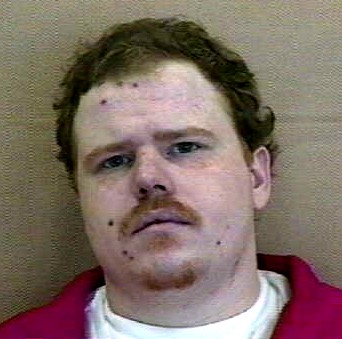
CHANDLER
Classification: Murderer
Characteristics:
Robbery
Number of victims: 1
Date of murder:
December 11,
1992
Date
of arrest: January 5, 1993
Date of birth:
October 7,
1972
Victim profile: Doris Poore
(a ninety-year-old widow)
Method of murder:
Beating
Location: Surry County, North Carolina, USA
Status:
Executed
by lethal injection in North Carolina on
November 12, 2004
Summary:
Doris Poore, a ninety-year-old widow who lived alone, was found on
her bed in a pool of blood, killed during a burglary of her home.
She was nude from the waist down, partially covered by a sheet.
Forced entry was found at the rear of her home and Chandler's
fingerprints were found inside on a door to the kitchen. Death was
caused by a blow to the head.
At trial, Chandler attempted to explain away his fingerprints by
admitting that he broke into the house, but that he was startled by
a scream, turned and accidentally struck Ms. Poore.
The jury was not
impressed, although they did find him not guilty of attempted rape.
Citations:
State v. Chandler, 467 S.E.2d 636 (N.C. 1996) (Direct
Appeal). State v. Chandler, 538 S.E.2d 572 (N.C. 1999) (Cert. Denied).
Chandler v. Lee, 89 Fed.Appx. 830 (4th Cir. 2004). (Habeas)
Chandler v. French, 252 F.Supp.2d 219 (M.D.N.C. 2003).
(Habeas).
Final Meal:
A Pizza Hut thin-crust, medium pizza topped with extra cheese,
pepperoni, ham, Canadian bacon, mushrooms and black olives served
with iced milk
Final Words:
None.
ClarkProsecutor.org
Chandler, Frank R.
DOC Number: 0072498
DOB: 10/07/1972
RACE: WHITE
SEX: MALE
DATE OF CONVICTION: 7/20/93
COUNTY OF CONVICTION: SURRY COUNTY
North
Carolina Department of Correction
Frank Chandler - Chronology of Events
10/13/2004 - Correction Secretary Theodis Beck
sets Nov. 12, 2004 as the execution date for Frank Chandler.
10/4/2004 - US Supreme Court denies Chandler's
petition for a Writ of Certiorari.
3/8/1996 - NC Supreme Court affirms Chandler's
conviction and death sentence.
7/20/1993 - Frank Chandler sentenced to death in
Surry County Superior Court for the murder of Doris Poore.
Execution date set for Frank Chandler
RALEIGH - Correction Secretary Theodis Beck has
set Nov. 12, 2004 as the execution date for inmate Frank Ray
Chandler. The execution is scheduled for 2:00 a.m. at Central Prison
in Raleigh. Chandler, 32, was sentenced to death July 20, 1993 in
Surry County Superior Court for the December 1992 murder of 90-year
old Doris Poore.
Central Prison Warden Marvin Polk will explain
the execution procedures during a media tour scheduled for Monday,
Nov. 8 at 10:00 a.m. Interested media representatives should arrive
at Central Prison’s visitor center promptly at 10:00 a.m. on the
tour date. The session will last approximately one hour.
The media tour will be the only opportunity to
photograph the execution chamber and deathwatch area before the
execution. Journalists who plan to attend the tour should contact
the Department of Correction Public Affairs Office at (919) 716-3700
by 5:00 p.m. on Friday, Nov. 5.
Frank Ray Chandler executed for 1992 killing of
elderly woman
By Emery P. Dalesio -
Raleigh
News & Observer
AP - November 12, 2004
RALEIGH, N.C. -- Frank Ray Chandler, who broke
into a Mount Airy home hoping to steal marijuana and killed the 90-year-old
woman who lived there, was executed for the crime early Friday.
Chandler, who had stopped pursuing court appeals, seemed resigned to
his fate. He raised his head several times to scan the faces of
witnesses sitting shoulder-to-shoulder on the other side of
soundproof glass, but otherwise waited with eyes closed and head
resting on a light-blue pillow for the lethal injection. When it was
administered, he took two shallow breaths, then stopped breathing.
None of the witnesses had an audible reaction. Chandler made no
final statement.
Chandler, 32, had been visited in his final hours
at Central Prison by his parents, brother and sisters, who stayed at
the prison until they were obliged to leave him three hours before
his death. None stayed to witness the execution. "He didn't want his
family here because of the horror of it," said Mark Rabil, one of
three defense attorneys who remained as witnesses. "This is not a
peaceful death. There's no privacy. There's no sacredness as there
should be. It's just not the way that death should be." Two of
Poore's great-granddaughters witnessed the execution, one with arms
crossed and the other with her hands in her lap. Neither commented
afterward.
Chandler was put to death for killing Doris Poore,
who surprised him when he broke into her house on a misguided search
for drugs, on Dec. 11, 1992. Poore died of head injuries she
suffered when Chandler, startled in the dark by her scream, swung
his hand and hit her.
Chandler's death sentence hinged on the decision
by jurors to agree with prosecutors that because he broke into
Poore's home hoping to steal drugs, he killed Poore "for pecuniary
gain" during his attempted theft. Her death during a felony burglary
was an "aggravating factor" that made him eligible for the death
penalty. But State Supreme Court Justice Robert Orr, a death penalty
supporter, argued that Chandler shouldn't be executed since he
didn't kill Poore for money. He asked Gov. Mike Easley to convert
Chandler's death sentence to life in prison. "There's no question
that he's guilty," Orr said Thursday. "There are some cases that
merit the death penalty. I don't think this is one of them."
Easley rejected the clemency request about six
hours before the execution.
Chandler was the fourth person executed in North
Carolina this year and the 34th executed in the state since capital
punishment was reinstated in 1977.
ProDeathPenalty.Com
Frank Chandler was sentenced to die for the
murder of Doris Poore, a ninety-year-old widow who was killed during
a burglary of her home on 11 December 1992. Chandler was indicted
for first-degree murder, first-degree burglary, attempted larceny,
attempted first-degree rape, and attempted first-degree sexual
offense.
Chandler took the stand as the only defense
witness and testified that he left his aunt's house between midnight
and 12:30 am on December 11, 1992 and walked to Doris's house. After
knocking on the window, back door, and garage door, and not getting
an answer, he entered the house through the unlocked basement door.
He proceeded up the stairs, cut the screen door with a pocketknife,
and opened the back door leading to the kitchen.
Chandler testified that as he started to walk
through the house, he saw something out of the corner of his eye.
When he started to leave, somebody behind him screamed. He said he
then turned and swung, making Doris fall against him. He testified
that as Mrs. Poore was falling, he caught her; he then carried her
to her bed, put her in the bed, and went to the bathroom to wash the
blood off his hand.
He saw Mrs. Poore's clothes at the front of the
toilet, picked them up, put them next to her in her bed, and covered
her up. Chandler testified that he had not known who lived in the
house, but thought that a man lived there because he had seen a blue
pickup truck parked in front of the house before and had seen a man
smoking "reefer" or marijuana there.
Chandler testified that after he left the house,
he washed his clothes and that he still had them. On cross-examination,
he testified that after he killed Mrs. Poore, he did not look for
the marijuana as he had originally planned.
UPDATE:
Frank Chandler, 32, was put to death at
Central Prison for killing 90-year-old Doris Poore, who surprised
him when he broke into her house on a misguided search for drugs. He
lay on a gurney, raising his head several times to look at the
gathered witnesses, then reclined and closed his eyes. When the
injection was administered, he gave two sharp breaths, then stopped
breathing. Chandler was pronounced dead at 2:13 a.m., a Corrections
Department spokeswoman said. He had been visited in his final hours
by his parents, brother and sisters. None stayed to witness the
execution. Poore's great-granddaughters stayed as witnesses but had
no comment.
Poore, who lived alone in Mount Airy, was killed
on Dec. 11, 1992. Her body was found the following day by a
housekeeper. Chandler was arrested less than a month later. He
testified at his trial that he was looking for marijuana and thought
he had broken into the house of drug users. Poore died of head
injuries she suffered when Chandler, startled in the dark by her
scream, swung his hand and hit her.
The jury agreed with prosecutors
that he killed Poore with the aggravating factor of seeking
financial gain, which made him eligible for the death penalty. But
State Supreme Court Justice Robert Orr, a death penalty supporter,
argued that Chandler shouldn't be executed since he didn't kill
Poore for money. Orr, who stepped down from the court in July, had
urged Gov. Mike Easley to stop the execution, but Easley rejected a
request for clemency about six hours before the execution.
Frank Ray Chandler executed for 1992 killing of
elderly woman
By Emery P. Dalesio -
Winston-Salem
Journal
AP - November 12, 2004
RALEIGH, N.C. - Frank Ray Chandler, whose death
sentence for accidentally killing a woman during a 1992 robbery was
opposed even by some capital punishment supporters, was executed
early Friday for the crime. Chandler, 32, was put to death by
injection at Central Prison for killing 90-year-old Doris Poore, who
surprised him when he broke into her house on a misguided search for
drugs.
He lay on a gurney, raising his head several
times to look at the gathered witnesses, then reclined and closed
his eyes as he awaited the lethal injection. When it was
administered, he gave two sharp breaths, then stopped breathing.
Chandler was pronounced dead at 2:13 a.m., a Corrections Department
spokeswoman said.
He had been visited in his final hours by his
parents, brother and sisters, who remained at the prison until they
were obliged to leave him at 11 p.m. None stayed to witness the
execution. "He didn't want his family here because of the horror of
it," said Mark Rabil, one of three defense attorneys who remained as
witnesses. Poore's great-granddaughters also witnessed the execution,
but had no comment.
Poore, who lived alone in Mount Airy, was killed
on Dec. 11, 1992. Her body was found the following day by a
housekeeper. Chandler's fingerprints were found in the house and he
was arrested less than a month later. He testified at his trial that
he was looking for marijuana and thought he had broken into the
house of drug users. Poore died of head injuries she suffered when
Chandler, startled in the dark by her scream, swung his hand and hit
her.
The jury agreed with prosecutors that he killed
Poore "for pecuniary gain" during his attempted theft, an "aggravating
factor" that made him eligible for the death penalty. But State
Supreme Court Justice Robert Orr, a death penalty supporter, argued
that Chandler shouldn't be executed since he didn't kill Poore for
money. "I think the whole pecuniary gain aggravator has been
stretched well beyond the intent of the law," Orr said Thursday. "This
case stretched it even farther." Orr, who stepped down from the
court in July, had urged Gov. Mike Easley to stop the execution, but
Easley rejected a request for clemency about six hours before the
execution.
Mount Airy police Maj. Gray Shelton, who helped
investigated the slaying, said the community was outraged by Poore's
death. Poore's daughter, Lucy Browne, said her mother couldn't drive
but took frequent trips with friends and was active in church and
senior citizen organizations. "She was such a nice lady," said
Poore's son-in-law John Browne. "Everybody knew her."
Frank Ray Chandler executed for 1992 killing of
elderly woman
News-14
Carolina
AP - 11/12/2004
(RALEIGH) - A man who swung out his hand during a
1992 home burglary, killing a 90-year-old woman with a blow to her
head, was put to death early Friday at Raleigh's Central Prison.
The death sentence for Frank Ray Chandler earned
opposition from a staunch supporter of capital punishment who said
the circumstances merited a lesser sentence. But the execution went
forward and Chandler was pronounced dead at 2:13 a.m.
Chandler, 32, killed Doris Poore when he broke
into the house where she lived alone on December 11, 1992. At his
trial, Chandler said he mistakenly thought drug users lived there,
and he was searching for marijuana. When the frightened woman
screamed in the dark, Chandler was startled and hit her. She died of
head injuries.
The jury said the circumstances of Poore's death
included aggravating factors that justified the death penalty. But
State Supreme Court Justice Robert Orr -- ordinarily a death penalty
supporter -- said that was wrong, because Chandler didn’t kill Poore
for money.
Attorney: Defendant doesn't deserve death; He's
to die Friday in 90-year-old's killing
Winston-Salem
Journal
AP - November 9, 2004
A man sentenced to death in the killing of a 90-year-old
woman should have his sentence commuted because the punishment is
too harsh and the defendant was poorly represented at trial, his
attorney said yesterday.
Frank Ray Chandler is scheduled to be executed
early Friday in the 1992 killing of 90-year-old Doris Poore during a
burglary of the Mount Airy home where she lived alone. "It is not a
case deserving of the death penalty," said Mark Rabil, Chandler's
attorney, at a news conference in Raleigh. "What happened here was
nothing other than a terrible and tragic accident."
Chandler's appeals have been rejected by the
state and federal courts; the defendant has asked his attorneys not
to file last-minute legal requests to stop his execution. That means
that Gov. Mike Easley, who held a clemency hearing last week, is the
only person standing between Chandler and lethal injection. He is
scheduled to be executed at 2 a.m. Friday at Central Prison in
Raleigh.
At the trial, Chandler, now 32, testified that he
entered Poore's home early on the morning of Dec. 11, 1992,
believing that he could find marijuana inside. Chandler said he
heard someone scream as he was leaving, and swung his arm, striking
Poore in the head.
Chandler testified that he then carried Poore to
the bed and left. Poore's housekeeper and son-in-law found her
partially clothed body the next morning. Nothing was taken from the
home, although a witness said that Chandler had planned to take her
purse. The medical examiner said that Poore died from the head blow
and had bruises and lacerations.
The state prosecuted the crime as a capital case
because Chandler apparently was committing a felony at the time of
Poore's death. A jury convicted him of first-degree murder and
attempted larceny and sentenced him to death. Rabil says the
sentence should be reduced because Poore's death wasn't premeditated.
Chandler has a prominent supporter in his bid for
clemency - Bob Orr, a former N.C. Supreme Court justice. Orr, a
death-penalty supporter, wrote the only dissenting opinion in a 1996
ruling by the court that upheld Chandler's jury conviction and death
sentence. He said that Chandler should have been spared the death
penalty because prosecutors did not properly present arguments that
the defendant killed Poore for monetary gain.
Rabil also noted that both of Chandler's defense
attorneys failed to disclose that they had represented the
prosecution's key witness in previous cases. The witness, Jeffrey
Kyle Wilson, testified that Chandler confessed to the break-in and
killing while both were in jail. Rabil said that the district
attorney in the case, James Dellinger, also should have informed
jurors that in exchange for his testimony, Wilson got a plea
agreement on his pending charges and $2,500 in reward money for
Chandler's conviction.
One of Chandler's attorneys, Terry L. Collins,
was disbarred and convicted in 1998 of forgery and fraud as part of
a scheme to help people illegally obtain drivers' licenses. Rabil
said that Collins' former secretary told him that the lawyer often
used the same closing arguments in multiple capital cases. "Frank's
attorneys basically did a terrible job at the trial," Rabil said.
Neither Collins nor the Surry district attorney's
office immediately returned phone calls yesterday for comment. It
wasn't clear when Easley would announce his clemency decision. North
Carolina has executed three people this year; another prisoner,
Charles Walker, is scheduled to be executed Dec. 3.
Governor denies clemency; Frank
Ray Chandler was convicted of killing woman in 1992
By Lisa Hoppenjans -
Winston-Salem
Journal
11-12-04
Gov. Mike Easley denied clemency last night for a
man scheduled to die by lethal injection at 2 a.m. today for killing
a 90-year-old Mount Airy woman in her home. Frank Ray Chandler, 32,
was not pursuing any further legal appeals. "Having carefully
reviewed the clemency petition, I conclude that there are no
compelling reasons to invalidate the sentence recommended by the
jury and affirmed by the courts," Easley said in a press release.
Chandler requested a last meal of a Pizza Hut
thin-crust, medium pizza topped with extra cheese, pepperoni, ham,
Canadian bacon, mushrooms and black olives served with iced milk,
said Pam Walker, a Correction Department spokeswoman. He spent
yesterday receiving visits from his attorneys and family members,
including his brother, sisters and parents.
Chandler was convicted of the Dec. 11, 1992, of
killing Doris Poore, a widow who lived alone. In his 1993 trial, he
testified that he thought someone else lived in the home and broke
in looking for marijuana. He said he was in the dark when he was
startled by a scream and swung out with his arm, hitting Poore in
the head. Evidence showed that Poore died from a blow to the head,
which fractured her skull and caused brain damage.
Prosecutors argued that Chandler had tried to
sexually assault Poore, who was found partially clothed in her bed,
and that he had tried to steal her purse but could not find it.
Chandler was acquitted of the sex-offense charges, but convicted of
attempted larceny, first-degree burglary, and first-degree murder.
The first-degree murder conviction resulted from the finding that
Chandler was committing another felony, burglary, when Poore was
killed. The jury rejected a verdict of first-degree murder based on
premeditation and deliberation.
Jurors sentenced Chandler to the death penalty
based on the aggravating factor that Chandler had committed the
murder for "pecuniary gain" during the attempted theft.
But N.C. Supreme Court Justice Robert Orr, a
death-penalty supporter, said that factor was inappropriately
submitted to the jury and urged Easley last week to commute
Chandler's sentence.
In a 1996 dissenting opinion in Chandler's
case, Orr wrote that the pecuniary-gain factor had been stretched
beyond the intent of the law. Though there was evidence that
Chandler had a pecuniary-gain motive for breaking into Poore's house,
Orr wrote, there was no evidence that the actual killing was for
monetary gain. "The facts here are totally opposite from
circumstances where, for example, a defendant is paid to commit
murder, commits murder in order to collect insurance proceeds, or
shoots a store clerk who refuses to open a cash register," he wrote.
Orr also said that the death sentence was
disproportionate in this case, an argument echoed by Chandler's
attorneys in their clemency petition. Mark Rabil and J. Clark
Fischer asked Easley to commute the sentence to life in prison
because Poore's death was an "accidental murder."
Grants of executive clemency are rare. Former Gov.
Jim Hunt granted clemency twice during his four terms in office.
Easley has commuted the death sentences of two men to life in prison
without parole. Chandler's execution will be the 18th during
Easley's time in office.
Easley asked to halt death; He weighs clemency
plea in the killing of Surry woman, 90
By Lisa Hoppenjans -
Winston-Salem
Journal
11-11-04
Gov. Mike Easley must decide whether a Mount Airy
man convicted of killing a 90-year-old woman is deserving of
clemency. Attorneys for Frank Ray Chandler say that the death
sentence imposed by the jury is too harsh in this case and that
prosecutors suppressed evidence that could have damaged the
credibility of their key witness.
Chandler, 32, is scheduled to be executed at 2
a.m. Friday at Central Prison in Raleigh. He was convicted and
sentenced to death in the 1992 killing of Doris Poore in a burglary
at her home in Mount Airy.
In a one-page letter to Easley, Chandler asked
that he be allowed to contact Poore's family to tell them that he is
sorry. He said that his attorney had encouraged him to write to beg
for his life, but "this is not something I can do." "Instead I will
tell you what I would like to do if you were to grant me clemancy
(sic). I want to get involved with the scared straight program.
Maybe I could keep some kids from making the same mistakes I've
made," he wrote. "If I could help just one kid I would have
accomplished something in my life."
John Browne, Poore's son-in-law, said that
relatives visited with one of Easley's aides last week to urge him
to allow the death sentence to go through. "I don't think he
deserves any clemency. He hasn't shown any sorrow about doing such a
terrible thing to such a nice old lady," Browne said.
Mark Rabil, one of Chandler's attorneys, said
that Poore's killing, though tragic, was accidental and that his
client shouldn't get the death penalty. "Frank deserves life in
prison, but he's not the worst of the worst," Rabil said.
Chandler testified at his trial in 1993 that he
entered Poore's home in the early hours of Dec. 11, 1992, mistakenly
believing that he could find marijuana there. He said that Poore
walked up near him in the dark and screamed when she saw him. He
said he was startled and swung his arm around and hit Poore in the
head. Chandler said he carried Poore to her bedroom and put her on
her bed. She was found dead there the next morning, only partially
clothed. Evidence showed that Poore died of a single blow to the
head, which fractured her skull and caused brain damage.
Prosecutors argued that Chandler had singled
Poore out because he knew that she lived alone and that he had tried
to sexually assault her. However, there was no evidence of sexual
assault and Chandler was acquitted on sex-offense charges. Jurors
found Chandler guilty of first-degree murder on the basis that he
was committing another felony - burglary - at the time of Poore's
death, rather than on the basis of premeditation and deliberation.
Though Chandler admitted to killing Poore, Rabil
said that some of the most damaging testimony came from a witness
for the prosecution, Jeffrey Kyle Wilson. Rabil said that Wilson
embellished his story in hopes of getting a better plea agreement on
pending charges.
Wilson testified that Chandler confessed to killing
Poore while the two men shared a cell at the Surry County Jail. He
said that Chandler told him that he had tried to steal Poore's purse
but could not find it, that Chandler looked at Poore's private parts
and that Chandler told him he would "play crazy" at trial.
"Mr. Wilson's testimony converted this case from
a botched break-in and accidental death, as described in Mr.
Chandler's testimony, into an unremorseful sexual pervert breaking
into an elderly victim's house and lifting her garments to look at
her private parts," Chandler's attorneys wrote in a petition to the
U.S. Supreme Court, which was rejected.
Wilson said at trial that he
was testifying "to make sure this never happens again" and that he
had no hope of personal gain. However, testimony by a police
investigator at a post-conviction hearing revealed that when Wilson
first met with investigators, his first words were, "What's in it
for me?"
Police reports later disclosed also showed that Wilson
brought up his pending charges several times in interviews. After
his testimony, Wilson received a plea bargain and, at the request of
District Attorney Jim Dellinger, a payment of $2,500 from a fund
rewarding information in the case. In a letter requesting the
payment, Dellinger said that "a conviction was not possible" without
Wilson's testimony.
According to the affidavit of one of Chandler's
attorneys, J. Clark Fischer, Wilson told Fischer on Oct. 27 that
Chandler had given him few details about Poore's killing. Wilson
said he had been told that his charges would be taken care of if he
testified the way prosecutors wanted him to. Wilson also told
Fischer that he had used drugs with one of Chandler's trial
attorneys, Terry L. Collins. Collins was disbarred in 1998 after
pleading guilty to making fake driver's licenses for clients with
driving-while-impaired convictions.
Collins said that the allegations of drug use are
false and that he never had any social relationship with Wilson. "That's
so ludicrous I don't even care to respond," he said. "They can make
up whatever they want to make up. If there were any defects in the
trial, it would appear to me that they would have been found by now."
Browne said that his mother-in-law, a widow, had
lived alone for about 35 years before her killing. Browne and his
wife, Lucy, lived just around the corner, and Poore's other daughter
was just a few blocks away if she needed anything. Poore didn't
drive, Browne said, but would get friends or relatives to take her
to rest homes, where she would spend the days visiting friends. Her
funeral was at the biggest church in town, he said, and it was
packed. "She was a great person. You wouldn't believe the people
that loved her," Browne said. "She had a way of being kind to
everybody."
NO DEFENSE FOR DEATH
The Common
Sense Foundation
November 9, 2004
If Frank Chandler is indeed executed this coming
Friday morning as scheduled, then it will no longer be possible for
anyone in North Carolina to say that the death penalty is fair.
If it were fair, then Chandler would have been
convicted of premeditated murder, since capital punishment is
supposed to be reserved for the worst of the worst. Instead the jury
in Chandler’s case found that the murder was not premeditated, yet
jurors still gave Chandler a death sentence because they held that
the accidental murder was committed for financial gain (despite the
fact that Chandler did not gain financially from the incident).
If it were fair, then Chandler would have had a
decent attorney to defend him; instead, he had Terry Collins, who
was finally disbarred and sent to jail in 1998 on felony forgery
charges (but not before he had helped send no fewer than five of his
clients to death row). Newly discovered evidence now suggests that
Collins had used drugs on more than one occasion with the state’s
star witness in Chandler ’s capital case (a detail that was
conveniently omitted when Collins questioned that witness).
If it were fair, then the N.C. Supreme Court
would have signed off on his execution without reservation. Instead,
one of the most prominent jurists in the state, conservative former
Justice Bob Orr, went so far as to visit Gov. Mike Easley last week
to ask for clemency for Frank Chandler. Orr dissented when the state
Supreme Court upheld Chandler ’s death sentence, and Orr only
dissented in four of the more than 200 capital cases he heard while
on the bench.
If it were fair, then prosecutors would have
revealed to Chandler ’s attorneys that their star witness was a paid
informant who got a sweetheart deal in return for his damning
testimony, which was almost entirely responsible for sending
Chandler to death row. The district attorney responsible for
withholding this information was later bounced out of office for
financial improprieties.
A 2002 study published by the Common Sense
Foundation found that one out of six N.C. death-row inmates had
lawyers at trial who have been disciplined by the state bar. Of all
the attorneys listed in this report, Terry Collins has the horrible
distinction of having put the most men on death row. Frank Chandler
is the first of Collins’ clients to reach an execution date.
So besides the fact that Frank Chandler’s trial
jury didn’t think Chandler murdered Doris Poore on purpose, and
besides the fact that his defense lawyer was one of the worst in the
state, and besides the fact that the prosecutors cheated to get a
death sentence, and besides the fact that a prominent Supreme Court
Justice is begging for Chandler’s life to be spared, this case might
be called fair.
A life sentence is one of the options for Gov.
Mike Easley. Few cases cry out for life more than Frank Chandler’s
does.
National
Coalition to Abolish the Death Penalty
Frank Chandler - North Carolina
- November 12, 2004
The state of North Carolina is scheduled to
execute Frank Ray Chandler, a white man Nov. 12 for the 1992 murder
of Doris Poore, a ninety-year old woman in Surry County. Chandler
broke into Poore’s house seeking marijuana when Poore surprised him.
Chandler responded by turning and striking her with one fatal blow
to her head. He was convicted of felony murder as oppose to capital
murder because the incident was not premeditated.
Chandler received a death sentence because the
prosecution successfully argued the motive for his crime was
pecuniary or monetary game. Committing a crime for monetary gain is
one of 11 aggravating standards a crime must meet before a defendant
is eligible for a death sentence. However, Chandler broke into the
house seeking marijuana. According to the testimony of an
investigating officer at the trial, the defendant searched for
Poore’s pocketbook but was unable to find it. Nothing was stolen
before or after Poore’s murder contradicting the notion that the
victim was killed directly for pecuniary gain.
North Carolina Supreme Court Justice Robert F.
Orr issued a dissenting opinion in Chandler’s appeal stating that he
found a death sentence to be inappropriate for the crime. He noted
that the state statute mandates a defendant cannot be sentenced to
death unless he or she meets one of the eleven aggravating standards
including that of pecuniary gain.
Justice Orr wrote, “While the defendant clearly
had pecuniary motive for breaking into Mrs. Poore’s house, it is
only unsupported speculation that the actual killing had anything to
do with pecuniary gain.” There are no facts to indicate the motive
for Mrs. Poore’s murder was of pecuniary gain. Justice Oar further
indicated, “The sole aggravating circumstance was improperly
submitted and the sentence imposed is disproportionate, the
defendant should be resentenced and a life sentence imposed.”
Like many death row inmates, Chandler had a trial
attorney who was disbarred shortly after his trial. Terry Collins
was disbarred in 1998 after pleading guilty to forging birth
certificates to help his DWI clients fraudulently obtain driver’s
licenses. He served jail time for this offense. Collins represented
five death row inmates all of whom maintained he did not provide
adequate defense. In Chandler’s case, Collins failed to disclose
that he and his co-counsel had previously represented a key
prosecution witness in various felony charges, a serious conflict of
interest.
According to a recent report released by the
Common Sense Foundation, at least one out of every six inmates on
North Carolina’s death row, or 35 inmates, were represented by an
attorney who was later disbarred. The U.S. Supreme Court has ruled
that the constitutional right to a lawyer means an effective lawyer,
which one might reasonably conclude excludes attorneys convicted of
fraud.
Please write Gov. Easley urging him to commute
Frank Chandler’s sentence based on the nature of the crime committed
and his inadequate legal defense.
People
of Faith Against the Death Penalty
Frank Ray Chandler was sentenced to death in 1993
for the murder of Doris Poore in Surry County.
The murder of Ms. Poore was an accidental killing,
committed during the course of a break-in. Chandler mistakenly
believed there was marijuana in the home, but the house actually
belonged to Ms. Poore, an elderly woman. She awoke to find him there
and screamed when she saw him. Startled, Chandler swung his arm, hit
her head, and tragically caused her death. The jury found that
Chandler did not premeditate the killing.
One of Chandler's trial attorneys used illegal
drugs with the State's star witness on more than one occasion prior
to Chandler's trial. There was an unquestionable conflict of
interest since the attorney did not question the witness about his
drug use, which would have undermined his credibility with the jury.
The attorney's former secretary reports that the attorney regularly
neglected his capital murder clients. The lawyer was later disbarred
and convicted of common law forgery. In April of this year, the
lawyer was convicted of possession of firearms by a convicted felon
and of domestic violence charges.
Both of Chandler's trial lawyers had previously
represented the State's star witness, creating a significant
conflict of interest. Chandler's lawyers kept quiet about their
prior representation. As a result, Chandler was never given the
opportunity to have conflict-free counsel represent him in the trial
for his life.
The jury that sentenced Chandler to death did so
largely on the testimony of the star witness, a jailhouse snitch.
Among other things, the snitch told the jury about inflammatory
statements Chandler allegedly made about Ms. Poore. What the jury
did not know, because the District Attorney's office did not share
the information with Chandler, was that the snitch had an incentive
to help them obtain a death sentence for Chandler.
When first
questioned by the authorities, the snitch asked, "What's in it for
me?" He was paid $2,500 in reward money for his testimony against
Chandler, and a few weeks after Chandler's trial was allowed to
enter a plea agreement concerning his pending charges. As a result
he received no additional jail time for those charges.
The District
Attorney in the case, who withheld from Chandler the evidence of the
snitch's deal, was later removed from office because of financial
improprieties.
Former North Carolina Supreme Court Justice
Robert Orr, who reviewed the case on appeal, is among those who say
Chandler should have been sentenced to life in prison instead of
death. Chandler lost that appeal, but Justice Orr wrote in his
dissent, "Because I believe that, in this case, the sole aggravating
circumstance was improperly submitted and that the sentence imposed
is disproportionate, the defendant should be resentenced and a life
sentence imposed."
The above information was prepared from Frank
Chandler's legal files.
Take Action!
URGE YOUR CONGREGATION AND YOUR MINISTER TO GET
INVOLVED. Meet with your congregation's pastor, rabbi or leader. Ask
him or her to preach against this execution and again the death
penalty, even if you are sure he or she would not want to do so.
Write an article for the bulletin and announce
the protests against the death penalty. Announce the actions (listed
below) people can take. Ask your minister or rabbi to write a letter
to Gov. Easley.
Urge your congregation to pass a resolution for a
moratorium on executions.
CONTACT NC GOV. MIKE EASLEY. In addition to
telling Gov. Easley to grant clemency, please ask him to declare an
immediate moratorium on executions.
WRITE LETTERS TO THE EDITOR. Letters should be
brief (fewer than 250 words) and include your name, address, and
telephone number.
Editors prefer e-mail letters if you have that
option. Please let us know if any of this contact information has
changed. You can find out more about pending executions at
www.pfadp.org.
WRITE YOUR STATE REPRESENTATIVE, Senator, and
candidates for these offices and urge support for a bill for an
immediate moratorium on executions. Tell them about this pending
execution as showing more reasons for needing a moratorium. Odds are
great that he or she will not even know the execution is scheduled,
much less any of the facts about the case. To find out who
represents you, click here.
GET OTHERS INVOLVED. Announce scheduled
executions and the protests against them in your congregation's
bulletin. Pass this alert along to anyone you know who would be
willing to help.
ORGANIZE A PROTEST, PRAYER VIGIL OR SERVICE. If
you would like to organize a protest, an interfaith vigil or prayer
service in your community before a scheduled execution, PFADP can
assist you with liturgies and publicity. Contact info@pfadp.org
or (919) 933-7567.
PRAY. Remember victims of murder and their
families and those on death row in your and your congregation's
prayers.
Paw Paw native faces execution Friday; Received
death sentence in North Carolina for murder of 90-year-old
By Patrick O'Neill -
South
Bend Tribune
November 11, 2004
RALEIGH, N.C. -- The sun has risen and set more
than 4,000 times over Central Prison since Frank Chandler was
brought there July 20, 1993, as a death row prisoner. Unless Gov.
Mike Easley grants clemency today, the 32-year-old, who was born in
Paw Paw, Mich., will not see another sunrise.
Chandler is scheduled to be executed by injection
at 2 a.m. Friday. He was sentenced to death for the Dec. 12, 1992,
murder of Doris Poore, a 90-year-old woman whom Chandler said he
killed by accident when she startled him in the darkness during a
burglary of her Surry County, N.C., home.
Last Sunday, Chandler received a surprise visit
from three of his half sisters, who drove to Raleigh from Michigan.
Evelyn Elkins and Rhonda Starrett, both of Dowagiac, and Julie
Aguilar of Covert, saw Chandler for the first time since he was
sentenced to death. "I'm really trusting in God for a miracle,"
Elkins said. "I am hopeful."
On Monday morning, Chandler came to the maximum-security
prison's visiting room to talk about his plight. Chandler, who
stands 5-foot 9-inches tall and weighs about 300 pounds, is a large
man, who resembles television's Beaver Cleaver.
Despite his
appearance, in his trial 11 years ago prosecutors presented him as
menacing killer. Chandler wears his blondish-red hair in a crew cut.
His hairline is slightly receded and his huge arms have several
visible tattoos, including a well-drawn barbed wire bracelet on his
left wrist, which Chandler said he did himself. "I've pretty much,
you know, grown used to the idea that I'll die here," he said.
Ken Rose, executive director of the North
Carolina Center for Death Penalty Litigation, a Durham, N.C.-based
group that handles legal appeals in capital cases, said he remains
hopeful that Easley will spare Chandler's life. "This is a very
strong clemency case," Rose said.
Chandler's defense attorney at trial, Terry
Collins, now disbarred, allegedly had previously used illegal drugs
with the state's key witness, jailhouse informant, Jeffrey Kyle
Wilson, who once shared a cell with Chandler. Wilson provided
testimony that led to Chandler receiving a death sentence. In
exchange for his testimony, Wilson was given relief in his own case
and paid a reward from the state, information that was not shared
with the jury.
In 1995, the district attorney who prosecuted
Chandler, James Dellinger, was removed from office because of
improprieties in office, a fact defense attorneys said "strengthens
the claim that Mr. Chandler's conviction resulted from prosecutorial
misconduct."
Chandler said he moved with his family to Mount
Airy, N.C. when he was in sixth grade. Mount Airy, the home town of
actor Andy Griffith, was used as a model for the fictitious Mayberry
of "The Andy Griffith Show." "I'm regretful that it happened,"
Chandler said. "I'm very sorry. I'm sorry for the loss for the
family members. I've caused them a lot of pain. It's something I
wish I had never done, but it's not something that you can take
back."
Chandler, the youngest of Franklin and Lorene
Chandler's 12 children, said he is being treated well by his fellow
inmates on "the row" and by prison staff. In the last week, Chandler
has received visits from seven of his sisters. Six drove and another
took the bus to Raleigh from Michigan. He will be permitted his
first contact visits with family members today. None of his family
members plans to witness the execution.
Aguilar said many people are praying her
brother's life is spared. Spending more than 11 years on death row
may be terrible, but Chandler said he decided to make the best of it
when he got there. To pass the time Chandler said he does "a whole
lot of reading," everything from religion and history to fiction.
Pardon possible for Chandler
By Alex Granados -
The
Daily Tarheel
November 11, 2004
Attorneys for convicted murderer Frank Chandler
want mercy for their client and are citing conflicts of interest and
misapplication of the law as just some of the reasons why he should
live.
Chandler is scheduled to die Friday, but
supporters, including his counsel and a former State Supreme Court
justice, visited Gov. Mike Easley last week seeking clemency for the
32-year-old. The trio says that the murder was accidental and that
therefore Chandler should not be killed.
"(Easley) was very interested and engaged in the
arguments given," said Robert Orr, the former justice. "He obviously
takes it seriously, as well he should."
Chandler's counsel - assistant capital defender
Mark Rabil and attorney J. Clark Fischer - has written a letter to
Easley explaining its rationale. "This was an 'accidental' murder
committed during the course of a felony, a break-in," the letter
stated. Rabil said in an interview that the 90-year-old victim,
Doris Poore, came upon Chandler in her house and screamed. A
surprised Chandler swung his arm and hit Poore in the head, killing
her.
The jury did not find that Chandler had acted
with premeditation, the main requirement for first-degree murder.
But the prosecution claimed that he was seeking "pecuniary gain,"
one of many aggravating factors in a murder case that makes one
eligible for the death penalty.
The star witness for the prosecution, Chandler's
cellmate Jeffrey Wilson, provided the testimony regarding the
aggravating factor.
He said Chandler searched for the woman's purse
after hitting her, thus giving the prosecution all it needed to seek
the ultimate punishment. But Chandler did not find a purse and
therefore did not gain from his crime.
Questions also have arisen regarding the star
witness and his relationship with Chandler's defense attorney, Terry
Collins. Collins was disbarred in 1998 after pleading guilty to
felony forgery charges. Controversy surrounds the prosecution as
well, Rabil said. "The (district attorney) who prosecuted this case
was removed from office two years after this case," he said. "Every
lawyer in this case is unsavory."
Orr, who reviewed Chandler's case at the state
Supreme Court level, said he did not focus on these aspects. He was
the lone dissenter among the seven justices. He said Chandler should
not be executed because the aggravating factor did not apply in this
case. "If there wasn't an aggravator, it is an automatic life
sentence," he said. "And this was the only aggravator submitted to
the jury."
Neither Easley's office nor the state attorney
general's office could be reached for comment.
State v. Chandler, 467
S.E.2d 636 (N.C. 1996) (Direct Appeal).
Defendant was convicted by jury in the Superior
Court, Surry County, William H. Freeman, J., of first-degree murder
under felony-murder rule, with first-degree burglary as underlying
felony. Defendant appealed as of right. The Supreme Court, Mitchell,
C.J., held that: (1) defendant was not entitled to conduct voir dire
regarding prospective jurors' beliefs about parole eligibility; (2)
erroneous inclusion of phrase "attempted larceny" in original
burglary instruction was not plain error; (3) conviction for first-degree
murder based on underlying felony of burglary was without error
despite erroneous inclusion of "attempted larceny" in original jury
instruction on burglary; (4) evidence was sufficient to support
finding of pecuniary gain aggravating circumstance; (5) evidence did
not support jury instruction on mitigating circumstance of mental or
emotional disturbance; (6) trial court did not err by not
intervening during prosecutors' closing arguments to jury during
capital sentencing proceedings; and (7) sentence of death was not
disproportionate. Affirmed. Orr, J., filed dissenting opinion.
MITCHELL, Chief Justice.
This case arises out of the death of Doris Poore, a ninety-year-old
widow who was killed during a burglary of her home on 11 December
1992.
Defendant was indicted for first-degree murder,
first-degree burglary, attempted larceny, attempted first-degree
rape, and attempted first-degree sexual offense. He was tried before
a jury, which found him guilty of the first-degree murder of Doris
Poore under the felony murder rule, with first-degree burglary as
the underlying felony.
The jury also found him guilty of attempted
larceny, but not guilty of attempted first-degree rape or first-
degree sexual offense. After a separate capital sentencing
proceeding, the jury recommended and the trial court imposed a
sentence of death for the first-degree murder conviction and a three-year
prison sentence for the attempted larceny conviction.
The State presented evidence at trial tending to
show that on 10 December 1992, Mrs. Poore talked by telephone with
Grace Vaughn, a friend, until approximately 10:30 p.m. The next day
at 8:00 a.m., Lea Quiros, the victim's housekeeper, arrived at Mrs.
Poore's house and knocked on the front door. When Mrs. Poore did not
answer the door, Mrs. Quiros attempted to call her on the telephone.
Again, no one answered. Mrs. Quiros contacted Mr. Jack Leach, Mrs.
Poore's son-in-law, who, on arrival, entered the house by the back
door. Mr. Leach let Mrs. Quiros in the house. Mr. Leach found Mrs.
Poore dead in her bed in a pool of blood.
Special Agent R.D. Melton of the SBI testified
that during the investigation of Mrs. Poore's death, he observed
that the screen door at the back of her house had been cut with two
"L"-shaped cuts above the center support strut on the right side of
the door where a latch was located. The screen was slightly pushed
in. The wooden door was open, and the screws from the chain lock
were pulled from the wall and left hanging on the door.
After entering Mrs. Poore's house, Melton found
Mrs. Poore's glasses and hearing aids on the dining room table. Upon
entering Mrs. Poore's bedroom, he found bed clothing on the bed, a
sheet pulled up over the victim, and an area of pooled blood
underneath her head.
The victim was lying on the bed with her pajama
top open and her body was nude from the waist down; smeared bloody
fingerprints were on her abdomen. A pair of pajama bottoms and a
pair of panties were wadded together at the foot of the bed between
the victim's legs, but slightly beneath her right foot. He also
noted that an electric heating pad was on the bed.
Dr. Gregory James Davis, a forensic pathologist,
testified that Mrs. Poore died from a single "massive blow" to the
head. The blow resulted in a hinge fracture to the scalp, which
effectively caused the skull to snap in two resulting in extensive
swelling and hemorrhaging of the brain. Mrs. Poore had numerous
abrasions, lacerations, and bruises. Special Agent Ricky Navarro, a
latent evidence specialist with the SBI, testified that palm and
fingerprints matching the defendant's were found on the wooden door
leading into the kitchen.
Special Agent J.L. Eddins testified that after he
took defendant's fingerprints, he asked defendant to sign a consent
to search form. Defendant signed the fingerprint card, but refused
to sign the other related documents. After defendant asked to make a
phone call, he proceeded to destroy all of the documents and the
card.
Jeffrey Kyle Wilson, defendant's cellmate from
January 1993 until April 1993, testified that while defendant was in
jail, defendant asked him what he should do. Wilson told him to tell
the truth so that he would not get the electric chair. Wilson said
that defendant replied that "they" did not have the evidence to
convict him. Then, defendant described how he had committed the
murder and that as a defense, he planned to "play crazy."
Defendant took the stand as the only defense
witness and testified that he left his aunt's house between midnight
and 12:30 a.m. on 11 December 1992 and walked to the victim's house.
After knocking on the window, back door, and garage door, and not
getting an answer, he entered the house through the unlocked
basement door. He proceeded up the stairs, cut the screen door with
a pocketknife, and opened the back door leading to the kitchen.
He testified that as he started to walk through the house, he saw
something out of the corner of his eye. When he started to leave,
somebody behind him screamed. He then turned and swung, making the
victim fall against him. He testified that as Mrs. Poore was falling,
he caught her; he then carried her to her bed, put her in the bed,
and went to the bathroom to wash the blood off his hand. He saw Mrs.
Poore's clothes at the front of the toilet, picked them up, put them
next to her in her bed, and covered her up.
Defendant testified that he had not known who
lived in the house, but thought that a man lived there because he
had seen a blue pickup truck parked in front of the house before and
had seen a man smoking "reefer" or marijuana there. Defendant
testified that after he left the house, he washed his clothes and
that he still had them. On cross-examination, defendant testified
that after he killed Mrs. Poore, he did not look for the marijuana
as he had originally planned.
* * * *
Under North Carolina's system for
administering capital punishment as mandated by our legislature, the
appropriateness of the sentence of death is for the jury to decide.
N.C.G.S. § 15A-2000 (1988). Although this Court is required to
conduct the function of proportionality review, we are not
authorized to substitute our own notions as to the appropriateness
of the penalty of death in a given case for those of the jury.
Therefore, only in the most clear and extraordinary situations may
we properly declare a sentence of death which has been recommended
by the jury and ordered by the trial court to be disproportionate.
See generally State v. Williams, 308 N.C. 47, 301 S.E.2d 335, cert.
denied, 464 U.S. 865, 104 S.Ct. 202, 78 L.Ed.2d 177 (1983). This is
not such a case. Accordingly, we conclude that the sentence of death
recommended by the jury and ordered by the trial court in the
present case is not disproportionate.
For the foregoing reasons, we hold that the
defendant received a fair trial, free of prejudicial error, and that
the sentence of death entered in the present case must be and is
left undisturbed. NO ERROR.
ORR, Justice, dissenting. I respectfully dissent
from the majority opinion on two grounds. First, the trial court
erred in submitting the (e)(6) aggravating circumstance--that the
capital felony was committed for pecuniary gain, N.C.G.S. §
15A-2000(e)(6) (Supp.1995)--and second, the death sentence is
disproportionate.
Chandler v. Lee, 89
Fed.Appx. 830 (4th Cir. 2004). (Habeas).
Background: After defendant's conviction of first-degree
murder and imposition of the death sentence were affirmed, 342 N.C.
742, 467 S.E.2d 636, and postconviction relief was denied,
petitioner sought writ of habeas corpus. Adopting report and
recommendation of United States Magistrate Judge Russell A. Eliason,
the United States District Court for the Middle District of North
Carolina, 252 F.Supp.2d 219, N. Carlton Tilley, Jr., Chief Judge,
denied petition, and defendant appealed.
Holdings: The Court of Appeals, William W.
Wilkins, Circuit Judge, held that:
(1) state court's ruling that prosecution did not knowingly allow
witness to testify falsely was entitled to deference;
(2) state's failure to disclose allegedly exculpatory evidence did
not violate Brady;
(3) prior representation by defense co-counsel of key prosecution
witness did not result in conflict of interest; and
(4) failure to submit statutory mitigating circumstance instruction
did not violate defendant's constitutional rights. Affirmed.
Frank Ray Chandler appeals an order of the
district court denying his petition for a writ of habeas corpus, see
28 U.S.C.A. § 2254 (West 1994 & Supp.2003), in which he challenged
his conviction and death sentence for the murder of 90-year-old
Doris Poore. Finding no error, we affirm.
Poore's body was found on the morning of December
11, 1992. She was lying on her bed with a pool of blood underneath
and around her head. Although a sheet had been pulled over Poore,
her pajama top was open and she was naked from the waist down; her
underwear and pajama bottoms were wadded together near her feet.
There were smeared bloody fingerprints on her abdomen. A subsequent
autopsy revealed that Poore was killed by a single, massive blow to
the head.
At trial, Chandler was linked to the crime by
circumstantial evidence. Chandler's palm and fingerprints were found
on the door leading into Poore's kitchen. Chandler's cousin, with
whom Chandler spent the night of December 10-11, testified that
Chandler had left the house for a time late at night; subsequently,
Chandler asked his cousin not to tell anyone he had left the house.
The prosecution also presented the testimony of
Jeffrey Kyle Wilson, who was Chandler's cellmate for several months
following Chandler's arrest. Wilson testified that Chandler
described the murder to him. According to Wilson, Chandler stated
that he broke into the house and encountered Poore in the kitchen.
He struck her on the head and, not realizing that he had killed her,
laid her on the bed. When Wilson asked Chandler why Poore was naked
from the waist down (information he had learned from the newspaper),
Chandler responded that "he had never seen no old p* * *y." Trial Tr.,
Vol. V, at 614.
On direct and cross-examination, Wilson repeatedly
denied having sought or been offered any benefit in exchange for his
testimony, despite the fact that he had several pending charges.
Wilson did acknowledge that one of the investigating officers
appeared on his behalf at a parole revocation hearing that took
place four days after Wilson's initial contact with police regarding
Chandler. Wilson's parole was nevertheless revoked.
Chandler testified in his own defense, claiming
that he broke into Poore's house because he believed he could find
marijuana there. After knocking on a window, the garage door, and
the back door, Chandler entered the house through the basement door
and proceeded upstairs to the kitchen. Chandler testified that he
saw something out of the corner of his eye and had turned to leave
when someone behind him screamed.
He swung his left arm as he turned
around, striking Poore, who fell against him. Chandler stated that
he carried Poore to her bed and then went into the bathroom to wash
his hands; he found Poore's pajama bottoms and underwear near the
toilet and placed them in the bed with her before he left.
A jury convicted Chandler of first-degree murder,
first-degree burglary, and attempted larceny. [FN2] Following a
capital sentencing hearing, the jury recommended, and the trial
judge imposed, a sentence of death for the murder conviction. The
convictions and sentence were affirmed on direct appeal. See State
v. Chandler, 342 N.C. 742, 467 S.E.2d 636, cert. denied, 519 U.S.
875, 117 S.Ct. 196, 136 L.Ed.2d 133 (1996). As is relevant here, the
North Carolina Supreme Court rejected Chandler's claim that the
trial court erred in refusing to submit a particular statutory
mitigating circumstance to the jury. See id. at 644-45.
FN2. The jury acquitted Chandler of attempted
first-degree rape and attempted first-degree sexual offense.
Chandler thereafter filed a motion for
appropriate relief (MAR), which was assigned to the same judge who
had presided over Chandler's trial. Chandler claimed, inter alia,
that (1) the prosecution had knowingly allowed Wilson to testify
falsely, (2) the prosecution failed to disclose evidence that would
have impeached Wilson's testimony, and (3) one of his attorneys had
previously represented Wilson, and thus was laboring under a
conflict of interest in violation of Chandler's Sixth Amendment
rights. After conducting a hearing that included the presentation of
evidence, the MAR court denied relief.
Chandler filed this federal habeas action on
August 12, 1999, raising the claims described above and one
additional claim. The matter was referred to a magistrate judge, who
recommended that the petition be dismissed. After considering
Chandler's objections to the magistrate judge's recommendation, the
district court denied relief. See Chandler v. French, 252 F.Supp.2d
219, 224 (M.D.N.C.2003) (adopting recommendations of magistrate
judge).
We subsequently granted a certificate of appealability, see
28 U.S.C.A. § 2253(c) (West Supp.2003); 4th Cir. R. 22(a), as to the
following issues: (1) whether the prosecution knowingly allowed
Wilson to testify falsely; (2) whether the prosecution withheld
exculpatory evidence concerning Wilson's testimony; (3) whether an
actual conflict of interest adversely affected the performance of
one of Chandler's attorneys; and (4) whether the refusal to submit a
particular mitigating circumstance to the jury violated Chandler's
constitutional rights. We denied a certificate of appealability as
to Chandler's claim that the trial court provided the jury an
unconstitutionally restrictive definition of mitigating evidence.
Because Chandler's claims were adjudicated on
their merits by the state courts of North Carolina, our review is
limited to determining whether the decision of that court "was
contrary to, or involved an unreasonable application of, clearly
established Federal law, as determined by the Supreme Court." 28
U.S.C.A. § 2254(d)(1). A state court decision is "contrary to"
Supreme Court precedent in either of two situations: (1) when "the
state court applies a rule that contradicts the governing law set
forth in [Supreme Court] cases," or (2) when "the state court
confronts a set of facts that are materially indistinguishable from
a decision of [the Supreme] Court and nevertheless arrives at a
result different from [the Court's] precedent." Williams v. Taylor,
529 U.S. 362, 405-06, 120 S.Ct. 1495, 146 L.Ed.2d 389 (2000).
A state court decision rests on an "unreasonable application" of
clearly established Supreme Court precedent when "the state court
identifies the correct governing legal principle from [the] Court's
decisions but unreasonably applies that principle to the facts of
the prisoner's case." Id. at 413.
* * * *
For the reasons set forth above, we conclude that
the district court correctly denied Chandler's petition for a writ
of habeas corpus. We therefore affirm.
Chandler v. French,
252 F.Supp.2d 219 (M.D.N.C. 2003). (Habeas)
After his convictions of first-degree murder
under felony murder rule and death sentence were affirmed, 342 N.C.
742, 467 S.E.2d 636, and postconviction relief was denied,
petitioner sought writ of habeas corpus. Defendant filed objections
to magistrate's report. Adopting report and recommendation of United
States Magistrate Judge Eliason, the District Court, Tilley, Chief
Judge, held that: (1) prosecutors did not commit Giglio violation in
presenting testimony of jailhouse informer; (2) no Brady violation
was shown; (3) actual conflict of interest was not shown as result
of defense co-counsel's prior representation of jailhouse informer;
(4) failure to submit statutory mitigating circumstance did not
violate defendant's Eighth and Fourteenth Amendment rights; and (5)
instruction on mitigating evidence was not contrary to or
unreasonable application of federal precedent. Writ denied.
This matter is now before the Court on Frank Ray
Chandler's Petition for Habeas Corpus under 28 U.S.C. § 2254. In a
thorough and carefully reasoned opinion, the United States
Magistrate Judge recommended that the petition be denied. Petitioner
has objected to the Recommendation on several grounds and this
opinion addresses those issues. For the reasons set forth below, the
Recommendations of the Magistrate Judge are ADOPTED, and the
Petition is DENIED.
The facts, as stated by the North Carolina
Supreme Court and to which there is no present dispute, are as
follows: This case arises out of the death of Doris Poore, a ninety-year-old
widow who was killed during a burglary of her home on 11 December
1992. Defendant was indicted for first-degree murder, first-degree
burglary, attempted larceny, attempted first-degree rape, and
attempted first-degree sexual offense.
He was tried before a jury,
which found him guilty of the first-degree murder of Doris Poore
under the felony murder rule, with first degree burglary as the
underlying felony. The jury also found him guilty of attempted
larceny, but not guilty of attempted first-degree rape or first-degree
sexual offense. After a separate capital sentencing proceeding, the
jury recommended and the trial court imposed a sentence of death for
the first-degree murder conviction and a three-year prison sentence
for the attempted larceny conviction.
The State presented evidence at trial tending to
show that on 10 December 1992, Mrs. Poore talked by telephone with
Grace Vaughn, a friend, until approximately 10:30 p.m. The next day
at 8:00 a.m., Lea Quiros, the victim's housekeeper, arrived at Mrs.
Poore's house and knocked on the front door. When Mrs. Poore did not
answer the door, Mrs. Quiros attempted to call her on the telephone.
Again, no one answered. Mrs. Quiros contacted Mr. Jack Leach, Mrs.
Poore's son-in-law, who, on arrival, entered the house by the back
door. Mr. Leach let Mrs. Quiros in the house. Mr. Leach found Mrs.
Poore dead in her bed in a pool of blood.
Special Agent R.D. Melton of the SBI testified
that during the investigation of Mrs. Poore's death, he observed
that the screen door at the back of her house had been cut with two
"L"-shaped cuts above the center support strut on the right side of
the door where a latch was located. The screen was slightly pushed
in. The wooden door was open, and the screws from the chain lock
were pulled from the wall and left hanging on the door.
After entering Mrs. Poore's house, Melton found
Mrs. Poore's glasses and hearing aids on the dining room table. Upon
entering Mrs. Poore's bedroom, he found bed clothing on the bed, a
sheet pulled up over the victim, and an area of pooled blood
underneath her head. The victim was lying on the bed with her pajama
top open and her body was nude from the waist down; smeared bloody
fingerprints were on her abdomen. A pair of pajama bottoms and a
pair of panties were wadded together at the foot of the bed between
the victim's legs, but slightly beneath her right foot. He also
noted that an electric heating pad was on the bed.
Dr. Gregory James Davis, a forensic pathologist,
testified that Mrs. Poore died from a single "massive blow" to the
head. The blow resulted in a hinge fracture to the scalp, which
effectively caused the skull to snap in two resulting in extensive
swelling and hemorrhaging of the brain. Mrs. Poore had numerous
abrasions, lacerations, and bruises.
Special Agent Ricky Navarro, a latent evidence
specialist with the SBI, testified that palm and fingerprints
matching the defendant's were found on the wooden door leading into
the kitchen. Special Agent J.L. Eddins testified that after he took
defendant's fingerprints, he asked defendant to sign a consent to
search form. Defendant signed the fingerprint card, but refused to
sign the other related documents. After defendant asked to make a
phone call, he proceeded to destroy all of the documents and the
card.
Jeffrey Kyle Wilson, defendant's cellmate from
January 1993 until April 1993, testified that while defendant was in
jail, defendant asked him what he should do. Wilson told him to tell
the truth so that he would not get the electric chair. Wilson said
that defendant replied that "they" did not have the evidence to
convict him. Then, defendant described how he had committed the
murder and that as a defense, he planned to "play crazy."
Defendant took the stand as the only defense
witness and testified that he left his aunt's house between midnight
and 12:30 a.m. on 11 December 1992 and walked to the victim's house.
After knocking on the window, back door, and garage door, and not
getting an answer, he entered the house through the unlocked
basement door. He proceeded up the stairs, cut the screen door with
a pocketknife, and opened the back door leading to the kitchen. He
testified that as he started to walk through the house, he saw
something out of the corner of his eye.
When he started to leave,
somebody behind him screamed. He then turned and swung, making the
victim fall against him. He testified that as Mrs. Poore was falling,
he caught her; he then carried her to her bed, put her in the bed,
and went to the bathroom to wash the blood off his hand. He saw Mrs.
Poore's clothes at the front of the toilet, picked them up, put them
next to her in her bed, and covered her up.
Defendant testified that he had not known who
lived in the house, but thought that a man lived there because he
had seen a blue pickup truck parked in front of the house before and
had seen a man smoking "reefer" or marijuana there. Defendant
testified that after he left the house, he washed his clothes and
that he still had them. On cross-examination, defendant testified
that after he killed Mrs. Poore, he did not look for the marijuana
as he had originally planned. State v. Chandler, 342 N.C. 742,
747-50, 467 S.E.2d at 639-41.
Petitioner was indicted on March 8, 1993 for
first degree murder, first degree burglary, attempted larceny,
attempted first degree rape, and attempted first degree sexual
offense. Petitioner was tried in Surry County and, on July 16, 1993,
was convicted of first degree burglary, attempted larceny and first
degree murder under the felony murder rule, with first degree
burglary as the underlying felony. He was found not guilty of the
attempted rape and attempted sexual offense charges in the
indictment.
At the sentencing phase, the jury found pecuniary
gain to be the sole aggravating factor. It found three mitigating
factors: (1) Petitioner's lack of proper parental role models during
his formative years; (2) his history of alcohol and drug abuse; and
(3) his acknowledgment that he had killed Mrs. Poore. The jury
recommended that Petitioner be sentenced to death. The North
Carolina Supreme Court affirmed Petitioner's conviction and sentence
on March 8, 1996. State v. Chandler, 342 N.C. 742, 467 S.E.2d 636
(1996). The United States Supreme Court denied certiorari on October
7, 1996. Chandler v. North Carolina, 519 U.S. 875, 117 S.Ct. 196,
136 L.Ed.2d 133 (1996).
Petitioner filed a Motion for Appropriate Relief,
which was heard in the Surry County Superior Court on April 6 and
April 9, 1998. The Honorable William Freeman denied the Motion for
Appropriate Relief on October 14, 1998. ("MAR court"). The North
Carolina Supreme Court denied certiorari to review Judge Freeman's
ruling on the Motion for Appropriate Relief on July 23, 1999. State
v. Chandler, 350 N.C. 838, 538 S.E.2d 572 (1999) .
A Petition for Writ of Habeas Corpus pursuant to
28 U.S.C. § 2254 was filed in the United States District Court for
the Middle District of North Carolina on October 20, 1999. The
Magistrate Judge reviewed the Petition for Habeas Corpus and made
the following recommendations on June 12, 2001:(1) the prosecution
did not fail to disclose impeachment evidence in violation of Brady
v. Maryland; (2) the prosecution did not present perjured testimony
in violation of Giglio v. United States; (3) Petitioner's Sixth
Amendment right to effective assistance of counsel was not violated
due to a conflict of interest; and (4) the jury instructions
regarding mitigating circumstances and the definition of mitigation
were not erroneous. Petitioner filed Objections to the Magistrate
Judge's Recommendations on July 16, 2001. Each of these objections
will be addressed separately.