Murderpedia has thousands of hours of work behind it. To keep creating
new content, we kindly appreciate any donation you can give to help
the Murderpedia project stay alive. We have many
plans and enthusiasm
to keep expanding and making Murderpedia a better site, but we really
need your help for this. Thank you very much in advance.
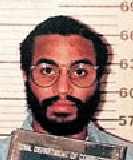
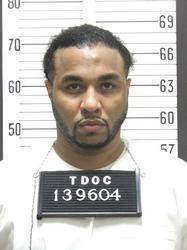
Tony Von
CARRUTHERS
Classification: Murderer
Characteristics:
Kidnapping - Robbery
- Drugs
Number of victims: 3
Date of murder: February 24, 1994
Date of birth:
July 1, 1968
Victim profile:
Drug
dealer Marcellos Anderson, 21, his mother, Delois Anderson, and
Frederick Tucker
Method of murder:
Shooting - Buried
alive
in a grave at Rose Hill Cemetery
Tony Von Carruthers and accomplice James
Montgomery were convicted of kidnapping drug dealer Marcellos Anderson,
21, his mother and one of Anderson's teenage associates in 1994. The
two male victims were shot, and then they and Anderson's mother were
all buried alive in a grave that had been dug for a funeral in Memphis'
Rose Hill Cemetery, according to testimony during Carruthers and
Montgomery's trial in 1996.
Man convicted of triple murder says he was
framed
By Janice Broach - Wmctv.com
A Mid-South man convicted of triple
murder in South Memphis says he was framed.
Tony Carruthers sits on Death
Row convicted of killing a Memphis woman, her son, and his best friend
then dumping their bodies at the Rose Hill Cemetery in 1994.
Prosecutors say Carruthers'
victims were buried alive. Action News 5 reporter Janice Broach sat
down for an exclusive interview with the man accused of the murders.
The murders at Rose Hill
Cemetery were some of the most shocking in Memphis history. Three
people tossed in a grave and covered up with a coffin.
It sounds like a mob movie but
it happened right here in Memphis. One of the men convicted in the
killings, says he was set up.
Brushy Mountain Correctional
Complex in East Tennessee is a maximum security prison with one of the
Mid-South's most infamous death row inmates inside.
Tony Carruthers talks for the
first time from death row.
Carruthers says he was framed
for the murders of Delois Anderson, her son Marcellous and friend
Frederick Tucker - all acquaintances of Carruthers.
When asked if the murders were
gruesome, Carruthers says, "absolutely, but I wasn't there."
Two were shot, one was strangled.
In a 1996 interview, Former
Medical Examiner O.C. Smith said that none of the victim's wounds were
fatal.
Autopsies showed the victims
were still alive when Carruthers and two other men buried them in a
grave at Rose Hill Cemetery.
"Dirt had been impacted into her
nose and mouth," said Prosecutor Jerry Harris. "The proof will show
you that Anderson died in that grave. She was alive when she was put
into that grave," added Harris.
The grave was prepared for a
funeral the following day at Rose Hill. A coffin was actually placed
on top of the bodies.
Video shows investigators
exhuming that coffin after one of the men charged with Carruthers told
investigators where the bodies were buried.
A drawing shows how the bodies
were stacked on top of each other in a two-foot deep space.
Jerry Harris prosecuted
Carruthers and Joseph Daily was the judge in the case.
Carruthers defended himself
after running off six court-appointed attorneys.
Judge Daily told Carruthers in
1996, "I've tried over and over to get lawyers in here for you. And
over and over you have succeeded in threatening and running them away."
Larry Copeland is Carruthers'
current attorney, "Tony is by far the most intelligent defendant I
have ever represented. He's on top of his game."
"Carruthers doesn't like
Copeland either, "Larry Copeland is a crook. Larry Copeland needs to
be disbarred," says Carruthers.
Carruthers has spent much of his
time on Death Row peppering the courts with legal documents he
frequently held up during the interview.
"I feel like Jerry Harris and
Judge Dailey should be arrested for me having execution dates. That's
how I feel," adds Carruthers.
Its an execution Carruthers
believes will never happen, "I'm not going to get executed, Ms. Broach.
I'm happy."
Carruthers couldn't seem to
explain how he was framed. He would only say he was prosecuted for
political gain and he adamantly denies being involved in the murders.
Supreme Court of Tennessee
State v. Carruthers
STATE of Tennessee v. Tony V.
CARRUTHERS & James Montgomery.
December 11, 2000
Stephen R. Leffler and Lee A.
Filderman, Memphis, TN, for the appellant, Tony V. Carruthers.Robert
C. Brooks and Edward W. Chandler, Memphis, TN, for the appellant,
James Montgomery.Michael E. Moore, Solicitor General; Amy Tarkington,
Senior Counsel; Phillip Gerald Harris; Assistant District Attorney
General; and J. Robert Carter, Jr., Assistant District Attorney
General, for the appellee, State of Tennessee.
Tony Carruthers and James Montgomery were each
convicted of three counts of first degree premeditated murder and were
sentenced to death on each conviction. The Court of Criminal Appeals
affirmed the convictions and sentences of both Carruthers and
Montgomery. Thereafter, the cases were docketed in this Court.
After carefully reviewing the record and the relevant legal
authorities, we conclude that none of the errors raised by Tony
Carruthers require reversal, that the evidence is sufficient to
support the jury's findings of the aggravating circumstances, and that
the sentences of death are not excessive or disproportionate
considering the circumstances of the crimes and the defendant. With
respect to James Montgomery, we conclude that the trial court erred in
denying him a severance and that the error resulted in Montgomery
being deprived of a fair trial. Accordingly, we reverse Montgomery's
convictions and sentences and remand for a new trial.
OPINION
The defendants, Tony V. Carruthers and James
Montgomery, were each convicted of first degree murder for killing
Marcellos “Cello” Anderson, his mother Delois Anderson, and Frederick
Tucker in Memphis in February of 1994.1
All of the victims disappeared on the night of February 24, 1994.
On March 3, 1994, their bodies were found buried together in a pit
that had been dug beneath a casket in a grave in a Memphis cemetery.2
The Guilt Phase
The proof introduced at the guilt phase of the
trial showed that one of the victims, Marcellos Anderson, was heavily
involved in the drug trade, along with two other men, Andre “Baby
Brother” Johnson and Terrell Adair.3
Anderson wore expensive jewelry, including a large diamond ring,
carried large sums of money on his person, and kept a considerable
amount of cash in the attic of the home of his mother, victim Delois
Anderson. When his body was discovered, Anderson was not wearing any
jewelry and did not have any cash on his person. Anderson was
acquainted with both defendants, and he considered Carruthers to be a
trustworthy friend. The proof showed that Anderson's trust was
misplaced.
In the summer of 1993 Jimmy Lee Maze, Jr., a
convicted felon, received two letters from Carruthers, who was then in
prison on an unrelated conviction. In the letters, Carruthers
referred to “a master plan” that was “a winner.” Carruthers wrote of
his intention to “make those streets pay me” and announced,
“everything I do from now on will be well organized and extremely
violent.” Later, in the fall of 1993, while incarcerated at the Mark
Luttrell Reception Center in Memphis awaiting his release, Carruthers
was assigned to a work detail at a local cemetery, the West Tennessee
Veterans' Cemetery. At one point, as he helped bury a body,
Carruthers remarked to fellow inmate Charles Ray Smith “that would be
a good way, you know, to bury somebody, if you're going to kill them․
[I]f you ain't got no body, you don't have a case.”
Smith also testified that he overheard Carruthers
and Montgomery, who also was incarcerated at the Reception Center,
talking about Marcellos Anderson after Anderson had driven Carruthers
back to the Reception Center from a furlough. According to Smith,
when Montgomery asked Carruthers about Anderson, Carruthers told him
that both Anderson and “Baby Brother” Johnson dealt drugs and had a
lot of money. Carruthers said he and Montgomery could “rob” and
“get” Anderson and Johnson once they were released from prison.
When Carruthers was released from the Department of
Correction on November 15, 1993, he left the Reception Center with
Anderson. Carruthers accompanied Anderson to Andre Johnson's house,
and received a gift of $200 cash from Anderson, Johnson, and Terrell
Adair, who was present at Johnson's house.
One month later, on December 15, 1993, Smith was
released from the Department of Correction. Upon his release, Smith
warned Anderson and Johnson of Carruthers' and Montgomery's plans to
“get them.” According to Smith and Johnson, Anderson did not take
the warning or the defendants' threats seriously.
In mid-December 1993, Maze, his brother and
Carruthers were riding around Memphis together. They came upon
Terrell Adair's red Jeep on the street in front of Delois Anderson's
home where a drive-by shooting had just occurred. Adair had been
injured in the shooting and was in the hospital. Jonathan “Lulu”
Montgomery, James Montgomery's brother, was at the scene of the
shooting, and he joined Carruthers in the back seat of Maze's car.
According to Maze, Carruthers remarked to Jonathan that, “it would be
the best time to kidnap Marcellos,” and Jonathan asked, “which one
Baby Brother or Marcellos?” Carruthers then nudged Montgomery with
his elbow and said “it” was going to take place after James Montgomery
was released from prison. About two weeks later, on December 31,
Maze saw Carruthers loading three antifreeze containers into a car,
and Carruthers indicated to Maze that the containers were filled with
gasoline.
On January 11, 1994, James Montgomery was released
from prison. After his release, Montgomery told “Baby Brother”
Johnson that he, not Johnson, was in charge of the neighborhood.
Montgomery said, “It was my neighborhood before I left, and now I'm
back and its my neighborhood again.” Montgomery asked Johnson if he
wanted to “go to war about this neighborhood.” When Johnson said,
“no,” Montgomery replied “You feeling now like I'm about to blow your
motherf---g brains out” and “you all need to get in line around here
or we're going to war about this.” Near the end of January or the
first of February 1994, Johnson and Adair saw the defendants sitting
together in an older model grey car down the street from Johnson's
mother's home. It was late at night, between 11 p.m. and 1 a.m. When
the defendants approached Johnson and Adair, Montgomery asked why they
thought he was trying to harm them. Montgomery told them, “Look, I
told you, we ain't got no problem with nobody in this neighborhood.
We already got our man staked out. If we wanted some trouble or
something, we got you right now. We'd kill your whole family.”
Confirming Montgomery's statement, Carruthers told them, “We already
got our man staked out. You all right. If it's any problem, we'll
deal with it later.” Montgomery explained that he intended to take
the “man's” money and drugs, and said, “if the police didn't have no
body, they wouldn't have no case.”
On February 23, 1994, Marcellos Anderson borrowed a
white Jeep Cherokee from his cousin, Michael Harris. Around 4:30 on
the afternoon of February 24, 1994, witnesses saw Marcellos Anderson
and Frederick Tucker riding in the Jeep Cherokee along with James and
Jonathan Montgomery. About 5 p.m. that day, James and Jonathan
Montgomery and Anderson and Tucker arrived in the Jeep Cherokee at the
house of Nakeita Shaw, the Montgomery brothers' cousin. Nakeita Shaw,
her four children, and Benton West, also her cousin, were present at
the house when they arrived.
The four men entered the house and went downstairs
to the basement. A short time later, James Montgomery came back
upstairs and asked Nakeita Shaw if she could leave for a while so he
could “take care of some business.” Nakeita Shaw told West that she
thought “they” were being kidnapped, and then she left the house with
West and her children. West agreed to care for Nakeita Shaw's
children while she attended a meeting.
When Nakeita Shaw returned home after the meeting,
she saw only Carruthers and James Montgomery. Montgomery asked her
to go pick up her children and to “stay gone a little longer.”
Nakeita Shaw returned home with her children before 10 p.m. The Jeep
Cherokee was gone, but James Montgomery and Carruthers were still
present at her home. Montgomery told Nakeita Shaw to put her
children to bed upstairs and remain there until he told her he was
leaving. Sometime later, Montgomery called out to Nakeita Shaw that
he was leaving. She returned downstairs and saw James Montgomery,
Carruthers, and the two victims, Anderson and Tucker, leave in the
Jeep Cherokee. Prior to trial, Nakeita Shaw told the police that
Anderson's and Tucker's hands were tied behind their backs when they
left her house. While she admitted making this statement, she
testified at trial that the statement was false and that she had not
seen Anderson's and Tucker's hands tied when they left her home.4
In the meantime, around 8 p.m. on February 24,
Laventhia Briggs telephoned her aunt, victim Delois Anderson. When
someone picked up the telephone but said nothing, Briggs hung up.
Briggs called “a couple of more times” but received no answer.
Briggs was living with Delois Anderson at the time and arrived at her
aunt's home around 9:00 p.m. Although Delois Anderson was not home,
her purse, car, and keys were there. Food left in Anderson's bedroom
indicated that she had been interrupted while eating. Briggs went to
bed, assuming her aunt would return home soon. A co-worker, whom
Delois Anderson had driven home around 7:15 p.m., was the last person
to have seen her alive.
Chris Hines, who had known the defendants since
junior high school, testified that around 8:45 p.m. on February 24,
1994, Jonathan Montgomery “beeped” him. Jonathan said, “Man, an---r
got them folks.” When Hines asked, “What folks?” Jonathan replied,
“Cello and them” and said something about stealing $200,000.
Jonathan then indicated that he could not talk more on the telephone
and arranged to meet Hines in person. Jonathan arrived at Hines'
home at about 9:00 p.m. and told him, “Man, we got them folks out at
the cemetery on Elvis Presley, and we got $200,000. Man, a n---r had
to kill them folks.” At that point, James Montgomery “beeped in” and
talked with Jonathan. When the telephone call ended, Jonathan asked
Hines to drive him to the cemetery. Hines refused, but he allowed
Jonathan to borrow his car, which Jonathan promised to return in an
hour. When the car was not returned, Hines called James Montgomery's
cellular telephone at around 11 p.m. James told Hines that he did not
know where Jonathan was, that Jonathan did not have a driver's license,
and that the car should be returned by 4 a.m. because Jonathan was
supposed to drive James to his girlfriend's house.
The Jeep Cherokee that Anderson had borrowed was
found in Mississippi on February 25 around 2:40 a.m. It had been
destroyed by fire. About 3:30 a.m., after he was informed of the
vehicle fire by law enforcement officials, Harris telephoned Delois
Anderson's home, and Laventhia Briggs then discovered that neither her
aunt Delois nor her cousin Marcellos had returned home. Briggs filed
a missing person report with the police later that day.
The Montgomery brothers and Carruthers did not
return Hines' car until approximately 8:30 a.m. on February 25. The
car was very muddy. Hines drove James Montgomery and Carruthers to
Montgomery's mother's home and then drove away with Jonathan
Montgomery. That morning Jonathan, whom Hines described as acting
“paranoid” and “nervous,” repeatedly told Hines that “they had to kill
some people.” About two hours later, James Montgomery and Carruthers
came to Hines' home looking for Jonathan. Hines advised Carruthers
and James Montgomery that he was celebrating his birthday, and he
asked James Montgomery to give him a birthday present. James agreed
to give Hines twenty dollars after he picked up his paycheck, and
James also agreed to have Hines' car washed immediately as a birthday
present.
Hines, the Montgomery brothers, and Carruthers
drove to a carwash, and James Montgomery paid an unidentified elderly
man to clean the car. The man cleaned the interior of the car and
the trunk of the car. Neither Carruthers nor James Montgomery
supervised the cleaning of the car. After Jonathan Montgomery
abruptly left the carwash, Carruthers and James Montgomery asked Hines
what Jonathan had told him, but Hines did not tell them. Several
days later James Montgomery came to Hines' home and offered Hines an
AK-47 assault rifle because Montgomery said he had “heard that Hines
was into it with some people on the street.” James Montgomery told
Hines the rifle had “blood on it.” Hines testified that he
interpreted this statement to mean that someone had been shot with the
weapon.
On March 3, 1994, about one week after a missing
person report was filed on Delois and Marcellos Anderson, Jonathan
Montgomery directed Detective Jack Ruby of the Memphis Police
Department to the grave of Dorothy Daniels at the Rose Hill Cemetery
on Elvis Presley Boulevard.5
Daniels' grave was located six plots away from the grave site of the
Montgomery brothers' cousin. Daniels had been buried on February 25,
1994. Pursuant to a court order, Daniels' casket was disinterred,
and the authorities discovered the bodies of the three victims buried
beneath the casket under several inches of dirt and a single piece of
plywood.
An employee of the cemetery testified that a
pressed wood box or vault had been placed in Daniels' grave during
working hours on February 24 and that it would have taken at least two
people to remove the box. Daniels' casket had been placed in the
grave inside the box on February 25, and, according to Dr. Hugh Edward
Berryman, one of the forensic anthropologists who assisted in the
removal of the bodies from the crime scene, there was no evidence to
suggest that Daniels' casket had been disturbed after she was buried.
Thus, it can be inferred that the bodies of the three victims were
placed in the grave and covered with dirt and a piece of plywood prior
to the casket being placed in the grave.
Dr. O.C. Smith, who helped remove the bodies from
the grave and who performed autopsies on the victims, testified that,
when found, the body of Delois Anderson was lying at the bottom of the
grave and the bodies of the two male victims were lying on top of her.
The hands of all three victims were bound behind their backs.
Frederick Tucker's feet were also bound and his neck showed signs of
bruising caused by a ligature. A red sock was found around Delois
Anderson's neck. Marcellos Anderson was not wearing any jewelry.
Dr. Smith testified that Delois Anderson died from asphyxia caused by
several factors: the position of her head against her body, dirt in
her mouth and nose, and trauma from weight on her body. Frederick
Tucker had received a gunshot wound to his chest, which would not have
been fatal had he received medical care. He had also suffered
injuries from blunt trauma to his abdomen and head resulting in broken
ribs, a fractured skull, and a ruptured liver. Dr. Smith opined that
Tucker was shot and placed in the grave, where the force of
compression from being buried produced the other injuries and, along
with the gunshot wound, caused his death. According to Dr. Smith,
Marcellos Anderson had been shot three times: a contact wound to his
forehead that was not severe and two shots to his neck, one of which
was also not serious. However, the gunshot causing the other neck
wound had entered Anderson's windpipe and severed his spinal cord,
paralyzing him from the neck down. This wound was not
instantaneously fatal. Anderson had also suffered blunt trauma to
his abdomen from compression forces. Dr. Smith opined that each
victim was alive when buried.
Defendant James Montgomery presented no proof.
Carruthers, acting pro se, called several witnesses to rebut the
testimony offered by the State, primarily by attacking the credibility
of the State's witnesses.
A health administrator at the Mark Luttrell
Reception Center testified that, because of an injury to his arm,
Carruthers had been given a job change on October 6, 1993, and had not
worked at the cemetery after that date. Another official at the
Reception Center testified that Carruthers was not released on
furlough after Montgomery arrived at the Reception Center on November
4, 1994. This proof was offered to impeach Smith's testimony that
Montgomery and Carruthers discussed robbing and getting Marcellos
Anderson after Anderson drove Carruthers back to the Reception Center
following a furlough. An investigator appointed to assist Carruthers
with his defense testified that he had interviewed Maze, who admitted
he did not know anything about the “master plan” to which Carruthers
referred in the letters until Carruthers was released from prison.
On cross-examination, the investigator admitted that Maze said that
when he was released from prison, Carruthers had explained that the
master plan involved kidnapping Marcellos Anderson. Carruthers'
brother and another witness testified that Jonathan Montgomery was not
at the scene of the drive-by shooting involving Terrell Adair. This
proof was offered to impeach Maze's testimony that Carruthers and
Jonathan Montgomery discussed kidnapping Marcellos on the day that
Terrell Adair was shot. Another witness, Aldolpho Antonio James
testified that he and Carruthers had been visiting a friend between
the hours of 1:00 a.m. and 2:00 a.m. the day before these homicides
were first reported on the news. This testimony was offered to
provide at least a partial alibi for Carruthers for the early morning
hours of February 25, 1994. However, on cross-examination, James
admitted that he did not know the exact date he and Carruthers had
been together.
Carruthers also called Alfredo Shaw as a witness.
After seeing a television news report about these killings in March of
1994, Alfredo Shaw had telephoned CrimeStoppers and given a statement
to the police implicating Carruthers. Alfredo Shaw later testified
before the grand jury which eventually returned the indictments
against Carruthers and Montgomery. Prior to trial, however, several
press reports indicated that Alfredo Shaw had recanted his grand jury
testimony, professed that the statement had been fabricated, and
intended to formally recant his grand jury testimony when called as a
witness for the defense. Therefore, when Carruthers called Alfredo
Shaw to testify, the prosecution announced that if he took the stand
and recanted his prior sworn testimony, he would be charged with and
prosecuted for two counts of aggravated perjury. In light of the
prosecution's announcement, the trial court summoned Alfredo Shaw's
attorney and allowed Alfredo Shaw to confer privately with him.
Following that private conference, Alfredo Shaw's attorney advised the
trial court, defense counsel, including Carruthers, and the
prosecution, that Alfredo Shaw intended to testify consistently with
his prior statements and grand jury testimony and that any
inconsistent statements Alfredo Shaw had made to the press were
motivated by his fear of Carruthers and by threats he had received
from him.
Despite this information, Carruthers called Alfredo
Shaw as a witness and as his attorney advised, Shaw provided testimony
consistent with his initial statement to the police and his grand jury
testimony. Specifically, Alfredo Shaw testified that he had been on
a three-way call with Carruthers and either Terry or Jerry Durham, and
during this call, Carruthers had asked him to participate in these
murders, saying he had a “sweet plan” and that they would each earn
$100,000 and a kilogram of cocaine. Following his arrest for these
murders, Carruthers was incarcerated in the Shelby County Jail along
with Alfredo Shaw, who was incarcerated on unrelated charges.
Carruthers and Alfredo Shaw were in the law library when Carruthers
told Alfredo Shaw that he and some other unidentified individuals went
to Delois Anderson's house looking for Marcellos Anderson and his
money. Marcellos was not there when they arrived, but Carruthers
told Delois Anderson to call her son and tell him to come home, “it's
something important.” When Anderson arrived, the defendants forced
Anderson, Tucker, who was with Anderson, and Delois Anderson into the
jeep at gunpoint and drove them to Mississippi, where the defendants
shot Marcellos Anderson and Tucker and burned the jeep. According to
Alfredo Shaw, the defendants then drove all three victims back to
Memphis in a stolen vehicle. Alfredo Shaw testified that, after they
put Marcellos Anderson and Tucker into the grave, Delois Anderson
started screaming and one of the defendants told her to “shut up” or
she would die like her son and pushed her into the grave. Carruthers
also told Alfredo Shaw that the bodies would never have been
discovered if “the boy wouldn't have went and told them folks.”
Carruthers told Alfredo Shaw that he was not going to hire an attorney
or post bond because the prosecution would then learn that the murders
had been a “hit.” Carruthers told Alfredo Shaw that Johnson also was
supposed to have been “hit” and that Terry and Jerry Durham were the
“main people behind having these individuals killed.” Carruthers
said that the Durhams wanted revenge because Anderson and Johnson had
previously stolen from them.
In response to questioning by Carruthers, Alfredo
Shaw acknowledged that he had told the press that his statement to
police and his grand jury testimony had been fabricated, but said he
had done so because Carruthers had threatened him and his family.
According to Alfredo Shaw, one of Carruthers' investigators had
arranged for a news reporter to speak with him about recanting his
grand jury testimony.
As impeachment of his own witness, Carruthers
called both Jerry and Terry Durham, twin brothers, as witnesses. The
Durhams denied knowing Alfredo Shaw and said they had never been party
to a three-way telephone call involving Alfredo Shaw and Carruthers.
Carruthers also called attorney AC Wharton who testified that he was
initially retained by Carruthers' mother to represent her son on these
murder charges, but was required to withdraw because of a conflict of
interest. This testimony was offered to impeach Alfredo Shaw's
statement that Carruthers had said he was not going to hire an
attorney or post bond. Finally, Carruthers called an administrative
assistant from the Shelby County jail who testified that jail records,
indicated that Alfredo Shaw was not in the law library at the same
time as Carruthers in either February or March of 1994. According to
jail records, Alfredo Shaw was in protective custody for much of that
time and, as a result, would have been escorted at all times by a
guard. However, on cross-examination, this witness admitted that the
jail records regarding the law library were not always complete or
accurate and that Alfredo Shaw had been housed outside of protective
custody from mid-March to early April 1994 which would have afforded
him the opportunity to interact with Carruthers. The record reflects
that Alfredo Shaw came forward and provided a statement to police on
March 27, 1994 and that the indictments were returned on March 29,
1994.
Based upon this proof, the jury found each
defendant guilty beyond a reasonable doubt of three counts of first
degree murder, three counts of especially aggravated kidnapping, and
one count of especially aggravated robbery.
The Sentencing Phase
The trial proceeded to the sentencing phase. The
State relied upon the proof presented during the guilt phase of the
trial and also introduced evidence to show that Carruthers had been
previously convicted of aggravated assault and that James Montgomery
had two previous convictions for robbery with a deadly weapon and one
conviction for assault with intent to commit robbery with a deadly
weapon. The proof showed that Montgomery was only seventeen years
old at the time he committed these previous offenses and that all of
these previous convictions arose from a single criminal episode.
The State also recalled Dr. Smith who testified
that none of the victims died instantaneously and that all suffered as
a result of their separate injuries and being buried alive. Although
Anderson was paralyzed below his chest, Dr. Smith testified that he
would have felt some of the effects of the trauma to his airway and
particularly his windpipe, which is according to Dr. Smith, a very
painful injury. According to Dr. Smith, the bullet wound to
Anderson's head would not have been fatal had he received proper
medical attention and would not necessarily have caused
unconsciousness. In addition, Anderson would have been able to
breathe after the spinal cord wound, but the wound would have bled
into his airway and his lungs, making breathing very difficult. Dr.
Smith said that Anderson literally would have been “drowning on his
own blood.”
With respect to Frederick Tucker, Dr. Smith
testified that the gunshot wound to his chest fractured two ribs and
pierced his lung, but would not have been fatal had he obtained
medical treatment. Because the wound bled into Tucker's lungs and
abdominal cavity, Dr. Smith testified that Tucker also was “breathing
blood” and “starving for oxygen.” Tucker also had multiple internal
injuries, according to Dr. Smith, that resulted from some weight being
placed on his body. However, Dr. Smith opined that neither the
weight of Anderson's body alone, nor the weight of Anderson's body
combined with the plywood and dirt would have produced the extensive
internal injuries sustained by Tucker and that some additional weight
or force had been applied to his body.
Dr. Smith testified that Delois Anderson also had
sustained several injuries, including a scalp tear on the back of her
head inflicted two to six hours before her death, an injury to her
forehead consistent with her position in the grave, and injuries to
her neck consistent with manual strangulation. None of these
injuries would have caused death had she been afforded medical
treatment. Dr. Smith testified that Delois Anderson died from
asphyxia caused by the position of her head against her body, dirt in
her mouth and nose, and trauma from weight on her body.
As mitigating evidence Montgomery presented the
testimony of his cousin, Nakeita Shaw, that she and Montgomery had a
close relationship during their childhood and teenage years, that they
had attended elementary school together, that Montgomery had been her
“brother” and “protector,” and that they had continued their close
relationship as adults. Nakeita Shaw said that Montgomery has other
siblings, including a thirty-year-old sister, a twenty-six-year-old
brother, and a fourteen-year-old brother. Nakeita Shaw said that she
still loves Montgomery very much, and she asked the jury to spare his
life. Montgomery's aunt, Mattie Calhoun, also testified on his
behalf. Calhoun said that Montgomery was an average student, that he
had a very poor relationship with his father, that another man had
helped to rear Montgomery when his father abandoned him at age five or
six, and that this individual had died in 1986. Calhoun told the
jury that the prosecution had the “wrong people” and begged the jury
to spare Montgomery's life. Lastly, Montgomery testified on his own
behalf about how he and his brothers and sisters were raised by his
mother in Memphis and about how he last saw his father, who was still
alive, when he was five years old. He testified that he had spent
slightly over nine years in the penitentiary for previous convictions,
that he had a job when he was released in January 1994, and that at
the time of these crimes his ten-year-old son was living with him.
Montgomery proclaimed his innocence and asked the jury to spare his
life.
Carruthers presented the testimony of Bishop
Richard L. Fiddler, who had been involved in prison ministry for
twenty years and had visited Carruthers while he was incarcerated
awaiting trial. Fiddler believed that Carruthers was honest and
straightforward, was “a person of quality and worth,” and was very
upset about the victims' deaths. According to Fiddler, Carruthers
viewed the trial as his opportunity to be vindicated. Fiddler asked
the jury to spare Carruthers' life. Carruthers' sister, Tonya Yvette
Miller, a counselor at the Shelby County adult offender center,
testified that their mother raised four children on her own in one of
the worst housing projects in Memphis and that, as the oldest son,
Carruthers was the “man of the household.” Miller admitted that her
brother had fallen into bad company and had a hot temper but testified
that he never planned to do anything wrong but acted out of “anguish
and anger.” She also stated that her brother had been raised to tell
the truth. Miller told the jury that if she believed her brother had
committed these crimes she would be the first person to say that he
deserved the death penalty, but Miller said that Carruthers was
innocent and that, therefore, he “does not deserve the death sentence.”
Testifying on his own behalf, Carruthers asserted that he was
innocent of the crimes and did not deserve to die. He said he would
not have killed his friend because he “wasn't raised like that.”
Jury Findings
Based on this proof, the jury found the following
aggravating circumstances as to each defendant on each of the three
murder convictions: (1) “[t]he defendant was previously convicted of
one (1) or more felonies, other than the present charge, whose
statutory elements involve the use of violence to the person;” (2)
“[t]he murder was especially heinous, atrocious or cruel in that it
involved torture or serious physical abuse beyond that necessary to
produce death;” (3) “[t]he murder was committed while the defendant
was engaged in committing, or was an accomplice in the commission of,
or was attempting to commit, or was fleeing after committing or
attempting to commit, any first degree murder, arson, rape, robbery,
burglary, theft, kidnapping, aircraft piracy; or unlawful throwing,
placing or discharging of a destructive device or bomb;” (4) “[t]he
defendant committed mass murder, which is defined as the murder of
three (3) or more persons within the state of Tennessee within a
period of forty-eight (48) months, and perpetrated in a similar
fashion in a common scheme or plan.” Tenn.Code Ann. § 39-13-204(2),
(5), (7), and (12) (Supp.1994).6
Finding that these aggravating circumstances outweighed mitigating
circumstances beyond a reasonable doubt, the jury imposed the death
sentence as to each defendant for each of the three murder convictions.7
Appellate Review
On direct appeal to the Court of Criminal Appeals,
the defendants challenged both their convictions of first degree
murder and their death sentences, raising numerous claims of error.
After fully considering the defendants' claims, the Court of Criminal
Appeals affirmed the convictions and sentences. Pursuant to statute,8
the case was thereafter docketed in this Court.
The defendants raised numerous issues in this Court,
and after carefully examining the entire record and the law, including
the thorough opinion of the Court of Criminal Appeals and the briefs
of the defendants and the State, this Court entered an order setting
the cause for oral argument and designating ten issues for oral
argument. See Tenn. S.Ct. R. 12.9
After carefully and fully reviewing the record, the
briefs of counsel, and the relevant legal authority, we conclude that
none of the assigned errors require reversal of defendant Carruthers'
convictions or sentences. Moreover, with respect to defendant
Carruthers, we have determined that the evidence supports the jury's
findings as to aggravating and mitigating circumstances, that the
sentences of death were not imposed in an arbitrary fashion, and that
the sentences of death are not excessive or disproportionate to the
penalty imposed in similar cases, considering both the nature of the
crimes and the defendant. Accordingly, defendant Carruthers'
convictions for first degree murder and sentences of death are
affirmed.
However, we also have determined that defendant
Montgomery should have been granted a severance and that the failure
to grant a severance in this case resulted in prejudicial error
requiring a new trial. Accordingly, we reverse Montgomery's
convictions and sentences and remand his case for a new trial.
Analysis
Dismissal of the Murder Indictments
Defendant Carruthers first contends that the
indictments should have been dismissed because they were based upon
what he terms “the admittedly questionable” testimony of Alfredo Shaw
before the grand jury. Carruthers also argues that he was entitled
to a transcript of the grand jury proceedings. We disagree.
It has long been the rule in this State that the
sufficiency and legality of the evidence considered by the grand jury
is not subject to judicial review.10
Where an indictment is valid on its face, it is sufficient to require
a trial of the charge on the merits to determine the guilt or
innocence of the accused, regardless of the sufficiency or legality of
the evidence considered by the grand jury.11
As the United States Supreme Court recognized in
Costello v. United States, 350 U.S. 359, 361, 76 S.Ct. 406, 408, 100
L.Ed. 397 (1956):
If indictments were to be held open to challenge on
the ground that there was inadequate or incompetent evidence before
the grand jury, the resulting delay would be great indeed. The
results of such a rule would be that before trial on the merits a
defendant could always insist on a kind of preliminary trial to
determine the competency and adequacy of the evidence before the grand
jury.
See also Burton, 214 Tenn. at 16, 377 S.W.2d at 903
(quoting Costello with approval). We decline to adopt such a rule.
Carruthers' claim that the indictments must be dismissed because
Alfredo Shaw's testimony before the grand jury was not trustworthy is
without merit.12
This matter is not subject to judicial review.
Also without merit is Carruthers' claim that he was
entitled to a transcript of the grand jury proceedings. With certain
limited exceptions that do not apply in this case general law mandates
that grand jury proceedings remain secret. See Tenn. R.Crim. P.
6(k)(1) (stating that such proceedings are secret); Tenn. R.Crim. P.
6(k)(2) (allowing disclosure of grand jury proceedings to ascertain if
the testimony of a witness before the grand jury is consistent with
the testimony of the witness at trial and allowing disclosure of grand
jury testimony of any witness charged with perjury); Tenn. R.Crim. P.
16(a)(3) (requiring the state to provide as discovery to the defendant
any “recorded testimony of the defendant before a grand jury which
relates to the offense charged”); cf. Tiller v. State, 600 S.W.2d
709, 712 (Tenn.1980) (discussing the secrecy requirement that applies
to grand jury proceedings).13
Forfeiture of Counsel
We begin our analysis of this issue by summarizing
the events that culminated in Carruthers being required to represent
himself at trial. As previously stated, these crimes occurred on
February 24 or 25, 1994. Carruthers' family initially retained AC
Wharton, Jr., to represent him. Wharton was allowed to withdraw on
March 19, 1994, because of a conflict of interest. On May 31, 1994,
the trial court appointed Larry Nance to represent Carruthers. The
State filed a notice of intent to seek the death penalty on July 8,
1994. At a hearing held on July 15, 1994, the trial court scheduled
a pre-trial motions hearing for September 30, 1994 and set the case
for trial on February 20, 1995. Carruthers was present at this
hearing and asked the trial court, “I'd like to know why this is being
dragged out like this. I asked Mr. Nance if we can go forward with a
motion of discovery and he's asking for a reset. And I'd like to
know why.” Nance informed the court that he was planning to visit
the prosecutor's office later in the week to review the discoverable
materials and evidence. The trial judge then advised Carruthers in
pertinent part as follows:
[G]iven the fact that the trial isn't until
February, we're setting the next Court date in September for the
arguing of motions. Between now and September, your attorney and the
attorneys representing your two co-defendants can get with the
prosecutors and can obtain their discovery. They're all excellent
attorneys. And they'll all do that. And once they've obtained the
discovery, they'll meet with their clients and they'll file
appropriate motions, which will be heard on September 30th, which will
still be well in advance of the trial date, which will give everyone
ample time to then evaluate the case, after the motions have been
heard and ruled on. So given the fact that we can't get a three-defendant
capital case that's still in the arraignment stage to trial any
earlier than February, there's plenty of time for your attorneys to
meet with the prosecutors, get the discovery, meet with the clients,
file motions, argue motions. Just because he hadn't done it
yesterday, because you want him to have it done yesterday, doesn't
mean that he's not working on your case diligently and properly.
He'll have everything done well in advance of the next Court date.
And so, you know, he may not do it the very moment you want it done,
but you're going to have to work with him on that because there's
ample time for him to get it done.
On August 12, 1994, the trial court appointed Craig
Morton to assist Nance.14
When the pre-trial motions hearing convened on September 30, 1994,
all defense attorneys involved in the case requested a continuance
until November 14, 1994 so that additional pre-trial motions could be
filed. The trial judge agreed to continue the hearing and also
indicated that, where appropriate, a pre-trial motion filed on behalf
of one defendant would be applied to all defendants without a specific
request.
Because the trial judge had received “an abundance
of correspondence from both Mr. Montgomery and Mr. Carruthers
expressing concern about the pretrial investigation that has been
conducted by their attorneys,” the defendants were brought into open
court and advised of the continuance. The trial judge then asked the
attorneys to “state, for the record, the work that they've done and
the work they intend to continue doing on behalf of their client.”
Each team of defense lawyers reported to the trial judge on the work
that had been completed and on the work they intended to complete in
the following days.
In particular, Nance indicated that he had
inspected a majority of the physical evidence, filed six or seven
motions, issued subpoenas for approximately eight witnesses,
interviewed several of the one-hundred witnesses listed by the State,15
met with Carruthers in lock-up at the courtroom on two separate
occasions, met with Carruthers' family, and spent approximately twenty-five
hours on the case. Nance admitted that “some enmity” had developed
between him and Carruthers, but indicated that he believed the problem
could be resolved.
Carruthers also was allowed to voice his complaints
about his attorneys on the record, and his primary complaint was that
his attorneys had not met with him as often as he had expected.
After hearing the comments of both Nance and Carruthers, the trial
judge concluded as follows:
in my opinion, what has been done thus far in this
case, given the fact that there are still six more weeks before the
next motion date, and then a full three months beyond that before the
trial date, is appropriate and well within the standards of proper
representation.
On October 21, 1994, the trial court approved
payment for investigative services for Carruthers and authorized
competency evaluations for both defendants. Morton informed the
trial court that the investigator, Arthur Anderson, had attempted
twice to meet with Carruthers at the Shelby County jail and that
Carruthers had refused to meet with him on both occasions.
On November 14, 1994, Carruthers filed his first
motion for substitution of counsel. Four days later, on November 18,
Morton asked the trial court to appoint a different investigator who
would take a more aggressive approach. The trial court agreed to
appoint a new investigator and continued the hearing date on the pre-trial
motions until December 16, 1994. On November 23, 1994, Morton
advised the trial court that he had retained the services of Premier
Investigation.
Although the record does not reflect that a hearing
was held, the trial court allowed Nance to withdraw from representing
Carruthers on December 9, 1994.16
According to statements made by the trial court at a later hearing,
Nance was allowed to withdraw because of “personal physical threats”
made by Carruthers that escalated to the point that Nance did not
“feel comfortable or safe, personally safe, in continuing to represent
Mr. Tony Carruthers.”
Coleman Garrett was appointed to replace Nance and
represent Carruthers along with Morton. The trial judge also
authorized James Turner, a third attorney, to assist the defense as an
investigator. Both counsel and Carruthers continued to file pre-trial
motions. Some of these motions were heard on December 16, 1994, and
another hearing was scheduled for January 30, 1995. On that date,
Garrett and Morton appeared and presented argument on over seventeen
motions. At this hearing, the trial judge agreed to reschedule the
trial from February of 1995 to September 5, 1995. At a hearing on
May 1, 1995, Garrett and Morton presented argument on several more pre-trial
motions including a motion to dismiss the indictments, a motion to
sever, and a request for expert services to analyze an audio-tape of
Nakeita Shaw's statement. On May 5, investigator/attorney James
Turner was allowed to withdraw because he was a solo practitioner and
could not maintain his practice and effectively perform the
investigation needed on the case. However, the trial court appointed
another attorney, Glenn Wright, to act as investigator. On June 2,
1995, Garrett again argued that the indictments should be dismissed
due to Shaw's allegedly false testimony before the grand jury.
On June 23, 1995, Garrett, Morton, and Wright
sought and were granted permission to withdraw by the trial court.
The record reflects that Carruthers also filed a motion for
substitution of counsel. At a hearing on July 27, 1995, the trial
court appointed William Massey and Harry Sayle to represent Carruthers.
During this hearing, the trial judge commented as follows:
All right. I understand that these three
defendants are on trial for their lives and that these are the most
serious of charges and that they are all concerned that they are well
represented and properly represented, and it's everyone's desire to
see to it that they are well represented and properly represented.
And toward that end, efforts are being made that they are represented
by attorneys that have enough experience to handle this type of case
and by attorneys that can establish a rapport with their clients that
would allow them to represent their clients well.
We have gone through several attorneys now in an
effort to accommodate the defendants' requests in that regard, but at
some point-and in my opinion, each of the attorneys and each of the
investigators that has represented these defendants that has been
relieved have been eminently qualified to do the job, but I have
allowed them to be relieved for one reason or another.
I want the record to be perfectly clear at this
point because of some suggestions that have already been raised by
some of the correspondence that I have received from Mr. Carruthers,
and all of it, by the way, will be made a part of the record. But Mr.
Carruthers has suggested, in his correspondence, that some of the
previous attorneys have been relieved because they weren't capable or
competent to do the job. And that is, in my opinion, at least-my
humble opinion as the judge in this case-absolutely and totally an
inaccurate statement. The attorneys that have been relieved thus far
have been fully capable and fully competent and had been doing an
outstanding job, but for a variety of reasons, I've allowed them to
withdraw from the case.
* * * * * *
Mr. Carruthers has raised, through his
correspondence, and apparently through direct communication with his
previous attorneys, certain matters that are pretty outrageous
suggestions, but because of the nature of the matters that he's raised,
the attorneys that represented him previously felt that an irreparable
breach had occurred between their ability-between Mr. Carruthers and
themselves-effecting their ability to continue to represent them.
And at some point-and that could well have been the point, but it
wasn't. But at some point these matters that are raised by the
defendants cannot continue to be used to get new counsel because it
gets to be a point where they're-it's already well beyond that point,
but, obviously, at some point, gets to the point where they're
manipulating the system and getting what they want-Mr. Carruthers,
sit still, please, or you can sit back there-gets to the point where
they're manipulating the system and getting trial dates and
representation that they want and are calling the shots. That's
another matter that's been raised by Mr. Carruthers in some of his
correspondence, that he wants his attorneys to know that he's the man
calling the shots in this case, and he's the man to look to.
Well, of course, again, it's a free country, and he
can say whatever he wants, and he can think whatever he wants, but as
far as I'm concerned-and this applies to all three defendants and any
defendants that come through this court that are represented by
counsel-and this gets back to what Mr. McLin alluded to earlier-the
attorneys are calling the shots in this case. They are trying the
case except for certain areas where the defendant has the exclusive
and final say, such as areas of whether he wants to testify or not and
that sort of thing. The attorneys are in here representing these
clients and will do so to the best of their ability. They are the
ones who have been to law school. They are the ones that have been
through trial many times before, and they're the ones that are here
for a reason, and that reason is to represent these individuals. And,
so you know, if there's a conflict between the attorney and client
with regard to how to proceed in the case, you all resolve it as best
you can, but ultimately the attorney is trying the case. And, you
know, we don't pull people in off the sidewalk to try these cases, and
the reason we don't is because of certain things that they need to
learn and certain experiences they need to have professionally before
they're prepared to try these cases. So they're here for that reason
and for that purpose.
* * * * * *
So that gets me to the reason for our being here.
Because of the matters raised by Mr. Carruthers, I have granted the
request of his previous two attorneys and investigator reluctantly
because, in my opinion, they were doing an outstanding job of
representing Mr. Carruthers and his interests.
* * * * * *
Because of the most recent rash of allegations
raised by Mr. Carruthers in his many letters that he's sent me-I
assume he's sent copies of the letters to his counsel and to others,
but I've certainly got them, and they will be made a part of the
record. And because of the types of things he alleged in those
letters and the position that it put his previous attorneys in, and
their very, very strong feelings about not continuing to represent Mr.
Carruthers under those circumstances, I have reluctantly agreed to let
them withdraw.
And in an effort again to get attorneys who I'm
satisfied have the experience and the willingness to handle a case of
this seriousness, I have approached and am inclined to appoint Mr.
Harry Sayle, who is out of town this week and couldn't be here today
but who indicated he would be willing to take the case on, and Mr.
Bill Massey, to represent Mr. Carruthers.
* * * * * *
And as I have stated, I'm running out of patience
with regard to these different issues-and I use that word advisedly-being
raised by the clients with regard to any objections they have with
regard to their attorneys. And as far as I'm concerned, these are
the attorneys that will represent these men at trial. It's going to
have to be one gigantic conflict-one gigantic and real proven,
demonstrated conflict before any of these men will be relieved from
representation in this case. There will be no more perceived
conflicts, no more unfounded, wild allegations raised through
correspondence, no more dissatisfaction with how my attorney is
handling my case for anybody to be relieved in this case.
These are the attorneys, gentlemen. You either
work with them or don't. It's up to you. But they're the men that
are going to be representing you at trial.
(Emphasis added.) Consistent with prior practice,
the trial court approved an initial $1000 expenditure for
investigative services for Carruthers' newly appointed defense team
and conditioned further funding upon a specific showing of necessity
by the investigator. Massey indicated that he preferred to use his
own investigator rather than an attorney; therefore, Arthur Anderson,
who previously had been employed on the case, was retained.
The trial court approved additional funding for
investigative services on August 11, August 31, and again on September
27, 1995. Also, due to his recent appointment to the case, Massey
requested and was afforded a trial continuance until January 8, 1996.
Like previous counsel, Massey and Sayle filed many pre-trial motions
on behalf of Carruthers. By November 17, 1995, Massey informed the
trial court that all necessary and appropriate pre-trial motions had
been filed.
However, about a month later, on December 19, 1995,
Massey filed a motion requesting permission to withdraw as counsel.
As grounds for the motion, Massey stated that his relationship with
Carruthers had “deteriorated to such a serious degree that [counsel]
can not provide effective assistance as required by state and federal
law․ Counsel's professional judgment cannot be exercised solely for
the benefit of Defendant, as counsel fears for his safety and those
around him.” Attached to the motion were several letters Carruthers
had sent to Massey, both at his home and at his office in late
November and early December of 1995. In the letters, Carruthers
accused Massey of lying,17
and of being on drugs,18
threatened counsel,19
and expressed overall dissatisfaction with counsel's handling of the
case.20 Massey
made the following statements to the trial court at the hearing on his
motion to withdraw:
I would just say that in 15 years of practicing law,
I have never ever made a motion of this nature. I have never-I've
never found it difficult to advocate on behalf of a case. I wouldn't
find it difficult to advocate on behalf of this case. I do at this
point, however, find it very difficult to advocate on behalf of Mr.
Carruthers. And that is simply because he's made it that way. If I
were receiving letters that merely stated I was incompetent and that I
wasn't handling his case right, and those type of letters-we all get
those time to time-I don't mind those. Those don't bother me. When
I have letters that come to me that are threatening, when I have
telephone calls that come to my office that are threatening the safety
of me and my staff and those around me, I have real problems with that.
It's gotten so bad, your Honor, that my secretary is having
nightmares. The last call Mr. Carruthers made is Exhibit E to this
verified motion. She called me in absolute tears crying
uncontrollably, hysterically crying over his antics. That's the same
way he's been doing me. I just haven't broken down and started
crying about it. But I do have very, very strong, such strong
personal reservations as I have never experienced before as an
advocate. Your honor, in advocating cases, particularly capital
cases, I find the first thing I have to do to be persuasive is to
believe. I have to believe and I have to feel. Because if I don't
believe and I don't feel and I'm not sincere, I cannot impart that to
a jury. They see my insincerity. They see just words, a parrott-like
proficiency as opposed to feeling. They don't act on that. They
shut that out. That's been my experience. And I don't believe that
that feeling, I know that I can't advocate. I've lost my will to
advocate on this case. I don't have any doubt about that at this
point. I don't have any doubt. I'll tell you as an officer of this
court. I don't have any doubt that would be a major problem. And
despite Mr. Carruthers threats and antics, I care for the integrity of
the system. I care that his rights are protected even when he tries
to destroy them himself and impair them. And I don't know what the
Court's answer is. I know that the Court is in a very difficult
position here. Obviously, it's very clear what the ploy is. It's
very clear that we're never going to get to trial like this. And if
we do, then there's going to be a record made for ineffective
assistance of counsel. And they believe, Mr. Carruthers believes,
that doing all of these things is going to make him a record as
opposed to doing things from a legal standpoint in the courtroom.
There are motions, objections at trial and through the proper avenues
that the courts of appeals will recognize as a legal basis for a
reversal. But we've gotten outside the legal area in this case and
we've gone into the area of intimidation, threats.
(Emphasis added.) Despite Massey's argument, the
trial judge denied Massey's motion, stating as follows:
With regard to Mr. Massey's concerns, I certainly
believe that everything Mr. Massey has stated in his motion is
factually accurate and correct. I don't have any reason to doubt
that his secretary received the phone call that she says she received
in the memo she prepared, or that any of these other things transpired.
But I do think and I do agree with Mr. Massey's characterization
that these efforts by Mr. Carruthers are a part of an overall ploy on
his part to delay the case forever until something happens that
prevents it from being tried.
* * * * * *
In my opinion, to try to make the record reflect as
clearly and accurately as possible the fact that the system is doing
everything it can to make sure that Mr. Carruthers is properly and
thoroughly represented in this case. And Mr. Carruthers may step out
to the back. He just was pointing to Mr. Massey with some sort of
threatening gesture. And he's going to sit in the back for the
remainder of this hearing. Put him in the back room and keep him
back there. Lock the door. Mr. Montgomery, you will join him in a
minute if you choose to conduct yourself in that manner as well. The
system has done all it can, in my opinion, to make sure that Mr. Tony
Carruthers is well represented. And I've tried to be as patient as I
can be in listening to the concerns of defense counsel and
investigators in making sure that no conflict existed in the
representation of either of these men. The specific reasons, the
narrow specific reasons for the excusal of the previous attorneys and
investigators differ a little bit from those complaints that Mr.
Massey has raised today. And so when Mr. Massey says ‘[t]hat just
because I'm the 4th or 5th attorney in line doesn't mean that I now
have to be stuck, in effect, in representing him just because others
have been relieved and the Court is anxious to get the case tried.
My complaints are as valid as theirs were. And if they were relieved,
then I should be relieved as well.’ And I understand that position.
But first of all I'll respond to that by saying their complaints
were a little bit different, and I'm not going to go through them on
the record now. The record is clear in those instances. One
envelope is sealed with several letters that will reveal what those
complaints were and the complaints from attorneys prior to that were a
little bit different in nature. Not to minimize the seriousness of
Mr. Massey's complaints, but those complaints were a little bit
different. And so its not that he just happens to be the 5th
attorney in line, and he's the one that is going to quote, get stuck,
representing Mr. Carruthers. Their complaints were a little bit
different. And factually there are some distinctions that can be
drawn between the complaints that they had and the complaints that
you've voiced.
(Emphasis added.) The trial court also emphasized
that Carruthers' ploy had become more apparent over the course of the
proceedings.
With the very first set of attorneys I tried to
give Mr. Carruthers the benefit of the doubt and excused them for
reasons similar to yours, but a little bit different. With the
second set of attorneys I tried to give Mr. Carruthers the benefit of
the doubt and excuse them for reasons similar to yours, but a little
bit different. Now that we're in the third set of attorneys, the
ploy is much more apparent than it was with the first set of attorneys.
Although, it was somewhat apparent to any of us who have been in
these courts for many, many years as we all have been. Not wanting
to jump to any conclusions or not give him the benefit of the doubt,
the first and second sets of attorneys were excused. But now that
we're into the third set of attorneys the ploy is much more apparent
and, therefore, I'm much less receptive to these sorts of arguments
than I was a year ago when the first set of attorneys came in wanting
to be relieved.
(Emphasis added.)
Finally, in response to counsel's comment that
Carruthers should just go “pro se,” the trial court concluded that it
should refuse “to force a man to go pro se in a capital case if he
doesn't want” and observed that Carruthers had never asserted his
right of self-representation. Although Massey's motion to withdraw
was denied, the trial judge granted his request for additional funds
for further investigation and for hiring a mitigation specialist.
On January 2, 1996, six days before the trial was
scheduled to begin, Massey renewed his motion to withdraw. Massey
informed the trial court that he had continued to receive threatening
letters at his home and was concerned for his daughter's safety
because Carruthers had described the car she drove. Massey indicated
that he cared more about Carruthers' right to a fair trial than did
Carruthers himself, but given the recent and ongoing threats, Massey
declared, “I don't want to represent this man. I can't represent him.
I won't represent him.”
At this hearing, the prosecution took the position
that Massey should not be allowed to withdraw because the defendant
was simply manipulating the system in an attempt to delay his trial.
The State pointed out that the case had been pending for almost two
years and each time a trial date drew near Carruthers would increase
his letters and efforts to alienate his attorneys either through
written or verbal personal attacks or threats. The State urged the
trial court to deny the motion to withdraw and proceed to trial:
[I]f a defendant, Your Honor, can threaten the
system, if he can manipulate the system by threats, by letters, I'm
not sure if that's what the makers of the constitution meant when they
sat in Philadelphia and they said, look, let's let every defendant
have a fair trial. Let's let him have a lawyer. Let's let a jury
be over here. Let's let him have a judge; that's fair. Let's let
no man be accused of a crime, will not go to trial, unless he receives
a fair trial. Let no man be convicted-but the framers of the
constitution, Your Honor, had not met Tony Carruthers.
After considering the comments of counsel, the
trial judge briefly recounted the history of the case and again
emphasized that, in his opinion, all of the attorneys appointed for
the defendant, including Massey and Sayle, were excellent trial
lawyers who had fully performed their duties with regard to Carruthers'
defense, including filing all relevant motions and thoroughly pursing
the investigation of the case. The trial court then ruled on
Massey's motion to withdraw, stating as follows:
Now, this is the way that the case is going to
proceed on Monday. Mr. Massey is still on the case. He still
represents Mr. Carruthers. If between now and Monday Mr. Carruthers
chooses to discuss with Mr. Massey the case and to cooperate with Mr.
Massey in his preparation of the defense in this case, then I'll look
to Mr. Massey to go forward in representing Mr. Carruthers. There
have been disputes and conflicts between attorney and client before.
This is not the first time that there has been a problem between
attorney and client, and these types of problems can be repaired
oftentimes. And differences can be patched up, and attorneys can go
forward. And I would hope that that would be the case in this case.
And I would hope that Mr. Carruthers would between now and Monday,
work with Mr. Massey and Mr. Sayle in preparation for a trial. If Mr.
Carruthers elects not to, however, he will go forward representing
himself. This was raised on the 19th when Mr. Massey filed his
motion to withdraw and we first heard it. At that time, I rejected
the idea. I was reluctant to because I've never required an
individual to go forward representing himself when he has not
requested that. And I don't like that idea, but I've given a lot of
thought to that suggestion since the 19th. For the record, Mr.
Massey called me shortly after our hearing on the 19th when he
received some letters in the mail from Mr. Carruthers that dealt
further-that he felt further undermined his ability to represent him.
And I just want that on the record so there is no misunderstanding
about that. But since the 19th, and after the phone call from Mr.
Massey that I received, after the hearing on the 19th, and after his
request today, I've given it a lot of thought to what options were
left, what options are still available in this case. And in my
judgment, the only option that is still available if Mr. Carruthers
chooses not to work with Mr. Massey and Mr. Sayle in going forward
with this case next Monday, is for him to represent himself. And
I'll provide him with a copy of the rules of Tennessee procedure, the
rules of evidence. And he can sit at counsel table and voir dire the
jury, and question witnesses, and give an opening statement, as any
lawyer would, and he would be required to comply with all the rules as
any lawyer would, if he chooses to go forward on his own. If he
chooses to say nothing, then that's his prerogative, and-But that's
what the situation will be next Monday, Mr. Carruthers. And the
choice is yours. Again, the choice is yours. You have for the third
time around an outstanding attorney representing you. And he's here,
and he'll be available. If you choose to avail yourself of his
services, he will represent you on Monday. If you choose not to, you
can go forward representing yourself. If you go forward representing
yourself, I will require Mr. Massey and Mr. Sayle to be available as
elbow counsel so that at any recess or overnight, you can seek advice
from them, and they can confer with you and advise you in any way that
they deem appropriate. So if you elect not to have him represent you
and you go forward representing yourself, they'll be in the courtroom
observing, and they'll be available to offer advice and counsel to you
at any recess, lunch break, overnight break. One of those two
scenarios will occur next Monday. And again, it's up to Mr.
Carruthers because we've been through this now for many, many months
and at this point in time, the case needs to go forward. There is no
other reason for the case to be reset, no proof problems from one side
or the other, no witness problems from one side or the other. The
case is now set for the third time for trial. There is no extrinsic
reason for an additional continuance. And-so Mr. Carruthers is going
to have to decide in which manner he wishes to proceed on Monday, but
the case will go forward on Monday. And I'll hear back from Mr.
Massey Monday morning with regard to whether he has been able to
confer with his client and what the progress of that has been, and
whether he feels that the progress has been such that it would allow
him to go forward in representing Mr. Carruthers.
(Emphasis added.)
The record reflects that at a hearing held the next
day, January 3, 1996, Carruthers was “glaring” at Massey while
“gritting his jaw.” 21
Upon observing Carruthers' conduct, the trial court once again
cautioned the defendant as follows:
And again, as I did yesterday, I want to remind Mr.
Carruthers that if it is his decision not to proceed with Mr. Massey
and to proceed pro se-just a minute. I'll let you speak in a moment-then
he needs to understand that he will be held to the same standard that
attorneys are held to during a trial. Rules of evidence, rules of
procedure will apply. And he will need to familiarize himself as
best he can with those procedures and those rules between now and
trial date because in proceeding pro se, he will certainly be held to
that same standard. Obviously, he realizes the charges that are
pending and the potential for the imposition of the death penalty
involved in this case. We've had numerous hearings and motions over
the past fifteen or eighteen months, and all of those matters should
be very apparent to Mr. Carruthers at this point in time.
Responding to the trial court's admonition,
Carruthers said he did not want Massey representing him because Massey
was on cocaine.
Following this hearing, Massey filed an application
for extraordinary appeal 22
in the Court of Criminal Appeals challenging the trial court's ruling
that he remain on the case either as counsel or as advisory counsel.
In an order dated January 8, 1996, the Court of Criminal Appeals held
that Massey should be allowed to immediately withdraw from further
representation, stating:
This Court is of the opinion that the attorney-client
relationship which may have previously existed, has deteriorated until
such a relationship does not exist between Carruthers and Mr. Massey.
Also the circumstances of this case make it impossible for Mr.
Massey to ethically represent Mr. Carruthers. Carruthers has
proclaimed that he will do bodily harm to Massey. He has in essence
and in fact threatened Massey with death. Carruthers, who has a
history of violent conduct, is apparently a member of a gang. All of
his correspondence to Massey carries a drawing of a lidless eye that
watches from the top of a pyramid. Moreover, Massey's family is
filled with fear and anxiety due to the threats made to Massey; and
Massey's secretary, who has had dealings with Carruthers by telephone,
likewise has fear and anxiety based upon her conversations with
Carruthers and the threats made against Massey. Given these
circumstances, Mr. Massey had no alternative but to seek permission to
withdraw as counsel. He is supported in this endeavor by the
Disciplinary Counsel for the Tennessee Supreme Court Office, which
advised Massey that he was ethically required to withdraw as counsel,
and, if the motion was denied he was required to seek relief in the
appellate courts.
* * * * * *
Given these facts and circumstances as well as the
relevant provisions of the Code of Professional Conduct, which governs
the conduct of lawyers in the State of Tennessee, Mr. Massey was
entitled to be relieved as counsel of record for Mr. Carruthers. If
there ever was an amicable attorney-client relationship, it was
eradicated by Mr. Carruthers' conduct in writing the letters
aforementioned and threatening to do bodily harm to Mr. Massey the
first time he saw him. Today, Mr. Massey and Mr. Carruthers are at
odds and their differences are irreconcilable. Furthermore, Mr.
Massey, who emphatically denied any misconduct or addiction to drugs,
must attempt to protect his family, secretary, and himself from
physical harm as well as protect himself from further disciplinary
complaints.23
(Emphasis added.)
The same day this order was filed, but before the
trial judge had received the order, a hearing was held in the trial
court. After learning that Massey had received seven more pieces of
certified mail at his home since the hearing on January 2, and after
being advised by Massey that the difficulties with Carruthers had not
improved, the trial judge concluded that Carruthers,
through his actions, through his accusations, and
letters, he has forced himself into a situation where I have no option
but to require that he proceed pro se. And so in deference to your
request, I will go forward with my previous statement and that is that
you and Mr. Sayle will remain as elbow counsel. Mr. Carruthers will
represent himself.
The trial court then reiterated, “[f]rom this point
forward I'll give Mr. Carruthers the opportunity to speak on his own
behalf at appropriate times. As I indicated to him last week, he
will be expected to comply with all of the rules of procedure and
evidence that an attorney would be required to comply with.”
Upon hearing the trial court's ruling, Carruthers
claimed that he had attempted to reconcile with Massey and complained
that he was not qualified to represent himself. The trial judge
responded:
Well, those are the perils in going forward pro se.
And in my judgment, Mr. Carruthers, as I've said on several
occasions, and I don't intend to get back into a lengthy hearing on
this issue at this time, but we've had two or three hearings already
on this. In my judgment, and I understand you're stating now that
you don't feel capable of going forward and representing yourself.
But you need to understand that in my judgment you have created this
problem for yourself. You are the author of your own predicament by,
in my opinion, sabotaging the representation of you by four previous
attorneys. These are now your fifth and sixth attorneys. In my
judgment, because of actions that you've taken over the past 18 months,
because of actions that you've taken, you are now in this situation.
And so it may well be difficult for you to go forward in representing
yourself, but this is the situation that you've created and you're
going to have to do the best you can, because there is virtually no
option left at this point. To reset it again, history would should
would only-would be a futile effort, because at the eleventh hour with
the seventh and eighth attorneys representing you, there would be some
other effort, in my opinion, some other manipulation on your part that
would then cause those attorneys to come in and want to get off your
case. And then we'd reset it and appoint the ninth and tenth
attorneys, and the eleventh and twelfth. And there'd be no end to it.
* * * * * *
And so we're going forward and you're going to
represent yourself. I understand you're not an experienced attorney.
I understand you may well have never gone through a voir dire
process before. And that's unfortunate. I wish you had cooperated
and gotten along with Mr. Nance a year and a half ago. He was an
excellent attorney, has tried many, many cases in these courts,
serious difficult cases and done an excellent job. I wish you had
cooperated and gotten along with Coleman Garrett who, in my opinion,
is one of the best trial attorneys in this entire state. He's tried
many cases in this courtroom and defended individuals remarkably well.
I wish you had cooperated and gotten along with Mr. Craig Morton and
Mr. Glenn Wright, and Mr. Harry Sayle, and Mr. William Massey, because
I think it would've been in your best interest to have done so. But
it's been obvious that you have not. And so for that reason we're
going forward.
* * * * * *
It's not easy to make this decision. It's not a
decision that I made lightly or take lightly. But I tell you what,
if the record isn't complete enough and replete enough with evidence
of manipulative conduct and obstructionism, then I can't imagine ever
there being a record for the appellate courts in Tennessee that would
meet that criteria.
(Emphasis added.)
After the trial court ruled, Carruthers offered to
waive any conflict, to allow Massey to continue representing him, to
apologize to Massey, and to testify that the accusations he had made
against Massey were untrue. The trial court refused, finding that
Carruthers was merely using another tactic to delay the proceeding.
The next day, January 9, 1996, the Court of
Criminal Appeals entered an addendum to its previous order and allowed
Massey to be completely relieved from further representation or
participation in the case including providing assistance as “elbow
counsel.” However, Sayle continued on the case as elbow or standby
counsel.
During voir dire two days later, January 11, 1996,
the State requested a continuance of the trial due to the
hospitalization of one of its material witnesses, Nakeita Shaw. The
trial court granted the State's motion for a continuance and
rescheduled the trial for April 15, 1996. At this point, in light of
the continuance, Carruthers made an oral motion for appointment of new
counsel.24
The trial court denied the motion, stating:
The ruling still stands. The system will not be
held hostage by Tony Carruthers, and to go through another round of
attorneys will be doing just that, because history suggests, as you've
done in the past, that is if new attorneys were appointed and spent
the time and investigated, the effort to get ready on this case, then
at the eleventh hour something would happen, some allegations would be
made that would undermine their ability to represent you, they'd ask
to withdraw, we'd be back in the same situation that we were in with
Mr. Larry Nance, with Mr. Coleman Garrett, with Mr. Bill Massey, all
three of whom are outstanding criminal defense attorneys. All three
of whom were fully capable of representing you, and all three of whom
had to be relieved because of your actions. And in my judgment,
enough is enough. And because of your actions, these attorneys are
no longer representing you and, therefore, you will be representing
yourself. You have ample time to prepare. You have access to legal
opinion from Mr. Sayle. You have the file. You have the rules.
You have a jury consultant. You have an investigator. And this is
the manner in which we're going forward.
On January 16, 1996, the trial court approved
Carruthers' request for funds to obtain an investigator to assist him
and authorized the investigator to contact the trial court directly if
additional funds were needed. In February of 1996, Carruthers filed
two more written motions for appointment of counsel which were again
denied by the trial court for the same reasons set out above. In a
hearing on February 20, 1996, the trial court considered Carruthers'
pre-trial requests for funding for expert services, and, at this
hearing, again recounted the events that culminated in Carruthers
being required to represent himself. The trial court observed that
“it will be apparent to anyone who objectively views this situation
that Carruthers is not being denied the right to counsel.”
Throughout these pre-trial proceedings, the trial
court treated Carruthers with respect, patiently listened to his
arguments and requests, and afforded Carruthers and his investigator
considerable latitude in scheduling and arguing motions, even though
most of these motions were similar or identical to motions that had
already been filed and argued by counsel who had previously
represented Carruthers. When Carruthers requested ex parte hearings
to seek funding for experts, the prosecution would voluntarily leave
the court room. The trial judge granted Carruthers' request for
funding to obtain a forensic pathologist, but denied his request for
funding for an accident reconstructionist.
In February of 1996, the trial court allowed Sayle
to withdraw as elbow counsel because Carruthers apparently had no
confidence or trust in Sayle and because Carruthers was launching
personal, verbal attacks upon Sayle. When Sayle moved for permission
to withdraw as elbow counsel, he stated:
He has expressed the feeling that I am not working
for him and that I have not done anything for him, I'm not going to do
anything for him. He suspects-he's made it clear that he suspects
that I'm working with the state in some capacity. And frankly none
of the advice I give him is followed, and I don't think there is any
intention of following it. And frankly its just-and the abuse gets
extremely personal. Personal villification over the last couple of
meetings, and I see no basis for being able to continue.
Thereafter, Carruthers twice made oral motions for
appointment of counsel, first on March 4, 1996, and then on April 15,
1996, the day jury selection began. Again, the trial court denied
these motions and noted that this was not the first case in which
Carruthers had employed such tactics.25
Carruthers therefore represented himself at trial and sentencing,
participating in voir dire, presenting opening statement, questioning
witnesses on cross-examination, making objections, presenting
witnesses in his defense, and presenting closing argument. After the
jury returned its verdicts as to guilt and sentencing, the trial court
appointed counsel to represent Carruthers on his motion for new trial
and on appeal.
In the Court of Criminal Appeals, Carruthers, by
and through counsel, first asserted that he had been denied due
process when the trial court required him to represent himself at
trial and sentencing in this capital case. The Court of Criminal
Appeals rejected his claim and held that, under the circumstances of
this case, the trial court was justified in requiring Carruthers to
represent himself, reasoning as follows:
We do not take lightly the result that a defendant
has to proceed pro se in any trial, especially one involving a capital
offense. Our judicial system could not survive if those accused of
crimes were literally run over “roughshod.” But while the individual
must be protected by the system, the judicial system must also be
protected from abuses by an individual. A person charged with
criminal acts cannot be allowed to subvert the judicial system.
In this Court, counsel for Carruthers again contend
that he was denied his right to due process when he was required to
represent himself during the trial of this capital case. Counsel
assert that Carruthers did not expressly waive his right to counsel,
that any implicit waiver was invalid because the trial court did not
advise Carruthers of the possibility of waiver or the dangers of self-representation,
and that his conduct is not egregious enough to justify a finding of
forfeiture. In response, the State argues that the Court of Criminal
Appeals correctly found that Carruthers forfeited his right to counsel
because Carruthers was using this right in order to manipulate the
judicial system and delay the trial. In the alternative, the State
argues that the record in this appeal supports a finding that
Carruthers implicitly waived his right to counsel by his course of
conduct and that the trial court's warnings to Carruthers were
sufficient to inform him that he would be deemed to have waived his
right to counsel if his conduct continued and of the dangers of self-representation.
Both the United States and Tennessee Constitutions
guarantee an indigent criminal defendant the right to assistance of
appointed counsel at trial. See U.S Const. amend. VI; Tenn. Const.
art. I, § 9; Martinez v. Court of Appeal of California, 528 U.S. 152,
120 S.Ct. 684, 686, 145 L.Ed.2d 597 (2000); Gideon v. Wainwright, 372
U.S. 335, 83 S.Ct. 792, 9 L.Ed.2d 799 (1963); State v. Small, 988 S.W.2d
671, 673 (Tenn.1999); State v. Northington, 667 S.W.2d 57, 60 (Tenn.1984);
see also Tenn. R.Crim. P. 44(a). The right of an accused to
assistance of counsel, however, does not include the right to
appointment of counsel of choice, or to special rapport, confidence,
or even a meaningful relationship with appointed counsel. See Morris
v. Slappy, 461 U.S. 1, 13-14, 103 S.Ct. 1610, 1617-18, 75 L.Ed.2d 610
(1983); United States v. Gallop, 838 F.2d 105, 107 (4th Cir.1988); Siers
v. Ryan, 773 F.2d 37, 44 (3d Cir.1985); State v. Moody, 192 Ariz.
505, 968 P.2d 578, 579 (1998); Snell v. State, 723 So.2d 105, 107 (Ala.Crim.App.1998);
Jones v. State, 449 So.2d 253, 258 (Fla.1984); State v. Ryan, 233
Neb. 74, 444 N.W.2d 610, 625 (1989). The essential aim of the Sixth
Amendment is to guarantee an effective advocate, not counsel preferred
by the defendant. See Wheat v. United States, 486 U.S. 153, 159, 108
S.Ct. 1692, 1697, 100 L.Ed.2d 140 (1988).
Ordinarily, waiver of the right to counsel must be
voluntary, knowing, and intelligent. See Johnson v. Zerbst, 304 U.S.
458, 464-65, 58 S.Ct. 1019, 1023, 82 L.Ed. 1461, 1466-67 (1938); Small,
988 S.W.2d at 673. Typically, such a waiver occurs only after the
trial judge advises a defendant of the dangers and disadvantages of
self-representation and determines that the defendant “knows what he
is doing and his choice is made with eyes open.” Adams v. United
States ex rel. McCann, 317 U.S. 269, 279, 63 S.Ct. 236, 242, 87 L.Ed.
268 (1942); see also Small, 988 S.W.2d at 673; Northington, 667 S.W.2d
at 61-62. Many courts, however, have recognized that the right to
counsel is not a license to abuse the dignity of the court or to
frustrate orderly proceedings.26
Accordingly, several courts have acknowledged that, like other
constitutional rights,27
the right to counsel can be implicitly waived or forfeited if a
defendant manipulates, abuses, or utilizes the right to delay or
disrupt a trial. See United States v. Leggett, 162 F.3d 237, 249
(3rd Cir.1998) (holding that defendant forfeited his right to counsel
when he physically assaulted his attorney); United States v. Goldberg,
67 F.3d 1092, 1097-1101 (3rd Cir.1995) (discussing the principles of
implicit waiver by conduct and forfeiture, but concluding that
defendant had not forfeited his right to counsel); United States v.
McLeod, 53 F.3d 322, 326 (11th Cir.1995) (holding that defendant
forfeited his right to counsel by exhibiting abusive, threatening, and
coercive conduct toward his attorney); United States v. Fazzini, 871
F.2d 635, 642 (7th Cir.1989) (holding that defendant waived his right
to counsel where, after being warned that he could lose the right if
he failed to cooperate, defendant continued to refuse to cooperate
with numerous court-appointed lawyers); United States v. Kelm, 827
F.2d 1319, 1322 (9th Cir.1987) (holding that defendant implicitly
waived the right to counsel where, to delay the trial, defendant
refused to accept appointed counsel or hire his own attorney); United
States v. Mitchell, 777 F.2d 248, 256-57 (5th Cir.1985) (holding
defendant waived his right to counsel when, in bad faith and for
purpose of delay, he retained counsel known to have a conflict of
interest and failed to retain other counsel); Richardson v. Lucas,
741 F.2d 753, 756 (5th Cir.1984) (holding that defendant's refusal to
allow any public defender, regardless of competence, to represent him
constituted a waiver of the right to counsel); United States v. Moore,
706 F.2d 538, 540 (5th Cir.1983) (holding that defendant's
“persistent, unreasonable demand for dismissal of counsel and
appointment of new counsel ․ is the functional equivalent of a knowing
and voluntary waiver of counsel”); United States v. Leavitt, 608 F.2d
1290, 1292 (9th Cir.1979); United States v. Travers, 996 F.Supp. 6,
17 (S.D.Fla.1998) (finding forfeiture as a result of the defendant's
“persistently abusive, threatening and coercive” dealings with his
attorney and noting that the defendant had been repeatedly warned that
his failure to cooperate could result in a finding of forfeiture); United
States v. Jennings, 855 F.Supp. 1427, 1442 (M.D.Pa.1994) (finding that
defendant waived his right to counsel when he physically assaulted his
attorney); Siniard v. State, 491 So.2d 1062, 1063-64 (Ala.Ct.Crim.App.1986)
(holding that defendant forfeited the right to counsel where he was
allowed eight months and several continuances to retain counsel but
failed to do so); Brooks, 819 S.W.2d at 290 (recognizing forfeiture,
but concluding that forfeiture was not appropriate because the record
did not show that the defendant used his right to manipulate the
judicial system); Potter v. State, 547 A.2d 595, 602 (Del.1988) (stating
that a defendant's dilatory actions in retaining counsel can justify a
forfeiture of the right to counsel); Jones, 449 So.2d at 256 (holding
that defendant waived his right to counsel by persistently demanding
counsel of his choice and refusing to cooperate with appointed counsel);
Brickert v. State, 673 N.E.2d 493, 496 (Ind.Ct.App.1997) (holding
that defendant waived his right to counsel by engaging in conduct
designed to frustrate the judicial process and avoid or delay a trial);
People v. Sloane, 262 A.D.2d 431, 693 N.Y.S.2d 52, 53 (1999) (holding
that defendant forfeited his right to counsel by his “persistent
pattern of threatening, abusive, obstreperous, and uncooperative”
behavior towards four successive appointed attorneys); People v.
Gilchrist, 239 A.D.2d 306, 658 N.Y.S.2d 269 (1997) (holding that
defendant forfeited his right to counsel when he assaulted his fourth
appointed attorney); Montgomery, 530 S.E.2d at 69 (holding that
defendant forfeited his right to counsel when, over the course of
fifteen months, he was twice appointed counsel and twice released his
appointed counsel); Painter, 762 P.2d at 992 (holding that defendant
waived his right to counsel when he failed to secure counsel or
request appointed counsel so that he could delay his hearing); State
v. Boykin, 324 S.C. 552, 478 S.E.2d 689, 690 (Ct.App.1996) (recognizing
that a defendant may implicitly waive the right to counsel by
misconduct, but finding no implicit waiver because no warnings had
been given the defendant); City of Tacoma v. Bishop, 82 Wash.App.
850, 920 P.2d 214, 218 (1996) (recognizing forfeiture but concluding
that the defendant's misconduct was not sufficiently egregious to
support a finding of forfeiture); State v. Cummings, 199 Wis.2d 721,
546 N.W.2d 406, 418 (1996) (holding that defendant had forfeited his
right to counsel where he consistently refused to cooperate and
constantly complained about counsel's performance to manipulate,
disrupt, and delay the proceedings); see generally Wayne R. LaFave,
et al., Criminal Procedure, § 11.3(c) (2nd ed. 1999) (“What these
courts have held, in effect, is that the state's interest in
maintaining an orderly trial schedule and the defendant's negligence,
indifference, or possibly purposeful delaying tactic, combined to
justify a forfeiture of defendant's right to counsel․”).
Some courts have attempted to distinguish the
concepts of implicit waiver and forfeiture. See, e.g., Goldberg, 67
F.3d at 1099-1100; City of Tacoma, 920 P.2d at 218. These courts
hold that an implicit waiver occurs when, after being warned by the
court that counsel will be lost if dilatory, abusive, or uncooperative
misconduct continues, a defendant persists in such behavior. Id. In
contrast, forfeiture results regardless of the defendant's intent to
relinquish the right and irrespective of the defendant's knowledge of
the right. Id. Accordingly, where a defendant engages in extremely
serious misconduct, a finding of forfeiture is appropriate even though
the defendant was not warned of the potential consequences of his or
her actions or the risks associated with self-representation. See
Goldberg, 67 F.3d at 1102; City of Tacoma, 920 P.2d at 218.
However, many courts considering this issue do not
distinguish between the two concepts and have used the terms implicit
waiver and forfeiture interchangeably. See Goldberg, 67 F.3d at
1098; Cf. Freytag v. Commissioner of Internal Revenue, 501 U.S. 868,
895 n. 2, 111 S.Ct. 2631, 2647 n. 2, 115 L.Ed.2d 764 (1991) (Scalia,
J., concurring in part and concurring in judgment) (“The Court uses
the term ‘waive’ instead of ‘forfeit.’ The two are really not the
same, although our cases have so often used them interchangeably that
it may be too late to introduce precision. Waiver, the intentional
relinquishment or abandonment of a known right or privilege, is merely
one means by which a forfeiture may occur. Some rights may be
forfeited by means short of waiver.”) (internal citations and
quotations omitted).
Although this Court has never considered the
precise question presented in this appeal, when discussing a non-indigent
defendant who fired his attorney in open court and thereafter
repeatedly protested about going to trial without a lawyer, we
recognized that even “[t]hough a defendant has a right to select his
own counsel if he acts expeditiously to do so ․ he may not use this
right to play a ‘cat and mouse’ game with the court․” State v.
Chadwick, 224 Tenn. 75, 79, 450 S.W.2d 568, 570 (1970); see also
Glasgow v. State, 224 Tenn. 626, 461 S.W.2d 25 (1970); State v.
Dubrock, 649 S.W.2d 602 (Tenn.Crim.App.1983) (holding that non-indigent
defendants waived the right to counsel because they refused to hire an
attorney). The idea that the right to counsel may not be used to
manipulate or toy with the judicial system applies equally to indigent
and non-indigent defendants. Although an indigent criminal defendant
has a constitutional right to appointed counsel, that right may not be
used as a license to manipulate, delay, or disrupt a trial. See
footnote 26 supra, citing cases. Accordingly, we conclude that an
indigent criminal defendant may implicitly waive or forfeit the right
to counsel by utilizing that right to manipulate, delay, or disrupt
trial proceedings. We also hold that the distinction between these
two concepts is slight and that the record in this case supports a
finding of both implicit waiver and forfeiture.
When Garrett and Morton were allowed to withdraw
and Massey and Sayle were appointed, the trial court advised
Carruthers that Massey and Sayle would be the lawyers representing him
at trial and that there would be no further withdrawal and new
appointments absent a “gigantic conflict.” Despite this admonishment,
Carruthers once again launched personal attacks and threats against
Massey, threats that eventually extended to Massey's office staff and
family members. When Massey renewed his motion to withdraw on January
2, 1996, the trial court specifically and clearly advised Carruthers
that he had two choices-cooperate with Massey or represent himself.
Carruthers also was advised that if he chose not to cooperate with
Massey and to represent himself, he would be required to comply with
all procedural rules as if he were an attorney. The trial court
repeated his admonishment at a hearing on January 3, 1996. Despite
the trial court's clear warnings, quoted fully earlier in this opinion,
Carruthers persisted with his attitude of hostility toward Massey, as
is evidenced both by his “glaring” at Massey during the hearings and
by the letters Massey received after those hearings. In our view,
Carruthers implicitly waived his right to counsel, because, after
being warned by the trial court that he would lose his attorney if his
misconduct continued, Carruthers persisted in his misconduct.
In so holding, we reject Carruthers' claim that the
warnings given him by the trial court were not sufficient to support a
finding of implied waiver. The cases upon which Carruthers relies in
support of this claim are inapposite because they involve explicit,
voluntary waiver cases. See United States v. McDowell, 814 F.2d 245,
251-52 (6th Cir.1987); Crandell v. Bunnell, 25 F.3d 754 (9th
Cir.1994); United States v. Silkwood, 893 F.2d 245, 248-49 (10th
Cir.1989). We decline to hold that a trial court must provide
extensive and detailed warnings when a defendant's conduct illustrates
that he or she understands the right to counsel and is able to use it
to manipulate the system. We conclude that an implicit waiver may
appropriately be found, where, as here, the record reflects that the
trial court advises the defendant the right to counsel will be lost if
the misconduct persists and generally explains the risks associated
with self-representation. Cf. Kelm, 827 F.2d at 1322 (considering
the record as a whole when determining the sufficiency of the trial
court's advisements).
Even assuming the warnings given Carruthers were
insufficient to support a finding of implicit waiver, however, we
conclude that Carruthers' conduct was sufficiently egregious to
support a finding that he forfeited his right to counsel. The
circumstances culminating in the trial court's ruling have been fully
summarized. Carruthers repeatedly and unreasonably demanded that his
appointed counsel withdraw and that new counsel be appointed.
Carruthers' demands escalated as his scheduled trial dates drew near.
As the trial court recognized, the “ploy” to delay the trial became
increasingly apparent with each new set of attorneys. In addition,
Carruthers' conduct degenerated and his outrageous allegations and
threats escalated markedly with each new set of attorneys. As the
trial court emphasized, Carruthers was the author of his own
predicament and sabotaged his relationship with each successive
attorney with the obvious goal of delaying and disrupting the orderly
trial of the case. Under these circumstances, the trial court was
fully justified in concluding that Carruthers had forfeited his right
to counsel. Indeed, in situations such as this one, a trial court
has no other choice but to find that a defendant has forfeited the
right to counsel; otherwise, an intelligent defendant “could
theoretically go through tens of court-appointed attorneys and delay
his trial for years.” Cummings, 546 N.W.2d at 419.
As did the trial court and the Court of Criminal
Appeals, we have carefully considered the ramifications of holding
that an indigent criminal defendant in a capital case has implicitly
waived and forfeited his valuable right to counsel.28
We are aware that both implicit waiver and forfeiture are extreme
sanctions. However, Carruthers' conduct was extreme and egregious.
The sanction is appropriate under the circumstances and commensurate
with Carruthers' misconduct. We reiterate that a finding of
forfeiture is appropriate only where a defendant egregiously
manipulates the constitutional right to counsel so as to delay,
disrupt, or prevent the orderly administration of justice. Where the
record demonstrates such egregious manipulation a finding of
forfeiture should be made and such a finding will be sustained, even
if the defendant is charged with a capital offense. Persons charged
with capital offenses should not be afforded greater latitude to
manipulate and misuse valuable and treasured constitutional rights.
Carruthers also claims that he was denied due
process because he was forced to choose between incompetent counsel
and no counsel at all, and he asserts that the trial judge should have
held a hearing to determine the validity of his complaints about his
attorneys.
We disagree. There is simply no evidence
indicating that any one of the many attorneys appointed to represent
Carruthers was ineffective.29
In fact, the record fully supports the trial court's repeated
findings that the attorneys were qualified, competent, and highly
skilled trial lawyers. The record demonstrates that the trial court
closely supervised the case, inquired about defense counsel's progress,
allowed Carruthers to voice his concerns about counsel, and
conscientiously reviewed and considered letters from Carruthers
containing allegations about his attorneys. Based upon this
information, the trial court repeatedly found the attorneys
representing Carruthers to be competent. Most of Carruthers'
complaints about his attorneys were outrageous personal attacks that
had little or nothing to do with legal representation. Indeed, these
allegations were so outrageous that the letters were sealed at trial
and remain a sealed exhibit to the record on appeal. Although we
have reviewed the letters, it is not necessary to reveal the specific
nature of the offensive and unfounded allegations.30
Suffice it to say that, given the nature of the allegations and the
trial court's close and careful supervision of the case, a formal
hearing to determine counsel's competency was not necessary.
To the extent that Carruthers is alleging that his
pro se representation was ineffective, we agree with the Court of
Criminal Appeals' conclusion that when a defendant forfeits or waives
the right to counsel, regardless of whether the waiver is explicit or
implicit, he or she also forfeits or waives the right to effective
assistance of counsel. See Small, 988 S.W.2d at 673; State v.
Goodwin, 909 S.W.2d 35, 45 (Tenn.Crim.App.1995); Cf. Faretta, 422 U.S.
at 835 n. 46, 95 S.Ct. at 2541 n. 46 (“[W]hatever else may or may not
be open to him on appeal, a defendant who elects to represent himself
cannot thereafter complain that the quality of his own defense
amounted to a denial of effective assistance of counsel.”).31
Carruthers also argues that his right to counsel
was violated when the trial court allowed Sayle to withdraw as
advisory counsel. We disagree. This Court recently held that
“there is no constitutional right to the appointment of advisory
counsel where a defendant has knowingly and intelligently waived the
right to counsel.” Small, 988 S.W.2d at 675. We also recognized in
Small that trial courts have discretion to appoint advisory counsel,
but emphasized that trial court decisions regarding appointment of
advisory counsel will not be overturned on appeal absent a showing of
abuse of discretion. Id. Carruthers has cited no authority that
would require adoption of a different rule in this case.
After finding that Carruthers had implicitly waived
or forfeited his right to appointed counsel, the trial court,
consistent with preferred practice,32
appointed advisory counsel. Sayle was allowed to withdraw because
Carruthers leveled personal attacks against him. Given Carruthers'
relationship with his five prior court-appointed attorneys, we
conclude that the trial court did not abuse its discretion by
permitting Sayle to withdraw. Indeed, the trial court's decision was
entirely reasonable. Cf. Cummings, 546 N.W.2d at 419 (upholding the
trial court's refusal to appoint standby counsel because the defendant
had totally refused to cooperate with his previous court-appointed
counsel). This issue is without merit.
Finally, Carruthers argues that the trial court did
not treat him fairly because he was forced to represent himself.
Carruthers recites an extensive list of over thirty episodes allegedly
supporting his allegations that his trial was unfair and his treatment
unequal. As the Court of Criminal Appeals found, most of the
restrictions about which Carruthers complains resulted from his status
as a pro se litigant and a prisoner subject to strict security
measures. In fact, the record reflects that the trial court was much
more lenient with Carruthers than with the other defense attorneys and
went to great lengths to accommodate Carruthers' requests, even
issuing subpoenas for witnesses during trial. The trial court also
liberally approved funds for Carruthers to secure expert and
investigative assistance. The trial court was not required to exempt
Carruthers from complying with the rules of evidence and procedure or
to allow Carruthers free reign in the courtroom. The record reveals
that Carruthers was treated fairly by the trial court, and this issue
is without merit.
Denial of Montgomery's Motion for Severance
Montgomery claims that the trial court erred by
refusing to sever his case from that of Carruthers under Tenn. R.Crim.
P. 14(c)(2).33
Montgomery asked for a severance, before trial, during trial, and
once again in his motion for new trial, arguing that the trial court's
failure to grant a severance resulted in prejudicial error mandating a
new trial.34
In this Court, Montgomery claims he was unduly prejudiced by a joint
trial because of the admission of certain statements made by
Carruthers that would not have been admissible at a separate trial and
because of the “grossly prejudicial fashion” in which Carruthers
represented himself at trial. The State responds that the trial
court appropriately denied Montgomery's requests for a severance and
alternatively contends that any possible error in denying the request
was harmless.
Whether a severance should be granted is a matter
entrusted to the sound discretion of the trial court, and this Court
will not interfere with the exercise of that discretion unless it
results in clear prejudice to the defendant. See State v. Hutchison,
898 S.W.2d 161, 166 (Tenn.1994); State v. Coleman, 619 S.W.2d 112,
116 (Tenn.1981); Hunter v. State, 222 Tenn. 672, 681, 440 S.W.2d 1, 6
(1969); State v. Burton, 751 S.W.2d 440, 447 (Tenn.Crim.App.1988).
In Woodruff v. State, 164 Tenn. 530, 538-39, 51 S.W.2d 843, 845
(1932), this Court noted that:
The state, as well as the persons accused, is
entitled to have its rights protected, and when several persons are
charged jointly with a single crime, we think the state is entitled to
have the fact of guilt determined and punishment assessed in a single
trial, unless to do so would unfairly prejudice the rights of the
defendants.
(Emphasis added.) Reversal is required only when
the record demonstrates that “the defendant was clearly prejudiced to
the point that the trial court's discretion ended and the granting of
[a] severance became a judicial duty.” Hunter, 222 Tenn. at 682, 440
S.W.2d at 6; see also Burton, 751 S.W.2d at 447.
No Tennessee court has previously considered the
effect of one defendant's self-representation on a co-defendant's
right to a severance. Several federal courts have held that, while
“pregnant with the possibility of prejudice,” a trial involving a pro
se defendant and a represented co-defendant is not prejudicial per se.
United States v. Veteto, 701 F.2d 136, 138-39 (11th Cir.1983); see
also Person v. Miller, 854 F.2d 656, 665 (4th Cir.1988); United
States v. Oglesby, 764 F.2d 1273, 1275-76 (7th Cir.1985); United
States v. Sacco, 563 F.2d 552, 555-56 (2nd Cir.1977); State v. Canedo-Astorga,
79 Wash.App. 518, 903 P.2d 500, 504 (1995). Rather than
automatically granting a severance in such cases, these courts have
suggested that certain precautionary measures be employed to minimize
the possibility of prejudice, including
appointing standby counsel, warning the pro se
defendant that he will be held to the rules of law and evidence and
that he should refrain from speaking in the first person in his
comments on the evidence, and instructing the jury prior to the
closing remarks, during summation and in final instructions, that
nothing the lawyer said is evidence in this case. [T]he district
judge should also make clear to the jury at the outset that anything
the pro se defendant says in his ‘lawyer role’ is not evidence and
should instruct the pro se defendant beforehand that he should both
avoid reference to co-defendants in any opening statement or summation
without prior permission of the court and refrain from commenting on
matters not in evidence or solely within his personal knowledge or
belief.
Veteto, 701 F.2d at 138-39; Oglesby, 764 F.2d at
1275; Sacco, 563 F.2d at 556-57; Canedo-Astorga, 903 P.2d at 506.
These courts have emphasized that such precautionary measures are
“suggestions, not requirements, for preventing the possibility of
prejudice from ripening into actuality” in a trial involving a pro se
defendant and a represented co-defendant. Veteto, 701 F.2d at 138.
We agree that these precautionary measures should be employed when a
pro se defendant and a represented co-defendant are tried jointly.
However, in rare cases, such as this one, even these protective
measures will not be sufficient to prevent “the possibility of
prejudice from ripening into actuality.” Id.
Although the trial court required Carruthers to
generally adhere to the rules of evidence and procedure and cautioned
him about making statements to the jury, these measures were not
enough to prevent his pro se representation from prejudicing
Montgomery's right to a fair trial. Indeed, despite the trial
court's efforts, the record demonstrates that Montgomery was severely
prejudiced by Carruthers' self-representation, specifically, his
offensive mannerisms before the jury,35
his questioning of witnesses that elicited incriminating evidence,36
and most importantly, his calling Alfredo Shaw to testify as a witness.
The prejudice to Montgomery was compounded when the State used and
emphasized the incriminating evidence elicited by Carruthers during
its closing argument.37
We do not agree with the State's assertion that any
error is harmless because the trial court instructed the jury “that if
evidence applied to one defendant they should only apply it to the one
defendant.” As Montgomery points out, despite this general
instruction, at no point did the trial court instruct the jury that
any particular evidence applied only to one defendant and not the
other. Even though Montgomery's name was not mentioned, Alfredo
Shaw's testimony clearly indicated that others were involved with
Carruthers in committing these crimes, and given the joint trial, the
jury likely inferred that Montgomery was one of the others.38
We recognize that the prejudice resulting to
Montgomery from being tried jointly with Carruthers did not become
fully apparent until the trial had concluded. Only at the conclusion
of the trial was it possible for the trial court to comprehend the
full effect of Carruthers' self representation upon Montgomery's right
to a fair trial. We realize that the trial court properly attempted
to accommodate the interest of judicial economy, the State's interest
in having guilt determined and punishment assessed in a single trial,
and the defendants' right to a fair trial. However, by the time this
issue was raised in the motion for new trial, we believe that the
record demonstrated that Montgomery “was clearly prejudiced to the
point that the trial court's discretion ended and the granting of [a]
severance became a judicial duty.” Hunter, 222 Tenn. at 682, 440 S.W.2d
at 6; see also Burton, 751 S.W.2d at 447. We therefore hold that
Montgomery's right to a fair trial was prejudiced when he was denied a
severance and was jointly tried with Carruthers.39
Accordingly, we reverse Montgomery's convictions and sentences and
remand for a new trial.40
Admissibility of Jonathan Montgomery's
Statements
Carruthers next complains that the trial court
erred in allowing the State's witness Chris Hines to testify about the
statements of Jonathan Montgomery. According to Carruthers, Hines'
testimony about Jonathan's statements was inadmissible hearsay. The
State argues that Hines' testimony was admissible under the co-conspirator
hearsay exception. See Tenn. R. Evid. 803(1.2)(E).
Specifically, Carruthers complains about Hines'
testimony relating the statements Jonathan made to him about these
murders when Jonathan borrowed Hines' car the night of the murders and
when Jonathan and Hines were at the carwash the morning after the
murders. The Court of Criminal Appeals held that Jonathan's first
statement to Hines fell within the co-conspirator exception because at
the time Jonathan asked Hines to take him to the cemetery, one could
infer that the victims had not been buried and Jonathan was needed to
complete the robbery, kidnappings, and murders. The Court of
Criminal Appeals also held that Jonathan Montgomery's statements to
Hines the next morning while Hines' car was being washed were not in
furtherance of the conspiracy but were more akin to “casual
conversation” about past events and thus inadmissible. Since the
second inadmissible statement was cumulative of the first admissible
statement, the Court of Criminal Appeals found the error harmless.
We agree.
Hearsay “is a statement, other than one made by the
declarant while testifying at the trial or hearing, offered in
evidence to prove the truth of the matter asserted.” Tenn. R. Evid.
801(c). Hearsay is not admissible in evidence except as provided by
exceptions in the Tennessee Rules of Evidence or other applicable law.
See Tenn. R. Evid. 802. One of the exceptions to the hearsay rule
is a statement of a co-conspirator. See Tenn. R. Evid. 803(1.2)(E).
Under this exception, hearsay is admissible if it constitutes “a
statement by a co-conspirator of a party during the course of and in
furtherance of the conspiracy.” Id.
A conspiracy is defined as a combination between
two or more persons to do a criminal or unlawful act or a lawful act
by criminal or unlawful means. See State v. Alley, 968 S.W.2d 314,
316 (Tenn.Crim.App.1997); State v. Gaylor, 862 S.W.2d 546, 553 (Tenn.Crim.App.1992);
State v. Houston, 688 S.W.2d 838, 841 (Tenn.Crim.App.1984); State v.
Lequire, 634 S.W.2d 608, 612 (Tenn.Crim.App.1981). To be admissible
under the co-conspirator hearsay exception, a statement must be made
“during the course of” a conspiracy. This means that the conspiracy
must have been occurring or ongoing at the time the statement was
made. See State v. Walker, 910 S.W.2d 381, 385 (Tenn.1995); Gaylor,
862 S.W.2d at 554; Neil Cohen et al., Tennessee Law of Evidence
§ 803(1.2)(6) (3d ed.1995). If the conspiracy had not begun or had
already concluded when the statement was made, the statement will not
be admissible under the co-conspirator exception. Id. The exception
also requires that the statement be “in furtherance of” the conspiracy.
In short, the statement must be one that will advance or aid the
conspiracy in some way. See State v. Heflin, 15 S.W.3d 519, 523 (Tenn.Crim.App.1999).
This has long been the law in Tennessee. See Owens, 84 Tenn. at 4;
Harrison v. Wisdom, 54 Tenn. 99, 107-08 (1872). Commentators have
explained that:
[a] statement may be in furtherance of the
conspiracy in countless ways. Examples include statements designed
to get the scheme started, develop plans, arrange for things to be
done to accomplish the goal, update other conspirators on the progress,
deal with arising problems, and provide information relevant to the
project. While such statements are ordinarily made to other
conspirators, Rule 803(1.2)(E) does not so require. Statements to
third parties may qualify if in furtherance of the conspiracy.
Tennessee Law of Evidence, § 803(1.2). 6, p. 522.
Where a conspiracy exists, “everyone entering into the conspiracy is a
party to every act which has before been done by the others and to
every act by the others afterward in furtherance of the common design.”
Owens, 84 Tenn. at 4.
Casual conversation between or among co-conspirators
is not considered to be in furtherance of the conspiracy. See
Hutchison, 898 S.W.2d at 170. In addition, where a conspirator is
apprehended and “tells all to the police, it is unlikely the
confession is admissible as a conspirator statement.” Walker, 910 S.W.2d
at 386. Under those circumstances, the statement “becomes only a
narrative statement of past conduct between conspirators.” Id.
Applying these principles, we agree that Hines'
testimony about the statements Jonathan Montgomery made when asking to
borrow Hines' car was properly admitted under the co-conspirator
hearsay exception. As previously stated, Hines testified that Jonathan
Montgomery “beeped” him around 8:45 p.m. on February 24, 1994, and
said, “Man, a n---r got them folks.” When Hines asked, “What folks?”
Jonathan replied, “Cello and them” and said something about stealing
$200,000. Jonathan indicated he could not talk more on the telephone
and arranged to meet Hines in person. When Jonathan arrived at Hines'
home around 9:00 p.m., Jonathan told Hines, “man, we got them folks
out at the cemetery on Elvis Presley, and we got $200,000. Man a
n---r had to kill them folks.” 41
According to Hines, at this point James Montgomery “beeped in” and
talked with Jonathan, and after this conversation, Jonathan asked
Hines to drive him to the cemetery. Hines refused to drive Jonathan
but allowed him to borrow his car.
The record does not support Carruthers' assertion
that the conspiracy had ended by the time Jonathan Montgomery made
these statements. In fact, Nakeita Shaw testified that she saw two
of the victims, Marcellos Anderson and Frederick Tucker, leave her
home alive around 10 p.m. with James Montgomery and Carruthers. In
addition, the record demonstrates that Marcellos Anderson's Jeep
Cherokee was burned much later at 2:40 a.m. in Mississippi. Clearly,
the conspiracy had not ended when Jonathan Montgomery made these
statements at around 8:45 to 9:30 p.m. In addition, the record
reflects that the statements were made in furtherance of the
conspiracy. Jonathan contacted Hines and made these statements to
obtain transportation to the cemetery so he could assist his co-conspirators
in completing the conspiracy. We therefore hold that the testimony
of Chris Hines about the statements Jonathan Montgomery made to him on
the night of the murders, February 24, 1994, was properly admitted
pursuant to the co-conspirator hearsay exception to the hearsay rule.
However, as the Court of Criminal Appeals held, the
statements Jonathan Montgomery made to Hines at the car wash on the
morning after the murders were not admissible under the co-conspirator
exception. As previously stated, Hines testified that Jonathan
repeatedly told him at the car wash that “they had to kill some people.”
These statements were not made while the conspiracy was ongoing, nor
were these statements in furtherance of the conspiracy. These
statements are best described as a narrative “of past conduct between
conspirators” and therefore were inadmissible. See Walker, 910 S.W.2d
at 386. Nonetheless, we agree with the Court of Criminal Appeals
that the erroneous admission of testimony about these statements is
harmless error. This testimony is consistent with and merely
cumulative of Hines' testimony about Jonathan's statements on the
night of the murders which were properly admitted under the co-conspirator
exception.
Finally, we also agree with the Court of Criminal
Appeals that reversal is not required because the trial court refused
to allow Carruthers to question Detective Ruby about the content of
Jonathan Montgomery's statements to the police. This testimony
clearly was not admissible under the co-conspirator hearsay exception.
When a co-conspirator “tells all to the police, it is unlikely the
confession is admissible as a conspirator statement.” Walker, 910 S.W.2d
at 386. Even assuming the statement would have been admissible under
the hearsay exception for statements against penal interest,42
any error in excluding the evidence was harmless. The statements
Jonathan Montgomery made to the police implicated Carruthers and would
have been prejudicial to his defense. This claim is without merit.
Sufficiency of the Evidence
Both Carruthers and Montgomery challenge the
sufficiency of the convicting evidence. Carruthers argues that the
witnesses against him were not credible and that the State relied too
heavily on the testimony of convicted felons. Montgomery complains
that had he been tried separately, the circumstantial evidence
admissible against him at a separate trial would have been
insufficient.
The proper inquiry for an appellate court
determining the sufficiency of evidence to support a conviction, is
whether, considering the evidence in a light most favorable to the
prosecution, any rational trier of fact could have found the essential
elements of the crime beyond a reasonable doubt. See Jackson v.
Virginia, 443 U.S. 307, 99 S.Ct. 2781, 61 L.Ed.2d 560 (1979); State
v. Hall, 8 S.W.3d 593, 599 (Tenn.1999). “A guilty verdict by the jury,
approved by the trial court, accredits the testimony of the witnesses
for the State and resolves all conflicts in favor of the prosecution's
theory.” State v. Bland, 958 S.W.2d 651, 659 (Tenn.1997). Questions
about the credibility of witnesses, the weight and value to be given
the evidence, as well as all factual issues raised by the evidence are
resolved by the trier of fact, and this Court does not reweigh or
reevaluate the evidence. Id. Nor may this Court substitute its
inferences drawn from circumstantial evidence for those drawn by the
trier of fact. See Liakas v. State, 199 Tenn. 298, 305, 286 S.W.2d
856, 859 (1956). The standard for appellate review is the same
whether the conviction is based upon direct or circumstantial evidence.
See State v. Vann, 976 S.W.2d 93, 111 (Tenn.1998). A conviction
may be based entirely on circumstantial evidence where the facts are
“so clearly interwoven and connected that the finger of guilt is
pointed unerringly at the Defendant and the Defendant alone.” State
v. Smith, 868 S.W.2d 561, 569 (Tenn.1993) (quoting State v. Duncan,
698 S.W.2d 63, 67 (Tenn.1985)). A verdict of guilt removes the
presumption of innocence and replaces it with a presumption of guilt,
and on appeal the defendant has the burden of illustrating why the
evidence is insufficient to support the verdict rendered by the jury.
Id.; see also State v. Tuggle, 639 S.W.2d 913, 914 (Tenn.1982). In
contrast, the State on appeal is entitled to the strongest legitimate
view of the trial evidence and all reasonable and legitimate
inferences which may be drawn from the evidence. See Hall, 8 S.W.3d
at 599; Bland, 958 S.W.2d at 659.
At the time this offense was committed, first
degree murder was defined as an “intentional, premeditated and
deliberate killing of another.” Tenn.Code Ann.
§ 39-13-202(a)(1)(1991).43
“Intentional” is defined as the “conscious objective or desire to
engage in the conduct or cause the result.” Tenn.Code Ann.
§ 39-11-106(a)(18) (1991). Premeditation, on the other hand,
requires “the exercise of reflection and judgment.” Tenn.Code Ann.
§ 39-13-201(b)(2) (1991). Finally, deliberation requires proof of a
“cool purpose” that includes some period of reflection during which
the mind is free from passion and excitement. See Tenn.Code Ann.
§ 39-13-201(b)(1) (1991).
The elements of premeditation and deliberation are
questions of fact to be resolved by the jury. See Bland, 958 S.W.2d
at 660. These elements may be established by proof of the
circumstances surrounding the killing. Id.; see also State v. Brown,
836 S.W.2d 530, 539 (Tenn.1992). As we stated in Bland, there are
several factors which tend to support the existence of these elements
including: the use of a deadly weapon upon an unarmed victim; the
particular cruelty of the killing; declarations by the defendant of
an intent to kill; evidence of procurement of a weapon; preparations
before the killing for concealment of the crime; and calmness
immediately after the killing. See State v. Pike, 978 S.W.2d 904,
914 (Tenn.1998); Bland, 958 S.W.2d at 660; Brown, 836 S.W.2d at
541-42; State v. West, 844 S.W.2d 144, 148 (Tenn.1992).
Having reviewed the proof in the light most
favorable to the State, as we are required to do, we agree with the
Court of Criminal Appeals that the evidence is legally sufficient to
support the jury's verdicts as to each defendant. The trial proof
has been thoroughly and fully summarized. With respect to Carruthers'
challenges to the State's witnesses, suffice it to say that, through
cross-examination, the jury was made aware that some of the witnesses
had prior felony records, that some of the witnesses admitted to past
drug dealing, and that some of the witnesses had given inconsistent
statements to the police regarding the events of February 24 and 25,
1994. However, the jury resolved these issues of credibility in
favor of the State, and an appellate court may not reconsider the
jury's credibility assessments. Moreover, while we have already
resolved the severance issue in favor of Montgomery, we reject his
claim that the circumstantial evidence was legally insufficient. In
our view, the evidence is legally sufficient. See Footnote 39, supra
(discussing the applicability of the co-conspirator hearsay exception).
Issuance of Gag Order
Carruthers next argues that the trial court
committed reversible error by issuing a “gag order” preventing him
from speaking to the media.44
The trial court's order, issued about a month before the trial began,
states:
The Constitutions of the United States and the
State of Tennessee guarantee defendants in all criminal cases due
process of law and the right to a fair and impartial jury. It is the
duty of the trial court to see that every defendant is afforded all
his constitutional rights.
In order to safeguard those rights, this Court is
of the opinion that the following rule is necessary to
constitutionally guarantee an orderly and fair trial by an impartial
jury. Therefore, this Court orders the following:
All lawyers participating in this case, including
any defendants proceeding pro se, the assistants, staff, investigators,
and employees of investigators are forbidden to take part in
interviews for publicity and from making extra-judicial statements
about this case from this date until such time as a verdict is
returned in this case in open court.
Because of the gravity of this case, because of the
long history of concerns for the personal safety of attorneys,
litigants and witnesses in this case, because of the potential danger-believed
by this Court to be very real and very present-of undermining the
integrity of the judicial system by “trying the case in the media” and
of sullying the jury pool, this Court feels compelled to adopt this
extraordinary pretrial measure.
Carruthers challenges this order as violating his
right to a fair trial, guaranteed by the Sixth Amendment to the United
States Constitution and Article I, Section 9 of the Tennessee
Constitution. Carruthers is correct to rely upon the Sixth Amendment.
We note, however, that the United States Supreme Court has stated
that a “right to fair trial” claim also implicates the Fifth and
Fourteenth Amendment Due Process Clauses. See, e.g., Strickland v..
Washington, 466 U.S. 668, 684-85, 104 S.Ct. 2052, 2063, 80 L.Ed.2d 674
(1984) ( “The Constitution guarantees a fair trial through the Due
Process Clauses, but it defines the basic elements of a fair trial
largely through the several provisions of the Sixth Amendment.”).
Nonetheless, numerous courts have referred simply to the Sixth
Amendment right to a fair trial in this context, and we will do the
same. See, e.g., In re Dow Jones & Co., Inc., 842 F.2d 603, 609 (2d
Cir.), cert. denied, 488 U.S. 946, 109 S.Ct. 377, 102 L.Ed.2d 365
(1988); United States v. Ford, 830 F.2d 596, 600 (6th Cir.1987).
Carruthers also raises First Amendment concerns,
which is understandable given that gag orders exhibit the
characteristics of prior restraints. See United States v. Brown, 218
F.3d 415, 424 (5th Cir.2000). But see Dow Jones, 842 F.2d at 608 (noting
a “substantial difference” between a restraint on the press and a
restraint on trial participants). Yet the crux of Carruthers'
argument on appeal is that his defense was inhibited because he could
not respond to the media's coverage of the trial; he could do nothing
to alter the jurors' preconceptions about the case gained from their
exposure to news reports. Carruthers also argues that his inability
to speak to the press may have prevented potential witnesses from
coming forward to his defense. Properly stated, then, his argument
asserts that the gag order interfered with his right to a fair trial.
To the extent Carruthers' brief raises a First Amendment claim,
however, we find it moot. By its own terms, the trial court's order
ceased to exist upon the return of the verdict, which occurred several
years ago. Of course, since a gag order is by definition a
restriction on speech, our review of Carruthers' Sixth Amendment claim
demands consideration of First Amendment principles. As is clear
from the case law, discussed below, the proper standard governing the
validity of gag orders explicitly incorporates these principles, as do
we in our analysis.
The Court of Criminal Appeals rejected Carruthers'
arguments and upheld the gag order in its entirety. As noted in its
opinion, the following circumstances were considered by the trial
court as reasons for issuing the gag order: numerous threats to
attorneys; the death of one of the co-defendants; the highly-charged
emotional climate of the trial (e.g., the courtroom was guarded by
S.W.A.T. team members); the gunning down of a deputy jailer in his
driveway, which the trial judge thought was related to the case; the
fleeing of one witness after reading about the case in the newspaper;
and the statements of two witnesses who had already testified that
defendant Montgomery threatened to kill them if they talked about the
case. Also, as the Court of Criminal Appeals noted, Alfredo Shaw
testified that Carruthers threatened him and made arrangements to have
a reporter interview him about recanting his story. Thus, the court
held that the trial judge was properly concerned about the media's
influence on the potential jury pool and the safety of all involved in
the trial. The court also held that the public was certainly aware
of the trial from the media's coverage and that Carruthers' statements
to the press would not likely have led to unknown witnesses coming
forward.
We agree with the Court of Criminal Appeals'
judgment that under these circumstances a gag order was proper. We
hold, however, that under the constitutional standards discussed below,
the scope of that order was too broad. Nevertheless, given the
circumstances of this case, the error is harmless.
Numerous courts have recognized that the correct
standard by which to evaluate the constitutionality of gag orders
depends upon who is being restrained: the press or trial participants.
See, e.g., Brown, 218 F.3d at 425; Dow Jones, 842 F.2d at 608. If
the gag order is directed to the press, the constitutional standard is
very stringent. See Montgomery, 929 S.W.2d at 414 (discussing
Nebraska Press Ass'n v. Stuart, 427 U.S. 539, 96 S.Ct. 2791, 49 L.Ed.2d
683 (1976)). Carruthers' appeal before this Court, however, concerns
the trial court's gag order directed to him, a defendant, representing
himself at trial.
As the United States Court of Appeals for the Fifth
Circuit has recently determined, the federal circuit courts are split
as to the correct constitutional standard governing gag orders on
trial participants. See Brown, 218 F.3d at 425-28. For example,
the Sixth Circuit has held that gag orders on trial participants must
meet the exacting “clear and present danger” test for free speech
cases enunciated in Near v. Minnesota, 283 U.S. 697, 51 S.Ct. 625, 75
L.Ed. 1357 (1931). See Ford, 830 F.2d at 598 (“We see no legitimate
reasons for a lower standard for individuals [as compared to the press].”).
Accord Chicago Council of Lawyers v. Bauer, 522 F.2d 242, 249 (7th
Cir.1975), cert. denied, 427 U.S. 912, 96 S.Ct. 3201, 49 L.Ed.2d 1204
(1976) (applying a “serious and imminent threat” test); Levine v.
United States District Court, 764 F.2d 590, 595-96 (9th Cir.1985),
cert. denied, 476 U.S. 1158, 106 S.Ct. 2276, 90 L.Ed.2d 719 (1986) (same).
In contrast, the Second, Fourth, and Tenth Circuits analyze the
validity of gag orders on trial participants under the less stringent
standard of whether the participant's comments present a “reasonable
likelihood” of prejudicing a fair trial. See Dow Jones, 842 F.2d at
610; In re Russell, 726 F.2d 1007, 1010 (4th Cir.), cert. denied, 469
U.S. 837, 105 S.Ct. 134, 83 L.Ed.2d 74 (1984); United States v.
Tijerina, 412 F.2d 661, 666-67 (10th Cir.), cert. denied, 396 U.S.
990, 90 S.Ct. 478, 24 L.Ed.2d 452 (1969). See also News-Journal Corp.
v. Foxman, 939 F.2d 1499, 1512-15 (11th Cir.1991) (discussing the case
law authority for the less stringent standard). Without deciding
whether to adopt the “reasonable likelihood” standard, the Fifth
Circuit determined that the “clear and present danger” test was not
required, and analyzed the case before it under a “substantial
likelihood” test. See Brown, 218 F.3d at 427-28.
Although this Court has upheld restraints on trial
participants, see State v. Hartman, 703 S.W.2d 106 (Tenn.1985) (order
restraining counsel from talking with the public or media about the
facts of the case), we have never discussed the underlying
constitutional issues. We therefore decide this issue based on our
own interpretation of United States Supreme Court precedent and the
Tennessee Constitution with guidance from the federal circuit courts.45
We note that the Court of Criminal Appeals' opinion emphasizes that
“[t]he twist in this case, however, is that Carruthers was
representing himself during trial.” Although this fact is relevant
in applying the constitutional standard to determine whether
Carruthers' right to a fair trial was breached, our review of the case
law indicates that the constitutional standard is the same regardless
of which trial participant is restrained.
The Brown court's decision to follow a “substantial
likelihood” test rather than the “clear and present danger” test rests
on its interpretation of Gentile v. State Bar of Nevada, 501 U.S.
1030, 111 S.Ct. 2720, 115 L.Ed.2d 888 (1991). The Brown court
determined that Gentile rejected the clear and present danger test for
trial participants and that Gentile is the Supreme Court's latest
discussion of the issue. See Brown, 218 F.3d at 426-28 (noting that
the cases endorsing the more stringent test predated Gentile ). We
agree with the Brown court's holding.
Gentile involved an attorney who held a press
conference the day after his client was indicted on criminal charges.
See Gentile, 501 U.S. at 1063-65, 111 S.Ct. at 2738-40 (discussing
the facts). The attorney proclaimed his client's innocence, strongly
suggested that a police detective was in fact the perpetrator, and
stated that the alleged victims were not credible. Although the
trial court “succeeded in empaneling a jury that had not been affected
by the media coverage and [the client] was acquitted on all charges,
the [Nevada] state bar disciplined [the attorney] for his statements.”
Id. at 1064, 111 S.Ct. at 2739. The Nevada Supreme Court upheld the
state bar's disciplinary action, finding that the attorney “knew or
reasonably should have known that his comments had a substantial
likelihood of materially prejudicing the adjudication of his client's
case.” Id. at 1065, 111 S.Ct. at 2739. Although the Supreme Court
reversed this judgment because it found the Nevada Supreme Court's
construction of the disciplinary rule “void for vagueness,” id. at
1048-51, 111 S.Ct. at 2731-32, a majority of the Court held that the
“substantial likelihood of prejudice” test struck the proper
constitutional balance between an attorney's First Amendment rights
and the state's interest in fair trials. Id. at 1065-76, 111 S.Ct. at
2740-45.46
In so doing, the Court held that the stringent
standard governing restraints on the press articulated in Nebraska
Press Ass'n v. Stuart, 427 U.S. 539, 96 S.Ct. 2791, 49 L.Ed.2d 683
(1976) should not apply to restraints on lawyers whose clients are
parties to the proceeding. Id. at 1074, 111 S.Ct. at 2744. See also
News-Journal Corp., 939 F.2d at 1512-13 (noting that the Supreme Court
has suggested restricting trial participants as an alternative to a
prior restraint on the media). The Court quoted with approval from
Sheppard v. Maxwell, 384 U.S. 333, 86 S.Ct. 1507, 16 L.Ed.2d 600
(1966) in which the defendant's conviction was overturned because of
prejudicial publicity that prevented him from receiving a fair trial:
The courts must take such steps by rule and
regulation that will protect their processes from prejudicial outside
interferences. Neither prosecutors, counsel for defense, the accused,
witnesses, court staff nor enforcement officers coming under the
jurisdiction of the court should be permitted to frustrate its
function. Collaboration between counsel and the press as to
information affecting the fairness of a criminal trial is not only
subject to regulation, but is highly censurable and worthy of
disciplinary measures. 384 U.S. at 363, 86 S.Ct. at 1522.
Id. at 1072, 111 S.Ct. at 2743.
As the Brown court held, however, see Brown, 218
F.3d at 426, the Court in Gentile did not conclude that the
“substantial likelihood of prejudice” test was required; it held only
that this test complies with the First Amendment. See Gentile, 501
U.S. at 1075, 111 S.Ct. at 2745 (“We agree with the majority of the
States that [this standard] constitutes a constitutionally permissible
balance between the First Amendment rights of attorneys in pending
cases and the State's interest in fair trials.”). Moreover, Gentile
involved a restraint on an attorney's speech; in this case,
Carruthers was a party as well as his own attorney. It is necessary,
therefore, to decide whether the Gentile rationale applies to parties.
Although unnecessary to its holding, we find
significant evidence in the Gentile opinion that the clear and present
danger test is not required for gag orders restraining parties or
other trial participants. The Court emphasized the distinction
between “participants in the litigation and strangers to it” as
recognized by an earlier case, Seattle Times Co. v. Rhinehart, 467 U.S.
20, 104 S.Ct. 2199, 81 L.Ed.2d 17 (1984). Id. at 1072-73, 111 S.Ct.
at 2743-44. As characterized by the Gentile Court, the Court in
Seattle Times “unanimously held that a newspaper, which was itself a
defendant in a libel action, could be restrained from publishing
material about the plaintiffs and their supporters to which it had
gained access through court-ordered discovery.” Id. at 1073, 111 S.Ct.
at 2744. The Gentile Court then quoted from Seattle Times as follows:
“[a]lthough litigants do not ‘surrender their First Amendment rights
at the courthouse door,’ those rights may be subordinated to other
interests that arise in this setting” (citation omitted); and further,
“on several occasions [we have] approved restriction on the
communications of trial participants where necessary to ensure a fair
trial for a criminal defendant.” Id. The Court also stated that
“[f]ew, if any interests under the Constitution are more fundamental
than the right to a fair trial by ‘impartial’ jurors, and an outcome
affected by extrajudicial statements would violate that fundamental
right.” Id. at 1075, 111 S.Ct. at 2745 (citing Sheppard, 384 U.S. at
350-51, 86 S.Ct. at 1515-16).
We conclude that the concerns raised in Gentile and
Sheppard are applicable regardless of whether a party or his or her
attorney is being restrained. A prejudicial statement made to the
press by an attorney is not somehow less prejudicial if made by a
party. In short, what matters is what is being said and not who is
saying it. See Brown, 218 F.3d at 428 (“As the district court
pointed out, trial participants, like attorneys, are ‘privy to a
wealth of information that, if disclosed to the public, could readily
jeopardize the fair trial rights of all parties.’ ”). If anything,
as one court has reasoned, extrajudicial comments made by trial
participants have the potential to be more harmful than comments made
by attorneys:
Gentile involved a state supreme court rule
governing the conduct of members of the bar of that state, while we
examine a state trial court's restrictive order entered in a
particular case and directed to all trial participants. Because of
their legal training, attorneys are knowledgeable regarding which
extrajudicial communications are likely to be prejudicial. The other
trial participants encompassed by the restrictive order in this case
did not have such legal discernment and expertise. Given the public
attention generated by this case, defendants, witnesses and law
enforcement personnel were eager to talk with the press concerning
their particular views. While attorneys can be governed by state
supreme court or bar rules, other trial participants do not have these
guidelines. News-Journal Corp., 939 F.2d at 1515 n. 18.
Thus, we conclude that for purposes of the
constitutional right to a fair trial, Gentile's rationale applies to
all trial participants, meaning that the more stringent clear and
present danger test is not required.
Having decided that the clear and present danger
test is not constitutionally mandated, we must now decide which test
to adopt: the “substantial likelihood of prejudice” test or, as some
courts have employed, the “reasonable likelihood” test. As noted,
Gentile held only that the substantial likelihood test was
constitutional, not that it was required. See Brown, 218 F.3d at
426-28; News-Journal Corp., 939 F.2d at 1515 n. 18. Nonetheless, we
conclude under both the state and federal constitutions that the
substantial likelihood test strikes a constitutionally permissible
balance between the free speech rights of trial participants, the
Sixth Amendment right of defendants to a fair trial, and the State's
interest in a fair trial. Cf. Gentile, 501 U.S. at 1070, 111 S.Ct.
at 2742. Accordingly, we hold that a trial court may
constitutionally restrict extrajudicial comments by trial participants,
including lawyers, parties, and witnesses, when the trial court
determines that those comments pose a substantial likelihood of
prejudicing a fair trial.
Under this constitutional standard, we hold that
the trial court was justified in imposing a gag order on Carruthers.
At trial, this case garnered a significant amount of media coverage,
raising the concerns expressed in Sheppard. As Carruthers himself
notes in his brief:
This trial was charged with emotion from start to
finish. There were allegations of gang affiliations and testimony of
large scale narcotics dealings. The courtroom was guarded by S.W.A.T.
team members and by Sheriff's deputies who were authorized to search
those entering the courtroom. Representatives of news organizations
were present daily to record the proceedings.
In addition to its concerns about media coverage,
the trial court was presented with the problem of witness intimidation.
The trial judge found that witnesses who had already testified
stated that defendant Montgomery threatened to kill them if they
talked. Moreover, Alfredo Shaw testified that Carruthers had
threatened him and made arrangements to have a reporter interview him
about recanting his story. Under these unusual circumstances, the
trial court was justified in employing heightened measures to ensure
that a proper jury could be found and to prevent Carruthers from
manipulating the media so as to intimidate witnesses. The trial
judge could not ignore these issues. Indeed, he had a constitutional
duty under the state and federal constitutions to ensure a fair trial.
Before a gag order can be entered, however, the
case law suggests that a trial court should consider reasonable
alternative measures that would ensure a fair trial without
restricting speech. In the context of restraints on the press, the
United States Supreme Court has specifically held that a trial court
should consider such measures. See Nebraska Press, 427 U.S. at
563-64, 96 S.Ct. at 2804-05. These measures include: a change of
trial venue; postponement of the trial to allow public attention to
subside; searching questions of prospective jurors; and “emphatic”
instructions to the jurors to decide the case on the evidence. Id. (discussing
Sheppard, 384 U.S. at 357-62, 86 S.Ct. at 1519-22).
Although it is not clear whether the need to
consider alternatives is also necessary in the context of restraints
on trial participants, some federal circuit courts have assumed so,
see, e.g., Brown, 218 F.3d at 430-31; Dow Jones, 842 F.2d at 611-12,
and the trial judge considered several of the alternatives. The
trial court found that neither a change of venue nor a continuance was
practical because the case was several years old and one attempt to
try the case had already been made. The court appropriately gave
careful attention to voir dire and jury instructions, but determined
that these alternatives alone were insufficient.
Given the extraordinary nature of this case, we
hold that the trial court was entitled to make this judgment. We
also note that in addition to and apart from the concerns about
pretrial publicity interfering with the task of finding an unbiased
jury, the trial court was concerned about witness intimidation and
Carruthers' potential manipulation of the press. None of the
alternatives mentioned in Nebraska Press and Sheppard would likely
have alleviated these concerns. The trial court reasonably concluded
that only a gag order would be effective. Finally, we note that the
alternatives mentioned above are not free of cost to the judicial
system. As the Gentile Court wrote:
Even if a fair trial can ultimately be ensured
through voir dire, change of venue, or some other device, these
measures entail serious costs to the system. Extensive voir dire may
not be able to filter out all of the effects of pretrial publicity,
and with increasingly widespread media coverage of criminal trials, a
change of venue may not suffice to undo the effects of statements such
as those made by the petitioner. Gentile, 501 U.S. at 1075, 111 S.Ct.
at 2745.
Having decided that the trial court did not err in
issuing the gag order, the final issue to consider is the scope of the
order. As discussed above, Carruthers' argument on appeal is
properly construed as a “right to fair trial” claim rather than a
First Amendment claim. Nevertheless, a gag order by definition
restricts speech. In determining whether a gag order is appropriate,
therefore, a court must be mindful that “[g]overnment may not regulate
expression in such a manner that a substantial portion of the burden
on speech does not serve to advance its goals.” Ward v. Rock Against
Racism, 491 U.S. 781, 799, 109 S.Ct. 2746, 2758, 105 L.Ed.2d 661
(1989); see also Procunier v. Martinez, 416 U.S. 396, 413, 94 S.Ct.
1800, 1811, 40 L.Ed.2d 224 (1974) (the limitation on speech “must be
no greater than is necessary or essential to the protection of the
particular governmental interest involved”) (quoted in Brown, 218 F.3d
at 429).
On its face, the trial court's order has no
exceptions or limitations: it prohibits the defendants and their
attorneys from making any comments to the press about the case. This
gag order is considerably broader than any upheld in the cases
discussed above. Gentile, though not a gag order case, involved a
limitation on attorney speech which prohibited only statements
“substantially likely to prejudice” the adjudication of the case.
See Gentile, 501 U.S. at 1064, 111 S.Ct. at 2739. Brown involved an
order which “left available to the parties various avenues of
expression, including assertions of innocence, general statements
about the nature of an allegation or defense, and statements of
matters of public record.” Brown, 218 F.3d at 429-30. The order in
Dow Jones was similar. See Dow Jones, 842 F.2d at 606.
Given the history of this trial, we certainly
understand why the trial court crafted such a broad order. Indeed,
in certain cases, as where a defendant takes advantage of a limited
gag order or fails to comply with it, an order of such breadth may be
justified. Nonetheless, we hold that initial gag orders on trial
participants should ordinarily contain the exceptions found in the
Brown order and allow trial participants to make general statements
asserting innocence, commenting on the nature of an allegation or
defense, and discussing matters of public record.
We find the trial court's failure to include these
exceptions in the gag order was harmless error. We fail to see how
limited statements made by Carruthers to the media about his innocence,
allegations or defenses, or matters in the public record would have
altered the result of the trial. We do not think that allowing
Carruthers to make such statements would have furthered the goal of
finding an impartial jury, nor do we think it probable that any new
witnesses would have come forward. We also point out that these
crimes occurred in 1994, and the gag order was issued only one month
before trial in 1996. In the two years preceding issuance of the gag
order, Carruthers had access to the media. The record shows both
that he availed himself of that access and that the media responded by
actively covering the trial and events leading up to the trial.
Under these circumstances, the error below was harmless.
Sentencing: Non-Capital Offenses
Citing state and federal constitutional provisions
and Tennessee Rule of Criminal Procedure 43, Carruthers next contends
that his right to be present at a crucial stage of his criminal
proceeding was violated when the trial judge conducted the sentencing
hearing on his convictions for especially aggravated robbery and
especially aggravated kidnapping in his absence. The State responds
that Carruthers waived his right to be present because he was
voluntarily absent from the sentencing hearing. We agree.
The record reflects that immediately after the
sentencing verdict was rendered on the capital offenses, the trial
judge announced that the sentencing hearing for the non-capital
offenses would be held on May 20, 1996. Carruthers was present when
this announcement was made. The trial judge was prepared to proceed
with the sentencing hearing on that date. Because of a
misunderstanding about which law enforcement agency was responsible
for transporting the defendants from the prison facility outside of
Nashville to Memphis, neither Carruthers nor Montgomery were present
in court. The hearing was rescheduled for May 28, 1996, but the
trial judge announced that day that because of security concerns the
hearing would be held the next day, May 29, 1996, at the Riverbend
Maximum Security Institution in Nashville where Carruthers and
Montgomery were incarcerated.47
The defendants were not present in court when this announcement was
made, and the record does not indicate that the defendants were
personally notified of the change in date and location of the
sentencing hearing. Counsel for Montgomery and the attorneys
appointed to represent Carruthers on the new trial motion and on
appeal previously had been advised at a meeting in chambers of the
trial court's decision to hold the hearing at Riverbend.
When the trial judge convened the hearing at
Riverbend the next day, Carruthers and Montgomery refused to attend or
participate although they were present in a holding room approximately
twenty to thirty feet from the hearing room. Warden Ricky Bell
informed the trial court that defendant Carruthers was refusing to
participate. Counsel informed the trial judge that despite a lengthy
conference in which he had been advised to appear Montgomery also was
refusing to appear, purportedly because of the presence of media
personnel. The trial judge recessed the hearing to allow counsel to
confer with Montgomery and to allow Warden Bell to confer with
Carruthers and to inform him that the restraints would be removed if
he decided to participate in the sentencing hearing.
When the hearing resumed, Warden Bell announced
that Carruthers understood his restraints would be removed, but he was
still refusing to attend or participate in the hearing. Carruthers
had provided no explanation for his refusal. Counsel for Montgomery
reported that he also was still refusing to attend or participate and
that he was objecting to the hearing because it was not being held in
a public place.48
Warden Bell was sworn and testified about his conversation with
Carruthers, including Carruthers' refusal to attend despite assurances
that his restraints would be removed. Following Warden Bell's
testimony, the trial judge observed that he had two options:
to drag them out here against their will, kicking
and screaming, and strap them down to a chair and force them to sit
here. Or allow them to remain in the holding room and go forward
with the proceedings in their absence. And I think that the wiser
course, the more prudent course, the course that the law would suggest
be taken is the latter. We are going to proceed in their absence,
since they have both voluntarily elected to absent themselves from
these proceedings. If an individual were allowed to delay or disrupt
proceedings simply by stating that he did not want to be present, then
the entire judicial system would grind to a halt very quickly.
Noting that “a full and complete” sentencing
hearing had already been held in conjunction with the murder
convictions and that any additional witnesses would likely be
“cumulative witnesses to what has already been testified to at the
first sentencing hearing,” the trial judge decided to proceed with the
sentencing hearing.
The State called one witness, an employee of the
Shelby County Criminal Court Clerk's Office, who testified that
Carruthers had pled guilty to two counts of aggravated assault in 1990
and had been sentenced to ten years and five years on those
convictions. The State also relied upon the evidence adduced at both
the guilt and sentencing phases of trial and the pre-sentence report
prepared as to each defendant.
Following the State's proof, the trial court once
again took a recess to allow counsel to confer with Montgomery to
determine if he had decided to participate in the hearing and to
enable Warden Bell to speak with Carruthers and advise him that he
could testify if he so desired.
Counsel returned and informed the trial judge that
Montgomery was still refusing to participate or testify in the hearing.
They also advised the trial court that they did not intend to
present any proof and that no proof would have been presented had the
hearing been held in Memphis. Warden Bell returned after what was
his third conversation with Carruthers and again advised the trial
judge that he still was refusing to attend or participate in the
hearing. Following argument, the trial judge imposed a forty-year
sentence on each of the four convictions for each defendant and
ordered that two of the sentences for especially aggravated kidnapping
run concurrent to the other sentences and to the death penalty, with
all other sentences running consecutive to each other and to the death
penalty.
Initially we acknowledge that the right of a
criminal defendant to be present at all critical stages of a criminal
proceeding derives from several sources, including both the federal
and state constitutions. See United States v. Gagnon, 470 U.S. 522,
526, 105 S.Ct. 1482, 1484, 84 L.Ed.2d 486 (1985) (“The constitutional
right to presence is rooted to a large extent in the Confrontation
Clause of the Sixth Amendment, ․ but we have recognized that this
right is protected by the Due Process Clause in some situations where
the defendant is not actually confronting witnesses or evidence
against him.”); State v. Muse, 967 S.W.2d 764, 766 (Tenn.1998)
(“Article I, § 9 of the Tennessee Constitution provides that ‘the
accused hath the right to be heard by himself and his counsel.’ The
‘right to be heard by himself’ requires the presence of the defendant
during the entire trial.”).
In addition to constitutional protection, the right
of a criminal defendant to be present at critical stages of a criminal
proceeding also is protected by Tennessee Rule of Criminal Procedure
43(a), which provides:
Unless excused by the court upon defendant's motion,
the defendant shall be present at arraignment, at every stage of the
trial including the impaneling of the jury and the return of the
verdict, and at the imposition of sentence, except as otherwise
provided by this rule.
(Emphasis added.)
Like many other constitutional and statutory rights,
however, the right to be present may be waived by a criminal defendant.
See Muse, 967 S.W.2d at 764. Voluntary absence after the trial has
commenced or disruptive in-court behavior may constitute waiver of the
right to be present. Id. at 767. With respect to waiver by
voluntary absence, Tenn. R.Crim. P. 43(b) provides in relevant part:
(b)The further progress of the trial to and
including the return of the verdict and imposition of sentence shall
not be prevented and the defendant shall be considered to have waived
the right to be present whenever a defendant, initially present:
(1)voluntarily is absent after the trial has
commenced (whether or not he or she has been informed by the court of
the obligation to remain during the trial)․
(2) ․ If a trial proceeds in the voluntary absence
of the defendant ․ he or she must be represented in court by competent
counsel․
Construing subsection (b) only seven years after
Rule 43 was adopted, the Court of Criminal Appeals explained that
[a]n accused who has notice of the time and place
of the trial and of his right to attend, and who nonetheless
voluntarily absents himself, will be deemed to have waived his right
to be present.
[T]he court should indulge every reasonable
presumption against a waiver. Counsel should be given a reasonable
opportunity to locate his client, and there should be affirmative
evidence that the accused was informed of his trial date. We think
it is wise to take special precautions when a defendant fails to
appear on the date set for trial and to require a high standard of
proof that the defendant knew his trial date and that his absence is
voluntary. Trial in his absence is not favored, and proceeding with
trial only to find later that defendant did not know his trial date or
did not voluntarily absent himself would run counter to the purposes
expressed in [Tenn. R.Crim. P.] 2. Mere absence at the time the case
is called for trial is insufficient to show a waiver of the right to
be present.
State v. Kirk, 699 S.W.2d 814, 819 (Tenn.Crim.App.1985);
see also Muse, 967 S.W.2d at 767 (quoting and approving of this
analysis from Kirk). Applying this analysis, the Court of Criminal
Appeals in Kirk concluded that the defendant had waived his right to
be present when he escaped from custody after he had appeared in court
and had been advised of the date on which his trial would begin. See
Kirk, 699 S.W.2d at 819.
Two years ago in Muse this Court applied the Kirk
analysis in a case in which the defendant did not appear for jury
selection proceedings because he was not aware that the trial judge
had rescheduled the proceedings at the request of defense counsel.
Concluding that Muse had been deprived of his right to be present at
jury selection and that the deprivation constituted prejudice to the
judicial process, this Court reversed his conviction and remanded for
a new trial. See Muse, 967 S.W.2d at 768.
For purposes of this appeal, we have accepted
Carruthers' contention that he had both a constitutional right to be
present and a right to be present under Tenn. R.Crim. P. 43(a), and we
have concluded that Carruthers waived those rights. Carruthers was
aware a sentencing hearing would be held, and he was present when the
hearing initially was scheduled. While the hearing did not occur on
the date originally scheduled, the hearing was held on May 29, a delay
of only nine days. The record does not reflect exactly when
Carruthers became aware that the hearing would be held at Riverbend on
May 29, but there is no doubt that he was aware a hearing was about to
be held when he was in the holding area near the public hearing room.
This is not a case where waiver was presumed from
Carruthers' mere absence at the time the sentencing hearing convened.
The trial judge made every effort to persuade Carruthers to attend
the hearing. On three separate occasions, the trial judge instructed
Warden Bell to confer with Carruthers and attempt to persuade him to
appear. On each of those occasions, the record reflects that Warden
Bell assured Carruthers his restraints would be removed and emphasized
his right to make a statement at the hearing.49
Under these circumstances, we have no hesitation in concluding that
Carruthers waived his right to be present at sentencing.
Finally, pointing to Tenn. R.Crim. P. 43(b)(2),
which provides that “[i]f a trial proceeds in the voluntary absence of
the defendant, ․ he or she must be represented in court by competent
counsel,” the defendant argues that even if he waived his right to be
present, he is entitled to a new sentencing hearing because the trial
judge did not appoint competent counsel to represent him.
Without question, the scenario that arose in this
case is uncommon. In most instances, a voluntarily absent criminal
defendant will already be represented by counsel and therefore will
continue to be represented by counsel in proceedings that occur in his
or her absence. Here, because the defendant had forfeited his right
to counsel, there was no attorney present to represent him in the
sentencing hearing.
In our view, the decision of whether or not to
appoint counsel to represent a voluntarily absent defendant who
previously has forfeited his right to counsel should be determined by
the trial court on a case-by-case basis. The trial court is most
familiar with the case and is in the best position to determine if an
attorney should be appointed. Appellate courts should defer to the
trial court's decision on this issue unless the record demonstrates a
clear abuse of discretion. Cf. Small, 988 S.W.2d at 674.
The trial judge concluded that appointment of
counsel was unnecessary. The proof presented by the State was, as
the trial judge found, largely cumulative to the proof already
presented at the sentencing hearing on the murder convictions. There
is nothing in the record to suggest that Carruthers had intended to
offer any additional proof at the sentencing hearing. Even on
appeal, Carruthers' attorneys have not pointed to proof that would
have been presented had Carruthers been present or represented by
counsel at the hearing. They simply assert that “the trial judge
presumed that Carruthers would have offered the same proof” as that
offered at the capital sentencing hearing and state, “[w]hether or not
this is true, we will never know.” Given the circumstances of this
case, we conclude that the trial court did not abuse its discretion in
failing to appoint counsel to represent Carruthers when he was
voluntarily absent from the sentencing hearing.
Proportionality Review 50
Finally, we consider whether Carruthers' sentence
of death is comparatively disproportionate considering the nature of
the crime and the defendant.51
We begin, as always, with the proposition that the sentence of death
is proportional to the crime of first-degree murder. State v. Hall,
958 S.W.2d 679, 699 (Tenn.1997). Comparative proportionality review
of capital cases is designed to insure “rationality and consistency in
the imposition of the death penalty.” Bland, 958 S.W.2d at 665. A
death sentence will be considered disproportionate if the case, taken
as a whole, is “plainly lacking in circumstances consistent with those
in similar cases in which the death penalty has previously been
imposed.” Id. However, a sentence of death is not disproportionate
merely because the circumstances of the offense are similar to those
of another offense for which the defendant has received a life
sentence. State v. Smith, 993 S.W.2d 6, 17 (Tenn.1999); State v.
Blanton, 975 S.W.2d 269, 281 (Tenn.1998); Bland, 958 S.W.2d at 665.
Our role in conducting proportionality review is not to assure that a
sentence “less than death was never imposed in a case with similar
characteristics.” Blanton, 975 S.W.2d at 281; Bland, 958 S.W.2d at
665. “ ‘Since the proportionality requirement on review is intended
to prevent caprice in the decision to inflict the [death] penalty, the
isolated decision of a jury to afford mercy does not render
unconstitutional death sentences imposed on defendants who were
sentenced under a system that does not create a substantial risk of
arbitrariness or caprice.’ ” Bland, 958 S.W.2d at 665 (quoting Gregg
v. Georgia, 428 U.S. 153, 203, 96 S.Ct. 2909, 2939, 49 L.Ed.2d 859
(1976)). Instead, our duty in conducting proportionality review “is
to assure that no aberrant death sentence is affirmed.” Bland, 958
S.W.2d at 665.
In performing this duty, we do not utilize a
mathematical formula or scientific grid. The test is not rigid. Id.
To conduct proportionality review, we select from the pool of cases in
which a capital sentencing hearing was actually conducted to determine
whether the sentence should be life imprisonment, life imprisonment
without the possibility of parole, or death. Bland, 958 S.W.2d at
666. “ ‘[B]ecause the aim of proportionality review is to ascertain
what other capital sentencing authorities have done with similar
capital murder offenses, the only cases that could be deemed similar ․
are those in which imposition of the death penalty was properly before
the sentencing authority for determination.’ ” Bland, 958 S.W.2d at
666 (quoting Tichnell v. State, 297 Md. 432, 468 A.2d 1, 15-16
(1983)).52
In choosing and comparing similar cases, we consider many variables,
some of which include (1) the means of death; (2) the manner of death;
(3) the motivation for the killing; (4) the place of death; (5) the
similarity of the victim's circumstances, including age, physical and
mental conditions, and the victims' treatment during the killing; (6)
the absence or presence of premeditation; (7) the absence or presence
of provocation; (8) the absence or presence of justification; and
(9) the injury to and effects on nondecedent victims. Bland, 958 S.W.2d
at 667. When reviewing the characteristics of the defendant, we
consider: (1) any prior record or prior criminal activity; (2) age,
race, and gender; (3) mental, emotional or physical condition; (4)
involvement or role in the murder; (5) cooperation with authorities;
(6) remorse; (7) knowledge of the helplessness of the victim; and
(8) capacity for rehabilitation. Id.
Considering the circumstances of these murders in
light of the relevant comparative factors, we note that the three
victims were kidnapped, bound, shot, and buried alive, in a pit
beneath another person's grave. The killings apparently were
motivated by Carruthers' desire to rob Marcellos Anderson, a
successful and wealthy drug dealer. These murders were committed in
a particularly cruel manner, and the proof indicates that the victims
were maliciously mistreated before they were buried alive. The
medical testimony indicated that the victims were bound and abused for
sometime before being shot and buried alive. The murders clearly
were premeditated, and there was no provocation or justification for
the killings.
Carruthers, who was twenty-six-years old when these
crimes were committed, had an extensive prior criminal record. There
is no evidence that Carruthers was mentally or emotionally impaired at
the time these crimes occurred, and the record reflects that
Carruthers was instrumental in planning these killings and suggesting
a location to bury the bodies. Carruthers did not cooperate with the
authorities at all, nor has he shown any remorse for the killings.
In addition, given his extensive criminal record, it is unlikely that
Carruthers has a capacity for rehabilitation. Considering the nature
of these crimes and the character of Carruthers, we conclude that
these murders place Carruthers into the class of defendants for whom
the death penalty is an appropriate punishment. Based upon our
review, we conclude that the following cases in which the death
penalty has been imposed have many similarities with this case. See
State v. Farris Morris, 24 S.W.3d 788 (Tenn.2000) (brutal killing of
innocent family members occurred during a robbery to obtain drugs and
the jury found similar aggravating circumstances); State v. Cribbs,
967 S.W.2d 773 (Tenn.1998) (killing of woman in her home by a young
male defendant who told others the killing was a “hit”and the jury
found similar aggravating circumstances) State v. Burns, 979 S.W.2d
276 (Tenn.1998) (killing of other young males during a robbery by a
young male defendant); State v. Smith, 868 S.W.2d 561 (Tenn.1993)
(brutal killing of three victims involving similar aggravating
circumstances); State v. Jones, 789 S.W.2d 545 (Tenn.1990) (brutal
drug-related killing in which the victim was stabbed to death after
being bound, gagged, and blindfolded with duct tape; similar
aggravating circumstances); State v. Zagorski, 701 S.W.2d 808 (Tenn.1985)
(killing in a drug deal involving similar aggravating circumstances).
Other similar death penalty cases are State v. Hutchison, 898 S.W.2d
161 (Tenn.1994) (murder of victim to obtain life insurance proceeds as
part of a conspiracy among a group of men); State v. Edward Leroy
Harris, 839 S.W.2d 54 (Tenn.1992) (double murder of hotel clerk and
security guard during robbery involving multiple defendants and
similar aggravating circumstances); State v. Groseclose and Rickman,
615 S.W.2d 142 (Tenn.1981)(murder resulted from an elaborate plan to
kill the wife of one of the defendants in a particularly cruel way and
involved two similar aggravating circumstances).53
Review of the above cases, and many others, reveals
that the death sentences imposed by the jury for Carruthers' first
degree murder convictions are proportionate to the penalty imposed in
similar cases.
In accordance with the mandate of Tenn.Code Ann.
§ 39-13-206(c) and the principles adopted in prior decisions, we have
considered the entire record and conclude that the sentences of death
imposed for Carruthers' three convictions of first degree murder were
not imposed arbitrarily, that the evidence supports the jury's
findings of the statutory aggravating circumstances, that the evidence
supports the jury's finding that the aggravating circumstances
outweigh mitigating circumstances beyond a reasonable doubt, and that
the sentence is not excessive or disproportionate.
Conclusion
With respect to Carruthers, we conclude that none
of the alleged errors require reversal. Accordingly, we affirm
Carruthers' convictions and sentences and direct that the sentences of
death be carried out as provided by law on the 11th day of April,
2001, unless otherwise ordered by this Court or proper authority.
With respect to Montgomery, we conclude that a
severance should have been granted when he raised the issue in his
motion for new trial and that the failure to grant a severance in this
case resulted in prejudicial error requiring a new trial.
Accordingly, we reverse Montgomery's convictions and remand for a new
trial.
With respect to issues not addressed in this
opinion, we affirm the decision of the Court of Criminal Appeals
authored by Judge Thomas T. Woodall and joined by Presiding Judge Gary
R. Wade and Judge Joseph M. Tipton. Relevant portions of that
opinion are attached hereto as an appendix.
Costs of this appeal are taxed to the State.
APPENDIX
(Excerpts From the Court of Criminal Appeals'
Decision)
OPINION
[Deleted: Summary of Facts]
[Deleted: Forfeiture of Right to Counsel]
Consolidation of Indictments
Appellant Carruthers claims the trial court erred
by not requiring the state to elect upon which indictments it intended
to proceed upon at trial. In March 1994, both appellants were
originally indicted on three counts of first degree murder.
Subsequently, in November 1995, both appellants were indicted on three
counts of especially aggravated kidnapping and one count of especially
aggravated robbery. All of these offenses arose from the same
criminal episode and involved the same three victims. The trial date
in this matter was originally scheduled for February 1995, prior to
the return of the second set of indictments. However, due mainly to
Carruthers' conduct regarding counsel, the trial was eventually
continued several times until the Spring of 1996.
Carruthers contends that the murder indictments
should have been dismissed. Because the state was not forced to
elect between the two indictments, according to the appellant's
argument, he “could not reasonably have known whether he was defending
murder charges or charges of kidnapping and robbery.” The appellant
further claims that if the trial court had followed “normal procedure,”
he would have never been tried on the murder charges. The state
disagrees and asserts that the appellant was properly tried on all
charges.
Tenn.R.Crim.P. 8(a) (emphasis added) regarding
mandatory joinder of offenses provides:
Two or more offenses shall be joined in the same
indictment, presentment, or information, with each offense stated in a
separate count, or consolidated pursuant to Rule 13 if the offenses
are based upon the same conduct or arise from the same criminal
episode and if such offenses are known to the appropriate prosecuting
official at the time of the return of the indictment(s), presentment(s),
or information(s) and if they are within the jurisdiction of a single
court. A defendant shall not be subject to separate trials for
multiple offenses falling within this subsection unless they are
severed pursuant to Rule 14.
The Advisory Commission Comments to Rule 8 further
provide, in pertinent part:
This rule is designed to encourage the disposition
in a single trial of multiple offenses arising from the same conduct
and from the same criminal episode, and should therefore promote
efficiency and economy. Where such joinder of offenses might give
rise to an injustice, Rule 14(b)(2) allows the trial court to relax
the rule.
The Commission wishes to make clear that section
(a) is meant to stop the practice by some prosecuting attorneys of
“saving back” one or more charges arising from the same conduct or
from the same criminal episode. Such other charges are barred from
future prosecution if known to the appropriate prosecuting official at
the time that the other prosecution is commenced, but deliberately not
presented to a grand jury.
Carruthers' argument ignores the basic premise
behind the Rule. The purpose of Rule 8 is to promote efficient
administration of justice and to protect the rights of the accused.
The rule clearly permits a subsequently returned indictment to be
joined with a previous indictment where the alleged offenses relate to
the same criminal episode. See King v. State, 717 S.W.2d 306 (Tenn.Crim.App.1986).
This practice, however, does have certain limitations which, as the
comments note, safeguard an accused against prosecutorial abuse. For
example, a prosecutor cannot simply decide to “save” charges on other
offenses arising out of the same conduct until after a trial is had on
the original charges. Obviously, this would result in multiple
trials and prejudice the defendant. This concern, however, is not
present in the case at hand because the subsequent indictments were
returned well before the start of trial.
Although there is no written trial court order
consolidating the indictments in this case, not only was consolidation
mandated by the rules, it was clearly understood by the court and all
parties involved in this case. As soon as the 1995 indictments were
returned, the appellants filed a motion to dismiss. After a hearing
on December 19, 1995, the trial court denied the motion, and the
matter proceeded on all charges. In fact, counsel admitted that they
knew they were going to trial on the murder charges; they moved to
dismiss the new charges. Carruthers' claim that he did not know what
charges the state was prosecuting is wholly without merit. Not only
did the appellant file a motion to dismiss the subsequent charges,
which was denied, the style of the pleadings and orders filed in this
case after the return of the 1995 indictments, including letters
Carruthers wrote to his attorney, refer to both the 1994 and 1995
indictments. Moreover, jury selection had already started in early
January 1996, when the state moved for a continuance. There
certainly was no confusion as to charges being tried when a jury was
again selected and trial finally began three months later in April
1996. All of the indictments were read to the jury at the beginning
of the trial.
As this Court observed in King,
We do not perceive that any evil results from
subsequent indictments being returned against a defendant charging him
with additional offenses which are based on the same conduct or which
arise from the same criminal episode upon which prior indictments have
been returned; when the defendant has not been tried on any of the
offenses at the time the subsequent indictments are returned. As
previously noted, the purpose of Rule 8 is to prevent multiple trials
on charges arising from the same conduct or from the same criminal
episode except under the circumstances stated in the rule.
717 S.W.2d at 308. To follow the appellant's
suggestion in this case would result in the non-prosecution of three
murder charges. Surely this type of windfall was not contemplated by
the drafters of the Rules. The appellant has simply failed to show
how he was unprepared to defend on kidnapping and robbery charges that
stemmed from the same criminal episode in which three individuals were
killed.
[Deleted: Grand Jury Proceedings]
Letters from Carruthers to Maze
Next, Carruthers claims that the trial court
erroneously allowed into evidence two letters the appellant wrote to
Jimmy Maze. In these letters, Carruthers refers to a master plan for
making money. The state alleged that this plan involved the murder
of Marcellos Anderson and the theft of his drugs and money. The
appellant argues that the letters are too vague, have no evidentiary
value, and are highly prejudicial.
The admissibility of evidence is within the sound
discretion of the trial court, and this Court will not interfere with
that discretion absent a clear showing of abuse. See State v. Howard,
926 S.W.2d 579, 585 (Tenn.Crim.App.1996) (overruled on other grounds).
Evidence is relevant if it has “any tendency to make the existence
of any fact that is of consequence to the determination of the action
more probable or less probable than it would be without the evidence.”
Rule 401, Tenn.R.Evid. However, relevant evidence “may be excluded
if its probative value is substantially outweighed by the danger of
unfair prejudice, confusion of the issues, or misleading the jury.”
Rule 403. Of course, simply because evidence is prejudicial does not
mean the evidence must be excluded as a matter of law. See State v.
Gentry, 881 S.W.2d 1, 6 (Tenn.Crim.App.1993), perm. to app. denied, (Tenn.1994).
The Court must still determine the relevance of the evidence and
weigh its probative value against any undue prejudice.
The appellant argues that the letters are
irrelevant because they were written too far in advance of the actual
murders and do not refer to the victims or mention how the money would
be made. He also suggests that the letters are improper evidence of
other crimes or wrongdoings. After a jury-out hearing as to whether
these letters should be admitted, the trial court made the following
findings:
But the proof itself, I think, goes directly toward
establishing this one additional link, one additional factor in
establishing, from the State's perspective, the existence of a
conspiracy. It's very relevant, in my judgment.
It talks about a master plan. It talks about
having the support personnel lined up. It talks about having the
manpower lined up. It talks about “joining with me” and getting with
the program, in effect, and “get with me when I get out.” And it
makes reference to the fact that he is trying to get transferred to
MLRC, Mark Luttrell Reception Center, which then ties in to the
testimony that Charles Smith gave, which would-of having overheard
some conversations along these line [sic] as well.
You know, again, the jury may not believe any of it,
and that's up to the jury. Or they may believe it all. But it all
ties in, and it all ties together. The letters tie in with what Mr.
Smith testified to․
And again, this is additionally why these matters
need to be heard during the trial and not pretrial, because I now have
the benefit of having heard Charles Smith's testimony and having heard
other testimony now that Mr. Maze is now on the stand, and I can
better judge how his testimony fits in with all of the other testimony.
The trial judge clearly explained how these letters
were relevant to the issues being tried, and having reviewed the
transcript of the jury-out hearing, we are satisfied that the judge
did not abuse his discretion in admitting these letters into evidence.
Their probative value substantially outweighed any prejudicial
effect. This issue is without merit.
[Deleted: Statement of Co-Conspirator]
Evidence of Other Perpetrators
Both appellants argue the trial court limited their
ability to establish that other people involved in the Memphis drug
trade had motives to kill the victims in this case. Again, the
admissibility of evidence is within the sound discretion of the trial
court, and this Court will not interfere with that discretion absent a
clear showing of abuse. See State v. Howard, 926 S.W.2d 579, 585 (Tenn.Crim.App.1996).
Evidence is relevant if it has “any tendency to make the existence
of any fact that is of consequence to the determination of the action
more probable or less probable than it would be without the evidence.”
Rule 401, Tenn.R.Evid. However, relevant evidence “may be excluded
if its probative value is substantially outweighed by the danger of
unfair prejudice, confusion of the issues, or misleading the jury.”
Rule 403.
As is commonly recognized, an accused is entitled
to present evidence implicating others in the crime. See Green v.
State, 154 Tenn. 26, 285 S.W. 554 (1926); Sawyers v. State, 83 Tenn.
694 (1885); State v. Spurlock, 874 S.W.2d 602, 612-13 (Tenn.Crim.App.1993).
Evidence in support of this third party defense, however, must
conform to the general rules governing the admissibility of evidence.
State v. McAlister, 751 S.W.2d 436, 439 (Tenn.Crim.App.1987). The
evidence must be the type that would be admissible against the third
party if he or she were on trial, and the proof must be limited to
facts inconsistent with the appellant's guilt. State v.. Kilburn, 782
S.W.2d 199, 204-05 (Tenn.Crim.App.1989). Accordingly, hearsay
evidence implicating another individual would not be admissible.
Having reviewed the record in light of the
appellants' claims, we find that the trial court did not exclude any
relevant admissible evidence tending to implicate others in the
murders while exonerating the appellants. The jury was well aware
that Marcellos Anderson was heavily involved in the drug trade in
Memphis. The jury heard evidence about Anderson's drug dealings with
Johnson and Adair. The jury heard that Anderson and Adair had
previously been shot by others in drive-by shootings. They heard
that Andre Tucker, the brother of one of the victims in this case, was
subsequently killed after the appellants had been arrested on the
present charges. As the state notes, this evidence clearly suggests
that the killings in the drug world were still happening. The
evidence the appellants refer to was either hearsay (testimony that
Anderson was in debt to Colombian drug dealers) or cumulative and
would have confused the issues and misled the jury (attacks on others
involved in the Memphis drug trade). Again, the jury knew this case
centered around activities in the drug world and they could reasonably
have used their common knowledge to conclude that there were many
players involved. The evidence in this case, however, pointed to the
guilt of the appellants. This issue is without merit.
Competency of Witness Nakeita Shaw
Carruthers next claims that the trial court erred
by not ordering a competency evaluation of Nakeita Shaw. Prior to
trial, counsel representing Carruthers at the time requested an
evaluation of Shaw and any records of a history of mental treatment.
The state indicated that it had no record of treatment. The trial
court denied the request. During the first jury selection, the state
asked for a trial continuance because Shaw had checked herself into a
hospital for depression and could not appear in court. The court
granted the continuance. Carruthers claims, however, that this fact
should have been a compelling enough reason for the trial court to
exercise its inherent power to order a competency evaluation.
In support of his claim, Carruthers relies upon
State v. Garland, 617 S.W.2d 176 (Tenn.Crim.App.1981). Carruthers'
reliance is misplaced. In Garland, this Court specifically held
“[t]here is no statutory or case law in Tennessee authorizing a court
to compel a prospective witness, not a party interested in the case
and present only by compulsion of a subpoena, to submit to a
psychiatric examination.” Id. at 185. The Court further held that
the ruling in Forbes v. State, 559 S.W.2d 318 (Tenn.1977), that the
trial court has the inherent power to compel a psychiatric or
psychological examination of the victim, was restricted to complaining
victims in sex cases. The Court refused to broaden this holding, and
neither of the parties in the case before us have cited to any
authority which has done so. The case cited by the appellant
involves the physical examination of a complainant in a sex case. State
v. Barone, 852 S.W.2d 216 (Tenn.1993). It clearly appears that the
court ordered examination of witnesses has been limited to
complainants in sex cases, and we do not intend to broaden the holding
in Forbes any further.
Tenn.R.Evid. 601 provides that every person is
presumed competent to be a witness. The Advisory Commission Comments
to this rule state that “[v]irtually all witnesses may be permitted to
testify: children, mentally incompetent persons, convicted felons.”
(Emphasis added). Accordingly, any prospective witness may testify
as long as they have personal knowledge of the matter about which they
are testifying, Rule 602, and swear they will testify truthfully, Rule
603. The trial judge has the discretion to determine whether a
witness is competent to testify. State v. Caughron, 855 S.W.2d 526,
538 (Tenn.1993). This determination will not be disturbed on appeal
absent an abuse of discretion. State v. Howard, 926 S.W.2d 579, 584 (Tenn.Crim.App.1996)
(overruled on other grounds). In Garland, this Court held:
A lunatic or a person adjudged insane is competent
as a witness if, at the time he is offered as a witness, he has
sufficient understanding to comprehend the obligation of an oath and
capable of giving a correct account of the matters which he has seen
or heard in reference to the questions at issue.
617 S.W.2d at 184.
Despite the above-cited authority, the state claims
Carruthers has waived this issue 1) by not renewing his request for a
mental examination of Shaw before she took the witness stand and 2) by
failing to question her on cross-examination about her hospitalization.
See T.R.A.P. 36(a). We agree. Since the trial court did not have
the authority to order a mental evaluation of Shaw, and because
Carruthers failed to preserve the issue, this matter has been waived.
Regardless, even if Shaw had been found to be mentally incompetent,
she could have testified as long as she was able to understand the
obligation of an oath and had personal knowledge of the matter to
which she testified. See Caughron, 855 S.W.2d at 538. The trial
judge apparently determined that she was competent according to the
law to testify, and there is nothing in the record to suggest he
abused his discretion. This issue is without merit.
Photographic Evidence
Both appellants claim that the videotape and
photographic evidence of the crime scene and deceased victims were
irrelevant, cumulative, highly prejudicial and erroneously admitted to
inflame the passion of the jury. They claim this evidence did not
assist the jury in identifying the perpetrators and was cumulative of
the oral testimony of the witnesses. Furthermore, the appellants
argue the evidence should not have been shown to the jury because the
appellants offered to stipulate to the fact that the victims were
found bound in the grave site.
The admissibility of relevant photographs and
videotapes of the crime scene and victims is within the sound
discretion of the trial judge, and his or her ruling on admissibility
will not be disturbed on appeal absent a clear showing of an abuse of
that discretion. State v. Banks, 564 S.W.2d 947, 949 (Tenn.1978).
See also, State v. Bigbee, 885 S.W.2d 797, 807 (Tenn.1994); State v.
Van Tran, 864 S.W.2d 465, 477 (Tenn.1993). Moreover, the modern
trend is to vest more discretion in the trial judge's rulings on
admissibility. See Banks, 564 S.W.2d at 949; State v. Bailey,
01C01-9403-CC-00105, 1995 WL 424996 (Tenn.Crim.App., Nashville, July
20, 1995); perm. to app. denied, (Tenn. Jan. 8, 1996).
Evidence is relevant if it has “any tendency to
make the existence of any fact that is of consequence to the
determination of the action more probable or less probable than it
would be without the evidence.” Rule 401, Tenn.R.Evid. However,
relevant evidence “may be excluded if its probative value is
substantially outweighed by the danger of unfair prejudice, confusion
of the issues, or misleading the jury.” Rule 403. Of course,
simply because evidence is prejudicial does not mean the evidence must
be excluded as a matter of law. See State v. Gentry, 881 S.W.2d 1, 6
(Tenn.Crim.App.1993). The court must still determine the relevance
of the visual evidence and weigh its probative value against any undue
prejudice. Along these lines, the trial court should be guided by
the following matters in determining the admissibility of relevant
videotape and photographic evidence: the accuracy and clarity of the
picture and its value as evidence; whether the picture depicts the
body as it was found; the adequacy of testimonial evidence in
relating the facts to the jury; and the need for the evidence to
establish a prima facie case of guilt or to rebut the defendant's
contentions. Banks, 564 S.W.2d at 951.
Contrary to the assertion of the appellants, the
identity of the perpetrators was not the only issue in this case.
The state also had to prove to the jury the existence of the elements
of all the offenses. The video shows the location of the grave site
and the efforts to conceal the presence of the bodies. The trial
court limited the number of still photographs, but allowed in several
to show the restraints on the victims. As the state observes, the
trial judge in this case was very conscientious in his review of the
admission of the photographic evidence. The evidence was relevant to
the state's case and assisted the jury in its finding that the state
proved each element of the offenses. We do not find that the
evidence was cumulative or unduly prejudicial. Moreover, the
admissibility of photographic evidence does not depend upon the
defendant's offer to stipulate to the facts depicted therein,
especially when the prosecution does not agree to the stipulation.
See State v. Schafer, 973 S.W.2d 269, 274-75 (Tenn.Crim.App.1997); State
v. Griffis, 964 S.W.2d 577, 595 (Tenn.Crim.App.1997) (“an accused
cannot marshal the evidence of the state by simply offering to
stipulate to a fact for the purpose of barring the state from
introducing admissible, demonstrative evidence the accused does not
want the jury to see”). The trial court did not abuse its discretion
in this case, therefore, this issue is without merit.
Montgomery also challenges the introduction of
photographs of the victims before they were murdered. The appellant
cites State v. Dicks, 615 S.W.2d 126, 128 (Tenn.1981). However, in
State v. Nesbit, 978 S.W.2d 872, 901-02 (Tenn.1998), the Supreme Court
adopted that portion of this Court's opinion which held that a
photograph of the victim while alive was relevant to the state's
case-in-chief in proving that the person murdered was the same person
named in the indictment. We find this evidence was not cumulative
and was properly admitted.
[Deleted: Sentencing on Non-capital Offenses]
Prosecutorial Misconduct
Both appellants claim the prosecutors made improper
arguments during both phases of the trial which require a remand for a
new trial.
As is commonly recognized, closing arguments are an
important tool for the parties during the trial process.
Consequently, the attorneys are usually given wide latitude in the
scope of their arguments, see State v. Bigbee, 885 S.W.2d 797, 809 (Tenn.1994),
and trial judges, in turn, are accorded wide discretion in their
control of those arguments, see State v. Zirkle, 910 S.W.2d 874, 888 (Tenn.Crim.App.1995).
Such scope and discretion, however, is not completely unfettered.
Argument must be temperate, based upon the evidence introduced at
trial, relevant to the issues being tried, and not otherwise improper
under the facts or law. Coker v. State, 911 S.W.2d 357, 368 (Tenn.Crim.App.1995).
The test for determining whether the prosecuting attorney committed
reversible misconduct in the argument is “whether the improper conduct
could have affected the verdict to the prejudice of the defendant.” Harrington
v. State, 215 Tenn. 338, 385 S.W.2d 758, 759 (1965). The following
factors have been recognized to aid the Court in this determination:
1) the conduct complained of, viewed in light of the facts and
circumstances of the case; 2) the curative measures undertaken by the
court and the prosecutor; 3) the intent of the prosecutor in making
the improper statement; 4) the cumulative effect of the improper
conduct and any other errors in the record; and 5) the relative
strength or weakness of the case. State v. Bigbee, 885 S.W.2d 797,
809 (Tenn.1994); State v. Buck, 670 S.W.2d 600, 609 (Tenn.1984).
Initially, Carruthers claims that because he was
representing himself the trial court should have taken a more active
role in guarding against prosecutorial misconduct during argument.
As we noted earlier, there are certain perils a defendant faces when
representing himself at trial. Knowing when to object during
argument obviously is one of those perils. While the trial court can
intervene sua sponte and take curative measures when the argument
becomes blatantly improper, see, e.g., State v. Cauthern, 967 S.W.2d
726, 737 (Tenn.1998), the trial court must exercise its discretion and
should not exert too much control over the arguments. The judge does
not serve as a pro se defendant's counselor during trial. The judge
should intervene only when requested or when the judge deems proper in
the interest of justice.
Carruthers refers to several instances of allegedly
improper argument that occurred during the guilt phase of the trial.
He claims the prosecutor improperly characterized him as a conniver
and liar and accused him of manipulating the jury. Evidence was
introduced that Carruthers was the mastermind behind these crimes, and
therefore, any reference by the state in this regard was not improper.
However, the prosecutor may not comment unfavorably upon the
defendant's pro se representation of himself or the presentation of
his case. See Coker v. State, 911 S.W.2d 357, 368 (Tenn.Crim.App.1995).
Nor should a prosecutor express his or her personal opinion about
the credibility of witnesses, unless the comments are grounded upon
evidence in the record. See State v. West, 767 S.W.2d 387, 394 (Tenn.1989).
Moreover, a prosecutor is strictly prohibited from commenting on the
defendant's decision not to testify. Coker, 911 S.W.2d at 368. This
would include his decision not to present any proof. However, a
prosecutor's statement that proof is unrefuted or uncontradicted is
not an improper comment upon a defendant's failure to testify. State
v. Thomas, 818 S.W.2d 350, 364 (Tenn.Crim.App.1991); State v. Coury,
697 S.W.2d 373, 378 (Tenn.Crim.App.1985). The prosecutor should also
refrain from calling the defendant derogatory names. State v.
Cauthern, 967 S.W.2d 726, 737 (Tenn.1998).
In this case, it was improper for the prosecutor to
call the appellant names, such as a liar. However, we do not find
improper the comments telling the jury to watch out for “pitfalls” and
“mind games” and not to succumb to a “guilt trip.” The prosecutor
was simply making reference to the strength of the state's proof.
Also, the prosecutor should not have insinuated that Carruthers was
trying to manipulate the jury or comment that Carruthers did not call
any credible witnesses on his behalf. Contrary to Carruthers' claim,
however, we do not believe these comments improperly referred to
Carruthers' failure to testify. Similarly, Carruthers complains
about the prosecutor's statements that Carruthers was trying to
manipulate the media. However, Alfredo Shaw testified about this.
Moreover, the state is permitted to argue reasonable inferences from
the evidence in the record. Coker, 911 S.W.2d at 368. The state's
argument in this respect was not improper. Carruthers also claims
the state's reference to the “second part” of Carruthers' master plan
mentioned in the letters he wrote to Maze was improper. Since this
was brought up by the evidence, we do not think this comment was
improper. Carruthers also claims the prosecutor's statement to the
jury that they have a responsibility to the victims' family improperly
appealed to the emotions and sympathies of the jury. See State v.
Bigbee, 885 S.W.2d 797, 809 (Tenn.1994). We agree. Finally,
Carruthers contends the prosecutor's comment that there is a “gap” in
the evidence was improper. Carruthers claims this was an improper
inference on his failure to testify. We disagree. The state's case
was based on circumstantial evidence and the prosecutor's comment in
this respect merely informed the jury that not all the pieces to the
puzzle were presented at trial.
Both appellants complain about certain comments
made by the prosecutor during argument at the penalty phase of trial.
Both appellants take issue with the prosecutor's mention of the ten
commandments in the Bible. Just recently, in State v. Middlebrooks,
995 S.W.2d 550, 559 (Tenn.1999), our Supreme Court made the following
comment regarding this type of argument:
We have condemned Biblical and scriptural
references in a prosecutor's closing argument so frequently that it is
difficult not to conclude that the remarks in this case were made
either with blatant disregard for our decisions or a level of
astonishing ignorance of the state of law in this regard.
This argument by the prosecutor was obviously
improper under the decisions of our Supreme Court.
Both appellants also contend that the state made
improper victim impact argument. Victim impact evidence and argument
during sentencing are not prohibited by the constitution or statute.
See State v. Nesbit, 978 S.W.2d 872 (Tenn.1998). However, the
argument must be relevant to the specific harm to the victim's family,
Middlebrooks, 995 S.W.2d at 558, and must be limited to “information
designed to show those unique characteristics which provide a brief
glimpse into the life of the individual who has been killed, the
contemporaneous and prospective circumstances surrounding the
individual's death, and how those circumstances financially,
emotionally, psychologically or physically impacted upon members of
the victim's family.” Nesbit, 978 S.W.2d at 891 (footnote omitted).
The “victim's family members' characterization and opinion about the
crime, the defendant, and the appropriate sentence violates the Eighth
Amendment.” Id. at 888 n. 8. Again, the prosecutor cannot simply
appeal to the emotions and sympathies of the jury while invoking
victim impact argument. Id. at 891 (citing State v. Bigbee, 885 S.W.2d
797 (Tenn.1994)). We agree with the appellants that the prosecutor
improperly commented that the family members who testified did not cry
and had remained quiet during trial. Also improper was the comment
that the families “trust in you [the jury].” The family members
could have testified that they missed the victims (emotional impact of
victim's death), and the comment by the prosecutor that they chose not
to solicit this testimony was not improper.
Montgomery also claims that the prosecutor
improperly asserted his personal opinion into closing argument.
While a prosecutor may not express a personal opinion or belief,
comments during argument prefaced by phrases such as “I think” or “I
submit” are unlikely to be adjudged opinions. Coker v. State, 911
S.W.2d 357, 368 (Tenn.Crim.App.1995). Accordingly, we do not believe
the comments Montgomery complain about which contain these phrases
were improper. Montgomery asserts that the prosecutor improperly
read to the jury a dictionary definition of the term “mitigate” and
improperly asked the jury to use that definition to determine whether
any mitigating evidence was presented. According to Montgomery, the
prosecutor erroneously told the jury that mitigating evidence is that
which mitigates the crime, rather than that which mitigates the
punishment. Although the prosecutor may have not clearly provided
the jury with the legal meaning of mitigation, the trial judge
properly instructed the jury and the jury is presumed to have followed
those instructions. State v. Cribbs, 967 S.W.2d 773, 784 (Tenn.1998).
Finally, we agree with the state that the death penalty statute does
not limit the state's final closing argument to rebutting that which
the defendant argued. T.C.A. § 39-13-204(d).
We find that the appellants have waived any
challenge regarding the majority of the comments about which they
complain because they failed to voice a contemporaneous objection.
T.R.A.P. 36(a); see also State v. Little, 854 S.W.2d 643, 651 (Tenn.Crim.App.1992).
Nonetheless, we have reviewed the entire arguments of all parties,
and considering the factors listed above, we find that the relatively
few improper comments by the prosecutors did not affect the verdict to
the prejudice of the appellants. This issue is without merit.
However, we remind counsel of the warnings recently related by our
Supreme Court in State v. Middlebrooks, 995 S.W.2d 550, 561 (Tenn.1999):
Those who interpret these cases as precedent for
the view that improper closing argument and misconduct of this nature
will be held harmless error in all cases do so at their own
professional peril and at the risk that the misconduct, even if it
does not prejudicially affect the verdict, may be deemed to be
prejudicial to the judicial process as a whole and therefore require a
new trial or sentencing hearing.
[Deleted: Gag Order]
[Deleted: Severance]
[Deleted: Testimony of Benton West and Nakeita
Shaw]
[Deleted: Testimony of Terrell Adair, Andre
Johnson and Chris Hines]
[Deleted: Opinion Testimony]
[Deleted: Jury Instructions]
[Deleted: Sufficiency of the Evidence]
Death Penalty Statute
Both appellants challenge the constitutionality of
Tennessee's death penalty statute. All of the numerous claims raised
by the appellants have repeatedly been denied by our Supreme Court.
See, e.g., State v. Burns, 979 S.W.2d 276 (Tenn.1998) (adopting this
Court's review of this issue); State v. Smith, 893 S.W.2d 908 (Tenn.1994);
State v. Brimmer, 876 S.W.2d 75 (Tenn.1994). Accordingly, these
claims must fail. Carruthers also claims that the recent amendment
to T.C.A. § 40-23-114 (1998 Supp.), which allows those capital case
defendants who committed their offense prior to January 1, 1999, to
elect to be put to death by lethal injection constitutes an
unconstitutional delegation of legislative authority. We disagree.
The statute clearly states that this class of offenders shall be put
to death by electrocution. The statute, however, gives the offender
the option to waive this method of execution and elect lethal
injection instead. This is not a delegation of the legislature's
authority. This claim is without merit. At any rate, this statute
does not affect the appellants' convictions or sentences.
[Deleted: Proportionality Review]
THOMAS T. WOODALL, JUDGE
CONCUR:
WADE, Presiding Judge
TIPTON, Judge
Assuredly, I agree with the majority's decision to
uphold the first degree murder conviction of Tony Carruthers and to
order a new trial for James Montgomery. I write separately, however,
to express my continued dissatisfaction with the comparative
proportionality review protocol currently applied in Tennessee death
penalty cases. I continue to hold to my view, stated previously,
that Tennessee's comparative proportionality review procedure is
inadequate and should be corrected. See State v. Chalmers, 28 S.W.3d
913 (Tenn.2000) (Birch, J., concurring and dissenting); State v. Keen,
31 S.W.3d 196 (Tenn.2000) (Birch, J., concurring and dissenting).
In my dissent in Chalmers, I raised three general
concerns with Tennessee's comparative proportionality review protocol:
“the ‘test’ we employ [for comparative proportionality review] is so
broad that nearly any sentence could be found proportionate; our
review procedures are too subjective; and the ‘pool’ of cases which
are reviewed for proportionality is too small.” Chalmers, 28 S.W.3d
at 923 (Birch, J., concurring and dissenting). Since that time,
these concerns remain unaddressed. Under the test embraced by the
majority, a death sentence will be held proportionate unless the case
is “plainly lacking in circumstances consistent with those in similar
cases in which the death penalty has previously been imposed.” See
State v. Bland, 958 S.W.2d 651, 665 (Tenn.1997). A death sentence
conceivably could be held proportionate even though every comparable
defendant has received a life sentence and the State can discern no
basis for the difference in sentencing. See id. (stating that even
“where there is no discernible basis for the difference in sentencing,
the death sentence is not necessarily disproportionate”). This test
is inordinately difficult for defendants to meet, and it fails to
provide abiding assurance that “no aberrant death sentence [will be]
affirmed.” Cf. Bland, 958 S.W.2d at 665.
Moreover, as conceded by the majority, our
comparative proportionality review protocol “[does] not utilize a
mathematical formula or scientific grid. The test is not rigid.”
Majority opn. at 570. However, only by the establishment of a more
definitive framework for proportionality review can we guarantee that
our review protocol is indeed a rational, consistently applied,
procedural safeguard rather than a subjective process no more
insulated from arbitrary application than the jury decisions the
protocol is designed to review.
Finally, the “pool” of cases reviewed for
proportionality remains, in my view, too narrow, and the majority's
assertion that “[t]he pool from which similar cases are drawn has
increased substantially” 1
does not remedy this concern. The problem arises because the pool of
cases reviewed for proportionality does not embrace all first degree
murder cases in which the death penalty could be imposed, but only
those cases in which “a capital sentencing hearing was actually
conducted to determine whether the sentence should be life
imprisonment, life imprisonment without the possibility of parole, or
death.” See Bland, 958 S.W.2d at 666. The result is that defendants
are prevented from arguing that their death sentence is
disproportionate because prosecutors typically do not seek the death
penalty in cases comparable to theirs. The majority's argument that
the “pool” of death-sentenced defendants whose cases we compare has
expanded rapidly (precisely because the Court has found more and more
death sentences proportionate under its own test) does nothing to
solve the underlying problem.
I continue to adhere to my strongly held view that
our comparative proportionality review protocol is inadequate and
should be corrected. Thus, I am compelled to take issue with the
opinion of my esteemed colleagues because I have been unable to
discern even the slightest movement on their part to address the
concerns previously expressed and reiterated here.
Accordingly, and respectfully, I dissent.
FOOTNOTES
1. They
were also each convicted of three counts of especially aggravated
kidnapping and one count of especially aggravated robbery of Marcellos
Anderson.
2. James
Montgomery's younger brother Jonathan Montgomery was also charged on
all counts involved in this case. However, several months prior to
trial, Jonathan Montgomery was found hanged in his cell in the Shelby
County jail.
3. Neither
Delois Anderson nor Frederick Tucker were involved in the drug trade.
4. Nakeita
Shaw had also told the police before trial that she had been afraid
for her life and that James Montgomery had threatened her after the
investigation of this case began, stating that if he had to die for
something he did not do, then “all of us needed to die.” At trial,
on cross-examination, she denied being afraid of James Montgomery and
said it was her involvement in this case that frightened her.
5. Although
the jury did not hear proof about why Jonathan Montgomery directed
Detective Ruby to the grave, the record of pre-trial and jury-out
hearings reflects that the investigation had focused upon the
Montgomery brothers because they were seen with two of the victims
around 5:00 p.m. on the day of the murders. When the police
questioned Jonathan Montgomery, he gave conflicting statements, but
eventually directed Detective Ruby to the grave where the bodies were
buried.
6. Two of
these aggravating circumstances have been slightly amended since this
case was tried. See Tenn.Code Ann. § 39-13-204(i)(7) and (12) (1999
Supp.).
7. Each of
the defendants was sentenced as a multiple, Range II offender to forty
(40) years on each of the three convictions of especially aggravated
kidnapping and on the especially aggravated robbery conviction. The
trial judge ordered that two of the sentences for especially
aggravated kidnapping run concurrent to the death penalty with all
other sentences running consecutive to the death penalty.
8. “Whenever
the death penalty is imposed for first degree murder and when the
judgment has become final in the trial court, the defendant shall have
the right of direct appeal from the trial court to the Court of
Criminal Appeals. The affirmance of the conviction and the sentence
of death shall be automatically reviewed by the Tennessee Supreme
Court. Upon the affirmance by the Court of Criminal Appeals, the
clerk shall docket the case in the Supreme Court and the case shall
proceed in accordance with the Tennessee Rules of Appellate Procedure.”
Tenn.Code Ann. § 39-13-206(a)(1).
9. Tennessee
Supreme Court Rule 12 provides in pertinent part as follows: “Prior
to the setting of oral argument, the Court shall review the record and
briefs and consider all errors assigned. The Court may enter an
order designating those issues it wishes addressed at oral argument.”
10. Recently
in State v. Culbreath, 30 S.W.3d 309 (Tenn.2000), we held that
dismissal of an indictment is appropriate where a prosecutor's use of
a private attorney who received substantial compensation from a
private, special interest group created a conflict of interest and an
appearance of impropriety and violated the defendants' right to due
process under the Tennessee Constitution. Carruthers does not allege
prosecutorial misconduct, and the record in this case would not
support such an allegation.
11. See
Burton v. State, 214 Tenn. 9, 15-18, 377 S.W.2d 900, 902-904 (1964) (refusing
to dismiss an indictment that was based upon inadmissible hearsay); State
v. Dixon, 880 S.W.2d 696, 700 (Tenn.Crim.App.1992) (refusing to
dismiss an indictment that was based on evidence that had been
suppressed under the Fourth Amendment); State v. Gonzales, 638 S.W.2d
841, 844-45 (Tenn.Crim.App.1982) (refusing to dismiss an indictment
that was based upon unsworn testimony to the grand jury); State v.
Grady, 619 S.W.2d 139, 140 (Tenn.Crim.App.1979) (refusing to dismiss
an indictment that was based upon inadmissible hearsay testimony); State
v. Northcutt, 568 S.W.2d 636, 639 (Tenn.Crim.App.1978) (refusing to
dismiss an indictment because of a question asked of a witness by the
foreman of the grand jury); Gammon v. State, 506 S.W.2d 188, 190 (Tenn.Crim.App.1973)
(refusing to dismiss an indictment that was based upon inadmissible
hearsay testimony); Casey v. State, 491 S.W.2d 90, 91 (Tenn.Crim.App.1972)
(same); State v. Marks, 3 Tenn.Crim.App. 539, 464 S.W.2d 326, 327
(1970) (same); Parton v. State, 2 Tenn.Crim.App. 626, 455 S.W.2d 645,
648 (1970) (same).
12. The
record reflects, however, that Alfredo Shaw's testimony at trial when
called as a witness by defendant Carruthers apparently was consistent
with his testimony before the grand jury.
13. It
appears from the record that Carruthers was provided with a copy of
the transcription of Shaw's testimony before the grand jury.
Carruthers had left one copy in his cell on the day Shaw testified and
was given another copy by the prosecutor immediately prior to Shaw's
testimony. In addition, the trial court mentioned “the testimony in
front of the grand jury” when he was discussing the “three or four
different statements” Carruthers was using during his direct
examination of Alfredo Shaw.
14. As
the trial court predicted, the record reflects that both Nance and
Morton filed numerous pre-trial motions on behalf of Carruthers,
including motions for discovery, for investigative services, for a
mental examination, to exclude certain evidence, for individual voir
dire, for impeachment evidence, for a competency evaluation of
prosecution witnesses, for another mental evaluation of Carruthers, to
dismiss the indictments, to suppress statements of co-defendant
Jonathan Montgomery, for a severance, for expert services, and a
notice of an alibi defense.
15. Although
the witness list contained the names of one hundred people, the State
previously had indicated that it had no intention of calling one
hundred witnesses and was simply providing the name of every person
that had been mentioned in the investigation as a means of giving the
defense discovery.
16. We
note, as did the Court of Criminal Appeals, that in addition to his
motion for substitution of counsel, Carruthers filed many pro se
motions throughout the time he was represented by Nance and Morton.
Many of the pro se filings are similar or identical to the motions
filed by counsel for Carruthers or by counsel for co-defendant James
Montgomery.
17. For
example, in a letter dated November 22, 1995, Carruthers said: “You
have violated the code of ethics by lying to me and my co-defendant
James Montgomery․”
18. In
a letter dated December 15, 1995, Carruthers said, “I don't know if
you are on that COCAINE again but don't let the drug alter you [sic]
ability to see the truth and no [sic] the truth.”
19. In
a letter dated December 7, 1995, Carruthers said, “All I tell you is
to do you [sic] want to do, and I'll do what I HAVE TO DO! Point blank!”
20. In
a letter dated December 5, 1995, Carruthers said, “You have violated
several ethic codes with your style and tactics.”
21. The
trial judge stated that “since [Carruthers] has been brought in the
courtroom, he has in fact been glaring at Mr. Massey non-stop.”
23. The
record reflects that Carruthers had filed a complaint against Massey
with the Board of Professional Responsibility.
24. One
day earlier, when the State mentioned that it might possibly be
requesting a continuance, Carruthers had adamantly objected to any
continuance and stated he was ready to go to trial.
25. In
an earlier aggravated assault case Carruthers had been appointed four
attorneys before the case was finally tried. See Carruthers v. State,
No. 02C01-9505-CR-00130, 1996 WL 181394 (Tenn.Crim.App., Jackson,
April 17, 1996).
26. See
United States v. Flewitt, 874 F.2d 669, 674 (9th Cir.1989) ( “The
right to self-representation is not a license to abuse the dignity of
the courtroom.”); Berry v. Lockhart, 873 F.2d 1168, 1171 (8th
Cir.1989) (“A defendant has no right to manipulate his right to
counsel in order to delay or disrupt the trial.”); Gallop, 838 F.2d
at 108 (“[R]ight [to counsel] must not obstruct orderly judicial
procedure and deprive courts of the exercise of their inherent power
to control the administration of justice.”); United States v. White,
529 F.2d 1390, 1393 (8th Cir.1976) (“Of course, the right to counsel
is a shield, not a sword. A defendant has no right to manipulate his
right for the purpose of delaying and disrupting the trial.”); Brooks
v. State, 36 Ark.App. 40, 819 S.W.2d 288, 290 (1991) (“[T]he
constitutional right to counsel is a shield, not a sword, and ․ a
defendant may not manipulate this right for the purpose of delaying
the trial or playing ‘cat-and-mouse’ with the court.”); Jones, 449
So.2d at 258 (“We consider it implicit ․ that the right to appointed
counsel, like the obverse right to self-representation, is not a
license to abuse the dignity of the court or to frustrate orderly
proceedings․”); State v. Green, 238 Neb. 475, 471 N.W.2d 402, 407
(1991) (“A defendant may not utilize his or her right to counsel to
manipulate or obstruct the orderly procedure in the court or to
interfere with the fair administration of justice.”); State v.
Montgomery, 530 S.E.2d 66, 69 (N.C.Ct.App.2000) (“[A]n accused may
lose his constitutional right to be represented by counsel of his
choice when he perverts that right to a weapon for the purpose of
obstructing and delaying his trial.”); Painter v. State, 762 P.2d
990, 992 (Okla.Ct.Crim.App.1992) (“The right to assistance of counsel
may not be put to service as a means of delaying or trifling with the
court.”); United States v. Fowler, 605 F.2d 181, 183 (5th Cir.1979)
(“The right to assistance of counsel, cherished and fundamental though
it be, may not be put to service as a means of delaying or trifling
with the court.”); Cf. Faretta v. California, 422 U.S. 806, 834 n.
46, 95 S.Ct. 2525, 2541 n. 46, 45 L.Ed.2d 562 (1975) (“The right of
self-representation is not a license to abuse the dignity of the
courtroom.”).
27. See,
e.g. Illinois v. Allen, 397 U.S. 337, 90 S.Ct. 1057, 25 L.Ed.2d 353
(1970) (holding that by persisting in disruptive conduct the accused
lost his constitutional right to be present throughout the trial).
28. As
the Court of Criminal Appeals noted, this appears to be the only
capital case in the country in which a defendant has been held to have
implicitly waived or forfeited the right to counsel and has been
required to represent himself at trial and sentencing. Cf.
Waterhouse v. State, 596 So.2d 1008, 1011-15 (Fla.1992) (requiring the
capital defendant to make a pro se argument at his capital re-sentencing
hearing).
29. Our
holding that this record does not support Carruthers' claim that he
was forced to choose between ineffective counsel or no counsel at all
does not preclude Carruthers from asserting ineffective assistance of
counsel in a petition for post conviction relief. We have considered
Carruthers' assertion of ineffective counsel in this appeal as a
forfeiture argument, and we emphasize that claims of ineffective
assistance of counsel generally are more appropriately raised in a
petition for post conviction relief. See State v. Anderson, 835 S.W.2d
600, 606 (Tenn.Crim.App.1992) (“Raising issues pertaining to the
ineffective assistance of counsel for the first time in the appellate
court is a practice fraught with peril.”); cf. State v. Wilson, 31
S.W.3d 189 (Tenn.2000) (holding that a constitutional challenge to the
validity of a guilty plea should be raised and litigated in a petition
for post-conviction relief rather than on direct appeal).
30. As
previously stated, after the trial court ruled that Carruthers had
forfeited his right to counsel, Carruthers offered to testify that the
allegations he made about Massey were untrue.
31. We
note, however, that a defendant retains the right to complain of
ineffective assistance with respect to any stage of the proceeding
wherein he or she was represented by counsel. Cf. Daughtry v. State,
225 Ga.App. 45, 482 S.E.2d 532, 533 (1997) (stating that a criminal
defendant will not be heard to assert a claim of ineffective
assistance of counsel with respect to any of the stages of the
proceedings wherein he was counsel). Therefore, as previously stated,
our holding in this appeal does not preclude Carruthers from alleging
in a post conviction petition ineffective assistance of counsel with
respect to a stage of the proceeding wherein he was represented by
counsel.
33. Subsection
(c)(1) provides for severance where a co-defendant's out-of-court
statement refers to the defendant but is not admissible against the
defendant. Subsection (c)(2) provides in relevant part that:[t]he
court, on motion of the state or on motion of the defendant other than
under subdivision (c)(1), shall grant a severance of defendants if:
(i)[b]efore trial ․ it is deemed appropriate to promote a fair
determination of the guilt or innocence of one or more defendants; or
(ii) [d]uring trial, with consent of the defendant to be severed, it
is deemed necessary to achieve a fair determination of the guilt or
innocence of one or more defendants.
34. Montgomery
first requested a severance on December 16, 1994, again on February
16, 1996, when it appeared Carruthers might be required to proceed pro
se, on April 19, 1996 during the course of trial as a result of
Carruthers' pro se representation, and again on April 24, 1996,
immediately before Carruthers called Alfredo Shaw to testify as a
witness, when it became clear in a jury-out hearing that Alfredo Shaw
would testify consistently with his grand jury testimony and implicate
Carruthers in the killings.
35. The
jury sent notes to the trial judge complaining about Carruthers
“scratching or pulling around his groin when standing facing the jury.
We find this very offensive,” and later asking the trial judge why
Carruthers “was constantly asking the same question over and over.”
36. For
example, during cross-examination Carruthers asked Terrell Adair if he
knew who had shot him and why he had been shot. Adair responded,
“they say you did it.” Again during cross-examination, Carruthers
asked Andre Johnson, “Did you tell me that Reginald Burkes told you
that somebody was trying to get you?” Johnson responded, “Yes sir.
And I told you it was you, sir.”
37. For
example, in its closing argument, the State reminded the jury that
Carruthers had put on a seminar about drug dealing in Shelby County,
highlighted Carruthers' cross-examination that elicited incriminating
evidence, and emphasized that Carruthers had put on proof through
Alfredo Shaw to show “what happened between 11:00 [p.m.] and 5:00
[a.m.]” the day the killings occurred.
38. Carruthers
generically referred to others when describing the events to Alfredo
Shaw. For example, Shaw testified that “Tony told me they went to
Marcellos' mother's house, Delois, and told her-asked her where the
money was.” Again, Shaw testified that “they burned up the truck,
burned Marcellos' truck up, to cover up the fingerprints up that was
inside the truck. Tony Carruthers then stated that they drove the
bodies back to Memphis. Marcellos and Tucker were I'm assuming dead.”
39. Even
though we have concluded that a severance should have been granted, we
do not agree with Montgomery's assertions that much of the evidence
admitted in the joint trial will be inadmissible in a separate trial.
As more fully explained in the next section, hearsay statements are
admissible under the co-conspirator exception even if the conspirators
are separately tried, and where a conspiracy exists, even if
Montgomery was not yet a member, he is deemed to have adopted the
previous acts and declarations of his fellow conspirators. See Owens
v. State, 84 Tenn. 1, 4 (1885) (“And everyone entering into a
conspiracy is a party to every act which has before been done by the
others, and to every act by the others afterward, in furtherance of
the common design.”); see also United States v. Brown, 943 F.2d
1246, 1255 (10th Cir.1991); 23 C.J.S.2d Criminal Law § 982 (1989).
40. Because
Montgomery's convictions are being reversed and his case remanded for
a new trial, we need not address all his claims relating to erroneous
admission and improper use of evidence because it is not likely these
same alleged errors will reoccur. However, we emphasize that prior
inconsistent statements of Nakeita Shaw, or any other witness,
ordinarily are admissible only for purposes of impeachment and, unless
the statement satisfies another hearsay exception, should not be
admitted to prove the truth of the matter asserted. An instruction
to the jury so limiting its consideration of any prior inconsistent
statement ordinarily is appropriate. If the defense fails to object
to admission of a prior inconsistent statement or fails to request a
limiting instruction, the trial court should consider whether a sua
sponte instruction is warranted to foreclose a reversal on appeal for
plain error. See State v. Smith, 24 S.W.3d 274, 280 (Tenn.2000).
41. Hines
explained that Jonathan Montgomery “was saying-like if I was telling
you, Man, I had to kill them folks.”
42. Since
Jonathan placed himself at the scene of the murders, these statements
might have been admissible as statements against penal interest. See
Tenn. R. Evid. 804(b)(3). We note, however, that the trial court was
not asked to admit these statements under Rule 804(b)(3) and therefore
never considered its applicability.
43. The
statute has since been amended and no longer requires proof of
deliberation. See Tenn.Code Ann. § 39-13-202(a)(1) (1999 Supp.)
(“(a) First degree murder is: (1)[a] premeditated and intentional
killing of another․”).
44. The
trial court also issued a gag order preventing the media from
publishing the names of certain prosecution witnesses, which was later
modified to prevent the publication of only one prosecution witness.
The Court of Criminal Appeals vacated this order, holding that it was
a prior restraint in violation of the First Amendment to the United
States Constitution. State v. Montgomery, 929 S.W.2d 409 (Tenn.Crim.App.1996).
The gag order prohibiting the attorneys and Carruthers from talking
to the media, however, remained in place throughout trial.
45. Though
they are persuasive authority when interpreting the United States
Constitution, this Court is not bound by decisions of the federal
district and circuit courts. We are bound only by decisions of the
United States Supreme Court. See Strouth v. State, 999 S.W.2d 759,
769 n. 9 (Tenn.1999); State v. McKay, 680 S.W.2d 447, 450 (Tenn.1984).
46. In
Zimmermann v. Board of Professional Responsibility, 764 S.W.2d 757 (Tenn.1989)
we upheld Disciplinary Rule 7-107(B) and (E), which govern
extrajudicial statements made by attorneys in criminal cases, under
the Tennessee and United States Constitutions. The Zimmermann
holding was, in part, based on a decision of the New Jersey Supreme
Court analyzing the balance between First Amendment rights and the
need to ensure the fair administration of justice. Zimmermann, 764
S.W.2d at 761 (discussing In re Rachmiel, 90 N.J. 646, 449 A.2d 505
(1982)). Both Zimmermann and In re Rachmiel, however, were decided
before Gentile. In light of Gentile, we have reconsidered the
constitutional issues at stake under both the Tennessee and United
States Constitutions.
47. As
the Court of Criminal Appeals recognized, the trial judge had the
discretion to conduct the sentencing hearing at Riverbend if security
was a concern pursuant to Tenn.Code Ann. § 16-1-105 (1999 Supp.),
which provides as follows:[i]f for any cause, in the opinion of the
court deemed sufficient, it is impracticable or inconvenient for any
court to hold its session at the courthouse, or place designated by
law, it shall be lawful for the court to hold its session, or any part
of its session, at any other room within the limits of the county seat,
or at any other room open to the public within an institution of the
department of correction or the department of children's services if
the court deems it necessary, and all its proceedings at such place,
whether in civil or criminal cases, are as valid as if done at the
courthouse.(Emphasis added.)
48. The
record reflects that the public was not excluded from the hearing room
at Riverbend.
49. Contrary
to Carruthers' assertions on appeal, Warden Bell gave sworn testimony
about his conversations with Carruthers.
50. Because
of the reversal and remand, we forego statutory review of the
proportionality of the death sentences imposed against Montgomery.
See State v. Bondurant, 4 S.W.3d 662, 675 (Tenn.1999); State v.
Bigbee, 885 S.W.2d 797, 817 (Tenn.1994).
51. Initially
we note that Carruthers has not challenged the proportionality of his
death sentences or the sufficiency of the evidence supporting the
aggravating circumstances. As a result, Carruthers has not briefed
these issues. The Court of Criminal Appeals correctly pointed out
that:the State and the defendant in each case must fully brief the
issue by specifically identifying those similar cases relevant to the
comparative proportionality inquiry. When addressing proportionality
review, the briefs of the parties shall contain a section setting
forth the nature and circumstances of the crimes that are claimed to
be similar to that of which the defendant has been convicted,
including the statutory aggravating circumstances found by the jury
and the evidence of mitigating circumstances. In addition, the
parties shall include in the section a discussion of the character and
record of the defendants involved in the crimes, to the extent
ascertainable from the Rule 12 reports, appellate court decisions, or
records of the trials and sentencing hearings in those cases.958 S.W.2d
at 667 (footnote omitted). The Tennessee CD Rom death penalty
database, mentioned in Bland, 958 S.W.2d at 667 n. 18, may be now
obtained from the Administrative Office of the Courts.
52. The
pool from which similar cases are drawn has increased substantially
since the capital punishment statute was enacted in 1977. The first
decision to comprehensively discuss comparative proportionality review
was State v. Barber, 753 S.W.2d 659 (Tenn.1988). However, this Court
had conscientiously performed comparative proportionality in the fifty-seven
capital cases preceding Barber. Not only had we considered those
fifty-seven capital cases, we also had reviewed innumerable cases in
which a sentence of life imprisonment had been imposed for first
degree murder. Three years ago in Bland, this Court once again
thoroughly explained both the role of comparative proportionality
review and the method by which this review is performed in Tennessee.
With the decision in Bland, this Court had reviewed one hundred and
ten capital cases, again, in addition to the innumerable cases
involving a sentence of life imprisonment or life imprisonment without
the possibility of parole. The pool of capital cases had almost
doubled in the nine years from Barber to Bland. Since Bland, this
Court has reviewed approximately twenty more capital cases. If the
size of the comparison pool was ever a concern, it is a concern no
longer. The pool from which similar cases is drawn clearly is large
enough to enable an effective comparative review.
53. Although
lesser sentences have been imposed in some similar first degree murder
cases, many of these sentences resulted from plea agreements and
therefore are not relevant for purposes of comparative proportionality
review. See, e.g. State v. Terrance B. Burnett, Lauderdale County
No. 6484 (in an attack on a rival gang member, defendant and co-defendants
killed a woman and child, and as the result of a plea, received a
sentence of life without parole); State v. Michael Brian Cardenas,
Chester County No. 99-001 (defendant and co-defendant persuaded victim
to bring them narcotics, then kidnapped victim, shot victim in the
face, and dumped the victim's car and body in the river, but received
life sentence as a result of a plea agreement). In other similar
cases, the jury imposed a sentence less than death. See, e.g. State
v. Eric Chambers, Shelby County No. 97-03036-38(defendant and three co-defendants
kidnapped and murdered three victims after stealing drugs from them; state
sought death penalty, but the jury imposed a sentence of life without
the possibility of parole.); State v. Dewayne Jordan co-defendant of
Eric Chambers, supra. (the State sought the death penalty, but the
jury imposed a sentence of life without the possibility of parole); State
v. Kevin Wilkins, Shelby County No. 97-13179 (defendant was the leader
in a gang kidnapping, torture, and execution of victim. State sought
death penalty, but the jury imposed a sentence of life without the
possibility of parole.). However, a sentence of death is not
disproportionate merely because the circumstances of the offense are
similar to those of another offense for which the defendant has
received a lesser sentence from a jury.