Murderpedia has thousands of hours of work behind it. To keep creating
new content, we kindly appreciate any donation you can give to help
the Murderpedia project stay alive. We have many
plans and enthusiasm
to keep expanding and making Murderpedia a better site, but we really
need your help for this. Thank you very much in advance.
Jan
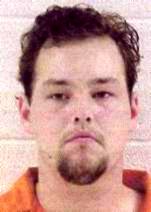
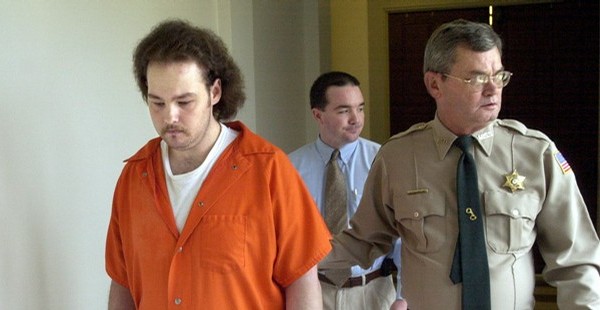
Michael BRAWNER Jr.
Classification: Mass murderer
Characteristics: Parricide
Number of victims: 4
Date of murders:
April 25, 2001
Date of arrest:
Same day
Date of birth: June 10, 1977
Victims profile: Barbara Craft, 23
(his ex-wife) / Paige Brawner, 3 (his daughter) / Jane
and Carl Craft, both 47 (ex-in laws)
Method of murder:
Shooting (.22
rifle)
Location: Tate County, Mississippi, USA
Status:
Executed
by lethal injection in Mississippi on June 12, 2012
United States Court of
Appeals For the Fifth Circuit
Brawner went to the home of his ex-wife, Barbara, who had custody of
their daughter Paige. They lived with her parents in Tate County.
Barbara had earlier threatened not to let Brawner around their
daughter.
He found no one at home and waited until Paige,
Barbara, and Barbara's mother pulled into the diveway. After a brief
conversation, Brawner became agitated and went to the truck and
brought back the rifle that he had taken from the house earlier that
day.
When he saw Jane walking toward the bedroom, he
shot her with the rifle. He then shot Barbara as she was coming toward
him, and went to where Jane had fallen and “put her out of her
misery.” After this, he shot Barbara again and took Paige, who had
witnessed the murders, to her bedroom and told her to watch TV.
After Brawner determined that Paige would be able
to identify him, and in his words, he “was just bent on killing,” he
went back into the bedroom and shot his daughter twice, killing her.
He then waited in the house until Carl came home from work, and when
Carl walked through the door, Brawner shot and killed him. Brawner
stole approximately $300 from Carl's wallet, Jane's wedding ring, and
food stamps out of Barbara's purse. He took Windex from the kitchen
and attempted to wipe away any fingerprints he may have left.
Brawner then returned to his apartment in
Southaven, where he gave the stolen wedding ring to his girlfriend,
asked her to marry him. When he was later questioned by police,
Brawner admitted the murders.
Citations:
Brawner v. State, 872 So.2d 1 (Miss. 2004). (Direct Appeal) Brawner v. State, 947 So.2d 254 (Miss. 2006). (PCR) Brawner v. Epps, 439 Fed.Appx. 396 (Miss. 2011). (Habeas)
Final/Special Meal:
One DiGiorno Italian Style Favorites Chicken Parmesan pizza, One
DiGiorno Italian Style Favorites Meat Trio pizza, a small salad
(lettuce, pickles, black olives, tomatoes, shredded cheddar cheese
with Ranch dressing), small bottle Tabasco sauce, ½ gallon brewed iced
sweet tea and 1 pint Breyers Blast Reese’s Peanut Butter Cup ice
cream.
Final Words:
In his final statement, Brawner said he wished to apologize to the
victim’s family, but could not change what he had done. “Maybe this
will bring you a little peace. Thank you.
ClarkProsecutor.org
Mississippi Department of Corrections
Inmate: JAN MICHAEL BRAWNER
MDOC# R3430
Race: WHITE
Sex: MALE
Date of Birth: 06/10/1977
Height: 6' 1"
Weight: 218
Complexion: FAIR
Build: LARGE
Eye Color: BLUE
Hair Color: BROWN
Entry Date: 04-12-02
Mississippi Department of Corrections
Factual Background of the Case
In December 1997, Jan Michael Brawner married
Barbara Craft, and in March 1998, their daughter, Paige, was born.
Brawner and Barbara divorced in March 2001, she was awarded custody of
Paige, and they lived with Barbara's parents, Carl and Jane Craft, at
their home in Tate County.
At the time of the murders, Brawner was living with
his girlfriend in Southaven. According to Brawner, they were having
financial difficulties, and on top of that, he had also been told by
Barbara that she did not want him around Paige. He testified that
pressure on him was building because nothing was going right.
On the day before the murders, Brawner left his
apartment in Southaven at 3:00 a.m. and headed toward the Crafts’
house, about an hour away. He testified that he thought he might be
able to borrow money from Carl, although in a prior statement he said
he had planned to rob Carl. While waiting on the Craft’s front steps
from approximately 4:00 a.m. until 7:00 a.m., he took a 7-mm Ruger
rifle out of Carl's truck and emptied the bullets from it, because “he
didn't want to get shot.” A dog started barking, and Brawner hid until
Carl went back inside, then ran away, thinking Carl might be getting a
gun. He then drove back to his apartment.
Around noon the following day, April 25, 2001,
Brawner again drove to the Crafts’ house, and knocked on the door, but
no one was home. He then put on rubber gloves that he had purchased
earlier that day, entered the house, and took a .22 rifle. He then
went to Carl's workplace and asked him if it would be OK to go to the
house to wait for Barbara and Paige so that he could see his daughter,
to which Carl agreed.
Since Barbara and Paige did not return, Brawner
decided to leave, and as he was doing so, Barbara, Paige, and Jane
pulled into the drive. After a brief conversation with Jane and
Barbara, Brawner became agitated and went to the truck and brought
back the rifle that he had taken from the Crafts’ house earlier that
day. Just as he told Barbara that she was not going to take Paige away
from him, he saw Jane walking toward the bedroom and shot her with the
rifle. He said he then shot Barbara as she was coming toward him, and
went to where Jane had fallen and “put her out of her misery.” After
this, he shot Barbara again and took Paige, who had witnessed the
murders, to her bedroom and told her to watch TV. After Brawner
determined that Paige would be able to identify him, and in his words,
he “was just bent on killing,” he went back into the bedroom and shot
his daughter twice, killing her. He then waited in the house until
Carl came home from work, and when Carl walked through the door,
Brawner shot and killed him.
Brawner stole approximately $300 from Carl's
wallet, Jane's wedding ring, and food stamps out of Barbara's purse.
He took Windex from the kitchen and attempted to wipe away any
fingerprints he may have left. Brawner then returned to his apartment
in Southaven, where he gave the stolen wedding ring to his girlfriend,
asked her to marry him.
Brawner was suspected of the murders and detained
by the police. While he was being held at the Tate County jail,
Brawner admitted to the shootings in a statement made to the Chief
Deputy of the Tate County Sheriff's Department. Brawner also testified
on his own behalf at trial and gave essentially the same account of
the events as described above. Jan Michael Brawner was convicted on
April 11, 2002, of four counts of capital murder, and subsequent to a
sentencing hearing, was sentenced to death.
Execution by Lethal Injection
In 1998, the Mississippi Legislature amended
Section 99-19-51, Mississippi Code of 1972, as follows: 99-19-51. The
manner of inflicting the punishment of death shall be by continuous
intravenous administration of a lethal quantity of an ultra
short-acting barbiturate or other similar drug in combination with a
chemical para-lytic agent until death is pronounced by the county
coroner where the execution takes place or by a licensed physician
according to accepted standards of medical practice.
Contents of Syringes for Lethal Injection
Anesthetic - Pentobarbital – 2.0 Gm.
Normal Saline – 10-15 cc.
Pavulon – 50 mgm per 50 cc.
Potassium chloride – 50 milequiv. per 50 cc.
Lethal injection is the world’s newest method of
execution. While the concept of lethal injection was first pro-posed
in 1888, it was not until 1977 that Oklahoma became the first state to
adopt lethal-injection legislation. Five years later in 1982, Texas
performed the first execution by lethal injection. Lethal injection
has quickly be-come the most common method of execution in the United
States. Thirty-five of thirty-six states that have a death penalty use
lethal injection as the primary form of execution. The U.S. federal
government and U.S. mili-tary also use lethal injection. According to
data from the U.S. Department of Justice, 41 of 42 people executed in
the United States in 2007 died by lethal injection.
While lethal injection initially gained popularity
as a more humane form of execution, in recent years there has been
increasing opposition to lethal injection with opponents arguing that
instead of being humane it results in an extremely painful death for
the inmate. In September 2007 the United States Supreme Court agreed
to hear the case of Baze v. Rees to determine whether or not
Kentucky’s three drug-protocol for lethal injections amounts to cruel
and unusual punishment in violation of the Eighth Amendment to the
United State Constitution. As a result of the Supreme Court’s decision
to hear this case, executions in the United States came to a brief
halt in late September 2007. On April 16, 2008, the Supreme Court
ruled in Baze holding that Kentucky’s three-drug protocol for
administering lethal injections does not violate the Eighth Amendment.
The result of this ruling was to lift the de facto moratorium on
executions in the United States. The State of Georgia became the first
state to carry out an execution since the Court’s Baze decision when
William Earl Lynd was executed by lethal injection on May 6, 2008.
Chronological Sequence of Events of Execution
48 Hours Prior to Execution The condemned inmate
shall be transferred to a holding cell.
24 Hours Prior to Execution Institution is placed in
emergency/lockdown status.
1200 Hours Day of Execution Designated media center at institution
opens.
1500 Hours Day of Execution Inmate’s attorney of record and chaplain
allowed to visit.
1600 Hours Day of Execution Inmate is served last meal and allowed to
shower.
1630 Hours Day of Execution MDOC clergy allowed to visit upon request
of inmate.
1730 Hours Day of Execution Witnesses are transported to Unit 17.
1800 Hours Day of Execution Inmate is escorted from holding cell to
execution room.
1800 Witnesses are escorted into observation room.
1900 Hours Day of Execution A post execution briefing is conducted
with media witnesses.
2030 Hours Day of Execution Designated media center at institution is
closed.
Since Mississippi joined the Union in 1817, several
forms of execution have been used. Hanging was the first form of
execution used in Mississippi. The state continued to execute
prisoners sentenced to die by hanging until October 11, 1940, when
Hilton Fortenberry, convicted of capital murder in Jefferson Davis
County, became the first prisoner to be executed in the electric
chair. Between 1940 and February 5, 1952, the old oak electric chair
was moved from county to county to conduct execu-tions. During the
12-year span, 75 prisoners were executed for offenses punishable by
death. In 1954, the gas chamber was installed at the Mississippi State
Penitentiary, in Parchman, Miss. It replaced the electric chair, which
today is on display at the Mississippi Law Enforcement Training
Academy. Gearald A. Gallego became the first prisoner to be executed
by lethal gas on March 3, 1955. During the course of the next 34
years, 35 death row inmates were executed in the gas cham-ber. Leo
Edwards became the last person to be executed in the gas chamber at
the Mississippi State Penitentiary on June 21, 1989.
On July 1, 1984, the Mississippi Legislature
partially amended lethal gas as the state’s form of execu-tion in §
99-19-51 of the Mississippi Code. The new amendment provided that
individuals who com-mitted capital punishment crimes after the
effective date of the new law and who were subsequently sentenced to
death thereafter would be executed by lethal injection. On March 18,
1998, the Mississippi Legislature amended the manner of execution by
removing the provision lethal gas as a form of execution.
Mississippi Death Row Demographics
Youngest on Death Row: Terry Pitchford, MDOC
#117778, age 26
Oldest on Death Row: Richard Jordan, MDOC #30990, age 66
Longest serving Death Row inmate: Richard Jordan, MDOC #30990 (March
2, 1977: 35 Years)
Total Inmates on Death Row = 52
MALE:50
FEMALE: 2
WHITE:22
BLACK: 29
ASIAN: 1
Mississippi State Penitentiary
The Mississippi State Penitentiary (MSP) is
Mississippi’s oldest of the state’s three institutions and is located
on approximately 18,000 acres in Parchman, Miss., in Sunflower County.
In 1900, the Mississippi Legislature appropriated $80,000 for the
purchase of 3,789 acres known as the Parch-man Plantation. The
Superintendent of the Mississippi State Penitentiary and Deputy
Commissioner of Institutions is E.L. Sparkman. There are approximately
868 employees at MSP. MSP is divided into two areas: AREA WARDEN UNITS
Area I - Warden Earnest Lee Unit 29 Area II - Warden Timothy Morris
Units 25, 26, 28, 30, 31, and 42 The total bed capacity at MSP is
currently 4,648. The smallest unit, Unit 42, houses 56 inmates and is
the institution’s hospital. The largest unit, Unit 29, houses 1,561
minimum, medium, close-custody and Death Row inmates. MSP houses male
offenders classified to all custody levels and Long Term Segregation
and death row. All male offenders sentenced to death are housed at
MSP. All female offenders sentenced to death are housed at the Central
Mississippi Correctional Facility in Pearl, Miss. The majority of the
farming activity involving Agricultural Enterprises takes place at
MSP. Programs offered at MSP include alcohol and drug treatment, adult
basic education, inmate legal assistance, pre-release, therapeutic
recreation, religious/faith programs and vocational skills training.
Mississippi Prison Industries operates a work program at the MSP and
utilizes more than 296,400 inmate man-hours in its textile, metal
fabrication and wood working shops. On a monthly average, 190 inmates
work in these shops.
Jan Brawner Executed For Killing Paige Brawner,
Barbara Craft, Carl Craft, Jane Craft In Mississippi
By Holbrook Mohr - HuffingtonjPost.com
June 12, 2012
PARCHMAN, Miss. -- Mississippi executed a man
Tuesday for fatally shooting his 3-year-old daughter, his ex-wife and
her parents in a crime in which authorities say he also stole his
slain mother-in-law's wedding ring and used it to propose marriage to
his girlfriend. Jan Michael Brawner, 34, was pronounced dead at 6:18
p.m. CDT after receiving a chemical injection at the Mississippi State
Penitentiary at Parchman. Brawner had admitted to the killings and
said he didn't deserve to live after shooting his daughter, Paige, his
ex-wife, Barbara Craft, and her parents, Carl and Jane Craft, at their
house on April 25, 2001.
In his final statement, Brawner said he wished to
apologize to the victims' family, adding he could not change what he
had done. "Maybe this will bring you a little peace. Thank you," he
said as he lay strapped to a gurney. When the drugs were administered,
he appeared to take a deep breath. His mouth opened wide for a moment
and then his head tilted to the side. A brother of Brawner's ex-wife
witnessed the execution. None of his relatives were present. Kathy
Jaco Sigler, Jane Craft's sister, issued a statement afterward saying
her family will never understand why the killings happened and
referred to Christian scripture. "Man has a choice of good and evil.
Michael chose evil while my family chose good. God's peace prevails
over this evil because we know in our hearts that my sister and her
family dwell in heaven with the Lord," the statement said.
Before the execution, Brawner appeared talkative
and said he deserved to die for what he'd done, Corrections
Commissioner Chris Epps said. Brawner also said he wasn't on drugs or
alcohol when he killed, but snapped under the stress of a divorce and
restraining order, according to Epps.
Court records based on Brawner's testimony and
statements to police describe the killings and the series of events
leading up to them like this: Brawner left his apartment in Southaven,
just south of Memphis, Tenn., about 3 a.m. the day before the killings
and drove an hour to the Crafts' house because he was having financial
trouble and found out his ex-wife planned to stop him from seeing the
child. He emptied bullets from a 7-mm rifle in his father-in-law's
truck and fled when a dog began barking. He drove back to the house
the next day and knocked on the door, but nobody was home. He put on
rubber gloves and went through a back door. He took a .22 caliber
rifle from the house, then drove to Carl Craft's job and asked if he
could go to the house to wait for his ex-wife so he could see his
daughter. Carl Craft agreed. Brawner went back to the house. When his
ex-wife, her mother and his daughter arrived, Brawner became agitated.
He shot his ex-wife's mother first, then shot his ex-wife. She had
wounds to her hands from trying to protect herself. He walked across
the room to his former mother-in-law and "put her out of her misery."
Then he shot his ex-wife again.
The child had blood splatter on her from the
shootings and said, "Daddy, you hurt me." He took his daughter to a
bedroom and told her to watch television, but decided she could
identify him as the killer. He shot her in the chin and head. He
killed Carl Craft when he arrived from work. He stole Carl Craft's
wallet and took his former mother-in-law's wedding ring off her
finger. He gave the ring to his girlfriend and proposed marriage later
that day, records show.
Mississippi's governor and the U.S. Supreme Court
both declined to stop Tuesday's execution. The Mississippi Supreme
Court on Monday refused to stop it.
Mississippi Executes Jan Michael Brawner
By Daniel Cherry - MpbOnline.org
June 13, 2012
A Mississippi man convicted of four counts of
capital murder is now dead. Jan Michael Brawner was put to death last
night by lethal injection at the Mississippi Penitentiary in Parchman.
MPB’s Daniel Cherry witnessed the execution. Wearing the standard red
jumpsuit, convicted murderer Jan Michael Brawner was escorted into the
execution chamber around 6 last night. He was strapped securely to the
injection gurney, and when asked if he had any last words, he said to
the victims' family, quote, "I can’t bring anything back. I can’t
change what I’ve done. Maybe this will bring you a little peace."
Corrections Commissioner Chris Epps met with Brawner throughout the
day. Epps says Brawner never denied the crimes and showed remorse for
what he did. "The last conversation I had with the death row inmate
Brawner was that, I asked him was he ready to go, and he said he was
prepared. And he said he deserved to be executed for what he did."
In 2001, according to court documents, Brawner left
his Southaven apartment, and drove an hour to the Tate County town of
Sarah to confront his ex-wife at her parents' home. While arguing over
custody of their three year old daughter, Brawner shot his former
mother in law before turning the gun on his ex-wife. He then shot them
both again to make sure they were dead. Brawner's daughter witnessed
both of the shootings. He sent the daughter away to watch TV before
realizing she could identify him…that’s when he went back and shot his
daughter twice in the head. He waited on his former father in law to
return home from work and shot him as he walked through the door. John
Champion is the District Attorney who prosecuted the case 10 years
ago. "He went even so far as to steal the wallet from his
ex-father-in-law and took his ex-mother-in-law's wedding ring off, and
actually went up to Southaven that night and proposed to his
girlfriend and gave her that ring." David Craft is the only family
member who came to witness the execution. It was Craft's parents,
sister and niece who were killed a decade ago. Tate County Sheriff
Brad Lance says the quadruple murder is one of the worst cases he's
ever worked. "What we saw, or what I saw tonight was justice for the
citizens of Tate County, for the State of Mississippi, and, most
importantly, for the victims and the Craft family. We don't have a lot
of violent crime in our county. This crime shook our whole community
terribly. I hope this brings closure to the Craft family."
Following the execution the family issued a
statement saying they will never understand why the killings happened.
The statement is read by Dilloworth Ricks, Victims Services Director.
"Man has a choice of good and evil. Michael chose evil, while my
family chose good. God's peace prevails over this evil because we know
in our hearts that my sister and her family dwell in Heaven with the
Lord."
But not everyone at Parchman was satisfied with the execution.
Sister Maureen Delaney of Tutwiler was one of nearly a dozen people
who stood outside to protest and pray for Brawner. Sister Delaney says
her faith won't allow her to support the death penalty. "I guess some
people still think that's the way to do things. Is that if you kill
somebody then you execute them too. It's, I think, pretty much an Old
Testament mentality of an eye for an eye and a tooth for a tooth.
That's not the message of the Gospel to me."
The United States Supreme Court denied Brawner's
petition for a stay of execution. Shortly after 6 o'clock, the lethal
drug cocktail rushed into Jan Michael Brawner's veins. Brawner's eyes
shut, his head drooped to the side, and in a matter of minutes, he
breathed his last. At 6:18 he was pronounced dead. District Attorney
John Champion hopes this will bring peace to the Craft family. "I've
been thinking about this for a while, and I've thought more about
David (Craft) and his family, and just hoping it would do them some
good to get this behind them."
Immediately after the execution, David Craft
appeared to have that peace. With tears in his eyes, he hugged
Champion and other law enforcement officers who helped bring Brawner
to justice a decade ago.
Inmate denied stay of execution for killing
daughter, ex-wife, in-laws
By Monica Land - TheMississippiLink.com
June 13, 2012
PARCHMAN – A death row inmate convicted of killing
his 3-year-old-daughter, his ex-wife and her parents was executed
Tuesday night despite repeated appeals by his attorney to the
Mississippi Supreme Court and the U.S. Supreme Court. Jan Michael
Brawner was pronounced dead at 6:18 p.m. at Mississippi State
Penitentiary at Parchman.
Prison officials said he Tuesday morning, Brawner
had grits, a cinnamon roll and milk for breakfast. For lunch he ate
two slices of turkey ham, squash and tomatoes, a salad, white bread,
and punch. For his last meal, Brawner requested and ate: One DiGiorno
Italian Style Favorites Chicken Parmesan pizza, one DiGiorno Italian
Style Favorites Meat Trio pizza, a small salad (lettuce, pickles,
black olives, tomatoes, shredded cheddar cheese with Ranch dressing),
a small bottle of Tabasco sauce, a half gallon of brewed iced sweet
tea and one pint Breyer’s Blast Reese’s Peanut Butter Cup ice cream.
Brawner denied a shower, but requested a sedative.
Guards outside his cell said Brawner was “in a good mood and
talkative.” He talked about the murders he was convicted of.
The Mississippi Supreme Court denied Brawner’s
request to stay Tuesday’s execution and he was the second inmate to
die by lethal injection in a week. The Associated Press reported that
the court’s decision Monday capped a round of legal briefs filed in
Brawner’s case and that Brawner appeared to be the first person
executed in the U.S. on a tie vote of judges. The Mississippi Supreme
Court voted 4-4 last week to deny a rehearing in the case. Justice Ann
Lamar didn’t vote. She was district attorney in Tate County when the
slayings occurred. By the time of the trial in April 2002, she was a
circuit court judge, though she didn’t preside over the trial. In
court procedures, a tie vote usually means an earlier ruling stands.
Brawner’s lawyer, David Calder argued that tie votes favor inmates in
death penalty cases and that the tie vote had nothing to do with any
lower court rulings. Calder asked the justices to suspend court rules
that prohibit people from asking a second time for a rehearing and to
issue a stay of execution. The court on Monday voted 4-3 against the
motion to suspend the rules and against a stay of execution. Calder
wanted the court to issue the stay so that he could have a hearing to
argue that Brawner’s previous lawyer didn’t do a good job.
Brawner was sentenced to death for the April 25,
2001, shooting deaths of his daughter, Paige, his ex-wife, Barbara
Craft, and her parents, Carl and Jane Craft. Brawner killed them in
their in Tate County home, stole about $300 and used his former
mother-in-law’s wedding ring to propose to his girlfriend the same
day, according to court records. Brawner later admitted to the
killings.
During the sentencing phase of his trial, he
declined to have anyone testify on his behalf with mitigating
testimony, which could have been used to sway jurors to spare his
life. “As far as life, I don’t feel that I deserve life to live,”
Brawner testified at the time. Subsequent lawyers have argued that
Brawner’s trial attorney did a poor job by not calling such mitigating
witnesses as his mother and a psychiatrist, who could have testified
about things that had happened to him in life.
Brawner went to his former in-laws’ home after
learning his ex-wife planned to stop him from seeing their child. He
gave conflicting statements to police and during testimony, saying at
times he wanted to borrow money and at other times that he was going
to rob his father-in-law. Court records said he was waiting at the
Crafts’ home when his ex-wife arrived with her mother and the child.
After becoming agitated he went to his car and got a rifle he had
stolen from the house earlier in the day. He shot the former
mother-in-law first, then his ex-wife. His daughter, Paige, watched
the killings, court records said. “After Brawner determined that Paige
would be able to identify him, and in his words, he ‘was just bent on
killing,’ he went back into the bedroom and shot his daughter twice,
in the chin and head, killing her,” court records said. He shot and
killed Carl Craft when he got home from work and stole his wallet and
the ring.
Brawner tried to use an insanity defense at trial,
but the Mississippi State Hospital and a court-appointed psychiatrist,
chosen by the defense, found that Brawner was neither insane nor
incompetent to stand trial. On Tuesday, Brawner made several calls to
and visited with his lawyers. In his final statement, Brawner said he
wished to apologize to the victims’ family, adding he could not change
what he had done. “Maybe this will bring you a little peace. Thank
you,” he said as he lay strapped to a gurney, the Washington Post
reported.
When the drugs were administered, he appeared to
take a deep breath. His mouth opened wide for a moment and then his
head tilted to the side. A brother of Brawner’s ex-wife witnessed the
execution. None of his relatives were present. Brawner requested that
his body be released to Mississippi Mortuary Service, in Pearl.
Brawner v. State, 872 So.2d 1 (Miss.
2004). (Direct Appeal)
Background: Defendant was convicted in the Circuit
Court, Tate County, Andrew C. Baker, J., of four counts of capital
murder and sentenced to death. Defendant appealed.
Holdings: The Supreme Court, en banc, Cobb, P.J.,
held that: (1) trial court did not abuse its discretion in denying
defendant's motion to sever capital murder charge, which was based on
willful murder of child victim while engaged in commission of
felonious abuse and/or battery of child, from other three capital
murder charges that were based on willful murder while engaged in
crime of robbery; (2) defendant failed to make prima facie showing
that State engaged in gender discrimination in its use of peremptory
strikes; (3) trial court did not abuse its discretion by admitting
photographs of bodies of each of four victims as found by police or
allowing such photographs to be displayed using a slide projector; (4)
defendant could be convicted of capital murder for murder of child
while engaged in underlying felony of child abuse; and (5) sentence of
death was not excessive or disproportionate to penalty imposed in
similar cases. Affirmed. Graves, J., concurred in result.
EN BANC. COBB, Presiding Justice, for the Court.
¶ 1. Jan Michael Brawner, Jr. was indicted on four
counts of capital murder. Count one was for the willful murder of his
three-year-old daughter, Candice Paige Brawner, while engaged in the
commission of the crime of felonious abuse and/or battery of the
child. Counts two, three, and four were identical: willful murder
while engaged in the commission of the crime of robbery of his
ex-mother-in-law, Martha Jane Craft; his ex-wife, Barbara Faye
Brawner; and his ex-father-in-law, Carl Albert Craft.
¶ 2. Brawner was tried before a jury in the Circuit
Court of Tate County, Mississippi, and was found guilty on all four
counts of capital murder. In a separate sentencing hearing, the jury
returned the death penalty on all four counts. Brawner's Motion for
Judgment Notwithstanding the Verdict or in the Alternative, for a New
Trial was denied, and he then timely appealed to this Court.
FACTS
¶ 3. Brawner was 24 years old at the time of the
murders. He was raised by his stepfather in Southaven, Mississippi.
Brawner finished the ninth grade, but failed an attempt to obtain a
GED, and he had worked mostly as a forklift operator in warehouses. In
December, 1997, he married Barbara Craft, and in March of 1998, their
daughter, Paige, was born. Brawner and Barbara were divorced in March
of 2001, and she was awarded custody of Paige. Thereafter, Barbara and
Paige lived with Barbara's parents, Carl and Jane Craft, in their home
in Tate County. Brawner had also lived with the Crafts off and on
during his marriage to Barbara.
¶ 4. At the time of the murders, Brawner was living
with June Fillyaw, whom he met in 2000 through a “date line” on a
local radio station. They lived in an apartment in Southaven, and
according to Brawner, were having financial difficulties. Brawner had
also been told by Barbara that she did not want him around Paige, and
he testified that pressure on him was building because nothing was
going right.
¶ 5. On the day before the murders, Brawner left
his apartment in Southaven at 3:00 a.m. and headed toward the Craft
house, about an hour away. He testified that he thought he might be
able to borrow money from Carl Craft, although in his prior statement
he said he had planned to rob Carl. Brawner parked the U-haul truck he
was driving some distance from the house and walked the rest of the
way to the house, where he sat on the front steps from approximately
4:00 a.m. until 7:00 a.m. During this time, he took a 7 mm Ruger rifle
out of Carl's truck and emptied the bullets from it, because “he
didn't want to get shot.” When he heard Carl coming out, he hid behind
Carl's truck. A dog started barking, and Carl started looking around
for the cause of the dog's barking. When Carl went back inside,
Brawner ran away, thinking Carl might be getting a gun. He then drove
back to his apartment.
¶ 6. The following day, April 25, 2001, Brawner
again drove the U-haul to the Craft house, this time around noon. He
knocked on the door, but no one was home. He went to the truck to get
some rubber gloves that he had purchased earlier in the day, then
using the gloves, “took the slats out of the back door,” entered the
house, and took a .22 rifle. He left the same way he came in, putting
the slats back into the door. He then went to Carl's place of work and
talked to him, asking if it would be OK for him to go out to the house
to wait for Barbara and Paige so that he could see his daughter. Carl
said yes.
¶ 7. Brawner went back to the Craft house and
waited. When Barbara and Paige did not return, he decided to write a
note and leave. About that time Barbara, Paige, and Jane Craft pulled
into the drive. Jane asked Brawner if he had been to their house the
previous day, and he lied, saying “no.” Barbara informed him that
there was a restraining order against him, and he was not supposed to
be there. He said he had a book to give Paige, then went to the truck
and retrieved the book. At some point when they had all gone into the
house, Jane again asked Brawner if he had been at the house the
previous day. At this point Brawner became agitated and went to the
truck and brought back the rifle that he had taken from the Craft
house earlier that day.
¶ 8. When Barbara asked him “what is that,” he said
it was her dad's gun. He then told Barbara that she was not going to
take Paige away from him. At that moment he saw Jane walking toward
the bedroom and shot her with the rifle. He said he then saw Barbara
coming toward him, and shot her. He then went to where Jane had fallen
and “put her out of her misery.” After this, he went back to where
Barbara had fallen onto the couch and shot her again. Brawner recalled
Paige looking up at him and holding up her left arm, which was sprayed
with blood, and saying “Daddy you hurt me.” Brawner then took her to
her bedroom and told her to watch TV, and he went back to the living
room and paced. After Brawner determined that Paige would be able to
identify him, and in his words, he “was just bent on killing,” he went
back into the bedroom and shot his daughter twice, killing her. He
then waited in the house until Carl came home from work, and when Carl
walked through the door, Brawner shot and killed him.
¶ 9. Brawner stole approximately $300 from Carl's
wallet, stole Jane's wedding ring from her finger, and stole food
stamps out of Barbara's purse. He took Windex from the kitchen and
attempted to wipe away any fingerprints he may have left. Brawner then
returned to his apartment in Southaven, where he gave the stolen
wedding ring to June Fillyaw, asked her to marry him, and told her
that he bought the ring at a pawn shop. June testified at trial that
Brawner was not acting unusual that evening, but he seemed tired.
¶ 10. David Craft, Barbara Brawner's brother, found
the bodies the following morning. He told police that he suspected
Brawner and told them where Brawner lived. When they arrested Brawner,
they searched the U-haul and June's car and found the .22 rifle and
latex gloves. June also told police that Brawner had given her the
ring.
¶ 11. While he was being held in the Tate County
jail, Brawner admitted the shootings in a statement made to the Chief
Deputy of the Tate County Sheriff's Department, on November 15, 2001,
approximately six months after the murders. Brawner completed a jail
inmate request form asking to “speak with [chief deputy] Brad Lance
whenever possible.” Lance gave Brawner Miranda warnings, after which
Brawner gave a taped statement detailing the events of April 24-25,
2001. Brawner's motion to suppress this statement was denied by the
trial court and is not an issue on appeal. Brawner also testified on
his own behalf at trial and gave essentially the same account of the
events as described above.
¶ 12. Brawner raised the insanity defense at trial,
although he testified that he knew at the time of the shootings that
the shootings were wrong. The trial judge found Brawner competent
based on information furnished by the Mississippi State Hospital,
which certified Brawner competent to stand trial, and mentally
responsible for the acts at the time they were committed.
Additionally, a court-appointed psychiatrist, chosen by defense
counsel, reported that Brawner was neither insane nor incompetent to
stand trial.
DISCUSSION
¶ 13. Convictions of capital murder and sentences
of death, when appealed to this Court, are subject to heightened
scrutiny. Under this method of review, all bona fide doubts are to be
resolved in favor of the accused because “what may be harmless error
in a case with less at stake becomes reversible error when the penalty
is death.” Balfour v. State, 598 So.2d 731, 739 (Miss.1992). In this
case, there are no bona fide doubts. We affirm on all issues.
¶ 14. Brawner raises eight assignments of error on
appeal.
I. WHETHER THE TRIAL COURT ERRED IN DENYING
BRAWNER'S MOTION TO SEVER COUNT ONE OF THE INDICTMENT.
¶ 15. Brawner filed a motion to sever count one,
the willful murder of Candice Paige Brawner while engaged in the
commission of the crime of felonious abuse and/or battery of a child.
Brawner argues that he did not kill Paige while in the commission of
the crime of felonious abuse and/or battery of a child, but simply
shot her, killing her, which would constitute simple murder. Brawner
argues that counts two, three, and four involve the underlying felony
of robbery, which is not found in count one, and thus count one is not
based upon the same acts or transactions connected together or
constituting parts of a common scheme or plan as required by Miss.Code
Ann. § 99-7-2 (Rev.2000). Brawner also asserts that failure to sever
count one violated his right to due process and a fair trial pursuant
to the Fifth and Sixth Amendments to the United States Constitution
and Article 3, Sections 14 and 26 of the Mississippi Constitution of
1890, but he offers no case law that supports this assertion.
Additionally, Brawner concedes that capital murder may be charged in a
multi-count indictment per Woodward v. State, 533 So.2d 418, 421-23
(Miss.1988).
¶ 16. The State argues that all four murders
occurred in the same location and at nearly the same time, and that
such murders constitute a common scheme under § 99-7-2. The State also
claims that it would be impossible to separate evidence concerning the
death of Paige Brawner from the deaths of the others, thus making it
impractical to try the cases separately.
¶ 17. The statute that controls multi-count
indictments states: (1) Two (2) or more offenses which are triable in
the same court may be charged in the same indictment with a separate
count for each offense if: (a) the offenses are based on the same act
or transaction; or (b) the offenses are based on two (2) or more acts
or transactions connected together or constituting parts of a common
scheme or plan. (2) Where two (2) or more offenses are properly
charged in separate counts of a single indictment, all such charges
may be tried in a single proceeding. ... Miss.Code Ann. § 99-7-2
(Rev.2000). In Corley v. State, 584 So.2d 769, 772 (Miss.1991), this
Court identified a procedure by which a multi-count indictment may be
challenged:
When a defendant raises the issue of severance, we
recommend that a trial court hold a hearing on the issue. The State,
then, has the burden of making a prima facie case showing that the
offenses charged fall within the language of the statute allowing
multi-count indictments. If the State meets its burden, a defendant
may rebut by showing that the offenses were separate and distinct acts
or transactions. In making its determination regarding severance, the
trial court should pay particular attention to whether the time period
between the occurrences is insignificant, whether the evidence proving
each count would be admissible to prove each of the other counts, and
whether the crimes are interwoven. See Allman v. State, 571 So.2d 244,
248 (Miss.1990); McCarty v. State, 554 So.2d 909, 914-16 (Miss.1989).
Corley, 584 So.2d at 772. Additionally, this Court instructed that if
this procedure were followed, the Court would review the trial court's
decision under the abuse of discretion standard, giving due deference
to the trial court's findings. In Corley, the defendant was charged
with two counts of attempting to intimidate witnesses. There were two
incidents, on the same day, where Corley allegedly almost ran down
different men who were to testify against him in an upcoming trial.
Although this Court stated that this was a close call, it held that
the trial court did not abuse its discretion in denying the motion for
severance.
¶ 18. In the present case, the trial court held a
full hearing on the issue. The killings occurred within a few hours
and were all part of the common scheme to rob Carl Craft and eliminate
any witnesses. Additionally, the murders are interwoven, and the
evidence of each murder would be admissible to prove the other murders
since all murders occurred at the same place and closely in time.
Brawner did not rebut these arguments but simply stated that the
killing of the child was not part of any plan or scheme to rob any of
the individuals in the Craft home. However, this statement is at odds
with Brawner's trial testimony that he killed the child because she
could identify him.
¶ 19. In Stevens v. State, 806 So.2d 1031
(Miss.2001), a case similar to the present one, this Court held that
four killings which took place in the same home at about the same
time, were the result of a common scheme or plan. In Stevens, the
defendant was indicted on four counts of capital murder and one count
of aggravated assault. The defendant was upset with his ex-wife over
the custody and support of their daughter and appeared one day at her
home with the alleged intent to kill her. The defendant shot and
killed his ex-wife, her husband and 11-year-old son, and the son's
12-year-old friend, who were all in the home at the time. The
defendant also shot his daughter in the back with a shotgun, although
she was able to escape the home through a window and survived. This
Court held that all charges were properly included in a multi-count
indictment, as the crimes undisputedly constituted a common scheme or
plan.
¶ 20. In Williams v. State, 794 So.2d 1019
(Miss.2001), defendants robbed one woman at gunpoint, then later that
evening, robbed and killed another woman, who had no relationship to
the first woman. Defendants were charged in a three count indictment
with conspiracy, robbery, and capital murder. This Court held that the
trial court did not err in trying count two (armed robbery of first
woman) and count three (capital murder of second woman) together. “The
crimes constituted a common scheme or plan to rob individuals that
evening.” Id. at 1025. Based on these cases, it is clear that in the
present case, there was a common scheme or plan to rob at least one of
the individuals and kill anyone who might be in the home at the time.
Thus, the trial court did not abuse its discretion in denying the
motion to sever.
II. WHETHER THE TRIAL COURT ERRED IN OVERRULING
BRAWNER'S OBJECTIONS TO THE STATE'S EXERCISE OF CERTAIN PEREMPTORY
CHALLENGES.
¶ 21. According to Batson v. Kentucky, 476 U.S. 79,
106 S.Ct. 1712, 90 L.Ed.2d 69 (1986), and its progeny, parties may not
exercise peremptory strikes for unconstitutionally discriminatory
reasons. In this case, the jury was composed of nine women and three
men. Nevertheless, Brawner asserted a gender-based objection to the
State's peremptory challenges of female jurors during the jury
selection process. Similarly, the State objected to Brawner's use of
peremptory strikes against males. The selection process and peremptory
challenges from the record are depicted in the table below:
Juror # State Defense Jurors Selected or and Sex
Strike Strike Reason for Challenge # 7-female D1 # 14-male D2 Knows
David Craft, a family member of deceased victims # 32-male S1 #
37-male Juror # 1 # 38-female S2 Juror pregnant. The previous week a
pregnant juror had problems with the lack of air conditioning in the
courtroom. # 65-male D3 Crime victim, family members are in law
enforcement # 68-female S3 Juror stated “four deaths are enough” #
79-female Juror # 2 # 81-female Juror # 3 # 86-female Juror # 4 #
91-female Juror # 5 # 105-male D4 Previously a juror and found a
defendant guilty # 107-female D5 Previously a juror and found a
defendant guilty # 108-female S4 Juror's brother was convicted of
murder # 111-male D6 Crime victim # 112-female Juror # 6 # 120-female
S5 Stated she thinks life w/o parole is worse than death # 122-female
S6 Information from outside source (local law enforcement) said she
would not make a good juror in a death penalty case # 123-male Juror #
7 # 127-female Juror # 8 # 157-female D7 # 169-female S7 Relative in
law enforcement expressed concern as to whether she could consider the
death penalty # 171-female D8 # 172-female Juror # 9 # 176-female S8
Not employed, stated it would be a hardship for her to sit on the jury
# 189-male S9 Son was prosecuted by State # 193-female S10 Preferred
the next juror up, also a female # 209-female D9 # 211-male D10 #
212-male D11 # 220-female Juror # 10 # 237-not in record S11 #
243-male D12 # 254-not in record S12 # 261-male Juror # 11 #
262-female Juror # 12
¶ 22. During the initial selection of 12 jurors,
the State struck three females and one male, tendering seven females
and five males. Brawner asserted that this was a prima facie showing
of gender bias against female jurors and challenged the strikes based
on J.E.B. v. Alabama ex rel. T.B., 511 U.S. 127, 114 S.Ct. 1419, 128
L.Ed.2d 89 (1994). Because seven of the 12 tendered jurors were
female, the judge declined to find a prima facie showing of gender
bias. Out of caution, however, the judge granted the State's request
to show on-the-record the non-discriminatory purpose for each strike
(see reasons in table above). The defense then struck four males and
two females from the tendered jurors, and the State objected that the
defense had struck every white male that had been tendered. The judge
then asked the defense to give the reason for each strike and found
that even though there seemed to be some bias, it was too weak to find
a pattern of gender discrimination.
¶ 23. The State next tendered one male and five
females, striking one male and five females during the process, and
the defense renewed its J.E.B. gender challenge. The State again, “out
of an abundance of caution” requested and was allowed to give reasons
for its strikes. The defense offered rebuttal to five of the State's
strikes. First, Brawner argued that juror number 38, who is pregnant,
had not shown that the baby would be born during the trial or that the
pregnancy would impact her ability to be a juror. The State countered
that a pregnant juror the previous week had had a hard time with the
heat, because the court room was not air conditioned. Next, Brawner
argued that jurors 108 and 176 were struck because they were
unemployed and that the State was being inconsistent because it
allowed other jurors who were retired, thus unemployed, to be seated.
The State countered that an additional reason for striking juror 108
was because her brother had been convicted of murder. Finally, the
State struck jurors # 122 and # 169 based on “outside information”
provided by law enforcement officials who knew these potential jurors
and thought they might be biased against the death penalty. Brawner
noted that after juror # 122 was questioned under oath by both parties
and the judge, she expressed no qualms about the death penalty.
Brawner argues that the State's use of “second hand hearsay” evidence
restricted his ability to rebut the State's reason for striking such a
juror.
¶ 24. The State offered an additional reason for
striking so many females: namely, that there were 13 out of 15 female
jurors in a row at one point, thus the State had little choice but to
strike female jurors. The judge again found no pattern of gender
discrimination.
¶ 25. The proper analysis to determine if
purposeful discrimination in the jury selection process has occurred
was set out in Batson v. Kentucky, 476 U.S. 79, 106 S.Ct. 1712, 90
L.Ed.2d 69 (1986), and has been reiterated by this Court in numerous
cases. See Berry v. State, 728 So.2d 568 (Miss.1999); Randall v.
State, 716 So.2d 584 (Miss.1998); McFarland v. State, 707 So.2d 166
(Miss.1998). Batson requires, as step one, that the defendant make a
prima facie showing that the prosecutor has exercised peremptory
challenges on the basis of race. In step two, if the requisite showing
has been made, the burden shifts to the prosecutor to articulate a
race-neutral explanation for striking the jurors in question. The
Batson procedure then authorizes the defendant to rebut the
“prosecutorial explanations, if he is able to do so.” Chisolm v.
State, 529 So.2d 635, 638 (Miss.1988). Finally, in step three, the
trial court must determine whether the defendant has carried his
burden of proving purposeful discrimination. The trial judge must
“make an on-the-record factual determination that each reason
proffered by the State for exercising a peremptory challenge is, in
fact, race neutral.” Hatten v. State, 628 So.2d 294, 295 (Miss.1993).
In other words, the trial judge must determine whether the reason
given is a pretext for discrimination. See Hernandez v. New York, 500
U.S. 352, 363, 111 S.Ct. 1859, 114 L.Ed.2d 395 (1991) (plurality).
¶ 26. Although Batson and Hatten concerned racial
discrimination, this Court held in Bounds v. State, 688 So.2d 1362
(Miss.1997), that all of the case law following and interpreting
Batson also applies to J.E.B. and gender discrimination issues, and
race-neutral reasons for striking a juror are also permissible
gender-neutral reasons. Id. As with race-based Batson claims, a party
alleging gender discrimination must make a prima facie showing of
intentional discrimination before the party exercising the challenge
is required to explain the basis for the strike. J.E.B., 511 U.S. at
145, 114 S.Ct. 1419. When an explanation is required, it need not rise
to the level of a “for cause” challenge; rather, it merely must be
based on a juror characteristic other than gender, and the proffered
explanation may not be pretextual. See Hernandez, 500 U.S. at 362-63,
111 S.Ct. 1859. The trial court's decision is accorded great deference
on review, and this Court will reverse only where the decision is
clearly erroneous. Puckett v. State, 788 So.2d 752, 756 (Miss.2000);
Collins v. State, 691 So.2d 918, 926 (Miss.1997).
¶ 27. As explained in Randall v. State, 716 So.2d
584, 587 (Miss.1998), to determine if a prima facie case of
discrimination has been shown, “the pivotal question is whether the
opponent of the strike has met the burden of showing that proponent
has engaged in a pattern of strikes based on race or gender, or in
other words ‘the totality of the relevant facts gives rise to an
inference of discriminatory purpose.’ ” Id. (quoting Batson, 476 U.S.
at 94, 106 S.Ct. at 1721). In the present case, the trial judge twice
found that the defense did not make a prima facie showing of gender
discrimination. In reviewing the trial court's determination, we agree
that there was no prima facie showing that the State engaged in a
pattern of strikes based on gender. The initial 36 jurors in the jury
pool, from which the twelve jurors were ultimately selected, consisted
of 22 females and 12 males (the gender of two of the prospective
jurors is not clear from the record), or slightly more than 60%
female. From these, a jury of nine females and 3 males was selected,
or 75% female. Upon the tender of the first twelve prospective jurors,
seven female and five male, the State used four strikes to eliminate
three women and one man. Upon the second tender of five women and one
man, the State struck five women and one man. In total the State
tendered 12 women and six men. Although the State struck substantially
more women than men, the fact that the selected jury incorporated a
proportionally larger percentage of women than were in the venire
contradicts the claim of gender discrimination.
¶ 28. Notwithstanding the finding that a prima
facie showing of gender bias had not been made, the judge nevertheless
allowed the State to offer, for the record, its gender-neutral reasons
for striking females.FN1 We view this as a good practice for two
reasons. First, if it becomes necessary to remand for a Batson
hearing, this record would be invaluable assistance to the trial judge
and would allay the difficulties caused by lost or misplaced
documentation and faded memories, which may lessen the credibility of
a party. Second, if on appeal this Court determines that a prima facie
case has been made, this procedure gives the Court a complete record
for reviewing the issue of pretext. As revealed in Lockett v. State,
517 So.2d 1346, 1349 (Miss.1987), this practice has been allowed since
a few days after Batson was decided in 1986. However, as held in
Stewart v. State, 662 So.2d 552, 559 (Miss.1995), “a trial judge does
not have the authority to invoke a Batson hearing on his own
initiative,” without the opposing party first making a prima facie
showing of discriminatory purpose. FN1. This procedure differs from
that identified in Hernandez, in which the State offered neutral
reasons without the trial judge first finding that a prima facie case
has been made. Hernandez, 500 U.S. at 359, 111 S.Ct. 1859 (“Once a
prosecutor has offered a race-neutral explanation for the peremptory
challenges and the trial court has ruled on the ultimate question of
intentional discrimination, the preliminary issue of whether the
defendant had made a prima facie showing becomes moot.”).
¶ 29. In Puckett v. State, 737 So.2d 322, 334-35
(Miss.1999), this Court stated that the voluntary action of the State
in providing race or gender neutral reasons for its strikes without a
finding of a prima facie showing of purposeful discrimination does not
lessen the burden on the defendant to establish the prima facie case.
“Upon review, this Court ‘must first ... determine[ ] that the
circumstances of the State's use of peremptory challenges against
minority venire persons created an inference of purposeful
discrimination.’ ” Id. (quoting Thorson v. State, 653 So.2d 876, 898
(Miss.1994)).
¶ 30. Where a trial judge finds that there is no
prima facie showing of discrimination, but then allows the opposite
party to make a record for appeal by stating their reasons for the
strikes, the trial judge must ensure that the record is complete by
allowing a rebuttal and by making specific on-the-record factual
findings for each strike as required by Hatten.
¶ 31. Although in the present case we have held
that there was no prima facie showing of discriminatory purpose in the
peremptory strikes made by the State, we nevertheless address the
issue of using outside information as the basis for striking jurors.
We have upheld this practice in previous cases. FN2 However, we feel
compelled to address the practice of striking potential jurors in
criminal trials based on information gathered from outside sources,
often law enforcement officers, when those sources are not revealed or
are not available for questioning. In addressing the gender-neutral
reasons offered by the prosecution for striking female jurors in one
case, we stated: FN2. See Hughes v. State, 735 So.2d 238 (Miss.1999)
(“[o]ur information was that [the female juror] is related to a victim
in a pending capital murder case here in Itawamba County, and law
enforcement feels that at this time because of that she is
unstable.”). See also Snow v. State, 800 So.2d 472, 482 (Miss.2001);
Brown v. State, 749 So.2d 82, 87 (Miss.1999); Lockett, 517 So.2d at
1352. Clearly, none of these reasons per se violates Batson, and so
the analysis moves to step three in order to determine whether, under
the totality of the circumstances, the reasons offered by the State
were mere pretexts for unlawful discrimination. Here they clearly were
not. The determination of pretext, like the other Batson elements,
hinges to a large extent on credibility. Purkett, 514 U.S. at 769, 115
S.Ct. 1769.FN3 Furthermore, as this Court stated in Mack v. State, the
relative strength of the prima facie case will color to a degree the
determination of the pretext. Mack v. State, 650 So.2d 1289, 1298
(Miss.1994). FN3. Purkett v. Elem, 514 U.S. 765, 115 S.Ct. 1769, 131
L.Ed.2d 834 (1995) (per curiam). Hughes v. State, 735 So.2d 238, 252
(Miss.1999). In this same light, we listed a number of possible
acceptable race-neutral bases for peremptory strikes in Appendix I of
Lockett. Even though Lockett was decided prior to our Hatten
requirement for on-the-record factual determinations, we stated that
“our opinion should not be construed to limit legitimate, racially
neutral reasons to the reasons in this case or to hold these reasons
to be automatically race-neutral in any other case.” Lockett, 517
So.2d at 1352 (emphasis added). While we do not hold today that our
trial judges should conduct a “mini-hearing” within a Batson hearing
each time a peremptory challenge is exercised based on information
gained from outside sources, we do depend on the trial courts to
exercise caution to ensure that peremptory challenges based on
information from outside sources is credible and supported by
on-the-record factual findings to this effect and that a complete
record is made on this issue. If in doubt about the validity of
outside information, the trial court should do what is necessary to
ensure the proposed reasons are non-pretextual. This may include
questioning the outside source on the record.
¶ 32. We find no error in the trial court's J.E.B.
analysis. No prima facie case of gender discrimination was shown by
Brawner. It is not necessary to review each gender neutral reason
offered by the State for its strikes.
III. WHETHER THE TRIAL COURT ERRED IN DENYING
BRAWNER'S ORE TENUS MOTION TO ABOLISH THE USE OF PEREMPTORY CHALLENGES
IN CRIMINAL CASES. [11]
¶ 33. During the selection of the jury, Brawner
raised this motion ore tenus asking the trial court to abolish the use
of peremptory challenges in criminal cases. The trial court denied the
motion. This issue was raised in Snow v. State, 800 So.2d 472, 483
(Miss.2001), where Snow asserted that the racial and gender
restrictions on peremptory challenges are not enforceable under the
three-step analysis provided by Batson, and, therefore, that the
appropriate remedy is the abolition of peremptory challenges. This
Court stated: No court, this Court included, has held the allowance of
peremptory challenges to be unconstitutional despite the argument made
by Justice Marshall in Batson to that end and we decline to take that
opportunity here, where the issue is presented for the first time on
appeal. See Batson, 476 U.S. at 104, 106 S.Ct. 1712 (Marshall, J.,
concurring)(writing that peremptory challenges should be eliminated in
order to end racial discrimination in the jury-selection process
because Batson could not do so alone). Snow, 800 So.2d at 483-84.FN4
Unlike Snow, Brawner brought up this issue during trial and in his
post trial motions. Brawner argues that Justice Sullivan of this Court
also supported restrictions on peremptory challenges, advocating their
complete elimination in his concurring opinion in Thorson v. State,
653 So.2d 876, 896-97 (Miss.1994). Additionally, Brawner argues that a
prosecutor may easily assert a purported race-neutral or
gender-neutral reason for striking a potential juror, but it is
difficult for the trial judge to determine if the reason given is in
good faith. FN4. In his concurring opinion in Batson, Justice Marshall
strongly advocated abolishing peremptory challenges in criminal cases,
saying “the inherent potential of peremptory challenges to distort the
jury process by permitting the exclusion of jurors on racial grounds
should ideally lead the Court to ban them entirely from the criminal
justice system.” Batson, 476 U.S. at 107, 106 S.Ct. at 1728, 90
L.Ed.2d at 94.
¶ 34. The U.S. Supreme Court has stated that the
right of peremptory challenge is not a constitutional guarantee.
Batson, 476 U.S. at 108, 106 S.Ct. at 1729, 90 L.Ed.2d at 95 (citing
Frazier v. United States, 335 U.S. 497, 69 S.Ct. 201, 93 L.Ed. 187
(1948)). However, notwithstanding Justice Marshall's concurring
opinion, the Batson majority upheld the use of peremptory challenges.
Additionally, in J.E.B. the Court maintained this position stating
“[o]ur conclusion that litigants may not strike potential jurors
solely on the basis of gender does not imply the elimination of all
peremptory challenges.” J.E.B., 511 U.S. at 143, 114 S.Ct. at 1429.
Brawner concedes that in the almost 20 years since Batson was decided
no court, including this Court, has adopted Justice Marshall's
position. Additionally, Brawner has not cited any authority that would
persuade this Court that the abolition of peremptory challenges would
necessarily secure a more fair or impartial jury for a defendant, and
the potential exists that it would have the opposite effect. As Chief
Justice Hawkins stated in his specially concurring opinion in Hatten
v. State, 628 So.2d 294 (Miss.1993), “[a] structure centuries in the
building should hardly be radically altered, much less demolished,
without painstaking study.” Id. at 305. Therefore, we decline to make
such a sweeping change.
IV. WHETHER THE TRIAL COURT ERRED IN DENYING
BRAWNER'S MOTION IN LIMINE TO EXCLUDE OR IN THE ALTERNATIVE TO LIMIT
THE INTRODUCTION OF PHOTOGRAPHIC EVIDENCE VIA SLIDE PROJECTOR.
V. WHETHER THE TRIAL COURT ERRED IN DENYING
BRAWNER'S MOTION IN LIMINE TO EXCLUDE OR IN THE ALTERNATIVE LIMIT THE
INTRODUCTION OF PHOTOGRAPHIC EVIDENCE.
¶ 35. Because these issues are intertwined, we will
analyze them together. Brawner filed a Motion in Limine to Exclude or
in the Alternative to Limit Introduction of Photographic Evidence. He
also filed a similar motion regarding introduction of photographic
evidence via a slide projector. Brawner argued that, since there was
no dispute as to what or who the photos depicted, where the photos
were taken or the manner of death, admitting them or enlarging them
using a slide projector would be irrelevant and inflammatory. The
trial court granted the motion to limit photographic evidence,
requiring the State to seek the court's ruling on the photographs to
be introduced, but subsequently allowed each of the State's
photographs to be admitted. The trial court denied the motion to
restrict the use of a slide projector, stating that use of a projector
is a modern day practice that has been used in the courtroom for at
least a quarter of a century to display evidence. The court also noted
that attempting to limit the size of the displayed image had in the
past produced blurry and useless photos.
¶ 36. The denial of a motion in limine is reviewed
for an abuse of discretion. McDowell v. State, 807 So.2d 413, 421
(Miss.2001). A motion in limine should be granted only when the trial
court finds two factors are present: (1) the material or evidence in
question will be inadmissible at a trial under the rules of evidence;
and (2) the mere offer, reference, or statements made during trial
concerning the material will tend to prejudice the jury. McGilberry v.
State, 797 So.2d 940, 942 (Miss.2001).
¶ 37. In support of his argument against admitting
the photographs, Brawner cites Sudduth v. State, 562 So.2d 67
(Miss.1990), in which this Court noted that “photographs of the victim
should not ordinarily be admitted into evidence where the killing is
not contradicted or denied, and the corpus delicti and the identity of
the deceased have been established.” Id. at 70. We also stated that
“photographs of bodies may nevertheless be admitted into evidence in
criminal cases where they have probative value and where they are not
so gruesome or used in such a way as to be overly prejudicial or
inflammatory.” Id. See Brown v. State, 690 So.2d 276, 289 (Miss.1996);
Alexander v. State, 610 So.2d 320, 338 (Miss.1992). Also, the
admissibility of photographs rests within the sound discretion of the
trial court. Jackson v. State, 672 So.2d 468, 485 (Miss.1996); Griffin
v. State, 557 So.2d 542, 549 (Miss.1990). Moreover, the decision of
the trial judge will be upheld unless there has been an abuse of
discretion. This standard is very difficult to meet. In fact, the
“discretion of the trial judge runs toward almost unlimited
admissibility regardless of the gruesomeness, repetitiveness, and the
extenuation of probative value.” Brown, 690 So.2d at 289; Holly v.
State, 671 So.2d 32, 41 (Miss.1996).
¶ 38. The photos in question depict: the body of
Carl Craft (exhibit 3); the body of Jane Craft (exhibit 12); and the
body of Paige Brawner (exhibit 15). Each of these pictures shows the
bodies as they were found by police, and there was only one picture of
each of the victims submitted. Brawner argues that there were other,
less gruesome and inflammatory photographs, that could have been used
instead of these, to which the State counters that there were other,
more gruesome, photographs that were not introduced. The State also
claims that as long as the court determines that a photograph is
admissible, it is the State's choice as to which photographs are used,
not the choice of the defendant.
¶ 39. As stated in Sudduth, 562 So.2d at 70,
photographs of bodies may be admitted where they have probative value
and where they are not so gruesome or used in such a way as to be
overly prejudicial or inflammatory. In this case, the photographs have
substantial probative value. They identify the victims and show them
as they were found at the scene of the murders. They help corroborate
the State's assertion of the cause of death. More importantly, they
help the jury to determine the credibility of Brawner's statements to
police and his testimony on the witness stand. The use of the slide
projector helped the jury to follow the testimony of the crime scene
examiner as to the positions of the bodies and related physical
evidence.
¶ 40. This Court has frequently upheld the
admission of photos depicting bloody gunshot wounds. See, e.g., Walker
v. State, 740 So.2d 873, 880-88 (Miss.1999); Miller v. State, 740
So.2d 858, 864-65 (Miss.1999); Manning v. State, 735 So.2d 323, 342
(Miss.1999) (affirming admission of “bloody,” “close-up” photos of one
victim's body face down in pool of blood and knife wound to another's
throat); Jordan v. State, 728 So.2d 1088, 1093 (Miss.1998); Williams
v. State, 684 So.2d, 1179, 1198 (Miss.1996) (affirming admission of
photos of victim's excised larynx, heart, vaginal and anal area, as
well as photos of stab wound to victim's chest and heart); Jackson v.
State, 684 So.2d 1213, 1230 (Miss.1996) (affirming admission of photos
of four dead children stabbed in neck, chest, and face).
¶ 41. In Woodward v. State, 726 So.2d 524, 537
(Miss.1997), we stated that “the use of a projector to enhance the
testimony of a witness is within the discretion of the trial court,
and is encouraged-to the extent it ‘aids the jury in understanding the
witness or other evidence.’ ” Id. (quoting Jenkins v. State, 607 So.2d
1171, 1176 (Miss.1992)). We qualified this by saying the manner of use
may not be for the purpose of inflaming the jury. In Woodward, a photo
of the deceased as she was found by police, was admitted over the
defendant's objection, as evidence supporting a “heinous, atrocious,
or cruel” aggravating factor. This photo was left showing on the
projector after the authenticating witness finished testifying, and
while the jurors exited the courtroom, and the defendant moved for a
mistrial based on the State's attempt to inflame the jury. This Court
found that the trial court did not abuse its discretion in denying the
defendant's motion for a mistrial.
¶ 42. Here, the photographs in question were shown
on a screen between 24 and 30 feet from the jury, and they were
enlarged to approximately 40? x 60?. The photos were those of the
crime scene as found by police. The record shows that the photos were
displayed for approximately 30 seconds each. There is no evidence in
the record that the jury was inflamed from this presentation of the
photos. Neither does Brawner cite a case supporting his assertion that
the mere presentation of photographs in this manner is inflammatory.
In summary, these photographs have probative value in accurately
depicting the scene of a gruesome crime. They are not unduly
prejudicial, and the trial court did not abuse its discretion by
admitting them into evidence or allowing them to be displayed using a
slide projector.
VI. WHETHER THE TRIAL COURT ERRED IN DENYING
BRAWNER'S MOTION TO QUASH THE CAPITAL MURDER COMPONENT OF COUNT ONE OF
THE INDICTMENT. VII. WHETHER THE TRIAL COURT ERRED IN GRANTING
INSTRUCTION C-16.
¶ 43. Both of these questions deal with the same
issue, so will be analyzed together. Brawner filed a motion to quash
the capital murder component of count one of the indictment,
challenging the underlying felony of child abuse. Additionally,
Brawner objected to sentencing instruction C-16, charging the
aggravator of felony child abuse, arguing that there was no
evidentiary basis for felonious child abuse and/or battery of a child.
Brawner argues that the autopsy report prepared by Dr. Steven Hayne
noted that Paige had two gunshot wounds and that each gunshot would
have been fatal independent of the other. He asserts that since there
was no underlying child abuse causing death, the charge should be
simple murder. The State relies on Faraga v. State, 514 So.2d 295
(Miss.1987), and Stevens v. State, 806 So.2d 1031 (Miss.2001), to
contend that under Mississippi law, the intentional act of murdering a
child by any manner or form constitutes capital murder.
¶ 44. The Mississippi statute governing when a
killing shall be capital murder states in pertinent part: (2) The
killing of a human being without the authority of law by any means or
in any manner shall be capital murder in the following cases: ... (f)
When done with or without any design to effect death, by any person
engaged in the commission of the crime of felonious abuse and/or
battery of a child in violation of subsection (2) of Section 97-5-39,
or in any attempt to commit such felony; ... Miss.Code. Ann. §
97-3-19(2)(f) (Rev.2000). Subsection 2 of Section 97-5-39 reads as
follows: (2) Any person who shall intentionally (a) burn any child,
(b) torture any child or, (c) except in self-defense or in order to
prevent bodily harm to a third party, whip, strike or otherwise abuse
or mutilate any child in such a manner as to cause serious bodily
harm, shall be guilty of felonious abuse and/or battery of a child
and, upon conviction, may be punished by imprisonment in the
penitentiary for not more than twenty (20) years. Miss.Code. Ann. §
97-5-39 (Rev.2000) (emphasis added). In Faraga, the defendant was
indicted for capital murder in the killing of a two month-old-child.
Faraga took the child and threw him onto the hood of a car, then twice
threw the child to the pavement. The child died of head wounds
received during this episode. Faraga argued that the statutes were
passed by the Legislature to deter persistent child abuse, and in his
case there was a single act and no pattern of abuse. This Court
dismissed this argument stating that “Faraga's act of throwing a child
to the pavement which resulted in skull fractures and broken bones
clearly was intended to be classified as felonious abuse of a child
under Miss.Code Ann. § 97-5-39(2).” 514 So.2d at 302. The Court also
said “[t]he intent of the Legislature was that serious child abusers
would be guilty of capital murder if the child died” and clarified
that the abuse need not be dispensed over a period of time. Thus, if
conduct fits the description of felonious child abuse, and the child
subsequently dies, it is capital murder. Id. at 302. In Stevens, the
facts are not as evident as in Faraga that felonious child abuse
occurred. As discussed previously, the Stevens shot everyone in his
ex-wife's home when he came to kill his ex-wife. We found that it was
the “intent of the Mississippi Legislature under Miss.Code Ann. §
97-5-39(2) that the intentional act of murdering a child by any manner
or form constitutes felonious child abuse and, therefore, constitutes
capital murder under Miss.Code Ann. § 97-3-19(2).” FN5 806 So.2d at
1044. Here, Brawner shot his daughter's grandmother as his daughter
watched, then shot his daughter's mother as she watched. He again shot
both the grandmother and the mother two additional times, all as Paige
looked on. He then shot his daughter twice. Shooting Paige fits the
description of felony child abuse in that it is a strike to the child
in a manner as to cause serious bodily harm. Therefore, we reject
Brawner's assertion that the killing of Paige Brawner was not capital
murder. FN5. Taken to the extreme, the felonious child abuse statute
might incorrectly be applied to the act of a person who purposefully
kills a 17 year old minor, as in a gang fight or a barroom brawl.
However, our holdings in Stevens and in the present case do not extend
the statute this far. Faraga, Stevens, and this case all involve small
children. We urge the Legislature to clarify the intent of §
97-5-39(2).
VIII. WHETHER THE SENTENCE OF DEATH IMPOSED BY
THE JURY IN COUNTS 1, 2, 3 & 4 OF THE INDICTMENT IS EXCESSIVE OR
DISPROPORTIONATE TO THE SAME PENALTY IMPOSED IN SIMILAR CASES.
¶ 45. Brawner asserts that Miss.Code Ann. §
99-19-105(3) (Rev.2000) requires the Court to perform a
proportionality review if it affirms a death sentence in a capital
case. He also requests the Court to reverse the death sentence for
Count one based on his arguments in Issues VI and VII. Brawner cites
no authority to support his contention that the death penalty is
disproportionate in this case.
¶ 46. This Court must review the death sentence in
accordance with Miss.Code Ann. § 99-19-105(3), which states: (3) With
regard to the sentence, the court shall determine: (a) Whether the
sentence of death was imposed under the influence of passion,
prejudice or any other arbitrary factor; (b) Whether the evidence
supports the jury's or the judge's finding of a statutory aggravating
circumstance as enumerated in Section 99-19-101; (c) Whether the
sentence of death is excessive or disproportionate to the penalty
imposed in similar cases, considering both the crime and the
defendant; and (d) Should one or more of the aggravating circumstances
be found invalid on appeal, the Mississippi Supreme Court shall
determine whether the remaining aggravating circumstances are
outweighed by the mitigating circumstances or whether the inclusion of
any invalid circumstance was harmless error or both. Miss.Code Ann. §
99-19-105(3).
¶ 47. There is nothing in the record to suggest
that the sentence of death was imposed under the influence of passion,
prejudice or any other arbitrary factor. In addition, Brawner has not
argued to the contrary. There is evidence supporting the finding of
aggravating factors. The following aggravating factors were found by
the jury, and we find there is sufficient evidence supporting them:
the capital offense was committed by a person under sentence of
imprisonment (four counts); the offense was committed while the
defendant was engaged in the commission of robbery (three of the four
counts); and the offense was committed for the purpose of avoiding or
preventing lawful arrest (four counts).
¶ 48. The death penalty has been held not to be
disproportionate in cases similar to this one. See Stevens v. State,
806 So.2d 1031 (Miss.2001) (defendant shot and killed his ex-wife,
also shot and killed two children and the ex-wife's husband who were
in the home at the time, and shot his teenage daughter, who was not
killed); McGilberry v. State, 741 So.2d 894 (Miss.1999) (16-year-old
defendant robbed and killed four members of his own family); Brown v.
State, 690 So.2d 276 (Miss.1996) (defendant chopped to death three
members of a family); Jackson v. State, 684 So.2d 1213 (Miss.1996)
(defendant stabbed and killed four children during attempted robbery
of his mother's home).
¶ 49. There are other cases, where fewer persons,
and no children, were killed, which have sustained this test: Manning
v. State, 765 So.2d 516 (Miss.2000) (defendant murdered two elderly
women by means of beating them unconscious with iron and slashing
their throats with kitchen knife, while robbing them of approximately
$12); Brown v. State, 682 So.2d 340 (Miss.1996) (defendant who shot
store clerk four times during commission of armed robbery). See also
Doss v. State, 709 So.2d 369 (Miss.1997) (death sentence was
proportionate where defendant robbed and shot victim); Cabello v.
State, 471 So.2d 332, 350 (Miss.1985) (death sentence was
proportionate where defendant strangled and robbed victim); Evans v.
State, 422 So.2d 737, 739 (Miss.1982) (death sentence was
proportionate where defendant robbed and shot victim).
¶ 50. In view of these and other cases (see
Appendix), we cannot say that the death penalty is disproportionate in
the current case where Brawner killed his ex-wife, mother-in-law and
father-in-law during the commission of a robbery, then shot and killed
his own three-year-old daughter because she could identify him.
CONCLUSION
¶ 51. For these reasons, we affirm the trial
court's judgment.
¶ 52. COUNTS I THROUGH IV: CONVICTIONS OF CAPITAL
MURDER AND SENTENCES OF DEATH BY CONTINUOUS INTRAVENOUS ADMINISTRATION
OF A LETHAL QUANTITY OF AN ULTRA SHORT ACTING BARBITURATE OR OTHER
SIMILAR DRUG IN COMBINATION WITH A CHEMICAL PARALYTIC AGENT, AFFIRMED.
SMITH, C.J., WALLER, P.J., EASLEY, CARLSON AND
DICKINSON, JJ., CONCUR. GRAVES, J., CONCURS IN RESULT. DIAZ AND
RANDOLPH, JJ., NOT PARTICIPATING.
Brawner v. State, 947 So.2d 254 (Miss.
2006). (PCR)
Background: Defendant was convicted in the Circuit
Court, Tate County, Andrew C. Baker, J., of four counts of capital
murder and sentenced to death. Defendant appealed, and the Supreme
Court affirmed, 872 So.2d 1. Defendant filed petition for
post-conviction relief.
Holdings: The Supreme Court, Cobb, P.J., held that:
(1) defendant failed to demonstrate how the absence of portions of the
transcript of his trial had affected his rights and thus could not
prevail on claim that counsel's failure to have the entire proceeding
transcribed constituted ineffective assistance of counsel; (2)
counsel's failure to put on mitigating evidence was not ineffective
assistance of counsel, as counsel was following defendant's wishes;
(3) court could use robbery as aggravating factor during sentencing;
(4) indictment was not required to list aggravating factor upon which
the state intended to rely at sentencing; (5) use of the underlying
robbery felony as aggravator at sentencing did not expose defendant to
double jeopardy; (6) evidence was sufficient to support finding of
avoiding arrest aggravating factor; and (7) single act could
constitute capital murder by felonious abuse of a child. Petition
denied.
EN BANC.
COBB, Presiding Justice, for the Court.
¶ 1. This petition for post-conviction relief
arises from a quadruple homicide in 2001 in Tate County. Jan Michael
Brawner was convicted on April 11, 2002, of four counts of capital
murder, and subsequent to a sentencing hearing, was sentenced to
death. Brawner appealed to this Court, and we affirmed his conviction
in Brawner v. State, 872 So.2d 1 (Miss.2004). On May 18, 2005, Brawner
filed his petition for post-conviction relief pursuant to Miss.Code
Ann. Sections 99-39-1 to -29 raising the following eight assignment of
errors: three alleging ineffective assistance of counsel for failing
to: (1) request a change of venue, (2) prepare a full transcription of
the trial, and (3) present mitigating evidence; (4) allowing the
underlying felony to be used as a separate aggravating factor during
sentencing; (5) unconstitutionality of the avoiding arrest aggravating
factor; (6) unconstitutionality of the felonious abuse of a child
aggravating factor; (7) failure to include the aggravating factors
elevating the charge to capital murder in the indictment and (8)
illegal sentence. Finding no merit to any of these arguments, we deny
Brawner's petition. FACTS
¶ 2. The following facts were taken from this
Court's opinion on direct appeal. In December 1997, Brawner married
Barbara Craft, and in March 1998, their daughter, Paige, was born.
Brawner and Barbara divorced in March 2001, she was awarded custody of
Paige, and they lived with Barbara's parents, Carl and Jane Craft, at
their home in Tate County. Brawner also lived with the Crafts off and
on during his marriage to Barbara.
¶ 3. At the time of the murders, Brawner was living
with his girlfriend June Fillyaw, in an apartment in Southaven.
According to Brawner, they were having financial difficulties, and on
top of that, he had also been told by Barbara that she did not want
him around Paige. He testified that pressure on him was building
because nothing was going right.
¶ 4. On the day before the murders, Brawner left
his apartment in Southaven at 3:00 a.m. and headed toward the Crafts'
house, about an hour away. He testified that he thought he might be
able to borrow money from Carl, although in a prior statement he said
he had planned to rob Carl. While waiting on the Craft's front steps
from approximately 4:00 a.m. until 7:00 a.m., he took a 7-mm Ruger
rifle out of Carl's truck and emptied the bullets from it, because “he
didn't want to get shot.” A dog started barking, and Brawner hid until
Carl went back inside, then ran away, thinking Carl might be getting a
gun. He then drove back to his apartment.
¶ 5. Around noon the following day, April 25, 2001,
Brawner again drove to the Crafts' house, and knocked on the door, but
no one was home. He then put on rubber gloves that he had purchased
earlier that day, “took the slats out of the back door,” entered the
house, and took a .22 rifle. He then went to Carl's workplace and
asked him if it would be OK to go out to the house to wait for Barbara
and Paige so that he could see his daughter, to which Carl agreed.
¶ 6. Since Barbara and Paige did not return,
Brawner decided to leave, and as he was doing so, Barbara, Paige, and
Jane pulled into the drive. After a brief conversation with Jane and
Barbara, Brawner became agitated and went to the truck and brought
back the rifle that he had taken from the Crafts' house earlier that
day. Just as he told Barbara that she was not going to take Paige away
from him, he saw Jane walking toward the bedroom and shot her with the
rifle. He said he then shot Barbara as she was coming toward him, and
went to where Jane had fallen and “put her out of her misery.” After
this, he shot Barbara again and took Paige, who had witnessed the
murders, to her bedroom and told her to watch TV. After Brawner
determined that Paige would be able to identify him, and in his words,
he “was just bent on killing,” he went back into the bedroom and shot
his daughter twice, killing her. He then waited in the house until
Carl came home from work, and when Carl walked through the door,
Brawner shot and killed him.
¶ 7. Brawner stole approximately $300 from Carl's
wallet, Jane's wedding ring, and food stamps out of Barbara's purse.
He took Windex from the kitchen and attempted to wipe away any
fingerprints he may have left. Brawner then returned to his apartment
in Southaven, where he gave the stolen wedding ring to Fillyaw, asked
her to marry him, and told her that he bought the ring at a pawn shop.
¶ 8. Brawner was suspected of the murders and
detained by the police. While he was being held at the Tate County
jail, Brawner admitted to the shootings in a statement made to the
Chief Deputy of the Tate County Sheriff's Department. Brawner also
testified on his own behalf at trial and gave essentially the same
account of the events as described above.
¶ 9. Brawner raised the insanity defense at trial,
although he testified that he knew at the time of the shootings that
his actions were wrong. The trial judge found Brawner competent based
on information furnished by the Mississippi State Hospital, which
certified Brawner competent to stand trial, and mentally responsible
for the acts at the time they were committed. Additionally, a
court-appointed psychiatrist, chosen by defense counsel, reported that
Brawner was neither insane nor incompetent to stand trial.
¶ 10. Brawner was represented by the same counsel
at trial and on direct appeal. However, now on post-conviction relief
he is represented by new counsel from the Mississippi Office of
Capital Post-Conviction Counsel.
DISCUSSION
I. INEFFECTIVE ASSISTANCE OF COUNSEL
¶ 11. Brawner argues three reasons why counsel was
ineffective: (1) failing to request a change of venue; (2) failure to
have the entire record transcribed and (3) failure to put on
mitigating evidence during the sentencing phase. This Court has held
that an accused is not entitled to errorless counsel rather competent
counsel. Stringer v. State, 454 So.2d 468, 476 (Miss.1984). The legal
test as to effective assistance of counsel was established in
Strickland v. Washington, 466 U.S. 668, 104 S.Ct. 2052, 80 L.Ed.2d 674
(1984), where the United States Supreme Court held that on a claim of
ineffective assistance of counsel the benchmark is whether counsel's
conduct so undermined the proper functioning of the adversarial
process that the trial cannot be relied on as having produced a just
result. Leatherwood v. State, 473 So.2d 964, 968 (Miss.1985). However,
this Court recognizes that there is a strong presumption that
counsel's conduct was within the wide range of reasonable professional
conduct. Id. at 969. Further, that counsel's actions were the result
of strategic decisions. Id. (citing Murray v. Maggio, 736 F.2d 279,
282 (5th Cir.1984)).
¶ 12. The burden of proving ineffective assistance
of counsel rests on the defendant to show that counsel's performance
was (1) deficient and that (2) the deficient performance prejudiced
the defense. Id. at 968. If the defendant fails to prove either
component than reversal of his conviction or sentence is not
warranted. Cole v. State, 666 So.2d 767, 775 (Miss.1995) (citing
Edwards v. State, 615 So.2d 590, 596 (Miss.1993)). In making this
determination we view counsel's performance from the totality of the
circumstances at the time counsel acted and not through the lens of
hindsight. Cole, 666 So.2d at 775 (citing Frierson v. State, 606 So.2d
604, 608 (Miss.1992)).
¶ 13. In order to prove that counsel acted
deficiently, the defendant must show specific acts or omissions that
he alleges are the result of unreasonable legal assistance.
Leatherwood, 473 So.2d at 968. The defendant must prove counsel's
performance was deficient using the reasonably effective standard of
performance. Id. This means that counsel made errors that were so
serious that they were not functioning as the counsel guaranteed the
defendant by the Sixth Amendment. Williams v. Taylor, 529 U.S. 362,
390, 120 S.Ct. 1495, 1511, 146 L.Ed.2d 389 (2000).
¶ 14. Even if the defendant proves that counsel's
performance fell below the standard required for a reasonably
competent lawyer, he still must prove that he suffered prejudice on
account of that deficient performance. The defendant must show that
but for counsel's deficient performance that there was a reasonable
probability that the result of the proceedings would have been
different. Leatherwood, 473 So.2d at 968. It is insufficient to only
show that the errors had some conceivable effect on the outcome of the
proceeding, because virtually every act or omission of counsel would
meet that test. Williams, 529 U.S. at 393, 120 S.Ct. 1495. A
reasonable probability is one sufficient to undermine the confidence
in the outcome. Id. at 391, 120 S.Ct. 1495.
¶ 15. There are, however, three situations
implicating the right to counsel that involve circumstances so likely
to prejudice the accused that the cost of litigating their effect in a
particular case is unjustified. Bell v. Cone, 535 U.S. 685, 695, 122
S.Ct. 1843, 1850, 152 L.Ed.2d 914 (2002). The first and most obvious
is the complete denial of counsel even if only for a critical stage.
Id. at 695, 122 S.Ct. 1843. Second is when counsel entirely fails to
subject the prosecution's case to meaningful adversarial testing. Id.
at 696, 122 S.Ct. 1843. This means that the attorney's failure to test
the prosecution's case was complete. Id. at 696-97, 122 S.Ct. 1843.
Finally, where counsel is called upon to render assistance under
circumstances where competent counsel very likely could not. Id. at
696, 122 S.Ct. 1843. Here none of these exceptions are present.
Failure to Request a Change of Venue
¶ 16. Brawner argues that due to pretrial publicity
counsel was deficient in failing to request a change of venue,
pointing to articles appearing in local newspapers and news broadcasts
from Memphis television stations detailing the known facts of the
crime. The reports revealed the location of the crime, the names of
the victims and eventually the name of the man arrested and charged
with the crime. Brawner argues that because of the nature of the
quadruple homicide and the size of the community in which it occurred
that the media coverage denied him his right to a fair and impartial
jury and that counsel failed in attempting to protect that right via a
change of venue.
¶ 17. This Court has recognized that the right to a
fair trial by an impartial jury is fundamental and essential to our
form of government and that it is a right guaranteed by both the
federal and state constitutions. Johnson v. State, 476 So.2d 1195,
1209 (Miss.1985) (citing Adams v. State, 220 Miss. 812, 72 So.2d 211
(1954)). An accused is entitled to fair, unprejudiced, unbiased
individual jurors, who are willing to be guided by the testimony given
by the witnesses and the law as announced by the Court. Johnson 476
So.2d at 1210. If an unbiased jury is not impaneled, it does not
matter how fair the remainder of the proceedings may be. Fisher v.
State, 481 So.2d 203, 216 (Miss.1985). “It is one of the crowning
glories of our law that no matter how guilty one may be, no matter how
atrocious his crime, nor how certain his doom, when brought to trial
anywhere he shall nevertheless, have the same fair and impartial trial
accorded to the most innocent defendant.” Id.
¶ 18. This Court has held that defense counsel is
under no duty to attempt to transfer venue; therefore, the decision
not to seek a change of venue would fall within the realm of trial
strategy. Bishop v. State, 882 So.2d 135, 142 (Miss.2004); Faraga v.
State, 514 So.2d 295, 307 (Miss.1987). As we have stated: The fact
that there has been widespread publicity in a county about a
particular crime does not necessarily mean that a prudent defense
counsel will want to have the case tried in another county. There must
be a weighing of the odds. Most of the judges and trial lawyers of
this state are aware of a statistical distinct disparity between
counties in the willingness of juries to impose the death penalty. For
some reason, also, some counties appear more “conviction prone” than
others. We are also aware of defense lawyers who, in hindsight, have
profoundly regretted a circuit judge sustaining their change of venue
motion. Faraga, 514 So.2d at 307. Trial counsel's decision not to seek
a change of venue is beyond our review. However, even assuming
arguendo that trial counsel was deficient in failing to move for a
change of venue Brawner has not proven that he suffered prejudice as a
result. See Cabello v. State, 524 So.2d 313, 316 (Miss.1988) (citing
Gilliard v. State, 462 So.2d 710, 714 (Miss.1985)). Given the quantum
of evidence presented against him, including his own confession, it is
unlikely that a jury in any other county would have reached another
verdict. Failure to Transcribe the Full Record
¶ 19. Brawner's trial counsel ensured that a record
was made of the entire trial proceedings, however for the purposes of
appeal they only requested a transcription of portions of the trial
record. Absent from the transcript presented to this Court on direct
appeal was the word-for-word dialogue of voir dire, opening statements
and closing arguments during the sentencing phase. However, at all
times Brawner has been aware that there existed audio tapes and a
shorthand record of these missing portions of the transcript. Further,
the court reporter at trial provided Brawner with the audio tapes and
informed him that she was willing and remains willing to transcribe
her shorthand notes.
¶ 20. Brawner does not claim any specific error
arising from the non-transcribed sections of the record, just that
counsel was ineffective for failing to have the entire proceeding
transcribe. Brawner asserts that there is no way for counsel on
post-conviction relief to address all possible sources of error unless
he has a full and complete transcript and therefore trial counsel was
ineffective.
¶ 21. The United States Supreme Court has stated
that trial counsel has a duty to ensure that there is a partial
transcript of the trial proceedings in order for appellate counsel to
properly perform his role as an advocate for the defendant. Hardy v.
United States, 375 U.S. 277, 280, 84 S.Ct. 424, 427, 11 L.Ed.2d 331
(1964). Trial counsel's duty cannot be discharged unless he has a
transcript of the testimony and evidence presented by the defendant
and prosecution and also the court's charge to the jury. Hardy, 375
U.S. at 282, 84 S.Ct. 424. Had Brawner's trial counsel not ensured
that a transcript was made of these portions of the trial then it
would be possible that their performance would have been deficient,
but that is clearly not the present case.
¶ 22. The Fifth Circuit in a similar situation
stated that the petitioner must show that he was prejudiced by these
omissions and absent support, mere conclusory allegations are
insufficient to raise a constitutional issue. Green v. Johnson, 160
F.3d 1029, 1039 (5th Cir.1998). Despite the fact that Brawner has been
in possession of audio tapes of the full proceeding and the court
reporter has been willing to transcribe the missing portions of the
transcript, he has yet to demonstrate prejudice. Brawner has failed to
demonstrate to this Court how the absence of these portions of the
transcript has affected his rights. Failure to Present Mitigating
Evidence
¶ 23. Trial counsel did not present mitigating
evidence at sentencing, despite the fact that there were at least
three witnesses willing to testify including: Brawner's mother, sister
and psychiatrist. Each witness would have testified to Brawner's good
character and certain negative events that occurred during his
lifetime. However, it was Brawner's choice not to have these witnesses
testify. During the guilt phase the prosecutor, defense counsel and
the petitioner had an extensive conversation regarding the
presentation of witnesses on Brawner's behalf. The relevant sections
of the conversation went as follows: Mr. Walker [defense counsel]:
Your Honor, I need to ask [Petitioner] one more thing, please sir. Mr.
Brawner, do you wish for me to try to get you “life” or “life without
parole,” if you are, in fact, found guilty of any of these counts by
the jury? In other words, it's what the lawyers call “put on a
mitigation case,” call your mother as a witness to tell about your
background, call Dr. Marsha Little-Hendren to tell what she found. How
do you wish me to proceed, is what I need to know from you? The
Defendant: As far as life, I don't feel that I deserve life to live. *
* * Mr. Walker: And I told you-you know, you kind of put me in a
quandary here, I'm being asked to do something that I haven't done in
ten capital murder trials, but I will respect your [Petitioner's]
opinion. Mr Champion [prosecutor]: David, for the record, is it your
recommendation that he put on mitigating evidence in guilt-in the
sentencing phase if we get to that point? Mr. Walker: Based upon 18
years as a criminal defense lawyer, based upon ten capital murder
trials, the answer is “yes,” but I qualify that by saying I will honor
[Petitioner's] order and his instructions. * * * Mr. Walker: Mr.
Brawner, a capital murder trial in Mississippi has two parts or
phases. One is where the jury finds the man or lady guilty or not
guilty. Do you understand that now? The Defendant: Yes, sir. Mr
Walker: And the other part is, if one is found guilty then the jury
decides “life, life without parole, or death.” One of those three
options would be the sentence. The Defendant: Yes, sir. * * * Mr.
Walker: ... you do not wish to call your mother as a witness [at
guilt] because she knows nothing about the facts that I could bring
out and your desire is that she not testify before the jury and beg
you to get life or life without parole. The Defendant: That's right.
The State went on to question Brawner whether he understood that
failure to present any mitigating evidence “in all likelihood” would
end up in the jury returning a death sentence. To which Brawner
answered “Yes, sir.”
¶ 24. Brawner now argues that trial counsel's
failure to present mitigating evidence was ineffective assistance of
counsel. To this end Brawner cites Blanco v. Singletary, 943 F.2d
1477, 1501 (11th Cir.1991). In Blanco the Eleventh Circuit held that
it was ineffective assistance of counsel for an attorney to blindly
follow the defendant's command not to pursue mitigating evidence. Id.
at 1502. The Eleventh Circuit stated that the lawyer must first
investigate all possible avenues of mitigation and advise his client
of those offering potential merit. Id. Obviously that standard has
been met here by trial counsel. However, that determination need not
be reached by this Court. Our own law does not require trial counsel
to go against the fully informed and voluntary wishes of his client to
refrain from presenting mitigating evidence. Burns v. State, 879 So.2d
1000, 1006 (Miss.2004). Counsel will not be deemed ineffective for
following his client's wishes, so long as the client made an informed
decision. Dowthitt v. Johnson, 230 F.3d 733, 748 (5th Cir.2000). A
defendant may not block his lawyer's efforts and later claim the
resulting performance was constitutionally deficient. Id.
¶ 25. Brawner was fully apprised of the
consequences of his choice. He made an informed and voluntary decision
not to present mitigating evidence. Trial counsel prepared a
mitigation case but did not present it based on Brawner's wishes,
despite contrary recommendations. Trial counsel's recommendations and
the prosecution's recommendation advised Brawner of the gravity of his
choice. We cannot now find that trial counsel was ineffective for
failing to put on mitigating evidence. To do otherwise, would allow
Brawner to create ineffectiveness.
II. USE OF THE UNDERLYING FELONY AS AN
AGGRAVATING FACTOR
¶ 26. Brawner argues that use of the robbery
aggravating factor during sentencing was inappropriate as it allowed
the use of the underlying felony which elevated the crime to capital
murder to elevate the sentence to death. Brawner argues that for three
reasons the use of this aggravating factor was inappropriate. First,
the underlying felony of robbery was used during the guilt phase,
proven to the jury beyond a reasonable doubt, and therefore, its use
at sentencing creates an “automatic” aggravating circumstance. Second,
use of the robbery aggravating factor violates the mandate issued by
the United States Supreme Court in Apprendi v. New Jersey, 530 U.S.
466, 120 S.Ct. 2348, 147 L.Ed.2d 435 (2000) and Ring v. Arizona, 536
U.S. 584, 122 S.Ct. 2428, 153 L.Ed.2d 556 (2002). Third, use of the
underlying felony during sentencing exposes the defendant to double
jeopardy.
¶ 27. Prior to addressing the merits of this issue,
we note that it is procedurally barred pursuant to Miss.Code Ann.
Section 99-39-21(1) because it could have been raised on direct appeal
and was not. Wiley v. State, 750 So.2d 1193, 1208 (Miss.1999). Without
waiving the procedural bar, we determine this issue is without merit.
Brawner concedes in his brief that this Court has refused to grant
relief based on his first argument that use of the underlying felony
at sentencing constitutes improper doubling. However, he argues that
this Court should follow a series of decisions from Florida which he
alleges support his position. Specifically Brawner cites Barnhill v.
State, 834 So.2d 836 (Fla.2002); Griffin v. State, 820 So.2d 906
(Fla.2002) and Robertson v. State, 611 So.2d 1228 (Fla.1993).
¶ 28. We have consistently upheld the use of the
underlying felony as an aggravating factor during sentencing. Goodin
v. State, 787 So.2d 639, 654 (Miss.2001) (citing Walker v. State, 671
So.2d 581, 612 (Miss.1995)). The argument is the familiar “stacking”
argument. It contends that it is unconstitutional for the State to
elevate murder to capital murder and then, using the same factor,
elevate the sentence to death. As pointed out in Lockett v. State, 517
So.2d 1317, 1337 (Miss.1987), this Court has consistently rejected
this argument. Goodin, 787 So.2d at 654; Davis v. State, 684 So.2d
643, 664 (Miss.1996). However, this Court has found impermissible
doubling where the trial court in a sentencing proceeding submits as
separate aggravating factors both the fact that the capital murder was
committed during the commission of a robbery and for pecuniary gain.
Goodin, 787 So.2d at 654. In that case the two aggravating factors
essentially comprise one circumstance. Id. (citing Willie v. State,
585 So.2d 660 (Miss.1991)).
¶ 29. The Florida cases cited by Brawner do not
stand for the proposition he asserts. Rather, they stand for the
proposition that the use of two aggravating factors which essentially
comprise one circumstance results in impermissible doubling. Barnhill,
834 So.2d at 851; Griffin, 820 So.2d at 914-15; Robertson, 611 So.2d
at 1233. This is identical to our law as announced in Goodin and
Willie. Therefore, this assertion is without merit.
¶ 30. Brawner's second argument is that Ring and
Apprendi require that the aggravating factor which the State intends
to use at sentencing, as elements of the offense of capital murder,
must be set forth in the indictment. This Court has repeatedly dealt
with this argument finding it without merit. Jordan v. State, 918
So.2d 636, 661 (Miss.2005). Simply put Ring and Apprendi have no
applicability to Mississippi's capital murder sentencing scheme. Id.
(citing Berry v. State, 882 So.2d 157, 172 (Miss.2004)). The State is
correct in its assertion that a defendant is not entitled to formal
notice of the aggravating circumstances to be employed by the
prosecution and that an indictment for capital murder puts a defendant
on sufficient notice to what statutory aggravating factors will be
used against him. Stevens v. State, 867 So.2d 219, 227 (Miss.2003);
Smith v. State, 729 So.2d 1191, 1224 (Miss.1998).
¶ 31. The purpose of the indictment is to provide
the accused reasonable notice of the charges against him so that he
may prepare an adequate defense. Brown v. State, 890 So.2d 901, 918
(Miss.2004). Accordingly, all that is required in the indictment is a
clear and concise statement of the elements of the crime charged. Our
death penalty statute clearly states the only aggravating
circumstances which may be relied upon by the prosecution in seeking
the ultimate punishment. Thus, every time an individual is charged
with capital murder they are put on notice that the death penalty may
result. Id. (citing Williams v. State, 445 So.2d 798, 804
(Miss.1984)). Therefore, this argument is without merit.
¶ 32. Brawner's third argument is that use of the
underlying felony at sentencing exposed him to double jeopardy. For
this proposition Brawner points to no case law in support. This Court
has held that failure to cite to relevant authority relieves us of the
duty of reviewing the issue. Glasper v. State, 914 So.2d 708, 726
(Miss.2005). Without lifting the procedural bar this argument is also
without merit. The United States Supreme Court in Schiro v. Farley,
510 U.S. 222, 230, 114 S.Ct. 783, 789, 127 L.Ed.2d 47 (1994) addressed
this issue and concluded that double jeopardy does not apply.
¶ 33. The Schiro Court held that double jeopardy
applies to prevent three errors it protects against: (1) a second
prosecution for the same offense after acquittal; (2) a second
prosecution for the same offense after conviction and (3) multiple
punishments for the same offense. Schiro, 510 U.S. at 229, 114 S.Ct.
783 (citing North Carolina v. Pearce, 395 U.S. 711, 717, 89 S.Ct.
2072, 2076, 23 L.Ed.2d 656 (1969)). These protections stem from the
premise that an accused should not be tried or punished twice for the
same offense. Id. (citing United States v. Wilson, 420 U.S. 332, 339,
95 S.Ct. 1013, 1020, 43 L.Ed.2d 232 (1975)). Double jeopardy operates
as a bar against repeated attempts to convict, with consequent
subjection of the defendant to embarrassment, expense, anxiety, and
insecurity, and the possibility that he may be found guilty even
though innocent. United States v. DiFrancesco, 449 U.S. 117, 136, 101
S.Ct. 426, 437, 66 L.Ed.2d 328 (1980).
¶ 34. In the present situation there is no threat
of multiple prosecutions for the same offense or for repeated
punishment arising from the same conviction. See Schiro, 510 U.S. at
230, 114 S.Ct. 783. The sentencing phase of a capital murder trial is
one part of the whole trial which includes the guilt phase. The use of
the underlying felony at sentencing does not expose the defendant to
double jeopardy. Therefore, Brawner's arguments under Issue II are
without merit.
III. CONSTITUTIONALITY OF THE AVOIDING ARREST
AGGRAVATING FACTOR [33]
¶ 35. Brawner argues that the use of the avoiding
arrest aggravating factor without a limiting instruction creates a
vague, over broad and unconstitutional application of Mississippi's
death penalty statute which results in an unconstitutional sentence.
Since this issue could have been raised on direct appeal and was not
it is procedurally barred. Notwithstanding the procedural bar, we
address the merits.
¶ 36. This Court has addressed this exact argument
numerous times and found it without merit. Doss v. State, 882 So.2d
176, 195 (Miss.2004); Wiley v. State, 750 So.2d 1193 (Miss.1999);
Puckett v. State, 737 So.2d 322, 362 (Miss.1999); Carr v. State, 655
So.2d 824, 854 (Miss.1995); Walker v. State, 671 So.2d 581, 611
(Miss.1995); Chase v. State, 645 So.2d 829, 858 (Miss.1994). Briefly
stated, our death penalty statute does not equate every murder with an
attempt to eliminate witnesses, but rather narrowly defines to whom
the avoiding arrest aggravating factor may be applied. Wiley, 750
So.2d at 1207.
¶ 37. As the Fifth Circuit has noted, our decisions
have narrowly construed the application of the avoiding arrest
aggravating factor only to circumstances where the accused
purposefully killed the victim of the underlying felony to avoid or
prevent arrest for that felony. Gray v. Lucas, 677 F.2d 1086, 1109-10
(5th Cir.1982). Unequivocally this Court has said: Each case must be
decided on its own peculiar facts. If there is evidence from which it
may be reasonably inferred that a substantial reason for the killing
was to conceal the identity of the killer or killers or to ‘cover
their tracks' so as to avoid apprehension and eventual arrest by
authorities, then it is proper for the court to allow the jury to
consider this aggravating circumstance. Wiley, 750 So.2d at 1206
(citing Chase, 645 So.2d at 858). Therefore, this argument is without
merit.
¶ 38. In turning to whether the present case is
appropriate for the avoiding arrest aggravating factor, this Court
employs a deferential standard of review. It is this Court's role to
inquire into whether there was credible evidence to support the jury's
finding of the aggravating factor. Wiley, 750 So.2d at 1206. The
following facts were admitted in support of the jury's finding.
Brawner confessed that it was his intent to rob the Crafts and
Barbara. For that purpose he purchased and wore rubber gloves and
broke into the Crafts' home earlier that day to steal Carl's rifle. He
entered the Crafts' home the second time for the sole purpose of
robbing the inhabitants. It was not until after he had entered the
home that he realized he would not be able to “get away with” the
robbery without eliminating the witnesses. Barbara had gunshot wounds
to her hands which indicated that she received them in a defensive
posture. The only reason he shot his daughter, Paige was because she
had witnessed him shoot Jane and Barbara and he feared that she would
identify him to the police.
¶ 39. After he shot Jane, Barbara and Paige, he
waited for Carl to come home before shooting him as he walked in the
door. Brawner then stole Carl's wallet, Jane's wedding ring and food
stamps from Barbara's purse. Afterwards, he wiped down the crime scene
with Windex to eliminate evidence. After taking the money from Carl's
wallet he disposed of the wallet so that it could not be found. Later,
when confronted by the police he told them that he had bought the ring
from a pawn shop.
¶ 40. These facts indicate Brawner's concerted
effort to avoid arrest. This Court has held that use of gloves in the
commission of an underlying felony is evidence of the accused's intent
to avoid arrest. See Chase, 645 So.2d at 857. Further, this Court has
recognized that where the victim of the crime knew the defendant and
would have subsequently been able to identify him, that the victim's
murder provides credible evidence in support of the jury's finding.
See Puckett, 737 So.2d at 362. This Court has also recognized
defensive wounds on the victim, indicating that they were not
aggressive to the defendant provide evidence of the defendant's intent
to avoid arrest. See Doss, 882 So.2d at 193. These facts combined with
the others and most notably Brawner's confession that he entered with
the purpose of robbing the victims provide credible evidence to
support the jury's finding. Id. This issue is without merit.
IV. CONSTITUTIONALITY OF THE FELONIOUS ABUSE OF
A CHILD AGGRAVATING FACTOR
¶ 41. This Court addressed on direct appeal whether
it was appropriate for the jury to consider the felonious abuse of a
child aggravating factor: Here, Brawner shot his daughter's
grandmother as his daughter watched, then shot his daughter's mother
as she watched. He again shot both the grandmother and the mother two
additional times, all as Paige looked on. He then shot his daughter
twice. Shooting Paige fits the description of felony child abuse in
that it is a strike to the child in a manner as to cause serious
bodily harm. Therefore, we reject Brawner's assertion that the killing
of Paige Brawner was not capital murder. Brawner, 872 So.2d at 16. Now
on post-conviction Brawner asserts that our death penalty statute, as
applied to felonious child abuse, is unconstitutional. He claims that
when reading Miss.Code Ann. Section 97-5-39(2)(c) (felonious child
abuse) in conjunction with Miss.Code Ann. Section 97-3-19(2)(f)
(capital murder) the result is an automatic implication of a capital
crime regardless of how or in what manner the child suffers death.
¶ 42. This issue could have been raised on direct
appeal and it was not. Therefore, it is procedurally barred. However,
without raising the procedural bar, since Brawner challenges the
constitutionality of our capital murder regime, we address the merits.
This Court found in Stevens v. State, 806 So.2d 1031, 1044 (Miss.2001)
that the Legislature intended under Miss.Code Ann. Section
97-5-39(2)(c) that the intentional act of murdering a child, no matter
the manner in which it was performed, constitutes felonious abuse of a
child under Miss.Code Ann. Section 97-3-19(2)(f). It is the
Legislature's prerogative to define crimes and set punishments as long
as they remain within the limits of the United States Constitution and
our own. Id. In that regard, we found that the Legislature intended
that there need be only one act to constitute capital murder by
felonious abuse of a child. Id. (citing Brown v. State, 690 So.2d 276,
291 (Miss.1996)).
¶ 43. Previously a defendant in Faraga v. State,
514 So.2d 295 (Miss.1987), assailed the constitutionality of our
capital murder statute by raising an identical argument. In Faraga
this Court found that upon reading the statutes in conjunction that
they were constitutional. Faraga, 514 So.2d at 302. As it was in
Faraga, Brawner's argument is without merit.
V. AGGRAVATING FACTORS NOT LISTED IN INDICTMENT
¶ 44. Brawner here repeats his argument from Issue
II, with regard to the applicability of Ring and Apprendi, except now
he includes all aggravating factors. For the reasons stated in Issue
II this Issue is also without merit.
VI. ILLEGAL SENTENCE
¶ 45. Brawner argues that since this Court did not
possess the entire transcript that any proportionality review which
was done was incomplete. In every death penalty direct appeal this
Court is required to review the proportionality of the sentence to the
crime for which the defendant was convicted. See Miss.Code Ann. §
99-19-105(3)(a).FN1 On direct appeal this Court conducted the
following proportionality review: FN1. (3) with regard to the
sentence, the court shall determine: (a) whether the sentence of death
was imposed under the influence of passion, prejudice or any other
arbitrary factor. Brawner asserts that Miss.Code Ann. § 99-19-105(3)
(Rev.2000) requires the Court to perform a proportionality review if
it affirms a death sentence in a capital case. He also requests the
Court to reverse the death sentence for Count one based on his
arguments in Issues VI and VII. Brawner cites no authority to support
his contention that the death penalty is disproportionate in this
case. This Court must review the death sentence in accordance with
Miss.Code Ann. § 99-19-105(3), which states: (3) With regard to the
sentence, the court shall determine: (a) Whether the sentence of death
was imposed under the influence of passion, prejudice or any other
arbitrary factor; (b) Whether the evidence supports the jury's or the
judge's finding of a statutory aggravating circumstance as enumerated
in Section 99-19-101; (c) Whether the sentence of death is excessive
or disproportionate to the penalty imposed in similar cases,
considering both the crime and the defendant; and (d) Should one or
more of the aggravating circumstances be found invalid on appeal, the
Mississippi Supreme Court shall determine whether the remaining
aggravating circumstances are outweighed by the mitigating
circumstances or whether the inclusion of any invalid circumstance was
harmless error or both. Miss.Code Ann. § 99-19-105(3). There is
nothing in the record to suggest that the sentence of death was
imposed under the influence of passion, prejudice or any other
arbitrary factor.
In addition, Brawner has not argued to the
contrary. There is evidence supporting the finding of aggravating
factors. The following aggravating factors were found by the jury, and
we find there is sufficient evidence supporting them: the capital
offense was committed by a person under sentence of imprisonment (four
counts); the offense was committed while the defendant was engaged in
the commission of robbery (three of the four counts); and the offense
was committed for the purpose of avoiding or preventing lawful arrest
(four counts). The death penalty has been held not to be
disproportionate in cases similar to this one. See Stevens v. State,
806 So.2d 1031 (Miss.2001) (defendant shot and killed his ex-wife,
also shot and killed two children and the ex-wife's husband who were
in the home at the time, and shot his teenage daughter, who was not
killed); McGilberry v. State, 741 So.2d 894 (Miss.1999) (16-year-old
defendant robbed and killed four members of his own family); Brown v.
State, 690 So.2d 276 (Miss.1996) (defendant chopped to death three
members of a family); Jackson v. State, 684 So.2d 1213 (Miss.1996)
(defendant stabbed and killed four children during attempted robbery
of his mother's home). There are other cases, where fewer persons, and
no children, were killed, which have sustained this test: Manning v.
State, 765 So.2d 516 (Miss.2000) (defendant murdered two elderly women
by means of beating them unconscious with iron and slashing their
throats with kitchen knife, while robbing them of approximately $12);
Brown v. State, 682 So.2d 340 (Miss.1996) (defendant who shot store
clerk four times during commission of armed robbery). See also Doss v.
State, 709 So.2d 369 (Miss.1997) (death sentence was proportionate
where defendant robbed and shot victim); Cabello v. State, 471 So.2d
332, 350 (Miss.1985) (death sentence was proportionate where defendant
strangled and robbed victim); Evans v. State, 422 So.2d 737, 739
(Miss.1982) (death sentence was proportionate where defendant robbed
and shot victim). In view of these and other cases (see Appendix), we
cannot say that the death penalty is disproportionate in the current
case where Brawner killed his ex-wife, mother-in-law and father-in-law
during the commission of a robbery, then shot and killed his own
three-year-old daughter because she could identify him. Brawner, 872
So.2d at 16-17. Brawner fails to assert specific errors made supported
by relevant citations. Brawner's entire argument is based on the
premise that since this Court lacked a transcript of voir dire,
opening statements and closing arguments that our proportionality
review was inherently flawed.
¶ 46. This Court will not sit as a Court of general
review. Appellants and petitioners alleging errors must present us
with a complete record highlighting the alleged errors supported by
citation to relevant case law. Byrom v. State, 863 So.2d 836, 891
(Miss.2003); Randolph v. State, 852 So.2d 547, 558 (Miss.2002) (in the
absence of meaningful argument and citation of authority this Court
will generally not consider the assignment of error); Moody v. State,
838 So.2d 324, 338 (Miss.App.2002). This is especially so in the
present case where Brawner has been in possession of the omitted
portions of the transcript for an extended period of time, including a
grant of additional time by this Court for this specific purpose, and
has failed to allege any specific errors therefrom. Therefore, we find
this argument without merit.
CONCLUSION
¶ 47. None of Brawner's arguments have merit.
Therefore, we deny his petition for post-conviction relief.
¶ 48. PETITION FOR POST-CONVICTION RELIEF DENIED.
SMITH, C.J., WALLER, P.J., DIAZ, EASLEY, CARLSON, GRAVES, DICKINSON
AND RANDOLPH, JJ., CONCUR.
Brawner v. Epps, 439 Fed.Appx. 396 (Miss.
2011). (Habeas)
Background: After his petition for postconviction
relief from capital murder conviction and death sentence was denied at
the state level, 947 So.2d 254, defendant petitioned for federal
habeas relief. The United States District Court, Northern District of
Mississippi, denied petition. Defendant filed motion for certificate
of appealability (COA).
Holdings: The Court of Appeals held that: (1) state
court's denial of ineffective assistance claim was not attributable to
unreasonable application of clearly established federal law; (2)
defendant's decision to waive trial counsel's presentation of
mitigating evidence at penalty phase of capital murder prosecution was
knowing and voluntary; and (3) state court's finding that prosecutor's
exercise of peremptory strike against pregnant juror was not
discriminatory was not attributable to an unreasonable determination
of facts. Motion for COA denied.
PER CURIAM:
Jan Michael Brawner, Jr. challenges the district
court's denial of habeas relief. He seeks a certificate of
appealability for this court to review his claims of ineffective
assistance of counsel and the discriminatory striking of a juror. The
motion is DENIED.
FACTUAL AND PROCEDURAL HISTORY
On April 25, 2001, Jan Michael Brawner shot and
killed four people in Tate County, Mississippi. He was arrested the
next day and charged with four counts of capital murder. Brawner pled
not guilty and presented an insanity defense. A jury convicted him on
all counts and sentenced him to death.
Brawner's convictions and sentence were affirmed on
direct appeal by the Mississippi Supreme Court. Brawner v. State, 872
So.2d 1 (Miss.2004) [ Brawner I ]. That court later denied Brawner's
petition for post-conviction relief. Brawner v. State, 947 So.2d 254
(Miss.2006) [ Brawner II ]. In January 2007, Brawner filed an
application under 28 U.S.C. Section 2254 with the United States
District Court for the Northern District of Mississippi. The court
denied relief. Brawner v. Epps, No. 2:07–CV–16, 2010 WL 383734
(N.D.Miss. Jan. 27, 2010); see also Brawner v. Epps, No. 2:07–CV–16,
2010 WL 2090327 (N.D.Miss. May 21, 2010) (denial of motion to amend
judgment). These opinions contain a full recounting of the facts and
proceedings in this case. Consequently, our restatement of the facts
will be limited.
The district court declined to issue a certificate
of appealability (“COA”). Brawner then timely moved in this court for
a COA on two issues: (1) whether his trial attorneys were
constitutionally ineffective in their failure to investigate
mitigating evidence, and (2) whether the prosecutor committed
constitutional error in using a peremptory strike to remove a pregnant
juror. We refuse to grant a COA on either issue.
DISCUSSION
Federal habeas review of state convictions is
governed by the Anti–Terrorism and Effective Death Penalty Act
(“AEDPA”). See 28 U.S.C. § 2254. This court must be “highly
deferential” to state court rulings. Paredes v. Thaler, 617 F.3d 315,
318 (5th Cir.2010) (citation omitted). We analyze whether the final
state court's resolution of each claim was (1) “contrary to, or
involved an unreasonable application of, clearly established Federal
law, as determined by the Supreme Court of the United States; or (2)
resulted in a decision that was based on an unreasonable determination
of the facts in light of the evidence presented in the State court
proceeding.” 28 U.S.C. § 2254(d)(1)-(2).
“Claims of ineffective assistance of counsel
involve mixed questions of law and fact and are governed by §
2254(d)(1).” Gregory v. Thaler, 601 F.3d 347, 351 (5th Cir.2010)
(citation omitted). A state court decision is an unreasonable
application of the law when it “correctly identifies the governing
legal rule but applies it unreasonably to the facts of a particular
prisoner's case.” Id. at 352 (citation and quotation marks omitted).
Under this standard, we will not issue a writ solely because we
conclude the state court made an erroneous decision. Paredes, 617 F.3d
at 319. That decision must be “so clearly incorrect that it would not
be debatable among reasonable jurists.” Murphy v. Johnson, 205 F.3d
809, 813 (5th Cir.2000) (citation and quotation marks omitted).
Claims of discriminatory juror selection present
pure questions of fact that are reviewed under Section 2254(d)(2).
Rice v. Collins, 546 U.S. 333, 338, 126 S.Ct. 969, 163 L.Ed.2d 824
(2006). Under this standard, the state court findings of fact are
presumed to be correct, and the petitioner has the burden of rebutting
the presumption of correctness by “clear and convincing evidence.” Id.
at 338–39, 126 S.Ct. 969 (quoting 28 U.S.C. § 2254(e)(1)). “Deference
does not by definition preclude relief.” Miller–El v. Cockrell, 537
U.S. 322, 340, 123 S.Ct. 1029, 154 L.Ed.2d 931 (2003).
As to Brawner's ineffective assistance of counsel claim, we consider
whether jurists of reason could debate the district court's
determination that the Mississippi Supreme Court's resolution was not
an unreasonable application of clearly established federal law. As to
Brawner's claim of discriminatory juror striking, we consider whether
jurists of reason could debate the district court's determination that
the Mississippi Supreme Court's resolution was not an unreasonable
determination of the facts.
I. Ineffective Assistance of Counsel
A. Background and the Parties' Arguments
At trial, Brawner was represented by David Walker,
Tate County's part-time public defender. Walker was assisted by a law
clerk, Tommy Defer, who at the time had graduated from law school but
failed the bar exam. He later passed the exam and was sworn into
practice the morning of Brawner's trial. He was immediately appointed
co-counsel for Brawner. Defer cross-examined four witnesses during the
guilt phase of the trial.
An ineffective assistance of counsel claim is to be
evaluated by examining whether the attorney acted reasonably
“considering all the circumstances.” Strickland v. Washington, 466
U.S. 668, 688, 104 S.Ct. 2052, 80 L.Ed.2d 674 (1984). Prevailing norms
of practice as reflected in American Bar Association standards and the
like, e.g., ABA Standards for Criminal Justice 4–1.1 to 4–8.6 (2d ed.
1980) (“The Defense Function”), are guides to determining what is
reasonable, but they are only guides. No particular set of detailed
rules for counsel's conduct can satisfactorily take account of the
variety of circumstances faced by defense counsel or the range of
legitimate decisions regarding how best to represent a criminal
defendant. Id. at 688–89, 104 S.Ct. 2052. We will examine similar
standards to guide us.
Brawner's central argument for ineffective
assistance is that neither Walker nor his unlicensed law clerk
investigated mitigating evidence that could have been presented at the
sentencing phase. Brawner alleges that the law clerk had been
delegated the responsibility to prepare for the sentencing phase but
itemized only 92.5 hours of work on the case, 39 of which were spent
in the multi-day trial. The clerk allegedly spent no time
investigating mitigating evidence. (Walker did not keep time records.)
In addition, Brawner alleges that his trial team did not request or
otherwise utilize an investigator or mitigation specialist as
recommended by the American Bar Association Guidelines then in effect.
See Am. Bar Ass'n Guidelines for the Appointment and Performance of
Counsel in Death Penalty Cases § 11.4.1(D)(7) (1989) (“ABA
Guidelines”); see also id. § 8.1 cmt.
As a result of these failures, Brawner claims he
was denied counsel under United States v. Cronic, 466 U.S. 648, 104
S.Ct. 2039, 80 L.Ed.2d 657 (1984), or in the alternative denied
effective assistance of counsel under Strickland. Brawner contends
that a thorough investigation of mitigating evidence and presentation
of such findings to the jury during the sentencing phase could have
persuaded a reasonable juror not to impose the death penalty. The
district court summarized the mitigating evidence as including: (1) a
prior diagnosis of depression and Post Traumatic Stress Disorder
(“PTSD”); (2) that [Brawner] suffers from a learning disorder; (3)
that his family moved frequently due to their financial woes brought
on by drug and alcohol abuse; (4) that he was exposed to drug and
alcohol abuse; (5) that he and his sister were exposed to physical
abuse; (6) that as a child he received beatings to keep him silent
when he witnessed his father repeatedly rape his younger sister; (7)
that he was admitted to Parkwood Hospital at the age of fourteen for
huffing gasoline and was diagnosed with Polysubstance Abuse; (8) that
his school records reflect a marked drop in performance during the
height of abuse in the home; and (9) ... that he ultimately dropped
out of school in the ninth grade and failed to obtain his GED.
Brawner, 2010 WL 383734, at (omitting footnote stating Brawner's
father was convicted of sexually battering Brawner's sister and served
7.5 years at the Mississippi State Penitentiary). Brawner also claims
additional mitigating evidence would be found in “the circumstances of
his marriage and divorce”—which was finalized the month before the
murders—and the multiple car accidents Brawner had the year before the
murders, which may have caused brain damage. Id. at *7.
In response, the State of Mississippi argues that
Brawner at all times was represented by a licensed attorney. The State
also contends that Brawner waived his right to a thorough
investigation of mitigating evidence by repeatedly requesting the
death penalty. Therefore, it argues, Brawner was not prejudiced by any
failure to investigate mitigating evidence.
The state trial court record reveals that Brawner
was questioned carefully on the record several times about issues
relevant to this appeal. Brawner was asked whether, should the jury
return a guilty verdict, he wanted defense counsel to put on a case in
mitigation that might cause the jury to sentence him to life without
parole. Counsel stated that the witnesses would include Brawner's
mother to discuss his difficult childhood, and a psychiatrist to
testify as to her findings. Brawner responded that “I don't feel I
deserve to live.” Additional on-the-record comments from Brawner
appear in the Mississippi Supreme Court's opinion that denied
post-conviction relief. Brawner II, 947 So.2d at 263–64. Among the
more relevant excerpts are comments from his counsel that counsel had
never previously failed to put on a case in mitigation and had
recommended to Brawner that one be offered for him. Brawner then had
explained to him on the record that a capital case consisted both of a
guilt phase and one on sentencing. Brawner agreed with his counsel's
question that he did not “wish to call your mother as a witness [at
guilt] because she knows nothing about the facts that I could bring
out and your desire is that she not testify before the jury and beg
you to get life or life without parole.” Id. at 263.
B. The State Court's Resolution
The Mississippi Supreme Court denied Brawner's
ineffective assistance claim. “Trial counsel did not present
mitigating evidence at sentencing, despite the fact that there were at
least three witnesses willing to testify....” Id. The attorney's
decision was based on “Brawner's choice not to have these witnesses
testify.” Id. After reviewing and quoting the trial transcripts, the
court found that Brawner had repeatedly sought the death penalty and
“made an informed decision” to waive his attorney's presentation of
mitigating evidence. Id. at 264. Our own law does not require trial
counsel to go against the fully informed and voluntary wishes of his
client to refrain from presenting mitigating evidence. Burns v. State,
879 So.2d 1000, 1006 (Miss.2004). Counsel will not be deemed
ineffective for following his client's wishes, so long as the client
made an informed decision. Dowthitt v. Johnson, 230 F.3d 733, 748 (5th
Cir.2000). A defendant may not block his lawyer's efforts and later
claim the resulting performance was constitutionally deficient. Id.
Brawner was fully apprised of the consequences of
his choice. He made an informed and voluntary decision not to present
mitigating evidence. Trial counsel prepared a mitigation case but did
not present it based on Brawner's wishes, despite contrary
recommendations. Trial counsel's recommendations and the prosecution's
recommendation advised Brawner of the gravity of his choice. We cannot
now find that trial counsel was ineffective for failing to put on
mitigating evidence. To do otherwise, would allow Brawner to create
ineffectiveness. Id. at 264 (paragraph numbering omitted). The federal
district court held the state court's resolution to be a reasonable
application of clearly established law.
The Mississippi Supreme Court did not explain its
reasoning in rejecting Brawner's argument that delegation of the
mitigation issue to a law clerk resulted in a complete denial of
counsel. The court said that “complete denial of counsel ... for a
critical stage” would warrant relief, but found this situation was not
present. Id. at 261. The federal district court more thoroughly
addressed this argument. It concluded that Walker did not delegate the
entire case to his law clerk. Because Walker had “filed motions,
argued motions, directed and cross-examined witnesses, delivered
opening and closing statements, and objected throughout trial.”
Brawner, 2010 WL 383734, at *11. We agree the state court did not
unreasonably apply clearly established federal law to the issue of a
complete denial of counsel.
C. The Role of Waiver in Ineffective Assistance
Claims
Ineffective assistance of counsel claims have two
components. “First, the defendant must show that counsel's performance
... fell below an objective standard of reasonableness.” Strickland,
466 U.S. at 687–88, 104 S.Ct. 2052. “Second, the defendant must show
that the deficient performance prejudiced the defense.” Id. at 687,
104 S.Ct. 2052. This standard applies to capital sentencing
procedures. Id. at 686–87, 104 S.Ct. 2052. As we discussed earlier, we
consider the first factor, objective reasonableness, by looking to
“prevailing professional norms” such as the ABA Guidelines. Id. at
688, 104 S.Ct. 2052. The second factor, prejudice, arises when “there
is a reasonable probability that, but for counsel's unprofessional
errors, the result of the proceeding would have been different. A
reasonable probability is a probability sufficient to undermine
confidence in the outcome.” Id. at 694, 104 S.Ct. 2052.
A thorough investigation of mitigating evidence is
necessary for effective representation of death-eligible defendants.
See id. at 690–91, 104 S.Ct. 2052; Wiggins v. Smith, 539 U.S. 510,
521–22, 524–25, 123 S.Ct. 2527, 156 L.Ed.2d 471 (2003); Williams v.
Taylor, 529 U.S. 362, 390, 395–99, 120 S.Ct. 1495, 146 L.Ed.2d 389
(2000). “[C]ounsel has a duty to make reasonable investigations or to
make a reasonable decision that makes particular investigations
unnecessary.” Strickland, 466 U.S. at 691, 104 S.Ct. 2052. This duty
was briefly discussed in the ABA Guidelines in effect at the time of
Brawner's trial, which stated: “Counsel's duty to investigate is not
negated by the expressed desires of a client.” ABA Guidelines § 11.4.1
cmt.FN1 FN1. The current ABA Guidelines “discuss the duty to
investigate mitigating evidence in exhaustive detail.” Bobby v. Van
Hook, –––U.S. ––––, 130 S.Ct. 13, 17, 175 L.Ed.2d 255 (2009).
The Supreme Court has granted habeas relief when
post-conviction investigations of mitigating evidence reveal
substantially more evidence about the defendant's family and social
history than trial counsel discovered, and the failure to introduce
that evidence was prejudicial. See Wiggins, 539 U.S. at 525, 527–28,
123 S.Ct. 2527. If defense counsel chose not to investigate, that
decision “must be directly assessed for reasonableness in all the
circumstances, applying a heavy measure of deference to counsel's
judgments.” Strickland, 466 U.S. at 691, 104 S.Ct. 2052.
Notwithstanding this well-established duty,
defendants may later excuse their attorney's inadequacies, if any, in
investigating and presenting mitigating evidence. See Amos v. Scott,
61 F.3d 333, 348 (5th Cir.1995). In Amos, the defendant alleged
ineffective assistance for “his counsels' failure to investigate and
prepare mitigating evidence about his background and mental health.”
Id. at 347. The state habeas court found the defendant had “strongly
opposed having any witnesses testify on his behalf during the
punishment phase of his trial.” Id. at 348. The district court held
that there was no prejudice from a potential failure to investigate
more thoroughly because the defendant “would not have permitted those
witnesses to testify anyway, so what they might have said is
academic.” Id.
On appeal, Amos argued that despite his desire that
members of his family not testify, he had not insisted that no
witnesses should be called and no investigation and presentation of
mitigating evidence occur. Id. at 348–49. This court disagreed,
holding that Amos had made it clear that he wanted no one to testify
on his behalf, and therefore the state court's finding to that effect
should be accepted. Id. at 349. Even if interviews of some of the
family would have revealed the abuse Amos had suffered as a child,
that possibility did not matter because Amos did not want to present
mitigation testimony. Id.FN2 FN2. In one pre- Strickland case, a
defendant argued ineffective assistance of counsel for his attorney's
failure to investigate possible witnesses for the sentencing phase and
the defendant's life history. Autry v. McKaskle, 727 F.2d 358, 360
(5th Cir.1984). There was substantial evidence, though, that the
defendant had displayed “strong resistance to a life sentence,” turned
down the state's offer of a life sentence, and turned down an offer of
a 40–year sentence. Id. at 361. The district court concluded “that
Petitioner's rejection of all plea bargain offers permits an
inferentially drawn conclusion that Petitioner preferred the risk of a
death sentence to the certainty of an extended term of imprisonment,”
and denied the ineffective assistance of counsel claim. Id. (emphasis
omitted).
We affirmed. The defendant's decision was “a
knowing one,” supported by testimony, and therefore his attorney was
“ethically bound to follow [his] wishes.” Id. at 362–63 (citing the
ABA Standards Relating to the Defense Function (1970)). Brawner makes
a similar argument that although he did not want his mother to “beg”
for his life, his lawyer misinformed him of other available options
for mitigation, and Brawner never intended to waive the investigation
or presentation of all mitigating evidence. Brawner did allow one
witness to testify during mitigation, as compared to Amos's opposition
to “having any witnesses testify on his behalf.” Id. at 348.
To obtain relief on a claim such as this, the
petitioner must show both that the attorney was constitutionally
ineffective and that the ineffectiveness prejudiced him at trial. Id.
at 347. A court may deny relief “based solely on a petitioner's
failure to meet either prong of the test.” Id. at 348 (citation
omitted). As we held in Amos, a defense attorney following his
client's informed and voluntary decision that a mitigation case not be
presented does not commit professional error because such conduct is
following the client's informed wish, and is not prejudicial because
the evidence would not have been introduced over the defendant's
objection. Id.
The Mississippi Supreme Court denied Brawner's
habeas claim in part by relying on one of our decisions in which the
state court rejected a similar post-conviction ineffective assistance
claim when the petitioner had not wanted any members of his family at
the trial. See Dowthitt v. Johnson, 230 F.3d 733, 748 (5th Cir.2000).
We affirmed the denial of relief. Id. at 749. “Counsel will not be
deemed ineffective for following their client's wishes, so long as the
client made an informed decision.” Id. (citing Autry v. McKaskle, 727
F.2d 358, 361 (5th Cir.1984)); see also Sonnier v. Quarterman, 476
F.3d 349, 362 & nn. 5–6 (5th Cir.2007) (collecting cases).
Brawner argues that the Mississippi Supreme Court
did not rule on either Strickland prong, thus permitting de novo
review. We disagree. Although that court declined to rule whether
counsel was ineffective, that was because Brawner could not establish
prejudice after he knowingly directed his attorney not to present
mitigating evidence. Brawner II, 947 So.2d at 261; cf. Porter v.
McCollum, ––– U.S. ––––, 130 S.Ct. 447, 451 n. 6, 175 L.Ed.2d 398
(2009). Regardless of the quality of investigation, there was no
prejudice because any relevant evidence would not have been
introduced. We agree with the state court's reasoning with one caveat.
A necessary component of our analysis is that Brawner's decision not
to allow a mitigation case to be presented was a voluntary and knowing
one. We will address that issue next.
D. Whether Brawner's Waiver Was Knowing and
Voluntary
The cases we have just discussed lack a consistent
standard by which to evaluate the sufficiency of the defendant's
statement about not wishing to proceed with a mitigation case. In
Amos, the defendant explained his wishes in a colloquy with the trial
judge and “acknowledged that he understood the consequences.” Amos, 61
F.3d at 349. In Autry, we found that “nothing in this record reflects
any change in the level of Autry's rationality or in the voluntary and
knowing character of his decision, in the three years since trial. And
no one, not even his present counsel, offers any evidence that Autry
is, or was, incompetent.” Autry, 727 F.2d at 362. In yet another case,
the district court determined that the defendant was competent and
“made a knowing and intelligent waiver”; the court of appeals wrote
that the defendant “steadfastly,” “intelligently,” and “competently”
waived his rights. Lenhard v. Wolff, 443 U.S. 1306, 1311–12, 100 S.Ct.
3, 61 L.Ed.2d 885 (1979) (citation omitted).
The Supreme Court has declined to establish a
standard to evaluate a defendant's waiver of the presentation of
mitigating evidence. Schriro v. Landrigan, 550 U.S. 465, 478–79, 127
S.Ct. 1933, 167 L.Ed.2d 836 (2007). “We have never imposed an
‘informed and knowing’ requirement upon a defendant's decision not to
introduce evidence.” Id. at 479, 127 S.Ct. 1933 (citation omitted). In
that case, the Court assumed without deciding that the proper rule was
one of informed and knowing waiver. Id.
We need not establish a standard today either. We
will review Brawner's statements to confirm that he was competent and
that his wishes were consistent, knowing, and voluntary. Brawner's
principal argument is that his statements waiving the presentation of
mitigating evidence were not made knowingly because his attorneys
misinformed him about the role and nature of such evidence. He also
asserts that his statement at trial that he did not “deserve to live”
is not the same as affirmatively wishing to be sentenced to death. We
consider these arguments in our review of the record evidence.
Approximately three months after the murders,
Brawner saw his former probation officer Kenneth Fox FN3 at the jail
and talked to him. Brawner later said: “I told him that I had done
something wrong and I imagined that I would get the death penalty for
it. I told him I didn't know very much about the drugs they used on
you when they do lethal injections, but that I knew there was other
people out there that needed organs.” Fox told him to put it in
writing. FN3. In 1998, Brawner was convicted of several counts of
burglary and grand larceny.
Brawner gave Fox a handwritten letter two days
later, which Fox turned over to the police. The letter read: You told
me to write down what I'd asked you for earlier. Well, instead of
wasting the taxpayers' money anymore, I am guilty of murder. I was not
in my right mind then but that still doesn't excuse what I did. I'm
sorry for it and wish everyday I could take it back but I can't. So,
here we are. With the current situation I am suffering in this jail. I
won't last much longer so to save us a lot of heartache, how about
just go ahead and putting me to death, so to speak. I will explain. I
will not live life in prison so I'm asking for the death penalty. I
know this is a special request but instead of lethal injection that
will mess up my organs, I want to go out of this world in the hospital
while I am donating my heart.... Please honor my request.... I make
this request of sound mind and body.
Approximately five months after the murders, on
September 18, 2001, Brawner met with the law clerk, and rejected the
suggestion that he plead guilty to avoid the death penalty. According
to a memo the law clerk wrote that day, Brawner “said it was his
desire to suffer the death penalty than to spend the rest of his life
in prison. He would [choose] death over life. We discussed this in
detail, and at the end of our discussions, [Brawner] did not change
his mind.” The next day, Walker wrote Brawner to confirm his wishes.
On September 20, 2001, Brawner replied, “I did say I do not want to
plead guilty in exchange for a life sentence. I will take what the
Jury says [and] nothing less.”
On November 15, 2001, Brawner wrote a letter to
Walker in which he admitted to the murders and expressed frustration
with Walker's representation. Brawner then wrote, “I am guilty of a
crime [and] I need to be put to Death!” Walker responded four days
later, stating, “I advised you that you make my job hard because you
tell that you do not wish to spend your life in prison. Only the jury
can sentence you to death. A judge cannot. You cannot.” Walker
concluded, I simply need for you to advise me in writing of your
response to the following two questions: (1) Do you wish to contest
your guilt of any or all of the four counts of capital murder at your
trial? (2) Do you wish to contest the death penalty if you are found
guilty of any or all of the four counts of capital murder? Your
instructions on how you desire me to proceed on these two matters will
be honored. The record does not show a response from Brawner.
Some of the correspondence is inconclusive. For
example, on December 19, 2001, Brawner wrote Walker and provided a
list of five “persons who can testify on my behalf” and their contact
information. It is not clear whether Brawner suggested that these
people testify during the guilt phase—he had claimed the insanity
defense—or during mitigation. The law clerk spoke with Brawner shortly
thereafter, then suggested in a memo to Walker that the five persons
could be used to “testify as to [Brawner's] mental state before
committing the crimes”; the clerk did not suggest using them for
mitigation. Brawner's current attorneys claim that his trial team only
contacted one of these witnesses.
On March 15, 2002, the trial court held a hearing
on Brawner's motion to suppress inculpatory statements. Brawner during
direct examination said this: [Walker]: And you don't wish life
without parole in this case if you get convicted, do you, Mr. Brawner?
[Brawner]: No, sir. [Walker]: You either want to be declared mentally
insane or you want the death penalty? ... [Brawner]: That's correct.
[Walker]: Not ‘life without parole’ or ‘life’? [Brawner]: No, sir.
[Walker]: All right. Psychologists at the Mississippi State Hospital
at Whitfield also assessed Brawner's mental state before trial. On
March 25, 2002, they reported the following: “During this evaluation,
Mr. Brawner reported that he has had thoughts of killing himself while
incarcerated. He also reported intermittently experiencing thoughts of
killing two other inmates housed in the same facility.... He reported
that he would harm himself or someone else if he felt that doing so
would help ensure that he would either receive ‘help’ or the death
penalty.” At trial, the State Hospital psychiatrist testified that
based on the evaluation, Brawner “demonstrated clearly” his sanity and
understanding of his legal situation, the charges, the penalties, the
expectations, the role of witnesses, among other critical facts and
processes. After the prosecution rested, Brawner repeatedly and
clearly stated his wishes during a colloquy in Chambers: [Walker]: Mr.
Brawner, do you wish for me to try to get you ‘life’ or ‘life without
parole,’ if you are, in fact, found guilty of any of these counts by
the jury? In other words, it's what the lawyers call ‘put on a
mitigation case,’ call your mother as a witness to tell about your
background, call Dr. Marsha Little–Hendren to tell what she found. How
do you wish me to proceed, is what I need to know from you? [Brawner]:
As far as life, I don't feel that I deserve life to live. This
dialogue continued for several pages of the transcript. Brawner asked
that his mother testify during the guilt phase, then withdrew that
request after Walker's statement that “she really doesn't have
anything to add, I don't think, at this stage whether you're guilty or
not guilty.” Brawner then stated he did not wish for her to testify at
mitigation.
The trial judge stated, I think it's ultimately Mr.
Brawner's decision in consultation with his two lawyers.... I think
the State has at this point, at least, got sufficient evidence before
the jury that Mr. Brawner is competent to assist counsel. It's like I
told you, Mr. Brawner, you've got to make this decision and direct
your lawyers which way you want the case to go. Walker added that in
his previous ten capital murder trials, “I've never had a capital
murder client tell me not to ask for life or life without, not to put
on a mitigation case.” Walker turned to Brawner and said, “you know,
you kind of put me in a quandary here, I'm being asked to do something
that I haven't done in ten capital murder trials, but I will respect
your opinion....” One of the prosecutors questioned Walker to make a
record. Walker stated that he recommended presenting mitigating
evidence and had prepared a mitigation case, but was not going to
pursue it per his client's wishes. Walker then questioned Brawner
again. Brawner stated he knew and understood both phases of capital
murder trials, understood the possible sentence, and confirmed that he
did not want his mother to, as Walker put it, “beg for you to get life
or life without parole.”
The conference ended and Brawner's case-in-chief
began. Brawner testified, but his insanity defense collapsed quickly
on cross-examination. He admitted that he knew right from wrong,
agreed that he had planned the murders, knew he had to “cover up” what
he was about to do, shot four people, attempted to cover up the
crimes, then lied to the police afterward. After admitting to all four
murders and the underlying felonies, Brawner said he would have
murdered a fifth victim if he had to. The prosecutor concluded by
asking Brawner, “[w]hat do you deserve?” Brawner replied, “[d]eath.”
The jury returned a guilty verdict on all four counts.
Before sentencing, the trial judge held another
colloquy in chambers. The judge said he would instruct the jury on
mitigating factors. “[E]ven though counsel for the defendant tells me
that he has been instructed not to seek any mitigation instructions,
I'm doing that against defense counsel's wishes.” The prosecutor
clarified that defense counsel had actually advised the defendant to
put on mitigation evidence, “but the defendant had elected to ask the
Court not to give them against counsel's objections.” Finally,
Brawner's attorney sought the court's permission “to get in one more
time ... that this is [Brawner's] last chance to tell me to present
[his] mitigation case[ ]. He's never wavered from that.” Brawner was
then questioned by his attorney as follows:
[Walker]: Mr. Brawner, when the jury gets back from
lunch [the prosecutors] are going to ask the jury to impose the death
penalty upon you. You have consistently throughout my representation
of you, and Mr. Defer, instructed me not to present what's called a
mitigation case. In lay terms that means ask for life or life without
parole. Is that still your desire that I not ask for life or life
without parole at the sentencing phase of this trial? [Brawner]: Yes,
it is. The prosecutor then asked if Brawner understood what had
happened so far, the consequences of his decision, and that “this is a
free and voluntary decision that you're making against your lawyer's
advice?” Brawner again said: “It is.” The judge concluded, “I think
Mr. Brawner is in full control of his faculties.... I think he's made
a free and voluntary choice, and he's consistently instructed his
lawyer to take this position.... The Court finds that he is
competent.”
When the parties returned to court for the
punishment phase, Brawner's attorney did in fact present a limited
mitigation case. He called Brawner's former probation officer to
testify about the living conditions on Mississippi's death row.FN4
Walker was apparently attempting to show that life without parole
would be a harsher penalty than death. Walker's closing argument at
sentencing confirmed this strategy, with this conclusion: “[I]f you're
a vindictive person, if you're a vengeful person, you want to put the
most hurt on Mr. Brawner that you can, then you decide in your mind is
it a two-minute death via lethal injection or is it 50 years in Unit
32 at the Mississippi Department of Corrections?” The jury returned a
sentence of death. FN4. Fox was also the prosecution's witness during
sentencing. He testified to aggravating factors warranting the death
penalty.
Brawner's wishes did not change after trial. On
August 23, 2003, he wrote the Mississippi Supreme Court, copying the
State Attorney General and his attorney, and asked that “after this
one mandatory appeal I wish to forgo any and all further appeals.”
Brawner elaborated on his wishes in the version he sent to the
Attorney General, which stated, “I do understand the situation I place
myself in by waiving any further appeals. I will be put to death. I
have had over a year and a half to think about all of this and my mind
is made up.”
One year later, during his state habeas
proceedings, Brawner reiterated his request in an August 6, 2004
letter to the clerk of the Mississippi Supreme Court. “I request
motions, petitions, Appeals, and/or stays of execution of any kind
Filed by my counsel and/or persons trying to [represent] me be
withdrawn and that a Mandate of affirmance be issued forth with.” He
then reiterated this request and described that he no longer wanted
legal representation. On the same day, he wrote the trial court a
similar letter asking for an execution date “set with out further
delay” and “ expedited review of this waiver.”
The voluminous record supports that, aside from a
relatively weak attempt to be declared legally insane, Brawner
consistently sought the death penalty. The trial judge concluded that
not only had Brawner's testimony not contradicted any of the elements
of capital murder, he had in fact “[b]olstered” the argument for guilt
and the penalty of death. Brawner's wishes remained the same for over
three years, throughout pre-trial, trial, direct appeal, and state
habeas proceedings.
It is true that Walker's description of Brawner's
mother's mitigation testimony as merely “begging for life” was not an
accurate characterization or sound counseling of his client. The depth
of Walker and Defer's mitigation investigation has also been called
into question by the substantial evidence accrued during the various
habeas proceedings. There is no evidence that Brawner was
uncooperative; he did not interrupt or object when his attorney called
his one witness during mitigation. E.g., Schriro, 550 U.S. at 476–77,
127 S.Ct. 1933. But it is also true that Brawner was not shown to be
incompetent or that his decision to seek the death penalty was not a
knowing, voluntary, and intelligent choice. The Mississippi Supreme
Court had significant evidence that Brawner was not prejudiced by any
ineffective assistance of counsel because he actively and repeatedly
sought the death penalty.
As a final matter, we note that before reading the
jury instructions, the trial judge told Walker, “I'm afraid of the
scenario that [Brawner's] saying I've got mental problems, and then
for you not to beg for a lesser punishment, the Supreme Court would
say well, the lawyer should have overridden his client's feelings to
that extent.” The judge concluded, “I've never seen a lawyer put in a
worse situation than you're in.” The prosecutor agreed. Considering
the substantial record evidence, we cannot say that the Mississippi
Supreme Court's resolution of Brawner's ineffective assistance claim
was objectively unreasonable. Brawner has not made the “substantial
showing” necessary for a COA to issue on this claim. 28 U.S.C. §
2253(c)(2).
II. Discrimination Against a Pregnant Juror
Brawner's other argument for a COA is that the
prosecutor committed constitutional error when she exercised a
peremptory challenge against a pregnant juror on the basis of the
pregnancy. Brawner exhausted this claim by raising it during his
direct appeal. Brawner I, 872 So.2d at 7–12. A defendant must
establish unconstitutionally discriminatory jury selection by a
three-part test:
First, a defendant must make a prima facie showing
that a peremptory challenge has been exercised on the basis of race.
Second, if that showing has been made, the prosecution must offer a
race-neutral basis for striking the juror in question. Third, in light
of the parties' submissions, the trial court must determine whether
the defendant has shown purposeful discrimination. Miller–El, 537 U.S.
at 328–29, 123 S.Ct. 1029 (citing Batson v. Kentucky, 476 U.S. 79,
96–98, 106 S.Ct. 1712, 90 L.Ed.2d 69 (1986)). Batson was later
extended to make unconstitutional discrimination in jury selection
based on sexual stereotypes. J.E.B. v. Alabama ex rel. T.B., 511 U.S.
127, 137, 114 S.Ct. 1419, 128 L.Ed.2d 89 (1994). The Supreme Court
found it essential to end the perpetuation of “prejudicial views of
the relative abilities of men and women.” Id. at 140, 114 S.Ct. 1419.
Even one instance of striking a pregnant juror as a convenient pretext
for gender discrimination would be unconstitutional. Id. at 142 n. 13,
114 S.Ct. 1419.
J.E.B. did not purport to eliminate the use of
peremptory challenge, though. “Parties still may remove jurors who
they feel might be less acceptable than others on the panel; gender
simply may not serve as a proxy for bias.” Id. at 143, 114 S.Ct. 1419.
“Even strikes based on characteristics that are disproportionately
associated with one gender could be appropriate, absent a showing of
pretext.” Id. The Supreme Court has never ruled on the characteristic
of pregnancy, which is obviously associated exclusively with one sex.
During voir dire in Brawner's case, the prosecution
struck three women and one man, tendering a proposed jury composed of
seven women and five men. Brawner I, 872 So.2d at 8. Brawner's counsel
objected on the basis that three out of the four strikes were used
against women, citing J.E.B. and Batson. Id. at 8–9. The trial court
found that Brawner had failed to meet the threshold showing of bias,
“not with [the prosecution] having accepted seven [women] out of the
first twelve,” and then granted the prosecution's request to state her
reasons for the strikes. Brawner's argument focuses on the striking of
Juror Number 38, who was pregnant. The prosecutor first stated that
she struck the juror on the basis of the pregnancy. Brawner's attorney
responded that “there's no proof that this lady's going to have a baby
this week or next week or that she can't serve physically because
she's pregnant.” The prosecutor replied, “last week in the Tribble
case, we had a pregnant juror and she had trouble—particularly
difficulties with the lack of air conditioning in our courtroom.”
There was no further argument after that; the judge directed the
parties to “move on.”
The Mississippi Supreme Court fully rejected
Brawner's argument that the prosecutor displayed bias based on gender.
Id. at 7–12. It included in its opinion a table showing the relevant
characteristics of all 36 members of the venire who were considered or
struck before a full jury was seated. Id. at 7. The venire was
slightly more than 60 percent female, and of the 12 jurors ultimately
selected, 75 percent were female. Id. at 10. The Mississippi Supreme
Court accepted the trial judge's finding that Brawner had failed to
establish a prima facie case of discrimination. Id. at 10. The trial
judge was found to have properly allowed the prosecutor to state her
reasons for the strikes on the record, but later arguments about the
propriety of those reasons did “not lessen the burden on the defendant
to establish the prima facie case.” Id. at 10–11 (citation omitted).
Therefore, the court concluded, it was “not necessary to review each
gender neutral reason offered by the State for its strikes,” including
the reasons given for the pregnant juror. Id. at 12.
In direct appeals as in habeas proceedings,
“[d]eference to trial court findings on the issue of discriminatory
intent makes particular sense in this context because, as we noted in
Batson, the finding largely will turn on evaluation of credibility.”
Miller–El, 537 U.S. at 339, 123 S.Ct. 1029 (citation and quotation
marks omitted). Even where “[r]easonable minds reviewing the record
might disagree about the prosecutor's credibility”—which we do not—“on
habeas review that does not suffice to supersede the trial court's
credibility determination.” Rice, 546 U.S. at 341–42, 126 S.Ct. 969.
Brawner has not made a substantial showing that he has any clear and
convincing evidence that could satisfy AEDPA's standard of review. See
id. at 338–39, 126 S.Ct. 969.
We disagree that the Mississippi Supreme Court
permitted the trial judge to collapse the second and third steps of
the Batson analysis. The trial judge ruled on Brawner's objection
before the prosecutor issued her gender-neutral reason. See Hernandez
v. New York, 500 U.S. 352, 359, 111 S.Ct. 1859, 114 L.Ed.2d 395 (1991)
(holding the first step of Batson was moot when the prosecution stated
its reasoning before the trial judge ruled on the objection). This was
not error.
In addition, even if we assume Brawner's attorney
made out a prima facie case, the record shows no evidence that the
prosecutor's reason for using a peremptory strike on the pregnant
juror was a pretext for excluding women. The prosecutor identified the
previous pregnant juror's “difficulties with the lack of air
conditioning in our courtroom” in a trial just one week prior to
Brawner's. Pregnancy necessarily will affect only female jurors, but
the prosecutor's stated reason here was health-related and was
grounded to a recent event. It was not evidence of unconstitutional
discrimination.
The state court's resolution of this claim was not
unreasonable. That conclusion is not debatable. A COA will not issue.
MOTION DENIED.