Murderpedia has thousands of hours of work behind it. To keep creating
new content, we kindly appreciate any donation you can give to help
the Murderpedia project stay alive. We have many
plans and enthusiasm
to keep expanding and making Murderpedia a better site, but we really
need your help for this. Thank you very much in advance.
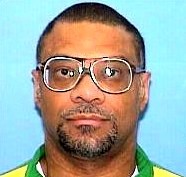
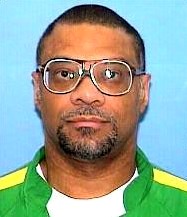
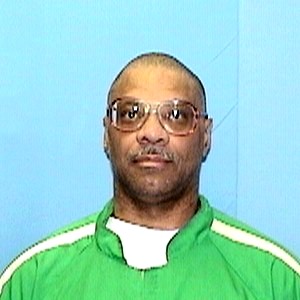
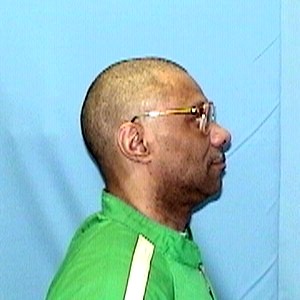
Henry BRISBON
Jr.
A.K.A.: "I-57 Killer"
Classification: Homicide - Murderer
Characteristics:Juvenile
(17) - Rape - Robbery
Number of victims:3 +
Date of murders:June 3, 1973 /
October 19, 1978
Date of birth: January 12,
1956
Victims profile:James Schmidt and his fiancee, Dorothy Cerny, both
25 / Ronald Morgan
(inmate)
Method of murder: Shooting
/ Stabbing
with a sharpened soup ladle
Location: Chicago/Menard, Illinois, USA
Status: Sentenced to life in prison on November 1, 1977.
Sentenced to death on February 24, 1982
Brisbon, Henry
The first two victims credited to Henry Brisbon were James Schmidt, a Chicago businessman, and his fiancee, Dorothy Cerny, both 25. While traveling on Highway 57, in Cook County, on the night of June 3, 1973, Schmidt and Cerny were stopped by a gang of four men, dragged from their vehicle and forced to lie down on the grassy shoulder of the road.
Brisbon was identified as the triggerman who killed them both with close-range shotgun blasts as they lay helpless on the ground. Conviction on a charge of double murder earned Brisbon a sentence of 1,000 to 3,000 years, but the prison term was less impressive than it sounded. Actually, Brisbon could have been paroled in just eleven years, but he was not content to wait.
On October 19, 1978, he used a sharpened soup ladle to stab inmate Ronald Morgan at the Statesville penitentiary, striking without apparent motive. While awaiting trial for that murder, Brisbon took part in a 1979 riot and was transferred to the maximum security lockup at Menard.
Brisbon was convicted of Morgan's murder on January 22, 1982, and a month later he was sentenced to die. Leaving the courtroom after pronouncement of sentence, Brisbon told his guards, "You'll never get me. I'll kill again. Then you'll have another long trial. And then I'll do it again."
As good as his word, Brisbon tried it again on February 15, 1983. Slipping out of handcuffs and breaking away from a guard on death row, he used a piece of sharpened heavy-gauge wire to stab convicted killers William Jones and John Wayne Gacy. (Neither man was seriously injured.) At this writing, Brisbon is awaiting execution -- and, undoubtedly, preparing for his next attempt at homicide.
Michael Newton - An Encyclopedia of Modern Serial
Killers - Hunting Humans
The Death Penalty: I Didn't Like Nobody, Henry Brisbon, Jr.
Time.com
Monday, Jan. 24,
1983
On the night of June 3, 1973, a Chevrolet Caprice,
driven by a woman, was forced off Interstate 57 in southern Cook
County, Ill., by a car carrying four men. One of them pointed a 12-gauge
pump shotgun at her, ordered her to strip and then to climb through
a barbed-wire fence at the side of the road. As she begged for her
life, her assailant thrust the shotgun barrel into her vagina and
fired. After watching her agonies for several minutes, he finished
her off with a blast to the throat. Less than an hour later, the
marauding motorists stopped another car and told the man and woman
inside it to get out and lie down on the shoulder of the road. The
couple pleaded for mercy, saying that they were engaged to be
married in six months. The man with the shotgun said, "Kiss your
last kiss," then shot both of them in the back, killing them. The
total take from three murders and two robberies: $54, two watches,
an engagement ring and a wedding band.
The man ultimately convicted of the "I-57 murders"
now sits confined in the Menard Condemned Unit, the official name for
death row in the Illinois prison system. Yet Henry Brisbon Jr., 28, does
not face execution for those three killings nearly ten years ago.
Illinois' death penalty was invalidated in 1972 and was not restored
until 1977, the year that Brisbon was finally brought to trial. At that
time, the judge sentenced him to a term of 1,000 to 3,000 years in
prison. It took Brisbon less than one year to kill again, this time
stabbing a fellow inmate at Stateville Correctional Center with the
sharpened handle of a soup ladle. At the trial for this murder, Will
County State's Attorney Edward Petka described Brisbon as "a very, very
terrible human being, a walking testimonial for the death penalty." The
jury agreed.
Brisbon's eleven months on death row have been quiet,
compared with his Stateville years, when he took part in 15 attacks on
inmates and guards, instigated at least one prison riot, trashed a
courtroom during a trial and hit a warden with a broom handle. "I'm no
bad dude," he says, "just an antisocial individual." The third of 13
children, Brisbon thinks that his upbringing by a strict black Muslim
father made him different: "I was taught to be a racist and not like
whites. As I grew up, I decided I didn't like nobody."
Brisbon has 90 well-supervised minutes each day
outside his small (7 ft. 7 in. by 5 ft. 10 in.) cell. He works out with
weights, keeping his 155 lbs. (on a 5-ft 9-in. frame) in shape. He
complains about his confinement: "Can't take two steps in this cage.
It's inhuman. And that dull-ass color blue on the walls in no way
brightens my life." He has devised a novel idea about judicial reform: "All
this talk about victims' rights and restitution gets me. What about my
family? I'm a victim of a crooked criminal system. Isn't my family
entitled to something?" The shadow of the death penalty does not faze
him: "I don't see that happening to me. What would killing me solve?
Isn't that just another murder? If I got to die, it's going to be of
natural causes." The state of Illinois thinks otherwise. Says Michael
Ficaro, who prosecuted the I-57 case: "On the day he dies in the chair
at Stateville, I plan to be there to see that it's done. Nobody I've
heard of deserves the death penalty more than Henry Brisbon."
Henry Brisbon
"You'll never get me. I'll
kill again. Then you'll have another long trial. And then I'll do
it again."
Henry thinks he's figured out the system
Victims : 3 so far, more to come apparently.
Henry Brisbon is, quite basically, a criminal.
To start out with he was just a thief, but he was a heartless thief, as
he showed on the night he began his killing career.
It was June 3, 1973. A young couple, James
Schmidt and his fiancee, Dorothy Cerny, both 25, were driving along
Highway 57 in Cook County when they were stopped by four men. They
were dragged from their car and forced to lay face down on the side of
the road. Then, for little apparent reason, Henry Brisbon walked
up to the two and blew the backs of their heads off with his shotgun
from close range.
When the gang were arrested it didn't take the others
long to sell-out Brisbon as a murderer, as thieves tend to be a
untrustworthy bunch. He was convicted of both murders, and
sentenced to a huge 1,000 years. With not much chance of being
released, Brisbon seemed to give up hope.
On October 19, 1978, Brisbon released a bit more anger.
With seemingly no provocation he stabbed another inmate, Ronald Morgan,
with a sharpened soup ladle. The frenzied attack left Morgan very
dead, and Brisbon had another murder charge to deal with.
While awaiting trial for the last murder, Brisbon took
part in a rather violent prison riot, and because of this he was moved
to a maximum security facility in Menard.
Brisbon was found guilty of Morgan's murder and was
sentenced to death in February, 1982. As he left the court room he
claimed that he would kill again, and he would keep killing so the court
would have to keep putting off his executions while he sat new trials.
A pretty good idea really, I don't know why someone didn't think of it
sooner.
Just a few days after being placed on death row
Brisbon tried to carry out his word. He slipped out of his
handcuffs and, with a sharpened piece of wire, he stabbed two other
convicted killers. They were William Jones and, probably the most
famous killer in Chicago, John Wayne Gacy. Unfortunately Brisbon
did nothing more than slightly injure the two, but at least he made an
effort. Since then Brisbon has been pretty quiet, but give him
time, and maybe he'll make it four.
The Wacky World of Murder
SEX:M RACE: B TYPE: T MOTIVE: CE/PC
MO:Killed two in robbery, one in prison.
DISPOSITION:
1,000-3,000 years, 1973; condemned, 1982.