Murderpedia has thousands of hours of work behind it. To keep creating
new content, we kindly appreciate any donation you can give to help
the Murderpedia project stay alive. We have many
plans and enthusiasm
to keep expanding and making Murderpedia a better site, but we really
need your help for this. Thank you very much in advance.
Byron
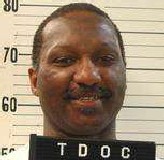
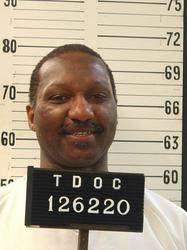
Lewis BLACK
Classification: Murderer
Characteristics:
Parricide
Number of victims: 3
Date of murders:
March 28, 1988
Date of birth:
March 23, 1956
Victims profile: His
girlfriend, Angela Clay, and her two daughters, Latoya, 9, and
Lakeisha Clay, 6
Byron Lewis Black was convicted in 1989 of
three counts of first degree murder for the shooting deaths of his
girlfriend, Angela Clay, and her two daughters, Latoya and Lakeisha
Clay. A jury sentenced Black to death for the murder of Lakeisha Clay
and to two life sentences for the murders of Angela and Latoya Clay
United States District Court,
Middle District of Tennessee, Nashville Division
December 11, 2001
BYRON LEWIS BLACK, PETITIONER,
V.
RICKY BELL, RESPONDENT.
The opinion of the court was delivered by: Todd J.
Campbell, United States District Judge.
One projectile was collected from the pillow
where Latoya was apparently lying at the time she was shot.
Fragments of projectiles were collected from the wall above Angela's
head; others were collected from the mattress where Lakeisha was
found.
The receiver from the kitchen telephone was found
in the master bedroom. The telephone from the master bedroom was
lying in the hallway between the two bedrooms. The Defendant's
fingerprints were the only prints recovered from the telephones. Two
of his fingerprints were found on the phone in the hallway, and one
was on the kitchen telephone receiver found in the master bedroom.
815 S.W.2d at 171-72.
III. The
Standards for Considering Summary Judgment
Rule 56(c) of the Federal Rules of Civil Procedure
provides that summary judgment may be rendered if "the pleadings,
depositions, answers to interrogatories, and admissions on file,
together with the affidavits, if any, show that there is no genuine
issue as to any material fact and that the moving party is entitled to
a judgment as a matter of law."
In order to prevail, the movant has the burden of
proving the absence of a genuine issue of material fact as to an
essential element of the opposing party's claim. Celotex Corp. v.
Catrett, 477 U.S. 317, 106 S.Ct. 2548, 2553, 91 L.Ed.2d 265
(1986). In determining whether the movant has met its burden, the
Court must view the evidence in the light most favorable to the
nonmoving party. Matsushita Electric Indus. Co. v. Zenith Radio Corp.,
475 U.S. 574,
106 S.Ct. 1348, 1356, 89 L.Ed.2d 538
(1986).
In order to defeat the motion, the nonmoving party
is required to show, after an adequate time for discovery, that there
is a genuine issue of fact as to every essential element of that
party's case upon which he will bear the burden of proof at trial.
Celotex Corp., 106 S.Ct. at 2553. In order to create a genuine factual
issue, the nonmoving party must show there is sufficient evidence
favoring the nonmoving party for the factfinder to return a verdict
for that party. Anderson v. Liberty Lobby, Inc., 477 U.S. 242,
106 S.Ct. 2505, 2511, 91 L.Ed.2d 202
(1986). Although the nonmovant need not show that the disputed issue
should be resolved in his favor, he must demonstrate that there are
genuine factual issues that "properly can be resolved only by a finder
of fact because they may reasonably be resolved in favor of either
party." Id.
IV. Analysis
A. Governing Law
The Antiterrorism and Effective Death Penalty Act
of 1996 ("AEDPA"), which amended 28 U.S.C. § 2254, applies to all
habeas petitions filed after April 24, 1996, the effective date of the
Act. Mitchell v. Mason 257 F.3d 554, 560-61 (6th Cir. 2001). As
Black's Petition was filed on August 14, 2000, and after the effective
date, this case is governed by the AEDPA.
1. Procedural Default
Respondent argues that the Court should not reach
the merits of several of Petitioner's claims because Petitioner failed
to raise those claims in state court, and has, therefore, procedurally
defaulted those claims.
A petitioner may avoid this procedural bar by
showing cause for the default, and that prejudice resulted from the
default, or by showing that failure to consider the claims will result
in a fundamental miscarriage of justice. Id.; Edwards v. Carpenter,
529 U.S. 446,
120 S.Ct. 1587, 1591, 146 L.Ed.2d 518
(2000).
Exhaustion requires that petitioners give state
courts "a fair opportunity" to act on claims before they are presented
to the federal courts. O'Sullivan v. Boerckel, 526 U.S. 838,
119 S.Ct. 1728, 1732, 144 L.Ed.2d 1 (1999). To satisfy the
exhaustion requirement, a petitioner must invoke one complete round of
the state's established review process, including the filing of a
petition for discretionary review with the state's highest court. Id.
In this case, Petitioner may no longer present
claims to the state courts because those claims would be barred by the
statute of limitations. See Tenn. Code Ann. § 40-30-202. Thus, those
claims that have not been exhausted are procedurally defaulted because
Petitioner has no remedy currently available in state court. The Court
discusses Petitioner's grounds for avoiding the procedural bar in
discussing particular claims.
2. Adequate and independent state grounds
Respondent contends that the state court's reliance
on certain state procedural rules in rejecting certain of Petitioner's
claims bars federal review of those claims. In order to rely on this
procedural default doctrine, Respondent must show that: (1) there is
an applicable state procedural rule with which the Petitioner failed
to comply; (2) the state rule is one that is firmly established and
regularly followed; (3) the rule is an adequate and independent state
ground on which the state may rely to foreclose review of the federal
constitutional claim. Mitchell v. Mason, 257 F.3d at 562; Coleman v.
Mitchell, 244 F.3d 533, 539 (6th Cir. 2001). Furthermore, the
state rule bars the claim only if the last reasoned decision of the
state court invoked the rule as a basis for its decision to reject
review of the Petitioner's federal claim. Id.
If the Court determines that the state courts
complied with a state procedural rule and that the rule was an
adequate and independent state ground, then the petitioner is required
to demonstrate that there was cause for him not to follow the
procedural rule and that he was actually prejudiced by the alleged
constitutional error, or by showing that failure to consider the claim
will result in a fundamental miscarriage of justice Id.; Edwards v.
Carpenter, 120 S.Ct. at 1591.
In Williams v. Taylor, 529 U.S. 362,
120 S.Ct. 1495, 1523, 146 L.Ed.2d 389 (2000), the Supreme Court
held that a state court decision is "contrary to" Supreme Court
precedent if either the "state court arrives at a conclusion opposite
to that reached by [the Supreme Court] on a question of law" or "the
state court decides a case differently than [the Supreme Court] has on
a set of materially indistinguishable facts."
The Williams Court held that a state court decision
involves an "unreasonable application" of clearly established law if
the state court identifies the correct governing legal principle from
the Supreme Court's decisions, but unreasonably applies that principle
to the facts of the petitioner's case. Id. The reasonableness of the
state court's opinion is judged by an objective rather than subjective
standard. 120 S.Ct. at 1521-22.
B. Petitioner's Claims
Paragraph 6: Competence of Defendant to Stand
Trial
In Paragraph 6, Petitioner alleges that he was not
competent during his trial, during the appeal, or during the post-conviction
proceedings; and that he did not receive a comprehensive competency
evaluation during the critical stages of the proceedings against him,
in violation of the Sixth, Eighth and Fourteenth Amendments.
Respondent argues that Petitioner failed to raise certain aspects of
this competency claim at the time of his appeal or during post-conviction
proceedings, and that therefore, those aspects of the claim are
procedurally defaulted. Although Petitioner appealed the issue of his
competence at trial on direct appeal, Respondent contends that he did
not base that claim on the Eighth Amendment, and did not identify the
diagnoses that he relies on now. As to the lack of a comprehensive
competency evaluation, Respondent argues that Petitioner fails to
state a cognizable claim for habeas relief, as Petitioner was entitled
only to a competency hearing, and he received such a hearing.
The Court is persuaded that Petitioner adequately
raised the issue of his competence to stand trial in his direct
appeal. On appeal, the Tennessee Supreme Court discussed that issue as
follows:
`. . . the test must be whether [the defendant]
has sufficient present ability to consult with his lawyer with a
reasonable degree of rational understanding — and whether he has a
rational as well as factual understanding of the proceedings against
him.' 80 S.Ct. at 788-89.
The Dusky standard was adopted in Mackey v. State,
supra, which held:
`Both Tennessee decisions and the federal
constitution prohibit the trial of a defendant whose mental
condition is such that he lacks the capacity to understand the
nature and object of the proceedings against him, to consult with
counsel and to assist in preparing his defense.' 537 S.W.2d at 707.
The purpose of a competency hearing does not
concern the Defendant's guilt or innocence, or even his mental
condition at the time of the crime. In State v. Stacy,
556 S.W.2d 552 (Tenn.Crim.App. 1977),
the Court described the inquiry as follows:
`[A] competency hearing is a very narrow inquiry
aimed at determining whether one who is charged with a criminal
offense is presently competent to stand trial. In this State, a
defendant is considered competent to stand trial if he has mind and
discretion which would enable him to appreciate the charges against
him, the proceedings thereon, and enable him to make a proper
defense.' 556 S.W.2d at 553.
The trial judge, in discussing the burden of
proof, stated: `If the Defendant raises a viable question about
competency, then the burden is on the state to prove competency [by
a preponderance of the evidence that the Defendant is competent to
stand trial].' The Defendant submits that the evidence adduced at
the competency hearing established that he lacked the capacity to
understand the nature and object of the proceedings against him and
that he had insufficient ability to consult with counsel and to
assist in preparing his defense.
At the competency hearing the Defendant presented
the testimony of Dr. Kenneth Anchor, a licensed psychologist who had
tested and interviewed Defendant, and of Ross Alderman, one of the
Defendant's attorneys. The substance of their testimony was that the
Defendant did not comprehend the judicial process (e.g., he was
unable to distinguish between the roles of the judge and jury), did
not understand his counsel's role, and was unable to fathom the
possible consequences of the trial. In their opinion, the Defendant
was unable to assist his attorney in the preparation of his defense.
The State presented the testimony of a clinical psychologist, a
psychiatrist, and a social worker from the Dede Wallace Mental
Health Center, all of whom had also interviewed the Defendant. They
concluded that the Defendant was competent to stand trial. The
consensus of the mental health professionals was that the
Defendant's I.Q. was in the lower end of the normal range (76,
according to Dr. Anchor) and that the Defendant was not psychotic or
delusional, although he probably suffered a personality disorder of
some sort.
Under the standards enunciated in Dusky, Mackey
and Benton, we are of the opinion that the Defendant understood the
nature and object of the proceedings against him and was able to
consult with and assist counsel in preparing his defense. The
evidence does not preponderate against the trial court's finding of
competence.
815 S.W.2d 173-75.
Petitioner argues that the Court should disregard
the state courts' findings of competence under Section 2254(e)(1)
because there is clear and convincing evidence that the state court's
conclusion was factually incorrect. Petitioner submits the reports of
various experts regarding his mental state. These reports do not,
however, state that the Petitioner was not competent at the time of
his trial in 1989. For example, Dr. Ruben C. Gur, a neuropsychologist,
states that Petitioner's mental impairments "would seriously interfere
with his ability to keep pace with courtroom proceedings." (Petitioner's
Exhibit 1, at ¶ 12). Dr. Albert Globus, a psychiatrist, opines that
Petitioner's mental impairments have "rendered him so defective in
understanding that he cannot ably and reasonably assist his attorney
in his defense." (Petitioner's Exhibit 2, at 8). Patty Van Eys, who
administered certain tests to the Petitioner, concluded that his
shortcomings "would predictably make it quite difficult to understand
the true complexities of his current situation." (Petitioner's Exhibit
4, at 5). None of these experts state an opinion as to whether
Petitioner met the standard for competence at the time of trial.
The Court is not persuaded that the evidence
submitted by Petitioner is the clear and convincing proof required for
this Court to disregard the state court's findings. Accordingly,
Respondent is entitled to summary judgment on this claim.
Paragraph 7: Cross Examination of Bennie Clay
In Paragraph 7. Petitioner argues that the trial
court's denial of his right to cross examine Bennie Clay about his
then-pending drug charges violated his Sixth, Eighth and Fourteenth
Amendments. Respondent argues that Petitioner failed to allege the
Eighth Amendment as a basis for this claim in state court, and that
aspect of his claim is defaulted. As to the unexhausted portion of the
claim, Respondent contends that the decision of the state court on
direct appeal was correct.
Defendant argues that failure to allow
introduction of the pending charges violated his right to
confrontation under the Sixth Amendment of the U.S. Constitution and
Article 1, Section 9, of the Tennessee Constitution. `[A] criminal
defendant states a violation of the [federal] Confrontation Clause
by showing that he was prohibited from engaging in otherwise
appropriate cross-examination designed to show a prototypical form
of bias on the part of the witness, thereby exposing to the jury the
facts from which jurors could appropriately draw inferences relating
to the reliability of the witnesses.' Delaware v. Van Arsdall, 475
U.S. at 680, 106 S.Ct. at 1436; see also Olden v. Kentucky, 488
U.S. 227,
109 S.Ct. 480, 102 L.Ed.2d 513 (1988).
The defendant must show that a reasonable jury might have received a
significantly different impression of the witness's credibility had
counsel been permitted to pursue his proposed line of cross-examination.
Delaware v. Van Arsdall, 475 U.S. at 680, 106 S.Ct. at 1436. Such an
improper denial of the right to confrontation is subject to harmless
error analysis. Id., 475 U.S. at 681, 106 S.Ct. at 1438.
Because of the `marginal relevance,' of this
issue and the obvious bias of the witness against the Defendant, if
the trial court erred in restricting cross-examination on this point,
any error was harmless beyond a reasonable doubt. See State v.
Taylor,
668 S.W.2d 681, 683-684 (Tenn.Crim.App.
1984).
815 S.W.2d at 177.
Petitioner argues that the trial court's decision
that the limited cross examination did not violate the Confrontation
Clause was contrary to clearly established law, relying on Davis v.
Alaska, 415 U.S. 308, 317, 320,
94 S.Ct. 1105, 39 L.Ed.2d 347 (1974), Van
Arsdall, supra, In re Murchison, 349 U.S. 133, 139,
75 S.Ct. 623, 99 L.Ed. 942 (1955), United
States v. Havens, 446 U.S. 620, 626,
100 S.Ct. 1912, 64 L.Ed.2d 559 (1980),
Olden v. Kentucky, supra, and various other circuit court cases.
The Sixth Circuit has resolved any questions in
this regard by requiring application of Brecht on collateral review.
See Nevers v. Killinger, 169 F.3d 352, 371-72 (1999), abrogated
on other grounds, Williams v. Taylor, supra ("If the petitioner is
able to make that showing, he will surely have demonstrated that the
state court's finding that the error was harmless beyond a reasonable
doubt — the Chapman standard — was outside the realm of plausible
credible outcomes, and therefore resulted from an unreasonable
application of Chapman."); Bulls v. Jones, 274 F.3d 329, (6th
Cir. 2001). Accordingly, the Court will apply the Brecht standard, one
less onerous than Chapman, to determine whether the trial court's
limitation on the Bennie Clay cross examination had a substantial and
injurious effect or influence in determining the jury's verdict or
that it resulted in actual prejudice. Brecht, 113 S.Ct. at 1722.
For the reasons pointed out by the Tennessee
Supreme Court, this Court concludes that Petitioner has not made such
a showing. The indictment against Clay was issued long after he made
statements to the police regarding his relationship with the victims
and with the Petitioner, and those statements were consistent with his
testimony at trial. Furthermore, the direct and cross examination of
Clay revealed his bias against the Petitioner, as he testified to his
belief that the Petitioner was impeding his attempts to reconcile with
Angela Clay, and that Petitioner had assaulted him some time prior to
the murders. (Addendum 3, at 1521, 1590-91, 1599). In light of the
record as a whole, the Court is not persuaded that preventing
disclosure of the pending indictment to the jury resulted in actual
prejudice to the Petitioner under Brecht either as to his conviction
or his sentence.
In Herrera v. Collins, 506 U.S. 390,
113 S.Ct. 853, 122 L.Ed.2d 203 (1993),
the Supreme Court assumed, without deciding, that in a capital case a
"truly persuasive demonstration of actual innocence" made after trial
would render the execution of a defendant unconstitutional and warrant
habeas relief if there were no state avenue open to process such a
claim. 113 S.Ct. at 869. The Court also noted, however, that claims of
actual innocence based on newly discovered evidence have never been
held to state a claim for federal habeas relief absent an independent
constitutional violation occurring in the underlying state criminal
proceeding. 113 S.Ct. at 860. See also Lefever v. Money,
225 F.3d 659 (Table), 2000 WL 977305 (6th
Cir. July 6, 2000)("We also reject defendant's suggestion that her
case falls within the purported `Herrera exception,' even though she
claims to have made a truly persuasive showing of her innocence . . .
Assuming that such an exception exists in this context, we conclude
that defendant's "newly discovered evidence' is not compelling
evidence of her innocence . . . ")(emphasis added); Harris v. Borgert,
12 F.3d 212 (Table), 1993 WL 477008, at 2
(6th Cir. Nov. 18, 1993).
Petitioner has not shown that he is entitled to
relief based on Herrera, and the Court grants summary judgment to
Respondent on this claim.
Paragraph 9: Withheld Exculpatory Evidence
In Paragraph 9, Petitioner alleges that, in
violation Brady v. Maryland, 373 U.S. 83,
83 S.Ct. 1194, 10 L.Ed.2d 215 (1963) and
its progeny, the prosecution withheld the following exculpatory
evidence: (1) ballistics evidence showing that he did not shoot the
victims; (2) T.B.I. lab exhibit 8 and the results of the examination
of that item; (3) evidence showing that Bennie Clay owned a large
caliber weapon and was to receive insurance proceeds following the
homicides; (4) evidence indicating that someone other than Petitioner
committed the homicides; and (5) physical evidence recovered at the
scene that was neither tested nor preserved. In response to the
summary judgment motion, Petitioner pursues only the allegation
regarding the life insurance evidence, and dismisses the portion of
this claim related to the withholding of evidence concerning forensic
firearms examination.
Alternatively, Petitioner argues that the
withholding of Brady material can itself establish cause for a
procedural default, citing Stickier v. Greene, 527 U.S. 263,
119 S.Ct. 1936, 144 L.Ed.2d 286 (1999), and various circuit
court decisions decided prior to Stickler. In Strickler, the Supreme
Court held that a Brady claim may be raised for the first time in a
federal habeas proceeding where support for the claim was not
discovered during the state court proceedings. 119 S.Ct. at 1946-49.
As the Respondent points out, however, the record indicates that
Petitioner's post-conviction trial counsel had access to the insurance
information as he asked trial counsel about it during the post-conviction
hearing. (Addendum 14, at 159)(". . . were you aware as to whether the
prosecution had ever provided you with a copy of a letter from the —
from Mr. Clay's employer, an insurance company, about the proceeds of
life insurance on Ms. Clay and the two children?") Petitioner does not
suggest that he pursued this claim during the post-conviction
proceedings, nor does he suggest that case law supports a finding of
cause under these circumstances. Therefore, the Court concludes that
Petitioner has not shown cause for avoiding the procedural bar under
Strickler, and Respondent is entitled to summary judgment on this
claim.
Paragraph 10: Sufficiency of the Convicting
Evidence
In Paragraph 10 of the Amended Petition, Petitioner
argues that the evidence introduced at trial was insufficient to
support his convictions. Respondent argues that the portion of this
claim that focuses on the failure to prove the elements of
premeditation and deliberation was not raised in state court, and is
procedurally defaulted. In addition, Respondent argues that to the
extent Petitioner relies on the state law sufficiency standard, he has
failed to state a cognizable claim for habeas relief. To the extent
Petitioner relies on federal law, Respondent argues, his argument was
correctly rejected by the Tennessee Supreme Court on direct appeal.
The Court is persuaded that this claim was
adequately raised before the state court, and that the state court
applied the federal sufficiency standard, set forth in Jackson v.
Virginia, 443 U.S. 307,
99 S.Ct. 2781, 61 L.Ed.2d 560 (1979), in
determining whether the evidence supported Petitioner's convictions
under state law, as that law has been interpreted by the state courts.
The Tennessee Supreme Court addressed the
sufficiency issue as follows:
The Defendant next challenges the sufficiency of
the convicting evidence. He contends that the trial court erred in
overruling his motion for a judgment of acquittal as to all counts
of the indictment. He avers that the evidence presented at trial was
insufficient to convince any rational tier of fact that he
was guilty of the offenses charged beyond a
reasonable doubt. Rule 13(e), T.R.A.P.
The Defendant submits that there were no
eyewitnesses to the offenses for which he was convicted and that the
proof against him consists entirely of circumstantial evidence. He
further contends that it is reasonable to believe that, at the time
of the murders, some person other than himself had possession of the
gun with which he shot Bennie Clay in 1986. The State responds that
the body of evidence, although circumstantial in nature, unerringly
pointed the finger of guilt to the Defendant and effectively
excluded every other theory or hypothesis except that of Defendant's
guilt.
The principles which govern our review of a
conviction by jury are well settled. A jury verdict approved by the
trial judge credits the testimony of the witnesses for the State and
resolves all conflict in favor of the State's theory. State v.
Williams,
657 S.W.2d 405, 410 (Tenn. 1983); State
v. Hatchett,
560 S.W.2d 627, 630 (Tenn. 1978). On
appeal, the State is entitled to the strongest legitimate view of
the evidence and all reasonable or legitimate inferences which may
be drawn therefrom. State v. Cabbage,
571 S.W.2d 832, 835 (Tenn. 1978). A
verdict against the Defendant removes the presumption of innocence
and raises a presumption of guilt on appeal, State v. Grace
493 S.W.2d 474, 476 (Tenn. 1973), which
the Defendant has the burden of overcoming. State v. Brown,
551 S.W.2d 329, 331 (Tenn. 1977). Where
the sufficiency of the evidence is challenged, the relevant question
for an appellate court is whether, after viewing the evidence in the
light most favorable to the prosecution, any rational tier of fact
could have found the essential elements of the crime beyond a
reasonable doubt Jackson v. Virginia, 443 115. 307, 99 S.Ct. 2781,
61 L.Ed.2d 560 (1979); Rule 13(e), T.R.A.P. Moreover, a conviction
may be based entirely on circumstantial evidence where the facts are
`so clearly interwoven and connected that the finger of guilt is
pointed unerringly at the Defendant and the Defendant alone.' State
v. Duncan,
698 S.W.2d 63 (Tenn. 1985); State v.
Williams, 657 S.W.2d 405 (Tenn. 1983); States v. Crawford,
225 Tenn. 478, 484,
470 S.W.2d 610, 612 (1971).
Based upon the foregoing circumstantial evidence,
we have no hesitancy in holding that the evidence against the
Defendant Black was sufficient to support the three first degree
murder convictions beyond a reasonable doubt. The evidence does not
preponderate in favor of his innocence and against his guilt.
815 S.W.2d at 175-76.
Although the court did not mention the issues of
premeditation and deliberation directly, the court relied on evidence
supporting those elements in determining that the evidence was
sufficient to support Petitioner's convictions for first degree murder.
Specifically, the court noted that the Petitioner had been fighting
with Angela Clay a few days before the killings, and that he had
previously threatened to kill Angela. The court also noted in this
excerpt, and in describing the facts, that the victims were all in bed,
possibly asleep, at the time of the murders, suggesting an absence of
passion in committing the murders.
Although the Petitioner argues that the Tennessee
Supreme Court, subsequent to deciding Petitioner's case, has refined
the definitions of premeditation and deliberation, the Court is not
persuaded that the decision by the Tennessee Supreme Court in this
case was contrary to the reasoning of those cases. As Petitioner has
not shown that the decision of the Tennessee Supreme Court was
contrary to, or involved an unreasonable application of clearly
established federal law, Respondent is granted summary judgment on
Petitioner's claim in Paragraph 10.
Paragraphs 11, 12 and 13: Ineffective Assistance
of Counsel
Finally, Petitioner argues that denial of relief on
his claims would result in a miscarriage of justice under Schlup v.
Delo,
513 U.S. 298,
115 S.Ct. 851, 865-67, 130 L.Ed.2d 808
(1995). Under Schlup, a petitioner may avoid a procedural default bar
by showing that a constitutional violation has probably resulted in
the conviction of one who is actually innocent. To establish the
requisite probability, the petitioner must show that "it is more
likely than not that no reasonable juror would have convicted him in
light of the new evidence." 115 S.Ct. at 867. The Court is not
persuaded that Petitioner has met this standard in this case.
Accordingly, Petitioner has failed to demonstrate
cause for his procedural default and Respondent is entitled to summary
judgment on those claims that were not presented to the state courts.
As for the exhausted claims, the Tennessee Court of
Criminal Appeals addressed Petitioner's ineffective assistance of
counsel arguments as follows:
II. INEFFECTIVE ASSISTANCE OF COUNSEL
In order for the petitioner to be granted relief
on the ground of ineffective assistance of counsel, he must
establish that the advice given or the services rendered were not
within the range of competence demanded of attorneys in criminal
cases and that, but for his counsel's deficient performance, the
result of his trial would likely have been different. Strickland v.
Washington, 466 U.S. 668, 687,
104 S.Ct. 2052, 2064, 80 L.Ed.2d 674
(1984); Rose,
523 S.W.2d 930 (Tenn. 1975).
Furthermore, we may not second-guess the tactical and strategic
choices made by trial counsel unless those choices were uninformed
because of inadequate preparation. Hellard v. State,
629 S.W.2d 4, 9 (Tenn. 1982). Trial
counsel may not be deemed ineffective merely because a different
procedure or strategy might have produced a different result.
Williams v. State
599 S.W.2d 276 (Tenn.Crim.App. 1980).
The reviewing courts must indulge a strong presumption that the
conduct of counsel falls within the range of reasonable professional
assistance. Stickland, 466 U.S. at 690, 104 S.Ct. at 2066.
The petitioner states that trial counsel failed
to substantiate the petitioner's story by not interviewing Ms.
Walden or her house guests from the night of the murder. Counsel for
the petitioner and the state attack each other's interpretation of
the evidence in this respect. The petitioner argues that defense
counsel would have discovered that the petitioner did not visit Ms.
Walden after 10:00 p.m. the night of the murder, as he claimed, if
they had merely talked to her and her house guests before trial. The
state contends that there is nothing in the record to suggest that
counsel did not interview these witnesses. The petitioner also
contends that counsel's shortcomings regarding these witnesses not
only destroyed the alibi defense but affected the petitioners
credibility during sentencing. At the evidentiary hearing, counsel
testified that he believed Ms. Walden probably was interviewed prior
to trial, but that he did not know specifically. Furthermore,
although Ms. Walden initially testified that she spoke to no one
before taking the witness stand, she later testified that she was
uncertain whether she talked to counsel. At any rate, defense
counsel specifically testified that the investigator assigned to
this case would have been responsible for interviewing Ms. Walden
prior to trial. Counsel also testified that this investigator was
still employed with the public defenders office. Although the
parties differ regarding the significance of the evidence presented,
we believe that the petitioner failed to elicit this information
from an apparently available witness, the investigator. See Black v.
State,
794 S.W.2d 752, 757 (Tenn.Crim.App.
1990).
The petitioner also argues that counsel's failure
to discover that the petitioners mother previously gave the police a
contradictory statement significantly hampered their defense.
However, the petitioner has not proven by a preponderance of the
evidence that defense counsel inadequately prepared this witness.
Counsel testified at the evidentiary hearing that they were unaware
of this tape-recorded statement until after the witness testified at
trial. The trial transcript suggests counsel were surprised by this
testimony. Moreover, this witness testified that she did not tell
defense counsel that she had been recorded. Counsel testified that
they did not knowingly place perjured testimony before the jury. The
petitioner has failed to show that counsel were deficient in this
respect. As the state suggests, counsel cannot be held responsible
for the witness's failure to reveal relevant information. Counsel
testified that they met with the petitioner's family several times
before trial. Contrary to the petitioners claim, there is nothing in
the record to indicate counsel failed to `gain [their] trust and
secure information from [them].'
Counsel admitted the difficulties in pursuing a
somewhat weak alibi defense, but they testified that they felt
locked into this strategy because of the petitioners wishes. Cf.
Oscar Franklin Smith v. State, No. 01C01-9702-CR-00048, Davidson
County (Tenn.Crim.App., June 30, 1998) (holding that although
counsel pursued an alibi defense as requested by the defendant,
despite the fact that counsel was not confident in the defense,
counsel was not ineffective). The failure of a particular defense
does not equate to ineffective assistance. See Williams v. State,
599 S.W.2d 276, 279-80 (Tenn.Crim.App. 1980). This court must
presume counsel acted reasonably, and it cannot review counsel's
decisions solely through the benefit of hindsight. Goad v. State,
938 S.W.2d 363, 369 (Tenn. 1996). At
the evidentiary hearing, Mr. Alderman testified that he believed
that the defense team had sufficient time to prepare for trial under
the circumstances. Despite the petitioners claims regarding
counsel's investigation, given the convicting evidence, he has
failed to show how the outcome of the trial would have changed.
Nothing regarding the circumstances surrounding the petitioners
presence at Ms. Walden's or his mothers residence can refute the
ballistic or fingerprint evidence or the content of his statement to
the police.
The same applies to the petitioners argument that
counsel's failure to investigate fully the petitioners activities on
the Saturday before the murders prejudiced his defense. The
petitioner had stated that he cleaned the victim's car and that they
were friendly to one another. At the post-conviction hearing, the
petitioner elicited from his former employer the fact that the
petitioner cleaned a car that Saturday and that there appeared to be
no animosity between the petitioner and the woman m the car. We note
that the witness could not remember the make of the car or identify
the woman, stating only that she was African-American. However, our
review of the record does not lead us to conclude that this
testimony would have had any bearing on the outcome.
B. Investigation of Mental Health Issue
The petitioner claims that counsel's failure to
investigate and develop fully the petitioner's social history and
alleged mental defect represents the ineffective assistance of
counsel. Specifically, the petitioner contends that the inadequate
social history negatively affected the competency and sufficiency
issues, as well as his ability to present mitigating evidence.
Initially, we note that the issue of the
petitioners competency to stand trial was determined by the
Tennessee Supreme Court on direct appeal. Black, 815 S.W.2d at
173-74. Also, we note that the convicting court accepted the opinion
of its own expert, as well as the state's, in deciding that the
petitioner was competent to stand trial, despite the conflicting
opinion of the defense expert. It is highly unlikely that a more
detailed social history would have altered that court's finding.
This is evident from the testimony of the petitioners post-conviction
experts that the petitioner understood the
various roles of the courtroom players, which is contrary to the
trial expert's opinion.
First, we do not believe that the petitioner
proved that his trial counsel performed deficiently in investigating
and developing evidence regarding the petitioners mental condition.
Although trial counsel testified that they would now be better
equipped to investigate a capital defendants background for
mitigation purposes, counsel testified that they interviewed the
petitioner, his family, and his acquaintances. Counsel also
testified that it was their understanding that mental health experts
gathered their own social histories to use for their evaluations. In
fact, the experts used by the petitioner at the post-conviction
hearing testified that normally they would obtain their own social
history. Dr. Bernet testified that in complex cases, he would rely
on counsel for additional information, but he also stated that it
was usually the expert who would make the request. Trial counsel in
this case testified that their expert did not request any further
background information. Moreover, counsel testified that none of
their own interviews disclosed any relevant information concerning
the petitioner's mental health. Counsel's performance in this case
did not fall below that which is required. The petitioner did not
offer testimony at the evidentiary hearing from the trial expert
regarding the need for a more detailed social history. Moreover,
merely because counsel failed to discover indications of partial
amnesia does not mean that they were ineffective. The attorneys are
not guarantors of the validity of an expert's results. In any event,
the petitioners trial expert did not believe the petitioner was
competent, yet the convicting court twice rejected the petitioner's
claim.
The petitioner insisted upon pursuing an alibi
defense. Neither the petitioner nor his family could provide counsel
with any information relative to the petitioners mental health
history. Despite this, counsel presented eight character witnesses
along with the testimony of Ms. Jaros. Although Dr. Anchor did not
testify, Ms. Jaros was able to convey the substance of Dr. Anchors
evaluation. Ms. Jaros testified at trial that she thought they had a
pretty good impression of the petitioner based upon the information
they had. In fact, she informed the jury that the petitioner had "these
ideas which are falsely held beliefs that might influence his
actions in some way. . . . He does not seem to have a conscious
recollection of what happened in March [the time of the murders].'
She indicated that the petitioner exhibited delusional traits. Thus,
counsel did pursue and present evidence regarding the petitioners
mental condition. We believe counsel were not deficient with respect
to the petitioners mental condition issues.
Also, we do not believe that the petitioner has
shown prejudice. In Goad v. State, 938 S.W.2d 363, 371 (Tenn. 1996),
our supreme court listed several factors for courts to consider when
examining resulting prejudice in the sentencing phase of a capital
trial: the nature and extent of mitigating evidence that was
available but not presented, whether substantially similar
mitigating evidence was presented, and the effective strength of the
aggravators. In the present case, the expert evidence proffered at
the post-conviction hearing was similar to that presented to the
jury during sentencing. Moreover, given the quality and quantity of
the existing aggravating circumstances (T.C.A. § 39-2-203
(I)(1), (2), (5), (6), (7), (12) (1982)), we
do not believe that such evidence could have altered the verdict.
The trial court in the present case found as
follows:
The Court rejects the petitioners conclusions.
First, the petitioner suggests that his trial lawyers somehow failed
him because they did not convince the trial court that he was
incompetent. Furthermore, the contention now is that somehow the
lack of a more detailed social history was the primary failing of
defense counsel.
It is true that the petitioner's present counsel
found a psychiatrist and psychologist who now say that the
petitioner may not have been competent when he stood trial in 1989.
It is certainly not the test of ineffective assistance of counsel
that trial counsel did not find an expert to say what petitioner
would have liked him/her to say. See Pyner v. Murray,
964 S.W.2d 1404, 1418-19 (4th Cir.
1992) (counsel not ineffective for failure to find a psychiatrist
that agrees with a certain diagnosis). Trial counsel hired an
independent psychologist and psychological examiner. These hired
experts did an evaluation of the petitioner which included a social
history[,] they reached their own conclusions, and the psychologist
testified at a competency hearing and gave the trial judge his best
opinion. That opinion was at least sufficient to cause the trial
judge to appoint a psychiatrist to do an additional evaluation. The
fact that the trial court ultimately made, and the Supreme Court of
Tennessee affirmed, a finding that the petitioner was competent to
stand trial was not the result of the failings of defense counsel.
The petitioner also seems to suggest that perhaps trial counsel
should have tied an insanity defense or at least put on more
evidence of the petitioner's `social history' and serious mental
illness. The petitioner overlooks the testimony of Pat Jaros before
the jury. She was able to not only give her own portrait of the
petitioner's mental health, but essentially she repeated Dr.
Anchor[']s analysis. Both Dr. Anchor and Ms. Jaros found no support
for an insanity defense. Even petitioners present experts did not
testify that he had an insanity defense. The petitioners present
counsel emphasizes and reemphasizes the failure of trial counsel to
provide its expert witnesses with an adequate social history. The
argument seems to be that if an adequate social history had been
provided then the experts testifying in 1989 would have reached a
different conclusion supportive of petitioners present contention
that he was not competent to stand trial and had either an insanity
defense or serious mental illness that would have mitigated
sentencing. The petitioner says that the social history is the
responsibility of defense counsel. The Court notes that both Dr.
Anchor and the court appointed evaluators from the local community
health center had their own social histories prepared. These
histories were relied upon in reaching their opinions. The Court
believes that it is more a function of the mental health profession
to determine the social history needed than it is the function of
the defense lawyers. At the post-conviction hearing, neither Dr.
Anchor nor Ms. Jaros testified at all, no less testified that the
social history provided them was inadequate or that their opinions
would have changed if provided with a `better
social history.'
Even assuming that trial counsel could have
painted the petitioner as more severely disturbed than they did, it
remains to be seen how this could have possibly affected the outcome
of the trial. The petitioner was found to have six (6) aggravating
circumstances including a prior crime of violence, and including his
killing of two (2) children. If trial counsel might have submitted
more and stronger evidence to the jury about the petitioner's mental
health background and history this error was not prejudicial. This
case is far from one in which defense counsel offered no mitigating
evidence. See Adkins v. State,
911 S.W.2d 334, 354-57 (Tenn.Crim.App.199S).
The Court concludes that if there was error at the trial such error
was not of a nature that it could have affected the jury's
determination given the strong evidence supporting the six (6)
aggravating factors found by the jury.
We conclude that the trial court ruled correctly
and that the petitioner has failed to show how the proof
preponderates against the trial court's findings.
As a collateral argument, the petitioner contends
that the ineffective assistance of Robert Skinner, the attorney who
first met with the petitioner at the police station, adds to his
present claim of ineffective assistance of counsel. As the
petitioner acknowledges, however, the supreme court already
determined on direct appeal that Mr. Skinners representation was not
ineffective. Black, 815 S.W.2d at 184-85 (Tenn.1991). Therefore,
this issue has been previously determined under the applicable post-conviction
statute. T.C.A. § 40-30-112(a) (repealed 1995); see House v. State,
911 S.W.2d 705, 711 (Tenn. 1995).
C. Argument of Prosecutor
Next, the petitioner claims that counsel were
ineffective for falling to object to the following statements made
by the prosecutor during closing arguments:
Accordingly, as the post-conviction court noted,
the jury could not help but have full knowledge of all three
sentences it was considering for the three murders. Thus, the
concern expressed by the court in Smith and Bigbee that the jury
should not base its decision on unrelated sentences is not present
in this case.
Trial counsel acknowledged at the evidentiary
hearing that the above-quoted argument was improper. Although they
did not proffer a reasonable explanation for not voicing an
objection, counsel stated that they did not raise the issue on
appeal because they considered it to be waived. The state argues
that counsel's failure to object to the argument was not improper.
According to the state, the prosecutors statements were made to
support the aggravating circumstance that the murders of the
children were `committed for the purpose of avoiding, interfering
with, or preventing a lawful arrest or prosecution.' T.C.A. §
39-2-203(I)(6)(1982). The state argues that these statements merely
persuaded the jury that great weight should be given to this
particular aggravator.
The trial court found the following:
This Court is not prepared to say that the
failure to object to this argument is ineffective assistance of
counsel. The Court, however, need not decide that issue. If there
was a mistake, it was not prejudicial. The jury here only imposed
the death penalty on one of the murders and a life sentence on the
other two. Secondly, in light of the jury's finding of six (6)
aggravating circumstances, it is not possible to conclude that this
error was prejudicial. See State v. Walker,
910 S.W.2d 381, 397 (Tenn. 1995) (argument
in death penalty case that imposition of a life sentence means for
defendant that `he wins again' was found not proper but not
prejudicial).
We believe that the trial court made the proper
finding. Even if counsel should have objected to the argument, it is
unlikely that the objection would have had any effect on the jury's
decision. The state was arguing for three death sentences. Moreover,
in the statements, the state was talking about the killing of both
children. However, the jury returned only one death sentence. This
sentence was supported by six aggravating circumstances. The jury's
verdict is supported by the evidence in the record. The petitioner
has failed to show how the evidence preponderates against the lower
court's finding in this respect
D. Instruction on Parole Eligibility
The petitioner also contends that trial counsel
were ineffective for failing to request the trial court to instruct
the jury regarding parole eligibility. However, we note that our
supreme court has concluded that there is no error in not giving
such an instruction. See State v. Bush,
942 S.W.2d 489, 503-04 (Tenn. 1997).
Sometime before trial, counsel realized Dr.
Anchor would be unavailable to testify due to a scheduling conflict.
Counsel filed a motion to continue based upon this, but the court
denied the motion. Although the court agreed to additional funds for
another psychological expert, the defense decided to allow Ms. Jaros
to testify instead. With the court unwilling to grant a continuance,
counsel believed they did not have sufficient time to replace the
work that had already been performed. And given the fact that Ms.
Jaros worked with Dr. Anchor on this case, counsel believed that she
could convey the crux of Dr. Anchors findings. Counsel were
concerned that Dr. Anchor would be hostile on the witness stand if
they forced him away from his professional conference in Hawaii. The
trial court allowed Ms. Jaros to testify as an expert witness, and
she conveyed to the jury Dr. Anchors evaluation concerning the
petitioners mental health.
Counsel's performance under these circumstances
was not deficient. Counsel were able to locate an expert who
believed the petitioner was incompetent. The trial court, however,
ultimately disagreed with this opinion. We believe counsel made a
reasonable trial decision. Although Dr. Anchor did not testify, the
defense was able to present an expert witness who conveyed to the
jury the essential findings of the expert evaluations.
I. Competency Hearing
The petitioner also claims that counsel were
ineffective for failing to call Palmer Singleton, a trial attorney,
to testify on behalf of the petitioner at the pretrial competency
hearing. During the competency hearing, counsel offered Singleton's
affidavit which stated, in effect, that he believed that the
petitioner was unable to assist his attorneys. Mr. Singleton did not
testify, however, and the trial court refused to consider his
affidavit. Although Mr. Singleton did not testify, Mr. Alderman, an
experienced attorney, testified at the hearing to the same effect.
The petitioner argues that the testimony of Mr. Singleton may have
produced a different result at the competency hearing. This argument
does not satisfy his burden in this case. It is highly unlikely that
the trial court would have been persuaded by cumulative testimony
from another attorney in light of the expert opinions available,
including the petitioners own expert who believed the petitioner was
not competent. The petitioner has not shown how the outcome of the
hearing would have been different if Mr. Singleton had testified.
Next, the petitioner claims ineffective
assistance of counsel due to counsel's failure to object to the
testimony of Bennie Clay detailing the facts surrounding the
petitioner's guilty plea for shooting Clay. The record reflects that
the trial judge conducted a conference in his chambers prior to the
testimony of Clay. It also indicates that the trial court was going
to allow Clay to testify about the incident but was not going to
allow unnecessary detailed testimony of the circumstances. Clay's
testimony apparently goes beyond describing the nature of the
incident, as counsel voiced an objection after the testimony was
solicited. Counsel also moved for a mistrial, but to no avail. The
petitioner now alleges counsel erred to his prejudice.
While it is generally true that facts of a
previous unrelated conviction are inadmissible in a later trial, it
is also true that this type of evidence may be relevant to an issue
on trial. See., e.g., State v. Goad,
707 S.W.2d 846, 850 (Tenn. 1986); State
v. McKay,
680 S.W.2d 447, 452 (Tenn. 1984). With
the state proving that the same gun that was used to kill the
victims in the case at hand was used by the petitioner to shoot Clay,
certain facts of the petitioner's prior conviction were certainly
relevant. The petitioner admitted to shooting Mr. Clay, and the
bullets removed from Mr. Clay's body matched those removed from the
victim's body in this case. Accordingly, the jury was well aware of
the petitioner's actions toward Clay. Although Clay's portrayal of
these events on the witness stand may have been somewhat colorful,
counsel's failure to object at the time of the testimony did not
result in the admission of testimony more detrimental than what
would have been allowed otherwise. Prejudice has not been shown.
The petitioner claims counsel were overworked at
the time of this case and could not adequately prepare and present
the issues raised. Counsel, however, testified that they maintained
a normal caseload at the time of this trial. Moreover, the trial
court appointed the office of the public defender in compliance with
the then existing legal standards. The petitioner has failed to show
how counsel were ineffective or how any alleged errors on counsel's
behalf prejudiced him. Accordingly, we hold that the evidence does
not preponderate against the trial court's findings on this issue.
This Court is not persuaded that the state court's
choice of words reflect either a misstatement of the law or a
misapplication of the law to the facts. In discussing the Strickland
prejudice standard, courts frequently use the term "likely"
interchangeably with the phrase "reasonable probability." See, e.g.,
Stanford v. Parker, 266 F.3d 442, 455 (6th Cir. 2001)(". .
. whether counsel's errors likely undermined the reliability of and
confidence in the result."); Cone v. Stegall 2001 WL 820900, at 3 (6th
Cir. June 29, 2001)(same); United States v. Alsop, 12 Fed. Appx. 253,
2001 WL 391967 (6th Cir. April 12, 2001)(same); Skaggs v. Parker,
235 F.3d 261, 270 (6th Cir. 2000); United
States v. Walker,
210 F.3d 373 (Table), 2000 WL 353518, at
5 (6th Cir. March 30, 2000)("As to the motion to sever, under
Strickland, Walker must demonstrate that the outcome of his trial
likely would have been different but for counsel's errors."); West v.
Seabold,
73 F.3d 81, 84 (6th Cir. 1996). See also
Hill v. Lockhart, 474 U.S. 52,
106 S.Ct. 366, 370, 88 L.Ed.2d 203
(1985)("For example, where the alleged error of counsel is a failure
to investigate or discover potentially exculpatory evidence, the
determination whether the error `prejudiced' the defendant by causing
him to plead guilty rather than go to trial will depend on the
likelihood that discovery of the evidence would have led counsel to
change his recommendation as to the plea . . . [which] will depend in
large part on a prediction whether the evidence likely would have
changed the outcome of a trial.") The state court's use of the word "likely"
does not reflect application of a more exacting standard than used in
Strickland, such as a "preponderance of the evidence" standard, a
"more likely than not" standard, or an "absolute certainty" standard.
The Court is persuaded that in using the term "likely," the state
court focused on the same analysis as required by the "reasonable
probability" standard — ". . . an assessment of the likelihood of a
result more favorable to the defendant." Strickland, 104 S.Ct. at
2068.
As the Court concludes that the state court's
decision was not contrary to, nor an unreasonable application of,
federal law, it may not grant habeas relief on the ineffective
assistance claims addressed by the state court. Accordingly,
Respondent is entitled to summary judgment on those claims addressed
by the Court of Criminal Appeals as set forth above.
Paragraph 14: Execution of Mentally Retarded
Person
In Paragraph 14, Petitioner alleges that his
execution violates the Eighth and Fourteenth Amendments because he is
mentally retarded. Respondent contends that this claim is procedurally
defaulted, and alternatively, under Penry v. Lynaugh, 492 U.S. 302,
109 S.Ct. 2934, 106
L.Ed.2d 256 (1989), the claim is without merit.
Paragraph 15: Heinous, Atrocious or Cruel
Aggravator
In Paragraph 15, Petitioner argues that the "heinous,
atrocious or cruel" aggravator set forth in the death penalty statute
is unconstitutionally vague. Respondent argues that he is entitled to
summary judgment on this claim because the Tennessee Supreme Court
correctly decided on direct appeal that the aggravator was not
unconstitutionally vague under the Eighth and Fourteenth Amendments.
To the extent that Petitioner seeks to raise a Sixth Amendment
vagueness claim, Respondent contends, that claim is procedurally
defaulted.
The Court is persuaded that Petitioner adequately
raised this claim before the Tennessee Supreme Court on direct appeal,
and the Tennessee Court of Criminal Appeals as part of the post
conviction proceeding.
The Tennessee Supreme Court addressed this issue as
follows:
The Defendant contends that the trial court erred
in overruling his motion to dismiss the statutory aggravating
circumstance enumerated in T.C.A. § 39-2-203(i)(5) because the
statute is unconstitutionally vague. The jury found that the murder
of Lakeisha Clay, Count Two, fell under the aggravating circumstance
stated in T.C.A. § 39-2-203(i)(5)(1982) in that "the murder was
especially heinous, atrocious or cruel in that it involved torture
or depravity of mind.' [4] At trial and on appeal, Defendant argues
that this circumstance is unconstitutionally vague in violation of
the Eighth and Fourteenth Amendments to the United States
Constitution and Article I, Sections 8 and 9, of the Tennessee
Constitution.
[4]. In the new criminal code this circumstance
has been changed to read: `The murder was especially heinous,
atrocious, or cruel in that it involved torture or serious physical
abuse beyond that necessary to produce death.' T.C.A. § 39-13-204
(1990 Supp.).
This Court has previously upheld the validity of
this aggravating circumstance in the face of similar attacks
particularly where, as here, the jury has been properly instructed
on the meaning of the terms used in the statute in accordance with
State v. Williams,
690 S.W.2d 517, 526-530 (Tenn. 1985).
See, e.g., State v. Henley,
774 S.W.2d 908, 918 (Tenn. 1989); State
v. Taylor,
771 S.W.2d 387, 399 (Tenn. 1989); State
v. Thompson
768 S.W.2d 239, 252 (Tenn. 1989); (Cf.
State v. Hines,
758 S.W.2d 515, 521-524 (Tenn. 1988).
The most recent pronouncement of the United
States Supreme Court regarding an aggravating circumstance
substantially similar to that in (i)(5) is Walton v. Arizona, 497
U.S. 639,
110 S.Ct. 3047, 3056-3058, 111 L.Ed.2d
511 (1990), upholding as constitutional Arizona's "especially
heinous, cruel or depraved' aggravating circumstance under the
limiting definitions given to those terms by the Arizona Supreme
Court. The limiting definitions adopted by the Arizona court are
similar to those adopted by this Court in Williams, supra. This
issue is without merit and cannot provide a basis for relief.
815 S.W.2d at 181-82.
Petitioner's challenge to this aggravator in the
post-conviction proceeding was also rejected by the Court of Criminal
Appeals, which considered itself bound by the Supreme Court's earlier
decision set forth above:
The petitioner contends that the aggravating
circumstance dealing with a heinous, atrocious and cruel killing,
T.C.A. § 39-43-204(i)(5), is unconstitutional as applied in his
case. He asserts that it is vague and overbroad, is contrary to
federal precedent, and resulted in `double counting' in terms of the
same acts that constitute the murders being used to prove the
circumstance's existence.
In the direct appeal, our supreme court found
this aggravating circumstance as instructed to be constitutional.
Black, 815 S.W.2d at 181-82 . . .
Also, the trial court concluded that the facts
justified the application of this aggravating circumstance. We are
bound by our supreme court's determinations in the direct appeal.
Also, no federal authority exists that mandates a different result
in this case.
1999 WL 195299, at 25-26.
Petitioner argues that the analysis used by the
Tennessee courts is contrary to, or an unreasonable application of,
the following Sixth Circuit and Supreme Court
precedent: Coe v. Bell, 161 F.3d 320 (1998); Houston v.
Dutton, 50 F.3d 381 (6th Cir. 1995); Barber v. Tennessee,
513 U.S. 1184,
115 S.Ct. 1177, 130 L.Ed.2d 1129 (1995)(Stevens,
J., concurring in denial of certiorari); Richmond v. Lewis,
506 U.S. 40, 113 S.Ct. 528, 534, 121 L.Ed.2d
411 (1993); Shell v. Mississippi, 498 U.S. 1,
111 S.Ct. 313, 112 L.Ed.2d 1 (1990);
Stringer v. Black,
503 U.S. 222, 112 S.Ct. 1130, 117 L.Ed.2d
367 (1992); Clemons v. Mississippi, 494 U.S. 738,
110 S.Ct. 1441, 108 L.Ed.2d 725 (1990);
Maynard v. Cartwright, 486 U.S. 356,
108 S.Ct. 1853, 100 L.Ed.2d 372 (1988);
Godfrey v. Georgia, 446 U.S. 420,
100 S.Ct. 1759, 64 L.Ed.2d 398 (1980).
Under the AEDPA and Williams, neither Justice
Stevens' opinion regarding the denial of certiorari in Barber v.
Tennessee, nor the Sixth Circuit cases cited constitute "clearly
established federal law, as determined by the United States Supreme
Court." As for the remaining decisions, the Court is not persuaded
that they warrant disregard of the state court's decision.
The Tennessee Supreme Court determined that the
trial court's definitions of the terms "heinous," "atrocious,"
"cruel," "depravity," and "torture" removed any vagueness. The trial
court defined those terms as follows:
No death penalty shall be imposed . . . unless
you unanimously find that the State . . . has proven beyond a
reasonable doubt one or more of the following specified statutory
aggravating circumstances:
3) the murder was especially heinous, atrocious
or cruel in that it involved torture or depravity of mind. In
determining whether or not the State has proven aggravating
circumstance number three above, you are governed by the following
definitions. You are instructed that the word, heinous, means
grossly wicked or reprehensible, abominable, odious, vile. Atrocious
means extremely evil or cruel, monstrous, exceptionally bad,
abominable. Cruel means disposed to inflict pain or suffering,
causing suffering, painful. Depravity means moral corruption, wicked
or perverse acts. Torture means the infliction of severe physical or
mental pain upon the victim while she remains alive and conscious.
(Addendum 3, at 2364-65).
This is the same instruction this Court analyzed in
Rahman v. Bell,
990 F. Supp. 985, 987-90 (M.D.Tenn.
1998). In Rahman, this Court reviewed applicable Supreme Court
precedent, including those cases cited by Petitioner here, and held
that even if the definition given by the trial court were
unconstitutionally vague, the Tennessee Supreme Court cured that error
by adopting a narrowing construction on appeal. 990 F. Supp. at
987-88. That narrowing construction, set forth in State v. Williams
690 S.W.2d 517, 529-30 (Tenn. 1925), required a finding of torture,
defined as "the infliction of severe physical or mental pain upon the
victim while he or she remains alive and conscious," or a finding of
depravity, defined as acts that "occurred so close to the time of the
victim's death, and must have been of such a nature, that the
inference can be fairly drawn that the depraved state of mind of the
murderer existed at the time the fatal blows
were inflicted upon the victim." 990 F. Supp. at 988. Such a narrowing
construction, this Court found, was approved by the United States
Supreme Court in Walton v. Arizona, 497 U.S. 639, 110 S.Ct.
3047, 111 L.Ed.2d 511 (1990), and Maynard. 990 F. Supp. at 989.
The Tennessee Supreme Court specifically discussed
the narrowing construction given the aggravator in State v. Williams,
and applied that narrowing construction to the facts of the murder of
Lakeisha. Thus, the Court concludes that the heinous, atrocious or
cruel aggravator was not unconstitutionally applied in this case, and
the cases cited by Petitioner do not lead to a contrary conclusion.
Accordingly, Respondent is entitled to summary judgment
Paragraph 16: Mass. Murder Aggravator
In Paragraph 16, Petitioner argues that the "mass
murder" aggravator set forth in the death penalty statute is
unconstitutional under the Sixth, Eighth, and Fourteenth Amendments.
Respondent argues that he is entitled to summary judgment on this
claim because the Tennessee Supreme Court correctly decided on direct
appeal that the aggravator was not unconstitutional under the Eighth
and Fourteenth Amendments. To the extent that Petitioner seeks to
raise a Sixth Amendment claim, Respondent contends, that claim is
procedurally defaulted.
The Court is persuaded that Petitioner adequately
raised this claim before the Tennessee Supreme Court on direct appeal.
The Tennessee Supreme Court addressed this issue as
follows:
Defendant next avers that the trial court erred
in denying his motion for a judgment of acquittal as to the `mass
murder' statutory aggravating circumstance enumerated in T.C.A. §
39-2-203(i)(12). The jury found that the murder of Lakeisha Clay,
Count Two, fell under the aggravating circumstance stated in Section
39-2-203(i)(12): "The defendant committed "mass murder" which is
defined as the murder of three or more persons within the state of
Tennessee within a period of forty-eight (48) months, and
perpetrated in a similar fashion in a common scheme or plan.'
`We are of the opinion that while the language of
T.C.A. § 39-2-203(i)(12) could be read to permit the State to
present evidence of murders other than the defendant's record of
convictions to show this aggravating circumstance beyond a
reasonable doubt such a construction would violate a number of State
Constitutional guarantees, including the rights to a trial by an
impartial jury, to an indictment or presentation, to confront
witnesses against him, and against self-incrimination, all
guaranteed by Article I, § 9, of the Tennessee Constitution.
Essentially, therefore, such a construction would result in a
procedure so unfair and prejudicial as to violate the due process of
law guaranteed by Article I, § 8, "[t]hat no man shall be taken or
imprisoned, or deseized of his freehold, liberties or privileges, or
outlawed, or exiled, or in any manner destroyed or deprived of his
life, liberty or property, but by the judgment of his peers or the
law of the land."'
`In this case, in accordance with the established
rule of statutory construction, we have concluded that T.C.A. §
39-2-203(i)(12) may be constitutionally applied if the triggering
offenses are shown only by convictions that have been entered prior
to the sentencing hearing at which they are to be utilized to
establish this aggravating circumstance. "We will not declare a
statute unconstitutional when we are reasonably able to do otherwise
— to preserve its meaning and purpose through a constitutionally
correct construction. See Williams v. Cothron,
199 Tenn. 618,
288 S.W.2d 698 (1956)." Mitchell v.
Mitchell,
594 S.W.2d 699, 702 (Tenn. 1980).' 727
S.W.2d at 954-55.
`We concluded by holding that, `for this section
to apply, the State must show beyond a reasonable doubt (1) that the
defendant had been convicted of three or more murders, including the
one for which he has just been tried, (2) within the State of
Tennessee, (3) within a period of forty-eight (48) months, (4)
perpetrated in a similar fashion, and (5) in a common scheme or
plan.' 727 S.W.2d at 956. In State v. Bobo the third phrase, `within
a period of forty-eight (48) months' was not called into question.
We were dealing only with the first phase, `that the Defendant had
been convicted of three or more murders.'
The language of the subsection `within a period
of forty-eight (48) months,' would be applicable to the kinds of
serial murders committed by Wayne Williams in Atlanta, by the "Son
of Sam" in New York, or by Theodore "Ted" Bundy in Florida. The
language would also be applicable to multiple murders such as those
committed by Charles J. Whitman by sniper fire from the tower on the
University of Texas campus. The term `mass murderer' as used in the
statute can apply to multiple murders committed close in time or
multiple murders committed singly over a longer period of time, not
to exceed four years. We are of the opinion that the statute
encompasses a situation where a defendant is simultaneously tried,
as in the present case, for a series of separate but related
homicides committed as part of a common scheme or plan.
815 S.W.2dat 182-84.
Petitioner argues that the Tennessee Supreme Court
could not constitutionally apply a broadened definition of "mass
murder" on appeal to his case. According to the Petitioner, the
Tennessee Supreme Court was bound by the phrase set forth in Bobo,
which it found to be dicta, suggesting that the murders must take
place "over an extended but definite period."
None of the cases cited by Petitioner, however,
hold that a state court cannot disregard dicta set forth in a prior
case in construing a statute. As the state court did not retroactively
apply new law in Petitioner's appeal, the Court concludes that
application of the mass murder aggravator was not constitutionally
infirm. Respondent is entitled to summary judgment on this claim.
Paragraph 17: Avoiding Arrest Aggravator
In Paragraph 17, Petitioner contends that the
evidence introduced at trial and the sentencing hearing were
insufficient to support application of the "avoiding arrest"
aggravator, and that application of this aggravator violates the Sixth,
Eighth, and Fourteenth Amendments. Respondent argues that he is
entitled to summary judgment on this claim because the Tennessee
Supreme Court correctly decided on direct appeal that the aggravator
applied to the facts adduced in the trial court, and rejected
Petitioner's Eighth and Fourteenth Amendment challenges. To the extent
that Petitioner seeks to raise a Sixth Amendment claim, Respondent
contends, that claim is procedurally defaulted.
The Court is persuaded that Petitioner adequately
raised this claim before the Tennessee Supreme Court on direct appeal.
The Tennessee Supreme Court addressed this issue
as follows:
The State contends that there was indeed
sufficient evidence to support application of this statutory
aggravating circumstance. Two victims were in one bedroom and
Lakeisha Clay was in a second bedroom of the small apartment.
Witnesses established that the shots could be heard outside the
apartment.
The State avers that had Lakeisha been shot first,
Lakeisha's mother, Angela Clay. would not have remained in her bed
under the covers in a position where she could have been killed with
a single gunshot wound to the head. There was no proof that Angela
Clay had moved or been moved after she was shot. Even if Lakeisha
did not visually witness the murders of her family, she certainly
herd the gunshots. She could have identified the Defendant.
We are of the opinion that the proof supports a
finding that Lakeisha's mother was shot first as she lay sleeping in
her bed. Since the upstairs neighbors heard the gun blasts, Angela
Clay would surely have awoken if the first shots fired had been
those aimed at Lakeisha in the second bedroom. The proof is
sufficient to support the finding of this aggravating circumstance.
Considering the validity of the remaining
statutory aggravating circumstances [5], any error created by the
insufficiency of the evidence to support the jury's finding on this
contested circumstance is harmless and could not have created
prejudice to the Defendant, A harmless error analysis may be applied
to these circumstances. State v. Bobo, 727 S.W.2d 945, 956 (Tenn.
1987); State v. Cone,
665 S.W.2d 87, 94 (Tenn. 1984).
[5]. The Defendant has not challenged three of
the aggravating circumstances, T.C.A. §§ 39-2-203 (i)(1), (2) and
(7).
815 S.W.2d at 182.
Petitioner has not advanced a reason why the state
court's decision was contrary to, or an unreasonable application of,
clearly established federal law, or involves an unreasonable
determination of the facts. Accordingly, Respondent is entitled to
summary judgment on this claim.
Paragraph 18: Felony Murder Aggravator
In Paragraph 18, Petitioner alleges that applying
the felony murder aggravator, along with the mass murder and avoiding
arrest aggravators, to the death of Lakeisha Clay resulted in "double
counting" in violation of the Sixth, Eighth and Fourteenth Amendments.
Respondent argues that this claim is procedurally defaulted because it
was not raised in state court. Petitioner has not advanced a basis for
avoiding the procedural default, and therefore, Respondent is entitled
to summary judgment on this claim.
In Paragraph 20. Petitioner argues that the
prosecutor made the following comments at his trial that violated his
constitutional rights under the Sixth, Eighth and Fourteenth
Amendments: (1) misstated the meaning of premeditation; (2) stated
that failing to give Petitioner the death penalty for the two child
victims would reward him because the killing of their mother would
already result in a life sentence [referred to by the Petitioner as
the "freebie" argument]; and (3) commented on Petitioner's failure to
show remorse.
Respondent contends that Petitioner raised only the
"freebie" argument in state court, and only in connection with his
claim that counsel was ineffective for failing to object to the
argument. Therefore, Respondent argues, these claims are procedurally
defaulted.
Petitioner seeks to overcome the procedural default
by arguing that the failure to raise these claims in state court was
caused by the ineffectiveness of Petitioner's counsel at trial and on
direct appeal, constituting "cause" for his procedural default.
In Edwards v. Carpenter, 120 S.Ct. at 1591-92, the
Supreme Court held that an ineffective assistance of counsel claim, in
order to constitute cause for the procedural default of another
federal claim, must have been presented to the state court.
The Petitioner's ineffective assistance of counsel
claims in state court did not include a claim that counsel failed to
object to the premeditation comment or the lack of remorse comment
Therefore, Petitioner's assertion of ineffective assistance of counsel
as cause for the failure to raise these prosecutorial misconduct
claims must fail.
As for the "freebie" comment, Petitioner argued in
the post-conviction proceeding that trial counsel was ineffective for
failing to object to this comment, and that appellate counsel was
ineffective for failing to raise this argument on direct appeal. 1999
WL 195299, at 18. As set forth above, the Court of Criminal Appeals
determined that Petitioner had failed to establish his ineffective
assistance claim on these grounds. Id., at 18-19.
Even if this Court were not bound by the state
court's decision, it is not persuaded that Petitioner is otherwise
entitled to relief. Assuming that the Simmons decision required a jury
instruction on parole eligibility under Tennessee's sentencing scheme
as it existed at the time of trial, the Supreme Court has held that
Simmons does not apply retroactively. O'Dell v. Netherland,
521 U.S. 151,
117 S.Ct. 1969, 138 L.Ed.2d 351 (1997).
See also Coe v. Bell, 161 F.3d at 346.
Respondent is entitled to summary judgment on this
claim.
Paragraph 22: Jury Instructions on Reasonable
Doubt
In Paragraph 22, Petitioner contends that the trial
court's instructions to the jury on reasonable doubt violated the
Sixth, Eighth and Fourteenth Amendments. Respondent argues that this
claim is procedurally defaulted, but Petitioner contends that the
error was structural, and therefore, failure to review the claim would
result in a fundamental miscarriage of justice.
The Court need not decide the procedural default
issue because it is not persuaded that Petitioner is entitled to
relief on the merits of this claim. The Sixth Circuit has held that
West Page reasonable doubt jury instructions like those given here (Addendum
3, at 2123) are not unconstitutional. See Cone v. Bell, 243 F.3d at
971-72; Austin v. Bell,
126 F.3d 843, 84647 (6th Cir. 1997).
Paragraph 23: Jury Instructions on Premeditation
and Deliberation
Paragraph 23 of the Amended Petition alleges that
the jury instructions given at trial defining premeditation and
deliberation violated the Sixth, Eighth and Fourteenth Amendments
because they did not comply with the Tennessee Supreme Court's
decision in State v. Brown,
836 S.W.2d 530 (Tenn. 1992), a decision
rendered after the trial in this case. Respondent contends that this
claim involves an issue of state law and is not cognizable on habeas
review.
The Court agrees. In determining that Brown did not
require issuance of the writ in another case, the Sixth Circuit
explained that "When and how state law applies to a particular case is
a matter on which the state supreme court has the last word . . . No
federal issues are implicated and no federal question is presented in
detennining whether a change in state law is to be applied
retroactively." Houston v. Dutton 50 F.3d at 384-85; Alley v. Bell,
101 F. Supp.2d 588, 657 (W.D. Tenn. 2000)(". . . reliance on Brown
simply does not raise a cognizable federal claim, but merely a claim
under state substantive law.") Respondent is entitled to summary
judgment on this claim.
Paragraph 24: Denial of Investigative and Expert
Funds
In Paragraph 24, Petitioner argues that he was
denied funds by the trial court for a forensic pathologist and a
juristic psychologist in violation of the Sixth, Eighth and Fourteenth
Amendments. Respondent argues that the Tennessee Supreme Court
correctly affirmed on direct appeal the trial court's denial offends
for a juristic pathologist. As for the denial offends for a forensic
pathologist, Respondent argues that Petitioner has procedurally
defaulted this claim by failing to raise it in state court.
Petitioner has not advanced a reason for
disregarding the state court's decision on the juristic psychologist
issue. Therefore, Respondent is entitled to summary judgment on that
issue.
As for the denial of funds for a forensic
pathologist, Petitioner claims, based on a discussion in Coe v. Bell,
161 F.3d at 335-36, that this claim is not defaulted even though he
failed to raise the issue on appeal in state court. In Coe, the Sixth
Circuit held that the petitioner's challenge to the trial court's
unanimity instructions was not defaulted:
As phrased by the district court, this
proposition is too broad, as it would eliminate the entire doctrine
of procedural bar in Tennessee in capital cases. . . . Martin though
cited § 39-2-205 and reviewed a question that had been discussed but
not preserved for review at trial. Martin, 702 S.W.2d at 564. A
fortiori because the issue in this case was not only discussed but
formally contested, Martin applies to eliminate the procedural bar
problem for Coe . . .
In Paragraph 25, Petitioner alleges the two
statements he made to police were obtained in violation of his rights
under the Fifth, Sixth and Fourteenth Amendments. Petitioner argues
that as a result of retardation and mental disturbance, he did not
intelligently and voluntarily waive his rights to silence and counsel
before giving the first statement. Petitioner also argues that his
request for counsel was ignored by the police.
With regard to the second statement, Petitioner
argues that the statement was obtained in violation of his right to
effective assistance of counsel and should not have been admitted at
trial. Petitioner alleges that his attorney at that time, Robert
Skinner, provided ineffective assistance by failing to consult with
the officers about the information provided by Petitioner during the
first interview and the evidence they had discovered linking
Petitioner with the murders, and by failing to advise him about what
information he could provide in a second interview.
Respondent argues that Petitioner did not raise the
arguments regarding his first statement — that it was not knowing and
voluntary, and that police ignored his request for counsel — in state
court. Although he does not address this argument directly, Petitioner
argues that he established cause for any procedural default by showing
that counsel was ineffective for failing to raise this issue in state
court. As discussed above, Petitioner has not established cause
through ineffective assistance of counsel. Therefore, Respondent is
entitled to summary judgment on this claim.
As for the second statement Respondent argues that
Petitioner's Sixth Amendment right to the effective assistance of
counsel had not attached because he had not yet been charged.
Alternatively, Respondent argues that the Tennessee Supreme Court's
decision on direct appeal that counsel was not ineffective was correct.
The Tennessee Supreme Court addressed this issue as
follows:
The Defendant next alleges that the trial court
erred by not granting him a new trial based upon the use at trial of
his second tape recorded statement which was the result of the
ineffective assistance of counsel during a pretrial custodial
interrogation.
The Court then stated that whether counsel's
representation fell below an objective standard of reasonableness
was a close question and one he need not decide because `even if I
were to decide it fell below an objective standard of reasonableness,
would the results of the proceeding been different or is there a
reasonable probability that the results of the proceeding would have
been different. . . . I have no trouble in finding that the results
of the proceedings would not have been different'
The record of the hearing on the motion for a new
trial shows that Robert Skinner had been practicing law since 1961
and during that time his principle practice had been criminal
defense work. He had handled thousands of criminal cases and had had
more than ten homicide cases. He had represented the Defendant in
the case involving the shooting of Bennie Clay but had refused to
represent the Defendant in this case and had attempted to refer him
to the Public Defender's office. Defendant still requested that
Skinner assist him during this interview so Skinner consulted with
Defendant and police officers about the status of the case. Skinner
had an extended discussion with the Defendant regarding culpability
and alibi. From his previous relationship with the Defendant Skinner
believed Defendant's protestations of innocence and felt that the
best thing for the Defendant to do would be to clarify prior
inconsistencies in his statements and completely, truthfully and
accurately disclose his activities the evening of the murders.
Defendant had already given a statement to police in which, contrary
to his other statements, had placed him at the murder scene that
night. He knew there were fingerprints on the telephones. He had
made other inconsistent statements concerning his alibi. In his
earlier statement, he stated he picked up Angela Clay at 10 p.m.,
took her home, and went to Charlotte Waldon's house for a late
dinner. Charlotte Waldon had told officers he had been there earlier
in the evening and left around 9:30 p.m.
From the record it appears that Defendant
willingly talked with police after Skinner apprised him of the
dangers of further interviews and that Skinner and the Defendant
decided together that it was the best strategy for him to speak with
officers and tell the truth and `clear up anything that he was going
to stand by.'
The advice given, or the services rendered by an
attorney, must be within the range of competence demanded by
attorneys in criminal cases. Baxter v. Rose 523 S.W.2d 930, 936 (Tenn.
1975). The mere fact that counsel advises an accused to make a
statement to the police does not constitute inadequate
representation as a matter of law, Phelps v. State, 435 So.2d 158,
161 (Ala.Crim.App. 1983), particularly where that advice makes it
clear that the decision ultimately lies with the accused.
Commonwealth v. Kesting,
274 Pa. Super. 79,
417 A.2d 1262, 1265 (1979). See
generally Annot., `Adequacy of Defense Counsel's Representation of
Criminal Client Regarding Confessions and Related Matters', 7 A.L.R.
4th 180, § 19-20 (1981).
We are of the opinion that under the standard of
Strickland v. Washington and Baxter v. Rose, counsel's
representation does not require a new trial.
The Defendant challenges the trial court's
actions regarding six prospective jurors. He says that the trial
court's refusal to allow him to conduct voir dire of these six
jurors, after the trial court had concluded from its preliminary
examination that the jurors views on the death penalty would prevent
their following the law, violated Defendant's rights under the state
and federal constitutions. Defendant's broader argument appears to
be that in capital cases judges should not voir dire prospective
jurors regarding their views on the death penalty because the
court's examination might inhibit the free and truthful expression
of the jurors opinions.
We find the trial court committed no error in the
present case. The responses of the prospective jurors revealed that
their views on the death penalty would prevent or substantially
impair the performance of their duties as jurors in accordance with
their instructions and their oaths. This met the standard of
Wainwright v. Witt, 469 U.S. 412,
105 S.Ct. 844, 83 L.Ed.2d 841 (1985),
and Adams v. Texas, 448 U.S. 38, 100 S.Ct. 2521, 65 L.Ed.2d
581 (1980).
Under the standard set by this Court in State v.
Alley,
776 S.W.2d 506, 517-518 (Tenn. 1989),
according the trial court's finding of bias a presumption of
correctness, no reversible error occurred in this case in the
court's refusal to allow the defendant to rehabilitate these jurors.
See State v. Strouth
620 S.W.2d 467, 471 (Tenn. 1981).
815 S.W.2d at 180-81.
In Adams the Supreme Court held that a Texas
statute that disqualified a prospective juror in a capital case unless
the juror stated that the mandatory penalty of death or life
imprisonment would not affect his deliberations on any issue of fact
was overbroad. 100 S.Ct. at 2525. In reaching its conclusion, the
Court articulated the standard for determining when the exclusion of a
juror for cause because of his views regarding capital punishment was
permissible under the Constitution:
. . . a juror may not be challenged for cause
based on his views about capital punishment unless those views would
prevent or substantially impair the performance of his duties as a
juror in accordance with his instructions and his oath. The State
may insist, however, that jurors will consider and decide the facts
impartially and conscientiously apply the law as charged by the
court.
Id., at 2526.
The Court reaffirmed the standard set forth in
Adams in Wainwright v. Witt, 469 U.S. 412, 105 S.Ct. 844, 83
L.Ed.2d 841 (1985), and held that a state court's determination that a
prospective juror shall be excluded for cause based on his views
regarding capital punishment is a "factual issue" to be accorded the
presumption of correctness under a previous version of Section 2254.
105 S.Ct. at 855-57.
Petitioner has not suggested how the Tennessee
Supreme Court's decision on appeal was contrary to or an unreasonable
application of Adams or other Supreme Court jurisprudence on this
issue. Nor has Petitioner shown that Adams requires the trial court to
allow rehabilitation questioning by defense counsel under the
circumstances presented here. Accordingly,
Respondent is granted summary judgment on this claim.
In this case, Petitioner has not demonstrated that
the Tennessee proportionality review statute has defects similar to
those identified by the Washington court, nor has he demonstrated that
the proportionality review conducted by the state court in this case
was so inadequate as to violate due process.
Petitioner also argues that the death sentence is
disproportionate as a matter of federal law under the Eighth Amendment
because he is mentally retarded. As discussed above, the Supreme Court
has held that the Eighth Amendment does not bar the execution of a
mentally retarded person by virtue of his or her mental retardation
alone. Penry, 109 S.Ct. at 2953-55, 2958. Therefore, the Court
concludes that Petitioner's Eighth Amendment claim is without merit.
Respondent is entitled to summary judgment on the
claims presented in Paragraphs 30 and 31.
Paragraph 32: Constitutionality of Death
Sentence — Lack of Standards
In Paragraph 32, Petitioner alleges that his death
sentence violates due process and equal protection because at the time
of his trial, prosecutors in Tennessee were not guided by any hard and
fast standards in determining whether to seek the death penalty.
Petitioner cites Bush v. Gore, 531 U.S. 98, 121 S.Ct. 525
(2000) to support his claim. In response to Respondent's argument that
this claim has been procedurally defaulted because it was not raised
in state court, Petitioner argues that Bush establishes a new rule of
law which is to be applied retroactively.
The Court concludes that it need not decide the
procedural default issue as it is not persuaded that Petitioner's
claim has merit. The Supreme Court has refused to strike down various
death penalty statutes on the ground that those statutes grant
prosecutors discretion in determining whether to the seek the death
penalty. Gregg v. Georgia, 428 U.S. 153,
96 S.Ct. 2909, 2937, 49 L.Ed.2d 859
(1976)(Petitioner's argument "that the state prosecutor has unfettered
authority to select those persons whom he wishes to prosecute for a
capital offense" does not indicate that system is unconstitutional);
Proffitt v. Florida, 428 U.S. 242,
96 S.Ct. 2960, 2967, 49 L.Ed.2d 913
(1976)(same); Campbell v. Kincheloe, 829 F.2d 1453, 1465 (9th
Cir. 1987)(Supreme Court has rejected argument that death penalty
statute is unconstitutional because it vests unbridled discretion in
prosecutor to decide when to seek the death penalty). See also United
States v. Davis,
904 F. Supp. 554, 559 (E.D.La. 1995)("[A]
general challenge to the ability of the government to decide to pursue
capital punishment against certain defendants must fail."). The
decision in Bush v. Gore, a case involving the method of counting
ballots for a presidential election, does not require a different
result Accordingly, Respondent is entitled to summary judgment on this
claim.
A majority of this Court is of the opinion that
electrocution is a constitutionally permissible method of execution.
The argument raised in the dissenting opinion has been uniformly and
summarily rejected by both State and Federal Courts. See, e.g.,
Sullivan v. Dugger, 721 F.2d 719, 720 (11th Cir. 1983) (order);
Spinkellink v. Wainwright, 578 F.2d 582, 616 (5th Cir. 1978),
cert. denied, 440 U.S. 976, 99 S.Ct. 1548, 59 L.Ed.2d
796 (1979); Dix v. Newsome,
584 F. Supp. 1052, 1068 (N.D.Ga. 1984);
Mitchell v. Hopper,
538 F. Supp. 77, 94 (S.D.Ga. 1982);
Stripling v. State,
261 Ga. 1,
401 S.E.2d 500, 506 (1991); Buenoano v.
State,
565 So.2d 309, 311 (Fla. 1990); Wallace
v. State,
553 N.E.2d 456, 474 (Ind. 1990); State
v. Coleman,
45 Ohio St.3d 298, 544 N.E.2d 622,
633 (1989); Pruett v. State, 282 Ark. 304, 669 S.W.2d 186,
189 (1984); Stockton v. Com., 227 Va. 124, 314 S.E.2d 371,
378 (1984); Booker v. State,
397 So.2d 910, 918 (Fla. 1981), cert.
denied, 454 U.S. 957, 102 S.Ct. 493, 70 L.Ed.2d 261 (1981);
State v. Shaw, 273 S.C. 194, 206, 255 S.E.2d 799,
804-805, cert. denied, 444 U.S. 957,
100 S.Ct. 437, 62 L.Ed.2d 329 (1979).
See also, State of Louisiana v. Resweber, 329 U.S. 459,
67 S.Ct. 374, 91 L.Ed. 422 (1947) (carrying
out execution of convicted murderer, after first execution failed
due to mechanical defect in electric chair, did not constitute cruel
and unusual punishment).
815 S.W.2d at 178-79 (footnote omitted).
The Tennessee Supreme Court addressed Petitioner's
other constitutional challenges to his death sentence as follows:
The Defendant next contends that the trial
court's exclusion of testimony, before a jury, about the procedures
surrounding an execution, electrocution itself and the electric
chair, denied him his due process right to a fair sentencing hearing.
The Defendant filed a pretrial motion seeking admission of evidence
`concerning the nature and effect of electrocution.' The trial court
overruled the motion following a pretrial hearing. The Defendant
submits that the trial court's error in not allowing him to
introduce evidence on the nature of electrocutions, was prejudicial
because the jury was deprived of relevant evidence of procedures and
circumstances surrounding electrocution during the sentencing
hearing.
This Court has repeatedly refused to allow this
type of evidence at sentencing in a death penalty case because it is
irrelevant to the factors to be considered by the jury. This
information is more properly presented to the Legislature. See State
v. Wilcoxson,
772 S.W.2d 33, 39-40 (Tenn. 1989);
State v. Adkins, 725 S.W.2d at 665; State v. Johnson,
632 S.W.2d 542, 548 (Tenn. 1982). The
only evidence which is relevant during the sentencing phase in a
capital case is that evidence which is relevant to establish or
disprove the existence of aggravating circumstances or mitigating
factors. Cozzolino v. State,
584 S.W.2d 765 (Tenn.1979).
The court also considered several state
constitutional challenges made by Petitioner. Id.
On appeal from the post-conviction proceeding, the
Tennessee Court of Criminal Appeals deferred to the Supreme Court's
decision as to those challenges Petitioner repeated in the post-conviction.
1999 WL 195299, at 25-26. The court also rejected Petitioner's
argument that his death sentence violates due process. Id., at 26.
Petitioner has not advanced a reason why the
decisions of the Tennessee courts were contrary to, or involved an
unreasonable application of clearly established federal law. Thus,
Respondent is granted summary judgment as to Petitioner's claims in
subparagraph (d), (f), the due process claim in subparagraph (e), and
subparagraph (g).
Paragraph 34: Constitutionality of Death
Sentence — Length of Incarceration
In Paragraph 34, Petitioner alleges that the length
of time between the imposition of his death sentence and execution of
that sentence constitutes cruel and unusual punishment, and violates
the Eighth and Fourteenth Amendments. Petitioner concedes in response
to the Respondent's summary judgment motion that there is no direct
Supreme Court authority supporting this claim, but seeks to preserve
the claim for further federal review. See Knight v. Florida, 528
U.S. 990, 120 S.Ct. 459, 145 L.Ed.2d 370 (1999)(Thomas, J.,
concurring in denial of certiorari; Breyer, J., dissenting from denial
of certiorari). The Court agrees that there is no direct Supreme Court
authority supporting this claim, and grants summary judgment to
Respondent on this claim.
Paragraph 35: Competency to be Executed
In Paragraph 35, Petitioner alleges that he is not
competent to be executed under Ford v. Wainwright, 477 U.S. 399,
106 S.Ct. 2595, 91 L.Ed.2d 335 (1986). In
response to Respondent's argument that this claim is not ripe,
Petitioner agrees that this claim would only become ripe upon the
setting of an execution date following the conclusion of the federal
proceedings, and suggests that the Court dismiss this claim without
prejudice to litigating the claim if ripeness were ever established.
Accordingly, this claim is dismissed without
prejudice to Petitioner's litigating this claim if and when it becomes
ripe for decision.
Paragraph 37: Violation of Right To Open Trial
and Due Process
In Paragraph 37, Petitioner alleges that the trial
court violated his rights to due process and an open trial when it
excluded Melba Corley (one of the Petitioner's relatives) from the
courtroom if juror Ihrie were selected. Respondent argues that this
claim was not raised in state court and is, therefore, procedurally
defaulted. As Petitioner has not suggested a basis for setting aside
the procedural default, Respondent is entitled to summary judgment on
this claim.
Paragraph 38: Instructions on Jury Unanimity
Paragraph 38 of the Amended Petition alleges that
the trial court's instruction to the jury that its verdict as to
Petitioner's sentence had to be unanimous violates the Eighth and
Fourteenth Amendments. Petitioner has failed to demonstrate that the
trial court's charge as to unanimity (Addendum 3, Vol. 16, at 23
58-2367) is constitutionally deficient. See Scott v. Mitchell, 209
F.3d 854, 875-76 (6th Cir. 2000); Coe v. Bell, 161 F.3d at
336-339. Therefore, the Court grants summary judgment to Respondent on
this claim.
Paragraph 39: Cumulative Error
In Paragraph 39, Petitioner alleges that the
cumulative effect of the errors at his trial and on appeal violated
his due process rights. Having reviewed the entire record, the Court
concludes that any errors made by the state courts did not deprive the
Petitioner of due process of law. McKinnon v. State of Ohio,
67 F.3d 300 (Table), 1995 WL 570918 (6th
Cir. Sept. 27, 1995).
V. CONCLUSION
For the reasons set forth above, Respondent's
Motion For Summary Judgment is granted.