|
On 22 December
1921 an adverisement appeared in the 'Morning Post'. It was from a Miss
Irene Wilkins who was looking for a position as a school cook. That very
same day she received a telegram requesting that she come to Bournemouth
at once, where she would be met. Pleased that she had got such an early
response she immediately caught the afternoon train to Bournemouth.
The very next day on
the 23 December her body was discovered in a field on the outskirts of
Bournemouth. Irene Wilkins was not the only one to receive a telegram
that day at least three others were recieved. This would be a very
important fact later in the case.
On a road nearby the body were
tyre-tracks. The tyre-tracks were traced to Dunlop Magnums and all
drivers and chauffeurs in the district were questioned. One of those
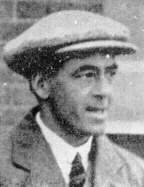
questioned was Thomas Allaway, who was a 36 year old chauffeur and ex
soldier and he drove a Mercedes fitted with three Dunlop Magnums and a
Michelin.
Four months later he attempted
to pass forged cheques. He disappeared from Bournemouth and was picked
up by the police in Reading. He was arrested and, in his pockets were
some betting slips with writing that matched the writing on the
telegrams. Other samples of his handwriting fixed Alloway as the
originator of the telegrams and finally he was identified by a Post
Office employee as the writer of the telegrams.
Thomas Henry Allaway was
convicted of murdering Irene Wilkins. He had killed her by striking her
on the head several times with a blunt instrument. The case appeared to
be missing a motive, robbery was ruled out and although the murder
victim's clothes had been disturbed she had clearly not been raped. All
the same it was still assumed that sex was the motivation.
Allaway was
tried at Winchester in July 1922 and was soon found guilty of murder.
The night before his execution he confessed his crime to the Prison
Governor. Thomas Henry Allaway was hanged at Winchester Prison on 19
August 1922.
Real-Crime.co.uk |